
Common water plantain (Alisma plantago-aquatica)

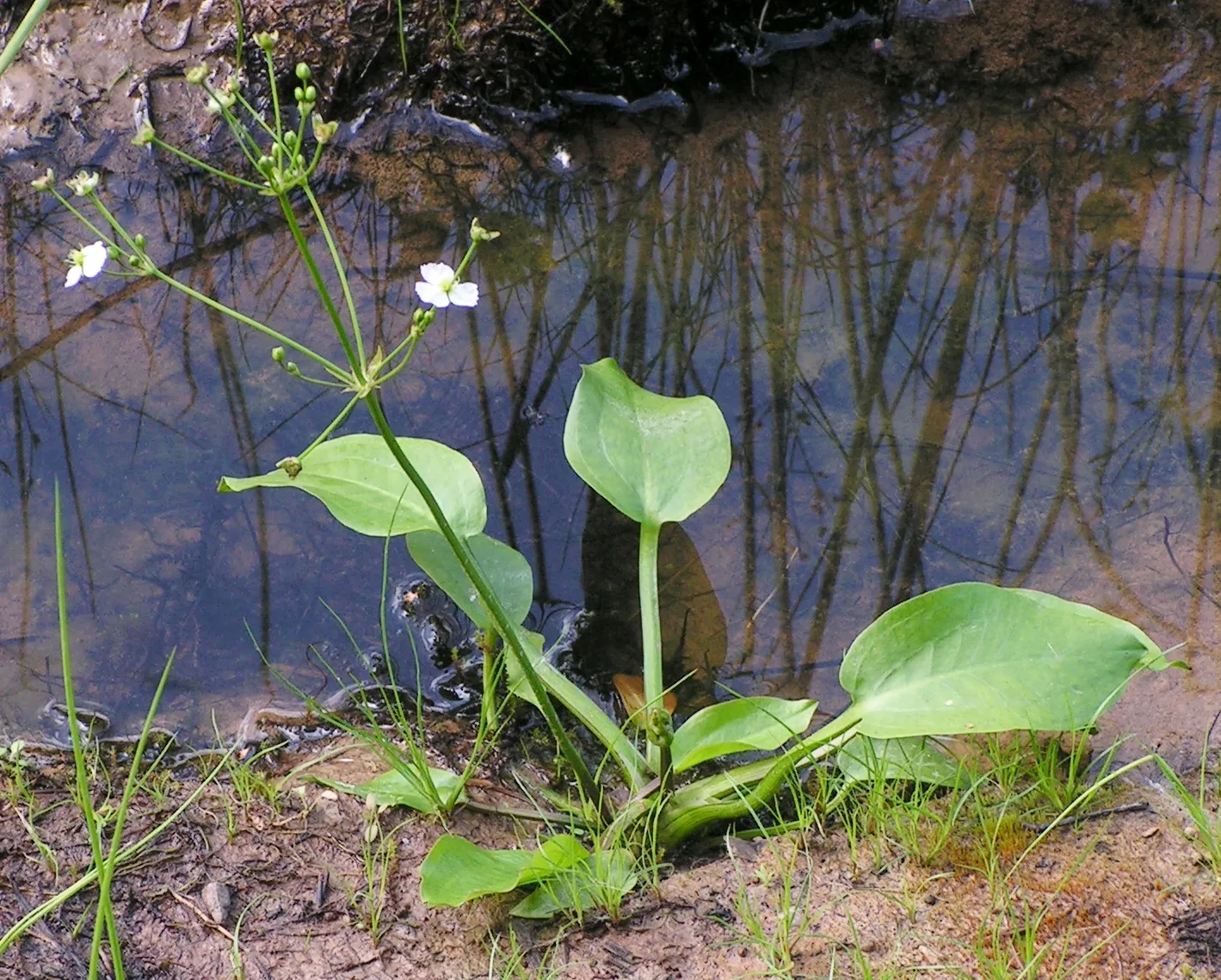
Common water plantain (Alisma plantago-aquatica)
Common water plantain (Alisma plantago-aquatica), also known as water plantain, is a non‑parasitic perennial taprooted (according to Bazdyrev; rhizomatous according to Nikitin and Larin) marsh weed of the family Alismataceae (Alismataceae). It is a severe specialised rice infesting weed.
Taxonomy
Classification
Kingdom: Plants (Plantae)
Division: Flowering plants (Angiosperms) (Angiospermae)
Class: Monocots (Monocotyledoneae)
Order: Alismatales (Alismatales)
Family: Alismataceae (Alismataceae)
Genus: Alisma (Alisma)
Species: Common water plantain (Alisma plantago-aquatica L.)
Photos

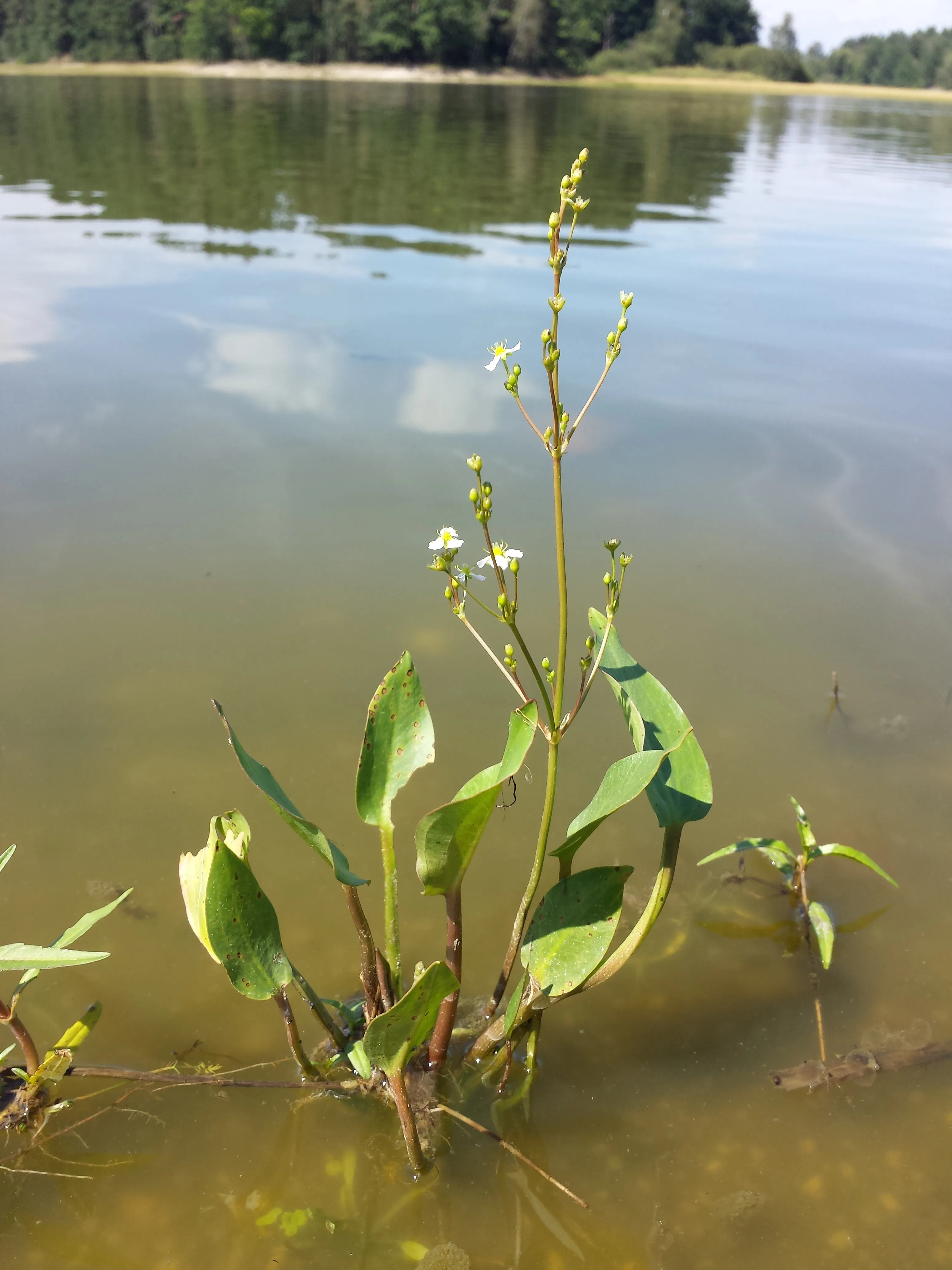
Common water plantain (Alisma plantago-aquatica)

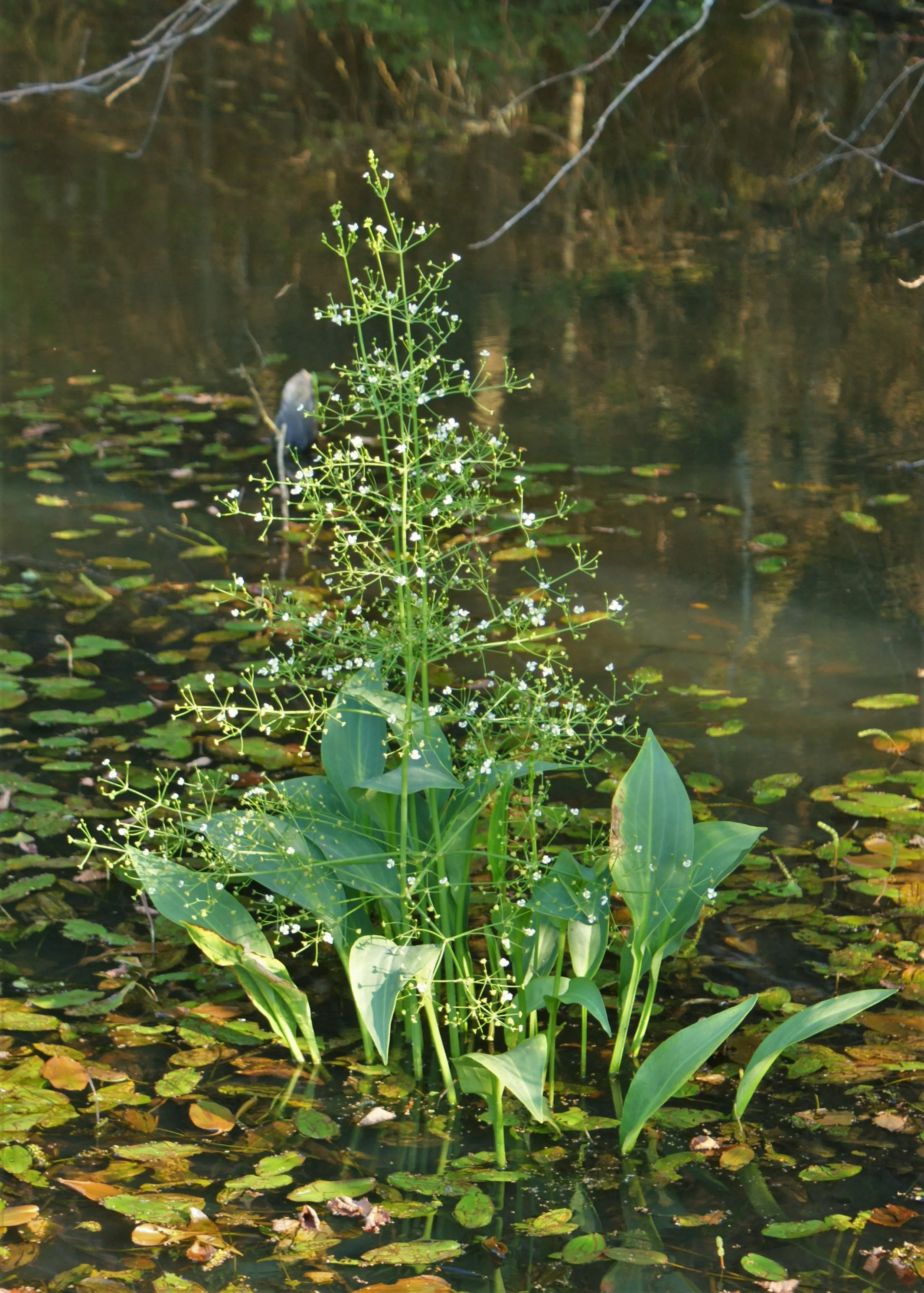
Common water plantain (Alisma plantago-aquatica)

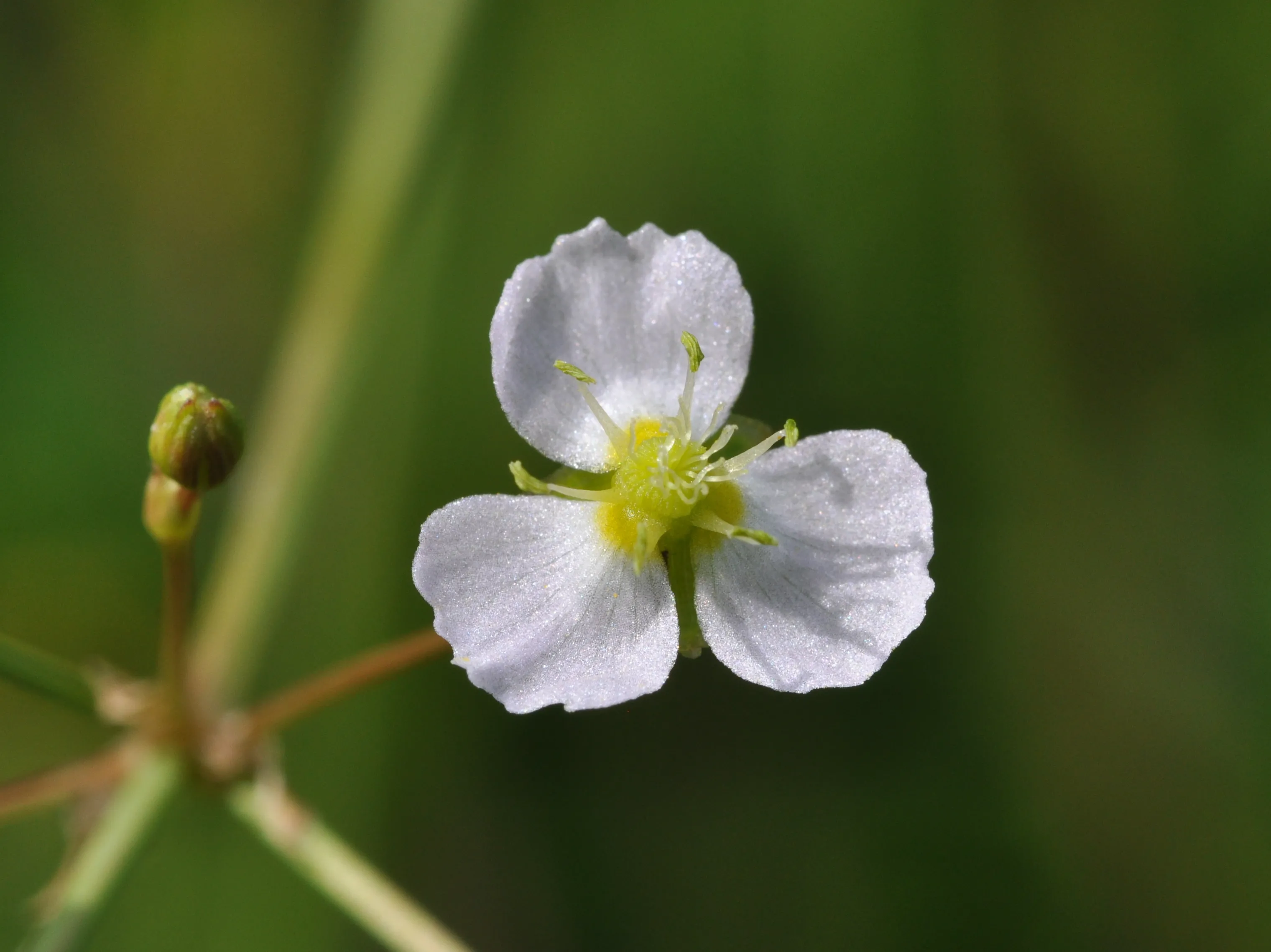
Common water plantain (Alisma plantago-aquatica)


LCD 4-in-1 Soil Tester
Check essential growing conditions with one compact tool. Measure soil pH, moisture, temperature and light intensity — ideal for gardens, potted plants and greenhouses.
- 4-in-1 measurement
- Easy-to-read LCD display
- Portable design
Affiliate link · For indicative measurements only.
Botanical description
Root system
The root system consists of numerous thin root fibres arising from a thickened part. This thickened part is buried in the soil to a depth of up to 6 cm, up to 4 cm in diameter, and represents a tuberous underground stem – a tuberous “rhizome” – on which buds are located. Each plant produces up to 10 shoots from these buds.
Seeds
Seeds are smooth.
Seedlings
Seedlings have thread‑like cotyledon leaves.
First leaves are linear and flat.
Leaves
Leaves are basal, densely clustered, up to 15 cm long, 1.5–7 cm wide, broadly lanceolate, ovate or oval, acute or pointed at the tip, glabrous, long‑petiolate (except the lowest ones), with clearly visible arched veins, cordate or rounded at the base.
Stems
Stems are erect, leafless, glabrous, branching at the top.
Plant height is 10–70 (150) cm.
Inflorescence
Inflorescence is a spreading, pyramidal panicle (paniculate inflorescence).
Flowers are terminal, white, pale pink or pink, about 10 mm in diameter. Flowers open in the morning and remain open all day.
Stamens are twice as long as the pistils. Anthers are oblong, yellow. Styles are straight, longer than the ovary. Fruits are shallowly grooved on the back, 2–3 mm long, thinly leathery on the sides.
Fruit
Fruit is an oval, strongly flattened straw‑yellow achene, 2–3 mm long, about 2 mm wide, 0.3 mm thick.
Ecology
Soil requirements
Common water plantain prefers excessively moist soils.
Habitats
Habitats: riverbanks, lakes, reservoirs, ditches, wet and marshy meadows, bogs; often grows in water.
It is an apophyte that is sustainable only in permanent rice cultivation.

Solar Automatic Drip Irrigation Kit for Gardens
Automate watering for pots, gardens and small greenhouses. This solar-powered system features a timer to help schedule water delivery to your plants.
- Solar-powered
- 15 m irrigation hose
- Programmable watering
Affiliate link · Check included accessories.
Physiology
Germination
Seed viability is 5–7 years.
Seeds germinate from a depth of up to 1 cm and under a water layer of up to 10 cm.
Germination of achenes in the first 2 years after ripening is low, but after 3–5 years in the soil it increases to 50–60%.
Vegetation
Seed ripening occurs slightly earlier than rice. Seeds easily shed and contaminate the soil.
In the first 2 years only a small proportion of seeds germinate, and only after 3–5 years in the soil does their germination rise to 50–60%.
Seedlings appear later than rice seedlings. Dense rice crops suppress common water plantain seedlings. It generally develops strongly in sparse rice crops.
Flowering occurs from June to July (September). Fruiting from July to August.
Reproduction
Reproduces by seeds and vegetatively.
One plant produces up to 20,000 seeds (Nikitin). According to other sources, from 7,000 to 21,000 seeds (Bazdyrev).
Vegetative reproduction is by buds that form in the leaf axils on the tuberous underground stem – the rhizome. The number of buds on one plant can reach 10. Buds produce shoots that emerge at the same time as rice or slightly earlier. Rhizomes lose viability when dried out, and also when buried in soil deeper than 10 cm, from which they do not germinate and die quickly. Young shoots from rhizomes can withstand prolonged flooding with a water layer of more than 25–30 cm.
Weight of 1,000 seeds – about 0.5 g.
Distribution
Common water plantain is distributed in Europe, Asia, and northern Africa.
Regions of occurrence
Russia – occurs in all regions except the Far East.
Belarus, Ukraine, Moldova, Latvia, Lithuania, Estonia, Georgia, Armenia, Azerbaijan, Kazakhstan, Uzbekistan, Turkmenistan, Tajikistan, Kyrgyzstan – all regions.

7-in-1 Wi-Fi Weather Station
Monitor local weather conditions with a wireless outdoor sensor. Track temperature, humidity, rainfall, wind speed and direction, and atmospheric pressure. Ideal for gardens, farms and greenhouses.
- Wireless outdoor sensor
- Solar-powered
- Wi-Fi connectivity
Affiliate link · Check regional compatibility.
Harmfulness
Infestation of crops
Occasionally infests rice fields and floodplain meadows.
Toxicity
Poisonous plant. The plant contains substances that irritate the skin.
Fresh it is toxic to animals. Ingestion leads to inflammatory processes in the stomach, sometimes fatal. In cattle it causes bloody urine. Probably not dangerous for goats (Larin → Rollov). When dried it loses its toxic properties (Larin → Rollov).
Beneficial properties
Medicinal use
Used in folk medicine and homeopathy.

40W Full Spectrum LED Grow Light
Support healthy plant growth with full-spectrum LED lighting. Ideal for seedlings, indoor plants and small growing spaces. A practical solution for indoor gardening and year-round cultivation.
- Full-spectrum LED
- Energy-efficient design
- Indoor plant growing
Affiliate link · Check actual power and light coverage.
Control measures
Agronomic methods
Rhizomes completely lose viability when dried out or when buried deeper than 10 cm, from which they do not germinate and die.
On infested meadows, regular mowing is carried out.
References
- Баздырев Г.И. (1993) Сорные растения и меры борьбы с ними в современном земледелии: Учебное пособие для вузов. Москва: Издательство МСХА.
- Dickinson, R., Royer, F. (2014) Weeds of North America. The University of Chicago Press.
- Никитин, В.В. (1983) Сорные растения флоры СССР. Ленинград: Наука.
- Губанов И.А., Киселёва К.В., Новиков В.С., Тихомиров В.Н. (2002) Иллюстрированный определитель растений Средней России. Том 1: Папоротники, хвощи, плауны, голосеменные, покрытосеменные (однодольные). Москва: Т-во научных изданий КМК, Ин-т технологических исследований.
- Ларин И.В. и др. (1950) Кормовые растения сенокосов и пастбищ СССР. Том I. Споровые. Голосеменные и однодольные. Москва: Государственное издательство сельскохозяйственной литературы.
