
Three-lobed beggarticks (Bidens tripartita)

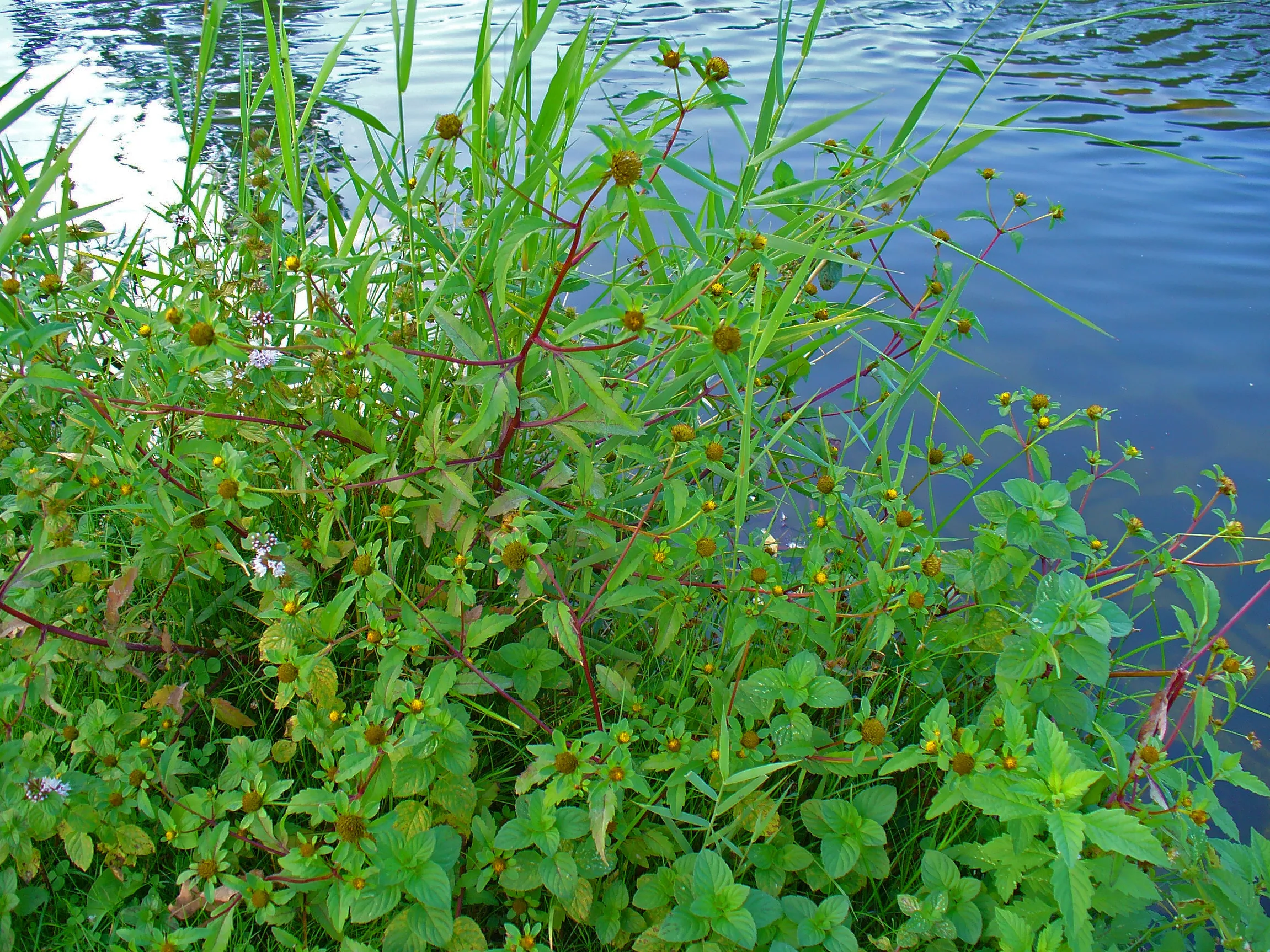
Three-lobed beggarticks (Bidens tripartita)
Three-lobed beggarticks (Bidens tripartita) is a short-lived early spring weed of the Asteraceae family (Asteraceae).
Life cycle: annual.
Taxonomy
Classification
Kingdom: Plants (Plantae)
Division: Flowering plants (Angiosperms) (Angiospermae)
Class: Dicotyledons (Dicotyledoneae)
Order: Asterales (Asterales)
Family: Asteraceae (Asteraceae)
Genus: Beggarticks (Bidens)
Species: Three-lobed beggarticks (Bidens tripartita L.)
Photographs

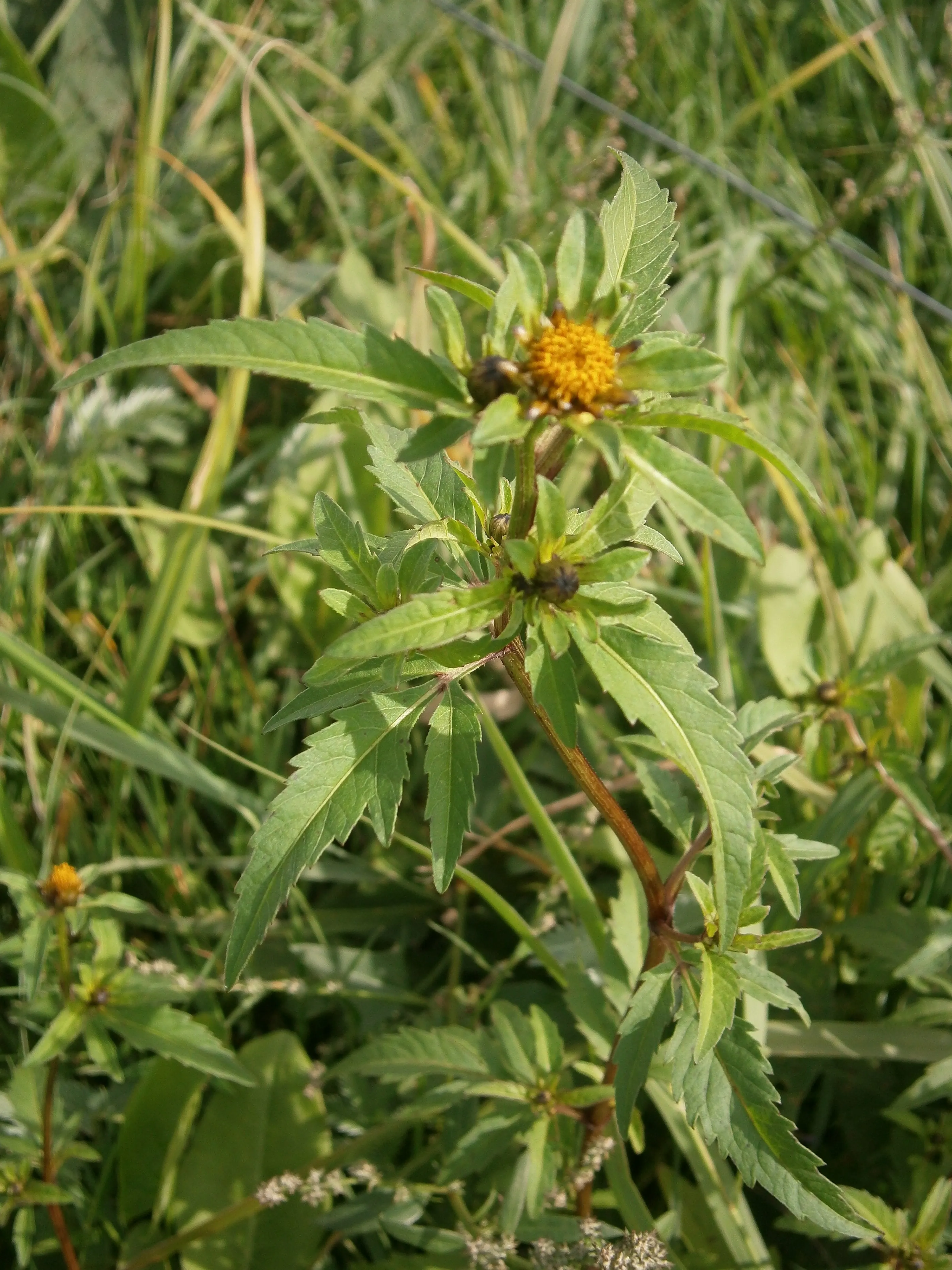
Three-lobed beggarticks (Bidens tripartita)

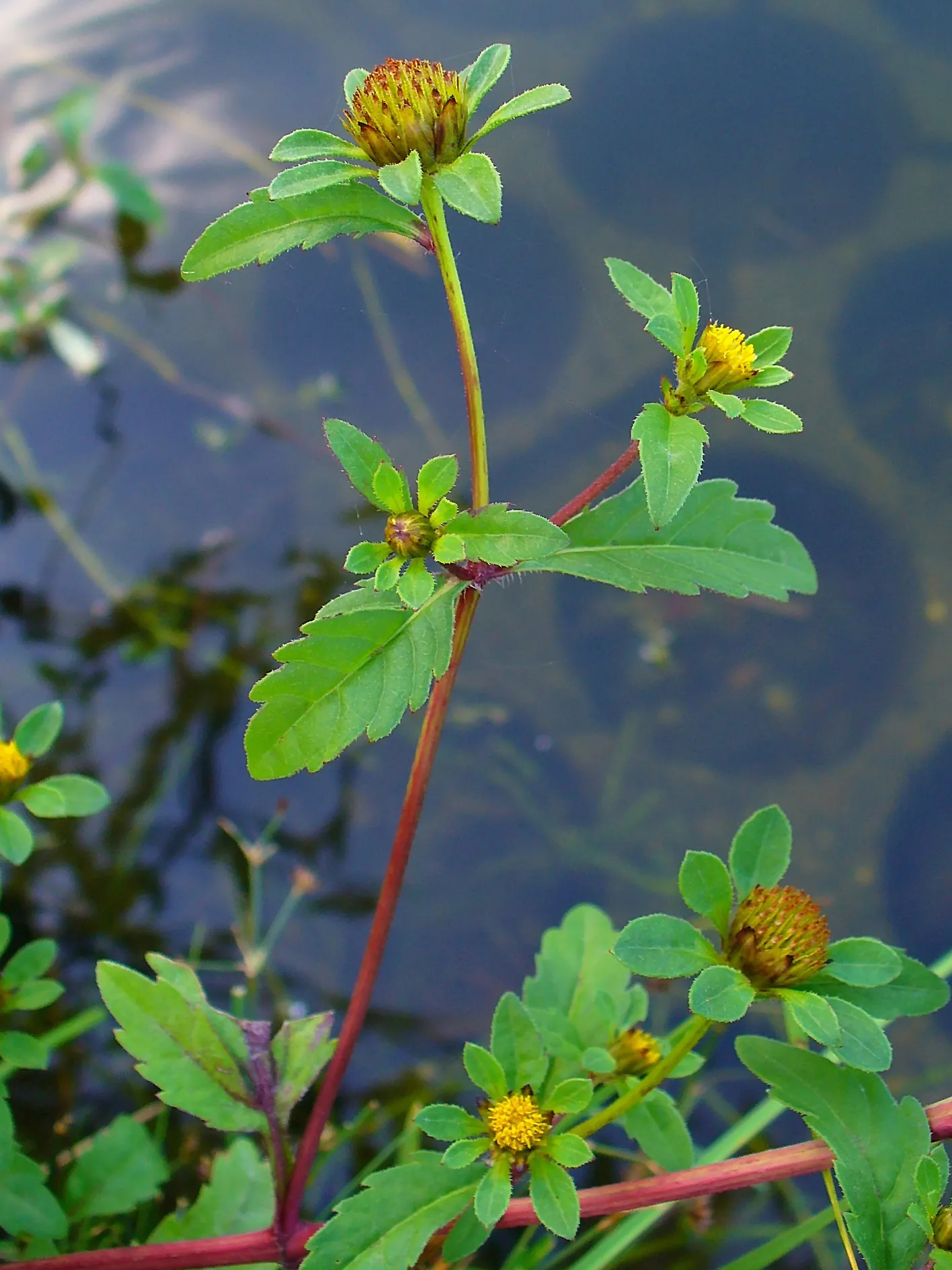
Three-lobed beggarticks (Bidens tripartita)

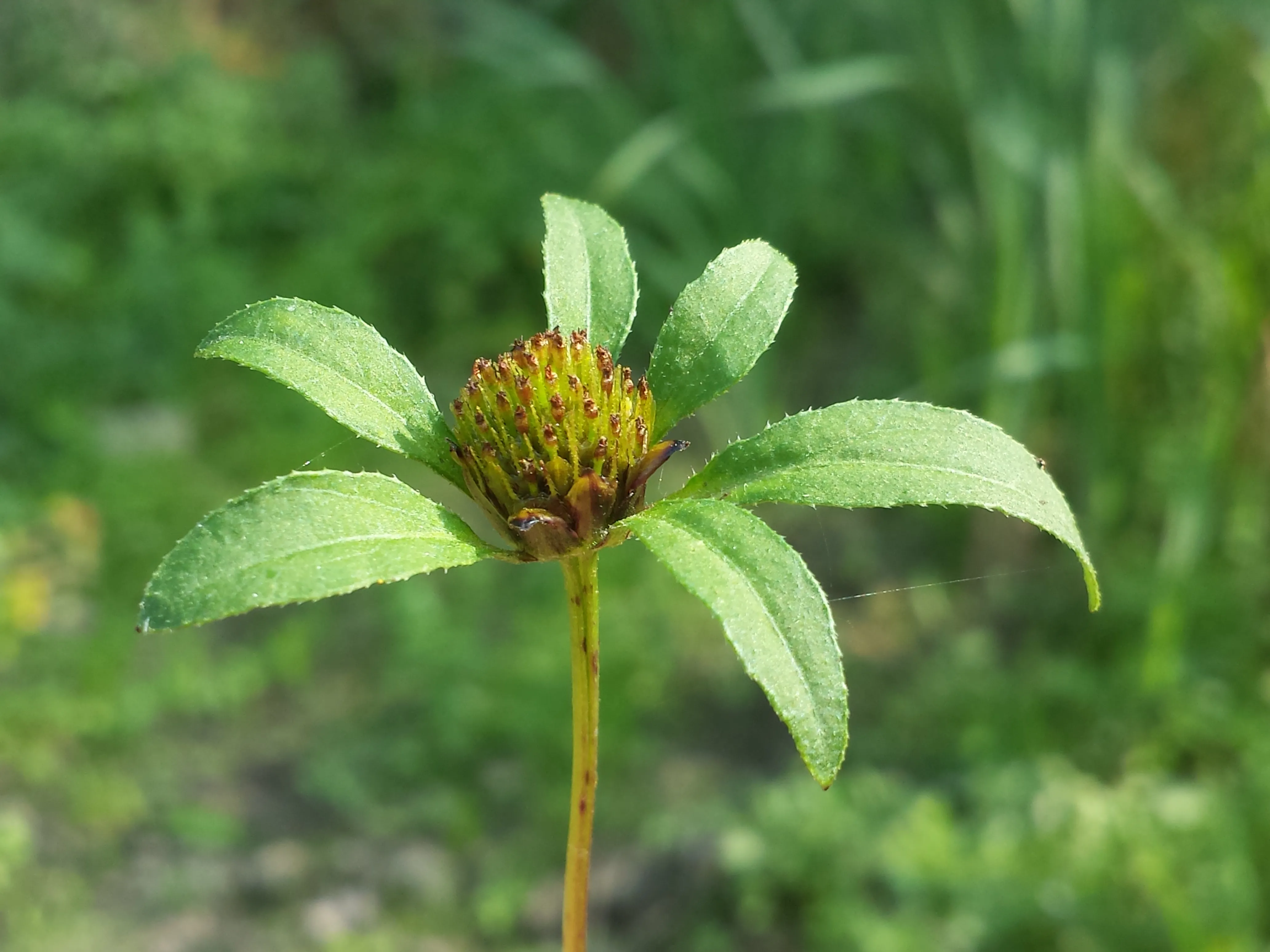
Three-lobed beggarticks (Bidens tripartita)


LCD 4-in-1 Soil Tester
Check essential growing conditions with one compact tool. Measure soil pH, moisture, temperature and light intensity — ideal for gardens, potted plants and greenhouses.
- 4-in-1 measurement
- Easy-to-read LCD display
- Portable design
Affiliate link · For indicative measurements only.
Botanical description
Root system
Taproot.
Seeds
Seeds are wedge-shaped, ribbed, glabrous, flattened, with downward‑pointing barbs on the sides and 2 (sometimes more) long brownish‑green awns with teeth (barbed bristles), 6–8 mm long, 1.5–2 mm wide.
Seedlings
Seedlings have lanceolate or oval, pointed cotyledons, up to 15 mm long, up to 8 mm wide.
Leaves
Leaves opposite, 3–5‑partite, rarely entire, with serrate lobes, on short winged petioles, with short spine‑like cilia on the margin, up to 7 cm long.
Lower leaves have deeply incised lobes, outline from ovate to triangular.
Stem leaves are usually divided by toothed incisions into 3–5 lobes.
Upper leaves may be alternate.
Stems
Stems erect, branching, glabrous or covered with short hairs, reddish‑brown.
Height from (10) 20–100 (150) cm.
Inflorescences
Inflorescences are brownish‑yellow heads, 1–1.5 cm wide, with numerous two‑rowed involucres, borne singly or 2–4 at the ends of numerous lateral branches and stems.
Outer involucral bracts 5–8, similar in shape to leaves.
Flowers small, yellow.
Marginal flowers of the head are ligulate, sterile. Central ones are bisexual, tubular.
Fruit
Fruit is a wedge‑shaped ribbed or obovoid‑oblong, flattened achene, up to 8 mm long, up to 3 mm wide.
Ecology
Temperature requirements
Thermophilic plant.
Moisture requirements
Three‑lobed beggarticks grows in places with excessive moisture.
Soil requirements
Prefers moist loose, fertile loamy and sandy loam soils.
Habitats
Habitats: often in vegetable gardens, orchards, floodplain and wet meadows, pastures, swamps, river and waterbody banks, irrigated lands and reclaimed peatlands, roadside ditches.
In the forest‑steppe, steppe, and desert zones of the former USSR, it never occurs in crops. In these zones it grows in wet meadows, swampy lowlands, stream and river banks, sometimes along irrigation ditches and on rice plantations on ridges and channels.

Solar Automatic Drip Irrigation Kit for Gardens
Automate watering for pots, gardens and small greenhouses. This solar-powered system features a timer to help schedule water delivery to your plants.
- Solar-powered
- 15 m irrigation hose
- Programmable watering
Affiliate link · Check included accessories.
Physiology
Germination
Seeds remain viable for 5–7 years.
Germination of freshly matured seeds reaches 80–90% (Bazdyrev), according to other data 90–92% (Larin). In the second year after maturation — 33%, in the third year — 19% (Larin → Lvov, Yakovleva).
Maximum germination depth 3–4 cm.
Minimum germination temperature 3–4 °C, optimal — 15–20 °C.
Vegetation
Emergence of seedlings is extended.
Flowering (June) July–September. Fruiting August–September (October).
Reproduction
Reproduces by seeds.
Thanks to the bristles, seeds cling to animal fur and people’s clothing.
Maximum productivity of one plant reaches 1000 – 11,800 seeds (Bazdyrev), on average — 250 seeds (Larin).
Weight of 1000 seeds — 3–4 g (Bazdyrev), according to other data — 2.5–3.7 g (Larin).
Distribution
Three‑lobed beggarticks is a widespread species. It grows in Europe, Asia, North America, and Australia.
Distribution regions
Commonly found throughout Russia and the territory of the former USSR.

7-in-1 Wi-Fi Weather Station
Monitor local weather conditions with a wireless outdoor sensor. Track temperature, humidity, rainfall, wind speed and direction, and atmospheric pressure. Ideal for gardens, farms and greenhouses.
- Wireless outdoor sensor
- Solar-powered
- Wi-Fi connectivity
Affiliate link · Check regional compatibility.
Harmfulness
Weed infestation of crops
Infests vegetable and field crops on moist, non‑reclaimed fields in the Non‑Chernozem zone. It grows in waterlogged depressions in crops, especially in winter crops.
According to E. V. Shlyakova (1982), in Belarus the role of beggarticks as a weed is increasing, and it often moves from field edges and ditches into crops, sometimes in large numbers.
Its harmfulness as a field weed is insignificant, but it increases under conditions of intensive agriculture.
Other harmful properties
Fruits become entangled in sheep wool, reducing its quality.
Useful properties
Medicinal use
Used in folk medicine.
Fodder value
Three‑lobed beggarticks in young state is well eaten by pigs, and, according to some observations, by cattle. At later stages it is probably not eaten.
Fruits are eaten by waterfowl.

40W Full Spectrum LED Grow Light
Support healthy plant growth with full-spectrum LED lighting. Ideal for seedlings, indoor plants and small growing spaces. A practical solution for indoor gardening and year-round cultivation.
- Full-spectrum LED
- Energy-efficient design
- Indoor plant growing
Affiliate link · Check actual power and light coverage.
Chemical composition
Information on alkaloid content is contradictory: according to some data, alkaloids are present in small amounts; according to others, they are not detected in inflorescences, leaves and stems (Larin).
Three‑lobed beggarticks contains essential oil and tannins.
In the flowering phase (7–14 August), leaves in fresh matter contain 60–70 mg% of vitamin C. According to other data, in dry matter (on 23 June) leaves contain 465 mg%, inflorescences — 53.4%.
Fruits contain 11% fatty oils.
Control measures
Agrotechnical methods
Mechanical tillage during crop care.
Land drainage.
Timely mowing before seeding.
Agrochemical methods
Three‑lobed beggarticks is sensitive at the seedling stage to herbicides of the 2,4-D group, 2M‑4X. Mixtures of herbicides and soil herbicides intended for row crops are also used.
References
- Bazdyrev G.I. (1993) Weed plants and measures to control them in modern agriculture: Textbook for universities. Moscow: Publishing House of the Moscow Agricultural Academy.
- Claassen, H., Freitag, J. (2004) Weed plants, distribution and harmfulness, species identification. Joint edition of agricultural publishing house Landwirtschaftsverlag Münster‑Hiltrup and BASF AG, Limburgerhof.
- Nikitin, V.V. (1983) Weed plants of the flora of the USSR. Leningrad: Nauka.
- Gubanov I. A., Kiseleva K. V., Novikov V. S., Tikhomirov V. N. (2004) Illustrated guide to plants of Central Russia. Volume 3: Angiosperms (dicotyledons: choripetalous). Moscow: KMK Scientific Press, Institute of Technological Research.
- Larin I. V. et al. (1956) Fodder plants of hayfields and pastures of the USSR. Volume III. Dicotyledons (Geraniaceae – Asteraceae). Moscow: State Publishing House of Agricultural Literature.
