
Sea Club-rush (Bolboschoenus maritimus)

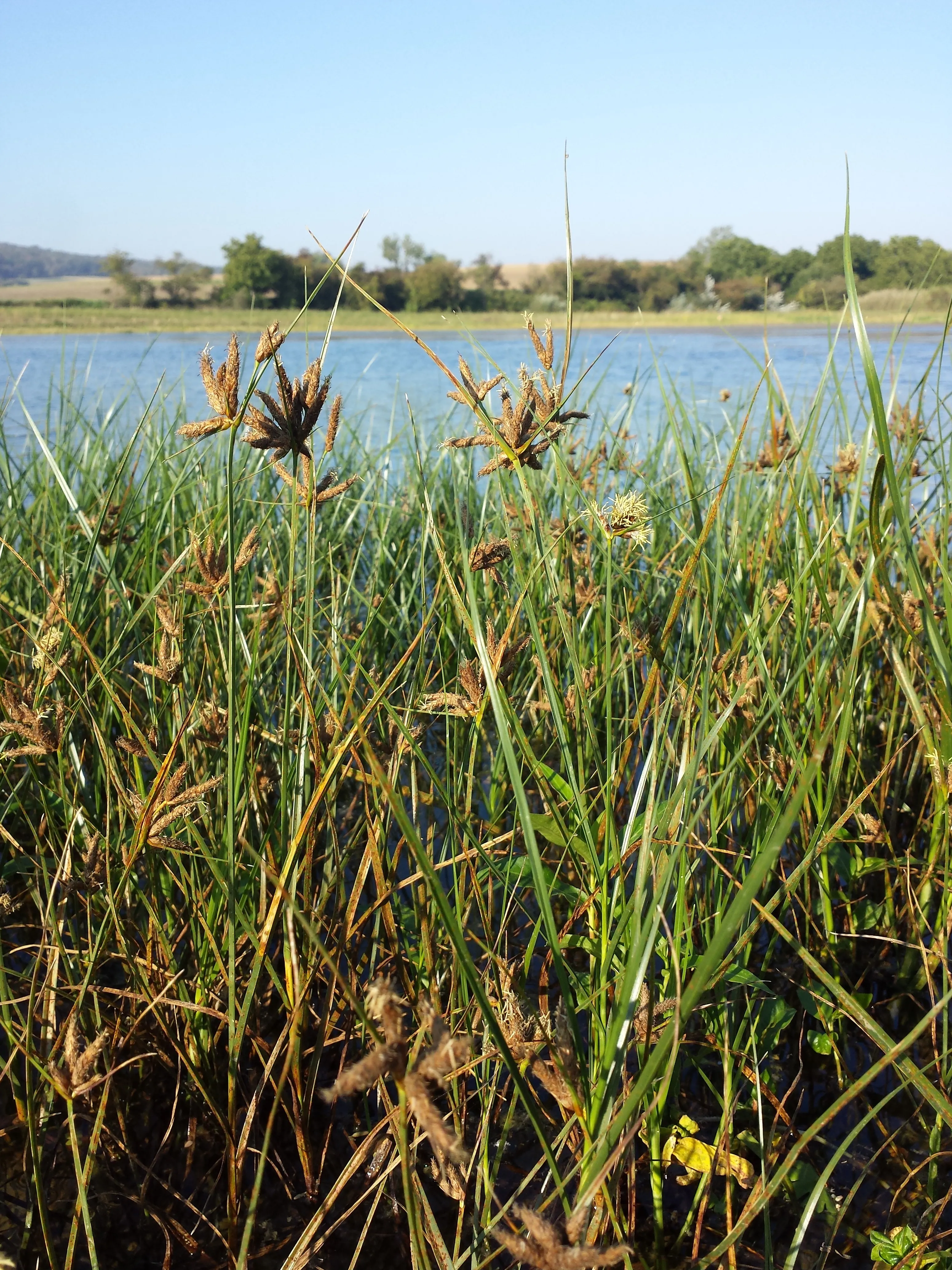
Sea Club-rush (Bolboschoenus maritimus)
Sea Club-rush (Bolboschoenus maritimus) is a non‑parasitic perennial rhizomatous (tuberous) weed of the sedge family (Cyperaceae).
Life cycle: perennial.
Other names: maritime bulrush, nyunka, kara‑oleng, koga‑isai.
Taxonomy
Classification
Kingdom: Plants (Plantae)
Division: Flowering plants (Angiosperms) (Angiospermae)
Class: Monocotyledons (Monocotyledoneae)
Order: Poales (Poales)
Family: Sedges (Cyperaceae)
Genus: Club‑rush (Bolboschoenus)
Species: Sea Club‑rush (Bolboschoenus maritimus (L.) Palla)
According to Larin, the name “maritime bulrush” corresponds to Scirpus littoralis Schrad., while Scirpus maritimus L. refers to the sea bulrush.
Synonyms
- Scirpus maritimus L.
Similar species
Compressed bulrush (Scirpus compactus Hoffm., syn. Bolboschoenus compactus (Hoffm.) Drob.). It grows along the valleys of large rivers. It differs by its compressed, compact inflorescence and two stigmas.
Photographs

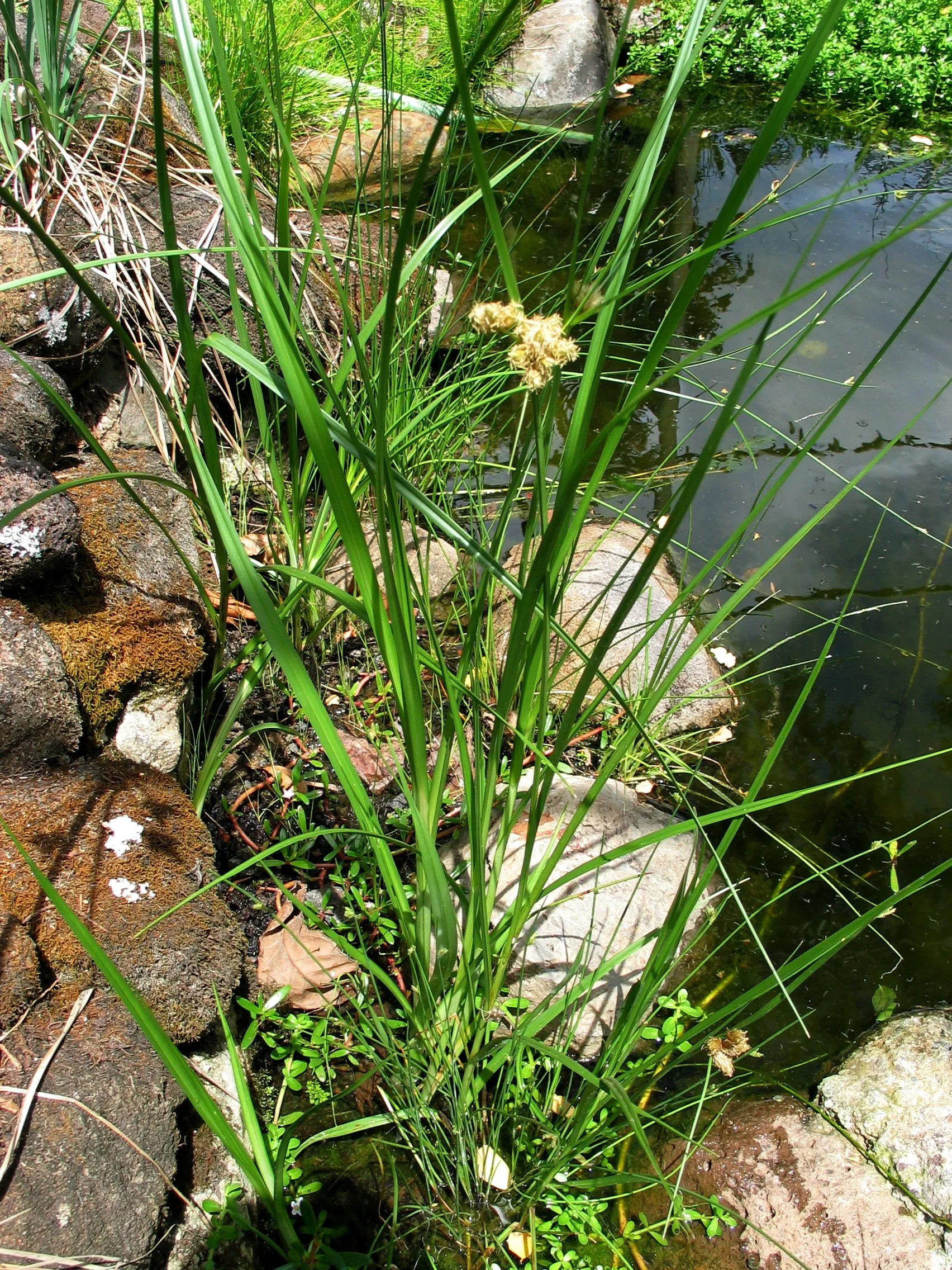
Sea Club‑rush (Bolboschoenus maritimus)

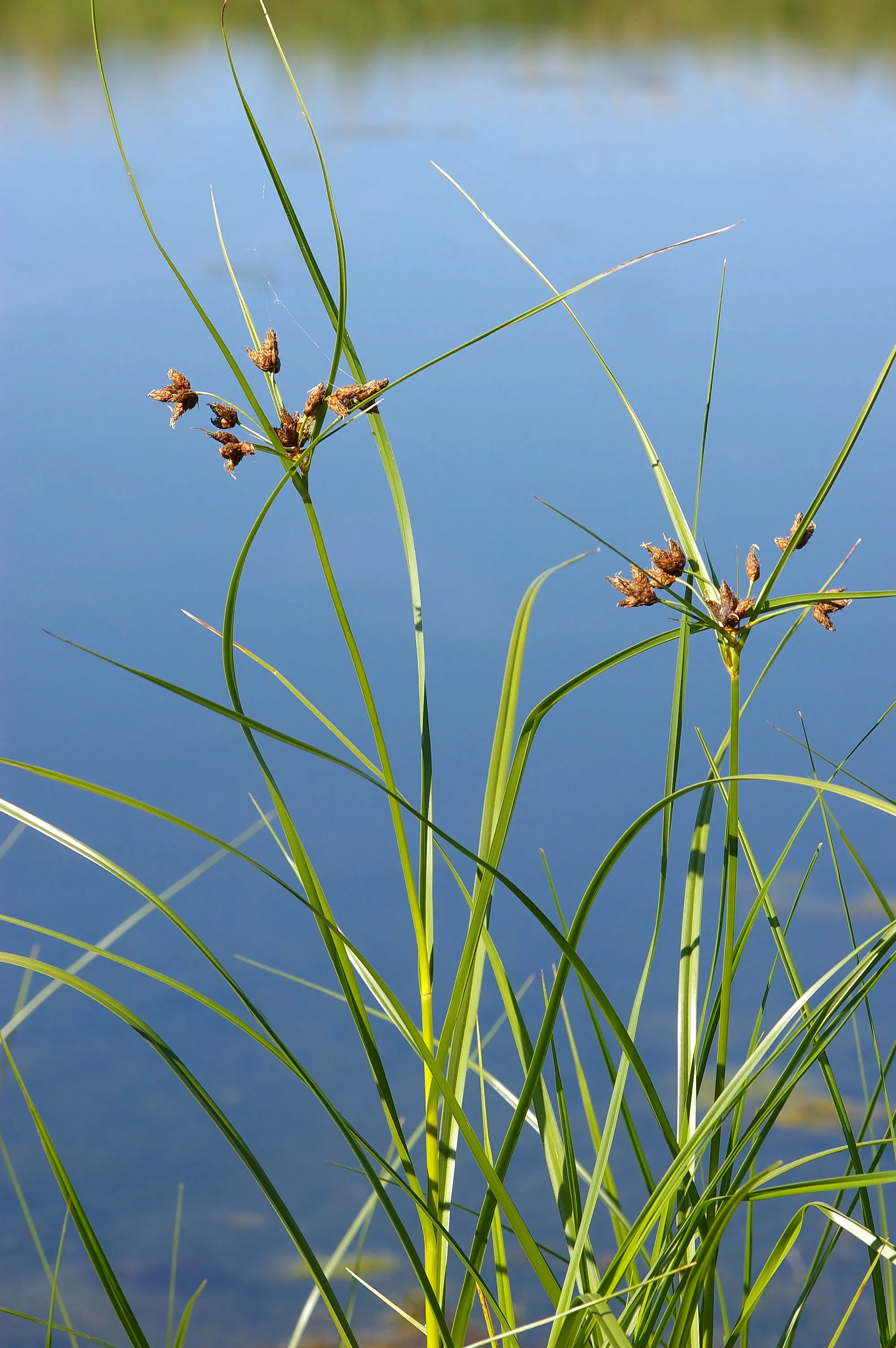
Sea Club‑rush (Bolboschoenus maritimus)

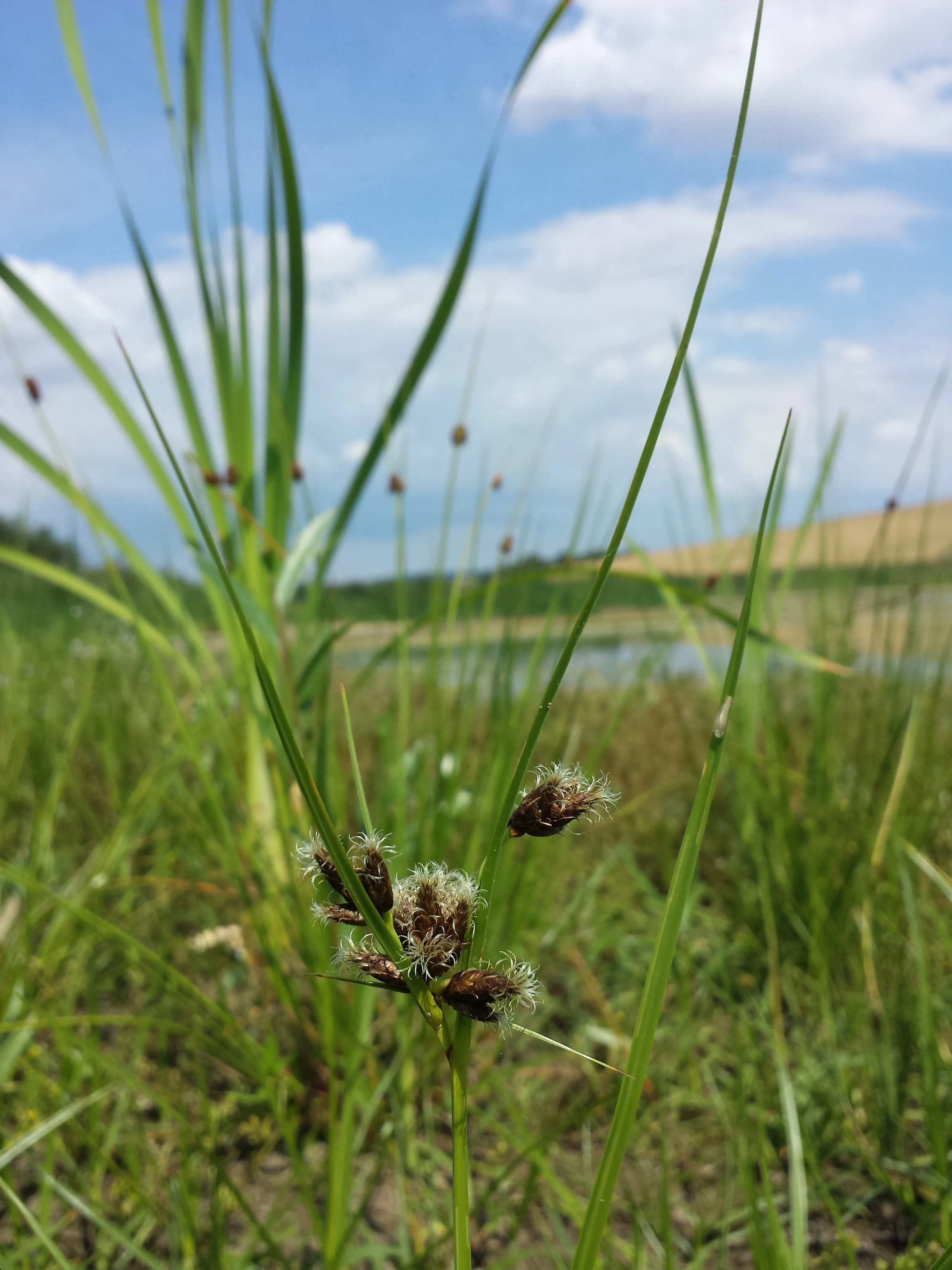
Sea Club‑rush (Bolboschoenus maritimus)


LCD 4-in-1 Soil Tester
Check essential growing conditions with one compact tool. Measure soil pH, moisture, temperature and light intensity — ideal for gardens, potted plants and greenhouses.
- 4-in-1 measurement
- Easy-to-read LCD display
- Portable design
Affiliate link · For indicative measurements only.
Botanical description
Root system
The root system is a creeping rhizome – underground stems lying at a depth of up to 4–5 cm, with tuber‑like spherical swellings up to 3.5 cm in diameter.
Seeds
Seeds are trigonous, greyish‑brown, 1.9–2.8 mm long, 0.7–1.4 mm thick. The surface is slightly shiny and smooth with about 10 longitudinal ridges.
The pappus has two rows of white bristle‑like hairs, each 0.2 mm long.
Seedlings
The first leaf of seedlings is needle‑pointed, subsequent leaves are elongated‑linear.
Leaves
Leaves are broadly linear, glabrous, flat, pointed, 3–8 mm wide.
Stems
Stems are erect, triangular, glabrous.
Plant height 50–100 (120) cm, on average 60–70 cm.
Inflorescences
Inflorescence paniculate (Bazdyrev). According to other sources, umbellate (Gubanov). It consists of a central sessile cluster of spikelets and lateral clusters on peduncles of different lengths. Sometimes forms a compressed inflorescence.
Spikelets oblong‑ovoid.
Covering scales brown. 1–6 perianth scales, sometimes absent.
Stigmas 2–3.
Fruit
Fruit is a trigonous, convex‑trigonous or flattened‑convex achene, shiny, with several bristles, 2.5–4 mm long, 1.5–2.5 mm wide, 1.5–2 mm thick.
Ecology
Natural zones
Sea Club‑rush occurs in the forest zone, where it grows along river and lake banks, as well as in steppe, desert and semi‑desert zones.
Soil requirements
It does not grow on saline meadows with excessive moisture or in estuaries.
Prefers alluvial sandy soils.
It is suppressed by deep water (35–40 cm).
Habitats
Habitats: banks of rivers, lakes, reservoirs, wet and marshy lowlands, along irrigation networks, along roads.
Compared to other species it is a relatively stable apophyte, especially under continuous rice cultivation.

Solar Automatic Drip Irrigation Kit for Gardens
Automate watering for pots, gardens and small greenhouses. This solar-powered system features a timer to help schedule water delivery to your plants.
- Solar-powered
- 15 m irrigation hose
- Programmable watering
Affiliate link · Check included accessories.
Physiology
Germination
Seed viability in soil is 4–5 years.
Germination of freshly harvested seeds is low. After overwintering or freezing it increases to 85–92%.
Maximum depth of seed germination is 2 cm (Nikitin), other sources give 7–8 cm (Bazdyrev).
Seed germination begins at 30% soil moisture, optimum 60–80%. A 20‑cm layer of water prevents germination.
Vegetation
Seedlings emerging in spring, by the end of the growing season, after 4–5 months under favourable conditions, are capable of forming 8–10 above‑ground shoots with underground stolons up to 120 cm long, bearing 20 or more tubers.
Flowering (May) June–July (August). Fruiting July–August (October).
Reproduction
Reproduces by seeds (fruits) and vegetatively.
One of the main ways of infestation of rice crops by club‑rush is through soil. The number of seeds and tubers in the plough layer of a rice field is related to the duration of cultivation. In the first years of development of a rice field, it is usually not infested or weakly infested. However, under continuous rice cultivation, infestation increases and by the 4th–5th year the population reaches its maximum.
Seeds (fruits) of Sea Club‑rush can remain on the water surface for a long time and spread with irrigation water. A source of infestation can also be poorly cleaned rice seed material containing club‑rush fruits.
Vegetative reproduction occurs through tubers formed on stolons. On the surface of the tubers there are 3 to 7 buds, from which above‑ground and underground shoots develop. 85% of tubers are located in the upper 10‑cm layer of soil. When soil moisture is less than 30% of full water‑holding capacity, new tubers are almost not formed. Optimal conditions for tuber germination are soil moisture 60–80% of full capacity and a 5‑cm layer of water above the soil. Burial of tubers to a depth of 10–20 cm sharply reduces regrowth, and burial deeper than 30 cm completely prevents emergence. Tubers completely lose viability when dried. Low winter temperatures also negatively affect the viability of tubers lying on the soil surface.
Maximum fertility of one plant – 80–250 fruits‑achenes.
Weight of 1000 achenes – up to 2.5 g.
Distribution
Sea Club‑rush is widely distributed in Europe, Asia and North America. It especially prefers irrigated lands.
In Russia it occurs in many regions of the European part, except for the Far North, in the south of Siberia and the Far East.
In Kazakhstan it grows in the floodplains of the Ural, Emba and other rivers. It often forms continuous thickets over hundreds and thousands of hectares.
Distribution regions
Russia:
- European part – all regions except the Republic of Kalmykia and Astrakhan Oblast;
- North Caucasus – all regions;
- Western and Eastern Siberia – all regions;
- Far East – all regions.
Belarus, Ukraine, Moldova, Latvia, Lithuania, Estonia, Armenia, Azerbaijan – all regions.
Georgia – all regions except Shida Kartli, Mtskheta‑Mtianeti, Kakheti.
Kazakhstan:
- West Kazakhstan Oblast (west);
- Upper Tobol (Kostanay Oblast (north));
- Irtysh (North Kazakhstan Oblast, Akmola Oblast, Karaganda Oblast (north), Pavlodar Oblast, Kostanay Oblast (south), East Kazakhstan Oblast (west));
- Altai (East Kazakhstan Oblast (east)).

7-in-1 Wi-Fi Weather Station
Monitor local weather conditions with a wireless outdoor sensor. Track temperature, humidity, rainfall, wind speed and direction, and atmospheric pressure. Ideal for gardens, farms and greenhouses.
- Wireless outdoor sensor
- Solar-powered
- Wi-Fi connectivity
Affiliate link · Check regional compatibility.
Harmfulness
Infestation of crops
Infests all crops in rice crop rotations; the most favourable conditions for its growth and development occur in continuous and long‑term (3–4 years) rice crops.
As a weed, it is most harmful in continuous and long‑term rice crops.
Useful properties
Fodder value
According to data on chemical composition, it belongs to fodder plants of moderate nutritional value.
On pastures, according to observations in Kazakhstan, it is eaten satisfactorily by cattle in spring and summer before the heading phase. It is almost not eaten by other farm animals and after heading.
Possibly fruits are eaten readily.
Palatability in hay is poor.
According to observations in Turkmenistan (Bugday Lakes), in green state it is well eaten even after flowering. This is probably explained by a shortage of other green fodder during that period and a special form of Sea Club‑rush in that area. Under these conditions it can be used as a forage crop.
According to older observations by Linnaeus, it is eaten by cattle and horses.
It is selectively eaten by pigs, not eaten by sheep.
Sea bulrush is suitable for silage. The silage is well eaten by all kinds of animals.
In places where club‑rush forms continuous thickets, tuber yield can reach 1.8 t/ha. The tubers contain a large amount of starch and are excellently eaten by all kinds of farm animals.
Cultivation
When used for fodder purposes, where it forms continuous thickets (e.g., in Kazakhstan), it can yield up to 2–4 t/ha of hay, and up to 7–15 t/ha of silage, 70–150 t/ha.
It may be of value as a silage fodder crop under conditions of cultivation on saline estuaries, lake and river banks.
Other uses
Flour made from the tubers is sometimes used as a bread substitute.

40W Full Spectrum LED Grow Light
Support healthy plant growth with full-spectrum LED lighting. Ideal for seedlings, indoor plants and small growing spaces. A practical solution for indoor gardening and year-round cultivation.
- Full-spectrum LED
- Energy-efficient design
- Indoor plant growing
Affiliate link · Check actual power and light coverage.
Chemical composition
Chemical composition of plants, in the flowering phase according to two series of studies, in % of dry matter:
- ash — 7.0/21.7;
- protein — 5.6/10.0 (crude protein — 8.7);
- fats — 3.3/1.3;
- fibre — 25.3/35.4;
- nitrogen‑free extractive substances — 41.7/48.7.
Chemical composition of plants, after fruit shedding, in % of dry matter:
- ash — 11.6;
- protein — 7.3 (crude protein — 6.0);
- fats — 3.3;
- fibre — 34.0;
- nitrogen‑free extractive substances — 43.8.
Chemical composition of plants, in the fruiting phase (August–October), at 8.0% moisture, in % of dry matter:
- ash — 11.7;
- protein — 8.2 (crude protein — 7.5);
- fats — 2.7;
- fibre — 26.7;
- nitrogen‑free extractive substances — 50.7.
Chemical composition of tubers, averaged over four series (samples taken on 21 June, 6 July, 1 August, 23 September), in % of dry matter:
- ash — 4.1;
- protein — 7.4;
- fats — 1.1;
- fibre — 14.0;
- nitrogen‑free extractive substances — 73.4.
Control measures
Agronomic methods
Important measures to control club‑rush are:
- introduction of clean and occupied fallows in crop rotation;
- deep autumn ploughing with ploughs with skimmers to a depth of 30–35 cm;
- cultivation of rice on the same field for no more than 2–3 years.
Chemical methods
In crop stands, herbicides such as Saturn, Yalan, Metazin and herbicides of the 2,4-D group can be used.
References
- Bazdyrev G.I. (1993) Weed plants and measures to control them in modern agriculture: Textbook for universities. Moscow: Publishing House of the Moscow Agricultural Academy.
- Nikitin V.V. (1983) Weed plants of the flora of the USSR. Leningrad: Nauka.
- Gubanov I.A., Kiseleva K.V., Novikov V.S., Tikhomirov V.N. (2002) Illustrated guide to plants of Central Russia. Volume 1: Ferns, horsetails, clubmosses, gymnosperms, angiosperms (monocots). Moscow: KMK Scientific Press, Institute of Technological Research.
- Larin I.V. et al. (1950) Fodder plants of hayfields and pastures of the USSR. Volume I. Spore plants, gymnosperms and monocots. Moscow: State Publishing House of Agricultural Literature.
