
Greater knapweed (Centaurea scabiosa)

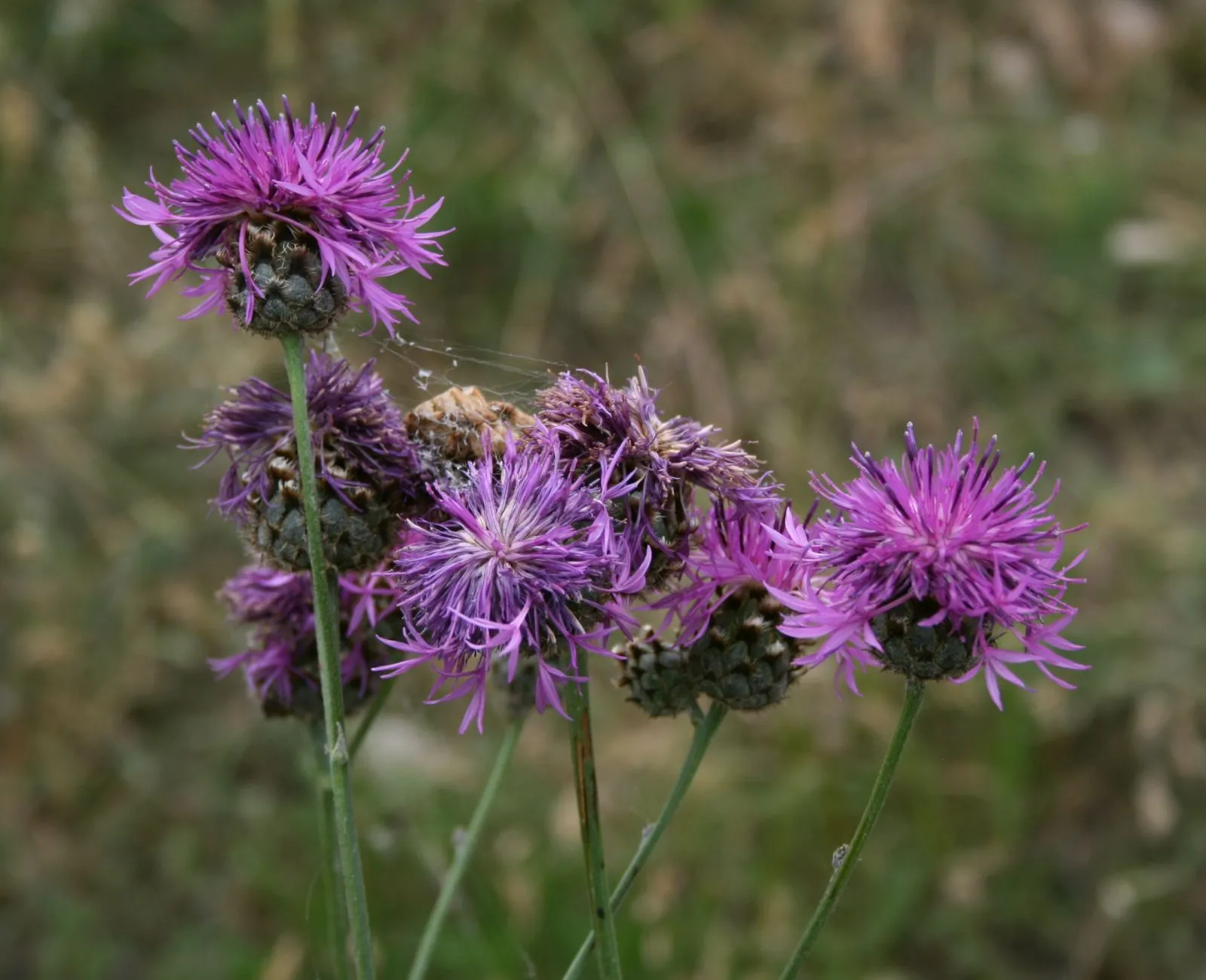
Greater knapweed (Centaurea scabiosa)
Greater knapweed (Centaurea scabiosa L.) is a non‑parasitic perennial herbaceous weed of the family Asteraceae (Asteraceae).
Life cycle: perennial.
Other names: rough knapweed, greater knapweed (Eng.), hardheads (Eng.).
Taxonomy
Classification
Kingdom: Plants (Plantae)
Division: Flowering plants (Angiosperms) (Angiospermae)
Class: Dicotyledons (Dicotyledoneae)
Order: Asterales (Asterales)
Family: Asteraceae (Asteraceae)
Genus: Knapweed (Centaurea)
Species: Greater knapweed (Centaurea scabiosa L.)
Similar species
Spiny knapweed (Centaurea apiculata Ledeb.). A European species. Occurs in steppes, meadows and fallow lands, mainly in the chernozem belt. Its middle involucral bracts have a small appendage, 0.8–1.8 mm long. The heads are ovoid. Flowers pink, marginal flowers slightly larger than the central ones.
Origin
Native to Eastern Europe.
Photographs

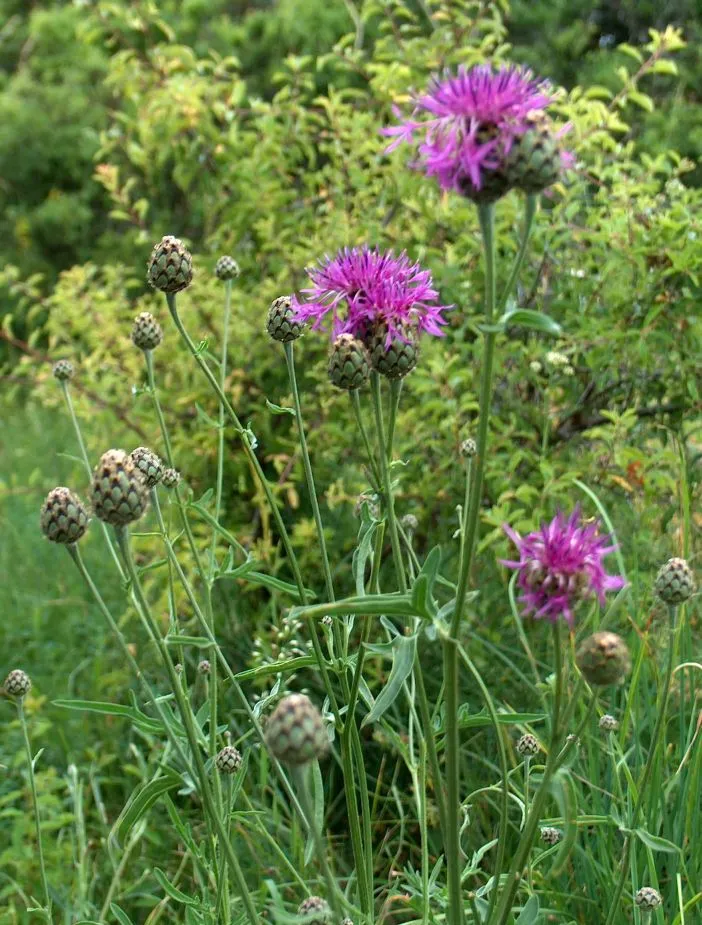
Greater knapweed (Centaurea scabiosa)

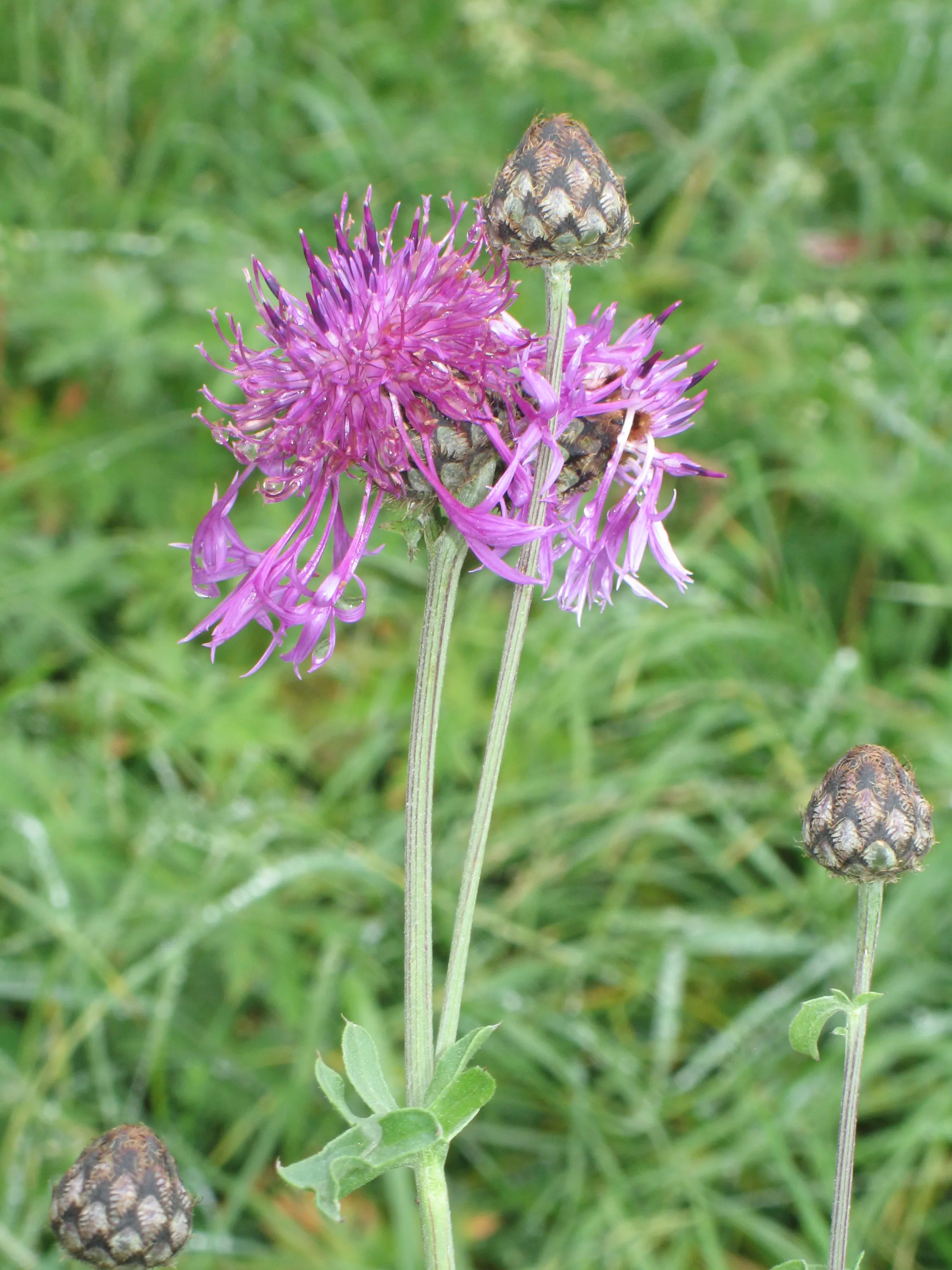
Greater knapweed (Centaurea scabiosa)

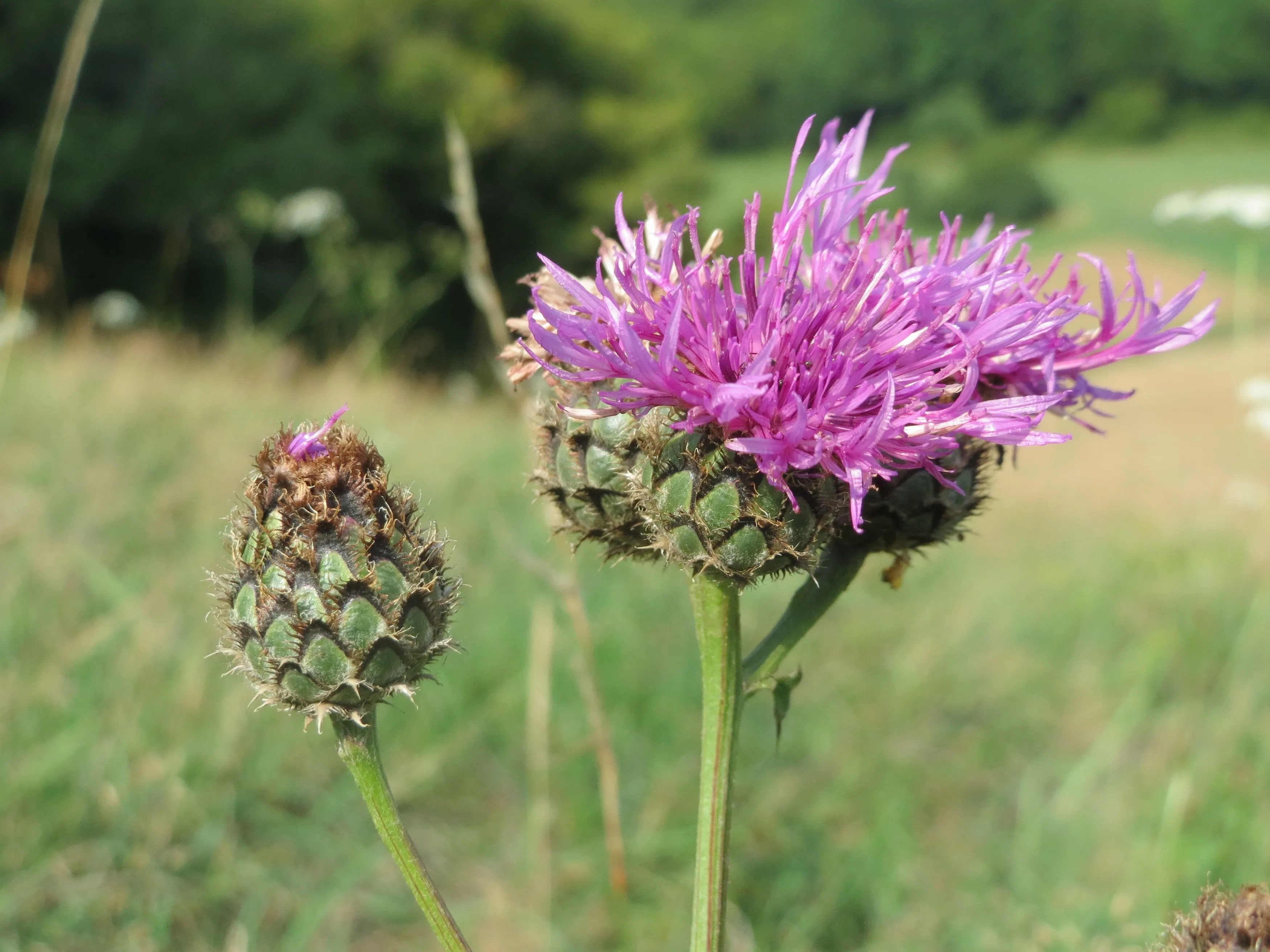
Greater knapweed (Centaurea scabiosa)


LCD 4-in-1 Soil Tester
Check essential growing conditions with one compact tool. Measure soil pH, moisture, temperature and light intensity — ideal for gardens, potted plants and greenhouses.
- 4-in-1 measurement
- Easy-to-read LCD display
- Portable design
Affiliate link · For indicative measurements only.
Botanical description
Root system
Taproot system. The main root is thickened, 3–4 cm in diameter, spindle‑shaped, with thin lateral branches, penetrating the soil to a depth of 1.5 m. When cut, for example during ploughing, it can produce numerous shoots that form strong rosettes on the soil surface.
Up to 36% of the roots left after tillage root well.
Seedlings
Cotyledons oblong‑obovate, up to 20 mm long, 8–12 mm wide, fleshy, with short petioles.
Petioles 8–16 mm long, 3–6 mm wide.
First leaves lanceolate, 24–45 mm long, 6–15 mm wide, pubescent.
Leaves
Leaves alternate, pinnately dissected or pinnatifid.
Basal and lower leaves 10–25 cm long, bristly and glandular‑dotted, margins divided once or twice into linear or oblong segments, on short or long petioles.
Upper leaves (partly) sessile.
Stems
Stems glabrous or bristly, erect, ribbed, slightly branched (in the upper part), rough.
Height (30) 40–130 (150) cm.
Inflorescences
Inflorescence — solitary or few in open racemose clusters of heads (anthodia).
Flowers pink, from ovoid to bell‑shaped, 15–25 mm long.
Inner flowers numerous, from reddish‑purple to white, 20–40 mm long. Marginal flowers slightly larger than the inner ones.
Outer and middle involucral bracts (phyllaries) with dark brown or almost black large (2–6 mm long) appendages (teeth) at the apex and long cilia along the margin, covered with arachnoid hairs. Inner phyllaries with brown margins.
Fruit
Fruit — obovoid, almost cylindrical, brown achene, 3.5–5 mm long, 2.25 mm wide, 1 mm thick, with a truncate apex.
Pappus (pappus) of stiff white bristles with a brownish‑grey tinge, 4–5 mm long.
Ecology
Natural zones
Greater knapweed is a common plant of the steppe and forest‑steppe zones. It is less frequently found as an adventive in the forest zone.
Habitats
Habitats: meadows, often as a ruderal along roadsides, fallow lands, field margins, sparse forests, forest edges, pastures, shrub thickets.

Solar Automatic Drip Irrigation Kit for Gardens
Automate watering for pots, gardens and small greenhouses. This solar-powered system features a timer to help schedule water delivery to your plants.
- Solar-powered
- 15 m irrigation hose
- Programmable watering
Affiliate link · Check included accessories.
Physiology
Germination
Seed viability is high.
Germination of freshly matured seeds depends on weather conditions of the year: in wet years germination is only 1–2%, in dry years up to 14%, in moderate years 30–64%. After overwintering, germination is good.
Maximum germination depth is 6–8 cm.
Vegetation
Seedlings from seeds and shoots from buds located on the root collar appear in April–May.
Flowering June–September. Fruiting July–October.
Reproduction
Reproduces by seeds.
One plant produces from 7 to 55 thousand achenes (according to Bazdyrev).
Weight of 1000 seeds — about 1.25 g.
Distribution
Greater knapweed is widely distributed in Europe and northern Asia.
In Russia, it is widely represented in the European part and in Siberia. It has been introduced to the south of the Far East in Primorye.
Distribution regions
Russia:
- European part: Karelo‑Murmansk (Murmansk Oblast, Republic of Karelia), Dvino‑Pechora (Komi Republic, Arkhangelsk Oblast, Vologda Oblast), Baltic (Kaliningrad Oblast), Ladoga‑Ilmen (Saint Petersburg and Leningrad Oblast, Novgorod Oblast, Pskov Oblast), Upper Dnieper (Smolensk Oblast, Bryansk Oblast), Upper Volga (Tver Oblast, Kaluga Oblast, Yaroslavl Oblast, Moscow and Moscow Oblast, Vladimir Oblast, Nizhny Novgorod Oblast (west), Ivanovo Oblast), Volga‑Kama (Kostroma Oblast, Kirov Oblast, Perm Krai, Mari El Republic, Udmurt Republic, Nizhny Novgorod Oblast (east), Chelyabinsk Oblast (west), Sverdlovsk Oblast (west), Tatarstan (north)), Volga‑Don (Tula Oblast, Oryol Oblast, Ryazan Oblast, Lipetsk Oblast, Kursk Oblast, Penza Oblast, Tambov Oblast, Belgorod Oblast, Ulyanovsk Oblast (west), Tatarstan (west), Voronezh Oblast, Chuvash Republic, Mordovia Republic, Nizhny Novgorod Oblast (south)), Trans‑Volga (Saratov Oblast, Samara Oblast, Ulyanovsk Oblast (east), Tatarstan (south), Bashkortostan Republic, Orenburg Oblast (north‑west));
- Western and Eastern Siberia: Ob (Tomsk Oblast, Tyumen Oblast, Sverdlovsk Oblast (east), Yamalo‑Nenets Autonomous Okrug, Khanty‑Mansi Autonomous Okrug, Krasnoyarsk Krai (west)), Upper Tobol (Chelyabinsk Oblast (east), Kurgan Oblast, Orenburg Oblast (east)), Irtysh (Omsk Oblast, Novosibirsk Oblast, Kemerovo Oblast, Altai Krai), Altai (Altai Republic), Angara‑Sayan (Krasnoyarsk Krai (south), Republic of Khakassia, Republic of Tuva, Irkutsk Oblast, Republic of Buryatia (south‑west));
- Far East: Ussuri (Primorsky Krai, Khabarovsk Krai (south)).
Belarus, Latvia, Lithuania, Estonia — all regions.
Ukraine:
- Carpathian (Lviv Oblast, Chernivtsi Oblast, Zakarpattia Oblast, Ivano‑Frankivsk Oblast);
- Dnieper (Volyn Oblast, Rivne Oblast, Ternopil Oblast, Khmelnytskyi Oblast, Zhytomyr Oblast, Vinnytsia Oblast, Kyiv and Kyiv Oblast, Chernihiv Oblast, Sumy Oblast, Poltava Oblast, Kirovohrad Oblast, Cherkasy Oblast, Dnipropetrovsk Oblast, Kharkiv Oblast, Luhansk Oblast).
Kazakhstan:
- Upper Tobol (Kostanay Oblast (north));
- Irtysh (North Kazakhstan Oblast, Akmola Oblast, Karaganda Oblast (north), Pavlodar Oblast, Kostanay Oblast (south), East Kazakhstan Oblast (west));
- Altai (East Kazakhstan Oblast (east)).

7-in-1 Wi-Fi Weather Station
Monitor local weather conditions with a wireless outdoor sensor. Track temperature, humidity, rainfall, wind speed and direction, and atmospheric pressure. Ideal for gardens, farms and greenhouses.
- Wireless outdoor sensor
- Solar-powered
- Wi-Fi connectivity
Affiliate link · Check regional compatibility.
Harmfulness
Infestation of crops
Occurs rarely in crops, as a remnant weed, infests perennial grasses.
Useful properties
Honey production
Honey plant.
Other uses
Sometimes used as an ornamental plant.

40W Full Spectrum LED Grow Light
Support healthy plant growth with full-spectrum LED lighting. Ideal for seedlings, indoor plants and small growing spaces. A practical solution for indoor gardening and year-round cultivation.
- Full-spectrum LED
- Energy-efficient design
- Indoor plant growing
Affiliate link · Check actual power and light coverage.
Control methods
Agronomic methods
Agronomic control measures include deep ploughing combined with layered tillage.
On non‑cultivated lands, mowing before seed set is carried out.
On meadows and pastures — destruction of weed vegetation, including greater knapweed, during re‑establishment and reconstruction.
On small areas, so‑called “scalping” of rosettes, i.e. cutting with a spade in autumn or spring.
Chemical methods
Greater knapweed is resistant to herbicides due to its strong pubescence.
References
- Bazdyrev G.I. (1993) Weed plants and measures to control them in modern agriculture: A textbook for universities. Moscow: Publishing house of the Moscow Agricultural Academy.
- Dickinson, R., Royer, F. (2014) Weeds of North America. The University of Chicago Press.
- Nikitin, V.V. (1983) Weed plants of the flora of the USSR. Leningrad: Nauka.
- Gubanov I.A., Kiseleva K.V., Novikov V.S., Tikhomirov V.N. (2004) Illustrated guide to plants of Central Russia. Volume 3: Angiosperms (dicotyledons: choripetalous). Moscow: KMK Scientific Press, Institute of Technological Research.
