
Wall Hawkweed (Crepis tectorum)

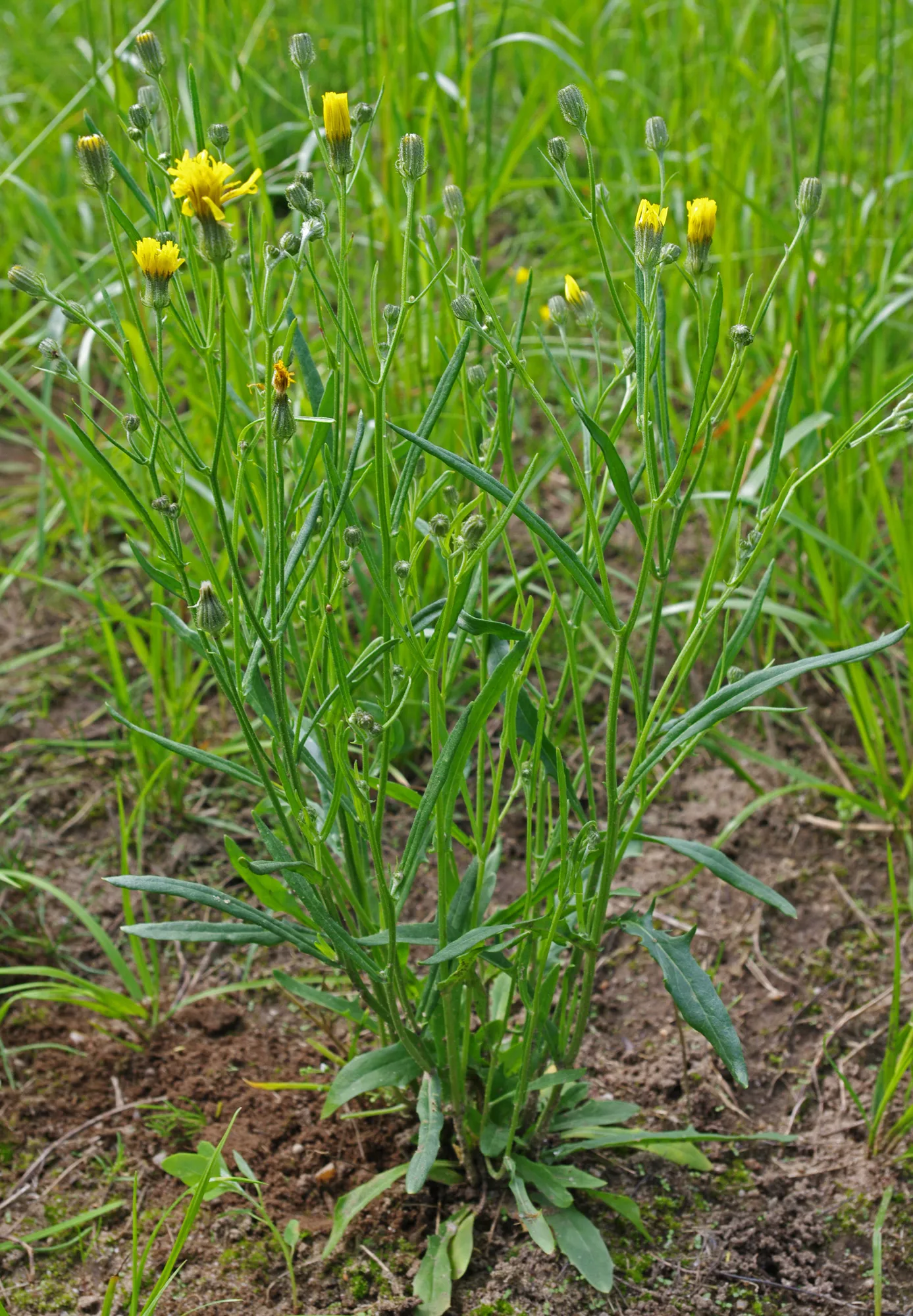
Wall Hawkweed (Crepis tectorum)
Wall Hawkweed (Crepis tectorum L.) is a non-parasitic overwintering weed in the Asteraceae family (Asteraceae).
Life cycle: annual, winter annual, or biennial.
Other names: narrow-leaved hawk’s beard (Eng.), annual hawk’s beard (Eng.), yellow hawk’s beard (Eng.).
Taxonomy
Classification
Kingdom: Plants (Plantae)
Division: Flowering plants (Angiosperms) (Angiospermae)
Class: Dicotyledons (Dicotyledoneae)
Order: Asterales (Asterales)
Family: Asteraceae (Asteraceae)
Genus: Hawkweed (Crepis)
Species: Wall Hawkweed (Crepis tectorum L.)
Origin
Introduced from Siberia to North America before 1890.
Photos

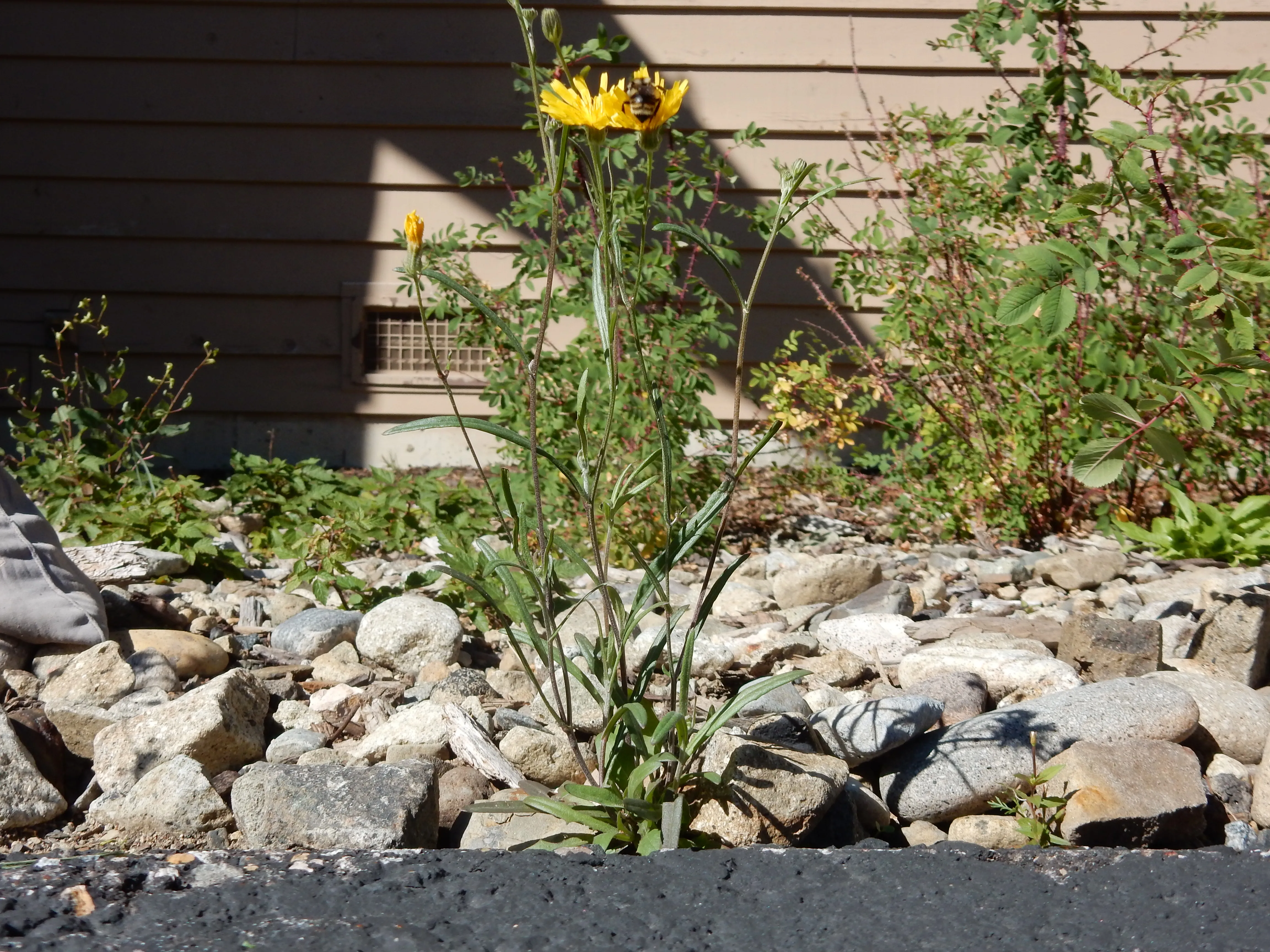
Wall Hawkweed (Crepis tectorum)

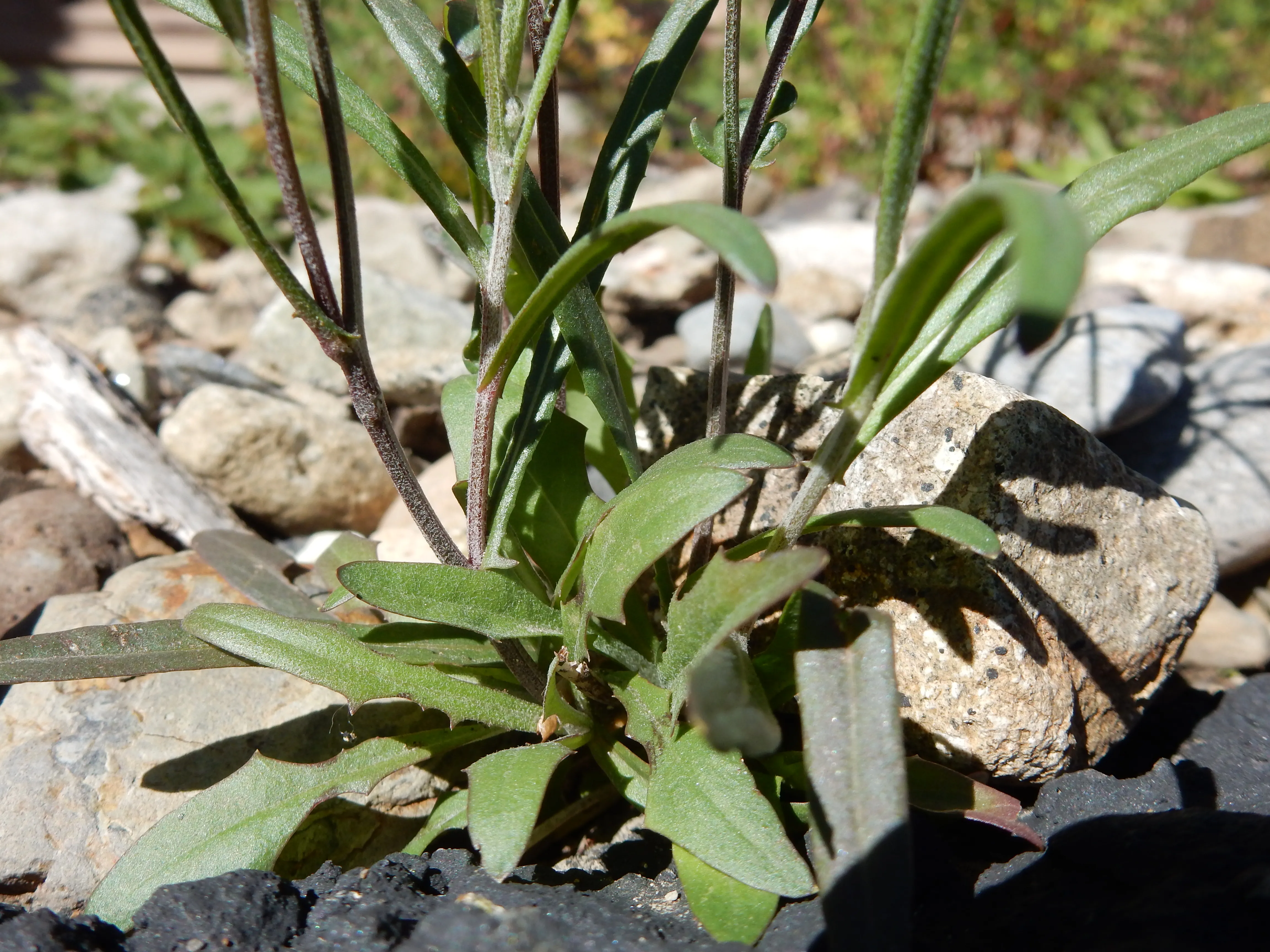
Wall Hawkweed (Crepis tectorum)

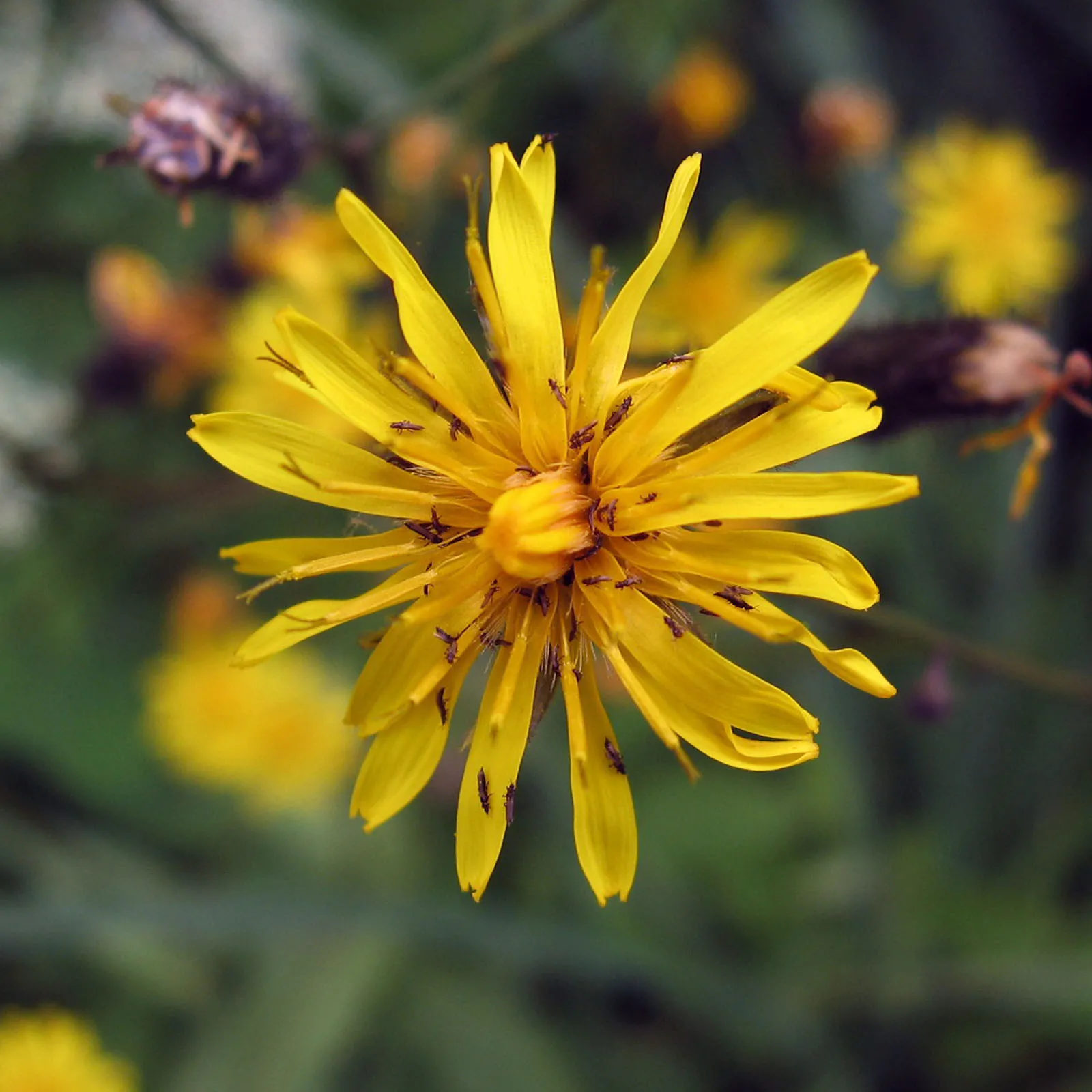
Wall Hawkweed (Crepis tectorum)


LCD 4-in-1 Soil Tester
Check essential growing conditions with one compact tool. Measure soil pH, moisture, temperature and light intensity — ideal for gardens, potted plants and greenhouses.
- 4-in-1 measurement
- Easy-to-read LCD display
- Portable design
Affiliate link · For indicative measurements only.
Botanical Description
Root System
Taproot, (strongly) branched, penetrating deep into the soil.
Seeds
Seeds are dark purplish-brown, spindle-shaped, 3–4 mm long, distinctly 10-ribbed.
Pappus of numerous white bristles 4–5 mm long.
Seedlings
Seedlings with oval or oblong-elliptic cotyledons, (6) 10–12 mm long and 2–3 (4) mm wide, glabrous.
First leaves are spatulate or elliptic, margins with several downward-pointing teeth.
Leaves
Leaves alternate, oblong or lanceolate, 1–4 cm long, 5–15 mm wide, pinnatifid, nearly glabrous or hairy below along the midrib with soft tangled hairs, sessile or petiolate, appressed to the stem. Margins often rolled downward.
Basal leaves lanceolate, 10–15 cm long and 4 cm wide. Margins vary from numerous backward-pointing teeth to deeply lobed segments.
Stem leaves have rolled margins and sagittate bases.
Rosette often absent at flowering.
Stems
Stems erect, solitary, glabrous or finely pubescent, thickened or slender, furrowed, ribbed-grooved or longitudinally striped, hollow, leafy, branched or weakly branching, exuding milky sap when broken, sometimes purple at the base.
Height (5) 15–80 (100) cm. In the European part of Russia, height is usually 30–40 cm. In Western Siberia (in the forest zone) it reaches 1–1.5 m in height and branches abundantly.
Inflorescences
Inflorescences are small heads (anthodia) 10–15 mm in diameter, borne at the tips of branches and stems, gathered in a common corymbose or paniculate-corymbose inflorescence, often in groups of 5. From 5 to 100 flowers per stem.
30–70 ray florets (flowers), yellow, 10–13 mm long, on slender peduncles slightly thickened below the heads.
Involucre narrowly campanulate, 7–10 mm long and 3–6 mm wide, pale green or green. Outer phyllaries linear, acute, spreading, 2–3 times shorter than the inner ones, without a scarious margin, externally appressed and finely greyish-arachnoid, covered with short glandular hairs, sometimes with bristly, pale or rarely blackish hairs.
From 5 to 18 bracts, 6–9 mm long, arranged in one or two rows.
12–15 inner bracts, 5–9 mm long, hairs bristly and black.
Fruit
Fruit is a cylindrical or spindle-shaped, slightly curved achene, 3–4 mm long, about 0.5 mm wide, with 10 ribs, dark brown or reddish-brown achene, with a white pappus.
Ecology
Natural Zones
Wall hawkweed is distributed mainly in the forest zone. In the forest-steppe and steppe zones it is less common; in the south it loses its significance as a weed.
Soil Requirements
Wall hawkweed prefers fertile, humus-rich, moist soils.
Habitats
Segetal and ruderal weed.
Habitats: pastures, meadows, gardens, wastelands, dry meadows, in light forests, forest edges, roadsides, weedy places.

Solar Automatic Drip Irrigation Kit for Gardens
Automate watering for pots, gardens and small greenhouses. This solar-powered system features a timer to help schedule water delivery to your plants.
- Solar-powered
- 15 m irrigation hose
- Programmable watering
Affiliate link · Check included accessories.
Physiology
Germination
Seed viability in soil is less than 2.5 years.
Germination rate is high.
Maximum germination depth is 3–4 cm.
Germination occurs at temperatures from 10 to 35 °C. Optimum temperature is 20–25 °C.
Vegetation
Usually classified as a wintering-type weed, but sometimes as a winter or spring type of development.
In Siberian conditions, it often develops as a spring weed and is a major contaminant of forage crops.
Seedlings emerge in March–May, also early in autumn.
Flowering June–September (October). Fruiting July–late autumn.
Reproduction
Reproduces by seeds. Seeds mature simultaneously with or earlier than cereal crops, shed and contaminate the soil.
Large plants produce up to 49,000 seeds; according to other data, up to 40,900 achenes (Bazdyrev).
Weight of 1000 seeds – about 0.5 g.
Distribution
A widespread weed in Russia.
Distribution areas
Russia:
- European part — all areas;
- Western and Eastern Siberia — all areas;
- Far East — all areas.
Belarus, Ukraine, Moldova, Latvia, Lithuania, Estonia — all areas.
Kazakhstan:
- Lower Volga (West Kazakhstan Region (west), Atyrau Region (west);
- Upper Tobolsk (Kostanay Region (north));
- Irtysh (North Kazakhstan Region, Akmola Region, Karaganda Region (north), Pavlodar Region, Kostanay Region (south), East Kazakhstan Region (west));
- Altai (East Kazakhstan Region (east));
- Balkhash (Karaganda Region (south), Almaty Region (north), Zhambyl Region, Turkestan Region).

7-in-1 Wi-Fi Weather Station
Monitor local weather conditions with a wireless outdoor sensor. Track temperature, humidity, rainfall, wind speed and direction, and atmospheric pressure. Ideal for gardens, farms and greenhouses.
- Wireless outdoor sensor
- Solar-powered
- Wi-Fi connectivity
Affiliate link · Check regional compatibility.
Harmfulness
Crop Weed
It infests forage and grain crops, and is also found in fallow lands and row crops.
In Western Siberia (in the forest zone), it is widely distributed in grass mixtures, where it is the main weed.
Roof weed is a harmful weed of winter crops, as its winter development phase is not controlled by spring cultivation.
Control Methods
Agronomic Practices
Measures for roof weed control include:
- mowing before seed formation in uncultivated areas;
- timely and thorough treatment of clean and occupied fallows.
Chemical Methods
Relatively sensitive to herbicides.

40W Full Spectrum LED Grow Light
Support healthy plant growth with full-spectrum LED lighting. Ideal for seedlings, indoor plants and small growing spaces. A practical solution for indoor gardening and year-round cultivation.
- Full-spectrum LED
- Energy-efficient design
- Indoor plant growing
Affiliate link · Check actual power and light coverage.
List of References
- Bazdyrev G.I. (1993) Weeds and Their Control Measures in Modern Agriculture: A Textbook for Universities. Moscow: Moscow Agricultural Academy Publishing House.
- Dickinson, R., Royer, F. (2014) Weeds of North America. The University of Chicago Press.
- Nikitin, V.V. (1983) Weeds of the Flora of the USSR. Leningrad: Nauka.
- Gubanov, I.A., Kiseleva, K.V., Novikov, V.S., Tikhomirov, V.N. (2004) Illustrated Guide to Plants of Central Russia. Volume 3: Angiosperms (dicotyledons: dipetalous). Moscow: KMK Scientific Publications, Institute of Technological Research.
- S_10
