
Sharpleaf Swallow-wort (Cynanchum acutum)

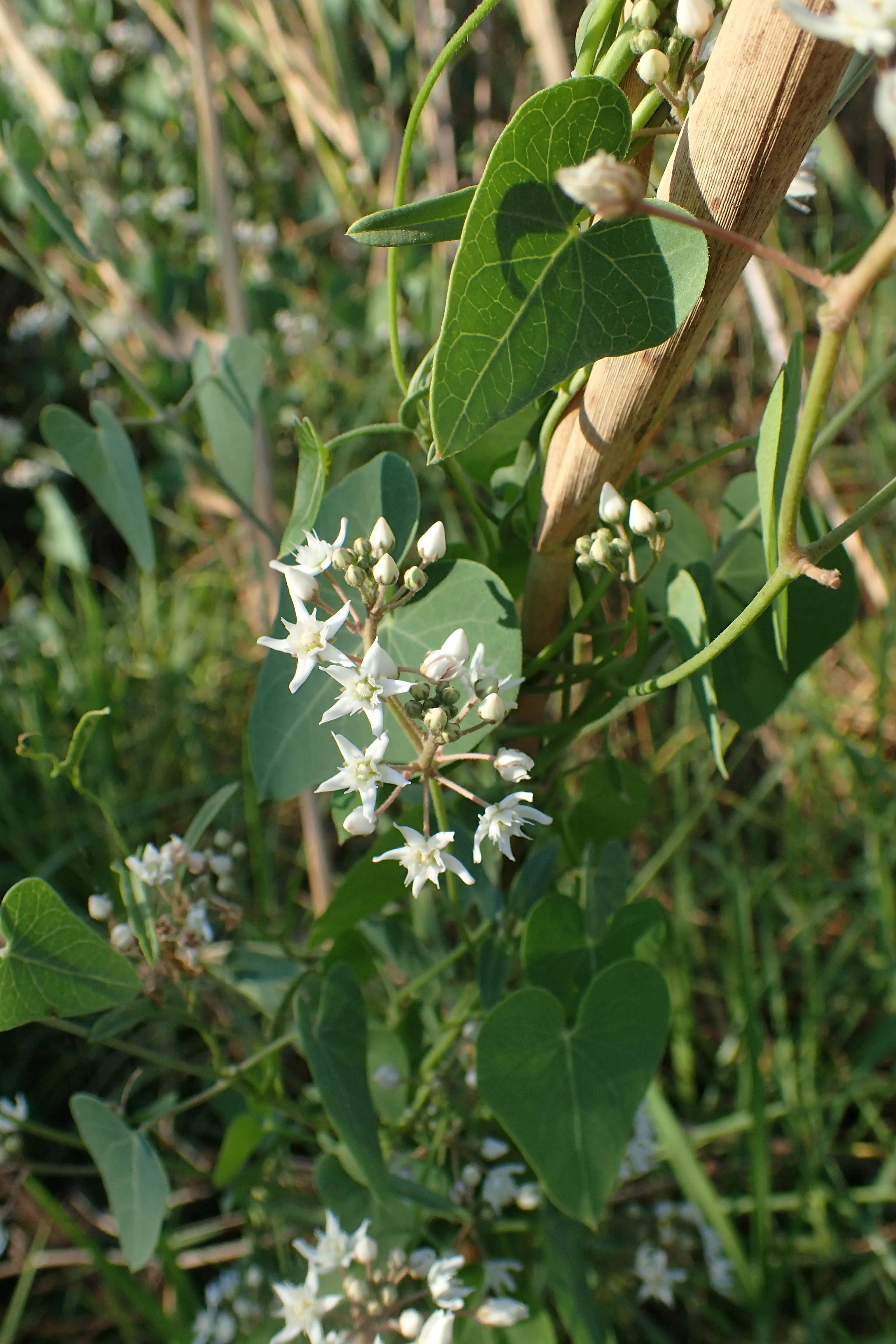
Sharpleaf Swallow-wort (Cynanchum acutum)
Sharpleaf Swallow-wort (Cynanchum acutum) is a non-parasitic perennial rhizomatous herbaceous weed of the family Asclepiadaceae (Asclepiadaceae).
Life cycle: perennial.
Other names: sharp cynanchum, тюе-табан, тюе-шермаук (Kazakh), печек (Turkmen).
Taxonomy
Classification
Kingdom: Plants (Plantae)
Division: Flowering plants (Angiosperms) (Angiospermae)
Class: Dicotyledons (Dicotyledoneae)
Order: Gentianales (Gentianales)
Family: Asclepiadaceae (Asclepiadaceae)
Genus: Cynanchum (Cynanchum)
Species: Sharpleaf Swallow-wort (Cynanchum acutum (L.))
Photos

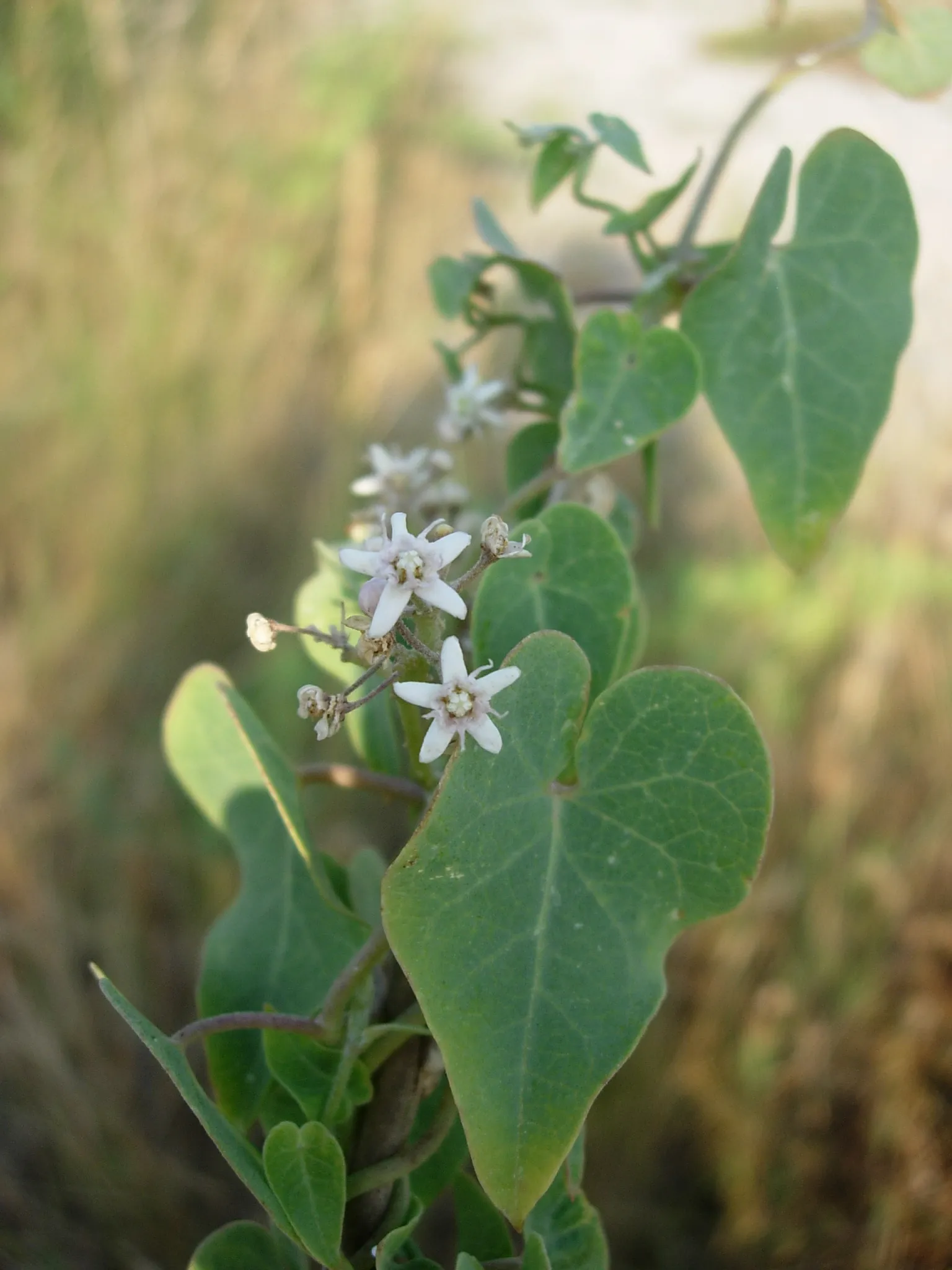
Sharpleaf Swallow-wort (Cynanchum acutum)

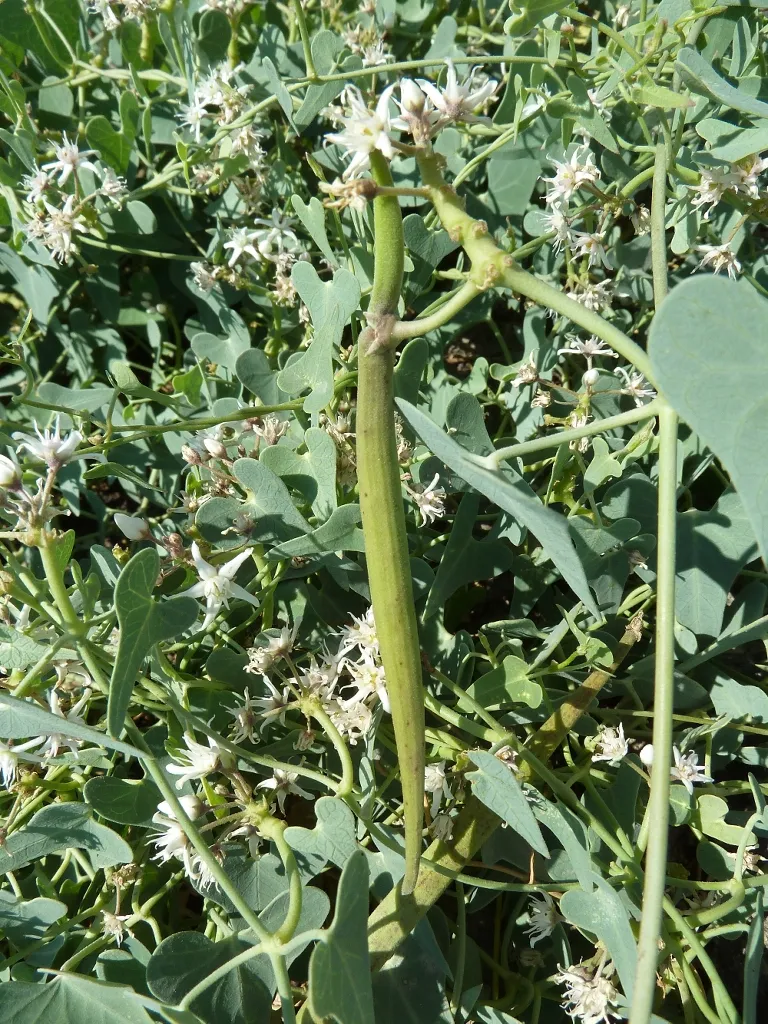
Sharpleaf Swallow-wort (Cynanchum acutum)

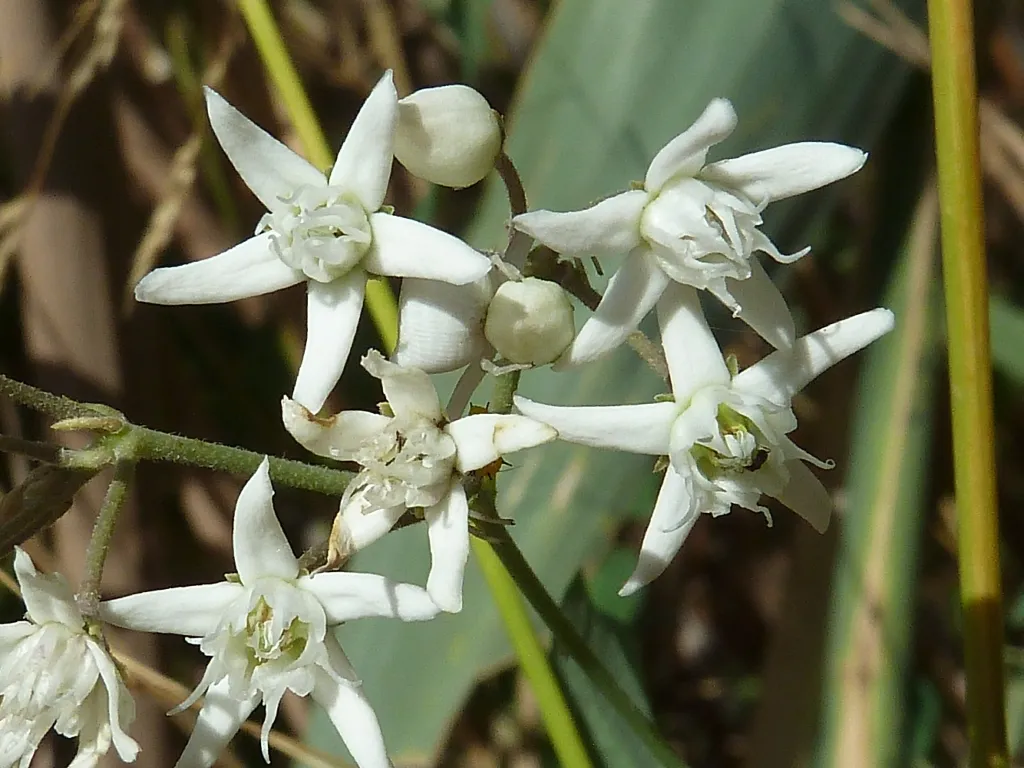
Sharpleaf Swallow-wort (Cynanchum acutum)


LCD 4-in-1 Soil Tester
Check essential growing conditions with one compact tool. Measure soil pH, moisture, temperature and light intensity — ideal for gardens, potted plants and greenhouses.
- 4-in-1 measurement
- Easy-to-read LCD display
- Portable design
Affiliate link · For indicative measurements only.
Botanical description
Root system
The root system consists of curved cord-like rhizomes bearing renewal buds and thinner adventitious lateral roots.
The bulk of the root system is located in the soil layer of 5–25 cm.
Seeds
Seeds are oval, flattened, 5–7 mm long, 2–3 mm wide, 0.2–0.3 mm thick, with a winged margin, brownish‑grey.
Seedlings
Cotyledon leaves are lanceolate, 8–15 mm long, 2–4 mm wide.
Subsequent leaves are narrow‑ovate, lanceolate, entire‑margined.
Leaves
Leaves are opposite, pointed, almost triangular, with uneven sinuses.
Stems
Stems are twining, weakly furrowed, sometimes finely pubescent. Shoots arise from leaf axils.
Plant length reaches 8 m.
Inflorescences
Flowers are pink or white, gathered in semi‑umbels located in leaf axils on long pedicels.
Fruit
The fruit is a many‑seeded follicle, two‑valved, dehiscent.
Ecology
Light requirements
Sharpleaf Swallow‑wort prefers sunny places.
Soil requirements
It grows on sufficiently moist soils. Tolerates salinity.
Habitats
Habitats: damp places, riverbanks, irrigation ditches, streams, canals, slopes, among shrubs, weedy, sandy and rocky places.

Solar Automatic Drip Irrigation Kit for Gardens
Automate watering for pots, gardens and small greenhouses. This solar-powered system features a timer to help schedule water delivery to your plants.
- Solar-powered
- 15 m irrigation hose
- Programmable watering
Affiliate link · Check included accessories.
Physiology
Germination
Germination of freshly ripened seeds is low. They germinate well after overwintering.
Maximum germination depth is 4–5 cm.
Vegetation
Seeds begin to germinate in early spring.
Flowering (June) July–August. Fruiting August–September.
Reproduction
Fecundity of one plant is up to 1,500 seeds (Bazdyrev).
Weight of 1000 seeds — about 1.5 g.
Distribution
Sharpleaf Swallow‑wort is distributed in the south, south‑west and south‑east of the European part of Russia, in the Caucasus, Siberia and the countries of Central Asia.
Regions of distribution
Russia:
- European part: Lower Don (Volgograd Oblast (west), Rostov Oblast, Krasnodar Krai (north), Republic of Kalmykia), Trans‑Volga (Saratov Oblast, Samara Oblast, Ulyanovsk Oblast (east), Republic of Tatarstan (south), Republic of Bashkortostan, Orenburg Oblast (north‑west)), Lower Volga (Astrakhan Oblast, Volgograd Oblast (west)), Crimea (Republic of Crimea and Sevastopol);
- North Caucasus — all districts;
- Western and Eastern Siberia — Irtysh (Omsk Oblast, Novosibirsk Oblast, Kemerovo Oblast, Altai Krai).
Georgia, Azerbaijan, Armenia, Moldova, Uzbekistan, Kyrgyzstan, Tajikistan, Turkmenistan, Kazakhstan — all regions.
Ukraine: Black Sea coast (Odesa Oblast, Mykolaiv Oblast, Kherson Oblast, Zaporizhzhia Oblast, Donetsk Oblast).

7-in-1 Wi-Fi Weather Station
Monitor local weather conditions with a wireless outdoor sensor. Track temperature, humidity, rainfall, wind speed and direction, and atmospheric pressure. Ideal for gardens, farms and greenhouses.
- Wireless outdoor sensor
- Solar-powered
- Wi-Fi connectivity
Affiliate link · Check regional compatibility.
Harmfulness
Infestation of crops
Infests vineyards, fruit plantations, cotton fields, and less frequently irrigated grain crops.
Toxicity
Sharpleaf Swallow‑wort contains a poisonous milky sap.
The plants contain the toxic glucoside vincetoxin. When entering the body, it first stimulates the nervous system, then quickly leads to paralysis of the nervous system, heart, and skeletal muscles.
Poisoning of sheep is often observed.
Useful properties
Fodder value
Not eaten by livestock. Ingestion by animals causes severe poisoning and induces severe diarrhoea, convulsions, and vomiting.
Pheasants eat the fruits.

40W Full Spectrum LED Grow Light
Support healthy plant growth with full-spectrum LED lighting. Ideal for seedlings, indoor plants and small growing spaces. A practical solution for indoor gardening and year-round cultivation.
- Full-spectrum LED
- Energy-efficient design
- Indoor plant growing
Affiliate link · Check actual power and light coverage.
Chemical composition
Leaves contain rubber (2.5–7%) and about 7% resins.
Control measures
Agronomic methods
The main agronomic control measure is systematic and deep tillage.
After harvesting cultivated plants, it is necessary to carry out double deep stubble ploughing followed by deep ploughing and semi‑fallow tillage.
Agronomic measures should be supplemented with chemical control methods.
References
- Bazdyrev, G.I. (1993) Weed plants and their control in modern agriculture: A textbook for universities. Moscow: Publishing House of the Moscow Agricultural Academy.
- Nikitin, V.V. (1983) Weed plants of the flora of the USSR. Leningrad: Nauka.
- Larin, I.V. et al. (1956) Forage plants of hayfields and pastures of the USSR. Volume III. Dicotyledons (Geraniaceae – Asteraceae). Moscow: State Publishing House of Agricultural Literature.
