
Wormseed Mustard (Erysimum cheiranthoides)

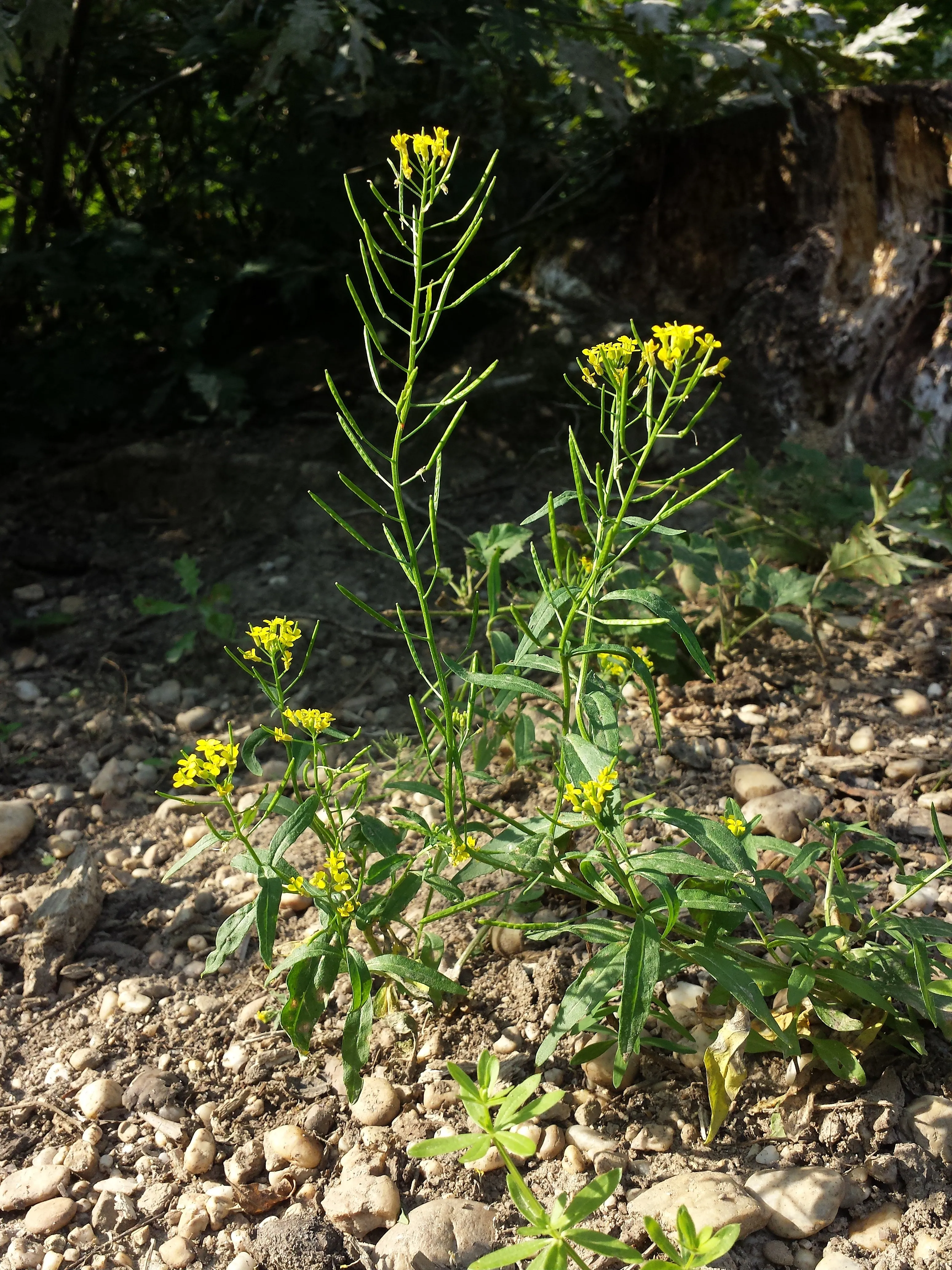
Wormseed mustard (Erysimum cheiranthoides)
Wormseed mustard (Erysimum cheiranthoides L.) is an early spring annual weed in the Mustard family (Brassicaceae).
Life cycle: summer annual or winter annual.
Other names: treacle mustard (English), treacle erysimum (English), wallflower mustard (English).
Taxonomy
Classification
Kingdom: Plants (Plantae)
Division: Flowering plants (Angiosperms) (Angiospermae)
Class: Dicotyledons (Dicotyledoneae)
Order: Brassicales (Brassicales)
Family: Mustard family (Brassicaceae), or Crucifers (Cruciferae)
Genus: Wallflower (Erysimum)
Species: Wormseed mustard (Erysimum cheiranthoides L.)
Synonyms
- Cheirinia cheiranthoides (L.) Link
Origin
Native to North America. Introduced subspecies may be present.
Photographs

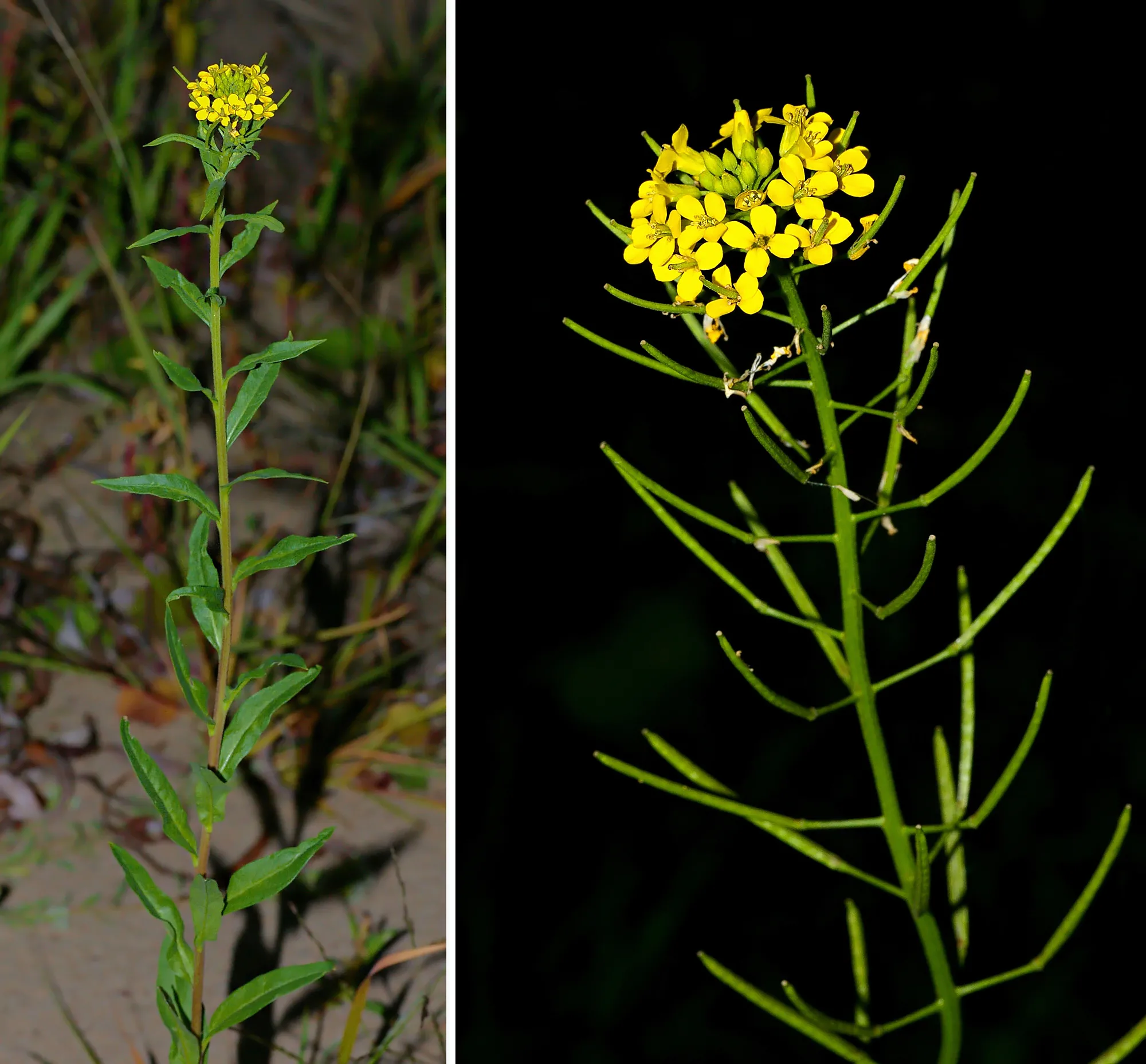
Wormseed mustard (Erysimum cheiranthoides)

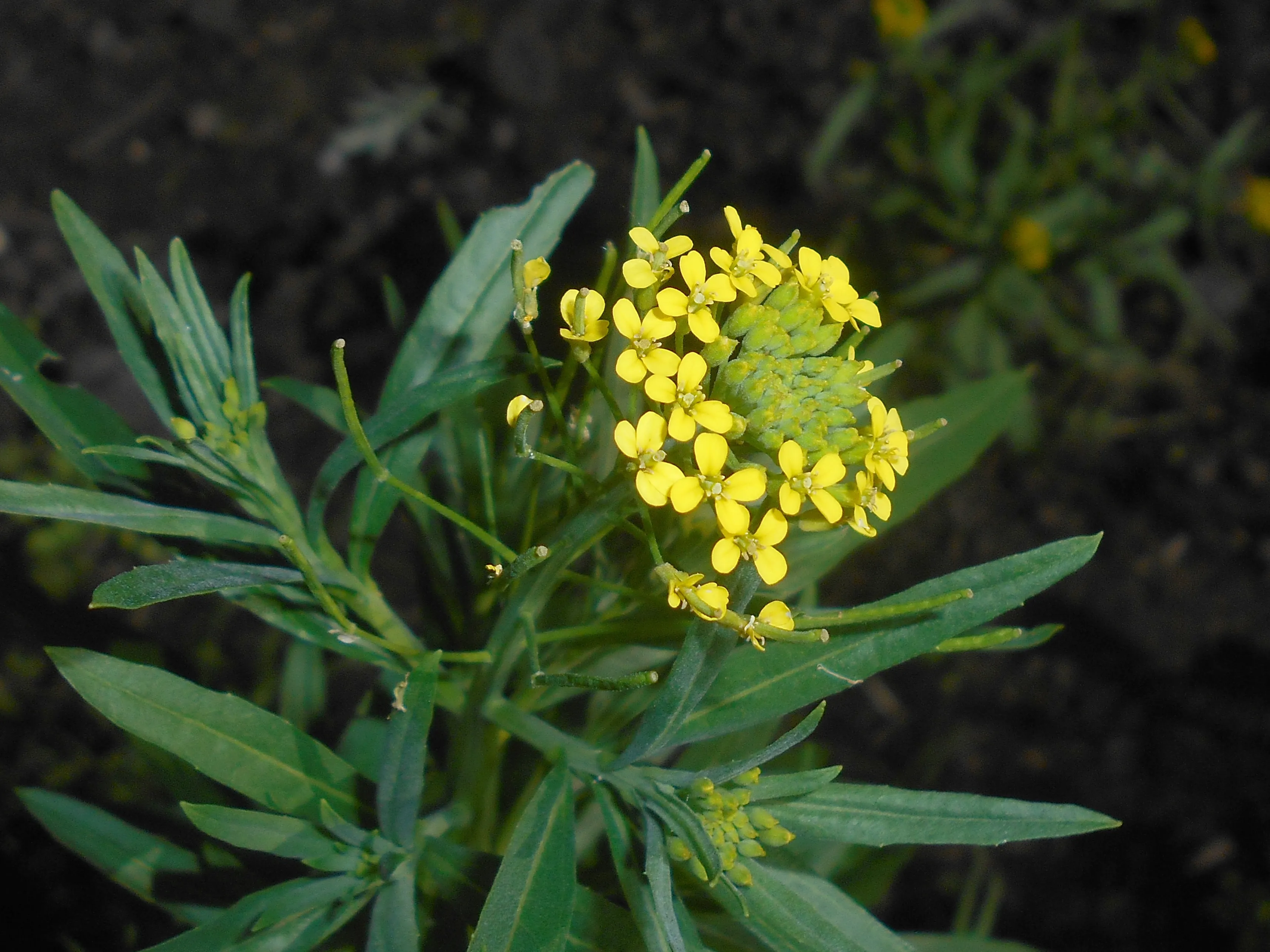
Wormseed mustard (Erysimum cheiranthoides)

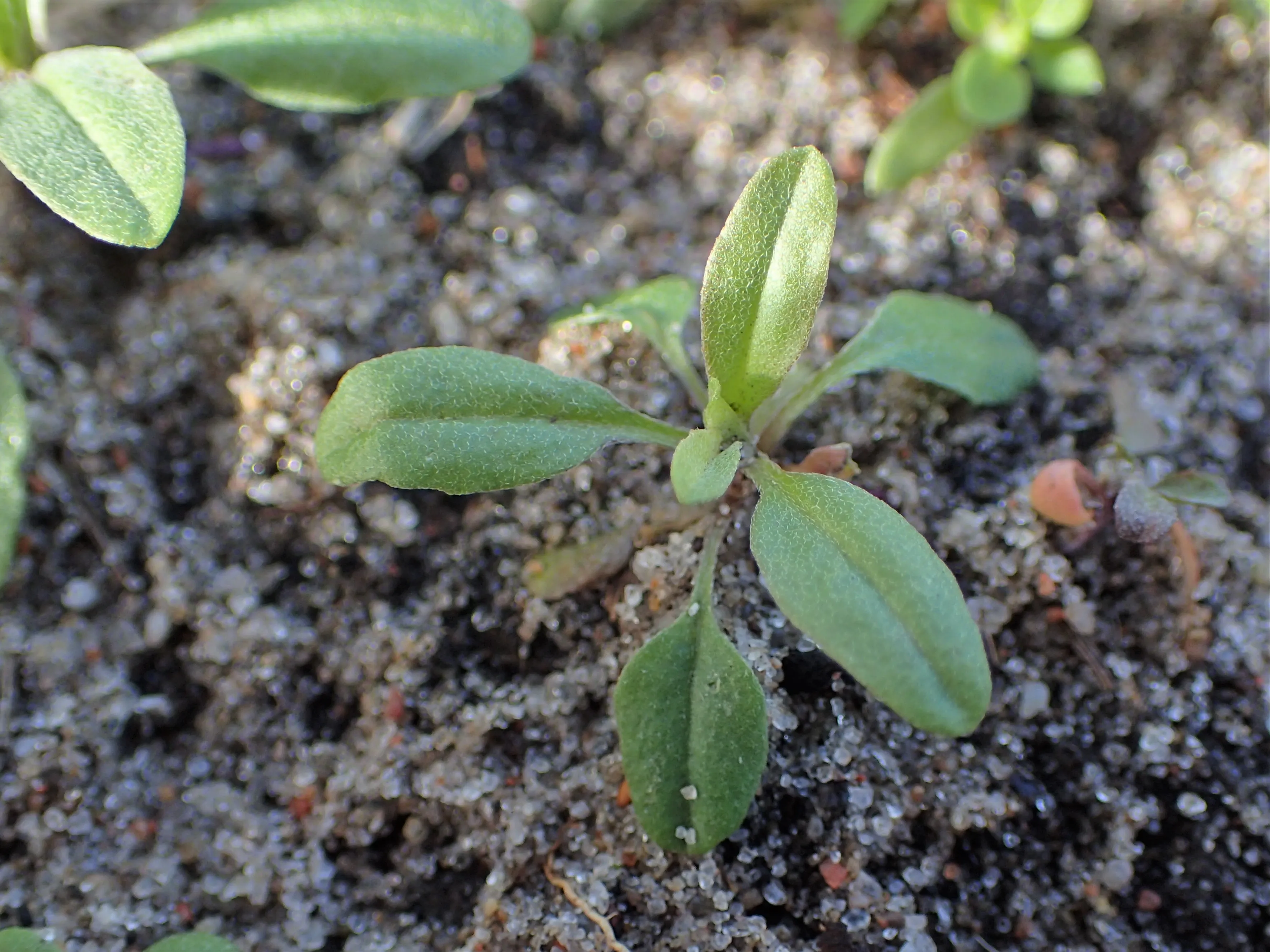
Wormseed mustard (Erysimum cheiranthoides)


LCD 4-in-1 Soil Tester
Check essential growing conditions with one compact tool. Measure soil pH, moisture, temperature and light intensity — ideal for gardens, potted plants and greenhouses.
- 4-in-1 measurement
- Easy-to-read LCD display
- Portable design
Affiliate link · For indicative measurements only.
Botanical Description
Root System
Taproot, short, branched.
Seeds
Seeds oblong, ovoid-angular or elliptical; light orange, yellowish-brown to brown, 1–1.3 (1.75) mm long, 0.5–0.6 (0.75) mm wide, with a dark spot at the hilum. Surface slightly rough and somewhat glossy.
Seedlings
Seedlings with spatulate, oblong-elliptical or oblong-obovate cotyledons, 1.5–5 (8) mm long, 1–2 (3) mm wide, pale green, tips slightly notched.
The first two leaves are opposite, angular-lobed, the surface with a few simple or stellate hairs.
Leaves
Leaves alternate, oblong or lanceolate, 1–8 cm long and 2 cm wide, dark green, pointed, margins smooth or wavy, surface covered with numerous forked, appressed 2–3-partite hairs, rough. Short-petioled.
Upper leaves sessile, distinctly toothed.
Stems
Stems erect, purple-green, sometimes branched, covered with short branched hairs.
Plant height from (15) 20–100 (120) cm.
Inflorescences
Inflorescence — a terminal raceme up to 3 cm across, elongating with age.
Pedicels directed obliquely upward, at fruiting up to 10 mm long, 2–3 times longer than the sepals and thinner than the fruit.
Flowers yellow (bright yellow), numerous, 6–10 mm across.
Four sepals, 2–3.5 mm long.
Four petals, 3.5–5.5 mm long.
Six stamens. One pistil.
Fruit
Four-angled, two-valved silique, 1.5–4 (up to 8.5) cm long, about 1.5 mm wide, with convex valves, covered with 3–4-partite hairs. Hairs project obliquely upward.
Beak short.
Stalks 6–12 mm long, erect, parallel to the stem.
At maturity, the fruits dehisce (split open).
Ecology
Natural Zones
Wormseed mustard is distributed almost from the Arctic Circle to semi-deserts and deserts. It is especially common in the forest-steppe, in the south of the forest zone, and in the north of the forest zone and in the steppe — rare.
Soil Requirements
Prefers eroded sandy soils.
Oxylomesophytes, i.e., grows on soils with a soil solution reaction from slightly acidic to neutral.
Habitats
Found in fields, along roads and near dwellings, on waste ground, non-agricultural land, along forest edges, clearings, ravines, riverbank bluffs, in vegetable gardens, orchards, lawns, and parks.

Solar Automatic Drip Irrigation Kit for Gardens
Automate watering for pots, gardens and small greenhouses. This solar-powered system features a timer to help schedule water delivery to your plants.
- Solar-powered
- 15 m irrigation hose
- Programmable watering
Affiliate link · Check included accessories.
Physiology
Germination
Viability unknown.
Fresh seeds have high germination.
Germination occurs in the upper 2 cm of soil. Maximum germination depth is 3–4 cm.
Minimum germination temperature 2–4 °C, optimum 20–30 °C (according to other sources 16–22 °C, Bazdyrev).
Seedlings emerge in spring and autumn; autumn seedlings are capable of overwintering.
Vegetation
Flowering May–August (September). Fruiting from June–September.
Reproduction
Reproduces by seeds. Dispersal is autobarochorous, i.e., by gravity, seed shedding.
Large plants produce up to 3,500 seeds, according to other sources up to 5,000–5,600 seeds (Bazdyrev).
Weight of 1,000 seeds — 0.3–0.4 g.
Distribution
It is distributed across Central Asia, Scandinavia, Central and Atlantic Europe (rarely in the Mediterranean), Mongolia, Japan, and China; it is an introduced species in North America and Africa.
It is an introduced species in the North and the Caucasus.
Distribution areas
Russia:
- European part — all regions (according to other sources, excluding Crimea);
- North Caucasus — Western Transcaucasia (Krasnodar Krai (coast));
- Western and Eastern Siberia — all regions;
- Far East — all regions.
Belarus, Ukraine, Moldova, Lithuania, Latvia, Estonia — all regions.
Georgia and the Republic of Abkhazia: Republic of Abkhazia, Adjara, Samegrelo-Zemo Svaneti, Guria.
Kazakhstan:
- Lake Balkhash region (Karaganda Region (south), Almaty Region (north), Zhambyl Region, Turkistan Region);
- Dzungarian-Tarbagatai region (Tarbagatai and Dzungarian mountains);
- Tian Shan region (Tian Shan mountains);
- Lower Volga region (West Kazakhstan Region (west), Atyrau Region (west));
- Upper Tobol region (Kostanay Region (north));
- Irtysh region (North Kazakhstan Region, Akmola Region, Karaganda Region (north), Pavlodar Region, Kostanay Region (south), East Kazakhstan Region (west));
- Altai region (East Kazakhstan Region (east)).
Uzbekistan and Kyrgyzstan — in the Tian Shan mountains.

7-in-1 Wi-Fi Weather Station
Monitor local weather conditions with a wireless outdoor sensor. Track temperature, humidity, rainfall, wind speed and direction, and atmospheric pressure. Ideal for gardens, farms and greenhouses.
- Wireless outdoor sensor
- Solar-powered
- Wi-Fi connectivity
Affiliate link · Check regional compatibility.
Harmfulness
Crop Infestation
Infests grain crops, row crops, and vegetable crops, as well as pastures and fallow fields.
It does not pose a threat to most agricultural crops, but can become a weed in rapeseed plantings, where it is difficult to control.
Toxicity
The seeds are bitter-tasting, and pigs refuse to eat contaminated feed. When plant parts get into fodder, they reduce its quality.
Cases of poisoning have been recorded in horses fed hay containing about 11% wormseed mustard and from 2 to 20% Roripa silvestris (Larin), although there is no direct evidence of toxicity.
Reservoir for Pests and Diseases
Serves as a reservoir for cucumber mosaic virus, turnip crinkle virus, turnip rosette virus, and turnip yellow mosaic virus.
Beneficial Properties
Honey Production
A nectar source for bees.
Medicinal Use
Wormseed mustard can be used for medicinal purposes. There are reports of cardiotonic properties and an effect against dyspnoea (Larin → Rossiysky): the preparation korezid (for acute and chronic heart failure) (Wild Useful Plants of the USSR). However, there is no current information on the use of medicines based on this plant.
Fodder Value
It is presumably eaten by all types of farm animals (Larin → Rabotnov, 1940). On pastures it is not grazed (Larin → Dmitriev) or is reluctantly grazed by cattle, goats, and sheep (Larin).
Other Uses
The fruits contain up to 40% fatty oil, suitable for the production of linseed oil (boiled oil).

40W Full Spectrum LED Grow Light
Support healthy plant growth with full-spectrum LED lighting. Ideal for seedlings, indoor plants and small growing spaces. A practical solution for indoor gardening and year-round cultivation.
- Full-spectrum LED
- Energy-efficient design
- Indoor plant growing
Affiliate link · Check actual power and light coverage.
Chemical Composition
Contains cardiac glycosides with cardiotonic activity.
Leaves and seeds contain potassium myronate (potassium glucosinolate), which, under the action of the enzyme myrosinase in an aqueous medium, is converted into mustard oil.
Alkaloids were not found in leaves and stems (Larin → Bankovsky, 1947).
Control Methods
Agronomic Methods
Observance of crop rotations and proper agricultural practices make wormseed mustard a relatively minor weed in crops.
Chemical Methods
Sensitive to herbicides 2,4-D and MCPA.
References
- Bazdyrev, G.I. (1993) Weed Plants and Control Measures in Modern Agriculture: A Textbook for Universities. Moscow: Publishing House of the Moscow Agricultural Academy.
- Nikitin, V.V. (1983) Weed Plants of the Flora of the USSR. Leningrad: Nauka.
- Klaassen, H., Freitag, J. (2004) Weed Plants, Distribution and Harmfulness, Species Identification. Joint publication of Landwirtschaftsverlag Münster-Hiltrup and BASF AG, Limburgerhof.
- Dickinson, R., Royer, F. (2014) Weeds of North America. The University of Chicago Press.
- Gubanov, I.A., Kiseleva, K.V., Novikov, V.S., Tikhomirov, V.N. (2003) Illustrated Guide to Plants of Central Russia. Volume 2: Angiosperms (Dicotyledons: Choripetalae). Moscow: KMK Scientific Press, Institute of Technological Research.
- Larin, I.V. et al. (1951) Fodder Plants of Hayfields and Pastures of the USSR. Volume II. Dicotyledons (Chloranthaceae – Fabaceae). Moscow: State Publishing House of Agricultural Literature.
- Flora of the European Part of the USSR, Volume IV. Collective authors. Executive editor A.A. Fedorov, volume editor Yu.D. Gusev. Leningrad: Nauka, 1979. 355 pp.
- Gubanov, I.A. et al. Wild Useful Plants of the USSR. Editor T.A. Rabotnov. Moscow: Mysl, 1976. 360 pp. with ill.; 40 plates.
- S_12
