
Ribwort Plantain (Plantago lanceolata)

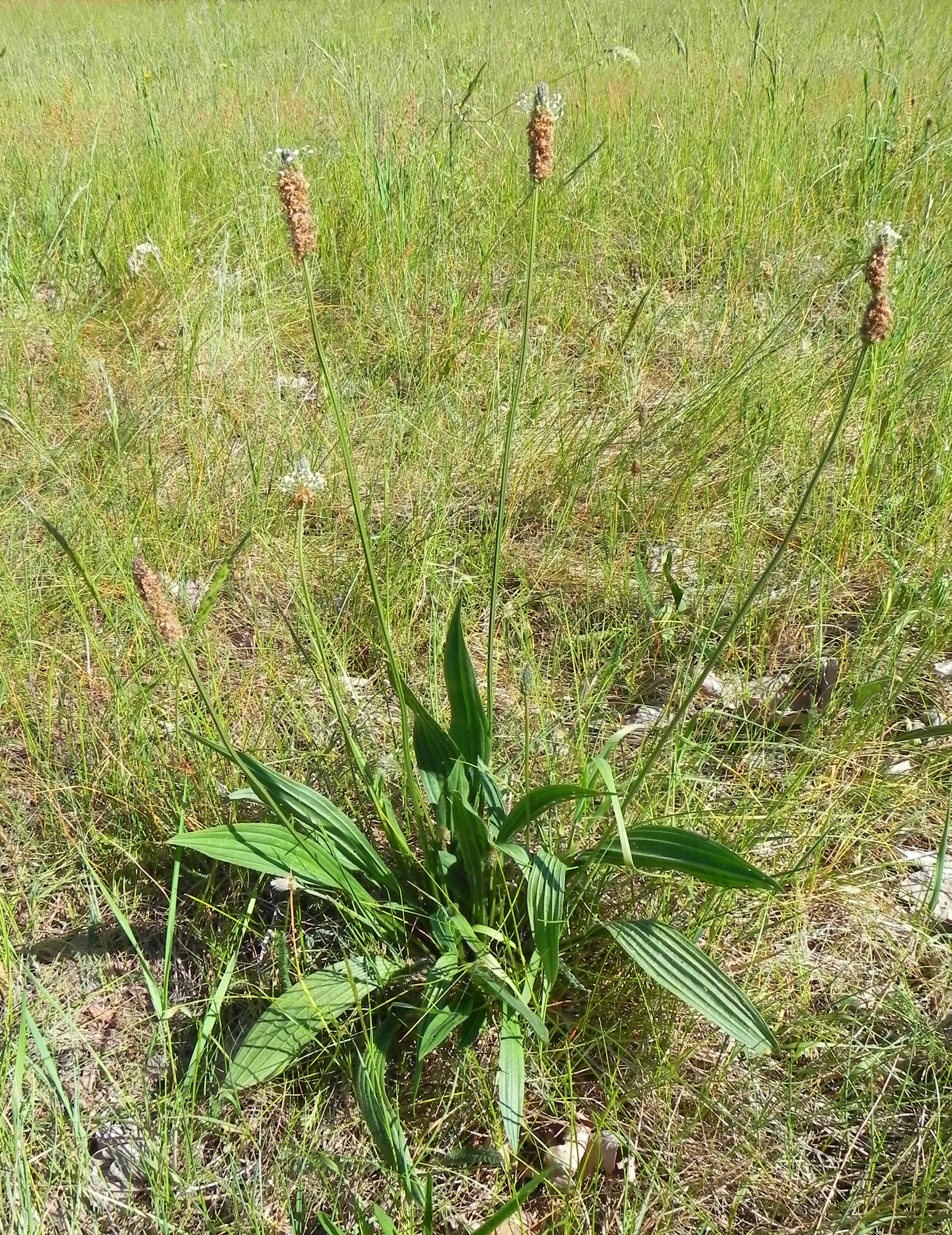
Ribwort Plantain (Plantago lanceolata)
Ribwort plantain (Plantago lanceolata) is a non-parasitic perennial tap-rooted weed in the Plantain family (Plantaginaceae). It is a specialized weed of irrigated alfalfa crops.
Life cycle: perennial.
Other names: narrowleaf plantain, English plantain, ribgrass, black plantain, buckhorn, buck plantain, black jacks, ripple plantain, snake plantain, dog's-ribs, cat's-cradles, rat-tail, hen-plant, lanceleaf Indianwheat.
Taxonomy
Classification
Kingdom: Plants (Plantae)
Division: Flowering plants (Angiosperms) (Angiospermae)
Class: Dicotyledons (Dicotyledoneae)
Order: Lamiales (Lamiales)
Family: Plantaginaceae (Plantaginaceae)
Genus: Plantain (Plantago)
Species: Ribwort plantain (Plantago lanceolata L.)
Synonyms
- Plantago altissima auct. non L.
Origin
Native to eastern Europe and the northern part of central Asia.
First discovered in North America in Nova Scotia in 1829.
Photos

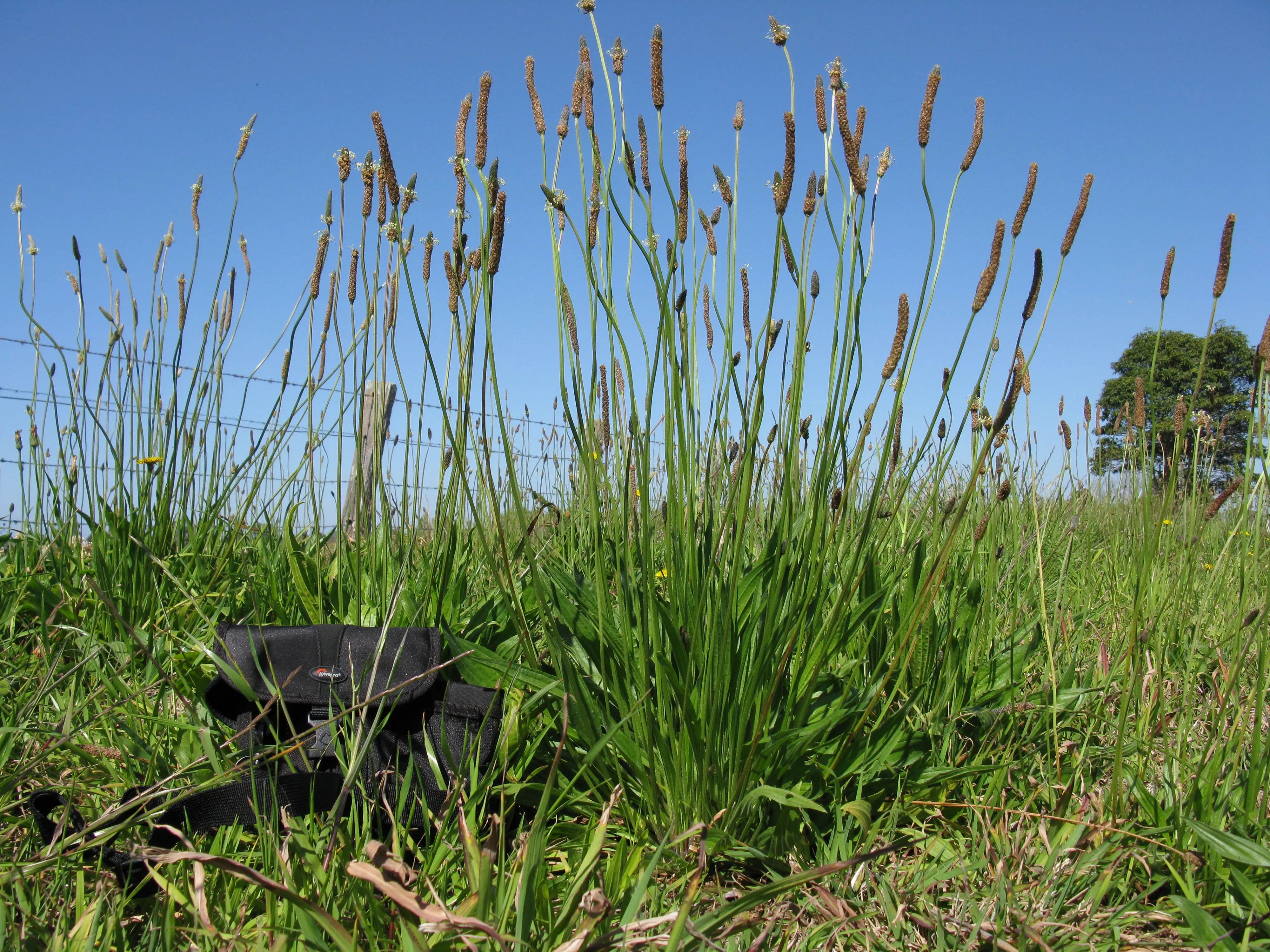
Ribwort Plantain (Plantago lanceolata)

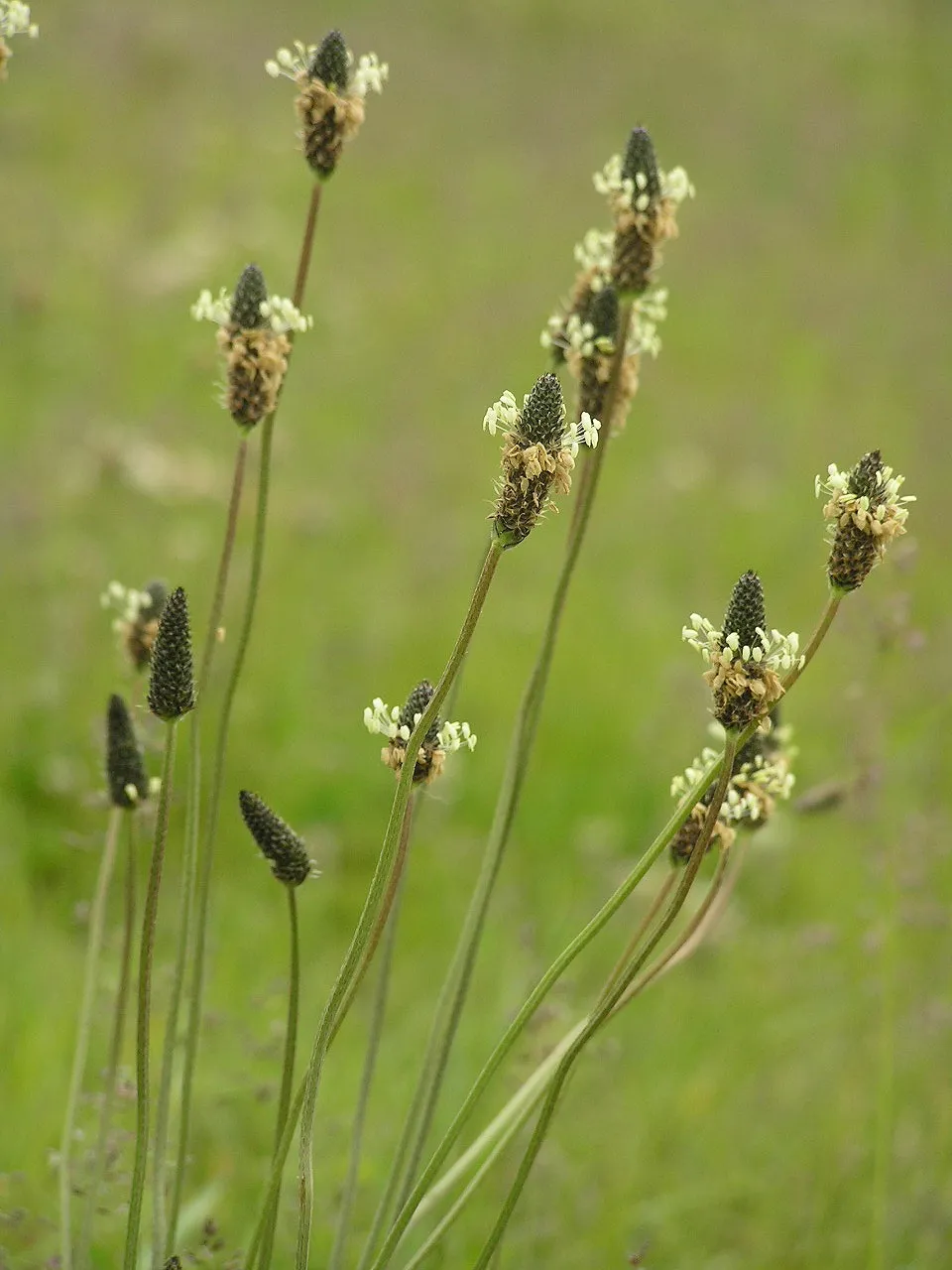
Ribwort Plantain (Plantago lanceolata)

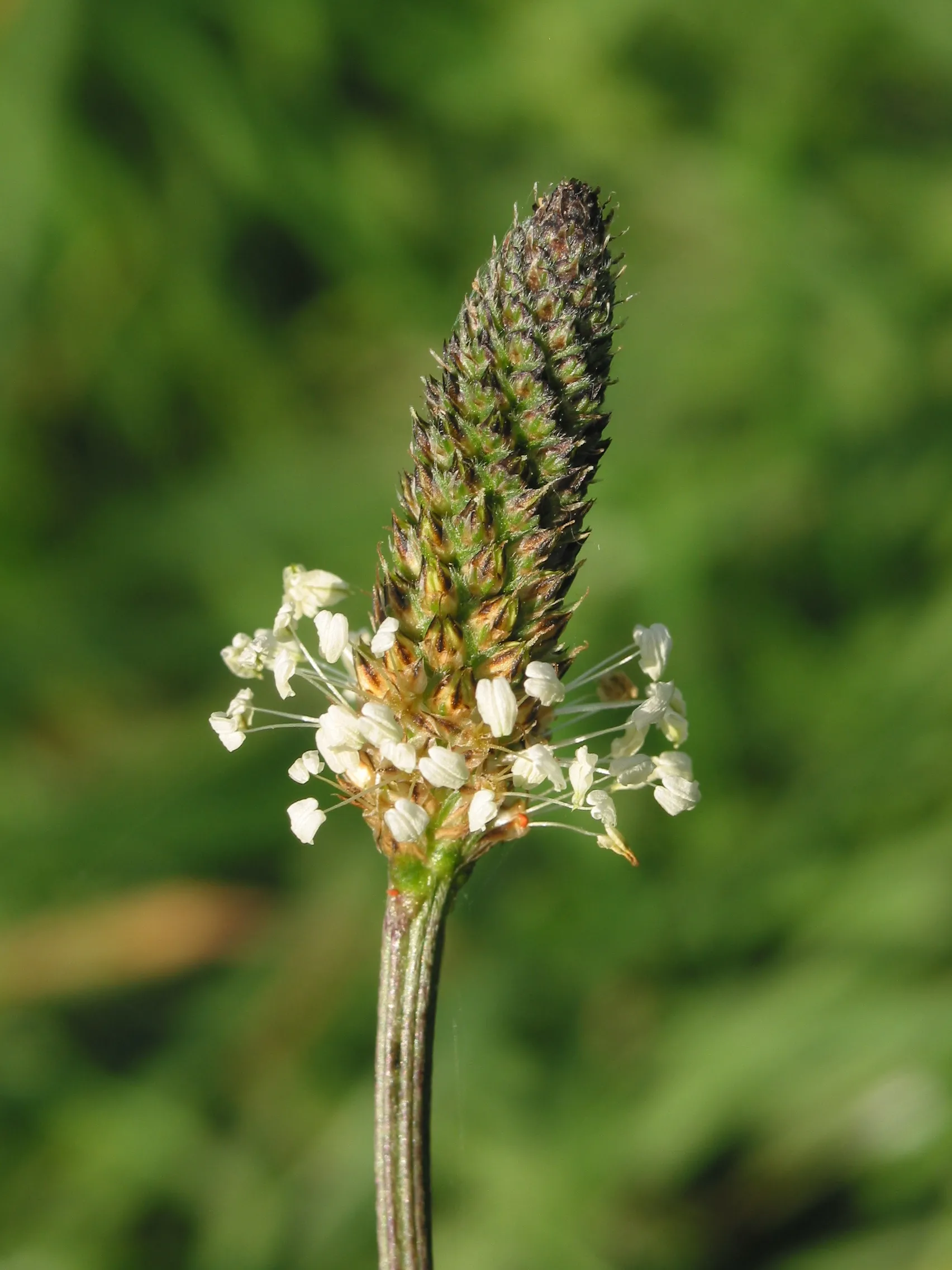
Ribwort Plantain (Plantago lanceolata)


LCD 4-in-1 Soil Tester
Check essential growing conditions with one compact tool. Measure soil pH, moisture, temperature and light intensity — ideal for gardens, potted plants and greenhouses.
- 4-in-1 measurement
- Easy-to-read LCD display
- Portable design
Affiliate link · For indicative measurements only.
Botanical Description
Root System
The root is thickened, taproot-type, short, penetrating up to 1 m deep, but most roots are confined to the upper 10 cm of soil. When cut, it can produce new shoots.
Seeds
Seeds are elliptical or oval-elongated, light to dark brown, orange-brown to black, glossy, 2-3 mm long, 1-1.2 (1.5) mm wide, and 0.45 mm thick. One side is convex, the other grooved. Under low magnification, the surface appears rough.
Seedlings
Seedlings have narrow linear cotyledon leaves, 17-22 mm long, 1 mm wide, with a groove on the upper side.
The first leaves are lanceolate, hairless, with three to five ribs on the underside.
Leaves
Leaves are basal (forming a rosette), lanceolate, linear-lanceolate or broadly lanceolate, herbaceous, (4) 8-15 (30) cm long, (0.5) 1-2 (4) cm wide, pointed, with distinctly three to seven veins, smooth margins (mostly entire or slightly toothed), tufts of brown hairs at the leaf base, on petioles (tapering into a long petiole), reddish near the petiole.
Stems
There is no distinct stem; flowering stalks (scapes) arise from the basal rosette, leafless, longitudinally grooved.
Scales are present near the crown.
Plant height: (10) 20-60 (80) cm.
Inflorescence
The inflorescence is a dense, short, ovoid, cylindrical or globular spike, up to 12 cm long. Large plants produce up to 30 spikes.
Flowers are brownish-greenish, 4-6 mm across, arranged in a cylindrical mass.
Calyx with four membranous keeled sepals, 3-3.5 mm long. The two anterior sepals are fused into a two-lobed scale with two brown or greenish keel stripes, making the calyx appear three-membered.
Corolla regular, membranous, brownish. Four fused petals (four-lobed limb), 2-3 mm long. Lobes ovate or oblong-ovate, pointed, about 12 mm long.
Four stamens, yellow, longer than the petals. Filaments white-yellow. One pistil.
Bracts membranous, with a herbaceous keel, ovate or elliptical, brownish, pointed.
Wind-pollinated.
Fruit
The fruit is an oblong, elliptical capsule, 3-4 mm long, one- or two-seeded, opening freely.
Ecology
Natural Zones
Does not grow in semi-desert and desert conditions.
Soil Requirements
Ribwort plantain prefers moderately moist, well-drained, fertile, loamy and sandy soils with high nitrogen content. It can also be found on dry meadows.
Habitats
Habitats include roadsides, meadows, forest clearings and edges, pastures, slopes and mountainous areas, waste places, vegetable gardens, orchards, irrigation ditches, and road shoulders.

Solar Automatic Drip Irrigation Kit for Gardens
Automate watering for pots, gardens and small greenhouses. This solar-powered system features a timer to help schedule water delivery to your plants.
- Solar-powered
- 15 m irrigation hose
- Programmable watering
Affiliate link · Check included accessories.
Physiology
Germination
Seed viability in soil is up to 16 years (Dickinson). According to other sources, up to 11 years in soil (Bazdyrev).
Optimal germination depth is 0.5 cm of soil.
Minimum germination temperature is 6-8 °C, optimal is 18-24 °C.
Germination of freshly ripened seeds depends on the weather conditions of the year; in dry years, it decreases.
Seeds germinate in a horizontal plane.
Vegetation
Ribwort plantain reaches maturity in 51 days. Plants live up to 12 years.
Flowering: May-July. Fruiting begins in June.
Reproduction
Reproduces by seeds and vegetatively (when roots are cut). Seeds become sticky when wet, aiding in their dispersal. Also, due to the similarity of its seeds to those of clover and alfalfa (and perennial grasses in general), it spreads with the seed material of these crops. Seeds can be spread with manure, as they retain up to 60% viability after passing through the digestive tract of animals. It also spreads by self-seeding.
Plants produce up to 10,000 seeds (Dickinson). According to other data, fecundity is 5-48.1 thousand seeds (Bazdyrev). Also, one plant can produce 1,500 seeds (Klaassen).
Weight of 1,000 seeds is about 1 g.
Distribution
Ribwort plantain is widely distributed in Europe and Asia.
Introduced and naturalized in several regions of Africa, North and South America.
In Russia, it is distributed everywhere except the Far East, where it is rare.
Distribution Regions
Russia:
- European part — all regions;
- North Caucasus — all regions;
- Western and Eastern Siberia: Verkhne-Tobolsky (Chelyabinsk Oblast (east), Kurgan Oblast, Orenburg Oblast (east)), Irtyshsky (Omsk Oblast, Novosibirsk Oblast, Kemerovo Oblast, Altai Krai), Altai (Altai Republic), Angara-Sayan (Krasnoyarsk Krai (south), Republic of Khakassia, Republic of Tyva, Irkutsk Oblast, Republic of Buryatia (southwest)), Daurian (Republic of Buryatia (east of Lake Baikal), Zabaykalsky Krai);
- Far East: Ussuriysky (Primorsky Krai, Khabarovsk Krai (south)), Sakhalin (Sakhalin Oblast).
Belarus, Ukraine, Moldova, Latvia, Lithuania, Estonia, Georgia, Armenia, Azerbaijan, Kazakhstan, Uzbekistan, Tajikistan, Turkmenistan, Kyrgyzstan — all regions.

7-in-1 Wi-Fi Weather Station
Monitor local weather conditions with a wireless outdoor sensor. Track temperature, humidity, rainfall, wind speed and direction, and atmospheric pressure. Ideal for gardens, farms and greenhouses.
- Wireless outdoor sensor
- Solar-powered
- Wi-Fi connectivity
Affiliate link · Check regional compatibility.
Harmfulness
Infestation of Crops
Registered as a weed in more than 50 countries.
Infests perennial grass crops, especially often in irrigated perennial alfalfa, where it is a specialized weed. Not found in annual crops.
Seeds are similar in size to red clover and alfalfa seeds, making separation from crop seed difficult.
Reservoir for Pests and Diseases
It is a carrier of the rosy apple aphid and the following viral diseases: beet yellows, tobacco mosaic, and tobacco ring spot tobacco.
Useful Properties
Medicinal Use
Can be used for medicinal purposes. It has hemostatic properties and is also used for eye diseases.
Fodder Value
It is assumed that ribwort plantain is similar in palatability to rock plantain for livestock.
According to observations made in Dagestan, it is well eaten by all types of livestock in hay, but less so on pastures.
Sheep, goats, and geese consume it satisfactorily on pasture. However, observations made in the Rostov region indicate that sheep do not eat it.
According to foreign data, it is eaten satisfactorily on pasture, sometimes on par with perennial ryegrass.
It has been noted that an admixture of ribwort plantain to clover reduces the likelihood of bloat.
Cultivation
In Europe, it is included in pasture grass mixtures on poor dry lands.
As of 1951, it was proposed for trial cultivation in the USSR.

40W Full Spectrum LED Grow Light
Support healthy plant growth with full-spectrum LED lighting. Ideal for seedlings, indoor plants and small growing spaces. A practical solution for indoor gardening and year-round cultivation.
- Full-spectrum LED
- Energy-efficient design
- Indoor plant growing
Affiliate link · Check actual power and light coverage.
Chemical Composition
Chemical composition of ribwort plantain plants, as percentage of dry matter:
- Ash — 9.0;
- Protein — 10.9;
- Fats — 2.3;
- Fiber — 12.3;
- Nitrogen-free extractives — 65.5.
Trace amounts of alkaloids have been found in the leaves.
Control Methods
Preventive Methods
Cleaning of seed material of perennial grasses, use of well-rotted manure.
Agronomic Methods
Deep plowing combined with pre-sowing and post-sowing treatments.
On meadows and pastures, frequent mowing is carried out.
Chemical Methods
Ribwort plantain is resistant to herbicides in the fruiting stage.
References
- Bazdyrev, G.I. (1993) Weeds and measures to control them in modern agriculture: Textbook for universities. Moscow: Publishing House of the Moscow Agricultural Academy.
- Dickinson, R., Royer, F. (2014) Weeds of North America. The University of Chicago Press.
- Nikitin, V.V. (1983) Weed plants of the flora of the USSR. Leningrad: Nauka.
- Klaassen, H., Freitag, J. (2004) Weeds, distribution and harmfulness, species identification. Joint publication of Landwirtschaftsverlag Münster-Hiltrup and BASF AG, Limburgerhof.
- Gubanov I.A., Kiseleva K.V., Novikov V.S., Tikhomirov V.N. (2004) Illustrated guide to plants of Central Russia. Volume 3: Angiosperms (dicotyledons: choripetalae). Moscow: KMK Scientific Press, Institute of Technological Research.
- Larin I.V. et al. (1956) Fodder plants of hayfields and pastures of the USSR. Volume III. Dicotyledons (Geraniaceae — Asteraceae). Moscow: State Publishing House of Agricultural Literature.
