
Arrowhead (Sagittaria sagittifolia)

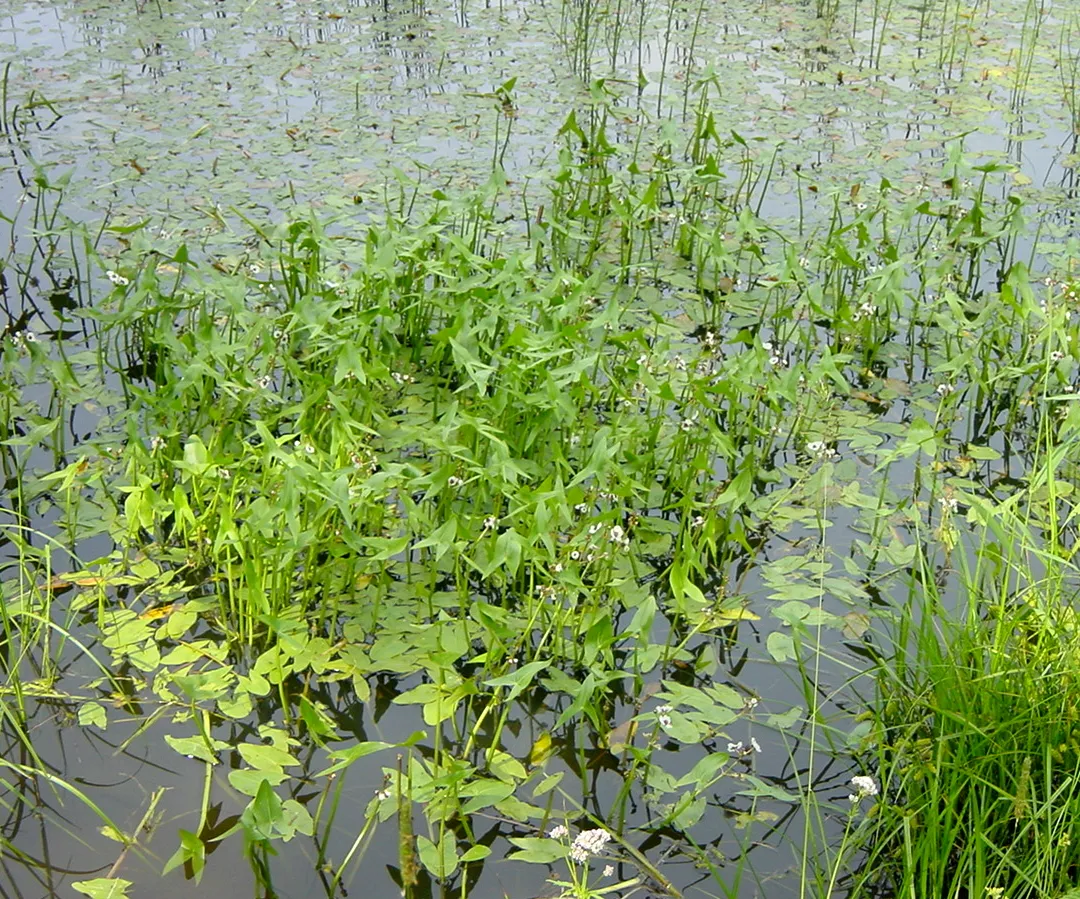
Arrowhead (Sagittaria sagittifolia)
Arrowhead (Sagittaria sagittifolia) or Common arrowhead is a perennial short‑rhizomatous weed with creeping shoots and tubers, rarely with rhizomes, belonging to the family Alismataceae (Alismataceae).
Other names:
- гусятник (goose‑grass)
- @attr[English|Eng.] Arrowhead
- @attr[Turkish|Turk.] Suoku
- @attr[Irish|Irl.] Rinn saighde
- @attr[German|Ger.] Echtes Pfeilkraut
- @attr[Italian|Ital.] Sagittaria comune
- @attr[French|Fr.] Sagittaire à feuilles en flèche
Taxonomy
Classification
- Kingdom
- Plants (Plantae)
- Subkingdom
- Vascular plants (Pteridobiotina)
- Division
- Flowering plants (Angiosperms)
- Order
- Water‑plantains (Alismatales)
- Family
- Water‑plantain family (Alismataceae)
- Genus
- Water‑plantain (Alisma)
- Species
- Arrowhead (Sagittaria sagittifolia L.)
Varieties, subspecies, forms
Synonyms
- Alisma sagittaria Stokes
- Sagitta aquatica Pline St.Lager
- Sagitta major Scop.
- Sagitta palustris Bubani
- Sagittaria acuminata Sm.
- Sagittaria aquatica Lam.
- Sagittaria aquatica var. minor Gray
- Sagittaria bulbosa (Poir.) Donn
- Sagittaria gigantea hort. ex E.Vilm.
- Sagittaria heterophylla Schreb.
- Sagittaria lancifolia hort. ex E.Vilm.
- Sagittaria minor Mill.
- Sagittaria monoeca Gilib.
- Sagittaria sagittifolia f. obtusa Bolle
- Sagittaria sagittifolia f. vallisneriifolia (Coss. & Germ.) Neuman
- Sagittaria sagittifolia f. xanthandra Holmb.
- Sagittaria sagittifolia subvar. butomoides Asch. & Graebn.
- Sagittaria sagittifolia subvar. pumila Asch. & Graebn.
- Sagittaria sagittifolia var. aequiloba Schur
- Sagittaria sagittifolia var. angustata Tinant
- Sagittaria sagittifolia var. angustifolia Gaudin
- Sagittaria sagittifolia var. angustissima Boreau
- Sagittaria sagittifolia var. arifolia Rouy
- Sagittaria sagittifolia var. bollei Asch. & Graebn.
- Sagittaria sagittifolia var. divaricata Schur
- Sagittaria sagittifolia var. heterophylla (Schreb.) Schur
- Sagittaria sagittifolia var. minor (Mill.) Regel
- Sagittaria sagittifolia var. stratiotes Bolle
- Sagittaria sagittifolia var. terrestris Bolle
- Sagittaria sagittifolia var. vallisneriifolia Coss. & Germ.
- Sagittaria tenuior Gand.
- Sagittaria vulgaris Gueldenst.
- Vallisneria bulbosa Poir.
Photographs

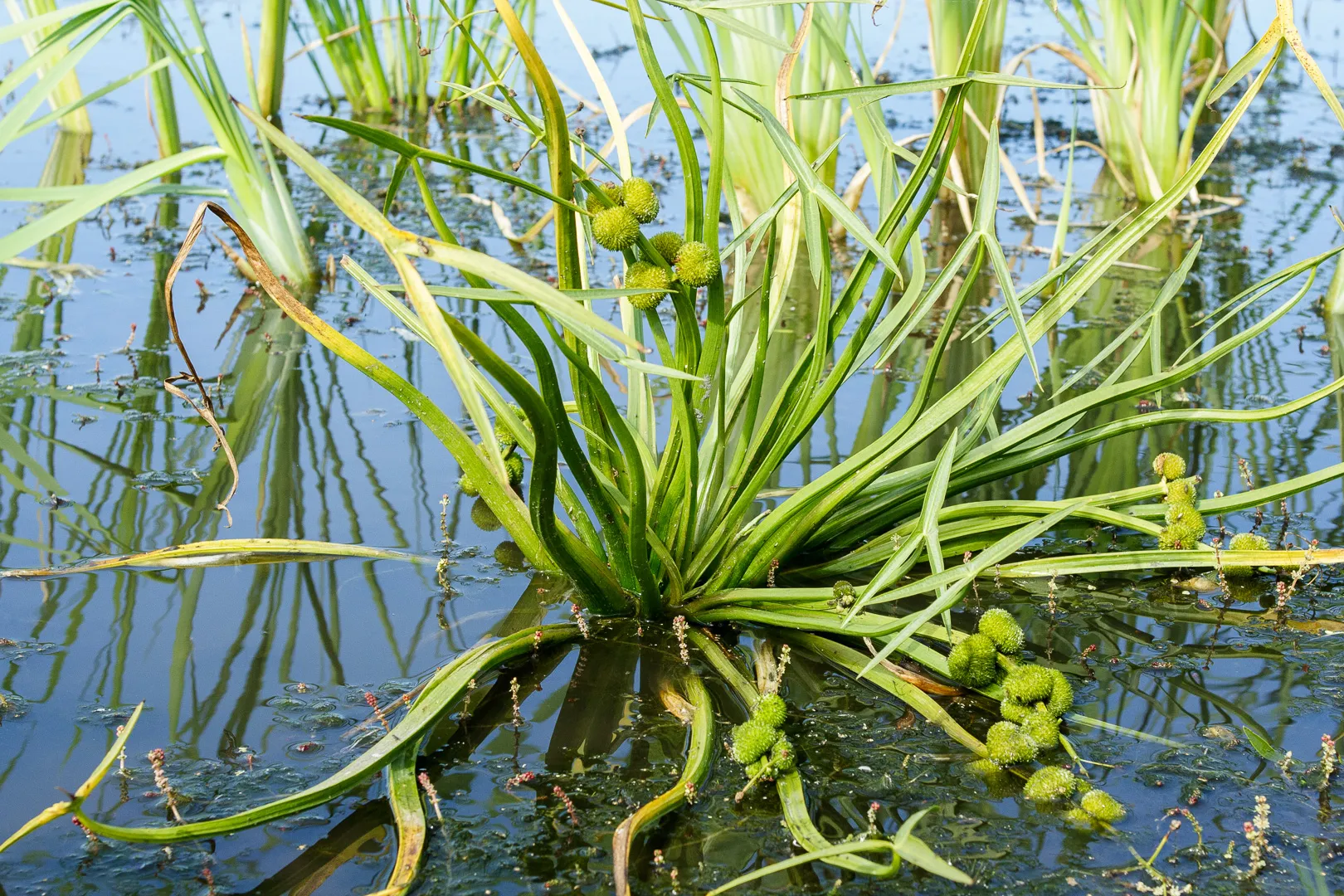
Arrowhead (Sagittaria sagittifolia)[Arrowhead (Sagittaria sagittifolia)]

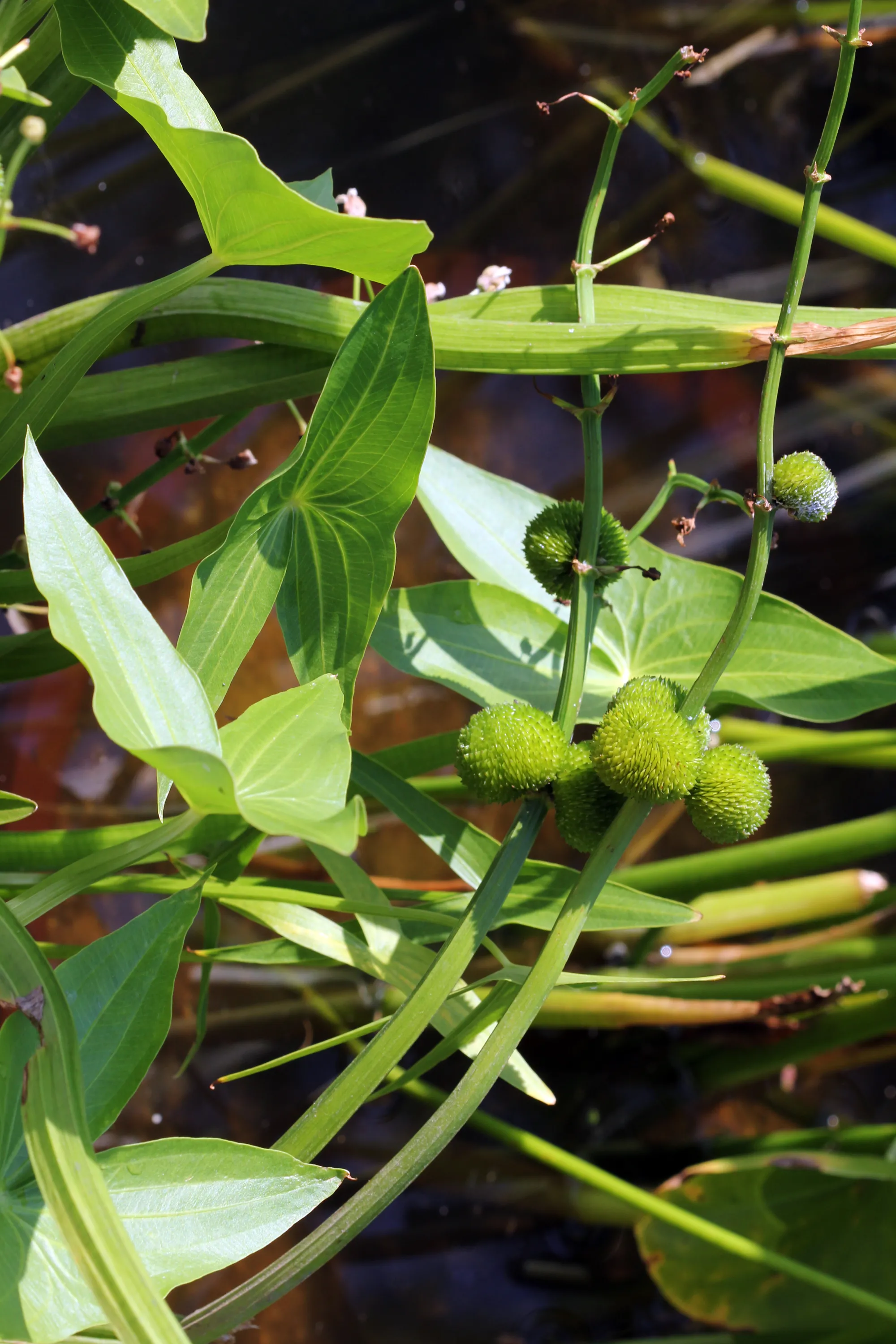
Arrowhead (Sagittaria sagittifolia)[Arrowhead (Sagittaria sagittifolia)]

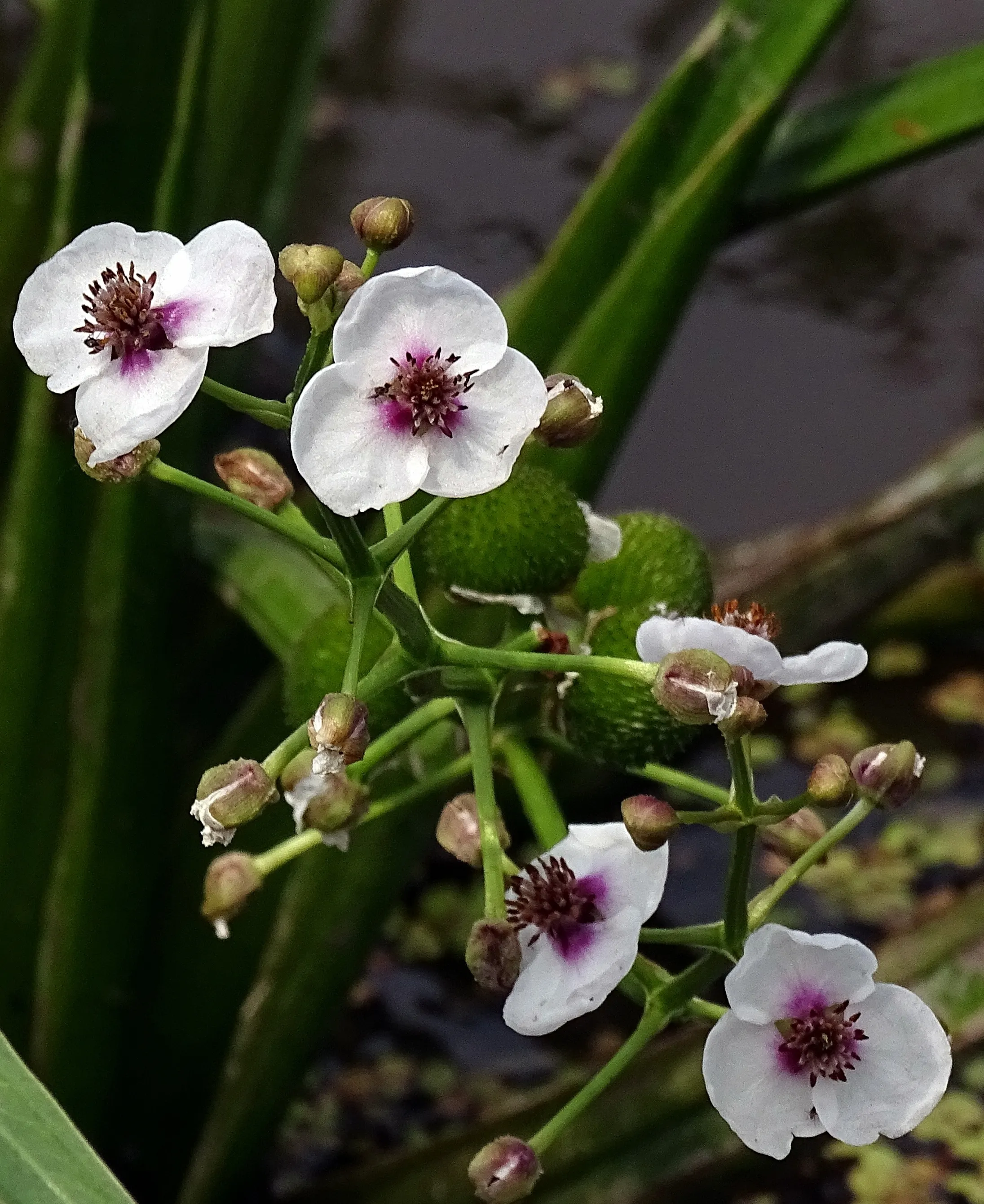
Arrowhead (Sagittaria sagittifolia)[Arrowhead (Sagittaria sagittifolia)]


LCD 4-in-1 Soil Tester
Check essential growing conditions with one compact tool. Measure soil pH, moisture, temperature and light intensity — ideal for gardens, potted plants and greenhouses.
- 4-in-1 measurement
- Easy-to-read LCD display
- Portable design
Affiliate link · For indicative measurements only.
Botanical description
Root system
Plant with a submerged, shortened rhizome that produces small tubers.
Leaves
Leaves of three types: submerged (suspended), floating, and emergent (aerial). Sometimes the plant has leaves of one or two types.
Leaves are basal; the first ones are ribbon‑like or linear‑ribbon, submerged, 3–15 mm wide and up to 1 m long. Later leaves are floating or rising above the water, arrow‑shaped or three‑lobed, with pointed segments 1–3 cm wide and up to 10 cm long.
Submerged leaves are modified into linear, flattened phyllodes up to 30 cm or more long, 10–15 mm wide. Petioles 10–100 cm long.
Floating leaves – long‑petiolate with oblong‑elliptic, ovate, elliptic or linear blades, rarely cordate, deeply emarginate at the base with two closely spaced, short lobes. 3.5–14 cm long and 2.5–7.5 mm wide. The central lobe of the blade is up to 12 cm long, narrow, arrow‑shaped, pointed at the tip; basal lobes shorter or equal to the blade length, sometimes longer, with pointed tips. Petioles up to 45 cm long.
Emergent (aerial) leaves – with arrow‑shaped‑triangular, linear or ovate‑deltate blade, 6.5–15 (25) cm long and 100–120 (220) mm wide.
Stems
Plants 20 to 100 cm tall. In aquatic forms sometimes up to 2 m long.
Stem three‑angled, simple or weakly branched, with basal leaves and a terminal inflorescence, equal to or shorter than the leaves, rising from the water.
Inflorescences
Peduncle 10–100 cm long. Inflorescence composed of 2–10 (usually 3) whorls of flowers, sometimes branching in the lower whorl. In the upper whorls staminate flowers with numerous stamens; in the lower whorls pistillate flowers with numerous pistils.
Bracts free or fused at the base, more or less firm, lanceolate, 0.3–1.5 cm long.
Perianth with 6 lobes: 3 green, rounded, reflexed sepals 4–8 mm long.
Mature receptacle 1–2 cm in diameter.
Female pedicels ascending, 0.5–1.5 cm long, sometimes almost sessile. Male pedicels 10–14 mm long and somewhat thinner.
Three petals usually white with a violet claw or with purple spots at the base and obtuse tip, up to 10–15 mm long.
Stamens numerous, smooth, linear filaments 1–2 mm long, usually exceeding the linear or ovate anthers.
Anthers violet or maroon, rarely yellow, 1–1.5 mm long.
Fruit
Fruits – achenes tightly clustered in spherical heads.
Fruitlets obliquely obovate to almost round or beaked, with a short straight beak. 2.5–6 mm long and 1.6–3.5 mm wide. Broad dorsal wing up to 1.3 mm wide, about twice as wide as the ventral wing, surfaces not ornamented or with one resin canal. Apical beak 0.2–1.0 mm long.
Ecology
Habitats
A coastal‑aquatic plant. Grows in water or along the banks of water bodies with slow‑flowing or standing water, in marshes.
A facultative apophyte.

Solar Automatic Drip Irrigation Kit for Gardens
Automate watering for pots, gardens and small greenhouses. This solar-powered system features a timer to help schedule water delivery to your plants.
- Solar-powered
- 15 m irrigation hose
- Programmable watering
Affiliate link · Check included accessories.
Physiology
Vegetation
Flowers in June–July, fruits in July–August.
Reproduction
Reproduces and spreads by seeds and vegetatively.
From the rhizome arise elongated underground shoots that form small tuber‑like thickenings at the top by autumn. One plant produces 12–13 small tubers resembling acorns.
Distribution
Eurasian species, distributed in Russia in the European part (except Arctic regions), in southern Siberia and the Caucasus.

7-in-1 Wi-Fi Weather Station
Monitor local weather conditions with a wireless outdoor sensor. Track temperature, humidity, rainfall, wind speed and direction, and atmospheric pressure. Ideal for gardens, farms and greenhouses.
- Wireless outdoor sensor
- Solar-powered
- Wi-Fi connectivity
Affiliate link · Check regional compatibility.
Noxiousness
Weed in crops
Sometimes occurs as a remnant weed in rice crops under continuous cultivation.
Useful properties
Food use
The tuber‑like thickenings at the ends of autumn stolon‑like shoots contain starch and are edible when baked or boiled, tasting like chestnuts or peas. Fresh they have a nutty flavour. The tubers are also used to prepare a coffee substitute.
Forage use
Pigs readily eat the tubers, but the above‑ground parts are not eaten by livestock.
One of the favourite food plants of the water vole.
Arrowhead provides nutritious feed for waterfowl.
Cultivation
When cultivated, it is planted by tubers in shallow places under water. Planting rate 2500–3700 tubers per hectare (Generozov, 1934).

40W Full Spectrum LED Grow Light
Support healthy plant growth with full-spectrum LED lighting. Ideal for seedlings, indoor plants and small growing spaces. A practical solution for indoor gardening and year-round cultivation.
- Full-spectrum LED
- Energy-efficient design
- Indoor plant growing
Affiliate link · Check actual power and light coverage.
Chemical composition
The tubers are rich in nutrients. Dry tubers of arrowhead contain about 55% starch and over 7% soluble sugars.
Table. Chemical composition of arrowhead – @bio[Sagittaria sagittifolia].
| Stage | Water | Percentage of absolute dry matter | Source | |||||
|---|---|---|---|---|---|---|---|---|
| ash | protein | true protein | fat | crude fibre | N‑free extract | |||
| Above‑ground part at flowering | — | 7.3 | 10.0 | — | 4.2 | 42.1 | 36.4 | Popov et al., 1944 |
| Tubers | — | 8.4 | 14.2 | — | 2.9 | 7.9 | 56.6 | |
| Tubers | 37.5 | 4.0 | — | 17.0 | 0.7 | 3.3 | 53.9 | Rubtsov, 1934, Kazakh SSR |
| Whole plant | — | 19.2 | 21.6 | — | 3.7 | 36.7 | 18.8 | Gorbachev, 1946 |
References
- Gubanov I.A., Kiseleva K.V., Novikov V.S., Tikhomirov V.N. (2002) Illustrated guide to plants of Central Russia. Volume 1: Ferns, horsetails, clubmosses, gymnosperms, angiosperms (monocots). Moscow: KMK Scientific Press, Institute of Technological Research. P. 162.
- Nikitin, V.V. (1983) Weed plants of the flora of the USSR. Leningrad: Nauka. P. 72.
- Larin I.V. et al. (1950) Forage plants of hayfields and pastures of the USSR. Volume I. Spore plants, gymnosperms and monocots. Moscow: State Publishing House of Agricultural Literature. Pp. 151–152.
