
Great burnet (Sanguisorba officinalis)

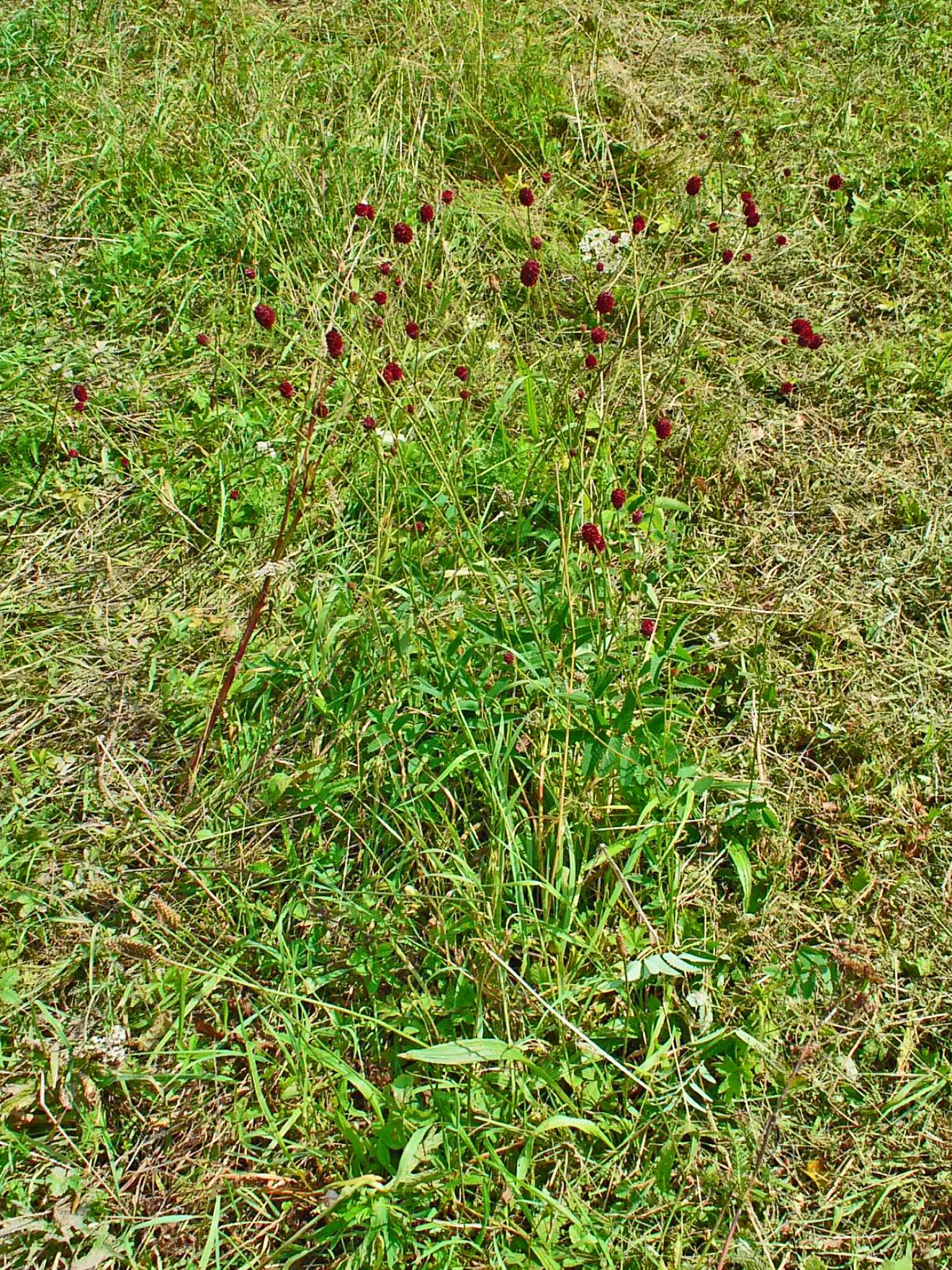
Great burnet (Sanguisorba officinalis)
Great burnet (Sanguisorba officinalis) is a non‑parasitic tap‑rooted perennial weed of the Rosaceae family (Rosaceae).
Life cycle: perennial.
Other names: medicinal burnet.
Taxonomy
Classification
Kingdom: Plants (Plantae)
Division: Flowering plants (Angiosperms) (Angiospermae)
Class: Dicotyledons (Dicotyledoneae)
Order: Rosales (Rosales)
Family: Rosaceae (Rosaceae)
Genus: Burnet (Sanguisorba)
Species: Great burnet (Sanguisorba officinalis L.)
Photographs

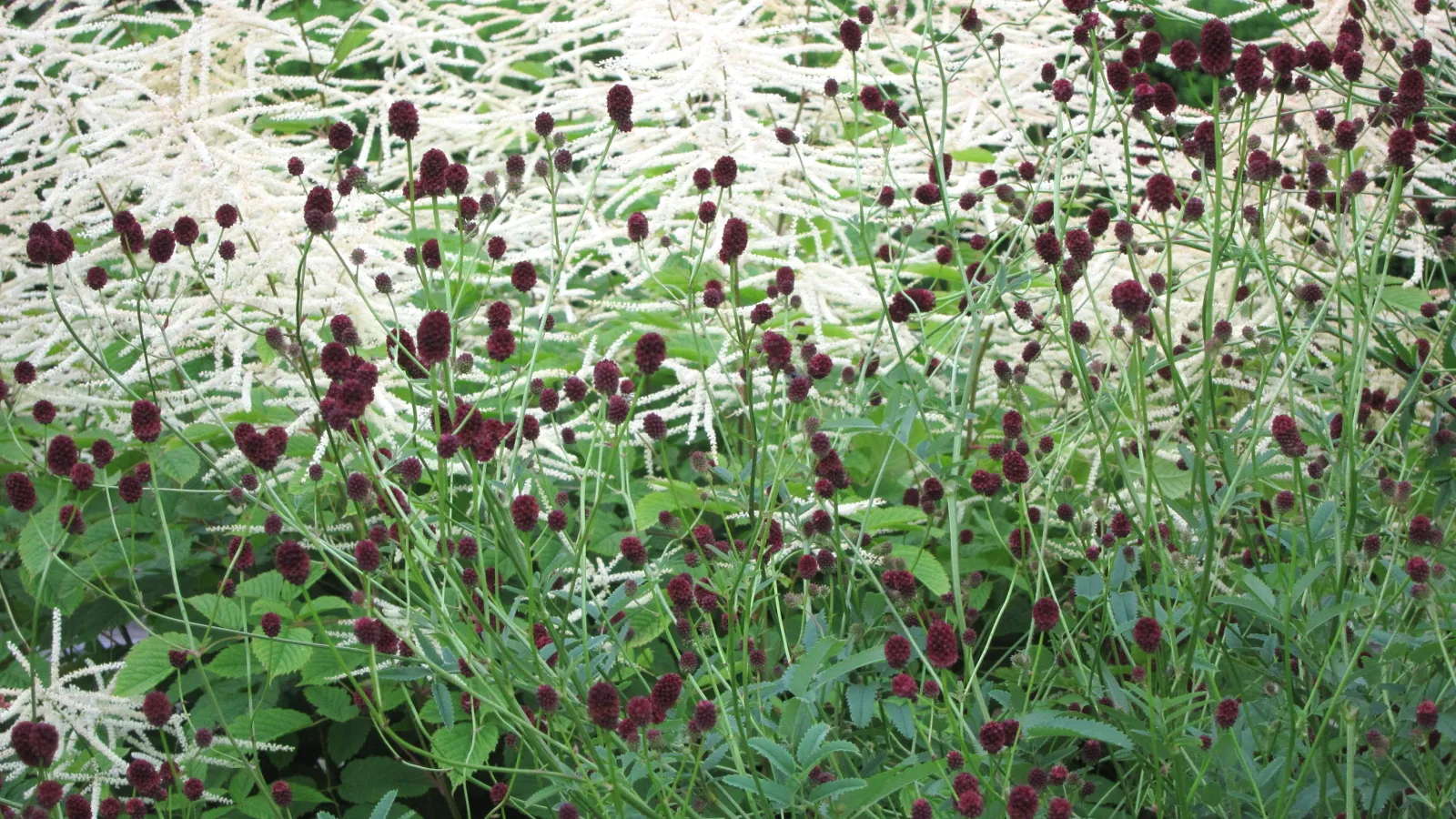
Great burnet (Sanguisorba officinalis)

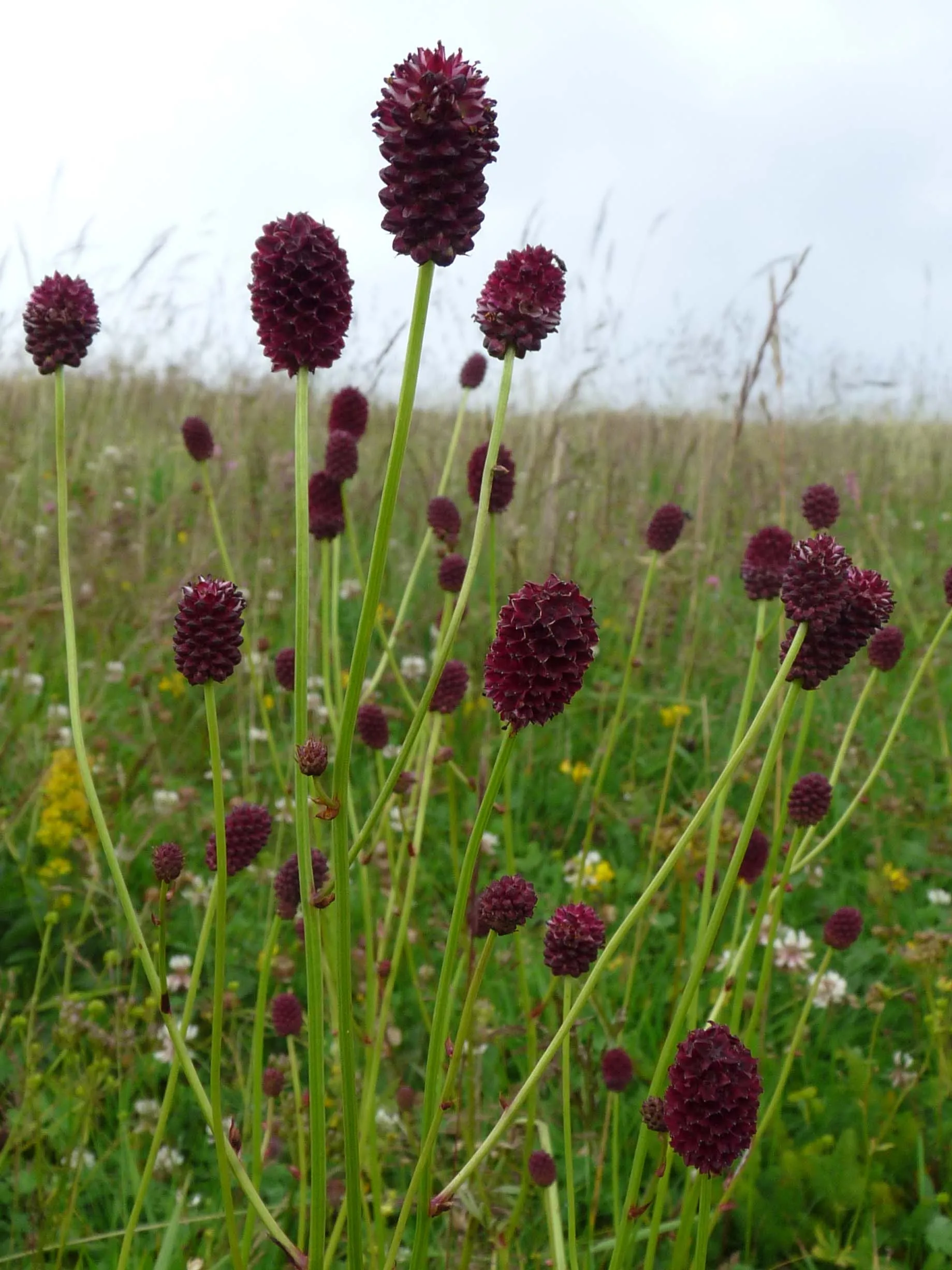
Great burnet (Sanguisorba officinalis)

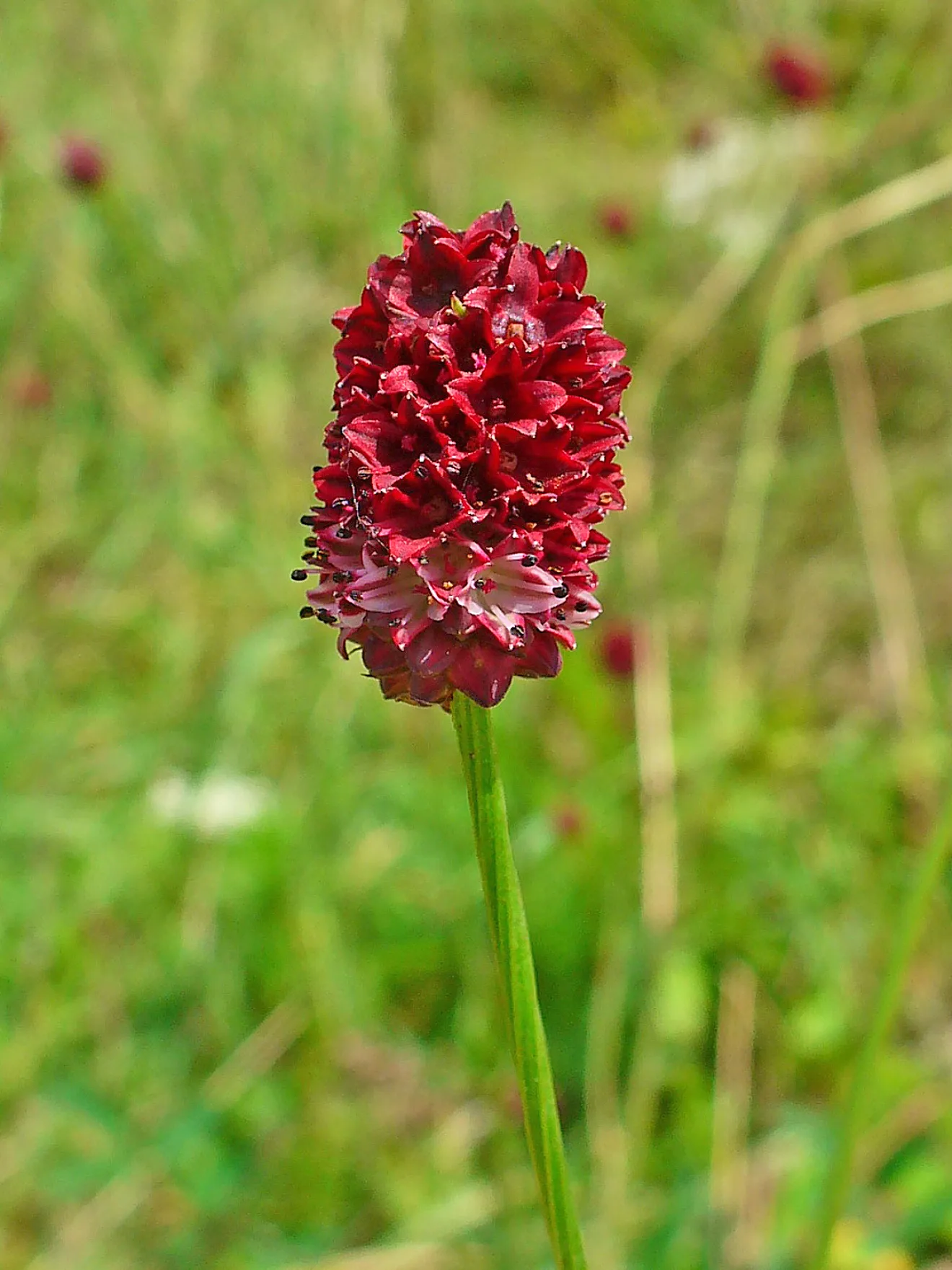
Great burnet (Sanguisorba officinalis)


LCD 4-in-1 Soil Tester
Check essential growing conditions with one compact tool. Measure soil pH, moisture, temperature and light intensity — ideal for gardens, potted plants and greenhouses.
- 4-in-1 measurement
- Easy-to-read LCD display
- Portable design
Affiliate link · For indicative measurements only.
Botanical description
Root system
The root system is tap‑rooted. The main root is thick, penetrates the soil to a depth of up to 1 m, grows horizontally, and gives off large lateral roots.
Seedlings
Seedlings have oval cotyledon leaves, up to 7 mm long and 4–5 mm wide, on long petioles.
Leaves
Leaves are imparipinnate (Gubanov; according to other data, pinnate, Larin), tender, with 7–25 dense, oblong‑ovate or elliptical, serrate leaflets, shiny dark green above, dull glaucous below.
Basal leaves are large, long‑petiolate, imparipinnate, with 7–17 pairs of leaflets, gathered in a rosette; leaflets oblong with stipules.
Stem leaves are sessile, small, decreasing in size and number of leaflets toward the top of the stem.
Stems
Stems are solitary or numerous, branched in the upper part, erect, ribbed, sparsely leafy.
Height (20) 30–100 (120) cm.
Inflorescences
Flowers are gathered in head‑shaped inflorescences. Heads are oval or short‑cylindrical, up to 3 cm long, dark red, on long, straight or slightly arched peduncles.
Flowers are bisexual, black‑purple.
Hypanthium cup‑shaped, with four petal‑like convex sepals that fall off with the fruits. Corolla absent.
Four stamens with long red filaments. Anthers small, dark red. One pistil. Style with a fringed capitate stigma.
Fruit
The fruit is an ovoid‑tetrahedral false achene (Bazdyrev; according to other data, a nutlet, Gubanov), 3–5 mm long, 2–2.5 mm wide.
Ecology
Natural zones
Distributed in forest‑steppe and forest zones.
Temperature requirements
The plant is cold‑resistant. In areas with mild winters it remains green throughout the winter.
Moisture requirements
Thanks to its powerful, deeply penetrating root system, it withstands droughts well.
Soil requirements
Great burnet prefers fertile, moist soils. It grows on dry, poor sandy and calcareous soils. Resistant to soil compaction and trampling.
Habitats
Found in moderately moist habitats.
Habitats: floodplain meadows, forest edges, banks of water bodies, meadow steppes, limestone outcrops.

Solar Automatic Drip Irrigation Kit for Gardens
Automate watering for pots, gardens and small greenhouses. This solar-powered system features a timer to help schedule water delivery to your plants.
- Solar-powered
- 15 m irrigation hose
- Programmable watering
Affiliate link · Check included accessories.
Physiology
Germination
Germination of freshly matured seeds is low; they germinate after overwintering.
Maximum germination depth is 8 cm.
Vegetation
Seedlings and shoots appear in March–May.
Flowering in June–July (August). Fruiting in August–September. In subalpine zones, fruit ripening occurs in September. Near Moscow, ripening occurs in July–August.
Reproduction
Reproduces by seeds and vegetatively.
Weight of 1000 false fruits – about 2.5 g.
Distribution
Great burnet is predominantly an Asian species. It occurs in Europe and North America.
In Russia it grows in the European part, except for the far north and south, in Siberia, the Far East, and also in the countries of Central Asia.

7-in-1 Wi-Fi Weather Station
Monitor local weather conditions with a wireless outdoor sensor. Track temperature, humidity, rainfall, wind speed and direction, and atmospheric pressure. Ideal for gardens, farms and greenhouses.
- Wireless outdoor sensor
- Solar-powered
- Wi-Fi connectivity
Affiliate link · Check regional compatibility.
Harmfulness
Infestation of crops
Infests perennial grass crops (especially sainfoin), vegetable crops, meadows and pastures.
It is not a weed of cultivated arable land, but potentially can become a serious weed of pastures and forage crops.
After establishment, it is difficult to eradicate.
Useful properties
Use as food
Young leaves are edible.
Honey production
Good honey plant.
Medicinal use
The rhizome and roots of burnet are widely used in scientific and folk medicine, as well as in veterinary medicine.
In folk medicine it is used as an astringent for bleeding and diarrhoea. In veterinary medicine – for intestinal diseases, as a diaphoretic and anthelmintic. During the Great Patriotic War, it was used in the treatment of enterocolitis with favourable results.
Fodder value
Due to the high protein content in plants at early development stages and low fibre content, great burnet can be considered a good fodder plant.
From spring to mid‑July it is well grazed by cattle. At the beginning of stem elongation – satisfactorily; later palatability decreases.
Sheep and goats readily eat it until the flowering stage.
In mixtures with other grasses, great burnet is considered beneficial for pregnant ewes.
On subalpine meadows, where many good grasses are present, it is less palatable.
In spring and summer, buds and leaves are satisfactorily eaten by deer. According to experimental data from the Shebalino Reindeer State Farm, it is excellently eaten by maral deer.
In summer it is eaten by grouse.
Not resistant to grazing.
In hay, it is well eaten by all kinds of animals.
As a good pasture grass, after grazing it regrows quickly and tillers strongly, producing many basal leaves. Great burnet has been tested in cultivation in mixtures with other grasses on long‑term pastures. In pure stands, the yield is low and the forage is too spicy, so it is grown in mixtures with a share of up to 10–20%. It persists for 7–8 years. Sowing is done early in spring. Mowing for hay is done before flowering, because later the stems become very hard. Seed harvest begins before full maturity to avoid shattering.
It was first cultivated as a pasture plant in the 18th century in England, and later in France.
Other uses
The rhizome is used for tanning leather. A decoction of the inflorescences can be used to dye fabrics grey and red.

40W Full Spectrum LED Grow Light
Support healthy plant growth with full-spectrum LED lighting. Ideal for seedlings, indoor plants and small growing spaces. A practical solution for indoor gardening and year-round cultivation.
- Full-spectrum LED
- Energy-efficient design
- Indoor plant growing
Affiliate link · Check actual power and light coverage.
Chemical composition
Chemical composition of plants collected at the beginning of stem elongation (12 May), at 8.7% moisture, as % of dry matter:
- ash – 8.2;
- protein – 11.8;
- fats – 3.9;
- fibre – 12.7;
- nitrogen‑free extractives – 63.4.
Chemical composition of plants collected at the flowering stage in the lower zone of the western Altai, as % of dry matter:
- ash – 6.6;
- protein – 8.8;
- fats – 4.3;
- fibre – 36.7;
- nitrogen‑free extractives – 42.6.
Vitamin C content in leaves at the fruiting stage is 590 mg%.
Roots contain 16–17% tannins. Tannin quality increases towards the end of the growing season. With the application of organic fertilizers, the tannin content increases to 18%. On average, the rhizome contains 12–13% tannins, as well as essential oil, calcium oxalate, starch, and colouring matter. There are reports of saponins present.
Control measures
Agronomic methods
Cleaning of seed material of perennial grasses.
With proper cultivation practices, it is easily controlled and is not a troublesome weed. No special control measures are prescribed.
References
- Bazdyrev G.I. (1993) Weed plants and their control in modern agriculture: A textbook for universities. Moscow: Publishing house of the Moscow Agricultural Academy.
- Gubanov, I. A., Kiseleva, K. V., Novikov, V. S., Tikhomirov, V. N. (2003) Illustrated guide to plants of Central Russia. Volume 2: Angiosperms (dicotyledons: choripetalous). Moscow: KMK Scientific Press, Institute of Technological Research.
- Larin I. V. et al. (1951) Forage plants of hayfields and pastures of the USSR. Volume II. Dicotyledons (Chloranthaceae – Leguminosae). Moscow: State Publishing House of Agricultural Literature.
