
Round-headed Garlic (Allium rotundum)

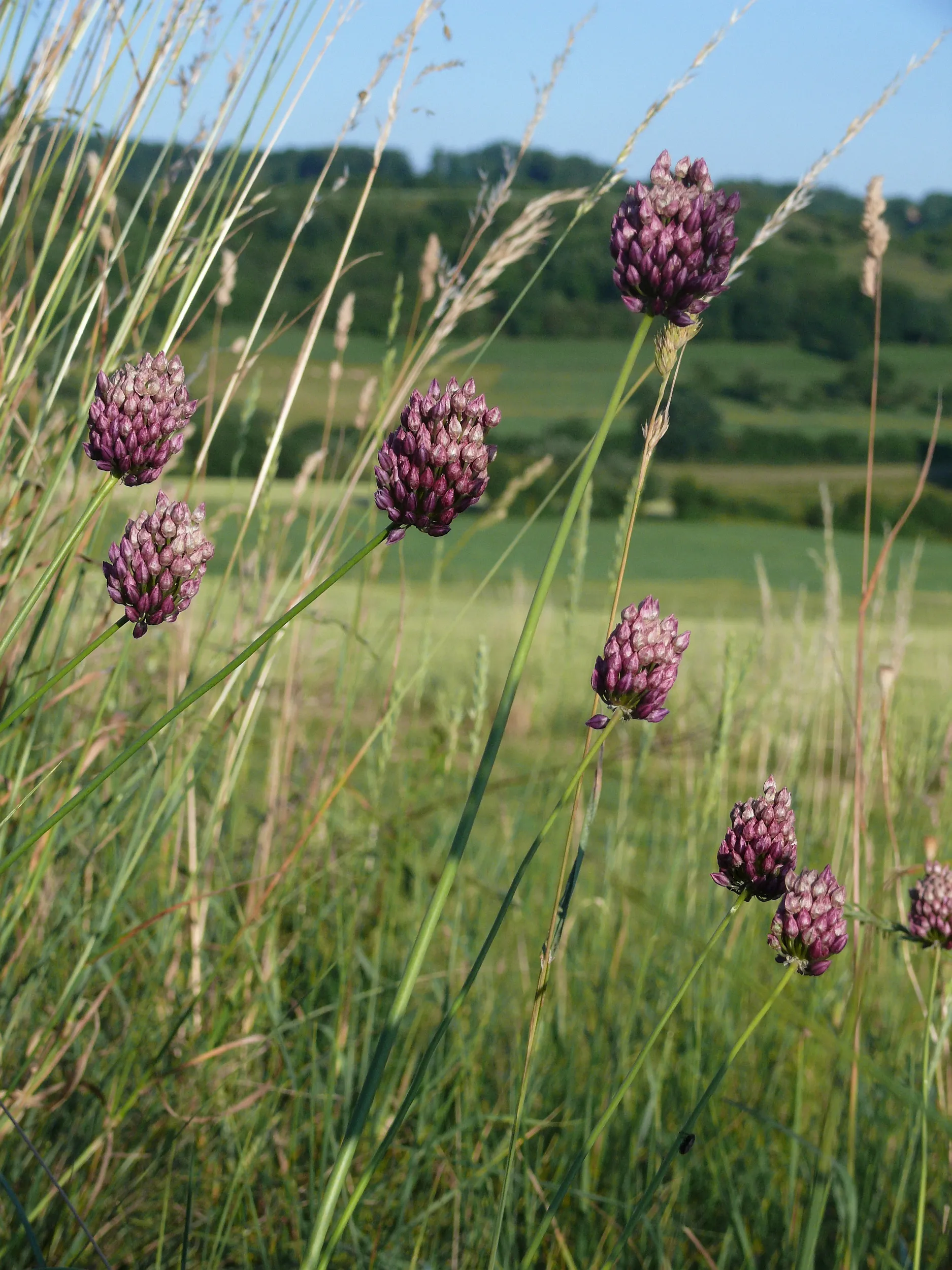
Round-headed Garlic (Allium rotundum)
Round-headed Garlic (Allium rotundum) is a non-parasitic perennial bulbous weed of the Amaryllis family (Amaryllidaceae), formerly Alliaceae (Alliaceae).
Life cycle: perennial.
Other names: field garlic, гвелис-ниори (Georgian).
Taxonomy
Classification
- Kingdom
- Plants (Plantae)<4>
- Subkingdom
- Vascular plants (Pteridobiotina)<4>
- Division (clade)
- Flowering plants (Angiosperms)<4>
- Class (clade)
- Monocots (Monocots)<4>
- Order
- Asparagales (Asparagales)<4>
- Family
- Amaryllidaceae (Amaryllidaceae)<4>
- Subfamily
- Allioideae (Allioideae)
- Tribe
- Allieae
- Genus
- Onion (Allium)<4>
- Subgenus
- Allium subg. Allium<4>
- Section
- Allium sect. Allium<4>
- Species
- Round-headed Garlic (Allium rotundum L.)<4>
Photos

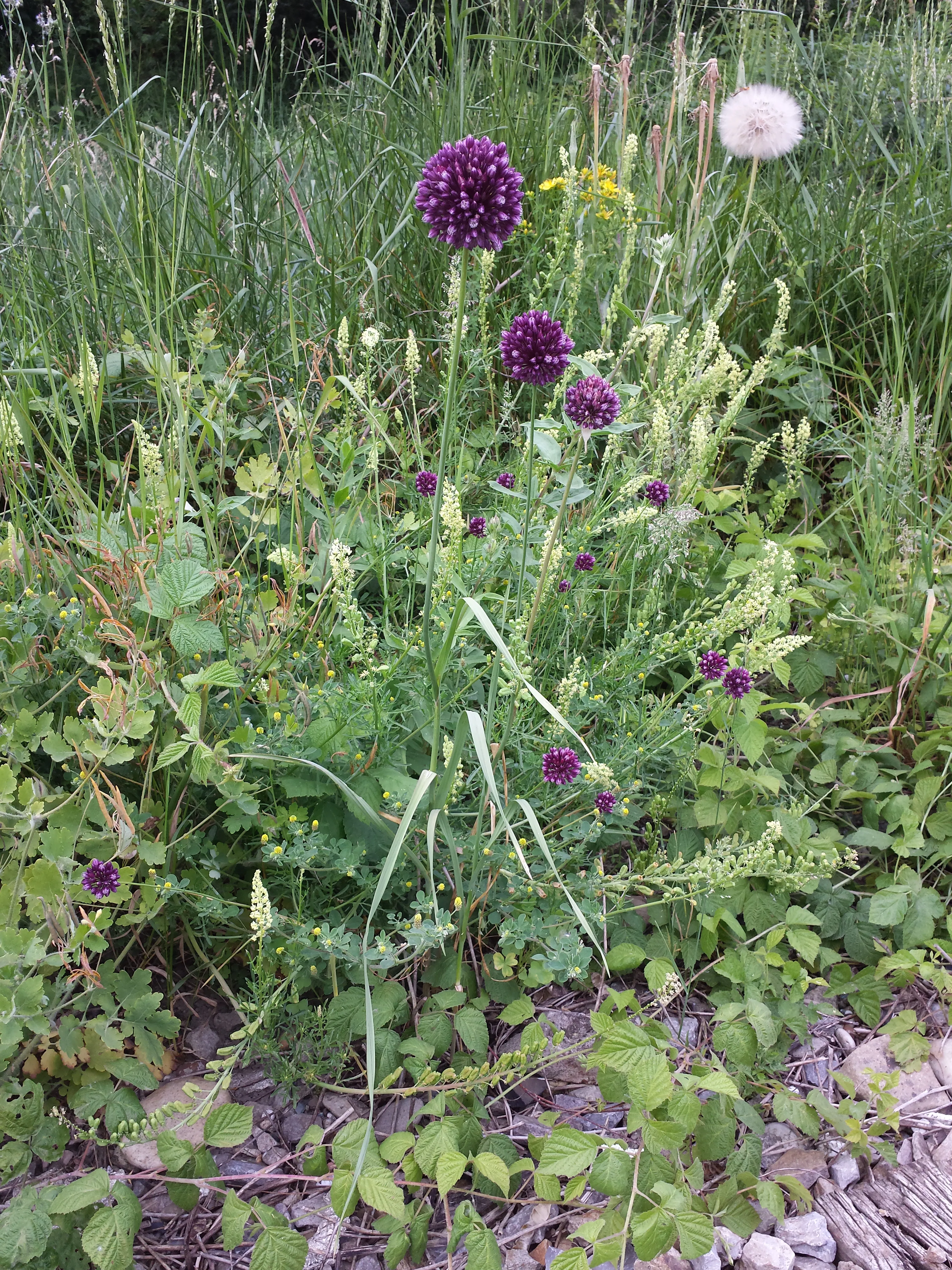
Round-headed Garlic (Allium rotundum)

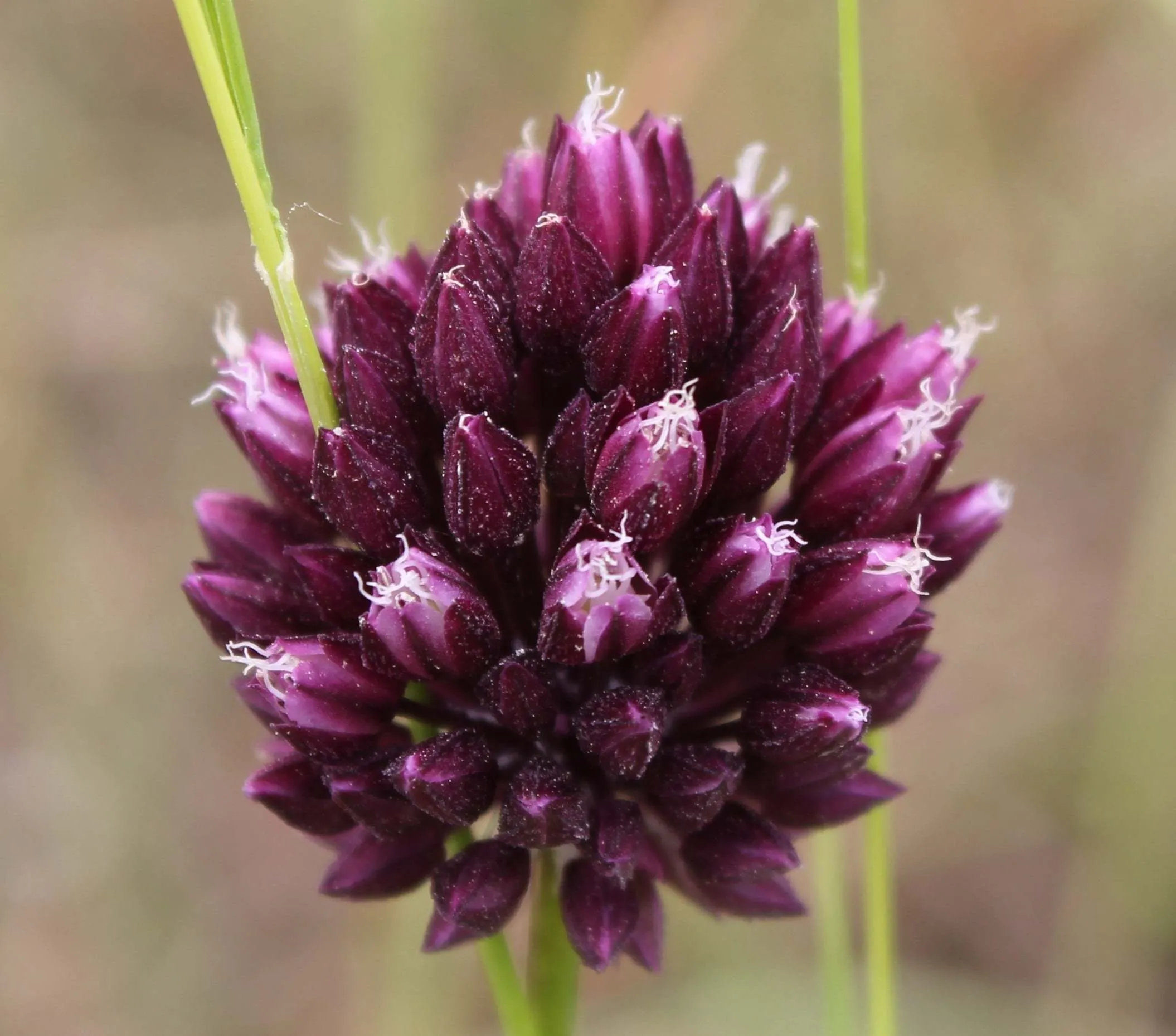
Round-headed Garlic (Allium rotundum)

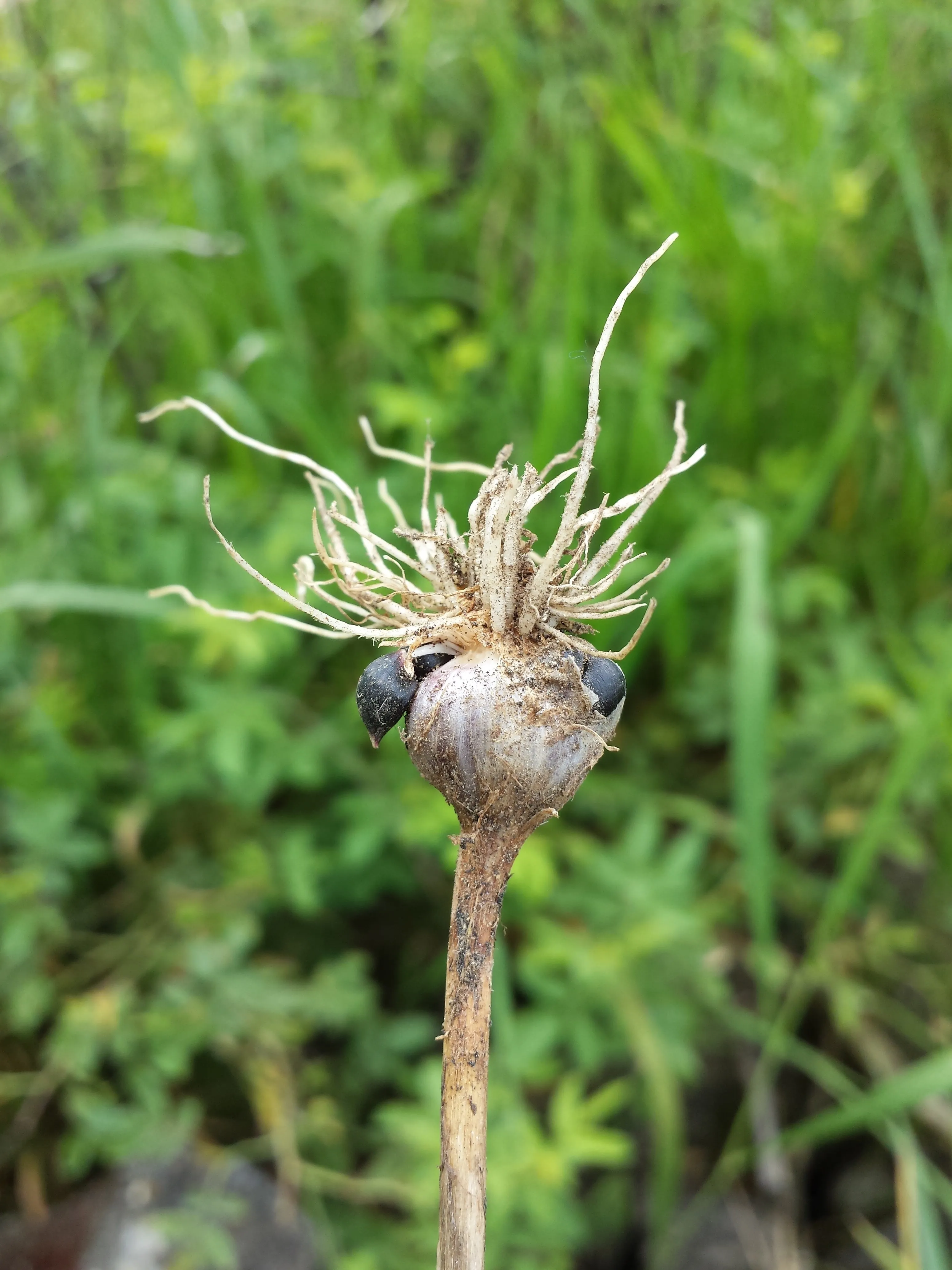
Round-headed Garlic (Allium rotundum)


LCD 4-in-1 Soil Tester
Check essential growing conditions with one compact tool. Measure soil pH, moisture, temperature and light intensity — ideal for gardens, potted plants and greenhouses.
- 4-in-1 measurement
- Easy-to-read LCD display
- Portable design
Affiliate link · For indicative measurements only.
Botanical Description
Root System
The bulb is ovoid, surrounded by numerous small purple bulbils that sit on long thread‑like stalks.
Seeds
Seeds are oblong, angular‑trihedral.
Leaves
Leaves are narrowly linear to linear, pointed, flat, slightly rough along the margin.
Stems
Stems are erect, smooth, cylindrical, leafy almost to the middle.
Plant height 30–60 (80) cm.
Inflorescences
Inflorescence is spherical, with an early‑falling spathe. The spathe is slightly longer than the umbel.
Flowers are light pink, small, on pedicels of unequal length.
Perianth is broadly campanulate, outer tepals dark purple, inner ones lighter with a purple vein.
Fruit
The fruit is an oblong‑ovoid capsule.
Ecology
Soil Requirements
Round-headed Garlic prefers fertile, loose, calcareous soils.
Habitats
Habitats: meadows, meadow steppes, steppe pastures, fallow lands, shrub thickets, weedy places.

Solar Automatic Drip Irrigation Kit for Gardens
Automate watering for pots, gardens and small greenhouses. This solar-powered system features a timer to help schedule water delivery to your plants.
- Solar-powered
- 15 m irrigation hose
- Programmable watering
Affiliate link · Check included accessories.
Physiology
Vegetation
Seedlings and shoots from bulbils emerge in early spring.
Flowering of plants formed from bulbils begins in the 2nd–3rd year; from seeds – earlier.
Flowering June–July. Seed ripening occurs in August.
Reproduction
Propagates mainly vegetatively by means of bulbils. One bulb can produce from 10–15 to 30–50 bulbils. Also reproduces by seeds.
Weight of 1000 seeds – 1.5–2 g.
Distribution
Round-headed Garlic is found in Central and Southern Europe, the Caucasus, countries of Asia Minor, northern Iran, as well as Ukraine and Moldova.
In Russia it grows in the southern regions of the Non‑Chernozem zone and in the south of the European part of Russia in general, as well as the Ciscaucasia and Crimea. Northwards it is rare.

7-in-1 Wi-Fi Weather Station
Monitor local weather conditions with a wireless outdoor sensor. Track temperature, humidity, rainfall, wind speed and direction, and atmospheric pressure. Ideal for gardens, farms and greenhouses.
- Wireless outdoor sensor
- Solar-powered
- Wi-Fi connectivity
Affiliate link · Check regional compatibility.
Harmfulness
Infestation of Crops
Infests cereal crops and fallow fields.
Round-headed Garlic is not considered a troublesome weed. However, young specimens formed vegetatively from bulbils often form dense clusters. When fallow land is ploughed, these bulbils are scattered and massively infest the field.
Toxicity
When eaten by cattle, milk and dairy products (butter, cheese) acquire a pungent garlicky smell and taste.
Useful Properties
Culinary Use
Before flowering, young plants of Round-headed Garlic can be used as food.
Medicinal Use
In folk medicine it is considered effective as an anthelmintic and against snake bites (Larin → Rollov).

40W Full Spectrum LED Grow Light
Support healthy plant growth with full-spectrum LED lighting. Ideal for seedlings, indoor plants and small growing spaces. A practical solution for indoor gardening and year-round cultivation.
- Full-spectrum LED
- Energy-efficient design
- Indoor plant growing
Affiliate link · Check actual power and light coverage.
Control Measures
Agronomic Methods
With proper agricultural practices it poses no threat.
References
- Bazdyrev G.I. (1993) Weed plants and control measures in modern agriculture: A textbook for universities. Moscow: Publishing House of the Moscow Agricultural Academy.
- Gubanov I.A., Kiseleva K.V., Novikov V.S., Tikhomirov V.N. (2002) Illustrated guide to plants of Central Russia. Volume 1: Ferns, horsetails, clubmosses, gymnosperms, angiosperms (monocots). Moscow: KMK Scientific Press, Institute of Technological Research.
- Larin I.V. et al. (1950) Forage plants of hayfields and pastures of the USSR. Volume I. Spore plants, gymnosperms and monocots. Moscow: State Publishing House of Agricultural Literature.
