
Field Larkspur (Consolida regalis)

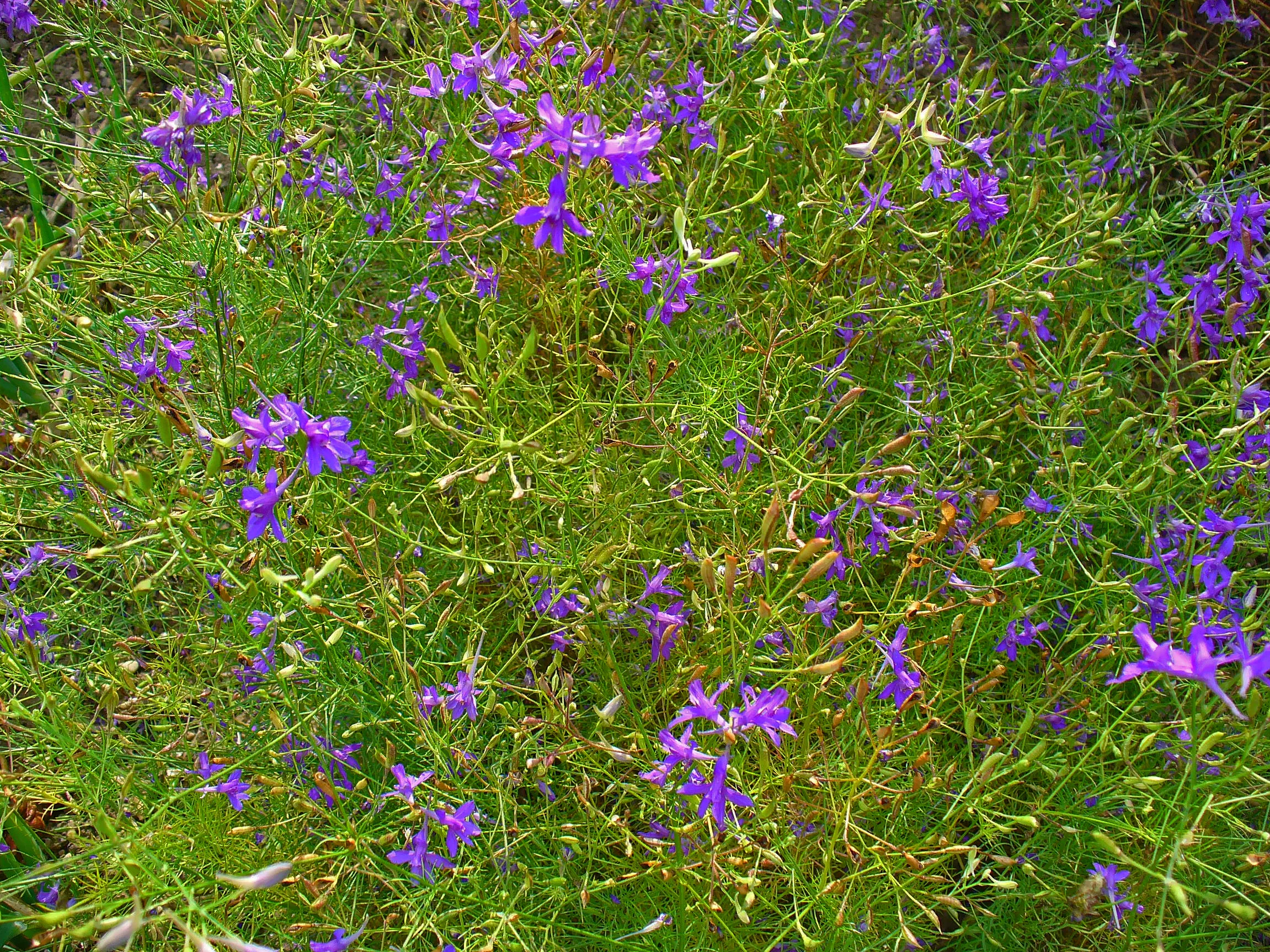
Field Larkspur (Delphinium consolida)
Field Larkspur (Delphinium consolida), or Field Larkspur (formerly Consolida regalis) — a non‑parasitic wintering weed of the Buttercup family (Ranunculaceae).
Life cycle: annual (spring and winter forms).
Other names: corn larkspur, field consolida, horned cornflower, little rake, little horn, little hatchet, mosquito legs, немциторь де кмыши (Moldovan).
Taxonomy
Classification
Kingdom: Plants (Plantae)
Division: Flowering plants (Angiosperms) (Angiospermae)
Class: Dicotyledons (Dicotyledoneae)
Order: Ranunculales (Ranunculales)
Family: Buttercup (Ranunculaceae)
Genus: Larkspur (Consolida)
Species: Field Larkspur (Consolida regalis S.F. Gray)
Synonyms
- Delphinium consolida L.;
- Consolida arvensis.
Similar species
Panicled larkspur (Consolida paniculata). Differs in follicles 7–10 mm long, smaller violet‑blue flowers, stems 30–100 cm tall, strongly branched stem. Occurs mainly in southern regions.
Photographs

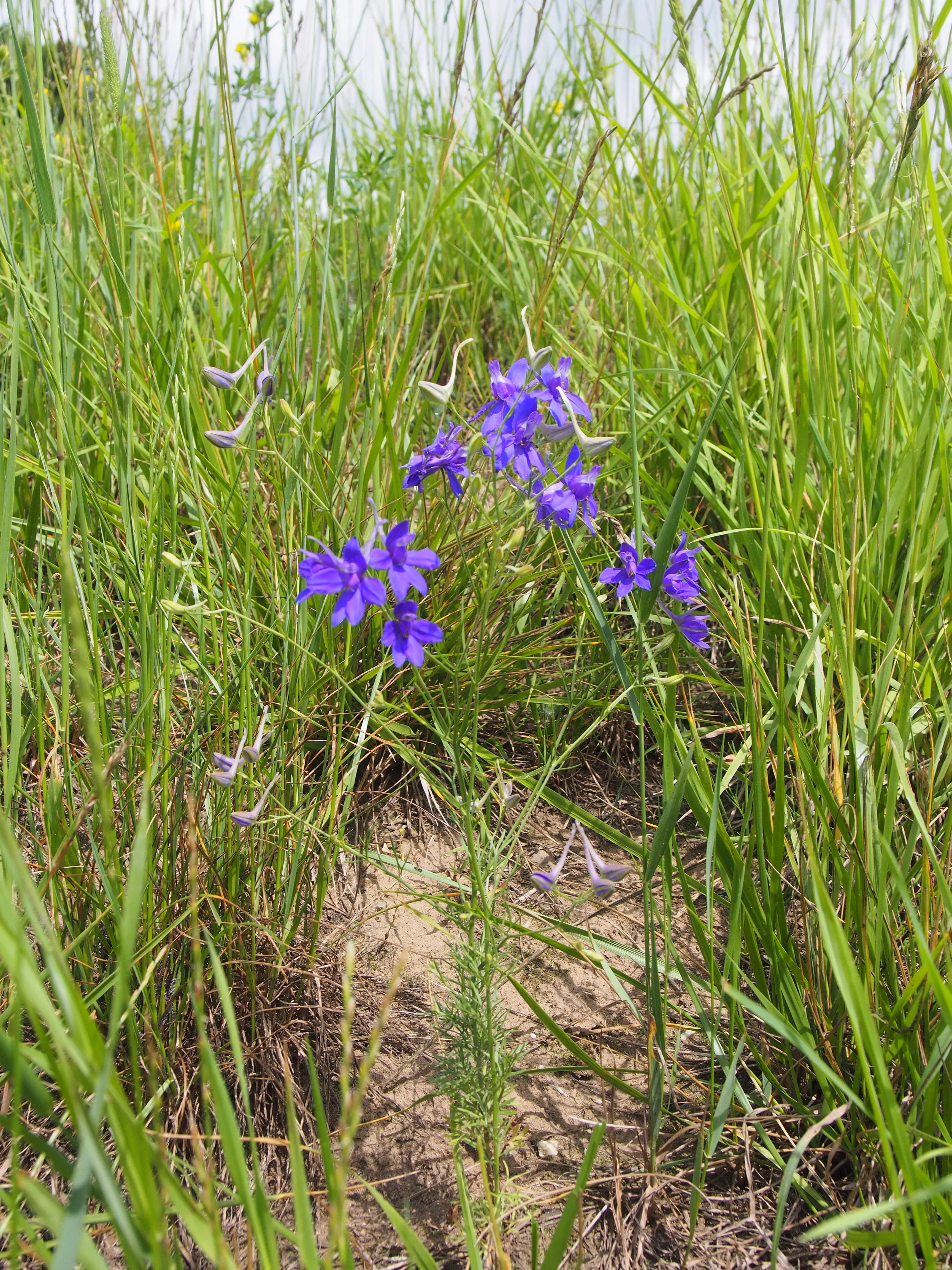
Field Larkspur (Delphinium consolida)

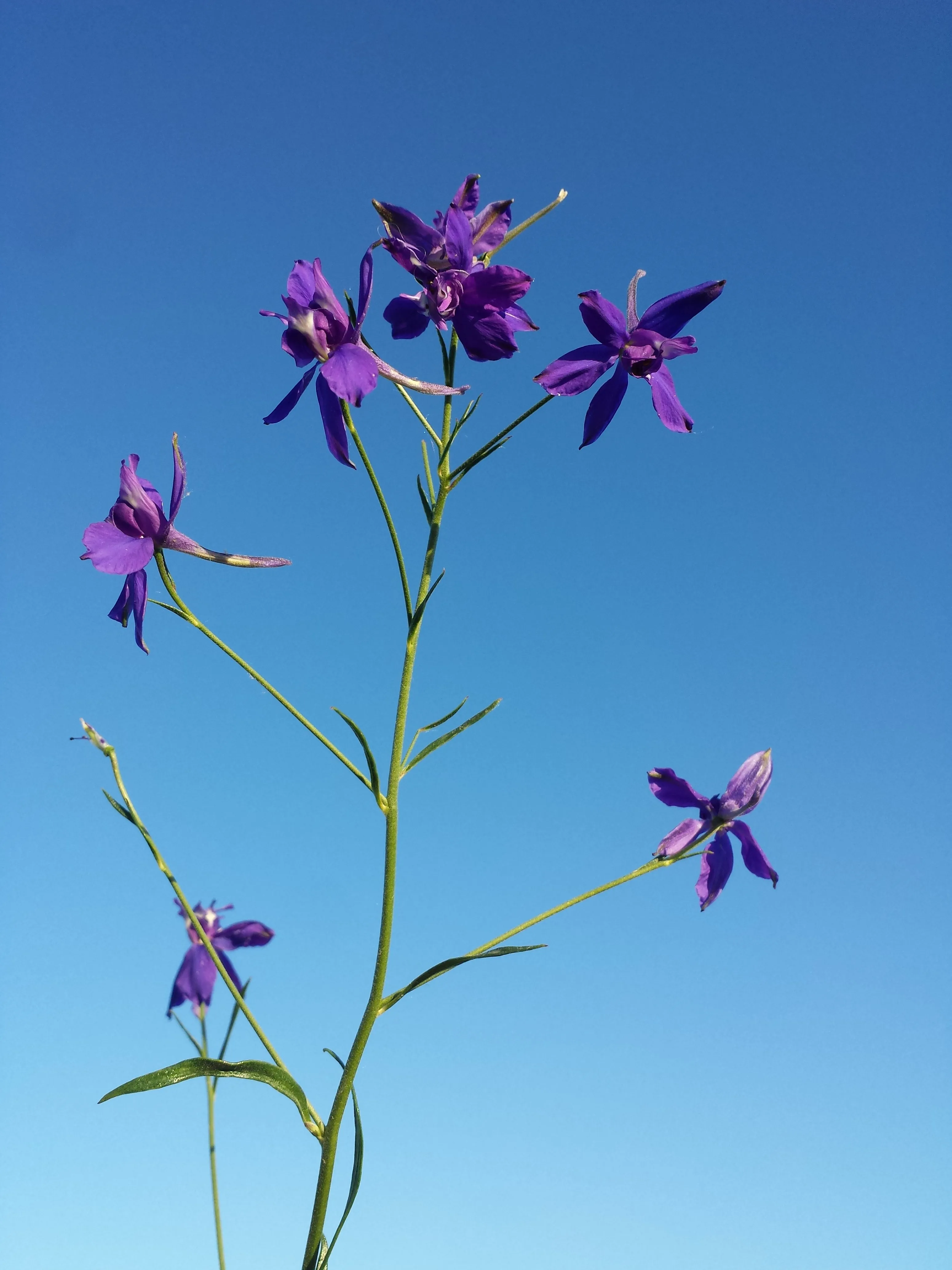
Field Larkspur (Delphinium consolida)

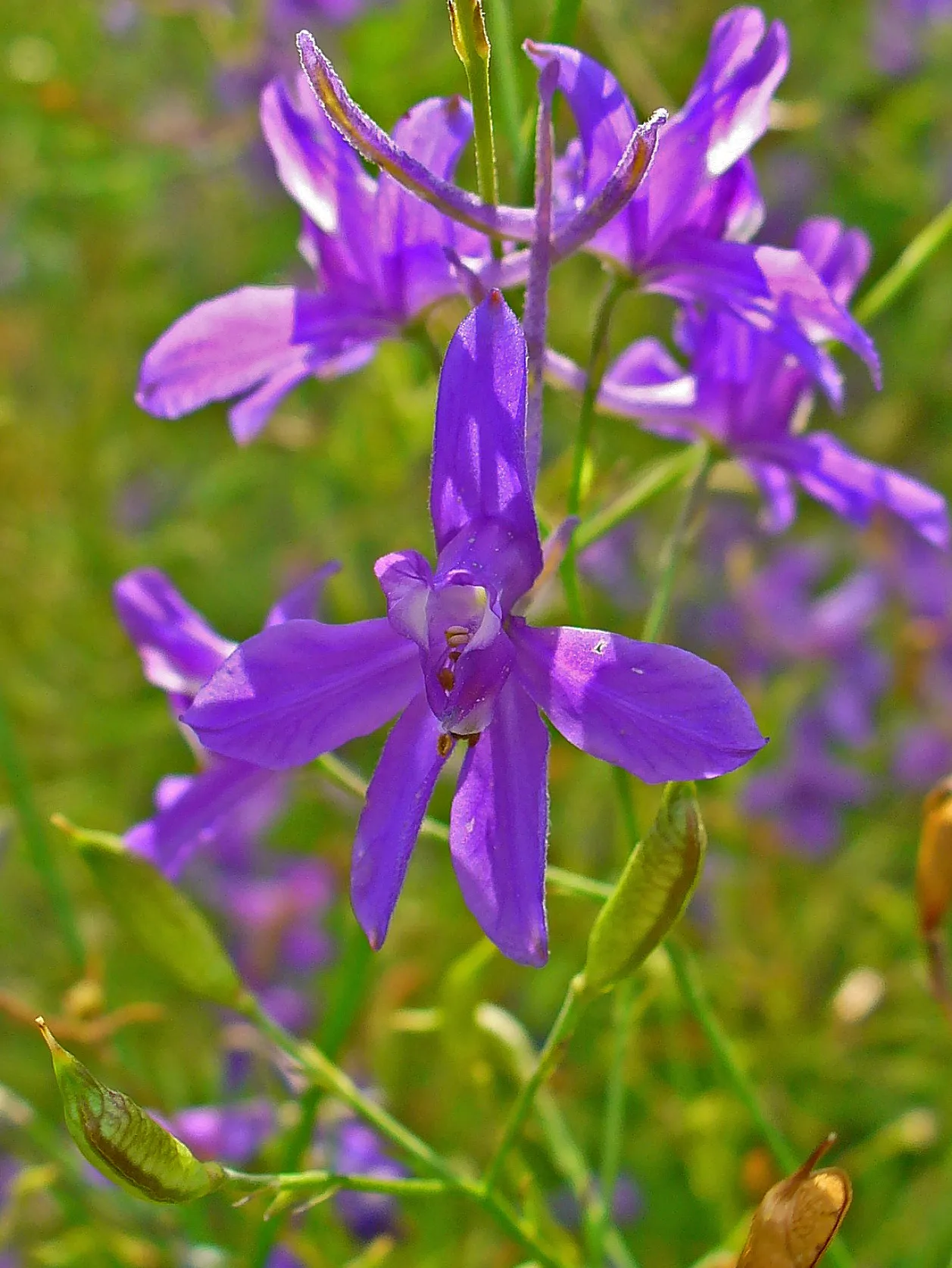
Field Larkspur (Delphinium consolida)


LCD 4-in-1 Soil Tester
Check essential growing conditions with one compact tool. Measure soil pH, moisture, temperature and light intensity — ideal for gardens, potted plants and greenhouses.
- 4-in-1 measurement
- Easy-to-read LCD display
- Portable design
Affiliate link · For indicative measurements only.
Botanical description
Root system
Taproot.
Seeds
Seeds three‑angled wedge‑shaped or ovoid, dark reddish‑grey or blackish‑brown.
Seedlings
Seedlings with elliptic cotyledons, 8–12 mm long, 5–8 mm wide, on pubescent petioles.
Leaves
Leaves alternate, repeatedly dissected into narrow linear lobes.
Lower leaves petiolate. Upper leaves sessile.
Stems
Stem erect, spreading‑branched (in the upper part), pubescent with short hairs.
Plant height 20–70 (80) cm.
Inflorescence
Inflorescence — a terminal raceme.
Flowers bright blue or violet, rarely pink or white.
The calyx consists of five petal‑like sepals, the upper sepal bearing a hollow, somewhat curved spur.
The corolla consists of a single petal, evolved into a nectary with a three‑lobed blade and a spur.
Many stamens. One pistil.
Fruit
Fruit — a straight, finely pubescent follicle, 11–15 mm long, one‑celled.
Ecology
Soil requirements
Prefers loose, fertile, well‑warmed soils.
Natural zones
Field larkspur is distributed in forest, forest‑steppe and steppe zones.
Habitats
Habitats: along roadsides, gardens, fields, pastures, fallow lands, field boundaries, wastelands, vineyards.

Solar Automatic Drip Irrigation Kit for Gardens
Automate watering for pots, gardens and small greenhouses. This solar-powered system features a timer to help schedule water delivery to your plants.
- Solar-powered
- 15 m irrigation hose
- Programmable watering
Affiliate link · Check included accessories.
Physiology
Germination
Seed germination 77%, according to other data 15‑24% (Larin). Germination is extended over 4‑5 years.
Maximum germination depth 4‑6 cm.
Minimum germination temperature 3‑4 °C. Optimal 10‑16 °C.
Vegetation
Seedlings appear both in early spring and abundantly in late summer and autumn.
Flowering June‑August. Fruiting July‑October.
Reproduction
Reproduces by seeds. One of the ways of seed dispersal is hydrochorous, i.e., by spring and rain waters to lower parts of the relief.
Maximum fertility of the weed reaches 67,000 seeds (Bazdyrev), according to other data, one plant produces up to 4,000 seeds (Gubanov), also 200 seeds per plant (Larin → Corsmo).
Weight of 1,000 seeds — 1.3‑2.0 g.
Distribution
Field larkspur is widely distributed in Russia, except for the Arctic regions, introduced to the Far East.
Distribution areas
Russia:
- European part — all areas except the Trans‑Volga (Saratov Oblast, Samara Oblast, Ulyanovsk Oblast (east), Republic of Tatarstan (south), Republic of Bashkortostan, Orenburg Oblast (north‑west)) and the Crimean (Republic of Crimea and Sevastopol);
- North Caucasus: Ciscaucasian (Krasnodar Krai (south), Republic of Adygea, Stavropol Krai, Karachay‑Cherkess Republic, Kabardino‑Balkarian Republic, Republic of North Ossetia, Chechen Republic, Republic of Ingushetia), West Transcaucasian (Krasnodar Krai (coast));
- Western and Eastern Siberia: Ob (Tomsk Oblast, Tyumen Oblast, Sverdlovsk Oblast (east), Yamalo‑Nenets Autonomous Okrug, Khanty‑Mansi Autonomous Okrug, Krasnoyarsk Krai (west)), Upper Tobol (Chelyabinsk Oblast (east), Kurgan Oblast, Orenburg Oblast (east)), Irtysh (Omsk Oblast, Novosibirsk Oblast, Kemerovo Oblast, Altai Krai), Yenisei (Krasnoyarsk Krai (east)).
Belarus, Ukraine, Moldova, Latvia, Lithuania, Estonia, Tajikistan — all areas.
Republic of Abkhazia and Georgia: Republic of Abkhazia, Adjara, Samegrelo‑Zemo Svaneti, Guria.
Kazakhstan:
- Lower Volga (West Kazakhstan Oblast (west), Atyrau Oblast (west));
- Upper Tobol (Kostanay Oblast (north));
- Irtysh (North Kazakhstan Oblast, Akmola Oblast, Karaganda Oblast (north), Pavlodar Oblast, Kostanay Oblast (south), East Kazakhstan Oblast (west));
- Syr Darya (Syr Darya basin).
Kyrgyzstan — all areas except the Tien Shan mountains.
Uzbekistan: Syr Darya (Syr Darya basin).

7-in-1 Wi-Fi Weather Station
Monitor local weather conditions with a wireless outdoor sensor. Track temperature, humidity, rainfall, wind speed and direction, and atmospheric pressure. Ideal for gardens, farms and greenhouses.
- Wireless outdoor sensor
- Solar-powered
- Wi-Fi connectivity
Affiliate link · Check regional compatibility.
Harmfulness
Infestation of crops
Infests crops of grain crops, especially winter cereals and rye, relatively often, but not abundantly.
In the Far North, Siberia and the arid regions of southern Russia, it is not found as a weed in crops.
Toxicity
The plant (probably) and seeds are poisonous, as they contain the toxin delphinium and alkaloids. According to Bogdanov, leaves are more poisonous than flowers.
Toxic properties are due to alkaloids:
- calcathripine, which affects the heart and central nervous system;
- delphinium, causing nausea, vomiting, pain, respiratory depression, affecting blood circulation, spinal cord and skeletal muscles.
The toxic effect is probably not great: feeding 3400 g of flowers and immature seeds to horses for 5 days showed no signs of poisoning. However, cases of poisoning have been reported when eaten during flowering. Thus, when feeding hay containing field larkspur with mature seeds, as well as grain‑cleaning waste containing seeds, precautions should be taken.
Useful properties
Honey‑bearing
Honey plant.
Fodder value
Fodder qualities are poor: not eaten or poorly eaten by cattle on pastures; during flowering and fruiting, eaten by goats (well) and sheep (poorly). When used for feed purposes, it should be remembered that the plants are poisonous (see Harmfulness).
Other uses
Ornamental value. Cultivated varieties differ in double flowers and flower colour.
Powder made from seeds (less often from herbage) has insecticidal properties.
Petals were formerly used as a dye for silk and wool, and for making ink.

40W Full Spectrum LED Grow Light
Support healthy plant growth with full-spectrum LED lighting. Ideal for seedlings, indoor plants and small growing spaces. A practical solution for indoor gardening and year-round cultivation.
- Full-spectrum LED
- Energy-efficient design
- Indoor plant growing
Affiliate link · Check actual power and light coverage.
Chemical composition
Seeds contain 25% fat and 1.04% alkaloids: delsoline (C25H41NO8), delcosine (C21H33NO6).
Alkaloids delcosine, calcathripine, and aconitic acid have been found in stems and leaves.
The alkaloid content in flowers is contradictory: according to Wemer, alkaloids are absent, but a glucoside identical to camerole (C15H10O6) is present; according to Gusynin, the gluco‑alkaloid delphinine is present in flowers; according to Bankovsky, alkaloids are present (Larin).
In flowers, leaves and stems, the alkaloid content varies from 0.1 to 0.5%.
Ascorbic acid content on the date of vegetation 31 August, in mg per 1 kg of dry matter:
- in flowers — 4806;
- in leaves — 11254;
- in stems — 3563.
Control measures
Agronomic methods
Basic techniques of primary and pre‑sowing soil tillage are used.
Chemical methods
Field larkspur is sensitive to most herbicides.
References
- Bazdyrev G.I. (1993) Weed plants and measures for their control in modern agriculture: Textbook for universities. Moscow: Publishing house of the Moscow Agricultural Academy.
- Gubanov, I. A., Kiseleva, K. V., Novikov, V. S., Tikhomirov, V. N. (2003) Illustrated guide to plants of Central Russia. Volume 2: Angiosperms (dicotyledons: choripetalae). Moscow: Association of Scientific Publications KMK, Institute of Technological Research.
- Nikitin, V.V. (1983) Weed plants of the flora of the USSR. Leningrad: Nauka.
- Larin I. V. et al. (1951) Fodder plants of hayfields and pastures of the USSR. Volume II. Dicotyledons (Chloranthaceae — Legumes). Moscow: State Publishing House of Agricultural Literature.
