
Flixweed (Descurainia sophia)

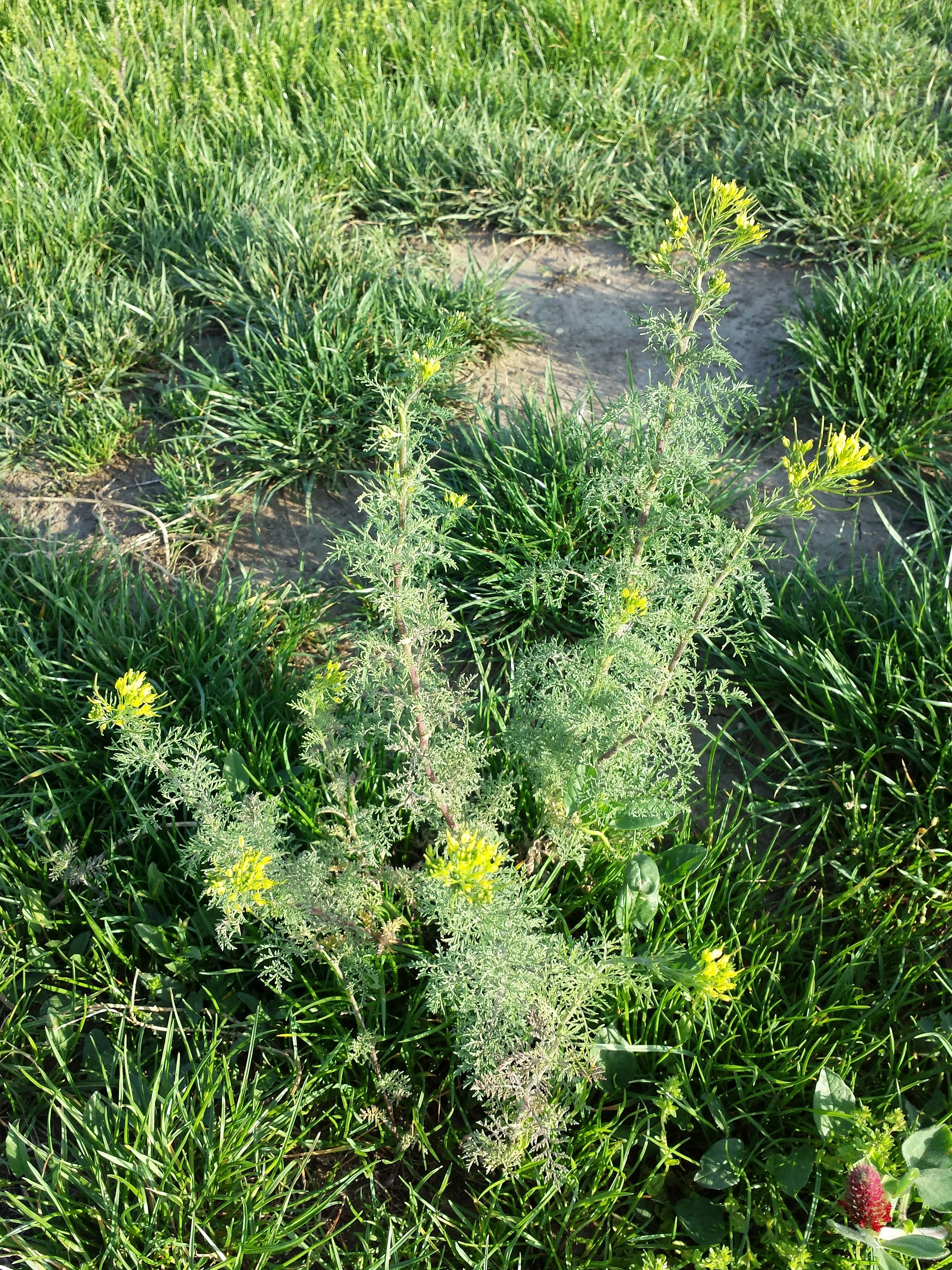
Flixweed (Descurainia sophia)
Flixweed (Descurainia sophia) — a non-parasitic wintering weed of the family Brassicaceae (Brassicaceae).
Life cycle: annual, winter annual, or biennial.
Other names: Sophia's Descurainia, flixweed, flaxweed, tansymustard, herb Sophia, pinnate tansymustard.
Taxonomy
Classification
Kingdom: Plants (Plantae)
Division: Flowering plants (Angiosperms) (Angiospermae)
Class: Dicotyledons (Dicotyledoneae)
Order: Brassicales
Family: Brassicaceae (Brassicaceae), or Cruciferae (Cruciferae)
Genus: Descurainia (Descurainia)
Species: Flixweed (Descurainia sophia (L.) Webb. ex Prantl)
Synonyms
- Sophia multifida Gilib.;
- Sophia sophia (L.) Britt.;
- Sisymbrium sophia L.;
- Descurainia Sophia (L.) Schur.
Similar species
Descurainia incana. Gray mustard is easily distinguished from flixweed: pale yellow flowers of gray mustard produce silicles (5–10 mm long) that are held close to the stem, and the leaves are divided into narrow segments.
At an early stage of development, flixweed can be easily confused with chamomile (Anthemis sp.).
Origin
Native to Europe, Asia, and North Africa.
First recorded in North America in Montreal, Quebec, in 1821.
Photographs

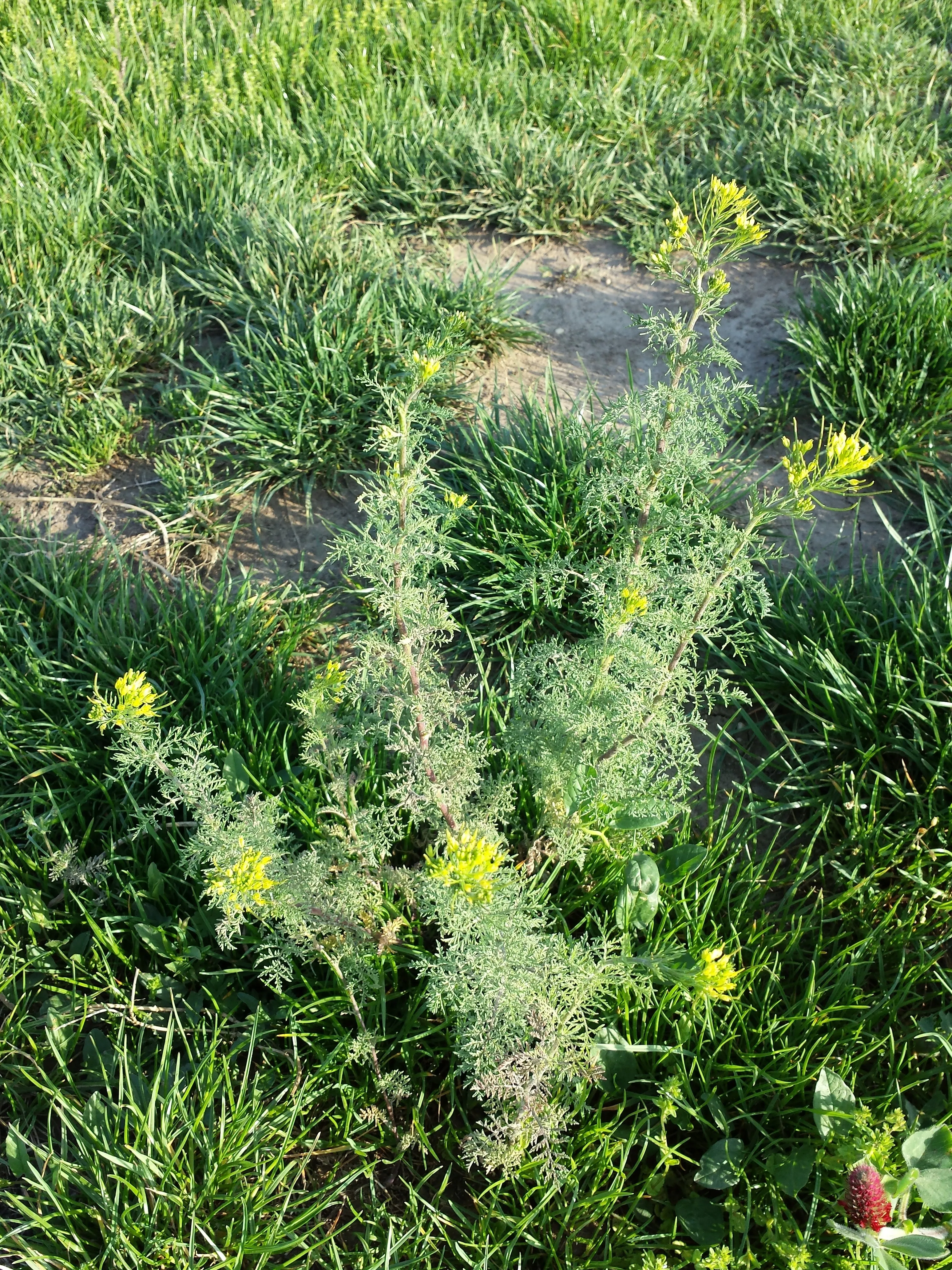
Flixweed (Descurainia sophia)

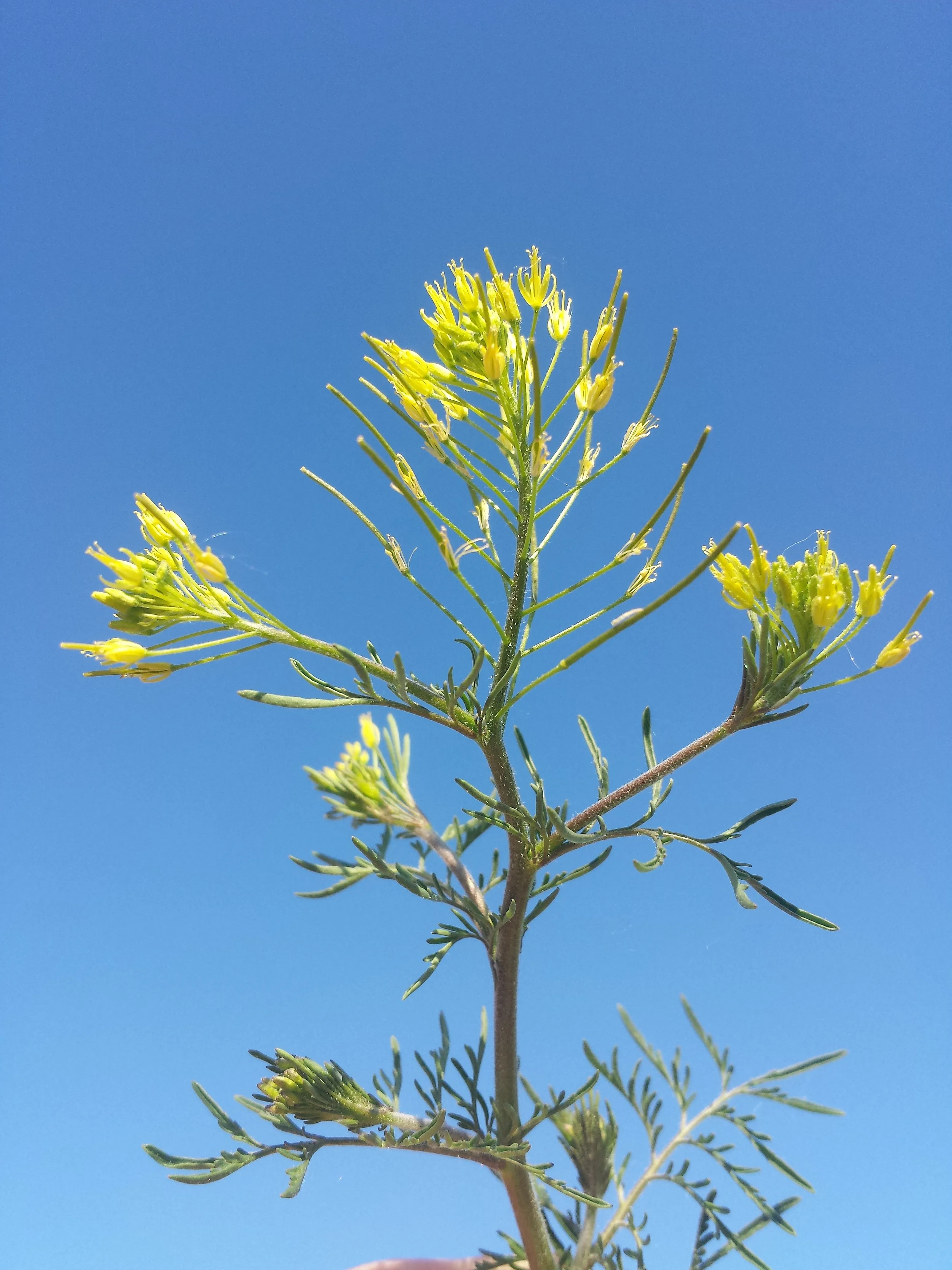
Flixweed (Descurainia sophia)

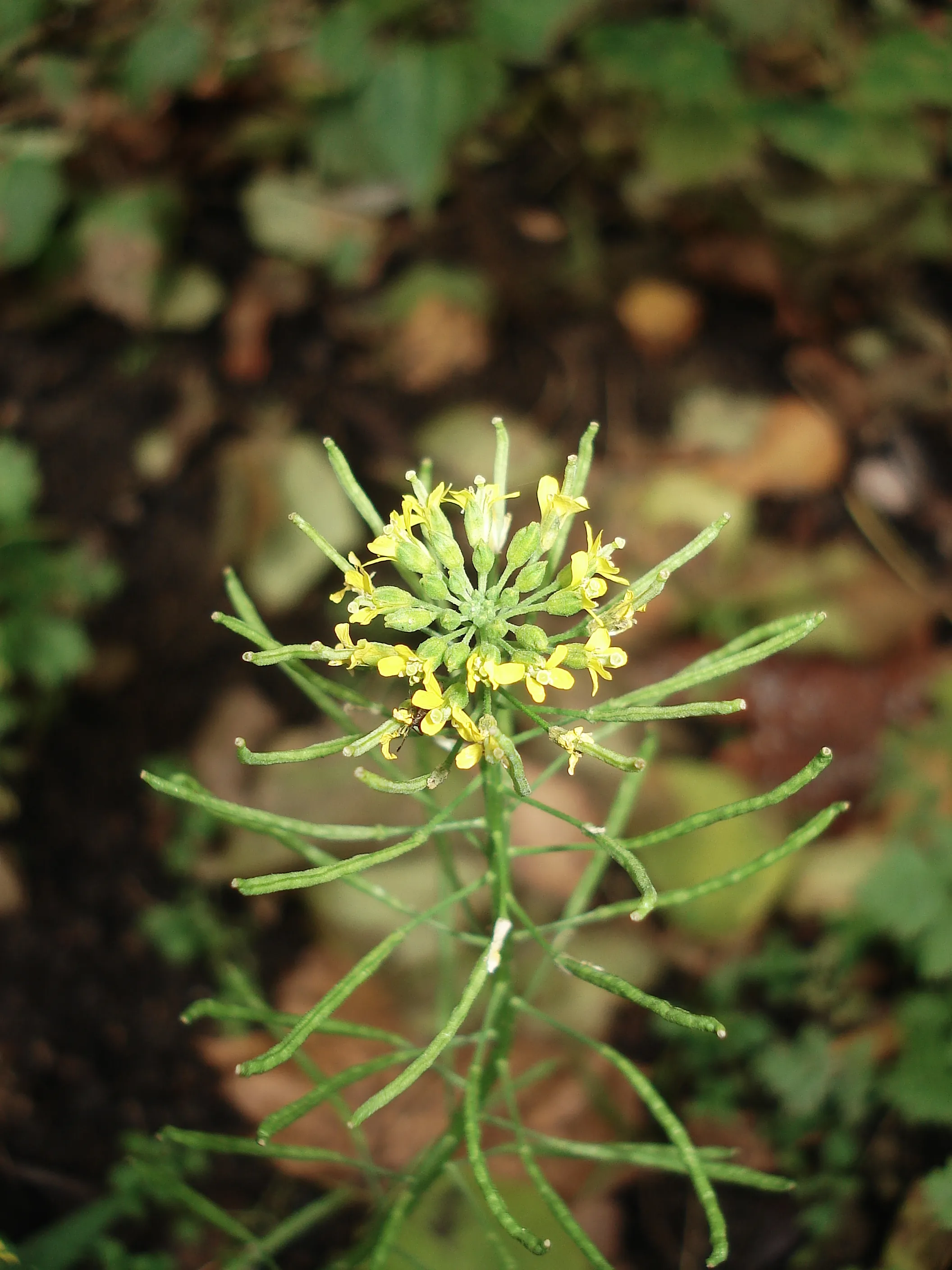
Flixweed (Descurainia sophia)


LCD 4-in-1 Soil Tester
Check essential growing conditions with one compact tool. Measure soil pH, moisture, temperature and light intensity — ideal for gardens, potted plants and greenhouses.
- 4-in-1 measurement
- Easy-to-read LCD display
- Portable design
Affiliate link · For indicative measurements only.
Botanical description
Root system
Taproot, thin, branched.
Seeds
Seeds oblong or oval, dark orange or brown, 1–1.3 mm long, 0.4–0.6 mm wide, surface smooth, slightly compressed laterally. Some seeds have a thin transparent wing at the rounded end.
They have a pungent taste (due to the presence of the glucoside sinigrin) similar to mustard seeds.
Seedlings
Seedlings with clavate cotyledons, 4–12 mm long, 1–1.5 mm wide, on long petioles, densely pubescent.
The stem below the cotyledons has a few stellate hairs.
First leaves opposite, three-lobed, covered with stellate hairs. Subsequent leaves alternate, divided into narrow segments.
Leaves
Leaves alternate, 2–10 cm long, twice or thrice divided into narrow linear segments, stem-clasping, surface with fine grey stellate hairs.
A basal rosette is formed in winter in the annual and biennial life cycles.
The first leaves are gathered in dense rosettes, initially with three tips, later ones pinnate.
Lower leaves on short petioles. Upper leaves sessile.
Stems
Plants (initially) greyish-green due to stellate hairs, with an unpleasant odour.
Stems erect, spreading-branched, densely leafy, greyish.
Plant height (15) 50–80 (100) cm.
Inflorescence
Inflorescence — a terminal many‑flowered raceme, up to 40 cm long, elongating with age.
Flowers greenish or pale yellow, inconspicuous, 2–4 mm in diameter, sometimes underdeveloped.
Four sepals.
Four petals.
Six stamens. One pistil.
Fruit
Fruit — a narrow (thin) linear silique, slightly curved, knobby, (10) 15–30 mm long and 1 mm wide, bilocular, 20–40 seeds. At maturity, seeds easily shed.
Pedicels 6–12 mm long, forming a wide angle with the stem.
Ecology
Soil requirements
Flixweed prefers warm, fertile light soils.
Able to form dense stands on nitrogen‑rich soils.
Habitats
Ruderal weed.
Almost ubiquitous in wastelands, rubbish places, near dwellings, stockyards, ravines, along roads, riverbanks and irrigation ditches, livestock camps and wintering sites, fallow lands, parks, gardens, vineyards. Often forms dense thickets.

Solar Automatic Drip Irrigation Kit for Gardens
Automate watering for pots, gardens and small greenhouses. This solar-powered system features a timer to help schedule water delivery to your plants.
- Solar-powered
- 15 m irrigation hose
- Programmable watering
Affiliate link · Check included accessories.
Physiology
Germination
Seed viability is about 10% after 5 years in soil.
No dormancy period.
Germination occurs from the surface or when buried to a depth of up to 2 cm (according to other sources, maximum depth 3–4 cm, Bazdyrev; also 3 cm, Larin).
Germination occurs at low temperatures (from May to August). Optimal temperature 10–30 °C, according to other sources 10–12 °C.
Vegetation
In the northern parts of its range, flixweed develops as a spring plant, i.e., emerges in early spring; in the south, usually as a winter annual: seedlings appear in autumn and overwinter, but if seedlings emerge in early spring in these regions, it can flower and fruit in the same year. In deserts, it develops as an ephemeral, i.e., flowers and fruits in April–late May. In the steppe zone, it flowers in May, fruits in late June, and dries up by early July.
Flowering continues as lower fruits mature.
Flowering May–September (until autumn). Fruiting July–September.
Reproduction
Reproduces by seeds.
It is an active seed producer. Seed production of a single plant can reach several hundred thousand seeds.
Large plants produce up to 75,600 seeds, according to other sources up to 100,000 seeds (Klaassen), also up to 850,000 seeds (Bazdyrev).
Seeds mature in crops before harvest of early spring cereals; plants shed seeds in the field, thus soil is the main source of weed infestation. Seeds are dispersed by water, wind, and with manure of animals.
1000‑seed weight — 0.2 g.
Distribution
Flixweed is widely distributed in Europe and Asia, introduced to North America.
As a weed, it is more common in crops in the forest‑steppe and especially steppe zones of the European part of Russia. As a ruderal, it usually grows in the Caucasus and foothill areas of Central Asia.
Distribution areas
Distributed throughout Russia and the former USSR (except tundra, forest‑tundra, and the Arctic).

7-in-1 Wi-Fi Weather Station
Monitor local weather conditions with a wireless outdoor sensor. Track temperature, humidity, rainfall, wind speed and direction, and atmospheric pressure. Ideal for gardens, farms and greenhouses.
- Wireless outdoor sensor
- Solar-powered
- Wi-Fi connectivity
Affiliate link · Check regional compatibility.
Harmfulness
Crop infestation
Flixweed is a noxious weed that competes with crops for moisture and nutrients.
Rarely occurs in cereal crops, more often in winter crops. According to other sources, it infests all agricultural crops and non‑agricultural areas, especially sparse winter crops and perennial grasses under irrigation (Bazdyrev).
In years with wet autumn, it can develop in large numbers in winter crops.
According to available data, it sharply reduces the yield of winter wheat and rye.
When dried, stems become elastic and springy, complicating combined harvesting, and green parts get into the grain, hindering its cleaning.
Toxicity
Cases of poisoning and death of horses and cattle have been recorded due to the presence of the glycoside sinigrin in flixweed seeds. Experimental feeding of dry herb (at the young fruit stage) to horses in single doses (900 g dry herb and 100 and 250 g seeds) and long‑term daily feeding of herb (300 g for 10 days) did not reveal signs of poisoning.
Poisoning and death of sheep were noted only when large quantities of the plant were fed (4–11 kg of herb); signs of poisoning were: depression, dyspnoea, weakness, convulsions.
Overall, flixweed is considered a poisonous plant for animals, but only under exceptional conditions, as farm animals do not eat it when seeds are mature. However, it should be considered dangerous in hay from fallow lands, where it can occur in large quantities. Such hay should be rejected or fed with caution after preliminary shaking to allow the seeds to fall out.
Useful properties
Human consumption
Seeds, ground in water, are used in the Caucasus as a substitute for mustard.
Fodder value
Fodder properties were first reported by Pavlovich in 1876: "not eaten by domestic livestock."
According to later observations in semi‑desert pasture conditions, it is eaten by camels, poorly by other animals. In hay, it is eaten satisfactorily. Also, according to other observations in Turkmenistan, it is poorly eaten by all livestock species; in the absence of other abundant plants, satisfactorily.
In spring and summer, leaves, young stems, and flowers are eaten satisfactorily by rabbits, not in autumn. Eaten by ground squirrels.
Agronomic significance
Ash contains saltpetre.

40W Full Spectrum LED Grow Light
Support healthy plant growth with full-spectrum LED lighting. Ideal for seedlings, indoor plants and small growing spaces. A practical solution for indoor gardening and year-round cultivation.
- Full-spectrum LED
- Energy-efficient design
- Indoor plant growing
Affiliate link · Check actual power and light coverage.
Chemical composition
Seeds contain up to 27–30% of drying fatty oil and up to 0.8–0.9% of pungent alkaloid essential oil, which is formed upon the breakdown of the glucoside sinigrin (up to 1.5% in seeds).
Flowers, leaves, and stems contain no alkaloids or only traces.
Control methods
Agronomic methods
Adherence to standard agronomic practices.
Chemical methods
For chemical control, conventional herbicides are used at recommended rates.
References
- Bazdyrev G.I. (1993) Weed plants and measures for their control in modern agriculture: A textbook for universities. Moscow: Publishing House of the Moscow Agricultural Academy.
- Nikitin, V.V. (1983) Weed plants of the flora of the USSR. Leningrad: Nauka.
- Klaassen, H., Freitag, J. (2004) Weed plants, distribution and harmfulness, species identification. Joint publication of agricultural publishing house Landwirtschaftsverlag Münster‑Hiltrup and BASF AG, Limburgerhof.
- Gubanov, I.A., Kiseleva, K.V., Novikov, V.S., Tikhomirov, V.N. (2003) Illustrated guide to plants of Central Russia. Volume 2: Angiosperms (dicotyledons: choripetalous). Moscow: KMK Scientific Press, Institute of Technological Research.
- Larin I.V. et al. (1951) Fodder plants of hayfields and pastures of the USSR. Volume II. Dicotyledons (Chloranthaceae – Leguminosae). Moscow: State Publishing House of Agricultural Literature.
