
Large Crabgrass (Digitaria sanguinalis)

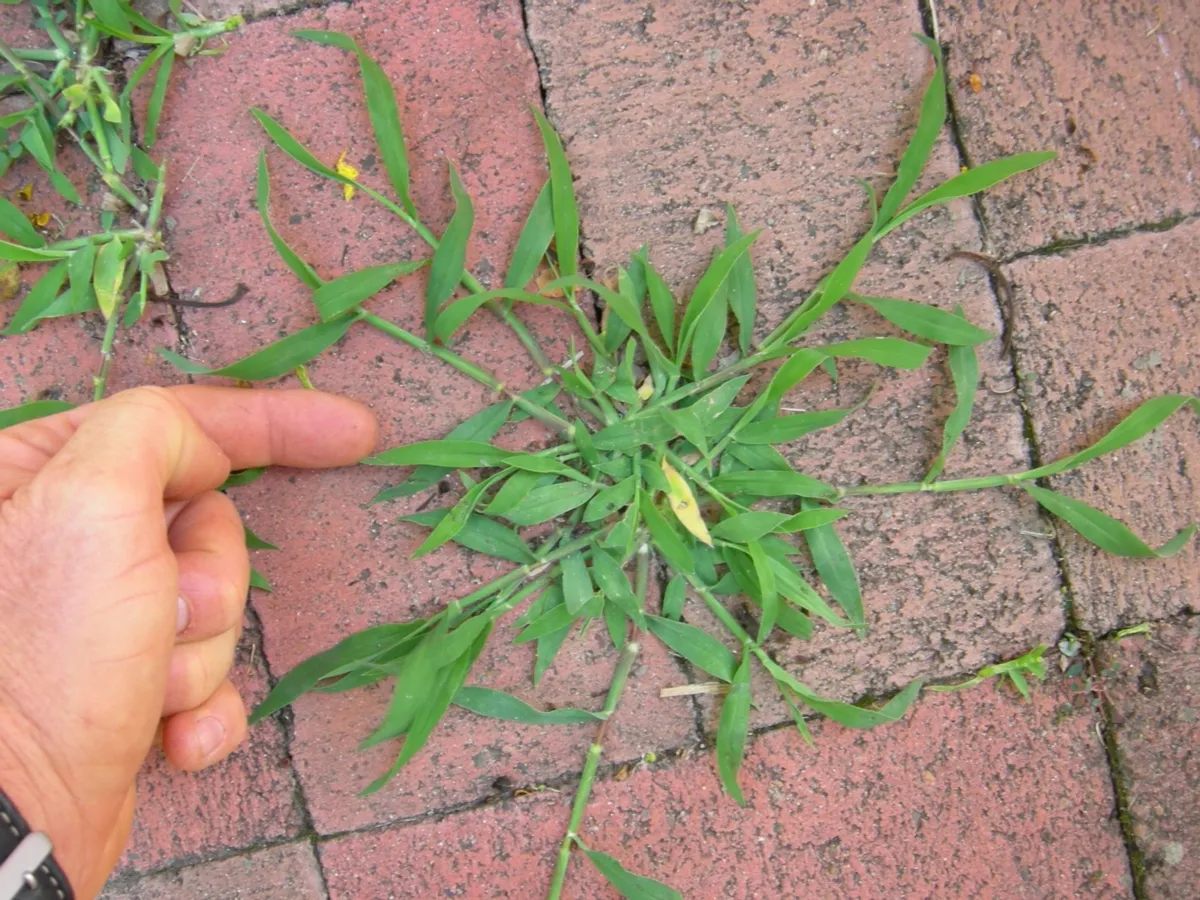
Large Crabgrass (Digitaria sanguinalis)
Large crabgrass (Digitaria sanguinalis) is a non-parasitic annual early spring weed of the Bluegrass family (Poaceae), or Grasses (Gramineae).
Life cycle: annual.
Other names: large crabgrass (Eng.), purple crabgrass (Eng.), fingergrass (Eng.), Polish millet (Eng.), crowfoot grass (Eng.), pigeongrass (Eng.), hairy fingergrass (Eng.), redhair grass (Eng.).
Taxonomy
Classification
Kingdom: Plants (Plantae)
Division: Flowering plants (Angiosperms) (Angiospermae)
Class: Monocotyledons (Monocotyledones)
Order: Grasses (Poales)
Family: Bluegrass (Poaceae), or Grasses (Gramineae)
Genus: Crabgrass (Digitaria)
Species: Large crabgrass (Digitaria sanguinalis (L.) Scop.)
Synonyms
- Syntherisma sanguinalis (L.) Dulac;
- Panicum sanguinale L.
Similar Species
Smooth crabgrass (Digitaria ischaemum). Leaves without hairs, with a few long hairs at the junction of the blade and sheath. The membranous ligule is 2–3 mm long. Two to six finger-like terminal spikes.
Digitaria pectiniformis (Digitaria pectiniformis). Distinguished by two longitudinal rows of rather long and stiff bristles covering the lower floral scales of the lower floret. Grows in the southern regions of the Volga and Don basins.
Egyptian crabgrass (Digitaria aegyptica). Distinguished by a glabrous or almost glabrous upper glume, ovoid in shape and almost 3 times shorter than the spikelet. Grows in the Volga and Don basins but is much rarer than large crabgrass.
Origin
Native to Europe. Introduced as a forage crop in 1849.
Photos

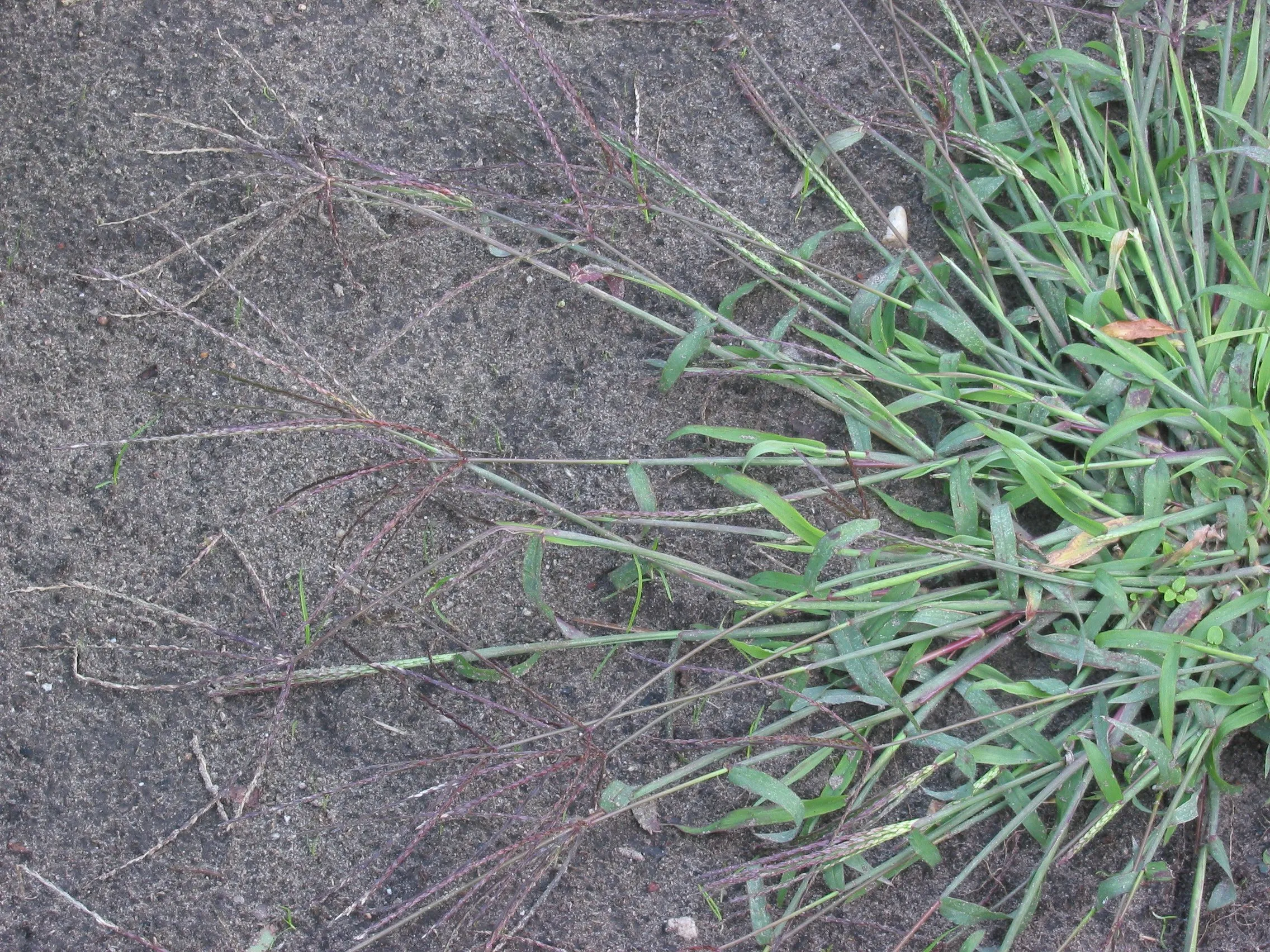
Large Crabgrass (Digitaria sanguinalis)

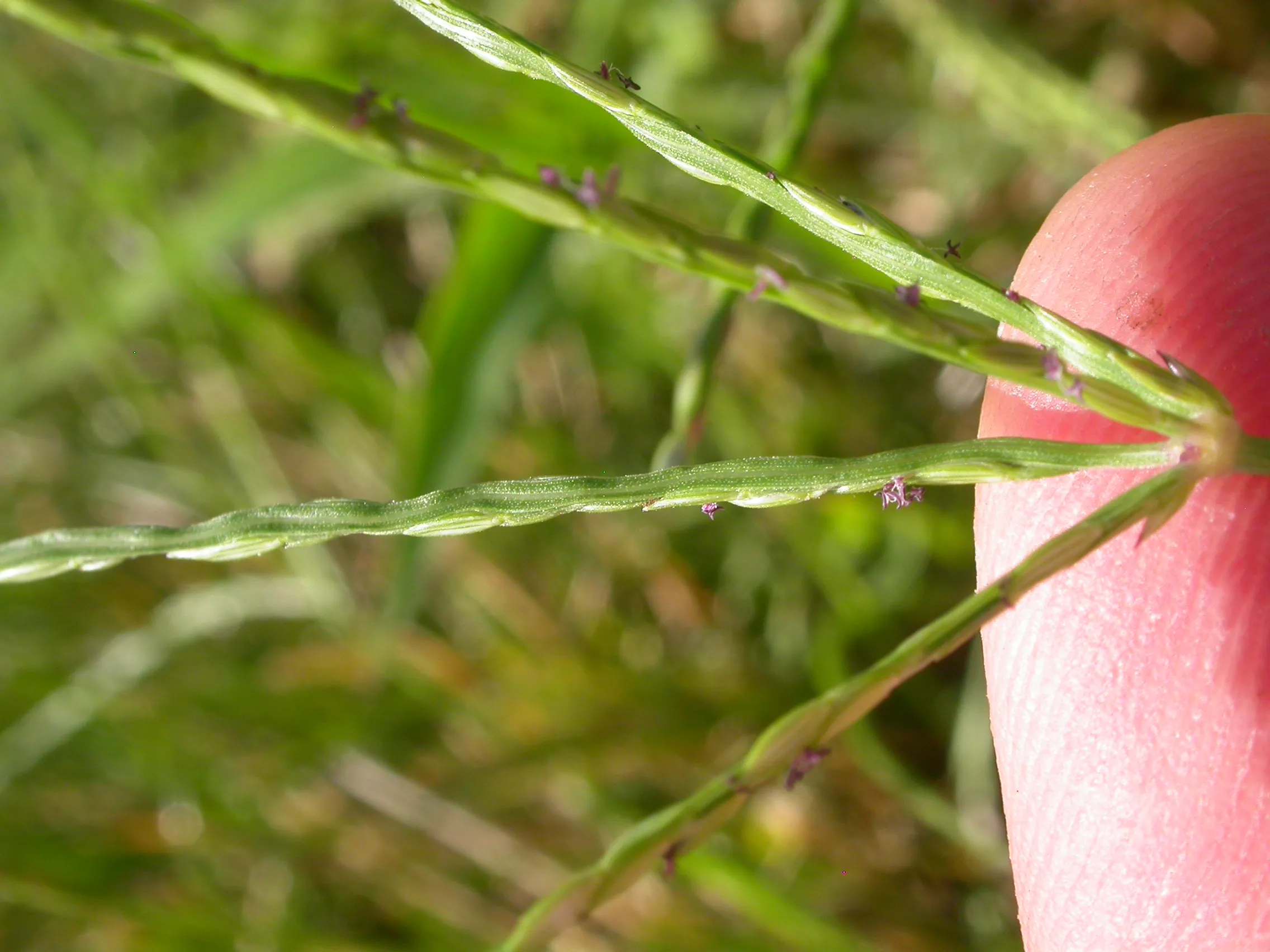
Large Crabgrass (Digitaria sanguinalis)

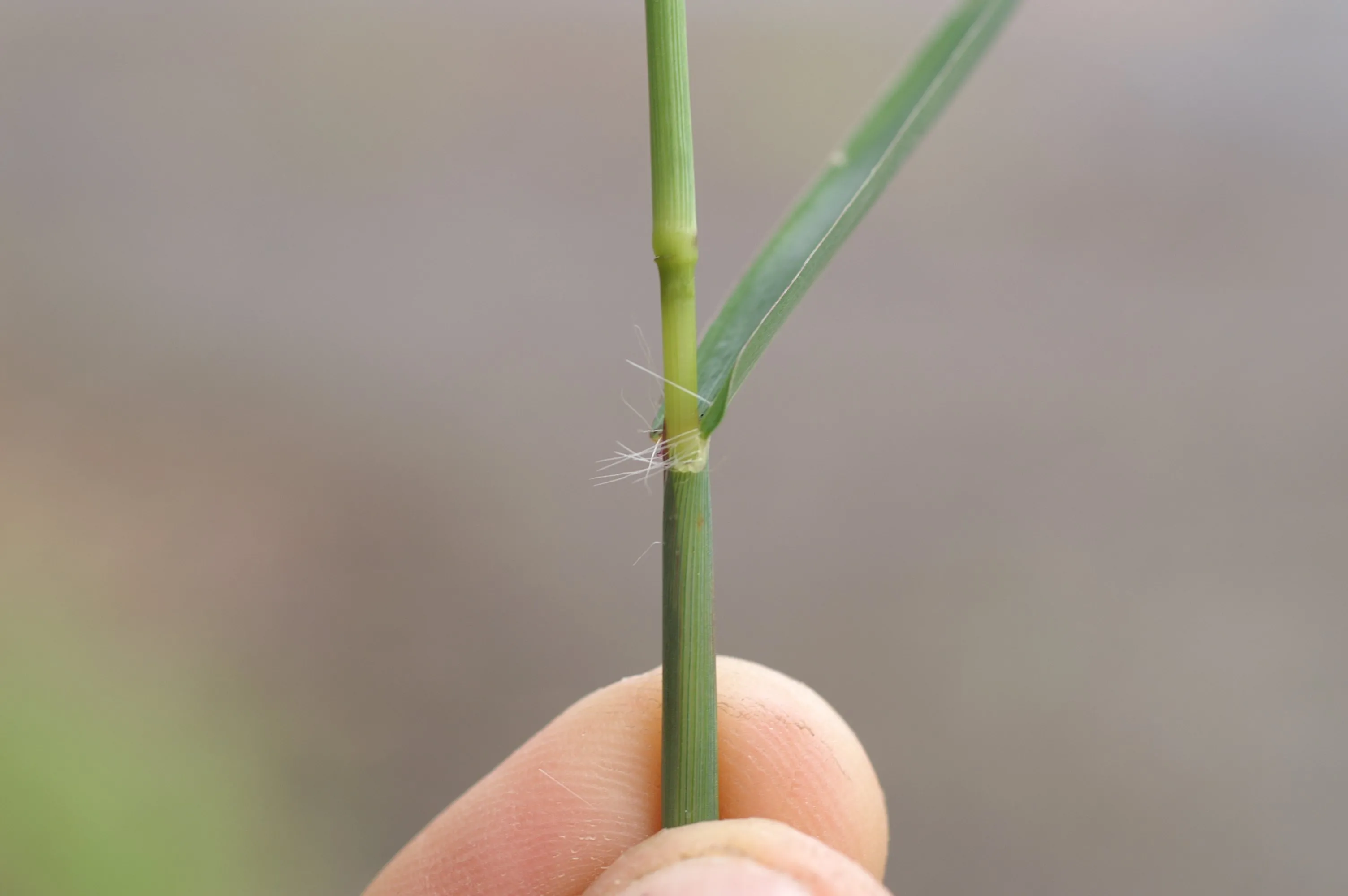
Large Crabgrass (Digitaria sanguinalis)


LCD 4-in-1 Soil Tester
Check essential growing conditions with one compact tool. Measure soil pH, moisture, temperature and light intensity — ideal for gardens, potted plants and greenhouses.
- 4-in-1 measurement
- Easy-to-read LCD display
- Portable design
Affiliate link · For indicative measurements only.
Botanical Description
Root System
Fibrous root system, penetrating to a depth of up to 2 m.
Seeds
Seeds elliptic or lanceolate, dark olive or brown, 2.7–3.0 mm long, 0.8–0.9 mm wide.
Seedlings
Seedlings with one cotyledon.
The first leaf is short and wide, with a blunt tip (ovate-pointed), no auricles, ligule of medium length. The leaf blade has a distinct midrib on the underside.
Leaves
Leaves flat, delicate, silky, linear-lanceolate, (4) 5–10 (20) cm long, 4–10 mm wide.
Leaf sheath with overlapping hairy edges. Numerous long white hairs are found at the junction of the blade and sheath.
Ligule membranous, less than 2 mm long. Auricles absent.
Stems
Large crabgrass can produce up to 700 shoots from the base.
Stems ascending or prostrate, with three to eight nodes, strongly bushy, often rooting at the lower nodes, with many bends, usually with a purple tint.
As it grows, it forms a bush. Stem growth continues until frost.
Plant height (10) 20–70 (120) cm, averaging 40–50 cm.
Inflorescences
Inflorescence is a panicle of (3) 4–13 (18) digitate spikes (spike-like racemes, also spike-like branches), each (3) 5–18 (20) cm long, clustered at the top of the stem.
Spikelets about 3 mm long, narrow-lanceolate, one-flowered, arranged on one side of the stem. The first glume is small or absent. The second glume is 0.8–1.5 mm long, three-angled.
Petals 2.5–3.3 mm long, five-toothed, pale brown.
Fruit
The fruit is an ovoid elongated membranous caryopsis.
Ecology
Temperature Requirements
Heat-loving plant.
Moisture Requirements
Drought-tolerant plant.
Soil Requirements
Grows mainly on light humus, moist, fertile, aerated sandy and sandy loam soils. Oxylophyte, meaning it grows well on acidic soils.
Habitats
Grows on cultivated fields, in orchards and vegetable gardens, river sands, gravelly areas, as a ruderal weed along roads, in settlements, and on lawns.
Anthropophyte, segetal-ruderal.

Solar Automatic Drip Irrigation Kit for Gardens
Automate watering for pots, gardens and small greenhouses. This solar-powered system features a timer to help schedule water delivery to your plants.
- Solar-powered
- 15 m irrigation hose
- Programmable watering
Affiliate link · Check included accessories.
Physiology
Germination
Seeds remain viable in the soil for at least 3 years.
Light is required for germination.
Maximum germination depth is no more than 5–6 cm.
Minimum germination temperature is 2–4 °C, optimum is 20–35 °C (according to other sources, 20–35 °C, Bazdyrev).
Vegetation
Flowering July–August. Fruiting August–September.
Reproduction
Propagated by seeds.
Large plants produce up to 150,000 seeds (Dickinson). One plant produces 200–2000 seeds (Klaassen), according to other sources – up to 5,000 caryopses (Bazdyrev).
Weight of 1000 seeds – 6–8 g.
Distribution
Widely distributed in Europe, introduced to many continents.
Found in the Caucasus, Central Asia, the south of the European part of Russia, rarely found in the middle and northern zones.
Distribution Areas
Russia:
- European part – all regions except Karelo-Murmansk (Murmansk Oblast, Republic of Karelia) and Dvino-Pechora (Komi Republic, Arkhangelsk Oblast, Vologda Oblast);
- North Caucasus – all regions.
Belarus, Ukraine, Latvia, Lithuania, Estonia, Uzbekistan, Kyrgyzstan, Turkmenistan, Tajikistan – all regions.
Kazakhstan – all regions except Upper Tobol (Kostanay Oblast (north)); Irtysh (North Kazakhstan Oblast, Akmola Oblast, Karaganda Oblast (north), Pavlodar Oblast, Kostanay Oblast (south), East Kazakhstan Oblast (west)) and Altai (East Kazakhstan Oblast (east)).

7-in-1 Wi-Fi Weather Station
Monitor local weather conditions with a wireless outdoor sensor. Track temperature, humidity, rainfall, wind speed and direction, and atmospheric pressure. Ideal for gardens, farms and greenhouses.
- Wireless outdoor sensor
- Solar-powered
- Wi-Fi connectivity
Affiliate link · Check regional compatibility.
Harmfulness
Crop Infestation
Recognized as a weed in 33 crops in 56 countries.
Large crabgrass infests crops of cereals, row crops, forage crops, subtropical plantations, cotton, late-canopy crops (corn, potatoes, legumes, beets).
Reservoir for Pests and Diseases
Large crabgrass is a carrier of barley stripe mosaic virus, wheat streak mosaic virus, sugarcane mosaic virus, and alfalfa dwarf virus.
Beneficial Properties
Forage Value
By chemical composition, it belongs to forage plants of medium nutritional value.
Palatability by livestock is satisfactory, good in pastures and hay.
Cultivation
Large crabgrass is a forage plant.
In North America, it has been introduced into cultivation and is considered a good crop for hayfields and pastures. In the Fiji Islands, it is considered an excellent pasture plant. In India, it is cultivated as a reserve grain crop for lean years.
It has performed well in Georgia and Adjara, as it is capable of forming almost pure stands on fallow land, which can be used as hayfields and even included in crop rotation. Two cuttings yield up to 7 t/ha of hay.
Agronomic Importance
Used for sand stabilization.
Other Uses
Groats similar to semolina and starch can be prepared from the grain. It can be used in the paper industry.

40W Full Spectrum LED Grow Light
Support healthy plant growth with full-spectrum LED lighting. Ideal for seedlings, indoor plants and small growing spaces. A practical solution for indoor gardening and year-round cultivation.
- Full-spectrum LED
- Energy-efficient design
- Indoor plant growing
Affiliate link · Check actual power and light coverage.
Chemical Composition
Chemical composition of samples from Adjara and Georgia (Larin), respectively:
- Protein – 7.3/6.0%;
- Fats – 2.5/2.5%;
- Nitrogen-free extractives – 39.1/43.0%;
- Ash – 11.6/8.8%;
- Fiber – 39.4/39.6%.
Control Methods
Agronomic Methods
Adherence to the timing of primary and pre-sowing tillage.
Chemical Methods
Grass-selective herbicides are used for control.
References
- Bazdyrev G.I. (1993) Weed Plants and Measures to Combat Them in Modern Agriculture: A Textbook for Universities. Moscow: Publishing House of the Moscow Agricultural Academy.
- Klaassen, H., Freytag, J. (2004) Weed Plants, Distribution and Harmfulness, Species Identification. Joint publication of the agricultural publishing house Landwirtschaftsverlag Münster-Hiltrup and BASF AG, Limburgerhof.
- Nikitin, V.V. (1983) Weed Plants of the Flora of the USSR. Leningrad: Nauka.
- Xu, Zhenghao, Zhou, Guoning (2017) Identification and Control of Common Weeds. Volume 1. Hangzhou, Zhejiang, China.
- Dickinson, R., Royer, F. (2014) Weeds of North America. The University of Chicago Press.
- Gubanov I.A., Kiseleva K.V., Novikov V.S., Tikhomirov V.N. (2002) Illustrated Guide to Plants of Central Russia. Volume 1: Ferns, Horsetails, Clubmosses, Gymnosperms, Angiosperms (Monocots). Moscow: Partnership of Scientific Publications KMK, Institute of Technological Research.
- Larin I.V. et al. (1950) Forage Plants of Hayfields and Pastures of the USSR. Volume I. Spore Plants. Gymnosperms and Monocots. Moscow: State Publishing House of Agricultural Literature.
