
Black bindweed (Fallopia convolvulus)

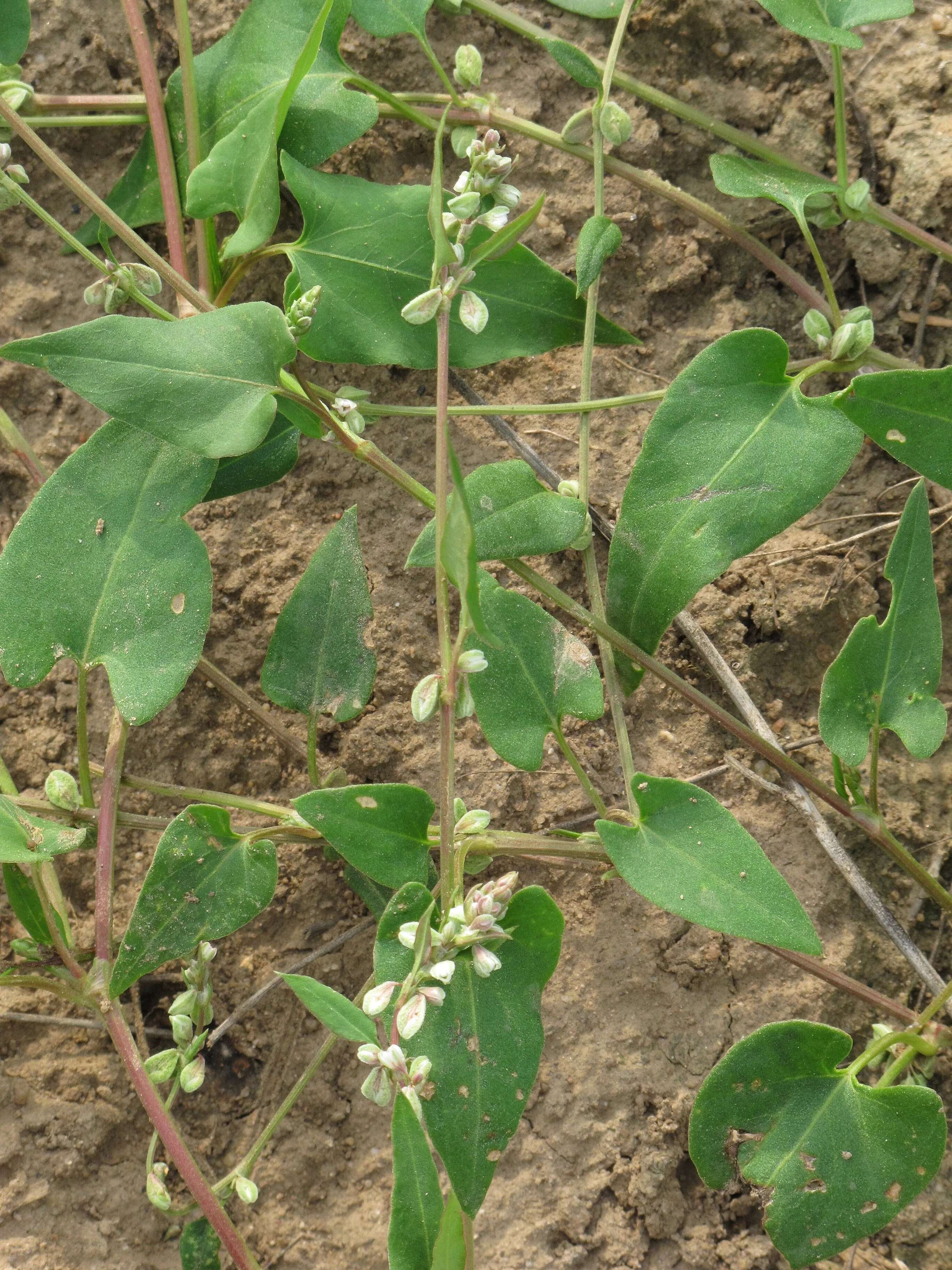
Black bindweed (Fallopia convolvulus)
Black bindweed (Fallopia convolvulus), also known as climbing buckwheat (Polygonum convolvulus) — is an early spring weed of the family Polygonaceae (Polygonaceae).
Life cycle: annual.
Other names: wild buckwheat, black bindweed, dullseed cornbind, knot bindweed, bearbind, ivy bindweed, climbing knotweed, cornbind, devil’s bindweed, blackbird bindweed, pink smartweed (English).
Taxonomy
Classification
Kingdom: Plants (Plantae)
Division: Flowering plants (Angiosperms) (Angiospermae)
Class: True dicotyledons (Eudicots)
Order: Caryophyllales (Caryophyllales)
Family: Buckwheat family (Polygonaceae)
Genus: Fallopia (Fallopia)
Species: Black bindweed (Fallopia convolvulus L. A. Löve)
Synonyms
- Bilderdykia convolvulus (L.) Dum.;
- Polygonum convolvulus L.;
- Tiniaria convolvulus (L.) Webb. & Moq.
Origin
Introduced to North America from Europe as a seed contaminant.
First record in North America in California in 1860; first record in Canada in Manitoba in 1873.
Similar species
Field bindweed (Convolvulus arvensis). Differs in white or pink trumpet‑shaped flowers, 1.5‑2 cm long, and leaves with rounded tips.
Climbing buckwheat (Fallopia dumetorum (L.) Holub, syn. Polygonum dumetorum L.). Differs in the absence of hairs on stems and leaves, and in shiny, smooth black achenes.
Photographs

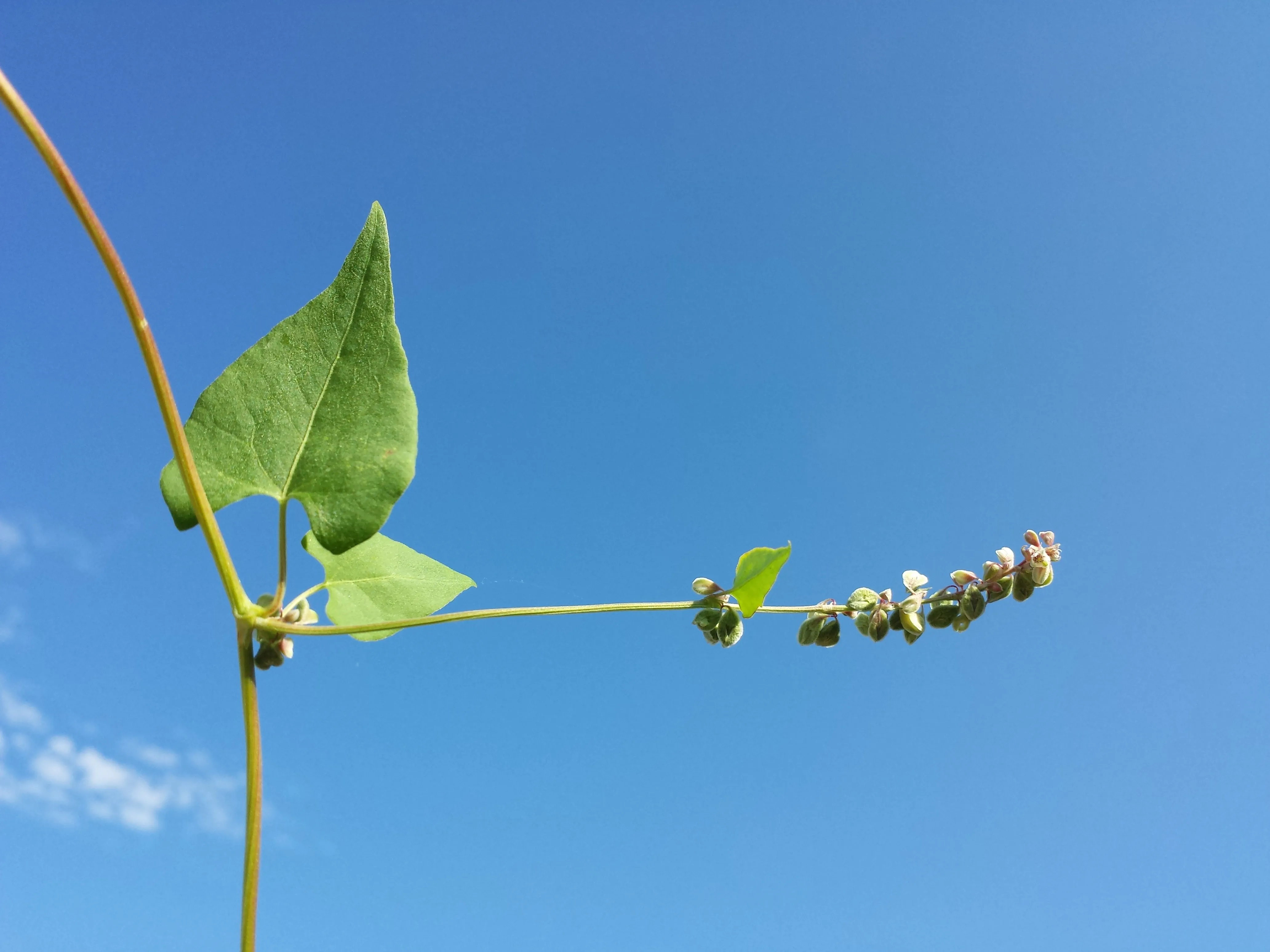
Black bindweed (Fallopia convolvulus)

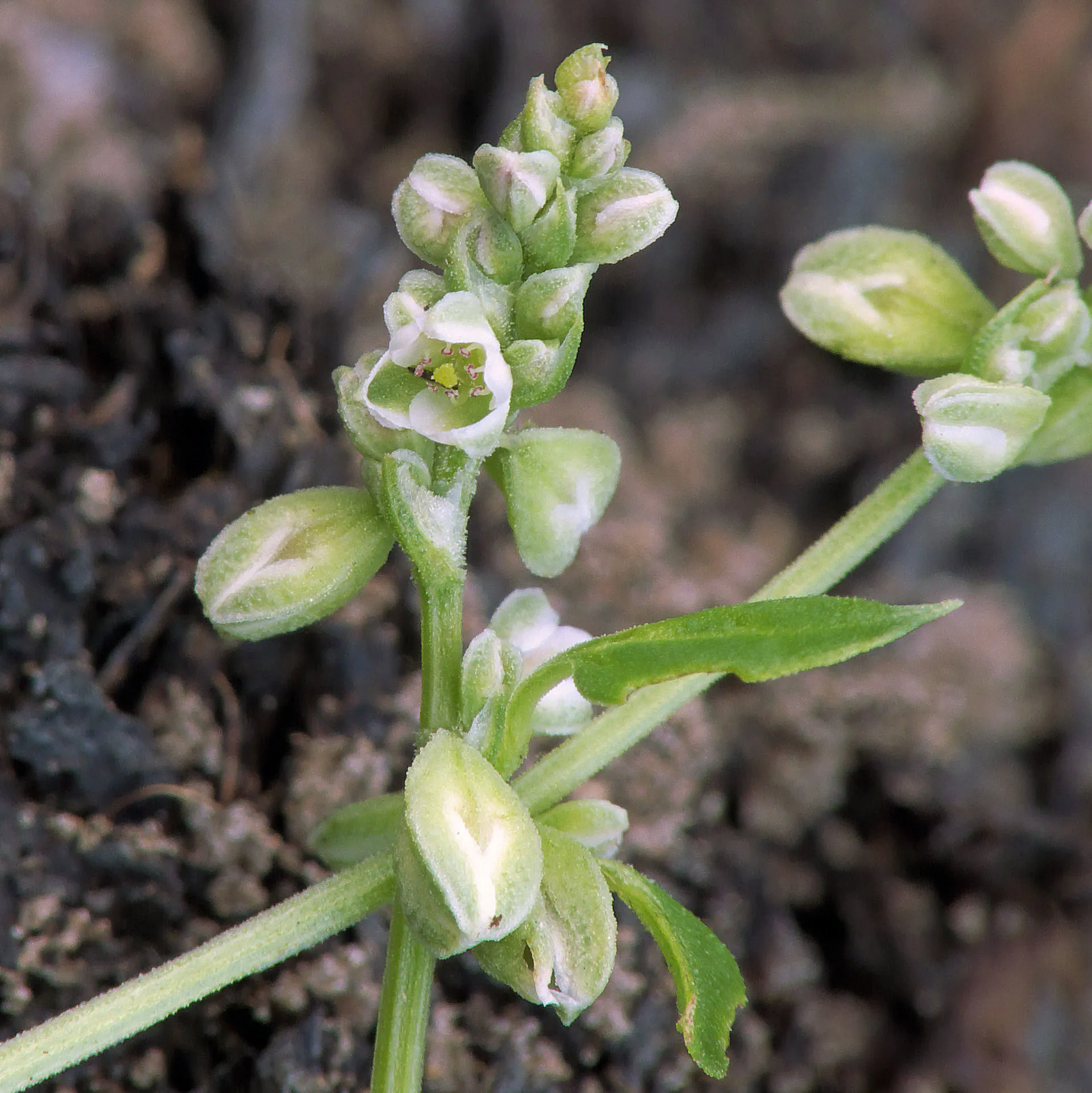
Black bindweed (Fallopia convolvulus)

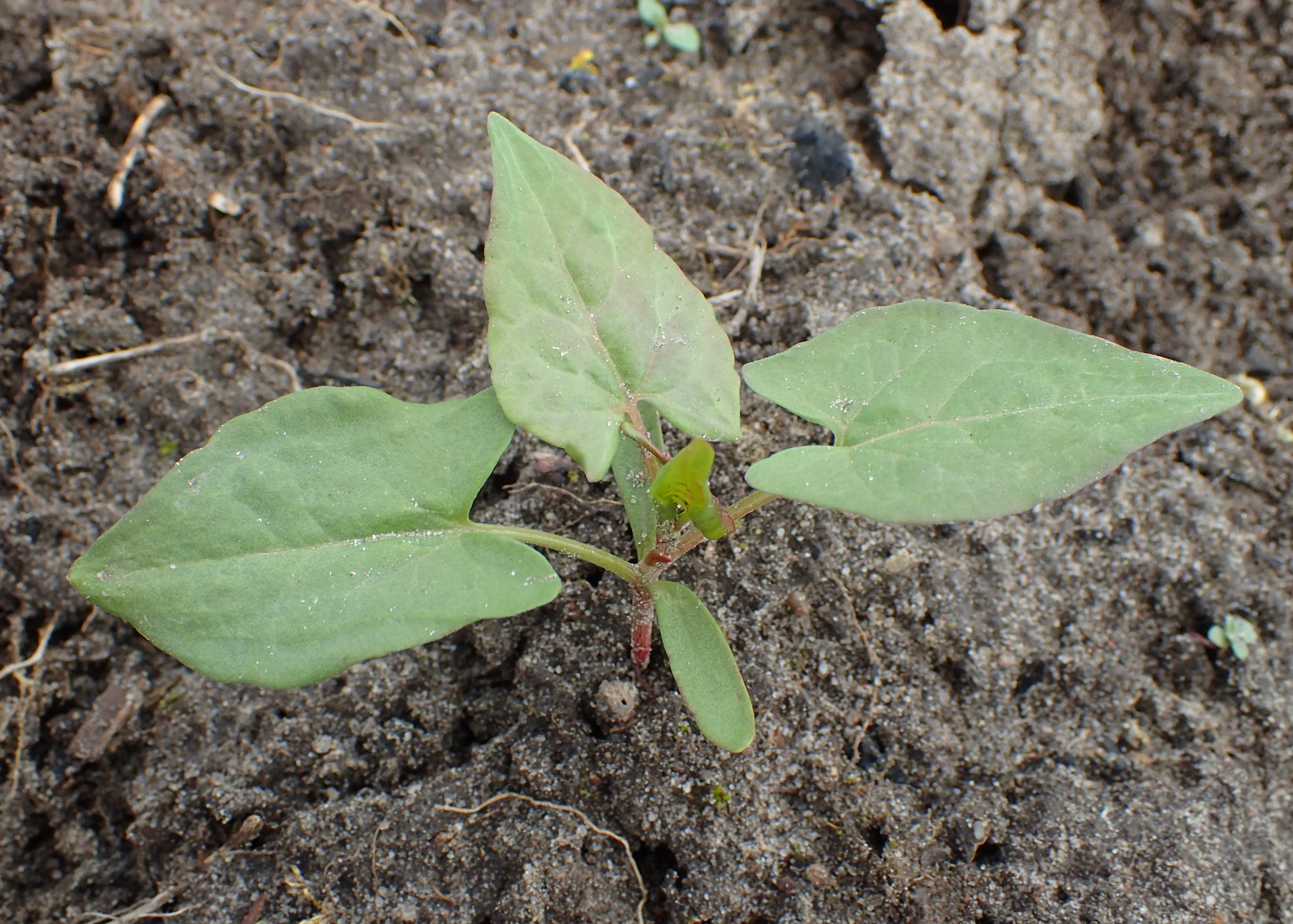
Black bindweed (Fallopia convolvulus)


LCD 4-in-1 Soil Tester
Check essential growing conditions with one compact tool. Measure soil pH, moisture, temperature and light intensity — ideal for gardens, potted plants and greenhouses.
- 4-in-1 measurement
- Easy-to-read LCD display
- Portable design
Affiliate link · For indicative measurements only.
Botanical description
Root system
Taproot, deep, fibrous.
Seeds
Seeds oval, three‑sided, dark black, 3‑6 mm long, 1.8‑2.3 mm wide.
Seedlings
Seedlings with lanceolate or oblong robust cotyledons, 7‑33 mm long, less than 3‑8 mm wide; attached at an angle of 120° to each other.
The stem below the cotyledons is often reddish‑purple.
First leaves are arrow‑shaped with downward‑pointing lobes; a tip is present.
Leaves
Leaves petiolate, alternate, with heart‑shaped or triangular bases, 2‑6 cm long, (1) 2‑5 cm wide, ovate‑triangular or arrow‑shaped with backward‑pointing basal lobes; tips pointed, hairy along the margin and veins. The underside may have a reddish tint.
Petioles pubescent, 0.5‑5 cm long; colour from brown to greenish‑brown, 2‑4 mm long.
Stems
Stem twining or prostrate, branching from the base, reddish in the lower part, 30‑150 (200) cm long, hairless.
The stem twines around neighbouring plants or objects for support.
Inflorescences
Inflorescence — axillary or terminal spike‑like raceme or panicle (verticillaster), 2‑10 cm long; 2‑6‑flowered, often drooping.
Pedicel 1‑100 mm long.
Flowers white, white‑green or pink, inconspicuous, with a pink base, small, 4‑6 mm across, located at the ends of branches and in leaf axils.
4‑6 tepals, petal‑like, the 3 outer larger and keeled.
3‑9 stamens (usually 5‑8).
One pistil; 2‑3 stigmas.
Fruit
Fruit — a three‑sided achene (also a nutlet) enclosed in the perianth, greyish‑brown, grey‑green or brown (with a pinkish tinge) up to 4 mm long, rough.
The achene is enclosed by dry green or brown tepals.
Ecology
Natural zones
Occurs mainly in forest and forest‑steppe zones, as well as the northern part of the steppe zone. In more southern regions, especially in Central Asia, it is rare in fields.
Moisture requirements
Black bindweed is drought‑tolerant but prefers moist, well‑drained soils.
Light requirements
Prefers sunny locations.
Soil requirements
Occurs on all soil types. Not demanding on soil fertility and moisture. Grows well on acidic soils.
Habitats
A segetal weed.
Found in gardens, vineyards, vegetable gardens, melon fields, sands, along water bodies, on fallow lands, along roadsides, and on disturbed lands.

Solar Automatic Drip Irrigation Kit for Gardens
Automate watering for pots, gardens and small greenhouses. This solar-powered system features a timer to help schedule water delivery to your plants.
- Solar-powered
- 15 m irrigation hose
- Programmable watering
Affiliate link · Check included accessories.
Physiology
Germination
Seeds remain viable in soil for at least 5‑6 (20) years.
In autumn, seeds do not germinate.
Minimum germination temperature 1‑2 (4) °C, optimum 14‑16 °C.
Germination occurs from a depth of 0.5‑4 (5) cm, maximum 8‑10 cm, although studies have shown emergence from a depth of 19 cm.
Light is not required for germination.
Vegetation
Seedlings emerge early in spring (March‑May), simultaneously with spring cereal crops. Summer‑autumn seedlings do not overwinter.
It grows especially abundantly in crops during wet years; the number of seedlings in such years reaches several hundred per 1 m².
Seeds begin to ripen a decade before cereal harvest; some shed and contaminate the soil, some contaminate the harvested grain.
Flowers from May‑June (also June‑September) until autumn. Fruiting continues until autumn (also July‑September (October)).
Reproduction
Reproduces by seeds.
One plant produces up to 10,000 fruits; large plants can produce more than 30,000 seeds (other figures: up to 65,000 achenes; 100‑300 seeds; 140‑640; 600 seeds).
Weight of 1000 seeds — 3.5‑4.5 g.
Distribution
Distributed everywhere. Ascends mountains up to 3600 m above sea level in the Himalayas and 1000 m in the Alps.
Distribution areas
Russia:
- European part — all regions except the Republic of Kalmykia and Astrakhan Oblast;
- Caucasus — all regions;
- Western and Eastern Siberia — all regions.
Belarus, Ukraine, Moldova, Lithuania, Latvia, Estonia, Azerbaijan, Armenia, Georgia — all regions.
Kazakhstan:
- West Kazakhstan Oblast (west);
- Kostanay Oblast (north);
- Irtysh region (North Kazakhstan Oblast, Akmola Oblast, Karaganda Oblast (north), Pavlodar Oblast, Kostanay Oblast (south), East Kazakhstan Oblast (west);
- East Kazakhstan Oblast (east).

7-in-1 Wi-Fi Weather Station
Monitor local weather conditions with a wireless outdoor sensor. Track temperature, humidity, rainfall, wind speed and direction, and atmospheric pressure. Ideal for gardens, farms and greenhouses.
- Wireless outdoor sensor
- Solar-powered
- Wi-Fi connectivity
Affiliate link · Check regional compatibility.
Harmfulness
Crop contamination
Affects more than 25 agricultural crops in 41 countries.
Infests crops of all types, mainly cereals and row crops (especially in the forest‑steppe zone), oilseeds, legumes, and perennial grasses. In cereal crops, it twines around grass stems and presses them to the ground, causing severe lodging. A specific weed in buckwheat crops.
Reduces yield by competing for moisture, nutrients, and light.
Often seed ripening occurs before the main crop matures, leading to shedding of weed seeds before harvest and contamination of harvested grain. The branching nature of the weed entangles the crop and complicates harvesting.
When ingested with untreated feed, seeds can be spread via manure. Some seeds can remain viable after ensiling.
Has a high weed potential: in vegetable plots it can produce up to 1500 seedlings per 1 m².
Toxicity
The green parts of the plant may be poisonous. In dried form it is eaten by animals but can cause poisoning, especially in horses.
Invasiveness
Invasive species for North America.
Useful properties
Food use
Seeds and leaves are edible (according to other sources, the green parts are poisonous, especially for horses). Black bindweed was used as a food crop in the past; its remains have been found in Bronze Age middens. The seeds are too small and low‑yielding to be introduced as a commercial crop.
Honey plant
A honey plant.
Medicinal use
Can be used as a wound‑healing agent.
Forage value
Seeds are readily eaten by poultry.
Other uses
Also used in the past for dyeing textiles.

40W Full Spectrum LED Grow Light
Support healthy plant growth with full-spectrum LED lighting. Ideal for seedlings, indoor plants and small growing spaces. A practical solution for indoor gardening and year-round cultivation.
- Full-spectrum LED
- Energy-efficient design
- Indoor plant growing
Affiliate link · Check actual power and light coverage.
Control methods
Agronomic methods
Main control measures: cleaning of seed material; stubble cultivation immediately after harvest, some time before ploughing to stimulate seed germination followed by ploughing under the emerged seedlings; inter‑row cultivation of row crops.
References
- Bazdyrev, G.I. (1993) Weed plants and control measures in modern agriculture: A textbook for universities. Moscow: Publishing House of the Moscow Agricultural Academy.
- Sheptukhov, V.N., Gafurov, R.M., Papaskiri, T.V. et al. (2008) Atlas of the main weed species of Russia. Moscow: KolosS.
- Claassen, H., Freitag, J. (2004) Weed plants, distribution and harmfulness, species identification. Joint publication of Landwirtschaftsverlag Münster‑Hiltrup and BASF AG, Limburgerhof.
- Long, H.C. (1910) Common weeds of the farm and garden. New York.
- Anisimov, B.V., Belov, G.L., Varitsev, Yu.A. et al. (2009) Protection of potatoes from diseases, pests and weeds. Moscow: Potato Growing.
- Nikitin, V.V. (1983) Weed plants of the flora of the USSR. Leningrad: Nauka.
- Dickinson, R., Royer, F. (2014) Weeds of North America. The University of Chicago Press.
