
Buffalo bur (Solanum rostratum)

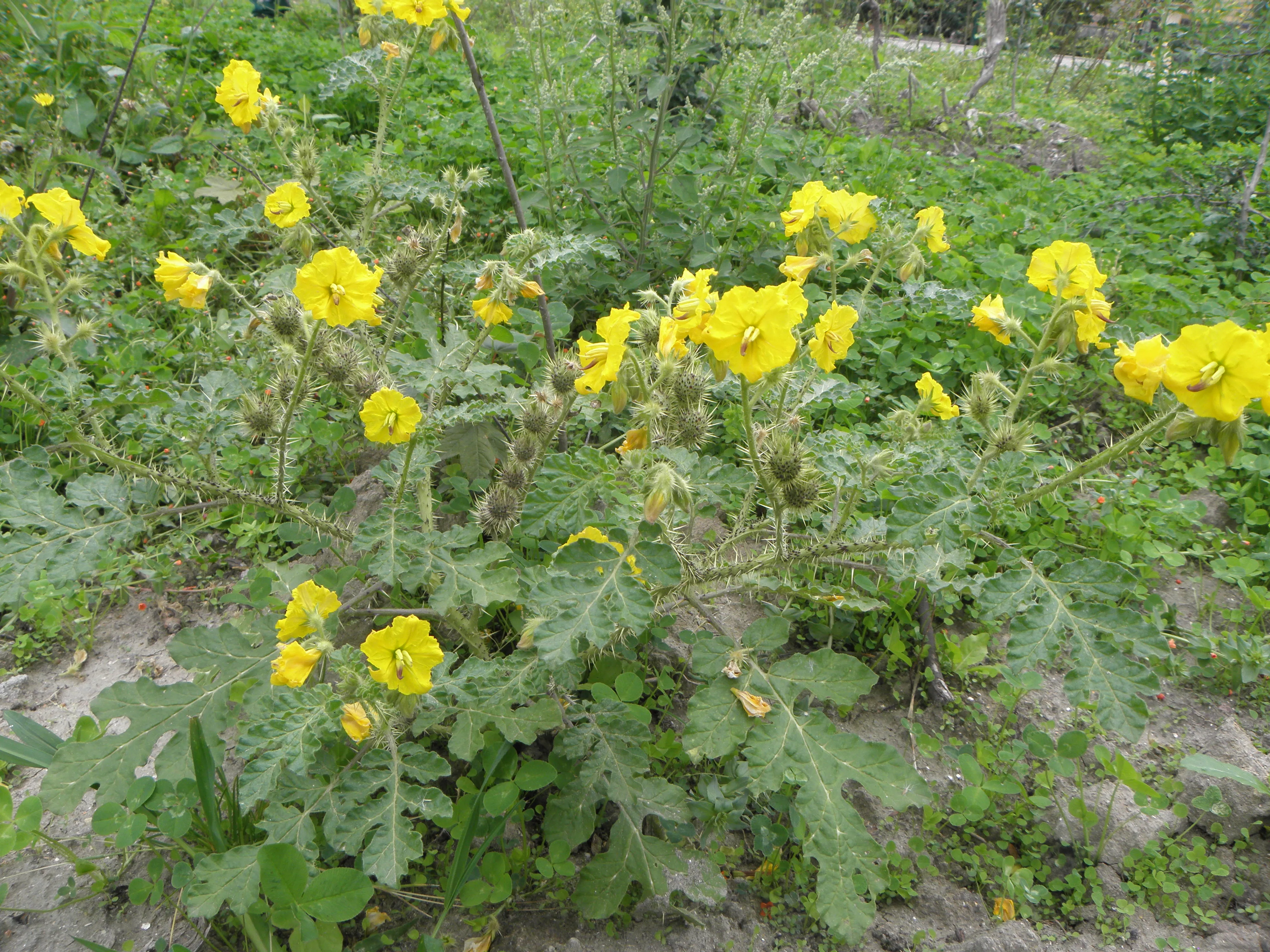
Buffalo bur (Solanum cornutum)
Buffalo bur (Solanum rostratum) is a non‑parasitic, annual, spring‑germinating quarantine weed of the nightshade family (Solanaceae).
Life cycle: annual.
Other names: prickly nightshade, Colorado bur.
Taxonomy
Classification
Kingdom: Plants (Plantae)
Division: Flowering plants (Angiosperms) (Angiospermae)
Class: Dicotyledons (Dicotyledoneae)
Order: Solanales (Solanales)
Family: Nightshade (Solanaceae)
Genus: Nightshade (Solanum)
Species: Buffalo bur (Solanum rostratum)
Synonyms
- Solanum cornutum.
Origin
Native to North America.
Introduced to Russia from America into the Caucasus (1924) and into Ukraine (1928).
Photographs

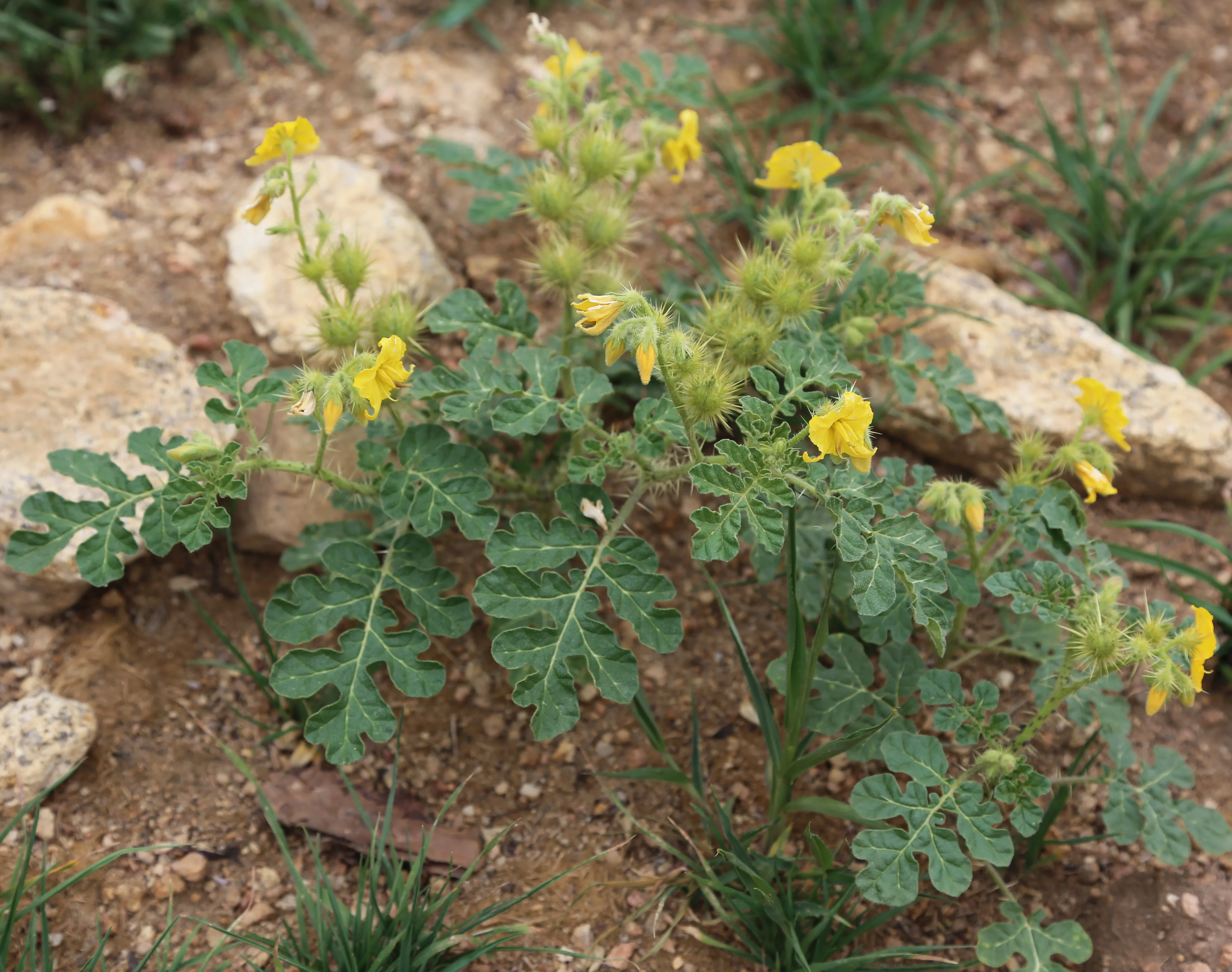
Buffalo bur (Solanum cornutum)

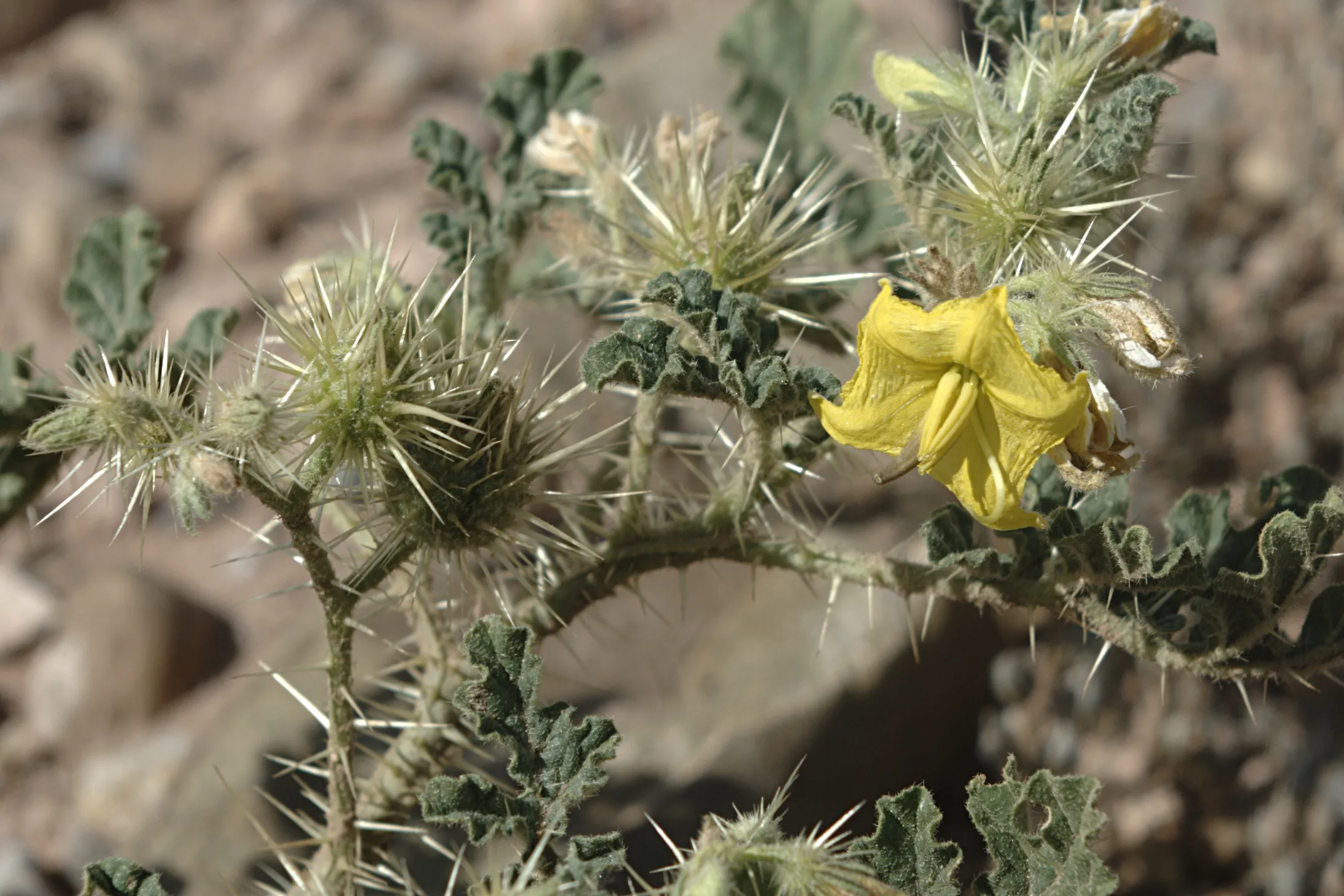
Buffalo bur (Solanum cornutum)

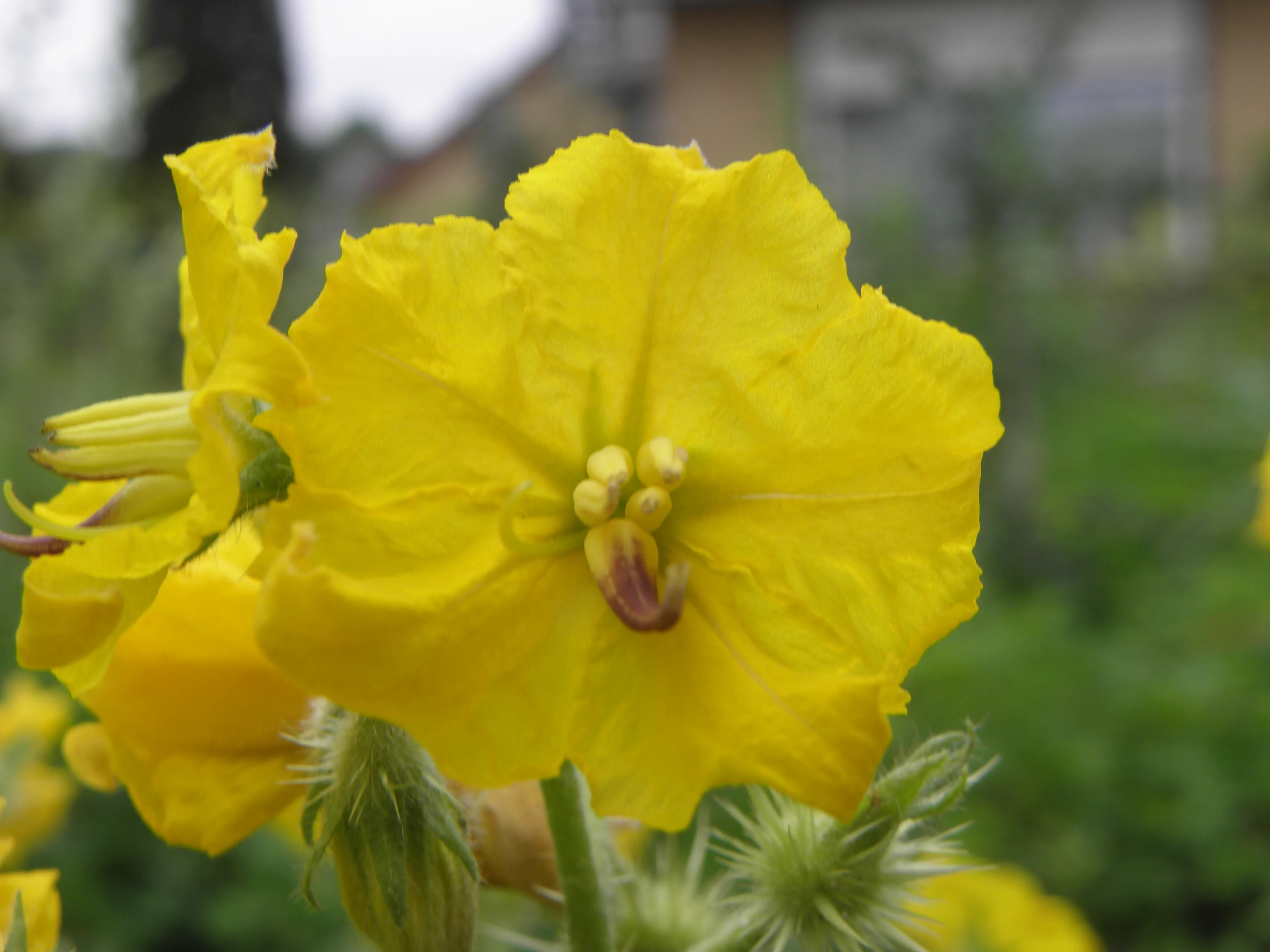
Buffalo bur (Solanum cornutum)


LCD 4-in-1 Soil Tester
Check essential growing conditions with one compact tool. Measure soil pH, moisture, temperature and light intensity — ideal for gardens, potted plants and greenhouses.
- 4-in-1 measurement
- Easy-to-read LCD display
- Portable design
Affiliate link · For indicative measurements only.
Botanical description
Root system
Taproot system.
Seeds
Seeds somewhat kidney‑shaped, greyish‑black or almost black, up to 3 mm long, up to 2 mm wide, up to 1 mm thick, flattened.
Seedlings
Seedlings with oblong cotyledons 10‑16 mm long, 2‑4 mm wide.
Leaves
Leaves alternate, pinnatifid, almost lyrate, petiolate, armed with strong needle‑like prickles and straw‑coloured hairs located along veins and petioles. In appearance they resemble young leaves of table watermelon.
Stems
Stem erect, branched, cylindrical, woody, covered with stellate hairs and yellowish prickles, giving the plant a greyish‑dusty appearance.
Plants (15) 60‑70 (150) cm tall.
Inflorescences
Flowers terminal, large, bright yellow, in umbel‑like cymes.
Fruit
Fruit is an oval or spherical, many‑seeded, one‑celled, semi‑dry, greenish‑yellow or brown berry, covered with prickles, 8‑15 mm long, up to 10 mm thick, enclosed in the calyx.
Ecology
Temperature requirements
Heat‑loving plant.
Soil requirements
Prefers fertile and loose soils.

Solar Automatic Drip Irrigation Kit for Gardens
Automate watering for pots, gardens and small greenhouses. This solar-powered system features a timer to help schedule water delivery to your plants.
- Solar-powered
- 15 m irrigation hose
- Programmable watering
Affiliate link · Check included accessories.
Physiology
Germination
Viability – up to 10 years.
Seeds begin to germinate at 10‑15 °C (Nikitin), according to other data – 14‑18 °C (Bazdyrev). Mass emergence of seedlings occurs in May at 20‑25 °C (Nikitin), according to other data optimal temperature is 25‑28 °C (Bazdyrev).
Seeds are able to germinate only after overwintering in the soil. Freshly shed seeds do not germinate.
Germination rate 40‑60%.
The optimal depth from which seedlings emerge is 1‑5 cm. When seeds are buried to 15‑20 cm, seedlings do not appear (Nikitin), according to other data the maximum depth is 6‑8 cm (Bazdyrev).
Vegetation
Seed germination begins after overwintering in March.
Flowering July‑September. Fruiting September‑October.
Reproduction
One plant can produce 10‑20 thousand seeds (Nikitin), according to other data – up to 5 thousand seeds, maximum 10‑20 thousand (Bazdyrev).
Weight of 1000 seeds – up to 3 g.
Distribution
It has spread widely across the territory of the former USSR, especially in the south, reaching the northern border of the steppe zone in the European part and the Far East, as well as Kazakhstan. By 1983 it was recorded on an area of 250 thousand hectares and continued to spread in southern regions of Russia.
Distribution regions
Russia:
- European part: Lower Don (Volgograd Oblast (west), Rostov Oblast, Krasnodar Krai (north), Republic of Kalmykia), Lower Volga (Astrakhan Oblast, Volgograd Oblast (west));
- Caucasus – all regions;
- Far East: Ussuri (Primorsky Krai, Khabarovsk Krai (south)).
Ukraine:
- Dnieper (Volyn Oblast, Rivne Oblast, Ternopil Oblast, Khmelnytskyi Oblast, Zhytomyr Oblast, Vinnytsia Oblast, Kyiv and Kyiv Oblast, Chernihiv Oblast, Sumy Oblast, Poltava Oblast, Kirovohrad Oblast, Cherkasy Oblast, Dnipropetrovsk Oblast, Kharkiv Oblast, Luhansk Oblast);
- Black Sea (Odesa Oblast, Mykolaiv Oblast, Kherson Oblast, Zaporizhzhia Oblast, Donetsk Oblast).
Georgia, Moldova, Azerbaijan (except Talysh Mountains), Armenia – all regions.
Kazakhstan:
- Lower Volga (West Kazakhstan Oblast (west), Atyrau Oblast (west));
- Tien Shan (Tien Shan Mountains).
Uzbekistan and Kyrgyzstan – in the Tien Shan Mountains.

7-in-1 Wi-Fi Weather Station
Monitor local weather conditions with a wireless outdoor sensor. Track temperature, humidity, rainfall, wind speed and direction, and atmospheric pressure. Ideal for gardens, farms and greenhouses.
- Wireless outdoor sensor
- Solar-powered
- Wi-Fi connectivity
Affiliate link · Check regional compatibility.
Harmfulness
Crop infestation
Dangerous quarantine weed.
Occurs in crops of vegetables, row crops, essential oil crops and late‑ripening crops, in tea plantations, orchards, crops of corn, Sudan grass. Avoids cereal and forage grass crops.
In Stavropol Krai it has spread abundantly on pastures and rangelands.
Toxicity
Due to strong pubescence and presence of prickles, it poses a danger to farm animals. Animals do not eat the green mass, silage and hay with a large admixture of this weed.
There have been recorded cases of animal deaths when fed corn silage with an admixture of buffalo bur before the flowering stage (Dudar). The cause of death is likely inflammation and trauma to the gastrointestinal tract of animals.
Control methods
Agronomic methods
The main agronomic control measures include:
- destruction before seed set;
- deep autumn ploughing with a plough with skimmers to bury the upper infested soil layer to 20 cm or more;
- stubble peeling immediately after harvest of grain crops, which destroys up to 90% of weed plants.
- introduction into crop rotation of a link: winter wheat – corn (or Sudan grass) for silage and green fodder – winter wheat leads to a 95‑98% reduction in the number of seeds in the soil.
Fields heavily infested with buffalo bur are sown with cereal crops for grain with a seeding rate increased by 10‑20%. Dense sowings of wheat and oats suppress buffalo bur, and young weed plants cannot compete under the dense cover of cereal crops. Subsequent treatment is carried out as semi‑fallow before seed set.
For control on pastures and rangelands, sowing of perennial grasses is carried out.
Chemical methods
Buffalo bur is sensitive to soil‑applied herbicides: semeron, simazine, atrazine, prometryn, and in mixture with lontrel also to 2,4‑D, 2M‑4X.
In corn crops, simazine and atrazine are used for control. Pre‑emergence application at 5 kg/ha achieves 70‑80% mortality of buffalo bur plants.
Application of a mixture of butyl ester of 2,4‑D (0.3 kg/ha) and atrazine or simazine (3 kg/ha) at the 2‑4 leaf stage of the weed and 5‑7 leaf stage of corn results in 90‑95% mortality of young buffalo bur plants.
In Sudan grass crops, butyl ester of 2,4‑D is used at a rate of 0.8 kg/ha of a.i..
On non‑crop areas, small foci can be treated with non‑selective herbicides, e.g., ammonium sulfamate at 150‑200 kg/ha. Spraying is carried out on young buffalo bur seedlings before budding and flowering.

40W Full Spectrum LED Grow Light
Support healthy plant growth with full-spectrum LED lighting. Ideal for seedlings, indoor plants and small growing spaces. A practical solution for indoor gardening and year-round cultivation.
- Full-spectrum LED
- Energy-efficient design
- Indoor plant growing
Affiliate link · Check actual power and light coverage.
References
- Bazdyrev G.I. (1993) Weed plants and control measures in modern agriculture: A textbook for universities. Moscow: Publishing House of the Moscow Agricultural Academy.
- Nikitin V.V. (1983) Weed plants of the flora of the USSR. Leningrad: Nauka.
- Dudar A.K. (1971) Poisonous and harmful plants of meadows, hayfields and pastures. Moscow: Rosselkhozizdat.
