
History of Gardening and Horticulture
1. How It All Began: Foraging → Agriculture
The history of gardening and horticulture is essentially the history of human civilization. Everything we do in the garden today—preparing the soil, sowing, watering, harvesting—people have done for thousands of years. Only the tools, knowledge, and scale have changed. Understanding this helps the modern gardener better appreciate their place in a long chain of generations.
From Foraging to Cultivation
Humans have existed on Earth for more than two million years, and for most of that time they were foragers and hunters. People migrated in search of food, following animal herds and seasonal plants. The domestication of plants began only about 8,000–10,000 years ago—a negligibly small span compared with the whole history of humanity (Rubatzky, Yamaguchi 1997).
Why did this process take so long? The answer is simple: there were no examples or experience to follow. Finding food was the main task of survival, and there was neither time nor opportunity for thoughts about cultivation. Knowledge was passed from generation to generation within communities, but it spread extremely slowly because there were no communications between settlements (Rubatzky, Yamaguchi 1997).
Conditions Necessary for the Birth of Agriculture
The geographer-botanist Carl Sauer theorized that certain conditions had to develop for plant domestication. First of all, these were lands that did not require complex preparation: relatively level, well-drained plots. It was also necessary to be able to control fire—for cooking, warmth, protection from predators, and clearing land. Even today the practice of slash-and-burn agriculture survives in some regions of the world, although it causes serious environmental and social problems (Rubatzky, Yamaguchi 1997).
Archaeological data show that the most favorable regions for early agriculture were those with abundant game and a diversity of edible plants. This allowed communities to lead a more settled way of life, and therefore to devote more time and attention to managing plants and animals (Rubatzky, Yamaguchi 1997).
The First Centers of Agriculture
About 10,000 years ago, in several regions of the world almost simultaneously, the transition from foraging to agriculture occurred. These centers arose independently of one another in different parts of the planet:
- The Near East (the Fertile Crescent of Mesopotamia, the Tigris and Euphrates valleys, the Levantine coast)—here wheat, barley, peas, and lentils were domesticated.
- China—millet, rice, soybeans, turnips, radishes, Chinese cabbage, cucumber (Nonnecke 1989).
- Central and South America—maize, beans, squash, peppers, tomatoes, potatoes, avocados (Nonnecke 1989).
- Africa (Ethiopia)—coffee, sorghum, castor bean, okra.
- Southeast Asia—bananas, taro, yams, citrus fruits.
The Russian botanist and geneticist Nikolai Vavilov, studying the centers of origin of cultivated plants, identified eight main centers of flora domestication (Rubatzky, Yamaguchi 1997). His work showed that most modern vegetable crops come from relatively few regions of the world.
How Domestication Occurred
The process of plant domestication followed two main paths: through seed propagation and through vegetative propagation.
Vegetative propagation was the first and simplest method. People noticed that if part of a tuber or rhizome was left in the ground, a new plant would grow from it. This is how potatoes, sweet potatoes, yams, and taro were domesticated—crops that even today are propagated mainly vegetatively (Rubatzky, Yamaguchi 1997).
Seed propagation required more knowledge and skill: seeds had to be collected, stored until the next season, and sown correctly. But it opened possibilities for selection—people could choose plants with better properties and obtain offspring from them. It was this path that led to the creation of most modern varieties of grains, legumes, and many vegetables (Rubatzky, Yamaguchi 1997).
Archaeobotanical data indicate that the first farmers acted by trial and error. They selected plants with large fruits, non-shattering seeds, and better taste. Gradually, over hundreds of generations, these traits became fixed, and cultivated plants differed more and more from their wild ancestors (Rubatzky, Yamaguchi 1997).
What Changed in People’s Lives
The transition to agriculture radically changed human society. Permanent settlements, food stores, and the division of labor appeared. Some people could engage not only in obtaining food but also in crafts, construction, art, and science. It was agriculture that created the material basis for the emergence of cities and states (Rubatzky, Yamaguchi 1997).
However, this process also had reverse sides. Domesticated plants became dependent on humans—they could not survive without care, watering, and protection from pests. Humans, in turn, became dependent on the harvest. As the American agronomist J. R. Harlan wrote, “man became so dependent on the plants he grew that, in a sense, plants domesticated him” (Quoted in: Nonnecke 1989).
The First Gardens
The first gardens most likely arose spontaneously. People brought wild plants home and planted them near their dwellings—it was more convenient to care for them and harvest. Gradually, plots where useful plants grew formed around settlements. They were watered, weeded, and protected from animals (Randhawa 1981).
The oldest images of gardens and vegetable plots date to Ancient Egypt and Mesopotamia. Egyptian frescoes dating from the 3rd–2nd millennia BCE show rectangular beds, irrigation channels, date palms, figs, and grapes. These images testify that a developed culture of gardening and horticulture already existed then (Hobhouse 2004).
Note
Vavilov noted that the centers of origin of cultivated plants often coincide with regions where climatic conditions were most favorable for the growth of the wild ancestors of these plants. This observation is still used by breeders to search for valuable genes for resistance to diseases and pests (Rubatzky, Yamaguchi 1997).
In the next part we will examine how gardening and horticulture developed in the earliest civilizations—Mesopotamia, Egypt, China, and America.
2. The First Gardens and Orchards: Mesopotamia, Egypt, China, America
Mesopotamia
The history of Western gardening begins in the countries of the Near East—Mesopotamia, Egypt, and Persia. Already by 4000 BCE the Sumerians had descended from the foothills onto the alluvial plains of the Tigris and Euphrates delta and built canals for irrigation and drainage, turning desert and swamps into rich cultivated lands—the “Fertile Crescent” of history (Hobhouse 2004).
The Sumerian-Akkadian civilization (4th millennium BCE) already knew the wheel, the cart, the waterwheel, gardens, and irrigation systems (Randhawa 1981). Over several hundred years their descendants laid out luxurious hunting parks with complex irrigation systems and collected new plants and animals from military campaigns (Hobhouse 2004).
The Epic of Gilgamesh (c. 2700 BCE) describes a paradise garden with water and shade—essential ingredients for desert dwellers. The Sumerian-Babylonian paradise, or Garden of the Gods, was an idyllic garden of peace and abundance intended for the immortals (Hobhouse 2004).
Sargon II’s park at Khorsabad (c. 715 BCE) is one of the earliest images of a managed landscape: a stone bas-relief shows a man-made hill planted with trees. Sennacherib (704–681 BCE) laid out parks in Nineveh, diverting mountain water for irrigation and planting cotton, grapes, and olives (Hobhouse 2004).
Ancient Egypt
Egypt developed its own garden culture in relative isolation. Permanent plantings were possible only in small walled plots protected from floods, so there was no question of large hunting parks like those of the Sumerians and Assyrians (Hobhouse 2004).
The oldest record of an Egyptian garden dates to the Old Kingdom. During the reign of Sneferu (c. 2600–2576 BCE), Methen, ruler of the northern delta district, carved on the walls of his tomb details of his life’s achievements. His garden with a house and pond was the core of an estate of about a hectare, as well as a vineyard of 405 hectares. It had “a very large lake” and “beautiful trees” (Hobhouse 2004).

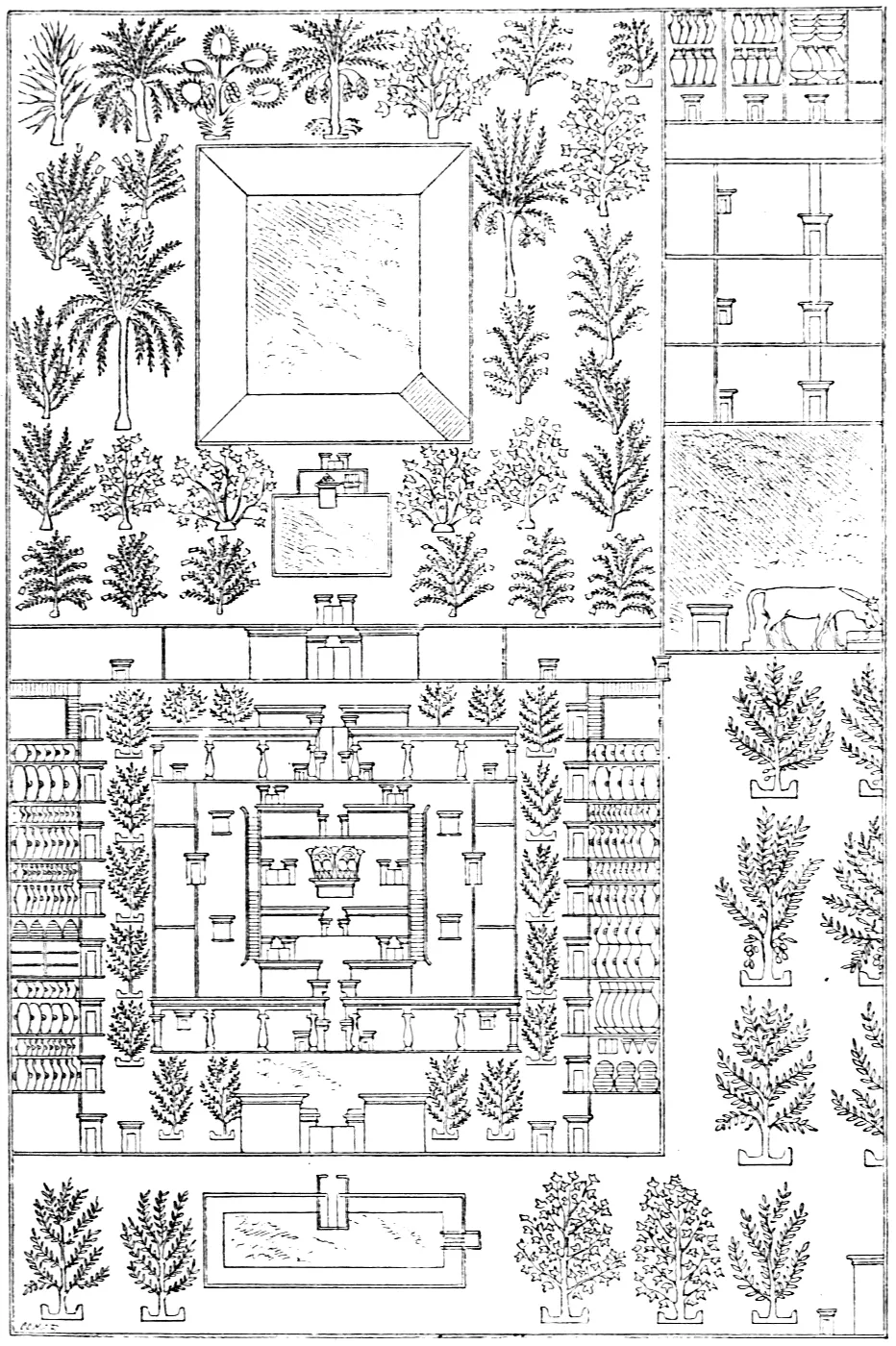
Plan of a house with utility buildings from Tell el-Amarna
A part of the plan of an ancient Egyptian house and its utility buildings depicted in a tomb at Tell el-Amarna (Egypt); a drawing from the 1883 publication by Priss. The plan shows a garden with a pool, trees, and buildings.
By the second millennium BCE, the Egyptian idea of the garden had spread to the Levant through military conquests and trade, and also to Mesopotamia, influencing the development of gardens along geometric lines (Hobhouse 2004). Tomb wall paintings show walled gardens with rectangular or T-shaped ponds, trees in rows, and symmetrical beds (Hobhouse 2004).
Queen Hatshepsut (c. 1470 BCE) was the first Egyptian to import exotic trees. She sent an expedition to Somalia (the land of Punt) for myrrh trees, which were dug up with soil and transported in baskets. The trees did not survive, but they are depicted on the reliefs of her temple at Deir el-Bahri (Hobhouse 2004).
Ancient China
China takes its name from the first emperor, Qin Shi Huang, who by 221 BCE created an empire roughly corresponding to modern mainland China (Hobhouse 2004). His Shanglin Park served as a hunting reserve and pleasure garden, to which rare plants and animals were brought from all ends of the empire (Hobhouse 2004).
A later poem recalls the abundance of the first emperor’s vast garden: “The sun rises from the eastern ponds / And sets among the western slopes; / In the southern part of the park, / Where grasses grow in the depths of winter... / Live zebras, yaks, tapirs, and black bulls” (Quoted in: Hobhouse 2004).
Emperor Han Wudi (187–140 BCE) built a new park with habitats for the Xian, or Immortals—magical beings believed to inhabit floating islands in the eastern sea. His park was cut by artificial hills, and the islands in its lakes were planted with exotic flowers, medicinal herbs, and unusual stones. This strategy of attracting the Immortals gave rise to the classic element of the Chinese and Japanese garden—the garden with a pond and an island (Hobhouse 2004).
America: Aztecs and Incas
By the time of the Spanish conquest of Mexico by Hernán Cortés in 1519, the Aztecs dominated the southern part of North America. One of their most distinctive achievements was the creation of “floating islands,” or chinampas, in the lakes of the high plateau (now the site of Mexico City). The chinampas provided fertile vegetable plots and flower gardens, while drainage channels were connected by artificial earthen dams (Hobhouse 2004).
The Aztecs were sophisticated gardeners. The gardens of Moctezuma II in Tenochtitlan had “flowers of rare diversity and fragrance, and medicinal herbs.” There were “many fountains of fresh clean water, which they brought from neighboring mountains, conducted along open aqueducts to the dams, where the water went into pipes and was thus supplied to the city” (Hobhouse 2004).
In South America, the Incas of Peru developed an intensive agricultural system around Lake Titicaca at an altitude of 3,816 meters above sea level. Terraces on steep slopes were arranged so that the lower band could contain hundreds of acres of cultivated crops, while the upper ones could hold only a few rows of maize. Massive terraces created protected pockets of microclimate where certain varieties could thrive (Hobhouse 2004).
The Incas were the first to use various types of manure, especially guano—deposits of seabirds—as fertilizer for their crops (Hobhouse 2004). They also developed a complex system of canals and underground aqueducts that delivered water at a distance of at least 650 km from mountain slopes (Hobhouse 2004).
Note. The Spanish chronicler Díaz del Castillo, describing Moctezuma’s gardens in 1532, exclaimed: “No future discoveries will ever be so wonderful. Alas! Today everything is destroyed and lost, nothing remains” (Quoted in: Hobhouse 2004). These gardens, comparable to the contemporary gardens of Persia and Mughal India, were ruthlessly destroyed by the Spaniards and, apart from the realm of ideas, had no influence on the subsequent development of garden art.


LCD 4-in-1 Soil Tester
Check essential growing conditions with one compact tool. Measure soil pH, moisture, temperature and light intensity — ideal for gardens, potted plants and greenhouses.
- 4-in-1 measurement
- Easy-to-read LCD display
- Portable design
Affiliate link · For indicative measurements only.
3. Gardens of Antiquity: Hanging Gardens, Monastery Gardens, Apothecary Gardens
The Hanging Gardens of Babylon

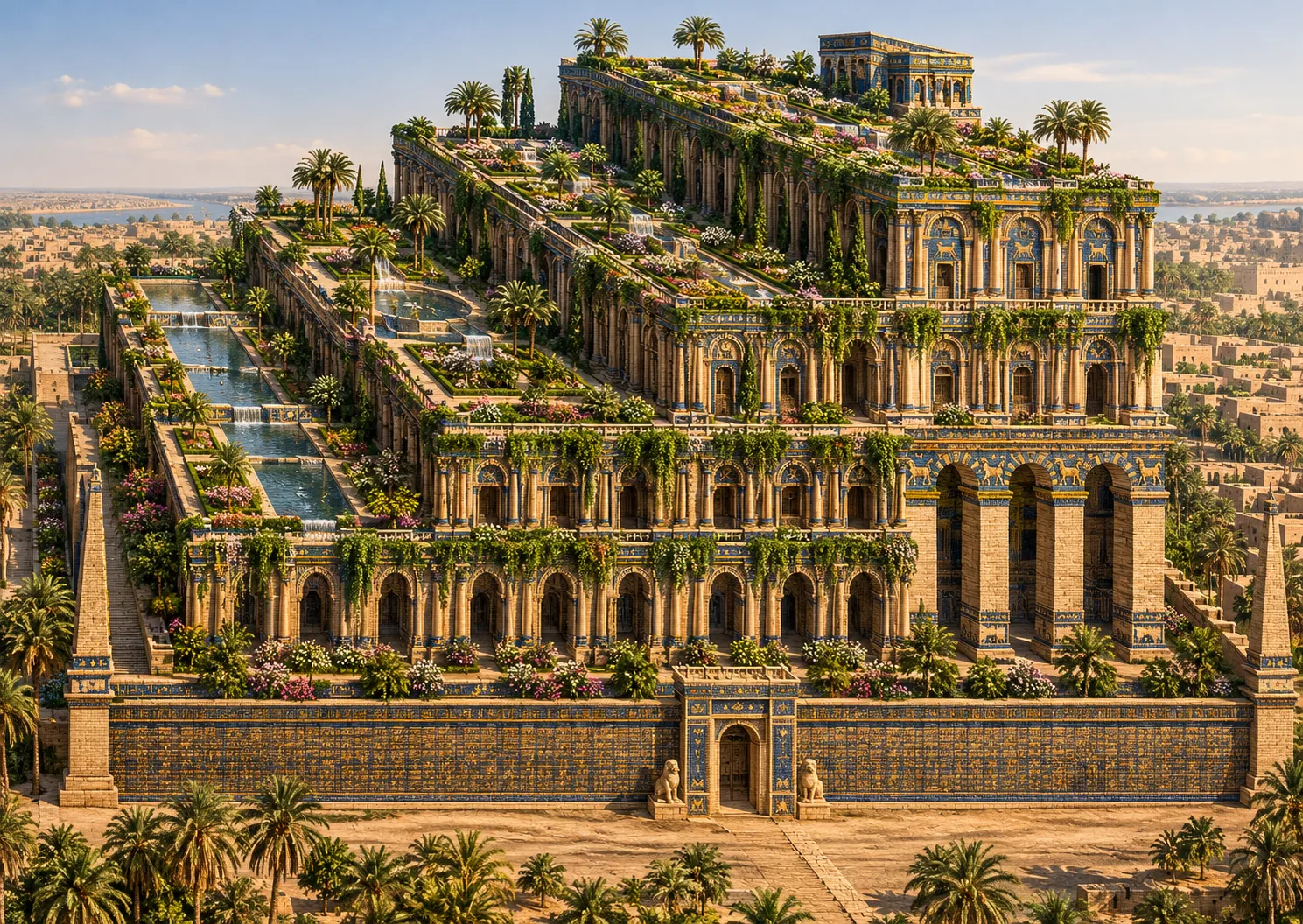
Illustration of the Hanging Gardens of Babylon (AI-generated)
An AI-generated image visualizing the Hanging Gardens of Babylon — one of the Seven Wonders of the Ancient World. The composition is based on a historical engraving from 1688–1727 by the Dutch master Johannes Jacobsz van den Aveele, which presents a fantastical appearance of the gardens in Babylon (on the territory of modern Iraq).
The Hanging Gardens of Babylon are among the most famous gardens of antiquity. They are attributed to Nebuchadnezzar II (605–562 BCE), grandson of the leading Babylonian conqueror, and were built for his wife Amytis, daughter of the king of Media. Living in a flat river delta, she longed for the hills and meadows of her homeland in the north (Hobhouse 2004).
Described by the Greek Diodorus 500 years later, when the gardens had already fallen into decay: they consisted of a series of terraces raised on vaulted brick, and the beds were probably irrigated from the Euphrates River using a screw system. Hollow brick columns filled with earth held the roots of large trees. Thus a significant range of exotic plants could thrive above the roofs of the city itself (Hobhouse 2004).
The architectural idea was not alien to Babylonian art; tiered towers, often seven in number, must have arisen in imitation of similar architectural solutions (Gothein 1979). No ancient image confirming Diodorus’s descriptions has been found, but in Persia similar garden devices exist to this day (Gothein 1979).
Monastery Gardens
The monastery garden served the needs of residents and travelers. The monks who created and maintained them were sometimes familiar with Roman manuals and sometimes copied the great herbals, but they possessed no special botanical knowledge beyond what was passed from generation to generation (Hobhouse 2004).
“Useful” gardens were usually divided into plots for the herbularis (located next to the infirmary) and the hortus. Their layout followed the lines of Varro, Cato, Columella, and Palladius, although the creators always softened the practical advice of the “agronomists” in light of the climatic differences of more northern latitudes (Hobhouse 2004).
Monks were in the vanguard of technological development, becoming experts in drainage, liming, soil enrichment, and land reclamation, in addition to cultivating vineyards and gardens and managing forests. Saint Benedict in the 6th century inspired monastic life in Western Europe, prescribing that all his monasteries should have water and gardens, and that monks should work in the garden as part of their spiritual service (Hobhouse 2004).
By the Middle Ages monks could express their pleasure in the beauty of nature. The Cistercian Gilbert of Hoyland argued that a fertile landscape could “revive a dying spirit and soften the harshness of a mind untouched by piety” (Quoted in: Hobhouse 2004).
The plan of the monastery garden at St. Gall, Switzerland, dating from about 820, is a famous proposal found in the library. It includes a cemetery for monks and functional areas for growing herbs and medicinal plants. The names of vegetables inscribed in the rectangular beds are familiar today: celery, parsnip, and members of the onion family (Hobhouse 2004).
Apothecary Gardens

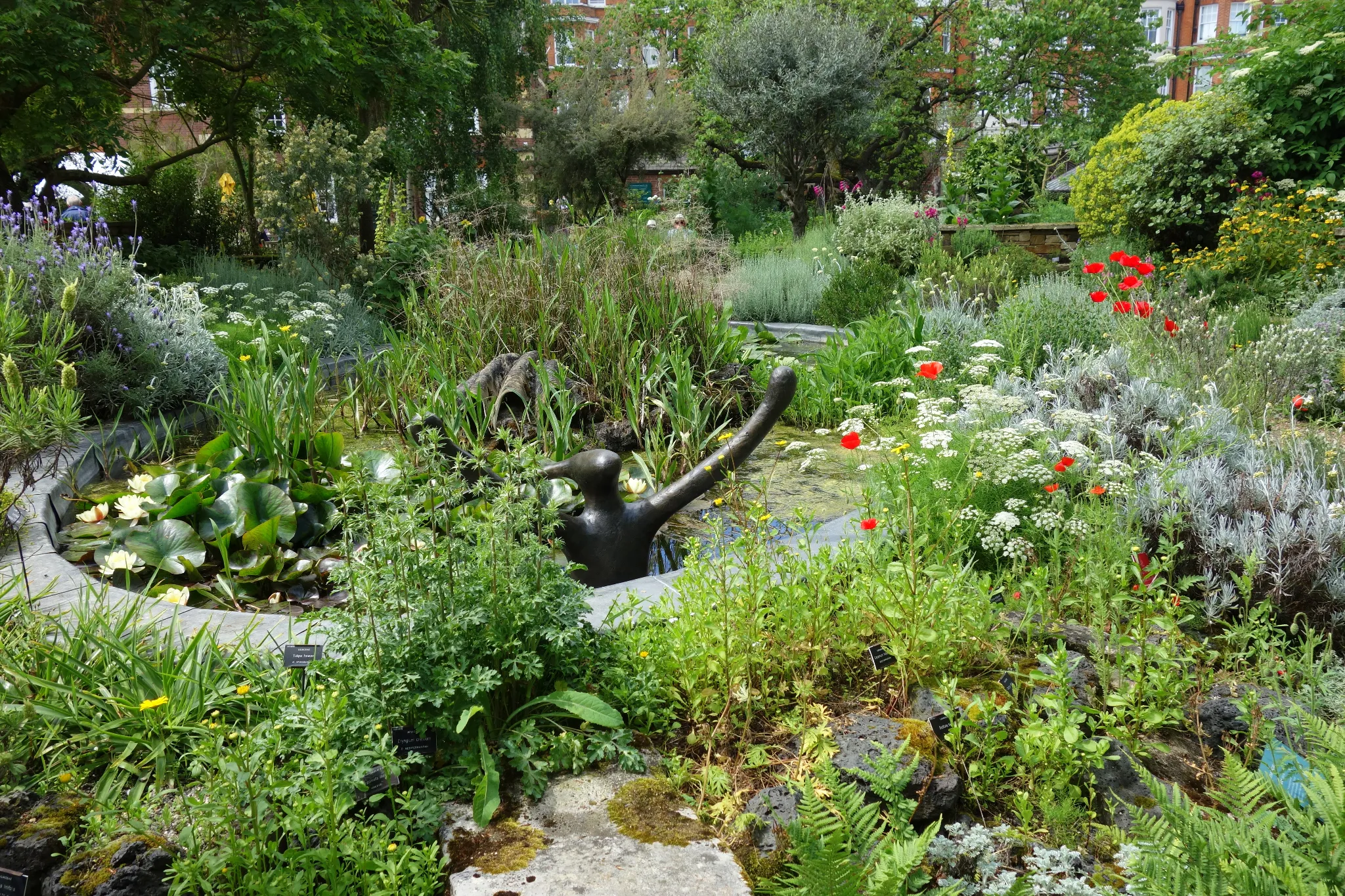
Pond with sculpture in the Chelsea Physic Garden
The image demonstrates a decorative pond on the grounds of one of the oldest botanical gardens in the world — the Chelsea Physic Garden. Location: London, England. The garden was founded in 1673 to train apothecaries, and today serves as a center for the study of medicinal and ornamental plants. The photo shows a combination of decorative sculpture with natural and cultivated plant communities.
The apothecary garden—a garden of medicinal herbs—was a direct descendant of the monastery herb garden. The first botanical gardens, founded in the 1540s in Pisa and Padua, were gardens of simple medicines attached to universities to help medical students identify the plants they would use (Hobhouse 2004).
From their foundation, botanical gardens were attached to universities and served as laboratories for medical and botanical research. The first was founded in Pisa in 1543, soon followed by the garden in Padua. Then came Florence in 1545, Bologna in 1567, Leiden in 1587, Heidelberg and Montpellier in 1593, Oxford in 1621, and Paris (now the Jardin des Plantes) in 1626 (Hobhouse 2004).
Although they were conceived as an aid for students learning about plants used in medicine, these botanical gardens quickly became something more. Unfamiliar new plants brought from abroad were soon grown and classified, even if they had no obvious role in medicine (Hobhouse 2004).
The botanist Luca Ghini (c. 1490–1556) was one of the first to create a hortus siccus—a collection of dried plants, the predecessor of the modern herbarium. Such collections made study possible at any time of year and were therefore sometimes called “winter gardens” (Hobhouse 2004).
Note. Interestingly, apothecary gardens became not only places for studying medicinal plants but also centers for the spread of new crops. For example, in St. Petersburg the apothecary garden founded by Peter I in 1713 became the basis of the Botanical Garden, while in Moscow a similar garden on 1st Meshchanskaya Street in 1823 was transformed into a botanical garden (Mukhortov, Nozdracheva 2017).
4. The Middle Ages: The Garden as Survival
After the fall of the Roman Empire, gardening in Europe experienced a deep decline. For almost a thousand years—from the 5th to the 15th century—the continent was shaken by wars, invasions, and epidemics. Under these conditions the garden ceased to be a place of pleasure and turned into a means of survival. However, it was precisely in the monasteries that knowledge about plants was preserved and multiplied, later becoming the basis for the revival of garden art.
Monastery Gardens: Islands of Knowledge

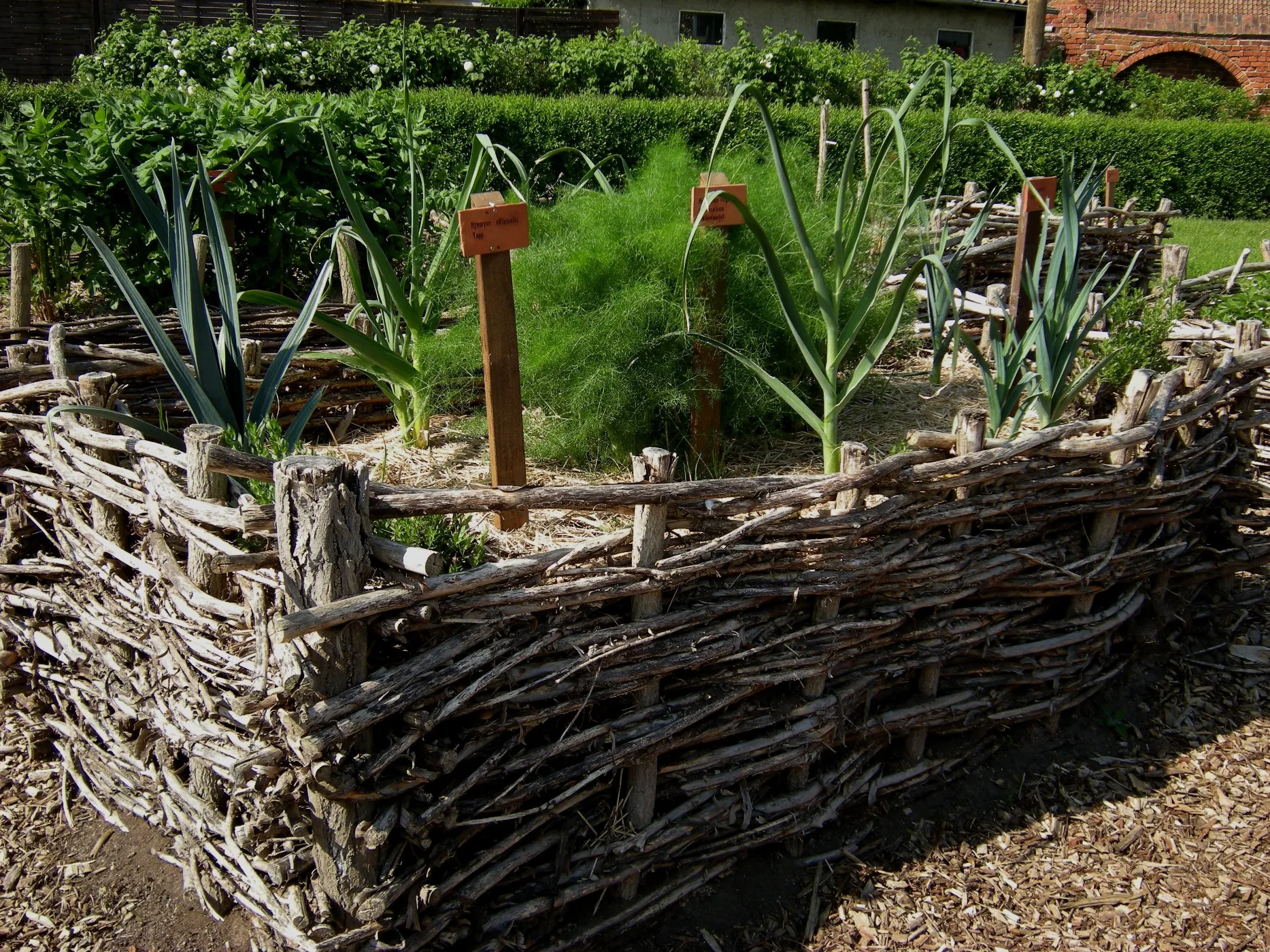
Woven willow raised bed in a monastery garden.
The photo shows a round raised bed whose walls are woven from willow rods. Leeks, dill and other crops are grown inside. Location: Jerichow Monastery Garden, Germany.
Monasteries became the main guardians of gardening traditions in the Middle Ages. Saint Benedict in the 6th century prescribed that every monastery should have water and gardens, and that work in the garden was considered part of spiritual service (Hobhouse 2004). Monks grew vegetables, medicinal herbs, and fruit, providing themselves with food and raw materials for treating the sick.
The plan of the monastery garden at St. Gall (Switzerland), dating from about 820, is a unique document of the era. It includes a cemetery for monks, a vegetable garden, a medicinal herb garden, and even a “paradise”—a plot for flowers that decorated the altar. In the rectangular beds they grew celery, parsnip, onions, and other vegetables familiar to us today (Hobhouse 2004).
Monks were not only gardeners but also scholars. They copied ancient works on agriculture—Varro, Cato, Columella, Palladius—and adapted their recommendations to the northern climate. Thanks to this, Roman knowledge of grafting, pruning, fertilizers, and drainage was not lost (Hobhouse 2004).
Hortus conclusus: Symbol and Reality
The medieval garden was an enclosed space. High walls or dense hedges protected plants from wind, animals, and prying eyes. This image—hortus conclusus, the “enclosed garden”—became a symbol of purity and the presence of the Mother of God in Christian art (Hobhouse 2004).
In reality such a garden was a small plot next to a house or castle. Here grew not only useful but also beautiful plants: roses, lilies, violets, irises. A mandatory element was a well or fountain—a source of water and a symbol of life. Turf benches were often arranged—mounds of earth sown with grass on which one could sit (Hobhouse 2004).
Another characteristic feature was the “flowering meadow”—a plot sown with grasses and wildflowers that was mown only a few times a year. It served both as feed for livestock and as decoration. In the modern world this idea has been revived in the form of the Moorish lawn and flowering meadows (Hobhouse 2004).
Castle Gardens: Practicality and Beauty
In medieval castles, gardens were usually arranged near the women’s quarters—under the windows of the lady’s chambers. Here they grew medicinal herbs, vegetables, and berry bushes. The garden was small but well kept: beds were fenced with wattle or low hedges, and paths were sprinkled with sand or gravel (Gothein 1979).
A special place was occupied by “gardens of love”—plots described in chivalric romances and poems. In the Romance of the Rose (13th century) the garden appears as an ideal space where eternal spring reigns, birds sing, and fountains play. This literary image strongly influenced real gardens of the late Middle Ages: trellises entwined with roses, arbors, and labyrinths appeared in them (Hobhouse 2004).
Vegetable Gardens and Orchards
The basis of the medieval vegetable garden was cabbage, turnip, rutabaga, onion, garlic, peas, and beans. They were grown on raised beds—this way the soil warmed better and did not become waterlogged. In orchards grew apples, pears, plums, cherries, and also nuts. Berry patches—currants, gooseberry, raspberry—were encountered less often, since berries were gathered in the forest (Mukhortov, Nozdracheva 2017).
Charlemagne in the Capitulare de villis (c. 800) prescribed which plants should grow in every imperial estate. Among them were apples, pears, plums, rowan, quince, chestnuts, peaches, and also vegetables: cucumbers, melons, pumpkins, beans, caraway, sage, and rosemary (Hobhouse 2004).
Note from the Sources
Albertus Magnus (c. 1206–1280) in his treatise De vegetabilibus described the ideal medieval garden: “Nothing so refreshes the eye as good short grass. The space intended for a pleasure garden must be cleared of all roots, and this task can hardly be accomplished unless the roots are dug out, the surface leveled, and boiling water poured onto the surface so that the remaining roots and seeds lying in the earth are destroyed and cannot sprout” (Quoted in: Hobhouse 2004). This advice is an example of a practical approach to creating a lawn that is still relevant today.

Solar Automatic Drip Irrigation Kit for Gardens
Automate watering for pots, gardens and small greenhouses. This solar-powered system features a timer to help schedule water delivery to your plants.
- Solar-powered
- 15 m irrigation hose
- Programmable watering
Affiliate link · Check included accessories.
5. The Renaissance: The Garden as Art
In the 15th century a cultural revolution took place in Italy that changed not only art, science, and philosophy but also gardening. The garden ceased to be an enclosed space for survival and turned into a work of art in which architecture, water, and plants were subordinated to a single design.
New Principles: Geometry, Perspective, Axis
Renaissance architects turned to ancient texts—Vitruvius, Pliny the Younger, Alberti. Leon Battista Alberti in his treatise De re aedificatoria (1452) formulated principles that became the basis of garden art for centuries to come: the garden should be a continuation of the house, and its layout should obey the laws of proportion and symmetry (Hobhouse 2004).
The main element of the Renaissance garden became the central axis—a line that connected the house, terraces, fountains, and a perspective receding into the distance. Along this axis were placed parterres, staircases, and cascades. The garden was designed so that it could be viewed from different points—from terraces, from windows, from upper platforms (Gothein 1979).
Terraces became a key element of the Italian garden. On hillsides several levels were arranged, connected by staircases and ramps. Each terrace had its own purpose: the upper ones for walks and views, the lower ones for plants and fountains (Hobhouse 2004).

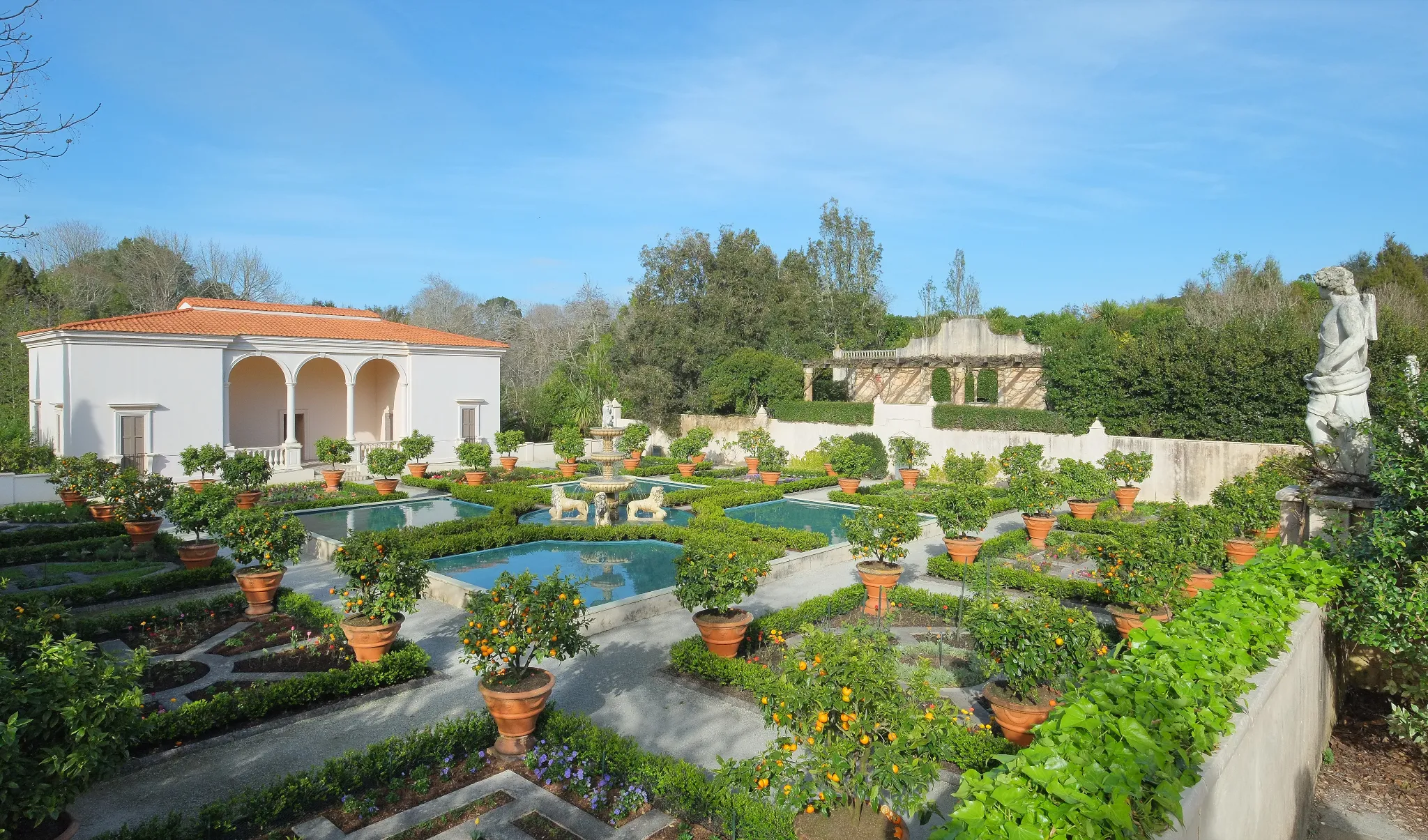
Italian Renaissance garden at Hamilton Gardens (morning)
Morning view of the themed Italian Renaissance garden located in the Hamilton Gardens complex in the city of Hamilton, New Zealand. The garden reproduces the classical principles of Renaissance park design with an emphasis on geometry, water and container plantings.

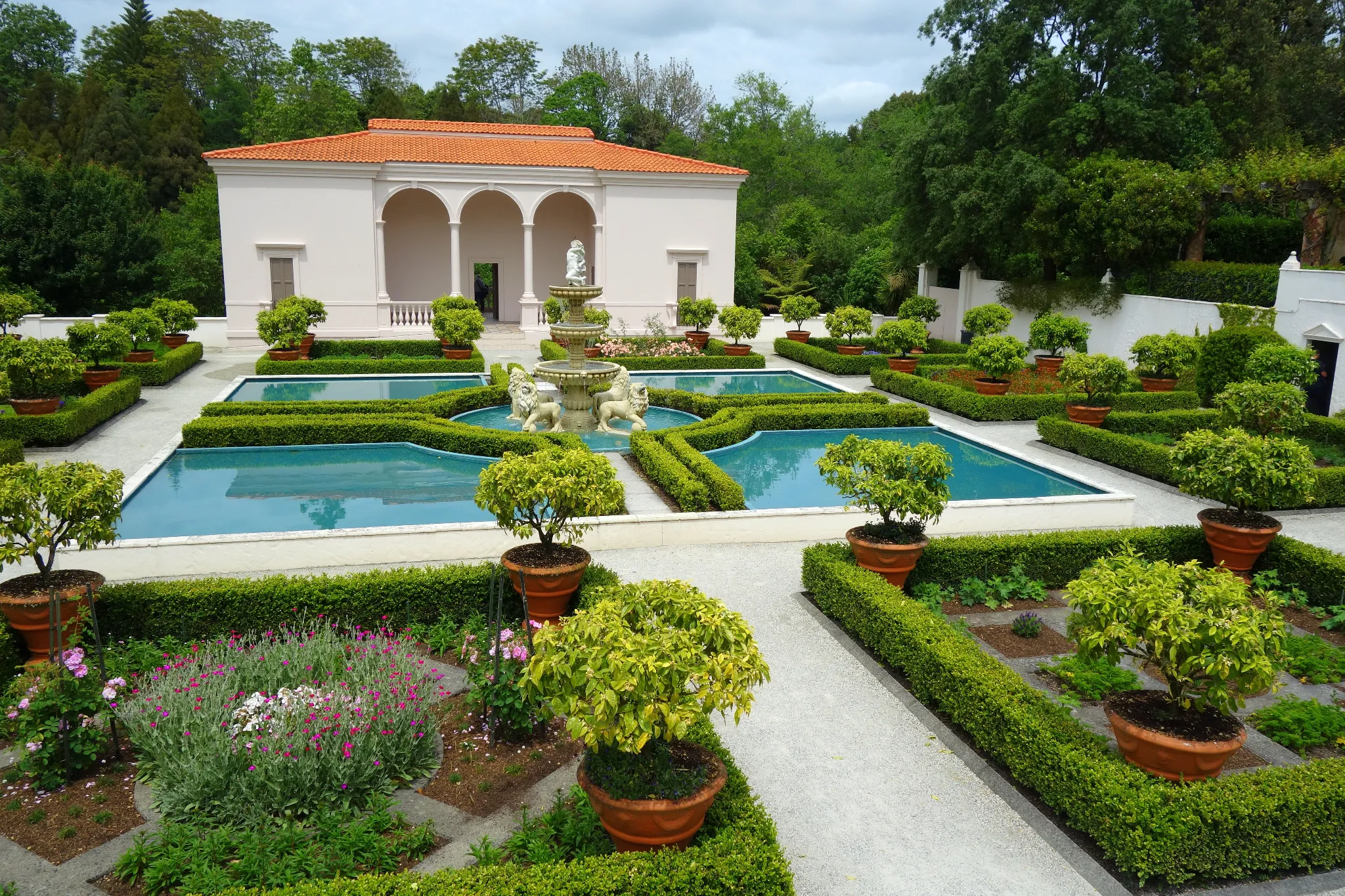
Italian Renaissance garden in Hamilton
A themed garden in the Italian Renaissance style, located in the Hamilton Gardens in Hamilton, New Zealand. It is characterized by strict symmetry, artificial ponds, sculptures and container plantings.
Water as the Main Instrument
Water in the Renaissance garden was not merely a source of moisture but the main artistic element. Fountains, cascades, water channels, and “water organs”—all served to create sound, movement, and coolness. Renaissance engineers studied the works of Hero of Alexandria and created complex hydraulic devices (Gothein 1979).
Villa d’Este in Tivoli (1550–1572) is one of the most famous gardens of the Renaissance. Cardinal Ippolito d’Este commissioned the architect Pirro Ligorio to create a garden on a hillside. 500 fountains, grottoes, cascades, and the “Avenue of a Hundred Fountains”—all this was not only beautiful but also demonstrated the power of the owner, capable of commanding water (Hobhouse 2004).
Villa Lante at Bagnaia (1566) is another masterpiece. Here water moves along channels lined with stone in the shape of crayfish and shrimp—an allusion to the name of Cardinal Gambara (gambero—“shrimp”). The garden is divided into four parts, each with its own character: from a dark oak grove to a bright parterre (Hobhouse 2004).
Plants and Parterres
In Renaissance gardens plants were used mainly as architectural material. Evergreens—box, laurel, myrtle, yew—were clipped into the shapes of spheres, pyramids, and arches, creating “green architecture.” Flowers were planted in parterres—geometric patterns viewed from above, from terraces or windows (Hobhouse 2004).
A parterre is an “embroidery” of plants and colored gravel. At first the patterns were created from a mixture of grasses, but from the 16th century dwarf box (Buxus sempervirens ‘Suffruticosa’) began to be used for this. The French gardener Claude Mollet in 1595 first used it to create complex arabesques in the garden of Saint-Germain-en-Laye (Hobhouse 2004).
Citrus trees became a symbol of wealth: they were grown in tubs and moved to orangeries for the winter. Oranges, lemons, and bitter oranges decorated terraces and parterres, recalling the Mediterranean origin of garden art (Gothein 1979).
The Garden as a Continuation of the House
One of the main ideas of the Renaissance was the unity of house and garden. Loggias, galleries, and porticoes connected the interior with the exterior space. From the windows opened views of parterres, fountains, and perspectives. The garden became a “green room”—a place for conversations, reading, and receptions (Hobhouse 2004).
Villa Madama in Rome (1518–1525), designed by Raphael, became a model of such unity. Although the villa was not completed, its plan shows how house and garden merged into a single whole: terraces, loggias, nymphaea, and grottoes passed into one another (Gothein 1979).
Spread Across Europe

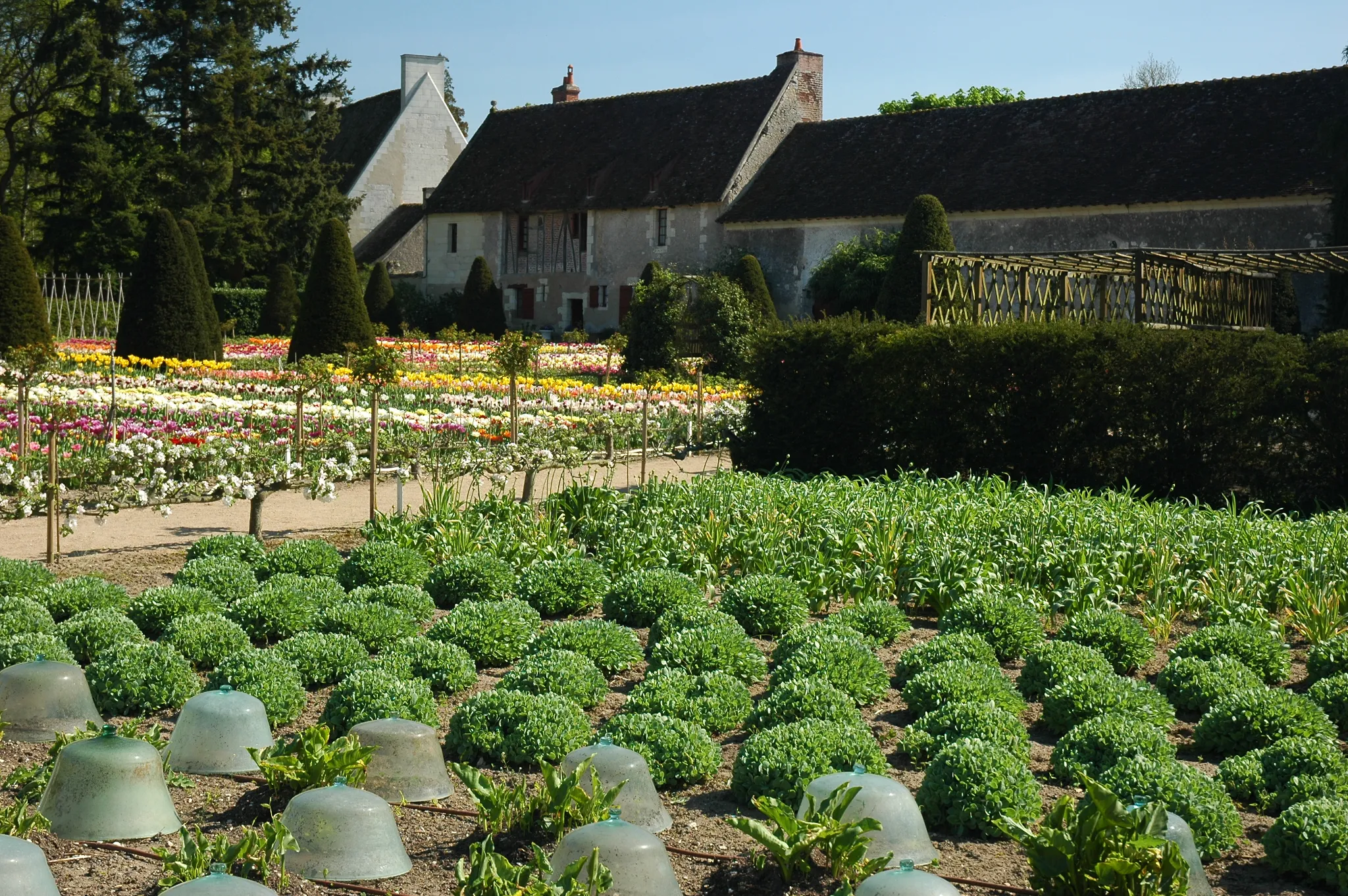
Garden of the Château de Chenonceau (France)
Historic kitchen garden (potager) of the Château de Chenonceau in France. The photograph shows formal geometric beds with vegetables, some of which are covered with glass cloches for protection from the cold. Between the vegetable rows are flowerbeds with tulips. Location: Chenonceau, France.
The Italian style quickly spread across Europe. In France it was adapted to the flat landscape: instead of terraces, broad alleys, canals, and parterres were created. The gardens of Fontainebleau, Anet, and Chenonceau combined Italian geometry with French taste for water and hunting (Hobhouse 2004).
In England Renaissance ideas took root more slowly: medieval traditions—knot gardens, labyrinths, turf benches—long persisted here. Only in the 17th century, after the Restoration, did English gardens adopt French and Dutch formality (Hobhouse 2004).
Note
John Evelyn, an English writer and gardener of the 17th century, after visiting Italian gardens, wrote: “I have never seen anything more magnificent than these gardens. Art and nature are here united so that it is impossible to understand where one ends and the other begins” (Quoted in: Hobhouse 2004). This statement accurately conveys the essence of the Renaissance garden—a synthesis of human design and natural beauty.
6. The 19th–20th Centuries: Mass Gardening, Dachas, Household Plots

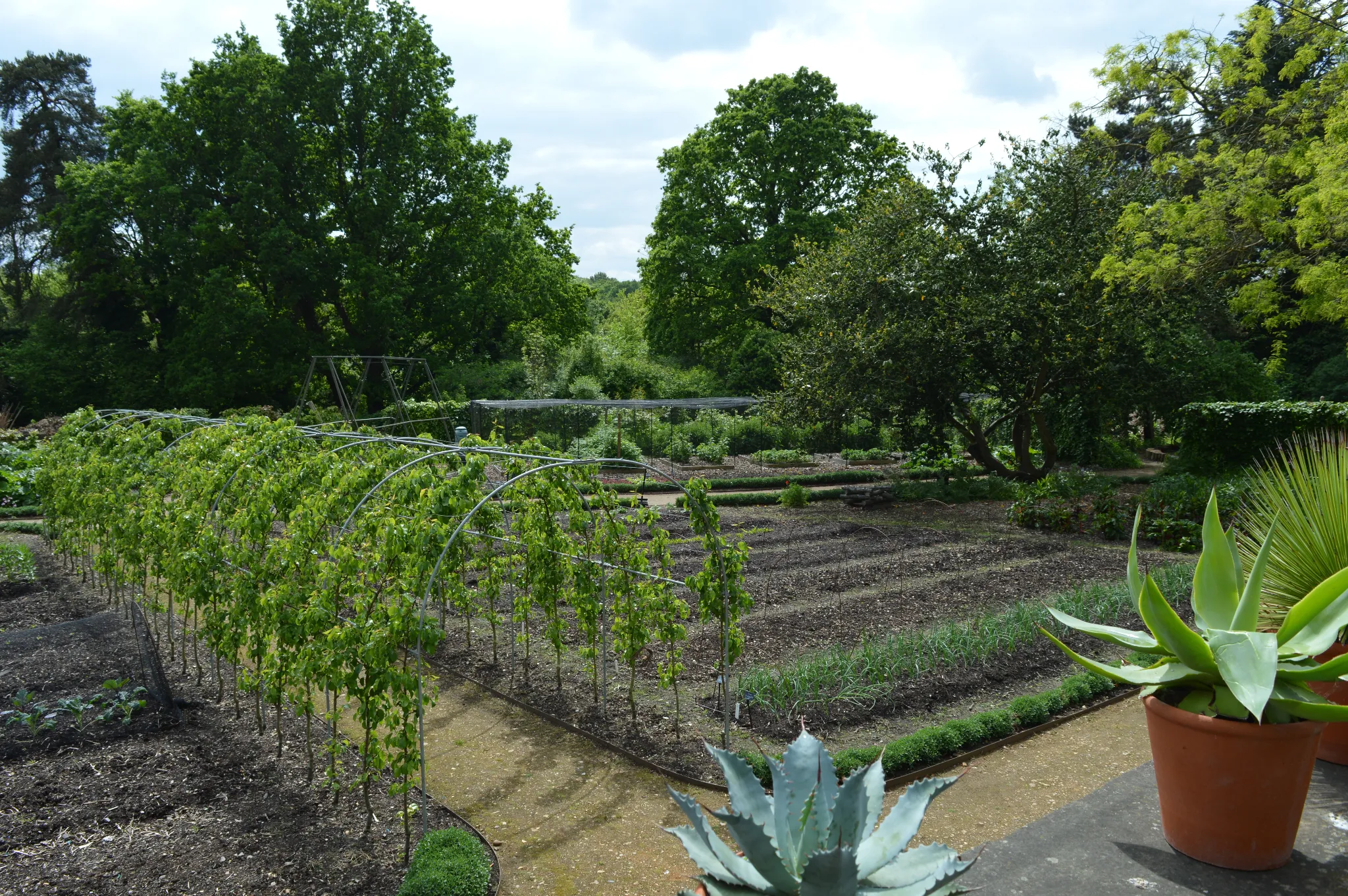
Raised beds and a pear arch in the Middleton House garden
A kitchen garden at the historic Middleton House in Bulls Cross (UK). The photo shows raised beds and a decorative pear arch, demonstrating the combination of utilitarian and ornamental gardening.
The 19th century became a turning point in the history of gardening. The Industrial Revolution, the growth of cities, and the development of transport changed not only the economy but also people’s relationship to the land. The garden ceased to be a privilege of the aristocracy—it became accessible to the middle class, and then to broad sections of the population.
The Victorian Era: Eclecticism and Collecting
In the Victorian era (1837–1901) gardening became a mass hobby. Wealthy owners collected exotic plants from all over the world: orchids, palms, ferns, and cacti. Orangeries and greenhouses were built to house them—first wooden, then metal and glass. The invention of the Wardian case made it possible to transport living plants across the oceans, which led to a real boom in plant introductions (Hobhouse 2004).
Eclecticism reigned in gardens: Gothic arbors, Chinese pagodas, Italian terraces, and Moorish fountains were mixed. “Carpet bedding” became popular—patterns of annuals planted densely like a mosaic. New species were used to create them: petunias, verbenas, salvias, and begonias brought from America and Africa (Hobhouse 2004).
Gardening in Russia: From Gentry Estates to Peasant Gardens
In Russia the 19th century was also a time of flourishing gardening. Gentry estates had orangeries, parks, and orchards. But after the abolition of serfdom in 1861 the situation changed: gentry gardens fell into decline, while peasant gardens grew. Peasants grew apples, cherries, currants, and gooseberries—mainly for themselves, but gradually they moved toward commercial production (Mukhortov, Nozdracheva 2017).
At the end of the 19th century industrial gardening began in Russia. Large orchards were planted in Crimea, the Caucasus, and the Volga region. Nurseries appeared where seedlings were grown for sale. In 1887 the first All-Russian horticulture census counted 406,800 desyatins of orchards in the European part of Russia (Mukhortov, Nozdracheva 2017).
Dachas and Household Plots
The 20th century brought new forms of gardening. In the USSR in the 1930s mass allocation of plots for collective gardens and vegetable plots began. After the Great Patriotic War dachas became a way of survival: people grew potatoes, vegetables, and berries to feed their families (Rozmainsky et al. 2017).
The dacha is a unique Russian institution. Unlike the Western model of a “house with a garden,” in the USSR the “split” model dominated: an apartment in the city and a garden plot in a cooperative without ownership rights. The dacha gave a sense of freedom, an opportunity for self-realization, and rest from official life (Rozmainsky et al. 2017).
In post-Soviet Russia the role of dachas not only persisted but intensified. According to VTsIOM (2013), for 46% of Russians a dacha is “more of a subsidiary farm, an additional source of income,” while for 45% it is “a place for rest and entertainment.” At the same time, 68% of respondents grow agricultural products at their dacha for family consumption (Rozmainsky et al. 2017).
The Postwar Period: Gardens for All
In Europe and America after the Second World War gardening became a mass hobby. Convenient tools, cheap seeds, magazines, and television programs about the garden appeared. Gardens became smaller but more diverse: alpine hills, rose gardens, lawns, and vegetable plots. In the 1970s the “organic gardening” movement arose, and in the 1980s “permaculture” (Hobhouse 2004).
Note. In 1980 in the USSR there were 24,000 horticultural associations uniting 35 million families. Almost 8 million hectares of land were under collective gardens and household plots (Mukhortov, Nozdracheva 2017).

7-in-1 Wi-Fi Weather Station
Monitor local weather conditions with a wireless outdoor sensor. Track temperature, humidity, rainfall, wind speed and direction, and atmospheric pressure. Ideal for gardens, farms and greenhouses.
- Wireless outdoor sensor
- Solar-powered
- Wi-Fi connectivity
Affiliate link · Check regional compatibility.
7. The Scientific Revolution: Breeding, Fertilizers, Greenhouses
The 19th–20th centuries became a time of scientific revolution in gardening. Discoveries in biology, chemistry, and genetics transformed how people grow plants. Gardening became not only an art but also an exact science.
Breeding: From Folk to Scientific

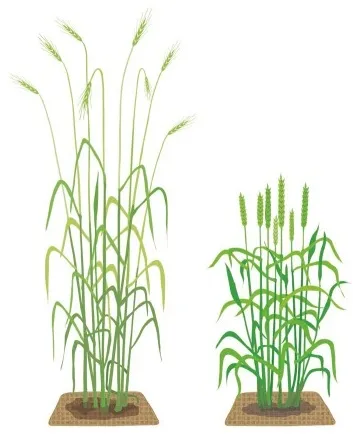
Comparison of tall and dwarf wheat
The illustration demonstrates the difference between a traditional tall wheat variety (left) and a modern dwarf variety (right) bred during the Green Revolution. Dwarf varieties have a shorter and stronger stem, which allows nutrients to be redirected to grain formation and reduces the risk of crop lodging under wind and rain.
Until the 19th century new varieties appeared as a result of accidental finds and folk selection. Peasants selected the best plants for centuries, creating local varieties—“Antonovka,” “Borovinka,” “Narodnaya” (Mukhortov, Nozdracheva 2017). But scientific breeding began with the work of Gregor Mendel (1822–1884), who discovered the laws of heredity by experimenting with peas (Nonnecke 1989).
In Russia Ivan Michurin (1855–1935) developed the method of distant hybridization, creating hundreds of new varieties of fruit crops. Nikolai Vavilov (1887–1943) assembled the world’s largest collection of seeds and identified the centers of origin of cultivated plants, which made it possible to search purposefully for valuable genes (Mukhortov, Nozdracheva 2017).
Fertilizers: From Manure to Minerals
For a long time the only fertilizer was manure. The situation changed in 1840 when Justus von Liebig published Organic Chemistry in Its Application to Agriculture and Physiology, in which he explained the role of mineral substances in plant nutrition (Nonnecke 1989).
This led to the creation of industrial mineral fertilizers—nitrogen, phosphorus, and potassium. Yields rose, but problems also appeared: pollution of soils and water bodies and a decline in product quality. In response, at the end of the 20th century a movement for organic farming arose, rejecting synthetic fertilizers and pesticides (Hobhouse 2004).
Greenhouses: From Orangeries to Industrial Complexes
Greenhouses existed even in Ancient Rome, but the real revolution occurred in the 19th century. The invention of sheet glass, cast iron, and steam heating made it possible to build huge orangeries. Joseph Paxton (1803–1865) created the Crystal Palace for the Great Exhibition of 1851, and his greenhouses at Chatsworth became a model to imitate (Hobhouse 2004).
In the 20th century greenhouses became industrial. Polymer films, drip irrigation systems, and automatic climate control appeared. In the 1960s–1980s in the USSR large greenhouse complexes with an area of 30–120 hectares were built, supplying cities with fresh vegetables all year round (Mukhortov, Nozdracheva 2017).
Mechanization and Chemicalization
The 20th century is the century of mechanization in gardening. Tractors, cultivators, seeders, and combines replaced manual labor. Herbicides and pesticides made it possible to combat weeds and pests. But this coin had another side: soil compaction, death of beneficial insects, and accumulation of toxins in products (Nonnecke 1989).
Since the 1990s “precision agriculture” has been gaining strength—the use of GPS, sensors, and computers for optimal application of fertilizers and water. This makes it possible to reduce the burden on the environment while maintaining yields (Rubatzky, Yamaguchi 1997).
Note. Vavilov discovered the law of homologous series in hereditary variation, which made it possible to predict the presence of certain traits in related species. This law is still used by breeders to search for disease resistance (Mukhortov, Nozdracheva 2017).
8. Modernity: Organic, Urban, Vertical
By the end of the 20th century gardening had changed again. Industrial agriculture ensured food security but gave rise to new problems: soil erosion, water pollution, and loss of biodiversity. In response, new approaches emerged that combine ancient practices with modern technologies.
Organic Farming

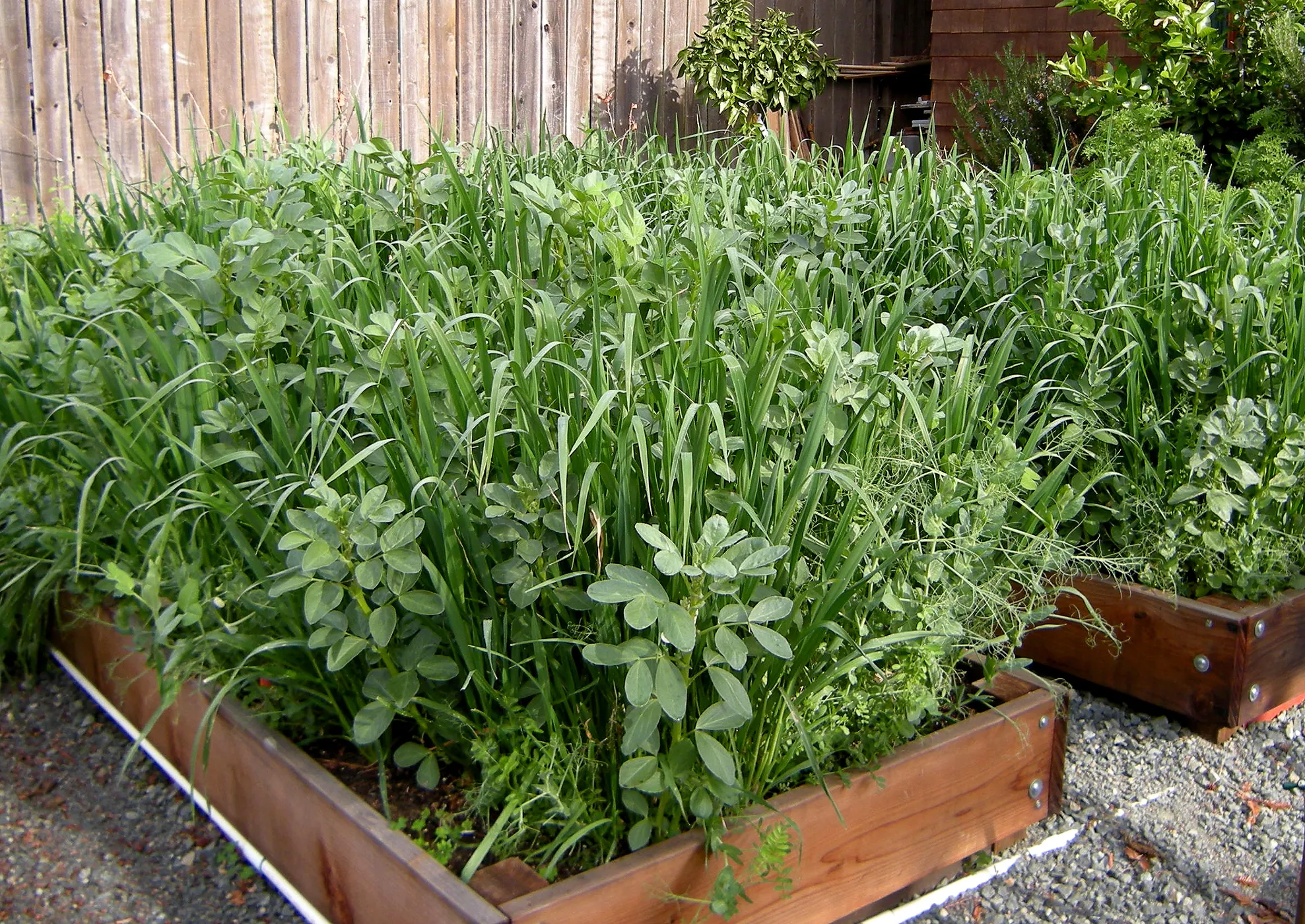
Green manure as a preceding crop in the garden
Green fertilizers (green manure) grown as a preceding crop in wooden raised beds. This method improves soil structure, suppresses weeds, and enriches the soil with nutrients before planting the main crops.
Organic gardening is not new. Peasants grew produce without synthetic fertilizers and pesticides for centuries. But as a conscious movement it took shape in the mid-20th century. In the 1940s the Englishman Albert Howard published An Agricultural Testament, in which he substantiated the advantages of composting and natural soil fertility (Hobhouse 2004).
Today organic farming is practiced in 170 countries. According to data for 2013, organic areas in the world amounted to 43.1 million hectares—four times more than in 1999. Denmark announced in 2015 its intention to switch entirely to organic farming by 2030 (Rozmainsky et al. 2017).
In Russia the potential for organic farming is enormous: about 40 million hectares of arable land have been taken out of circulation and are not treated with chemicals. Many fields have not seen mineral fertilizers since the collapse of the USSR, which makes them suitable for certified organic production (Rozmainsky et al. 2017).
Urban Gardening
Urban gardening is one of the most dynamic directions of modernity. It includes community gardens, rooftop gardens, balcony beds, and “edible” parks. In the USA, Canada, Great Britain, and Germany, municipalities allocate land for collective vegetable plots where city residents grow vegetables and greens (Hobhouse 2004).

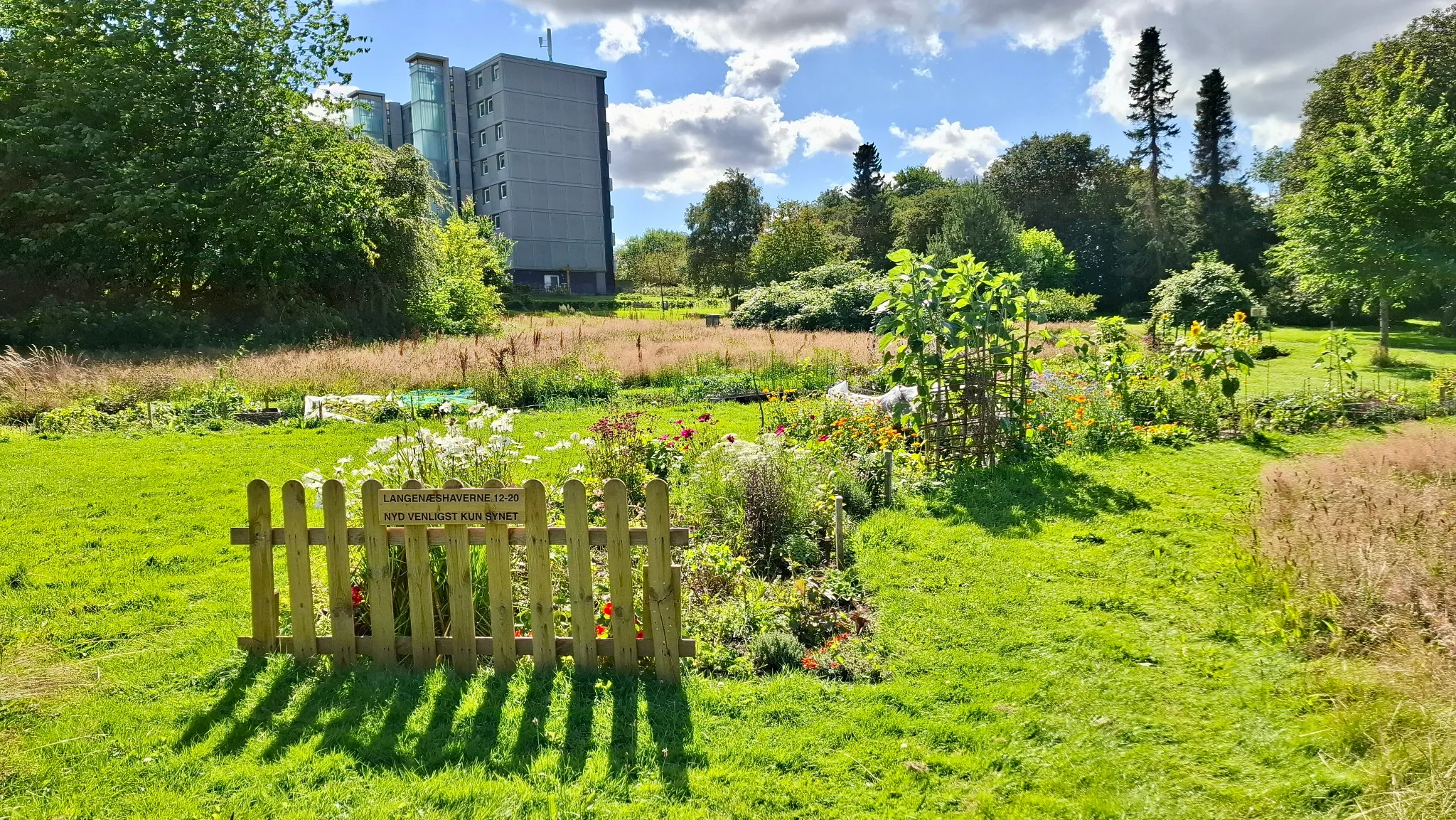
Community vegetable garden in Langenæs Park: flowering beds (Aarhus, Denmark)
A view of the community urban vegetable gardens in Langenæs Park, the city of Aarhus, Denmark. In the foreground is a wooden fence with a sign "LANGENÆSHAVERNE 12-20" enclosing a plot with various flowers and plants. In the distance, residential buildings, park plantings, and plots of other gardeners are visible. The sign reminds that the harvest is grown by local residents and is intended for visual enjoyment only.
This trend has become global: from North America to Scandinavia (as seen in this photo from Denmark), municipalities are allocating land for community gardens.
Urban gardens solve several problems at once: they provide fresh products, improve the microclimate, reduce stress levels, and create communities. Studies show that working the land improves physical and mental health, especially in older people (Rozmainsky et al. 2017).
Vertical Gardening and Hydroponics
Vertical farms and hydroponic installations make it possible to grow plants without soil—on nutrient solutions, in multi-tiered racks, under LED lamps. Such systems take up little space, save water, and do not depend on climate. In Singapore, Japan, and the Netherlands vertical farms supply cities with greens all year round (Rubatzky, Yamaguchi 1997).
Hydroponics is also used in greenhouse complexes. In Great Britain by 1995, 80% of greenhouse cucumbers and 50% of tomatoes were grown on mineral wool—an artificial substrate with drip nutrition. This makes it possible to control plant nutrition precisely and reduce water consumption (Mukhortov, Nozdracheva 2017).
A Return to the Roots: Permaculture and Forest Gardens
Permaculture is a design system based on observation of natural ecosystems. Its creators, Bill Mollison and David Holmgren, proposed building gardens that work like a forest: multi-tiered, self-sustaining, and productive (Hemenway 2009).
A forest garden includes several tiers: tall trees, medium trees, shrubs, herbaceous plants, ground covers, root crops, and vines. Each plant performs several functions: it provides a harvest, improves the soil, attracts beneficial insects, and creates shade. Such gardens do not require fertilizers and need almost no watering once they are established (Hemenway 2009).
The Ecological Approach in Landscape Design
Modern landscape designers increasingly use native plants, abandon lawns in favor of flowering meadows, and create rain gardens for collecting and purifying water. In Germany, the Netherlands, and the USA, “ecological design” is gaining popularity—designing gardens that support biodiversity and require minimal maintenance (Hobhouse 2004).
Note. Darrel Morrison, professor of landscape architecture at the University of Georgia, calls on American gardeners to “observe nature and appreciate the beauty of fading flowers and seed heads.” His approach is an example of how modern gardening is abandoning sterile neatness in favor of naturalness and ecological soundness (Hobhouse 2004).

40W Full Spectrum LED Grow Light
Support healthy plant growth with full-spectrum LED lighting. Ideal for seedlings, indoor plants and small growing spaces. A practical solution for indoor gardening and year-round cultivation.
- Full-spectrum LED
- Energy-efficient design
- Indoor plant growing
Affiliate link · Check actual power and light coverage.
9. What Has Remained Unchanged
Despite all technological revolutions, the essence of gardening has not changed. As thousands of years ago, people grow plants to feed themselves, decorate their lives, and rest from the bustle. Tools, knowledge, and scale change—but not motives.
The Need for Food
The first gardens arose from necessity. Today, even with an abundance of shops, millions of people grow vegetables and fruits at dachas, on balconies, and in community gardens. In Russia 68% of dacha owners grow agricultural products for family consumption. For 46% a dacha is “more of a subsidiary farm, an additional source of income” (Rozmainsky et al. 2017).
This need is not only economic. Fresh products grown with one’s own hands are perceived as tastier, healthier, and safer. Organic farming, which began as a movement of enthusiasts, has become a global trend precisely because it meets the basic need for quality food (Rozmainsky et al. 2017).
The Need for Beauty
The garden has always been a place of beauty. In Ancient Egypt lotuses and papyrus were grown not only for food but also for decoration. In medieval monasteries roses and lilies were planted for the altar. In the Renaissance parterres and fountains were created to delight the eye. Today people lay out flower beds, plant flowers, and arrange alpine hills—because beauty is as necessary to humans as bread (Hobhouse 2004).
Gardening is creativity. Every garden is unique, like a painting or a poem. The gardener chooses plants, combines colors, and creates compositions. This activity develops taste, observation, and patience. It is no accident that many artists, poets, and philosophers were passionate gardeners (Hobhouse 2004).
The Need for Rest and Restoration
The garden is a refuge. In Ancient China emperors built parks to escape state cares. In medieval Europe monks worked in the garden for spiritual concentration. In the modern world the garden has become a place of psychological relief. Studies confirm that working the land lowers cortisol—the stress hormone—improves mood, and increases a sense of control over life (Rozmainsky et al. 2017).
The dacha in Russia is a vivid example of such a refuge. It gives a sense of freedom, an opportunity for self-realization, and rest from city bustle. As the German writer Wladimir Kaminer wrote, “the dacha is a place of life and work, of family life in the lap of nature and in harmony with it” (Quoted in: Rozmainsky et al. 2017).
Connection with Nature
Humans are part of nature. Gardening reminds us of this connection. When we plant a seed, water a sprout, and harvest, we participate in the cycle of life. This is ancient knowledge that no technologies can replace. The garden teaches patience, humility, and respect for natural rhythms (Hemenway 2009).
In the modern world, where most people live in cities and rarely spend time in nature, the garden becomes a bridge. It connects us with the earth, with the seasons, and with living beings—insects, birds, and microorganisms. This is not only useful but also healing for the soul (Hobhouse 2004).
Exchange of Knowledge and Community
Gardening has always been a social activity. People exchanged seeds, seedlings, and advice. In the Middle Ages monks copied books about plants. In the 19th century horticultural societies and journals appeared. Today there are internet forums, blogs, and video channels. But the essence remains: gardeners share experience, help one another, and rejoice together in successes (Hobhouse 2004).
Note. Thomas Jefferson, the third president of the United States and a passionate gardener, wrote: “Though I am old, I am yet young enough to plant a tree.” This phrase conveys the essence of gardening—optimism, faith in the future, and the desire to leave a mark on the earth.
10. The Regional Aspect: History Unfolded Differently in Different Regions
The history of gardening is not a single linear process. In different parts of the world it developed at different speeds and in different directions, determined by climate, culture, religion, and economy. In some places the garden was a luxury for the few; in others, a necessity for survival.
The Near East and the Mediterranean: The Garden as Paradise
In the arid regions of the Near East, a garden with water and shade became a symbol of paradise. In the Quran paradise is described as “a garden in which rivers flow” (Hobhouse 2004). Muslim gardens with four canals intersecting at right angles (chahar bagh) reproduced this heavenly model on earth. Water, shade, and fruit trees all had not only practical but also spiritual significance (Hobhouse 2004).
In Ancient Egypt the garden was a privilege of the nobility and priests. Simple farmers grew vegetables in fields, but true gardens with ponds, flowers, and exotic trees could be afforded only by the rich. However, it was the Egyptian irrigation system—canals, shadufs, and dams—that became the basis for gardening throughout the Mediterranean (Hobhouse 2004).
China and Japan: The Garden as Philosophy
In East Asia the garden developed along a different path. The Chinese garden is not a geometric layout but a model of the universe, where stones symbolize mountains, water symbolizes rivers and lakes, and plants symbolize forests. The mandarin’s garden was a place of solitude, reflection, and poetry (Hobhouse 2004).

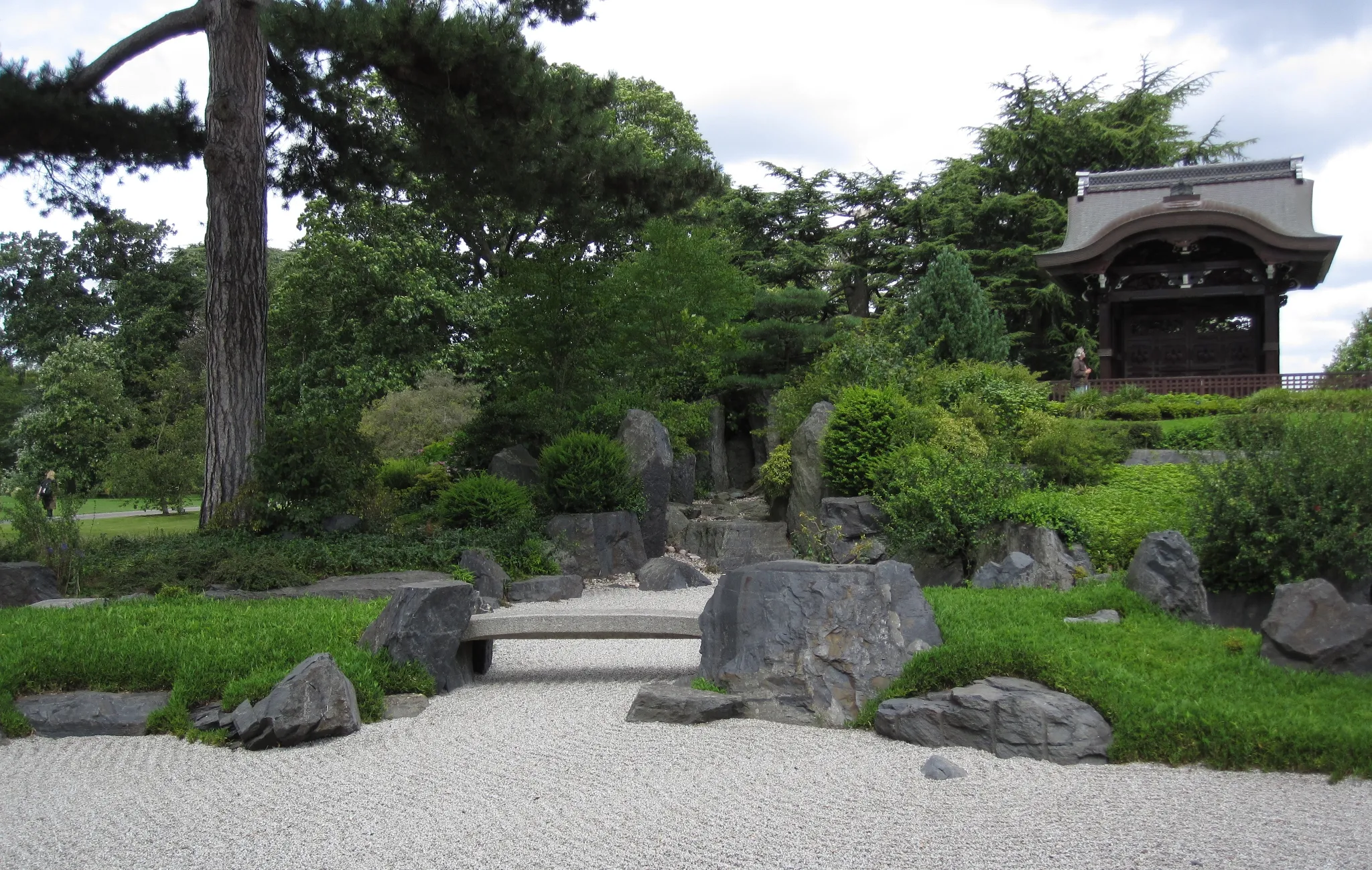
Japanese garden by the Chokushi-Mon pavilion at the Royal Botanic Gardens, Kew
A landscape composition of a Japanese garden located next to the historic Chokushi-Mon pavilion. The garden recreates traditional Japanese landscapes using gravel, stones, and plants. (London/Richmond, UK).
The Japanese garden inherited Chinese ideas but brought them to minimalism. In Zen gardens stones and gravel replace water and plants, and the composition itself serves for meditation. The Japanese garden is not a place for walking but an object of contemplation, where every detail has symbolic meaning (Hobhouse 2004).
The traditions of the Japanese garden, originally borrowed from China, reached minimalism in Zen Buddhism, as clearly seen in classic gardens like this one at the Royal Botanic Gardens, Kew.
Europe: From Survival to Art and Back
In Europe the garden traveled a long path: from the monastery vegetable plot, where medicinal herbs and vegetables were grown, to the Renaissance parterre, where beauty was subordinated to geometry. In the 18th century the English landscape garden rejected formality in favor of “naturalness,” and in the 19th century the Victorians returned to eclecticism and collecting exotics (Hobhouse 2004).
But for most Europeans the garden remained primarily a source of food. Peasant vegetable plots, household plots, and “gardens for the poor”—all these ensured the survival of millions of people. Only in the 20th century, with rising prosperity, did the garden become a mass hobby (Hobhouse 2004).
Russia: From Monastery Gardens to Dachas
In Russia gardening developed in a special way. Monasteries grew vegetables and medicinal herbs, princes and boyars laid out orchards, and peasants kept vegetable plots. Under Peter I the first apothecary gardens and orangeries appeared. In the 19th century industrial gardening began: large orchards were planted in Crimea, the Volga region, and the Caucasus (Mukhortov, Nozdracheva 2017).
The 20th century brought dachas—a unique Russian phenomenon. After the revolution of 1917 gardens became not only a source of food but also a way of survival during collectivization, war, and shortages. In the post-Soviet period dachas retained their role: for 46% of Russians they remain a subsidiary farm, and for 45% a place of rest (Rozmainsky et al. 2017).
America: From Aztec Chinampas to Urban Gardens
In America gardening has its own roots. The Aztecs created floating islands—chinampas—for growing vegetables and flowers. The Incas built terraces on the slopes of the Andes, using guano for fertilizer (Hobhouse 2004).
After European colonization the gardens of the New World long copied European models. But in the 20th century America offered the world new ideas: community gardens, “victory gardens” during the war, and ecological design. Today American urban gardens are not only a source of fresh products but also a way to combat social isolation (Hobhouse 2004).
Africa and Southeast Asia: The Garden as Necessity
In regions with tropical climates the garden was often not a luxury but a necessity. In Africa people grew sorghum, yams, okra, and peanuts; in Southeast Asia—rice, taro, bananas, and citrus fruits. These crops provided food but did not become an object of art (Randhawa 1981).
However, there were exceptions here too. In India the Mughal emperors created magnificent gardens with canals, fountains, and flower beds. The Taj Mahal with its reflecting canal and garden is one of the masterpieces of world garden art (Hobhouse 2004).
Note. Differences in the development of gardening are clearly visible in attitudes toward water. In arid Iran water was the main value, and the garden was built around a source. In rainy England water became an element of decoration: it was drained away, canals, cascades, and fountains were created. In the tropics water was both a necessity and a problem: it had to be drained so that roots would not rot (Hobhouse 2004).
11. Conclusion: Gardening Is as Old as Civilization
The history of gardening and horticulture is the history of humanity told through plants. From the first grains thrown into the earth near a camp to vertical farms and urban gardens, humans have always sought to grow plants. Tools, knowledge, and scale changed, but the essence remained unchanged.
The Garden as a Mirror of the Era
Each era left its mark on garden art. Ancient Egypt—geometric ponds and irrigation canals. Mesopotamia—hunting parks and hanging gardens. China—gardens as universes with stones and water. Japan—Zen gardens for meditation. The European Renaissance—terraces, fountains, and parterres. The 19th century—greenhouses and exotic collections. The 20th century—dachas, community gardens, and organic farming.
But behind all these differences stands one thing: humans have always sought in the garden what they lacked. In the desert—water and shade. In the city—nature and peace. In poverty—food. In wealth—beauty and status (Hobhouse 2004).
Lessons of History for the Modern Gardener
What can knowledge of the history of gardening give today’s gardener? First of all, the understanding that there is no “right” and “wrong” garden. Each era and each culture created its own gardens in response to its own conditions. The Egyptians could not grow rhododendrons, and the Japanese did not need irrigation canals.
Second, history shows that gardening is always a dialogue with nature, not a struggle against it. Even the most formal gardens of the Renaissance were built with regard to relief and climate. Even the most “natural” English parks were the result of careful planning (Hobhouse 2004).
Third, history reminds us that the garden is not only plants but also people. Monks who copied ancient texts; peasants who selected the best varieties for centuries; scientists who studied heredity; dacha owners growing potatoes for their families—all of them contributed to what we call gardening (Mukhortov, Nozdracheva 2017).
Gardening as a Contemporary of Civilization
Gardening arose simultaneously with civilization. When people stopped migrating and began to cultivate the land, they created not only a source of food but also a new relationship to the world. The garden became a place where humans learned to manage nature without destroying it; where they created beauty without forgetting usefulness; where they found peace without escaping reality.
Today, when most people live in cities and rarely spend time in nature, the garden remains a bridge between humans and the earth. It reminds us of the rhythms of nature, of the cycle of life, and of the fact that we are part of a larger whole. And it does not matter what it is: a plot of six hundred square meters with potatoes, a balcony with basil, a community garden, or a vertical farm. What matters is that we continue to do what our ancestors did thousands of years ago—grow plants.
Conclusion
The history of gardening teaches the main thing: a garden is not simply a place where plants grow. It is a place where a person meets nature, history, and themselves. By studying the past, we better understand the present and can build the future. The garden is as old as civilization, and as long as humanity exists, gardening will exist too.
Note. An ancient Persian proverb says: “He who plants a tree knows that he will never sit in its shade, but he plants it for future generations.” This wisdom is still relevant today. Gardening is an act of faith in the future, in the continuation of life, in the fact that our efforts are not in vain. And in this lies its eternal value.
References
- Gothein, M.Luise (1979). ‘Ancient Egypt’, in A History of Garden Art. New York: Hacker Art Books, pp. 1-26.
- Gothein, M.Luise (1979). ‘Byzantine Gardens and the Countries of Islam’, in A History of Garden Art. New York: Hacker Art Books, pp. 135-168.
- Gothein, M.Luise (1979). ‘France in the Time of the Renaissance’, in A History of Garden Art. New York: Hacker Art Books, pp. 389-432.
- Gothein, M.Luise (1979). ‘Italy in the Time of the Renaissance and the Baroque Style’, in A History of Garden Art. New York: Hacker Art Books, pp. 205-350.
- Gothein, M.Luise (1979). ‘The Middle Ages in the West’, in A History of Garden Art. New York: Hacker Art Books, pp. 169-204.
- Gothein, M.Luise (1979). ‘The Roman Empire’, in A History of Garden Art. New York: Hacker Art Books, pp. 81-134.
- Gothein, M.Luise (1979). ‘Western Asia in Ancient times’, in A History of Garden Art. New York: Hacker Art Books, pp. 27-50.
- Hartmann, H.T., Kester, D.E., Davies, F.T.J., Geneve, R.L. (2011). ‘How Plant Propagation Evolved in Human Society’, in Hartmann & Kester's Plant Propagation Principles and Practices. USA: Pearson Education, pp. 3-16.
- Hemenway, Toby (2009). ‘Introducing the Ecological Garden’, in Gaia's Garden. A Guide To Home-Scale Permaculture. : Chelsea Green Publishing, .
- Hobhouse, Penelope (2004). ‘A Natural Revolution: the English Landscape Garden’, in The story of gardening. London, UK: DK, pp. 204-243.
- Hobhouse, Penelope (2004). ‘A Time of Change: from Naturalism to Modernism 1870-1950’, in The story of gardening. London, UK: DK, pp. 380-419.
- Hobhouse, Penelope (2004). ‘Gardens of China: a Timeless Tradition’, in The story of gardening. London, UK: DK, pp. 318-345.
- Hobhouse, Penelope (2004). ‘In the Beginning: the Origins of Gardening’, in The story of gardening. London, UK: DK, pp. 16-29.
- Hobhouse, Penelope (2004). ‘Introduction’, in The story of gardening. London, UK: DK, pp. 6-15.
- Hobhouse, Penelope (2004). ‘Japanese Style: Symbolism and Restraint’, in The story of gardening. London, UK: DK, pp. 346-379.
- Hobhouse, Penelope (2004). ‘Our Classical Heritage: Ancient Greece and Roman Gardens’, in The story of gardening. London, UK: DK, pp. 30-55.
- Hobhouse, Penelope (2004). ‘Plants on the Move: Botanists, Collectors and Artists’, in The story of gardening. London, UK: DK, pp. 168-203.
- Hobhouse, Penelope (2004). ‘Pleasure and Piety: Medieval Gardens of Christendom’, in The story of gardening. London, UK: DK, pp. 96-117.
- Hobhouse, Penelope (2004). ‘The Americas: New Horizons in Horticuliture’, in The story of gardening. London, UK: DK, pp. 280-317.
- Hobhouse, Penelope (2004). ‘The Eclectic 19th Century: Novelties, Inventions and Revivals’, in The story of gardening. London, UK: DK, pp. 244-279.
- Hobhouse, Penelope (2004). ‘The Gardens of Islam: Heavenly Beauty, Earthly Delight’, in The story of gardening. London, UK: DK, pp. 56-95.
- Hobhouse, Penelope (2004). ‘The Renaissance Vision: the Flowering of the European Garden’, in The story of gardening. London, UK: DK, pp. 118-167.
- Hobhouse, Penelope (2004). ‘Today and Tomorrow: a World of Opportunities’, in The story of gardening. London, UK: DK, pp. 420-453.
- Nonnecke, Libner (1989). ‘Scope of the Vegetable Industry’, in Vegetable production. New York, USA: Van Nostrand Reinhold, pp. 1-20.
- Rees-Warren, Matt (2021). ‘Introduction’, in The Ecological Gardener. Vermont, London, UK: Chelsea Green Publishing, .
- Rozmainsky, I.V., Lozhnikova, A.V., Kichko, N.I., Khloptsov, D.M. (2017). ‘Dacha in Post-Soviet Russia: Institutional Analysis’, Journal of Institutional Studies, 9(2), null. doi: 10.17835/2076-6297.2017.9.2.063-079
- Rubatzky, V.E., Yamaguchi, Mas (1997). ‘Origin, Evolution, Domestication, and Improvement of Vegetables’, in World Vegetables. Boston, MA: Springer US, 17-28. doi: 10.1007/978-1-4615-6015-9_2
- Мухортов, С.Я., Ноздрачева, Р.Г. (2017). ‘Начало формирования отрасли плодоводства и овощеводства [The beginning of the formation of the fruit and vegetable growing sector]’, in История садоводства. Учебное пособие [History of Horticulture: A Study Guide]. Воронеж, Россия: ФГБОУ ВО «Воронежский государственный аграрный университет имени императора Петра I», pp. 5-15.
- Мухортов, С.Я., Ноздрачева, Р.Г. (2017). ‘Плодоводство и овощеводство при образовании Российской империи [Fruit and Vegetable Growing at the Time of the Formation of the Russian Empire]’, in История садоводства. Учебное пособие [History of Horticulture: A Study Guide]. Воронеж, Россия: ФГБОУ ВО «Воронежский государственный аграрный университет имени императора Петра I», pp. 15-30.
- Мухортов, С.Я., Ноздрачева, Р.Г. (2017). ‘Развитие плодоводства и овощеводства после Великой отечественной войны [The Development of Fruit and Vegetable Growing After the Great Patriotic War]’, in История садоводства. Учебное пособие [History of Horticulture: A Study Guide]. Воронеж, Россия: ФГБОУ ВО «Воронежский государственный аграрный университет имени императора Петра I», pp. 104-170.
- Мухортов, С.Я., Ноздрачева, Р.Г. (2017). ‘Садоводство в России после отмены крепостного права [Horticulture in Russia after the abolition of serfdom]’, in История садоводства. Учебное пособие [History of Horticulture: A Study Guide]. Воронеж, Россия: ФГБОУ ВО «Воронежский государственный аграрный университет имени императора Петра I», pp. 31-68.
- Мухортов, С.Я., Ноздрачева, Р.Г. (2017). ‘Садоводство после Октябрьской революции 1917 года [Horticulture after the October Revolution of 1917]’, in История садоводства. Учебное пособие [History of Horticulture: A Study Guide]. Воронеж, Россия: ФГБОУ ВО «Воронежский государственный аграрный университет имени императора Петра I», pp. 69-103.
- Рандхава, М. (1981). ‘В поисках прекрасных растений и садов’, in Сады через века. Москва: Знание, pp. 7-19.
- Рандхава, М. (1981). ‘Истоки сельского хозяйства и садоводства’, in Сады через века. Москва: Знание, pp. 20-28.
- Рандхава, М. (1981). ‘Могольские сады Бабура’, in Сады через века. Москва: Знание, pp. 118-126.
- Рандхава, М. (1981). ‘Сады Древнего Египта’, in Сады через века. Москва: Знание, pp. 29-33.
- Рандхава, М. (1981). ‘Сады Древнего Рима’, in Сады через века. Москва: Знание, pp. 203-212.
- Рандхава, М. (1981). ‘Сады Ирана’, in Сады через века. Москва: Знание, pp. 98-117.
- Рандхава, М. (1981). ‘Сады Китая’, in Сады через века. Москва: Знание, pp. 70-81.
- Рандхава, М. (1981). ‘Сады Франции’, in Сады через века. Москва: Знание, pp. 250-265.
- Рандхава, М. (1981). ‘Сады арабов’, in Сады через века. Москва: Знание, pp. 213-223.
- Рандхава, М. (1981). ‘Сады в индуистско-буддийской Индии’, in Сады через века. Москва: Знание, pp. 34-39.
- Рандхава, М. (1981). ‘Японские сады’, in Сады через века. Москва: Знание, pp. 82-97.
