
The Benefits of a Garden and Vegetable Plot
A garden and vegetable plot are often seen only as a source of vegetables, fruits, and berries. But their value is broader: they affect nutrition, budget, health, mood, relationships, and the environment. Below is the first part of a practical guide devoted to food and economic benefits.
1. Food benefit: fresh, tasty, safe produce

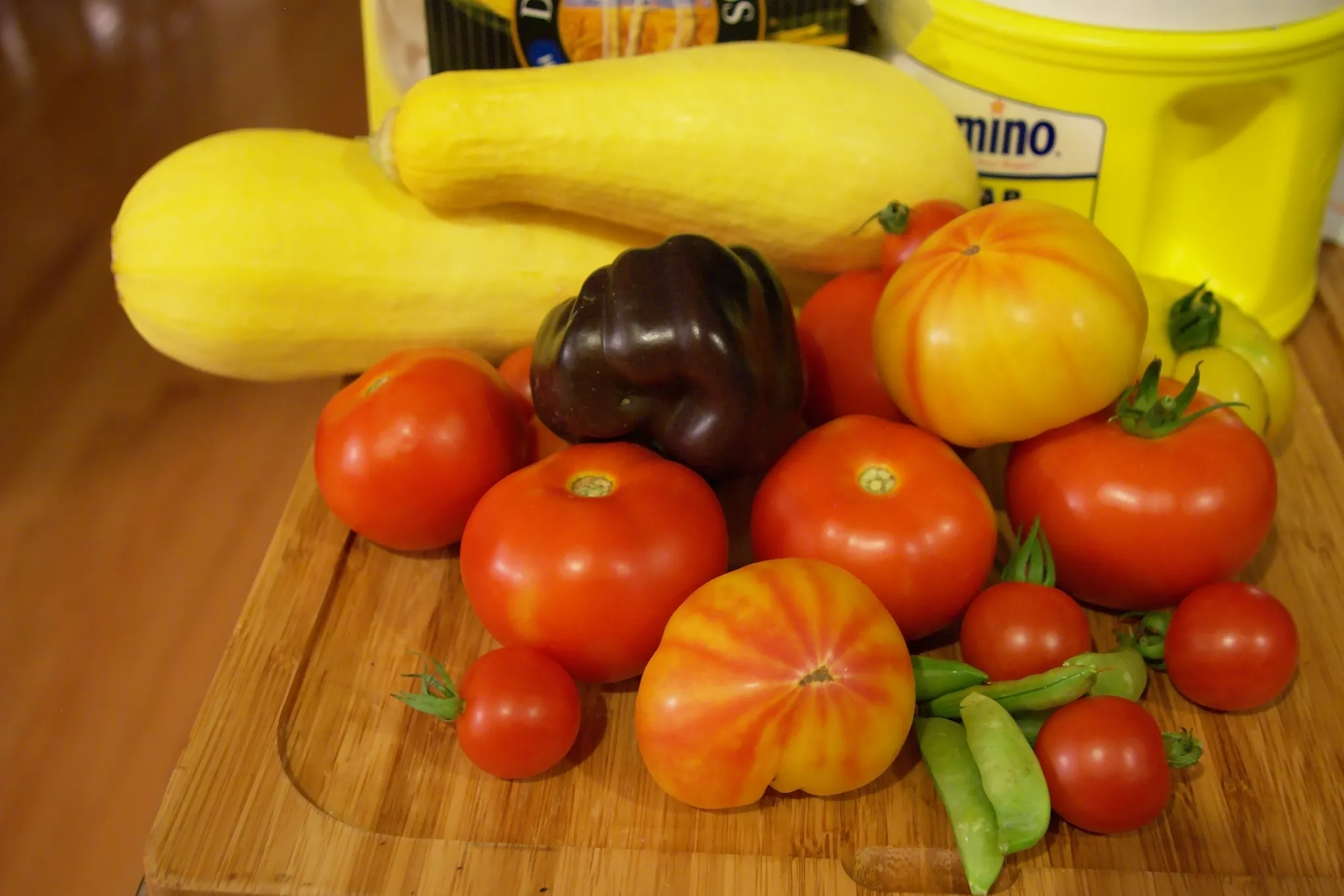
Harvest of various vegetables on a cutting board
The photograph presents the result of amateur gardening — a set of vegetables collected from one plot. The image demonstrates the varietal diversity of crops (tomatoes of different shapes and colors, zucchini, pepper, peas), which is useful for illustrating biodiversity and the results of selection in plant growing.
The main and most obvious benefit of a garden and vegetable plot is your own produce. It reaches the table soon after harvest, rather than after long transportation and storage. This preserves taste, aroma, texture, and some of the nutrients that are lost during the long journey from field to store. For a home gardener, this means being able to choose varieties for taste rather than for shelf life and transportability.
Research confirms: participation in gardening is associated with higher consumption of fruits and vegetables. A systematic review by Hume et al. (2022) showed that community gardens are associated with higher fruit and vegetable consumption, although the quality of evidence remains limited. A meta-analysis by Langellotto and Gupta (2012) found that gardening programs increase vegetable consumption in children. In a study by Monsur et al. (2024), preschoolers who took part in garden activities improved their attitudes toward vegetables. This is important: the habit of eating more vegetables and fruits is formed, among other things, through personal experience of growing them.
The garden gives access to diversity. You can grow not only the usual potatoes, carrots, cabbage, and greens, but also local, culturally significant crops, rare varieties, and culinary herbs. Sharp et al. (2025) note that children and families often grow foods important to their culture and cuisine. This expands the diet and makes nutrition more meaningful.
A separate topic is safety. A gardener can control what plants are treated with, how the harvest is stored, and when it is collected. This reduces dependence on store-bought products with an unknown set of treatments. However, it is important to remember: “homegrown” does not automatically mean “safe.” If the soil is contaminated with heavy metals, if there are pollution sources nearby, if unverified fertilizers or water are used, risks remain. Therefore, it is reasonable to start with soil testing, composting, crop rotation, and a cautious approach to chemical inputs (Ingram et al., 2015).
The garden also increases household food resilience. In cities and where access to fresh produce is limited, a vegetable plot can become an important supplement to the store or market. Tracey et al. (2023) in a systematic review for vulnerable populations showed that community gardening provides food, social, and economic returns, although the effect depends on conditions. Alaimo et al. (2024) emphasize that even a small plot and first participation in a community garden can spark a sustained interest in food production.
A garden and vegetable plot are not just “beds.” They are a way to obtain fresher, more diverse, and more controlled produce, as well as to form the habit of eating more vegetables and fruits. But safety and quality depend on soil, water, seeds, and sound cultivation practices.
2. Economic benefit: savings, income, exchange
The economic benefit of a garden and vegetable plot seems obvious: if you grow it, you don’t buy it. But in practice it is more complicated. To assess the real benefit, you need to take into account the costs of seeds, seedlings, fertilizers, tools, water, mulch, soil, transport, and time. Athearn et al. (2021) propose a simple calculation: count direct materials for a specific crop separately and general costs that are distributed across several crops separately. The annual cost of a tool or greenhouse should be divided by its service life. Then an honest figure appears: how much one kilogram or one portion of the harvest costs.

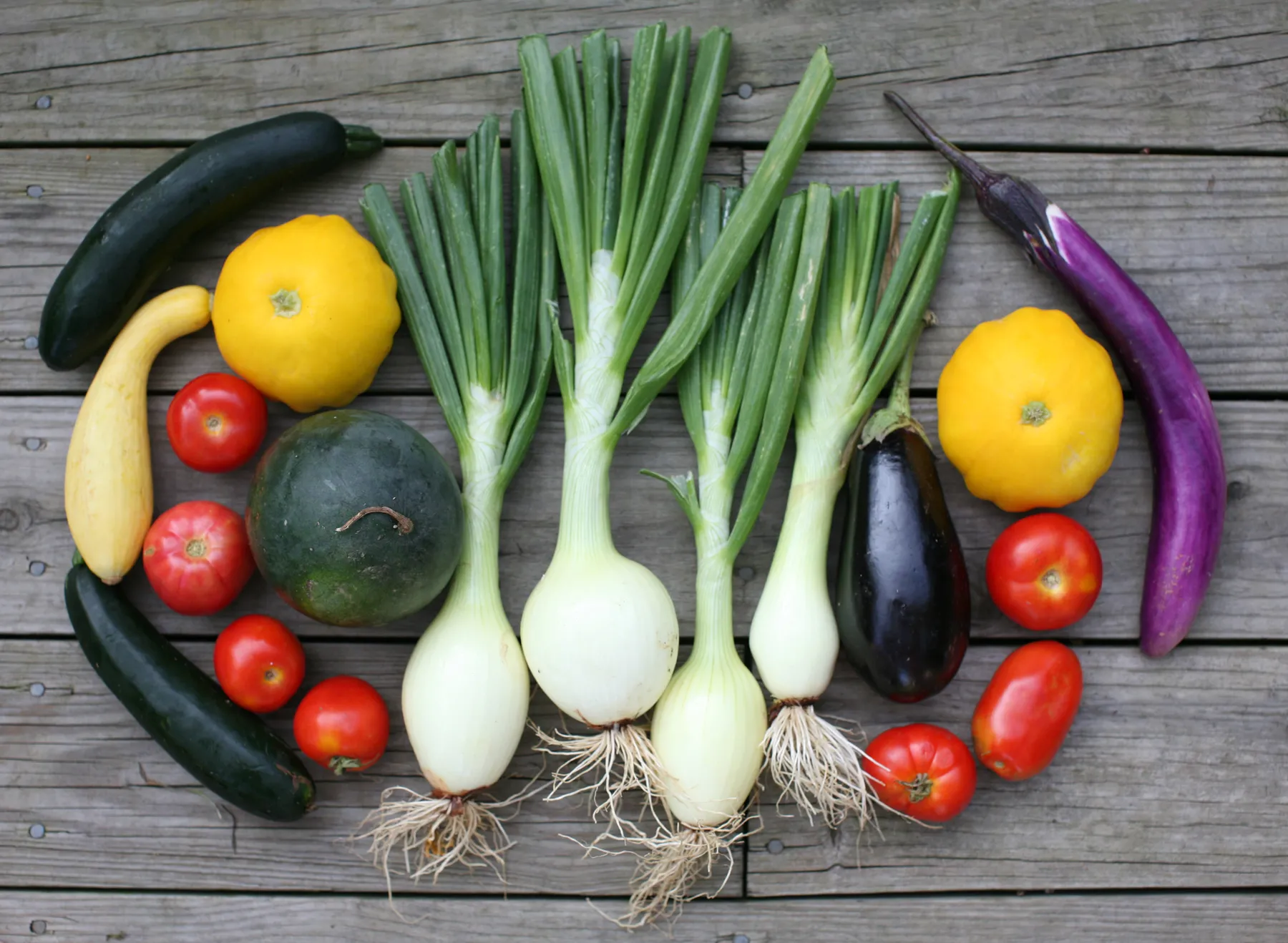
Fresh harvest of vegetable crops (cucurbits, solanaceous, alliums)
Demonstration of a variety of vegetables grown on a homestead plot. Shown are fruit vegetables (zucchini of different varieties, tomatoes, eggplants, a small melon, yellow pattypan squash) as well as alliums (onions with intact root tufts and vegetative green mass). For agronomic interest, the presence of intact root systems in onions is important, indicating freshly harvested produce.
A classic example is the study by Utzinger and Connolly (1978) in the USA. A small garden of 13.9 m2 produced 95.5 kg of produce. The retail value of the harvest was $90.45. After deducting equipment, seeds, rent, pesticides, soil tests, fertilizers, and water, the savings were about $42, or $3.01 per m2. The return per hour of labor was about $1.08. If labor and transport are not taken into account, the savings look higher. This example shows well: a vegetable plot can save money, but it does not always make a person “richer” per hour of work. However, for many, gardening is also a useful pastime, not just a business.
Modern data also point to financial returns. Tracey et al. (2023) report that participants in community gardens in different countries saved from $25 to $84 per season, and sold or exchanged part of the harvest. Poulsen et al. (2014) in a qualitative study in Baltimore showed that gardeners share their harvest with neighbors, relatives, church, and passersby. This is not direct monetary benefit, but it reduces food costs and strengthens social ties.
Savings are achieved not only by replacing store-bought vegetables. Gardeners often:
- use compost and mulch instead of purchased fertilizers;
- save seeds;
- exchange seedlings and harvests;
- sell surplus at local markets or through community channels;
- reduce losses because they harvest produce at the right ripeness.
But there are also limitations. Athearn et al. (2021) warn: if all costs are not taken into account, the estimate of savings will be inflated. For example, in their example, growing carrots turned out to be more expensive than store-bought, while tomatoes and spinach were more profitable. Utzinger and Connolly (1978) note: if the garden is far from home, transport costs can “eat up” the savings. Climate, soil, skills, crop choice, and scale also matter.
For a small-scale farmer or family household, the economic logic is broader. A garden can provide not only savings but also additional income if there is surplus. However, sustainable selling requires a market, quality, packaging, logistics, and accounting. It is better to start small: first provide for the family, then exchange, then sell.
The economic benefit of a garden is real, but it must be calculated honestly. The greatest effect comes from: the right choice of crops, accounting for all costs, composting, exchange, local sales, and gradual scaling up. A garden does not always replace a salary, but it can noticeably reduce food costs and become a source of additional income.


LCD 4-in-1 Soil Tester
Check essential growing conditions with one compact tool. Measure soil pH, moisture, temperature and light intensity — ideal for gardens, potted plants and greenhouses.
- 4-in-1 measurement
- Easy-to-read LCD display
- Portable design
Affiliate link · For indicative measurements only.
3. Physical benefit: movement, fresh air, exertion
Gardening is physical activity that is naturally built into everyday tasks. Digging, weeding, watering, harvesting, pruning, carrying bags of compost—all of this requires movement. Unlike a gym, the load here is distributed across different muscle groups and is often perceived as useful work rather than “exercise.”
Research confirms: regular gardening improves physical function. A meta-analysis by Wang et al. (2022) showed that older adults who gardened improved their physical function indicators (balance tests, standing up from a chair, arm flexion, bending). Kim et al. (2023) in an experiment with adults found that after 16 gardening sessions, participants’ physical activity indicators improved and cortisol levels decreased. In children, garden programs are also associated with greater physical activity: Monsur et al. (2024) noted that preschoolers who participated in garden activities were more active than the control group.

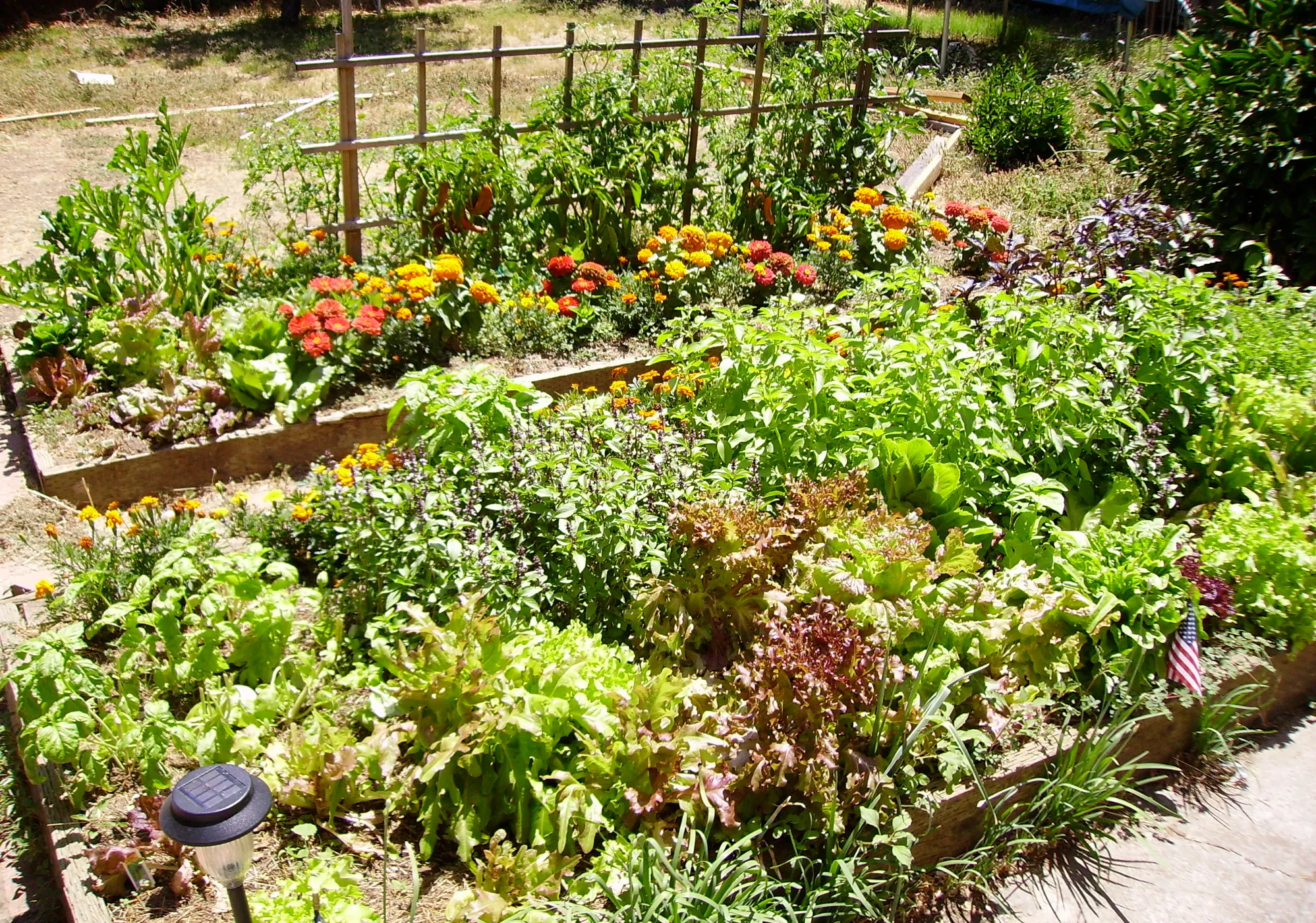
Raised bed with mixed plantings of vegetables and flowers
A raised bed with various crops: lettuce, tomatoes, basil, marigolds, zinnias, garlic and zucchini. It demonstrates the principles of companion planting and the use of raised beds to optimize space.
Gardening provides activity of varying intensity. Light tasks—watering, picking berries, loosening soil—are suitable for recovery and maintaining mobility. Heavier tasks—digging, moving soil, mowing—train endurance and strength. It is important that the load can be dosed: work at your own pace, take breaks, use comfortable tools. For older adults this is especially valuable, as it allows them to maintain muscle tone, flexibility, and coordination without sudden overloads. Gross (2018) notes that gardening can be a more attractive alternative to conventional exercise because it has a clear goal—to grow a harvest.
Spending time outdoors also brings benefits. Working in the garden increases exposure to natural light, which helps regulate circadian rhythms and improves mood. Moderate physical activity outdoors is associated with stronger immunity, improved cardiovascular function, and a lower risk of chronic diseases (Ingram et al., 2015; Wang et al., 2022).
However, it is important to remember safety. Garden work can lead to injuries: strains, back pain, cuts, falls. Ingram et al. (2015) provide data: in the USA, about 1% of the population annually sustains gardening-related injuries. The back, knees, and hands are most often affected. To reduce risks, it is recommended to:
- warm up before work;
- use ergonomic tools;
- not lift heavy objects with a jerk;
- alternate types of activity;
- take breaks;
- use protective gloves and glasses;
- if necessary, work at a raised height or while sitting.
A garden and vegetable plot are an accessible and varied physical activity that improves strength, endurance, mobility, and overall health. The main thing is to observe moderation and ergonomics so that the benefit does not turn into injury.
4. Psychological benefit: stress reduction, therapy, ritual
The garden and vegetable plot affect not only the body but also the psyche. Numerous studies show that contact with nature and gardening reduce stress, improve mood, and help cope with anxiety and depression. The key idea of this article—“a garden feeds not only the body but also the mind and mood”—is supported by scientific data.
A meta-analysis by Lu et al. (2023) found that “garden” therapy significantly reduces psychological stress compared with control groups. Wang et al. (2022) in a systematic review for older adults showed improved quality of life, mood, and reduced symptoms of depression. Kim et al. (2023) found that after gardening sessions, participants’ cortisol (stress hormone) levels decreased and their perception of a restorative environment improved.
Why does the garden have this effect? Gross (2018) explains this through several mechanisms:
- Attention Restoration Theory: nature provides an opportunity to “switch” from directed attention (work, screen, city noise) to soft, involuntary attention. The garden offers “being away” from everyday cares, “fascination” with objects, “extent”—a sense of connection with a larger world, and “compatibility”—a match between activities and a person’s interests.
- Flow: immersion in garden tasks—weeding, planting, harvesting—can evoke a state of flow, when time disappears and actions bring pleasure in themselves.
- Mindfulness: working with plants helps focus on the present moment, on sensations, smells, textures. This reduces anxiety and improves emotional state.
Alaimo et al. (2024) in a qualitative study of new gardeners described a “gardening triad”: caring for plants, a sense of achievement, and connection with nature. These three elements, according to the authors, are universal and powerfully affect psychological well-being. Participants noted feelings of pride, joy, calm, a sense of meaning, and the opportunity to distract themselves from problems. Psychological benefits appeared even in those who planted for the first time and faced difficulties.
Chalmin-Pui et al. (2021) in a large UK sample showed that the frequency of gardening is associated with a higher level of well-being and reduced perceived stress. At the same time, improved health was not the main motivation—people planted for pleasure, but it was this pleasure that produced the therapeutic effect.

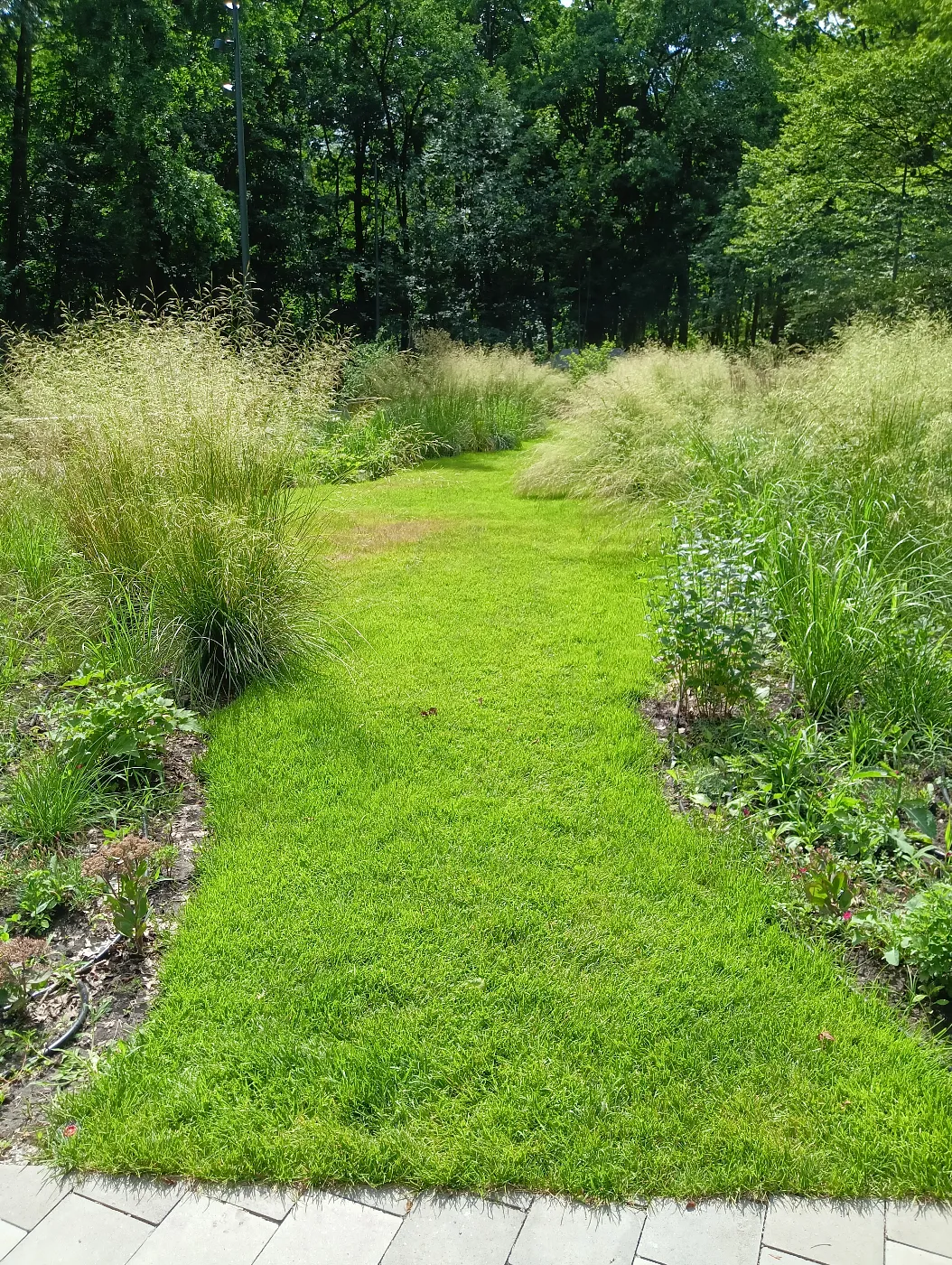
Landscape of the therapeutic garden at VDNG
Therapeutic (sensory) gardens are created for recreation, restoration of the psycho-emotional state and improvement of the physical well-being of visitors. The photo shows an area with a well-kept lawn and ornamental grasses creating a calming atmosphere. Location: National Complex "Expocenter of Ukraine" (VDNG), Kyiv, Ukraine.
The garden can also be a form of therapy. Horticultural therapy is used for people with dementia, mental disorders, after injuries, and in rehabilitation. Wang et al. (2022) note that such programs improve mood, reduce aggression, and improve social contacts. Tracey et al. (2023) in a review for vulnerable groups showed that community gardens provide a sense of social connection, reduce isolation, and increase self-esteem.
Finally, the garden is a ritual. Daily or weekly visits to the garden create structure, a sense of control, and predictability, which is especially important during periods of uncertainty. Watching plants grow, the change of seasons, cyclicity—all this calms and returns one to simple and understandable things.
The psychological benefit of the garden is scientifically grounded. Gardening reduces stress, improves mood, helps with anxiety and depression, and gives a sense of meaning and achievement. Even small daily actions in the garden can become a source of emotional restoration.

Solar Automatic Drip Irrigation Kit for Gardens
Automate watering for pots, gardens and small greenhouses. This solar-powered system features a timer to help schedule water delivery to your plants.
- Solar-powered
- 15 m irrigation hose
- Programmable watering
Affiliate link · Check included accessories.
5. Recreational benefit: rest, quiet, switching off

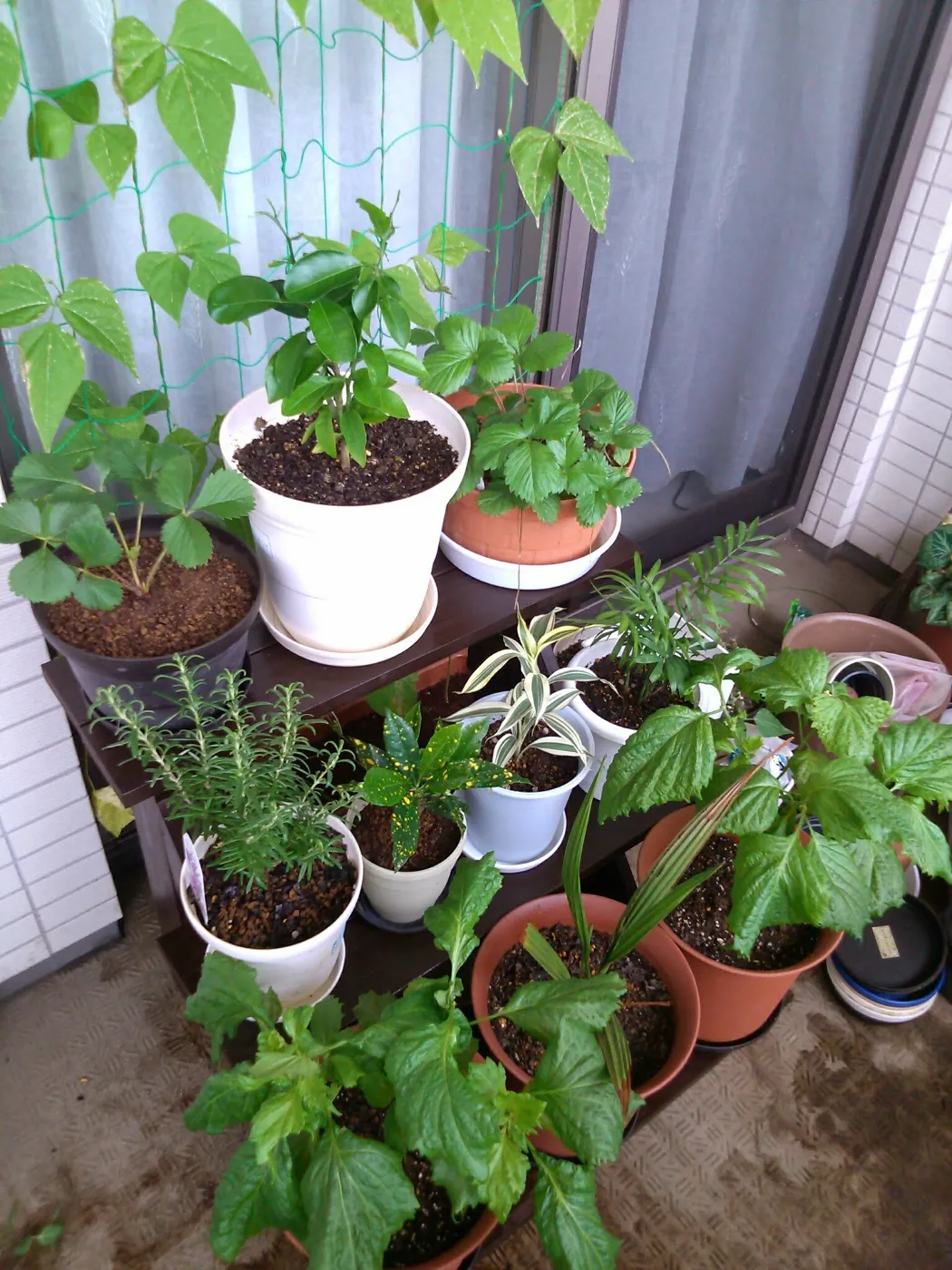
Collection of potted plants on a balcony
Home mini-garden and plant collection on a balcony. On wooden shelves in pots of various sizes grow strawberries, rosemary, ornamental foliage and fruit crops.
The garden and vegetable plot are not only work. They are also a place of rest, quiet, and switching off. Even a small plot, balcony, or a few containers with plants can become a personal space where a person slows down, distracts from everyday cares, and restores strength.
Psychologists describe this through the concept of a “restorative environment.” According to Attention Restoration Theory, nature helps switch from directed attention—work, screen, city noise—to softer, involuntary perception. The garden provides an opportunity to “be away” from the usual bustle, evokes “fascination” with plant objects, creates a sense of “extent” and “compatibility” with a person’s interests (Gross, 2018). That is why time in the garden often feels different: it may “stand still” or fly by unnoticed.
Research confirms the recreational effect. Kim et al. (2023) showed that after 16 gardening sessions, participants’ perception of a restorative environment improved and cortisol—the stress hormone—decreased. Lu et al. (2023) in a meta-analysis found a significant reduction in psychological stress under the influence of horticultural therapy. Alaimo et al. (2024) described that gardeners experience joy, immersion, restoration, and respite. Even short visits to the garden can have an effect: in hospital gardens, mood improvement was noted within a few minutes (Ingram et al., 2015).
The recreational benefit is multifaceted. For some it is silence and solitude. For others it is an opportunity to be with family, friends, and neighbors. Poulsen et al. (2014) in a Baltimore study showed that community gardens become “urban oases”: people have picnics, holidays, meetings there, and simply relax. A garden can be a place for reading, tea, meditation, birdwatching, and insect watching.
To make the recreational benefit manifest, it is useful to create a rest area in the garden. It could be a bench in the shade, a hammock, a small table, a place for a teapot. It is important that it be comfortable and pleasant to be there. It is not necessary to sit idle: weeding, watering, or harvesting can also be meditative and calming (Gross, 2018). The main thing is not to turn the garden only into a list of tasks. If every visit is connected only with work, the rest effect decreases.
Note: the restorative effect does not require large spaces. Even a view of a green courtyard, balcony plants, or a small inner courtyard helps reduce stress (Ingram et al., 2015; Kim et al., 2023).
The garden is an accessible place for rest and switching off. Create a corner for yourself in it where you can simply be, breathe, and look at the plants. Regular short pauses in the garden help reduce stress and restore attention.
6. Decorative benefit: beauty, comfort, landscape
The garden and vegetable plot are valuable not only for harvest and rest but also for beauty. The decorative benefit manifests in aesthetics, comfort, arrangement of space, and improvement of the landscape. A beautiful garden pleases the eye, creates a sense of home, and can improve quality of life.
Chalmin-Pui et al. (2021) in a large UK sample showed that satisfaction with the front garden increases as the proportion of vegetation increases. The more plants, the higher the feeling of happiness and the lower the stress level. Dunnett (2000) in a study of urban gardens in Sheffield found that “creating a pleasant environment” and “promoting relaxation” are the two most frequent values named by gardeners. That is, beauty and comfort are perceived not as a secondary decoration but as an important part of well-being.
The decorative benefit is connected with creativity and self-expression. Gross (2018) emphasizes that the garden is an extension of the home, a place where a person can express themselves and experiment with color, form, and texture. The gardener creates compositions, chooses plants, and places accents. This is not just “decoration” but a way to express taste, values, and attitude toward nature.
A beautiful garden also improves the surrounding landscape. Nur-E-Alam et al. (2026) in a study of Polish cities showed that residents perceive the environmental aspects of gardening as most important, and decorative and aesthetic aspects as significant for the quality of the environment. Dunnett (2000) notes that gardens make neighborhoods more attractive, create a sense of safety, and strengthen connections between people.
Decorative appeal does not necessarily require large expenses. Even small spaces can be designed expressively:
- use containers, planters, and vertical structures;
- combine annuals and perennials;
- add plants with different leaf shapes, heights, and seasonal color;
- include aromatic herbs, grasses, and ornamental shrubs;
- create winter structure with evergreens and dried flowers;
- select species suited to the climate and soil.
In arid regions, a decorative garden can be built on drought-resistant plants. Johnson (2023) advises choosing species adapted to the local climate and taking into account not only minimum temperatures but also heat, dryness, and sunlight intensity. Then beauty will not require excessive watering and care.
Note: decorative benefit is not limited to flowers. Beauty can be in the texture of bark, the sound of leaves, the smell of herbs, and the play of light and shadow. All this makes the garden alive and attractive all year round (Ingram et al., 2015).
The garden creates beauty and comfort, improves mood, and improves the space around the home. Decorative elements can be combined with productive ones: for example, berry bushes, culinary herbs, and flowering perennials are both useful and beautiful. The main thing is to select plants for local conditions and your aesthetic preferences.
To be continued: in the following sections—educational, social, and environmental benefits, as well as features for children, older adults, and different regions.

7-in-1 Wi-Fi Weather Station
Monitor local weather conditions with a wireless outdoor sensor. Track temperature, humidity, rainfall, wind speed and direction, and atmospheric pressure. Ideal for gardens, farms and greenhouses.
- Wireless outdoor sensor
- Solar-powered
- Wi-Fi connectivity
Affiliate link · Check regional compatibility.
7. Educational benefit: knowledge, observation, experiment

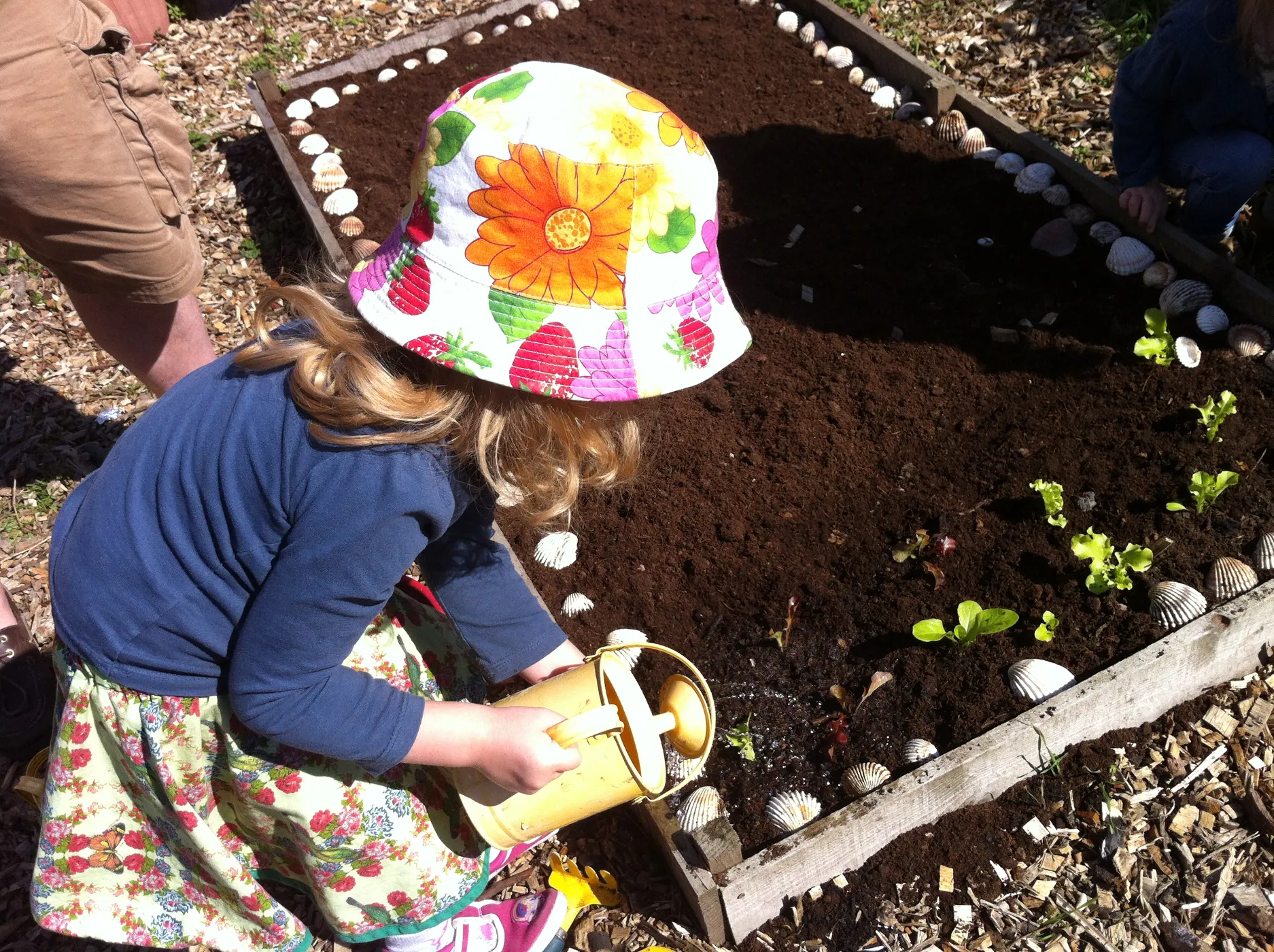
A child waters the beds at an urban farm
The process of teaching children the basics of gardening and plant care on the grounds of an urban farm. Such activities help instill in the younger generation an interest in agriculture and nature. Location: Vauxhall City Farm, London, UK.
The garden and vegetable plot are a natural educational environment. Here one can study plants, soil, insects, weather, seasonal cycles, and ecological connections. Unlike book learning, the garden provides practical experience: knowledge is consolidated through action, observation, and result.
For children, the garden becomes a “living laboratory.” Studies show that garden programs improve knowledge about nutrition, fruits, and vegetables. Holloway et al. (2023) in a realist synthesis found that school gardens increase children’s awareness of healthy food, improve eating habits, and contribute to better assimilation of educational material. Monsur et al. (2024) found that preschoolers who participated in garden activities identified fruits and vegetables significantly better than children in the control group. Langellotto and Gupta (2012) in a meta-analysis confirmed that gardening programs increase vegetable consumption in children.
The garden teaches not only biology. Kwack (2021) describes STEAM programs where schoolchildren create wall gardens while studying science, technology, engineering, art, and mathematics at the same time. Children construct irrigation systems, calculate proportions of soil mixes, observe plant growth, and record data. This is interdisciplinary learning that connects abstract subjects with real life.
Adults also learn in the garden. Gross (2018) notes that gardening develops observation, patience, and the ability to plan. The gardener learns to read the weather, understand plant needs, recognize pests and diseases, and experiment with varieties and methods. Mistakes and failures become part of learning: a dead plant is not a failure but information about what is unsuitable for the given soil, climate, or care.
Intergenerational transmission of knowledge is especially valuable. Sharp et al. (2025) in a study with children in Auckland showed that most children learn about gardening from older family members—parents, grandparents. The garden becomes a place where family traditions, cultural practices, and practical skills are passed from generation to generation. This is especially important for migrant and Indigenous communities, where growing culturally significant plants supports identity and connection with the homeland.
The garden also develops “food literacy”: an understanding of where food comes from, how it grows, and what resources are required to produce it. Alaimo et al. (2024) describe how new gardeners discover the taste of fresh products, learn to cook, preserve, and share their harvest. This knowledge changes attitudes toward food and reduces food waste.
Note: the educational benefit of a garden does not require special equipment or programs. Observing a single plant in a pot already provides material for study: how it grows, what it needs, and how it reacts to light, water, and temperature (Gross, 2018).
The garden is a school under the open sky. It teaches biology, ecology, planning, patience, and responsibility. Children and adults gain practical skills and better understand nature and food. Even a small plot or container with plants becomes a source of knowledge.
8. Social benefit: family, neighbors, community
The garden and vegetable plot strengthen social ties. They unite the family, create occasions for communication with neighbors, form communities, and reduce isolation. Social benefit is one of the most significant and sustainable benefits of gardening.

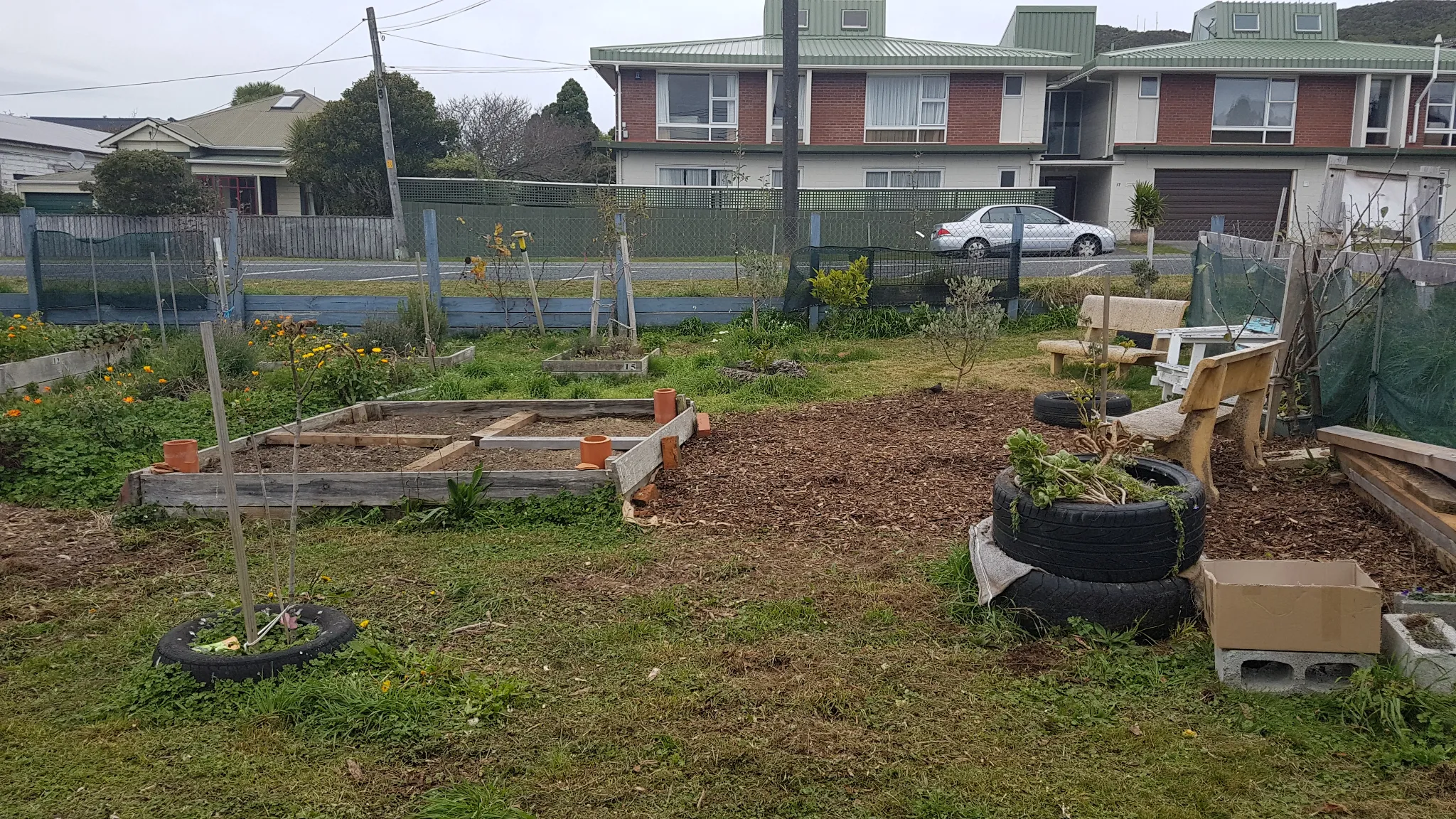
Karori community garden (spring period)
The territory of a community garden with wooden raised beds and improvised plant containers made from old car tires. Such spaces allow local residents to engage in gardening and improve the neighborhood. Location: Karori, Wellington, New Zealand (May 2020).
Poulsen et al. (2014) in a qualitative study in Baltimore described how community gardens become “urban oases” where people meet, exchange experience, and help each other. Participants noted that the garden breaks down social barriers: people of different ages, professions, cultures, and income levels meet there. The common task—to grow a harvest—unites them.
Tracey et al. (2023) in a systematic review for vulnerable populations showed that community gardening improves social connections, reduces isolation, and increases a sense of belonging. This is especially important for people living alone, older adults, migrants, and people with disabilities. Alaimo et al. (2024) found that gardeners form new relationships and strengthen existing ones, and working together enhances the effect of the “gardening triad”—care, achievement, and connection with nature.
The family also benefits. Sharp et al. (2025) note that joint gardening strengthens family bonds, creates shared memories and traditions. Children who participate in growing food more often help around the house and take on responsibility. Poulsen et al. (2014) describe how the garden becomes a place for family gatherings, holidays, picnics, and joint projects.
Kim et al. (2023) in an experiment with adults showed that gardening sessions increase a sense of community and resilience—the ability to cope with difficulties. Participants noted that the garden gives a feeling of support and belonging to a group. Hume et al. (2022) in a systematic review confirmed that community gardens are associated with improved social cohesion and neighborly relations.
Social benefit also manifests at the neighborhood level. Dunnett (2000) found that gardens promote acquaintance with neighbors and create a sense of safety. Nur-E-Alam et al. (2026) in a study of Polish cities showed that residents perceive the social aspects of gardening as important for sustainable development. Ingram et al. (2015) provide data on reductions in crime and antisocial behavior in areas where community gardens are created.
The garden can also be a place of intercultural exchange. Sharp et al. (2025) describe how in Auckland children and families from different cultures grow plants traditional to their cuisine and share recipes and stories. This creates bridges between communities and strengthens mutual understanding.
Note: the social benefit of a garden does not require large spaces or formal organizations. Even exchanging harvests with a neighbor, buying seeds together, or simply talking over the fence creates social ties (Poulsen et al., 2014; Tracey et al., 2023).
The garden unites people. It strengthens the family, introduces neighbors, creates communities, and reduces isolation. Joint gardening is a simple and accessible way to build relationships and support each other.

40W Full Spectrum LED Grow Light
Support healthy plant growth with full-spectrum LED lighting. Ideal for seedlings, indoor plants and small growing spaces. A practical solution for indoor gardening and year-round cultivation.
- Full-spectrum LED
- Energy-efficient design
- Indoor plant growing
Affiliate link · Check actual power and light coverage.
9. Environmental benefit: biodiversity, soil, air
The garden and vegetable plot are not only personal space but also part of the environment. Even a small plot can support biodiversity, improve soil, save water, and mitigate climate. The environmental benefit of gardening is becoming increasingly significant in the context of urbanization and climate change.

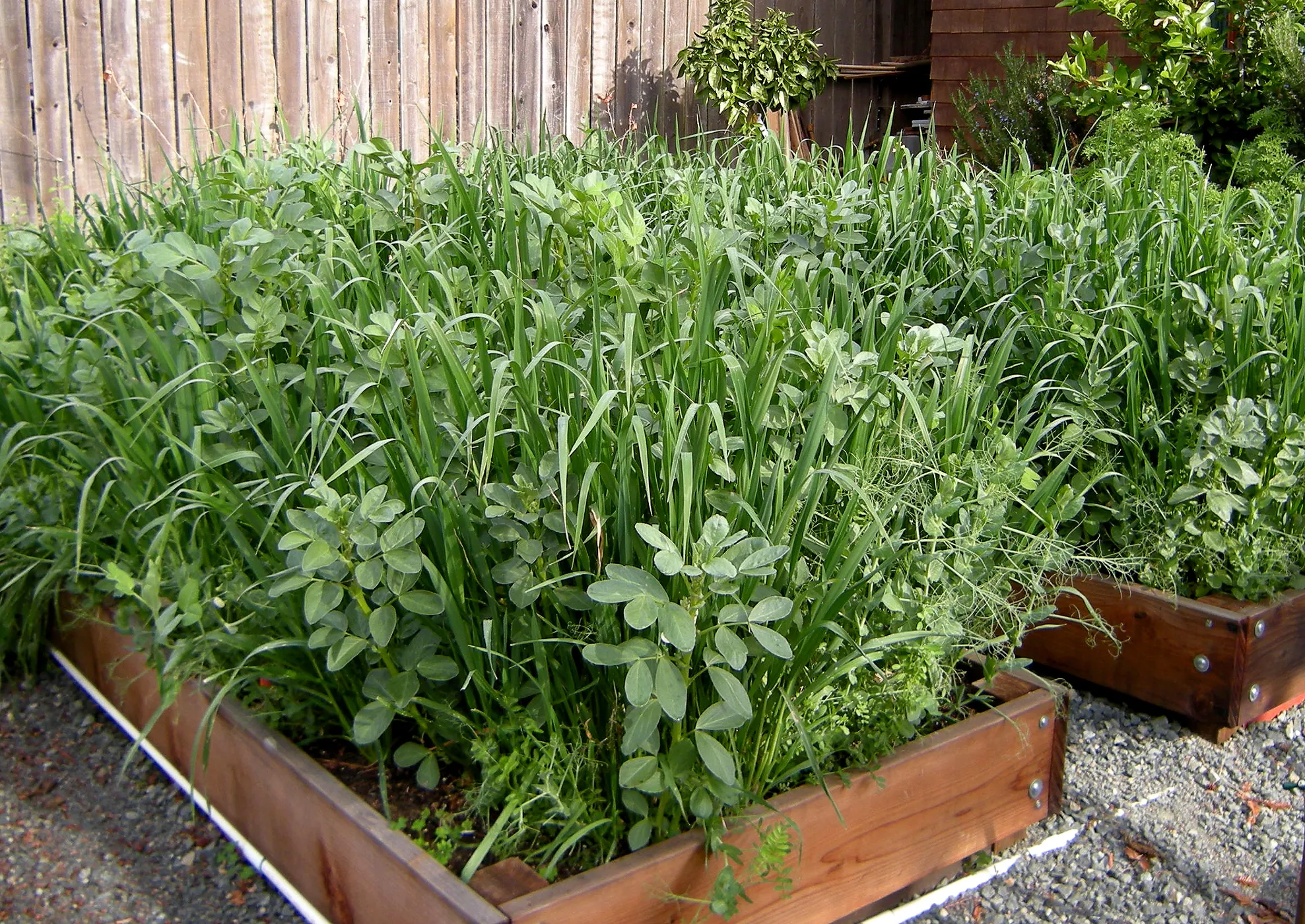
Green manure as a preceding crop in the garden
Green fertilizers (green manure) grown as a preceding crop in wooden raised beds. This method improves soil structure, suppresses weeds, and enriches the soil with nutrients before planting the main crops.
Soil. Healthy soil is the foundation of life. Gardeners who add compost, mulch, green manure, and avoid excessive digging improve soil structure, increase organic matter content, and support soil organisms. Ingram et al. (2015) emphasize that soil is a living system, not just a substrate. Composting, covering the soil with mulch, and growing green manures (for example, clover, mustard, rye) enrich it with nitrogen and organic matter. Hemenway (2009) in “Gaia’s Garden” describes how a permaculture approach creates a self-sustaining ecosystem: plants, animals, and microorganisms work together, reducing the need for external resources. Morgan (2021) in “The Healthy Vegetable Garden” recommends abandoning synthetic fertilizers and pesticides that destroy soil life. Instead—compost, manure, green manures, biological preparations.
Water. The garden helps save water and improve the water balance. Mulch reduces evaporation, compost retains moisture, and rain barrels and water collection systems reduce the need for watering from the mains. Johnson (2023) in a book on dryland gardening advises choosing drought-resistant plants, using drip irrigation, and grouping plants by water needs. Ingram et al. (2015) note that gardens promote water infiltration, reducing the risk of flooding and erosion.
Biodiversity. The garden is a refuge for insects, birds, small mammals, and soil organisms. Dunnett (2000) in a study of urban gardens showed that gardens support significant plant and animal diversity, often greater than parks. Rees-Warren (2021) in “The Ecological Gardener” calls for creating “ecological gardens”: leaving wild corners, planting native species, avoiding pesticides, and creating ponds and compost heaps. Ingram et al. (2015) emphasize that even small gardens can be “oases” for pollinators and other beneficial creatures.
Air and climate. Plants absorb carbon dioxide and release oxygen, improve air quality, and reduce temperatures in cities (the “heat island” effect). Nur-E-Alam et al. (2026) in a study of Polish cities showed that residents perceive the environmental aspects of gardening as most important. Ingram et al. (2015) provide data that trees and shrubs in gardens reduce air pollution and provide cooling.
Environmental awareness. The garden teaches careful treatment of nature. Alaimo et al. (2024) note that gardeners begin to better understand ecological connections, value seasonality, and reduce waste. Nur-E-Alam et al. (2026) emphasize that perception of the environmental benefit of gardening is higher among those who participate in several types of gardening.
The garden is a contribution to ecology. Healthy soil, water savings, support for biodiversity, and improvement of the microclimate—all this is available even on a small plot. An ecological approach is not only good for nature but also makes the garden more sustainable and productive.
10. Benefits for children and older adults
The garden and vegetable plot are especially valuable for children and older adults. For children, it is development, learning, and health. For older adults, it is maintaining physical fitness, cognitive functions, social connections, and quality of life.
Children. Garden programs have a positive effect on nutrition, knowledge, and behavior. Monsur et al. (2024) in a study of preschoolers in Texas showed that children who participated in garden activities identified fruits and vegetables significantly better and more often showed interest in them. Holloway et al. (2023) in a realist synthesis found that school gardens increase awareness of healthy food, improve eating habits, and contribute to academic learning. Langellotto and Gupta (2012) in a meta-analysis confirmed that gardening programs increase vegetable consumption in children. Sharp et al. (2025) note that children often learn gardening from older family members, which strengthens family ties and cultural identity.
The garden gives children physical activity, fresh air, sensory experience, and the opportunity to observe nature. Gross (2018) emphasizes that gardening develops curiosity, patience, and responsibility. Children learn to plan, experiment, and cope with failures. Ingram et al. (2015) note that contact with nature improves attention and reduces symptoms of hyperactivity.
Older adults. Gardening supports physical function, cognitive abilities, and emotional well-being. Wang et al. (2022) in a systematic review and meta-analysis showed that older adults who gardened improved physical function, quality of life, mood, and reduced BMI. Kim et al. (2023) found that gardening sessions reduce cortisol levels and increase a sense of community. Chalmin-Pui et al. (2021) found that the frequency of gardening is associated with higher well-being and reduced stress in adults, including older adults.
The garden gives older adults meaning, structure to the day, social contacts, and the opportunity to care for living things. Gross (2018) notes that gardening helps preserve identity and a sense of control. Tracey et al. (2023) emphasize that community gardens reduce isolation and improve social connections among vulnerable groups, including older adults.
General principles. For children and older adults, it is important to adapt gardening to their capabilities. For children—safe tools, feasible tasks, playful elements. For older adults—ergonomic tools, working while sitting, raised beds, shade, access to water. Ingram et al. (2015) advise taking physical limitations into account and avoiding overload. Joint programs where children and older adults work together enhance the benefits for both groups: transfer of experience, communication, mutual support (Sharp et al., 2025).
The garden is useful for both children and older adults. It improves health, knowledge, mood, and social connections. Adapt tasks and conditions to age and capabilities, and create a safe and accessible environment. Joint activities across generations provide a special effect.
11. Regional aspect: the value of a garden differs across cultures
The garden and vegetable plot are a universal phenomenon, but their value depends on the region, culture, climate, and standard of living. In some places the garden is primarily a source of food, in others a place of rest, in others a way of self-expression and status. Understanding these differences helps to see that the benefit of a garden is multifaceted and adapts to local conditions.
Food function. In regions with limited access to fresh produce, the garden often performs a food security function. Tracey et al. (2023) in a systematic review for vulnerable populations showed that community gardens provide food, reduce food costs, and improve nutrition. Poulsen et al. (2014) in Baltimore described gardens as “urban oases” that fill the lack of fresh vegetables in areas where stores with quality food are rare. In Russia, according to Rozmainsky et al. (2017), dachas play exactly a food role: household plots provide more than 80% of potato production, about 80% of vegetables and fruits, and almost 94% of honey. The authors emphasize that for many Russians a dacha is not a place of rest but a source of food, especially in small and medium-sized cities and the Asian part of the country.
Recreational and aesthetic function. In more affluent regions and cultures, the garden is often perceived as a place of rest, beauty, and self-expression. Chalmin-Pui et al. (2021) in the UK showed that the main motivation of gardeners is pleasure and joy, not saving money. Gross (2018) notes that in the UK gardening is a popular leisure activity associated with creativity, identity, and connection with nature. In Japan, according to Chen et al. (2024), the main motivations are fresh and safe products, health, and green spaces, but social aspects are valued less because most are home gardeners rather than community garden participants.
Social and cultural function. In different cultures, the garden performs social and cultural tasks. Sharp et al. (2025) in New Zealand showed that for Māori and Pacifica, gardens (mara kai) are not only food but also preservation of cultural traditions, transmission of knowledge, and strengthening of family. In China and Korea, according to Kim et al. (2023) and Xu et al. (2023), gardening and horticultural therapy are widely used to reduce stress and improve mental health, especially among older adults. In Poland, according to Nur-E-Alam et al. (2026), residents perceive the environmental aspects of gardening as most important, and social and economic ones as less significant.
Environmental function. In regions with a high level of environmental awareness, the garden is perceived as a contribution to biodiversity, soil conservation, and climate mitigation. Nur-E-Alam et al. (2026) emphasize that the environmental benefit of gardening is rated highest in Poland. Rees-Warren (2021) and Hemenway (2009) describe an ecological approach to gardening as a way of restoring nature in cities.

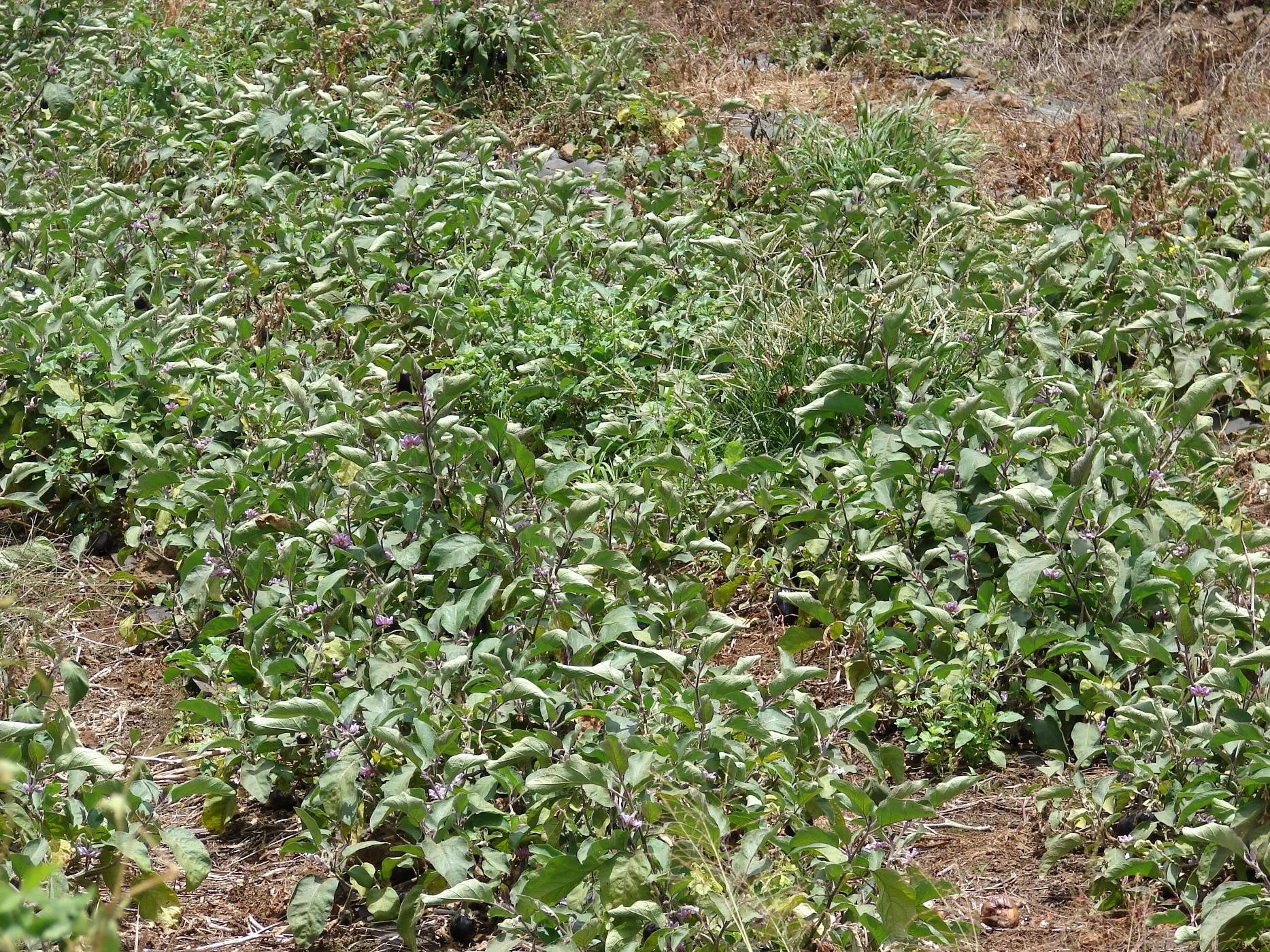
Panorama of an eggplant field (Solanum melongena) in an arid region
The wide-angle image shows a commercial plantation of eggplant in a semi-arid climate. The crop is planted in even rows, forming a dense closed canopy that shades the soil and prevents moisture evaporation. The characteristic bluish-purple hue of the entire plant mass is explained by strong anthocyanin pigmentation of vegetative organs and dense pubescence, which is an adaptation to intense solar radiation and moisture deficiency.
Climate features. In arid regions, the garden requires a special approach. Johnson (2023) advises choosing drought-resistant plants, using mulch and drip irrigation. Monsur et al. (2024) in Texas showed that even in a semi-desert climate, garden programs improve children’s knowledge of and attitudes toward vegetables. In the tropics and subtropics, the garden can be year-round, while in temperate latitudes it is seasonal.
Economic context. In developed countries, the garden is more often perceived as a hobby and a source of pleasure. In developing countries—as a way to save money, obtain additional products, or income. Utzinger and Connolly (1978) in the USA showed that even a small vegetable plot can provide savings. Athearn et al. (2021) emphasize that an honest assessment must take all costs into account. But in any context, the garden remains an accessible way to improve nutrition and quality of life.
The value of a garden depends on region and culture. In some places it is food, in others rest, in others status, in others ecology. Understanding local characteristics helps adapt gardening to people’s needs and make it as useful as possible. There is no universal recipe, but there is a general principle: the garden should match the climate, culture, and needs of the person.
12. Conclusion: a garden is beneficial in every sense—from the plate to the soul
The garden and vegetable plot are much more than beds and harvest. They are a system that affects nutrition, economy, health, psyche, relationships, ecology, and culture. In this article we examined twelve aspects of the benefit of a garden. Each of them is important in itself, but together they create a holistic picture: a garden feeds not only the body but also the mind and mood.
Food benefit. The garden provides fresh, tasty, and safe products. It expands the diet, improves nutrition, and forms the habit of eating more vegetables and fruits. Monsur et al. (2024), Langellotto and Gupta (2012), Hume et al. (2022) confirm: gardening is associated with better nutrition.
Economic benefit. The garden can save money, provide additional income, exchange, and sale of surplus. Utzinger and Connolly (1978) and Athearn et al. (2021) show how to calculate real benefit. Tracey et al. (2023) confirm financial returns for vulnerable groups.
Physical benefit. The garden is movement, fresh air, and varied exertion. Wang et al. (2022), Kim et al. (2023), Monsur et al. (2024) prove improvement in physical function, reduction in cortisol, and increased activity.
Psychological benefit. The garden reduces stress, improves mood, and helps with anxiety and depression. Lu et al. (2023), Wang et al. (2022), Alaimo et al. (2024), Gross (2018) explain the mechanisms: attention restoration, flow, mindfulness, the “gardening triad.”
Recreational benefit. The garden is a place of rest, quiet, and switching off. Kim et al. (2023), Poulsen et al. (2014), Ingram et al. (2015) show how the garden restores strength and reduces stress.
Decorative benefit. The garden creates beauty, comfort, and improves the landscape. Chalmin-Pui et al. (2021), Dunnett (2000), Nur-E-Alam et al. (2026) confirm the connection between vegetation and satisfaction.
Educational benefit. The garden teaches biology, ecology, planning, and patience. Holloway et al. (2023), Kwack (2021), Sharp et al. (2025) show how the garden becomes a school under the open sky.
Social benefit. The garden unites family, neighbors, and communities. Poulsen et al. (2014), Tracey et al. (2023), Kim et al. (2023) confirm strengthening of ties and reduction of isolation.
Environmental benefit. The garden supports biodiversity, improves soil, saves water, and mitigates climate. Ingram et al. (2015), Hemenway (2009), Rees-Warren (2021), Johnson (2023) describe an ecological approach.
Benefits for children and older adults. The garden develops children and supports older adults. Monsur et al. (2024), Wang et al. (2022), Sharp et al. (2025) show benefits for both groups.
Regional aspect. The value of a garden depends on culture, climate, and economy. Rozmainsky et al. (2017), Chen et al. (2024), Nur-E-Alam et al. (2026) show differences.
Key takeaway. A garden is not just a hobby or a source of food. It is a way to improve life in all its manifestations. It provides products, savings, health, joy, knowledge, connections, and environmental sustainability. A garden is accessible to everyone: from a balcony to a large plot. Start small—and you will see how the garden changes life for the better.
Practical takeaway:
A garden is beneficial in every sense—from the plate to the soul. It feeds, heals, teaches, unites, and inspires. It does not matter where you live or how much space you have. Even a small vegetable plot, balcony plants, or participation in a community garden can provide tangible benefits. Plant, observe, try—and let the garden become your source of health, joy, and inspiration.
References
- (2015). ‘Garden ecology’, in Ingram, D.S., Vince-Prue, Daphne, Gregory, P.J. (ed.) Science and the Garden. The scientific basis of horticultural practice. West Sussex, UK: Royal Horticulture Society. Wiley Blackwell, pp. 278-291.
- (2015). ‘Garden wildlife and conservation’, in Ingram, D.S., Vince-Prue, Daphne, Gregory, P.J. (ed.) Science and the Garden. The scientific basis of horticultural practice. West Sussex, UK: Royal Horticulture Society. Wiley Blackwell, pp. 292-298.
- (2015). ‘Health, well-being and socio-cultural benefits’, in Ingram, D.S., Vince-Prue, Daphne, Gregory, P.J. (ed.) Science and the Garden. The scientific basis of horticultural practice. West Sussex, UK: Royal Horticulture Society. Wiley Blackwell, pp. 307-319.
- Alaimo, Katherine, Coringrato, Eva, Lacy, Kristin, Hébert, J.R., Beavers, A.W. (2024). ‘Caretaking, accomplishment and connection to nature: The ‘gardening triad’ and its role in new community gardeners' engagement, and social and emotional well‐being’, People and Nature, 6(5), 2014-2028. doi: 10.1002/pan3.10696
- Athearn, Kevin, Wooten, Hannah, Felter, Liz, Campbell, C.G., Ryals, J.E., Lollar, M.C., Popenoe, Juanita, Bravo, Lorna, Duncan, L., Court, Christa, Wilber, Wendy (2021). ‘Costs and Benefits of Vegetable Gardening’, EDIS, 2021(2), 10. doi: 10.32473/edis-fe1092-2021
- Chalmin-Pui, L.Suyin, Griffiths, Alistair, Roe, Jenny, Heaton, Timothy, Cameron, Ross (2021). ‘Why garden? – Attitudes and the perceived health benefits of home gardening’, Cities, 112(0), 103118. doi: 10.1016/j.cities.2021.103118
- Chen, Bixia, Miyagi, Kazuna, Namihira, Tomoyuki, Kayano, Daiki, Aragaki, Mika, Suzuki, Shiori (2024). ‘What Motivates Urban Dwellers to Engage in Urban Farming?’, Sustainability, 16(16), 6876. doi: 10.3390/su16166876
- Dunnett, Nigel, Qasim, Muhammad (2000). ‘Perceived Benefits to Human Well-being of Urban Gardens’, HortTechnology, 10(1), 40-45. doi: 10.21273/HORTTECH.10.1.40
- Gross, Harriet (2018). ‘Stepping into the garden: the gardening context’, in The Psychology of Gardening. New York, NY: Routledge, .
- Gross, Harriet (2018). ‘‘In touch with nature’: the human–nature relationship’, in The Psychology of Gardening. New York, NY: Routledge, .
- Gross, Harriet (2018). ‘‘It keeps me sane’: gardening as therapy’, in The Psychology of Gardening. New York, NY: Routledge, .
- Gross, Harriet (2018). ‘‘Time stands still’: restoration, flow and mindfulness’, in The Psychology of Gardening. New York, NY: Routledge, .
- Harding, Diana, Lukman, K.Muhamad, Jingga, Matheus, Uchiyama, Yuta, Quevedo, J.MarD., Kohsaka, Ryo (2022). ‘Urban Gardening and Wellbeing in Pandemic Era: Preliminary Results from a Socio-Environmental Factors Approach’, Land, 11(4), 492. doi: 10.3390/land11040492
- Hemenway, Toby (2009). ‘Pop Goes the Garden’, in Gaia's Garden. A Guide To Home-Scale Permaculture. : Chelsea Green Publishing, .
- Holloway, T.P., Dalton, Lisa, Hughes, Roger, Jayasinghe, Sisitha, Patterson, K.A.E., Murray, Sandra, Soward, Robert, Byrne, N.M., Hills, A.P., Ahuja, K.D.K. (2023). ‘School Gardening and Health and Well-Being of School-Aged Children: A Realist Synthesis’, Nutrients, 15(5), 1190. doi: 10.3390/nu15051190 (PubMed)
- Hume, Clare, Grieger, J.A., Kalamkarian, Anna, D’Onise, K., Smithers, L.G. (2022). ‘Community gardens and their effects on diet, health, psychosocial and community outcomes: a systematic review’, BMC Public Health, 22(1), null. doi: 10.1186/s12889-022-13591-1 (PubMed)
- Johnson, Noelle (2023). ‘Choosing the Right Plants for Hot, Arid Regions’, in Dry Climate Gardening. Beverly, MA: Cool Springs Press, .
- Johnson, Noelle (2023). ‘Introduction: Welcome to Gardening in a Dry Climate’, in Dry Climate Gardening. Beverly, MA: Cool Springs Press, .
- Kamioka, Hiroharu, Tsutani, Kiichiro, Yamada, Minoru, Park, Hyuntae, Okuizumi, Hiroyasu, Honda, Takuya, Okada, Shinpei, Park, S., Kitayuguchi, Jun, Abe, Takafumi, Handa, Shuichi, Mutoh, Yoshiteru (2014). ‘Effectiveness of horticultural therapy: A systematic review of randomized controlled trials’, Complementary Therapies in Medicine, 22(5), 930-943. doi: 10.1016/j.ctim.2014.08.009 (PubMed)
- Kim, H., Oh, W., Kim, J., Shin, W. (2023). ‘The Influence of Urban Gardening Activities on Participants’ Perceived Restorativeness, Resilience, Sense of Community and Stress’, Healthcare, 11(12), 1664. doi: 10.3390/healthcare11121664 (PubMed)
- Kwack, H.Ran, Jang, E.Jean (2021). ‘Development and application of a STEAM program using classroom wall gardens’, Journal of People, Plants, and Environment, 24(4), 365-376. doi: 10.11628/ksppe.2021.24.4.365
- Langellotto, G.A., Gupta, Abha (2012). ‘Gardening Increases Vegetable Consumption in School-aged Children: A Meta-analytical Synthesis’, HortTechnology, 22(4), 430-445. doi: 10.21273/HORTTECH.22.4.430
- Lu, Shan, Liu, Jianjiao, Xu, Meijing, Xu, Feng (2023). ‘Horticultural therapy for stress reduction: A systematic review and meta-analysis’, Frontiers in Psychology, 14(0), null. doi: 10.3389/fpsyg.2023.1086121 (PubMed)
- Monsur, Muntazar, Mansur, Mohaimen, Trina, N.Afrin, Cosco, Nilda (2024). ‘Hands-On Gardening in Childcare Centers to Advance Preschool-Age Children’s Fruit and Vegetable Liking in Semi-Arid Climate Zone’, International Journal of Environmental Research and Public Health, 21(11), 1485. doi: 10.3390/ijerph21111485 (PubMed)
- Morgan, Sally (2021). ‘Building a healthy soil’, in The Healthy Vegetable Garden: A natural, chemical-free approach to soil, biodiversity and managing pests and diseases. Vermont, London, UK: Chelsea Green Publishing, .
- Nur-E-Alam, S.M., Feltynowski, Marcin, Chądzyński, J. (2026). ‘Urban Gardening, Sustainable Development and Inhabitant Perceptions: A New Framework for Analysis’, Environment and Behavior, 0(0), null. doi: 10.1177/00139165261488333
- Panțiru, I., Ronaldson, A., Sima, N., Dregan, A., Sima, R. (2024). ‘The impact of gardening on well-being, mental health, and quality of life: an umbrella review and meta-analysis’, Systematic Reviews, 13(1), null. doi: 10.1186/s13643-024-02457-9 (PubMed)
- Poulsen, M.N., Hulland, K.R.S., Gulas, C.A., Pham, Hieu, Dalglish, S.L., Wilkinson, R.K., Winch, P.J. (2014). ‘Growing an Urban Oasis: A Qualitative Study of the Perceived Benefits of Community Gardening in
B altimore,M aryland’, Culture, Agriculture, Food and Environment, 36(2), 69-82. doi: 10.1111/cuag.12035 - Rees-Warren, Matt (2021). ‘Introduction’, in The Ecological Gardener. Vermont, London, UK: Chelsea Green Publishing, .
- Rozmainsky, I.V., Lozhnikova, A.V., Kichko, N.I., Khloptsov, D.M. (2017). ‘Dacha in Post-Soviet Russia: Institutional Analysis’, Journal of Institutional Studies, 9(2), null. doi: 10.17835/2076-6297.2017.9.2.063-079
- Sharp, Emma, Tsang, Sophia, Egli, Victoria (2024). ‘Children’s food gardening: valuing experiential, intergenerational and multi‐cultural learning’, Kōtuitui: New Zealand Journal of Social Sciences Online, 20(4), 738-762. doi: 10.1080/1177083X.2024.2425427
- Tracey, Danielle, Gray, Tonia, Manohar, Narendar, Kingsley, Jonathan, Bailey, Aisling, Pettitt, Philip (2023). ‘Identifying Key Benefits and Characteristics of Community Gardening for Vulnerable Populations: A Systematic Review’, Health & Social Care in the Community, 2023(0), 1-23. doi: 10.1155/2023/5570089
- Utzinger, J.D., Connolly, H.E. (1978). ‘Economic Value of a Home Vegetable Garden’, HortScience, 13(2), 148-149.
- Wang, Zhijie, Zhang, Yu, Lu, Shanshan, Tan, Linlin, Guo, Wei, Lown, Mark, Hu, Xiaoyang, Liu, Jianping (2022). ‘Horticultural therapy for general health in the older adults: A systematic review and meta-analysis’, PLOS ONE, 17(2), e0263598. doi: 10.1371/journal.pone.0263598 (PubMed)
- Xu, Meijing, Lu, Shan, Liu, Jianjiao, Xu, Feng (2023). ‘Effectiveness of horticultural therapy in aged people with depression: A systematic review and meta-analysis’, Frontiers in Public Health, 11(0), null. doi: 10.3389/fpubh.2023.1142456 (PubMed)
- Траннуа, Павел (2018). ‘Дача как зона отдыха [The dacha as a leisure area]’, in Сад и огород в рисунках и комиксах: полная наглядная энциклопедия [The Garden and Vegetable Patch in Drawings and Comics: A Comprehensive Visual Encyclopedia]. Москва: Издательство «Э», pp. 179-182.
- Траннуа, Павел (2018). ‘Овощные культуры, огород [Vegetable crops, vegetable garden]’, in Сад и огород в рисунках и комиксах: полная наглядная энциклопедия [The Garden and Vegetable Patch in Drawings and Comics: A Comprehensive Visual Encyclopedia]. Москва: Издательство «Э», pp. 50-53.
- Траннуа, Павел (2018). ‘Плодовые деревья [Fruit trees]’, in Сад и огород в рисунках и комиксах: полная наглядная энциклопедия [The Garden and Vegetable Patch in Drawings and Comics: A Comprehensive Visual Encyclopedia]. Москва: Издательство «Э», pp. 69-72.
- Траннуа, Павел (2018). ‘Сбор и хранение урожая [Harvesting and storage]’, in Сад и огород в рисунках и комиксах: полная наглядная энциклопедия [The Garden and Vegetable Patch in Drawings and Comics: A Comprehensive Visual Encyclopedia]. Москва: Издательство «Э», pp. 172-178.
- Траннуа, Павел (2018). ‘Ягодные кустарники [Berry bushes]’, in Сад и огород в рисунках и комиксах: полная наглядная энциклопедия [The Garden and Vegetable Patch in Drawings and Comics: A Comprehensive Visual Encyclopedia]. Москва: Издательство «Э», pp. 65-68.
