
What Is a Garden and a Vegetable Plot
1. A Garden and a Vegetable Plot Are Not the Same Thing
At first glance, it may seem that a garden and a vegetable plot are simply different names for the same piece of land where something grows. However, there is a fundamental difference between these concepts, which determines not only the set of crops but also the very approach to planning, care, and use of space.
Historically, the garden (from the French jardin and the Germanic root yard — "enclosure," "enclosed place") is an area where humans consciously manage nature for aesthetic and productive purposes (Hobhouse, 2004). A vegetable plot, by contrast, is primarily a utilitarian space for growing vegetables, herbs, and root crops. In the Russian tradition, this distinction is especially noticeable: "garden" is more often associated with fruit trees, berry bushes, and ornamental plants, while "vegetable plot" is associated with beds, greenhouses, and vegetable crops.
From the point of view of botany and agronomy, vegetable crops are a relatively small group of plants that humans use for food. Out of hundreds of thousands of species known to science, only a few hundred are used as vegetables (Rubatzky & Yamaguchi, 1997). They are classified according to various characteristics: by temperature requirements (cold-hardy and heat-loving), by life span (annual, biennial, perennial), by edible part (root crops, leafy, fruit, stem). It is important to understand that a vegetable plot is not just "a place for vegetables." It is a managed system where humans regulate watering, soil fertility, light, and protection from pests.
A garden, in turn, is a broader concept. In the English tradition, garden can mean a flower garden, an area with fruit trees, and even a public park. In American culture, garden more often refers to a vegetable plot, while yard refers to the ornamental space around a house (Gross, 2018). In Russian, "garden" is primarily a space where fruit trees grow (apple, pear, cherry, plum), berry bushes (currant, gooseberry, raspberry), and ornamental plants. A garden can be fruit-bearing, ornamental, or mixed, but its key feature is the perennial nature of the plantings and a more pronounced aesthetic function.
Thus, the main difference between a garden and a vegetable plot is not the size of the plot or the set of crops, but the purpose and principles of organizing the space. A vegetable plot is oriented toward obtaining a harvest of vegetables and herbs during one season or several years (for perennial vegetable crops). A garden is a long-term project where trees and shrubs grow for decades, and ornamental elements create an environment for rest and creativity.
At the same time, in practice the boundary between garden and vegetable plot is often blurred. On a small plot, vegetable beds may neighbor berry bushes, and fruit trees may neighbor flower beds. That is why it is important to understand not so much the formal division as the principles underlying each type of husbandry. A vegetable plot requires more intensive intervention: regular watering, loosening, fertilizing, pest control. A garden, especially a fruit garden, after planting and training the trees, can exist with minimal human intervention if the species and varieties are chosen correctly.
Understanding this difference is the first step toward competent planning of a plot. It helps avoid typical mistakes: for example, planting light-loving vegetables in the shade of fruit trees or placing heat-loving crops in an area where cold air accumulates. In the following sections, we will examine in more detail what exactly grows in a vegetable plot and a garden, how they are connected, and why a garden and a vegetable plot are not just beds but a managed ecosystem next to the home.
Note: In different climatic zones, the ratio of garden to vegetable plot can vary greatly. For example, in the tropics, fruit trees (bananas, mangoes, papayas) are often planted together with vegetable crops, forming multi-tiered systems. In temperate latitudes, the garden and vegetable plot are clearly separated by seasons and types of plants. In the Arctic and Subarctic, vegetable growing is possible only in greenhouses and hotbeds, and there is no garden as such. We will examine these regional features in the following chapters.
2. The Vegetable Plot: Growing Vegetables, Herbs, Root Crops, and Berries
A vegetable plot is an area intended for growing vegetable crops, herbs, root crops, and berries. Unlike a garden, where perennial woody and shrub plants predominate, a vegetable plot is oriented toward intensive use of the land to obtain a harvest during one or several seasons. The basis of a vegetable plot consists of annual and biennial crops, although some vegetables (for example, asparagus, rhubarb) can grow in one place for many years.

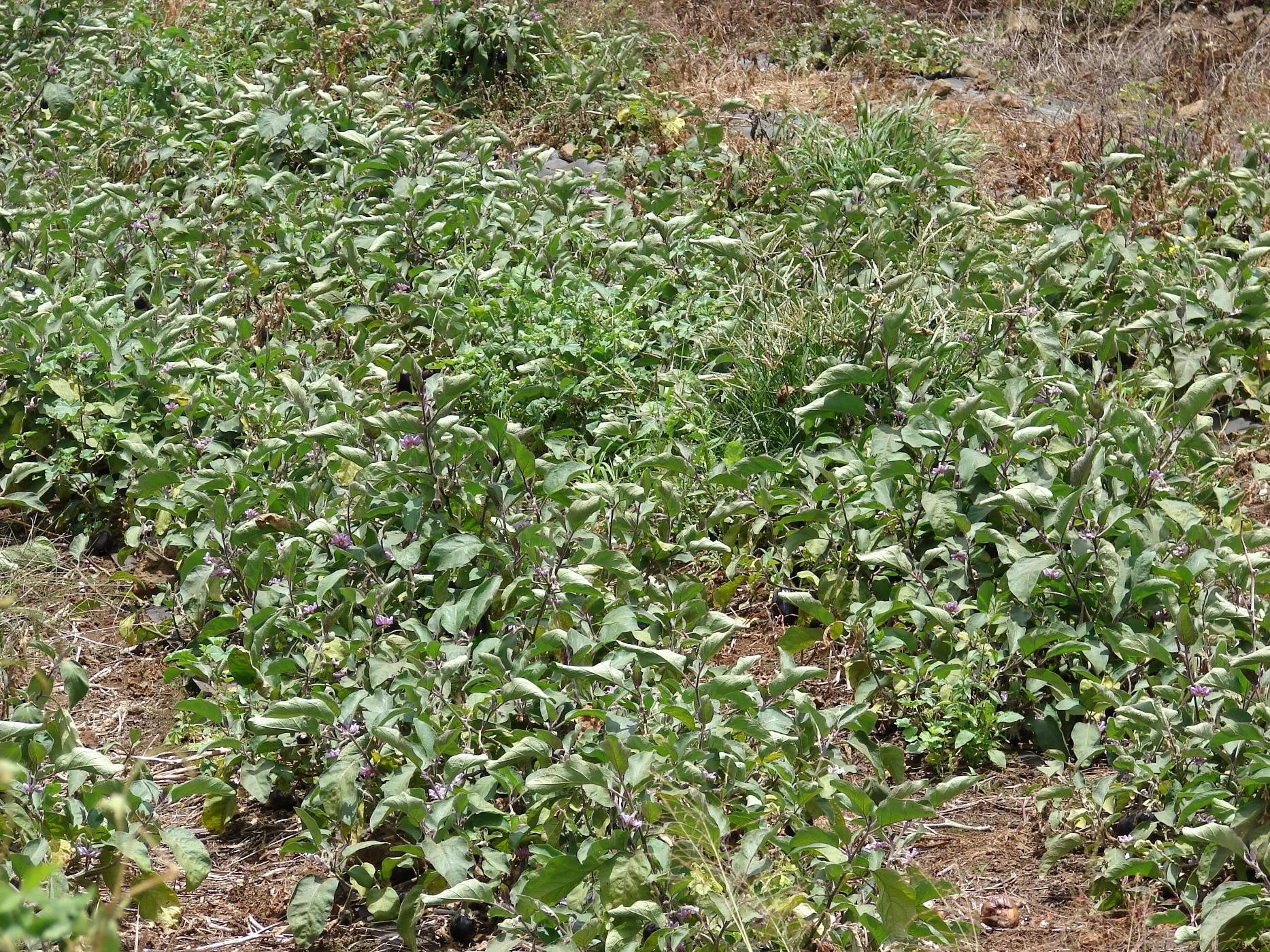
Panorama of an eggplant field (Solanum melongena) in an arid region
The wide-angle image shows a commercial plantation of eggplant in a semi-arid climate. The crop is planted in even rows, forming a dense closed canopy that shades the soil and prevents moisture evaporation. The characteristic bluish-purple hue of the entire plant mass is explained by strong anthocyanin pigmentation of vegetative organs and dense pubescence, which is an adaptation to intense solar radiation and moisture deficiency.
From an agronomic point of view, vegetable crops are classified according to several characteristics. By temperature requirements, cold-hardy crops (cabbage, carrots, radishes, lettuce, peas) and heat-loving crops (tomatoes, cucumbers, peppers, eggplants, squash) are distinguished (Rubatzky & Yamaguchi, 1997). Cold-hardy crops tolerate frost and can be sown in early spring; heat-loving crops require warmed soil and are often grown as seedlings or under covers (Jabbour, 2020). By edible part, vegetables are divided into root crops (carrots, beets, turnips, radishes), leafy crops (lettuce, spinach, cabbage, herbs), fruit crops (tomatoes, cucumbers, peppers, eggplants), stem crops (asparagus, kohlrabi), and flower crops (broccoli, cauliflower) (Swiader & Ware, 1992).
Herbs are a special group of crops that are consumed fresh: dill, parsley, basil, cilantro, arugula, spinach, chard. They require regular watering and can be grown throughout the season with repeated sowings. Berries such as strawberries and wild strawberries are often included in the vegetable plot because they grow in beds and require intensive care, although biologically they are perennial herbaceous plants. Raspberries, currants, and gooseberries are more often assigned to the garden, but on small plots they are also placed in the vegetable plot area.
A vegetable plot is a system where everything is interconnected. The soil must be fertile and loose; for this, compost and manure are added, and crop rotation is observed. Watering must be regular and sufficient, especially during growth and fruiting. Light is a key factor: most vegetables require full sun (at least 6–8 hours per day). Protection from pests and diseases is based on prevention: crop rotation, mixed plantings, covering materials (Morgan, 2021). It is also important to take regional features into account: in a cold climate, the vegetable plot often begins with seedlings and greenhouses; in a hot one, with the selection of drought-resistant crops and mulching (Littlewood, 2007).
Thus, a vegetable plot is not just beds but a managed ecosystem where humans create conditions for plant growth and obtain a harvest. Understanding the needs of each group of crops and proper planning allow even a small plot to produce diverse and useful products.


LCD 4-in-1 Soil Tester
Check essential growing conditions with one compact tool. Measure soil pH, moisture, temperature and light intensity — ideal for gardens, potted plants and greenhouses.
- 4-in-1 measurement
- Easy-to-read LCD display
- Portable design
Affiliate link · For indicative measurements only.
3. The Garden: Fruit Trees, Shrubs, Ornamental Plants, Rest

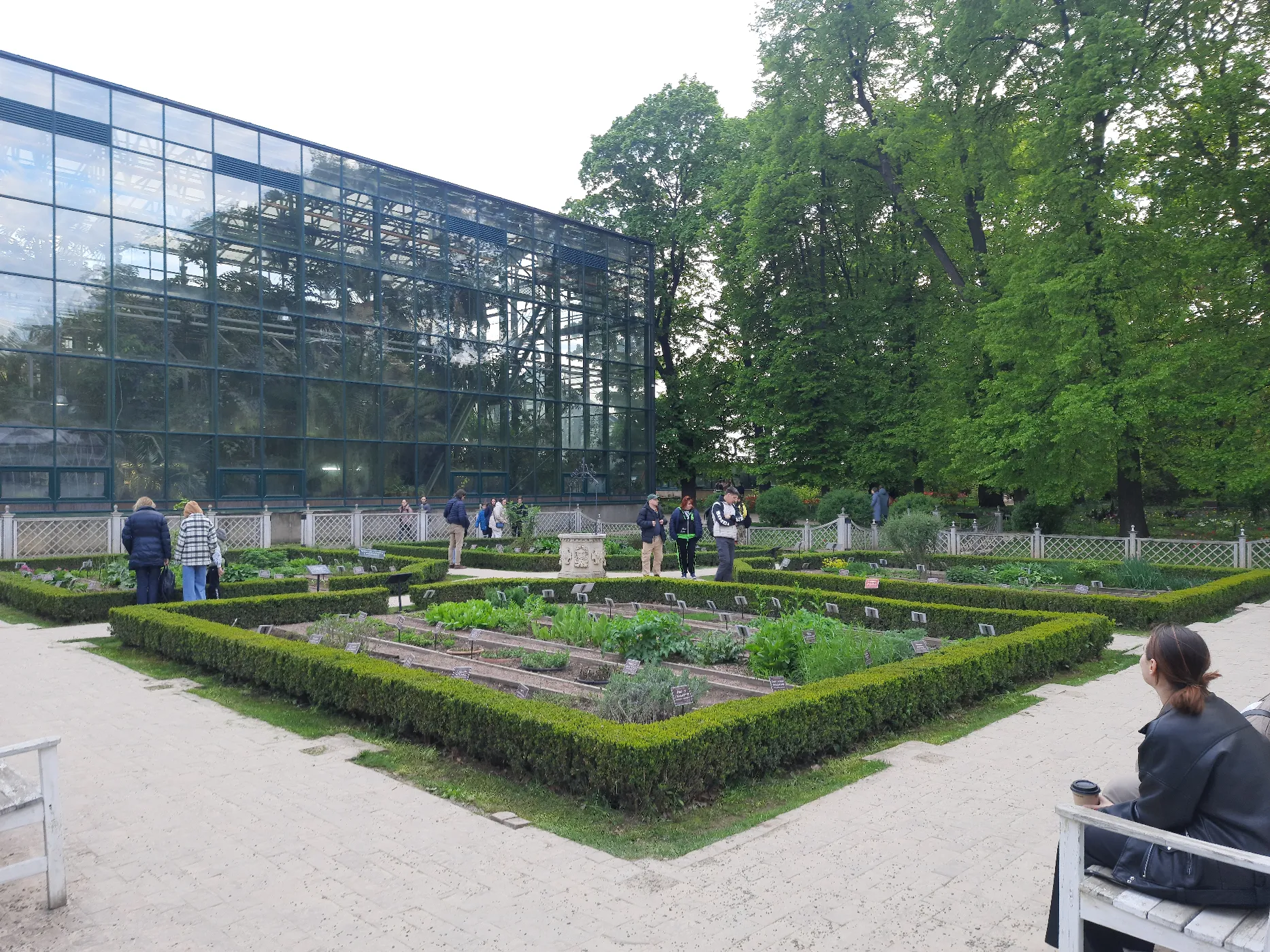
Display beds in the Apothecary Garden
The territory of the Apothecary Garden (botanical garden), where neatly arranged rectangular beds with various cultivated plants are presented. Such gardens are traditionally used for growing, studying and displaying medicinal and aromatic crops.
A garden is a space where perennial plants form the basis of the landscape, and humans not only obtain a harvest but also create an environment for rest and recovery. Unlike a vegetable plot, where annual crops predominate, a garden is established for years and even decades. Fruit trees (apple, pear, plum, cherry, sweet cherry, apricot, peach) and berry bushes (currant, gooseberry, raspberry, blackberry, blueberry) require proper site selection, crown formation, and regular pruning. Their productivity depends on pollination, so several varieties that bloom at the same time are often planted (Buckingham, 2010). Trees and shrubs are divided into self-fertile and self-sterile; the latter need pollinators. Modern dwarf and semi-dwarf rootstocks allow fruit crops to be grown even on small plots and in containers (Buckingham, 2010).
Ornamental plants are an equally important part of the garden. Flower beds, lawns, hedges, rock gardens, roses, perennials, and annuals create aesthetic appeal and support biodiversity by attracting pollinators and beneficial insects (Ingram et al., 2015). A garden can be formal (regular) or landscape (natural), but in any case it reflects the taste and needs of the owner (Gross, 2018). Studies show that even simply contemplating greenery and flowers reduces stress levels, improves mood, and promotes attention restoration (Ingram et al., 2015). The garden becomes a place of solitude, family rest, and creativity.
Thus, the garden performs three key functions: productive (fruit and berries), ecological (habitat for animals, maintenance of soil and water), and socio-psychological (rest, self-expression, connection with nature). Unlike a vegetable plot, where the emphasis is on intensive use of land, a garden is a long-term investment in beauty and comfort.
4. Intersections: On a Small Plot Everything Is Mixed
In large spaces, the garden and vegetable plot often exist as separate zones: fruit trees in one part of the plot, beds in another, ornamental plants along the paths. However, on a small plot, whether it is a six-hundred-square-meter suburban plot or a small city yard, such separation becomes impractical. Here the garden and vegetable plot inevitably intertwine, forming a single space where vegetables, berries, flowers, and fruit crops grow side by side (Dale, 2011).
The first thing that helps unite the garden and vegetable plot on a small area is dense plantings and intercropping. For example, in early spring, while fruit trees have not yet unfurled their leaves, shade-tolerant vegetables can be grown under them: lettuce, spinach, radishes. When the canopy closes, these crops will already have been harvested, and they will not compete with the trees for light and water (Swiader & Ware, 1992). This technique is called intercropping — growing two or more crops on the same area during one season. Another option is dense sowing, when slow-growing crops (cabbage, eggplants) are combined with fast-maturing ones (radishes, lettuce, herbs). This allows several harvests from one bed per season.
Vertical greening is another way to save space. Climbing plants (cucumbers, beans, peas) can grow on trellises, nets, or special supports, freeing the ground for other crops. Fruit trees can be trained as cordons (single-stem or multi-stem), espaliers (flat forms against a wall or fence), or fans (Buckingham, 2010). Such forms not only save space but also make care and harvesting more convenient. For example, an apple tree trained as an espalier along a southern wall takes up minimal space and receives maximum warmth, which is especially important in a cool climate.
Container growing is a universal technique for small plots. In pots, tubs, boxes, and bags, you can grow almost any vegetables, herbs, berries, and even dwarf fruit trees. Containers are easy to move: in summer they are placed in the sun, and in winter they are moved to a protected place. This is especially valuable for heat-loving crops (tomatoes, peppers, citrus fruits) that may not survive in open ground (Buckingham, 2010; Dale, 2011). Containers also allow you to control soil composition: for example, blueberries require an acidic environment, and it is easier to provide this in a pot than in an ordinary bed.
Raised beds are another element that erases the boundary between garden and vegetable plot. They can be made of wood, stone, brick, or concrete, and their height makes plant care easier and protects the soil from trampling. In raised beds, you can grow vegetables, herbs, berries, and even small ornamental shrubs (Dale, 2011). If the beds are designed neatly, they become part of the landscape design rather than just a "vegetable plot zone."

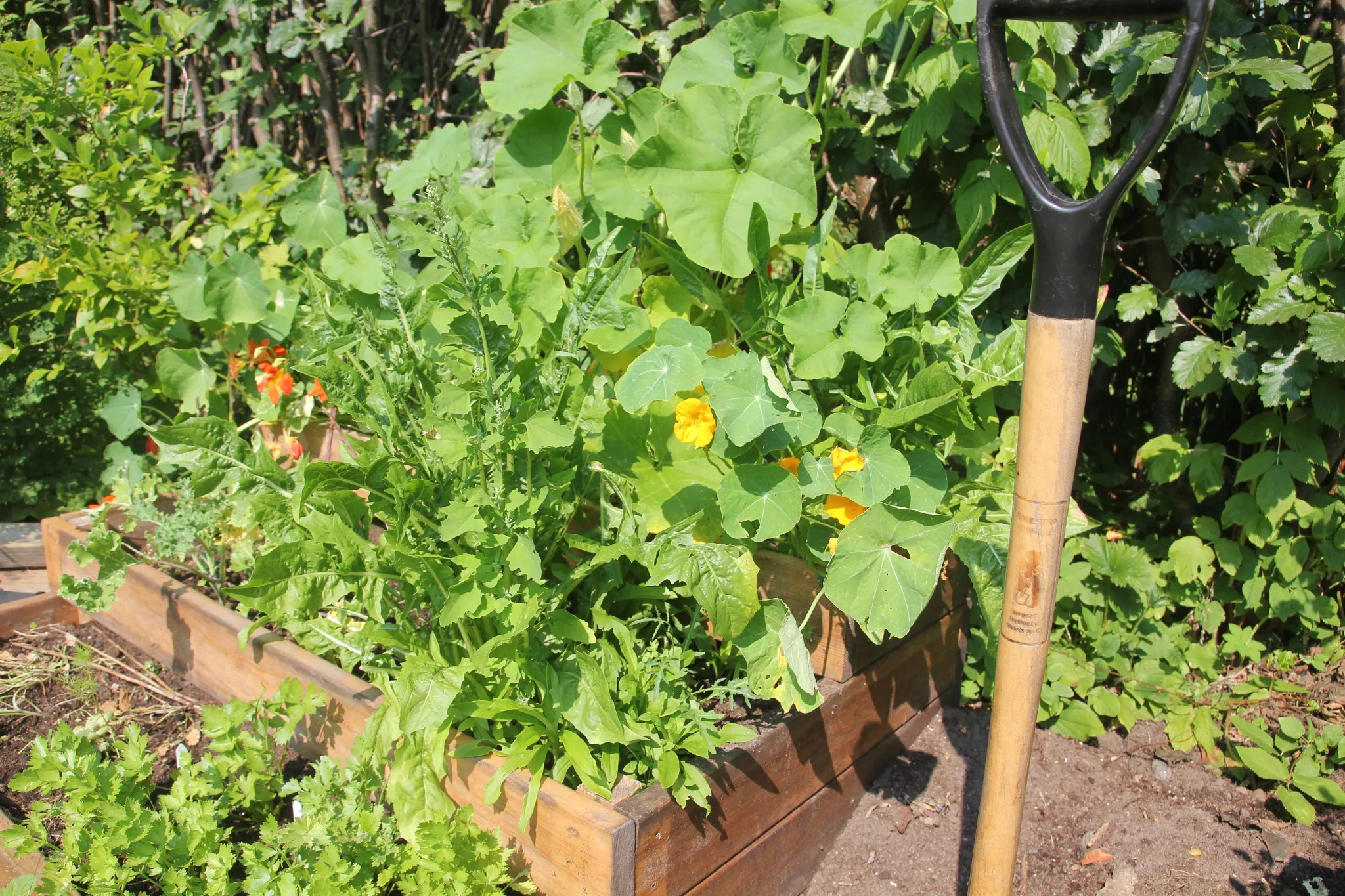
Raised bed with nasturtium and greens
A wooden raised bed densely planted with vegetable and ornamental crops, including nasturtium and leafy greens. Garden tools stand nearby. It demonstrates an example of mixed plantings in a limited space.

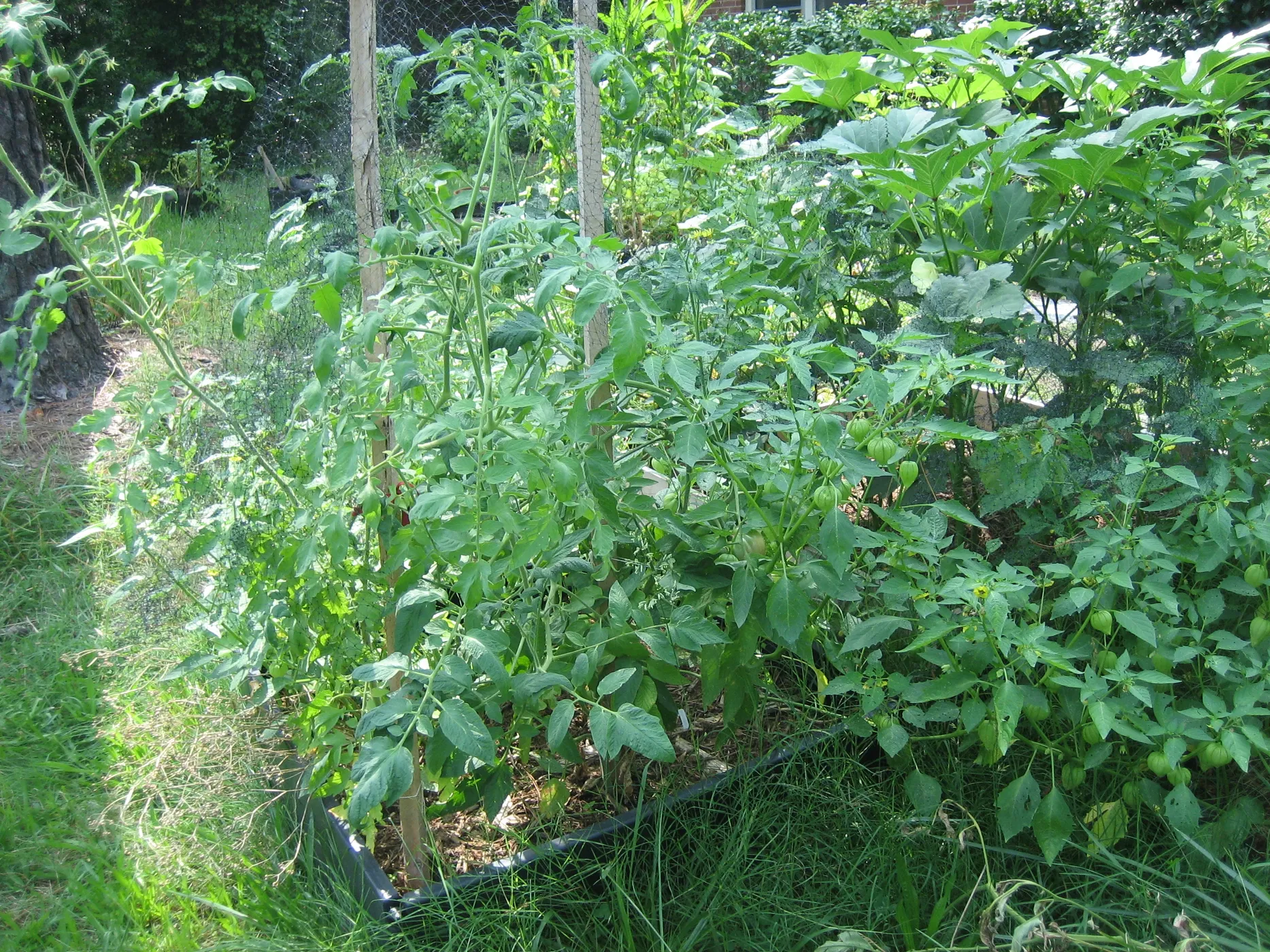
Mixed planting of tomatoes and tomatillo (Physalis) in a low‑maintenance bed.
Overgrown garden plot in a raised bed with tomatoes on wooden supports and neighbouring tomatillo bushes, against a background of natural grassland and weeds.

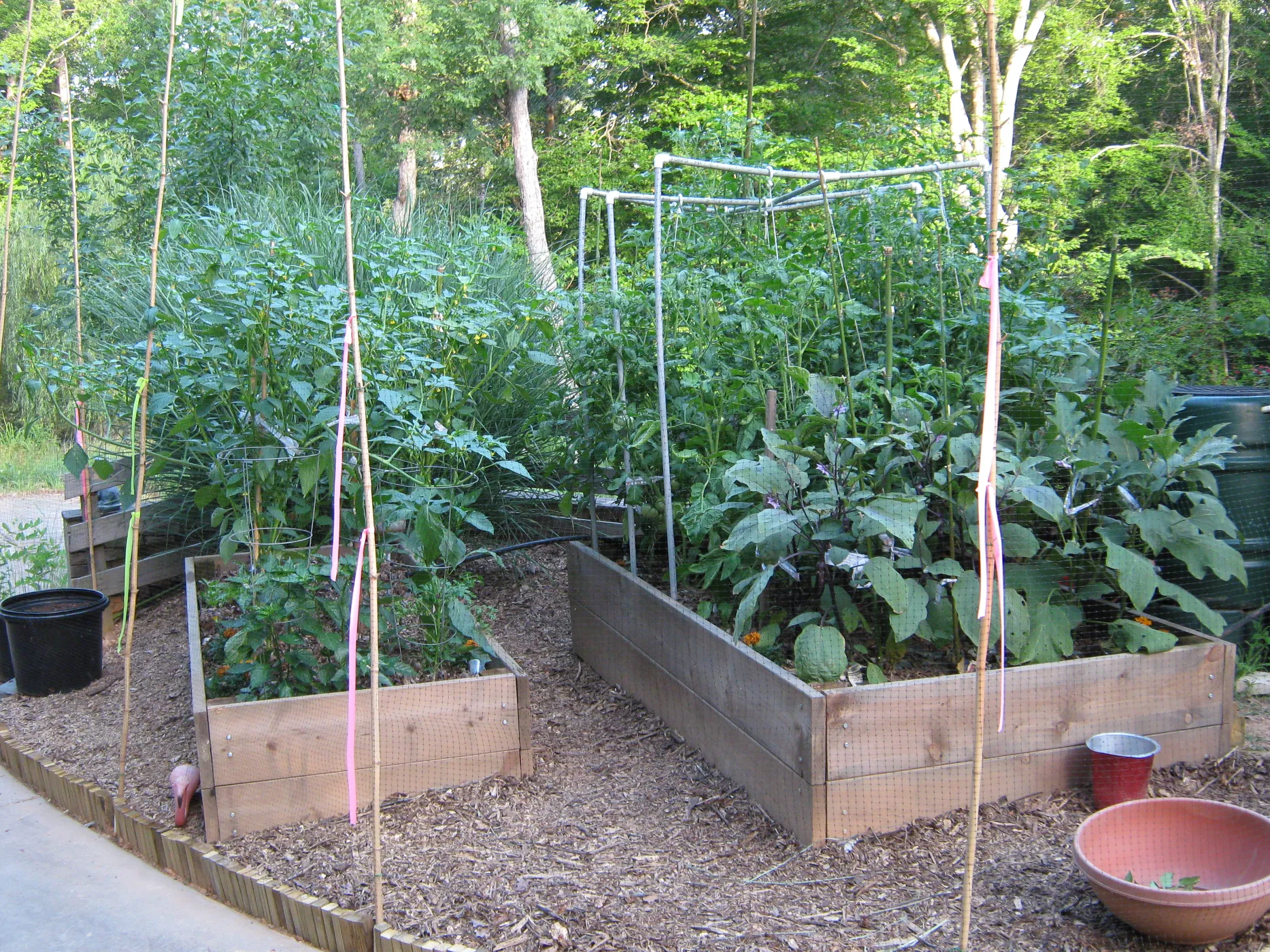
Raised beds with solanaceous crops (tomatoes, peppers, eggplants) and mulched paths
An example of a closed-type vegetable garden (raised bed) for growing heat-loving solanaceous plants. Wooden boxes filled with fertile soil are used to avoid soil compaction and facilitate maintenance. Metal trellises and bamboo stakes are installed for tying tall tomatoes and eggplants, and the rows are mulched with wood bark and chips to retain moisture and suppress weeds. Elements of drip irrigation (black pipe) are also visible.
Finally, companion planting is not only an agronomic technique but also a way to unite the garden and vegetable plot into a single system. For example, marigolds planted next to tomatoes repel nematodes; basil improves the taste of tomatoes; nasturtium attracts aphids, distracting them from vegetable crops (Dale, 2011). Flowers planted among vegetables attract pollinators and beneficial insects and also decorate the plot. As a result, a small plot becomes not just a "vegetable plot with beds" but a full-fledged garden where beauty and usefulness complement each other.
Thus, on a small plot, the garden and vegetable plot do not compete but complement each other. Flexible planning, dense plantings, containers, and vertical forms allow you to obtain a harvest while creating an attractive space for rest.

Solar Automatic Drip Irrigation Kit for Gardens
Automate watering for pots, gardens and small greenhouses. This solar-powered system features a timer to help schedule water delivery to your plants.
- Solar-powered
- 15 m irrigation hose
- Programmable watering
Affiliate link · Check included accessories.
5. The Garden and Vegetable Plot as a System: Soil, Water, Light, Plants, Animals, Humans
A garden and a vegetable plot are not just a set of plants planted in the ground. They are an ecosystem where everything is connected: soil, water, light, plants, animals, and humans. Understanding these connections allows us not to fight nature but to use its patterns to obtain a sustainable harvest and create a healthy environment (Hemenway, 2009; Rees-Warren, 2021).

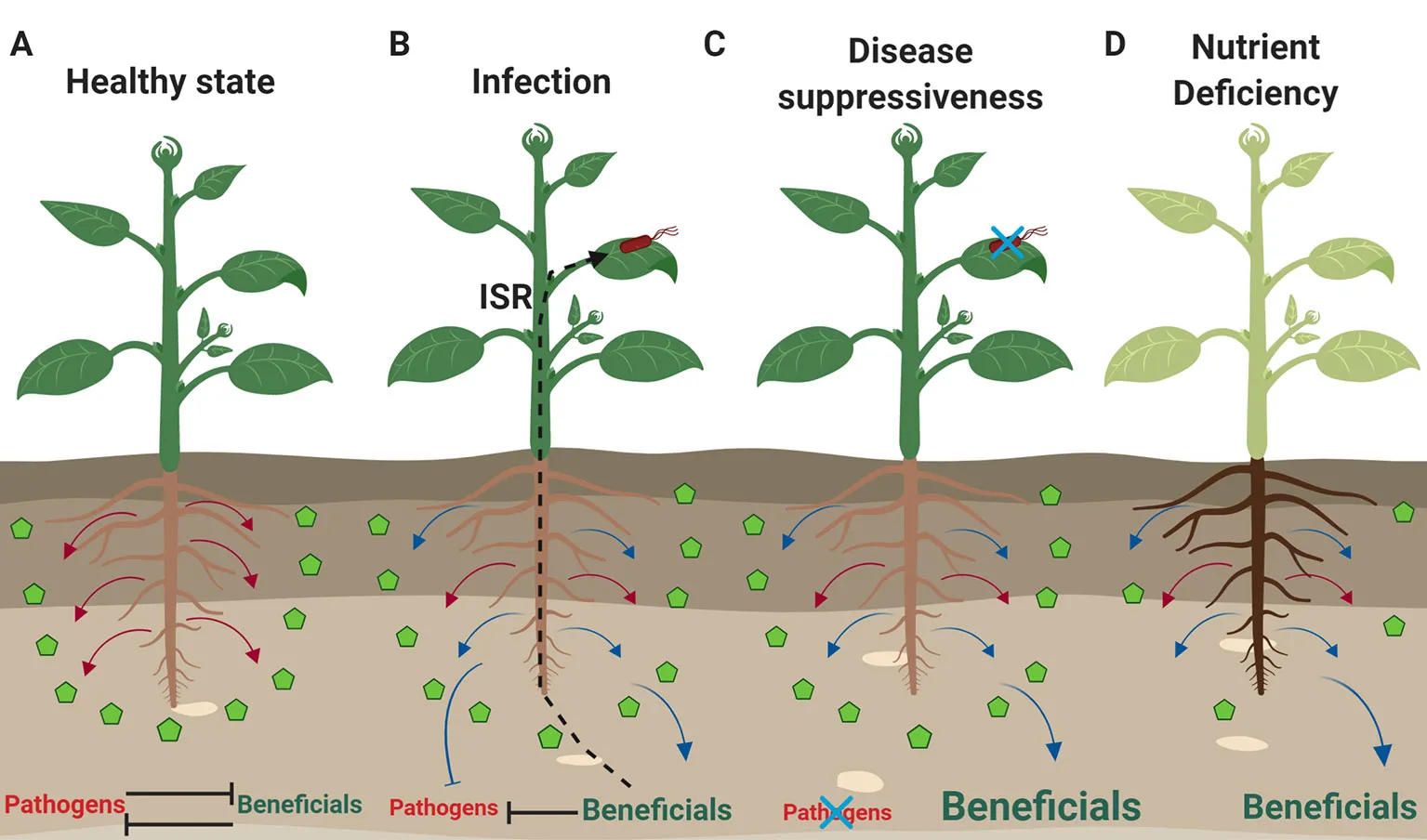
Modulation of the rhizosphere microbiome in response to stress factors in plants
Infographic illustrates how plants actively manage the composition of microorganisms in the root zone (rhizosphere) depending on their condition. In a healthy state (A), the plant releases baseline root exudates. During infection (B), the exudate profile changes to suppress pathogens, attract beneficial microbes, and trigger induced systemic resistance (ISR). Under soil suppressiveness (C) or nutrient deficiency (D), plants release specific signals stimulating beneficial microbiota that help them survive and assimilate elements.
Soil is the foundation of the entire system. Healthy soil is not just "earth" but a complex living complex consisting of mineral particles, organic matter, air, water, and billions of microorganisms: bacteria, fungi, protozoa, nematodes, earthworms (Morgan, 2021). Plants release up to 40% of the products of photosynthesis through their roots in the form of sugars and amino acids, feeding soil microbes. In response, microorganisms convert nutrients into a form available to plants, improve soil structure, and protect roots from pathogens (Morgan, 2021). Mycorrhizal fungi play a special role — symbiotic organisms that entwine plant roots and significantly increase the area of water and nutrient absorption. They form an underground network (the "wood wide web") through which nutrients and even danger signals are transmitted between plants (Morgan, 2021). Therefore, preserving soil life is the main task of the gardener. Minimizing digging, mulching, and adding compost and green manure are key techniques for maintaining soil health.
Water is the second critical resource. Plants consist of 80–95% water, and its deficiency or excess is equally destructive. In natural ecosystems, water accumulates in the soil, is retained by vegetation, and is gradually used. In a garden and vegetable plot, humans must manage the water regime: water during drought, provide drainage in wet places, and mulch the soil to reduce evaporation (Littlewood, 2007). Drip irrigation and subsurface irrigation, which deliver water directly to the roots, are effective. Collecting rainwater in barrels and tanks reduces the load on the water supply and reduces runoff. It is important to remember that waterlogging is as dangerous as drought: in waterlogged soil, roots suffocate, and fungal diseases develop (Morgan, 2021).
Light is the source of energy for photosynthesis. Most vegetables and fruit crops require full sun (at least 6–8 hours per day). Ornamental plants can be shade-tolerant, but they also need at least diffused light. In a garden, light is distributed unevenly: southern walls and open areas receive more warmth and light than northern ones. This creates microclimates — local zones with different conditions (Littlewood, 2007). Skillful use of microclimates allows heat-loving crops (apricots, peaches, grapes) to be grown even in cool regions by placing them near southern walls or in sheltered courtyards.

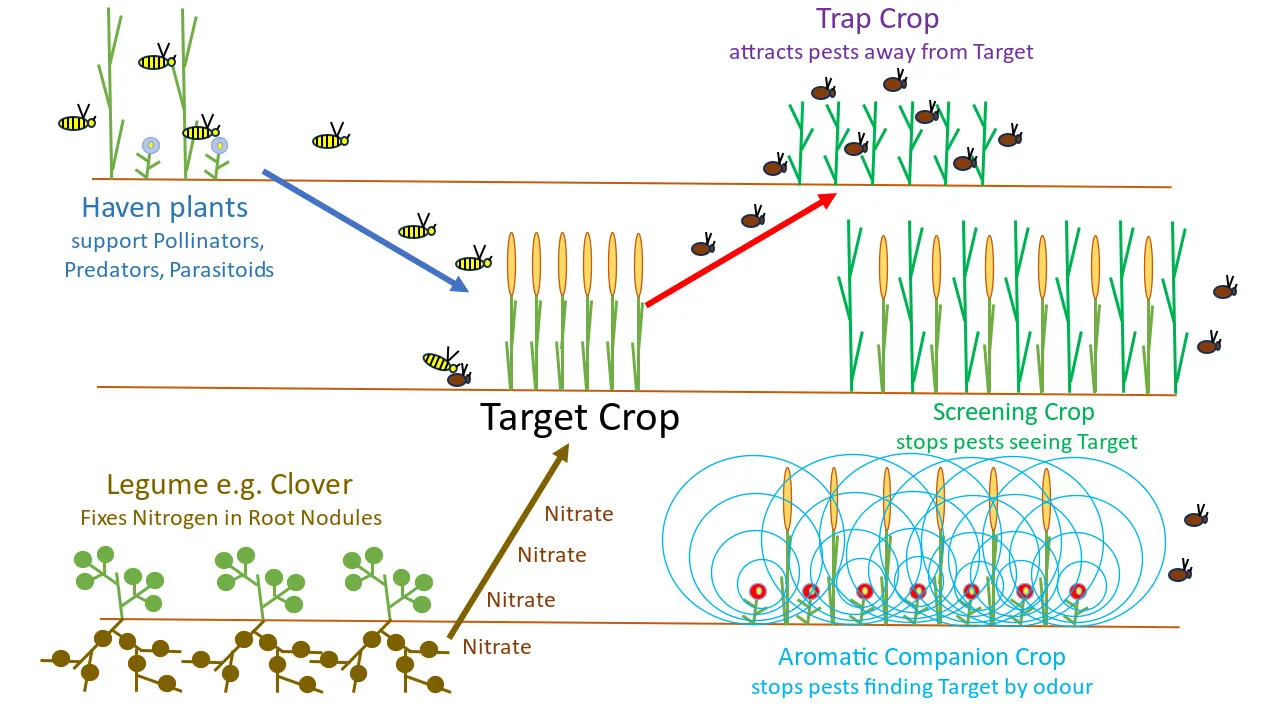
Mechanisms of companion planting (companion cropping)
A diagram demonstrating various agronomic techniques for protecting target crops (Target Crop) and attracting beneficial fauna. It shows mechanisms such as the use of haven plants to support pollinators and predators, trap crops to divert pests, screening crops that block the visual search of pests, and aromatic companion plants that mask the scent of the target. The role of legumes (clover) in nitrogen fixation is also shown.
Plants in a garden and vegetable plot form communities. In nature, plants do not grow alone but in groups where different species complement each other: some fix nitrogen, others protect from wind, and still others attract pollinators. In a garden, this principle is implemented through polycultures (joint plantings of several species) and guilds (groups of plants specially selected for mutual support). For example, in a fruit garden, nitrogen-fixing grasses (clover, alfalfa) can be planted under trees, enriching the soil with nitrogen and attracting bees. In the vegetable plot, carrots and onions can be combined (onions repel carrot flies, and carrots repel onion flies), cabbage and marigolds (marigolds suppress nematodes) (Dale, 2011).
Animals are an integral part of the ecosystem. Bees, bumblebees, butterflies, and hoverflies pollinate flowers; without them there will be no harvest of fruits and berries. Ladybugs, lacewings, ground beetles, spiders, birds, and hedgehogs destroy pests. Earthworms process organic matter and improve soil structure. Even moles and shrews, although they can damage roots, loosen the soil and eat insect larvae. The gardener's task is not to destroy all "pests" but to maintain balance by creating conditions for beneficial animals: nesting sites for birds, houses for insects, ponds for amphibians (Morgan, 2021).
Humans are the central element of the system. They plan, plant, care for, harvest, and process the harvest. Their decisions determine whether the garden and vegetable plot will be sustainable or will deplete resources. The ecological approach involves observing nature, minimizing intervention, using local resources, and avoiding synthetic pesticides and fertilizers (Rees-Warren, 2021; Chalker-Scott, 2018). In return, humans receive not only products but also psychological benefits: reduced stress, improved mood, and a sense of connection with nature (Ingram et al., 2015).
Thus, a garden and vegetable plot are a managed ecosystem where soil, water, light, plants, animals, and humans interact. Understanding these connections allows you to create a sustainable, productive, and beautiful space that will bring joy for decades.
6. What It Means to "Keep a Household": Plan, Care, Harvest, Preserve
Keeping a garden and vegetable plot is not a one-time action but a continuous process that includes four key stages: planning, care, harvesting, and preserving products. Each of them is important, and neglecting any of them reduces the return on invested labor (Swiader & Ware, 1992).

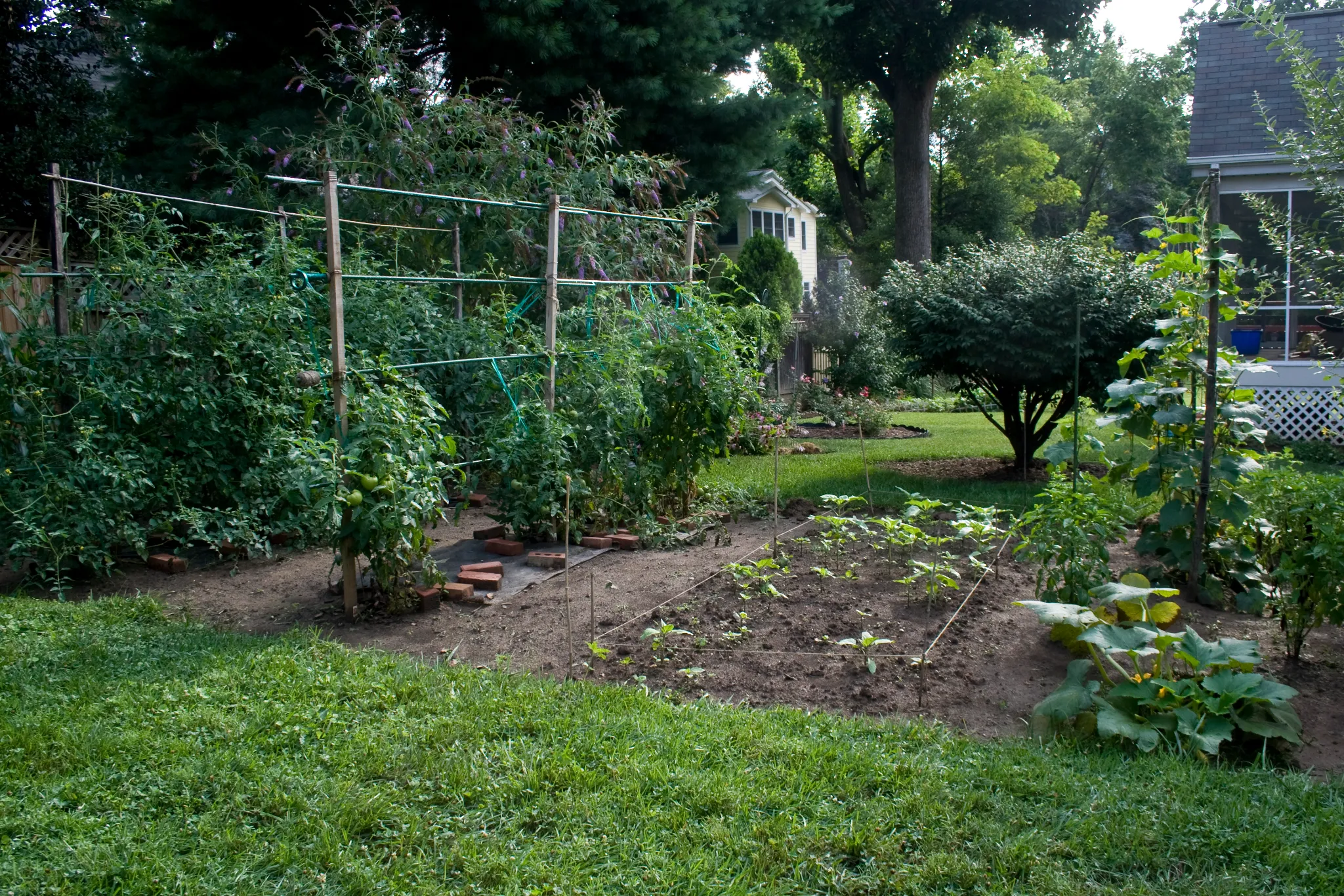
Home vegetable garden with a trellis system.
Neat garden plot with organised beds. Trellis staking of tomatoes, cucumber supports, use of black mulching film and borders are visible.
Planning begins long before planting. The first step is analyzing the plot: where there is more sun, where cold air accumulates, how water moves after rain, and what kind of soil it is — sandy, clayey, or loamy (Littlewood, 2007). Based on these observations, a plan for placing crops is drawn up. It is important to consider crop rotation: you cannot grow the same crop in the same place year after year, as this leads to the accumulation of pests and diseases and depletion of the soil. Vegetables are divided into groups (root crops, leafy crops, fruit crops, legumes), and each group is returned to its former place no earlier than after 3–4 years (Morgan, 2021). Fruit trees are planned with pollination in mind: if a variety is self-sterile, a pollinator that blooms at the same time is planted nearby (Buckingham, 2010). It is also important to provide for succession of harvests: for example, early crops (radishes, lettuce) are replaced by later ones (cabbage, beets), and the vacated beds are sown with green manure or herbs (Swiader & Ware, 1992).
Care is regular work that includes watering, fertilizing, mulching, loosening, pruning, thinning, and protection from pests and diseases. Watering should be sufficient but not excessive: it is better to water less often but more abundantly so that water reaches the roots and does not remain on the surface (Littlewood, 2007). Mulch from compost, straw, or mown grass retains moisture, suppresses weeds, and gradually enriches the soil with organic matter. Fertilizers are applied as needed: nitrogen is needed for the growth of green mass, phosphorus for roots and fruits, and potassium for stability and harvest quality (Morgan, 2021). Pruning fruit trees and shrubs forms the crown, improves light exposure, and stimulates fruiting. Thinning the ovaries (for example, in apples and peaches) allows larger and higher-quality fruits to be obtained (Buckingham, 2010). Plant protection is based on prevention: crop rotation, mixed plantings, covering materials, and attracting beneficial insects. Chemical pesticides are used only in extreme cases and with caution (Chalker-Scott, 2018).
Harvesting is the culmination of the season. It is important to collect products at optimal times: unripe fruits may be tough and tasteless, while overripe ones spoil quickly. Vegetables intended for storage (potatoes, carrots, beets, cabbage) are harvested in dry weather and immediately placed in storage. Fruits and berries are collected by hand, carefully, so as not to damage the skin. Regular harvesting (for example, cucumbers, zucchini, berries) stimulates the formation of new fruits and prolongs the fruiting period (Swiader & Ware, 1992).

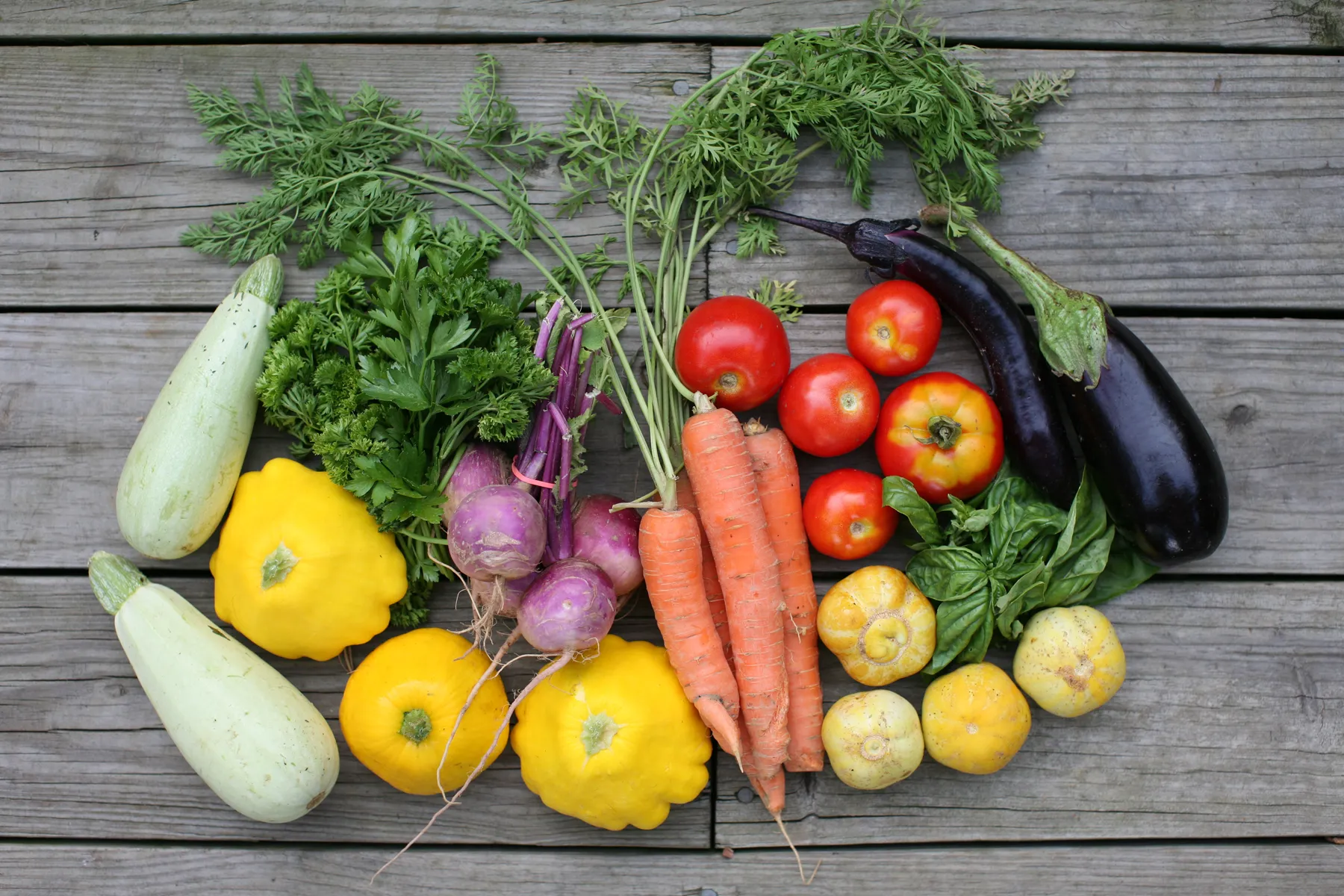
Harvest of diverse vegetables (root crops, fruit vegetables and herbs) on a wooden deck
Presentation of diverse vegetable produce from the garden in the 'from garden to table' concept. The harvest includes root crops (carrots with lacy tops, turnip), fruit vegetables (eggplant, tomatoes, zucchini, pattypan squash, lemon cucumbers) and herbs (basil, parsley). Varietal and species diversity typical of the temperate zone and organic farming is demonstrated.

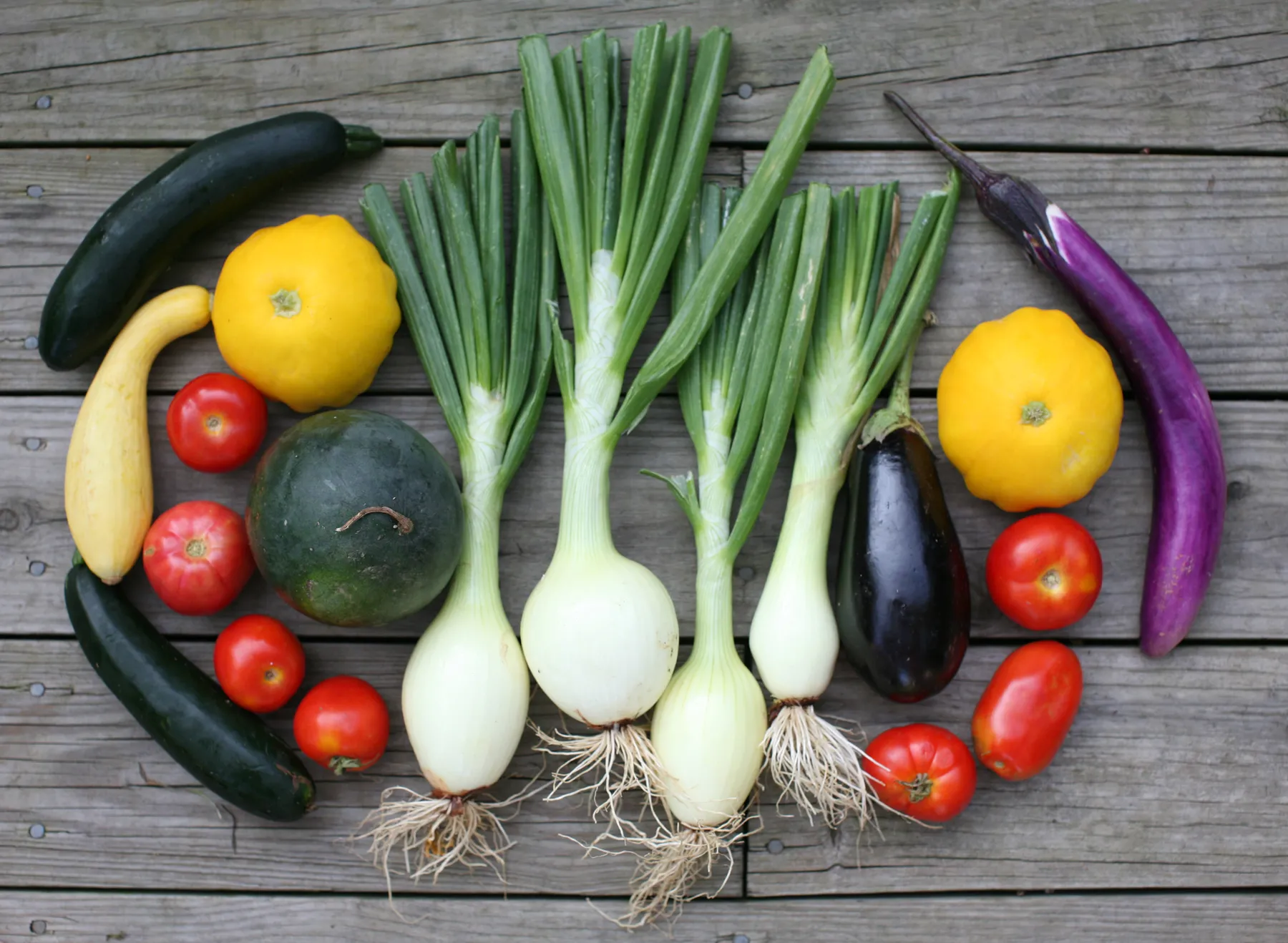
Fresh harvest of vegetable crops (cucurbits, solanaceous, alliums)
Demonstration of a variety of vegetables grown on a homestead plot. Shown are fruit vegetables (zucchini of different varieties, tomatoes, eggplants, a small melon, yellow pattypan squash) as well as alliums (onions with intact root tufts and vegetative green mass). For agronomic interest, the presence of intact root systems in onions is important, indicating freshly harvested produce.
Preserving is a way to extend the use of the harvest. Fresh vegetables and fruits can be stored in a cellar, basement, refrigerator, or special storage facilities. It is important to ensure the correct temperature and humidity: for example, potatoes are stored at +2…+4 °C in the dark, and apples at 0…+2 °C (Buckingham, 2010). Part of the harvest can be processed: salted, marinated, dried, frozen, canned, made into jam, juices, and sauces. Seeds of the best plants are saved for sowing next year. This approach allows products to be used all year round and reduces dependence on stores (Littlewood, 2007).
Thus, "keeping a household" means not just planting and watering but managing the full cycle: from planning the plot to preserving the harvest. This requires knowledge, observation, and patience, but in return it gives fresh products, health, and satisfaction from one's own labor.

7-in-1 Wi-Fi Weather Station
Monitor local weather conditions with a wireless outdoor sensor. Track temperature, humidity, rainfall, wind speed and direction, and atmospheric pressure. Ideal for gardens, farms and greenhouses.
- Wireless outdoor sensor
- Solar-powered
- Wi-Fi connectivity
Affiliate link · Check regional compatibility.
7. The Garden and Vegetable Plot in the City: Balcony, Windowsill, Patio, Roof
Urban gardening has ceased to be exotic. Today, even in a metropolis, you can grow vegetables, herbs, berries, and ornamental plants — on a balcony, windowsill, loggia, patio, roof, or in a community courtyard. Studies show that interest in urban gardening is growing worldwide, and this is not only a way to obtain fresh products but also an opportunity to improve the city's ecology, strengthen social ties, and improve quality of life (Nur-E-Alam et al., 2026).

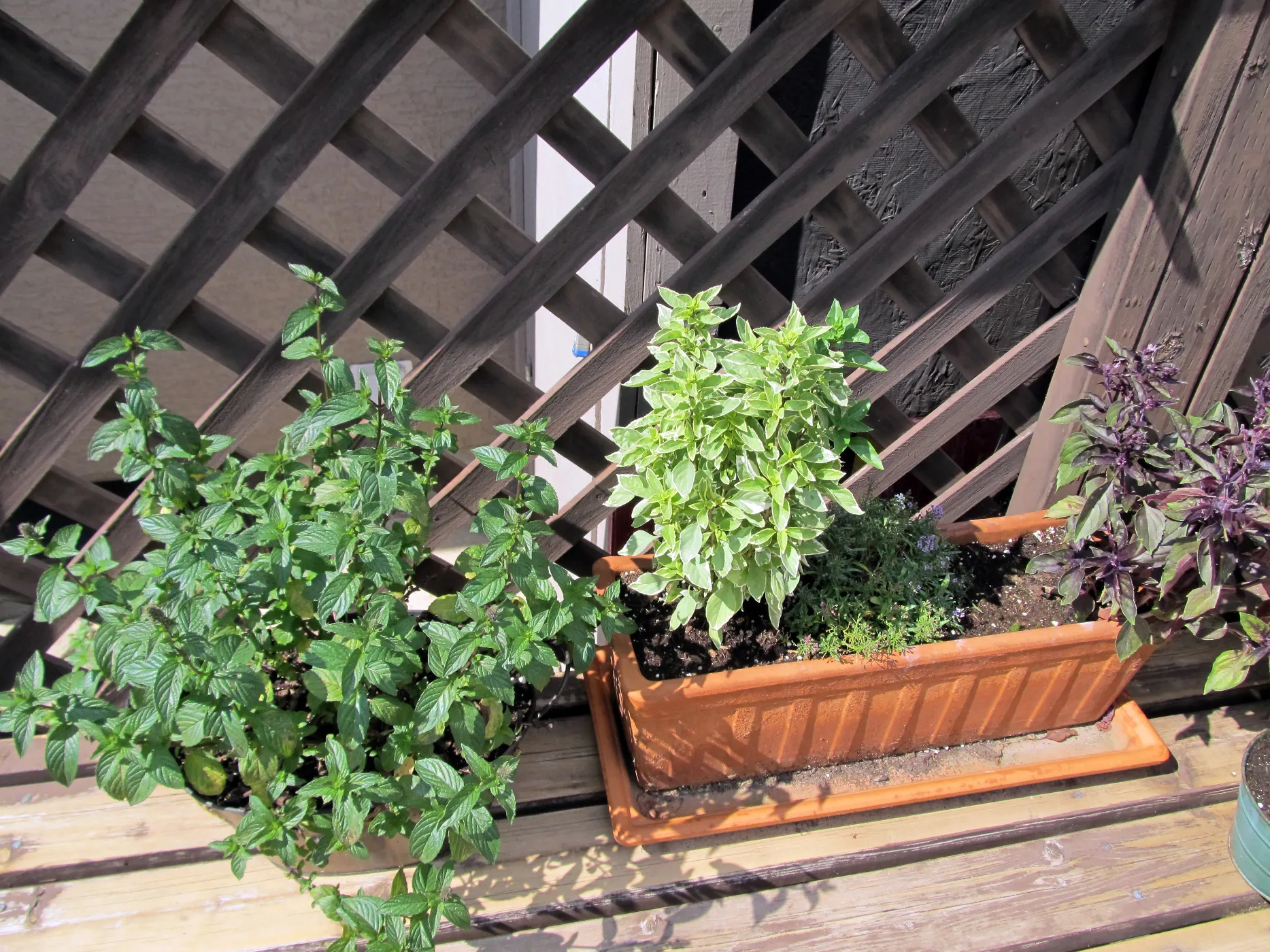
Herbs in containers outdoors
Growing aromatic herbs (such as basil and mint) in containers on a wooden deck. The container method makes it easy to control soil composition and moisture and provides mobility for plants on balconies or terraces.
Balcony and windowsill are the most accessible areas. On the sunny side, you can grow cherry tomatoes, peppers, herbs, lettuce, radishes, and strawberries. On the shady side — lettuce, spinach, mint, parsley. It is important to use containers with drainage holes, light nutrient soil, and water regularly, since soil in pots dries out quickly (Dale, 2011). Vertical systems — shelving, hanging baskets, fabric pockets — allow you to increase the planting area several times. On a windowsill, you can grow microgreens, green onions, basil, and cress all year round. @ln-latin[]
Patios and terraces are already full-fledged garden spaces. Here you can place large containers, tubs, and raised beds. They can hold dwarf fruit trees (apples, plums, peaches), berry bushes (blueberries, currants), and vegetables (cucumbers, zucchini, eggplants). Container growing makes it possible to control soil composition and move plants if necessary (Buckingham, 2010). For example, citrus fruits and figs in pots are taken out into the sun in summer and moved to a cool room in winter.
Roofs (green roofs) are a promising direction. They reduce building heating, retain rainwater, and create habitats for insects and birds. However, they require engineering calculation of load, waterproofing, and wind protection. Drought-resistant plants are suitable for roofs: sedums, grasses, herbs, and some vegetables (tomatoes, peppers) in containers (Ingram et al., 2015).
Community gardens and vegetable plots are an important part of urban culture. In Europe, the USA, Canada, and Australia, community gardens are widespread — collective plots where residents grow vegetables, flowers, and berries together. Such projects not only provide products but also unite neighbors, reduce crime levels, and improve the appearance of neighborhoods (Kessler, 2013). In Russia, the analogue is community vegetable plots under housing management or gardeners' clubs.

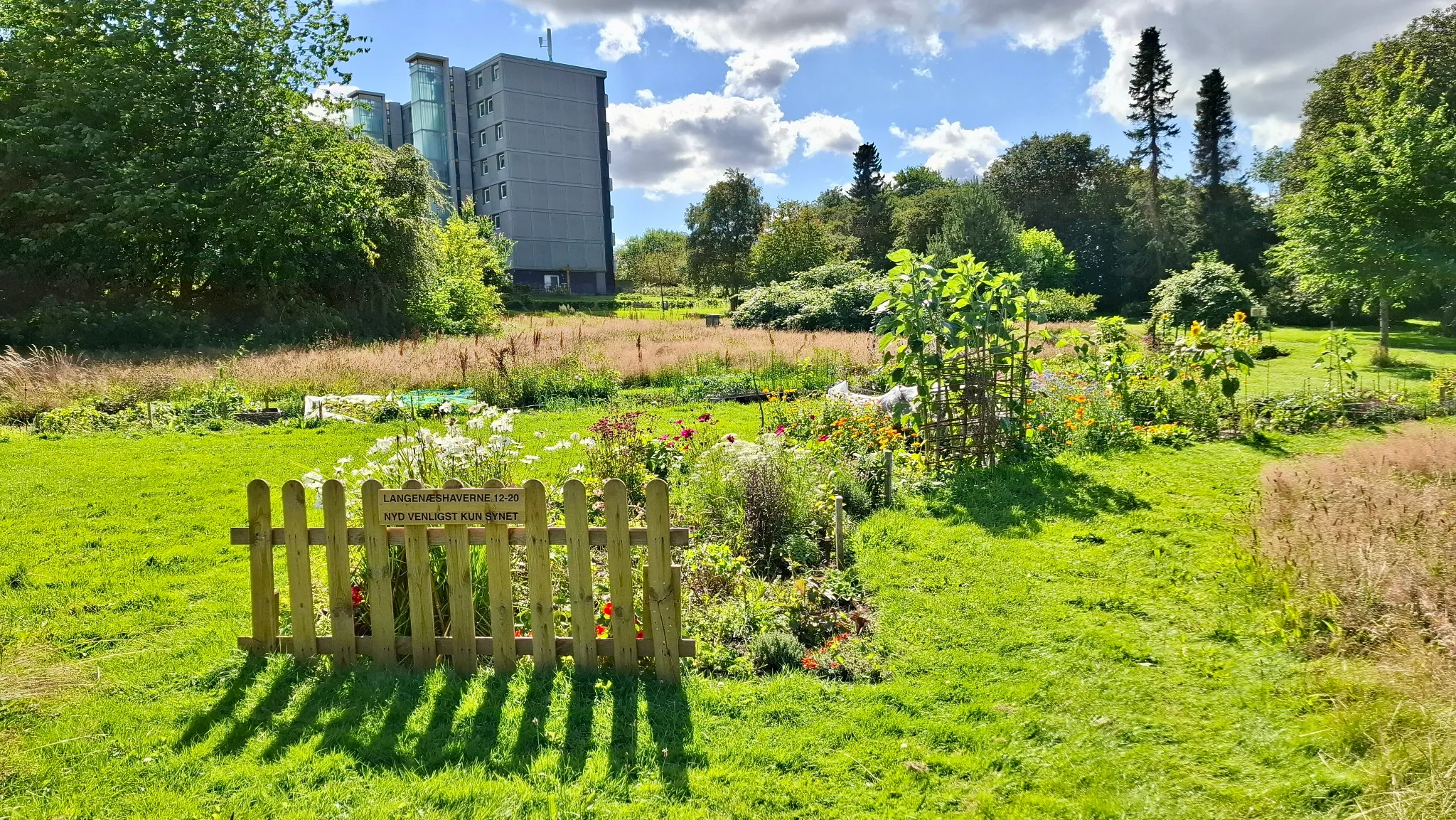
Community vegetable garden in Langenæs Park: flowering beds (Aarhus, Denmark)
A view of the community urban vegetable gardens in Langenæs Park, the city of Aarhus, Denmark. In the foreground is a wooden fence with a sign "LANGENÆSHAVERNE 12-20" enclosing a plot with various flowers and plants. In the distance, residential buildings, park plantings, and plots of other gardeners are visible. The sign reminds that the harvest is grown by local residents and is intended for visual enjoyment only.

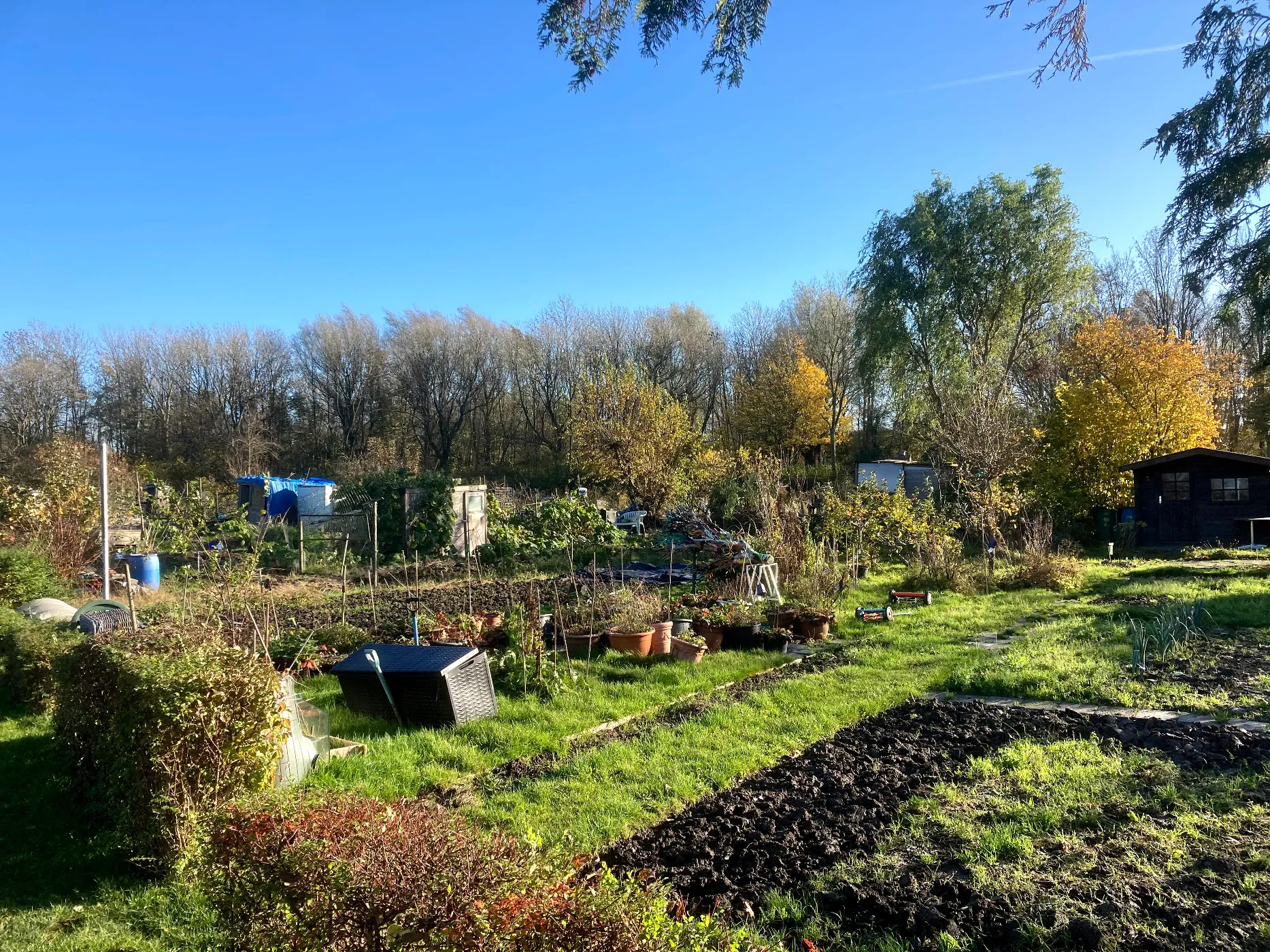
Space organization and composting in a community garden
A view of the landscaped plots of a community garden where composting processes, cold frames, and utility buildings are visible. It illustrates the principles of sustainable farming, site zoning, and organic waste processing. Location: Beijum district, Groningen, Netherlands.
Problems of urban gardening. The main one is soil contamination. In cities, lead, cadmium, petroleum products, and polycyclic aromatic hydrocarbons can accumulate in the ground (Kessler, 2013). Therefore, it is not recommended to plant root crops and leafy vegetables directly in the ground without analysis. It is safer to use raised beds with clean compost, containers, or hydroponics. It is also important to consider lighting: in the shadow of tall buildings, plants lack light, so shade-tolerant crops are chosen or grow lights are used.
Thus, urban gardening is a flexible system that adapts to any conditions. Even a small balcony can become a source of fresh herbs and joy, and participation in a community garden can improve the life of an entire neighborhood.
8. The Garden and Vegetable Plot as a Lifestyle, Not Only a Source of Food
For many people, a garden and vegetable plot are not just a way to obtain a harvest but part of everyday life, a source of joy, rest, and self-realization. Psychological studies confirm that working with the land reduces stress levels, improves mood, increases self-esteem, and gives a sense of control over one's life (Gross, 2018). The garden becomes a place where you can be alone, think, and restore strength after a workday. Doctors and psychologists increasingly recommend gardening as a form of therapy for anxiety, depression, and chronic fatigue (Ingram et al., 2015).
Physical activity. Garden work is moderate physical exercise: weeding, watering, pruning, and harvesting require movement, bending, and stretching. Studies show that regular work in the garden improves the cardiovascular system, strengthens muscles and joints, and helps maintain a healthy weight (Ingram et al., 2015). Unlike a gym, where motivation often drops, the garden provides a natural goal: to grow a harvest.
Creativity and self-expression. Planning a plot, choosing plants, and combining colors and forms is a creative process. The garden reflects the taste, character, and values of the owner. Some create a formal regular garden with clear lines, others a natural landscape garden, and still others a vegetable plot with beds and flowers. In any case, the garden becomes an extension of the personality, a place for experiments and pride in the result (Gross, 2018).
Social connections. A garden and vegetable plot unite people. Family traditions, joint work on the plot, exchanging harvests with neighbors, and participating in gardeners' clubs all strengthen ties and create a sense of community. In urban community gardens, people of different ages and professions care for plants together, exchange experience, and help each other (Nur-E-Alam et al., 2026). Children participating in garden projects better understand where food comes from and more often eat vegetables and fruits (Ingram et al., 2015).
Ecological responsibility. By growing products themselves, people reduce the carbon footprint associated with transporting and packaging food. They can avoid chemical pesticides and fertilizers, supporting biodiversity and soil health. The garden becomes a small island of nature in the city, a refuge for birds, insects, and beneficial microorganisms (Rees-Warren, 2021). Many gardeners see their activity as a contribution to preserving the environment.
Lifestyle. For many, a garden and vegetable plot are not a hobby but a way of life. They plan vacations taking into account the harvest season, choose products at the market knowing how they were grown, and arrange their home so that it is convenient to care for plants. Gardening determines the rhythm of the year: sowing in spring, care in summer, harvesting and preserving in autumn, planning and rest in winter. This cyclicity helps one feel connected to nature and time (Gross, 2018).
Thus, a garden and vegetable plot are much more than a source of food. They are a way to strengthen health, fulfill creative needs, create social connections, and contribute to preserving the planet. This is a lifestyle that makes a person more resilient, conscious, and happy.

40W Full Spectrum LED Grow Light
Support healthy plant growth with full-spectrum LED lighting. Ideal for seedlings, indoor plants and small growing spaces. A practical solution for indoor gardening and year-round cultivation.
- Full-spectrum LED
- Energy-efficient design
- Indoor plant growing
Affiliate link · Check actual power and light coverage.
9. The Regional Aspect: In Different Climates, Gardens and Vegetable Plots Look Different
A garden and vegetable plot are not universal templates but living systems that change greatly depending on climate, soil, water availability, and cultural traditions. What grows well in the Moscow region may die in Arizona, and vice versa. Therefore, when planning a plot, it is important to take regional features into account: the length of the season, the amount of precipitation, temperature, soil type, and even local farming traditions (Ingram et al., 2015).
Temperate climate. In regions with cold winters and warm summers (most of Europe, North America, Russia), the garden and vegetable plot have a pronounced seasonality. In spring, cold-hardy crops are sown (carrots, radishes, lettuce, peas); in summer, heat-loving crops (tomatoes, cucumbers, peppers); in autumn, the harvest is gathered and the soil is prepared for winter. Fruit trees (apple, pear, cherry) require winter dormancy, so in warm regions with mild winters they may not bear fruit. Here, greenhouses, hotbeds, and covering materials are widely used to extend the season and protect plants from frost (Jabbour, 2020). In northern latitudes (Scandinavia, Canada, Alaska), vegetable growing is possible only in protected ground, and the garden is represented mainly by berry bushes and dwarf forms.
Mediterranean climate. In regions with hot dry summers and mild wet winters (Spain, Italy, Greece, California, Chile, Australia), the garden and vegetable plot are oriented toward drought-resistant crops: olives, figs, grapes, pomegranates, laurel, rosemary, thyme. Vegetables are grown in spring and autumn; in summer, only if irrigation is available. Soils are often poor and rocky, so mulching, compost, and drip irrigation are important. Gardens here are often terraced, and walls and hedges protect from wind and sun (Littlewood, 2007).
Tropical and subtropical climate. In hot humid regions (Southeast Asia, Amazonia, Central Africa), the garden and vegetable plot exist all year round. Bananas, mangoes, papayas, coconuts, and citrus fruits grow here, as well as vegetables: eggplants, cucumbers, pumpkins, and leafy greens. The main problems are high humidity, fungal diseases, insect pests, and soil erosion. Gardeners use multi-tiered plantings, drainage ditches, organic mulch, and biological protection methods (Rubatzky & Yamaguchi, 1997). In dry tropics (Sahel, Arabia, parts of India), the main challenge is water scarcity, so oasis gardens with date palms and vegetables grown in shade are common.
Arid (desert) climate. In regions with extreme heat and little precipitation (the Middle East, Central Asia, the southwestern USA, Australia), the garden and vegetable plot require special technologies: shading, wind protection, drip irrigation, rainwater harvesting, and the use of drought-resistant plants (succulents, cacti, date palms, pomegranates, figs). Vegetables are grown during the rainy season or in the shade of trees. In the deserts of the Negev and Arizona, greenhouses with evaporative cooling are used (Kessler, 2013).
Cold climate (Arctic, Subarctic, highlands). Here, a garden and vegetable plot are possible only in greenhouses, hotbeds, under agrotextile, or in containers that are brought indoors for the winter. Fast-growing cold-hardy crops grow: lettuce, spinach, radishes, onions, cabbage, potatoes, and berry bushes (blueberries, currants, cloudberries). In Iceland and Alaska, geothermal heat is used to heat greenhouses (Jabbour, 2020).
Urban climate. In cities, a special microclimate forms: the temperature is higher than outside the city due to asphalt and buildings, but lighting is lower due to shading. Soil and air pollution require careful selection of crops and container growing. However, urban gardening is developing rapidly, and even in megacities community vegetable plots, green roofs, and vertical farms are appearing (Nur-E-Alam et al., 2026).
Thus, the regional aspect is key when creating a garden and vegetable plot. There are no universal recipes: one must observe, adapt, and use local resources. This is precisely what makes gardening so diverse and fascinating.
10. Conclusion: A Garden and Vegetable Plot Are a Managed Ecosystem Next to the Home
A garden and vegetable plot are not just beds and trees. They are a complex, living system in which humans consciously manage natural processes to obtain products, beauty, and pleasure. Unlike wild nature, where everything is regulated by natural selection, a garden and vegetable plot require human participation: planning, care, harvesting, and preserving products. But this is not a struggle against nature but cooperation with it (Hemenway, 2009).
We have examined that a vegetable plot is oriented toward growing vegetables, herbs, root crops, and berries, while a garden is oriented toward perennial fruit, berry, and ornamental plants. On small plots, these boundaries blur: vegetables grow under trees, flowers among beds, and containers and vertical structures allow every centimeter to be used. A garden and vegetable plot are a single ecosystem where soil, water, light, plants, animals, and humans are connected in a continuous cycle.
"Keeping a household" means not only planting and watering but also planning crop rotation, improving the soil, attracting beneficial insects, harvesting on time, and preserving it. This requires knowledge, observation, and patience, but in return it gives fresh products, health, and a sense of satisfaction. And for many, a garden and vegetable plot become a way of life: a source of creativity, rest, communication, and connection with nature (Gross, 2018).
Regional differences make gardening infinitely diverse. In some places it is tropical multi-tiered gardens, in others greenhouses beyond the Arctic Circle, and in still others drought-resistant oases. But everywhere, a garden and vegetable plot are a managed ecosystem next to the home, which, with the right approach, can exist for a long time without depleting resources but multiplying them.
The main idea worth remembering: a garden and vegetable plot are not just a place for plants. They are a space where humans learn to understand nature, care for it, and receive its return. And it does not matter whether you have six hundred square meters, a balcony, or just a windowsill — you can always start. The main thing is to observe, try, and not be afraid of mistakes. After all, a garden, like any ecosystem, develops gradually, and each season brings new experience.
References
- (2015). ‘Health, well-being and socio-cultural benefits’, in Ingram, D.S., Vince-Prue, Daphne, Gregory, P.J. (ed.) Science and the Garden. The scientific basis of horticultural practice. West Sussex, UK: Royal Horticulture Society. Wiley Blackwell, pp. 307-319.
- (2022). ‘Introduction’, in Gardens of the World. Munich, Germany: DK Eyewitness, .
- Buckingham, Alan (2010). ‘The Fruit Gardener’, in Grow Fruit. New York, NY: DK Publishing, pp. 10-40.
- Chalker-Scott, Linda (2018). ‘Introduction’, in The Science of Gardening. Course Guidebook. Chantilly, Virginia: The Great Courses, pp. 1-4.
- Griffiths, Michael (2026). ‘Introduction’, in The Easy Garden. New York, NY: Penguin Random House, .
- Gross, Harriet (2018). ‘Stepping into the garden: the gardening context’, in The Psychology of Gardening. New York, NY: Routledge, .
- Gross, Harriet (2018). ‘‘It’s my little bit of paradise’: what your garden says about you’, in The Psychology of Gardening. New York, NY: Routledge, .
- Hartmann, H.T., Kester, D.E., Davies, F.T.J., Geneve, R.L. (2011). ‘How Plant Propagation Evolved in Human Society’, in Hartmann & Kester's Plant Propagation Principles and Practices. USA: Pearson Education, pp. 3-16.
- Hemenway, Toby (2009). ‘Introducing the Ecological Garden’, in Gaia's Garden. A Guide To Home-Scale Permaculture. : Chelsea Green Publishing, .
- Hobhouse, Penelope (2004). ‘In the Beginning: the Origins of Gardening’, in The story of gardening. London, UK: DK, pp. 16-29.
- Hobhouse, Penelope (2004). ‘Introduction’, in The story of gardening. London, UK: DK, pp. 6-15.
- Jabbour, Niki (2020). ‘Choosing a Structure to Fit Your Needs’, in Growing Under Cover. Techniques for a More Productive, Weather-Resistant, Pest-Free Vegetable Garden. North Adams, MA: Storey Publishing, pp. 14-21.
- Johnson, Noelle (2023). ‘Introduction: Welcome to Gardening in a Dry Climate’, in Dry Climate Gardening. Beverly, MA: Cool Springs Press, .
- Kessler, Rebecca (2013). ‘Urban Gardening: Managing the Risks of Contaminated Soil’, Environmental Health Perspectives, 121(0), A326-A333. doi: 10.1289/ehp.121-A326 (PubMed)
- Littlewood, Michael (2007). ‘Introduction’, in The organic gardener's handbook. Ramsbury, Wiltshire: The Crowood Press, pp. 10-14.
- Littlewood, Michael (2007). ‘The Basics’, in The organic gardener's handbook. Ramsbury, Wiltshire: The Crowood Press, pp. 15-22.
- Mayer, Dale (2011). ‘Getting Started’, in The complete guide to companion planting: everything you need to know to make your garden successful. Ocala, Florida: Atlantic Publishing Group, pp. 15-44.
- Mayer, Dale (2011). ‘Introduction: Overview on Companion Planting’, in The complete guide to companion planting: everything you need to know to make your garden successful. Ocala, Florida: Atlantic Publishing Group, pp. 9-14.
- Morgan, Sally (2021). ‘Building a healthy soil’, in The Healthy Vegetable Garden: A natural, chemical-free approach to soil, biodiversity and managing pests and diseases. Vermont, London, UK: Chelsea Green Publishing, .
- Morgan, Sally (2021). ‘Pests and predators’, in The Healthy Vegetable Garden: A natural, chemical-free approach to soil, biodiversity and managing pests and diseases. Vermont, London, UK: Chelsea Green Publishing, .
- Nur-E-Alam, S.M., Feltynowski, Marcin, Chądzyński, J. (2026). ‘Urban Gardening, Sustainable Development and Inhabitant Perceptions: A New Framework for Analysis’, Environment and Behavior, 0(0), null. doi: 10.1177/00139165261488333
- Rees-Warren, Matt (2021). ‘Introduction’, in The Ecological Gardener. Vermont, London, UK: Chelsea Green Publishing, .
- Rubatzky, V.E., Yamaguchi, Mas (1997). ‘Vegetable Classification’, in World Vegetables. Boston, MA: Springer US, 29-33. doi: 10.1007/978-1-4615-6015-9_3
- Swiader, J.M., Ware, G.W., McCollum, J.P. (1992). ‘Classifying Vegetables’, in Producing Vegetable Crops. Danville, Illinois: Interstate Publishers, pp. 29-38.
- Swiader, J.M., Ware, G.W., McCollum, J.P. (1992). ‘Home Vegetable Gardening’, in Producing Vegetable Crops. Danville, Illinois: Interstate Publishers, pp. 575-588.
- Zona, Scott (2026). ‘Being a Plant’, in A Gardener's Guide to Botany. Beverly, MA: Cool Springs Press, .
- Мухортов, С.Я., Ноздрачева, Р.Г. (2017). ‘Начало формирования отрасли плодоводства и овощеводства [The beginning of the formation of the fruit and vegetable growing sector]’, in История садоводства. Учебное пособие [History of Horticulture: A Study Guide]. Воронеж, Россия: ФГБОУ ВО «Воронежский государственный аграрный университет имени императора Петра I», pp. 5-15.
- Рандхава, М. (1981). ‘В поисках прекрасных растений и садов’, in Сады через века. Москва: Знание, pp. 7-19.
- Траннуа, Павел (2018). ‘Дача как зона отдыха [The dacha as a leisure area]’, in Сад и огород в рисунках и комиксах: полная наглядная энциклопедия [The Garden and Vegetable Patch in Drawings and Comics: A Comprehensive Visual Encyclopedia]. Москва: Издательство «Э», pp. 179-182.
- Траннуа, Павел (2018). ‘Количественная сторона дела и качественная [The quantitative and qualitative aspects of the matter]’, in Сад и огород в рисунках и комиксах: полная наглядная энциклопедия [The Garden and Vegetable Patch in Drawings and Comics: A Comprehensive Visual Encyclopedia]. Москва: Издательство «Э», pp. 121-124.
- Траннуа, Павел (2018). ‘Планировка участка и посадок [Site and planting layout]’, in Сад и огород в рисунках и комиксах: полная наглядная энциклопедия [The Garden and Vegetable Patch in Drawings and Comics: A Comprehensive Visual Encyclopedia]. Москва: Издательство «Э», pp. 9-15.
