
A Garden for Different People
1. A garden for children: development, observation, responsibility, play
A garden for a child is not just a place to play, but a unique developmental environment, an “open-air laboratory.” Research shows that children involved in gardening not only know more about plants, but also more often try new vegetables and fruits and demonstrate a more responsible attitude toward nature (Blair, 2009; Cosco et al., 2022). Your task is to create a space where a child can safely explore, create, and see the results of their work.
Safety and scale. The first thing to think about is safety. Avoid poisonous plants (foxglove, castor bean, belladonna) and sharp tools. Allocate a small bed or even several pots to the child that will be “their own.” This gives a sense of control and responsibility. As researchers note, the most important aspects of gardening for children are caring for plants, a sense of responsibility, and awareness of a connection with nature (Alaimo et al., 2024). A small bed or container is ideal for this.
Observation and play. Children learn about the world through play and sensory experience. Plant fast-growing and low-maintenance crops: radishes, lettuce, peas, sunflowers, nasturtiums. Their growth is easy to notice, which maintains interest. Create a “play corner” in the garden: a hut made of branches, “secrets” under stones, or a “pizza bed” (with basil, cherry tomatoes, and oregano) from which ingredients can be eaten right away. This approach, based on experience and play, reinforces knowledge and forms a positive attitude toward healthy food (Cosco et al., 2022).

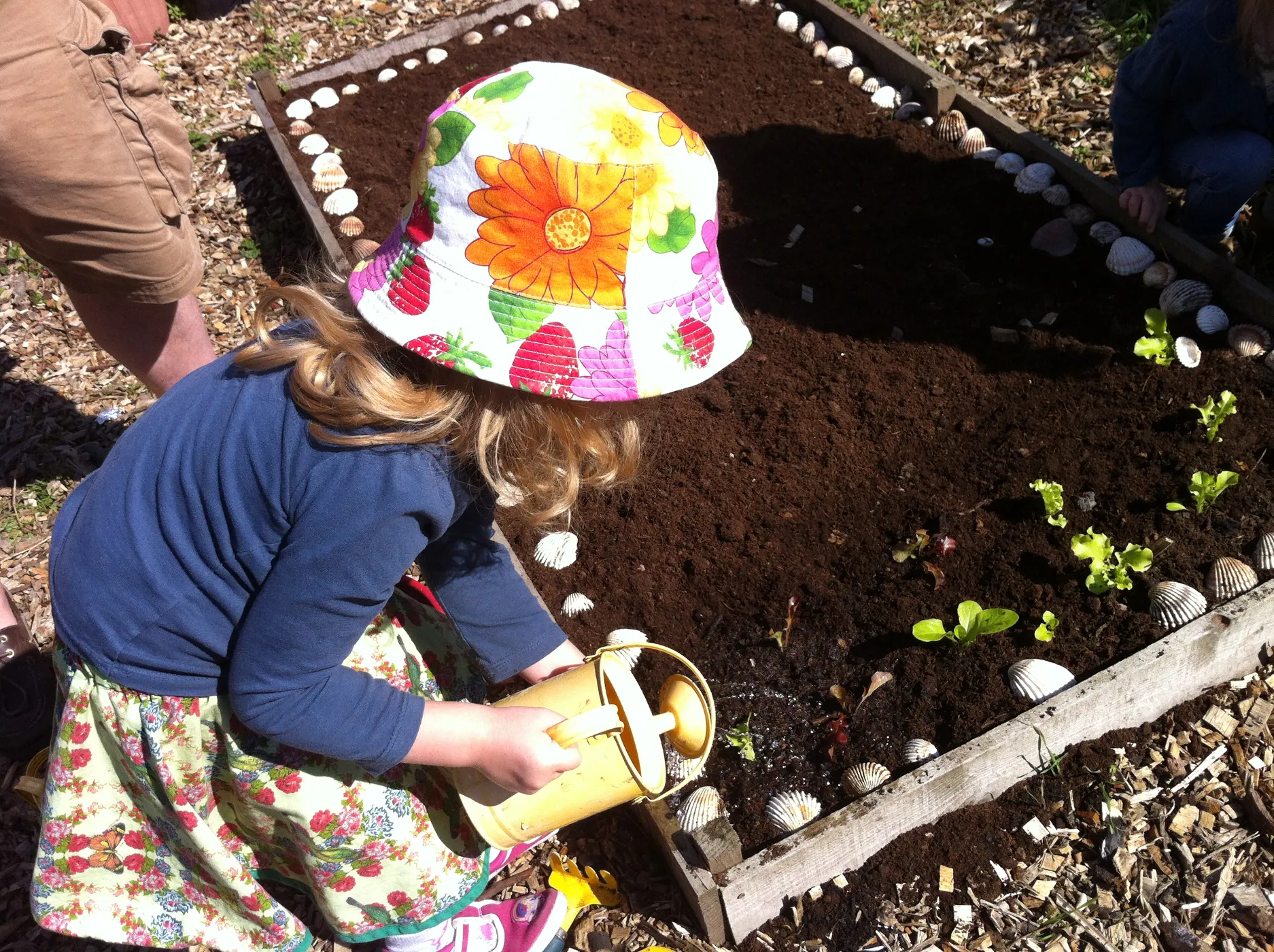
A child waters the beds at an urban farm
The process of teaching children the basics of gardening and plant care on the grounds of an urban farm. Such activities help instill in the younger generation an interest in agriculture and nature. Location: Vauxhall City Farm, London, UK.
Responsibility through work. Involve the child in real tasks: watering, weeding, harvesting. This should not be coercion, but rather a shared ritual. Research emphasizes that the “gardening triad”—care, a sense of accomplishment, and connection with nature—is of great importance for emotional well-being (Alaimo et al., 2024). When a child sees that their actions lead to a flower or fruit appearing, it builds self-confidence and pride. Children gladly take responsibility for watering and care when given their own tools and a small garden bed.
Important note. A study of children aged 3–5 showed that even passive observation of a garden (for example, from a window) can positively affect mood (Monsur et al., 2024). If a child cannot actively dig, offer them the role of “observer” or “artist” who sketches changes in the garden.
Thus, a garden for a child is a balance between freedom and safety, play and real work, which lays the foundation for a lifelong connection with nature. In the next chapter we will talk about how to make a garden comfortable and safe for older adults.
2. A garden for older adults: accessibility, bed height, minimal strain
With age, physical capabilities change, but the need for movement, fresh air, and social contact does not disappear. Gardening has proven effective as non-pharmacological therapy: it improves physical function and quality of life and reduces symptoms of depression and stress levels in older adults (Wang et al., 2022; Yun et al., 2024). A meta-analysis by Xu et al. (2023) showed that the greatest effect is achieved by participating in manageable activities for 4–8 weeks, especially in care settings (nursing homes, centers), and not only in community gardens. It is important that activities are regular but not exhausting: the optimal duration is 30–90 minutes, and the course is from 1.5 to 12 months (Wang et al., 2022).

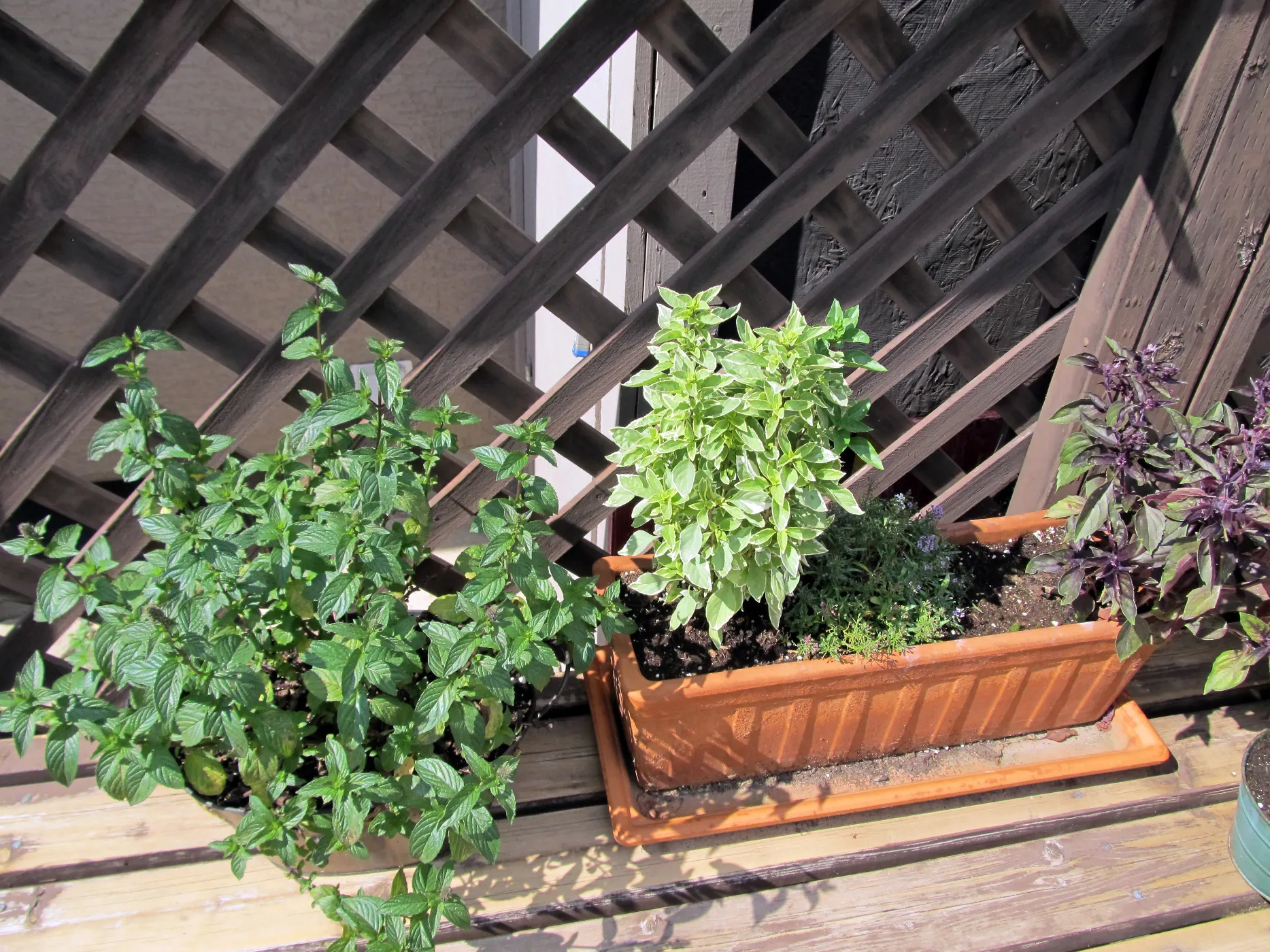
Herbs in containers outdoors
Growing aromatic herbs (such as basil and mint) in containers on a wooden deck. The container method makes it easy to control soil composition and moisture and provides mobility for plants on balconies or terraces.
Practical solutions. The main principle is to minimize bending, heavy lifting, and prolonged kneeling. For this, raised beds (60–90 cm) are installed, which allow work while sitting or standing. Wide paths (at least 90 cm) allow walkers or wheelchairs to pass. Benches in the shade, lightweight tools with long handles, and vertical supports for climbing plants—all of this reduces strain. Research confirms that even short gardening sessions improve flexibility, hand strength, and emotional state (Yun et al., 2024). However, risks should be remembered: excessive exertion can lead to back pain and injuries, so it is important to alternate work and rest (Ingram et al., 2015). A garden for an older person is not about records, but about pleasure and maintaining activity.
Containers at a convenient height allow elderly people or those with limited mobility to enjoy gardening without unnecessary strain on their backs.


LCD 4-in-1 Soil Tester
Check essential growing conditions with one compact tool. Measure soil pH, moisture, temperature and light intensity — ideal for gardens, potted plants and greenhouses.
- 4-in-1 measurement
- Easy-to-read LCD display
- Portable design
Affiliate link · For indicative measurements only.
3. Family garden: distributing tasks, shared goals
A family garden is a space where different generations can learn from each other and create something meaningful together. Research shows that children most often learn gardening skills from parents and grandparents, and working together strengthens family bonds (Sharp et al., 2025). In urban communities, gardens also become places for exchanging experience and mutual aid: people share harvests, tools, and knowledge, which builds trust and social capital (Poulsen et al., 2014). A meta-analysis by Alaimo et al. (2024) confirms that gardening together with others enhances positive effects on emotional well-being.

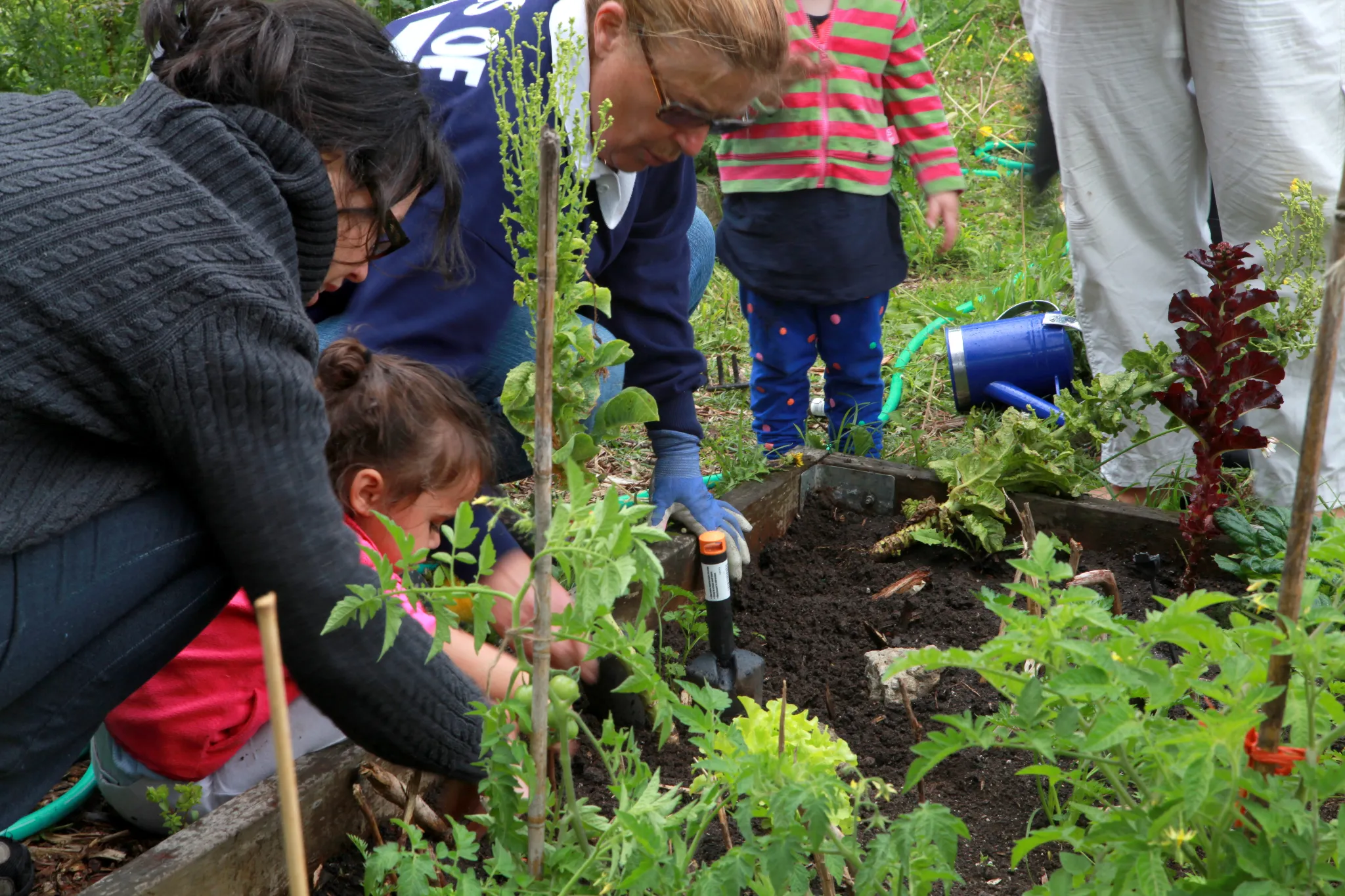
Community gardening at the Waverley Community Garden
The photograph captures the process of planting plants in a community garden (15 Waverley Community Garden). The location is not specified in the caption. The image illustrates the concept of community gardening and the transfer of experience between different generations (Gardening across generations).
How to organize. Distribute tasks according to strengths and interests. Children can be responsible for watering, picking berries, and caring for plants in their own containers. Older family members—for planning, advising, seed collecting, or preparing dishes from the harvest. Adults—for heavy work (digging, installing supports). The shared goal can vary: growing food for the table, creating a beautiful corner for rest, or taking part in a competition. It is important that everyone feels their contribution. Shared rituals—tea in the garden, winter preserves, harvest photo sessions—turn work into a family tradition. As Gross (2018) notes, gardening gives a sense of continuity and intergenerational connection, as well as an opportunity to express care. In different cultures, the family garden can serve different functions: from food production to preserving cultural identity (Tracey et al., 2023). The main thing is to agree on rules and not turn the garden into a source of conflict.
Important note. If a family does not have a shared plot, they can rent a community vegetable plot or use a balcony. Research shows that even small collective projects improve nutrition and the psychological state of all participants (Hume et al., 2022).
4. A garden for busy people: minimum care, maximum return
For people with busy schedules, the garden should not become a second job. Research shows that even short but regular gardening sessions (for example, 30 minutes two or three times a week) produce measurable improvements in mood and reduced stress (Chalmin-Pui et al., 2021). The task is to create a system that works almost autonomously.
Principles of a low-maintenance garden. Use mulching (straw, compost, wood chips)—it suppresses weeds and retains moisture, reducing watering and weeding. Set up drip irrigation on a timer. Choose perennial crops (rhubarb, asparagus, berry bushes, culinary herbs) that do not need replanting every year. Vertical beds and containers save space and simplify care. Give up finicky plants in favor of drought-tolerant and native species (Ingram et al., 2015). If the climate permits, sow cover crops—they improve the soil without your involvement.
Seasonal planning. For a busy gardener, it is useful to divide the year into several key periods: spring planting, minimal summer care (watering, harvesting), autumn cleanup, and preparation for winter. This allows you not to waste time on unnecessary operations. As Gross (2018) notes, gardening can be “serious leisure,” but at the same time it should not require daily presence. The main thing is to realistically assess your strengths and not take on more than you can maintain.

Solar Automatic Drip Irrigation Kit for Gardens
Automate watering for pots, gardens and small greenhouses. This solar-powered system features a timer to help schedule water delivery to your plants.
- Solar-powered
- 15 m irrigation hose
- Programmable watering
Affiliate link · Check included accessories.
5. A garden for beginners: where to start so you don’t give up
A beginner gardener often faces two extremes: either enthusiasm quickly fades due to failures, or fear of mistakes prevents them from starting. Psychologists emphasize that gardening is a skill that develops, and failures are part of the process (Gross, 2018). To avoid giving up, it is important to set achievable goals and gain a first positive experience.

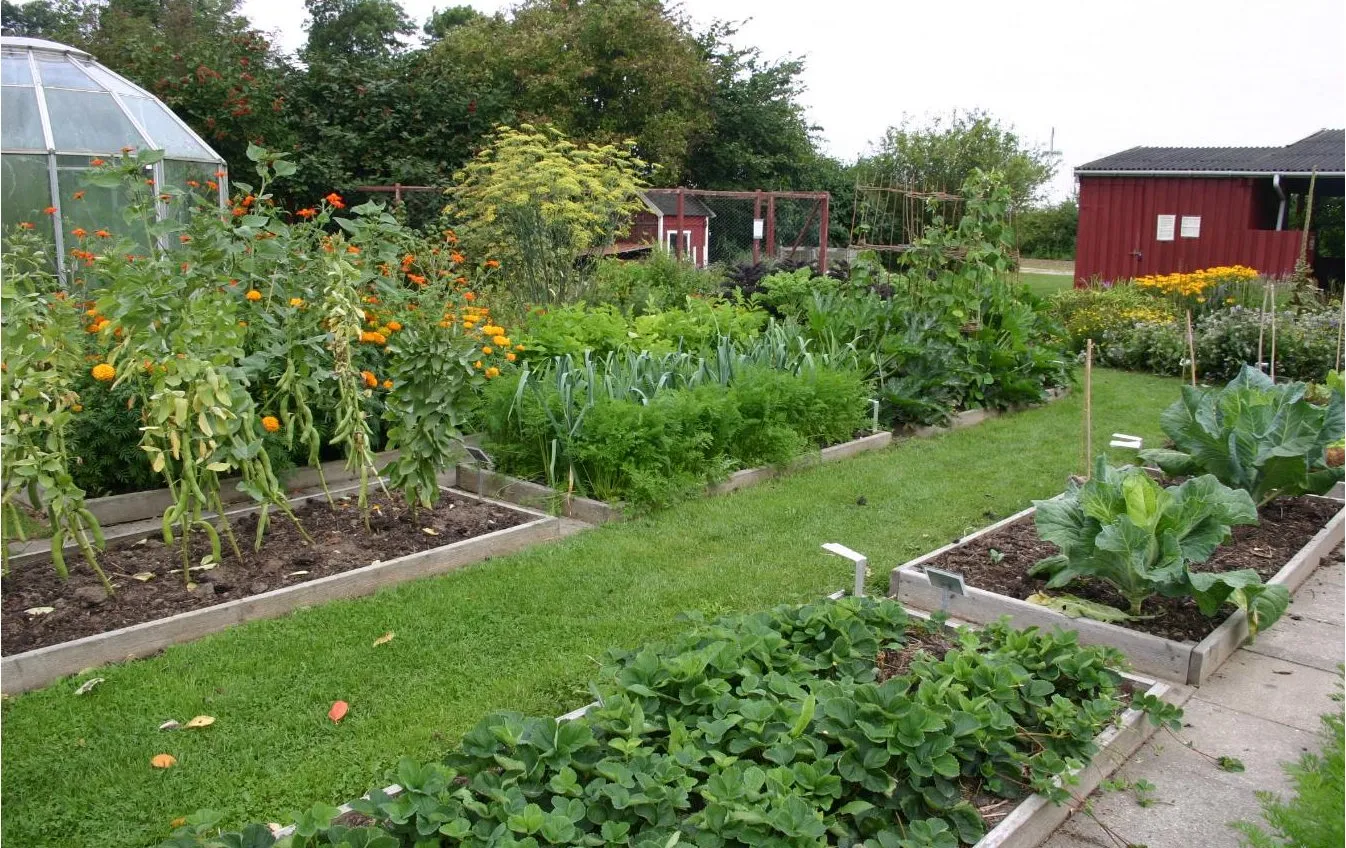
Crop rotation in raised beds at the Ecological Garden (Denmark)
A demonstration of the crop rotation principle on a small plot. Various vegetable crops are planted in separate raised beds. Photographed at the Ecological Garden in the town of Odder, Denmark.
Starter kit. Start small: a few containers or a small bed (1–2 sq m). Choose 3–5 low-maintenance crops suited to your climate: lettuce, radishes, greens, peas, zucchini. They grow quickly and forgive mistakes. Use quality potting mix and drainage. Don’t forget mulch—it will simplify care (Ingram et al., 2015). If you don’t have a plot, a balcony or windowsill will do.
Learning and support. Mistakes are inevitable: yellowed leaves, pests, drought. Treat them as a lesson. Research shows that beginners who participate in group programs or have a mentor are less likely to give up gardening (Kamioka et al., 2014). Talk with gardening neighbors, read reliable sources, keep an observation journal. It is important not to compare your results with others—everyone has their own conditions. The first harvest, even a modest one, gives a powerful incentive to continue. As practice shows, “green thumbs” are not an innate talent but the result of experience and patience (Gross, 2018).
Important note. A study by Alaimo et al. (2024) confirms that even beginners quickly develop a “gardening triad”—care for plants, a sense of achievement, and connection with nature. This emotional reward helps overcome the first difficulties.
In the next chapter we will look at a garden for people with disabilities and a school garden.
6. A garden for people with disabilities: an accessible environment
A garden can and should be accessible to everyone, regardless of physical abilities. Research confirms that gardening improves physical function, reduces stress, and improves quality of life in people with various limitations, including mobility impairments, visual impairments, and cognitive/mental health differences (Wang et al., 2022; Yun et al., 2024). The key task is to remove barriers, not to simplify the process itself.

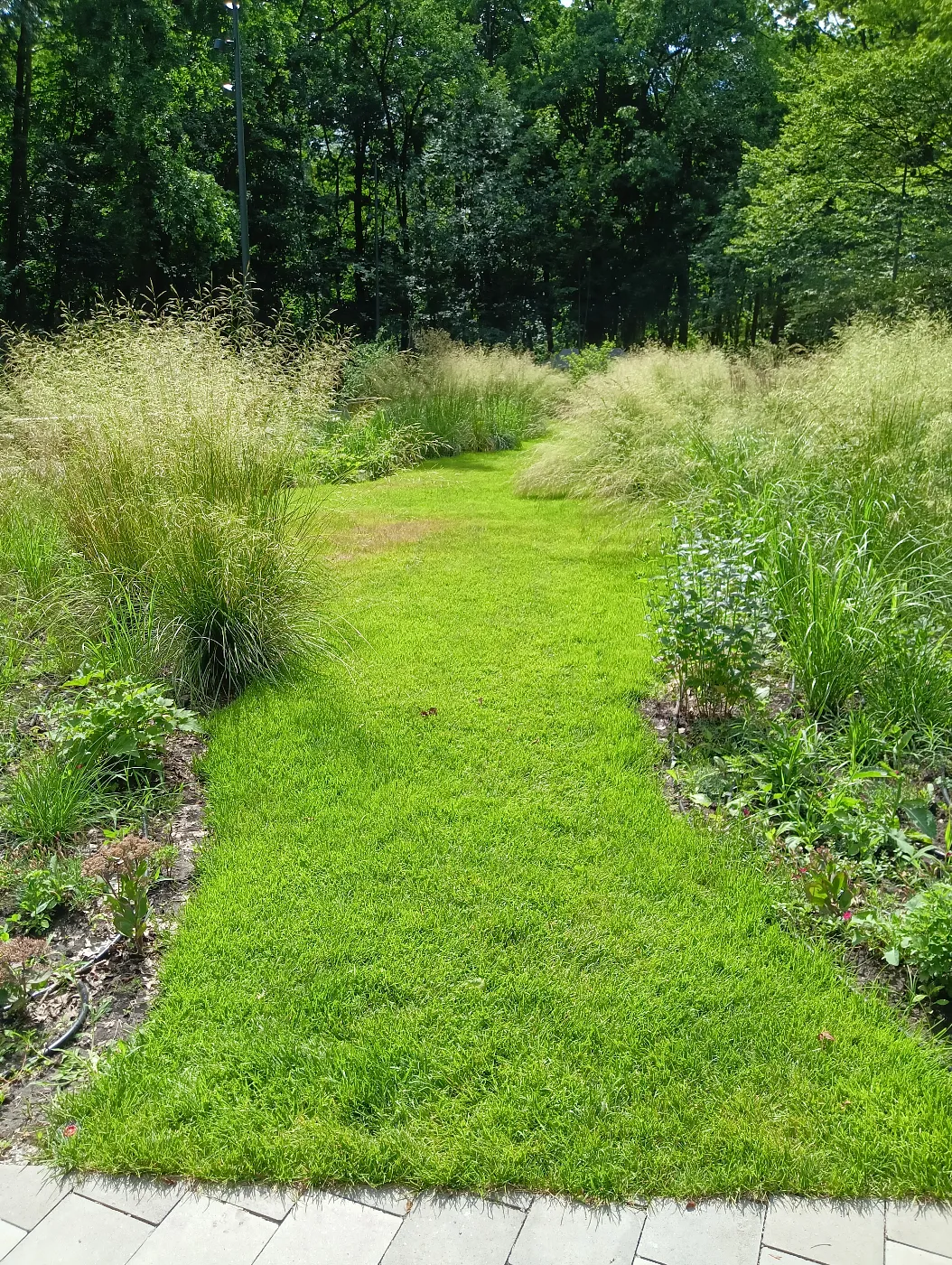
Landscape of the therapeutic garden at VDNG
Therapeutic (sensory) gardens are created for recreation, restoration of the psycho-emotional state and improvement of the physical well-being of visitors. The photo shows an area with a well-kept lawn and ornamental grasses creating a calming atmosphere. Location: National Complex "Expocenter of Ukraine" (VDNG), Kyiv, Ukraine.
Principles of accessibility. Raised beds (60–90 cm) allow work while sitting or from a wheelchair. Path width should be at least 90–120 cm for free passage. A firm surface (paving slabs, compacted gravel) provides stability. Vertical structures and hanging baskets raise plants to a convenient height. For people with low vision, contrasting markers, aromatic herbs, and textured plants are important. Sensory gardens with different scents, sounds (rustling grasses, murmuring water), and tactile elements create a full experience (Ingram et al., 2015). If a person cannot dig, other roles are available: planning, sowing seeds, pruning, harvesting, flower arranging.
Organizing space. Provide rest areas with shade and benches. Tools should be lightweight, with ergonomic handles. Organize watering through drip systems or long hoses so heavy watering cans don’t have to be carried. Research shows that even passive time in the garden (observing, inhaling scents) has a therapeutic effect (Monsur et al., 2024). It is important that a person feels control and independence. As Gross (2018) notes, gardening is a way to express oneself and strengthen identity, not a competition. An accessible environment does not require large expenses: often it is enough to rearrange containers, add a ramp, or change the height of shelving.

7-in-1 Wi-Fi Weather Station
Monitor local weather conditions with a wireless outdoor sensor. Track temperature, humidity, rainfall, wind speed and direction, and atmospheric pressure. Ideal for gardens, farms and greenhouses.
- Wireless outdoor sensor
- Solar-powered
- Wi-Fi connectivity
Affiliate link · Check regional compatibility.
7. School garden: an educational project
A school garden is not just a bed, but an interdisciplinary educational platform. A review by Blair (2009) showed that school gardens improve science achievement, increase vegetable consumption, and form environmental awareness. A meta-analysis by Langellotto and Gupta (2012) confirmed that gardening increases vegetable consumption in children, and the effect lasts longer than with ordinary nutrition lessons. A realist synthesis by Holloway et al. (2023) identified key mechanisms: integration into the curriculum, hands-on experience, family involvement, and support from trusted adults.

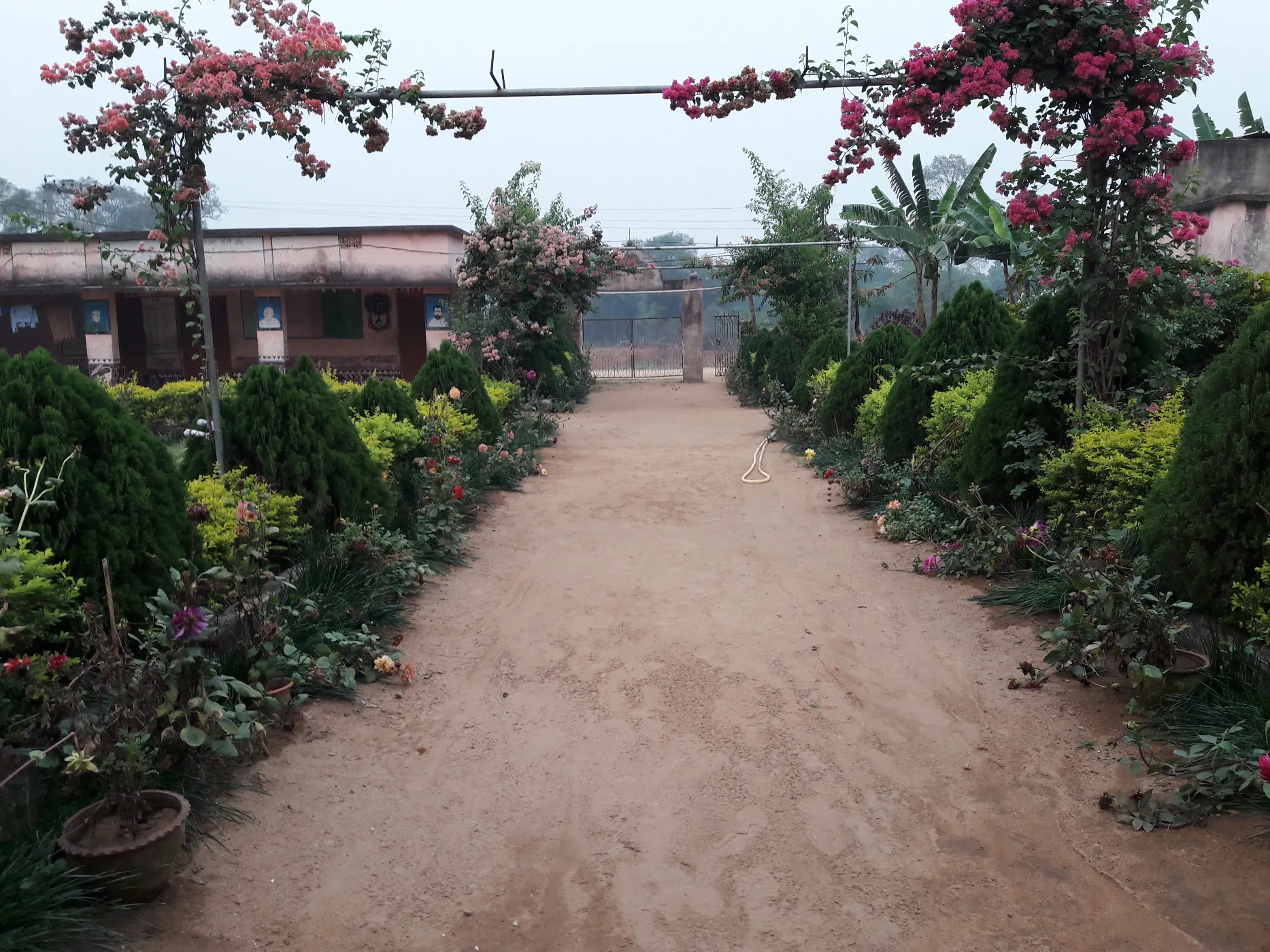
School garden in the village of Odisha
The photograph shows a school garden in a village in Odisha, India. Ornamental plants and flowers are planted along a dirt path leading to the gate. Such gardens are often used for educational purposes to teach children the basics of botany and plant care.
How to organize. Start with a small plot or containers. Choose crops that produce quick results and are interesting to children: peas, radishes, sunflowers, pumpkins. Connect the garden to lessons: math (measuring beds), biology (growth cycles), literature (observation journals), art (sketches). A study by Cosco et al. (2022) showed that even among preschoolers aged 3–5, garden activities significantly improve recognition of fruits and vegetables and their consumption. It is important that children participate in all stages: from sowing to harvesting and cooking dishes.
Support and sustainability. A school garden requires a coordinator—a teacher, parent, or volunteer. Blair (2009) notes that without a dedicated adult, the project often fades. Involve families: this strengthens the effect at home too (Sharp et al., 2025). In different cultures, school gardens can reflect local traditions: growing crops important to the community and passing knowledge from elders. For example, in New Zealand, programs include Māori practices and intergenerational learning (Sharp et al., 2025). This approach not only educates but also strengthens cultural identity. A school garden is an investment in the health and education of future generations.
In the next chapter we will look at a community garden and ways to adapt a plot to a specific person.
8. Community garden: a collective vegetable plot
A community garden is a space where people come together to grow plants and solve common tasks. Research shows that such projects provide a wide range of benefits: they improve social connections, nutrition, mental health, and even a sense of safety in the neighborhood (Poulsen et al., 2014; Hume et al., 2022). For vulnerable groups—older adults, migrants, low-income people—a collective garden becomes a place of support and integration (Tracey et al., 2023). A meta-analysis by Alaimo et al. (2024) confirms that gardening together with others enhances emotional effects: a sense of community, mutual aid, and joy from working together.
How to organize. Success depends on clear rules and distribution of roles. Start with a general meeting: define goals (food for everyone, education, leisure), choose a coordinator, distribute plots and responsibilities. It is important to consider the interests of different groups: families with children, older adults, beginners. A study by Poulsen et al. (2014) in Baltimore showed that gardens become “oases” in disadvantaged neighborhoods, but conflicts can arise due to differing contributions and expectations. Therefore, it is useful to keep a work log, hold regular meetings, and organize joint harvest festivals. In different cultures, collective gardens can serve different functions: from food production to preserving traditions (Sharp et al., 2025). The main thing is to create an atmosphere of inclusivity and independence.

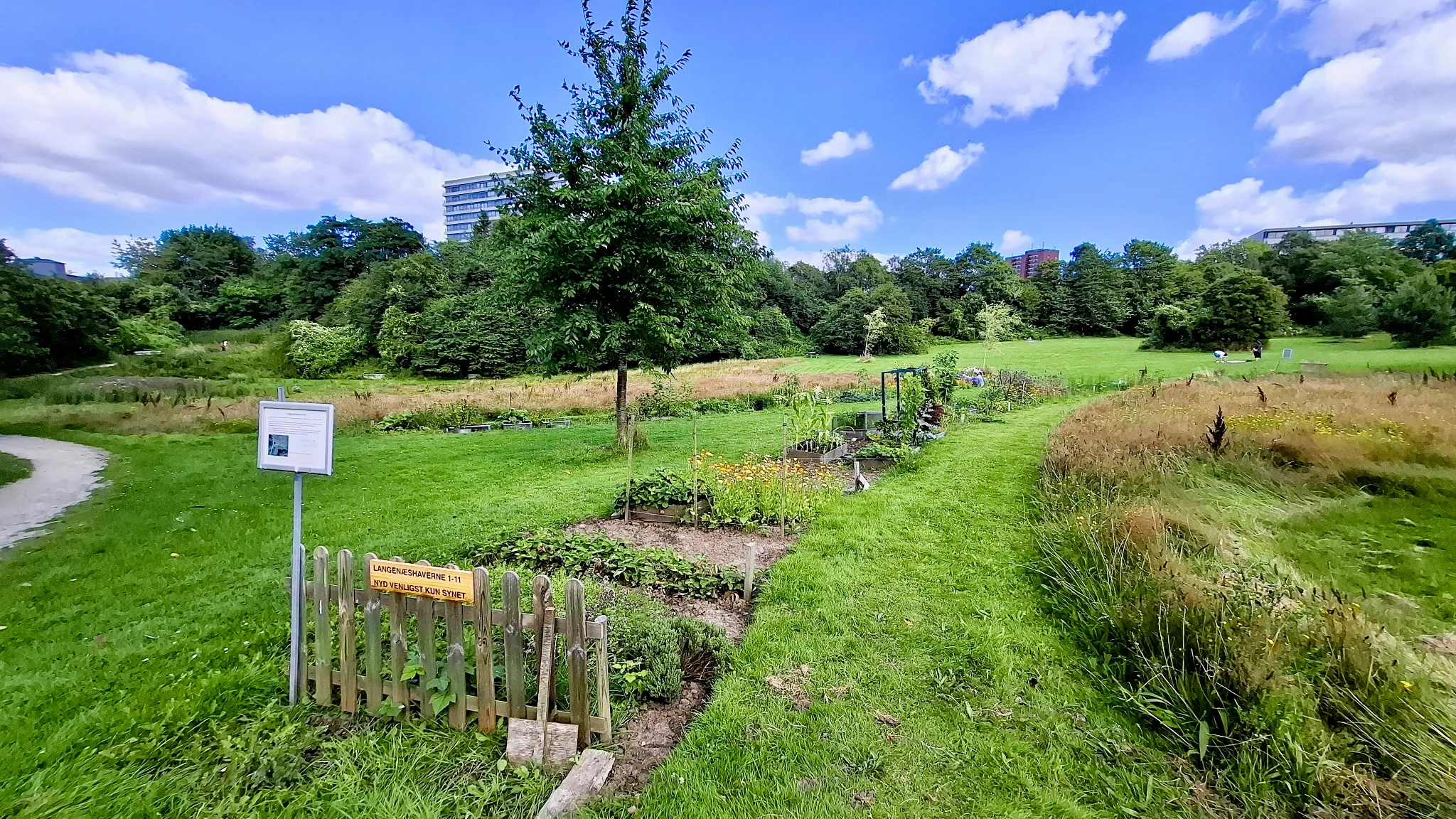
Urban community vegetable gardens in Langenæs Park (Aarhus, Denmark)
A photograph of a community urban garden located in Langenæs Park, the city of Aarhus, Denmark. In the background, residential multi-story buildings, park trees, and shrubs are visible. In the foreground is a decorative wooden picket fence with a sign marking the plot tended by local residents. The sign asks passersby to only admire the plantings ("Nyd venligst kun synet"), emphasizing the social and aesthetic role of the project.

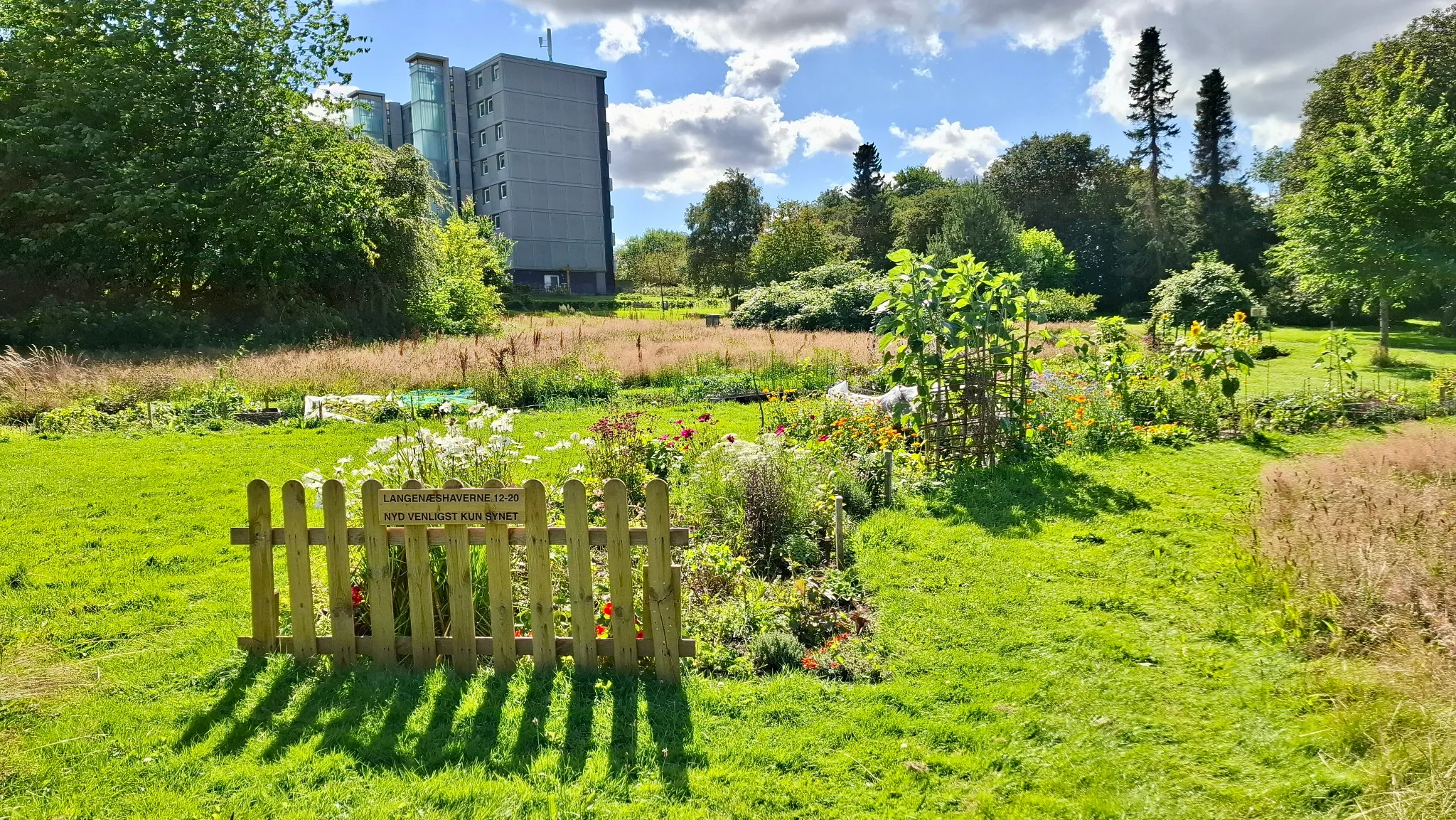
Community vegetable garden in Langenæs Park: flowering beds (Aarhus, Denmark)
A view of the community urban vegetable gardens in Langenæs Park, the city of Aarhus, Denmark. In the foreground is a wooden fence with a sign "LANGENÆSHAVERNE 12-20" enclosing a plot with various flowers and plants. In the distance, residential buildings, park plantings, and plots of other gardeners are visible. The sign reminds that the harvest is grown by local residents and is intended for visual enjoyment only.
Important note. Research emphasizes that community gardens are especially effective for reducing social isolation and improving nutrition in disadvantaged communities (Hume et al., 2022). However, they require time and patience: first results may appear after a season or two.

40W Full Spectrum LED Grow Light
Support healthy plant growth with full-spectrum LED lighting. Ideal for seedlings, indoor plants and small growing spaces. A practical solution for indoor gardening and year-round cultivation.
- Full-spectrum LED
- Energy-efficient design
- Indoor plant growing
Affiliate link · Check actual power and light coverage.
9. How to adapt a plot to a person
There is no universal garden. The right garden is one in which a person feels comfortable, safe, and happy. Adaptation begins with an honest assessment of needs and capabilities.
Step 1: Assessment. Determine who will use the garden: children, older adults, people with disabilities, busy people. Consider physical capabilities (strength, mobility, vision), time (how many hours per week), goals (food, rest, education, therapy). For example, for older adults, raised beds and benches are important; for children, safety and quick results; for busy people, autonomy (Wang et al., 2022; Gross, 2018).
Step 2: Planning. Divide the plot into zones: active (beds), passive (rest), utility (compost, tools). Provide wide paths, shade, and access to water. Bed height, surface type, plant placement—everything is adapted to the person. Use universal design principles: accessibility for everyone without exception (Ingram et al., 2015).
Step 3: Choosing plants and methods. For beginners and busy people—low-maintenance crops, mulch, drip irrigation. For children—fast-growing and edible. For older adults—perennials and vertical supports. Consider climate: in arid regions, choose drought-tolerant species and save water (Johnson, 2023). In cold regions—use greenhouses and containers.
Step 4: Tools and budget. Lightweight tools with ergonomic handles, benches, gloves. Many devices can be made yourself or bought inexpensively. Start small and expand as confidence grows. The main thing is not to harm yourself and to enjoy it. As Gross (2018) notes, gardening is a personal experience, and adaptation makes it accessible to everyone.
10. Regional aspect: different countries have their own traditions of family and children’s gardening
A garden is always a reflection of culture, climate, and history. In some regions it serves as a source of food, in others as a place of rest, in still others as a way of preserving identity. Understanding these differences helps adapt advice to specific conditions.
Europe and North America. In the UK and US, community gardens and allotments—plots rented from local authorities—are widespread. Studies by Gross (2018) show that for Britons, the garden is both a hobby, a way to socialize, and a source of fresh food. In the US, community gardens are often created in disadvantaged neighborhoods to address the problem of access to healthy food (Poulsen et al., 2014). Family gardening here often includes joint projects with children: “pizza beds,” sensory gardens, school gardens (Blair, 2009).
Asia. In Japan, the garden is a philosophy. Traditional gardens (for example, tea gardens) are created for contemplation and meditation, not for production (Randhawa, 1981). However, in recent years urban farming has been gaining popularity: residents grow vegetables on balconies and in containers (Chen et al., 2024). In New Zealand, school garden programs include Māori māra kai practices and intergenerational learning, which strengthens cultural connection (Sharp et al., 2025).
Africa and South America. Here the garden often serves a food security function. In South Africa, collective vegetable gardens help fight poverty and improve nutrition, although they do not always solve the problem completely (Tracey et al., 2023). In Latin America, home gardens preserve traditional crops and medicinal plants, passing knowledge from elders to younger people.
Arid regions. In Middle Eastern countries, Australia, and the southwestern US, gardening requires a special approach: drought-tolerant plants, drip irrigation, mulch, shade (Johnson, 2023). Local species are valued here—cacti, succulents, aromatic herbs.
Russia and the post-Soviet space. The dacha is a unique phenomenon. A study by Rozmainsky et al. (2017) shows that for millions of families the dacha is not just a hobby but a source of food and a way of surviving difficult times. Here traditions of family work, preserving, and exchanging harvests are strong. At the same time, modern city dwellers increasingly use the dacha for rest as well.
Different climatic zones and cultural traditions use unique approaches to farming — from traditional African trellises to neat European botanical exhibitions.

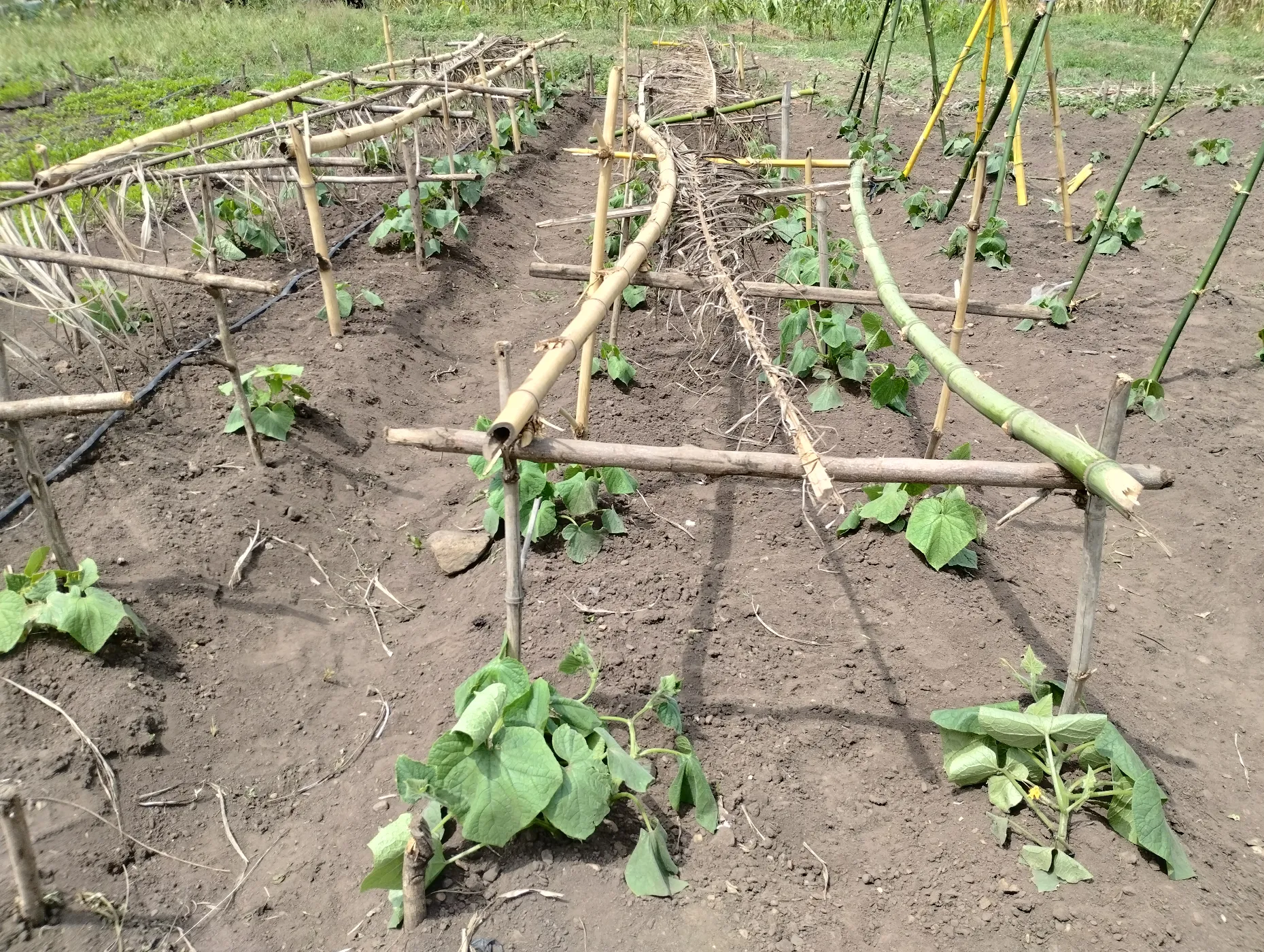
Plants on trellises in Kpalimé
A bed of climbing agricultural crops on wooden and bamboo supports in Kpalimé (Togo), belonging to the "Infa de Tové" project. The traditional method of supporting climbing plants to save space and improve ventilation is demonstrated.

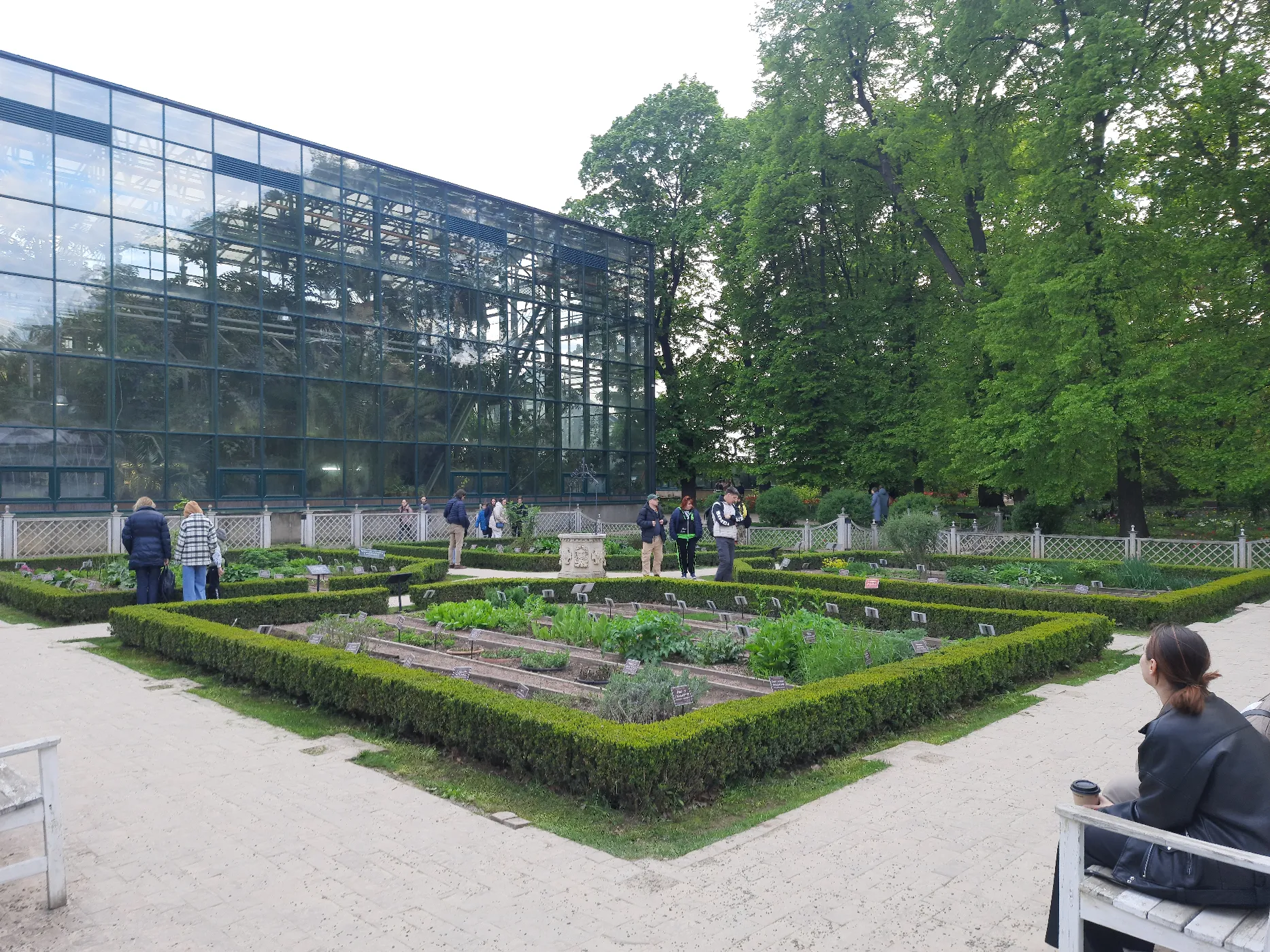
Display beds in the Apothecary Garden
The territory of the Apothecary Garden (botanical garden), where neatly arranged rectangular beds with various cultivated plants are presented. Such gardens are traditionally used for growing, studying and displaying medicinal and aromatic crops.
Important note. In different climatic zones, planting times, crop selection, and care methods differ. Universal advice requires adaptation: what works in a temperate climate may not suit the tropics or a desert. Study local practices and experiment.
11. Conclusion: the garden should suit the person, not the other way around
We have looked at how a garden can be adapted for children, older adults, families, busy people, beginners, people with disabilities, schools, and communities. In each case one thing remains key: the garden is not an end in itself but a tool for improving life.
Key takeaways.
1. There is no universal garden. What suits one person may be inconvenient for another. Assess the needs and capabilities of the specific person.
2. Start small. Don’t take on everything at once. A small bed or container will give you first experience and confidence.
3. Plan for the person. Bed height, path width, and plant selection—everything should correspond to physical capabilities and time.
4. Use scientific data. Research confirms the benefits of gardening for physical and mental health, nutrition, and social connections (Wang et al., 2022; Alaimo et al., 2024).
5. Consider culture and climate. Regional traditions and conditions dictate their own rules.
6. Gardening is a process. Mistakes are inevitable, but they teach. Patience and observation are more important than a perfect result.
Key thought. A garden should not cause stress, guilt, or fatigue. If a person is uncomfortable, if the work is a burden, then something needs to change: the height of the beds, the set of crops, the schedule. The right garden is one where you want to spend time, one that delights and supports you. As Gross (2018) wrote, gardening is a “personal experience,” and its value lies in the process itself, not in records.
May your garden be a place of strength and inspiration—regardless of how old you are, where you live, and what your capabilities are.
References
- (2015). ‘Health, well-being and socio-cultural benefits’, in Ingram, D.S., Vince-Prue, Daphne, Gregory, P.J. (ed.) Science and the Garden. The scientific basis of horticultural practice. West Sussex, UK: Royal Horticulture Society. Wiley Blackwell, pp. 307-319.
- Alaimo, Katherine, Coringrato, Eva, Lacy, Kristin, Hébert, J.R., Beavers, A.W. (2024). ‘Caretaking, accomplishment and connection to nature: The ‘gardening triad’ and its role in new community gardeners' engagement, and social and emotional well‐being’, People and Nature, 6(5), 2014-2028. doi: 10.1002/pan3.10696
- Blair, Dorothy (2009). ‘The Child in the Garden: An Evaluative Review of the Benefits of School Gardening’, The Journal of Environmental Education, 40(2), 15-38. doi: 10.3200/JOEE.40.2.15-38
- Chalmin-Pui, L.Suyin, Griffiths, Alistair, Roe, Jenny, Heaton, Timothy, Cameron, Ross (2021). ‘Why garden? – Attitudes and the perceived health benefits of home gardening’, Cities, 112(0), 103118. doi: 10.1016/j.cities.2021.103118
- Chen, Bixia, Miyagi, Kazuna, Namihira, Tomoyuki, Kayano, Daiki, Aragaki, Mika, Suzuki, Shiori (2024). ‘What Motivates Urban Dwellers to Engage in Urban Farming?’, Sustainability, 16(16), 6876. doi: 10.3390/su16166876
- Cosco, N.G., Wells, N.M., Zhang, Daowen, Goodell, L.Suzanne, Monsur, Muntazar, Xu, Tong, Moore, R.C. (2022). ‘Hands-on childcare garden intervention: A randomized controlled trial to assess effects on fruit and vegetable identification, liking, and consumption among children aged 3–5 years in North Carolina’, Frontiers in Psychology, 13(0), null. doi: 10.3389/fpsyg.2022.993637 (PubMed)
- Dunnett, Nigel, Qasim, Muhammad (2000). ‘Perceived Benefits to Human Well-being of Urban Gardens’, HortTechnology, 10(1), 40-45. doi: 10.21273/HORTTECH.10.1.40
- Griffiths, Michael (2026). ‘Introduction’, in The Easy Garden. New York, NY: Penguin Random House, .
- Gross, Harriet (2018). ‘Stepping into the garden: the gardening context’, in The Psychology of Gardening. New York, NY: Routledge, .
- Gross, Harriet (2018). ‘Taking up or taking over? reflections on gardening as an occupation’, in The Psychology of Gardening. New York, NY: Routledge, .
- Gross, Harriet (2018). ‘‘It keeps me sane’: gardening as therapy’, in The Psychology of Gardening. New York, NY: Routledge, .
- Gross, Harriet (2018). ‘‘It’s my little bit of paradise’: what your garden says about you’, in The Psychology of Gardening. New York, NY: Routledge, .
- Harding, Diana, Lukman, K.Muhamad, Jingga, Matheus, Uchiyama, Yuta, Quevedo, J.MarD., Kohsaka, Ryo (2022). ‘Urban Gardening and Wellbeing in Pandemic Era: Preliminary Results from a Socio-Environmental Factors Approach’, Land, 11(4), 492. doi: 10.3390/land11040492
- Holloway, T.P., Dalton, Lisa, Hughes, Roger, Jayasinghe, Sisitha, Patterson, K.A.E., Murray, Sandra, Soward, Robert, Byrne, N.M., Hills, A.P., Ahuja, K.D.K. (2023). ‘School Gardening and Health and Well-Being of School-Aged Children: A Realist Synthesis’, Nutrients, 15(5), 1190. doi: 10.3390/nu15051190 (PubMed)
- Hume, Clare, Grieger, J.A., Kalamkarian, Anna, D’Onise, K., Smithers, L.G. (2022). ‘Community gardens and their effects on diet, health, psychosocial and community outcomes: a systematic review’, BMC Public Health, 22(1), null. doi: 10.1186/s12889-022-13591-1 (PubMed)
- Johnson, Noelle (2023). ‘Choosing the Right Plants for Hot, Arid Regions’, in Dry Climate Gardening. Beverly, MA: Cool Springs Press, .
- Johnson, Noelle (2023). ‘Introduction: Welcome to Gardening in a Dry Climate’, in Dry Climate Gardening. Beverly, MA: Cool Springs Press, .
- Kamioka, Hiroharu, Tsutani, Kiichiro, Yamada, Minoru, Park, Hyuntae, Okuizumi, Hiroyasu, Honda, Takuya, Okada, Shinpei, Park, S., Kitayuguchi, Jun, Abe, Takafumi, Handa, Shuichi, Mutoh, Yoshiteru (2014). ‘Effectiveness of horticultural therapy: A systematic review of randomized controlled trials’, Complementary Therapies in Medicine, 22(5), 930-943. doi: 10.1016/j.ctim.2014.08.009 (PubMed)
- Kim, H., Oh, W., Kim, J., Shin, W. (2023). ‘The Influence of Urban Gardening Activities on Participants’ Perceived Restorativeness, Resilience, Sense of Community and Stress’, Healthcare, 11(12), 1664. doi: 10.3390/healthcare11121664 (PubMed)
- Kwack, H.Ran, Jang, E.Jean (2021). ‘Development and application of a STEAM program using classroom wall gardens’, Journal of People, Plants, and Environment, 24(4), 365-376. doi: 10.11628/ksppe.2021.24.4.365
- Langellotto, G.A., Gupta, Abha (2012). ‘Gardening Increases Vegetable Consumption in School-aged Children: A Meta-analytical Synthesis’, HortTechnology, 22(4), 430-445. doi: 10.21273/HORTTECH.22.4.430
- Lu, Shan, Liu, Jianjiao, Xu, Meijing, Xu, Feng (2023). ‘Horticultural therapy for stress reduction: A systematic review and meta-analysis’, Frontiers in Psychology, 14(0), null. doi: 10.3389/fpsyg.2023.1086121 (PubMed)
- Monsur, Muntazar, Mansur, Mohaimen, Trina, N.Afrin, Cosco, Nilda (2024). ‘Hands-On Gardening in Childcare Centers to Advance Preschool-Age Children’s Fruit and Vegetable Liking in Semi-Arid Climate Zone’, International Journal of Environmental Research and Public Health, 21(11), 1485. doi: 10.3390/ijerph21111485 (PubMed)
- Nur-E-Alam, S.M., Feltynowski, Marcin, Chądzyński, J. (2026). ‘Urban Gardening, Sustainable Development and Inhabitant Perceptions: A New Framework for Analysis’, Environment and Behavior, 0(0), null. doi: 10.1177/00139165261488333
- Panțiru, I., Ronaldson, A., Sima, N., Dregan, A., Sima, R. (2024). ‘The impact of gardening on well-being, mental health, and quality of life: an umbrella review and meta-analysis’, Systematic Reviews, 13(1), null. doi: 10.1186/s13643-024-02457-9 (PubMed)
- Poulsen, M.N., Hulland, K.R.S., Gulas, C.A., Pham, Hieu, Dalglish, S.L., Wilkinson, R.K., Winch, P.J. (2014). ‘Growing an Urban Oasis: A Qualitative Study of the Perceived Benefits of Community Gardening in
B altimore,M aryland’, Culture, Agriculture, Food and Environment, 36(2), 69-82. doi: 10.1111/cuag.12035 - Rozmainsky, I.V., Lozhnikova, A.V., Kichko, N.I., Khloptsov, D.M. (2017). ‘Dacha in Post-Soviet Russia: Institutional Analysis’, Journal of Institutional Studies, 9(2), null. doi: 10.17835/2076-6297.2017.9.2.063-079
- Sharp, Emma, Tsang, Sophia, Egli, Victoria (2024). ‘Children’s food gardening: valuing experiential, intergenerational and multi‐cultural learning’, Kōtuitui: New Zealand Journal of Social Sciences Online, 20(4), 738-762. doi: 10.1080/1177083X.2024.2425427
- Tracey, Danielle, Gray, Tonia, Manohar, Narendar, Kingsley, Jonathan, Bailey, Aisling, Pettitt, Philip (2023). ‘Identifying Key Benefits and Characteristics of Community Gardening for Vulnerable Populations: A Systematic Review’, Health & Social Care in the Community, 2023(0), 1-23. doi: 10.1155/2023/5570089
- Wang, Zhijie, Zhang, Yu, Lu, Shanshan, Tan, Linlin, Guo, Wei, Lown, Mark, Hu, Xiaoyang, Liu, Jianping (2022). ‘Horticultural therapy for general health in the older adults: A systematic review and meta-analysis’, PLOS ONE, 17(2), e0263598. doi: 10.1371/journal.pone.0263598 (PubMed)
- Xu, Meijing, Lu, Shan, Liu, Jianjiao, Xu, Feng (2023). ‘Effectiveness of horticultural therapy in aged people with depression: A systematic review and meta-analysis’, Frontiers in Public Health, 11(0), null. doi: 10.3389/fpubh.2023.1142456 (PubMed)
- Yun, Jiayue, Yao, Wenfei, Meng, Tian, Mu, Zhiyue (2023). ‘Effects of horticultural therapy on health in the elderly: A review and meta-analysis’, Journal of Public Health, 32(10), 1905-1931. doi: 10.1007/s10389-023-01938-w (PubMed)
- Zhang, Y.Wei, Wang, Jun, Fang, T.Hong (2022). ‘The effect of horticultural therapy on depressive symptoms among the elderly: A systematic review and meta-analysis’, Frontiers in Public Health, 10(0), null. doi: 10.3389/fpubh.2022.953363 (PubMed)
- Рандхава, М. (1981). ‘Японские сады’, in Сады через века. Москва: Знание, pp. 82-97.
- Траннуа, Павел (2018). ‘Дача как зона отдыха [The dacha as a leisure area]’, in Сад и огород в рисунках и комиксах: полная наглядная энциклопедия [The Garden and Vegetable Patch in Drawings and Comics: A Comprehensive Visual Encyclopedia]. Москва: Издательство «Э», pp. 179-182.
- Траннуа, Павел (2018). ‘Планировка участка и посадок [Site and planting layout]’, in Сад и огород в рисунках и комиксах: полная наглядная энциклопедия [The Garden and Vegetable Patch in Drawings and Comics: A Comprehensive Visual Encyclopedia]. Москва: Издательство «Э», pp. 9-15.
