
Plant Life Cycle: Why a Gardener Needs to Understand Biology
1. What the Life Cycle Is

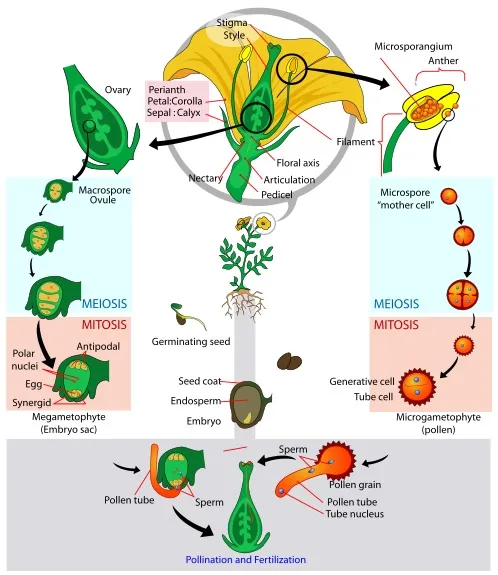
Detailed diagram of the life cycle of an angiosperm (flowering) plant, including micro- and megasporogenesis, pollination and fertilization
The diagram includes labels for flower parts (Stigma, Style, Ovary, Perianth, Petal, Corolla, Sepal, Calyx, Nectary, Floral axis, Articulation, Pedicel), anther (Microsporangium, Anther, Filament, Microspore mother cell, MEIOSIS, MITOSIS, Generative cell, Tube cell, Microgametophyte (pollen)), ovule (Macrospore Ovule, MEIOSIS, MITOSIS, Polar nuclei, Antipodal, Egg, Synergid, Megagametophyte (Embryo sac)) and the process of fertilization with seed formation (Germinating seed, Seed coat, Endosperm, Embryo).
Every plant, whether it is a tiny parsley seedling on a windowsill or a century-old oak in a park, goes through its own path from seed to seed. This path is called the life cycle, or ontogenesis. It is not merely an abstract concept from a biology textbook, but a fundamental law that directly affects how a gardener should care for a plot in order to obtain a harvest.
The life cycle is a genetically programmed sequence of developmental stages: from seed germination through vegetative growth (building leaves and roots) to flowering, pollination, fruit and seed formation, and finally to aging and death. This cycle can be short, as in radish, or incredibly long, as in a sequoia that lives for thousands of years.
Understanding the life cycle is the key to success in gardening. It explains why some crops must be sown every year, others require two years to produce seeds, and still others, once planted, will delight for decades. The main idea worth remembering is this: you cannot get a harvest from a plant if its growing conditions do not correspond to the stage of its cycle. You cannot force carrot to flower in its first year if it is genetically programmed to do so only in its second year. You cannot expect an apple tree planted this spring to bear fruit this summer, because its cycle requires several years to mature.
Botanists and plant physiologists describe this process as a successive change of age stages. The development of any organism includes processes of growth (quantitative changes) and differentiation (qualitative changes). During ontogenesis, a plant passes through an embryonic stage (in the seed), a juvenile stage (youth, when it is not capable of reproduction), a stage of maturity (readiness to flower), reproduction, and senescence (Kuznetsov and Dmitrieva, 2006; Medvedev, 2012).
For the practical gardener, all this complex scientific path comes down to three main types of life strategies that determine how and when a plant will produce a harvest. We will examine them in the following sections.
Note: The life cycle must not be confused with the seasonal rhythm. Even a perennial plant, such as an apple tree, has an annual development cycle that includes the growing season, flowering, fruiting, and deep dormancy. Understanding these phases is a topic for a separate discussion, but it is the type of life cycle (annual, biennial, or perennial) that determines the strategy for the entire cultivation process.
2. Annuals: The Whole Cycle in One Season

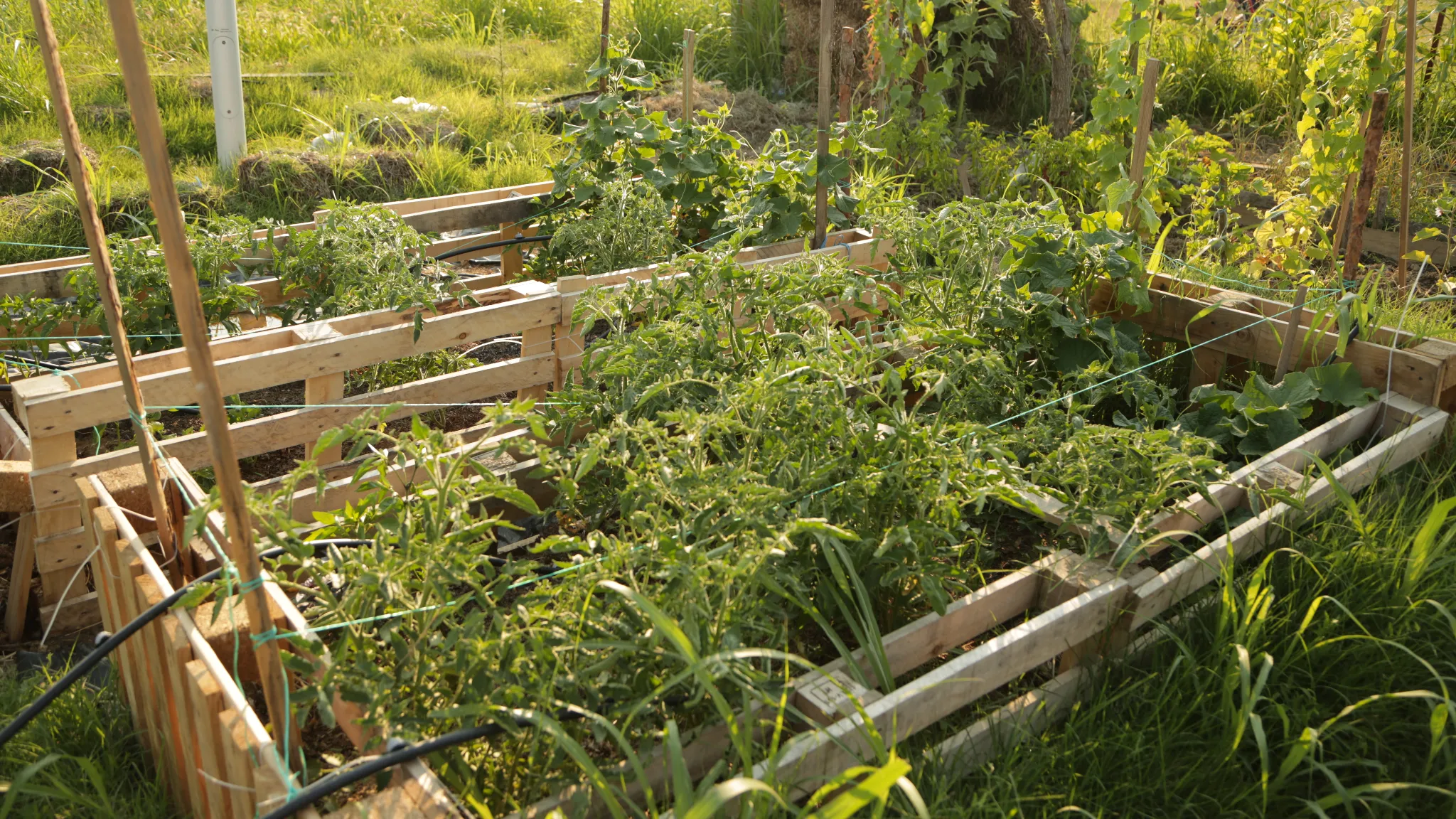
Tomato — a popular annual crop
Tomato plants (Solanum lycopersicum) in the Bostanie community garden in Skopje, North Macedonia. Tomato well illustrates crops that are grown as annuals in temperate climates, although in naturally warm conditions they can live for several years.
Annual plants are the sprinters of the plant world. They pass through their entire life cycle—from seed germination to the formation of new seeds and death—within one growing season. For the gardener, this means a simple and clear strategy: sow in spring, harvest in summer or autumn, and that is the end of it.
Classic examples of annual crops that we grow for their fruits are tomatoes, peppers, cucumbers, squash, corn, beans, peas, and also many leafy crops such as lettuce, spinach, dill, basil, and radish. Among flowers, these include marigolds, calendula, petunia, zinnia, and cornflowers.

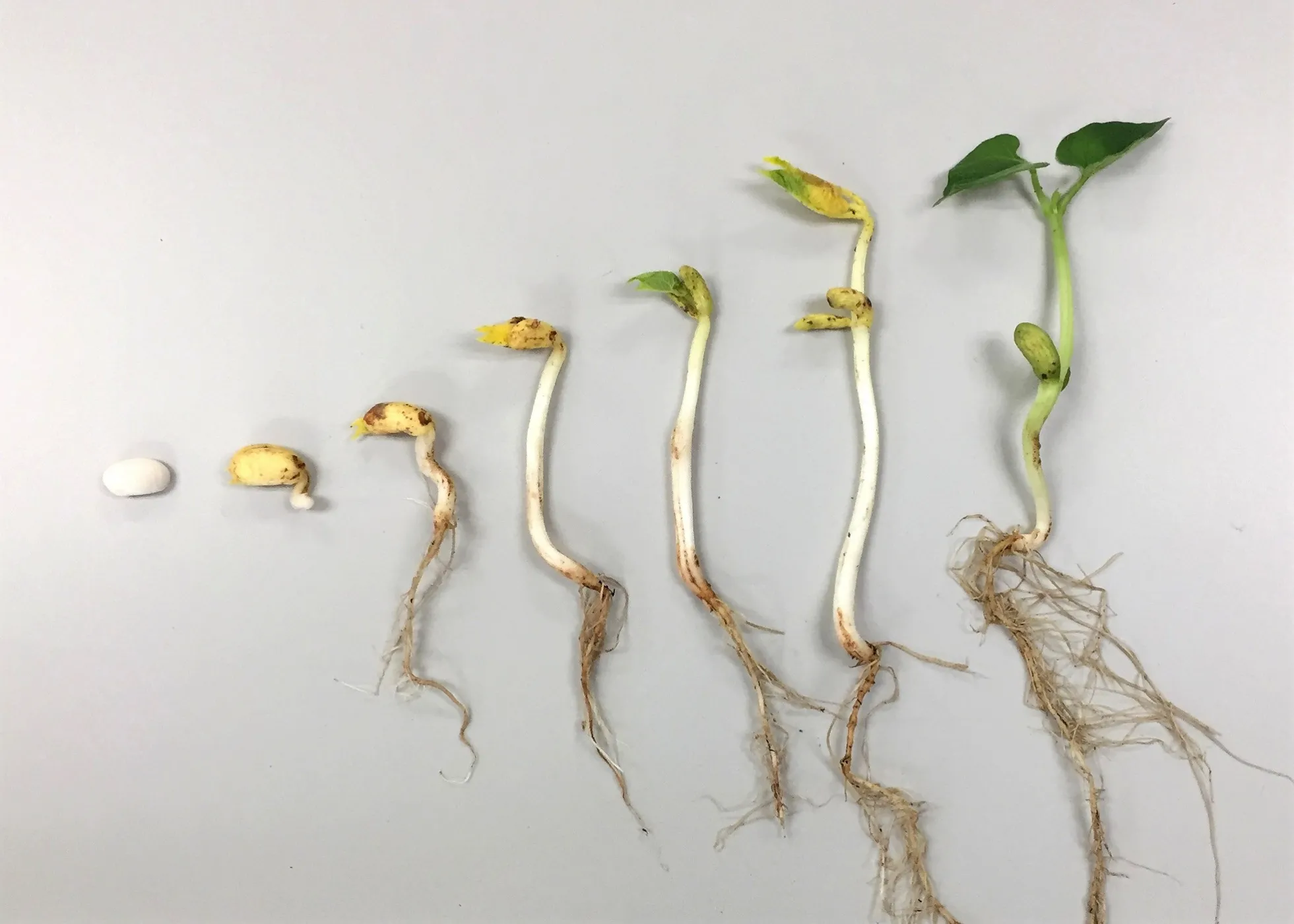
Germination of a bean seed
Sequence of germination of common bean (Phaseolus vulgaris). The development of the root, emergence of cotyledons, and formation of the first true leaves are clearly visible.
The life cycle of an annual can be divided into several clear stages:
1. Germination: The seed, having received moisture and warmth, awakens, and a tiny seedling emerges from it.
2. Vegetative growth: The plant actively builds its root system, stem, and leaves. During this period it accumulates energy for future flowering and fruiting. For the gardener, this is the time when it is important to provide the plant with nutrition and water.
3. Flowering: Having reached a certain size and accumulated enough resources, the plant moves into the generative phase—it forms flowers. This is a critical moment on which the future harvest depends.
4. Fruiting and seed ripening: After pollination, fruits form from the flowers, and seeds ripen inside them. It is for these fruits that we grow most annual crops.
5. Death: After the seeds ripen, the annual plant has fulfilled its biological task—it has left offspring. Its life cycle is complete, and it dies (Medvedev, 2012).
Important note: Some plants that we are accustomed to consider annuals are perennials in their native climate (for example, in the tropics). Tomatoes, peppers, and eggplants are exactly such cases. In temperate climates they do not survive the winter, so we grow them as annual crops. This once again emphasizes how strongly environmental conditions influence the manifestation of the life cycle.
Among annuals, botanists distinguish a special group—ephemerals. These are plants with an extremely short development cycle. They manage to germinate, flower, and produce seeds in only 5–6 weeks. A typical example is spring draba (Kuznetsov and Dmitrieva, 2006). In desert and semi-desert zones, ephemerals make up to 60–80% of the entire flora, since they manage to use the short period of spring moisture before the heat arrives.
Practical takeaway for the gardener: Annual crops are the foundation of most vegetable gardens. Their main advantage is predictability and speed. You can plan the harvest for a specific season. However, there is also a downside: they must be sown anew every year. If you want a continuous tomato harvest, you will have to either grow seedlings or use methods that extend the season (for example, greenhouses), but the plant’s genetic program will remain unchanged—it will still complete its cycle and die.


LCD 4-in-1 Soil Tester
Check essential growing conditions with one compact tool. Measure soil pH, moisture, temperature and light intensity — ideal for gardens, potted plants and greenhouses.
- 4-in-1 measurement
- Easy-to-read LCD display
- Portable design
Affiliate link · For indicative measurements only.
3. Biennials: Leaves in the First Year, Flowers and Seeds in the Second

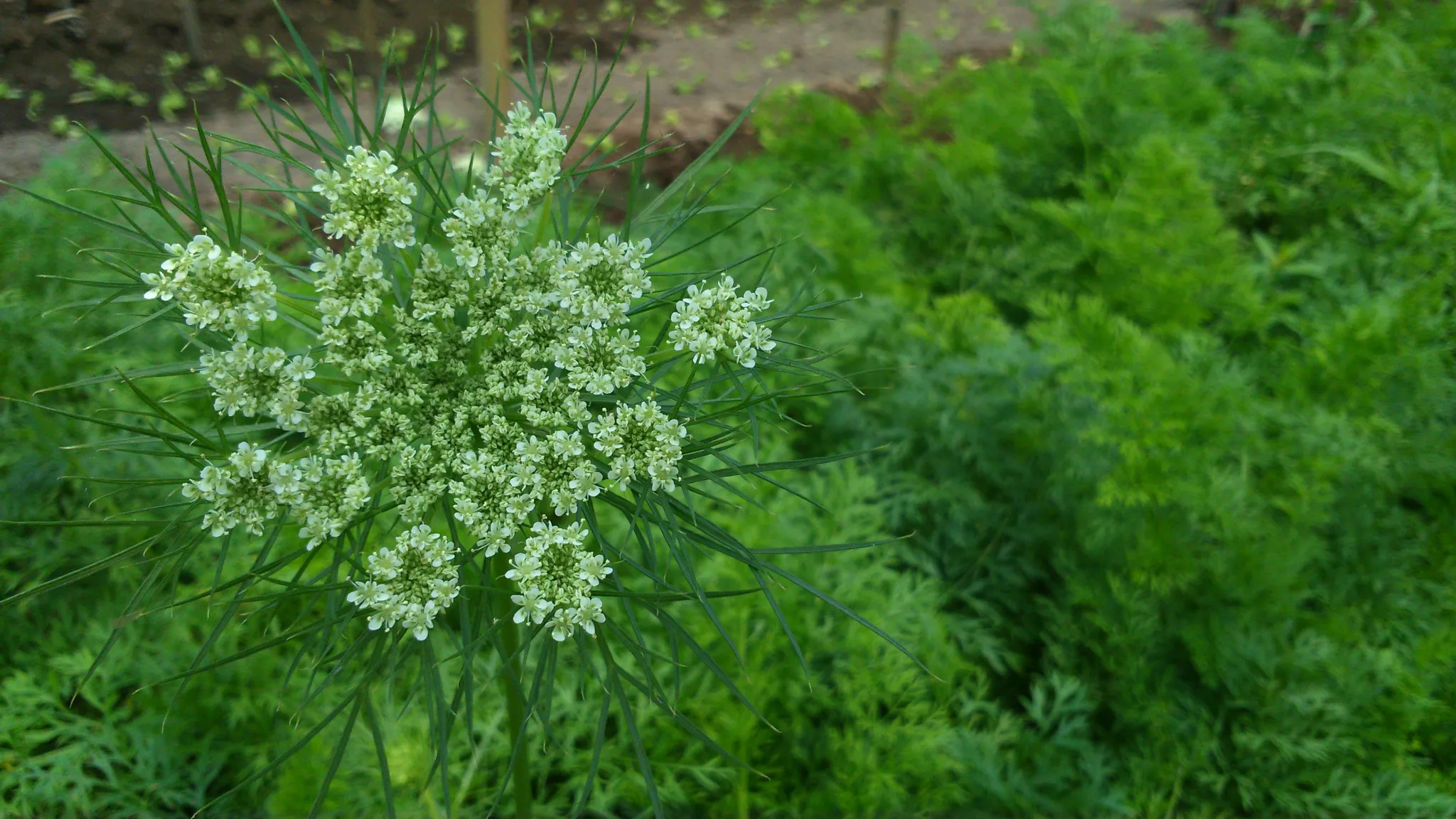
Carrot flowering in the second year of life
Inflorescence of carrot (Daucus carota). The photograph illustrates the transition of a biennial plant to flowering and seed formation in the second year of its life cycle.
Biennial plants are the “strategists” of the plant world. They are in no hurry. Their life cycle takes two years, and each year has its own clear task.
In the first year, a biennial germinates and forms only vegetative organs: the root system, stem, and leaves. It does not flower or bear fruit. All its energy goes into growth and the accumulation of nutrients. Often it is precisely in the first year that the very product organ for which we grow this crop is formed. Examples include carrot, beet, turnip, rutabaga, cabbage (white cabbage, red cabbage, Brussels sprouts), leek, parsley, and celery. In the first year they form a root crop, a head, or a powerful leaf rosette.
The second year of life is the time of reproduction. The plant, having survived the winter (or a dormancy period), uses the reserves accumulated during the first year to send up a flower stalk, bloom, and produce seeds. After this, the biennial plant, as a rule, dies (Potapov et al., 2000).
Important note: The key factor for a biennial’s transition to flowering in the second year is vernalization—exposure to low positive temperatures for a certain period of time. It is the cold wintering that serves as a signal to the plant that winter has passed and it can move on to reproduction. Without this cold period, a biennial may never flower. This phenomenon is widely used in vegetable growing: for example, onion sets are planted in autumn before winter so that the following year one can obtain seeds (black seed, or nigella).
Practical takeaway for the gardener: Biennial crops require patience and planning two years ahead from the gardener.
- If you grow them for a vegetative product (root crop, head), your cycle fits into one season. You sow in spring, harvest in autumn, and that is the end of it. You do not allow the plant to go into its second year.
- If your goal is your own seeds, you will have to keep the best specimens until the next year. To do this, they must either be left to overwinter in the ground (if the climate allows), or dug up and stored under special conditions (for example, in a cellar), and then planted again in spring. Only then, in the second year, will you get flowers and then seeds.
Understanding this cycle helps avoid disappointment. For example, if the carrot you planted unexpectedly flowers in the first year, this is not a miracle but a signal that the plant experienced stress (for example, prolonged cooling) that triggered the second-year development program. Such root crops become tough and unsuitable for food.
4. Perennials: They Live for Years and Bear Fruit After Maturing

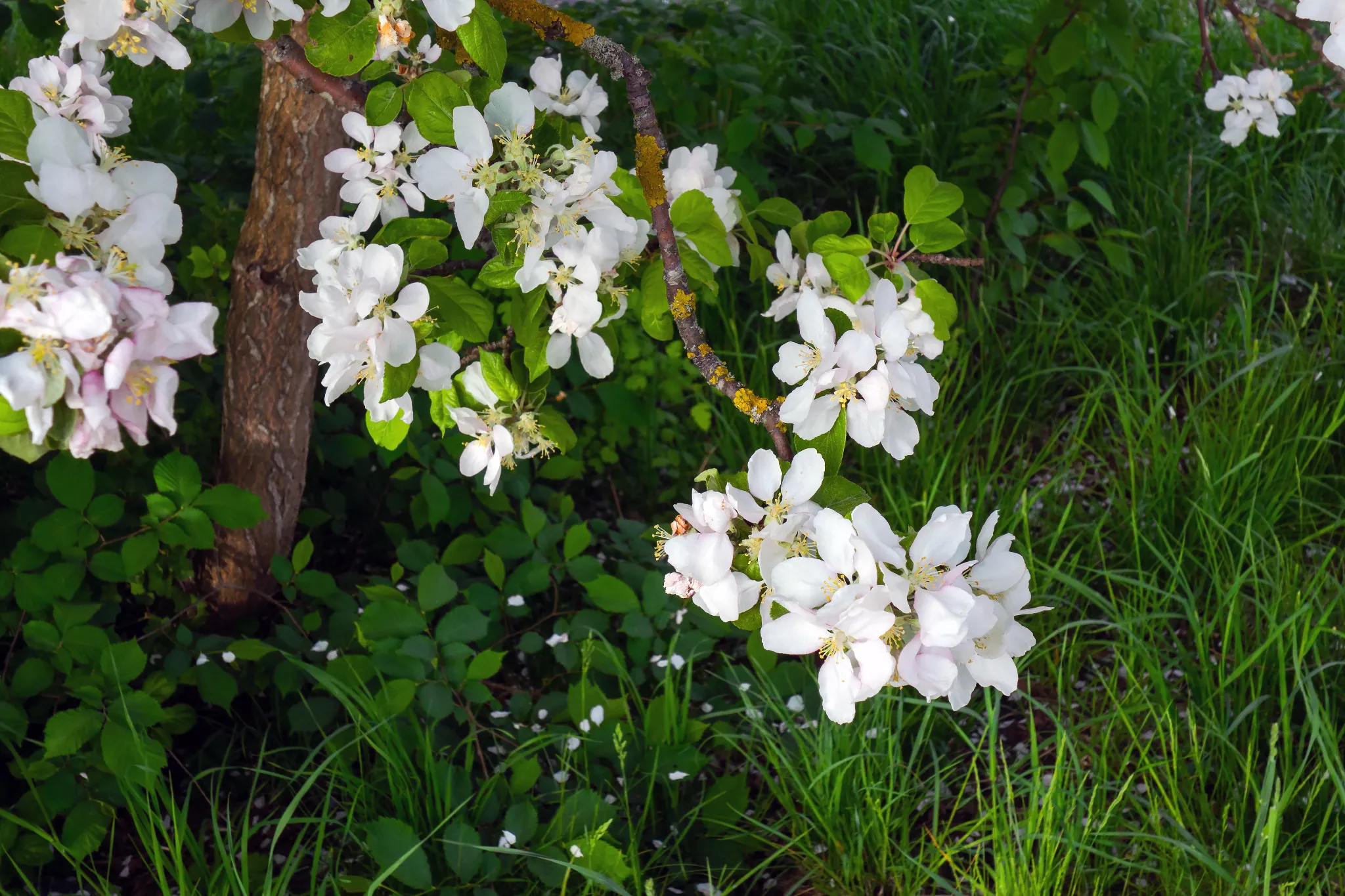
Flowers of the domestic apple (Malus domestica) on one of the lower branches of the tree
The photograph was taken in Brastad, Sweden. The apple tree is an example of a perennial fruit tree that, after completing the juvenile period, can flower and bear fruit for many years.
Perennial plants are the marathon runners of the plant world. Their life cycle is not limited to one or two seasons. They live for years, decades, and some for centuries and even millennia. Clear examples are fruit trees (apple, pear, cherry), berry shrubs (currant, gooseberry, raspberry), and also many ornamental herbaceous plants (peonies, phlox, hostas, daylilies).
The main feature of perennials is that they have a juvenile period (period of youth). This is the time when the plant actively grows and gains vegetative mass, but is not yet capable of reproduction. It does not flower or bear fruit. The length of this period can vary: in herbaceous perennials it may be several weeks or months, in shrubs 2–3 years, and in trees 5, 8, and sometimes 10–12 years (Potapov et al., 2000; Kurennoy et al., 1985).
Only after reaching a certain age and accumulating a sufficient amount of nutrients does the plant enter the phase of maturity and become capable of flowering and fruiting. From that moment on, the perennial can produce a harvest every year for many years.
Important note: Unlike annuals, which bear fruit once in their life, perennial plants are polycarpic—they are capable of flowering and fruiting repeatedly. However, their productivity changes with age: periods of abundant fruiting may alternate with periods of rest, and over time yields may decline. This is a natural aging process that the gardener can correct through pruning, rejuvenation, and proper care.
Perennial plants are divided into two large groups according to the nature of their above-ground part:
- Woody perennials: their above-ground stems become woody and persist throughout their lives. These are trees and shrubs.
- Herbaceous perennials: their above-ground part (stems and leaves) dies off for the winter, while rhizomes, bulbs, tubers, or corms remain underground, from which new shoots grow in spring (Medvedev, 2012).
Practical takeaway for the gardener: Perennial crops require a strategic approach. You plant them once, but invest time and effort in the first years while the plant has not yet begun to bear fruit. After that, however, you get a stable source of harvest for many years. The main thing is to be patient and provide the plants with the right conditions during their growth and maturation.

Solar Automatic Drip Irrigation Kit for Gardens
Automate watering for pots, gardens and small greenhouses. This solar-powered system features a timer to help schedule water delivery to your plants.
- Solar-powered
- 15 m irrigation hose
- Programmable watering
Affiliate link · Check included accessories.
5. Features: Trees, Shrubs, and Herbaceous Perennials
Within the group of perennial plants, several life forms are distinguished, differing in the structure of the above-ground part, longevity, and growth habit. Understanding these differences helps the gardener properly plan plantings, care, and pruning.
Trees are large perennial plants with a well-defined woody main stem—the trunk. The trunk persists throughout the life of the tree and bears a crown consisting of branches of different orders. Trees, as a rule, are the longest-lived among fruit crops. They enter fruiting late (after 5–10 years or more), but they can bear fruit for decades. Examples are apple, pear, sweet cherry, walnut, and oak (Potapov et al., 2000).
Shrubs are perennial plants that do not have a single main trunk. Instead, they form several equivalent woody stems arising from the ground or from the underground part. Shrubs are usually less long-lived than trees, but they enter fruiting earlier (in the 2nd–4th year after planting). Examples are currant, gooseberry, honeysuckle, hazelnut, and aronia. Some shrubs, for example raspberry, have a two-year cycle of shoot development: in the first year the shoot grows, in the second it bears fruit and dies, and new ones grow in its place (Kurennoy et al., 1985).

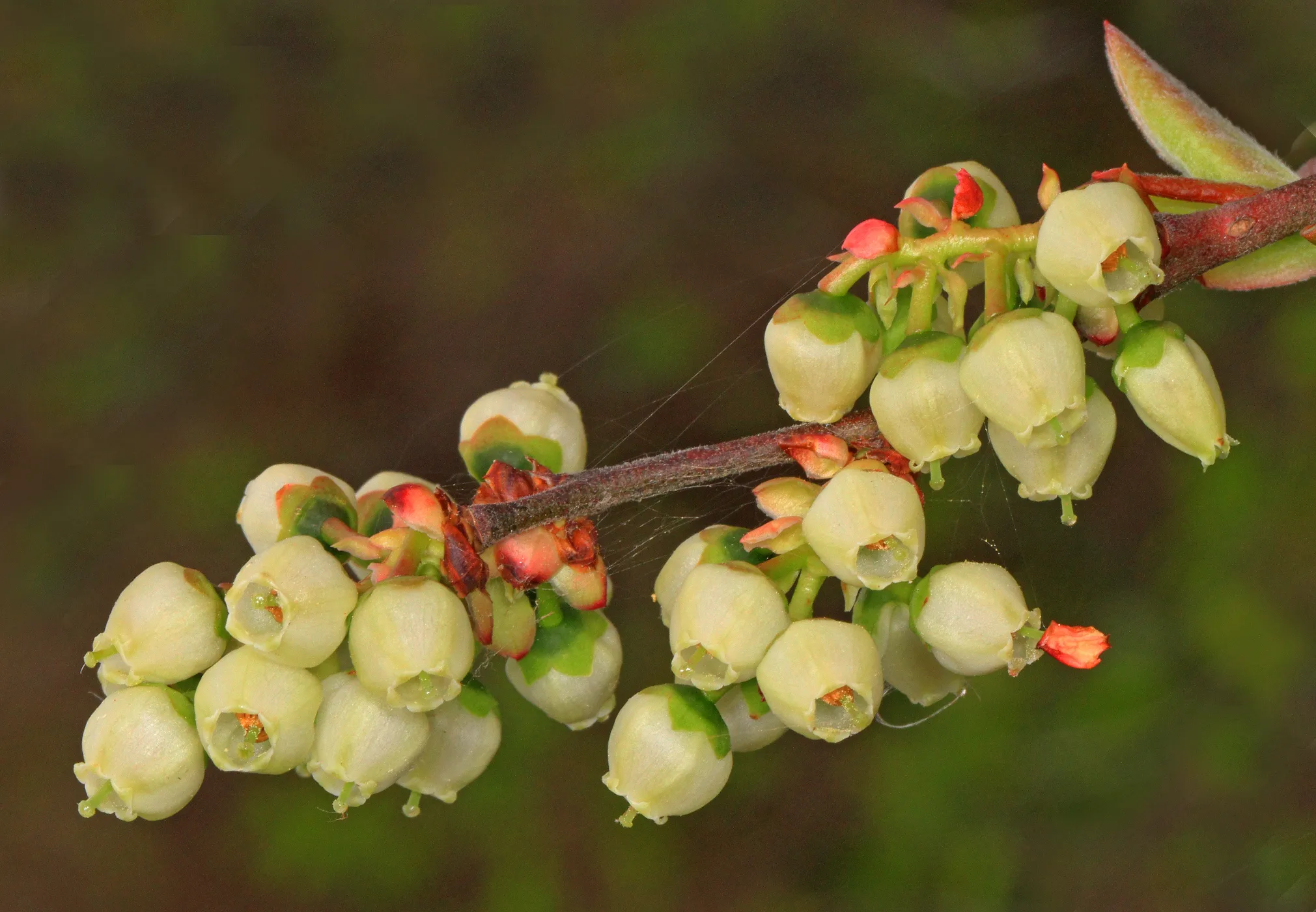
Highbush blueberry — a perennial berry shrub
Highbush blueberry (Vaccinium corymbosum) is a perennial berry plant. The photo was taken at the Julie Metz Wetlands nature complex, Woodbridge, Virginia, USA.
Dwarf shrubs are a small group of plants occupying an intermediate position between shrubs and herbaceous perennials. They have woody but very low stems (up to 0.5–0.8 m high). Examples are blueberry, bilberry, lingonberry, and cranberry (Potapov et al., 2000).
Herbaceous perennials are plants whose above-ground stems and leaves are soft, do not become woody, and die off for the winter. Underground they retain modified organs: rhizomes, bulbs, tubers, or corms. It is from these that new shoots develop in spring. Herbaceous perennials are divided into several subgroups depending on the type of underground organ:
- Rhizomatous: they have a horizontally growing underground rhizome (iris, peony, hosta, lily of the valley).
- Bulbous: the storage organ is a bulb (tulip, narcissus, lily, onion).
- Cormous: the storage organ is a corm (gladiolus, crocus).
- Tuberous: the storage organ is a tuber (dahlia, potato).
- Taprooted: they have a powerful main root that persists for many years (oriental poppy, lupine).

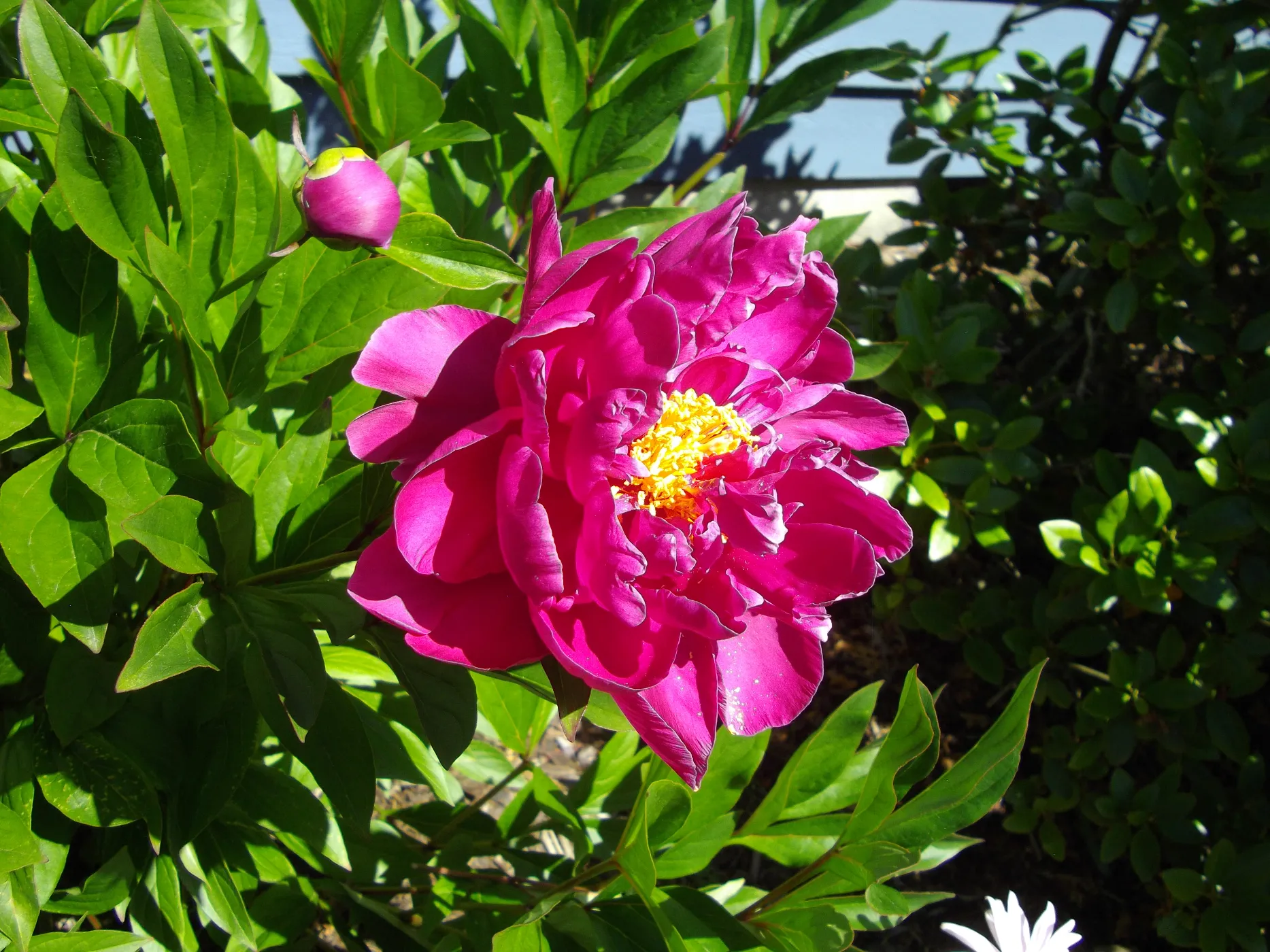
Flower of the medicinal peony (Paeonia officinalis)
This is a herbaceous perennial whose aboveground shoots die off in winter, while the underground organs persist and ensure the plant renews in the next season.

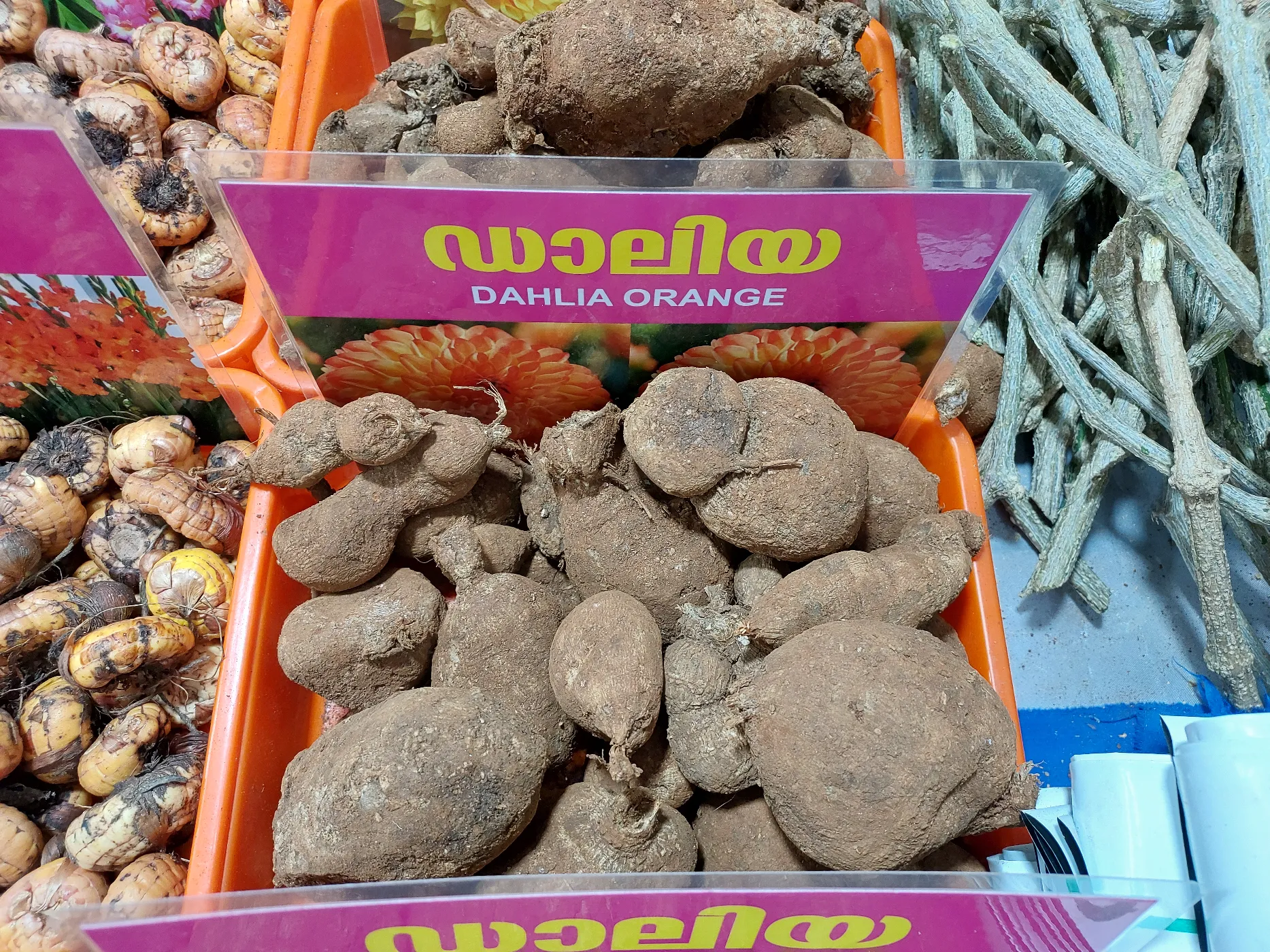
Underground storage organs of dahlias (Dahlia spp.) in which nutrients accumulate
Thanks to them, the plant can survive an unfavorable season and form new shoots when favorable conditions arrive.
Vines are a special life form of perennial plants with long, flexible stems that need support. They can be woody (grape, Schisandra, actinidia) or herbaceous (hops, morning glory). Vines grow quickly and are often used for vertical greening (Potapov et al., 2000).
Practical takeaway for the gardener: Knowing a plant’s life form helps to choose the right planting site, plan the layout, and determine a care strategy. For example, trees need more space and light, shrubs can be planted more densely, and herbaceous perennials require regular division and rejuvenation. Understanding the features of each group allows you to create a garden that will delight with harvest and beauty for many years.
6. How the Cycle Is Connected to Care
Understanding a plant’s life cycle is not abstract knowledge but a practical tool that determines the care strategy at each stage. What is beneficial for a young seedling may be harmful for an adult plant preparing to flower. Let us consider how the type of cycle influences key agronomic practices.
Annual crops. Since the entire cycle fits into one season, care is aimed at ensuring that the plant passes through the vegetative phase as quickly as possible and moves on to fruiting. At the beginning of the season it is important to provide sufficient nutrition, especially nitrogen, for building green mass. However, an excess of nitrogen during flowering can cause the plant to “grow fat”—to build leaves to the detriment of fruits. At this moment it is important to switch fertilizing to phosphorus and potassium, which are necessary for the formation of flowers and fruits (Potapov et al., 2000). Watering should be regular but without waterlogging, since stagnant water suppresses the root system.
Biennial crops. Here the care strategy depends on the purpose of cultivation. If you want to obtain a root crop or a head, your task is to prevent the plant from switching to flowering in the first year. To do this, you need to avoid stresses that can trigger the second-year program: prolonged cooling, drying out of the soil, damage to the roots. If your goal is seeds, then after harvesting the first year you need to keep the best specimens until spring. It is important to provide them with the right storage conditions: a cool and humid room, so that they undergo vernalization and are ready for flowering (Medvedev, 2012).
Perennial crops. Caring for them is a long-term project. In the juvenile period (the first years of life), it is important to create conditions for powerful growth of the root system and above-ground part. You should not rush the plant into fruiting by pruning it or stimulating it with excessive fertilizing. On the contrary, you need to let it become stronger. For fruit trees during this period, the crown is formed, laying the foundation for future abundant fruiting (Kurennoy et al., 1985). When the plant enters maturity, care shifts toward regulating the harvest: pruning, fruit thinning, timely fertilizing. It is also important to take into account the periodicity of fruiting, which in many perennials is expressed in the alternation of productive and unproductive years. Competent care helps smooth out these fluctuations.
Important note: For perennials, the period of dormancy is critically important. Many gardeners make the mistake of continuing to water and fertilize plants in autumn, when they are preparing for winter. This can disrupt the hardening process and reduce winter hardiness. With the onset of leaf fall and yellowing of leaves, watering and fertilizing should be stopped, giving the plant the opportunity to prepare for the cold (Kuznetsov and Dmitrieva, 2006).
Practical takeaway for the gardener: Care must correspond to the stage of the cycle. You cannot apply the same techniques to all plants and at all stages of their development. Understanding what is happening to the plant at a given moment allows you to make the right decisions and avoid mistakes.

7-in-1 Wi-Fi Weather Station
Monitor local weather conditions with a wireless outdoor sensor. Track temperature, humidity, rainfall, wind speed and direction, and atmospheric pressure. Ideal for gardens, farms and greenhouses.
- Wireless outdoor sensor
- Solar-powered
- Wi-Fi connectivity
Affiliate link · Check regional compatibility.
7. What Happens If the Cycle Is Disrupted: No Flowering, No Harvest
A plant’s life cycle is a strict genetic program that is realized under certain conditions. If these conditions are violated, the plant may fail to pass through some stage, and then there will be no harvest. Let us consider the most common cases.
Lack of vernalization in biennials. If a biennial plant has not received the necessary period of low temperatures, it will not be able to move to flowering in the second year. For example, if a carrot dug up in autumn was stored in a warm room and planted in spring, it may never send up a flower stalk. Instead, it will continue to grow leaves or simply die. That is why, in order to obtain seeds from biennials, it is important to provide them with a cold wintering (Medvedev, 2012).

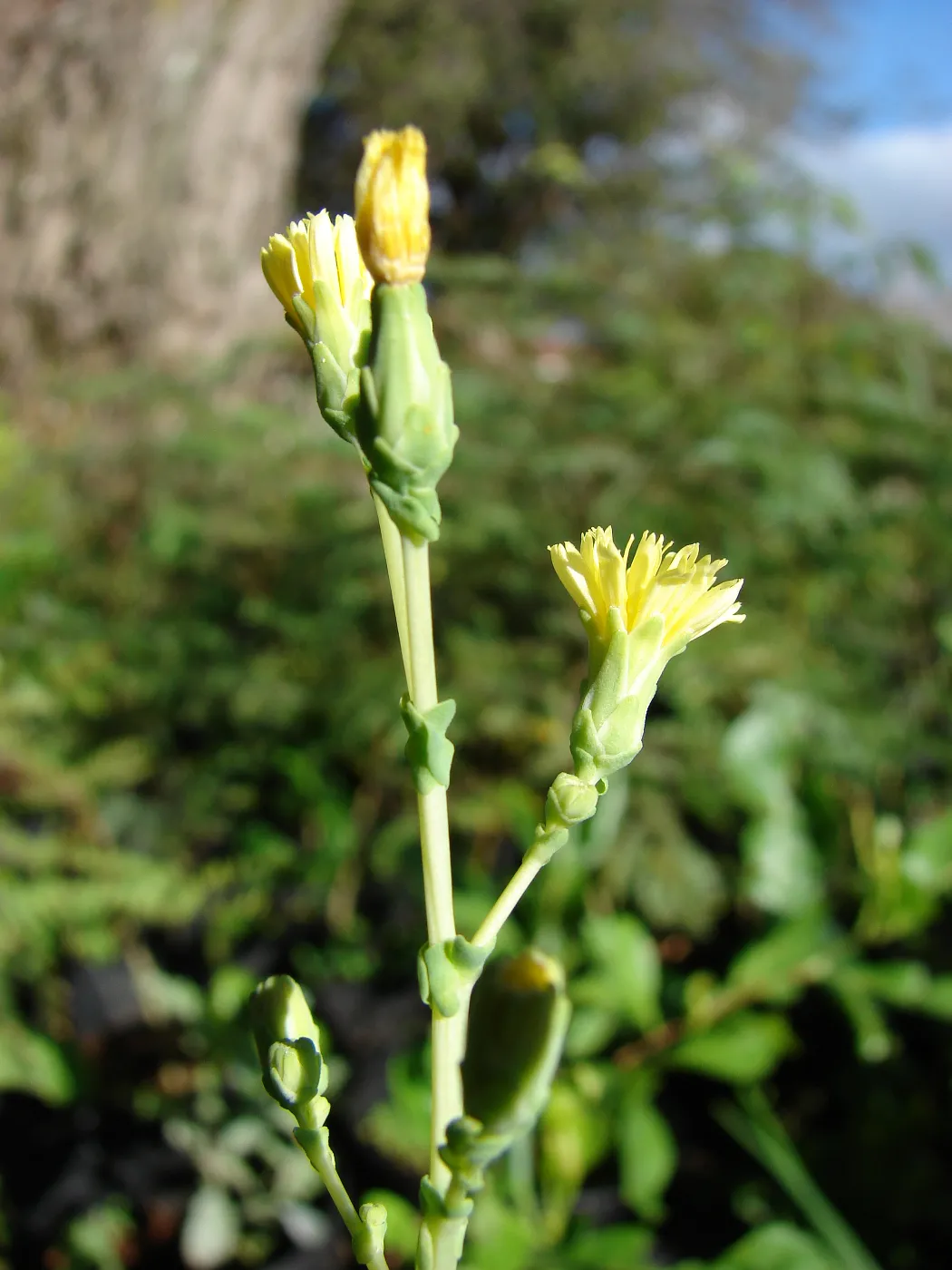
A lettuce plant (Lactuca sativa) that has prematurely begun forming a flowering stem
A good visual example of bolting, in which the plant switches from vegetative growth to reproduction prematurely. The photograph was taken in Makawao on the island of Maui, Hawaii, USA.
Premature flowering (bolting). This is a phenomenon in which a plant flowers before its time, before it has managed to form a full harvest. Most often it is associated with stress. For example, lettuce, parsley, radish, and beet can “bolt” under sharp temperature fluctuations, prolonged drought, or lack of nutrients. The plant perceives these signals as a threat to life and hurries to reproduce by sending up a flower stalk. The root crops and leaves become coarse and bitter, losing their nutritional value (Potapov et al., 2000).
Lack of flowering in perennials. A perennial plant may fail to flower for several reasons. First, if it has not yet emerged from the juvenile period. A young tree or shrub is simply not ready for reproduction, and no fertilizing will make it flower prematurely. Second, if the plant experiences a lack of light or nutrition. Many fruit crops are very light-demanding, and in shade they may not form flower buds at all. Third, if the dormancy period was disrupted. For example, a warm winter may interfere with vernalization, and then the plant will not flower in spring (Kurennoy et al., 1985).
Photoperiod mismatch. Many plants require a certain day length or night length in order to transition to flowering. This phenomenon is called photoperiodism. For example, some onion varieties form a bulb only under long days, while chrysanthemums flower under short days. If a plant finds itself under conditions with an unsuitable photoperiod, it may never flower. It is important for the gardener to take this factor into account when choosing varieties for their region (Medvedev, 2012).
Excess nitrogen. As already mentioned, overfeeding with nitrogen fertilizers can cause a plant to build green mass to the detriment of flowering. This is especially characteristic of tomatoes, peppers, and fruit trees. The plant “grows fat,” producing powerful shoots and large leaves, but does not form flowers, or the flowers drop without setting fruit (Potapov et al., 2000).
Practical takeaway for the gardener: Disrupting the cycle always means losing the harvest. To avoid disappointment, you need to pay careful attention to the needs of each crop at each stage of its development. Create conditions that correspond to the plant’s genetic program, and it will reward you with a generous harvest.
8. Regional Aspect: In Different Climates the Cycle May Stretch or Contract

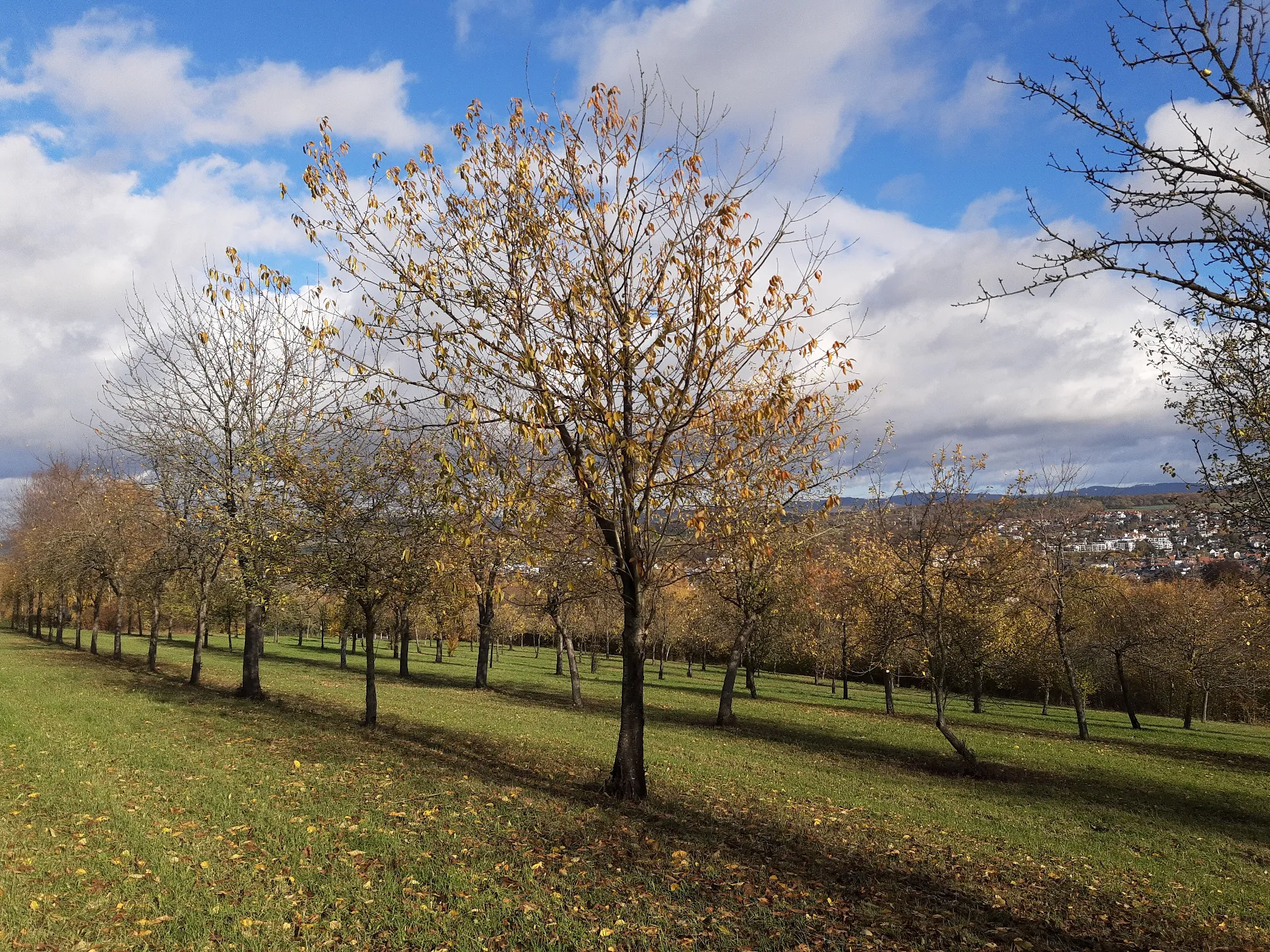
Apple orchard in Germany
Apple orchard with domestic apple trees (Malus domestica) against the background of the town of Idstein, Germany. A good example of perennial fruit crops occupying a permanent place in the garden.
A plant’s life cycle is a genetic program, but it is realized under specific environmental conditions. And these conditions can differ greatly depending on the region. The same species in different climatic zones may behave differently: what is a perennial in a warm climate is grown as an annual in a cold one. What fits into one season under some conditions may stretch over two or three years under others.
The influence of temperature. Temperature is one of the main factors determining the rate at which the life cycle passes. Every plant has its own biological zero—the minimum temperature at which growth and development begin. For most deciduous trees of the temperate zone it is about 5 °C; for heat-loving crops (corn, tomatoes) it is 10–15 °C (Potapov et al., 2000). If in a region the sum of effective temperatures (accumulated heat above the biological zero) is insufficient, the plant may not have time to pass through all phases during the season. That is why in northern latitudes many heat-loving annuals are grown through seedlings or in greenhouses.
The influence of photoperiod. Day length changes with latitude. At the equator, day and night are approximately equal all year round, while at high latitudes summer days are very long and winter days are very short. Many plants “read” day length as a signal to transition to flowering or to begin preparing for winter. For example, onion forms a bulb under long days. In northern regions, summer days are longer, and onion manages to form a large bulb. In southern latitudes, where the day is shorter, the same variety may not form a bulb at all, or it will be small. That is why there are “short-day varieties” and “long-day varieties” for different regions (Medvedev, 2012; Rubatzky and Yamaguchi, 1997).
The influence of season length. In the tropics, where there are no cold winters, many plants can grow and bear fruit all year round. In temperate latitudes, the growing season is limited to the warm period. A perennial plant that flowers continuously in the tropics may flower only once a year or even less often in a temperate climate. Biennials under conditions of a short summer may not have time to complete their cycle in two years and may stretch it over three or more years (Potapov et al., 2000).
The influence of winter temperatures. For perennial crops, winter hardiness is critically important. Plants originating from warm regions may not survive a cold winter. Even if they are genetically programmed for a perennial cycle, in a harsh climate they are grown as annuals. For example, tomatoes, peppers, and eggplants are perennials by nature, but in temperate latitudes they are cultivated as annual plants. On the other hand, some crops of the temperate zone (apple, pear) in the tropics will not be able to undergo vernalization and will not flower, so special low-chill varieties have been bred for the tropics (Westwood, 1993).
Practical takeaway for the gardener: When choosing crops and varieties for your plot, you must take into account not only your wishes but also the climatic realities of the region. A variety that performed magnificently in one zone may fail completely in another. Study the recommendations for your climatic zone, pay attention to ripening times, heat requirements, and day length. This will help avoid disappointment and obtain a stable harvest.

40W Full Spectrum LED Grow Light
Support healthy plant growth with full-spectrum LED lighting. Ideal for seedlings, indoor plants and small growing spaces. A practical solution for indoor gardening and year-round cultivation.
- Full-spectrum LED
- Energy-efficient design
- Indoor plant growing
Affiliate link · Check actual power and light coverage.
9. Conclusion: Knowing the Cycle Allows You to Plan Plantings and Harvests
The life cycle is the foundation on which all gardening is built. Understanding which group a plant belongs to—annual, biennial, or perennial—determines the strategy for working with it for years to come.
What knowledge of the life cycle gives you:
1. Crop rotation planning. Annual crops are easily included in crop rotation; they can be moved from place to place every year. Biennials and perennials require longer-term planning: once they occupy a plot, they will remain there for several years.
2. Choosing sowing and planting dates. Knowing how much time a plant needs to pass through each phase, you can calculate optimal sowing dates so that the harvest ripens before the onset of cold or before the peak of heat.
3. Expectations for the harvest. If you have planted a young fruit tree, you should not expect fruit from it in the first year. The juvenile period is a normal part of the cycle. Patience and proper care in the first years are the key to future abundant fruiting.
4. Understanding failures. If a plant did not flower or did not produce fruit, knowledge of the cycle helps to find the cause: perhaps there was not enough heat for vernalization, the photoperiod turned out to be unsuitable, or the plant was overfed with nitrogen.
5. Preservation and propagation. Understanding the cycle is necessary for collecting your own seeds. Biennials require wintering in order to flower in the second year, while perennials can be propagated vegetatively, preserving their varietal qualities.
The main idea worth remembering: A plant is not just a “green bush” that can be watered and waited on for a harvest. It is a living organism with its own internal program, its own timing, and its own needs. You cannot speed up the life cycle at will. But you can and must create conditions in which this cycle will pass as successfully as possible.
A gardener who understands the biology of their plants stops fighting nature and begins to work in harmony with it. They know when to be patient and when to act actively. They plan not for one season but for years ahead. And it is precisely this approach that brings the richest and most stable harvests.
Important note: The life cycle is only one of the foundations of gardening. Knowledge about soil, water, light, and nutrition is no less important. But it is precisely an understanding of the cycle that gives you the very “map” by which you can navigate the endless diversity of plants and their needs.
References
- (2015). ‘Growing plants from seed’, in Ingram, D.S., Vince-Prue, Daphne, Gregory, P.J. (ed.) Science and the Garden. The scientific basis of horticultural practice. West Sussex, UK: Royal Horticulture Society. Wiley Blackwell, pp. 139-148.
- (2015). ‘Plants and seasons’, in Ingram, D.S., Vince-Prue, Daphne, Gregory, P.J. (ed.) Science and the Garden. The scientific basis of horticultural practice. West Sussex, UK: Royal Horticulture Society. Wiley Blackwell, pp. 120-138.
- (2015). ‘Reproduction: Securing the future’, in Ingram, D.S., Vince-Prue, Daphne, Gregory, P.J. (ed.) Science and the Garden. The scientific basis of horticultural practice. West Sussex, UK: Royal Horticulture Society. Wiley Blackwell, pp. 37-44.
- Capon, Brian (2022). ‘Reproduction and Inheritance’, in Botany for Gardeners. An Introduction to the Science of Plants. Portland, Oregon: Timber Press, pp. 193-240.
- Capon, Brian (2022). ‘The Structure and Growth of Plants’, in Botany for Gardeners. An Introduction to the Science of Plants. Portland, Oregon: Timber Press, pp. 11-87.
- Chalker-Scott, Linda (2015). ‘How Plants Tell Time’, in How Plants Work. Portland, London: Timber Press, pp. 130-149.
- Graham, L.E., Graham, J.M., Wilcox, L.W. (2014). ‘Plant Structure, Growth, and Development’, in Plant Biology. Harlow: Pearson Education Limited, pp. 165-181.
- Griffiths, Michael (2026). ‘Spring’, in The Easy Garden. New York, NY: Penguin Random House, .
- Hopkins, W.G., Hüner, N.P..A. (2009). ‘Development: An Overview’, in Introduction to Plant Physiology. Hoboken, NJ: John Wiley & Sons, pp. 275-288.
- Jabbour, Niki (2020). ‘Lettuce’, in Growing Under Cover. Techniques for a More Productive, Weather-Resistant, Pest-Free Vegetable Garden. North Adams, MA: Storey Publishing, pp. 179-181.
- Jabbour, Niki (2020). ‘Parsnips’, in Growing Under Cover. Techniques for a More Productive, Weather-Resistant, Pest-Free Vegetable Garden. North Adams, MA: Storey Publishing, pp. 184-185.
- Jabbour, Niki (2020). ‘Peppers’, in Growing Under Cover. Techniques for a More Productive, Weather-Resistant, Pest-Free Vegetable Garden. North Adams, MA: Storey Publishing, pp. 188-189.
- Jabbour, Niki (2020). ‘Tomatoes’, in Growing Under Cover. Techniques for a More Productive, Weather-Resistant, Pest-Free Vegetable Garden. North Adams, MA: Storey Publishing, pp. 203-208.
- Lambers, Hans, Oliveira, R.S. (2019). ‘Life Cycles: Environmental Influences and Adaptations’, in Plant Physiological Ecology. Cham: Springer International Publishing, 451-486. doi: 10.1007/978-3-030-29639-1_11
- Mauseth, J. D. (2017). ‘Flowers and Reproduction’, in Botany: An Introduction to Plant Biology. Burlington, MA: Jones & Bartlett Learning, ch. 9.
- Pratt, M.M. (2005). ‘From Seed to Senescence’, in Practical Science for Gardeners. Portland, Oregon: Timber Press, pp. 43-60.
- Rubatzky, V.E., Yamaguchi, Mas (1997). ‘Environmental Factors Influencing the Growth of Vegetables’, in World Vegetables. Boston, MA: Springer US, pp. 59-80. doi: 10.1007/978-1-4615-6015-9_6
- Smith, Miranda (2021). ‘Starting from Seed’, in The Plant Propagator's Bible. Beverly, MA: Cool Springs Press, pp. 20-53.
- Westwood, M.Neil (1993). ‘General Environment’, in Temperate-zone. Pomology. Physiology and Culture. Portland, Oregon: Timber Press, pp. 29-47.
- Zona, Scott (2026). ‘Being a Plant’, in A Gardener's Guide to Botany. Beverly, MA: Cool Springs Press, .
- Zona, Scott (2026). ‘Reproduction’, in A Gardener's Guide to Botany. Beverly, MA: Cool Springs Press, .
- Zona, Scott (2026). ‘Seed Dispersal’, in A Gardener's Guide to Botany. Beverly, MA: Cool Springs Press, .
- Кузнецов, В.В. (2006). ‘Развитие растений [Plant development]’, in Физиология растений [Physiology of plants]. Москва: Высшая школа, pp. 547-617.
- Куренной, Н.М. (1985). ‘Краткая биологическая и производственная характеристика плодовых растений [Brief biological and production characteristics of fruit plants]’, in Плодоводство [Fruit growing]. Москва: Агропромиздат, pp. 27-67.
- Медведев, С.С. (2012). ‘Физиология роста и развития растений [Physiology of plant growth and development]’, in Физиология растений [Physiology of plants]. Санкт-Петербург: БХВ-Петербург, pp. 329-384.
- Потапов, В.А., Фаустов, В.В., Пильщикова, Ф.Н. (2000). ‘Биологические основы плодоводства [Biological foundations of fruit growing]’, in Плодоводство [Fruit growing]. Москва: Колос, pp. 3-124.
