
How a Plant Lives: From Germination to Dormancy
A plant is not a static object but a living organism that passes through sequential stages of development. Each stage requires its own conditions, and disruption of any of them inevitably affects the harvest. In this article, we will examine the life cycle of a plant as a single process—from the awakening of a seed to the period of dormancy.
1. Germination: What Starts a Seed
A seed is not merely a “sleeping” structure but a living organism in a state of suspended animation. Inside the seed there is already an embryo (a miniature plant), a reserve of nutrients (endosperm or cotyledons), and a protective covering (the seed coat) (Hartmann et al., 2011). While the seed is dry, its metabolism is almost stopped, but it remains alive: even in a state of dormancy, weak respiration processes continue within it (Bubel, 2024).
What starts germination?
Three key conditions are necessary for growth to begin (Hartmann et al., 2011):
1. Water. A dry seed contains less than 10% moisture. On contact with moist soil, imbibition begins—a physical process of water uptake that triggers enzymatic activity. Proteins, fats, and starch are broken down into soluble forms available to the embryo (Taiz et al., 2023).
2. Oxygen. A germinating seed sharply increases its respiration rate. Without oxygen, the embryo cannot produce energy for growth (Hopkins & Hüner, 2009).
3. Temperature. Each species has its own optimal range. For example, onion seeds germinate at +1…+5 °C, while cucumber seeds germinate at +15…+18 °C (Hartmann et al., 2011).
Some seeds require additional signals: light (lettuce, celery), cold (apple, maple), or even smoke (some Australian species) (Lambers & Oliveira, 2019).
Three phases of germination

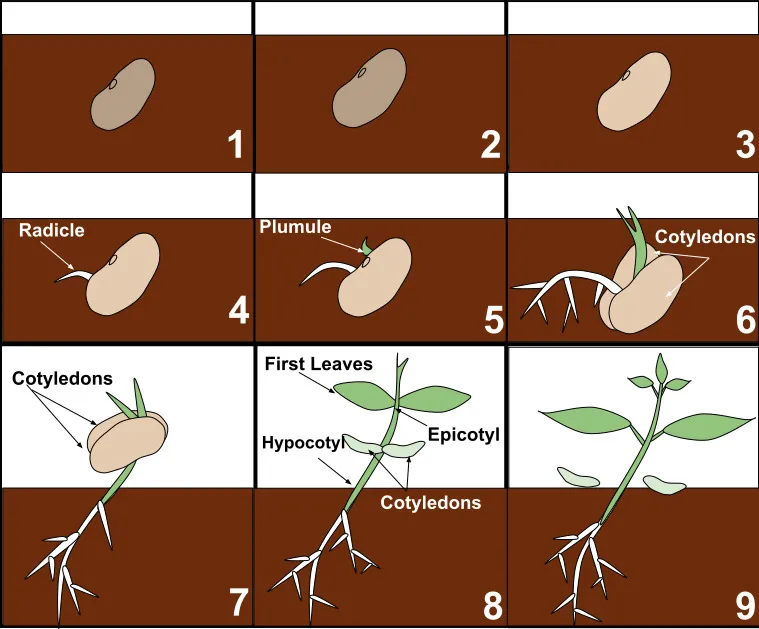
Stages of seed germination in a dicotyledonous plant
1–3: Dry dormant seed, swelling (water uptake), and rupture of the seed coat. 4: Emergence of the radicle, which begins to grow downward for anchorage and water uptake. 5: Emergence of the plumule, the beginning of shoot development. 6: Expansion of the root system and the beginning of cotyledon growth. 7: Elongation of the hypocotyl (the region below the cotyledons), which carries the cotyledons above the soil surface (characteristic of epigeal germination). 8: Appearance of the first true leaves from the epicotyl. The cotyledons serve as a source of nutrients. 9: The first true leaves open and become the main organ of photosynthesis. The cotyledons, having fulfilled their function, fall off, and the plant becomes independent.
The germination process is divided into three phases (Hartmann et al., 2011):
- Imbibition phase—rapid water uptake, swelling of the seed.
- Lag phase—metabolic activity without noticeable water uptake: enzymes are activated, proteins are synthesized.
- Radicle emergence phase—cells of the embryonic root begin to elongate, and the radicle breaks through the seed coat.
Note. For the gardener, it is important to remember: if a seed is sown too deeply, its nutrient reserve may run out before the shoot reaches the light. Small seeds (lettuce, parsley) are sown near the surface, while large seeds (beans, corn) are sown to a depth of up to 3–5 cm (Bubel, 2024).
What can go wrong at the germination stage?
- Waterlogging. Water displaces air from the soil, and the seed suffocates. This is one of the main causes of seed rotting (Hartmann et al., 2011).
- Drying out. Even brief drying out of a swollen seed can kill the embryo.
- Too high or too low temperature. Below the minimum temperature, the seed will not germinate; if it is too high, the seed will die.
- Surface crust. A dense crust on the soil surface prevents the shoot from breaking through. The solution is mulching or sowing into a loose substrate (Bubel, 2024).
Practical conclusion. Germination is the “start” of a plant’s life. Provide seeds with moisture, air, and warmth—and they will launch the growth program. But remember: each species has its own requirements, and there is no universal recipe (Lambers & Oliveira, 2019).
2. Growth: Cell Division, Expansion, and Organ Formation
After germination, the plant enters a phase of active growth. This process is not chaotic—it follows strict rules and occurs in strictly defined zones.
Where does growth occur?

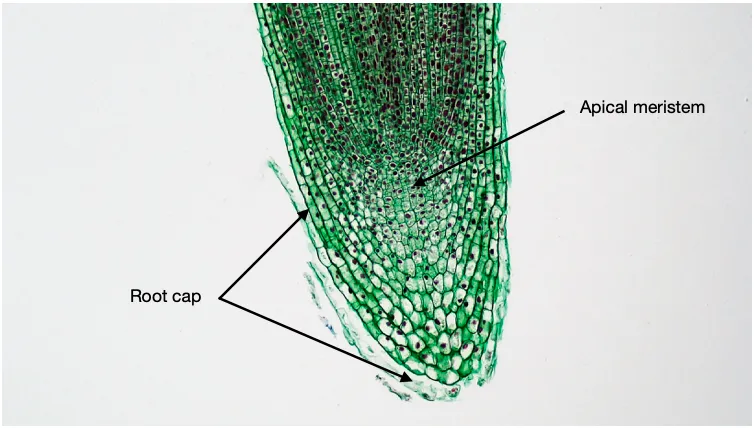
Root apical meristem under a light microscope
Micrograph of a longitudinal section of a root tip stained to visualize cellular structures. The image shows the root cap, which protects the root tip during growth in soil, and the apical meristem, the zone of actively dividing cells that ensures root elongation.
Plant growth is concentrated in meristems—educational tissues whose cells are capable of dividing throughout the plant’s life (Evert, 2006). The main meristems are located:
- At the shoot apex (apical meristem)—ensures stem growth in height and the formation of new leaves (Capon, 2022).
- At the root tip (root apical meristem)—responsible for root elongation and its movement through the soil (Graham et al., 2014).
- In lateral buds—give rise to lateral shoots (Capon, 2022).
- In the cambium (lateral meristem)—ensures thickening of the stem and root in woody plants (Evert, 2006).
Two growth processes
Plant growth consists of two interrelated processes (Taiz et al., 2023):
1. Cell division. In meristems, cells actively divide by mitosis. Each new cell receives a complete set of genetic information. This ensures an increase in the number of cells.
2. Cell expansion. After division, the cell increases in size, often dozens of times. It is expansion, not division, that provides the main increase in volume (Capon, 2022).
Note. Cell expansion is possible due to loosening of the cell wall and the inflow of water into the vacuole. The cell essentially “inflates” from within, and the wall stretches. This process requires water—therefore, when moisture is insufficient, growth immediately slows down (Taiz et al., 2023).
Organ formation
All plant organs are formed from meristems:
- Leaves are laid down as bumps (primordia) on the lateral sides of the shoot apical meristem. Their arrangement follows the law of phyllotaxis—leaves never shade each other (Capon, 2022).
- The stem elongates through division and expansion of internode cells. In some plants (grasses, bamboo), growth occurs from the base of the internode—which is why mowing grass does not stop leaf growth (Capon, 2022).
- Roots branch by laying down lateral roots in internal tissues (the pericycle), not on the surface (Evert, 2006).
The role of hormones
Growth is regulated by phytohormones (Chalker-Scott, 2015):
- Auxin—stimulates cell expansion and ensures apical dominance (the upper bud suppresses the growth of lateral buds).
- Gibberellins—accelerate cell division and expansion and cause stem elongation.
- Cytokinins—stimulate cell division and delay leaf aging.
What can go wrong at the growth stage?
- Lack of light—the plant becomes etiolated, stems become thin, and leaves become smaller (Chalker-Scott, 2015).
- Excess nitrogen—the plant “runs to leaf”: lots of foliage but few fruits.
- Soil compaction—roots cannot grow, and the plant lags in development (Morgan, 2021).
- Damage to the apical bud—the plant loses the ability to grow in height, but lateral buds awaken.
Practical conclusion. Growth is not simply an increase in size. It is a complex process requiring light, water, warmth, and nutrients. Provide the plant with everything it needs—and it will reward you with vigorous development.


LCD 4-in-1 Soil Tester
Check essential growing conditions with one compact tool. Measure soil pH, moisture, temperature and light intensity — ideal for gardens, potted plants and greenhouses.
- 4-in-1 measurement
- Easy-to-read LCD display
- Portable design
Affiliate link · For indicative measurements only.
3. Nutrition: Photosynthesis and Root Nutrition
A plant is the only organism that produces food from inorganic substances using the energy of the sun. This process is called photosynthesis (Taiz et al., 2023).
Photosynthesis: How a Plant Creates Food

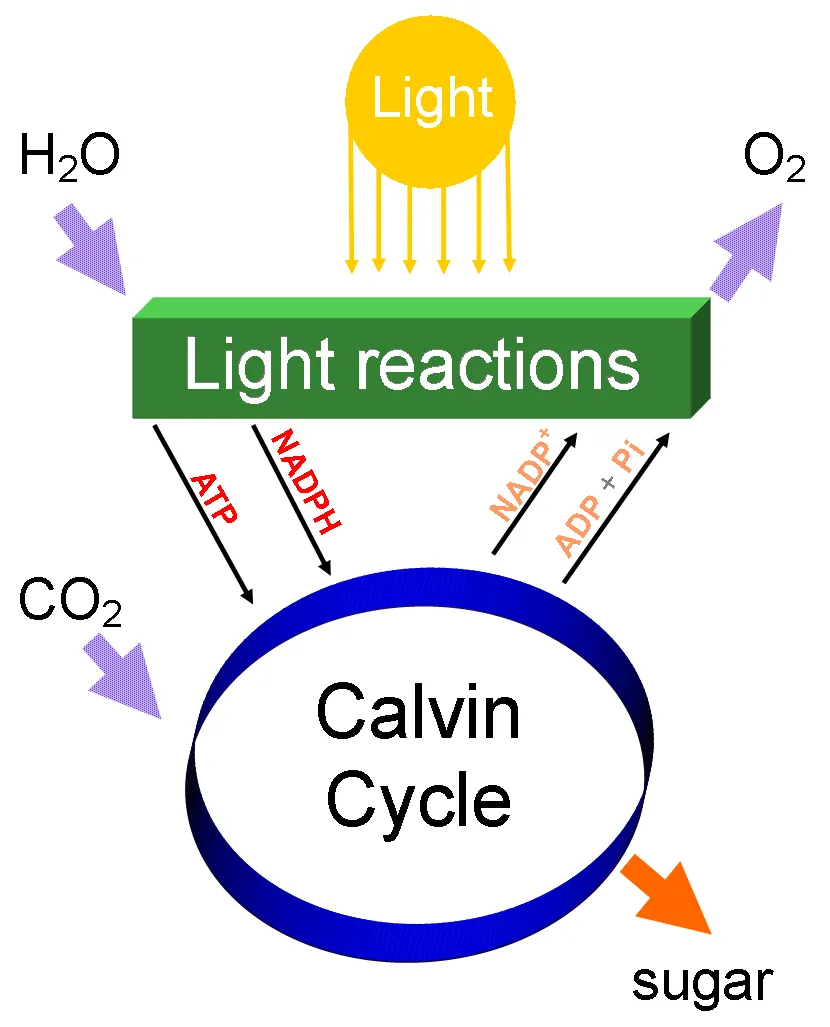
Photosynthesis — conversion of light energy
Simple diagram of photosynthesis showing the participation of light, water, and carbon dioxide in the formation of organic substances and the release of oxygen.
Photosynthesis occurs in chloroplasts—green organelles in leaf cells (Capon, 2022). They contain chlorophyll—a pigment that captures light.
The process consists of two stages (Ingram et al., 2016):
1. Light phase. Light energy splits water molecules. Oxygen is released into the atmosphere, and hydrogen is used to synthesize energy carriers—ATP and NADPH.
2. Dark phase (Calvin cycle). Carbon dioxide from the air combines with hydrogen, and sugars are formed. This process does not require light directly but uses the energy stored in the light phase.
Note. Photosynthesis is the most important process on Earth. Every year, plants fix more than 100 billion tonnes of carbon (Ingram et al., 2016). For the gardener, this means: the larger the leaf surface and the better the lighting, the higher the yield.
How a Plant Adapts to Conditions
Different plants use different photosynthesis strategies (Zona, 2023):
- C3 plants (wheat, rice, potato)—the usual type of photosynthesis. At high temperatures and insufficient water, they lose efficiency due to photorespiration.
- C4 plants (corn, sorghum, sugarcane)—more efficient in hot climates. They concentrate CO2 in specialized cells, which reduces losses.
- CAM plants (cacti, succulents, pineapple)—open their stomata at night to save water. During the day, the stomata are closed, and CO2 is used for sugar synthesis.
Root Nutrition: How a Plant Obtains Minerals
Roots absorb water and mineral substances from the soil. This process requires energy—roots actively “pump” ions across membranes (Zona, 2023).
A plant needs macronutrients (nitrogen, phosphorus, potassium, calcium, magnesium, sulfur) and micronutrients (iron, manganese, zinc, copper, boron, molybdenum) (Zona, 2023).
Note. Liebig’s law (the law of the minimum) states: plant growth is limited by the element that is most lacking. If the soil has enough nitrogen but little phosphorus, the plant will suffer from phosphorus starvation even if the other elements are in excess (Zona, 2023).
Symbiosis with Soil Organisms
Many plants enter into symbiosis with fungi (mycorrhiza) and bacteria (Zona, 2023):
- Mycorrhiza. The fungal hyphae envelop the roots and significantly increase the area for absorbing water and minerals, especially phosphorus. In return, the plant gives the fungus sugars. Mycorrhiza occurs in 90% of plants (Morgan, 2021).
- Nitrogen-fixing bacteria. Legumes (peas, beans, clover) form nodules on their roots in which bacteria convert atmospheric nitrogen into an available form. This is natural fertilizer (Morgan, 2021).

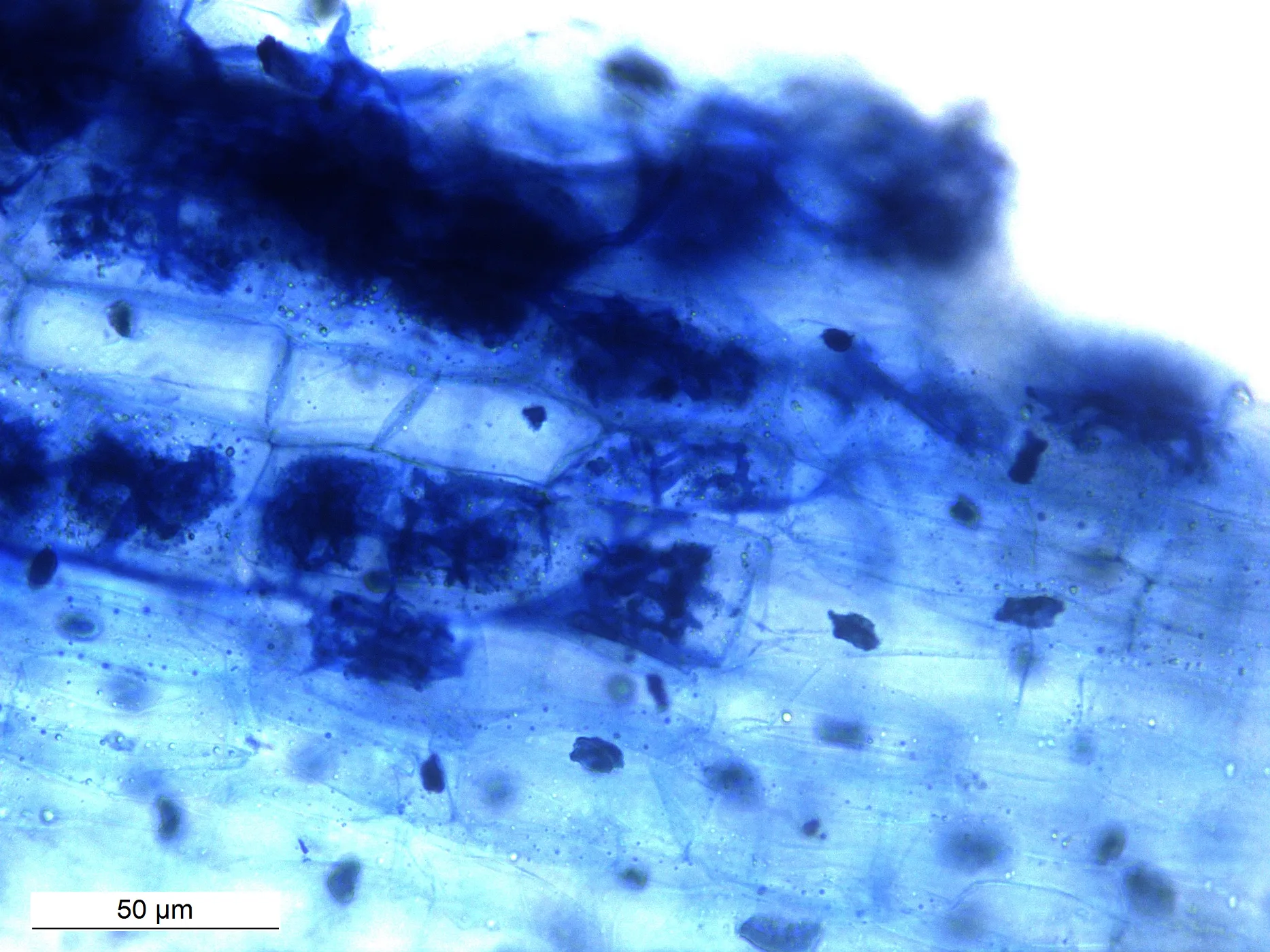
Arbuscular mycorrhiza in the roots of Macrotyloma uniflorum
Micrograph of root tissue of Macrotyloma uniflorum with clearly visible structures of the mycorrhizal fungus — arbuscules and hyphae. The image illustrates the penetration of fungal structures into root tissues and the symbiosis of the plant with the fungus.

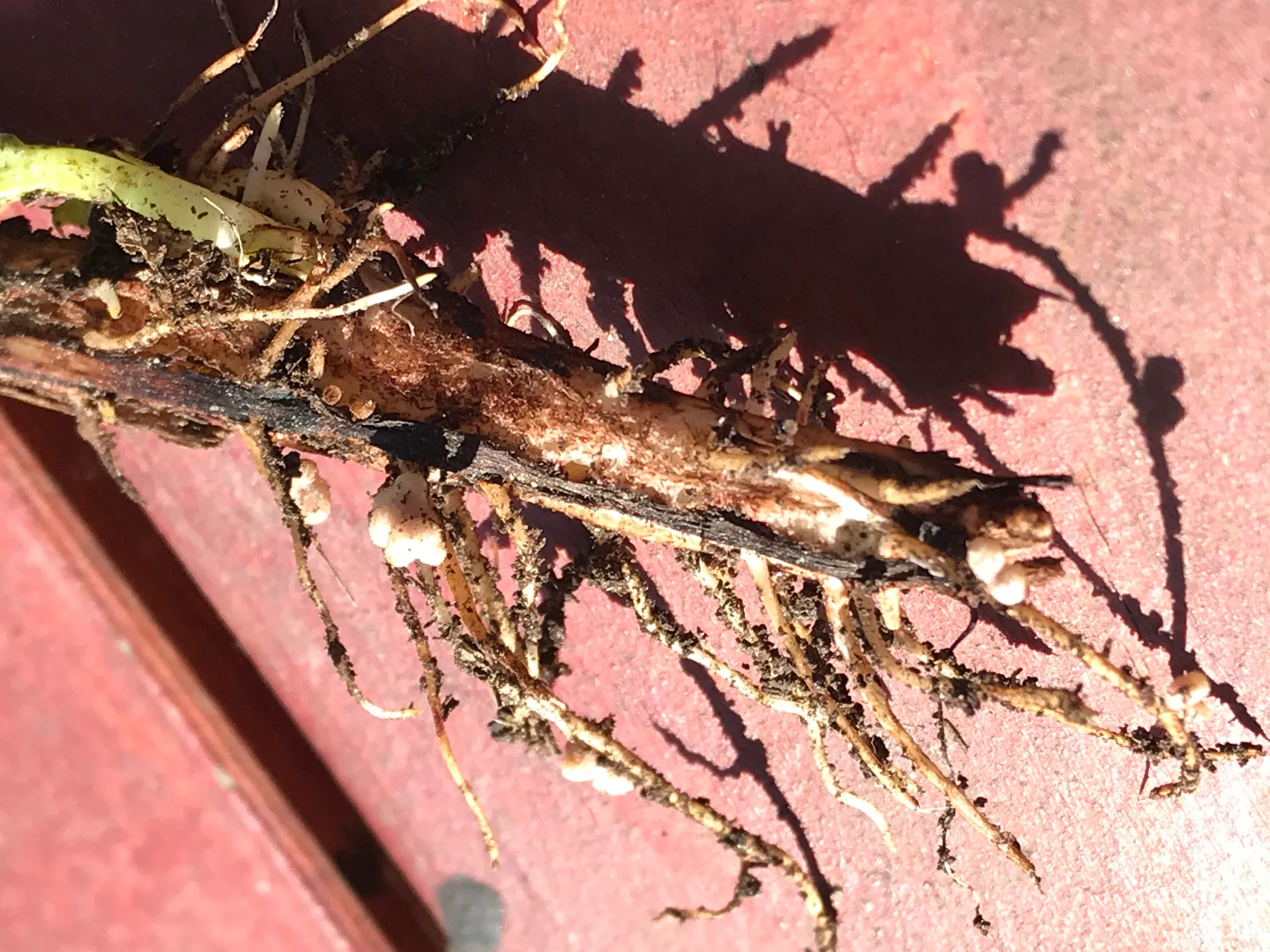
Root nodules on a faba bean plant
A close-up of the faba bean root system with visible nodules. Such formations on the roots of leguminous crops are an important part of the global nitrogen cycle in the ecosystem.
What can go wrong at the nutrition stage?
- Lack of light—photosynthesis slows down, and the plant starves.
- Element deficiency—yellowing of leaves (nitrogen), purple tint (phosphorus), brown edges (potassium).
- Excess fertilizer—“burns” the roots and disrupts water uptake.
- Soil compaction—roots cannot breathe or absorb nutrients.
- Absence of mycorrhiza—the plant absorbs phosphorus and water less effectively.
Practical conclusion. Plant nutrition is a two-way process: leaves produce organic matter, and roots obtain minerals. Plant health depends on balance: light, water, air in the soil, and availability of elements.
4. Respiration: Around the Clock
If photosynthesis is the plant’s “charging” with energy, then respiration is its “expenditure.” Respiration occurs in cells constantly: both day and night (Taiz et al., 2023).
What Is Plant Respiration?

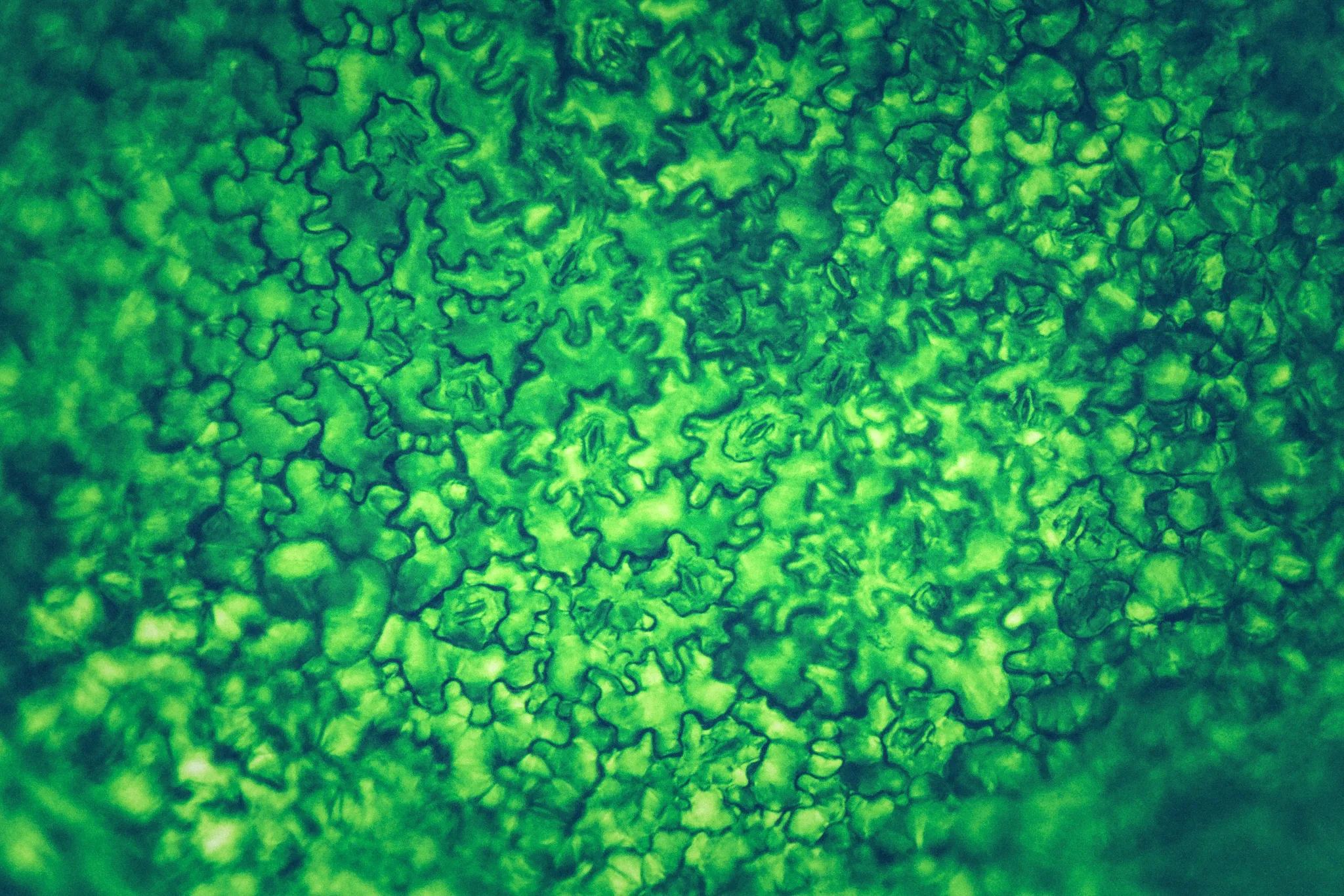
Stomata on the leaf surface — organs of gas exchange
Micrograph of the leaf epidermis showing cells of the covering tissue and stomata. Gas exchange between the plant and the environment and water evaporation occur through stomata. This image complements the explanation of gas exchange but does not directly show cellular respiration or mitochondria.
Respiration is the process of oxidizing organic substances (primarily sugars) with the release of energy. Oxygen is absorbed, and carbon dioxide and water are released (Pratt, 2005). Externally, it looks like this: the plant “breathes,” consuming O2 and releasing CO2—the mirror image of photosynthesis (Ingram et al., 2016).
Respiration occurs in mitochondria—the “power stations” of the cell (Capon, 2022). Energy stored in sugars is converted into a universal “fuel”—ATP, which is used for growth, transport of substances, protein synthesis, and other processes.
Note. A plant breathes with all its parts: leaves, stems, roots, seeds. Even in a state of dormancy, seeds respire, although very weakly (Bubel, 2024). That is why seeds must not be stored in airtight bags without air access—they will “suffocate” and lose germination capacity.
Day and Night
During the day, photosynthesis prevails over respiration: the plant produces more sugars than it consumes. At night, photosynthesis stops, and the plant lives only through respiration—it uses the sugars stored during the day (Chalker-Scott, 2015).
Note. This is why the temperature in a greenhouse at night should be 5–10 °C lower than during the day. At high night temperatures, respiration accelerates, the plant “burns” too many sugars, and growth slows down (Pratt, 2005).
Respiration intensity depends on:
- Temperature. The warmer it is, the faster respiration is. For every 10 °C increase in temperature, the respiration rate increases 2–3 times (Taiz et al., 2023). However, at too high a temperature, enzymes are destroyed, and respiration stops.
- Tissue age. Young, growing tissues respire more intensively than old ones (Taiz et al., 2023).
- Oxygen availability. In waterlogged soil, roots cannot breathe and die. This is why it is so important to ensure drainage and loose soil (Morgan, 2021).
What can go wrong at the respiration stage?
- Waterlogging. Roots suffocate, rot, and the plant wilts (Morgan, 2021).
- High temperature at night. The plant “burns” more sugars than it manages to store.
- Soil compaction. Oxygen does not reach the roots.
- Storing seeds without air access. Seeds lose germination capacity (Bubel, 2024).
Practical conclusion. Respiration is the “price of life” for a plant. It goes on constantly and requires oxygen. Provide roots with air access—and the plant will be able to use energy efficiently for growth and yield.

Solar Automatic Drip Irrigation Kit for Gardens
Automate watering for pots, gardens and small greenhouses. This solar-powered system features a timer to help schedule water delivery to your plants.
- Solar-powered
- 15 m irrigation hose
- Programmable watering
Affiliate link · Check included accessories.
5. Flowering and Pollination
The transition to flowering is a key moment in a plant’s life. It is a signal that the plant is ready to reproduce. But for flowering to lead to fruiting, pollination is necessary.
What starts flowering?
Flowering is controlled by two main factors (Ingram et al., 2016):
1. Photoperiod (day length). Plants are divided into three groups:
- Short-day plants—flower when the day is shorter than a certain length (chrysanthemum, poinsettia, soybean).
- Long-day plants—flower under long days (spinach, radish, lettuce, wheat).
- Day-neutral plants—flowering does not depend on day length (tomato, cucumber, corn).
Note. In fact, plants measure not the length of the day but the length of the continuous dark night. Interrupting the night with even a short flash of light can disrupt the plant’s “internal clock” (Chalker-Scott, 2015). This is why streetlights can delay flowering and autumn dormancy in trees.
2. Temperature. Many plants need a period of cold to initiate flower buds. This process is called vernalization (Hopkins & Hüner, 2009). For example, winter wheat will not flower without winter cold. Biennial plants (cabbage, carrot, beet) form only leaves in the first year and flower in the second year after overwintering (Ingram et al., 2016).
Flower Structure
A flower is a modified shoot intended for reproduction (Capon, 2022). The main parts are:
- Stamens—male organs that produce pollen.
- Pistil—the female organ containing ovules (future seeds).
- Petals and sepals—protection and attraction of pollinators.
Pollination

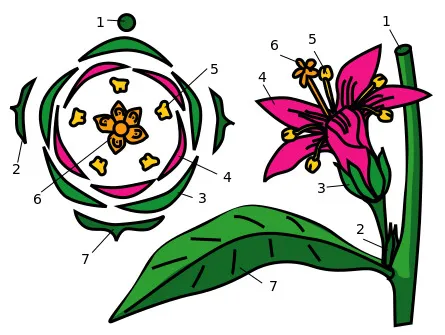
Structure of a typical flower
Botanical diagram of flower structure showing its main parts. Well suited for learning about flower structure and the functions of male and female reproductive organs.
Pollination is the transfer of pollen from the stamens to the stigma of the pistil (Zona, 2023). There are two types:
- Self-pollination—pollen lands on the stigma of the same flower or another flower of the same plant (tomato, pea, bean).
- Cross-pollination—pollen is transferred from one plant to another. It requires the participation of wind, insects, birds, or animals (Zona, 2023).
Who pollinates?

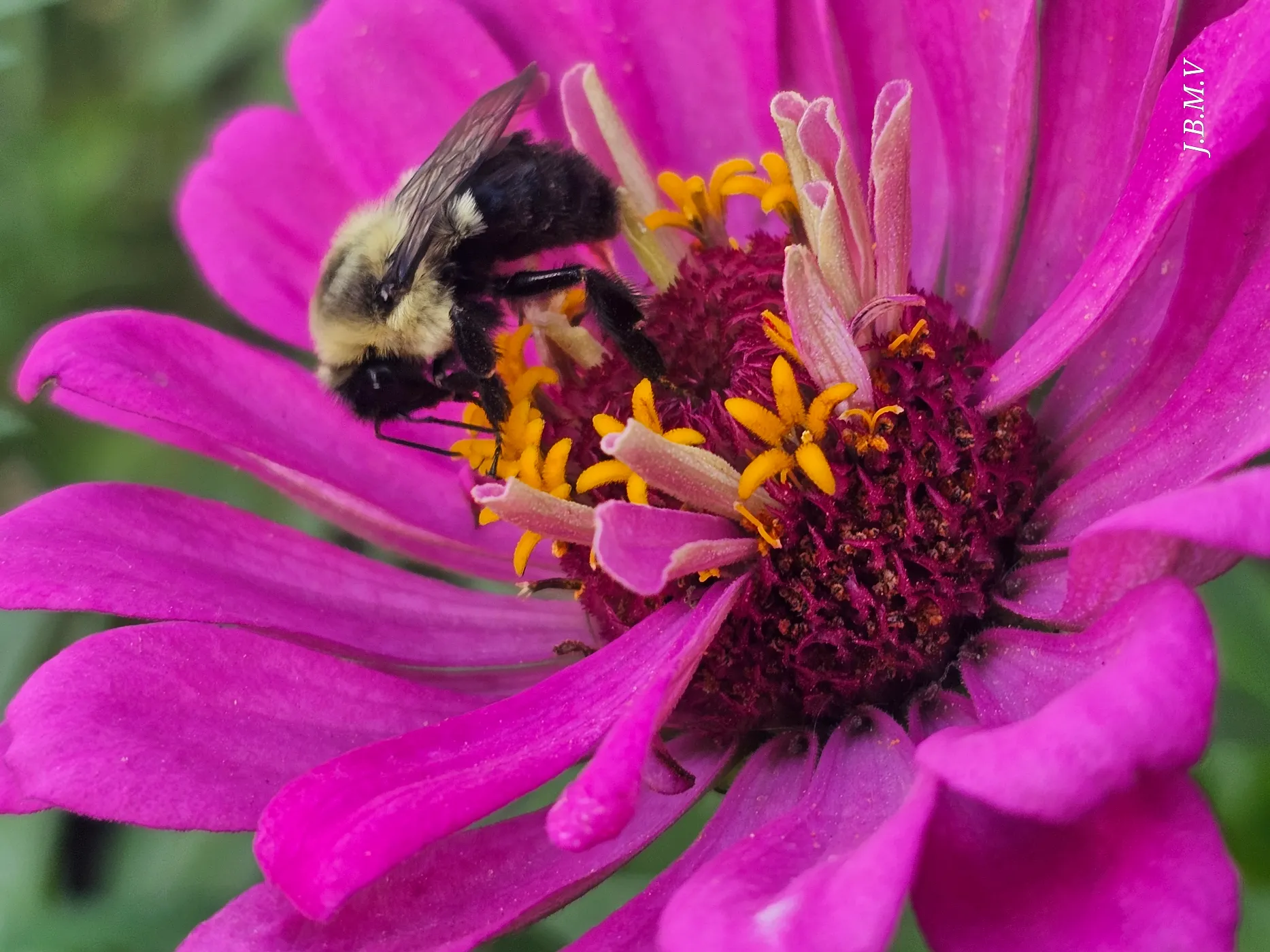
Bee pollinating a flower
Close-up of a bee visiting a flower. The photograph clearly shows pollen transfer by an insect and illustrates the role of pollinators in the reproduction of flowering plants.
- Insects (bees, bumblebees, butterflies, flies, beetles)—the most important pollinators. They are attracted by color, scent, and nectar (Walliser, 2020).
- Wind—pollinates grasses, corn, birch, oak. Their flowers are inconspicuous but produce enormous amounts of pollen (Zona, 2023).
- Birds and bats—pollinate some tropical plants.
Note. Bumblebees are the best pollinators of tomatoes, peppers, and eggplants. They “vibrate” the flower, shaking out pollen, which significantly increases fruit set (Walliser, 2020). If there are no bumblebees in the greenhouse, you can help the plants manually: shake the flower trusses or use a soft brush.
What can go wrong at the flowering and pollination stage?
- Absence of pollinators. In a closed greenhouse or when pesticides are used, insects may be absent.
- High temperature. At temperatures above 30–35 °C, pollen becomes sterile and the stigma becomes unreceptive.
- Lack of nutrients. Deficiency of boron and calcium disrupts pollen formation and pollen tube growth.
- Excess nitrogen. The plant “runs to leaf,” forming many leaves but few flowers.
- Overhead watering. It washes away pollen and interferes with pollination (Jabbour, 2020).
Practical conclusion. Flowering is the “promise” of a harvest, but without pollination it will remain unfulfilled. Attract pollinators, provide the right conditions—and fruits will set.
6. Fruiting and Seed Maturation
After successful pollination and fertilization, the final stage of the reproductive cycle begins—the formation of fruits and the maturation of seeds. This is the time when the plant invests all accumulated resources into its offspring.
What happens after fertilization?

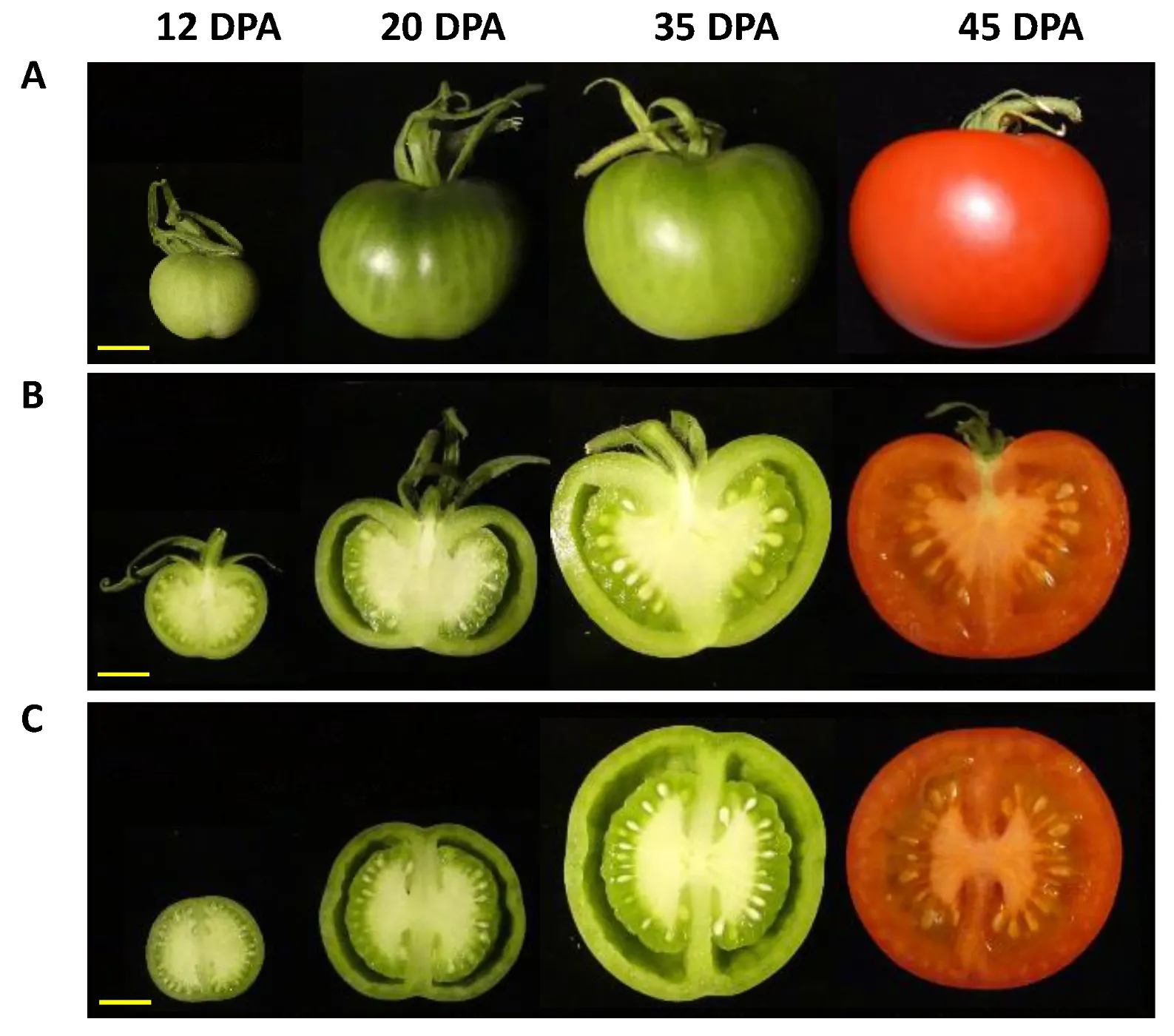
Development of the tomato fruit (Solanum lycopersicum)
Scientific illustration showing the development of the tomato fruit of the Ailsa Craig variety at four stages — 12, 20, 35, and 45 days after flowering. Whole fruits and their longitudinal and transverse sections are presented. The image allows one to trace the enlargement of the fruit and changes in its internal structure.
After the pollen tube reaches the ovule and fertilization occurs, active division of the embryo cells begins. At the same time, the ovary (the lower part of the pistil) begins to grow and turn into a fruit (Capon, 2022). The ovary wall becomes the pericarp—the very “flesh” that we eat in apples, tomatoes, or cucumbers (Ingram et al., 2016).
Note. In some plants, the fruit can develop without fertilization—this phenomenon is called parthenocarpy. This is how seedless bananas, navel oranges, and some grape varieties appear (Capon, 2022). Parthenocarpy can be natural or induced (for example, by hormone treatment).
The role of hormones in fruiting
Fruit growth is stimulated by phytohormones produced in the seeds (Hopkins & Hüner, 2009). If the seeds do not develop for some reason, the fruit may drop. This is why full pollination is so important: the more seeds that set, the larger and more uniform the fruit will be.
Note. In many crops (apple, pear, watermelon), uneven pollination leads to deformed fruits. For example, if only part of the ovules are fertilized, the apple will grow lopsided (Jabbour, 2020). A good harvest requires both pollinators and a sufficient amount of pollen.
Seed maturation
While the fruit grows, seeds form inside it. This process includes several stages (Hartmann et al., 2011):
1. Embryogenesis—the embryo passes through stages from zygote to a fully formed miniature plant with rudiments of root, stem, and leaves.
2. Accumulation of reserve substances. Starch, proteins, and fats are deposited in the endosperm or cotyledons—the energy source for future germination.
3. Maturation and dehydration. The seed loses water: moisture content falls from 80–90% to 5–10%. This brings the seed into a state of dormancy and increases its resistance to unfavorable conditions (Hartmann et al., 2011).
Note. Not all seeds tolerate dehydration. Recalcitrant seeds (oak, chestnut, mango, avocado) cannot dry out without losing germination capacity. They cannot be stored dry—they require a moist substrate and rapid sowing (Ingram et al., 2016).
Fruit ripening
In parallel with seed maturation, the fruit itself changes (Capon, 2022):
- Color—chlorophyll breaks down, and yellow, orange, and red pigments appear (anthocyanins, carotenoids).
- Taste—starch turns into sugars, acidity decreases, and bitterness disappears.
- Texture—cell walls soften, and the fruit becomes soft and juicy.
- Aroma—volatile compounds are synthesized that attract animals for seed dispersal.
Note. These changes are not merely an “improvement in taste.” They are aimed at making animals eat the fruit and spread the seeds. This is why unripe fruits are usually bitter, hard, and green—they are not yet ready for the “journey” (Zona, 2023).
What can go wrong at the fruiting stage?
- Lack of nutrition. The plant cannot fill the fruits—they are small and deformed.
- Uneven watering. Fruit cracking (tomatoes, cabbage), blossom-end rot (pepper, tomato).
- High temperature. Accelerates ripening but reduces quality and storability.
- Diseases and pests. Fruits rot and are damaged by insects.
- Premature drop. Stress, lack of moisture, or lack of nutrients causes the plant to shed its ovaries.
Practical conclusion. Fruiting is the “home stretch” of the season. Provide the plant with stable watering, sufficient nutrition, and protection from stress—and it will give everything it has accumulated.

7-in-1 Wi-Fi Weather Station
Monitor local weather conditions with a wireless outdoor sensor. Track temperature, humidity, rainfall, wind speed and direction, and atmospheric pressure. Ideal for gardens, farms and greenhouses.
- Wireless outdoor sensor
- Solar-powered
- Wi-Fi connectivity
Affiliate link · Check regional compatibility.
7. Preparing for Dormancy
When the season comes to an end, the plant begins to prepare for the period of dormancy. This is not simply “rest” but an active physiological process on which survival in unfavorable conditions depends.
What starts preparation for dormancy?
The main signal is shortening of the daylight period. After the summer solstice, days become shorter, and the plant “understands” that cold weather will soon arrive (Chalker-Scott, 2015). This signal is perceived by phytochrome—a pigment sensitive to the ratio of red and far-red light (Ingram et al., 2016).
Note. Day length is the most reliable signal because it does not change from year to year. Temperature can “deceive”: a warm autumn may delay preparation for dormancy, while a sharp cold snap may accelerate it. But it is the photoperiod that triggers the chain of biochemical changes (Chalker-Scott, 2015).
What happens inside the plant?
Preparation for dormancy includes several processes (Capon, 2022):
1. Slowing of growth. Shoots stop elongating, and new leaves are not formed.
2. Cold hardening. Sugars and other substances that act as “antifreeze” accumulate in cells. This increases frost resistance (Capon, 2022).
3. Nutrient withdrawal. Nitrogen, phosphorus, potassium, and other elements move from the leaves into the stems and roots. The plant “takes” everything valuable for storage (Ingram et al., 2016).
4. Formation of protective structures. In woody plants, winter buds covered with dense scales are laid down. In herbaceous plants, the aboveground part dies off, while the underground organs (rhizomes, bulbs, tubers) remain alive (Capon, 2022).
Leaf fall


Autumn leaf fall in the forest near Berghausen
A forest path covered with fallen autumn leaves. The photograph conveys seasonal changes in a deciduous forest. The shooting location is the surroundings of Berghausen, municipality of Pfinztal, Germany.
In deciduous trees and shrubs, an abscission layer (abscission zone) forms at the base of the petiole in autumn (Ingram et al., 2016). The cells of this layer soften, and the leaf separates from the stem. Before this, the plant “pumps out” all useful substances from the leaf—only waste products and pigments remain, which we see as autumn colors (Capon, 2022).
Note. Autumn leaf coloration is not just “beautiful.” Red and yellow pigments (anthocyanins, carotenoids) protect the leaf from oxidative stress during the period when chlorophyll has already been destroyed but nutrients have not yet been fully withdrawn (Chalker-Scott, 2015). This is the final “touch” in preparing for winter.
What is dormancy?
Dormancy is a state in which a plant does not grow even if conditions temporarily become favorable (Chalker-Scott, 2015). It is not simply a “stop” due to cold or drought. It is an active state controlled by hormones that prevents premature awakening.
There are two types of dormancy (Hartmann et al., 2011):
- Endogenous (deep) dormancy. The plant will not wake up even if placed in warmth. A period of cold is required to “release” the inhibition. This type of dormancy is characteristic of the seeds of many trees and shrubs.
- Imposed dormancy. The plant is ready to grow, but external conditions (cold, drought) do not allow it to awaken. As soon as conditions improve, growth resumes.
Note. Breaking deep dormancy often requires stratification—keeping seeds in moist cold for several weeks or months. In nature, this happens in winter, and the seeds germinate in spring (Hartmann et al., 2011).
What can go wrong at the stage of preparation for dormancy?
- Warm autumn. The plant does not have time to harden, and the first frosts may damage it.
- Excess nitrogen in autumn. Stimulates growth that does not have time to finish before cold weather.
- Early frosts without snow. Roots may freeze.
- Absence of a cold period. Some plants will not flower in spring if they have not received enough cold in winter (vernalization).
Practical conclusion. Preparation for dormancy is a “rehearsal for survival.” Help the plant finish the season correctly: do not overfeed with nitrogen in autumn, provide sufficient watering until leaf fall, mulch the roots—and it will successfully survive the winter.
8. Dormancy: Winter or Summer
Dormancy is not “death” and not simply “sleep.” It is an active state in which the plant temporarily stops growing in order to survive an unfavorable period. Depending on the climate, dormancy can be winter or summer.
Winter dormancy

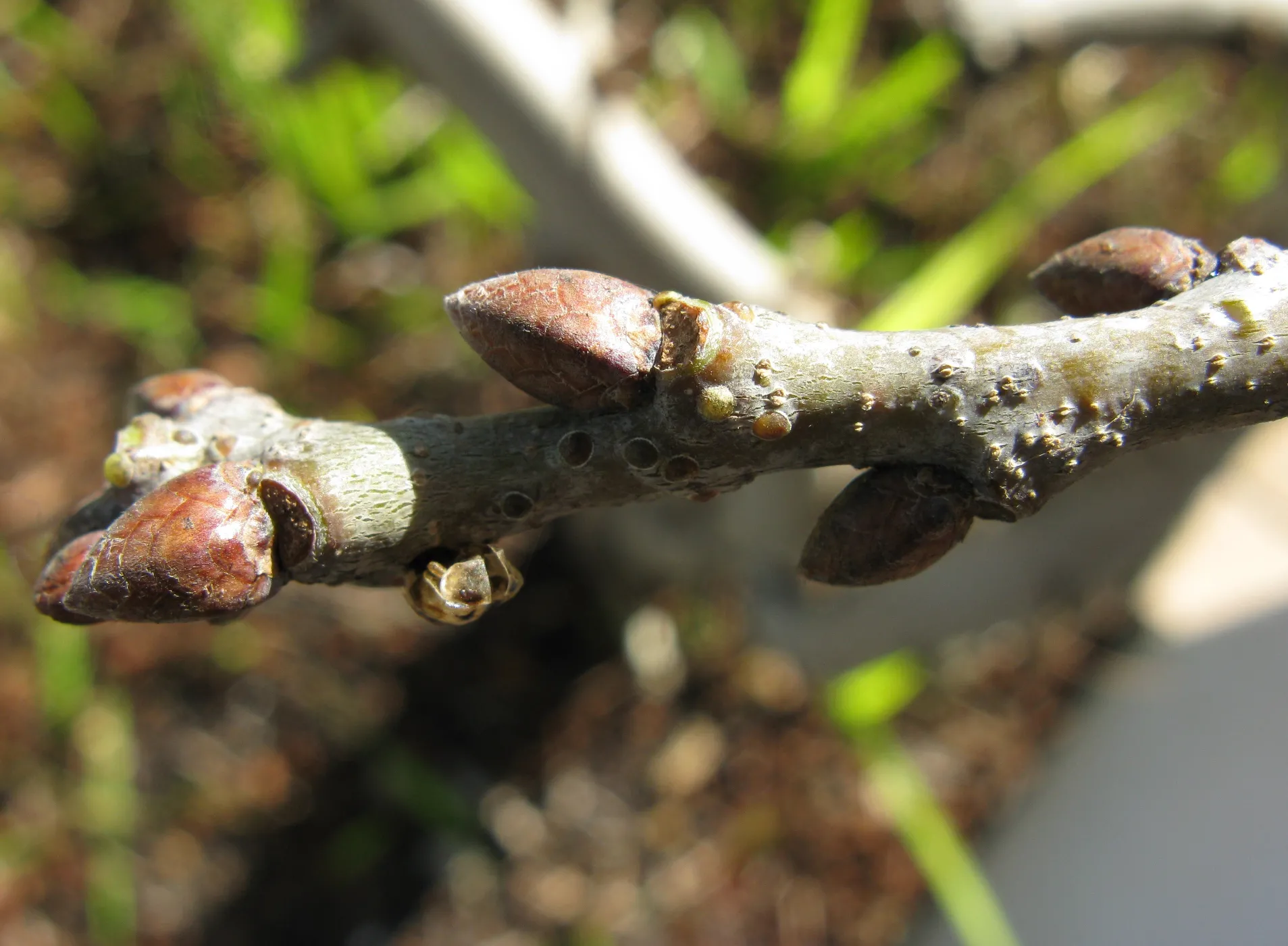
Winter buds of pedunculate oak (Quercus robur)
Close-up of a branch of pedunculate oak (Quercus robur) with clearly visible buds and tightly fitting protective scales. The photograph illustrates the structure of winter buds, which protect embryonic shoots during the dormant period.
In temperate and cold latitudes, the main stress is cold and the absence of liquid water. Plants prepare for winter in advance by responding to the shortening of the daylight period (Chalker-Scott, 2015). Woody species shed their leaves, their buds are covered with dense scales, and sugars and antifreeze proteins accumulate in their cells (Capon, 2022).
Note. Deep winter dormancy cannot be broken by simple warming. For example, apple buds will not start growing if brought into warmth in December—they need a certain cold period (Hartmann et al., 2011). This mechanism protects the plant from premature awakening during winter thaws.
Breaking winter dormancy requires stratification—keeping at low positive temperatures for several weeks. In nature, this happens naturally, and gardeners can imitate this process by placing seeds or seedlings in the cold (Ingram et al., 2016).
Summer dormancy
In regions with hot and dry summers (the Mediterranean, the southern USA, Central Asia), the main stress is drought. Plants enter summer dormancy: they shed leaves, slow their metabolism, and save water (Lambers & Oliveira, 2019). Examples: bulbous plants (tulips, daffodils), some grasses, lavender.
Note. Summer dormancy often begins after flowering and fruiting. For example, tulips finish flowering, their leaves turn yellow and dry out, and the bulb “goes into dormancy” until autumn (Capon, 2022). At this time it must not be disturbed—otherwise the plant will spend its energy not on forming a flower bud but on recovery.
Regional aspect: the tropics
In the tropics, there is no winter dormancy in the usual sense. Instead of cold, the dry season acts there. Tropical plants are adapted to the alternation of wet and dry periods (Lambers & Oliveira, 2019). During the dry season, many trees shed their leaves to reduce evaporation. Some species flower precisely at the end of the dry season, and their fruits ripen with the arrival of rains.
Note. Evergreen tropical plants may not have pronounced dormancy, but their growth slows during the dry period. For a gardener in the tropics, it is important to consider not “winter cold” but “dry heat”: watering and mulching during this period can be critical (Morgan, 2021).
Practical conclusion. Dormancy is not a “pause” but a necessary stage for restoring strength. Do not wake the plant prematurely: do not water or fertilize during dormancy, do not disturb bulbs and rhizomes. Let it complete the cycle naturally.

40W Full Spectrum LED Grow Light
Support healthy plant growth with full-spectrum LED lighting. Ideal for seedlings, indoor plants and small growing spaces. A practical solution for indoor gardening and year-round cultivation.
- Full-spectrum LED
- Energy-efficient design
- Indoor plant growing
Affiliate link · Check actual power and light coverage.
9. What Can Go Wrong at Each Stage
A plant’s life is a chain of interconnected stages. A disruption at any of them affects the entire cycle. Let us consider typical problems by stage.
Germination
- Seeds do not germinate. Causes: sowing too deep, drying out or waterlogging, low temperature, old seeds, lack of light (for light-sensitive species) (Bubel, 2024).
- Seedlings appear but are weak. Causes: depleted nutrient reserve in the seed, damage to the embryo, disease infection (Hartmann et al., 2011).
Growth
- Stem etiolation. Lack of light, too high temperature, overcrowded sowing (Chalker-Scott, 2015).
- Dwarfism. Soil compaction, lack of nutrition, root damage.
- Leaf deformation. Micronutrient deficiency (for example, boron), viral diseases.
Nutrition (photosynthesis and root nutrition)
- Pale leaves. Lack of nitrogen, lack of light.
- Purple tint. Phosphorus deficiency.
- Brown leaf edges. Lack of potassium or waterlogging.
- Weak growth. Absence of mycorrhiza, soil compaction, incorrect pH (Zona, 2023).
Respiration
- Wilting in moist soil. Roots suffocate due to lack of oxygen (Morgan, 2021).
- Root rot. Waterlogging, poor drainage.
- Loss of seed germination capacity. Storage without air access (Bubel, 2024).
Flowering and pollination
- Absence of flowering. Lack of light, excess nitrogen, unsuitable photoperiod, absence of vernalization (Ingram et al., 2016).
- Flowering occurs but there are no fruits. Absence of pollinators, pollen sterility due to heat, pollen washing off during watering (Jabbour, 2020).
- Drop of ovaries. Stress, lack of nutrition, sharp temperature fluctuations.
Fruiting and ripening
- Small fruits. Lack of nutrition and moisture, too many fruits on the plant.
- Cracking. Uneven watering (tomatoes, cabbage).
- Blossom-end rot. Calcium deficiency, irregular watering (Jabbour, 2020).
- Rotting. Diseases, pest damage.
Preparation for dormancy
- Frost damage. A warm autumn did not allow the plant to harden.
- Absence of flowering in spring. Insufficient cold period for vernalization.
- Suffocation/waterlogging. Mulch was applied too early, and the roots are suffocating.
Dormancy
- Premature awakening. A thaw or improper watering during the dormancy period.
- Depletion. The plant spent its reserves on growth at the wrong time.
- Death of bulbs. Storage in moist warmth without ventilation.
Note. Most problems can be prevented if you understand the plant’s needs at each stage. Observe, analyze, adjust conditions—and the plant will respond with health and harvest (Morgan, 2021).
Practical conclusion. There are no “trifles” in plant care. Every stage is important. If something has gone wrong, go back a step and check the conditions: light, water, warmth, nutrition, air.
10. Regional Aspect: In the Tropics There Is No Winter Dormancy; Instead, There Is a Dry Season
In temperate latitudes, the main signal for dormancy is cold and the shortening of the daylight period. In the tropics, everything is different: there is no winter in the usual sense, but there is a dry season (Lambers & Oliveira, 2019). It is this season that plays the role of “winter”—a period when water becomes the limiting factor.
How do tropical plants survive the dry season?

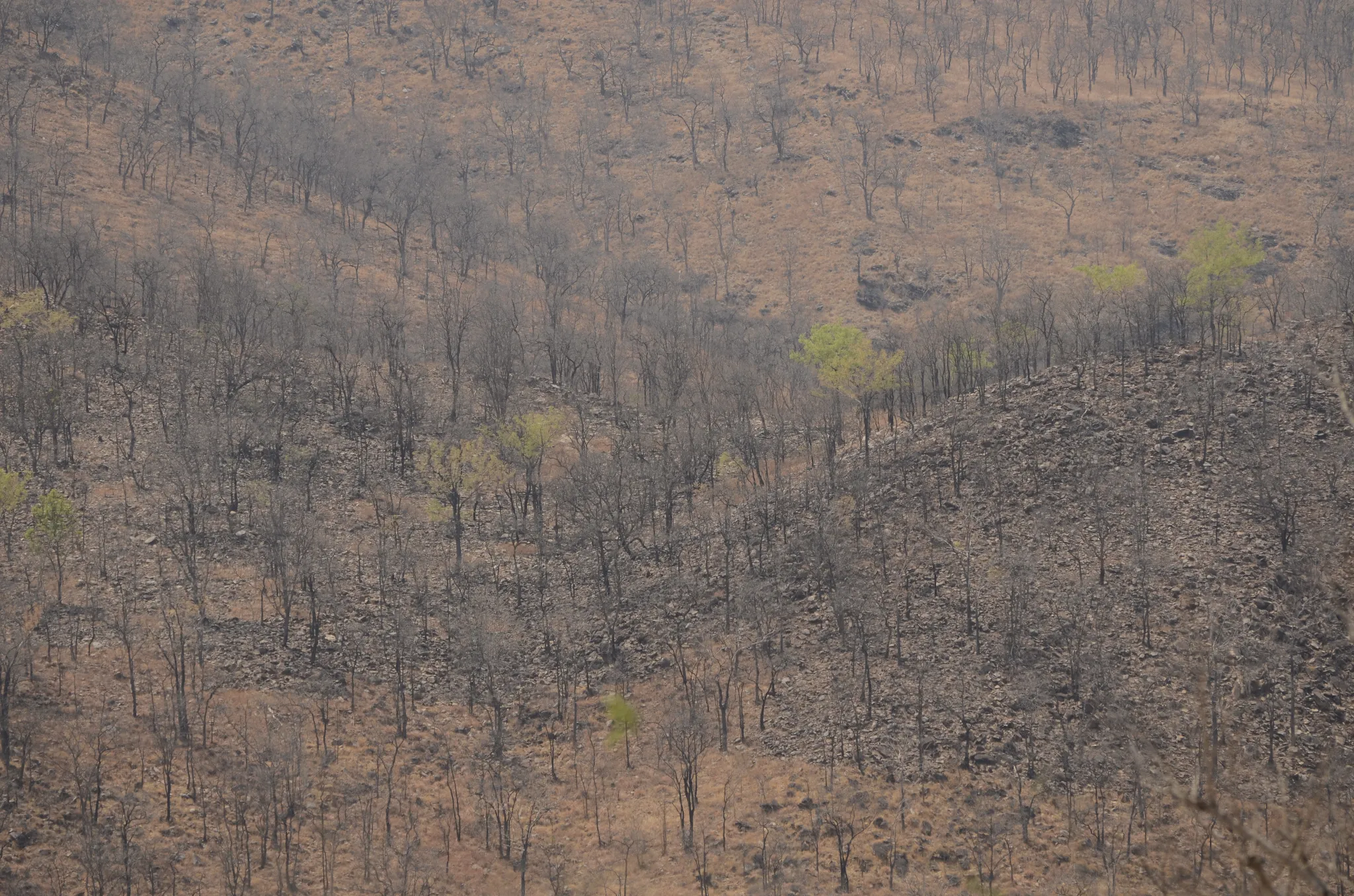
Dry deciduous tropical forest
Landscape of a dry deciduous forest with sparse foliage and trees adapted to seasonal lack of moisture. The shooting location is Sri Lankamalleswara Wildlife Sanctuary, Kadapa district, Andhra Pradesh, India.
Many tropical trees shed their leaves during the dry season to reduce evaporation (Lambers & Oliveira, 2019). This phenomenon is called drought deciduousness. Examples: flamboyant (Delonix regia), jacaranda (Jacaranda mimosifolia), and many acacia species. After the first rains, they quickly become covered with new foliage and often flower (Zona, 2023).
Note. In the tropics, flowering is often timed to the dry season or to its end. For example, coffee flowers after the first rains, and mango flowers during the dry season, when there is no rain but there is sufficient moisture in the soil (Lambers & Oliveira, 2019). This allows the plant not to spend resources on leaf growth and to direct them into flowers.
Evergreen tropical plants
Not all tropical species shed their leaves. Evergreen plants (for example, many ficus species and palms) slow their metabolism but do not enter deep dormancy (Lambers & Oliveira, 2019). Their growth may continue year-round if there is moisture. However, during the dry season they still reduce activity in order to save water.
The role of photoperiod in the tropics
Near the equator, day length hardly changes throughout the year—the difference may be only 12–30 minutes (Ingram et al., 2016). Therefore, photoperiod cannot serve as a reliable signal for seasonal changes. Instead, plants use soil moisture and temperature as triggers for flowering and dormancy (Lambers & Oliveira, 2019).
Note. This is important for gardeners in the tropics: you cannot rely on “day length” for planning sowings. Focus on the rainy season and the dry season, as well as on local recommendations for specific crops (Morgan, 2021).
Practical consequences for tropical gardening
- Watering during the dry season is critical. Without additional watering, many crops will not survive (Morgan, 2021).
- Mulching is essential. It preserves moisture and lowers soil temperature.
- Sowing dates are tied to rains. It is better to sow at the beginning of the wet season, when the soil is sufficiently moist.
- Some crops require a “dry dormancy.” For example, bulbous plants in the tropics may not flower without a period of dry storage (Hartmann et al., 2011).
Practical conclusion. In the tropics, dormancy is not “winter” but the “dry season.” Plants are adapted to the alternation of moisture and drought. The gardener’s task is to provide water during the arid period and not to disturb the plants when they are in a state of dormancy.
11. Conclusion: A Plant’s Life Is a Cycle, and Each Stage Requires Its Own Conditions
A plant’s life is not a linear process but a cycle that repeats from year to year. Each stage of this cycle requires certain conditions, and disruption of any of them inevitably affects the harvest.
Brief overview of the cycle:
1. Germination—requires moisture, oxygen, warmth, and, for some species, light or cold (Hartmann et al., 2011).
2. Growth—needs light, water, nutrients, and optimal temperature (Capon, 2022).
3. Nutrition—photosynthesis requires light and CO2; root nutrition requires water and minerals (Taiz et al., 2023).
4. Respiration—goes on around the clock and requires oxygen and moderate temperature (Pratt, 2005).
5. Flowering and pollination—depend on photoperiod, temperature, and the presence of pollinators (Ingram et al., 2016).
6. Fruiting—requires stable watering, nutrition, and protection from stress (Jabbour, 2020).
7. Preparation for dormancy—is triggered by shortening days and requires accumulation of protective substances (Chalker-Scott, 2015).
8. Dormancy—winter or summer, is necessary for restoring strength and subsequent awakening (Lambers & Oliveira, 2019).
Key idea
If any stage is disrupted, there will be no harvest, or it will be weak. A plant cannot “skip” a stage or “catch up” on what was missed. It either passes through the cycle completely or fails.
Note. This is why it is so important to understand the needs of the crop at each stage. There are no universal recipes: what suits a tomato may harm an onion; what works in the tropics will not work in a temperate climate (Morgan, 2021).
The gardener’s role
The gardener is not the plant’s “boss” but its partner. The task is not to “force” the plant to grow but to create conditions in which it can realize its potential. Observe, analyze, adjust—and the plant will thank you with health and harvest (Zona, 2023).
Regional differences
- In temperate latitudes, the cycle is tied to winter: dormancy begins in autumn, and awakening occurs in spring.
- In the tropics, the cycle is tied to the dry season: dormancy begins during drought, and awakening occurs with the arrival of rains.
- In arid regions (the Mediterranean, steppes), dormancy may be summer, and growth may be winter.
Practical conclusion
A plant’s life is a cycle, and each stage requires its own conditions. Understanding this cycle is the foundation of successful gardening. There are no “trifles”: light, water, warmth, air, and nutrition—everything matters. Provide the plant with what it needs at each stage—and it will pass through the cycle completely, finishing it with fruits and seeds.
References
- (2015). ‘Growing plants from seed’, in Ingram, D.S., Vince-Prue, Daphne, Gregory, P.J. (ed.) Science and the Garden. The scientific basis of horticultural practice. West Sussex, UK: Royal Horticulture Society. Wiley Blackwell, pp. 139-148.
- (2015). ‘Plants and seasons’, in Ingram, D.S., Vince-Prue, Daphne, Gregory, P.J. (ed.) Science and the Garden. The scientific basis of horticultural practice. West Sussex, UK: Royal Horticulture Society. Wiley Blackwell, pp. 120-138.
- (2015). ‘Reproduction: Securing the future’, in Ingram, D.S., Vince-Prue, Daphne, Gregory, P.J. (ed.) Science and the Garden. The scientific basis of horticultural practice. West Sussex, UK: Royal Horticulture Society. Wiley Blackwell, pp. 37-44.
- (2015). ‘The plant body: structure and function’, in Ingram, D.S., Vince-Prue, Daphne, Gregory, P.J. (ed.) Science and the Garden. The scientific basis of horticultural practice. West Sussex, UK: Royal Horticulture Society. Wiley Blackwell, pp. 14-36.
- Agrios, G.N. (2005). ‘Introduction’, in Plant Pathology. London, UK: ACADEMIC PRESS, pp. 4-76.
- Bubel, Nancy, Nick, Jean (2024). ‘Starting Seeds Indoors’, in The New Seed-Starters Handbook. : Rodale, .
- Capon, Brian (2022). ‘How Plants Function’, in Botany for Gardeners. An Introduction to the Science of Plants. Portland, Oregon: Timber Press, pp. 144-192.
- Capon, Brian (2022). ‘Reproduction and Inheritance’, in Botany for Gardeners. An Introduction to the Science of Plants. Portland, Oregon: Timber Press, pp. 193-240.
- Capon, Brian (2022). ‘The Structure and Growth of Plants’, in Botany for Gardeners. An Introduction to the Science of Plants. Portland, Oregon: Timber Press, pp. 11-87.
- Chalker-Scott, Linda (2015). ‘Finding Love in a Sedentary World’, in How Plants Work. Portland, London: Timber Press, pp. 196-218.
- Chalker-Scott, Linda (2015). ‘How Plants Tell Time’, in How Plants Work. Portland, London: Timber Press, pp. 130-149.
- Chalker-Scott, Linda (2018). ‘Gardening CSI: Case Studies’, in The Science of Gardening. Course Guidebook. Chantilly, Virginia: The Great Courses, pp. 153-160.
- Evert, R.F. (2006). ‘Structure and Development of the Plant Body — An Overview’, in Esau's Plant Anatomy: Meristems, Cells, and Tissues of the Plant Body: Their Structure, Function, and Development. Hoboken, New Jersey, USA: John Wiley & Sons, Inc., pp. 1-13.
- Graham, L.E., Graham, J.M., Wilcox, L.W. (2014). ‘Plant Structure, Growth, and Development’, in Plant Biology. Harlow: Pearson Education Limited, pp. 165-181.
- Hartmann, H.T., Kester, D.E., Davies, F.T.J., Geneve, R.L. (2011). ‘Principles of Propagation from Seeds’, in Hartmann & Kester's Plant Propagation Principles and Practices. USA: Pearson Education, pp. 211-262.
- Hopkins, W.G., Hüner, N.P..A. (2009). ‘Development: An Overview’, in Introduction to Plant Physiology. Hoboken, NJ: John Wiley & Sons, pp. 275-288.
- Jabbour, Niki (2020). ‘Preventing Diseases, Pests, and Poor Pollination’, in Growing Under Cover. Techniques for a More Productive, Weather-Resistant, Pest-Free Vegetable Garden. North Adams, MA: Storey Publishing, pp. 128-139.
- Lambers, Hans, Oliveira, R.S. (2019). ‘Life Cycles: Environmental Influences and Adaptations’, in Plant Physiological Ecology. Cham: Springer International Publishing, 451-486. doi: 10.1007/978-3-030-29639-1_11
- Morgan, Sally (2021). ‘Building a healthy soil’, in The Healthy Vegetable Garden: A natural, chemical-free approach to soil, biodiversity and managing pests and diseases. Vermont, London, UK: Chelsea Green Publishing, .
- Morgan, Sally (2021). ‘Pests and predators’, in The Healthy Vegetable Garden: A natural, chemical-free approach to soil, biodiversity and managing pests and diseases. Vermont, London, UK: Chelsea Green Publishing, .
- Pratt, M.M. (2005). ‘From Seed to Senescence’, in Practical Science for Gardeners. Portland, Oregon: Timber Press, pp. 43-60.
- Pratt, M.M. (2005). ‘Muck, Magic and Molecules’, in Practical Science for Gardeners. Portland, Oregon: Timber Press, pp. 8-19.
- Taiz, Lincoln, Møller, I.Max, Murphy, Angus, Zeiger, Eduardo (2023). ‘Respiration and Lipid Metabolism’, in Plant Physiology and Development. New York, NY: Oxford University Press, pp. 379-416.
- Walliser, Jessica (2020). ‘Pollination’, in Plant Partners. North Adams, MA: Storey Publishing, pp. 167-184.
- Zona, Scott (2026). ‘Being a Plant’, in A Gardener's Guide to Botany. Beverly, MA: Cool Springs Press, .
- Zona, Scott (2026). ‘Reproduction’, in A Gardener's Guide to Botany. Beverly, MA: Cool Springs Press, .
- Zona, Scott (2026). ‘Seed Dispersal’, in A Gardener's Guide to Botany. Beverly, MA: Cool Springs Press, .
- Zona, Scott (2026). ‘What a Plant Needs: Light’, in A Gardener's Guide to Botany. Beverly, MA: Cool Springs Press, .
- Zona, Scott (2026). ‘What a Plant Needs: Nutrients’, in A Gardener's Guide to Botany. Beverly, MA: Cool Springs Press, .
- Zona, Scott (2026). ‘What a Plant Needs: Water’, in A Gardener's Guide to Botany. Beverly, MA: Cool Springs Press, .
