
Respiration and Nutrition
1. Respiration: a plant respires around the clock
Unlike animals, plants do not have lungs or gills. For a long time, even scientists believed that plants did not respire at all, since they “produce” oxygen. However, back in the late 18th century, the Swiss scientist N. T. de Saussure proved through precise experiments that plants respire just as animals do, taking in oxygen and releasing carbon dioxide (Kuznetsov and Dmitrieva, 2006). For a long time this discovery went unnoticed, and only in the second half of the 19th century did it become clear that respiration and photosynthesis are two different, independent processes.
Respiration is an inherent property of every living cell. It occurs around the clock: both day and night, in every root, stem, leaf, and even in fruits (Chalker-Scott, 2018). If photosynthesis can be compared to “sugar production” in the light, then respiration is the “burning of fuel” to obtain energy, and it does not stop for a minute.
For a gardener, it is important to understand: although externally we see only growth and flowering, inside the plant organic substances are constantly being broken down. This process requires oxygen and releases energy, which is then used for growth, cell division, water uptake, and nutrient uptake.
Practical note: Unlike photosynthesis, which depends on light, respiration depends mainly on temperature and the availability of oxygen. That is why in cold or waterlogged soil, root respiration slows down, and with it all plant nutrition (Pavlis, 2020).
2. What is taken in and what is released
During respiration, the plant consumes oxygen and releases carbon dioxide and water. This can be written as a simple equation:
Glucose, combining with oxygen, breaks down into carbon dioxide, water, and energy (Kuznetsov and Dmitrieva, 2006). It is this energy that is stored in ATP molecules—the universal “batteries” of the cell.
However, it is important to understand: oxygen does not directly oxidize organic substances. It reacts only at the very end of the respiratory chain, on the inner membranes of mitochondria, where it accepts electrons from reduced coenzymes (NADH and FADH₂). The carbon of the respiratory substrate does not combine directly with oxygen from the air—carbon dioxide is formed as a result of decarboxylation of organic acids (Hopkins and Hüner, 2009).
What is taken in:
- Oxygen (O2)—from the air, through leaf stomata and through pores in the soil, from where roots absorb it.
What is released:
- Carbon dioxide (CO2)—removed through stomata and partly through roots.
- Water (H2O)—in small amounts.
- Energy—stored in ATP, with part dissipated as heat.
Respiration intensity is measured as the amount of oxygen taken in or carbon dioxide released per unit time per gram of dry matter. This indicator varies from 0.02 to 715 mg CO2 per gram of dry matter per hour depending on the plant species, its age, and conditions (Kuznetsov and Dmitrieva, 2006).
Practical note: If you mulch the soil with a thick layer of fresh organic matter, microbes also consume oxygen during decomposition and release CO2. As a result, roots may not have enough oxygen for their own respiration. That is why fresh grass or sawdust is better not incorporated into the soil but composted separately.


LCD 4-in-1 Soil Tester
Check essential growing conditions with one compact tool. Measure soil pH, moisture, temperature and light intensity — ideal for gardens, potted plants and greenhouses.
- 4-in-1 measurement
- Easy-to-read LCD display
- Portable design
Affiliate link · For indicative measurements only.
3. Why respiration is needed: energy for growth
Respiration is the central process of metabolism, linking together the metabolism of carbohydrates, fats, and proteins (Kuznetsov and Dmitrieva, 2006). Its main function is to supply the cell with energy in the form of ATP, which is then used for all life processes.
What the plant spends respiration energy on:
1. Growth and cell division. Building new cell walls, synthesizing proteins, elongating roots and shoots—all of this requires energy. Fast-growing tissues respire 3–10 times more intensively than tissues that have finished growing (Kuznetsov and Dmitrieva, 2006).
2. Nutrient uptake. Roots absorb mineral elements from the soil solution not passively but with energy expenditure. Ions move across membranes against a concentration gradient with the help of special transport proteins—pumps powered by ATP (Lowenfels, 2013).
3. Transport of water and substances. Loading sucrose into the phloem for delivery to growing organs is an active process requiring respiration energy (Hopkins and Hüner, 2009).
4. Maintaining viability. Even in dormant tissues (for example, in wintering buds or tubers), maintenance respiration occurs—it ensures repair of cell structures and maintenance of gradients across membranes (Amthor, 1994).
5. Synthesis of intermediate compounds. Products of incomplete glucose oxidation—organic acids of the Krebs cycle—are used as “building blocks” for the synthesis of amino acids, fats, and other necessary compounds (Kuznetsov and Dmitrieva, 2006).
Studies show that on average from 25 to 50% of the carbon assimilated in photosynthesis is lost as CO2 during respiration (Amthor, 1994). These are not “losses” in the literal sense—they are the price paid for the energy needed for growth and development.
Practical note: Young, actively growing plants respire more intensively than mature ones. That is why seedlings require more careful control of soil moisture—waterlogging quickly leads to oxygen starvation and death of tender roots.
4. Nutrition: where elements come from
If respiration is the “burning of fuel” to obtain energy, then nutrition is the supply of building material to the plant. A plant does not “eat” in the sense we are used to. It absorbs individual chemical elements in the form of ions from the soil solution, from the air, and from water (Foth, 1990).
All elements needed by a plant are divided into two groups:
1. From air and water:
- Carbon (C)—from carbon dioxide (CO2) through leaf stomata.
- Oxygen (O)—from CO2 and water.
- Hydrogen (H)—from water.
These three elements make up the bulk of plant tissues—carbohydrates, proteins, fats, and nucleic acids (Chalker-Scott, 2015).
2. From soil (mineral elements):
Macronutrients—needed in large amounts:
- Nitrogen (N)—the basis of amino acids, proteins, chlorophyll, and DNA.
- Phosphorus (P)—a component of membranes, ATP, and genetic material.
- Potassium (K)—regulates water balance, stomatal function, and transport of substances.
- Calcium (Ca)—strengthens cell walls and participates in signal transmission.
- Magnesium (Mg)—the central atom of chlorophyll.
- Sulfur (S)—part of certain amino acids and vitamins.
Micronutrients—needed in tiny amounts, but without them life is impossible:
- Iron (Fe), manganese (Mn), copper (Cu), zinc (Zn), boron (B), molybdenum (Mo), chlorine (Cl), nickel (Ni)—these elements work as enzyme cofactors, accelerating thousands of chemical reactions in the cell (Chalker-Scott, 2018).

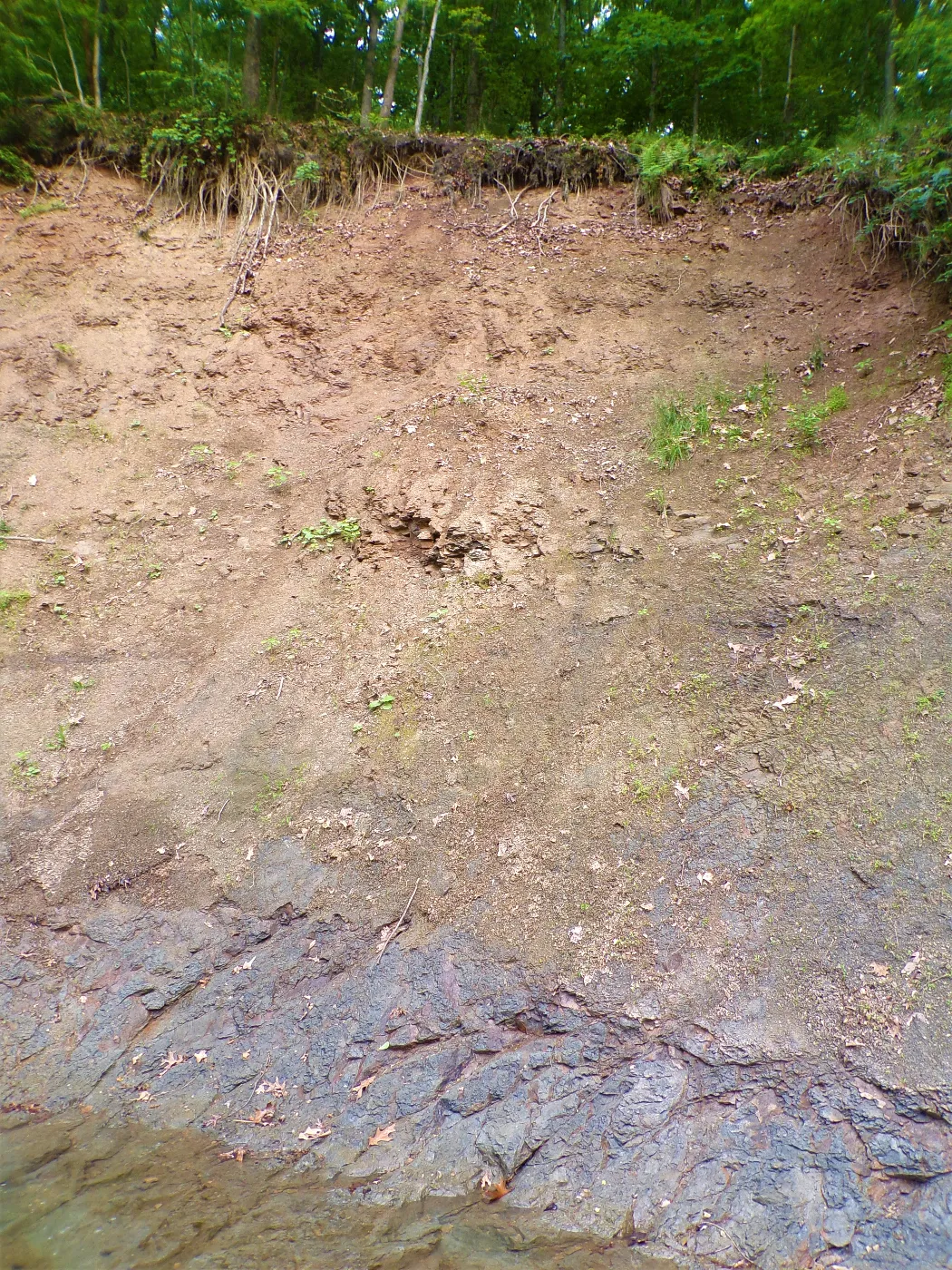
Soil profile of a slope with silt, loam, and clay.
Soil profile of an exposed hillslope demonstrating layers of silt, loam, and clay next to a creek. The photograph clearly shows the structure of the bank and the dense root system of plants in the upper soil layer.
It is important to understand: a plant cannot use an element if it is not dissolved in water. That is why the soil solution is the “circulatory system” of the soil. Solid minerals must first weather or be decomposed by microbes so that ions pass into an available form (Gershuny and Smillie, 1999).
Practical note: Liebig’s law of the minimum states that plant growth is limited not by the total amount of nutrients but by the element that is in shortest supply. If the soil has excess nitrogen but lacks phosphorus, the plant cannot use nitrogen efficiently (Zona, 2023). That is why balanced nutrition is important, not simply “more fertilizer.”

Solar Automatic Drip Irrigation Kit for Gardens
Automate watering for pots, gardens and small greenhouses. This solar-powered system features a timer to help schedule water delivery to your plants.
- Solar-powered
- 15 m irrigation hose
- Programmable watering
Affiliate link · Check included accessories.
5. Root nutrition: how roots absorb solutions

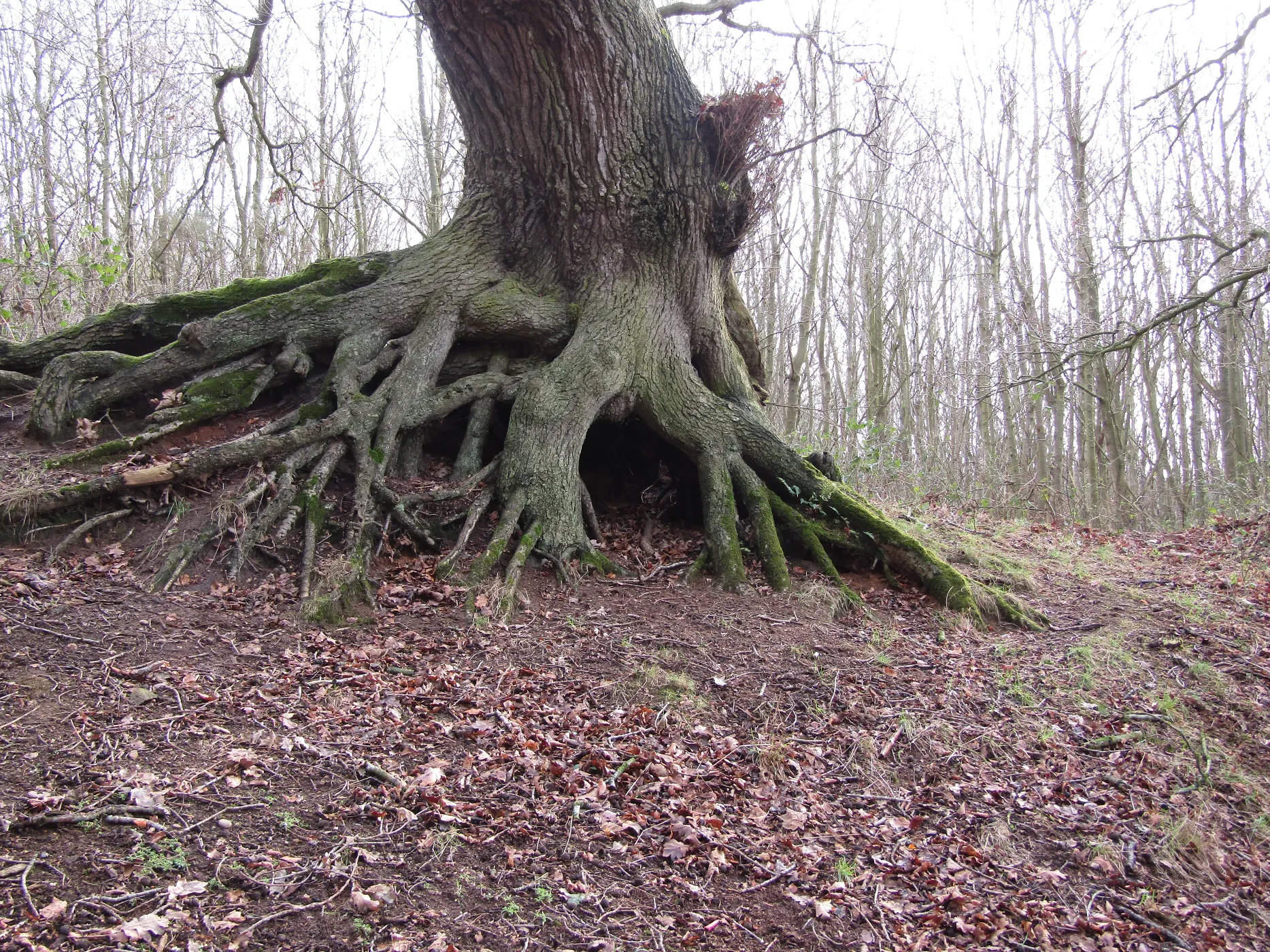
Exposed root system of an oak
Exposed roots of an adult oak (Quercus sp.), demonstrating the complex branching and distribution of the root system in the soil. The photo was taken at Middle Barn Farm, in the Pulborough area, West Sussex, England, United Kingdom.
Root is not just an “anchor” holding the plant in the ground. It is a highly efficient absorbing system whose area can reach hundreds of square meters in a single plant (Ingram et al., 2015).
How do nutrients enter the root?
There are three main pathways:
1. Interception. Roots grow and physically contact soil particles on which cations (positively charged ions) are held. Root cells release hydrogen ions (H+), which are exchanged for nutrient cations attached to clay particles and organic matter. In this way calcium, magnesium, potassium, and some other elements are absorbed (Lowenfels, 2013).
2. Mass flow. Water from the soil moves toward the root during transpiration. Along with it, anions (negatively charged ions) dissolved in water—nitrates, sulfates, chlorides—and also some cations enter the root (Lowenfels, 2013).
3. Diffusion. When the concentration of ions at the root surface drops (because the root has absorbed them), new ions from the surrounding solution move toward the root. In this way phosphorus, potassium, and zinc move (Pavlis, 2020).
What happens next?
After an ion has reached the root surface, it must cross the cell membrane. This is possible in two ways:
- Passively—through channels or with the help of carrier proteins, without energy expenditure. Some ions move in this way along a concentration gradient.
- Actively—with the expenditure of ATP energy. Almost all essential elements are absorbed in this way, because their concentration inside the cell is much higher than in the soil solution. The cell literally “pumps” them in, as a pump pumps water up a pipe (Hopkins and Hüner, 2009).
Key point: Active nutrient uptake is impossible without respiration. The root must constantly receive oxygen in order to produce ATP for the operation of transport pumps. That is why waterlogged or compacted soil is so destructive: it contains no oxygen, roots cannot respire, and therefore cannot feed themselves (Pavlis, 2020).

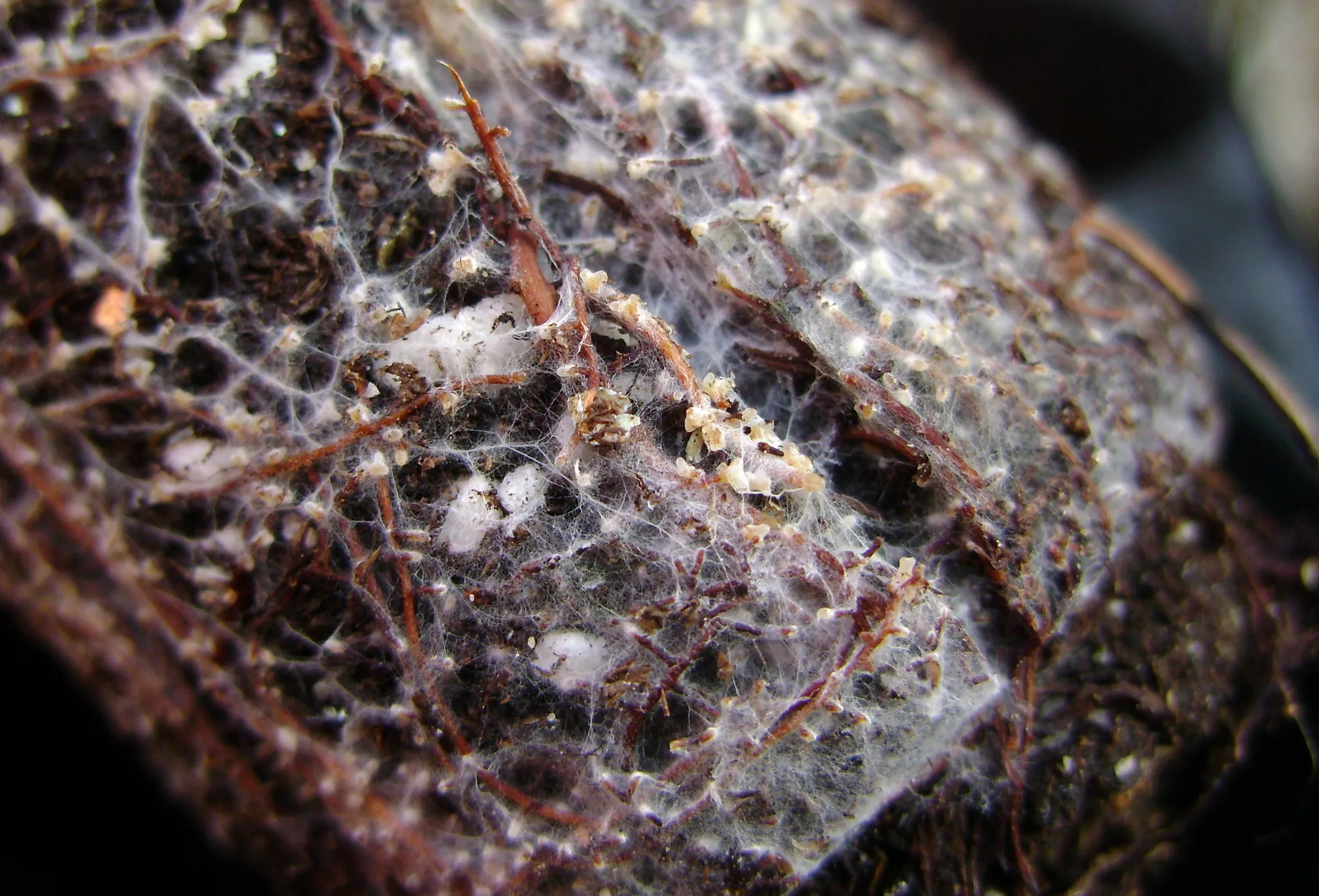
Ectomycorrhizal mycelium around spruce roots
White mycelium of an ectomycorrhizal fungus associated with roots of white spruce Picea glauca. The image clearly shows the close association of fungal mycelium with the root system of a woody plant.
The role of mycorrhiza. Many plants enter into symbiosis with fungi, forming mycorrhiza. Fungal hyphae penetrate the soil and obtain phosphorus, nitrogen, and other elements that the root cannot obtain on its own. In return, the plant gives the fungus sugars. Mycorrhiza increases the effective absorbing surface of the root dozens of times (Lowenfels and Lewis, 2010).
Practical note: Do not dig the soil deeply without need. Digging destroys mycorrhizal connections and compacts the lower layers, depriving roots of oxygen. Mulching with organic matter, on the contrary, creates ideal conditions for root respiration and the work of beneficial microbes.
6. Foliar nutrition: is it possible?
The idea of “feeding” plants through their leaves seems tempting: no need to fuss with the soil; it is enough to spray the foliage with a nutrient solution. And indeed, leaves can absorb some substances through stomata and the thin cuticle. However, foliar nutrition is more of a diagnostic tool than a full-fledged method of feeding (Chalker-Scott, 2018).
What can a leaf do?
The leaf blade is permeable to gases (CO2 and O2) and water vapor. To a lesser extent, it can absorb aqueous solutions of certain mineral substances—primarily those that move quickly through the plant (nitrogen, potassium, magnesium). That is why foliar feeding is sometimes used to quickly correct acute deficiencies: for example, with an obvious lack of magnesium or iron (Ingram et al., 2015).
Why can foliar nutrition not replace root nutrition?
1. Limited absorbing capacity. The leaf cuticle is a waxy barrier created by nature to protect against water loss. It lets through only a negligible fraction of nutrients compared with the root.
2. Low concentrations. To avoid burning the leaf, the solution concentration must be very low. In one spraying, the plant receives a tiny dose of nutrients.
3. Inability to supply all elements. Phosphorus, calcium, and many micronutrients are practically not absorbed through the leaf. They can be delivered only through the root.
4. Need for repeated treatments. Even those elements that the leaf can absorb require regular repeated spraying, which is economically unprofitable for large areas.
Where does foliar nutrition actually work?
- Diagnostics. If a plant is suspected of iron deficiency, one leaf can be sprayed with iron chelate. If the leaf turns green after a few days, the diagnosis is confirmed. This is a quick and accurate test (Chalker-Scott, 2015).
- Emergency help. In acute deficiency, when the root system is damaged or the soil is too cold for active uptake, foliar feeding can give the plant temporary support.
- Stimulation of defenses. Some substances (for example, silicon or chitosan) are applied to leaves to activate the plant’s defense mechanisms, not for nutrition in the direct sense.
Practical note: The main pathway of plant nutrition is through the roots. Foliar spraying does not replace care for the soil. If a plant is starving, it is necessary to correct conditions in the root zone—improve soil structure, add compost, regulate watering—and not try to “feed” it through the leaves.

7-in-1 Wi-Fi Weather Station
Monitor local weather conditions with a wireless outdoor sensor. Track temperature, humidity, rainfall, wind speed and direction, and atmospheric pressure. Ideal for gardens, farms and greenhouses.
- Wireless outdoor sensor
- Solar-powered
- Wi-Fi connectivity
Affiliate link · Check regional compatibility.
7. The difference between respiration and nutrition
Respiration and nutrition are two fundamentally different processes that are often confused. Their difference can be reduced to a simple formula:
- Respiration provides energy.
- Nutrition provides building material.
Let us consider this in more detail.
| Feature | Respiration | Nutrition |
|---|---|---|
| Purpose | Obtaining energy (ATP) | Obtaining elements for synthesizing tissues |
| What is taken in | Oxygen (O2) | Mineral ions, CO2, water |
| What is released | CO2, water, heat | Oxygen (during photosynthesis), water |
| Source of substrate | Organic substances (sugars, fats, proteins) | External environment (soil, air, water) |
| When it occurs | Around the clock | Uptake—continuously; photosynthesis—in the light |
| Dependence on temperature | Strong (accelerates with heating) | Moderate (depends on solubility and pump operation) |
| Where it occurs | In mitochondria of all living cells | In roots (uptake) and leaves (photosynthesis) |
| Relationship to oxygen | Requires oxygen | Oxygen is not needed for uptake, but is needed for respiration, which supports that uptake |
The key difference is that respiration is a process of breakdown of complex organic molecules into simple inorganic ones (CO2 and H2O) with the release of energy. Nutrition is a process of creation: from simple inorganic ions the plant builds complex organic compounds—proteins, carbohydrates, lipids, nucleic acids (Kuznetsov and Dmitrieva, 2006).
But they are inextricably linked.
Respiration and nutrition are two sides of the same coin. Without respiration, nutrition is impossible because:
1. The uptake of ions from the soil requires ATP energy, which respiration provides.
2. The synthesis of amino acids, proteins, and other compounds from absorbed elements also requires respiration energy.
3. The transport of nutrients through the plant (phloem loading) is an active process dependent on respiration (Hopkins and Hüner, 2009).
And conversely: without nutrition, respiration is impossible because:
1. The respiratory substrate (sugars) is formed as a result of photosynthesis, which requires mineral elements (magnesium for chlorophyll, nitrogen for enzymes, etc.).
2. The enzymes that carry out respiration are themselves built from amino acids, whose synthesis requires nitrogen, sulfur, and other elements.
Practical note: When a gardener applies fertilizers, they “feed” the soil, not the plant directly. The plant can use these fertilizers only if its roots are healthy and actively respiring. Therefore, caring for root respiration is the first step toward effective nutrition.
8. What happens when respiration is disrupted: waterlogging, soil compaction
Root respiration is a process that is easy to disrupt. The two most common factors are waterlogging and soil compaction.
Waterlogging (excess moisture).

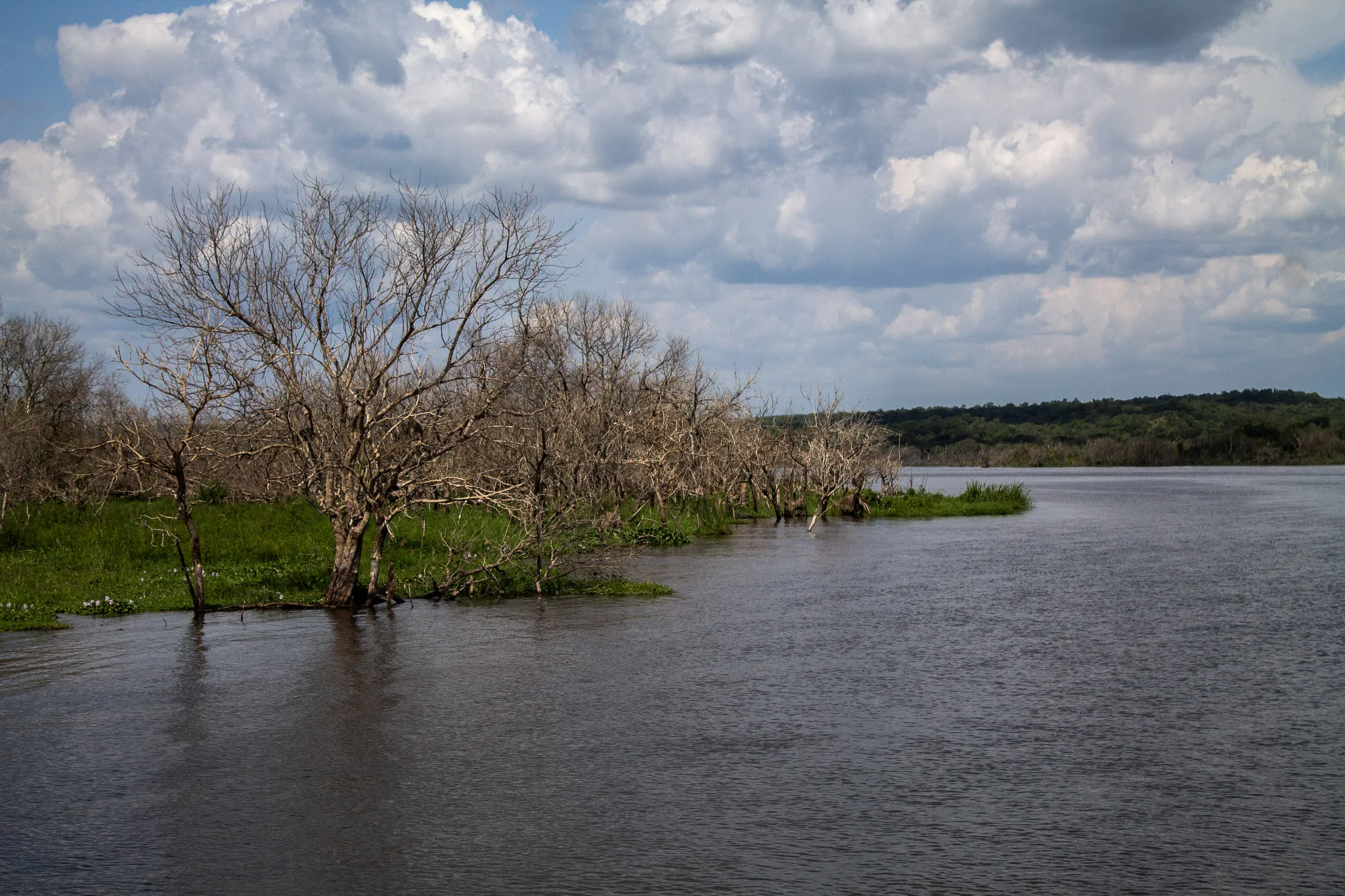
Trees affected by waterlogged soil
Trees along the Nile River weakened due to rising water levels and prolonged waterlogging of the soil. According to the author's description, flooding led to the death of the trees' roots. Location: banks of the Nile, Murchison Falls National Park, Uganda.
When the soil is saturated with water, all pores are filled with moisture, and air is displaced. Roots stop receiving oxygen. Under such conditions, respiration stops, and cells switch to an anaerobic pathway—fermentation. This provides little energy and leads to the accumulation of toxic products: alcohols, organic acids, ammonia. Cell membranes are damaged, and roots die (Kuznetsov and Dmitrieva, 2006).
External symptoms: leaves turn yellow, wilt, and growth stops. The plant may die within a few days. Young roots and crops such as papaya and avocado are especially sensitive to waterlogging—they can die within 24–48 hours in water (Kuznetsov and Dmitrieva, 2006).
Soil compaction.

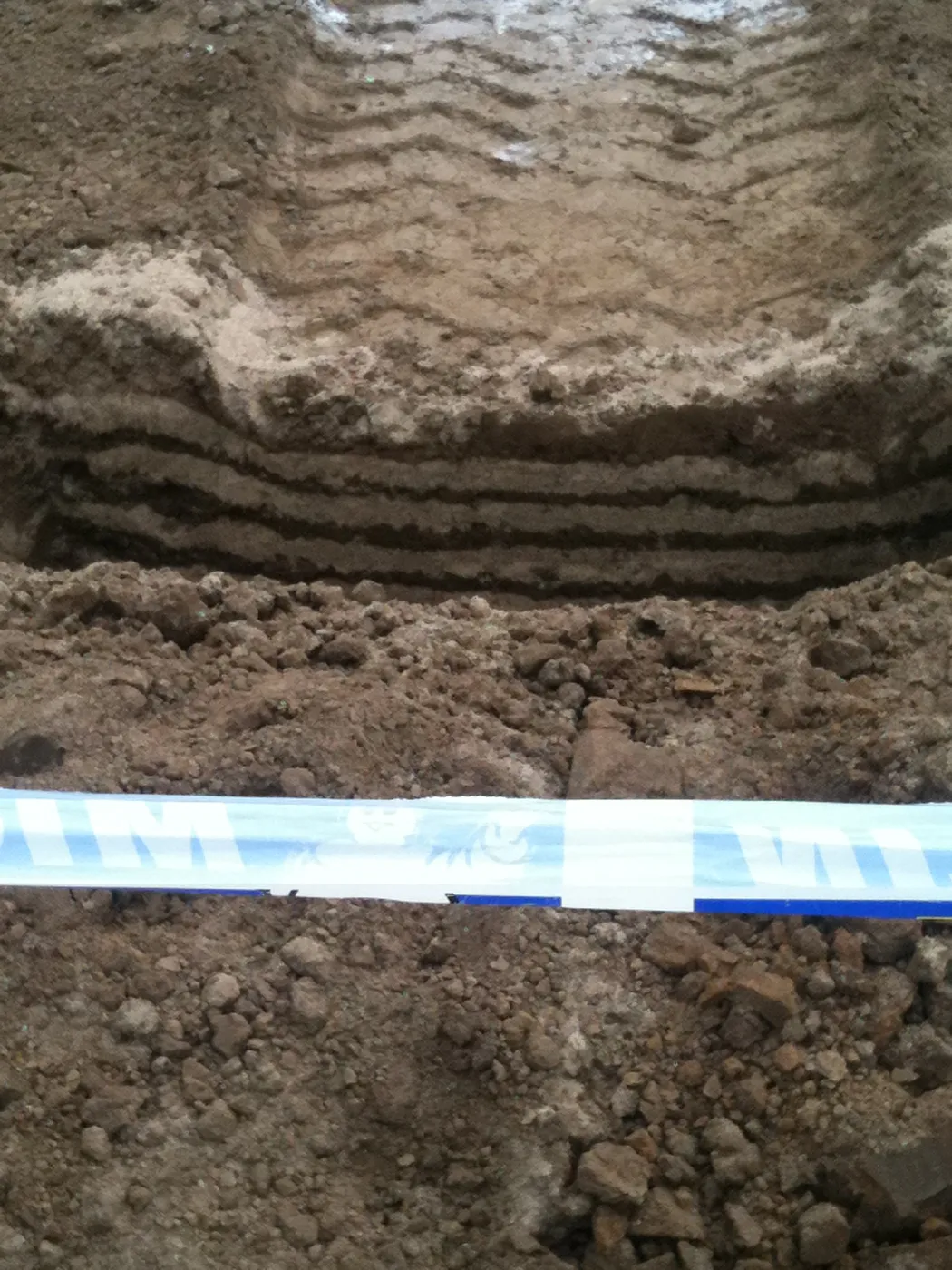
Soil profile after compaction by machinery
Soil cross-section with alternating layers of sand and loess, demonstrating the consequences of machinery passage.
When soil is compacted (due to walking, vehicle traffic, lack of organic matter), the pores between particles are compressed. Oxygen cannot penetrate deeper, and carbon dioxide cannot escape. Roots suffocate. In addition, compaction prevents roots from growing; they become deformed and cannot explore new volumes of soil (Pavlis, 2020).
Signs of compaction: water stands on the surface after rain, the soil is hard, roots grow horizontally rather than downward. Plants lag in growth, and leaves are pale.
What to do?
- Improve soil structure. Add compost, mulch, and avoid digging.
- Ensure drainage. If the site is waterlogged, make raised beds, ditches, or drainage pipes.
- Do not walk on garden beds. Use permanent paths and raised beds.
- Mulch. Mulch retains moisture but does not create stagnation, and it gradually improves structure.
- Grow cover crops. Their roots loosen the soil and create channels for air.
Practical note: If water stands on a garden bed for more than an hour after rain, this is a signal of a problem. Roots in such a place will constantly experience oxygen starvation, and no fertilizers will help.

40W Full Spectrum LED Grow Light
Support healthy plant growth with full-spectrum LED lighting. Ideal for seedlings, indoor plants and small growing spaces. A practical solution for indoor gardening and year-round cultivation.
- Full-spectrum LED
- Energy-efficient design
- Indoor plant growing
Affiliate link · Check actual power and light coverage.
9. What happens when nutrition is disrupted: deficiencies


Lagrein grape leaf
A leaf of a Lagrein grapevine. Location: Gisborne Peak winery (Australia, State of Victoria).
Nutritional disorders manifest in different ways. The most common case is element deficiency. But it is important to understand: a deficiency can be true (the element is genuinely scarce in the soil) or induced (the element is present but unavailable due to pH, competition with other ions, or poor root function) (Pavlis, 2020).
Main symptoms of deficiencies:
- Nitrogen (N). Yellowing of old leaves, weak growth, pale green color. The plant “pumps” nitrogen from old leaves to young ones.
- Phosphorus (P). Dark green leaves with a purple tint, poor root development, delayed flowering.
- Potassium (K). Yellowing and dying of the edges of old leaves, weak stems, reduced disease resistance.
- Calcium (Ca). Death of growing points, deformation of young leaves, blossom-end rot of fruits.
- Magnesium (Mg). Interveinal chlorosis on old leaves (yellow spots between green veins).
- Iron (Fe). Interveinal chlorosis on young leaves (often in alkaline soil).
- Boron (B). Death of growing points, thickening and cracking of stems, deformation of fruits.

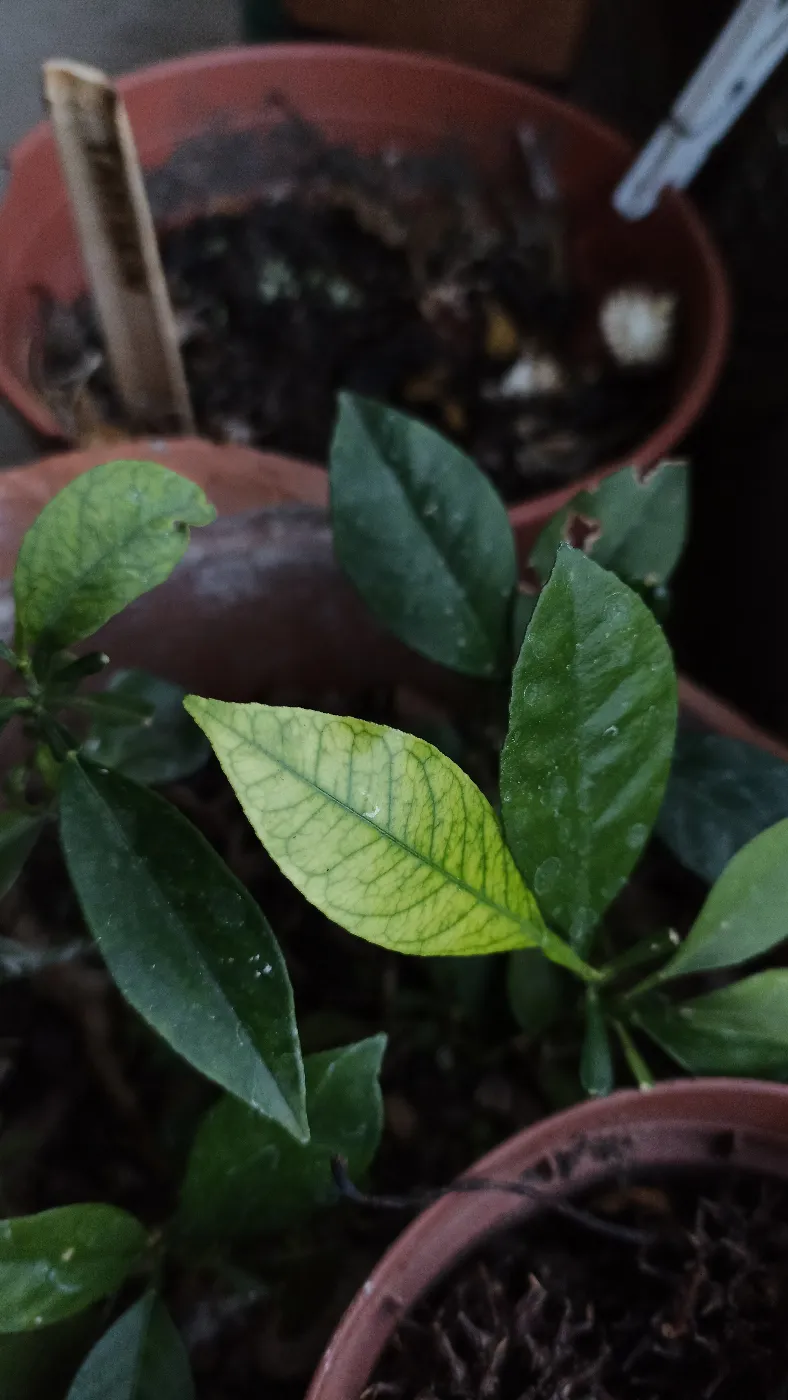
Chlorosis of bitter orange (Citrus aurantium) leaf under iron deficiency
The photograph shows a potted citrus—bitter orange (or bigarade). A young leaf demonstrates pronounced interveinal chlorosis: leaf tissue has become light yellow, but the fine network of veins remains green. This is a typical symptom of acute deficiency of available iron, which often happens when growing citrus in pots with unsuitable (alkaline) substrate.

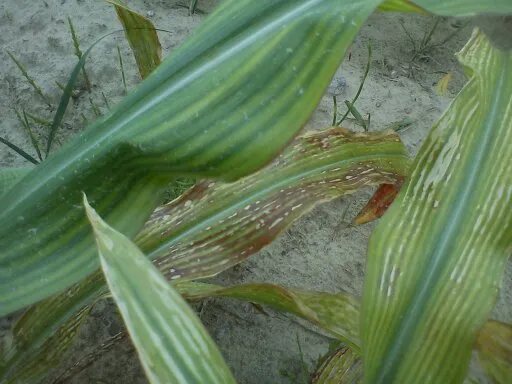
Magnesium deficiency in maize
Maize (Zea mays) leaves with symptoms of severe magnesium starvation.
Important: Symptoms of deficiency of one element may resemble deficiency of another. For example, yellowing of leaves may be caused not only by nitrogen deficiency but also by waterlogging, compaction, root disease, or phytotoxicity (Pavlis, 2020). Therefore, the best diagnostic method is soil and leaf analysis, not visual assessment.
What to do?
- Do not apply fertilizers blindly. First, soil analysis. If this is not possible, focus on the needs of the crop and the history of the site.
- Correct not only the deficiency but also the cause. If iron is unavailable because of alkaline soil, it is useless to add iron sulfate—you need to acidify the soil or use iron chelate.
- Maintain root health. Even with sufficient elements in the soil, a plant cannot absorb them if its roots are not respiring.
Practical note: If you mulch with fresh organic matter high in carbon (straw, sawdust), microbes may temporarily “steal” nitrogen from the soil to decompose this organic matter. Plants during this time will experience nitrogen starvation. The solution is to compost such materials before application or add nitrogen fertilizer.
10. Regional aspect: in cold soils nutrition is slowed, in waterlogged soils roots suffocate
Climate and soil conditions strongly affect plant respiration and nutrition. It is important for a gardener to take this into account, because the same techniques work differently in different regions.
Cold soils.
Respiration is an enzymatic process, and its rate obeys van’t Hoff’s rule: with an increase in temperature by 10 °C, respiration intensity increases 2–3 times in the range from +10 to +30 °C (Kuznetsov and Dmitrieva, 2006). In cold soil (below +10 °C), root respiration slows down, and along with it the uptake of nutrients slows down. Roots cannot operate pumps without ATP energy.
In addition, at low temperatures phosphorus, potassium, and other elements become less soluble and less available. Microbes that decompose organic matter also slow down—mineralization of organic matter stops. That is why in cold regions plants often suffer from phosphorus deficiency in spring, even if there is enough of it in the soil: cold blocks both root respiration and phosphate dissolution (Pavlis, 2020).
Waterlogged soils.
In soils with excess water (heavy clays, lowlands, areas with a high groundwater level), pores are filled with water rather than air. Oxygen does not penetrate deeper, and roots suffocate. Respiration stops, and nutrient uptake ceases. The plant may look depressed, leaves turn yellow, and roots rot.
Alternations of drought and waterlogging are especially dangerous: roots accustomed to aerobic conditions suffer from anaerobic stress. Under such conditions, pathogenic microorganisms develop, causing root rots (Gershuny and Smillie, 1999).
What to do in different conditions?
- Cold regions. Use raised beds (they warm up faster), mulch with dark material for heating, choose cold-resistant crops and varieties, apply phosphorus in spring in an available form, and do not water with cold water.
- Wet regions. Ensure drainage (ditches, raised beds), add organic matter to improve structure, do not walk on wet soil, and choose moisture-tolerant crops.
- Arid regions. Mulch to conserve moisture, use drip irrigation, add organic matter to increase water-holding capacity, and avoid salinization.
Practical note: In any region, the key to plant health is healthy soil with good structure. It provides both root respiration (oxygen) and nutrition (dissolved elements), and microbial life. If the soil is compacted, waterlogged, or cold, no fertilizers can compensate for these problems.
11. Summary: respiration provides energy, nutrition provides building material
We have examined two fundamental processes that are often confused but perform completely different functions.
Respiration is the process of oxidizing organic substances (sugars, fats, proteins) to carbon dioxide and water with the release of energy. This energy is stored in ATP and spent on growth, cell division, nutrient uptake, transport, and maintaining viability. Respiration occurs around the clock in all living cells, requires oxygen, and depends on temperature.
Nutrition is the process of absorbing mineral elements from the soil, carbon dioxide from the air, and water. These elements are used as building material for the synthesis of proteins, carbohydrates, lipids, nucleic acids, and other compounds. The uptake of ions from the soil requires ATP energy, that is, it is impossible without respiration.
The main idea of the article: A plant cannot feed normally if its roots do not respire.
This connection explains why:
- Waterlogged soil is destructive, even if it contains many nutrients.
- Compacted soil blocks both respiration and nutrition.
- Cold soil slows both processes.
- Applying fertilizers without caring for soil structure is often useless.
What should a gardener do?
1. Ensure root respiration. Loose, structured soil, drainage, mulch, minimal digging.
2. Ensure nutrition. Regular application of compost and organic matter, soil analysis, balanced fertilizers when necessary.
3. Do not separate these tasks. Caring for the soil is simultaneously caring for both respiration and nutrition.
Practical note: If you are unsure where to start, start with improving soil structure. Compost, mulch, and avoiding deep digging will do more for plant health than any fertilizers. Healthy soil is soil that both breathes and feeds at the same time.
References
- (2015). ‘The plant body: structure and function’, in Ingram, D.S., Vince-Prue, Daphne, Gregory, P.J. (ed.) Science and the Garden. The scientific basis of horticultural practice. West Sussex, UK: Royal Horticulture Society. Wiley Blackwell, pp. 14-36.
- Agrios, G.N. (2005). ‘Introduction’, in Plant Pathology. London, UK: ACADEMIC PRESS, pp. 4-76.
- Amthor, J.S. (1994). ‘Respiration and Carbon Assimilate Use’, in Boote, K.J., Bennett, J.M., Sinclair, T.R., Paulsen, G.M. (ed.) Physiology and Determination of Crop Yield. Florida, USA: American Society of Agronomy, Crop Science Society of America, Soil Science Society of America, pp. 221-250.
- Barney, D.L., Hummer, K.E. (2009). ‘Crop Management’, in Currants, Gooseberries, and Jostaberries. A Guide for Growers, Marketers, and Researchers in North America. Boca Raton, FL: CRC Press, pp. 131-164.
- Blancard, Dominique (2012). Tomato Diseases: Identification, Biology and Control. 2nd ed. London, UK / Waltham, MA, USA / San Diego, CA, USA: Academic Press (an imprint of Elsevier).
- Capon, Brian (2022). ‘How Plants Function’, in Botany for Gardeners. An Introduction to the Science of Plants. Portland, Oregon: Timber Press, pp. 144-192.
- Chalker-Scott, Linda (2015). ‘What's Essential’, in How Plants Work. Portland, London: Timber Press, pp. 60-83.
- Chalker-Scott, Linda (2018). ‘Plant Nutrition: Evidence-Based Fertilizing’, in The Science of Gardening. Course Guidebook. Chantilly, Virginia: The Great Courses, pp. 107-116.
- Eash, N.S., Sauer, T.J., O'Dell, D., Odoi, Evah (2016). ‘Soil Biological Properties’, in Soil Science Simplified. New Jersey: Wiley Blackwell, ch. 4.
- Eash, N.S., Sauer, T.J., O'Dell, D., Odoi, Evah (2016). ‘Soil Water’, in Soil Science Simplified. New Jersey: Wiley Blackwell, ch. 6.
- Evert, R.F. (2006). ‘Structure and Development of the Plant Body — An Overview’, in Esau's Plant Anatomy: Meristems, Cells, and Tissues of the Plant Body: Their Structure, Function, and Development. Hoboken, New Jersey, USA: John Wiley & Sons, Inc., pp. 1-13.
- Foth, H.D. (1990). ‘Soil Ecology’, in Fundamentals of Soil Science. New York: John Wiley & Sons, pp. 115-132.
- Gershuny, Grace, Smillie, Joe (1999). ‘Understanding the Soil Ecosystem’, in The Soul of Soil. A Soil-Building Guide for Master Gardeners and Farmers. Vermont: Chelsea Green Publishing, .
- Hartmann, H.T., Kester, D.E., Davies, F.T.J., Geneve, R.L. (2011). ‘Principles of Propagation from Seeds’, in Hartmann & Kester's Plant Propagation Principles and Practices. USA: Pearson Education, pp. 211-262.
- Hopkins, W.G., Hüner, N.P..A. (2009). ‘Energy Conservation in Photosynthesis: CO2 Assimilation’, in Introduction to Plant Physiology. Hoboken, NJ: John Wiley & Sons, pp. 129-150.
- Lowenfels, Jeff (2013). ‘Nutrient Movement through Plants’, in Teaming with nutrients: The Organic Gardener's Guide to Optimizing Plant Nutrition. Portland, London, UK: Timber Press, pp. 133-153.
- Lowenfels, Jeff, Lewis, Wayne (2010). ‘How the Soil Food Web Applies to Gardening’, in Teaming with Microbes. The Organic Gardener’s Guide to the Soil Food Web. Portland, Oregon: Timber Press, .
- Morgan, Sally (2021). ‘A–Z of pests and diseases’, in The Healthy Vegetable Garden: A natural, chemical-free approach to soil, biodiversity and managing pests and diseases. Vermont, London, UK: Chelsea Green Publishing, .
- Morgan, Sally (2021). ‘Pests and predators’, in The Healthy Vegetable Garden: A natural, chemical-free approach to soil, biodiversity and managing pests and diseases. Vermont, London, UK: Chelsea Green Publishing, .
- Pavlis, Robert (2020). ‘Solving Soil Problems’, in Soil Science for Gardeners. Working with Nature to Build Soil Health. Gabriola Island, BC, Canada: New Society Publishers, pp. 97-178.
- Pratt, M.M. (2005). ‘Looking After the Soil – the Balanced Approach’, in Practical Science for Gardeners. Portland, Oregon: Timber Press, pp. 61-80.
- Zona, Scott (2026). ‘What a Plant Needs: Nutrients’, in A Gardener's Guide to Botany. Beverly, MA: Cool Springs Press, .
- Кузнецов, В.В. (2006). ‘Дыхание растений [Plant respiration]’, in Физиология растений [Physiology of plants]. Москва: Высшая школа, pp. 310-357.
- Потапов, В.А., Фаустов, В.В., Пильщикова, Ф.Н. (2000). ‘Биологические основы плодоводства [Biological foundations of fruit growing]’, in Плодоводство [Fruit growing]. Москва: Колос, pp. 3-124.
- Траннуа, Павел (2018). ‘Плодовые деревья [Fruit trees]’, in Сад и огород в рисунках и комиксах: полная наглядная энциклопедия [The Garden and Vegetable Patch in Drawings and Comics: A Comprehensive Visual Encyclopedia]. Москва: Издательство «Э», pp. 69-72.
- Траннуа, Павел (2018). ‘Цветы [Flowers]’, in Сад и огород в рисунках и комиксах: полная наглядная энциклопедия [The Garden and Vegetable Patch in Drawings and Comics: A Comprehensive Visual Encyclopedia]. Москва: Издательство «Э», pp. 46-49.
- Третьяков, Н.Н. (2000). ‘Минеральное питание растений [Mineral nutrition of plants]’, in Физиология и биохимия сельскохозяйственных растений [Physiology and biochemistry of agricultural plants]. Москва: Колос, pp. 280-345.
- Третьяков, Н.Н. (2000). ‘Фотосинтез [Photosynthesis]’, in Физиология и биохимия сельскохозяйственных растений [Physiology and biochemistry of agricultural plants]. Москва: Колос, pp. 88-166.
