
Plant Flowering
1. The Flower: Structure Made Simple

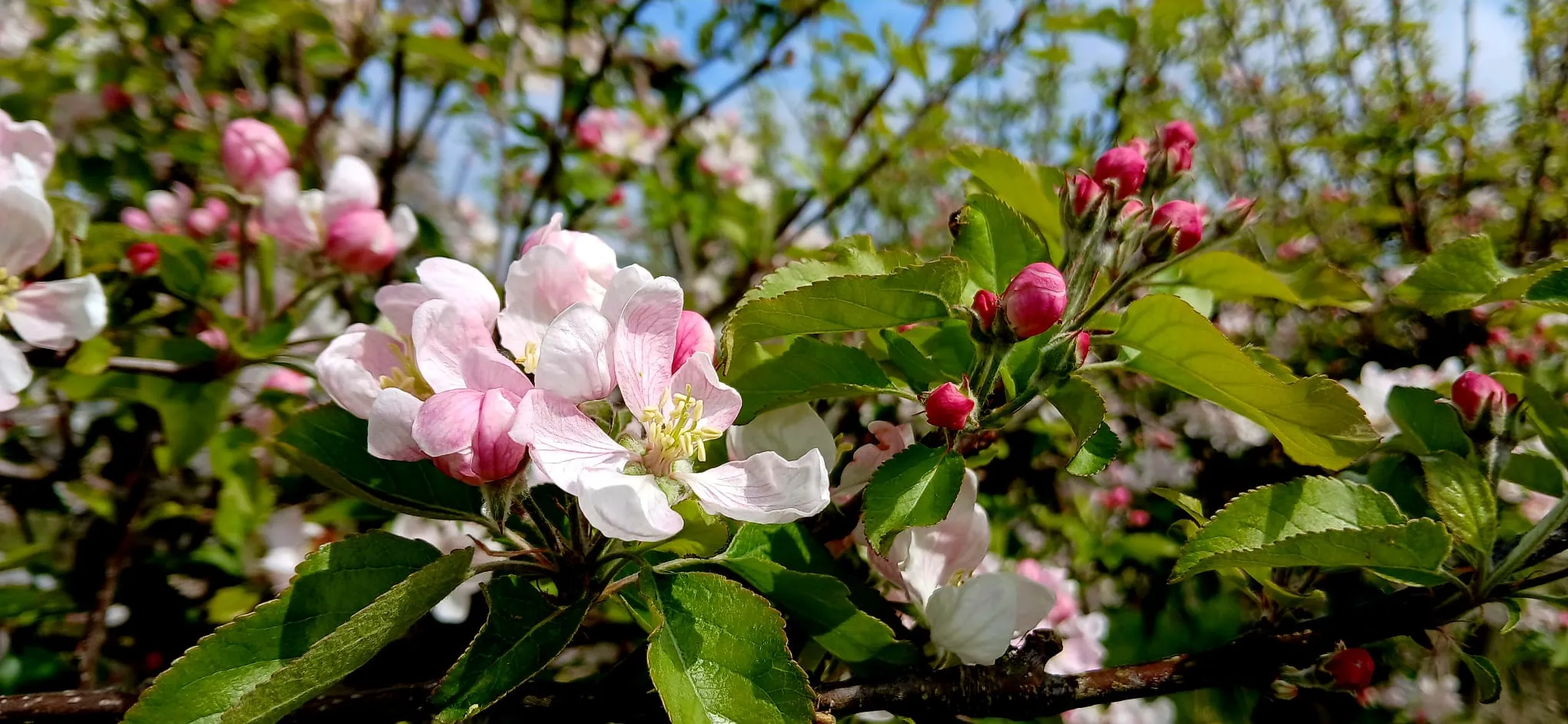
Apple blossom in Wincheap orchards (Canterbury, Kent)
A flower is a shortened and modified shoot designed for sexual reproduction. In most flowering plants it consists of four main types of parts: sepals, petals, stamens, and carpels (Zona, 2023; Mauseth, 2017). Not all flowers have a complete set: in wind-pollinated grasses, oak, and birch, petals are often reduced because there is no need to attract insects (Capon, 2022; Mauseth, 2017).
At the base, the flower is attached to the stem by a pedicel. Its expanded tip—the receptacle—bears all the parts of the flower (Capon, 2022; Mauseth, 2017). On the outside, the bud is protected by a calyx made of sepals. Above it is the corolla made of petals—it attracts pollinators with color, shape, and scent. If sepals and petals are externally indistinguishable, they are called tepals; this is how the flowers of tulip, lily, and onion are structured (Capon, 2022; Ingram et al., 2015).

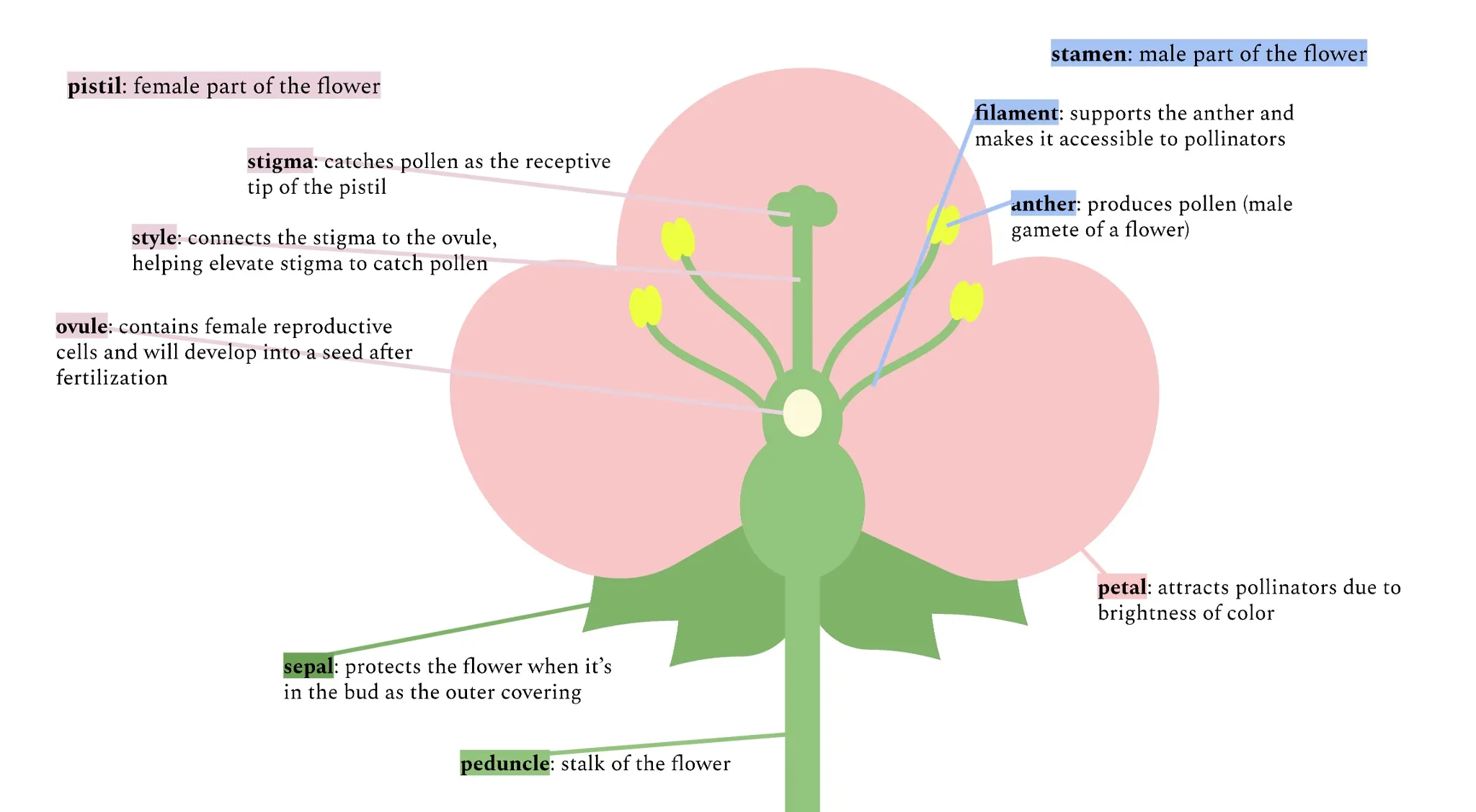
Main parts of a flower and their functions
Schematic representation of a flower of an angiosperm with the main parts labeled. Male reproductive organs are highlighted in blue, female in lilac. The diagram helps to understand the structure of the perianth, stamens, and pistil.
The main organs of the flower are the stamens (androecium) and the pistil, or carpels (gynoecium). A stamen consists of a filament and an anther, in which pollen matures. The pistil is divided into a stigma, a style, and an ovary. The ovary contains ovules—these are what will develop into seeds after fertilization, and the ovary itself will become the fruit (Zona, 2023; Mauseth, 2017). The pistil may be formed by one carpel or by several fused carpels (Mauseth, 2017).
Flowers can be bisexual—with stamens and a pistil at the same time—or unisexual, that is, only male or only female. If both types are present on the same plant, it is called monoecious (maize, cucumber, pumpkin). If male and female flowers are on different plants, it is a dioecious species (sea buckthorn, pistachio, some strawberry varieties) (Capon, 2022; Mauseth, 2017; Potapov et al., 2000). This is important for a gardener: in dioecious crops, without a pair of male and female plants there will be no fruit.
The position of the ovary is also of practical importance. A superior ovary is located above the other parts of the flower—as in tomato, cherry, and plum. An inferior ovary is located beneath the sepals and petals—as in apple, pear, and cucumber. With an inferior ovary, not only the ovary walls but also the tissues of the receptacle participate in the formation of the fruit, so the fruit can be larger and juicier (Ingram et al., 2015; Mauseth, 2017).
Note. A flower is not merely a garden decoration. Its biological task is to deliver pollen to the stigma and ensure fertilization of the ovules. Everything else—color, fragrance, nectar—serves this task (Capon, 2022; Zona, 2023).
2. Male and Female Organs

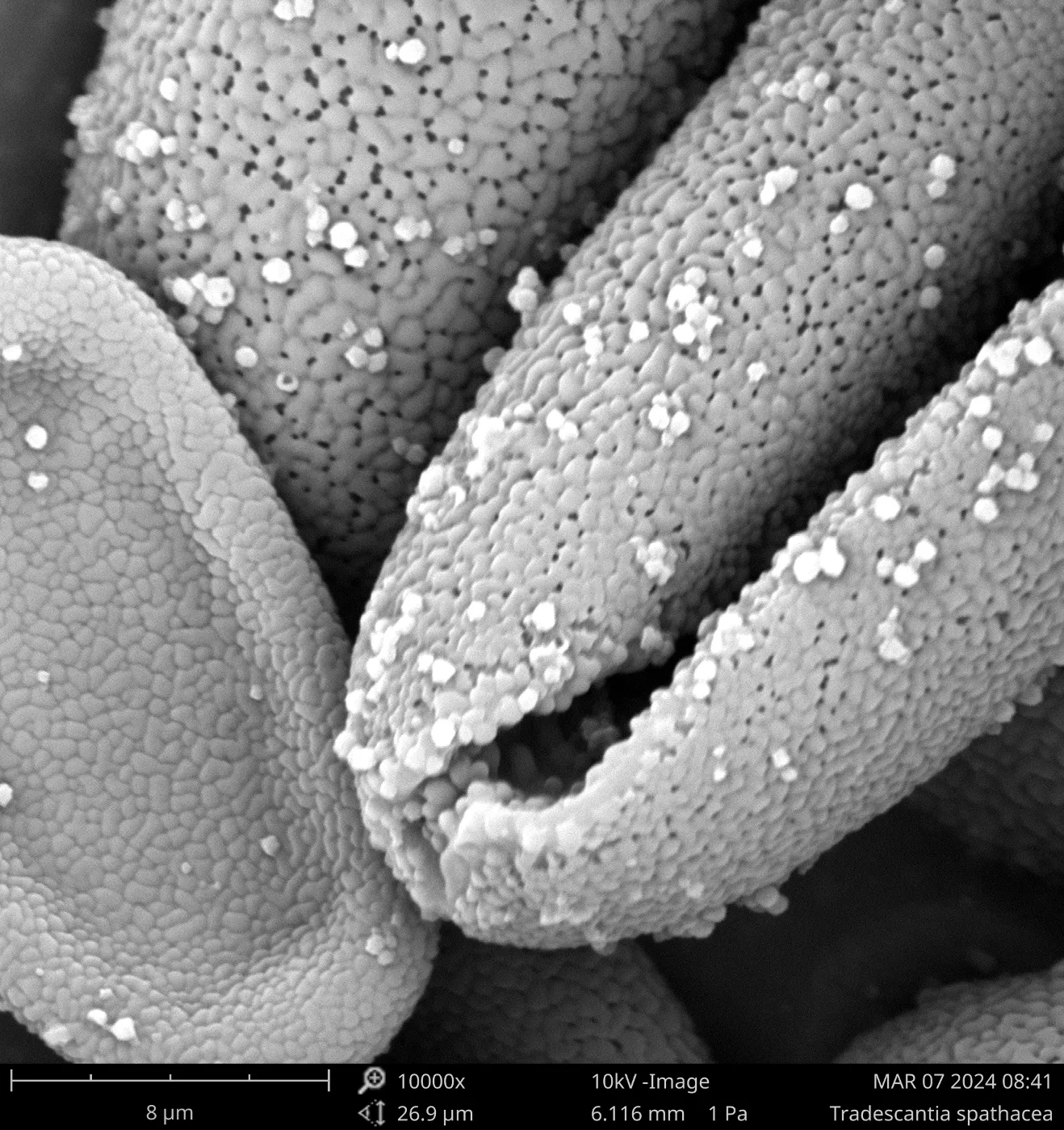
Structure of pollen grains under an electron microscope
Scanning electron micrograph of pollen of Tradescantia spathacea. The complex relief surface of the pollen grain shell is clearly visible.
Stamens are the male organs of the flower. Each stamen consists of a thin filament and an anther at its end. Pollen matures in the anthers—tiny grains carrying male reproductive cells. The pollen coat is built from sporopollenin—a substance so durable that pollen persists in soil and rocks for millions of years. It is by the shape of pollen grains that scientists determine which plants grew in a place thousands of years ago (Capon, 2022; Mauseth, 2017).
When mature, the anthers open and release pollen. In wind-pollinated plants, pollen is dry, light, and produced in enormous quantities. In insect-pollinated plants, it is sticky, heavy, and often has spines or projections so that it catches on the insect’s body (Long et al., 2021; Mauseth, 2017).
The pistil is the female organ of the flower. Its upper part, the stigma, captures pollen. In insect-pollinated plants, the stigma is often covered with a sticky fluid to which pollen adheres. The style raises the stigma into a convenient position, and the ovary at the base contains the ovules. In each ovule there is an egg cell waiting for fertilization (Zona, 2023; Capon, 2022).
In some crops the flowers are bisexual: a single flower has both stamens and a pistil. In others they are unisexual: male and female flowers exist separately. If both types are present on the same plant, it is called monoecious (maize, cucumber, pumpkin). If male and female flowers are on different plants, the species is called dioecious (sea buckthorn, pistachio, some strawberry varieties). In dioecious crops, without a male and a female plant near each other, there will be no fruit at all (Potapov et al., 2000; Mauseth, 2017).

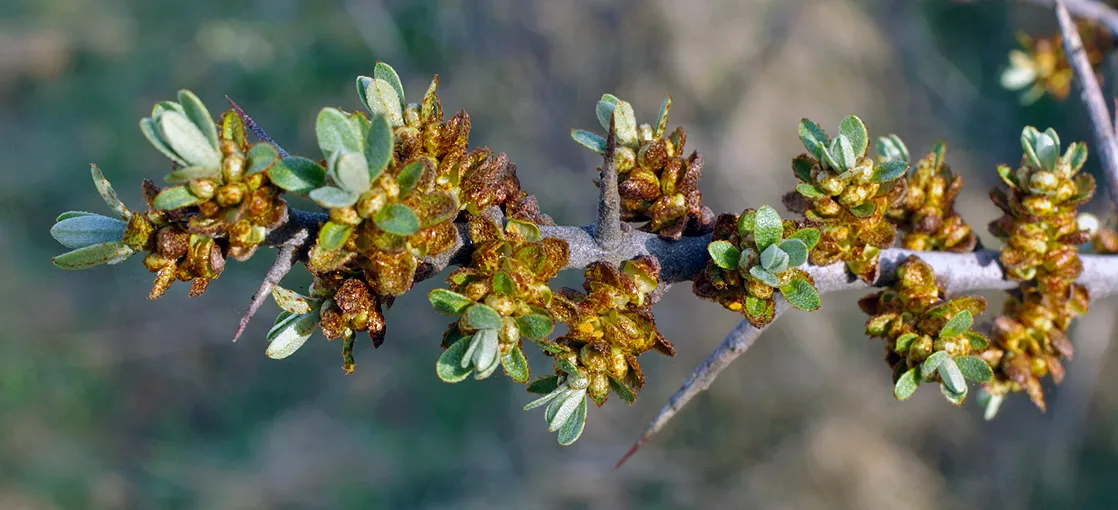
Male flowers of sea buckthorn (Hippophae rhamnoides)
Inflorescences of a male sea buckthorn plant (Hippophae rhamnoides). Male flowers produce pollen necessary for fertilization of female flowers.

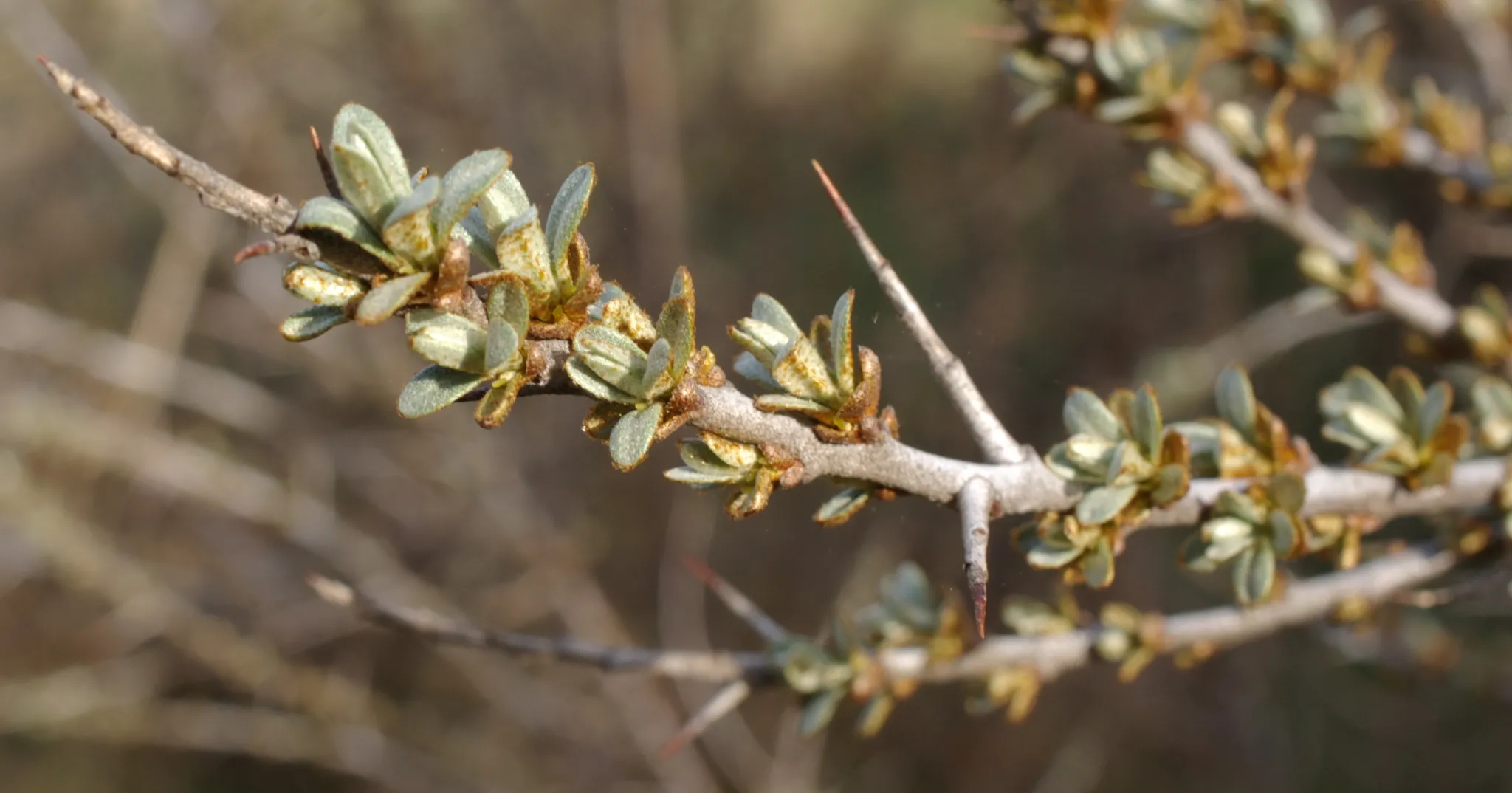
Female flowers of sea buckthorn (Hippophae rhamnoides)
Flowers of a female sea buckthorn plant (Hippophae rhamnoides). After successful pollination and fertilization, fruits develop from them.
Note. In dioecious plants it is often impossible to determine sex before flowering. Sea buckthorn, for example, looks the same until its first flowering, and gardeners often buy several seedlings in the hope that at least one of them will be a male plant (Potapov et al., 2000).


LCD 4-in-1 Soil Tester
Check essential growing conditions with one compact tool. Measure soil pH, moisture, temperature and light intensity — ideal for gardens, potted plants and greenhouses.
- 4-in-1 measurement
- Easy-to-read LCD display
- Portable design
Affiliate link · For indicative measurements only.
3. Pollination: by Wind, by Insects, Self-Pollination
Pollination is the transfer of pollen from an anther to a stigma. Without this stage, fertilization is impossible, and therefore the formation of fruits and seeds is also impossible. There are three main methods of pollination, and each has its own features and limitations (Zona, 2023; Capon, 2022).

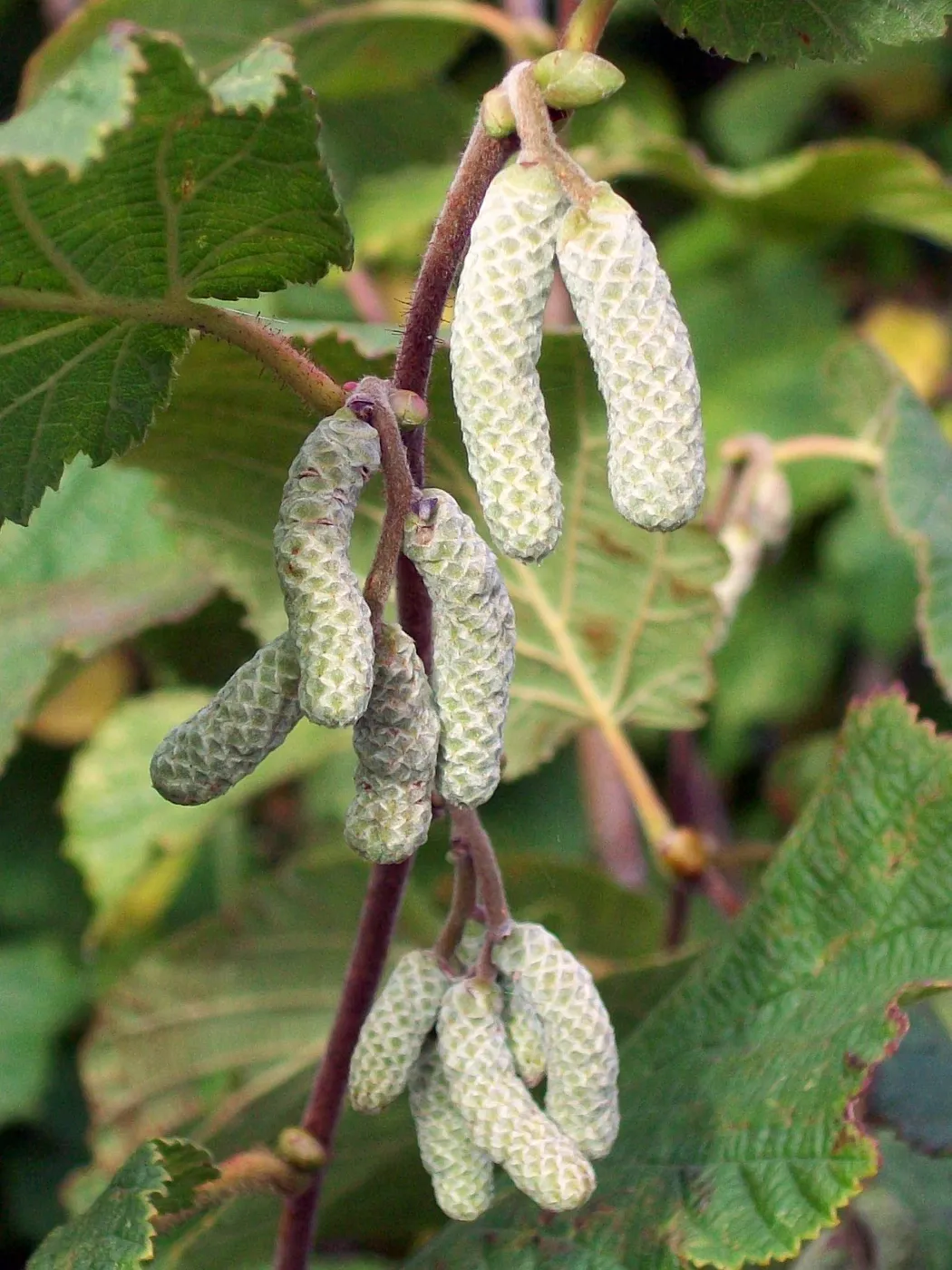
Male catkins of common hazel
Hanging male catkins of common hazel (Corylus avellana), in which pollen transported by wind is formed. The photograph was taken in the Millennium Wood forest, Stevenage, United Kingdom.
Wind pollination. The pollen of such plants is light, dry, and produced in enormous quantities. The wind carries it over long distances. This is how grasses, maize, birch, oak, hazel, and many trees are pollinated (Capon, 2022; Bubel, 2024). The stigmas of wind-pollinated plants are usually large and feathery—they increase the area for catching pollen. The flowers are inconspicuous, without nectar or fragrance: there is no need to attract insects (Capon, 2022; Zona, 2023).
The problem with wind pollination is that most of the pollen is lost. For fertilization to occur, a very large amount of pollen and close proximity of plants of the same species are needed. If a single tree of a wind-pollinated crop is planted far from its relatives, it may flower but remain sterile (Bubel, 2024; Zona, 2023).

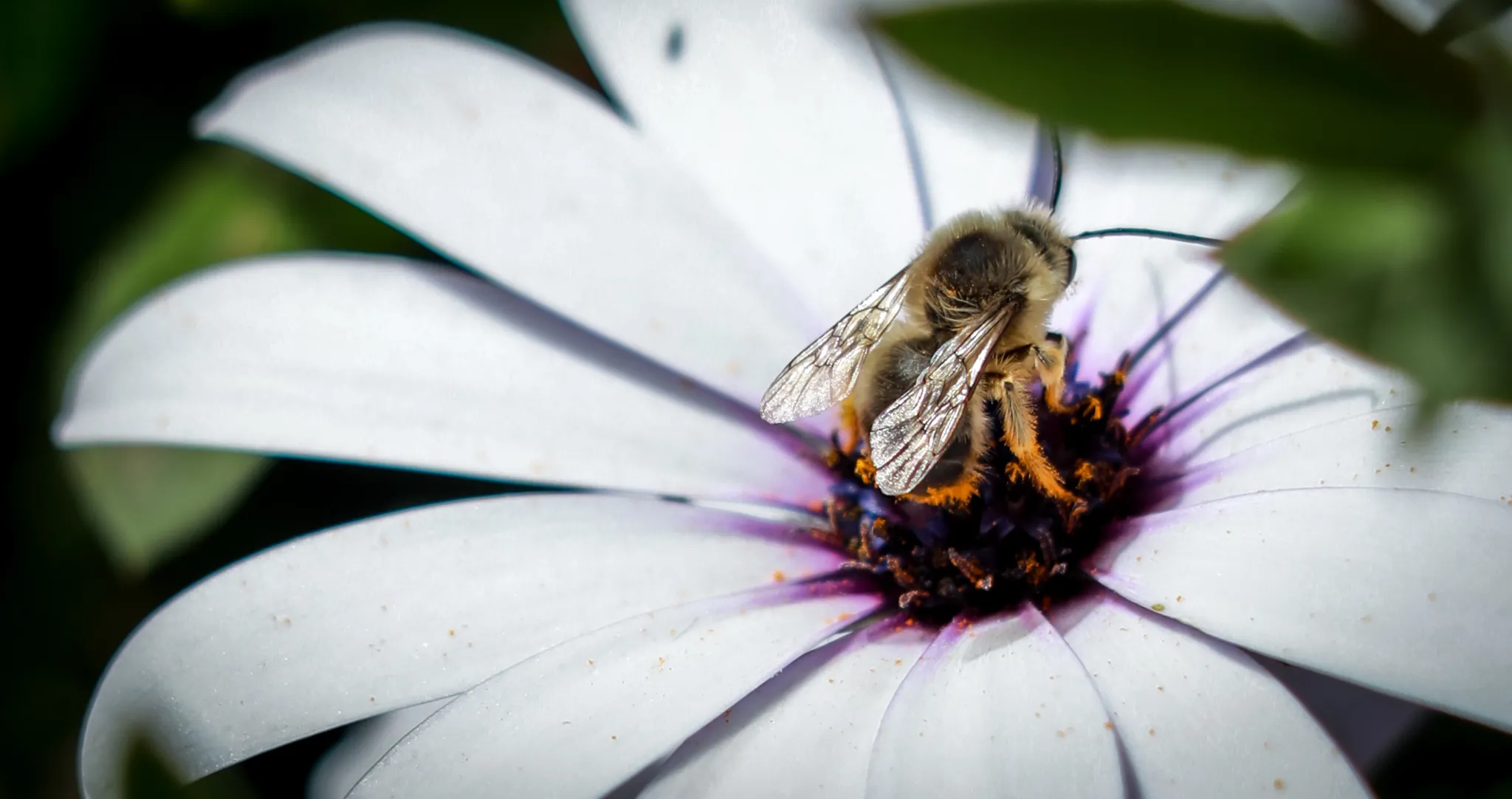
Bee — a natural pollinator of flowering plants
A bee collects pollen from a flower. During visits to flowers, pollen grains stick to the insect's body and are transferred to other plants, ensuring cross-pollination.
Insect pollination. This is the most common method in flowering plants. Flowers attract insects with color, shape, fragrance, and nectar. Pollen sticks to the insect’s body and is transferred to another plant (Zona, 2023; Walliser, 2020). Different groups of insects prefer different flowers: bees—blue and violet, butterflies and moths—often white or red with long tubes, flies—yellow and brown (Zona, 2023; Chalker-Scott, 2015). Some flowers release nectar only at certain times of day, adapting to the activity of their pollinators (Zona, 2023).
If there are few flowering plants in the garden and no insect pollinators, the harvest may be low even with abundant flowering. Cucurbits, fruit trees, and berry crops are especially affected by a lack of pollinators (Walliser, 2020; Morgan, 2021).

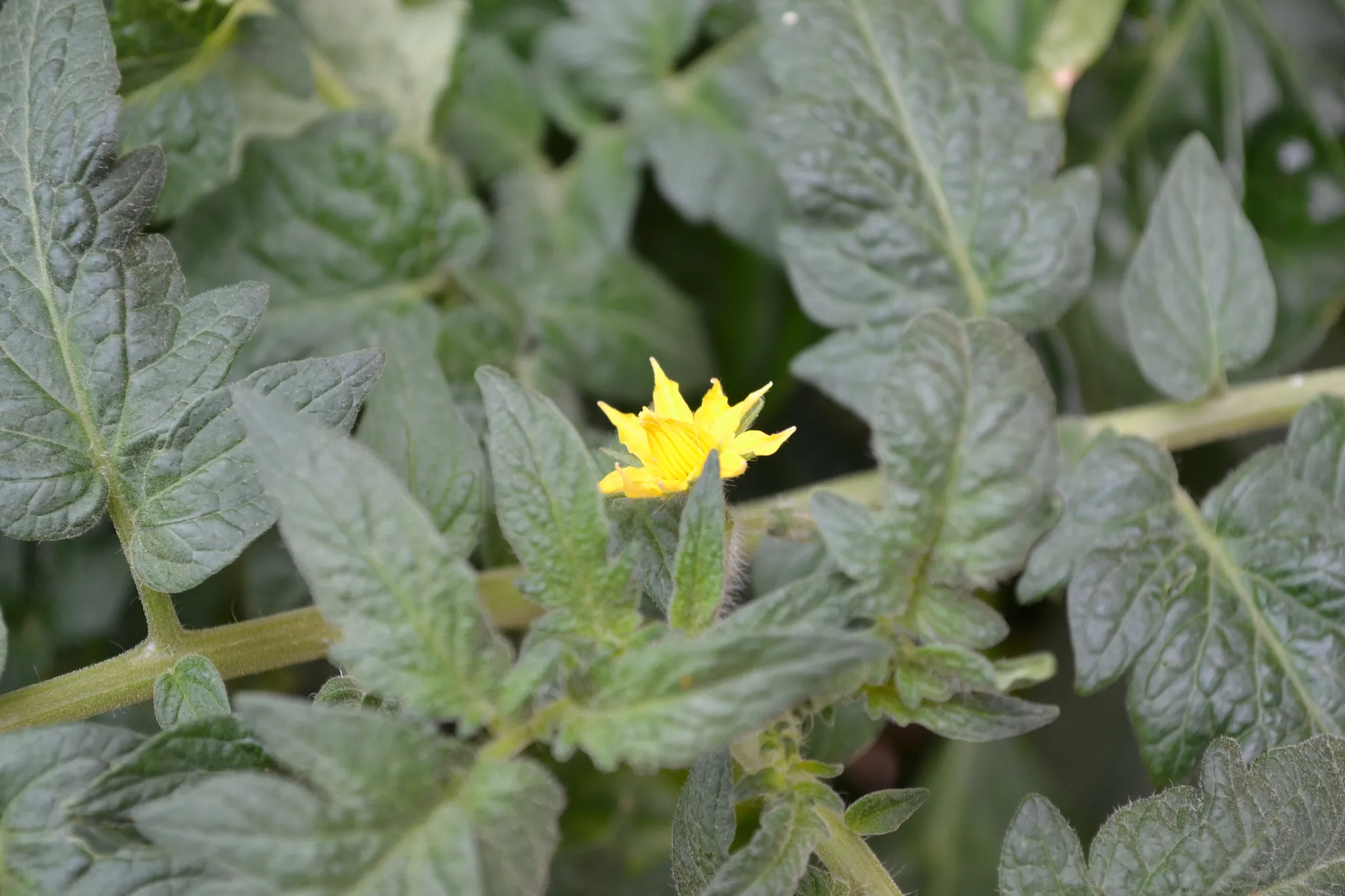
Tomato flower (Solanum lycopersicum)
Yellow tomato flower on a healthy plant. In tomato, the pistil and stamens are in the same flower, which allows the plant to be pollinated by its own pollen. Full pollen transfer often requires light vibration of the flower.
Self-pollination. In some plants, pollen lands on the stigma of the same flower or another flower of the same plant. This is how tomatoes, peppers, eggplants, peas, beans, and lettuce are pollinated (Heuvelink, 2018; Bubel, 2024). Self-pollination does not require insects or wind—it is a reliable way to obtain seeds even under unfavorable conditions.
However, self-pollinated crops carry a risk: the offspring is genetically uniform, and if conditions change, all plants may die. Therefore, many self-pollinated species have retained mechanisms that reduce self-pollination: different maturation times of pollen and stigma, spatial separation of organs (Zona, 2023; Mauseth, 2017).
For a gardener it is important to know: tomatoes and peppers self-pollinate, but the flower needs light shaking—wind, vibration from insects, or manual tapping. In a greenhouse without air movement, pollination may be incomplete, and fruit set may be worse (Heuvelink, 2018; Jabbour, 2020).
Note. Pollination and fertilization are not the same thing. Pollination is only the delivery of pollen to the stigma. Fertilization occurs later, when the pollen tube reaches the ovule and the male cell fuses with the egg cell. Pollen may land on the stigma but fertilization may not occur—for example, because of incompatibility or unsuitable conditions (Capon, 2022; Mauseth, 2017).
4. Fertilization: What Happens After Pollination

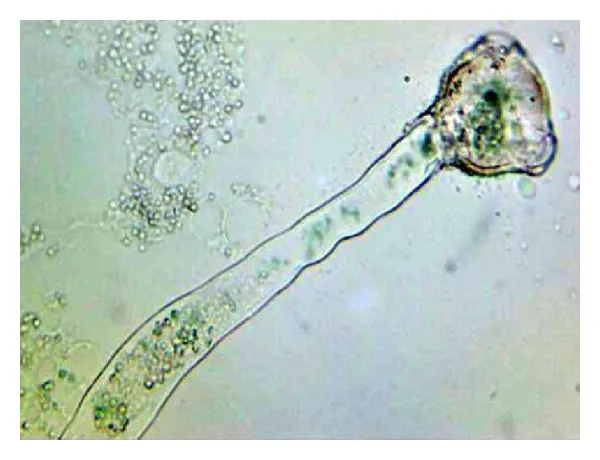
Pollen grain germination and pollen tube growth
Micrograph showing a germinated pollen grain with a long pollen tube. In the background, ungerminated pollen grains without a pollen tube are visible.
Pollination is only the beginning. For seeds and fruits to form, a series of events must occur that botanists call fertilization. This process is more complex than in animals and includes two cell fusions (Mauseth, 2017; Capon, 2022).
When pollen lands on the stigma, it must adhere and germinate. The pollen grain absorbs water and nutrients from the stigma tissues, swells, and produces a thin tube—the pollen tube. This tube grows down the style, breaking through or bypassing tissue cells, and reaches the ovary. Male reproductive cells—sperm cells—move inside the tube. The whole journey takes from several hours to several days depending on the species and temperature: in tomato—about 48 hours, in apple—up to several days (Capon, 2022; Tretyakov et al., 2000).

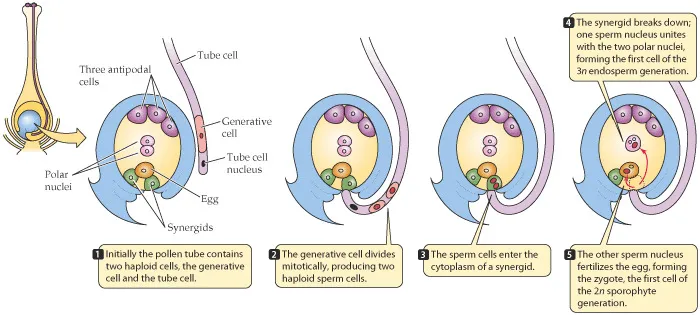
Double fertilization in angiosperms
Animated diagram of double fertilization in flowering plants. The fusion of one sperm cell with the egg cell to form a zygote and of the second sperm cell with the central cell of the ovule, followed by formation of the endosperm, is shown.
Having reached the ovule, the pollen tube enters it through a tiny opening—the micropyle. Here double fertilization occurs—a unique feature of flowering plants. One sperm cell fuses with the egg cell, forming a zygote—the future embryo. The second sperm cell fuses with the central cell of the ovule, giving rise to the endosperm—the nutritive tissue that will supply the embryo during germination (Mauseth, 2017; Capon, 2022; Zona, 2023).
After fertilization, the ovule turns into a seed, and the ovary into a fruit. The ovary walls grow, accumulating sugars, acids, vitamins, and pigments. It is these changes that make the fruit attractive to animals, which will disperse the seeds (Zona, 2023; Capon, 2022).
Note. Double fertilization is a distinctive feature of flowering plants. In gymnosperms (pine, spruce, ginkgo), the second sperm cell does not fuse with the central cell, and the endosperm forms before fertilization, still in the ovule (Offer et al., 2023; Mauseth, 2017).

Solar Automatic Drip Irrigation Kit for Gardens
Automate watering for pots, gardens and small greenhouses. This solar-powered system features a timer to help schedule water delivery to your plants.
- Solar-powered
- 15 m irrigation hose
- Programmable watering
Affiliate link · Check included accessories.
5. Why Flowering Does Not Equal a Harvest
Abundant flowering is not yet a guarantee of a harvest. Gardeners often see a tree or bush literally drowning in flowers, while few or no fruits set. There may be several reasons, and they act at different stages—from pollen formation to ovary growth (Long et al., 2021; Heuvelink, 2018).
The first and most common cause is incomplete pollination. Pollen may fail to land on the stigma, may land but fail to germinate, or may germinate but fail to reach the ovule. In many crops, pollen loses viability at high temperature: in tomato—above 35 °C, in apple—above 30 °C (Heuvelink, 2018; Long et al., 2021). At low temperature, the pollen tube grows too slowly and does not manage to reach the egg cell while it is still viable (Long et al., 2021).
The second cause is the absence of pollinators. If there are few insects in the garden or they are inactive because of rain, wind, or cold, pollination does not occur. Cucurbits, fruit trees, and berry crops are especially dependent on insects (Walliser, 2020; Morgan, 2021).
The third cause is incompatibility. Many plants have genetic mechanisms that block the germination of their own pollen or the pollen of a closely related plant. This is protection against inbreeding. If a single apple variety is planted without a pollinizer of another variety, the tree will flower but will not produce fruit (Long et al., 2021; Zona, 2023).
The fourth cause is physiological limitations. Even after successful fertilization, a plant may drop ovaries if resources are insufficient: light, water, nutrients. In hot, dry weather or with a lack of nutrition, ovaries fall so that the plant can conserve strength (Heuvelink, 2018; Potapov et al., 2000).
Note. In a greenhouse tomato without air movement, pollination is often incomplete. The flowers are self-pollinating, but pollen does not fall out of the anthers without shaking. Light tapping on the stems or the use of a flower vibrator is sufficient (Heuvelink, 2018; Jabbour, 2020).
6. Causes of Empty Flowers: Heat, Cold, Rain, Lack of Pollinators, Improper Pruning, Excess Nitrogen
An empty flower is a flower that has opened but has not set fruit. There may be several causes, and often they act together (Long et al., 2021; Heuvelink, 2018).
Heat. High temperature is one of the most common causes. In tomato, pollen loses viability above 35 °C; in pepper—above 33 °C; in apple—above 30 °C (Heuvelink, 2018; Long et al., 2021). In heat, anthers may fail to open, pollen becomes sterile or does not germinate on the stigma. The period 9–10 days before flowering, when pollen is formed, is especially vulnerable. If there was heat at that time, there may be no fruit set even if the weather is normal during flowering (Heuvelink, 2018).
Cold. Low temperatures slow the growth of the pollen tube. In stone fruits (cherry, plum, apricot), at temperatures below 10 °C pollen germinates too slowly and does not manage to reach the ovule while the egg cell is viable (Long et al., 2021; Potapov et al., 2000). Spring frosts damage buds and flowers: in apple, critical temperatures are from −2 to −4 °C depending on the stage (Potapov et al., 2000).
Rain. During rain, insects do not fly, pollen is washed off stigmas, and in some crops the flowers close. In stone fruits, rain during flowering is the main cause of low yields. Pollen may swell and burst from excess moisture (Long et al., 2021; Bubel, 2024).
Lack of pollinators. If there are few insects in the garden or they are inactive, pollination does not occur. The causes are the use of pesticides, the absence of flowering plants, and the destruction of nesting sites. Cucurbits, fruit crops, and berry crops are especially affected (Walliser, 2020; Morgan, 2021).
Improper pruning. In stone fruit crops, flower buds are laid on the previous year’s growth. If you prune too heavily or at the wrong time, you may remove precisely the branches that should have flowered. In cherry and plum, pruning during dormancy can reduce the next year’s harvest (Potapov et al., 2000; Long et al., 2021).
Excess nitrogen. Nitrogen stimulates the growth of green mass at the expense of flowering. With an excess of nitrogen, the plant “goes vegetative”: it produces many shoots and leaves, but few flowers, or they drop. Tomatoes, peppers, and fruit trees are especially sensitive (Heuvelink, 2018; Tretyakov et al., 2000; Potapov et al., 2000).
Note. In a greenhouse tomato, empty flowers are often associated not with the weather but with the absence of air movement. The flowers are self-pollinating, but pollen does not fall out without shaking. Tapping on the stems at midday is sufficient (Heuvelink, 2018; Jabbour, 2020).

7-in-1 Wi-Fi Weather Station
Monitor local weather conditions with a wireless outdoor sensor. Track temperature, humidity, rainfall, wind speed and direction, and atmospheric pressure. Ideal for gardens, farms and greenhouses.
- Wireless outdoor sensor
- Solar-powered
- Wi-Fi connectivity
Affiliate link · Check regional compatibility.
7. How to Help Pollination: Attract Insects, Hand-Pollinate, Protect from Wind
Attract insects. Plant near the beds plants that flower at different times and attract bees, bumblebees, and hoverflies. Marigolds, nasturtium, zinnia, sunflower, dill, coriander, and basil are well suited (Walliser, 2020; Jabbour, 2020). Do not use insecticides during flowering—they kill pollinators. Leave areas with loose soil or old stems in the garden: solitary bees nest there (Walliser, 2020; Morgan, 2021).
Hand pollination. If there are few insects or you grow crops in a greenhouse, pollinate by hand. For tomato and pepper, it is enough to tap the flower trusses or stems at midday. For cucurbits (cucumber, zucchini, pumpkin), pick a male flower, remove the petals, and pass the anther over the stigma of a female flower. A female flower is easy to recognize by the swelling at the base—it is the future fruit (Jabbour, 2020; Bubel, 2024). For fruit trees, you can use a soft brush or cotton swab, transferring pollen from one variety to another (Long et al., 2021; Potapov et al., 2000).

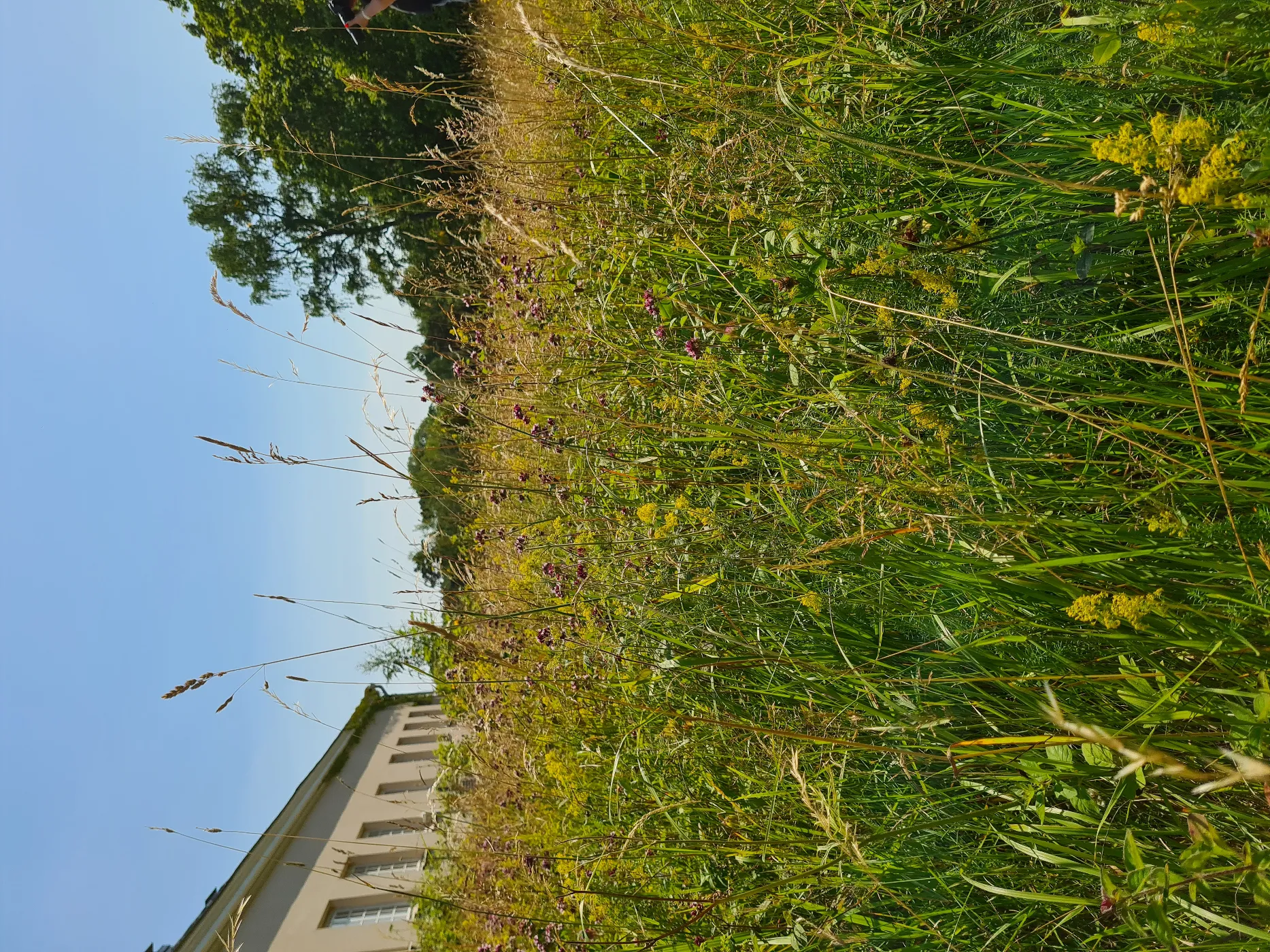
Flowering meadow — a natural forage base for pollinators
A flowering meadow with diverse wild plants. Such areas provide bees, bumblebees, and other insects with nectar and pollen throughout the season. The photograph was taken on Seili Island, Finland.

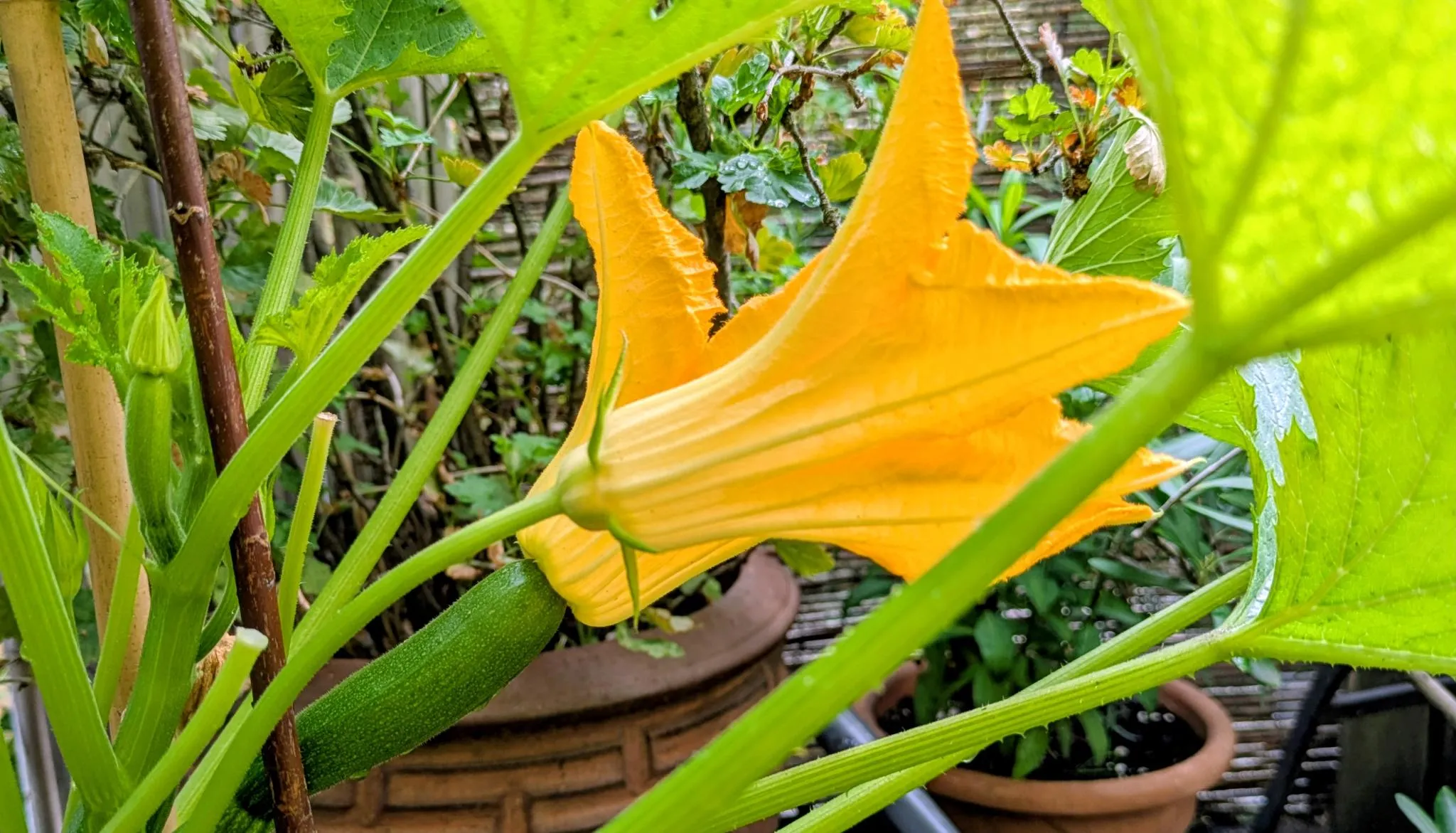
Male and female flowers of zucchini (Cucurbita pepo)
Comparison of male and female zucchini flowers. In the male flower, a long thin pedicel is clearly visible, whereas in the female flower there is a thickened ovary at the base resembling a small future fruit. This difference helps determine the sex of the flower before hand pollination.
Protection from wind. Strong wind blows away pollen and interferes with insects. Create a windbreak: a hedge, screens of tall plants, or netting. But remember: wind-pollinated crops (maize, grasses) need free air flow. In a greenhouse, provide ventilation, but without drafts (Jabbour, 2020; Morgan, 2021; Bubel, 2024).
Note. In dioecious plants (sea buckthorn, pistachio), without a male specimen there will be no fruit at all. If you do not know the sex of a seedling, plant several—the probability that one of them will be male is high (Potapov et al., 2000; Mauseth, 2017).
8. Regional Aspect: In the Tropics Pollinators Are Active Year-Round; in Temperate Zones Seasonally; in Hot Climates Pollen Can Become Sterile
Pollination conditions vary greatly depending on climate. It is important for a gardener to understand these differences in order to plan plantings and care correctly (Zona, 2023; Walliser, 2020).
Tropics and subtropics. Here insect pollinators are active year-round because there is no cold winter stopping their activity. Flowering in many crops is extended, and pollinators are available constantly. However, in the tropics there is a higher risk that pollen will overheat: at temperatures above 35 °C, pollen loses viability in many crops (Zona, 2023; Heuvelink, 2018). Humidity also plays a role: at high humidity, pollen clumps and is poorly carried by wind (Long et al., 2021).
Temperate zones. Here pollinators are active seasonally—from spring to autumn. In winter, bees and bumblebees do not fly, so plants flowering in winter (for example, some willow species, hazel) are pollinated by wind. Spring frosts can kill pollen or damage flowers. Summer heat above 30–35 °C also reduces pollen viability in tomato, pepper, and apple (Long et al., 2021; Potapov et al., 2000; Heuvelink, 2018).
Hot and dry climate. In regions with extreme heat (deserts, semi-deserts, southern latitudes), pollen often becomes sterile. In tomato, at temperatures above 35 °C, anthers do not open, and pollen loses the ability to germinate. In apple, the critical threshold is about 30 °C. Under such conditions, gardeners are forced either to choose heat-resistant varieties, or to use shading, or to pollinate by hand in the morning hours before the heat sets in (Heuvelink, 2018; Long et al., 2021; Zona, 2023).
Note. In regions with mild winters (the Mediterranean, California, some parts of Australia), pollinators are active almost year-round, but summer heat and dryness can limit pollination. In such zones it is useful to plant species that flower in early spring and late autumn, when the temperature is optimal (Walliser, 2020; Long et al., 2021).

40W Full Spectrum LED Grow Light
Support healthy plant growth with full-spectrum LED lighting. Ideal for seedlings, indoor plants and small growing spaces. A practical solution for indoor gardening and year-round cultivation.
- Full-spectrum LED
- Energy-efficient design
- Indoor plant growing
Affiliate link · Check actual power and light coverage.
9. Conclusion: The Harvest Begins with Successful Pollination
Flowering is only the beginning of the path to a harvest. Even the most abundant flowering does not guarantee fruit if pollination and fertilization have not occurred. It is important for a gardener to understand this difference: a flower is not a fruit, but only the possibility of its formation (Capon, 2022; Zona, 2023).
Successful pollination depends on many factors: the presence of pollinators, weather, variety compatibility, and plant health. If flowering has passed but there is no fruit, look for the cause in pollination and conditions, not in a “bad” variety or an “unlucky” year (Long et al., 2021; Heuvelink, 2018).
Practical conclusions for the gardener:
— Know the biology of your crops: whether they are bisexual or unisexual, self-pollinated or cross-pollinated, and who pollinates them (Walliser, 2020; Bubel, 2024).
— Provide pollinators: plant flowering plants, do not use pesticides during flowering, and create places for insect nesting (Walliser, 2020; Morgan, 2021).
— Help pollination by hand if there are few insects or you grow crops in a greenhouse (Jabbour, 2020; Bubel, 2024).
— Control conditions: protect from wind, but do not deprive wind-pollinated crops of air flow; in hot weather, pollinate in the morning hours (Jabbour, 2020; Heuvelink, 2018).
— Do not overfeed with nitrogen: it stimulates the growth of greenery at the expense of flowering and fruit set (Heuvelink, 2018; Potapov et al., 2000).
— Prune correctly: in stone fruit crops, flower buds are laid on the previous year’s growth, and too heavy pruning can deprive you of the harvest (Potapov et al., 2000; Long et al., 2021).
The harvest begins not with the fruit, but with successful pollination. Understanding this simple fact helps the gardener make the right decisions and obtain stable harvests even under difficult conditions (Capon, 2022; Zona, 2023).
References
- (2015). ‘Reproduction: Securing the future’, in Ingram, D.S., Vince-Prue, Daphne, Gregory, P.J. (ed.) Science and the Garden. The scientific basis of horticultural practice. West Sussex, UK: Royal Horticulture Society. Wiley Blackwell, pp. 37-44.
- Bubel, Nancy, Nick, Jean (2024). ‘Seeds: Saving, Storing, and More’, in The New Seed-Starters Handbook. : Rodale, .
- Capon, Brian (2022). ‘How Plants Function’, in Botany for Gardeners. An Introduction to the Science of Plants. Portland, Oregon: Timber Press, pp. 144-192.
- Capon, Brian (2022). ‘Reproduction and Inheritance’, in Botany for Gardeners. An Introduction to the Science of Plants. Portland, Oregon: Timber Press, pp. 193-240.
- Chalker-Scott, Linda (2015). ‘Finding Love in a Sedentary World’, in How Plants Work. Portland, London: Timber Press, pp. 196-218.
- Chalker-Scott, Linda (2015). ‘How Plants Tell Time’, in How Plants Work. Portland, London: Timber Press, pp. 130-149.
- Griffiths, Michael (2026). ‘Spring’, in The Easy Garden. New York, NY: Penguin Random House, .
- Gustafsson, M.H.G., Albert, V.A. (1999). ‘Inferior ovaries and angiosperm diversification’, in Hollingsworth, P.M., Bateman, R.M., Gornall, R.J. (ed.) Molecular Systematics and Plant Evolution. London, UK: Taylor & Francis Limited, pp. 403-431.
- Heuvelink, Ep, Okello, R.C..O. (2018). ‘Developmental Processes’, in Heuvelink, Ep (ed.) Tomatoes. Boston, MA: CABI, pp. 59-88.
- Jabbour, Niki (2020). ‘Preventing Diseases, Pests, and Poor Pollination’, in Growing Under Cover. Techniques for a More Productive, Weather-Resistant, Pest-Free Vegetable Garden. North Adams, MA: Storey Publishing, pp. 128-139.
- Long, L.E., Lang, G.A., Kaiser, Clive (2021). ‘Cherry Flowering, Fruiting and Cultivars’, in Sweet Cherries. Crop Production Science In Horticulture. Boston, MA: CABI Publishing, pp. 9-65.
- Mauseth, J. D. (2017). ‘Flowers and Reproduction’, in Botany: An Introduction to Plant Biology. Burlington, MA: Jones & Bartlett Learning, ch. 9.
- Morgan, Sally (2021). ‘A–Z of pests and diseases’, in The Healthy Vegetable Garden: A natural, chemical-free approach to soil, biodiversity and managing pests and diseases. Vermont, London, UK: Chelsea Green Publishing, .
- Morgan, Sally (2021). ‘Boosting defences’, in The Healthy Vegetable Garden: A natural, chemical-free approach to soil, biodiversity and managing pests and diseases. Vermont, London, UK: Chelsea Green Publishing, .
- Offer, Elisabetta, Moschin, Silvia, Nigris, Sebastiano, Baldan, Barbara (2023). ‘Reproductive Mechanisms inGinkgoandCycas: Sisters but not Twins’, Critical Reviews in Plant Sciences, 42(5), 283-299. doi: 10.1080/07352689.2023.2235173
- Pratt, M.M. (2005). ‘The Parts of a Plant – and Looking After Them’, in Practical Science for Gardeners. Portland, Oregon: Timber Press, pp. 20-42.
- Somogyi, Norbert, Andrea, Moor, Miklos, Pek (2003). ‘The preservation and production of Capsicum in Hungary’, in De, A.Krishna (ed.) Capsicum. The genus Capsicum (Medicinal and Aromatic Plants - Industrial Profiles). New York, NY: Taylor & Francis, pp. 144-162.
- Walliser, Jessica (2020). ‘Pollination’, in Plant Partners. North Adams, MA: Storey Publishing, pp. 167-184.
- Zona, Scott (2026). ‘Plant Parts and What They Do’, in A Gardener's Guide to Botany. Beverly, MA: Cool Springs Press, .
- Zona, Scott (2026). ‘Reproduction’, in A Gardener's Guide to Botany. Beverly, MA: Cool Springs Press, .
- Потапов, В.А., Фаустов, В.В., Пильщикова, Ф.Н. (2000). ‘Биологические основы плодоводства [Biological foundations of fruit growing]’, in Плодоводство [Fruit growing]. Москва: Колос, pp. 3-124.
- Третьяков, Н.Н. (2000). ‘Рост и развитие растений [Plant growth and development]’, in Физиология и биохимия сельскохозяйственных растений [Physiology and biochemistry of agricultural plants]. Москва: Колос, pp. 365-492.
