
Plant Dormancy
1. What Is Dormancy
For a gardener, dormancy is not just a plant’s “sleep.” It is a complex physiological mechanism that allows perennial crops to survive unfavorable seasons and accumulate strength for future growth. From a scientific perspective, dormancy is the temporary cessation of visible growth of any plant structure containing meristem (educational tissue) (Lang 1987).
It is important to understand that dormancy is not a passive state. Active but invisible processes continue inside the plant: redistribution of nutrients, synthesis of protective proteins, and preparation of buds for the coming season. A plant’s ability to flower and bear fruit the following year depends directly on how fully it “rests.”
Modern science distinguishes several types of dormancy, which are important to differentiate because they require different approaches (Lang 1987; Medvedev 2012):
- Deep (endogenous) dormancy — an internal state of the plant itself in which even favorable external conditions cannot force buds to start growing. This is “true” sleep.
- Forced (ecological) dormancy — growth is inhibited exclusively by external factors: cold, drought, or lack of light. If conditions improve, the plant can wake up (Ingram 2015).
- Correlative dormancy — one part of the plant suppresses the growth of another. A classic example is apical dominance, where the terminal bud prevents lateral buds from developing (Trunov 2012).
In this article, we will examine in detail how these mechanisms work in different climatic zones and what a gardener needs to do to avoid disrupting the natural rhythm of plants.
2. Winter Dormancy: Cold and Short Days
For gardeners in temperate climates, winter dormancy is the most familiar and important phase. Its onset and course are determined by two main signals: shortening daylight and decreasing temperature.
Short day — the trigger
The first signal to prepare for winter is the change in photoperiod. The plant perceives night length using the pigment phytochrome. When nights become longer, abscisic acid (ABA) accumulates in the tissues — a hormone that inhibits growth and launches hardening processes (Westwood 1993; Chalker-Scott 2015). It is the short day that triggers the chain of biochemical reactions leading to:
- Cessation of shoot growth.
- Formation of buds with protective scales.
- Leaf fall (in deciduous crops).
- Increased frost resistance of tissues (Ingram 2015).
Cold — a necessary condition

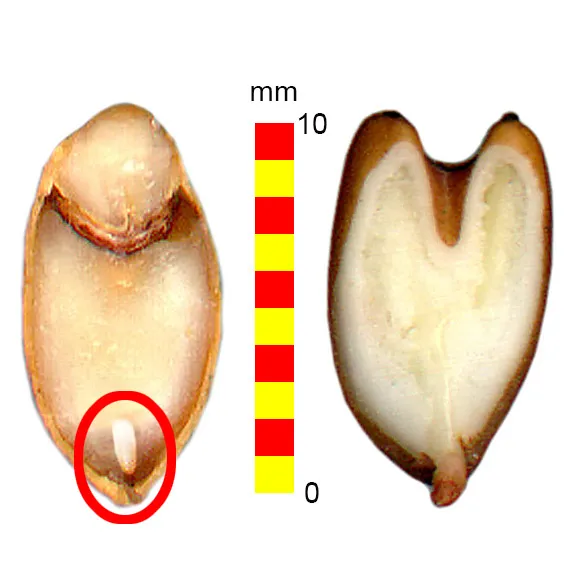
Magnolia seeds before and after stratification
Comparison of seeds of southern magnolia (Magnolia grandiflora) before and after stratification. It illustrates the effect of a cold period on preparing seeds for germination.
After the plant has entered deep dormancy, it needs a period of cold to exit it. This mechanism is called vernalization or stratification (for seeds). Each species and even cultivar requires a certain number of hours at temperatures from 0 to 7 °C (the so-called “chilling sum”). Without this period, the plant cannot flower normally in spring (Westwood 1993; Faust et al. 1997).
Note for the gardener: Different crops require different amounts of cold. For example, apple and pear need 7–9 weeks of cold, while peach needs 4–6 weeks. If the winter was warm and snowless, buds may not receive enough cold, leading to weak flowering and low yield (Westwood 1993).
During this period, complex physiological changes occur in the buds: sugars and antifreeze proteins accumulate, cells dehydrate, and membranes reorganize to function at low temperatures (Ingram 2015; Tretyakov 2000). The plant becomes “hardened,” transitioning into a state where even severe frosts are not dangerous.
What happens in the buds?

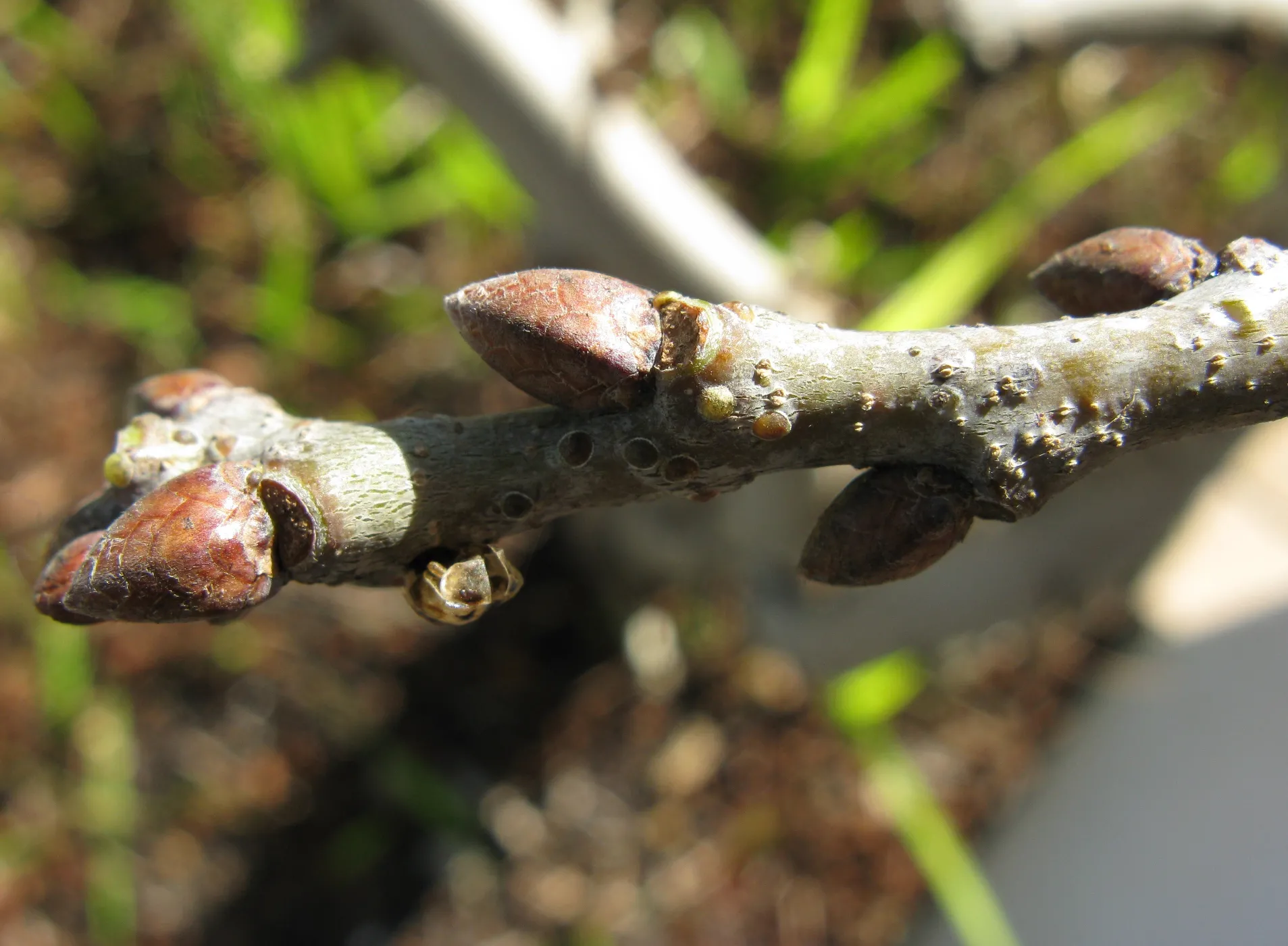
Winter buds of pedunculate oak (Quercus robur)
Close-up of a branch of pedunculate oak (Quercus robur) with clearly visible buds and tightly fitting protective scales. The photograph illustrates the structure of winter buds, which protect embryonic shoots during the dormant period.
In deep dormancy, buds do not respond to warmth. Even if a thaw occurs in midwinter, they will not start growing. This is a protective mechanism that saves plants from premature awakening and subsequent death from return frosts (Westwood 1993). However, after the cold period is complete, buds enter a state of forced dormancy. Now warmth is enough for them to awaken — and the plant begins a new season.
3. Summer Dormancy: Heat and Drought
In regions with a Mediterranean climate, in deserts, and in tropics with a pronounced dry season, plants face not winter cold but summer heat and drought. Here, summer dormancy has evolved — a protective mechanism allowing survival through a period when water is catastrophically scarce and evaporation is maximal. The signals are long days, high temperature, and soil drying. Unlike winter dormancy, which is often associated with cold treatment, summer dormancy can be either a deep internal state or forced inhibition due to conditions (Ingram et al. 2015; Lang 1987).
Woody plants. Many trees and shrubs drop their leaves during the dry season, reducing transpiration. Such plants are called drought-deciduous. Classic examples are royal poinciana (Delonix regia) and jacaranda (Jacaranda mimosifolia): they flower before new leaves emerge, using reserves of moisture and nutrients (Zona 2023). In some Mediterranean species, leaf fall is accelerated by long days, which serves as an additional signal for entering dormancy (Ingram et al. 2015).
Underground organs. Bulbs, tubers, rhizomes, and corms allow geophytes to escape the heat entirely. The aboveground part dies back, and the organ stores water and nutrients underground. Contractile roots gradually pull the bulb or tuber deeper into the soil, away from the overheated surface (Zona 2023). This is why many bulbous and tuberous crops in hot climates are dormant in summer rather than winter.

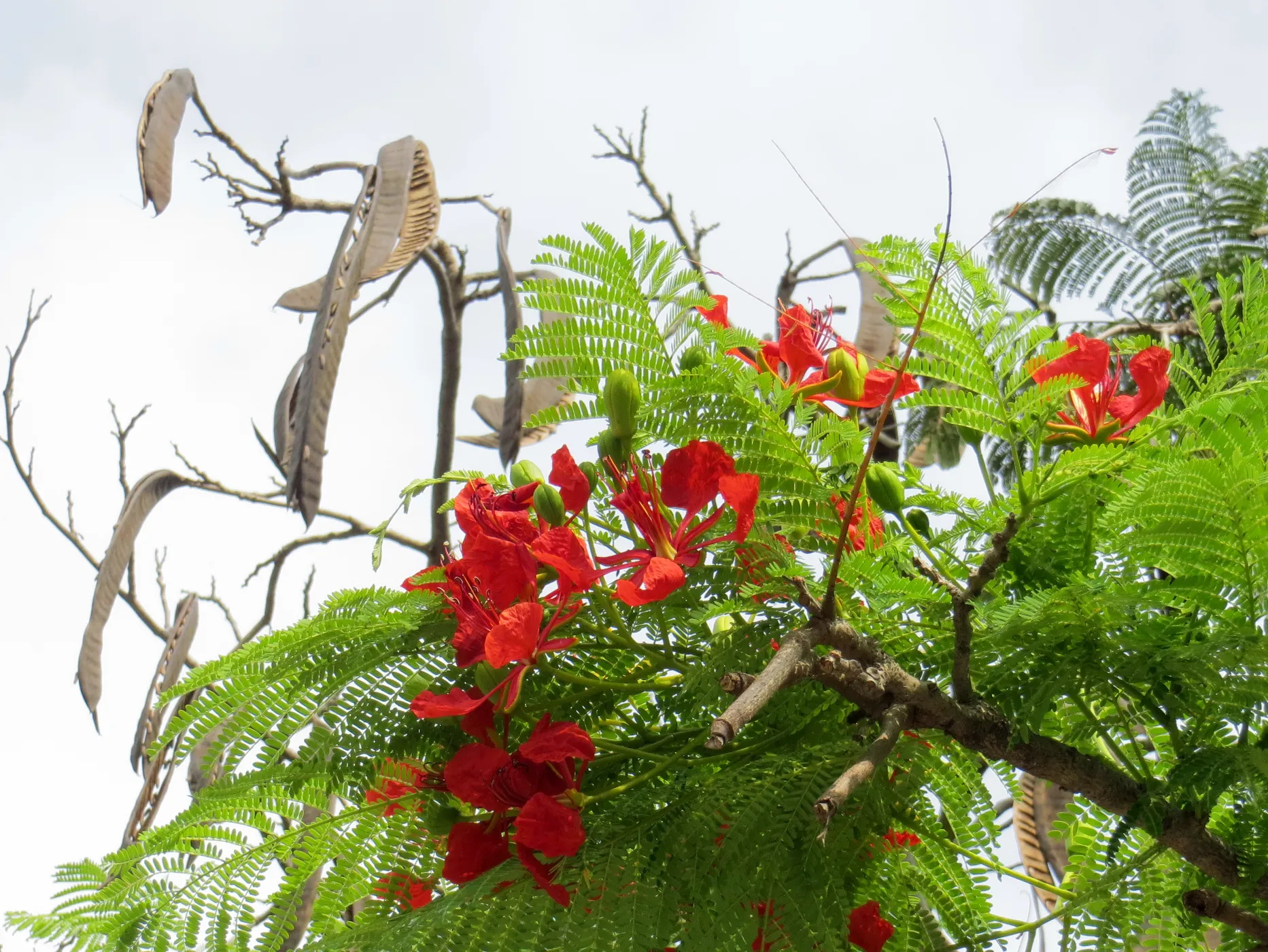
Flowers and leaves of royal poinciana
Branches of royal poinciana (Delonix regia) with characteristic flowers, leaves, and pods. Shooting location: Beimen Station, Chiayi City, Taiwan.

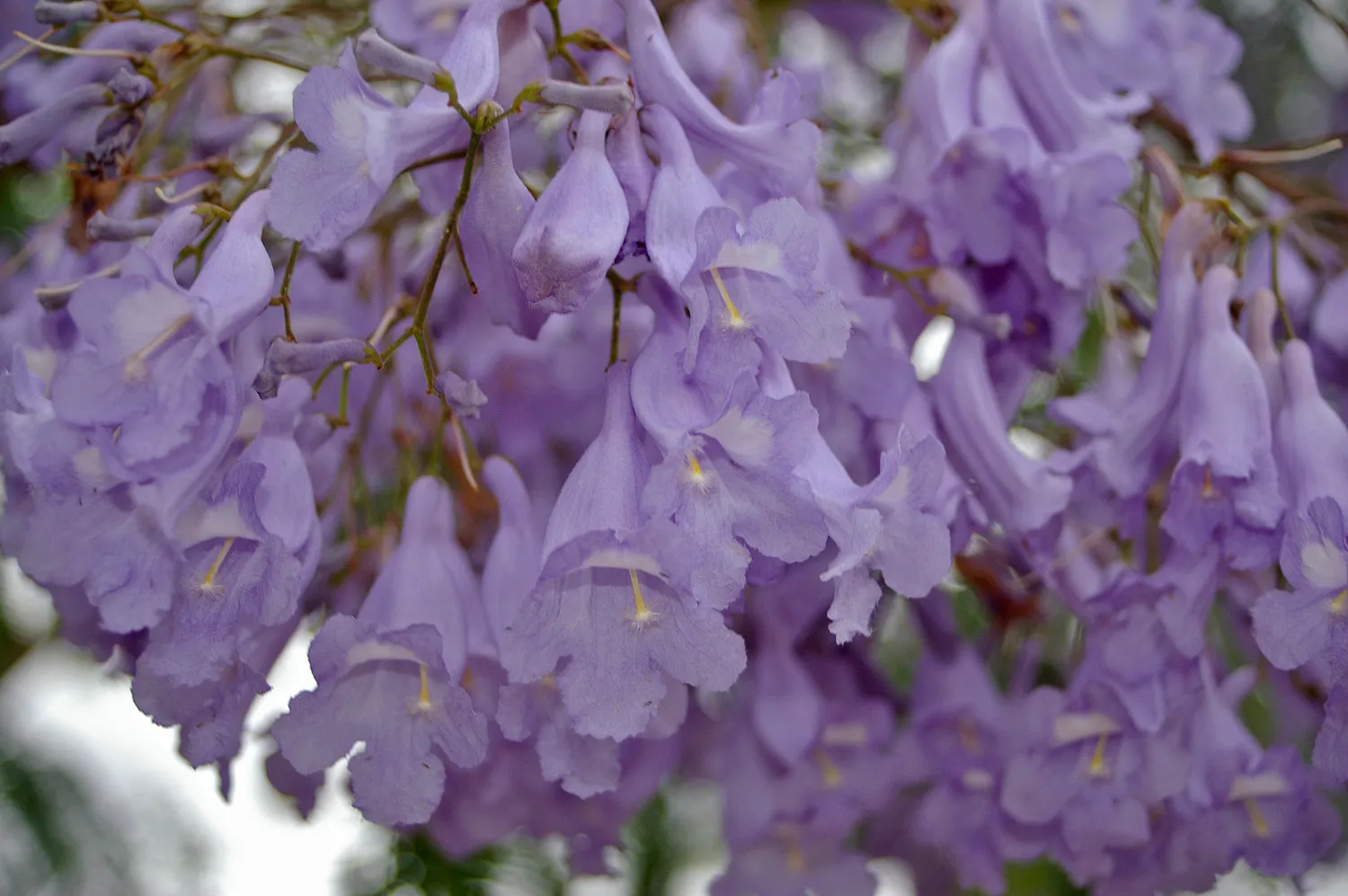
Flowering jacaranda (Jacaranda mimosifolia)
A flowering jacaranda tree (Jacaranda mimosifolia) with characteristic violet-blue inflorescences. Shooting location: Turvey Park, New South Wales, Australia.

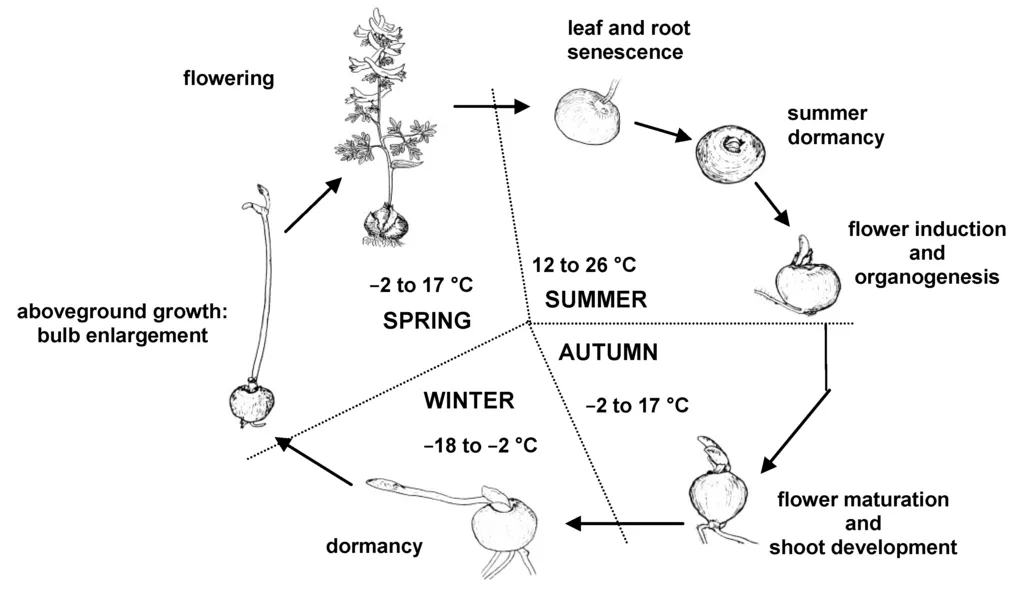
Annual cycle of the geophyte Corydalis solida
Scientific diagram of the seasonal cycle of the geophyte Corydalis solida. Spring growth and flowering, dieback of the aboveground part, summer dormancy of the underground organ, and subsequent development are shown. This is a diagram for geophytes of the Northern Hemisphere, not a universal model for all tropical bulbous plants.
Succulents. Cacti, agaves, jade plants, and other succulents store water in stems or leaves. They often have ribs, waxy coatings, dense hairs, or spines — all of which reduce heating and water loss. The rosette form helps collect rare rains and direct water to the roots (Zona 2023). During summer drought, such plants may almost completely cease growth, waiting out the unfavorable time.
Seeds of desert ephemerals. Desert annuals spend the hot season as seeds. Their germination is inhibited by water-soluble inhibitors in the fruit coats. A light rain does not wash these substances away completely, so seeds do not awaken. Only a strong, prolonged rain leaches out the inhibitors and moistens the soil to a sufficient depth — then mass germination begins. Such inhibitors are called “chemical rain gauges” (Lambers & Oliveira 2019). Additional signals include light, temperature fluctuations, nitrates, and even smoke from fires (Lambers & Oliveira 2019).

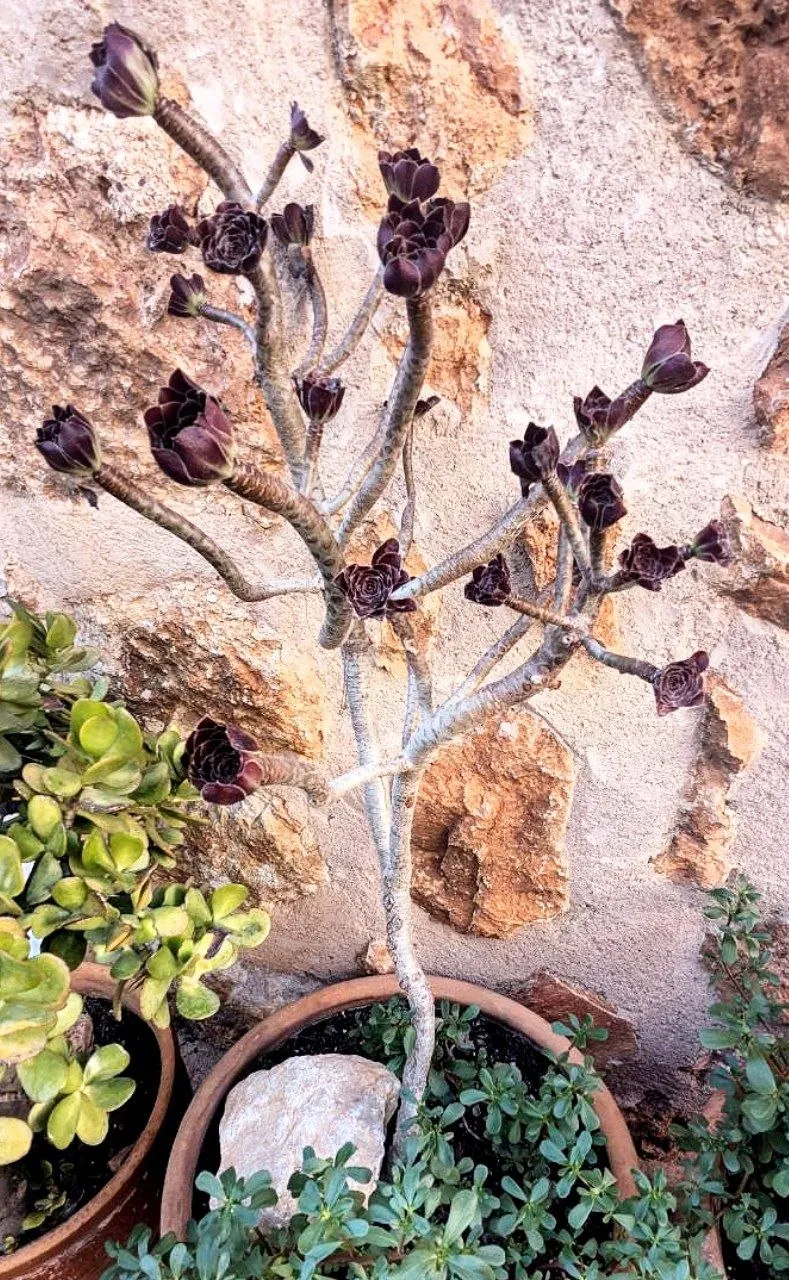
Summer dormancy of Aeonium 'Zwartkop'
An adult tree aeonium 'Zwartkop' (Aeonium arboreum 'Zwartkop') in a state of summer dormancy. The rosettes are noticeably compacted, and most of the outer leaves are lost. Shooting location: Mallorca, Spain.

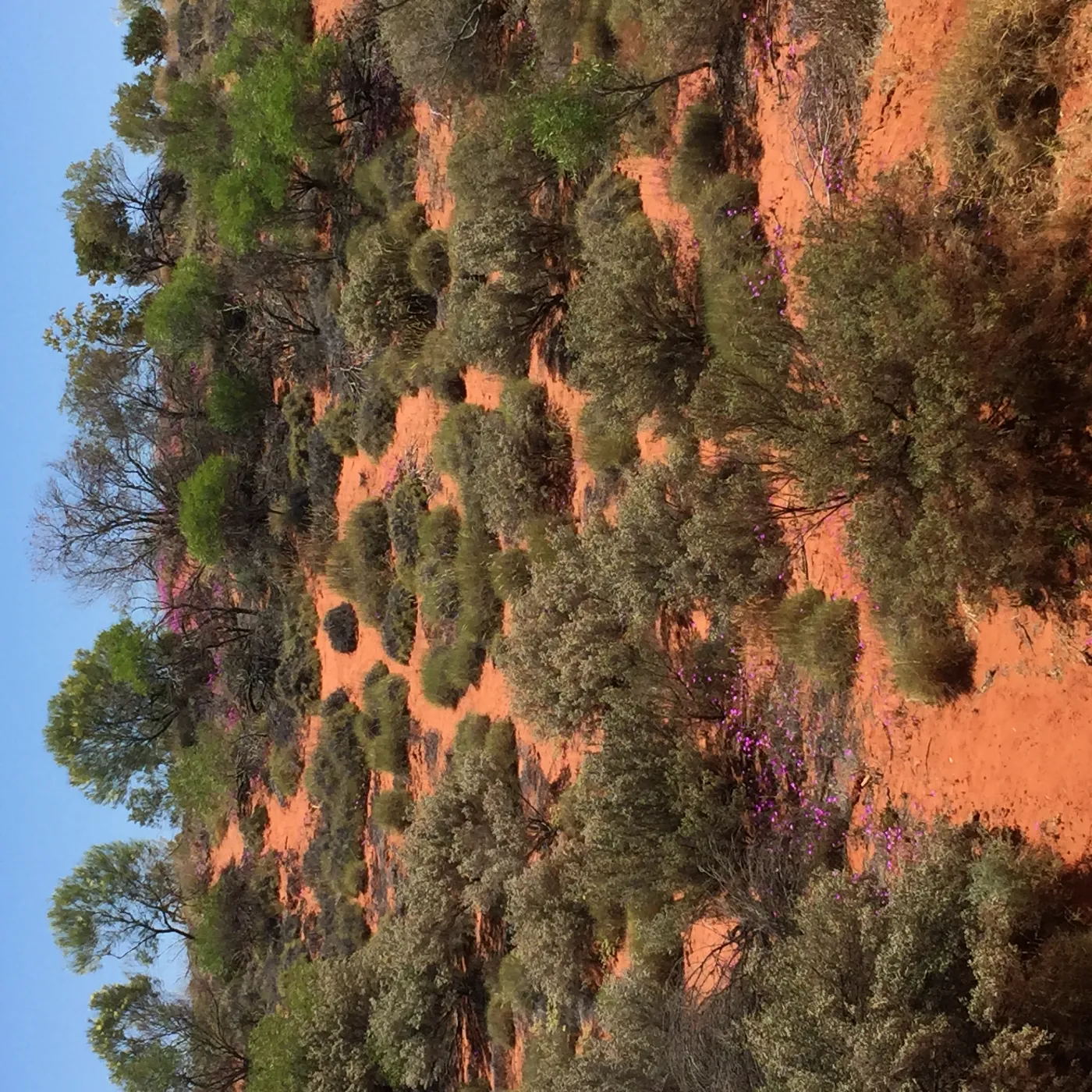
Desert flowering after rains
A flowering desert after precipitation. The image shows the Yulara area, Central Australia. It illustrates the short-term awakening of desert vegetation after a period of drought.
Important note. Summer dormancy should not be confused with simple growth slowdown due to heat. In many Mediterranean and desert plants, it is a deep internal state genetically programmed. Watering in the heat of summer may not “wake up” the plant but harm it: roots adapted to dryness easily rot. It is better to respect the natural cycle and resume watering gradually, with the onset of autumn rains or falling temperatures (Ingram et al. 2015; Zona 2023).
4. Forced Dormancy: Due to Conditions
Forced dormancy, or ecodormancy, is a state in which growth is inhibited exclusively by external conditions. The plant is physiologically ready to grow but lacks warmth, water, oxygen, light, or mineral nutrition. As soon as the limiting factor disappears, growth resumes. Unlike deep dormancy, there is no internal biochemical prohibition here: the plant does not “decide” not to grow; it simply cannot (Lang 1987; Medvedev 2012).
Examples of forced dormancy:
- Seeds in dry soil. A viable seed can lie dry for months and even years without germinating. This is not true dormancy but a state of quiescence caused by lack of moisture. Enough water — and the seed swells, enzymes are activated, and germination begins (Lambers & Oliveira 2019; Tretyakov et al. 2000). In scientific literature, this state of seeds is often called quiescence — forced dormancy rather than true dormancy.
- Buds after completion of deep dormancy. After the plant has received the required chilling sum, buds exit deep dormancy. But if it is still cold outside, they do not grow. This is forced dormancy: as soon as the temperature rises, buds start growing (Ingram et al. 2015; Westwood 1993).
- Bulbs and tubers in dry soil. Many bulbous plants are in forced dormancy after the cooling period. Planting in warm, moist soil triggers root formation and shoot growth. But if the bulb is still in deep dormancy, no amount of watering will make it sprout (Tretyakov et al. 2000).
Practical conclusion: forcing is possible only after deep dormancy. A classic example is cutting branches for winter forcing. If you cut apple, cherry, or lilac branches in December and place them in warmth, they may not open: the plant has not yet received enough cold. If you cut them in late January or February, after the cold treatment is complete, buds will quickly start growing in warmth. This clearly demonstrates the difference between deep (internal) and forced (condition-related) dormancy (Westwood 1993; Ingram et al. 2015).
Important note. Forced dormancy is reversible, but this does not mean the plant can be woken at any time. If deep dormancy is not yet complete, warmth will not help and may deplete reserves. In addition, winter thaws can partially “remove” accumulated cold and lengthen the dormancy period. Therefore, covering, mulching, and snow retention help smooth out temperature fluctuations and preserve cold in the soil (Westwood 1993; Lang 1987).


LCD 4-in-1 Soil Tester
Check essential growing conditions with one compact tool. Measure soil pH, moisture, temperature and light intensity — ideal for gardens, potted plants and greenhouses.
- 4-in-1 measurement
- Easy-to-read LCD display
- Portable design
Affiliate link · For indicative measurements only.
5. Deep Dormancy: The Internal Mechanism
Deep dormancy, called endodormancy in scientific literature, is a state in which growth is inhibited by the plant’s own internal physiological processes rather than external conditions. Even if a bud or seed is placed in ideal conditions — warmth, moisture, light — it will not start growing. This is the fundamental difference from forced dormancy, where the limiting factor is the environment (Lang 1987; Medvedev 2012).
What happens inside?
In deep dormancy, metabolism does not stop. It reorganizes: some biochemical pathways fade, others activate. The balance of phytohormones plays a key role. Abscisic acid (ABA) accumulates and maintains inhibition, while gibberellins and cytokinins, on the contrary, promote awakening. As long as ABA predominates and tissue sensitivity to it is high, the bud remains asleep (Tretyakov et al. 2000; Faust et al. 1997).
In parallel, structural changes occur. Protective proteins — dehydrins — accumulate in cells; they bind water and protect membranes from damage during dehydration and cold. Water in tissues transitions to a bound state, reducing its availability for metabolic reactions and increasing frost resistance (Faust et al. 1997; Ingram et al. 2015). Membranes reorganize: the proportion of unsaturated fatty acids increases, allowing them to maintain fluidity at low temperatures.
Depth of dormancy
Deep dormancy is not the same in different crops and even different cultivars. In seeds, shallow, intermediate, and deep physiological dormancy are distinguished. In shallow dormancy, seeds can germinate after a short cold period or even without it if the seed coats are removed. In deep dormancy, prolonged cold stratification is required, and without it the embryo either does not germinate or produces abnormal, dwarf seedlings (Tretyakov et al. 2000; Lambers & Oliveira 2019). In tree buds, the depth of dormancy also varies: some apple cultivars require 1000–1600 hours of cold, others less (Westwood 1993).
Exit from deep dormancy
For deep dormancy to complete, the plant needs a specific signal. For most temperate-zone crops, this is cold — a process known as vernalization (for flowering) or stratification (for seeds). The mechanism involves epigenetic changes: DNA methylation, histone modifications, chromatin remodeling. As a result, flowering repressor genes “fall silent” and growth-promoting genes are activated (Medvedev 2012; Faust et al. 1997).
Note for the gardener. Deep dormancy is not a “breakdown” but a strictly programmed stage. Attempts to artificially interrupt it (e.g., with warm water or stimulants) without completing cold treatment usually do not give sustainable results. The plant either will not wake up or will produce weak, nonviable growth (Westwood 1993; Lang 1987).
6. Why Dormancy Is Needed: Recovery and Bud Initiation
Dormancy is not merely “waiting out” an unfavorable season. It is an active stage of preparation for future growth, flowering, and fruiting. Without full dormancy, a plant cannot realize its potential.
Recovery and resource accumulation
During dormancy, the plant redistributes nutrients. In deciduous crops, before leaf fall, nitrogen, phosphorus, potassium, and carbohydrates flow from the leaves to the roots, trunk, and branches, where they are stored as reserves. In spring, these reserves are used for bud break, shoot growth, and flowering — long before new leaves begin photosynthesis (Tretyakov et al. 2000; Westwood 1993). If the plant did not manage to accumulate enough reserves in autumn (e.g., due to late nitrogen fertilization or early frosts), spring growth will be weakened.
Flower bud initiation
In many fruit crops, flower buds are initiated in the previous season. For example, in apple and pear, flower bud differentiation begins in midsummer and continues into autumn. During deep dormancy, these buds undergo important developmental stages: primordia of sepals, petals, stamens, and pistils form. Without a cold period, this process does not complete, and in spring buds may fail to open or produce deformed flowers (Westwood 1993; Ingram et al. 2015).
Synchronization with the season
Dormancy helps the plant “wait” for favorable conditions and not start growth too early. If buds awakened at the first thaw, tender shoots and flowers would die from return frosts. The mechanism of deep dormancy and subsequent forced dormancy acts as a biological clock: the plant “knows” that winter is not over yet and waits for stable warmth (Lang 1987; Ingram et al. 2015).
Impact on yield
Lack of cold is one of the main causes of low yields in warm regions. Gardeners in subtropics are forced to choose cultivars with low chilling requirements or use special techniques (e.g., oil sprays, chemical stimulants). But even they cannot replace full dormancy (Westwood 1993; Faust et al. 1997).
Important note. Dormancy is needed not only for survival but also for the quality of the future harvest. A tree that “did not sleep enough” may bloom, but the fruits will be small, and the plant itself will be exhausted and vulnerable to diseases. That is why it is so important to provide plants with conditions for full dormancy: do not wake them prematurely, do not overfeed with nitrogen in autumn, and protect them from sharp temperature fluctuations (Tretyakov et al. 2000; Westwood 1993).

Solar Automatic Drip Irrigation Kit for Gardens
Automate watering for pots, gardens and small greenhouses. This solar-powered system features a timer to help schedule water delivery to your plants.
- Solar-powered
- 15 m irrigation hose
- Programmable watering
Affiliate link · Check included accessories.
7. What Happens When Dormancy Is Disrupted: No Flowers, No Fruit
Disruption of dormancy is one of the most common but not always obvious causes of problems with flowering and yield. A gardener may provide plants with watering, nutrition, and care, but if the natural rhythm of dormancy is disturbed, the results will be disappointing.
Lack of cold. The most common problem in warm regions and when growing cultivars not adapted to the local climate. If the plant has not received the required chilling sum, deep dormancy does not complete. Consequences:
- Buds do not open at all or open very late.
- Flowering is weak, uneven, often premature and short-lived.
- Flowers may be deformed, with underdeveloped stamens and pistils.
- Fruit set is low, fruits are small and of poor quality.
- In stone fruits (peach, apricot), bud and flower drop is often observed in warm winters (Westwood 1993; Faust et al. 1997).
Premature awakening. If deep dormancy was interrupted by a thaw and then frost struck again, buds may die. Return frosts after a warm period are especially dangerous: the plant exits forced dormancy, begins growth, and tender tissues are damaged. In stone fruit crops, this leads to crop loss and sometimes to death of branches (Ingram et al. 2015; Westwood 1993).
Disruption of summer dormancy. In Mediterranean and desert crops, abundant watering during the hot dry season can provoke growth that cannot complete normally. The plant becomes exhausted and dies when autumn cold or drought sets in. Bulbous and tuberous plants that receive water during summer dormancy may rot or produce weak, nonviable shoots (Zona 2023; Ingram et al. 2015).
Exhaustion and disease. A plant that “did not sleep enough” spends reserves on premature growth but does not manage to accumulate enough nutrients for the next season. As a result, it becomes susceptible to diseases, pests, and stresses. Biennial bearing (alternation of productive and unproductive years) is often associated precisely with exhaustion after a heavy crop, when the plant could not rest fully (Tretyakov et al. 2000; Westwood 1993).
Important note. Lack of cold is not the only cause. Sometimes the problem lies in excess nitrogen nutrition in autumn, which prolongs growth and prevents timely transition to dormancy. Or in too late pruning, which stimulates bud awakening. Therefore, it is important to consider the whole complex of factors (Trunov 2012; Westwood 1993).
8. How to Help: Covering, Pruning, Watering, Temperature
The gardener’s task is not to “manage” dormancy directly but to create conditions under which the plant passes through all its phases naturally and fully. Here are key practical techniques.

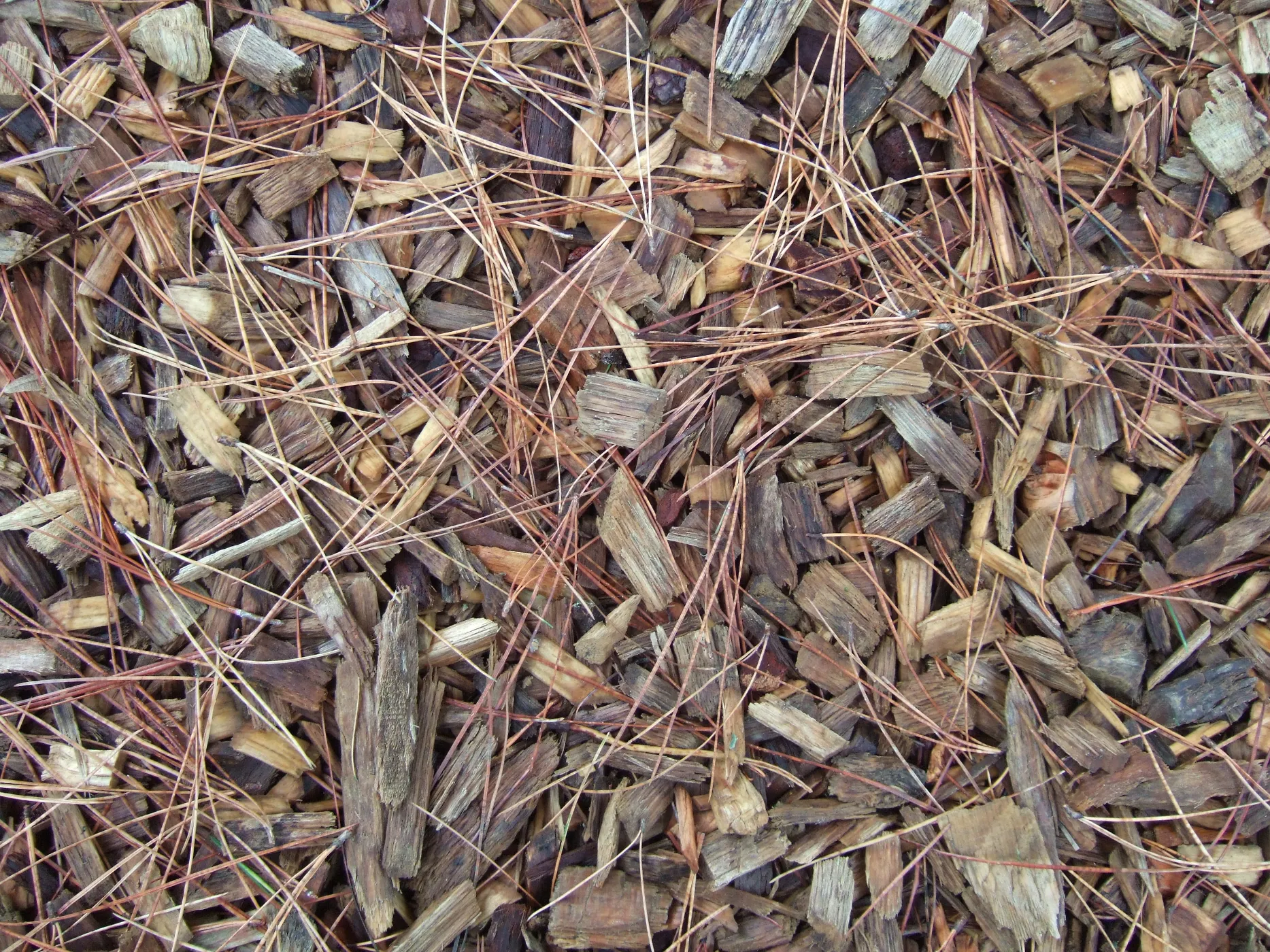
Wood chip mulch at Wisley (Wood chip mulch at Wisley)
Wood chip mulch protecting the soil in the garden of the Royal Horticultural Society (Royal Horticultural Society) at Wisley (Wisley), Surrey (Surrey). It is used to improve and protect the soil.
Covering and mulching. Protecting roots and buds from sharp temperature fluctuations is the foundation of successful overwintering. Mulch (compost, straw, peat, bark) in a 5–10 cm layer preserves warmth in the soil in winter and coolness in summer, smoothing fluctuations. For tender crops, air-dry covers are used (spruce branches, agrofabric, special frames). Snow retention (shields, branches) helps accumulate snow, which protects from frost and provides moisture in spring (Trunov 2012; Ingram et al. 2015).
Pruning. Summer pruning (during active growth) restrains excessive growth and promotes flower bud initiation. Rejuvenation pruning stimulates awakening of dormant buds, but it is carried out before or after dormancy so as not to disrupt the natural rhythm. Crop regulation (removing part of flowers or ovaries) prevents exhaustion and helps the plant prepare for the next season. Important: do not prune trees and shrubs in late autumn, as this can provoke growth in warm weather (Trunov 2012; Westwood 1993).
Watering. Autumn water-recharging irrigation (after leaf fall but before soil freezing) saturates tissues with water and increases frost resistance. During summer dormancy in Mediterranean crops, watering is reduced or stopped, resuming with the onset of autumn rains. Evergreen plants need moderate watering in winter, especially during dry, snowless periods, to prevent desiccation (Trunov 2012; Ingram et al. 2015; Zona 2023).
Temperature regime. In regions with thaws, it is important to protect plants from premature awakening. For this, covers are used that not only warm but also reflect sunlight (whitewashing trunks, screens). Ventilating covers on warm days prevents damping-off. In greenhouses and hotbeds, temperature is regulated to avoid provoking growth in winter. Choosing cultivars with suitable chilling requirements is the most reliable way to avoid problems (Westwood 1993; Faust et al. 1997).
Note for the gardener. There is no universal recipe: in cold climates, the main thing is to protect from frost; in warm climates, to provide sufficient cold and not wake the plant prematurely. Observe your plants, take local conditions into account, and adjust care. Sometimes it is enough simply to choose the right cultivar (Trunov 2012; Ingram et al. 2015).

7-in-1 Wi-Fi Weather Station
Monitor local weather conditions with a wireless outdoor sensor. Track temperature, humidity, rainfall, wind speed and direction, and atmospheric pressure. Ideal for gardens, farms and greenhouses.
- Wireless outdoor sensor
- Solar-powered
- Wi-Fi connectivity
Affiliate link · Check regional compatibility.
9. Regional Aspect: In the Tropics, Dormancy Is Linked to the Dry Season, Not Cold
In tropics and subtropics, where there are no frosty winters, the rhythm of plant life is determined not by cold but by the alternation of wet and dry seasons. Here dormancy occurs in response to drought — and this is a fundamentally different type of adaptation than winter dormancy in temperate latitudes.
Dry season as a signal. In tropical regions with pronounced rainfall seasonality, plants drop leaves at the beginning of the dry period and resume growth with the arrival of rains. Trees such as royal poinciana (Delonix regia) and jacaranda (Jacaranda mimosifolia) often flower before new leaves emerge, using reserves of moisture and nutrients accumulated in the trunk and roots. Their dormancy is not a reaction to cold but a survival strategy under water deficit (Zona 2023; Lambers & Oliveira 2019).
Evergreen tropical species. Many plants of humid tropical forests do not have pronounced dormancy: they grow year-round because temperature and humidity remain relatively stable. However, even they may have periods of growth slowdown associated with short-term droughts or reduced light. In crops such as coffee, cacao, and mango, dormancy is weakly expressed, and their productivity depends on constancy of conditions (Trunov 2012).
Tropical fruit crops with low chilling requirements. Some subtropical and tropical crops (citrus, avocado, mango, lychee) do not require cold for flowering at all. Their dormancy is more a forced state associated with dryness or heat. For them, it is important to provide a period of relative rest (reduced watering, cessation of nitrogen nutrition) before flowering so that the plant does not grow vegetatively and initiates generative buds (Westwood 1993; Trunov 2012).

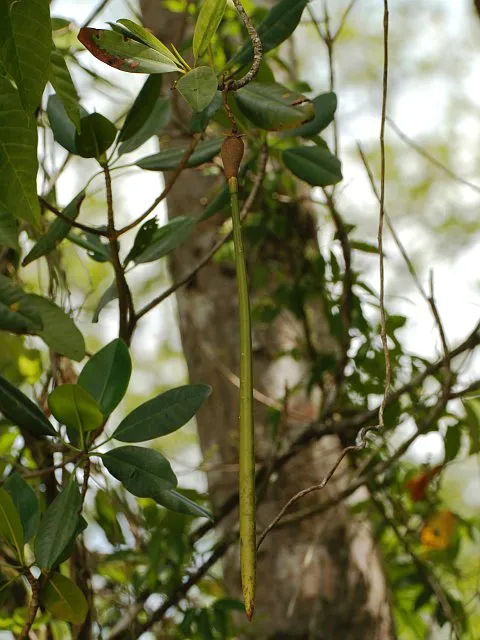
Viviparous seedling of a mangrove tree
A mature elongated seedling of the mangrove tree Rhizophora racemosa, formed directly on the parent plant. Shooting location: mangrove forest near Vigia, Pará State, Brazil.
Mangroves and vivipary. In tropical mangrove forests, some plants (e.g., Rhizophora) have transitioned to vivipary: seeds germinate directly on the parent tree, forming an elongated hypocotyl with a pointed root tip. When the seedling falls, it immediately finds itself in muddy soil, ready for growth. This is an extreme case of abandoning dormancy: the plant “skips” the seed stage so as not to lose offspring in unfavorable conditions (Lambers & Oliveira 2019).
Tropical ephemerals and bulbous plants. In tropical regions with a dry season, many geophytes (bulbous, tuberous) spend the drought underground. Their aboveground part dies back, and dormancy lasts until the rains begin. Contractile roots pull the bulb deeper into the soil, saving it from overheating. Examples include many species of Crinum, Amaryllis, Habranthus (Zona 2023).
Important note. In tropics and subtropics, it is important for the gardener to understand: dormancy here is often linked to the dry season, not to cold. Watering during dormancy can kill the plant. Conversely, light drying and reduced nutrition help it enter dormancy and prepare for flowering. This is especially relevant for cacti, succulents, and many bulbous plants (Zona 2023; Ingram et al. 2015).
10. Conclusion: Dormancy Is Not “Sleep” but an Active Stage of Preparation
Plant dormancy is not a passive “shutdown” of life functions but a complex, genetically programmed stage of development. Externally, the plant may seem motionless: no visible growth, leaves fallen, buds closed. But inside, active processes are underway: redistribution of nutrients, synthesis of protective proteins, membrane reorganization, and epigenetic changes preparing buds for future awakening (Lang 1987; Faust et al. 1997; Medvedev 2012).
Three key takeaways for the gardener:
1. Dormancy is the foundation of the harvest. Without full dormancy, there will be no normal flowering, fruit set, or quality harvest. This applies to winter dormancy in temperate latitudes, summer dormancy in arid regions, and forced dormancy related to conditions.
2. Dormancy is multifaceted. It can be deep (internal) or forced (ecological). Deep dormancy requires cold or other specific signals; forced dormancy requires only the absence of a limiting factor. Understanding the difference helps choose the right strategy: do not wake the plant prematurely, do not water during summer drought, and do not prune in late autumn (Lang 1987; Ingram et al. 2015).
3. The best help is not to interfere. The plant itself knows when to rest. The gardener’s task is to create conditions for the natural passage of dormancy: mulch and covering to protect from temperature fluctuations, autumn water-recharging irrigation, summer pruning for bud initiation, and choosing cultivars with suitable chilling requirements. In the tropics — respect the dry season and do not water during dormancy (Trunov 2012; Westwood 1993; Zona 2023).
Dormancy is not “sleep” but a time of internal preparation. The plant accumulates resources, initiates flower buds, and synchronizes with the season. And if this stage passes fully, in spring the garden will reward you with abundant flowering and a generous harvest.

40W Full Spectrum LED Grow Light
Support healthy plant growth with full-spectrum LED lighting. Ideal for seedlings, indoor plants and small growing spaces. A practical solution for indoor gardening and year-round cultivation.
- Full-spectrum LED
- Energy-efficient design
- Indoor plant growing
Affiliate link · Check actual power and light coverage.
References
- (2015). ‘Plants and seasons’, in Ingram, D.S., Vince-Prue, Daphne, Gregory, P.J. (ed.) Science and the Garden. The scientific basis of horticultural practice. West Sussex, UK: Royal Horticulture Society. Wiley Blackwell, pp. 120-138.
- Bubel, Nancy, Nick, Jean (2024). ‘Starting Seeds Indoors’, in The New Seed-Starters Handbook. : Rodale, .
- Campbell, L.G., Klotz, K.L. (2006). ‘Storage’, in . : , pp. . doi: 10.1002/9780470751114.ch15
- Capon, Brian (2022). ‘Adaptations’, in Botany for Gardeners. An Introduction to the Science of Plants. Portland, Oregon: Timber Press, pp. 88-143.
- Capon, Brian (2022). ‘The Structure and Growth of Plants’, in Botany for Gardeners. An Introduction to the Science of Plants. Portland, Oregon: Timber Press, pp. 11-87.
- Chalker-Scott, Linda (2015). ‘How Plants Tell Time’, in How Plants Work. Portland, London: Timber Press, pp. 130-149.
- Faust, M., Erez, A., Rowland, L.J., Wang, S.Y., Norman, H.A. (1997). ‘Bud Dormancy in Perennial Fruit Trees: Physiological Basis for Dormancy Induction, Maintenance, and Release’, HortScience, 32(4), 623-629. doi: 10.21273/HORTSCI.32.4.623
- Graham, L.E., Graham, J.M., Wilcox, L.W. (2014). ‘Plant Structure, Growth, and Development’, in Plant Biology. Harlow: Pearson Education Limited, pp. 165-181.
- Griffiths, Michael (2026). ‘Spring’, in The Easy Garden. New York, NY: Penguin Random House, .
- Hartmann, H.T., Kester, D.E., Davies, F.T.J., Geneve, R.L. (2011). ‘Principles of Propagation from Seeds’, in Hartmann & Kester's Plant Propagation Principles and Practices. USA: Pearson Education, pp. 211-262.
- Hopkins, W.G., Hüner, N.P..A. (2009). ‘Development: An Overview’, in Introduction to Plant Physiology. Hoboken, NJ: John Wiley & Sons, pp. 275-288.
- Hopkins, W.G., Hüner, N.P..A. (2009). ‘Temperature: Plant Development and Distribution’, in Introduction to Plant Physiology. Hoboken, NJ: John Wiley & Sons, pp. 447-458.
- Lambers, Hans, Oliveira, R.S. (2019). ‘Life Cycles: Environmental Influences and Adaptations’, in Plant Physiological Ecology. Cham: Springer International Publishing, 451-486. doi: 10.1007/978-3-030-29639-1_11
- Lang, G.A. (1987). ‘Dormancy: A New Universal Terminology’, HortScience, 22(5), 817-820. doi: 10.21273/HORTSCI.22.5.817
- Pratt, M.M. (2005). ‘From Seed to Senescence’, in Practical Science for Gardeners. Portland, Oregon: Timber Press, pp. 43-60.
- Westwood, M.Neil (1993). ‘General Environment’, in Temperate-zone. Pomology. Physiology and Culture. Portland, Oregon: Timber Press, pp. 29-47.
- Zona, Scott (2026). ‘Being a Plant’, in A Gardener's Guide to Botany. Beverly, MA: Cool Springs Press, .
- Zona, Scott (2026). ‘Seed Dispersal’, in A Gardener's Guide to Botany. Beverly, MA: Cool Springs Press, .
- Zona, Scott (2026). ‘What a Plant Needs: Water’, in A Gardener's Guide to Botany. Beverly, MA: Cool Springs Press, .
- Котов, В.П., Адрицкая, Н.А. (2016). ‘Биологические основы овощеводства [Biological foundations of vegetable growing]’, in Овощеводство [Vegetable growing]. Санкт-Петербург: Лань, pp. 22-66.
- Медведев, С.С. (2012). ‘Физиология роста и развития растений [Physiology of plant growth and development]’, in Физиология растений [Physiology of plants]. Санкт-Петербург: БХВ-Петербург, pp. 329-384.
- Потапов, В.А., Фаустов, В.В., Пильщикова, Ф.Н. (2000). ‘Биологические основы плодоводства [Biological foundations of fruit growing]’, in Плодоводство [Fruit growing]. Москва: Колос, pp. 3-124.
- Третьяков, Н.Н. (2000). ‘Рост и развитие растений [Plant growth and development]’, in Физиология и биохимия сельскохозяйственных растений [Physiology and biochemistry of agricultural plants]. Москва: Колос, pp. 365-492.
- Трунов, Ю.В., Самощенков, Е.Г., Дорошенко, Т.Н. (2012). ‘Биологические основы плодоводства [Biological foundations of fruit growing]’, in Плодоводство [Fruit growing]. Москва: КолосС, pp. 3-123.
