
How to Understand a Plant by Its Appearance
A plant cannot say in words what is bothering it, but it always sends signals. An experienced gardener reads these signals as confidently as a doctor reads a patient’s symptoms. The main rule: before reaching for fertilizers or sprayers, carefully examine the plant—leaves, stems, roots, flowers, and fruits. In this article, we will look at how to determine from appearance what a plant lacks or what is suppressing it.
1. Leaves: color, shape, turgor, spots, edges
Leaves are the most informative organ. They are the first to react to stress, and it is from them that the most accurate “diagnosis” can be made.
Color. Uniform yellowing (chlorosis) of old lower leaves most often indicates nitrogen deficiency: the plant redistributes mobile nitrogen to young tissues (Taiz et al., 2023). If young upper leaves turn yellow while the veins remain green (interveinal chlorosis), this is a sign of iron or manganese deficiency—these elements are immobile (Taiz et al., 2023). Yellowing between the veins on old leaves is a characteristic symptom of magnesium deficiency (Chalker-Scott, 2018). A reddish-purple tint to the leaves often signals phosphorus deficiency, especially when combined with dark green coloration and slowed growth (Taiz et al., 2023). However, reddening can also be a reaction to cold, drought, or excess light—anthocyanins act as “sunscreen” and antioxidants (Chalker-Scott, 2015).
Turgor. Loss of turgor—wilting—does not always mean a lack of water in the soil. Leaves may wilt under waterlogging (roots suffocate), soil salinity, or root damage by pests or diseases (Chalker-Scott, 2015). If the plant is wilted but the soil is wet, do not rush to water: check the roots. Chronic loss of turgor during hot hours with recovery by evening is a sign that the root system cannot cope with transpiration.

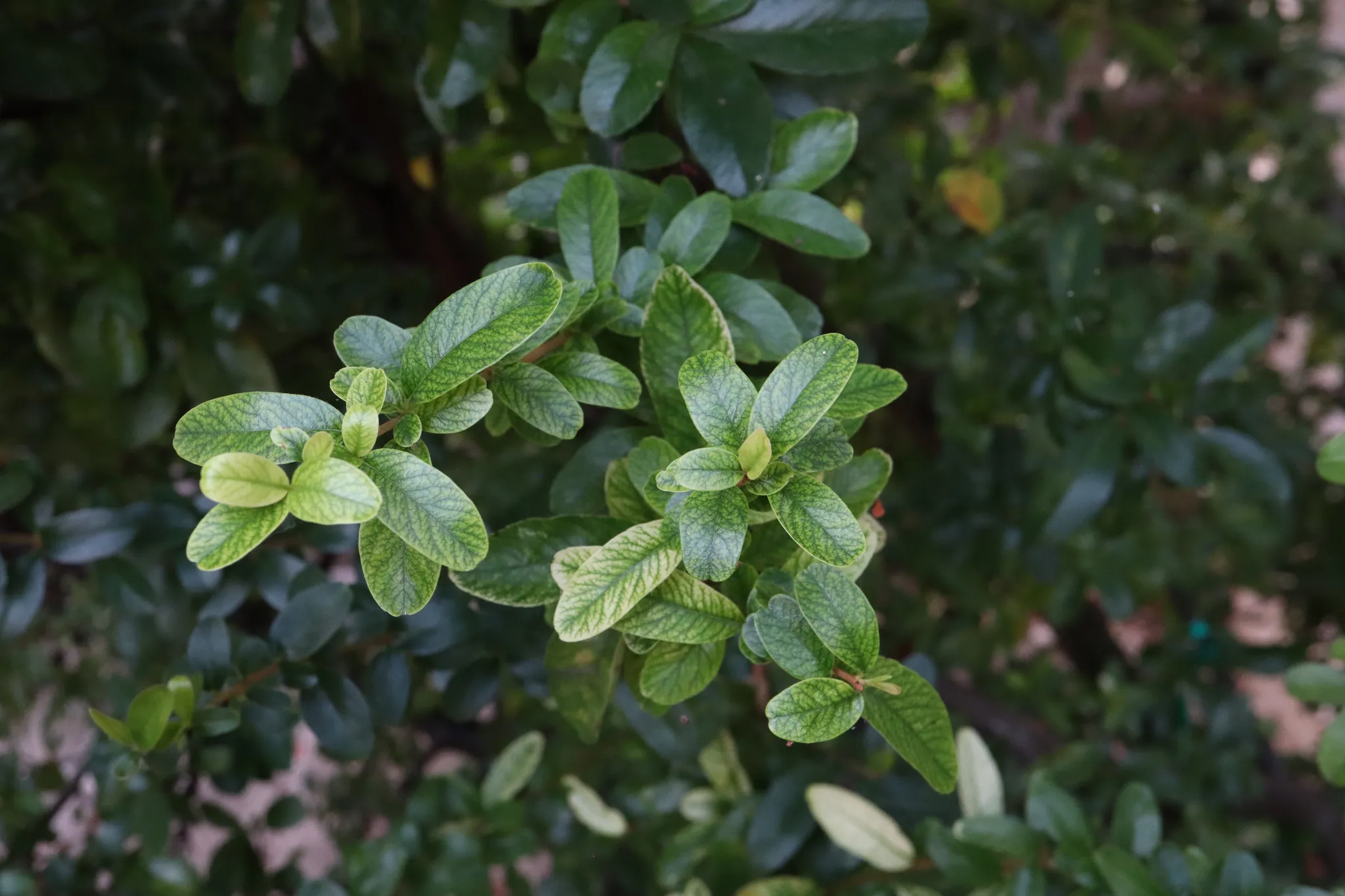
Interveinal chlorosis of pyracantha leaves
Leaves of pyracantha (Pyracantha 'Cadrou') with pronounced interveinal chlorosis: the tissue between the veins becomes lighter, while the veins themselves remain green.

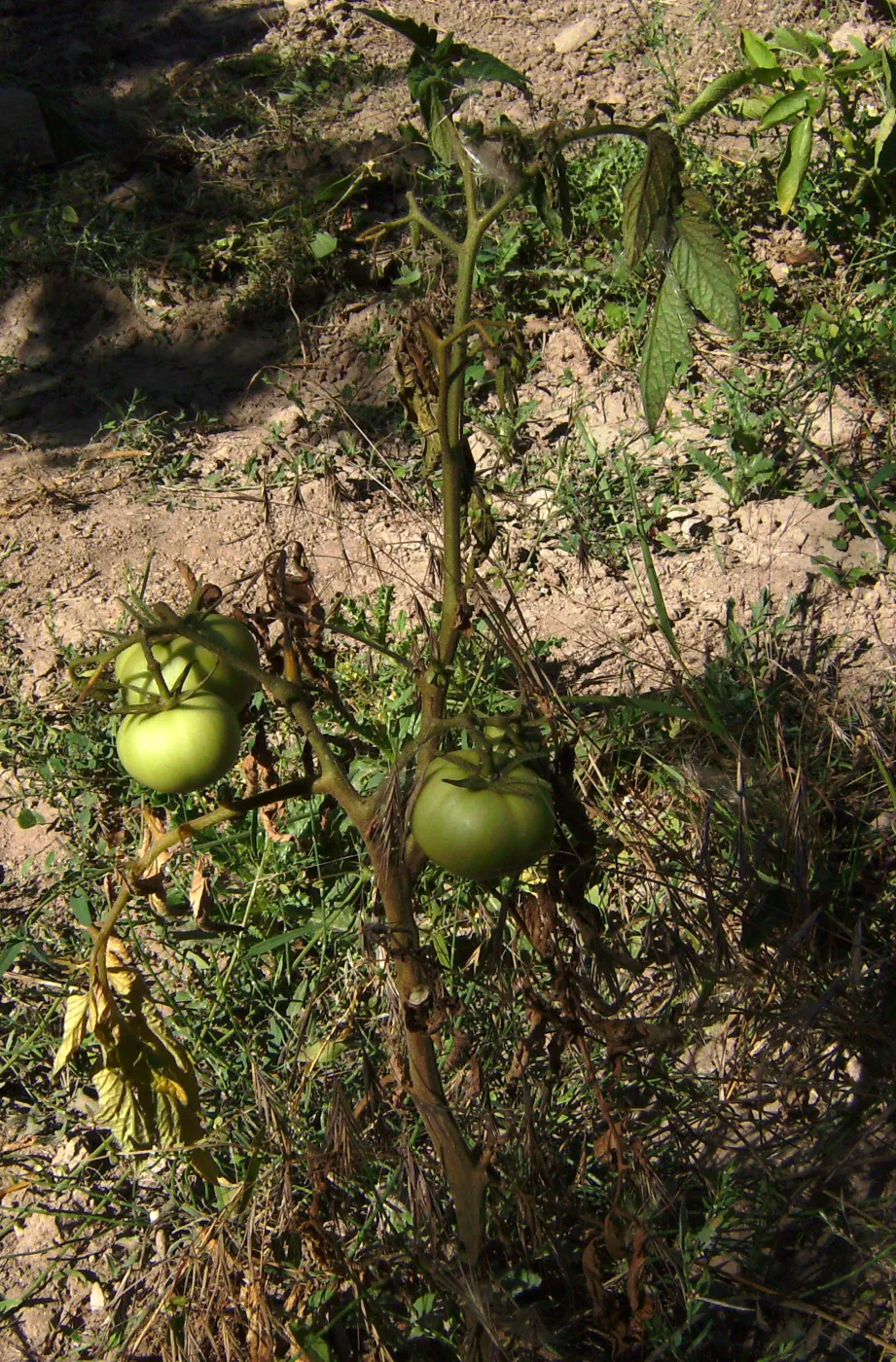
Tomato wilting due to Fusarium infection
A tomato plant (Solanum lycopersicum) of the Ace variety with signs of Fusarium oxysporum infection: browned stem and wilting leaves. The photograph was taken in Castellltat, Catalonia, Spain.
Spots and edges. Brown spots with concentric rings (“target” pattern) are a typical sign of fungal infection (Chalker-Scott, 2018). Angular spots bounded by veins are more often caused by bacteria. A mosaic “web-like” pattern is a sign of viral infection (Chalker-Scott, 2018). Necrosis along leaf margins and tips is a classic symptom of water stress or potassium deficiency (Taiz et al., 2023; Chalker-Scott, 2018). Small leaves compared with last year are a signal of chronic water shortage (Chalker-Scott, 2018). A white or silvery coating on the upper leaf surface is a sign of powdery mildew, while a white downy coating on the underside is downy mildew (Agrios, 2005).

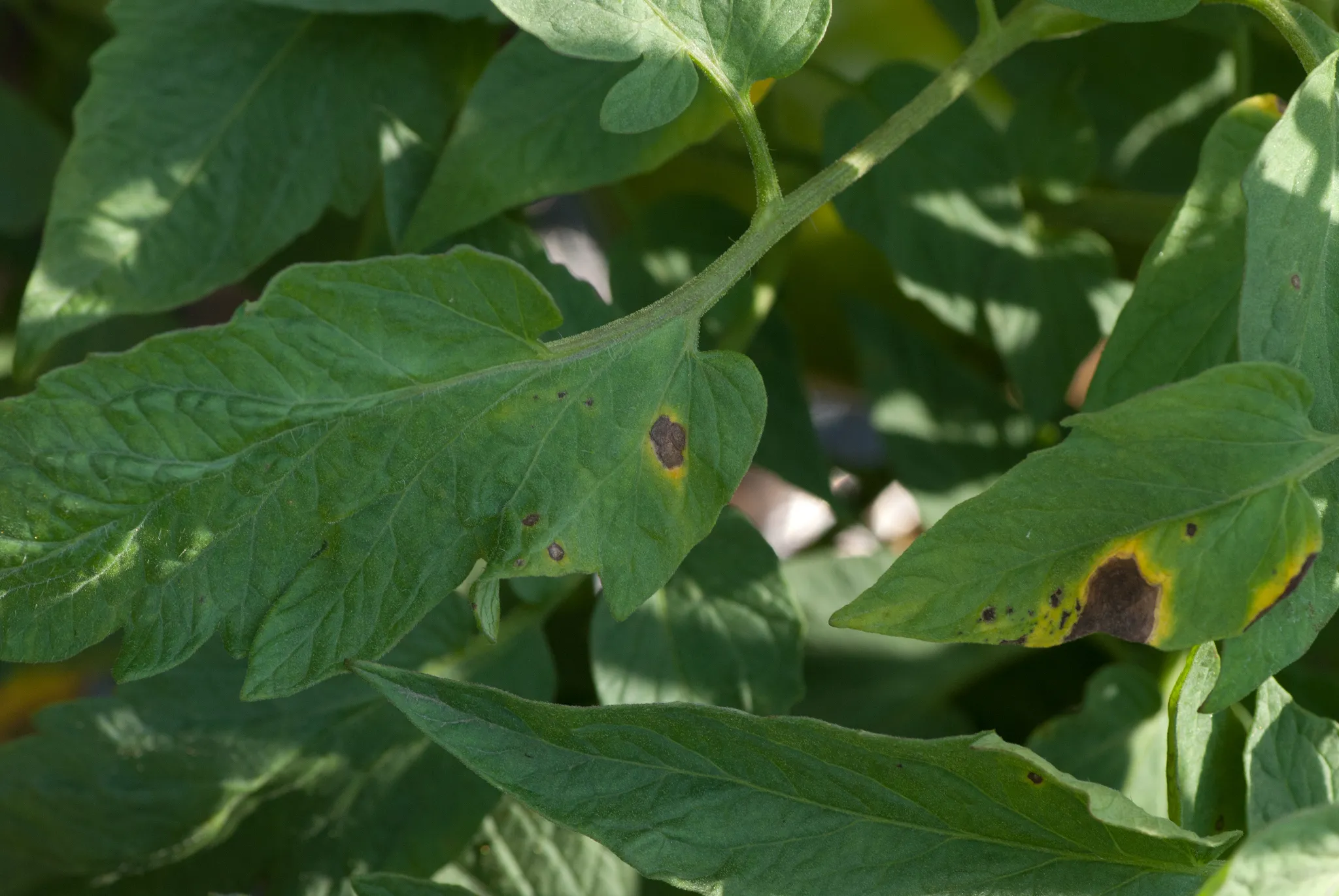
Early stage of Alternaria ("early blight") on tomato leaves with chlorotic halo
On green tomato leaves, typical dark Alternaria spots are visible, surrounded by a pronounced yellowing zone (chlorotic halo) caused by the action of phytotoxins on living tissues.

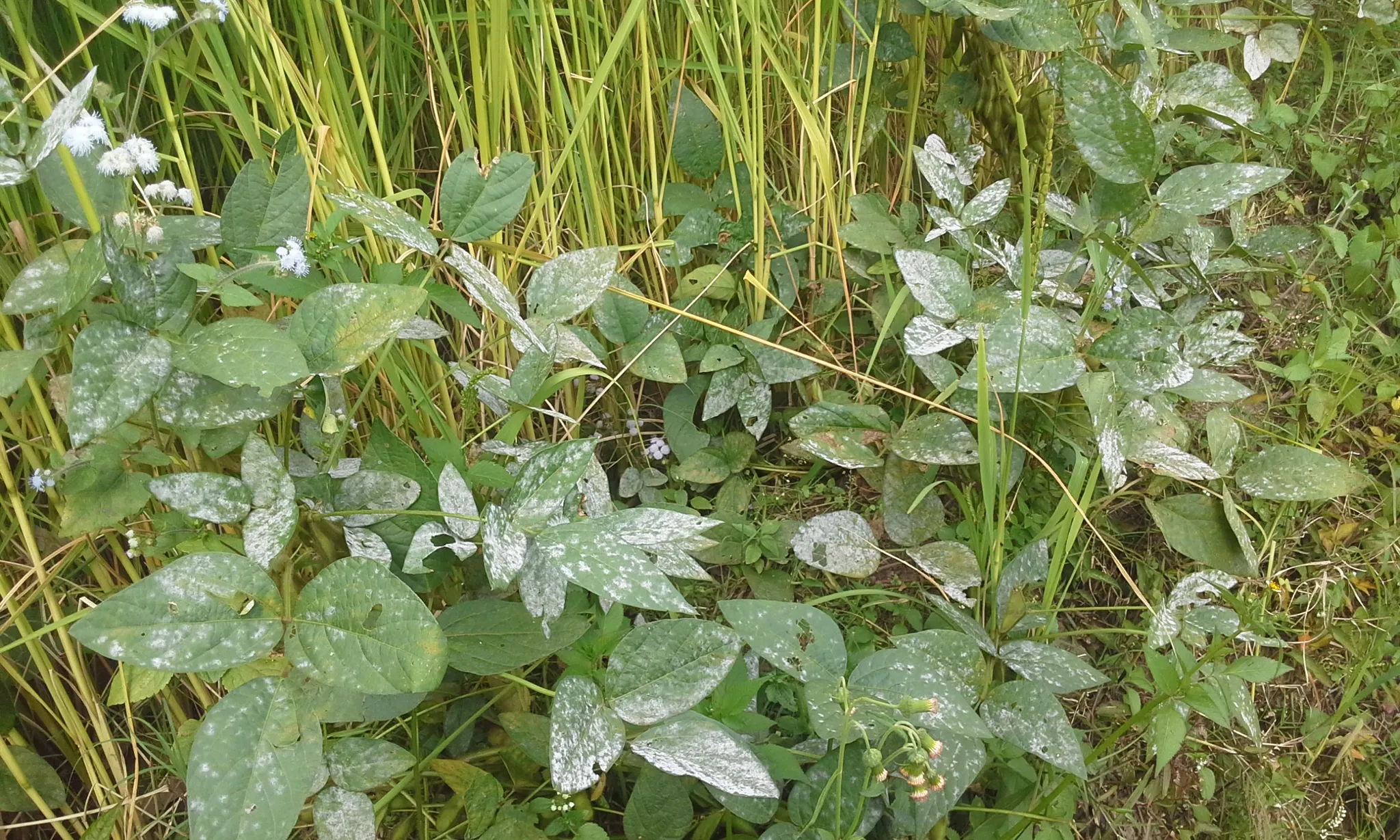
Powdery mildew on soybean leaves
Soybean (Glycine max) leaves with characteristic white powdery formations on the surface. The photograph well shows the appearance of the fungal coating and its difference from ordinary changes in leaf blade color.

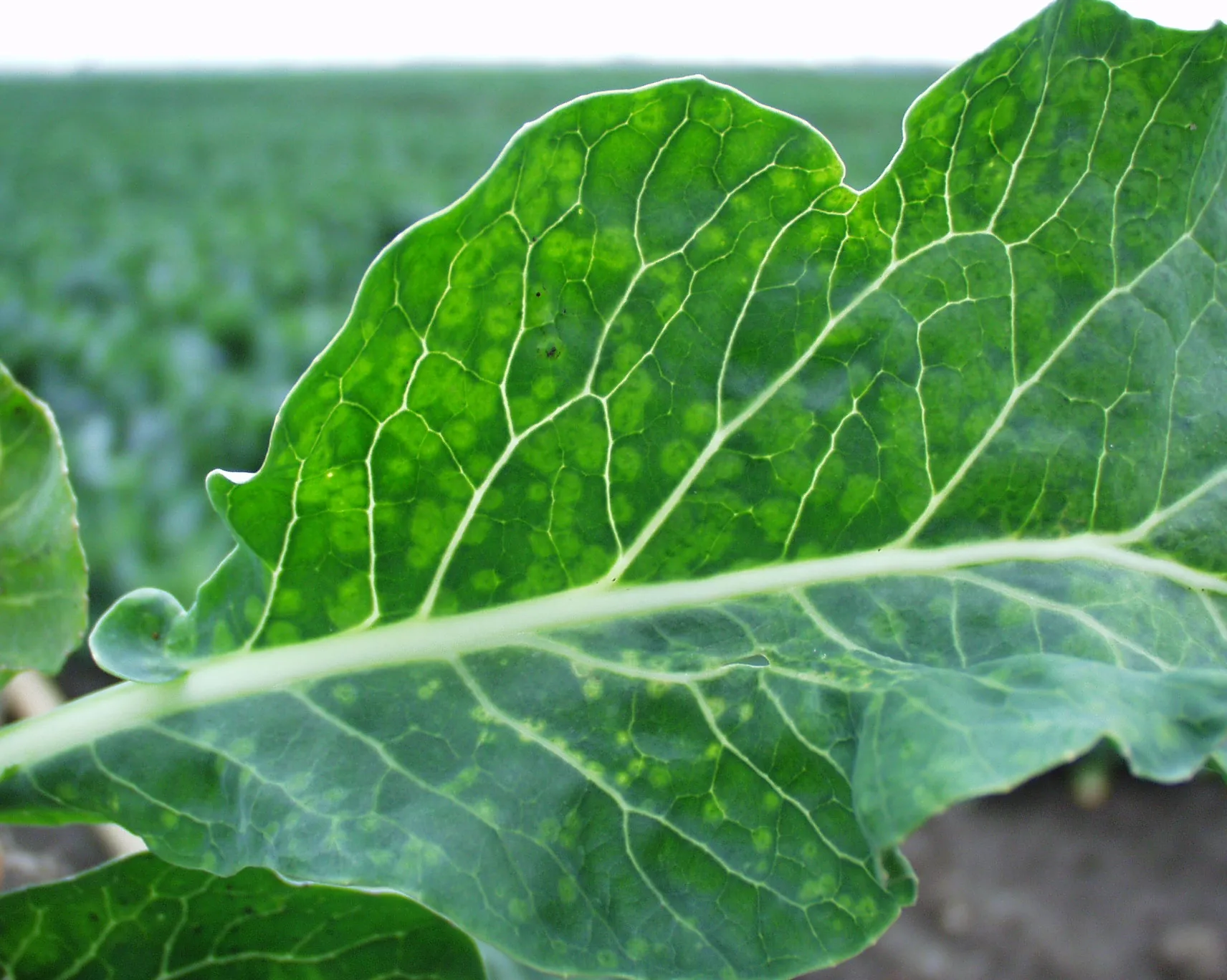
Leaf deformation due to viral infection
Leaves of a cabbage crop (Brassica sp.) with interveinal chlorosis, wrinkling, and deformation. The original description indicates infection with Turnip mosaic virus. This is a good example of how a viral infection can change both the color and shape of leaves.
Shape. Elongated, pale, thin leaves with long internodes are a sign of etiolation, that is, insufficient light (Capon, 2022). Deformation of leaf blades may be caused by herbicides, viruses, or hormonal disorders. Upward leaf curling (boat-shaped) often indicates water stress, while downward curling indicates overwatering or excess nitrogen.
2. Stems: thickness, color, curvature
Stem is the plant’s “skeleton” and its transport highway. Its condition says a great deal about health.
Thickness. Thin, weak stems with elongated internodes are a sign of light deficiency (etiolation) or nitrogen deficiency (Capon, 2022; Taiz et al., 2023). Overly thick, vigorous (“fat”) shoots with large leaves are the result of excess nitrogen and potassium deficiency. In trees and shrubs, normal thickening of the trunk and branches is the result of secondary growth (Evert, 2006). If a young tree does not thicken but stretches upward, this may indicate too dense planting or insufficient light.
Color. The green color of young stems is normal: they photosynthesize. Brown, gray, or black areas are a sign of necrosis caused by fungi, bacteria, or sunburn (Agrios, 2005). A reddish or purple tint to stems often accompanies phosphorus starvation or cold stress. Whitening of stems (without a coating) may be a consequence of a sharp transition from shade to sun.
Curvature. Stem curvature toward light is phototropism, a normal reaction (Chalker-Scott, 2015). But if a stem curves for no apparent reason, “twists,” or forms waves, this may be a consequence of viral infection, herbicide damage, or genetic abnormality. The appearance of water sprouts—vertical vigorous shoots on tree trunks—is a stress signal: the plant is trying to restore a lost canopy (Chalker-Scott, 2015). S-shaped stem curvature in seedlings is often associated with uneven lighting.
Note. According to L. Chalker-Scott (2018), most cases of tree death in urban conditions are associated with human errors rather than diseases. Therefore, before looking for a pathogen, check the growing conditions.


LCD 4-in-1 Soil Tester
Check essential growing conditions with one compact tool. Measure soil pH, moisture, temperature and light intensity — ideal for gardens, potted plants and greenhouses.
- 4-in-1 measurement
- Easy-to-read LCD display
- Portable design
Affiliate link · For indicative measurements only.
3. Roots: color, smell, density
Roots are the underground part of the plant, but they often explain the problems we see on leaves and stems. When examining the root system, it is important to assess three parameters: color, smell, and density.

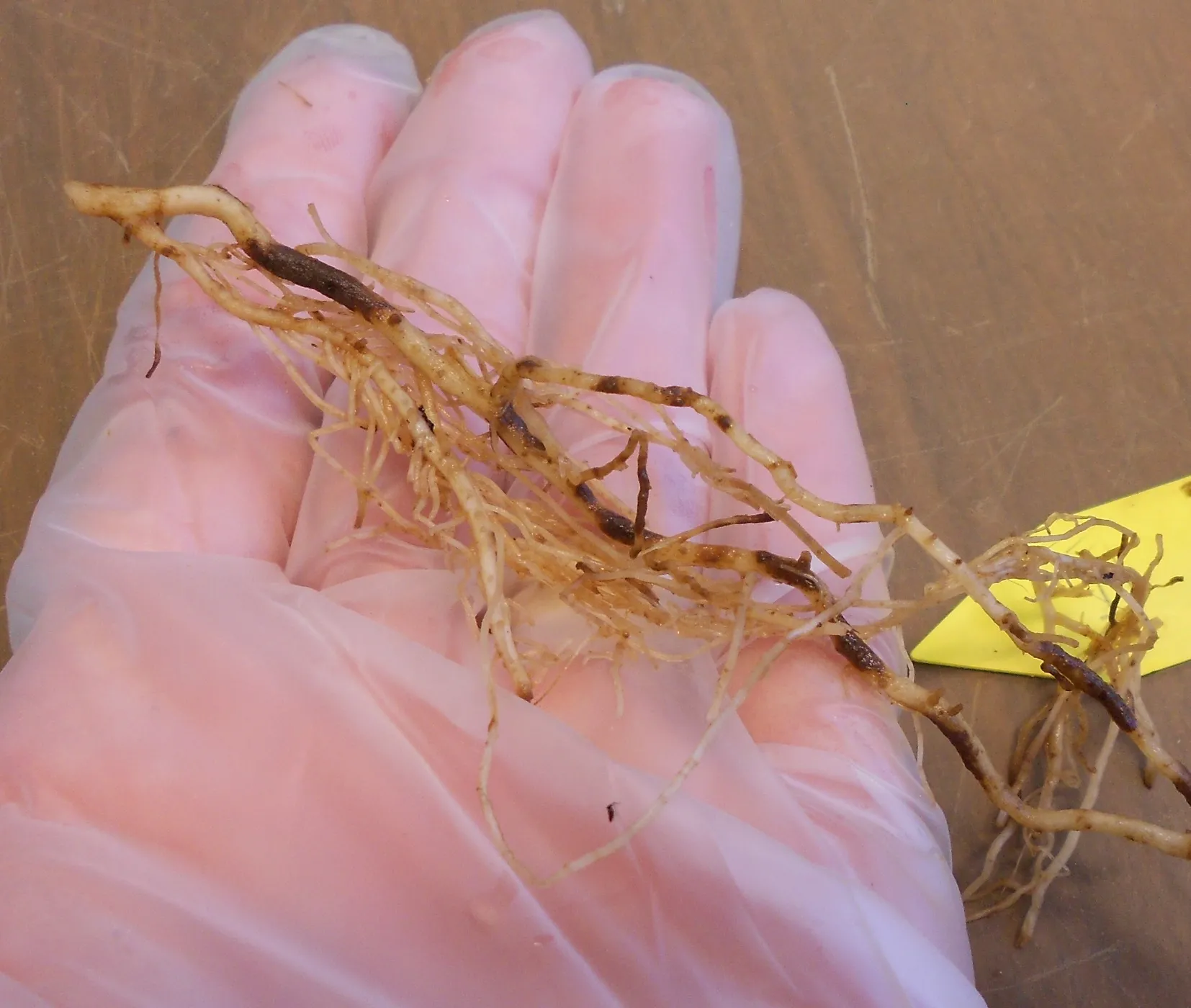
Corky root of tomato
Tomato roots (Solanum lycopersicum) with characteristic changes associated with corky root rot. The image is well suited for demonstrating that pathological changes in roots can manifest not only as darkening and softening but also as changes in surface structure.
Color. Healthy feeder roots are usually light—white, cream, or pale yellow. They are firm, with many fine roots. Darkening to brown or black is a sign of necrosis and rot. The causes may vary: waterlogging and lack of oxygen (Eash, 2016), damage by pathogens from the genera Pythium, Phytophthora, Rhizoctonia, Fusarium (Agrios, 2005; Blancard, 2012). In onion, a pink or reddish tint to the roots is caused by Phoma terrestris (Conn, 2012). Brown, “corky” roots in tomato are often associated with Pyrenochaeta lycopersici (Blancard, 2012). It is important to remember: some crops have naturally colored roots (carrot, beet), but feeder roots should still remain light.
Smell. A fresh, earthy smell is normal. A sour, putrid, or hydrogen-sulfide “aroma” indicates anaerobic processes and the development of soft rots. Such a smell almost always indicates waterlogging and a lack of air in the soil (Eash, 2016). If, when removing the plant from the pot, you smell a “swamp,” drainage must be improved urgently and watering reduced.

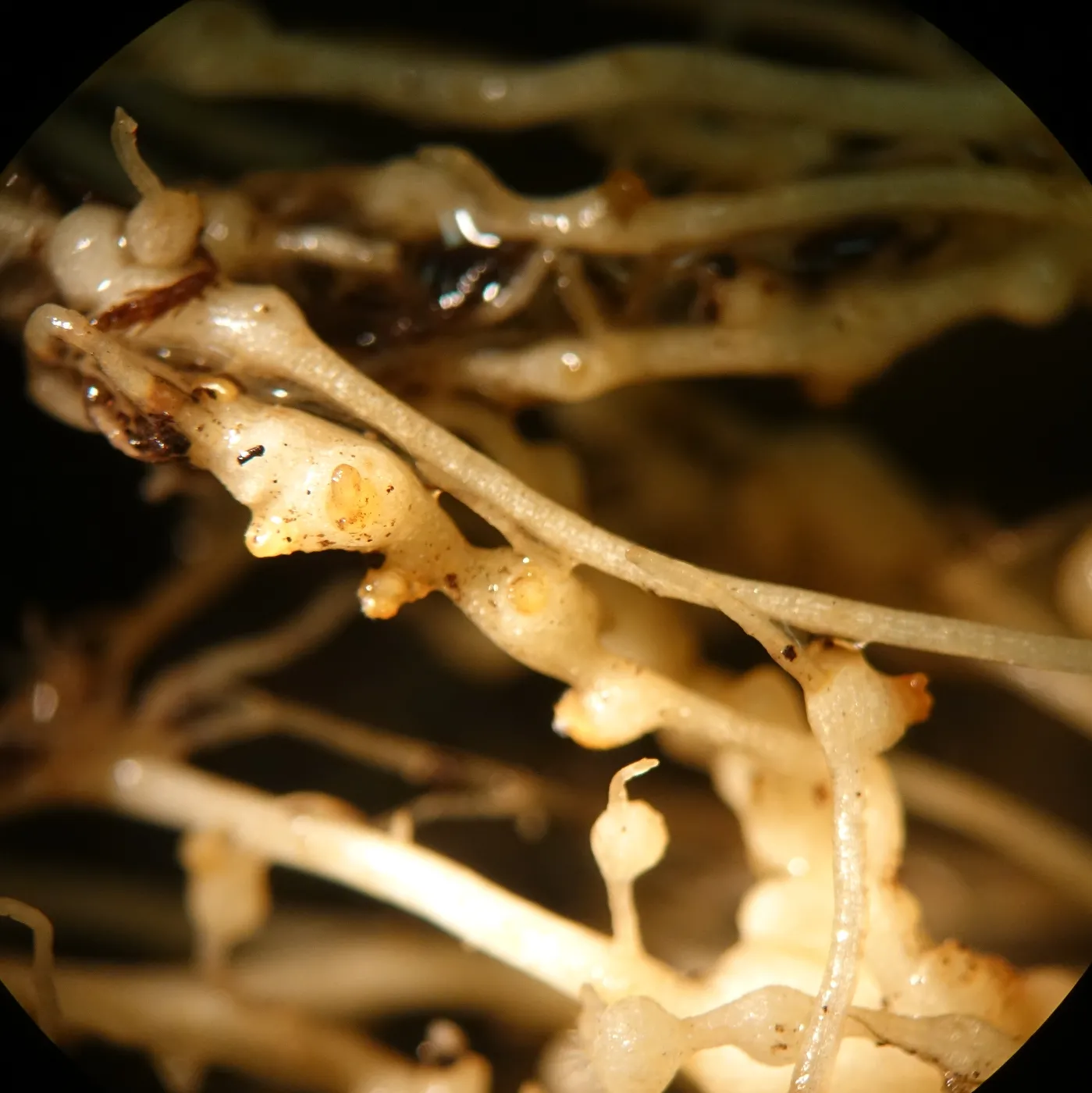
Root damage of tomato by root-knot nematode
On tomato roots (Solanum lycopersicum), characteristic galls and yellowish-orange egg masses formed by the root-knot nematode Meloidogyne incognita are visible. Well illustrates one of the most recognizable symptoms of infection.
Density. A healthy root ball is penetrated by roots, but they are not compressed into a dense felt. A too-sparse root system is a sign that the plant has rooted poorly: soil compaction, drought, damage by nematodes, or root rots are possible. Conversely, a “root-bound” ball with circling roots indicates that the plant has sat too long in a tight container; such roots can girdle themselves (Chalker-Scott, 2018). Swellings and galls on roots are a typical sign of root-knot nematodes Meloidogyne (Agrios, 2005). Large tumors are crown gall, caused by Agrobacterium tumefaciens (Agrios, 2005). Cysts on roots are a sign of cyst nematodes Globodera (Agrios, 2005).
Note. Mycorrhizal fungi are beneficial symbionts: they envelop roots and help absorb phosphorus and water without causing harm (Taiz et al., 2023). They should not be confused with pathogens. To make an accurate diagnosis, roots are carefully dug up and washed; losing some fine roots during digging is normal, but the overall picture should be clear (Chalker-Scott, 2018).
4. Flowers: drop, deformation
Flowers are the reproductive organ, and their condition says a great deal about stress, nutrition, and pollination.
Flower drop. In many crops, some flowers drop naturally—the plant regulates its load. But mass drop is an alarming signal. Causes: lack of moisture, high temperature, low humidity, insufficient light, boron or calcium deficiency, excess nitrogen. In tomato, at temperatures above 30–35 °C, pollen loses viability, and flowers drop (Blancard, 2012). In cucurbits, female flowers do not set fruit if pollination has not occurred; under row covers, hand pollination may be required (Jabbour, 2020). Ethylene accelerates drop: ripening fruits release it, so they should not be kept next to flowering plants (Taiz et al., 2023). Gray mold Botrytis cinerea infects flowers in wet weather, causing brown rot and drop (Morgan, 2021).

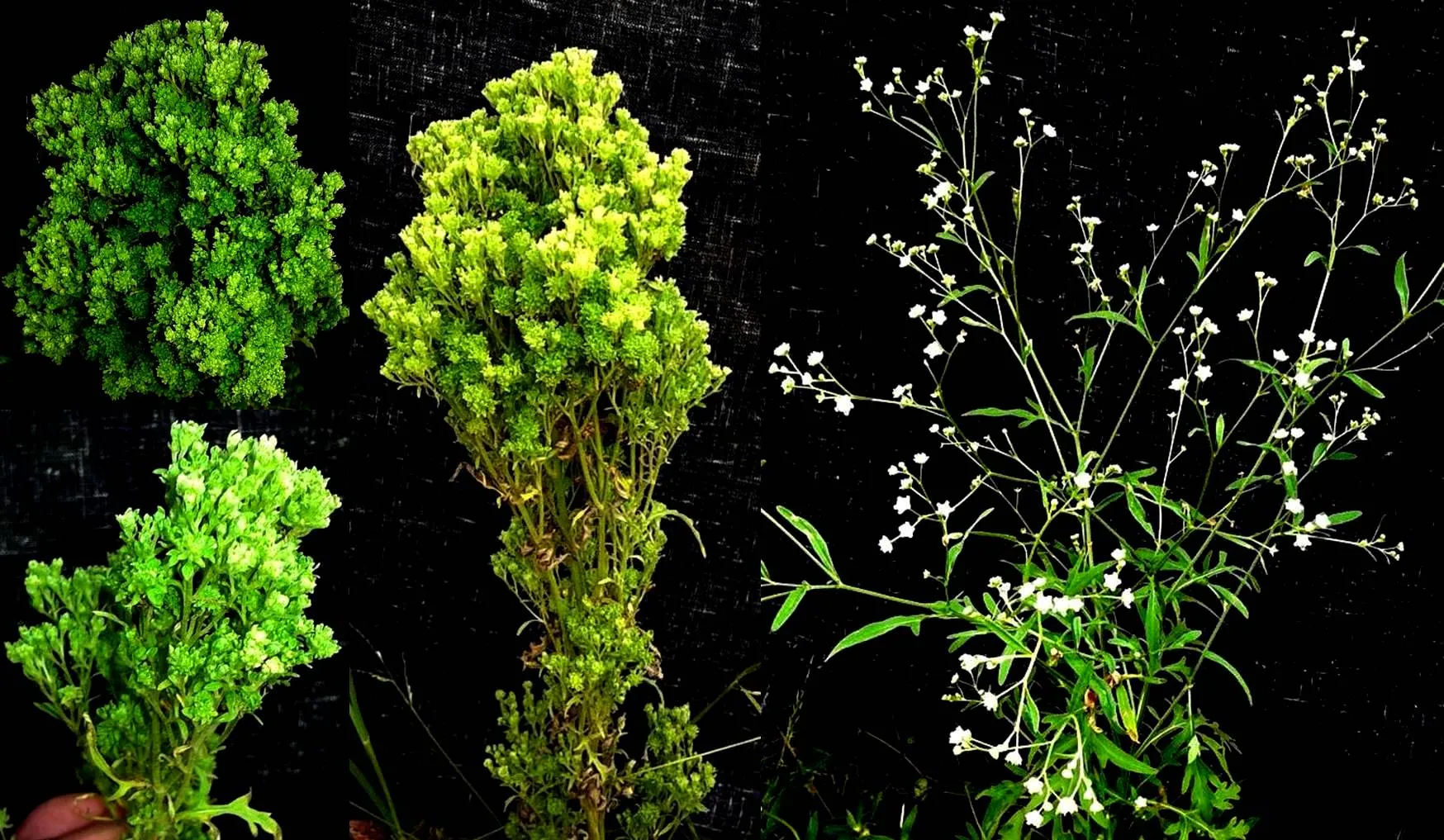
Witch's broom in Parthenium hysterophorus
A Parthenium hysterophorus plant with characteristic witch's broom caused by phytoplasma. Abnormal proliferation of shoots and changes in the normal structure of the plant are observed. The photograph is especially well suited for explaining the term "witch's broom."
Flower deformation. Greening of petals (virescence), enlargement of the calyx, and formation of “witches’ brooms” are characteristic signs of phytoplasmas (Blancard, 2012). Viruses cause mosaic, necrosis, and deformation of flowers (Agrios, 2005). 2,4-D-type herbicides cause curvature of flower stalks and deformed flowers (Chalker-Scott, 2018). Boron deficiency manifests as bud death and deformation (Taiz et al., 2023).
Note. If flowers drop but leaves are healthy, check temperature, humidity, and pollination. If flowers are deformed, look for viruses, phytoplasmas, or traces of herbicides. Natural aging of flowers should not be confused with disease: in many species the flower lives for one day, and this is normal (Zona, 2023).

Solar Automatic Drip Irrigation Kit for Gardens
Automate watering for pots, gardens and small greenhouses. This solar-powered system features a timer to help schedule water delivery to your plants.
- Solar-powered
- 15 m irrigation hose
- Programmable watering
Affiliate link · Check included accessories.
5. Fruits: size, color, cracking
Fruits are the result of the season, and their appearance says a lot about how the plant survived that season. Assess size, coloration, and integrity of the skin.
Size. Small fruits compared with the norm for the cultivar are a sign that the plant did not receive enough resources: water, nutrition, or light. In tomato, small fruits often form with potassium or phosphorus deficiency, as well as with a heavy fruit load (Blancard, 2012). Viruses, such as Tomato yellow leaf curl virus, cause fruit to become small and general stunting (Blancard, 2012). In onion, small bulbs occur with nematode damage or root rots (Conn, 2012). In apple, small fruits may result from excessive crop load or lack of moisture during fruit filling.
Color. Uneven ripening (mottling, “green shoulders” in tomato) is associated with potassium deficiency, viral infections, or sharp temperature fluctuations (Blancard, 2012). Yellowing of tomato fruits can be caused by chlorosis viruses (ToCV, TICV) (Blancard, 2012). In cucumbers, yellowing of fruits is a sign of aging or nitrogen deficiency. White, bleached areas on the sun-exposed side are sunscald: tissue dies from overheating (Blancard, 2012). In onion, yellowing and softening of scales is a symptom of bacterial rots (Conn, 2012). In pepper and eggplant, a purple tint to fruits may be a varietal trait rather than a disease.
Cracking. Longitudinal or concentric cracks on tomato, apple, and grape fruits occur with a sudden influx of water after drought: cells swell faster than the skin stretches (Blancard, 2012; Morgan, 2021). In tomato, cracking around the stem scar also occurs—a consequence of uneven watering. In onion, cracking of the basal plate and formation of several bulbs (“doubling”) are associated with uneven moisture and root damage (Conn, 2012). Blossom-end rot of tomato and pepper fruits—a dark sunken spot at the blossom end—is caused by calcium deficiency in the tissues, which is often associated with irregular watering rather than poor soil (Blancard, 2012). In apple, bitter pit is also calcium deficiency (Taiz et al., 2023).

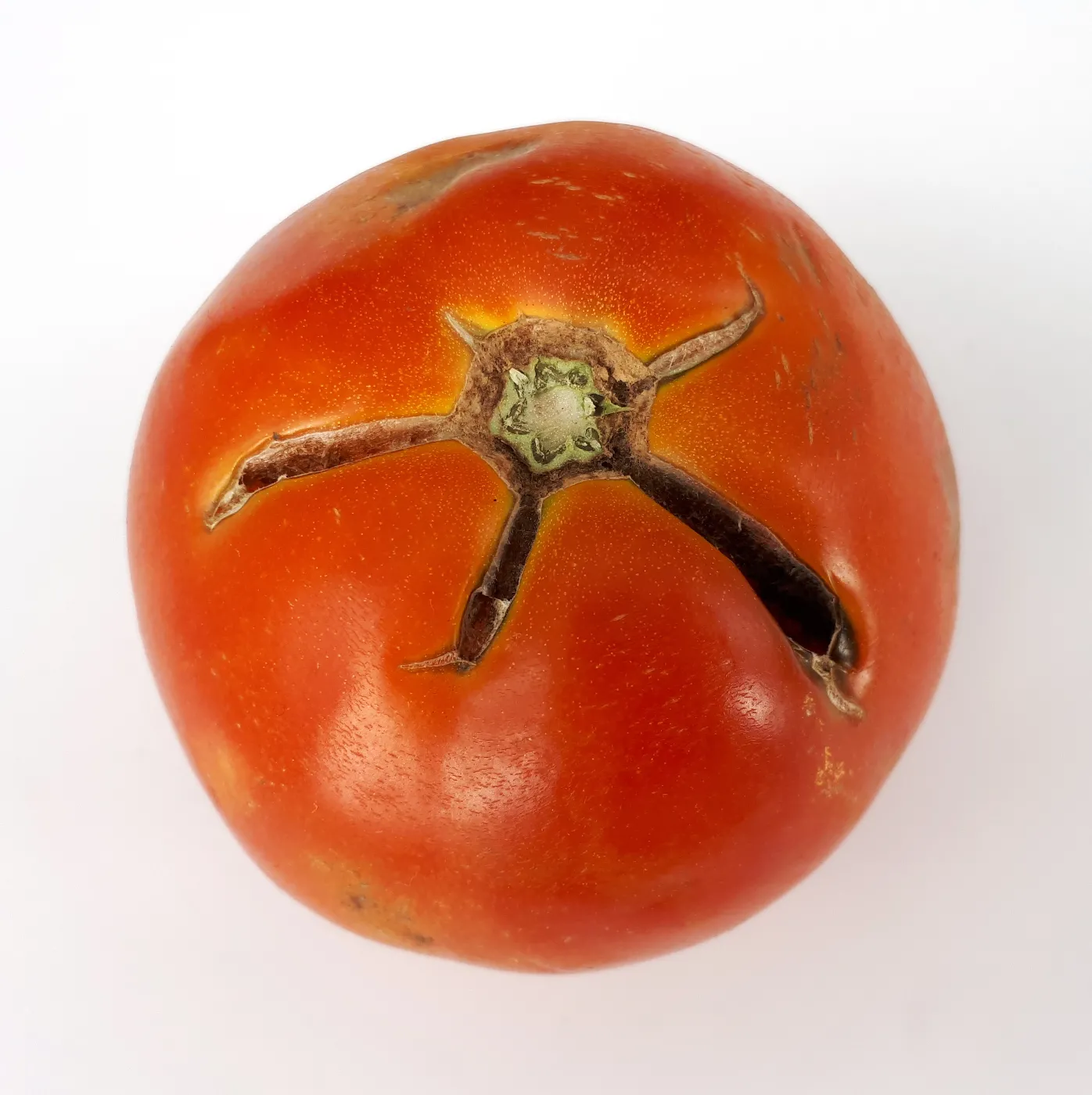
Tomato fruit cracking
A tomato fruit (Solanum lycopersicum) with a noticeable crack on the surface. The photograph illustrates characteristic cracking that occurs with uneven water supply and rapid increase in the volume of fruit tissues.

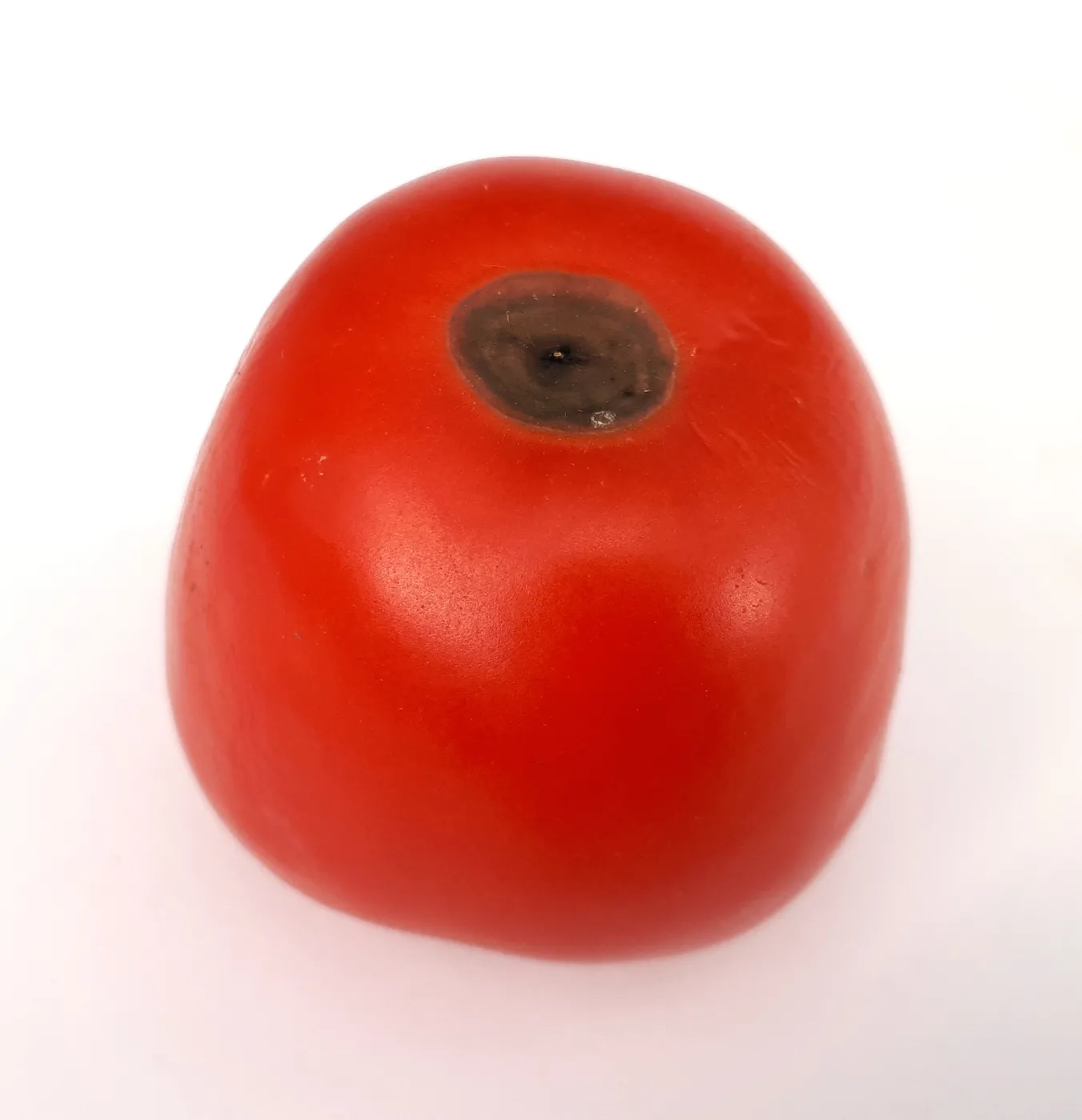
Blossom-end rot of tomato fruit
A tomato fruit (Solanum lycopersicum) with a characteristic dark sunken necrotic area at the blossom end. This is a clear example of blossom-end rot associated with insufficient calcium supply to fruit tissues.
Note. Many fruit defects are not infections but physiological disorders. If fruits have cracked but leaves are healthy, look for the cause in watering and nutrition, not in pathogens.
6. General appearance: stunting, etiolation, dwarfism
Sometimes the diagnosis is made not from a single organ but from the whole plant—its proportions, growth rate, and form.
Stunting. The plant lags in growth, leaves are small, internodes are short, and the overall habit is compact. Causes: nitrogen, phosphorus, or potassium deficiency (Taiz et al., 2023); soil compaction and lack of oxygen for roots (Eash, 2016); root rots (Pythium, Phytophthora, Fusarium) (Agrios, 2005; Blancard, 2012); nematodes (Agrios, 2005). Stunting is also caused by viruses; for example, Tomato yellow leaf curl virus makes tomato short and “bushy” (Blancard, 2012). Physiological stunting may be associated with soil salinity or overwatering.

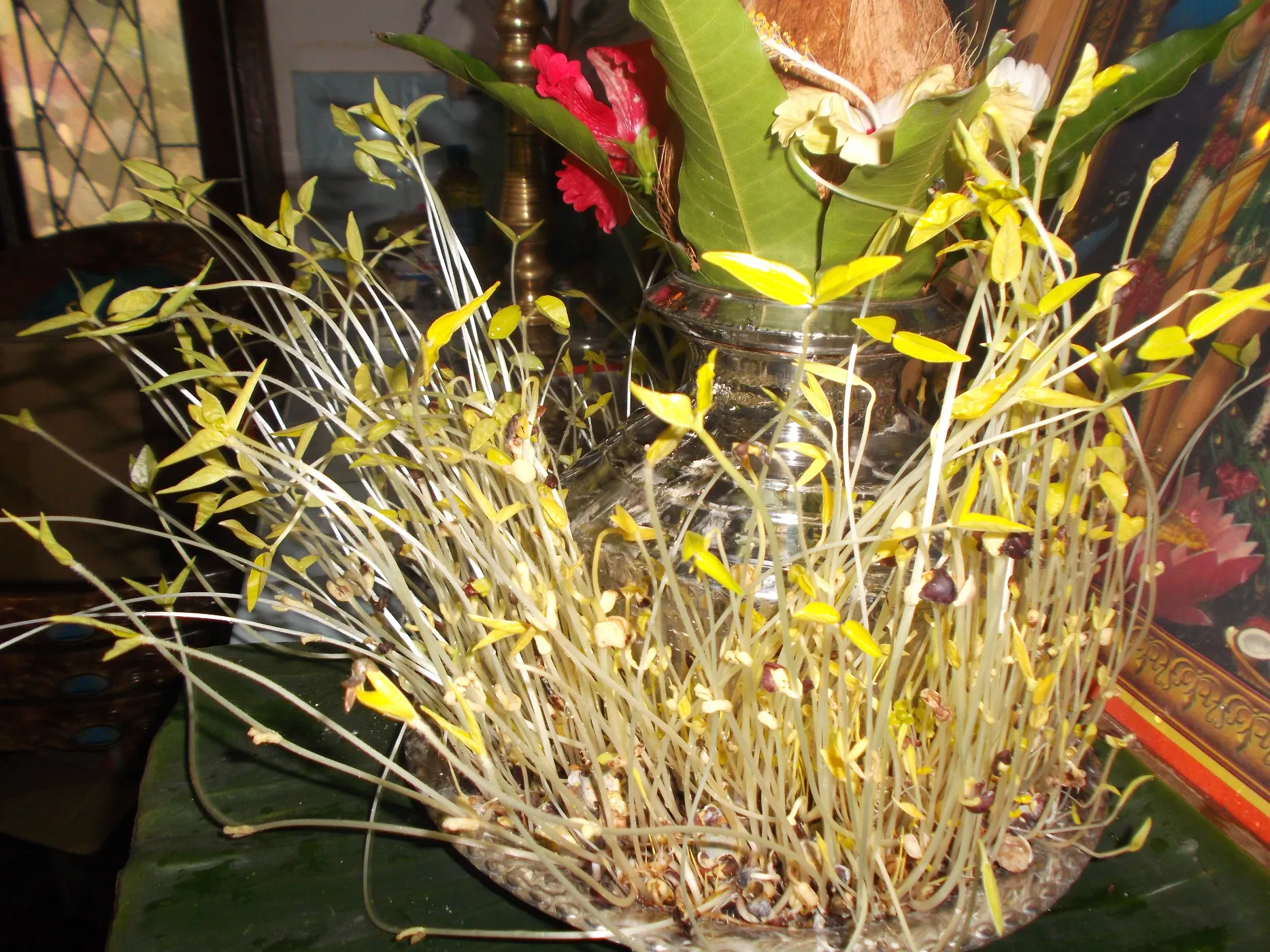
Sprouted grains showing signs of etiolation — paling of young seedlings when developing under insufficient lighting
Etiolation (stretching). Long thin stems, pale underdeveloped leaves, and poor mechanical strength are a classic sign of insufficient light. The plant spends resources on height growth at the expense of leaf surface, trying to reach the light (Capon, 2022; Taiz et al., 2023). Etiolation is often observed in dense sowings, in the shade of trees, or when grown on a windowsill without supplemental lighting. In tomato and cucumber, stretching may result from excess nitrogen with insufficient light.
Dwarfism. This is not simply stunted growth but genetically or pathologically determined short stature. In dwarf cultivars (for example, some tomato, pepper, and ornamental cultivars), this is normal. Pathological dwarfism occurs with viral infections (for example, Tomato bushy stunt virus) (Blancard, 2012), with phytoplasma infection (stolbur causes general stunting and “bushiness”) (Blancard, 2012), as well as with severe zinc or boron deficiency (Taiz et al., 2023). In trees, dwarfism may result from grafting onto a dwarf rootstock—this is a managed technique (Potapov, 2000).
Note. Before diagnosing from general appearance, make sure you know the normal habit of the cultivar and its age-related changes. Young seedlings of many crops look “stretched” naturally, and mature plants may change shape with age (Zona, 2023). Observation over time is the best way to distinguish normal from pathological.

7-in-1 Wi-Fi Weather Station
Monitor local weather conditions with a wireless outdoor sensor. Track temperature, humidity, rainfall, wind speed and direction, and atmospheric pressure. Ideal for gardens, farms and greenhouses.
- Wireless outdoor sensor
- Solar-powered
- Wi-Fi connectivity
Affiliate link · Check regional compatibility.
7. Table of simple signs: what they mean
Below is a summary of the most common visual signals and their likely causes. This is not a diagnosis but a starting point for further observation.
| Sign | Likely causes |
|---|---|
| Yellowing of lower leaves, plant pale | Nitrogen deficiency (Taiz et al., 2023) |
| Yellowing of upper leaves, veins green | Iron or manganese deficiency (Taiz et al., 2023) |
| Interveinal yellowing on old leaves | Magnesium deficiency (Chalker-Scott, 2018) |
| Reddish-purple tint of leaves | Phosphorus deficiency, cold, drought (Taiz et al., 2023; Chalker-Scott, 2015) |
| Wilting in wet soil | Waterlogging, root rot, salinity (Chalker-Scott, 2015) |
| Brown spots with concentric rings | Fungal infection (Chalker-Scott, 2018) |
| Angular spots bounded by veins | Bacterial infection (Chalker-Scott, 2018) |
| Mosaic pattern, “web-like” pattern | Viral infection (Chalker-Scott, 2018) |
| White coating on leaves | Powdery mildew (Agrios, 2005) |
| Necrosis along leaf margins and tips | Water stress, potassium deficiency (Taiz et al., 2023; Chalker-Scott, 2018) |
| Small leaves compared with last year | Chronic water shortage (Chalker-Scott, 2018) |
| Thin elongated stems, pale leaves | Insufficient light (Capon, 2022) |
| Thick “fat” shoots | Excess nitrogen, potassium deficiency |
| Dark, soft, foul-smelling roots | Root rot, waterlogging (Eash, 2016; Agrios, 2005) |
| Galls and swellings on roots | Nematodes, crown gall (Agrios, 2005) |
| Mass flower drop | Stress: heat, drought, boron deficiency (Blancard, 2012) |
| Greening of petals, “witches’ brooms” | Phytoplasma (Blancard, 2012) |
| Fruit cracking | Uneven watering (Blancard, 2012; Morgan, 2021) |
| Blossom-end rot of fruits | Calcium deficiency in tissues (Blancard, 2012) |
| Small fruits | Potassium deficiency, viruses, excessive crop load (Blancard, 2012) |
| Dwarfism with bushiness | Virus, phytoplasma, zinc or boron deficiency (Blancard, 2012; Taiz et al., 2023) |
Note. The same sign may have several causes. The table helps narrow the search but does not replace observation over time and, if necessary, laboratory diagnostics (Chalker-Scott, 2018).
8. What cannot be diagnosed from appearance
Visual inspection is a powerful tool, but it has limits. It is important for a gardener to understand which conclusions cannot be drawn, so as not to waste time and money.
You cannot accurately identify the pathogen. From leaf spots alone, it is impossible to distinguish, for example, Alternaria blight from Septoria blight or bacterial leaf spot from fungal leaf spot. Accurate identification requires microscopy, culturing on nutrient media, or molecular tests (Blancard, 2012; Agrios, 2005). The same applies to root rots: Pythium, Phytophthora, Rhizoctonia, and Fusarium can produce similar symptoms but require different control measures (Agrios, 2005).
You cannot distinguish a virus from a phytoplasma or a deficiency. Mosaic, yellowing, and leaf deformation can be caused by viruses, phytoplasmas, herbicides, or micronutrient deficiency. For example, greening of petals is a classic sign of phytoplasma, but viruses sometimes produce similar symptoms (Blancard, 2012). Only laboratory analysis can provide an accurate diagnosis.
You cannot determine an element deficiency without analysis. External symptoms of nitrogen, phosphorus, potassium, magnesium, iron, and other element deficiencies often overlap. For example, yellowing of leaves may result from nitrogen deficiency, waterlogging, root damage, or a virus. Even an experienced agronomist uses soil and plant tissue analysis for confirmation (Taiz et al., 2023; Chalker-Scott, 2018).
You cannot see hidden problems. Nematodes, soilborne pathogens, latent viruses, soil compaction, salinity—none of this is visible to the eye. Detecting them requires special methods: nematode assays, pathogen tests, and measurement of soil compaction and electrical conductivity (Eash, 2016; Agrios, 2005).
You cannot diagnose from a photograph. A photograph does not convey smell, turgor, root condition, or the history of the site. Even the highest-quality photograph cannot replace examining the plant in its environment. Diagnostic specialists always emphasize: you need to see the whole plant, know how it grew, what it was watered with and when, and what the weather conditions were (Chalker-Scott, 2018; Blancard, 2012).
Note. If doubts remain after inspection, the best path is to contact a local laboratory or an experienced consultant. This will save effort and help choose the right strategy. Observation is the main tool, but not the only one.

40W Full Spectrum LED Grow Light
Support healthy plant growth with full-spectrum LED lighting. Ideal for seedlings, indoor plants and small growing spaces. A practical solution for indoor gardening and year-round cultivation.
- Full-spectrum LED
- Energy-efficient design
- Indoor plant growing
Affiliate link · Check actual power and light coverage.
9. Regional aspect: the same symptoms in different climates may have different causes
A gardener in Arizona, the Moscow region, and the Mediterranean may see the same symptoms on their plants, but the causes will be different. Climate, soil, photoperiod, and air humidity change not only plant behavior but also the likelihood of certain problems. Let us consider several examples.
Yellowing of leaves. In a dry, hot climate, yellowing is often associated with soil salinity or root overheating: evaporation draws moisture out, salts concentrate, and roots cannot absorb water (Eash, 2016; Taiz et al., 2023). In a cool, humid climate, the same yellowing may result from root rots—Pythium and Phytophthora are active precisely under waterlogging and low temperatures (Agrios, 2005; Blancard, 2012). In regions with alkaline soils, yellowing of young leaves with green veins is a typical sign of iron deficiency caused by high pH rather than poor soil (Taiz et al., 2023).
Wilting. In an arid climate, wilting at midday is a normal reaction to high transpiration if turgor recovers by evening. But if the plant is wilted in the morning, this may be a sign of salinity or root damage (Chalker-Scott, 2015). In the tropics and subtropics, wilting is often caused by Ralstonia solanacearum—bacterial wilt, which develops under high temperatures and humidity (Agrios, 2005; Blancard, 2012). In a temperate climate, wilting may result from Verticillium wilt or Fusarium wilt (Blancard, 2012).
Leaf spots. Under high humidity and frequent rains, spots are more often fungal—Alternaria blight, Septoria blight, downy mildew (Agrios, 2005). In a dry, hot climate, similar spots may be sunburn or the result of water droplets on leaves under bright sun. In regions with polluted air, spots may be caused by ozone or acid rain (Eash, 2016; Chalker-Scott, 2018).
Fruit cracking. In regions with sharp fluctuations in moisture—for example, after heavy rain following a long drought—cracking of tomatoes and apples is more common (Blancard, 2012; Morgan, 2021). In a consistently humid climate, this problem is less pronounced, but there the risk of fungal fruit rots is higher.
Dwarfism and etiolation. At high latitudes with long days and a short growing season, plants may stretch due to insufficient light at the beginning and end of the season (Capon, 2022). In the tropics, conversely, excess light and heat with insufficient water cause stunting and dwarfism (Zona, 2023). Photoperiodic responses also differ: plants of temperate latitudes often respond to day length, while tropical species may be day-neutral (Taiz et al., 2023; Kuznetsov and Dmitrieva, 2006).
Note. The same symptom in different regions requires a different approach. It is important for a gardener to know not only “what is visible” but also “where it is visible”: soil type, climate, and site history. There are few universal recipes, but the logic of observation is the same.
10. Conclusion: observation is the gardener’s main tool
We have gone from leaves to fruits, from roots to overall habit. The main conclusion is simple: a plant itself hints at what is happening to it, if you know where to look and how to interpret what you see.
Observe over time. A single inspection tells you little. Compare the plant’s condition today with what it was a week ago. The appearance of new symptoms, their spread, and the rate of change are all more important than a single snapshot (Chalker-Scott, 2018).
Look at the whole plant. You cannot make a diagnosis from one leaf. Examine roots, stems, flowers, and fruits, and assess the overall appearance. Often the cause lies not where the symptom appears: yellowing of leaves may result from root rot, and wilting from soil compaction (Blancard, 2012; Chalker-Scott, 2018).
Consider the context. Weather, soil, watering, site history, and neighboring plants all influence the diagnosis. The same symptom under different conditions has different causes (Eash, 2016; Taiz et al., 2023).
Do not jump to conclusions. Appearance is a signal, not a verdict. Before applying fertilizers or pesticides, make sure the cause has been identified correctly. If in doubt, consult a specialist or a laboratory (Agrios, 2005; Chalker-Scott, 2018).
Keep records. Record dates of sowing, watering, fertilizing, and the appearance of symptoms. This will help identify patterns and prevent problems in the future. Experienced gardeners know: the best textbook is your own observation journal (Chalker-Scott, 2018).
Note. Observation is a skill that develops. The more you look at plants, the more accurately you read their signals. Start simple: walk around the garden every day and note what has changed. After a season, you will see what you previously missed.
A plant does not lie. It always shows what it needs—you just have to learn to understand its language.
References
- (2015). ‘The plant body: structure and function’, in Ingram, D.S., Vince-Prue, Daphne, Gregory, P.J. (ed.) Science and the Garden. The scientific basis of horticultural practice. West Sussex, UK: Royal Horticulture Society. Wiley Blackwell, pp. 14-36.
- Agrios, G.N. (2005). ‘Introduction’, in Plant Pathology. London, UK: ACADEMIC PRESS, pp. 4-76.
- Blancard, Dominique (2012). Tomato Diseases: Identification, Biology and Control. 2nd ed. London, UK / Waltham, MA, USA / San Diego, CA, USA: Academic Press (an imprint of Elsevier).
- Capon, Brian (2022). ‘How Plants Function’, in Botany for Gardeners. An Introduction to the Science of Plants. Portland, Oregon: Timber Press, pp. 144-192.
- Capon, Brian (2022). ‘The Structure and Growth of Plants’, in Botany for Gardeners. An Introduction to the Science of Plants. Portland, Oregon: Timber Press, pp. 11-87.
- Chalker-Scott, Linda (2015). ‘Garden Care, Not Control’, in How Plants Work. Portland, London: Timber Press, pp. 170-195.
- Chalker-Scott, Linda (2015). ‘Why Leaves Can Turn Red Anytime, Anyplace’, in How Plants Work. Portland, London: Timber Press, pp. 106-129.
- Chalker-Scott, Linda (2018). ‘Diagnosing Diseases and Disasters’, in The Science of Gardening. Course Guidebook. Chantilly, Virginia: The Great Courses, pp. 145-152.
- Chalker-Scott, Linda (2018). ‘Gardening CSI: Case Studies’, in The Science of Gardening. Course Guidebook. Chantilly, Virginia: The Great Courses, pp. 153-160.
- Conn, K.E., Lutton, J.S., Rosenberger, S.A. (2012). Onion. Disease Guide. null : Seminis Vegetable Seeds.
- Eash, N.S., Sauer, T.J., O'Dell, D., Odoi, Evah (2016). ‘Soil Biological Properties’, in Soil Science Simplified. New Jersey: Wiley Blackwell, ch. 4.
- Evert, R.F. (2006). ‘Structure and Development of the Plant Body — An Overview’, in Esau's Plant Anatomy: Meristems, Cells, and Tissues of the Plant Body: Their Structure, Function, and Development. Hoboken, New Jersey, USA: John Wiley & Sons, Inc., pp. 1-13.
- Griffiths, Michael (2026). ‘Spring’, in The Easy Garden. New York, NY: Penguin Random House, .
- Jabbour, Niki (2020). ‘Preventing Diseases, Pests, and Poor Pollination’, in Growing Under Cover. Techniques for a More Productive, Weather-Resistant, Pest-Free Vegetable Garden. North Adams, MA: Storey Publishing, pp. 128-139.
- Johnson, Noelle (2023). ‘Choosing the Right Plants for Hot, Arid Regions’, in Dry Climate Gardening. Beverly, MA: Cool Springs Press, .
- Morgan, Sally (2021). ‘A–Z of pests and diseases’, in The Healthy Vegetable Garden: A natural, chemical-free approach to soil, biodiversity and managing pests and diseases. Vermont, London, UK: Chelsea Green Publishing, .
- Pratt, M.M. (2005). ‘The Parts of a Plant – and Looking After Them’, in Practical Science for Gardeners. Portland, Oregon: Timber Press, pp. 20-42.
- Taiz, Lincoln, Møller, I.Max, Murphy, Angus, Zeiger, Eduardo (2023). ‘Mineral Nutrition’, in Plant Physiology and Development. New York, NY: Oxford University Press, pp. 189-216.
- Zona, Scott (2026). ‘Plant Parts and What They Do’, in A Gardener's Guide to Botany. Beverly, MA: Cool Springs Press, .
- Zona, Scott (2026). ‘What a Plant Needs: Light’, in A Gardener's Guide to Botany. Beverly, MA: Cool Springs Press, .
- Zona, Scott (2026). ‘What a Plant Needs: Nutrients’, in A Gardener's Guide to Botany. Beverly, MA: Cool Springs Press, .
- Zona, Scott (2026). ‘What a Plant Needs: Water’, in A Gardener's Guide to Botany. Beverly, MA: Cool Springs Press, .
- Кузнецов, В.В. (2006). ‘Развитие растений [Plant development]’, in Физиология растений [Physiology of plants]. Москва: Высшая школа, pp. 547-617.
- Потапов, В.А., Фаустов, В.В., Пильщикова, Ф.Н. (2000). ‘Биологические основы плодоводства [Biological foundations of fruit growing]’, in Плодоводство [Fruit growing]. Москва: Колос, pp. 3-124.
- Третьяков, Н.Н. (2000). ‘Минеральное питание растений [Mineral nutrition of plants]’, in Физиология и биохимия сельскохозяйственных растений [Physiology and biochemistry of agricultural plants]. Москва: Колос, pp. 280-345.
