
Roots and the Root Zone
Many gardeners assess the health of their plants by the state of the aboveground part: lush foliage, bright flowers, and abundant harvests. However, the true strength and viability of any plant are hidden underground. The root system is not just an “anchor” holding the plant in the soil, but also its main “water supply,” “digestive system,” and “immune defense” all at once. Almost any problem we see on the surface—whether wilting, chlorosis, or poor growth—begins in the root zone. Understanding how roots work is the key to creating a garden that will thrive with minimal intervention.
1. What a root is and what types of roots exist
Root is an axial vegetative organ of a plant, possessing radial symmetry and indeterminate growth (Medvedev, 2012). Unlike a stem, it bears no leaves or buds, but performs critically important functions: it absorbs water and mineral substances, holds the plant in the soil, stores nutrients, and synthesizes certain hormones and amino acids (Westwood, 1993).
In higher plants, depending on their origin, three main types of roots are distinguished:
- Main root (primary root). It develops from the embryonic radicle of the seed. In many dicotyledonous plants (for example, carrot, beet, oak), the main root thickens strongly and becomes a taproot extending deep into the soil. In monocotyledonous plants (cereals, onion), the main root often dies early, giving way to adventitious roots (Taiz et al., 2023).
- Lateral roots. They branch from the main and adventitious roots, providing branching and increasing the absorption area. Lateral roots are initiated inside the parent root (from the pericycle) and break outward, which ensures a reliable connection and protection of growth points (Eash et al., 2016).
- Adventitious roots. They develop not from a root but from other organs: stems, leaves, or parts thereof. It is adventitious roots that form on cuttings during vegetative propagation (for example, in currant or tomato), and they also form the fibrous root system in cereals, where the main root is not pronounced. In crops such as maize, adventitious (or nodal) roots grow from the lower aboveground nodes, helping to keep the plant upright (Westwood, 1993).

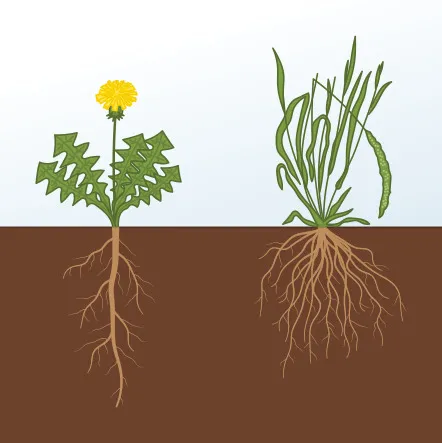
Taproot and fibrous root systems
Comparison of two main types of root systems: taproot, with a distinct main root and lateral branches, and fibrous, consisting of many roots of approximately equal size.
The diversity of root systems comes down to two main types: taproot (with a clearly expressed main root) and fibrous (consisting of many equivalent adventitious and lateral roots). Understanding this difference is important when transplanting: plants with a taproot system (poppy, walnut) tolerate damage to the main root poorly, whereas plants with a fibrous system (most vegetables and shrubs) recover quickly.
Note: It is important to note that the roots of some plants can be modified to perform special functions. For example, root crops (carrot, radish) are thickened main roots for storing nutrients, and root tubers (sweet potato, dahlia) are modified adventitious roots (Potapov, 2000).
2. Main root, lateral roots, adventitious roots
Understanding root types is not just a botanical classification but a practical tool. The type of root damaged during transplanting or soil cultivation determines how quickly the plant will recover from stress.
The main root is the axis laid down first during seed germination. In many plants it becomes a taproot: powerful, extending vertically downward. This strategy is characteristic of species growing in arid regions or on poor soils, where water and nutrients are found at considerable depth (Taiz et al., 2023). Carrot, beet, alfalfa, oak, and walnut are classic examples. The taproot performs a dual job: it not only obtains water from deep horizons but also serves as a storage reservoir for nutrients. That is precisely why root crops are so rich in sugars and starch.
However, the taproot system has a vulnerability: if the main root is damaged or encounters an impassable barrier (a dense subsoil layer, a “plow pan”), the plant loses the ability to grow normally. Seedlings with such a root system tolerate transplanting poorly and require especially careful handling (Chalker-Scott, 2018).
Lateral roots branch from the main root and from other lateral roots, forming a branched network. They provide the main part of absorption. Lateral roots are initiated in the pericycle—the inner cell layer of the parent root—and break outward through the cortex. Such an “internal” origin protects the growth point from mechanical damage and ensures a reliable connection with the conducting system (Eash et al., 2016). Root branching follows a rule: the closer to the tip, the fewer lateral branches. This allows the root simultaneously to explore new volumes of soil (the growing tip) and to exploit already traversed space (the branching zone).
For the gardener this means: loosening soil near roots is risky. Damage to the branching zone reduces the plant’s ability to absorb water, even if the root itself remains intact.
Adventitious roots are a universal tool for vegetative propagation and adaptation. They arise from stems, leaves, or even old woody tissues. It is adventitious roots that allow propagation by cuttings of currant, roses, tomatoes, and many other crops: a stem immersed in a moist substrate forms roots in places where they normally do not occur (Chalker-Scott, 2015). In maize, adventitious (nodal) roots grow from the lower aboveground nodes and serve as additional supports, especially in windy areas or when plants lodge.
In cereals, adventitious roots form a fibrous system: many equivalent roots uniformly exploiting the upper soil layer. This makes them ideal for creating turf cover, stabilizing slopes, and recovering quickly after damage. When transplanting plants with a fibrous system, it is enough to preserve the root ball—the roots regenerate quickly.

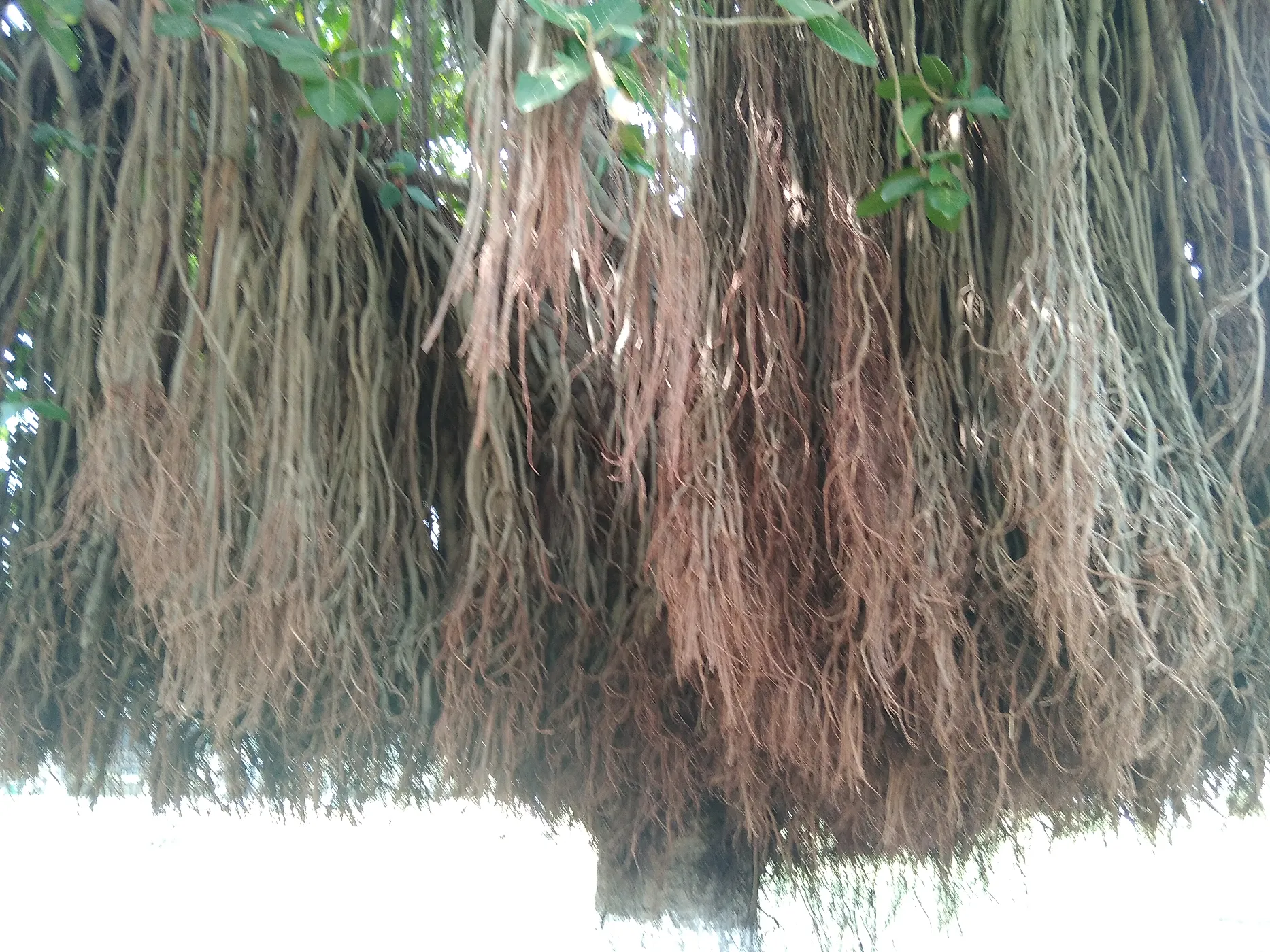
Aerial roots of a banyan tree
Numerous aerial roots hang from the branches of a banyan tree (genus Ficus), reach the ground, and gradually turn into additional supports. Thanks to them, the tree can support a massive crown and expand sideways.
Note: In some trees, for example in sequoia or banyan, adventitious roots form aerial supports, while in mangroves they form “stilt” roots that lift the trunk above water. These are extreme cases, but they clearly demonstrate the plasticity of the root system.


LCD 4-in-1 Soil Tester
Check essential growing conditions with one compact tool. Measure soil pH, moisture, temperature and light intensity — ideal for gardens, potted plants and greenhouses.
- 4-in-1 measurement
- Easy-to-read LCD display
- Portable design
Affiliate link · For indicative measurements only.
3. Root hairs: how water and nutrients are absorbed

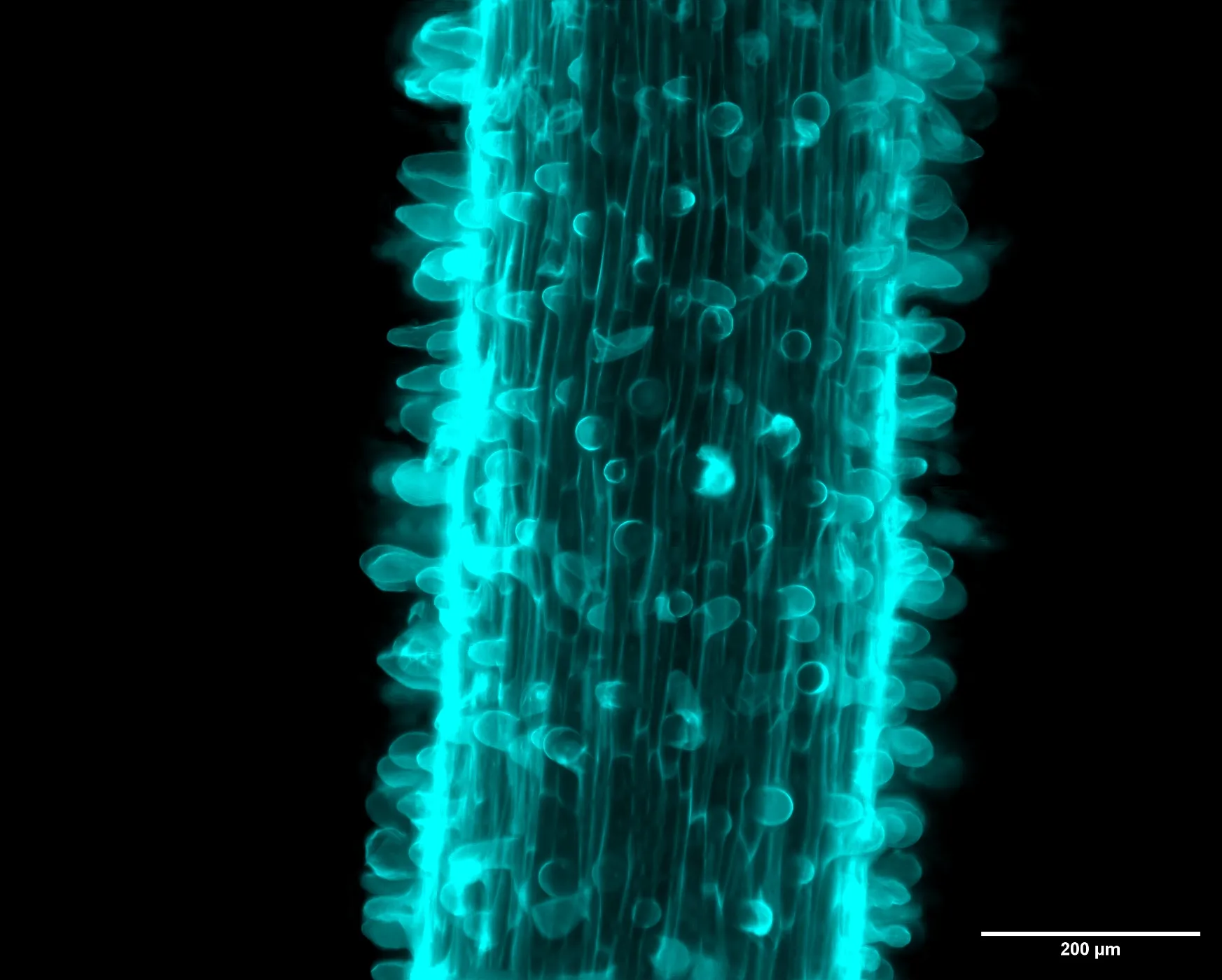
Fluorescence microscopy of a tomato root: visualization of root hairs and cell walls
Confocal laser scanning microscopy of a developing tomato root stained with the fluorescent dye Calcofluor White, which binds to cellulose of cell walls. The image allows detailed study of root architecture, density and length of root hairs, and the structure of epidermal cells. Such imaging methods are critically important for modern plant physiology and breeding, enabling phenotyping of root systems, assessment of plant response to water or nutrient deficiency, and selection of varieties with optimal root architecture.
If the root is a pump, then root hairs are its microchannels. These microscopic outgrowths of epidermal cells, only 0.1–1 mm long and about 0.04 mm in diameter, play an enormous role: it is through them that the plant absorbs the main part of water and mineral substances (Tretyakov et al., 2000).
Root hairs form in the absorption zone—a narrow band located slightly above the growing root tip. Here epidermal cells elongate outward, penetrating between soil particles. One square millimeter of root can bear from 230 to 400 hairs, and on the roots of a one-year-old apple seedling there are up to 17 million of them, with a total length of about 3 kilometers (Potapov, 2000). Such a surface allows the plant literally to “embrace” soil particles, extracting dissolved elements from water films.
How does absorption occur?
Water enters the root passively, according to the laws of osmosis. In the soil solution, the salt concentration is lower than in root cells, so water tends to move inward. This process does not require the plant’s energy and is called passive transport (Chalker-Scott, 2015). However, the movement of water through membranes is regulated by special proteins—aquaporins—which can open and close depending on the plant’s needs (Taiz et al., 2023).
Mineral substances are absorbed differently. Potassium, calcium, phosphates, and other elements are present in the soil at low concentrations, often lower than inside the cell. To extract them, the plant uses active transport: special pump proteins (H⁺-ATPases) spend ATP energy to “pump” hydrogen ions outward and create an electrochemical gradient. Along this gradient, nutrient ions are drawn inward (Tretyakov et al., 2000; Marschner, 2012).
This explains why root respiration is so important. Active transport is impossible without oxygen: ATP is formed precisely during respiration. If the soil is waterlogged or compacted, oxygen does not reach the roots, the pumps stop, and the plant starves even in rich soil (Eash et al., 2016).
Note: There are three pathways by which water and ions reach the root:
1. Mass flow—together with water moving toward the root during transpiration.
2. Diffusion—along a concentration gradient (the main pathway for phosphorus and potassium).
3. Root interception—direct contact of the growing root with nutrients (Zona, 2023).
Root hairs do not live long—from several days to several weeks. As the root grows, the absorption zone shifts, old hairs die, and new ones form closer to the tip. That is precisely why roots must grow constantly: only in this way does the plant explore new volumes of soil and provide itself with water and nutrients (Westwood, 1993).
What does this mean for the gardener?
1. Watering should be deep and infrequent. Light daily watering moistens only the surface layer, where root hairs quickly dry out. Deep watering stimulates root growth downward.
2. Mulch is critically important. It preserves moisture in the absorption zone and protects delicate hairs from overheating and drying out.
3. Soil compaction is the main enemy. In compacted soil, root hairs cannot penetrate between particles, and without oxygen active transport stops.
4. Do not overfertilize. Excess salts in the soil solution change the osmotic gradient, and water begins to leave the root outward, causing “physiological drought” even in moist soil (Medvedev, 2012).
4. The root zone: where it is located
When a gardener thinks about roots, they often imagine something located directly under the trunk of a tree or under a shrub. This is a common misconception that leads to mistakes in watering, fertilizing, and soil cultivation. The root zone is not a point under the plant but an extensive space, often extending far beyond the projection of the crown.
How far do roots extend?

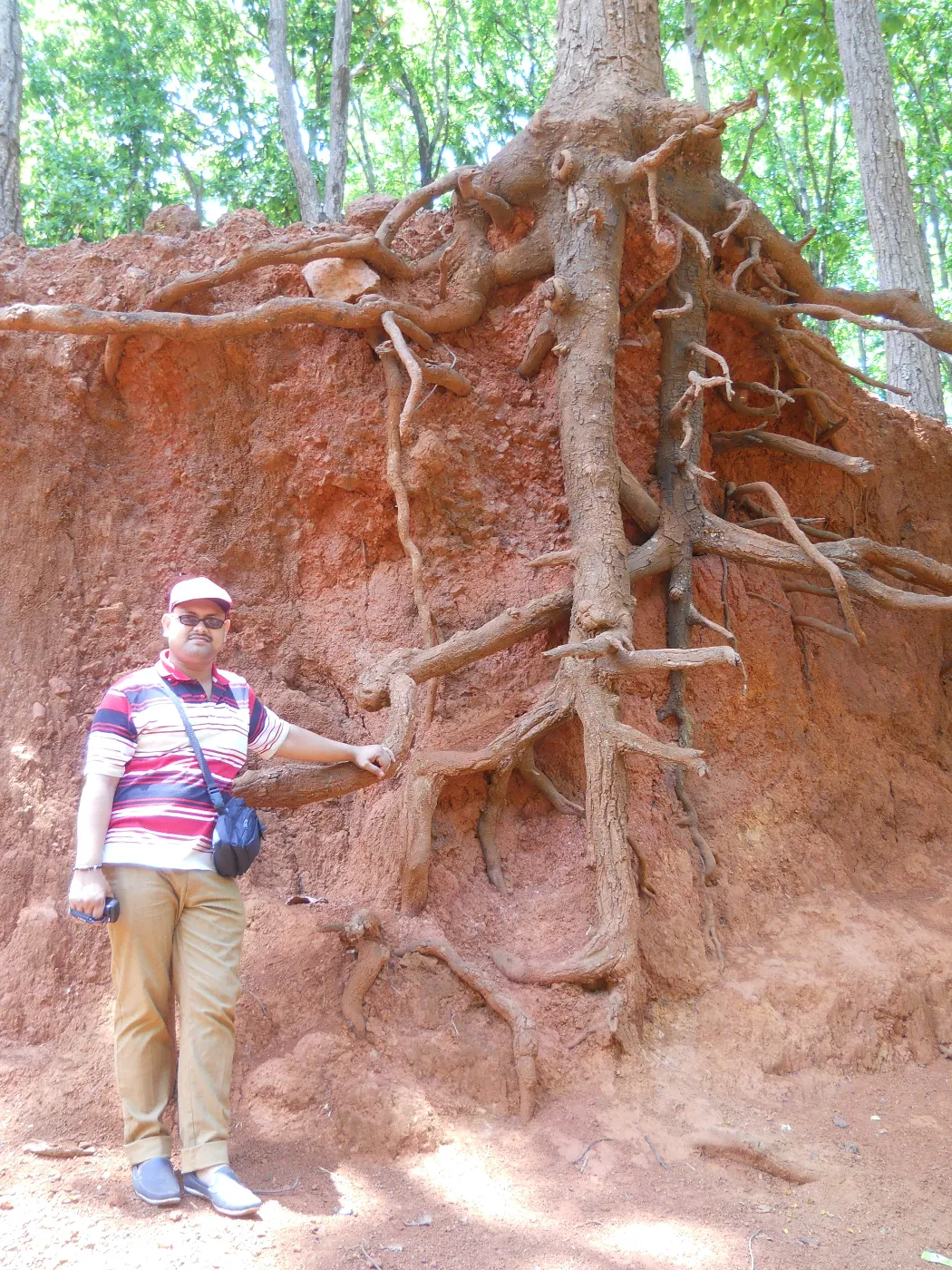
Tree root system below the soil surface
The photograph shows the underground part of a tree with a branched root system. It illustrates the scale of root distribution and the need for a sufficient volume of soil for normal growth and resource uptake.
Studies show that in woody plants the root system can occupy an area two to three times larger than the crown diameter (Chalker-Scott, 2015). In other words, if the crown of an apple tree has a diameter of 4 meters, its roots can extend sideways for 8–12 meters. This means that the roots of neighboring plants in a garden almost always intertwine, competing for water and nutrients.
Most of the absorbing roots—the very ones that bear root hairs—are located in the upper soil layer, at a depth of 10 to 40 cm. This is where there is enough oxygen, moisture, and nutrients. Deeper roots perform mainly a support and transport function, and also obtain water during dry periods (Westwood, 1993).
Depth depends on climate and soil
In different regions of the world, roots behave differently. In northern latitudes, where the soil warms slowly and is often underlain by a dense layer, the bulk of roots is located near the surface—at a depth of 30–50 cm. In temperate zones, roots extend to 50–75 cm, and in southern, arid regions—to 100–120 cm and more (Potapov, 2000). Some plants, for example alfalfa or desert shrubs, are capable of penetrating to a depth of 5–15 meters in search of water (Taiz et al., 2023).
However, even within the same species, root depth can vary greatly depending on soil type. On heavy clay soils, where there is little oxygen, roots tend upward. On light sandy soils, which are well aerated but poor in moisture, they go deeper (Eash et al., 2016).
Practical takeaways for the gardener:
1. Water and fertilize within the crown projection and beyond it. Applying water and nutrients directly at the trunk is ineffective: mainly conducting, not absorbing, roots are located there. It is better to distribute irrigation over the entire area of the root zone, which extends beyond the crown boundaries.
2. Do not dig over the soil within the crown projection. Deep digging damages absorbing roots and destroys their connections with soil fungi. For loosening, use a fork or flat cutter, working to a depth of no more than 5–7 cm.
3. Mulch the entire root zone. A layer of organic mulch (compost, wood chips, straw) 5–10 cm thick protects surface roots from overheating, drying out, and compaction. This is especially important in regions with hot summers.
4. Take the size of the mature plant into account when planting. When planting a tree or shrub, plan space for its root system in advance. Crowded plantings lead to competition for water and nutrients, which weakens all plants.
Note: In some plants, the root system extends far beyond what can be assumed from crown size. For example, in pumpkin or squash, vines can occupy several square meters, and the roots follow them. In maize, adventitious roots extend from aboveground nodes, forming additional “anchors” within a radius of 30–50 cm from the stem.

Solar Automatic Drip Irrigation Kit for Gardens
Automate watering for pots, gardens and small greenhouses. This solar-powered system features a timer to help schedule water delivery to your plants.
- Solar-powered
- 15 m irrigation hose
- Programmable watering
Affiliate link · Check included accessories.
5. The rhizosphere: life around roots
In 1904, the German phytopathologist Lorenz Hiltner introduced the term rhizosphere—from the Greek words “root” and “sphere.” He used it to designate the thin layer of soil directly surrounding roots and under their active influence (Marschner, 2012). Today we know that rhizosphere is not simply “soil next to a root” but a unique ecosystem where remarkable things happen.
What makes the rhizosphere special?
Roots release enormous amounts of organic substances into the soil. This process is called rhizodeposition. According to scientists’ estimates, a plant can direct from 20 to 40% of all carbon produced during photosynthesis into the rhizosphere (Weil, 2017). These are sugars, amino acids, organic acids, vitamins, enzymes, and mucilage that coats the root tip.
Why does the plant spend valuable resources on this? The answer is simple: it “feeds” beneficial microorganisms so that they, in turn, help it. In the rhizosphere, the number of bacteria is hundreds and thousands of times higher than in the surrounding soil (Tretyakov et al., 2000). Fungi, protozoa, nematodes, and other soil inhabitants also concentrate here.
Root exudates perform several functions:
1. Feeding microbes. Sugars and amino acids serve as an energy source for bacteria and fungi, which decompose organic matter and make nutrients available to the plant.
2. Protection against pathogens. Some exudates suppress the growth of pathogenic fungi and bacteria. For example, roots release phenolic compounds that can neutralize toxins or block infection (Morgan, 2021).
3. Changing soil chemistry. Roots release organic acids (for example, citric or malic), which dissolve poorly soluble phosphates and make them available. They can also change the pH of the rhizosphere, acidifying or alkalizing it depending on the plant’s needs (Marschner, 2012).
4. Signaling molecules. Root exudates serve as a “language of communication” between plants and microbes. They attract beneficial bacteria and fungi and sometimes warn neighboring plants about pest attack.
The rhizosphere is a “hot spot” of soil life
One gram of rhizosphere soil can contain billions of bacteria, tens of thousands of fungal hyphae, and thousands of protozoa. This density of life creates unique conditions: decomposition processes proceed faster here, nutrient cycling is more active, and competition is higher. It is in the rhizosphere that most transformations of nitrogen, phosphorus, and other elements occur, which are then absorbed by the plant (Eash et al., 2016).
However, this intense life has a downside. Pathogenic microorganisms also rush into the rhizosphere, attracted by root exudates. Therefore, the health of the root system largely depends on how balanced the microbial community is. If beneficial microorganisms dominate, they displace pathogens and protect the plant. If the balance is disturbed, diseases gain the upper hand (Weil, 2017).
Practical takeaways:
1. Do not sterilize the soil. Fungicides and fumigants kill not only pathogens but also beneficial inhabitants of the rhizosphere, leaving the plant without protection.
2. Maintain organic matter. Compost, mulch, and green manures are “food” for rhizosphere microbes. The richer and more diverse the organic matter, the more diverse and stable the microbial community.
3. Avoid excess mineral fertilizers. High doses of readily soluble salts suppress microbial life and can “burn” root hairs. It is better to use slow-acting organic nutrient sources.
4. Do not disturb soil structure unnecessarily. Digging destroys the network of fungal hyphae and channels created by roots and soil animals. This strikes the entire rhizosphere ecosystem.
Note: In the rhizosphere of some plants (for example, legumes), special zones form—nodules—where nitrogen-fixing bacteria live. These bacteria convert atmospheric nitrogen into a form available to the plant. Such a partnership is an example of symbiosis, which we will discuss in the next part.
6. Symbiosis with fungi and bacteria
Plant roots are not isolated organs but centers of complex partnerships. Evolution has taken care that plants do not remain alone with the soil: millions of years ago they formed an alliance with microorganisms, which today is called symbiosis—mutually beneficial coexistence.
Mycorrhiza: the “fungus-root”
The most widespread and perhaps most important symbiosis is mycorrhiza (from the Greek mykes—fungus and rhiza—root). Almost all higher plants—from grasses to trees—form mycorrhiza with soil fungi. According to scientists’ estimates, about 90% of terrestrial plant species enter into such relationships (Lowenfels, 2010; Taiz et al., 2023).
The essence of the symbiosis is simple: the fungus receives sugars and vitamins from the plant, which it cannot produce itself. In return, it multiplies the absorbing surface of the root system many times over. Fungal hyphae—the finest threads, thinner than a root hair—penetrate the smallest soil pores where roots physically cannot reach. They obtain water, phosphorus, nitrogen, zinc, and other elements, passing them to the plant (Chalker-Scott, 2015).
Two main types of mycorrhiza are distinguished:

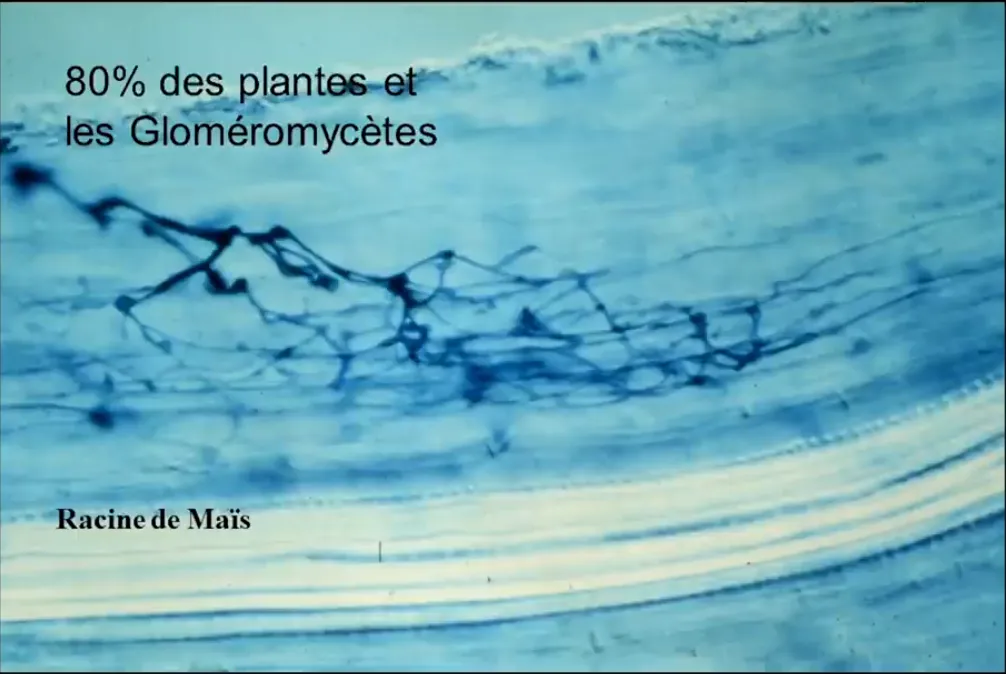
Arbuscular mycorrhiza in a maize root
The mycorrhizal fungus penetrates root cells and forms branched structures — arbuscules. Through them, exchange of mineral substances and organic compounds occurs between the plant and the fungus.
1. Ectomycorrhiza. Fungal hyphae wrap the root from the outside, forming a dense sheath, and only slightly penetrate between cortex cells. This type is characteristic of most forest trees: oak, beech, pine, spruce, birch. It is ectomycorrhizal fungi that we see in the forest as birch bolete, orange-cap bolete, porcini, and chanterelles (Weil, 2017).
2. Endomycorrhiza (arbuscular). Fungal hyphae penetrate inside cortex cells, forming special branching structures there—arbuscules (from the Latin arbusculum—small tree). Here the exchange of nutrients between plant and fungus occurs. This type of mycorrhiza is found in most vegetable, fruit, and berry crops, as well as in many grasses (Lowenfels, 2010; Tretyakov et al., 2000).
What does this give the plant?
- Improved nutrition. Mycorrhiza is especially important for absorbing phosphorus, which is poorly mobile in soil. Fungal hyphae obtain it from sources inaccessible to roots (Marschner, 2012).
- Increased drought resistance. The fungal network retains water and helps the plant survive dry periods.
- Protection against pathogens. The symbiotic fungus occupies an ecological niche, displacing pathogenic microorganisms, and releases antibiotic substances.
- Improved soil structure. Hyphae glue soil particles into aggregates, creating porosity and improving aeration (Weil, 2017).
Nitrogen-fixing bacteria: free nitrogen from the air

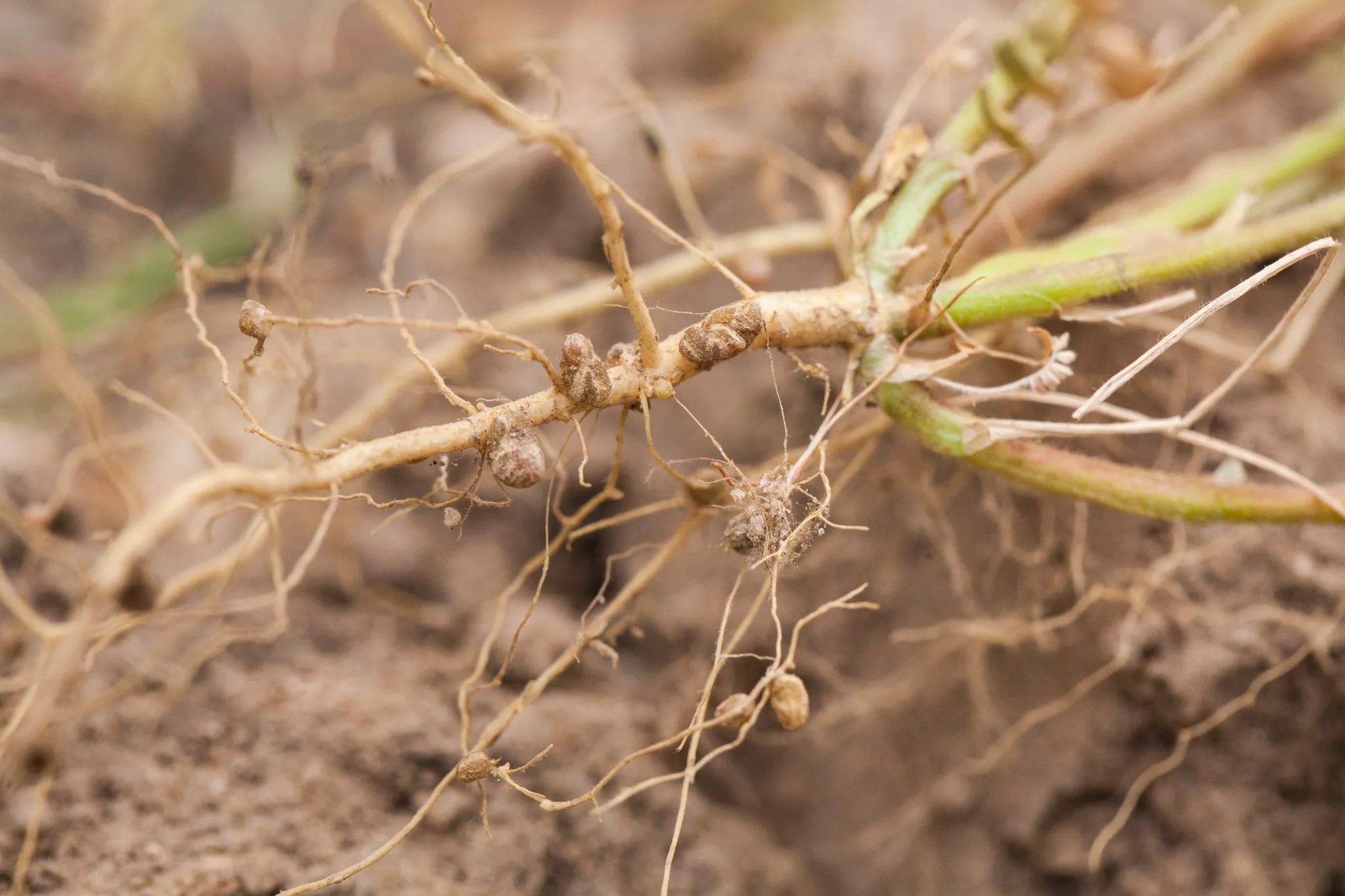
Nitrogen-fixing nodules on legume roots
Nitrogen-fixing nodules on the roots of a legume plant. Legumes are inoculated with bacteria of the genus Rhizobium, which stimulate nodule formation. The fixed atmospheric nitrogen is subsequently used by cereal grasses, making the whole system self-sufficient in nitrogen.
The second most important symbiosis is the partnership of plants with nitrogen-fixing bacteria. Nitrogen is an indispensable element for the synthesis of proteins and nucleic acids, but plants cannot assimilate atmospheric nitrogen (N2). Only some bacteria can do this.
The best known of them are bacteria of the genus Rhizobium. They form nodules on the roots of leguminous crops: pea, bean, clover, alfalfa, soybean, lupine. Inside the nodule, bacteria convert atmospheric nitrogen into ammonium (NH4+), which the plant uses for growth. The plant, in turn, supplies the bacteria with carbohydrates and creates a protected environment for them (Tretyakov et al., 2000; Weil, 2017).
Other plants, for example alder, sea buckthorn, and Russian olive, enter into symbiosis with actinomycetes of the genus Frankia. They also form nodules and fix nitrogen, enriching the soil with this element.
Practical takeaways:
1. Do not kill fungi in the soil. Fungicides applied to the soil destroy mycorrhiza, leaving plants without a “second root system.” Use them only when absolutely necessary and locally.
2. Avoid deep digging. Plowing and digging destroy fungal networks. If mycorrhiza has already formed, its recovery takes months and years.
3. Sow green manures. Leguminous green manures (clover, vetch, lupine) not only loosen the soil but also enrich it with nitrogen through symbiosis with Rhizobium. After they are incorporated, nitrogen becomes available to the following crops.
4. Maintain organic matter. Compost and mulch are a source of nutrition for fungi and bacteria. The more diverse the organic matter, the richer and more stable the microbial community.
5. Do not overuse phosphorus fertilizers. High doses of phosphates suppress mycorrhiza development: it becomes unprofitable for the plant to “feed” the fungus if phosphorus is already available (Chalker-Scott, 2015).
Note: Mycorrhizal fungi can link the roots of different plants into a single network—the so-called “wood wide web” (forest web). Through it, plants exchange nutrients and even danger signals. This discovery changed our ideas about “competition” in nature, showing that partnership and mutual assistance play no lesser role (Lowenfels, 2010).

7-in-1 Wi-Fi Weather Station
Monitor local weather conditions with a wireless outdoor sensor. Track temperature, humidity, rainfall, wind speed and direction, and atmospheric pressure. Ideal for gardens, farms and greenhouses.
- Wireless outdoor sensor
- Solar-powered
- Wi-Fi connectivity
Affiliate link · Check regional compatibility.
7. How roots breathe
We are accustomed to thinking that respiration is the domain of leaves. But roots breathe no less, and sometimes more actively. Root respiration is the process by which roots absorb oxygen and release carbon dioxide, extracting energy from organic substances. Without oxygen, roots cannot work: active ion transport stops, protein synthesis is disrupted, and root hairs die.
How does oxygen enter roots?
Oxygen does not dissolve in water and cannot “seep” through membranes as easily as carbon dioxide. It enters roots in two ways:
1. From soil air. Soil always has pores—spaces between particles. If the soil is loose and well aerated, oxygen from the atmosphere penetrates these pores and dissolves in the thin film of water surrounding the root. Then it diffuses into root cells (Eash et al., 2016).
2. Through air channels inside the plant (aerenchyma). In some plants growing in marshes or in water (rice, reed, mangroves), special air-conducting tissues—aerenchyma—form. Through them, oxygen from aboveground parts is transported to the roots. This allows plants to survive in flooded soils where there is almost no oxygen (Marschner, 2012).
What happens when oxygen is insufficient?
If the soil is waterlogged or compacted, pores fill with water, and oxygen cannot penetrate to the roots. Hypoxia (oxygen deficiency) sets in, followed by anoxia (its complete absence). Under such conditions:
- Root hairs die first—they are the most sensitive.
- Active ion transport stops, and the plant starves even if nutrients are present in the soil.
- Toxic products of anaerobic respiration accumulate in cells: alcohols and organic acids (for example, lactic acid).
- Pathogenic microorganisms develop, causing root rots (Tretyakov et al., 2000; Chalker-Scott, 2015).
How much oxygen do roots need?
Oxygen demand varies greatly among different crops. It has been established that for normal growth of active apple roots, the oxygen concentration in soil air must be at least 12%. When it decreases to 3–5%, conducting roots stop growing, and with a further drop they die (Potapov, 2000). Absorbing roots consume 1.7 times more oxygen than conducting roots—that is precisely why they are so sensitive to waterlogging.
How to provide roots with oxygen?
1. Loosen the soil, but not deeply. Light surface loosening (to 5–7 cm) improves aeration without damaging roots. Deep digging disrupts pore structure and can cause harm.
2. Mulch. Organic mulch maintains the porosity of the upper layer, prevents crust formation after rain, and preserves oxygen in the soil.
3. Ensure drainage. If the area is prone to waterlogging, install drainage ditches or raised beds. This is critically important for fruit trees and shrubs.
4. Do not overwater. After heavy rain or watering, let the soil “breathe.” Constantly wet soil is the main enemy of roots.
5. Avoid compaction. Do not walk on beds and tree-trunk circles unnecessarily. Compacted soil loses pores and stops letting air through.
Note: In some plants, for example maize and tomato, adventitious roots with aerenchyma form under waterlogging—they grow upward toward the soil surface, where there is more oxygen. This is an adaptation that allows survival in unfavorable conditions.
8. What kills roots: overwatering, compaction, cold, heat, salts

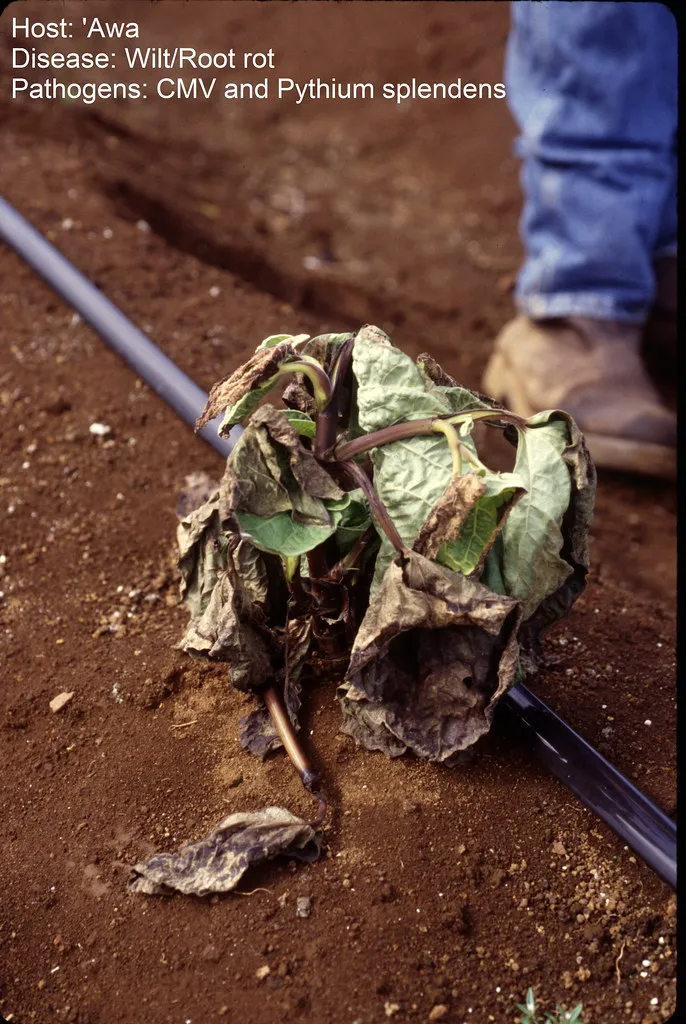
Wilting of a plant due to damage to the root system.
A young kava plant (Piper methysticum) shows characteristic symptoms of wilting caused by root rot provoked by the oomycete Pythium splendens. The photograph clearly shows how root damage manifests in the aboveground part of the plant. The affected roots themselves are not shown in the image.
Roots are a powerful but vulnerable organ. They cannot “run away” from unfavorable conditions like animals. If something goes wrong in the soil, roots suffer first, and the whole plant follows. Let us consider the main enemies of the root system.
Overwatering and waterlogging
This is perhaps the most common cause of plant death among beginning gardeners. With excess water, all soil pores fill with moisture, and oxygen stops reaching the roots. Hypoxia sets in, followed by anoxia—complete oxygen starvation (Eash et al., 2016).
What happens next? Root hairs die first. Active ion transport stops—the plant cannot absorb nutrients even if they are present in the soil. Toxic products of anaerobic respiration accumulate in cells: alcohols and lactic acid. Pathogenic microorganisms develop, causing root rots—Pythium, Phytophthora, Rhizoctonia (Tretyakov et al., 2000).
External symptoms of overwatering are easy to confuse with lack of water: leaves wilt, turn yellow, and fall. But if the soil is wet and the plant wilts, this is a sure sign that the roots are suffocating and cannot absorb water.
Practical tip: Water only when the upper soil layer (5–10 cm) has dried. To check, insert a finger or wooden stick into the soil. If it feels moist, watering is not needed. Ensure drainage on heavy clay soils: raised beds, drainage ditches, and the addition of compost and sand.
Soil compaction
Compacted soil is soil deprived of pores. Particles are compressed so tightly that oxygen does not penetrate deep, and water is not absorbed. Roots cannot grow: they are physically unable to push apart compressed particles (Chalker-Scott, 2018).
Compaction arises from walking on beds, machinery traffic, raindrops on bare soil, and also from natural settling of heavy clay horizons. Plants especially suffer on a “plow pan”—a compacted layer formed by many years of plowing at the same depth.
Signs of compaction: water stands on the surface after rain, roots grow horizontally near the surface, and plants develop poorly even with sufficient watering and fertilization.
Practical tip: Do not walk on beds and tree-trunk circles unnecessarily. Lay permanent paths. Loosen the soil with a fork or flat cutter to a depth of 5–7 cm without turning over the layer. Add organic matter—it loosens the soil and creates pores. Sow green manures with deep roots (alfalfa, oilseed radish, phacelia) to break up dense layers.
Cold
The roots of most cultivated plants are heat-loving. At soil temperatures below 5–6 °C, the absorption of phosphorus and potassium practically stops, and at 0 °C and below, active roots die (Tretyakov et al., 2000; Potapov, 2000).
Cold soils in spring are especially dangerous. The plant has already awakened, leaves have unfurled, but the roots are not yet working. Physiological drought sets in: the aboveground part requires water, but the roots cannot supply it. The result is stunting, chlorosis, and death of young seedlings.
Practical tip: Do not rush with early sowings and plantings until the soil warms to the optimal temperature for the specific crop. Mulch made of dark compost or black film helps warm the soil in spring. On heavy cold soils, use raised beds—they warm faster.
Heat
At soil temperatures above 30–35 °C, roots overheat, their growth slows, and absorption activity falls. The surface root system especially suffers, as it ends up in the hottest layer (Potapov, 2000).
Overheating destroys proteins, disrupts cell division, and damages root hairs. The plant wilts even with sufficient watering because the roots cannot cope with the load.
Practical tip: Mulch the soil with light-colored material (straw, cut grass) to reflect sunlight and lower the temperature. Water in the morning or evening so that the water has time to soak in rather than evaporate. In hot regions, use shade nets or plant so that the roots are shaded by neighboring crops.
Salts and excess fertilizers
High doses of mineral fertilizers create a salt concentration in the soil solution higher than in root cells. Osmotic shock occurs: water begins to leave the root outward, causing “physiological drought” (Medvedev, 2012).
Externally this looks like a burn: leaf edges turn brown, dry out, and plants are stunted. Roots may also be damaged—tips die and root hairs are destroyed.
Not only mineral fertilizers are dangerous, but also salinization of soil in arid regions with insufficient leaching. Salts accumulate in the upper layer, suppressing roots.
Practical tip: Apply fertilizers according to norms, guided by crop needs and soil test results. Organic fertilizers (compost, manure) are less dangerous because they release nutrients gradually. At the first signs of salinization—abundant watering to leach salts deeper, if drainage exists. In arid zones, use drip irrigation, which locally moistens the root zone and does not promote salt accumulation throughout the profile.
Note: Some plants are more salt-tolerant than others. Beet, pumpkin, eggplant, and celery tolerate salinization up to 1%. Cucumber, carrot, onion, and radish are very sensitive and suffer already at 0.1–0.4% (Tretyakov et al., 2000).

40W Full Spectrum LED Grow Light
Support healthy plant growth with full-spectrum LED lighting. Ideal for seedlings, indoor plants and small growing spaces. A practical solution for indoor gardening and year-round cultivation.
- Full-spectrum LED
- Energy-efficient design
- Indoor plant growing
Affiliate link · Check actual power and light coverage.
9. How to stimulate roots: loosening, mulch, compost, green manures
Healthy roots are not an accident but the result of purposeful actions. Here are the four main tools a gardener has for stimulating the root system.
Loosening
Loosening is not digging. Deep plowing destroys soil structure, destroys fungal networks, and injures roots. Proper loosening is surface-level (to 5–7 cm) and careful. Its goal is to break the soil crust, improve aeration, and preserve moisture.
It is best to loosen after rain or watering, when the soil has dried slightly. Use a fork, flat cutter, or cultivator with sharp tines. Do not turn over the layer—simply lift and break up clods. Around shrubs and trees, loosen at a distance of 20–30 cm from the trunk so as not to damage surface roots.
Practical tip: Mulch can replace loosening. If the soil is under mulch, it remains loose and porous without intervention. Loosen only those areas where there is no mulch.
Mulch

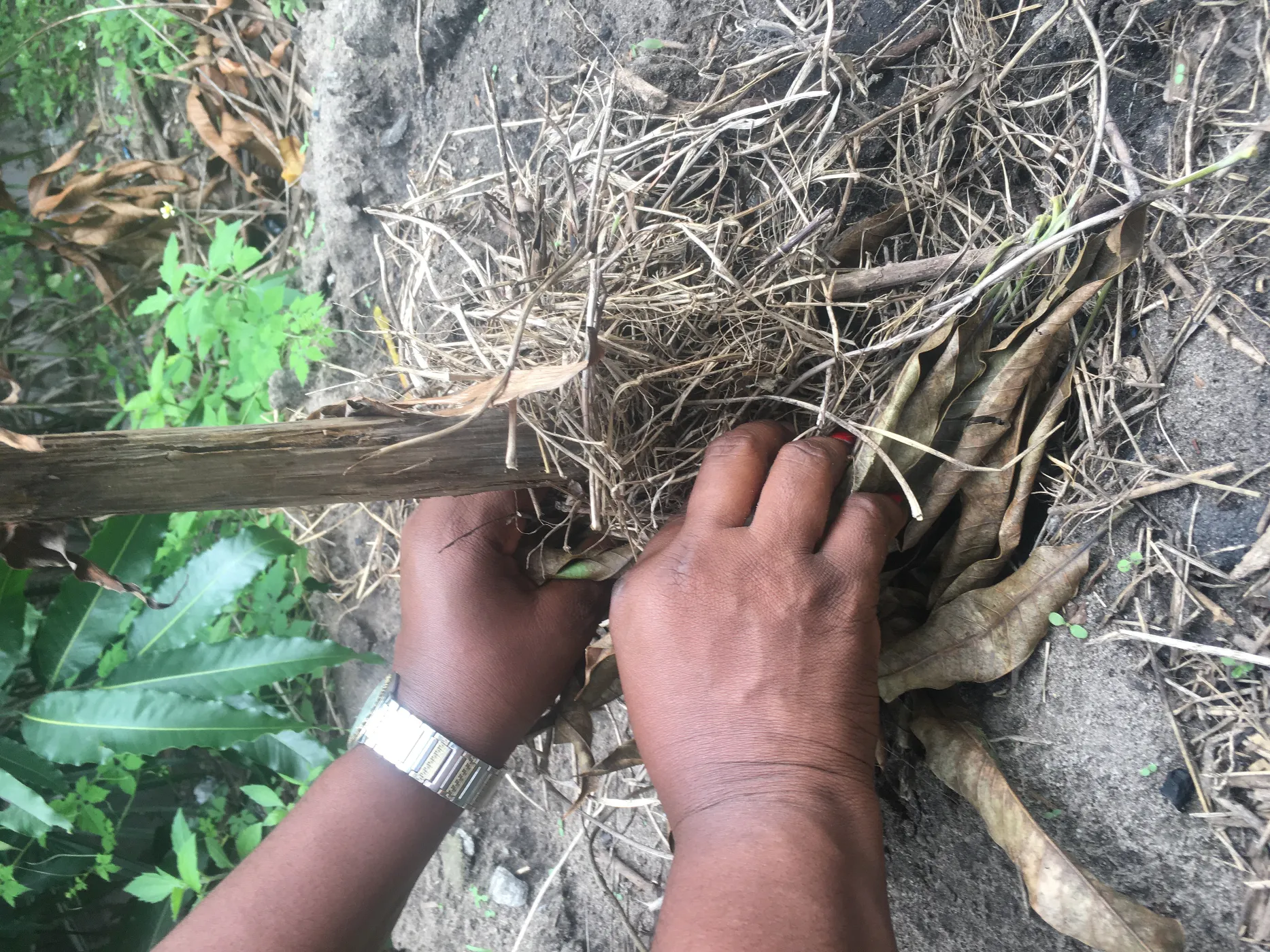
Applying organic mulch around a plant
A gardener's hands place plant material around the base of a plant, covering the soil surface. This technique helps retain moisture, reduce temperature fluctuations, and protect surface roots from drying out.
Mulch is a layer of organic material on the soil surface. It performs several functions at once:
1. Preserves moisture. Evaporation is reduced by 30–50%, especially in hot climates.
2. Regulates temperature. In summer, soil under mulch is 5–10 °C cooler; in winter, it is warmer. Roots are protected from overheating and freezing.
3. Suppresses weeds. A layer 5–10 cm thick prevents light from reaching weed seeds.
4. Feeds microbes. Gradually decomposing, mulch becomes food for earthworms, fungi, and bacteria.
5. Improves structure. Organic matter glues soil particles into aggregates, creating pores.
Suitable materials for mulching include compost, manure, straw, cut grass, wood chips, bark, and leaf litter. The layer should be 5–10 cm, no more, so as not to hinder gas exchange. Do not press mulch against trunks and stems—leave a small gap for air circulation.
Practical tip: In autumn, mulch protects roots from frost; in spring, from sharp temperature fluctuations. In summer, from overheating and drying out. Mulch after each watering or rain, when the soil is moist.
Compost
Compost is not just a fertilizer. It is a source of humus that:
- Improves soil structure: makes clay looser and sand more moisture-retentive.
- Increases cation exchange capacity: holds nutrients from leaching.
- Feeds the microbial community: billions of beneficial bacteria and fungi live in compost.
- Stimulates root growth: humic acids contained in compost directly stimulate root cell division (Weil, 2017).
Apply compost in autumn for digging or in spring as mulch. The rate is 2–5 kg per square meter. For poor soils—more, for fertile soils—less.
Practical tip: Compost can be used to prepare “compost tea”—an infusion used to water under the root. It contains living microorganisms and dissolved nutrients that are quickly absorbed.
Green manures

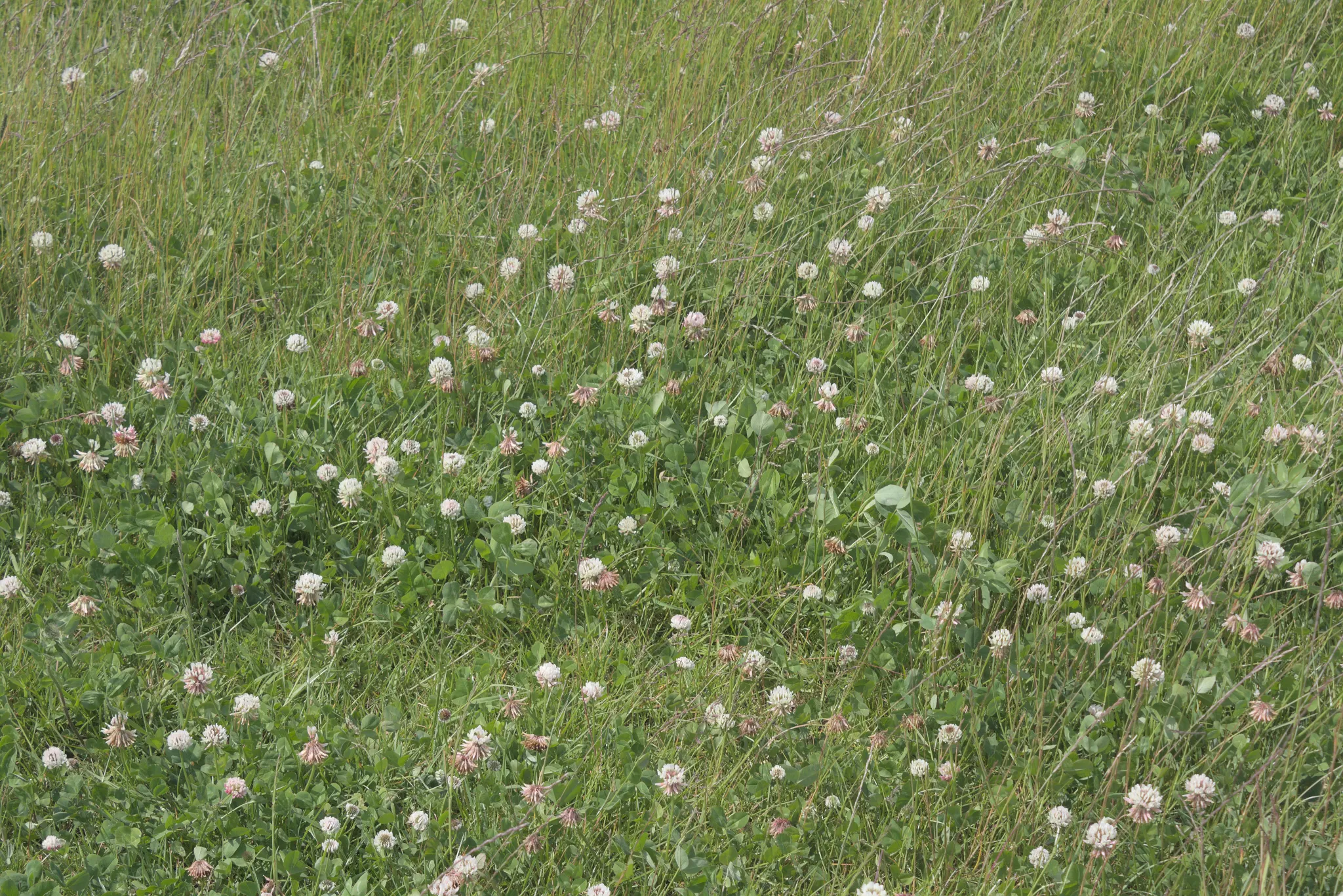
White clover as a green manure and cover crop
A field of white clover (Trifolium repens) with dense plant cover. Leguminous plants are used as green manure due to symbiosis with nitrogen-fixing bacteria, and they also help protect the soil surface and maintain its biological activity. Shooting location: Peak District National Park, United Kingdom.
Green manures are plants grown to improve the soil. They are not removed but incorporated into the soil or left on the surface as mulch. The roots of green manures do enormous work:
1. Loosen the soil. Deep roots (alfalfa, oilseed radish, sweet clover) penetrate 1–2 meters, breaking up compacted layers.
2. Enrich with nitrogen. Leguminous green manures (clover, vetch, lupine, pea) in symbiosis with Rhizobium fix atmospheric nitrogen and accumulate it in nodules.
3. Suppress weeds. Fast-growing green manures (phacelia, mustard, buckwheat) shade weeds and prevent them from developing.
4. Feed microbes. Root exudates of green manures stimulate the growth of beneficial microflora.
5. Improve structure. Dead roots leave channels through which water and air penetrate deep.
Sow green manures after harvesting the main crop or in spring before planting. Incorporate them into the soil before flowering, while the stems are soft. If left on the surface, they become mulch.
Practical tip: Combine green manures: legumes for nitrogen, cereals for structure, crucifers for loosening. For example, a mixture of vetch with oats or lupine with phacelia.
Note: Not all green manures are suitable for all crops. For example, mustard and oilseed radish are from the crucifer family, and they should not be sown before cabbage, radish, or other crucifers in order to avoid accumulating shared pests and diseases.
10. Regional aspect: how climate shapes roots
The root system is a mirror of climate. In different parts of the world, plants have developed different survival strategies, and these strategies are directly reflected in root architecture. Understanding regional characteristics helps the gardener not fight nature but use its patterns.
Arid zones: the strategy of depth

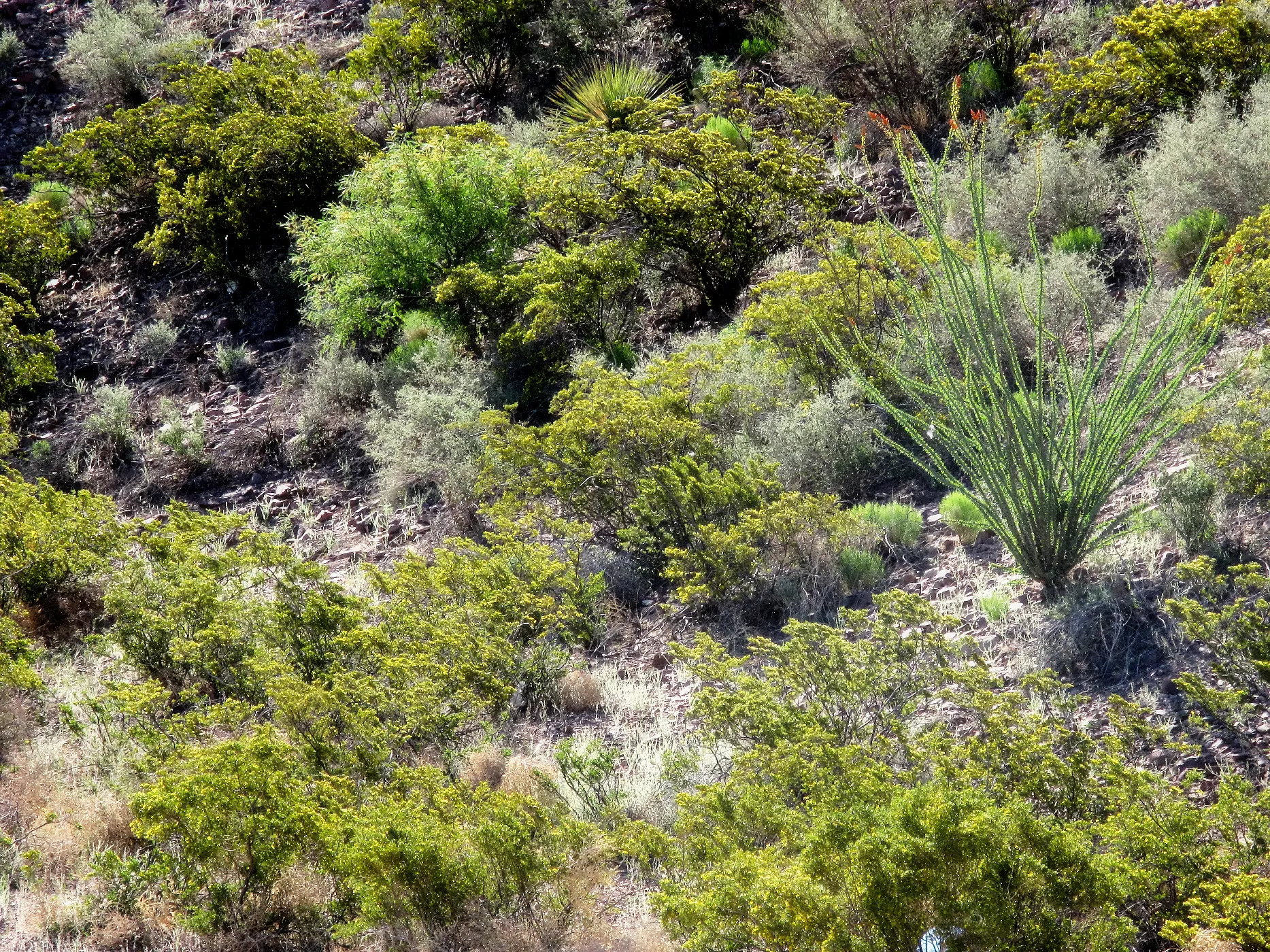
Vegetation of the Sonoran Desert after the rainy season
Cacti and drought-tolerant shrubs in the High Sonoran Desert after the rainy season. The landscape demonstrates the conditions in which plants adapt to limited and uneven moisture supply, using deep roots and a broad surface network to absorb rainwater.
In regions with hot, dry summers and scarce precipitation, plants are forced to seek water where it persists longest—in deep soil horizons. Here a taproot system forms: the main root extends vertically downward for one meter, two, and sometimes ten meters (Taiz et al., 2023). For example, alfalfa roots can reach a depth of 5 meters or more, and the roots of some desert shrubs—15–30 meters (Potapov, 2000; Westwood, 1993).
Besides depth, arid plants develop a broad surface network to intercept rare rains. As soon as moisture enters the upper layer, roots instantly absorb it. In cacti, for example, roots spread a distance several times greater than the stem diameter but lie shallow—they wait for rain (Chalker-Scott, 2015).
Practical takeaway for arid regions:
- Water infrequently but abundantly—water must penetrate deep to the main roots.
- Mulch the soil with a thick layer (10 cm or more) to reduce evaporation.
- Choose drought-resistant crops and varieties with deep root systems.
- Do not rely on surface watering—it stimulates root development in the upper layer, which dries out quickly.
Cold zones: the strategy of surface
In regions with short summers, cold soils, and close occurrence of permafrost or dense horizons, roots are forced to stay closer to the surface. Here a fibrous, surface root system forms: the bulk of roots is located in the upper 20–40 cm, where the soil has time to warm (Potapov, 2000).
This is characteristic of tundra, high mountains, and northern forest zones. Plants here cannot spend resources on deep roots—they would not have time to develop during the short summer anyway. But surface roots quickly intercept moisture from snowmelt and summer rains.
Practical takeaway for cold regions:
- Use raised beds—they warm faster and create a deeper layer of warm soil.
- Mulch the soil with dark compost in spring to accelerate warming.
- Protect roots from freezing: autumn mulch, snow retention, winter cover.
- Choose cold-resistant crops with surface root systems—they are better adapted to a short season.
Temperate zones: balance of depth and width
In regions with a temperate climate—Central Europe, most of the USA, southern Russia, China, Japan—roots develop in a balanced way: both deep and wide. The bulk of roots lies at 30–60 cm, but under favorable conditions they can extend to one meter or even two (Westwood, 1993; Eash et al., 2016).
Here it is important to consider soil type. On light sandy soils, roots go deeper because oxygen penetrates to a greater depth. On heavy clay soils, they remain closer to the surface, where there is air. On soils with a close groundwater level, roots do not go deep but spread sideways (Potapov, 2000).
Practical takeaway for temperate zones:
- Water within the crown projection and beyond it—the roots are there.
- Loosen carefully, to 5–7 cm, without damaging surface roots.
- Mulch to preserve moisture and protect from overheating.
- Consider soil type: on clay, drainage is more important than depth; on sand, moisture retention.
Tropical and humid zones: the strategy of width


Stilt roots of mangrove trees
Mangrove trees form numerous roots protruding above the water and mud surface, which provide additional stability in soft coastal soil. The photo was taken in the Sundarbans mangrove forests.
In tropical forests, where rains are frequent and soils are often poor in nutrients, roots do not strive downward. Nutrients are concentrated in the thin upper layer—where leaf litter decomposes. Therefore, roots form a broad surface network, often with aerial and stilt roots for support (Weil, 2017).
In some tropical trees, for example in ficuses, buttress roots form—wide flat outgrowths at the base of the trunk that increase the support area and collect nutrients from a large surface.
Practical takeaway for humid tropics:
- Maintain a constant layer of organic mulch—it is the main source of nutrition.
- Ensure good drainage—stagnant water is fatal to roots.
- Do not dig the soil—roots here are surface-level and easily damaged.
- Use raised beds for vegetables to avoid waterlogging.
Note: In the Mediterranean—a region with hot dry summers and wet winters—plants have developed a special strategy: in winter roots actively grow and store water, while in summer they enter a state of dormancy. Summer watering may even be harmful for some local species because it disrupts their natural rhythm (Chalker-Scott, 2015).
11. Conclusion: healthy roots mean a healthy plant
We have come a long way: from microscopic root hairs to global patterns of root distribution across climatic zones. But the main idea remains simple and unchanged: everything that happens to a plant above ground begins below ground.
Roots are not just an “anchor.” They are:
- A pump, pumping water from the soil into the leaves.
- A digestive system, extracting mineral substances from soil particles.
- Immune defense, entering into symbiosis with beneficial microbes and resisting pathogens.
- A storage depot, storing nutrients for times of stress.
- A communication network, connected with other plants through fungal hyphae.
When roots are healthy, the plant copes on its own with diseases, pests, and weather whims. When roots suffer, no amount of spraying or foliar feeding will save it.
A brief set of rules for healthy roots:
1. Water correctly. Deeply but infrequently. Let the soil dry between waterings. Overwatering is more dangerous than underwatering.
2. Do not compact the soil. Walk on paths, not on beds. Loosen carefully, to 5–7 cm.
3. Mulch. A layer of organic matter preserves moisture, regulates temperature, suppresses weeds, and feeds microbes.
4. Apply compost. It is a source of humus that improves soil structure and stimulates root growth.
5. Sow green manures. Their roots loosen the soil, enrich it with nitrogen, and feed the microbial community.
6. Do not kill fungi. Mycorrhiza is the plant’s second root system. Fungicides and deep digging destroy it.
7. Take climate into account. In arid zones, roots go deep—water abundantly. In cold zones, they stay near the surface—warm the soil and protect it from freezing.
8. Observe. If a plant wilts in moist soil, the problem is in the roots. If it turns yellow with sufficient nutrition, likewise. Aboveground symptoms are signals from below ground.
Final note: Root health is not the result of a single action but the consequence of a system. Regular mulching, careful loosening, reasonable watering, and avoidance of aggressive chemicals—these are what make the soil alive and the roots strong. And then the plant will thank you with lush foliage, abundant flowering, and a generous harvest. After all, healthy roots mean a healthy plant.
References
- Agrios, G.N. (2005). ‘How Pathogens Attack Plants’, in Plant Pathology. London, UK: ACADEMIC PRESS, pp. 177-206.
- Barney, D.L., Hummer, K.E. (2009). ‘Crop Management’, in Currants, Gooseberries, and Jostaberries. A Guide for Growers, Marketers, and Researchers in North America. Boca Raton, FL: CRC Press, pp. 131-164.
- Capon, Brian (2022). ‘Adaptations’, in Botany for Gardeners. An Introduction to the Science of Plants. Portland, Oregon: Timber Press, pp. 88-143.
- Capon, Brian (2022). ‘The Structure and Growth of Plants’, in Botany for Gardeners. An Introduction to the Science of Plants. Portland, Oregon: Timber Press, pp. 11-87.
- Carvalho, P., Foulkes, M.J. (2019). ‘Roots and Uptake of Water and Nutrients’, in Crop Science. New York, NY: Springer New York, 107-130. doi: 10.1007/978-1-4939-8621-7_195
- Chalker-Scott, Linda (2015). ‘The Underground Railroad’, in How Plants Work. Portland, London: Timber Press, pp. 38-59.
- Chalker-Scott, Linda (2018). ‘Aftercare for New Plants’, in The Science of Gardening. Course Guidebook. Chantilly, Virginia: The Great Courses, pp. 98-106.
- Chalker-Scott, Linda (2018). ‘Living Soils: Bacteria and Fungi’, in The Science of Gardening. Course Guidebook. Chantilly, Virginia: The Great Courses, pp. 37-45.
- Chalker-Scott, Linda (2018). ‘Planting for Survival’, in The Science of Gardening. Course Guidebook. Chantilly, Virginia: The Great Courses, pp. 90-97.
- Eash, N.S., Sauer, T.J., O'Dell, D., Odoi, Evah (2016). ‘Soil Biological Properties’, in Soil Science Simplified. New Jersey: Wiley Blackwell, ch. 4.
- Eash, N.S., Sauer, T.J., O'Dell, D., Odoi, Evah (2016). ‘Soil Water’, in Soil Science Simplified. New Jersey: Wiley Blackwell, ch. 6.
- Lowenfels, Jeff, Lewis, Wayne (2010). ‘How the Soil Food Web Applies to Gardening’, in Teaming with Microbes. The Organic Gardener’s Guide to the Soil Food Web. Portland, Oregon: Timber Press, .
- Martin, Orin (2019). ‘How You Grow a Tree’, in Fruit Trees for Every Garden. New York: The Speed Press, ch. 5.
- Morgan, Sally (2021). ‘Building a healthy soil’, in The Healthy Vegetable Garden: A natural, chemical-free approach to soil, biodiversity and managing pests and diseases. Vermont, London, UK: Chelsea Green Publishing, .
- Morgan, Sally (2021). ‘Pests and predators’, in The Healthy Vegetable Garden: A natural, chemical-free approach to soil, biodiversity and managing pests and diseases. Vermont, London, UK: Chelsea Green Publishing, .
- Neumann, G., Römheld, Volker (2012). ‘Rhizosphere Chemistry in Relation to Plant Nutrition’, in Marschner's Mineral Nutrition of Higher Plants. : Elsevier, 347-368. doi: 10.1016/B978-0-12-384905-2.00014-5
- Pavlis, Robert (2020). ‘A Personalized Plan for Healthy Soil’, in Soil Science for Gardeners. Working with Nature to Build Soil Health. Gabriola Island, BC, Canada: New Society Publishers, pp. 179-196.
- Pratt, M.M. (2005). ‘The Parts of a Plant – and Looking After Them’, in Practical Science for Gardeners. Portland, Oregon: Timber Press, pp. 20-42.
- Taiz, Lincoln, Møller, I.Max, Murphy, Angus, Zeiger, Eduardo (2023). ‘Mineral Nutrition’, in Plant Physiology and Development. New York, NY: Oxford University Press, pp. 189-216.
- Weil, R.R., Brady, N.C. (2017). ‘Organisms and Ecology of the Soil’, in The Nature and Properties of Soils. Essex, UK: Pearson Education, pp. 482-543.
- Westwood, M.Neil (1993). ‘General Environment’, in Temperate-zone. Pomology. Physiology and Culture. Portland, Oregon: Timber Press, pp. 29-47.
- Zona, Scott (2026). ‘Plant Parts and What They Do’, in A Gardener's Guide to Botany. Beverly, MA: Cool Springs Press, .
- Zona, Scott (2026). ‘What a Plant Needs: Nutrients’, in A Gardener's Guide to Botany. Beverly, MA: Cool Springs Press, .
- Котов, В.П., Адрицкая, Н.А. (2016). ‘Биологические основы овощеводства [Biological foundations of vegetable growing]’, in Овощеводство [Vegetable growing]. Санкт-Петербург: Лань, pp. 22-66.
- Медведев, С.С. (2012). ‘Физиология роста и развития растений [Physiology of plant growth and development]’, in Физиология растений [Physiology of plants]. Санкт-Петербург: БХВ-Петербург, pp. 329-384.
- Потапов, В.А., Фаустов, В.В., Пильщикова, Ф.Н. (2000). ‘Биологические основы плодоводства [Biological foundations of fruit growing]’, in Плодоводство [Fruit growing]. Москва: Колос, pp. 3-124.
- Траннуа, Павел (2018). ‘Обрезка садовых растений [Pruning garden plants]’, in Сад и огород в рисунках и комиксах: полная наглядная энциклопедия [The Garden and Vegetable Patch in Drawings and Comics: A Comprehensive Visual Encyclopedia]. Москва: Издательство «Э», pp. 113-116.
- Траннуа, Павел (2018). ‘Плодовые деревья [Fruit trees]’, in Сад и огород в рисунках и комиксах: полная наглядная энциклопедия [The Garden and Vegetable Patch in Drawings and Comics: A Comprehensive Visual Encyclopedia]. Москва: Издательство «Э», pp. 69-72.
- Третьяков, Н.Н. (2000). ‘Минеральное питание растений [Mineral nutrition of plants]’, in Физиология и биохимия сельскохозяйственных растений [Physiology and biochemistry of agricultural plants]. Москва: Колос, pp. 280-345.
