
Soil salinization: salt does not disappear — it must be leached out or prevented from accumulating
1. What salinization is
Salinization is the accumulation in soil, primarily in the root zone, of water-soluble salts at a concentration that prevents plants from growing and fruiting normally. This is not only table salt but a whole group of compounds: chlorides, sulfates, carbonates, and bicarbonates of sodium, calcium, magnesium, and potassium. These elements are also present in fertilizers and irrigation water, so salinization can occur even far from the sea (Foth 1990; Weil 2017).
In small amounts, many of these elements are essential for plants. The problem begins when there are too many of them in the soil solution. Then the main mechanism of water uptake changes: roots can absorb water only when water in the soil is more available than in root cells. If there are many salts in the soil, the soil solution becomes more concentrated than the cell sap, and water is either held too strongly by the soil or even moves out of the root (Capon 2022; Foth 1990). Physiological drought occurs: there is moisture in the soil, but the plant cannot take it up (Zona 2023). Externally this often looks like ordinary drying out, so salinization is often noticed too late.
It is important to distinguish two similar states. Salinization proper is an excess of soluble salts in the soil solution. Sodicity, or alkalinity, is an excess of exchangeable sodium on soil particles; in this case the soil often has a high pH, loses structure, and conducts water poorly (Weil 2017; Gershuny 1999). For gardeners, the practical difference is that the measures may differ, but the general principle is the same — salts do not disappear by themselves.
Where do they come from? Part of salinization is natural. For example, in arid regions, in coastal areas, near salt lakes, and on soils formed from salt-bearing rocks, salts were present in the ground initially (Weil 2017; Zona 2023). Another part is secondary, or anthropogenic, salinization. It is associated with irrigation without sufficient drainage, rising groundwater, excessive fertilizer application, use of saline irrigation water, and evaporation of moisture from the surface (Connor et al. 2011; Srivastava et al. 2020; Nonnecke 1989). In an arid climate, rains do not leach salts downward, so they gradually accumulate in the upper layer. In humid regions, by contrast, excess precipitation usually leaches the profile, and salinization occurs less often — but it can appear with improper irrigation, poor drainage, or shallow groundwater (Weil 2017; Westwood 1993).
The key process here is simple: water evaporates, but salts remain. If irrigation water contains even a small amount of salts, then with repeated irrigation and evaporation they gradually concentrate in the root zone. Therefore, salinization is not necessarily a “white crust” on the surface. It can be hidden: the soil looks normal, but salts have already accumulated in the root zone (Foth 1990; Connor et al. 2011).
The consequences of salinization are well known: plants grow poorly, leaves turn yellow or burn at the edges, fruits become smaller, yields decline, and in severe cases plants die. Young seedlings and species not adapted to saline habitats are especially vulnerable (Foth 1990; Westwood 1993; Srivastava et al. 2020). At the same time, salt does not break down or “burn up” in the soil. It can either be leached beyond the root zone — but only with sufficient drainage and good-quality water — or its accumulation can be prevented (Westwood 1993; Weil 2017). This is the main practical idea: salinization is easier to prevent than to correct.
Note. An example from agricultural history: in southern Australia, the mass replacement of perennial vegetation with annual crops and fallows changed the water balance, raised the groundwater level, and brought salt to the surface. This shows that salinization is a problem not only of deserts but of any irrigated or disturbed landscapes (Connor et al. 2011).
2. Where salts come from
Salts in soil do not appear out of nowhere. They are brought by water, groundwater, and fertilizers, and climate determines whether they accumulate or are leached. Unlike many other pollutants, salts do not break down or decompose — they either remain in the soil or move with water. Therefore, it is important to understand which sources are active on a particular site.
2.1. Irrigation water
Even the cleanest-looking irrigation water contains dissolved salts. Rainwater, water from wells, boreholes, rivers, and reservoirs are all solutions with different concentrations of calcium, magnesium, sodium, carbonates, and other compounds (Foth 1990). When water evaporates from the soil surface or is transpired by plants, salts remain. If you irrigate often and in small amounts, and drainage is insufficient, salts gradually concentrate in the upper layer — exactly where most roots are located (Srivastava et al. 2020; Nonnecke 1989).
This happens especially quickly in arid and semiarid regions, where there is little precipitation and natural leaching of the soil is insufficient. Under such conditions, even moderately saline water used over many years leads to secondary salinization (Weil 2017). In humid zones, rains usually leach salts downward, but when saline water is used, when furrow irrigation is used without drainage, or in greenhouses, the problem also arises (Westwood 1993; Nonnecke 1989).
It is important to remember: the amount of salts introduced with irrigation water depends not only on its quality but also on its volume. The more water passes through the soil and the less of it goes into drainage, the higher the salt concentration in the root zone.
2.2. Groundwater
If the groundwater level is close to the surface, water rises through capillaries and evaporates, leaving salts in the upper horizons. This is the classic mechanism of natural and secondary salinization (Weil 2017; Connor et al. 2011). Saline groundwater is especially dangerous: even if it does not reach the surface, capillary rise can gradually “pull” salt into the root zone.
Secondary salinization is often associated with human activity. For example, in southern Australia, the replacement of perennial vegetation with annual crops and fallows disrupted the water balance: rainwater began to infiltrate deeper into the soil, the groundwater level rose, and salt accumulated in the profile came to the surface (Connor et al. 2011). Similar processes are observed on irrigated lands around the world when irrigation exceeds the drainage capacity of the soil (Nonnecke 1989; Weil 2017).
Thus, groundwater is not only a source of moisture but also a potential source of salts. If the water in it is saline and the level is high, salinization is almost inevitable.
2.3. Fertilizers
All fertilizers are salts. Mineral nitrogen, phosphorus, and potassium fertilizers, complex mixtures, and many organic fertilizers (manure, compost, poultry litter) contain soluble salts (Foth 1990). When applied to soil, they increase the concentration of the soil solution. If there are more fertilizers than plants and microorganisms can absorb, the remaining salts accumulate.
It is especially easy to overdo it in greenhouses, containers, and small beds where there is no natural leaching by rain. Regular application of high fertilizer doses without considering plant needs leads to increased salinization, which manifests as root “burn,” stunted growth, and reduced yield (Nonnecke 1989; Lowenfels 2013). Even manure and compost, when applied excessively, can increase the salt load because they contain potassium, sodium, and other elements (Foth 1990; Gershuny 1999).
Fertigation — applying fertilizers with irrigation water — is convenient, but with overdosing or lack of leaching it also contributes to salt accumulation (Srivastava et al. 2020). Therefore, it is important not only to choose the right doses but also to monitor the overall salt balance.
2.4. Climate
Climate is the factor that determines whether salts will accumulate or be leached. In arid and semiarid zones, evaporation exceeds precipitation. Water rises to the surface, evaporates, and salts remain. Here salinization is a natural process enhanced by irrigation (Weil 2017; Connor et al. 2011). In such regions, even a small amount of salts in water or fertilizers produces a noticeable effect over time.
In humid areas, where there is a lot of precipitation, excess water leaches the soil and carries salts downward. However, this does not mean that salinization is impossible: it can occur locally — in greenhouses, on sites with poor drainage, when irrigating with saline water, or in coastal areas where sea salts enter the soil with spray and flooding (Zona 2023; Westwood 1993). In the tropics, improper irrigation during the dry season also creates conditions for salt accumulation (Nonnecke 1989).
Thus, climate sets the general background: the drier and hotter it is, the higher the risk of salinization. But even in a humid climate, improper irrigation and fertilization can lead to the same problem.
Brief summary
Salts enter with irrigation water, rise with groundwater, are applied with fertilizers, and accumulate because of climatic conditions. In each specific case, there may be one or several sources. Understanding where the salts come from is the first step toward stopping their accumulation. In the next section, we will look at how to recognize salinization by external signs.


LCD 4-in-1 Soil Tester
Check essential growing conditions with one compact tool. Measure soil pH, moisture, temperature and light intensity — ideal for gardens, potted plants and greenhouses.
- 4-in-1 measurement
- Easy-to-read LCD display
- Portable design
Affiliate link · For indicative measurements only.
3. Signs of salinization
Salinization rarely appears instantly. Usually it grows gradually, and the first signals are easy to attribute to heat, lack of irrigation, or poor soil. However, an excess of salts has characteristic signs that allow you to suspect the problem before the plants die. The earlier you notice them, the easier it will be to correct the situation.
3.1. What is visible on the soil surface

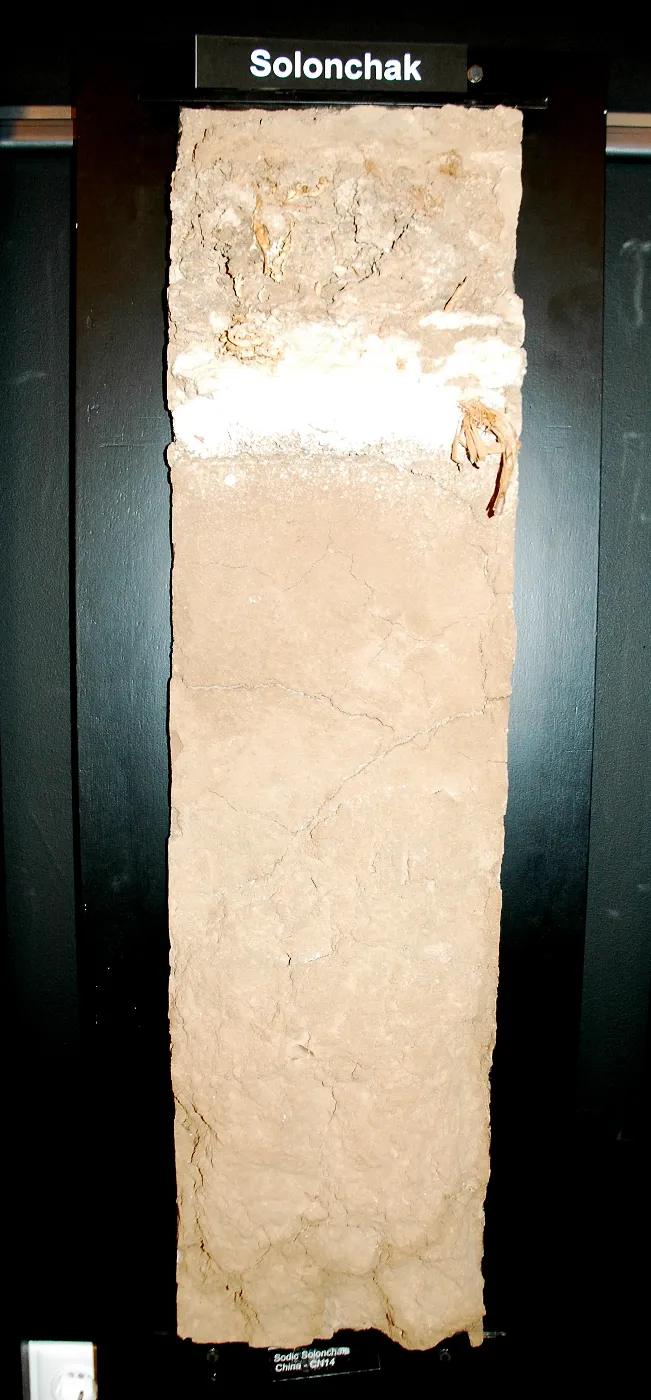
Soil profile: Sodic Solonchak
Soil profile of Sodic Solonchak type, representing a Petrosalic Solonchak. The caption indicates the location: Turpan desert, China.
The most obvious sign is a white coating or crust on the surface of the bed, in the rows, on the walls of pots, and in greenhouses. These are salts that have come out and remained after water evaporated. The coating may be continuous, patchy, or in the form of individual crystals. Sometimes it resembles mold or lime, but unlike them it is not easily washed off with water (Foth 1990; Weil 2017).
When irrigated, such soil may become covered with a dense crust that conducts water and air poorly. In severe cases, the surface becomes white, as if dusted with salt. This is especially characteristic of arid zones and irrigated areas (Weil 2017). In pots and containers, salts often appear on ceramics, plastic, and the substrate surface — this is the first signal that irrigation and fertilization need correction (Lowenfels 2013).
3.2. How plants react
The most typical symptom is stunted growth. Plants lag in development, leaves become smaller, internodes shorten, and bushes look “pressed” to the ground. Externally this resembles a lack of nutrients or water, but with salinization, irrigation and fertilizing do not help and sometimes even worsen the situation (Foth 1990; Srivastava et al. 2020).
The second characteristic sign is marginal leaf burn. The edges of leaf blades turn yellow, brown, and dry out, often along the entire perimeter. In some crops, such as tomatoes, peppers, and cucumbers, this manifests as “burn” of the tips and edges. The same symptom can occur with potassium or calcium deficiency, but with salinization it is combined with general stunting and often appears on old and young leaves simultaneously (Srivastava et al. 2020; Nonnecke 1989).

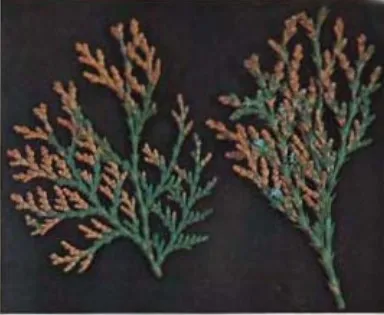
Leaf margin burn due to salt accumulation
Characteristic damage from sodium and chloride accumulation is shown: browning of the tips of branches of Oriental arborvitae (Platycladus orientalis)

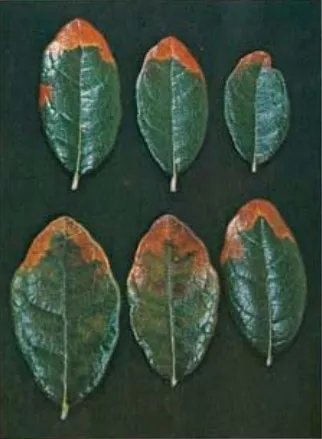
Leaf margin burn due to salt accumulation
Damage from sodium and chloride accumulation: browning of leaf tips of feijoa (pineapple guava)
The third sign is wilting during hot hours despite moist soil. This is a direct consequence of physiological drought: roots cannot absorb water because of the high salt concentration. By evening the plants may recover, but as salinization increases, wilting becomes permanent (Zona 2023; Capon 2022).
Sometimes leaves acquire a bluish-green or dull tint and then turn yellow. In some crops (for example, citrus), salinization produces specific symptoms resembling micronutrient deficiency, but they do not disappear after fertilizing (Srivastava et al. 2020). In general, the higher the salt concentration, the more diverse and severe the symptoms.
3.3. How salinization differs from other problems
It is important not to confuse salinization with ordinary drought, nutrient deficiency, or root diseases. Here are several differences:
- Irrigation does not help: if you irrigate but the plants still wilt and the soil is moist, this may be salinization.
- Fertilizers worsen the condition: if plants get worse after fertilizing and a coating appears on the soil, salts are probably already in excess.
- Symptoms appear despite good care: if you use quality soil, irrigate and fertilize regularly, but the plants are stunted, it is worth checking for salinization.
- White coating and crust: these do not occur with ordinary lack of water or nutrients.
In addition, salinization often appears in patches: in depressions, along paths, in places where water stagnates, or where you applied fertilizers especially diligently. This is because salts accumulate unevenly (Weil 2017; Nonnecke 1989).
3.4. Characteristics of different crops
Different plants tolerate salinization differently. Some (for example, beet, asparagus, barley) are more tolerant, while others (radish, lettuce, bean, clover) are very sensitive. In sensitive crops, symptoms appear earlier and more quickly lead to yield loss. Tolerant species may not show signs for a long time, but they also suffer at high salt levels (Foth 1990; Westwood 1993). Therefore, it is important to know which crops you grow and how demanding they are regarding soil quality.
Brief summary
Signs of salinization: white coating and crust on the soil, stunted growth, marginal leaf burn, wilting when the soil is moist, general yellowing, and loss of turgor. These symptoms do not disappear after irrigation and fertilizing, and sometimes intensify. If you notice at least two or three of them, it is worth checking for salinization. In the next section, we will discuss which plants suffer first and why.
4. Which plants suffer first
Salinization affects all plants, but not equally. Some crops show stunting even with slight salt accumulation, while others withstand significant concentrations. Understanding this difference helps to notice the problem in time and plan plantings correctly.
4.1. Why some plants are more sensitive than others
Salt tolerance is determined by physiology. Salts increase the osmotic pressure of the soil solution, making it harder for plants to absorb water (Capon 2022). In addition, excess sodium and chlorine can have a toxic effect on cells and disrupt the uptake of nutrients — potassium, calcium, and magnesium (Weil 2017). Plants originating from arid and coastal habitats often have protective mechanisms: they accumulate compatible osmolytes, excrete salt through leaves, or limit its entry into roots (Zona 2023; Capon 2022). Crops that evolved in a humid climate have almost no such mechanisms.
It also matters how developed the root system is. Plants with surface, weakly branched roots feel the increase in salt concentration in the upper layer more quickly. Young seedlings and transplants suffer first because their roots are still small and cannot “move away” from the saline horizon (Foth 1990; Westwood 1993).
4.2. Most sensitive crops
Signs of salinization appear first in the following groups:
- Vegetable crops: radish, turnip, lettuce, spinach (some varieties), bean, pea, carrot, onion, cucumber, pepper, tomato (especially as seedlings). These plants require moderate salt concentration in the soil solution and are quickly stunted when it rises (Nonnecke 1989; Foth 1990).
- Legumes and grasses: clover, alfalfa, vetch, pea, beans. Nitrogen-fixing bacteria on legume roots are especially sensitive to salinization, so even at moderate salt levels the plants experience nitrogen deficiency (Gershuny 1999; Weil 2017).
- Fruit and berry crops: citrus (lemon, orange, mandarin), strawberry, raspberry, blackberry, apple, pear, plum, cherry. Fruit trees generally tolerate high salt content poorly (Westwood 1993; Kurennoy 1985; Srivastava et al. 2020).
- Ornamental plants: many houseplants, container crops, conifers (thuja, spruce, pine) when irrigated with saline water or when fertilizers accumulate in a container.
In greenhouses and containers, sensitivity manifests faster because there is no natural leaching by rain. Even relatively tolerant species can suffer from many years of using hard water and high fertilizer doses (Lowenfels 2013; Nonnecke 1989).
4.3. Moderately tolerant and tolerant plants

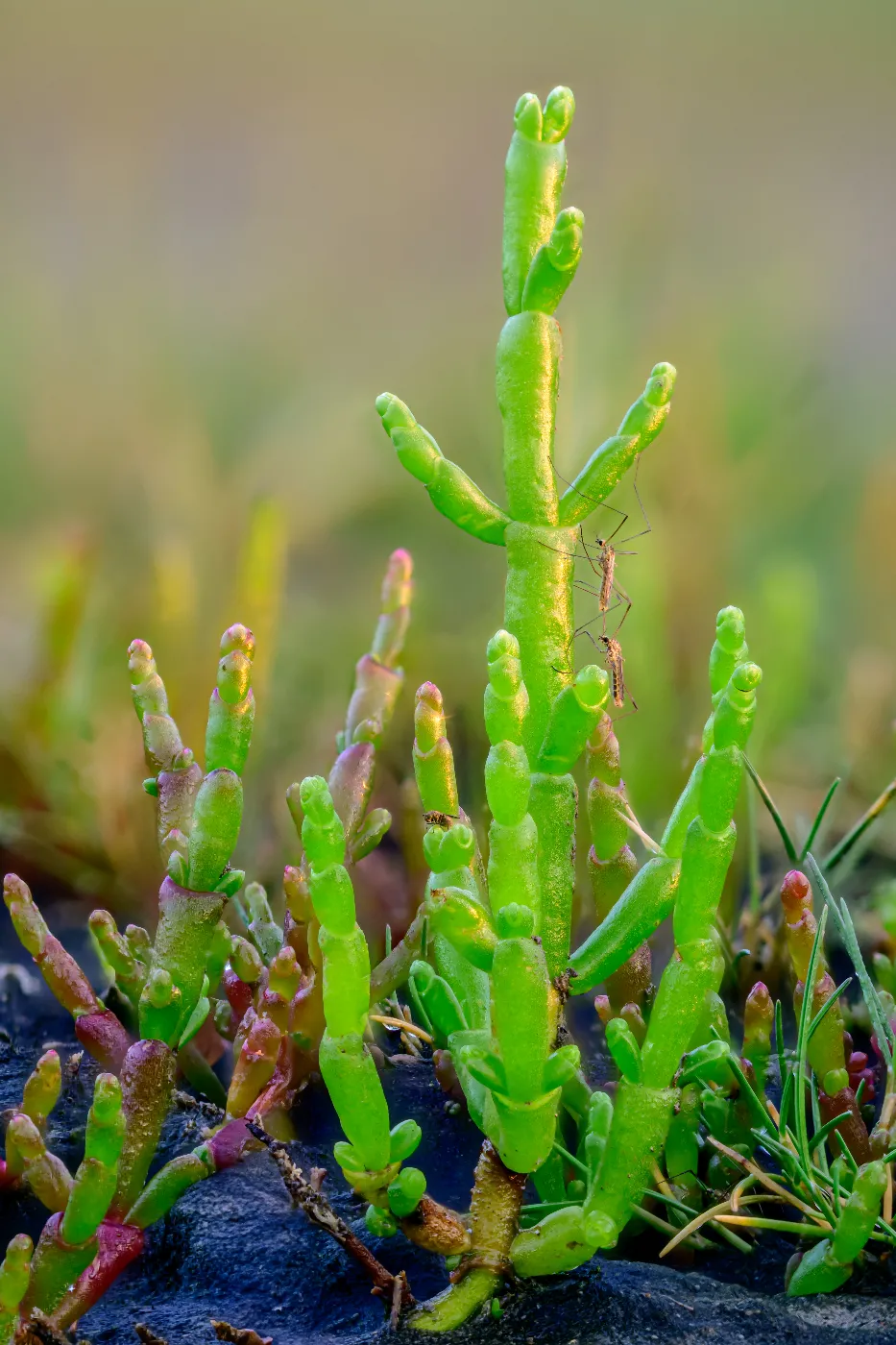
European glasswort: a halophyte plant
European glasswort (Salicornia europaea) is a halophyte adapted to existence under conditions of high salt concentration. The photograph shows a plant growing on the island of Norderney. The image was made using focus stacking of several frames to increase depth of field.
Some crops can withstand noticeable salinization. These include:
- Vegetables: beet, asparagus, spinach (certain varieties), chard, cabbage (some types), broccoli, pumpkin, squash.
- Cereals and forage crops: barley, wheat (certain varieties), sorghum, millet, cotton.
- Fruit crops: date palm, fig, pomegranate, olive (under Mediterranean conditions).
- Ornamental plants: tamarisk, oleaster, some species of Artemisia, saltworts.
These plants often originate from arid or coastal zones and have adaptations to high salt content (Weil 2017; Zona 2023). However, their tolerance is not unlimited: at very high concentrations, their yields also decline.
4.4. Why young plants are more vulnerable
Seedlings and transplants are almost always more sensitive than mature plants. They have a smaller root system, thinner covering tissues, and a higher metabolic rate. Even a short-term increase in salt concentration in the root zone can lead to death or irreversible stunting. Therefore, with salinization, young plantings are the first to die, while mature trees and shrubs may look relatively normal for several seasons (Foth 1990; Westwood 1993).
4.5. Indicator plants
A practical tip: observe the plants that react to salinization first. If radish, lettuce, bean, or clover are stunted on the site for no apparent reason, while the soil is moist and fertilizers were applied moderately, this is a reason to check for salinization. Conversely, if beet, barley, or asparagus grow well, this does not yet mean that salts are normal: they may simply mask the problem for a time (Nonnecke 1989; Weil 2017).
Note. In fruit growing, it is known that different rootstocks affect salt tolerance. For example, some clonal apple and pear rootstocks are more tolerant than seedlings. When establishing an orchard on sites with a risk of salinization, it is worth checking the rootstock characteristics (Westwood 1993; Kurennoy 1985).
Brief summary
The first to suffer are crops not adapted to high salt concentrations: most vegetables, legumes, berry crops, citrus, as well as young seedlings and transplants. Tolerant species (beet, asparagus, barley, date palm) withstand more, but they also have a limit. Observing indicator plants helps to notice salinization in time. In the next section, we will discuss how to check soil for salinization using accessible methods.

Solar Automatic Drip Irrigation Kit for Gardens
Automate watering for pots, gardens and small greenhouses. This solar-powered system features a timer to help schedule water delivery to your plants.
- Solar-powered
- 15 m irrigation hose
- Programmable watering
Affiliate link · Check included accessories.
5. How to check for salinization
Testing is needed so as not to guess but to know precisely whether there is a problem and how serious it is. There are three main methods: visual inspection, taste assessment, and instrumental measurements. Each has its limitations, but together they give a fairly complete picture. Laboratory analysis is the most accurate, but simple methods can also tell you a lot.
5.1. Visual inspection
The most accessible method is to carefully examine the soil and plants. Pay attention to:
- White coating or crust on the surface of beds, in the rows, on the walls of pots, and in greenhouses. These are salts that have come out and remained after water evaporated (Foth 1990; Weil 2017).
- Dense crust after irrigation or rain that conducts water poorly. Such a crust often forms on saline soils, especially in arid zones (Weil 2017).
- Plant stunting for no visible reason: lag in growth, small leaves, marginal burn, wilting when the soil is moist (Srivastava et al. 2020; Capon 2022).
- Patchiness of symptoms: in depressions, along paths, where water stagnates, or where fertilizers were applied especially diligently (Weil 2017; Nonnecke 1989).
However, visual inspection is not always reliable. Salts can accumulate in the root zone without reaching the surface. Therefore, if there are doubts, it is better to move on to other methods.
5.2. Taste assessment
This is an old but still used technique. Take a small soil sample from the root zone, moisten it slightly with distilled or clean rainwater, and taste it. Caution: do not take soil from beds where pesticides or fresh fertilizers may have been applied; after taking the sample, wash your hands thoroughly.
- If the taste is distinctly salty, this is a clear sign of salinization.
- If the taste is slightly salty or soapy, salts may already be accumulating.
- If the taste is neutral, there is most likely no salinization.
This method does not provide a quantitative assessment and does not distinguish salt types. But it is useful as a quick guide, especially in field conditions (Foth 1990; Weil 2017). Do not rely on it as the only method.
5.3. Instruments: measuring electrical conductivity (EC)

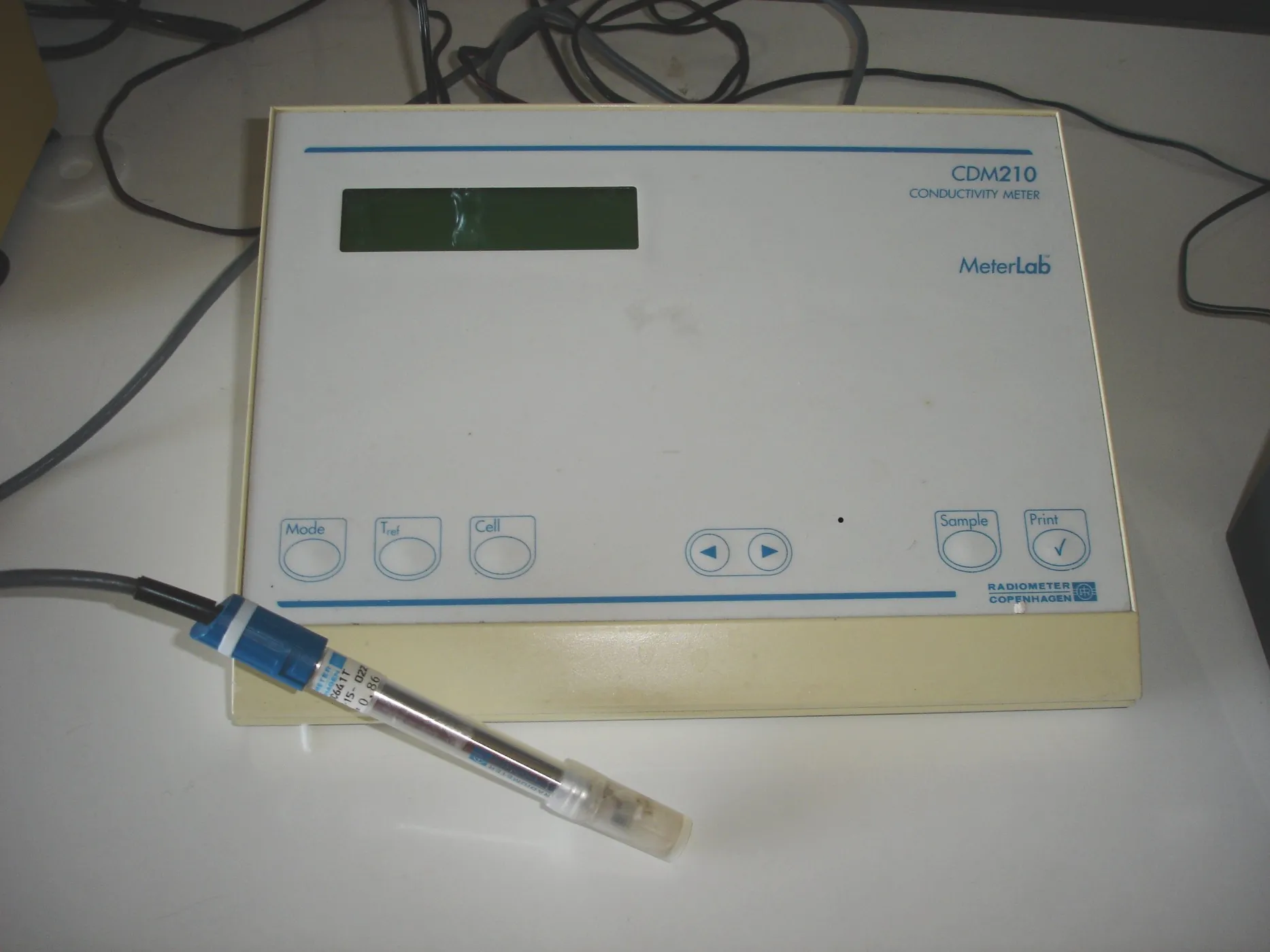
Conductometer for measuring electrical conductivity
The most practical instrumental method for a gardener is measuring electrical conductivity (EC). The more salts in the soil solution, the higher its electrical conductivity. This indicator is directly related to the concentration of soluble salts and is widely used in agronomy and horticulture (Weil 2017; Srivastava et al. 2020).
How to measure EC at home:
1. Take soil samples from the root zone (several points on the site).
2. Mix the soil with distilled water in a 1:1 or 1:2 ratio by volume (for example, 1 part soil and 1 part water).
3. Shake thoroughly and let stand for 15–30 minutes.
4. Immerse the EC meter electrodes in the supernatant (or filter it).
5. Record the readings.
Modern inexpensive EC meters are available for gardeners. They measure EC in dS/m (decisiemens per meter) or mS/cm (millisiemens per centimeter). For conversion: 1 dS/m = 1 mS/cm.
How to interpret the results:
- Less than 0.8 dS/m — no salinization; the soil is suitable for most crops.
- 0.8–1.5 dS/m — weak salinization; sensitive crops (radish, lettuce, bean) may be stunted.
- 1.5–3.0 dS/m — moderate salinization; many vegetables and fruit crops suffer.
- 3.0–6.0 dS/m — strong salinization; only tolerant species survive (beet, barley, asparagus).
- More than 6.0 dS/m — very strong; most crops die.
These thresholds are approximate and depend on plant species, soil type, and climate (Srivastava et al. 2020; Westwood 1993; Nonnecke 1989). For fruit crops, for example citrus, the damage threshold may be lower — about 1.4 dS/m (Srivastava et al. 2020). In greenhouses and containers, EC is often higher because there is no leaching.
Important: EC shows the total salt concentration but does not indicate which ions predominate. Accurate diagnosis requires laboratory analysis.
5.4. Laboratory analysis
The most reliable method is to send soil samples to a laboratory. Request an analysis for salt composition or electrical conductivity (EC). Standard nutrient tests do not always include this indicator, so check in advance.
In the laboratory, the following are determined:
- EC (electrical conductivity) — total salinity.
- pH — acidity or alkalinity.
- Content of sodium, chlorine, sulfates, carbonates — which salts predominate.
- Exchangeable sodium — for diagnosing sodicity.
For analysis, take samples from several points on the site, mix them in a clean container, and take an average sample. If there are problems in separate areas, take samples separately. Follow the laboratory’s instructions on depth and sampling method (Foth 1990; Weil 2017).
Laboratory analysis costs money, but it provides accurate information needed to correct salinization properly. Without it, you can make a mistake in choosing a method (for example, leaching will not help if the problem is sodicity).
5.5. What else to consider
- pH is not equal to salinization. Alkaline soil (high pH) may be saline, but not necessarily. Conversely, salinization can occur at neutral pH. Check both indicators (Weil 2017; Gershuny 1999).
- Seasonality. Salt levels change during the year: after rains they may decrease, and in the dry season they may increase. Therefore, it is better to measure EC several times per season.
- Sampling depth. Salts accumulate in the upper layer but can also move lower. Take samples from the root zone (usually 0–20 cm for vegetables, 0–40 cm for fruit crops).
Brief summary
You can check for salinization visually, by taste, and with instruments. Visual inspection and taste give a quick but approximate assessment. Measuring electrical conductivity (EC) is an accessible and sufficiently accurate method for a gardener. Laboratory analysis is the most reliable; it shows not only the degree but also the salt composition. By combining these methods, you can detect the problem in time and take the right measures. In the next section, we will discuss how to correct salinization.
6. How to correct it
Correcting salinization is not a quick or always simple process. It requires understanding that salts do not disappear without a trace: they can either be leached beyond the root zone, converted into less harmful forms, or bound to soil particles. The choice of method depends on the degree of salinization, soil type, climate, water quality, and drainage conditions. Below are the main practical steps that can be applied in a garden, vegetable plot, or small farm.
6.1. The main principle: salt must be leached or bound
Salinization cannot be “eliminated” by applying a single substance. Salts are either removed from the root zone with water, converted into insoluble compounds, or retained by the soil in forms unavailable to roots. In most cases, the main path is leaching, but it works only with good drainage. If there is no drainage, leaching can raise the groundwater level and intensify salinization (Weil 2017; Connor et al. 2011).
For sodic soils (with excess exchangeable sodium), gypsum application is additionally used — applying calcium materials that displace sodium from soil particles and improve structure (Weil 2017; Foth 1990). For saline soils with neutral pH, gypsum can also be useful, but the main task is to leach excess salts.
6.2. Soil leaching
Leaching is controlled leaching: applying a large amount of water to dissolve salts and move them below the root zone. Efficiency depends on:
- Drainage: water must go downward, not stagnate. Without drainage, leaching is useless and even harmful (Weil 2017; Foth 1990).
- Water quality: the fewer salts in the irrigation water, the more effective the leaching. Ideally, use rainwater or clean water with low electrical conductivity (Srivastava et al. 2020; Zona 2023).
- Water volume: enough water is needed to leach the root zone. Approximately 10 to 30 cm of water per 30 cm of depth, depending on initial salinity and soil type (Weil 2017).
- Application method: it is better to use sprinkling or drip irrigation with slow delivery so that water has time to infiltrate rather than running off the surface (Westwood 1993; Funt 2013).
Leaching is usually carried out when plants do not occupy the bed (in autumn or early spring), either on fallow land or in the rows. If leaching is done in hot weather, part of the water evaporates, and salts may rise again. After leaching, it is useful to apply organic matter and mulch the surface to reduce evaporation (Zona 2023; Gershuny 1999).
Important: leaching does not remove salts forever. If water and fertilizers continue to bring salts, the problem will return. Therefore, leaching is part of a system, not a one-time measure.
6.3. Drainage — a mandatory condition

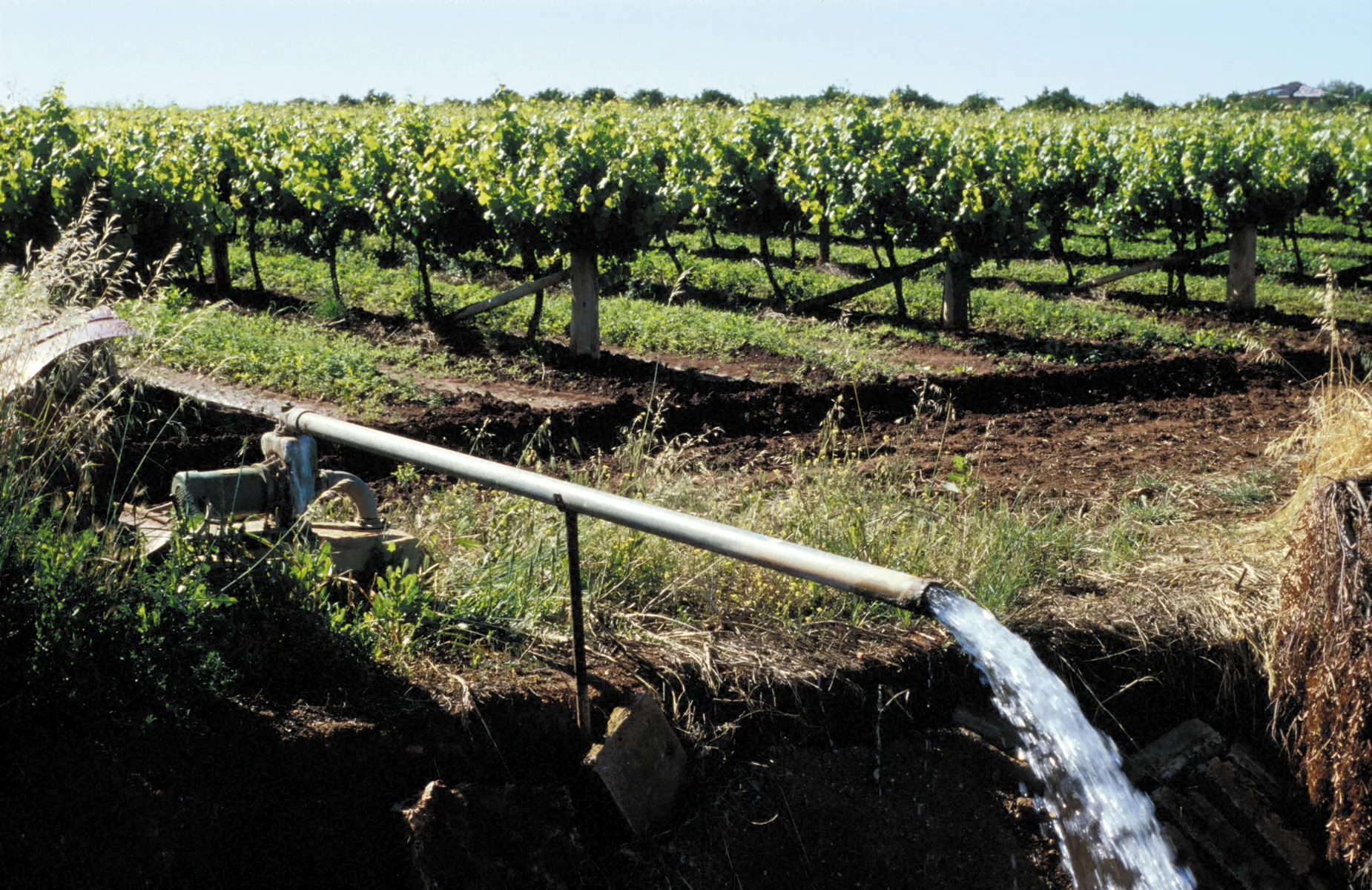
Drainage system on an agricultural plot
A drainage pump removes water from the underground drainage system of a vineyard into an open channel. The photograph was taken in the Griffith area, New South Wales, Australia.
Without drainage, leaching does not work. Drainage can be:
- Natural: deep, well-permeable soils, absence of an impermeable layer, low groundwater level.
- Artificial: drainage ditches, subsurface drains (ceramic or plastic pipes), deep loosening, creation of raised beds.
On small plots and in greenhouses, raised beds 20–30 cm high are often sufficient. They improve water outflow and reduce the risk of salinization (Funt 2013; Zona 2023). In heavy clay soils, deep loosening without soil inversion helps, breaking up compacted horizons and improving water permeability (Nonnecke 1989; Chalker-Scott 2018).
If groundwater is close, a drainage system may be required — this is a more serious intervention, often requiring specialist advice. In arid zones with irrigation, drainage is mandatory; otherwise salinization is inevitable (Weil 2017; Connor et al. 2011).
6.4. Gypsum application
Gypsum (calcium sulfate, CaSO4·2H2O) is the key material for correcting sodic soils. It does not reduce total salinity but displaces sodium from soil particles, replacing it with calcium. This improves soil structure, increases water permeability, and reduces the toxic effect of sodium on roots (Weil 2017; Foth 1990).
Gypsum is especially effective:
- on sodic soils with a high content of exchangeable sodium;
- on soils with high pH and poor structure;
- in combination with leaching, which removes the displaced sodium.
Gypsum doses depend on the degree of sodicity and are determined by laboratory analysis. Approximately 1 to 10 t/ha, but the exact dose is best calculated individually (Weil 2017). Gypsum can be applied to the surface or incorporated into the upper layer. It acts slowly, but the effect lasts longer than that of leaching.
Important: gypsum will not help with ordinary salinization if there is no excess sodium in the soil. In such cases, it may even harm by increasing the total salt load. Therefore, before gypsum application, be sure to check the salt composition (Weil 2017; Gershuny 1999).
6.5. Organic matter
Organic matter is a universal means of improving any soil, including saline soil. Compost, humus, manure, green manure, and mulch from organic materials:
- improve structure: create aggregates, increase porosity, improve water permeability and drainage (Gershuny 1999; Littlewood 2007);
- increase water-holding capacity: the soil holds more water, which dilutes the soil solution and reduces salt concentration (Zona 2023; Foth 1990);
- bind some ions: humus retains cations, including sodium, and reduces their mobility (Weil 2017; Gershuny 1999);
- stimulate microbiological activity: microorganisms participate in nutrient cycling and improve the nutrient regime (Lowenfels 2013; Gershuny 1999).
Apply compost annually — on the surface or incorporated into the upper layer. For saline soils, green manure crops with deep root systems (for example, alfalfa, sweet clover, ryegrass) are especially useful; they improve drainage and structure (Littlewood 2007; Gershuny 1999). However, remember: organic matter does not remove salts; it only softens their effect and helps the soil function.
6.6. Proper irrigation and water quality

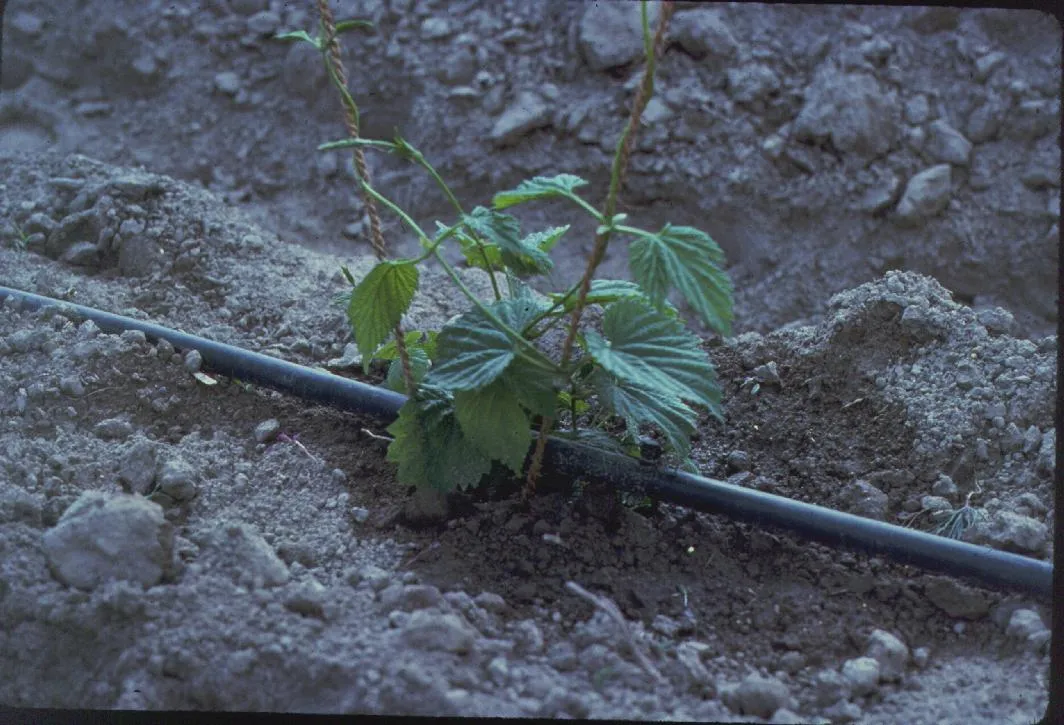
Drip irrigation of plants
A system of tubes and drip emitters supplies water directly to the base of plants. This irrigation method helps reduce water losses to evaporation and surface runoff.
Irrigation is the main source of salts in irrigated soils. To avoid worsening salinization:
- Check water quality: electrical conductivity, pH, content of sodium, chlorine, carbonates. If the water is saline, look for alternative sources or mix it with cleaner water (Srivastava et al. 2020; Foth 1990).
- Irrigate less often but more deeply: this helps leach salts downward rather than accumulate them in the upper layer. Frequent surface irrigation, by contrast, concentrates salts near the surface (Weil 2017; Westwood 1993).
- Use drip irrigation: it delivers water locally to the root zone, reducing evaporation and surface losses. But it is important to ensure that salts do not accumulate near the emitters (Funt 2013; Srivastava et al. 2020).
- Consider drainage: if water does not go downward, it will evaporate and leave salts. Make sure drainage works (Connor et al. 2011; Nonnecke 1989).
- Irrigate in the morning or evening: this reduces evaporation and allows water to infiltrate deeper (Zona 2023; Funt 2013).
In greenhouses and containers, it is especially important to periodically leach the substrate with clean water to remove accumulated salts (Lowenfels 2013; Nonnecke 1989).
6.7. Removal of salts by plants
Some plants can accumulate salts in their tissues and thus remove them from the soil. This is called phytoremediation. For example, saltworts, orache, and some halophytes actively absorb sodium and chlorine. However, this method is slow and is not suitable for quickly correcting severe salinization. It rather complements other measures (Weil 2017; Zona 2023).
A more practical technique is growing tolerant crops on saline sites. Beet, asparagus, barley, date palm, and tamarisk not only survive but also produce a yield. This allows the land to be used while restoration is underway (Weil 2017; Westwood 1993).
6.8. Mulching

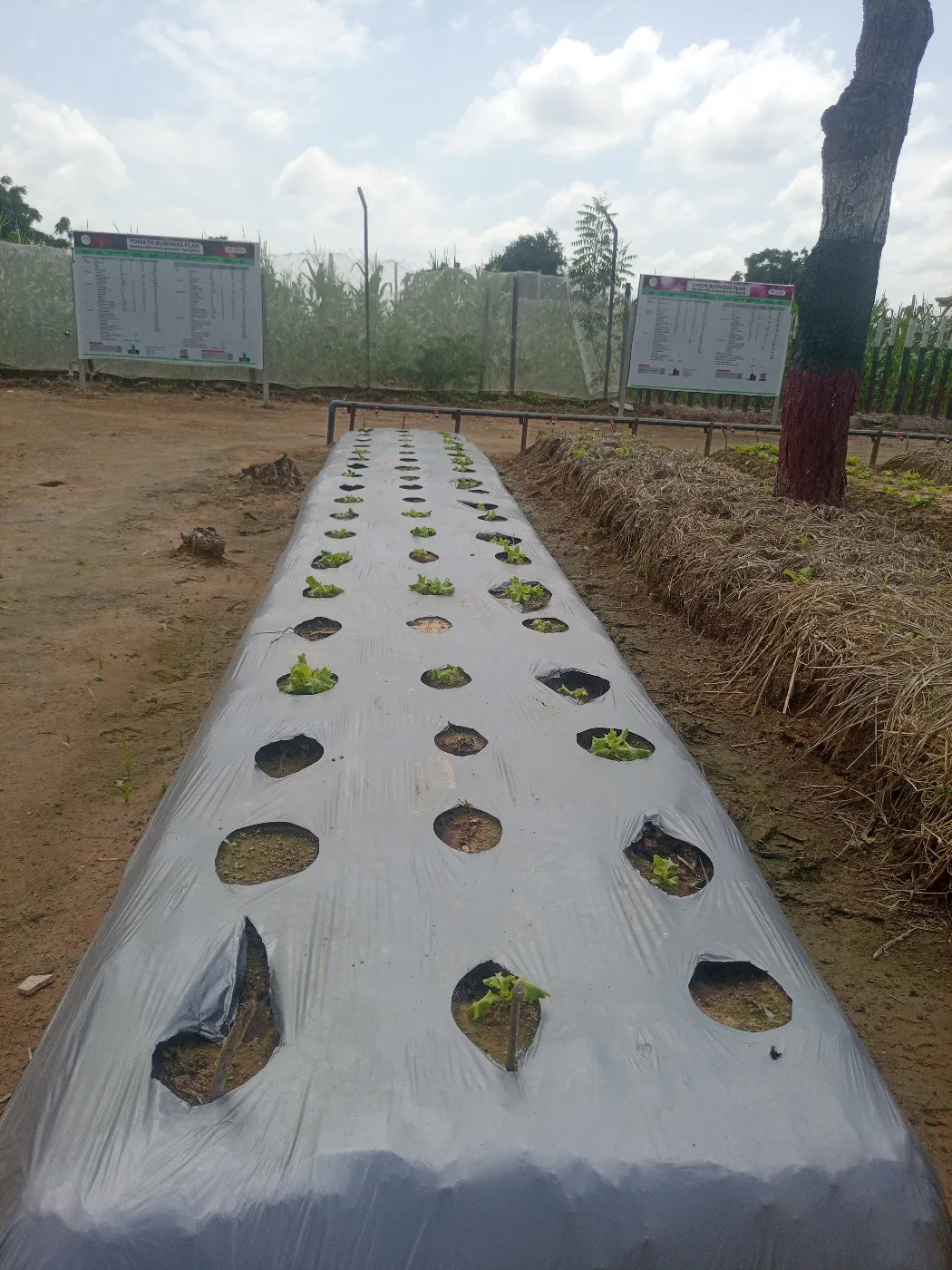
Mulch film bed for lettuce
An agricultural bed covered with mulch film for growing lettuce on a farm. Holes are cut in the film, into which young plants are planted. Using the film helps retain moisture in the soil and suppress weed growth.
Mulch from organic or inorganic materials reduces evaporation from the soil surface. And the less evaporation, the less salt rises upward. This is a simple and effective method of prevention and an auxiliary measure when correcting salinization (Zona 2023; Gershuny 1999; Chalker-Scott 2018).
Use:
- organic mulch: straw, cut grass, leaves, compost, wood chips. It gradually decomposes, improving the soil.
- inorganic mulch: gravel, sand, black plastic film. It does not improve structure but reduces evaporation well.
A mulch layer of 5–10 cm significantly reduces the movement of salts to the surface (Zona 2023; Littlewood 2007).
6.9. What to do if correction is impossible
Sometimes salinization is so severe and drainage so poor that correction is economically or technically impractical. In such cases, there are several options:
- Change the crop: grow tolerant species (beet, asparagus, barley, date palm, tamarisk) (Weil 2017; Westwood 1993).
- Switch to container growing: use raised beds or pots with clean substrate (Chalker-Scott 2018; Funt 2013).
- Use the area for other purposes: lawn, ornamental plants tolerant to salinization, or a natural area (Weil 2017; Connor et al. 2011).
- Carry out major reclamation: if the site is valuable, drainage, leaching, gypsum application, and organic matter application can be considered as a комплекс. But this requires time and money.
Brief summary
Correcting salinization is a set of measures: leaching with good drainage, gypsum application for sodic soils, applying organic matter, proper irrigation, mulching, and choosing tolerant crops. Salt cannot be “destroyed” — it can only be leached, bound, or prevented from accumulating. Start with diagnosis, then choose methods suitable for your site. And remember: prevention is always cheaper and easier than correction. In the next section, we will discuss preventive measures.

7-in-1 Wi-Fi Weather Station
Monitor local weather conditions with a wireless outdoor sensor. Track temperature, humidity, rainfall, wind speed and direction, and atmospheric pressure. Ideal for gardens, farms and greenhouses.
- Wireless outdoor sensor
- Solar-powered
- Wi-Fi connectivity
Affiliate link · Check regional compatibility.
7. Prevention
Preventing salinization is not a one-time measure but a way of thinking and a system of techniques applied constantly. Since salts do not break down or disappear without a trace, the only way to avoid the problem is to prevent their accumulation in the root zone. Below are the key directions that will help keep the soil healthy for many years.
7.1. Fertilizer control
Fertilizers are one of the main sources of salts in soil. Even organic amendments, when applied excessively, increase the concentration of the soil solution. Therefore, it is important to:
- Apply fertilizers according to need, not “by eye.” It is better to rely on soil test results and the needs of specific crops. For most vegetables and fruit crops, recommended doses exist; exceeding them is not only useless but harmful (Foth 1990; Nonnecke 1989).
- Account for existing reserves. If previous crops received a lot of fertilizer or the soil has a high nutrient content, the dose should be reduced. Regular soil analysis helps avoid overfertilization (Weil 2017; Gershuny 1999).
- Distribute fertilizers evenly. Local application of high doses creates salinity patches. Concentrated bands or holes into which roots grow are especially dangerous (Foth 1990; Lowenfels 2013).
- Use fertigation carefully. Applying fertilizers with irrigation water is convenient but requires precise dosing and periodic leaching; otherwise salts accumulate in the emitter zone (Srivastava et al. 2020; Funt 2013).
- Remember manure and compost. They contain potassium, sodium, and other elements. With many years of applying large volumes, salinization may increase, especially in greenhouses and on sandy soils (Gershuny 1999; Littlewood 2007).
7.2. Irrigation water quality and irrigation regime
Water is the main carrier of salts. How you irrigate determines whether salts accumulate or are leached.
- Check water quality. Once a year or when changing the source, have the water analyzed: electrical conductivity (EC), pH, content of sodium, chlorine, carbonates. If the water is saline, consider alternative sources, rainwater harvesting, or mixing with cleaner water (Srivastava et al. 2020; Foth 1990).
- Irrigate less often but more deeply. This helps leach salts downward rather than concentrating them at the surface. Frequent surface irrigation, by contrast, intensifies salinization (Weil 2017; Westwood 1993).
- Prefer drip irrigation. It delivers water locally to the root zone, reducing evaporation and surface losses. But make sure salts do not accumulate near the drippers — periodically leach the wetted zone (Funt 2013; Srivastava et al. 2020).
- Irrigate in the morning or evening. During hot hours, water evaporates quickly, leaving salts. Morning or evening irrigation allows moisture to infiltrate deeper (Zona 2023; Funt 2013).
- Consider drainage. If water does not go downward, it will evaporate and leave salts. Make sure drainage works, especially in greenhouses and on heavy soils (Connor et al. 2011; Nonnecke 1989).
7.3. Drainage and groundwater level
Good drainage is the foundation of salinization prevention. Without it, no other measures will give a sustainable result.
- Maintain and improve drainage. On small plots, raised beds, deep loosening, and organic matter application help. In heavy clay soils, drainage ditches or pipes may be required (Weil 2017; Chalker-Scott 2018).
- Monitor the groundwater level. If it is high and the water is saline, capillary rise will constantly bring salts to the surface. In such cases, a drainage system or refusal to grow sensitive crops may be needed (Connor et al. 2011; Weil 2017).
- Do not allow water to stagnate. Stagnant zones are places of salt accumulation. Level the surface and avoid depressions where water collects (Nonnecke 1989; Foth 1990).
7.4. Mulching and organic matter
Mulch and organic matter are simple and effective prevention tools.
- Mulch the surface. A layer of organic or inorganic mulch (5–10 cm) reduces evaporation, and therefore reduces the rise of salts to the surface. This is especially important in arid zones and in greenhouses (Zona 2023; Littlewood 2007; Chalker-Scott 2018).
- Regularly apply compost and humus. They improve soil structure, increase water-holding capacity, and stimulate microbiological activity. Soil with high organic matter content resists salinization better (Gershuny 1999; Lowenfels 2013).
- Use green manure crops. Plants with deep root systems (alfalfa, sweet clover, ryegrass) loosen the soil, improve drainage, and enrich it with organic matter. Their roots also help remove some salts from lower horizons (Littlewood 2007; Gershuny 1999).
7.5. Crop rotation and crop selection
Proper crop rotation reduces the risk of salt accumulation and improves the overall condition of the soil.
- Alternate crops with different root depths. This improves soil structure and prevents one-sided depletion or accumulation of elements (Nonnecke 1989; Gershuny 1999).
- Include green manure and perennial grasses. They improve drainage, accumulate organic matter, and reduce salinization (Littlewood 2007; Weil 2017).
- On sites with a risk of salinization, choose tolerant species. Beet, asparagus, barley, date palm, and tamarisk tolerate higher salt concentrations. This allows the land to be used without loss of productivity (Weil 2017; Westwood 1993).
- Avoid monoculture. Long-term cultivation of one crop in one place contributes to the accumulation of specific salts and soil deterioration (Nonnecke 1989; Connor et al. 2011).
7.6. Regular monitoring
Prevention is impossible without observation. Periodically check:
- Visual signs: white coating, crust, plant stunting (Foth 1990; Weil 2017).
- Electrical conductivity (EC): at least once per season, especially in greenhouses and on irrigated sites (Srivastava et al. 2020; Westwood 1993).
- Groundwater level: if possible, monitor it, especially in arid zones (Connor et al. 2011; Weil 2017).
- Drainage condition: check whether water drains after irrigation or rain (Chalker-Scott 2018; Nonnecke 1989).
Keep records: which fertilizers were applied, how much water was used, which crops were grown. This will help notice alarming trends before they become a problem (Gershuny 1999; Littlewood 2007).
7.7. Special cases
- Greenhouses and containers. There is no natural leaching by rain here, so salts accumulate faster. Periodically leach the substrate with clean water, use slow-release fertilizers, and monitor EC (Lowenfels 2013; Nonnecke 1989).
- Coastal areas. Sea spray and flooding bring salts. Use tolerant plants, mulch, and, if necessary, leach the soil with clean water (Zona 2023; Weil 2017).
- Arid zones. Prevention is especially important here: control irrigation, drainage, and fertilizers. Without this, salinization is almost inevitable (Weil 2017; Connor et al. 2011).
Brief summary
Prevention of salinization is based on several principles: do not overfertilize the soil, monitor the quality and quantity of irrigation water, ensure good drainage, mulch the surface, apply organic matter, follow crop rotation, and regularly check soil condition. These measures do not require large expenses but allow you to avoid a problem whose correction can be expensive and lengthy. As already noted, salinization is easier to prevent than to correct. In the next section, we will look at regional aspects of salinization.
8. Regional aspect

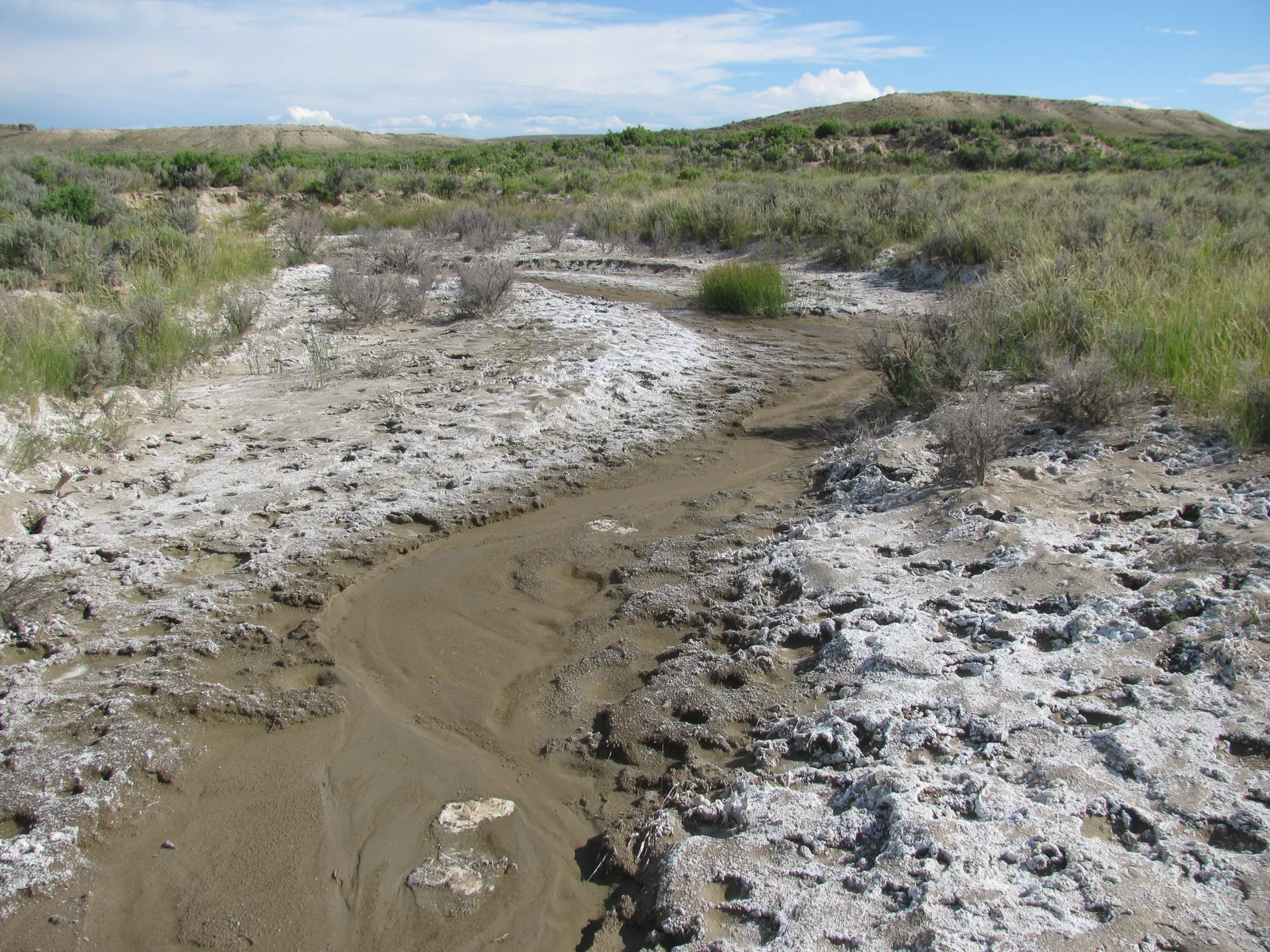
Natural salt deposits in an arid landscape
Extensive white salt deposits along a tributary of Muddy Creek in Wyoming, USA. The photograph shows natural salt accumulation in an arid landscape.
Salinization is a global problem, but it manifests differently in different regions. Understanding local conditions helps choose the right preventive measures and avoid fighting the consequences where the cause could have been avoided.
8.1. Arid and semiarid zones
In regions with a hot dry climate, evaporation exceeds precipitation. Water rises to the surface, evaporates, and salts remain. Here salinization is a natural process enhanced by irrigation. Even a small amount of salts in irrigation water or fertilizers produces a noticeable effect over time (Weil 2017; Connor et al. 2011). In such zones, without drainage and leaching, irrigated agriculture quickly leads to secondary salinization. Examples include river valleys in Central Asia, Mesopotamia, the southwestern United States, and Australia. For gardeners and farmers here, control of water quality, drainage, and mulching are critically important (Weil 2017; Nonnecke 1989).
8.2. Irrigated lands
Any irrigation carries a risk of salinization if the water contains salts and drainage is insufficient. This is especially true for regions where irrigation is used intensively: the Mediterranean, California, southern Russia, China, India, and the Middle East. In these areas, salinization often becomes a consequence of many years of irrigation without leaching. The problem is aggravated by the use of saline water and high fertilizer doses (Srivastava et al. 2020; Connor et al. 2011). For small farmers and gardeners, it is important to monitor the electrical conductivity of water and soil, use drip irrigation, and periodically leach the root zone (Funt 2013; Westwood 1993).
8.3. Coastal areas
Near the sea, soils can become saline from sea spray, flooding with salt water during storms or tides, and also because of shallow saline groundwater. Under such conditions, even in a humid climate, salinization is quite real. Gardeners on the coast should choose tolerant crops, use mulch, raised beds, and, where possible, leach the soil with clean water (Zona 2023; Weil 2017). Examples include coastal areas of the Mediterranean, Florida, and Southeast Asia.
8.4. Tropics and subtropics
In the tropics, with alternating dry and wet seasons, salinization often occurs with improper irrigation during the dry period. If the water is saline and drainage is poor, salts accumulate in the upper layer. In the subtropics of the Mediterranean (Spain, Italy, Greece, Turkey, Morocco), salinization is also associated with irrigation and shallow saline groundwater (Srivastava et al. 2020; Weil 2017). In these regions, it is important to take seasonality into account: leaching is possible during the rainy period, while in the dry period mulch and water conservation are necessary (Nonnecke 1989; Zona 2023).
8.5. Temperate climate
In humid zones with sufficient precipitation, salinization occurs less often but is not excluded. It can occur in greenhouses, on sites with poor drainage, when irrigating with saline water, or in coastal areas. In a temperate climate, the problem is more often local and related to human activity: excessive fertilizers, water stagnation, and use of poor-quality water for irrigation (Lowenfels 2013; Chalker-Scott 2018). Here prevention is especially effective: it is enough to monitor drainage, avoid overfertilizing plants, and periodically check EC.
8.6. General conclusion on regions
Wherever water evaporates faster than precipitation falls, and wherever irrigation is used without drainage, salinization becomes a real threat. In arid zones it is almost inevitable without special measures; in humid zones it is less common but possible. Knowledge of local conditions helps choose the right strategy: in some places mulch and proper irrigation are enough, while in others drainage and leaching are necessary (Weil 2017; Connor et al. 2011; Zona 2023).

40W Full Spectrum LED Grow Light
Support healthy plant growth with full-spectrum LED lighting. Ideal for seedlings, indoor plants and small growing spaces. A practical solution for indoor gardening and year-round cultivation.
- Full-spectrum LED
- Energy-efficient design
- Indoor plant growing
Affiliate link · Check actual power and light coverage.
9. Conclusion
Salinization is the accumulation of water-soluble salts in the root zone, which prevents plants from taking up water and nutrients. Salts enter with irrigation water, rise with groundwater, are applied with fertilizers, and accumulate because of climatic conditions. The problem can be recognized by white coating, crust, stunted growth, marginal leaf burn, and wilting when the soil is moist. The first to suffer are sensitive crops: most vegetables, legumes, berry crops, citrus, as well as young seedlings. Salinization can be checked visually, by taste, with an EC meter, or by laboratory analysis.
Correcting salinization requires an integrated approach: leaching with good drainage, gypsum application for sodic soils, applying organic matter, proper irrigation, mulching, and choosing tolerant crops. But the main thing is to remember: salt does not disappear without a trace. It can either be leached beyond the root zone or prevented from accumulating. Prevention is always cheaper and easier than correction. Fertilizer control, water quality, drainage, mulch, organic matter, and crop rotation — these are the foundation of healthy soil and a sustainable harvest. Salinization is easier to prevent than to correct.
References
- Capon, Brian (2022). ‘How Plants Function’, in Botany for Gardeners. An Introduction to the Science of Plants. Portland, Oregon: Timber Press, pp. 144-192.
- Chalker-Scott, Linda (2018). ‘Creating Safe Food Gardens’, in The Science of Gardening. Course Guidebook. Chantilly, Virginia: The Great Courses, pp. 126-134.
- Chalker-Scott, Linda (2018). ‘Soil Preparation and Protection’, in The Science of Gardening. Course Guidebook. Chantilly, Virginia: The Great Courses, pp. 73-80.
- Connor, D.J., Loomis, R.S., Cassman, K.G. (2011). ‘Evolution of wheat production systems in southern Australia’, in Crop Ecology. Productivity and Management in Agricultural Systems. Cambridge, UK: Cambridge University Press, pp. 439-457.
- Foth, H.D. (1990). ‘Soil Fertility Evaluation and Fertilizer Use’, in Fundamentals of Soil Science. New York: John Wiley & Sons, pp. 232-249.
- Funt, R.C., Ross, D.S. (2013). ‘Soil and water management’, in Funt, R.C., Hall, H.K. (ed.) Raspberries. Oxfordshire, UK: CAB International, pp. 103-120.
- Gershuny, Grace, Smillie, Joe (1999). ‘Appendices’, in The Soul of Soil. A Soil-Building Guide for Master Gardeners and Farmers. Vermont: Chelsea Green Publishing, .
- Gershuny, Grace, Smillie, Joe (1999). ‘Observing and Evaluating Your Soil’, in The Soul of Soil. A Soil-Building Guide for Master Gardeners and Farmers. Vermont: Chelsea Green Publishing, .
- Gershuny, Grace, Smillie, Joe (1999). ‘Understanding the Soil Ecosystem’, in The Soul of Soil. A Soil-Building Guide for Master Gardeners and Farmers. Vermont: Chelsea Green Publishing, .
- Hopkins, W.G., Hüner, N.P..A. (2009). ‘Whole Plant Water Relations ’, in Introduction to Plant Physiology. Hoboken, NJ: John Wiley & Sons, pp. 19-38.
- Johnson, Noelle (2025). ‘Building Drought-Resistant Soil’, in The Water-Smart Garden. Beverly, MA: Cool Springs Press, .
- Littlewood, Michael (2007). ‘The Ground’, in The organic gardener's handbook. Ramsbury, Wiltshire: The Crowood Press, pp. 59-102.
- Lowenfels, Jeff (2013). ‘Factors Influencing Nutrient Availability’, in Teaming with nutrients: The Organic Gardener's Guide to Optimizing Plant Nutrition. Portland, London, UK: Timber Press, pp. 179-193.
- Nonnecke, Libner (1989). ‘Soils’, in Vegetable production. New York, USA: Van Nostrand Reinhold, pp. 44-65.
- Vashisth, Tripti, Kadyampakeni, Davie (2020). ‘Diagnosis and management of nutrient constraints in citrus’, in Fruit Crops. : Elsevier, 723-737. doi: 10.1016/B978-0-12-818732-6.00049-6
- Weil, R.R., Brady, N.C. (2017). ‘Soil Acidity’, in The Nature and Properties of Soils. Essex, UK: Pearson Education, pp. 392-437.
- Westwood, M.Neil (1993). ‘Cultural Practices’, in Temperate-zone. Pomology. Physiology and Culture. Portland, Oregon: Timber Press, pp. 178-216.
- White, R.E. (2006). ‘Soil Quality and Sustainable Land Management’, in Principles and Practice of Soil Science. The Soil as a Natural Resource. Malden, MA: Blackwell Publishing, pp. 333-347.
- Zona, Scott (2026). ‘What a Plant Needs: Water’, in A Gardener's Guide to Botany. Beverly, MA: Cool Springs Press, .
- Куренной, Н.М. (1985). ‘Краткая биологическая и производственная характеристика плодовых растений [Brief biological and production characteristics of fruit plants]’, in Плодоводство [Fruit growing]. Москва: Агропромиздат, pp. 27-67.
- Муха, В.Д., Картамышев, Н.И., Муха, Д.В. (2003). ‘Радиоактивность и магнитная восприимчивость почв [Radioactivity and Magnetic Susceptibility of Soils]’, in Агропочвоведение [Agropedology]. Москва: КолосС, pp. 108-115.
