
What Soil Consists Of
Soil is not just “dirt underfoot.” It is a complex, living, dynamic system in which everything is interconnected. Gardeners often assess soil by color or friability, but behind these external signs lies a precise balance of four components. Understanding this balance is the key to ensuring that plants receive enough water, air, and nutrients.
In this article, we will examine what soil consists of, in what proportions these components should be present, and how their ratio affects watering, root growth, and, ultimately, the harvest.
1. The Four Main Components
From the standpoint of physics and agronomy, soil consists of four main parts: mineral base, organic matter, water, and air (Weil and Brady 2017). These components do not simply coexist—they form a complex system of pores and surfaces where everything happens: from water retention to plant nutrition.
The mineral fraction is the skeleton of the soil. It forms from weathered rocks and makes up the main share of the solid phase. Mineral particles determine soil texture: sand, silt, or clay (Eash et al. 2016). The size of these particles determines how quickly water passes through the soil, how many nutrients it can hold, and how easily roots can grow deeper.
Organic matter is everything that was once alive: plant residues, roots, the bodies of microorganisms, and their waste products. During the decomposition of organic matter, humus forms—a dark, stable substance that gives soil fertility and binds mineral particles into aggregates (Gershuny and Smillie 1999). Although organic matter is usually a small part of the soil, its role is disproportionately large.
Water in soil is not just moisture. It is the soil solution—water with dissolved mineral salts, nutrients, and organic compounds (Weil and Brady 2017). It is from this solution that roots absorb nutrients. Water fills part of the soil pores, displacing air.
Air occupies another part of the pores. Plant roots and soil microorganisms respire—they need oxygen. Without sufficient air in the soil, roots suffocate and beneficial microbes die (Pavlis 2020). Soil air also contains carbon dioxide, which is released during root and microbial respiration.
These four components are in constant interaction. When you water a garden bed, water displaces air from the pores. When the soil dries, the pores fill with air again. When you add compost, you add organic matter that improves structure and holds more water and air. Everything is connected.
2. The Ideal Ratio

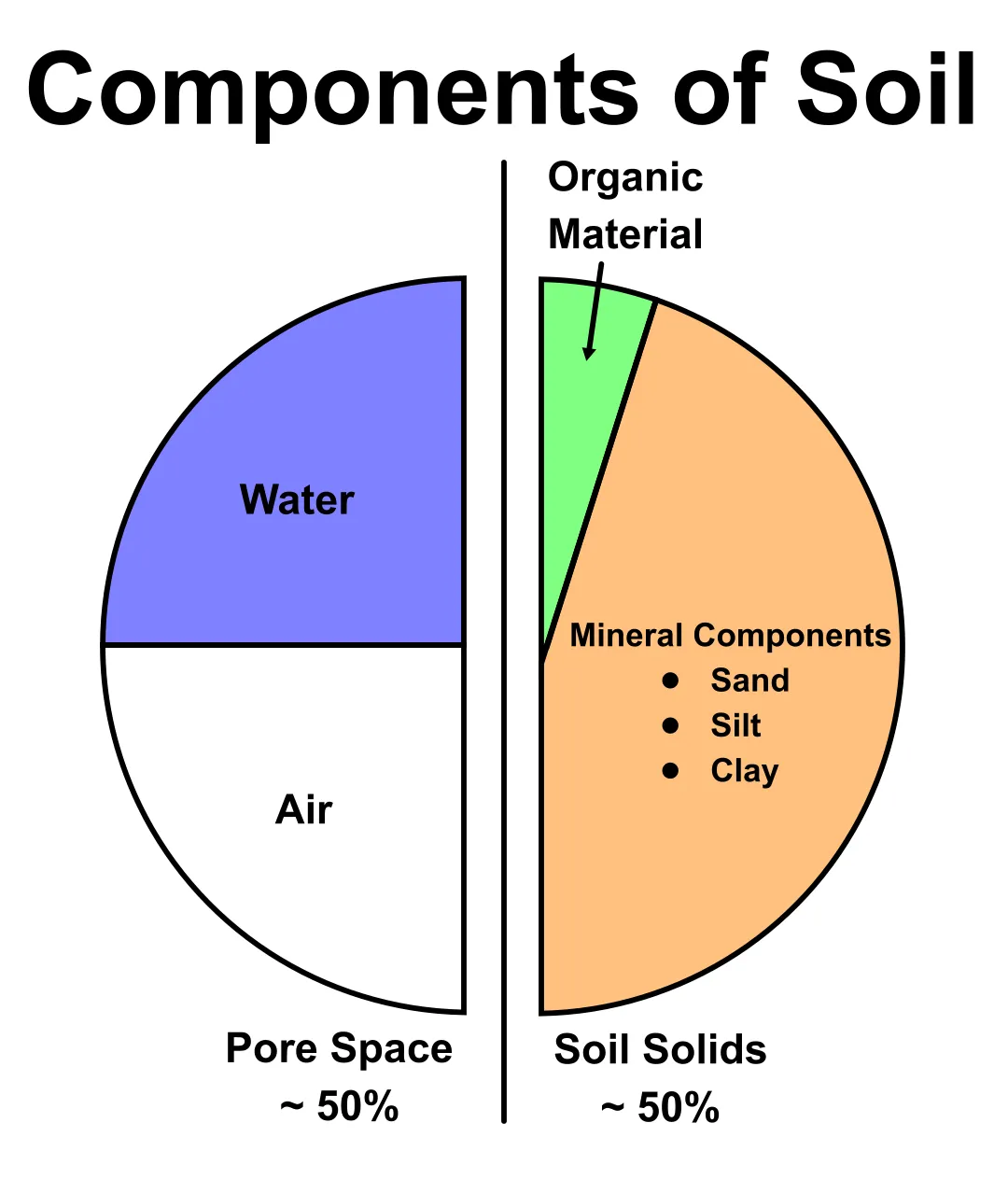
Pie chart of soil components
Pie chart showing the four main soil components (minerals, organic matter, water, air) in relative percentages. The chart is divided into two main parts: pore space (~50%) and soil solids (~50%).
In agronomy, there is a reference ratio of components that is considered optimal for most cultivated plants. In ideal soil, the volume shares are distributed approximately as follows (Gliessman 2015; Weil and Brady 2017):
- Mineral fraction — about 45%
- Organic matter — about 5%
- Water — about 25%
- Air — about 25%
This means that roughly half of the soil volume is solid particles (minerals and organic matter), and the other half is pores filled with water and air. Moreover, water and air divide the pore space approximately equally (Pavlis 2020).
It is important to understand that this is not a rigid standard but a guide. In real soils, the ratio can vary greatly depending on texture, climate, and management. For example, sandy soil has more pores, but they are large, and water drains quickly. Clayey soil has many pores, but they are small, and water is retained, displacing air. Peaty soil may contain 50% or more organic matter, but its mineral fraction is poorly represented.
Why exactly 5% organic matter? At first glance, this seems low. But organic matter is a concentrate of fertility. Humus, which forms from organic matter, has an enormous surface area and the ability to retain water and nutrients. Just 1% organic matter can hold an amount of water equivalent to 10–20% of the soil mass (Gershuny and Smillie 1999). In addition, organic matter is food for soil microorganisms, which process it into forms available to plants.
Why must water and air be balanced? Plant roots need both water and oxygen at the same time. If the pores are completely filled with water (for example, after heavy rain or during waterlogging), the roots cannot breathe and may die. If the soil is too dry, water becomes unavailable—roots cannot absorb it even if it is present in the soil. The ideal balance is when approximately half of the pores are occupied by water and half by air. This state is often called “field capacity” (Foth 1990; Weil and Brady 2017).
What happens when proportions deviate? If the mineral fraction predominates and there is little organic matter, the soil becomes either too sandy (quickly loses water and nutrients) or too clayey (poorly transmits air and water). If there is too much organic matter (for example, in peaty soils), the soil may be too acidic and poor in minerals. If there is too much water, an anaerobic environment develops, and putrefactive processes occur. If there is too much air (for example, in dried-out sandy soil), roots cannot obtain water.
Practical takeaway for the gardener: striving for the ideal ratio is not an end in itself. It is far more important to understand what your particular soil lacks and to improve it gradually. Adding organic matter (compost, manure, green manure) is a universal technique that works almost everywhere: in sandy soils it helps retain water and nutrients, in clayey soils it improves structure and aeration, and in peaty soils it adds a mineral base and reduces acidity (Morgan 2021; Walliser 2020).
In the following chapters, we will examine each component in detail: what the mineral fraction consists of, what types of organic matter exist, how water and air interact in soil pores, who lives in the soil, and what happens when proportions are disrupted. For now, the main thing to remember is this: soil is not a monolith but a mixture, and everything depends on its composition—from how often you will have to water to what the harvest will be like.


LCD 4-in-1 Soil Tester
Check essential growing conditions with one compact tool. Measure soil pH, moisture, temperature and light intensity — ideal for gardens, potted plants and greenhouses.
- 4-in-1 measurement
- Easy-to-read LCD display
- Portable design
Affiliate link · For indicative measurements only.
3. The Mineral Fraction: Sand, Silt, and Clay
The mineral fraction is the foundation of soil, its skeleton. It forms as a result of the weathering of rocks and makes up approximately 45% of the volume of ideal soil (Weil and Brady 2017). Soil texture, its ability to retain water and nutrients, and how easily roots can penetrate deeper all depend on the mineral fraction.
Mineral particles differ in size, and this size is a key characteristic. In soil science, it is customary to distinguish three main fractions: sand, silt, and clay (Eash et al. 2016; Ingram et al. 2015).
Sand is the largest mineral particles. According to the USDA classification, their diameter ranges from 0.05 to 2.0 mm (Shukla 2023). Sand grains are visible to the naked eye and feel like granules when rubbed between the fingers. Sand consists primarily of quartz and other weathering-resistant minerals (Weil and Brady 2017). Because the particles are large, the spaces between them are large, so sandy soil quickly transmits water and is well aerated. However, large pores do not retain moisture—water moves downward, carrying dissolved nutrients with it. Sandy soils are poor in nutrients and dry out quickly (Pavlis 2020).
Silt is the intermediate fraction. Silt particles have a diameter of 0.002 to 0.05 mm (Shukla 2023). They are too small to be seen without a microscope, but silt feels like flour or talc—smooth and silky (Eash et al. 2016). Silt consists mainly of quartz but may contain other minerals. The spaces between silt particles are much smaller than in sand, so silt retains water and nutrients better. However, silt can also compact and form a crust on the surface when it dries (Ingram et al. 2015).
Clay is the finest fraction. Clay particles have a diameter of less than 0.002 mm (Shukla 2023). They can be seen only with an electron microscope. Clay is not simply crushed rock; it is a product of chemical weathering, which forms new minerals—clay minerals (Weil and Brady 2017). Clay particles have a flat, scaly shape and carry an electrical charge on their surface. This charge allows clay to retain water and nutrients (cations)—calcium, magnesium, potassium, and others (Pavlis 2020; Lowenfels 2010). Clay can hold several times more water than sand, but water in clayey soil is held so strongly that not all of it is available to plants (Foth 1990). In addition, the small pores of clay easily fill with water, displacing air, which can lead to waterlogging and oxygen starvation of roots (Ingram et al. 2015).
Why is the ratio of fractions important? The ratio of sand, silt, and clay determines soil texture—one of its most important characteristics. Texture affects:
- Water permeability — how quickly water is absorbed into the soil.
- Water retention — how much water the soil can hold for plants.
- Aeration — how well air penetrates to the roots.
- Fertility — the ability to retain and release nutrients.
- Workability — how easily the soil can be dug and cultivated (Chalker-Scott 2018).
Ideal soil is loam, in which sand, silt, and clay are present in approximately equal proportions (Pavlis 2020). This composition provides balance: enough large pores for drainage and aeration, enough small pores for retaining water and nutrients. However, ideal soils are rare in nature. More often, there are sandy, clayey, or silty soils with a predominance of one fraction.
What does this mean in practice? If your soil is sandy, it quickly loses water and nutrients—you will have to water more often and add organic matter. If it is clayey, it warms up slowly in spring, easily seals and compacts, but retains nutrients well. If it is silty, it can be very fertile but is prone to crusting and compaction (Johnson 2025). Understanding texture helps you choose the right improvement strategy: organic matter is added to sandy soils to retain moisture; organic matter and sometimes sand are added to clayey soils to improve structure—but not the other way around (Chalker-Scott 2018).
Important note: Do not try to radically change soil texture. Adding sand to clay can make it resemble concrete, and adding clay to sand can create a layered structure that impedes water movement (Johnson 2025). The best path is gradual improvement of structure through the addition of organic matter.
4. Organic Matter: Plant Residues, Animals, Microbes, Humus
Organic matter is everything that was once alive and entered the soil: fallen leaves, dead roots, remains of insects and animals, their waste products, and the bodies of soil microorganisms (Gershuny and Smillie 1999). Although organic matter usually makes up only about 5% of the soil volume, its role cannot be overestimated. It is organic matter that makes soil fertile, structured, and alive.

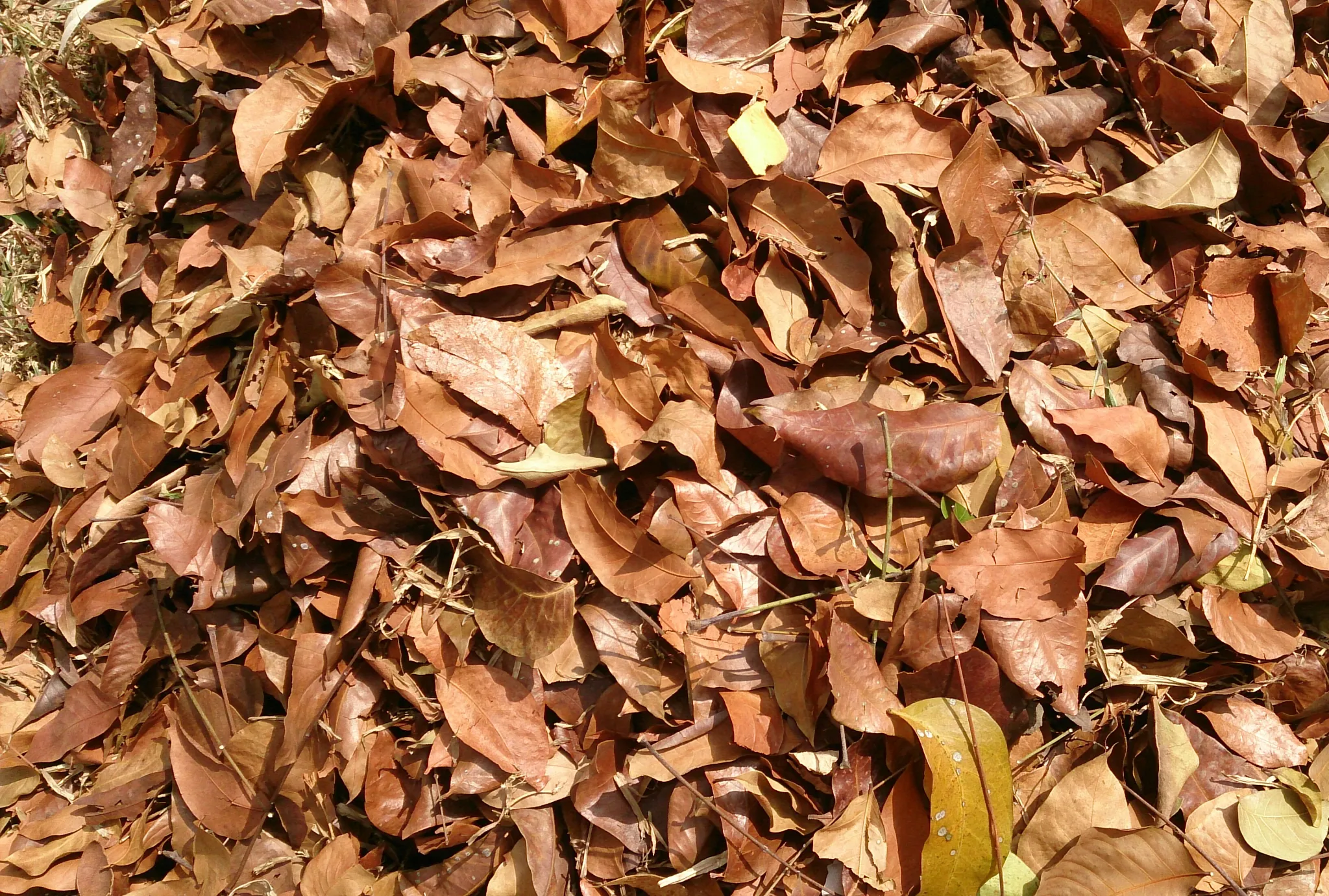
Plant residues as the basis of soil organic matter
A layer of fallen leaves on the ground surface is one of the main natural sources of organic matter. As they decompose, leaves become food for soil organisms and participate in the formation of humus.
What does organic matter consist of? Soil organic matter includes several fractions:
- Fresh plant residues — leaves, stems, and roots that have not yet decomposed. They serve as food for soil organisms.
- Decomposing organic matter — an intermediate stage when large molecules break down into simpler compounds.
- Humus — a stable, dark-colored substance, the final product of decomposition. Humus can persist in soil for hundreds and thousands of years (Eash et al. 2016).
- Living organisms — bacteria, fungi, protozoa, nematodes, worms, and other soil inhabitants. Their biomass is also part of organic matter (Lowenfels 2010).
- Root exudates — sugars, amino acids, and other compounds that plants release through their roots, feeding the microbes around them (Pavlis 2020).
Humus is a key component. Humus is not just “rotted manure.” It is a complex mixture of organic molecules with unique properties (Gershuny and Smillie 1999):
- It retains water. Humus can absorb an amount of water 80–90 times its own weight (Gershuny and Smillie 1999). This makes soil more resistant to drought.
- It retains nutrients. Humus has an enormous surface with a negative charge that attracts and holds positively charged ions (cations)—calcium, magnesium, potassium, ammonium. This prevents nutrient leaching (Foth 1990; Lowenfels 2010).
- It improves structure. Humus binds mineral particles into aggregates, creating a favorable structure with pores of different sizes. This improves drainage, aeration, and root penetration (Weil and Brady 2017).
- It feeds microbes. Humus serves as a source of energy and nutrients for soil microorganisms (Lowenfels 2010).
- It buffers pH. Humus softens sharp changes in acidity, maintaining stable conditions for plants and microbes (Gershuny and Smillie 1999).
Where does organic matter come from? The main source is plants. Roots, leaves, stems, and fruits—all of this sooner or later enters the soil. Animals also contribute: excrement and body remains. But the main “producers” of organic matter are plants, and the main “processors” are soil microorganisms (Eash et al. 2016).

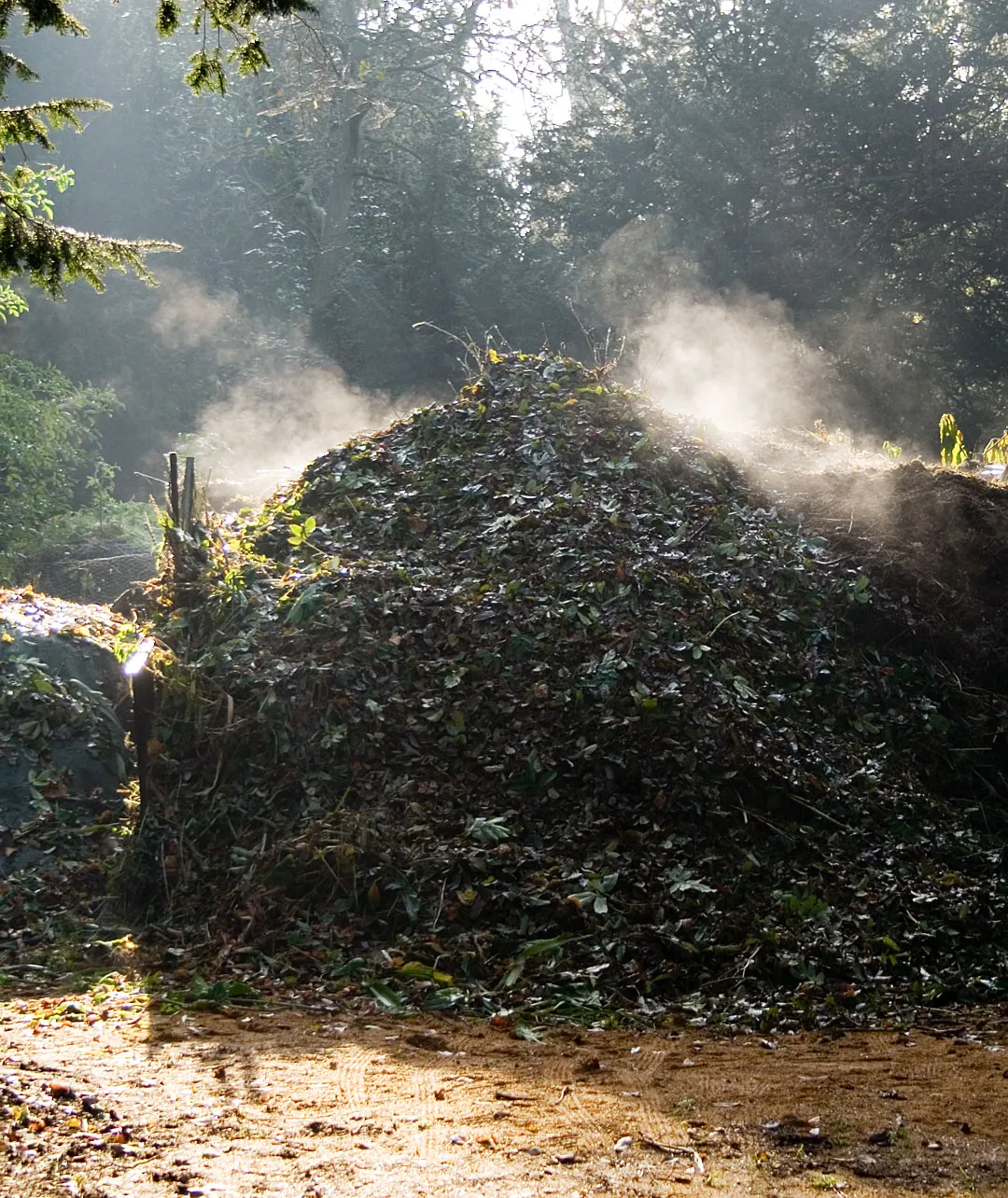
Compost heap on a frosty morning
Photograph of a large outdoor compost heap. The caption notes that the steam above the heap shows the exothermic activity of bacteria on a frosty morning.
How does organic matter turn into humus? The process of organic matter decomposition includes several stages (Pavlis 2020; Gershuny and Smillie 1999):
1. Mechanical fragmentation. Large residues are torn apart and broken down by soil animals—worms, insects, and mites.
2. Chemical decomposition. Bacteria and fungi release enzymes that break down complex molecules (cellulose, lignin, proteins) into simple compounds.
3. Mineralization. Simple compounds break down into inorganic forms—nitrates, phosphates, sulfates—that become available to plants.
4. Humification. Part of the organic matter does not decompose completely but is transformed into stable humic substances—humus.
Carbon-to-nitrogen ratio (C:N). This is the most important indicator for understanding organic matter decomposition. Microorganisms need carbon for energy and nitrogen for building cells. The optimal C:N ratio for their activity is about 25–30:1 (Eash et al. 2016; Pavlis 2020). If organic matter has a lot of carbon and little nitrogen (for example, straw, sawdust, dry leaves), microbes will take nitrogen from the soil, competing with plants. This can cause a temporary nitrogen deficiency in crops. If the C:N ratio is low (for example, fresh grass, manure, legumes), nitrogen is released quickly, sometimes even in excess (Gershuny and Smillie 1999).
Practical takeaway: Add organic matter with different C:N ratios. Compost, manure, cut grass, and green manure all enrich the soil with organic matter. But remember: fresh organic matter with a high C:N ratio (straw, sawdust) can temporarily reduce nitrogen availability. It is better to compost such materials before adding them or combine them with nitrogen sources (Pavlis 2020).
Organic matter is not only nutrition. Even if organic matter does not directly provide plants with many nutrients, it improves structure, retains water, supports microbial life, and increases soil resistance to erosion and compaction (Morgan 2021). Therefore, organic matter should be added regularly, even if soil analysis shows a sufficient level of NPK.
Regional aspect: In different climatic zones, the rate of organic matter decomposition varies. In a warm and humid climate, organic matter decomposes quickly, and its content in the soil is usually lower. In a cold or dry climate, decomposition is slowed, and organic matter accumulates (Gliessman 2015). This is important to consider when choosing a strategy: in the tropics, organic matter must be added more often to maintain its level; in temperate latitudes, it persists longer.
In the next chapter, we will examine how water and air interact in soil pores, what the soil solution is, and why the balance between water and air is critically important for roots.

Solar Automatic Drip Irrigation Kit for Gardens
Automate watering for pots, gardens and small greenhouses. This solar-powered system features a timer to help schedule water delivery to your plants.
- Solar-powered
- 15 m irrigation hose
- Programmable watering
Affiliate link · Check included accessories.
5. Water: The Soil Solution
Water in soil is not just moisture. It is the soil solution—water with dissolved mineral salts, nutrients, organic acids, and other compounds (Weil and Brady 2017). It is from this solution that plant roots absorb everything necessary for growth. Without water, life in the soil stops: microbes cannot process organic matter, roots cannot absorb nutrients, and plants wilt.
Three forms of water in soil. Water in soil exists in different states, and not all of it is equally available to plants (Foth 1990; Pavlis 2020):
- Gravitational water. It fills large pores and drains freely downward under the force of gravity. It does not remain in the soil—it moves deeper toward groundwater. This water is practically unavailable to plants because it quickly leaves the root zone. This is why, after heavy rain or watering, plants cannot use all the water—much of it drains away (Pavlis 2020).
- Capillary water. It is held in small and medium pores by surface tension—the attraction between water molecules and soil particles. This is the main source of water for plants. Capillary water can move in the soil in any direction—up, down, and sideways—and it is this water that replenishes moisture reserves around roots (Foth 1990; Eash et al. 2016).
- Hygroscopic (adhesive) water. A very thin film of water that is held on the surface of soil particles so strongly that plants cannot extract it. This water remains in the soil even after a plant has wilted. It is available only to microorganisms (Foth 1990; Pavlis 2020).
Field capacity and wilting point. Two key concepts help understand how much water is available to plants (Foth 1990; Eash et al. 2016):
- Field capacity is the maximum amount of water that soil can retain after gravitational water has drained away. It is reached 1–2 days after rain or watering. At field capacity, water is held in capillary pores and is available to plants. This is the optimal state for growth (Foth 1990).
- Wilting point is the state when water in the soil is held so strongly that plants can no longer absorb it. Plants wilt and, if not watered, die. Water is still present in the soil, but it is unavailable (Foth 1990).
- Available water is the difference between field capacity and wilting point. This is the volume of water that plants can use (Foth 1990; Eash et al. 2016).
How much water does soil hold? The ability to retain water depends strongly on texture (Foth 1990; Ingram et al. 2015):
- Sandy soil holds little water—about 1 inch per foot of depth (approximately 8% by volume). Most of this water is available to plants, but the total reserve is small. Sandy soils dry out quickly.
- Clayey soil holds a lot of water—up to 4 inches per foot (approximately 33% by volume). But most of this water is held so strongly that plants cannot extract it. Available water may be only 1 inch per foot.
- Loam is the optimal option. It holds about 2 inches of water per foot, and most of this water is available to plants.
Why is water not just H2O? Nutrients are dissolved in the soil solution in the form of ions: nitrates, phosphates, potassium, calcium, magnesium, and others (Weil and Brady 2017). Roots absorb these ions along with water. But the concentration of nutrients in the soil solution is very low—plants must pass large volumes of water through themselves to obtain enough nutrition (Weil and Brady 2017).
Water movement in soil. Water moves from wetter areas to drier ones, from areas with high potential to areas with low potential (Foth 1990). When a root absorbs water, a zone of reduced moisture forms around it, and water from neighboring pores rushes there. This process is called capillary movement. The speed of movement depends on pore size: in large pores water moves quickly, in small pores slowly (Foth 1990; Ingram et al. 2015).
Practical takeaway: Water less often but more deeply. This stimulates roots to grow deeper, where water reserves are greater. Frequent surface watering leads to the development of a shallow root system that suffers at the first drought (Pavlis 2020). Mulching helps preserve moisture in the soil by reducing evaporation (Eash et al. 2016; Morgan 2021).
6. Air: Oxygen for Roots and Microbes
Air in soil is just as important as water. Plant roots and soil microorganisms respire—they need oxygen (Pavlis 2020). Without sufficient air in the soil, roots suffocate, beneficial microbes die, and harmful anaerobic organisms begin to multiply.
Composition of soil air. Soil air differs from atmospheric air (Weil and Brady 2017):
- Oxygen. The atmosphere contains about 20% oxygen. Soil air contains less—usually 15–20%, but in compacted or waterlogged soils it can fall to 5% or lower. Roots and microbes consume oxygen during respiration, and if there is not enough, they cannot function normally (Weil and Brady 2017).
- Carbon dioxide. The atmosphere contains about 0.04%. Soil air contains tens or hundreds of times more, sometimes up to 5–10%. Carbon dioxide is released during root and microbial respiration. In high concentrations it can be toxic to roots (Weil and Brady 2017).
- Humidity. Soil air is almost always saturated with water vapor—humidity is close to 100% if the soil is not very dry (Weil and Brady 2017).
Why do roots need air? Roots are living organs that respire. They absorb oxygen and release carbon dioxide, like any other living cells (Eash et al. 2016). If there is no oxygen in the soil, roots cannot produce energy and die. This is why plants do not grow in waterlogged soil: water displaces air from the pores, and the roots suffocate (Pavlis 2020).
Anaerobic conditions. When all pores are filled with water, anaerobic (oxygen-free) conditions develop in the soil. Under such conditions, anaerobic bacteria multiply and produce toxic substances—alcohols, hydrogen sulfide, and organic acids (Pavlis 2020; Gershuny and Smillie 1999). These compounds can kill roots and beneficial microbes. In addition, under anaerobic conditions, organic matter decomposes not into humus but into intermediate products that are toxic to plants (Lowenfels 2010).
Gas exchange in soil. Air in the soil is not static. It is constantly exchanged with the atmosphere through pores (Weil and Brady 2017). When water enters the soil, it displaces air. When water leaves (evaporates or is absorbed by roots), air returns. This process is called soil respiration. The better the soil structure and the more large pores there are, the more efficient gas exchange is (Weil and Brady 2017; Ingram et al. 2015).
Compaction is the enemy of air. When soil compacts, pores shrink, and air cannot penetrate deeper. Causes of compaction include walking on garden beds, heavy machinery, and rain falling on bare soil (Chalker-Scott 2018; Morgan 2021). Compacted soil has low porosity, poor drainage, and insufficient oxygen for roots. Plants in such soil grow poorly, roots cannot penetrate deeper, and water stagnates on the surface (Chalker-Scott 2018).
How to improve aeration? The best way is to add organic matter. Organic matter improves soil structure by creating aggregates with pores of different sizes (Gershuny and Smillie 1999; Morgan 2021). The following also help:
- Mulching — protects the surface from rain compaction and keeps pores open (Chalker-Scott 2018).
- Minimal tillage — does not destroy soil structure or compact it (Chalker-Scott 2018; Walliser 2020).
- Avoiding walking on garden beds — use paths or boards to distribute weight (Chalker-Scott 2018).
- Growing green manure — their roots loosen the soil and create channels for air and water (Walliser 2020).
Important note: Not all plants are equally sensitive to lack of air. Some, such as rice, are adapted to waterlogged soils and can conduct oxygen through special channels in their stems. But most vegetable crops need well-aerated soil (Pavlis 2020; Ingram et al. 2015).
Practical takeaway: Healthy soil is soil that contains both water and air. Do not allow water to stagnate, and do not compact the soil. Regularly add organic matter—it creates structure that retains moisture while also providing air access to roots (Morgan 2021; Gershuny and Smillie 1999).
In the next chapter, we will talk about the living organisms that inhabit the soil and the work they perform.

7-in-1 Wi-Fi Weather Station
Monitor local weather conditions with a wireless outdoor sensor. Track temperature, humidity, rainfall, wind speed and direction, and atmospheric pressure. Ideal for gardens, farms and greenhouses.
- Wireless outdoor sensor
- Solar-powered
- Wi-Fi connectivity
Affiliate link · Check regional compatibility.
7. Living Organisms: Bacteria, Fungi, Worms, Insects
Soil is not just a mixture of minerals, water, air, and organic matter. It is a living system, inhabited by billions of organisms that process organic matter, create structure, supply plants with nutrients, and protect them from diseases (Eash et al. 2016; Weil and Brady 2017). A single teaspoon of healthy soil can contain more microorganisms than there are people on Earth (Pavlis 2020).
Living organisms are the “conductors” of soil processes. Without them, organic matter would not decompose, nutrients would remain in unavailable forms, and soil would turn into an inert mixture of dust and stones. Let us consider the main inhabitants of the soil.
Bacteria
Bacteria are the most numerous and diverse soil organisms. One gram of healthy soil may contain from several hundred million to several billion of them (Gershuny and Smillie 1999; Pavlis 2020). They are single-celled organisms that reproduce by division and can double their population every hour under favorable conditions (Gershuny and Smillie 1999).
What do they do? Bacteria are the main “processors” of organic matter in soil. They release enzymes that break down complex molecules (proteins, carbohydrates, cellulose) into simple compounds available to plants (Eash et al. 2016). Bacteria also play a key role in the cycles of nitrogen, sulfur, and phosphorus.
Nitrogen fixation. Some bacteria, such as Rhizobium, live in symbiosis with leguminous plants. They form nodules on roots and convert atmospheric nitrogen into a form available to plants (Eash et al. 2016; Gershuny and Smillie 1999). Other free-living bacteria, such as Azotobacter, also fix nitrogen, although in smaller amounts (Gershuny and Smillie 1999).
Conditions for life. Most beneficial bacteria are aerobes, meaning they need oxygen. They prefer neutral pH (about 7), a temperature of 20–35 °C, and moist but not waterlogged soil (Gershuny and Smillie 1999; Pavlis 2020). Under anaerobic conditions (without oxygen), other bacteria develop and produce toxic substances—alcohols, hydrogen sulfide, and methane (Pavlis 2020).
Important note: There is a common myth that synthetic fertilizers kill soil bacteria. This is not true. Nutrient ions from fertilizers are identical to those released from organic matter, and bacteria use them (Pavlis 2020). However, excess fertilizer can disrupt the balance, and long-term use of only mineral fertilizers without organic matter reduces microbial diversity (Morgan 2021).
Fungi

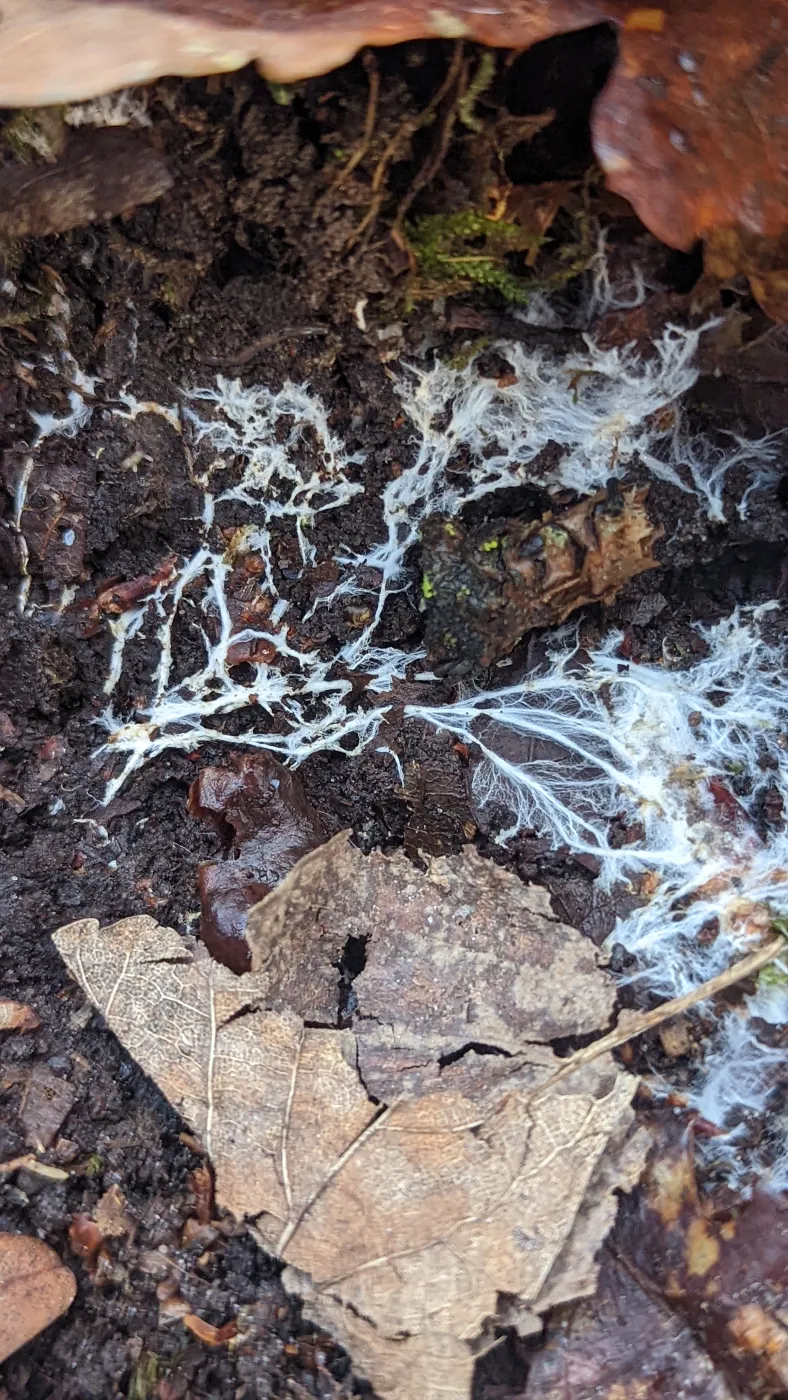
Mycelium: the underground network of fungal hyphae
A branched network of thin fungal filaments forming mycelium. Such structures participate in the decomposition of organic remains and in colonizing the environment.
Fungi are second in importance after bacteria. They are less numerous, but their total biomass in soil is comparable to bacterial biomass because each fungal organism is larger (Pavlis 2020). Fungi consist of long threads—hyphae—which form a network—the mycelium. One gram of soil may contain from 100 to 1000 meters of hyphae (Pavlis 2020).
What do they do? Fungi can decompose what bacteria cannot—lignin and cellulose (Pavlis 2020). It is fungi that process wood, straw, and fallen leaves. They release enzymes that break down tough plant tissues and absorb nutrients through hyphae (Pavlis 2020).
Mycorrhiza. Mycorrhizal fungi—plant symbionts—play a special role. They penetrate roots (endomycorrhiza) or envelop them externally (ectomycorrhiza) and form a mutually beneficial union with the plant (Pavlis 2020; Walliser 2020). The fungus receives sugars from the plant and in return supplies water and mineral elements, especially phosphorus, which the plant itself cannot efficiently extract from the soil (Pavlis 2020). Mycorrhiza increases the effective surface area of roots by 1000 times (Pavlis 2020).
The “Wood Wide Web.” Mycorrhizal fungi can connect the roots of different plants into a single network through which nutrients and even pest signals are transmitted (Pavlis 2020). This phenomenon is called the “underground internet” or the “wood wide web.”
Conditions for life. Fungi prefer an acidic environment (pH 4.5–5.5), unlike bacteria (Pavlis 2020). They tolerate low temperatures better and can grow under anaerobic conditions, but they need oxygen for active activity. Fungi are sensitive to tillage: plowing and milling destroy the mycelium (Pavlis 2020; Walliser 2020).
Important note: About 90% of plants form mycorrhizal associations. Exceptions are cruciferous plants (cabbage, radish, broccoli) and amaranth family plants (spinach, beet) (Pavlis 2020). These crops do not need mycorrhiza and may even suffer from excess phosphorus that fungi supply to other plants.
Actinomycetes
Actinomycetes are a special group of bacteria that resemble fungi in appearance: they form threads and mycelium but are biologically closer to bacteria (Eash et al. 2016; Pavlis 2020). They decompose lignin, cellulose, and other resistant compounds that ordinary bacteria cannot handle (Eash et al. 2016).
It is actinomycetes that give soil its characteristic earthy smell after rain or digging (Eash et al. 2016). They also produce antibiotics—streptomycin and others—that are used in medicine (Eash et al. 2016; Pavlis 2020). Actinomycetes prefer neutral or slightly alkaline pH and tolerate dry conditions well (Pavlis 2020).
Protozoa and Nematodes
Protozoa are single-celled organisms that feed on bacteria and other microbes. They play a key role in nitrogen mineralization: by eating bacteria, they release excess nitrogen in the form of ammonium available to plants (Pavlis 2020; Gershuny and Smillie 1999). One teaspoon of soil may contain from 1000 to 1 million protozoa (Pavlis 2020).
Nematodes are microscopic roundworms. Most of them feed on bacteria, fungi, protozoa, or other nematodes, participating in organic matter processing and regulating microbial populations (Pavlis 2020). Some nematodes parasitize plants, damaging roots. In healthy soil, beneficial nematodes predominate over pathogenic ones (Pavlis 2020).
Worms and Other Macroorganisms

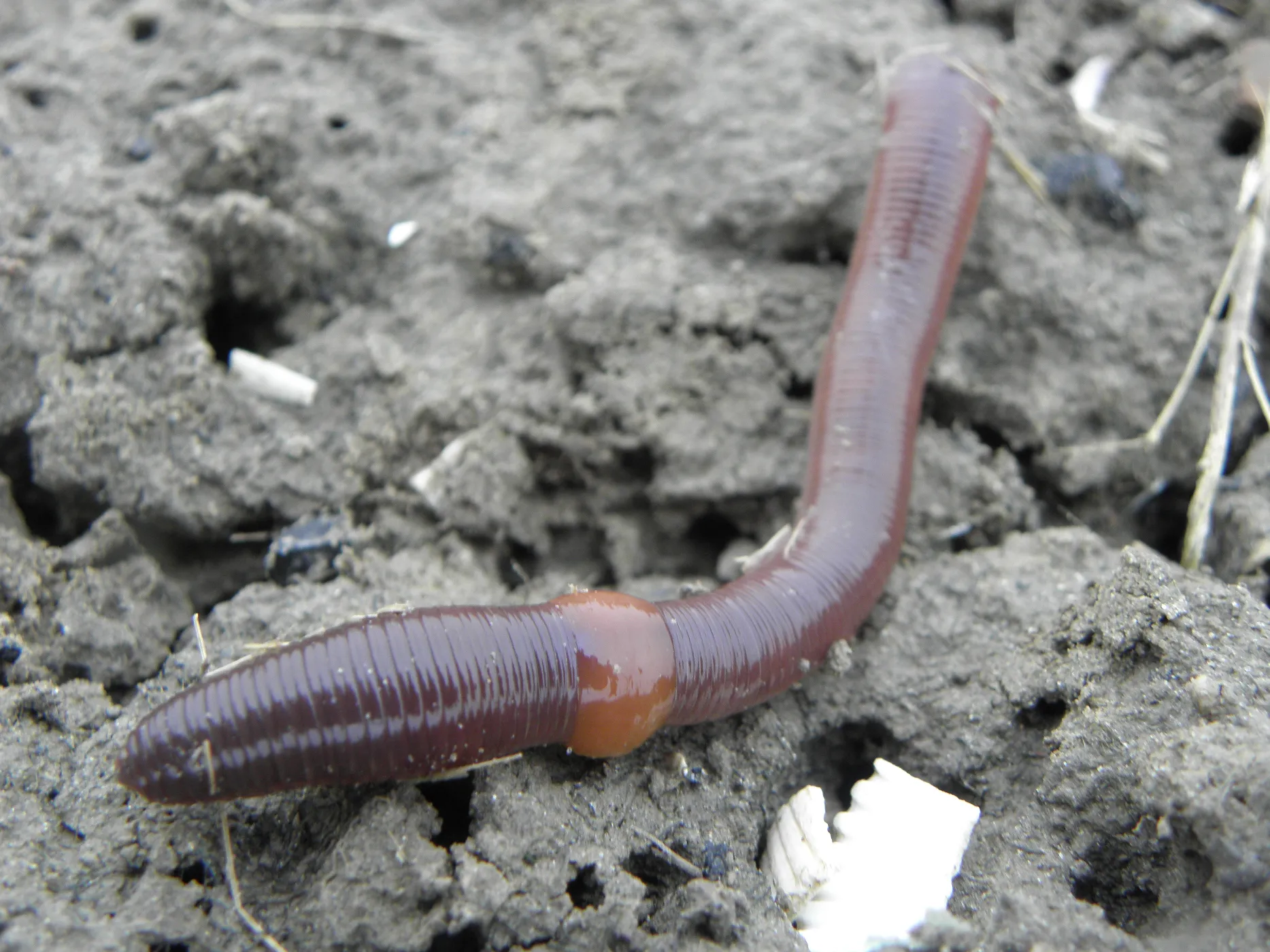
Earthworms: engineers of the soil ecosystem
Organic remains and a suitable soil structure create favorable conditions for these organisms to live. Worms process organic matter, mix mineral particles, and form burrows that improve aeration and drainage.
Earthworms are “ecosystem engineers.” They eat organic matter and mineral particles, pass them through their digestive system, and excrete casts—granules rich in nutrients and microbes (Eash et al. 2016; Gershuny and Smillie 1999). Worms create burrows that improve aeration and drainage and mix organic matter with the mineral part of the soil (Eash et al. 2016).
Worms prefer moist soil with neutral pH and abundant organic matter. One acre of soil may contain from 200 to 1000 pounds of worms (Eash et al. 2016). They are sensitive to compaction, chemical treatments, and low pH.
Arthropods—mites, springtails, ants, beetles, and millipedes—break down organic matter, mix the soil, and regulate populations of other organisms (Pavlis 2020). Springtails and mites process up to 30% of fallen leaves in temperate latitudes (Pavlis 2020).
Mammals—moles, mice, and gophers—dig burrows, mix the soil, and enrich it with their excrement (Gershuny and Smillie 1999).
Rhizosphere: The Busiest Place in the Soil
The rhizosphere is the narrow zone around roots (2–3 mm) where the greatest number of microbes is concentrated (Pavlis 2020; Gershuny and Smillie 1999). Plants release exudates through their roots—sugars, amino acids, and organic acids that attract bacteria and fungi (Pavlis 2020). In the rhizosphere, microbial numbers are 10–100 times higher than in the rest of the soil (Gershuny and Smillie 1999).
Plants actively manage the microbial community: they release substances that stimulate beneficial microbes and suppress pathogens (Pavlis 2020). In response, microbes supply plants with nutrients, protect them from diseases, and improve soil structure.
Practical takeaway: Healthy soil is soil with diverse and numerous biota. What can be done to support soil life?
- Add organic matter—compost, manure, green manure, and mulch. This is food for microbes (Morgan 2021; Gershuny and Smillie 1999).
- Minimize tillage—plowing and milling destroy fungal mycelium and worm burrows (Pavlis 2020; Walliser 2020).
- Do not leave the soil bare—mulch and green manure protect microbes from the sun and erosion (Morgan 2021; Walliser 2020).
- Maintain pH in the optimal range—most beneficial microbes prefer pH 6–7 (Gershuny and Smillie 1999; Pavlis 2020).
- Avoid compaction—do not walk on garden beds and do not operate machinery on wet soil (Chalker-Scott 2018).
- Diversify plantings—different plants support different groups of microbes (Pavlis 2020; Walliser 2020).
8. What Happens When Proportions Are Disrupted
The ideal ratio of components—45% minerals, 5% organic matter, 25% water, and 25% air—is a guide. In reality, soil rarely matches the ideal, and deviations can be both natural and caused by human activity. Understanding what happens when proportions are disrupted helps diagnose problems and make the right decisions.
Waterlogging: When Water Displaces Air
If there is too much water in the soil, it fills all pores, displacing air. Anaerobic conditions develop—without oxygen (Pavlis 2020; Foth 1990). Roots cannot breathe, their metabolism is disrupted, and they die. In addition, under anaerobic conditions, putrefactive bacteria develop and produce toxic substances: alcohols, hydrogen sulfide, and organic acids (Pavlis 2020; Gershuny and Smillie 1999).
Signs of waterlogging:
- Water stagnates on the surface after rain or watering.
- The soil has an unpleasant, putrid smell.
- Plant roots are dark, soft, and break easily.
- Plants wilt despite abundant water (roots cannot absorb it).
- A green film (algae) or moss appears on the soil surface.
Causes:
- Heavy clayey soil with poor drainage.
- A compacted layer (plow pan) below the topsoil.
- High groundwater level.
- Excessive watering or rain.
What to do?
- Add organic matter to improve structure (Johnson 2025).
- Create raised beds or ridges.
- Install drainage ditches or tiles.
- Do not walk on waterlogged soil—this increases compaction (Chalker-Scott 2018).
- Plant crops adapted to wet conditions if drainage is impossible.
Compaction: When Pores Disappear

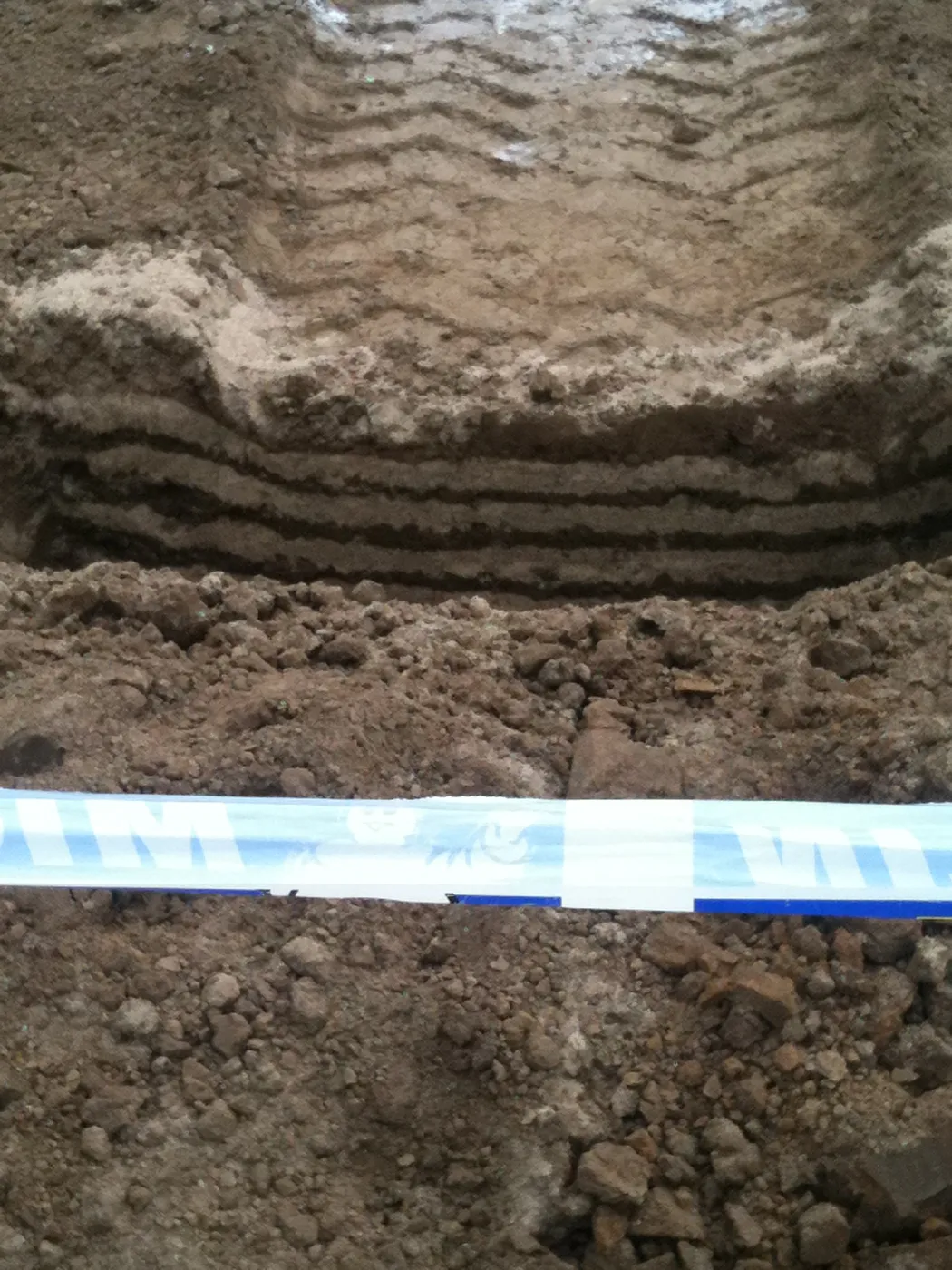
Soil profile after compaction by machinery
Soil cross-section with alternating layers of sand and loess, demonstrating the consequences of machinery passage.
Compaction is the compression of soil in which pore volume decreases and density increases (Chalker-Scott 2018). Pores are the space for air, water, and roots. When there are fewer of them, the soil loses its ability to transmit water and air.
Signs of compaction:
- Water runs off the surface without being absorbed.
- Roots grow horizontally and do not penetrate deeper.
- The soil is hard and difficult to work with a spade or fork.
- A crust forms on the surface after rain.
- Plants are suppressed and grow poorly even with watering and fertilizing.
Causes:
- Walking on garden beds.
- Operation of heavy machinery.
- Rain or watering on bare soil.
- Lack of organic matter that creates loose structure.
- Tillage of soil in a wet state (Chalker-Scott 2018).
What to do?
- Do not walk on garden beds—use paths or boards (Chalker-Scott 2018).
- Add organic matter—it loosens the soil and creates pores (Johnson 2025; Morgan 2021).
- Mulch the surface—mulch protects against raindrop impact and compaction (Chalker-Scott 2018).
- Grow green manure with deep roots—they loosen the soil (Walliser 2020).
- Avoid tillage of soil in a wet state (Chalker-Scott 2018).
- In extreme cases, mechanical loosening (for example, with a fork or cultivator), but without turning the layer.
Organic Matter Deficiency: When Soil Loses Life
Organic matter is the basis of fertility and structure. When there is little of it, the soil becomes inert, retains water and nutrients poorly, and loses structure (Gershuny and Smillie 1999; Morgan 2021).
Signs of organic matter deficiency:
- Light soil color (organic matter gives a dark color).
- Poor structure—the soil is dusty or, conversely, cloddy.
- Rapid drying after rain.
- Poor plant growth even when fertilizers are applied.
- Few worms and other soil organisms.
- Water easily leaches nutrients.
Causes:
- Intensive tillage, which accelerates organic matter decomposition.
- Removal of plant residues from garden beds.
- No application of compost, manure, or green manure.
- Erosion—loss of the top fertile layer.
What to do?
- Regularly add compost, manure, and leaf mold (Morgan 2021; Gershuny and Smillie 1999).
- Grow green manure—they build organic matter in the soil (Walliser 2020).
- Leave plant residues on garden beds (if they are not infected with diseases).
- Mulch the soil with organic matter (Chalker-Scott 2018).
- Minimize tillage—disturb the soil less so that organic matter does not decompose too quickly (Chalker-Scott 2018; Pavlis 2020).
Excess Organic Matter: When “Too Much” Is Also Bad
It may seem that there can never be too much organic matter. But this is not true. Excess organic matter, especially fresh organic matter, can cause problems (Pavlis 2020).
Signs of excess organic matter:
- Plants turn yellow despite abundant organic matter (nitrogen is temporarily immobilized by microbes).
- High phosphorus level in the soil (from excess manure and compost).
- Phytotoxicity—some decomposing organic materials release toxic compounds.
- Soil acidification (some types of organic matter, such as coniferous sawdust, acidify the soil).
- Increased reproduction of pests and diseases (for example, slugs, which like moist organic matter).
What to do?
- Do not apply fresh organic matter immediately before planting—let it decompose.
- Compost organic matter before applying it (Pavlis 2020).
- Monitor the C:N ratio—if C:N is high, add a nitrogen component.
- Regularly conduct soil analysis to prevent accumulation of phosphorus and other elements (Pavlis 2020; Lowenfels 2013).
- Consider crop needs: some plants (for example, root crops) are harmed by excess organic matter.
Mineral Fraction Imbalance: Sand and Clay
Soil that is too sandy:
- Quickly loses water and nutrients.
- Requires frequent watering and fertilizing.
- Organic matter decomposes quickly, and humus does not accumulate.
- Plants suffer from drought.
- Solution: add organic matter (compost, manure), mulch, use green manure, and choose drought-resistant crops (Pavlis 2020; Johnson 2025).
Soil that is too clayey:
- Poorly transmits water and air.
- Warms up slowly in spring.
- Easily compacts and forms a crust.
- Roots cannot penetrate deeper.
- Solution: add organic matter (this is the only effective way), do not add sand (this can make the soil resemble concrete), create raised beds, and mulch (Johnson 2025; Chalker-Scott 2018).
Regional Aspect
In different regions of the world, soils have their own characteristics, and problems associated with disrupted proportions manifest differently (Gliessman 2015; Weil and Brady 2017):
- Arid regions. Soils are often sandy or stony, with low organic matter content. The main problem is a lack of water and nutrients. Solution: organic mulches, drip irrigation, and drought-resistant crops.
- Humid tropics. Soils are often clayey, with rapid organic matter decomposition. The main problem is nutrient leaching and erosion. Solution: permanent plant cover, mulching, and agroforestry.
- Temperate latitudes. Soils are diverse—from sandy to clayey. The main problems are compaction and loss of organic matter due to intensive tillage. Solution: minimal tillage, green manure, and compost.
- Cold regions. Soils are often acidic, with slow organic matter decomposition. The main problem is a short season and low microbial activity. Solution: drainage, liming, and acceleration of organic matter decomposition (compost, warm beds).
Practical Takeaway
Soil is a dynamic system that strives for equilibrium. But this equilibrium does not always coincide with what plants need. Disrupted proportions are not a sentence but a signal for action. Observe the soil: how it absorbs water, how it smells, what plants grow on it, and whether there are worms. These simple observations will help you notice a problem in time and correct it.
The gardener’s main tool is organic matter. It improves the structure of both sandy and clayey soils, supports microbial life, and retains water and nutrients. Regular application of compost, mulching, green manure, and minimal tillage are universal techniques that work in any region and on any soil (Morgan 2021; Gershuny and Smillie 1999; Chalker-Scott 2018).
In the next chapter, we will examine the regional characteristics of soils and give final recommendations.

40W Full Spectrum LED Grow Light
Support healthy plant growth with full-spectrum LED lighting. Ideal for seedlings, indoor plants and small growing spaces. A practical solution for indoor gardening and year-round cultivation.
- Full-spectrum LED
- Energy-efficient design
- Indoor plant growing
Affiliate link · Check actual power and light coverage.
9. Regional Aspect: Why Soils Are So Different
Soil is a product of climate, vegetation, relief, parent material, and time (Weil and Brady 2017; Foth 1990). This is why soils in different regions of the world differ so much in composition and properties. It is important for a gardener to understand these differences in order to choose crops, watering strategies, and soil improvement methods correctly.
Sandy Soils: Fast and Dry
Sandy soils are common in arid regions, as well as in river valleys and coastal plains. They consist predominantly of large sand particles, with low silt and clay content (Pavlis 2020; Eash et al. 2016).
Characteristics:
- Quickly transmit water but retain it poorly.
- Low organic matter and nutrient content.
- Good aeration but rapid moisture loss.
- Easy to cultivate but require frequent watering and fertilizing.
What this means for the gardener: In sandy soils, the main task is to retain water and nutrients. Organic matter is the only effective solution: compost, manure, mulch, and green manure (Pavlis 2020; Johnson 2025). Organic matter fills large pores, retaining moisture, and serves as a reservoir of nutrients. Drip irrigation and the choice of drought-resistant crops also help (Johnson 2025).
Important note: Do not add clay to sandy soil. This will create a layered structure that impedes water movement (Johnson 2025). It is better to gradually build up organic matter.
Clayey Soils: Heavy and Wet
Clayey soils are common in regions with temperate and humid climates, as well as in river floodplains. They consist of the finest flat clay particles that fit tightly together (Pavlis 2020; Ingram et al. 2015).
Characteristics:
- Slowly transmit water, easily seal and compact.
- Retain nutrients and water well.
- Poor aeration, especially when wet.
- Warm up slowly in spring.
- Difficult to cultivate: sticky when wet, hard when dry.
What this means for the gardener: In clayey soils, the main task is to improve structure and aeration. Organic matter is again the best solution: it loosens clay, creates pores, and improves drainage (Johnson 2025; Chalker-Scott 2018). Do not add sand—this can make the soil resemble concrete. Mulching and green manure with deep roots also help. In extreme cases, use raised beds.
Important note: Do not till clayey soil when it is wet. This increases compaction and destroys structure (Chalker-Scott 2018; Ingram et al. 2015).
Peaty and Organic Soils: Lots of Organic Matter, Few Minerals

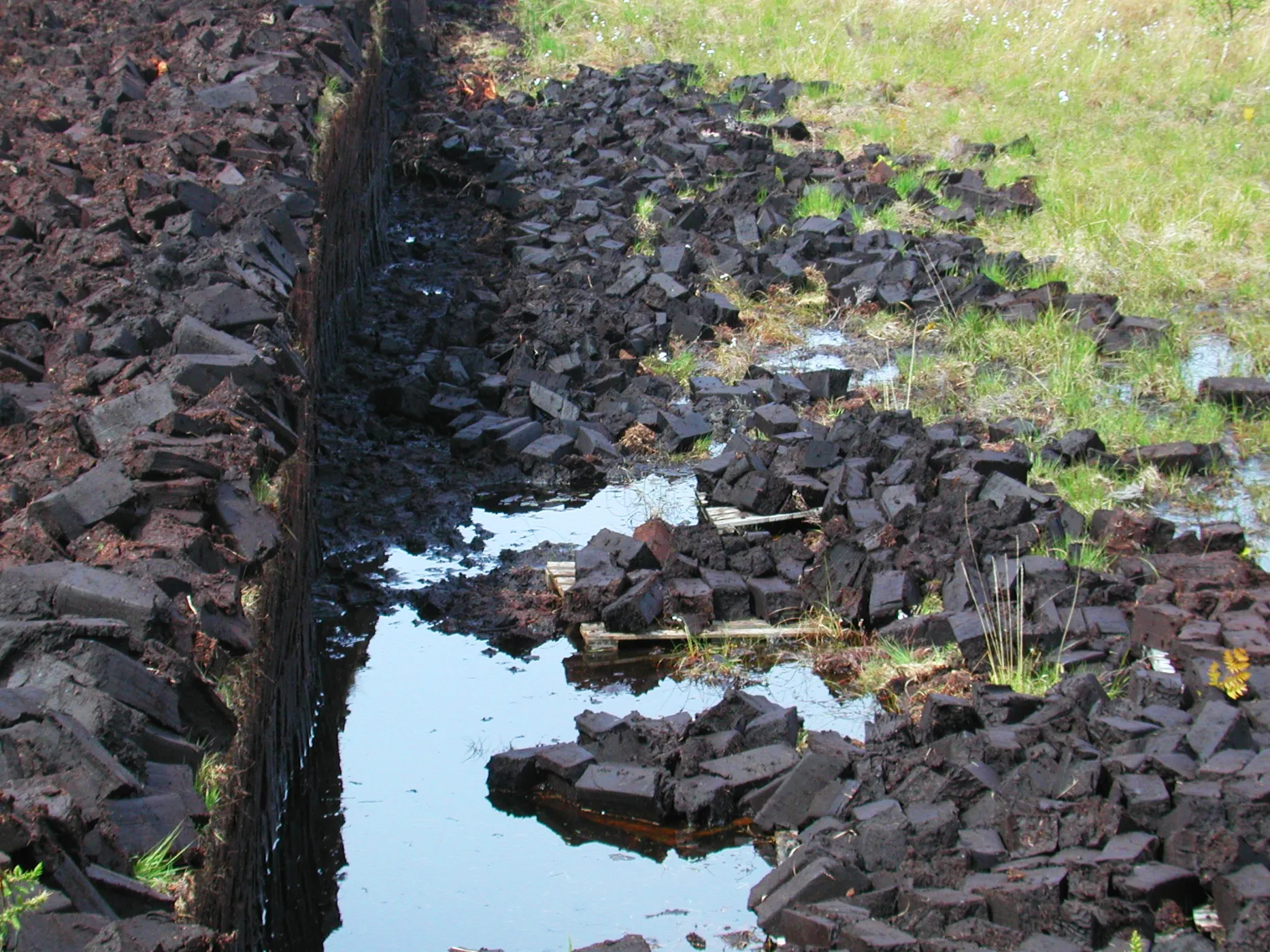
Peatland: a natural system of organic matter accumulation
Landscape of a peat bog where plant remains accumulate under conditions of excessive moisture and slowed decomposition.
Peaty soils form under waterlogged conditions where organic matter accumulates faster than it decomposes (Foth 1990; Eash et al. 2016). They contain more than 20% organic matter, sometimes up to 90% (Eash et al. 2016).
Characteristics:
- Very high organic matter content.
- Low content of mineral particles.
- High water capacity but poor drainage.
- Often acidic (pH 3.5–5.5).
- Light and airy, but when dry they can be dusty.
What this means for the gardener: Peaty soils require the addition of a mineral fraction and deacidification. Lime, dolomite flour, sand, clay, and mineral fertilizers all help balance the composition (Foth 1990). Drainage is a mandatory condition for growing most crops. After drainage, peat decomposes quickly, and the soil subsides—this is a natural process (Foth 1990; Eash et al. 2016).
Important note: Peaty soils are a nonrenewable resource. Their extraction damages ecosystems. If you have peaty soil, it is better to preserve it and adapt crops than to try to completely change it (Gershuny and Smillie 1999).
Arid and Semiarid Regions: Salt and Alkalinity

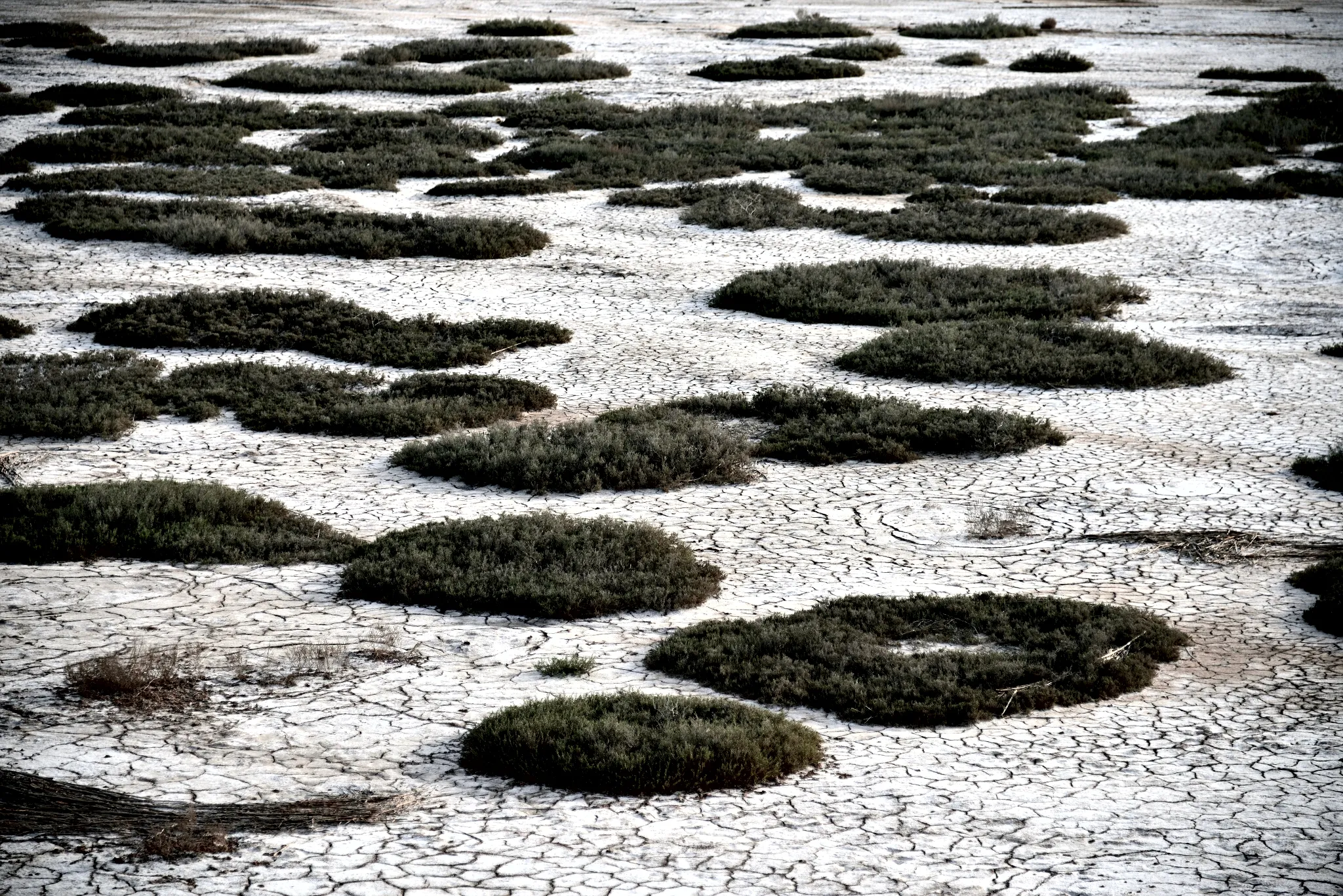
Saline soil on the shore of Lake Elton
The photograph was taken in the territory of the Eltonsky Nature Park, Pallasovsky District, Volgograd Oblast, Russia. An example of natural conditions in which, due to insufficient precipitation and intense evaporation, salts can accumulate in the upper soil layers.
In arid regions (the Mediterranean, Central Asia, the southern United States, and Australia), soils often contain a lot of salts and have an alkaline reaction (Gliessman 2015; Weil and Brady 2017). This is due to low precipitation: salts are not leached but accumulate in the upper horizons.
Characteristics:
- Alkaline pH (above 7.5).
- Salt accumulation (sodium, chlorine, sulfates).
- Low organic matter content.
- Poor structure, tendency to crusting.
- Deficiency of available iron, zinc, and phosphorus.
What this means for the gardener: The main task is to leach salts and add organic matter. Irrigation should be abundant so that salts are washed deeper (Eash et al. 2016). Organic matter improves structure and increases nutrient availability. Mulching reduces evaporation and salt accumulation on the surface (Johnson 2025).
Important note: In alkaline soils, iron and other trace elements become unavailable. Chelated forms of fertilizers help solve this problem (Pavlis 2020; Lowenfels 2013).
Humid Tropics: Fast Decomposition, Leaching

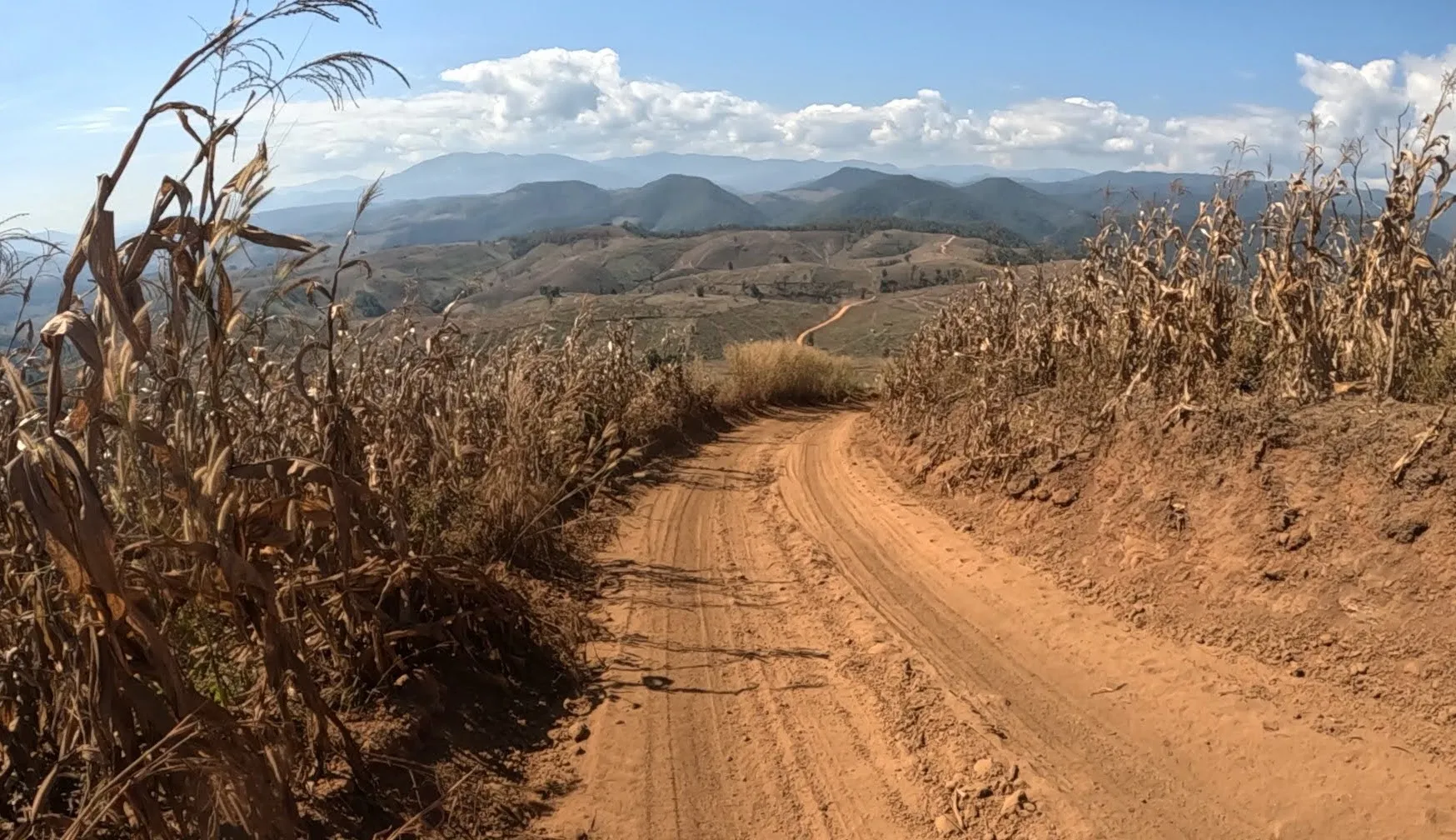
Lateritic soils of tropical highlands
A lateritic dirt road runs through rural countryside during the dry season. The author's description notes that laterite is the predominant surface material of the tropical highlands. Shooting location: highland part of Thailand. The image shows the landscape and lateritic surface rather than a soil profile.
In tropical regions with abundant rainfall, soils are highly weathered and poor in nutrients (Gliessman 2015; Foth 1990). High temperatures and humidity accelerate organic matter decomposition, and rains leach nutrients.
Characteristics:
- Low organic matter content.
- Acidic (pH 4.5–5.5).
- Rich in iron and aluminum oxides (red and yellow colors).
- Low cation exchange capacity (CEC), poor nutrient retention.
- Phosphorus is fixed and becomes unavailable.
What this means for the gardener: The main task is to retain nutrients and organic matter. Permanent plant cover, mulching, compost, and green manure are mandatory techniques (Gliessman 2015; Walliser 2020). Agroforestry and mixed plantings help create a sustainable system. Liming raises pH and phosphorus availability (Foth 1990).
Important note: In the tropics, organic matter decomposes very quickly. What works for years in temperate latitudes disappears within months here. Therefore, organic matter must be applied often and regularly (Gliessman 2015).
Temperate Latitudes: Diversity and Compaction
In temperate latitudes (Europe, North America, temperate Asia), soils are diverse: from sandy to clayey, from acidic to neutral. The main problems are compaction and loss of organic matter due to intensive tillage (Chalker-Scott 2018; Morgan 2021).
Characteristics:
- Diversity of textures and pH.
- Seasonality: freezing in winter, drying in summer.
- Active biological life in the warm season.
- Tendency to compaction under intensive tillage.
What this means for the gardener: The main task is to maintain organic matter and structure. Minimal tillage, mulching, green manure, and compost are universal techniques (Chalker-Scott 2018; Morgan 2021). Do not walk on garden beds and do not till when wet. Crop diversity supports microbial diversity.
Cold Regions: Acidic and Slow
In cold regions (Northern Europe, Siberia, Canada, and Alaska), soils are often acidic, with slow organic matter decomposition and a short season (Foth 1990; Gliessman 2015).
Characteristics:
- Acidic (pH 4.0–5.5).
- Low microbial activity.
- Organic matter accumulates but decomposes slowly.
- Permafrost limits drainage.
- Short growing season.
What this means for the gardener: The main task is to accelerate organic matter decomposition and improve drainage. Liming, compost, warm beds, and drainage ditches are necessary measures (Foth 1990). Choose cold-resistant crops and early varieties. Mulching helps preserve heat.
Important note: In cold soils, microbes are less active, so nutrients are released more slowly. Plants may suffer from nitrogen deficiency even if organic matter is present (Pavlis 2020).
Universal Conclusion
Regardless of region, the gardener’s main tool is organic matter. It improves the structure of any soil: sandy, clayey, or peaty. It supports microbial life, retains water and nutrients, and increases resistance to erosion and drought (Gershuny and Smillie 1999; Morgan 2021). Regional characteristics determine strategy but do not cancel the main principle: feed the soil, not the plant.
10. Conclusion: Soil Composition Determines Its Behavior
Soil is not a monolith and not inert “dirt.” It is a dynamic mixture of four components: mineral fraction, organic matter, water, and air. Their ratio determines everything: how quickly soil absorbs water, how much moisture it retains, how well it transmits air to roots, and how many nutrients it can store and release to plants (Weil and Brady 2017; Eash et al. 2016).
The ideal ratio is approximately 45% minerals, 5% organic matter, 25% water, and 25% air (Gliessman 2015; Weil and Brady 2017). This is a guide, not a dogma. In reality, soils deviate from the ideal, and these deviations determine their behavior.
The mineral fraction is the skeleton of the soil. Sand, silt, and clay differ in particle size and determine texture. Sandy soils quickly lose water and nutrients, clayey soils poorly transmit air, and silty soils are prone to compaction. Loam is the optimal balance (Pavlis 2020; Ingram et al. 2015).
Organic matter is the soul of the soil. Even 5% organic matter radically changes properties: it improves structure, retains water and nutrients, supports microbes, and buffers pH (Gershuny and Smillie 1999; Morgan 2021). Humus is the stable fraction of organic matter that persists in soil for years and centuries.
Water is the soil solution from which roots obtain nutrients. Not all water is available to plants: gravitational water drains away, and hygroscopic water is held too strongly. Available water lies between field capacity and wilting point (Foth 1990; Eash et al. 2016).
Air is oxygen for roots and microbes. Without it, roots suffocate, beneficial microbes die, and anaerobic processes with toxic products develop (Pavlis 2020; Weil and Brady 2017). The balance of water and air is a critical condition for soil health.
Living organisms are the conductors of soil processes. Bacteria and fungi decompose organic matter, supply nutrients, and create structure. Mycorrhiza expands the root system of plants. Worms and insects mix the soil and improve aeration (Eash et al. 2016; Pavlis 2020; Gershuny and Smillie 1999).
Disrupted proportions lead to problems: waterlogging, compaction, organic matter deficiency, and mineral fraction imbalance. But these problems are solvable. The main tool is organic matter. It improves any soil and supports life (Morgan 2021; Chalker-Scott 2018).
Regional characteristics determine strategy. In sandy soils—retain water and nutrients. In clayey soils—improve structure and aeration. In peaty soils—add minerals and deacidify. In arid regions—leach salts and mulch. In the tropics—retain organic matter. In temperate latitudes—support structure. In cold regions—accelerate decomposition and improve drainage.
The main conclusion: Soil composition determines its behavior. Understanding this is the key to successful gardening. You do not need to be a soil scientist to grow a harvest. But you do need to understand that soil is a living system that requires care. Feed the soil with organic matter, do not compact it, and support life in it—and it will reward you with healthy plants and a rich harvest.
What a gardener should do:
1. Observe the soil. How does it absorb water? How does it smell? Are there worms? What color is it? These simple observations will tell you a lot about its condition.
2. Add organic matter. Compost, manure, leaf mold, green manure, and mulch are universal techniques for any soil (Morgan 2021; Gershuny and Smillie 1999).
3. Minimize tillage. Dig less, do not mill unnecessarily, and do not walk on garden beds (Chalker-Scott 2018; Pavlis 2020).
4. Mulch. Mulch protects against erosion, preserves moisture, suppresses weeds, and supports microbes (Chalker-Scott 2018; Johnson 2025).
5. Diversify plantings. Different plants support different groups of microbes and improve the soil (Pavlis 2020; Walliser 2020).
6. Check pH and nutrients. Soil analysis is not a luxury but a necessity for understanding what your particular soil needs (Lowenfels 2013).
7. Adapt to the region. Choose crops suited to your soil and climate. Do not try to remake nature—work with it (Gliessman 2015; Johnson 2025).
Soil is the foundation of the garden. Everything depends on its composition: from watering to the harvest. Understanding soil composition is the first step toward successful and sustainable gardening.
References
- (2014). ‘Soil’, in Agroecology. : CRC Press, 108-123. doi: 10.1201/b17881-13
- (2015). ‘Summary’, in Ingram, D.S., Vince-Prue, Daphne, Gregory, P.J. (ed.) Science and the Garden. The scientific basis of horticultural practice. West Sussex, UK: Royal Horticulture Society. Wiley Blackwell, pp. 75-85.
- Bubel, Nancy, Nick, Jean (2024). ‘Moving Plants Outdoors’, in The New Seed-Starters Handbook. : Rodale, .
- Capon, Brian (2022). ‘How Plants Function’, in Botany for Gardeners. An Introduction to the Science of Plants. Portland, Oregon: Timber Press, pp. 144-192.
- Chalker-Scott, Linda (2018). ‘Soil Analysis: What Makes Soil Great?’, in The Science of Gardening. Course Guidebook. Chantilly, Virginia: The Great Courses, pp. 25-36.
- Chalker-Scott, Linda (2018). ‘Soil Preparation and Protection’, in The Science of Gardening. Course Guidebook. Chantilly, Virginia: The Great Courses, pp. 73-80.
- Eash, N.S., Sauer, T.J., O'Dell, D., Odoi, Evah (2016). ‘Introduction to Soil’, in Soil Science Simplified. New Jersey: Wiley Blackwell, ch. 1.
- Eash, N.S., Sauer, T.J., O'Dell, D., Odoi, Evah (2016). ‘Soil Biological Properties’, in Soil Science Simplified. New Jersey: Wiley Blackwell, ch. 4.
- Eash, N.S., Sauer, T.J., O'Dell, D., Odoi, Evah (2016). ‘Soil Water’, in Soil Science Simplified. New Jersey: Wiley Blackwell, ch. 6.
- Foth, H.D. (1990). ‘Soil Organic Matter’, in Fundamentals of Soil Science. New York: John Wiley & Sons, pp. 133-147.
- Foth, H.D. (1990). ‘Soil Water’, in Fundamentals of Soil Science. New York: John Wiley & Sons, pp. 54-72.
- Foth, H.D. (1990). ‘Soil as a Natural Body’, in Fundamentals of Soil Science. New York: John Wiley & Sons, pp. 11-21.
- Gershuny, Grace, Smillie, Joe (1999). ‘Appendices’, in The Soul of Soil. A Soil-Building Guide for Master Gardeners and Farmers. Vermont: Chelsea Green Publishing, .
- Gershuny, Grace, Smillie, Joe (1999). ‘Observing and Evaluating Your Soil’, in The Soul of Soil. A Soil-Building Guide for Master Gardeners and Farmers. Vermont: Chelsea Green Publishing, .
- Gershuny, Grace, Smillie, Joe (1999). ‘Soil Management Practices’, in The Soul of Soil. A Soil-Building Guide for Master Gardeners and Farmers. Vermont: Chelsea Green Publishing, .
- Gershuny, Grace, Smillie, Joe (1999). ‘Understanding the Soil Ecosystem’, in The Soul of Soil. A Soil-Building Guide for Master Gardeners and Farmers. Vermont: Chelsea Green Publishing, .
- Johnson, Noelle (2025). ‘Building Drought-Resistant Soil’, in The Water-Smart Garden. Beverly, MA: Cool Springs Press, .
- Littlewood, Michael (2007). ‘The Ground’, in The organic gardener's handbook. Ramsbury, Wiltshire: The Crowood Press, pp. 59-102.
- Lowenfels, Jeff (2013). ‘Factors Influencing Nutrient Availability’, in Teaming with nutrients: The Organic Gardener's Guide to Optimizing Plant Nutrition. Portland, London, UK: Timber Press, pp. 179-193.
- Lowenfels, Jeff (2013). ‘The Importance of Soil Testing’, in Teaming with nutrients: The Organic Gardener's Guide to Optimizing Plant Nutrition. Portland, London, UK: Timber Press, pp. 166-178.
- Lowenfels, Jeff, Lewis, Wayne (2010). ‘Classic Soil Science’, in Teaming with Microbes. The Organic Gardener’s Guide to the Soil Food Web. Portland, Oregon: Timber Press, .
- Morgan, Sally (2021). ‘Building a healthy soil’, in The Healthy Vegetable Garden: A natural, chemical-free approach to soil, biodiversity and managing pests and diseases. Vermont, London, UK: Chelsea Green Publishing, .
- Pavlis, Robert (2020). ‘Understanding Soil’, in Soil Science for Gardeners. Working with Nature to Build Soil Health. Gabriola Island, BC, Canada: New Society Publishers, pp. 9-96.
- Pratt, M.M. (2005). ‘Looking After the Soil – the Balanced Approach’, in Practical Science for Gardeners. Portland, Oregon: Timber Press, pp. 61-80.
- Pratt, M.M. (2005). ‘Muck, Magic and Molecules’, in Practical Science for Gardeners. Portland, Oregon: Timber Press, pp. 8-19.
- Shukla, M.K. (2023). ‘Characteristics of Soils of the Vadose Zone’, in Soil Physics. An Introduction. Boca Raton, FL: CRC Press, pp. 23-54.
- Walliser, Jessica (2020). ‘Soil Preparation & Conditioning’, in Plant Partners. North Adams, MA: Storey Publishing, pp. 27-48.
- Weil, R.R., Brady, N.C. (2017). ‘The Soils Around Us’, in The Nature and Properties of Soils. Essex, UK: Pearson Education, pp. 19-50.
