
Soil pH: The Invisible Conductor of the Harvest
Many gardeners and vegetable growers, when faced with plant growth problems, first think about fertilization. They buy fertilizers trying to feed weakened plants, but often the result is disappointing. What is the matter? The answer may lie not in a lack of nutrients, but in their unavailability. The key factor determining whether a plant can “eat” the food offered to it is soil acidity, or its pH. This is not an abstract scientific term, but a concrete parameter that directly affects the health and productivity of your garden beds (Weil & Brady, 2017). Even ideal fertilization will not work if the pH is unsuitable for the plant.
1. What pH Is: A Scale from 0 to 14
pH is a measure of the concentration of hydrogen ions (H+) in the soil solution. Simply put, it is an indicator of how “acidic” or “alkaline” the soil is (Shober et al., 2011). A scale from 0 to 14 is used to measure pH, where:
- pH 7 — neutral environment (for example, pure water).
- pH below 7 — acidic environment.
- pH above 7 — alkaline (basic) environment (McCauley et al., 2009).
It is important to understand that the pH scale is logarithmic. This means that a change in pH of just one unit means a tenfold change in acidity. For example, soil with pH 5 is ten times more acidic than soil with pH 6, and one hundred times more acidic than neutral soil with pH 7 (Weil & Brady, 2017; Nagar et al., 2026). That is why even small, at first glance, deviations from the optimal range can be of enormous importance for plants.
For a gardener, the most important thing to know is that soil pH is not a constant value. It can change under the influence of natural processes (for example, rainfall) and, especially importantly, as a result of human activity — applying fertilizers, irrigation, and growing crops (Nagar et al., 2026; Hussain et al., 2026). Understanding this is the first step toward consciously managing the fertility of your plot.
2. Acidic, Neutral, and Alkaline Soil
Although the pH scale is continuous, for practical purposes soils are conveniently classified by ranges. Most cultivated plants grow best in the range from slightly acidic to neutral (pH 5.5–7.5) (Nagar et al., 2026; Weil & Brady, 2017). However, it is important to understand the characteristics of each soil type.
Acidic soils (pH < 7)

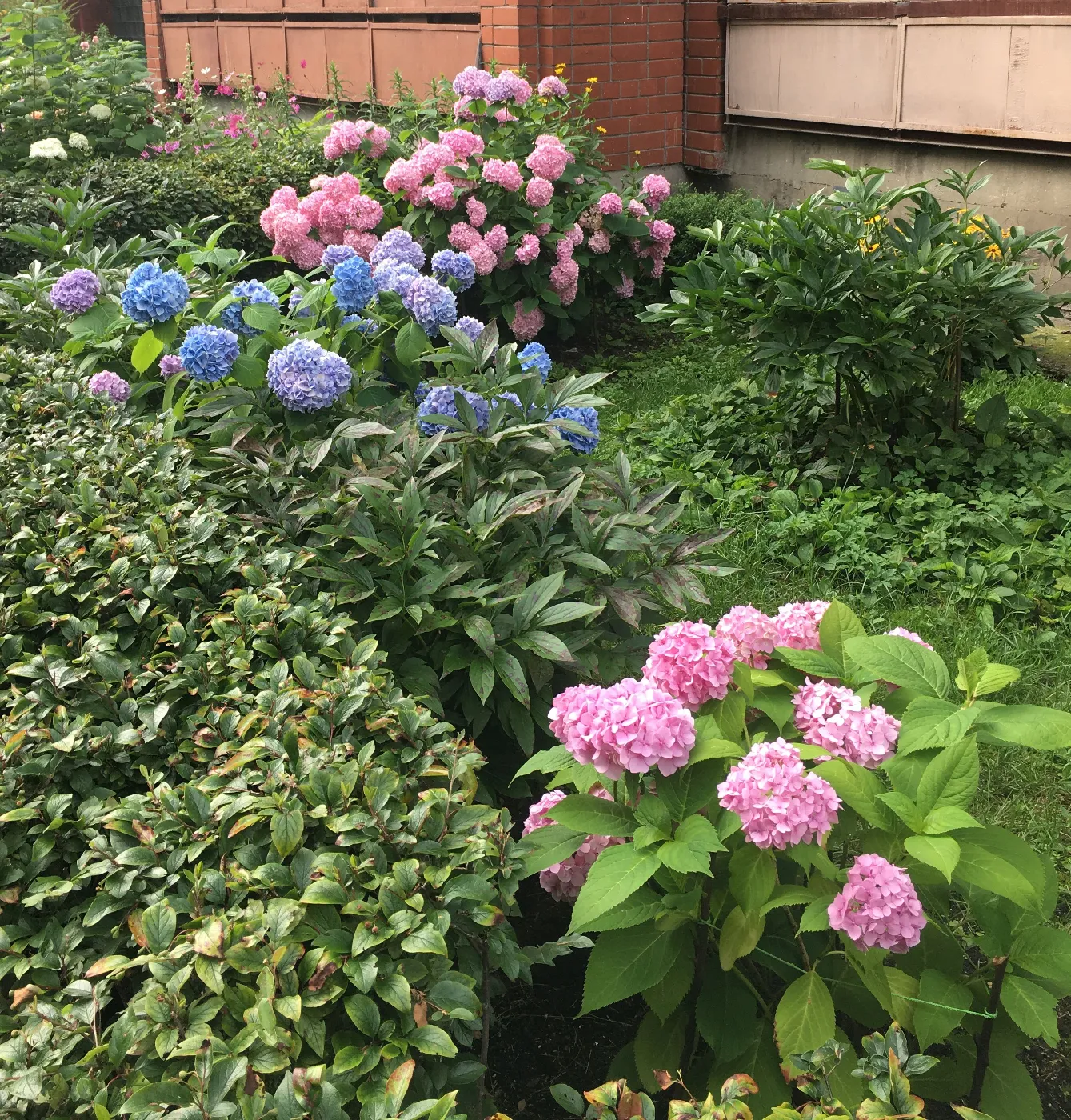
Different coloration of bigleaf hydrangea
Hydrangeas with pink and blue inflorescences are shown side by side. Using bigleaf hydrangea (Hydrangea macrophylla) as an example, the relationship between flower coloration and the reaction of the soil substrate and aluminum availability is well illustrated.
Acidic soils are often found in regions with high precipitation, where rains leach bases such as calcium and magnesium from the upper layers, replacing them with hydrogen ions (Mosley et al., 2024; Weil & Brady, 2017). The typical range of acidic soils is from 4.5 to 6.5 (Shoben et al., 2011).
- Consequences for plants: In an acidic environment, many nutrient elements become less available. Phosphorus binds with iron and aluminum, forming insoluble compounds (Troeh & Thompson, 1993). Calcium and magnesium are leached and may be insufficient. At the same time, elements such as aluminum, iron, and manganese, on the contrary, become soluble and can reach toxic concentrations, damaging roots (Nagar et al., 2026; Welbaum, 2015).
- What grows: Acidic soils are preferred by plants such as rhododendrons, azaleas, hydrangeas (for blue color), blueberries, cranberries, and many conifers (Weil & Brady, 2017; Littlewood, 2007).
- Note: Aluminum (Al3+) is not a nutrient element, but in acidic soils it becomes mobile and toxic, which is one of the main reasons for plant suppression on such soils (Weil & Brady, 2017).
Neutral soils (pH ≈ 7)
This is the “golden mean.” In a neutral environment, most macro- and micronutrients necessary for plants are in their most available form (Nagar et al., 2026; Weil & Brady, 2017). In this range, the best conditions are created for the activity of beneficial soil microorganisms that process organic matter into nutrients available to plants (McCauley et al., 2009; Nagar et al., 2026).
Alkaline soils (pH > 7)
Alkaline soils are characteristic of arid and semiarid regions, where precipitation is insufficient to leach salts. Under such conditions, calcium, magnesium, and sodium carbonates accumulate in the soil (Hussain et al., 2026; Troeh & Thompson, 1993). Soils with pH above 7.5 are considered alkaline, and at pH > 8.5 they become strongly alkaline (Weil & Brady, 2017).
- Consequences for plants: In an alkaline environment, iron, manganese, zinc, and copper turn into insoluble forms, which leads to chlorosis (yellowing of leaves) in sensitive plants. Phosphorus also becomes less available by binding with calcium (Nagar et al., 2026; Hussain et al., 2026).
- What grows: Many plants of arid regions are adapted to alkaline soils, for example, asparagus, some clover species, and many flowers such as lavender and hibiscus (Weil & Brady, 2017; Littlewood, 2007).
- Note: A very high pH (above 8.5) usually indicates the presence of sodium carbonate, which leads to destruction of soil structure; the soil becomes compacted and poorly permeable to water (Troeh & Thompson, 1993; Kopittke et al., 2026).
Understanding these differences is the key to choosing plants correctly and to a soil care strategy.
We have covered the basics. In the next chapter we will talk about why pH is so important and consider its influence on nutrient availability. Ready to continue?


LCD 4-in-1 Soil Tester
Check essential growing conditions with one compact tool. Measure soil pH, moisture, temperature and light intensity — ideal for gardens, potted plants and greenhouses.
- 4-in-1 measurement
- Easy-to-read LCD display
- Portable design
Affiliate link · For indicative measurements only.
3. Why pH Matters: Nutrient Availability


Effect of soil pH on nutrient availability
A diagram demonstrating the dependence of plant uptake of major nutrients on the level of soil acidity (pH). The thickness of the black bands indicates the degree of availability of a particular element (nitrogen, phosphorus, potassium, etc.) at a given pH. The blue vertical band highlights the ideal pH range (slightly acidic, approximately 6.0–6.8), at which most nutrients are in the form most available to roots.
The main reason soil pH is so important is its influence on nutrient availability for plants. An analogy can be made with a safe: even if there is gold inside (nutrients), but the code is unknown (unsuitable pH), it cannot be used. Plants can absorb nutrient elements only in the form of ions dissolved in water, and pH determines in what form these ions are present in the soil solution (Weil & Brady, 2017; Nagar et al., 2026).
Key patterns:
Phosphorus (P) — the clearest example. Its maximum availability is observed in the narrow pH range 6.0–7.0. In acidic soils, phosphorus binds with iron and aluminum, forming insoluble compounds. In alkaline soils, it binds with calcium. In both cases, phosphorus is “locked up” in the soil and becomes unavailable, even if there is plenty of it there (Troeh & Thompson, 1993; Welbaum, 2015; Hussain et al., 2026).
Nitrogen (N) is most available at pH 6.0–7.5. In an acidic environment, the activity of bacteria that convert organic nitrogen into nitrates slows down. In an alkaline environment, the solubility of ammonium forms decreases (Hussain et al., 2026).
Potassium (K) is less sensitive to pH than phosphorus and nitrogen, but in acidic soils it is easily leached, and in alkaline soils it competes with sodium ions (Hussain et al., 2026; Marschner, 2011).
Micronutrients (iron, manganese, zinc, copper, boron) become most available in a slightly acidic environment (pH 5.0–7.0). In alkaline soils they form insoluble hydroxides and carbonates, which leads to deficiency and characteristic symptoms — for example, interveinal chlorosis (yellowing between the veins of leaves) with iron deficiency (Weil & Brady, 2017; Nagar et al., 2026).
Molybdenum (Mo) is an exception: it becomes more available in an alkaline environment (pH > 7.5). In acidic soils it may be insufficient, especially for leguminous crops (Weil & Brady, 2017; Hussain et al., 2026).
Aluminum (Al) is not a nutrient element, but in acidic soils (pH < 5.2) it becomes soluble and toxic to roots. This is one of the main reasons for plant suppression on acidic soils (Weil & Brady, 2017; Welbaum, 2015).
That is why agronomists and experienced gardeners call pH the “master variable” — it controls everything: from whether a plant can obtain nutrition to whether it will be poisoned by toxic elements (Nagar et al., 2026; Weil & Brady, 2017).
Note: Even if a soil test shows a high phosphorus content, at an unsuitable pH a plant may experience acute phosphorus starvation. In this case, adding fertilizers will not help — the pH must be corrected first (Troeh & Thompson, 1993).
4. How Plants Respond to pH: Who Likes What
Plants are not passive victims of soil conditions. In the course of evolution, each species has adapted to a certain pH range, and these preferences must be taken into account when choosing crops and planning a plot (Weil & Brady, 2017).
Three groups of plants by relation to pH:
1. Acidophiles (acid-loving plants)

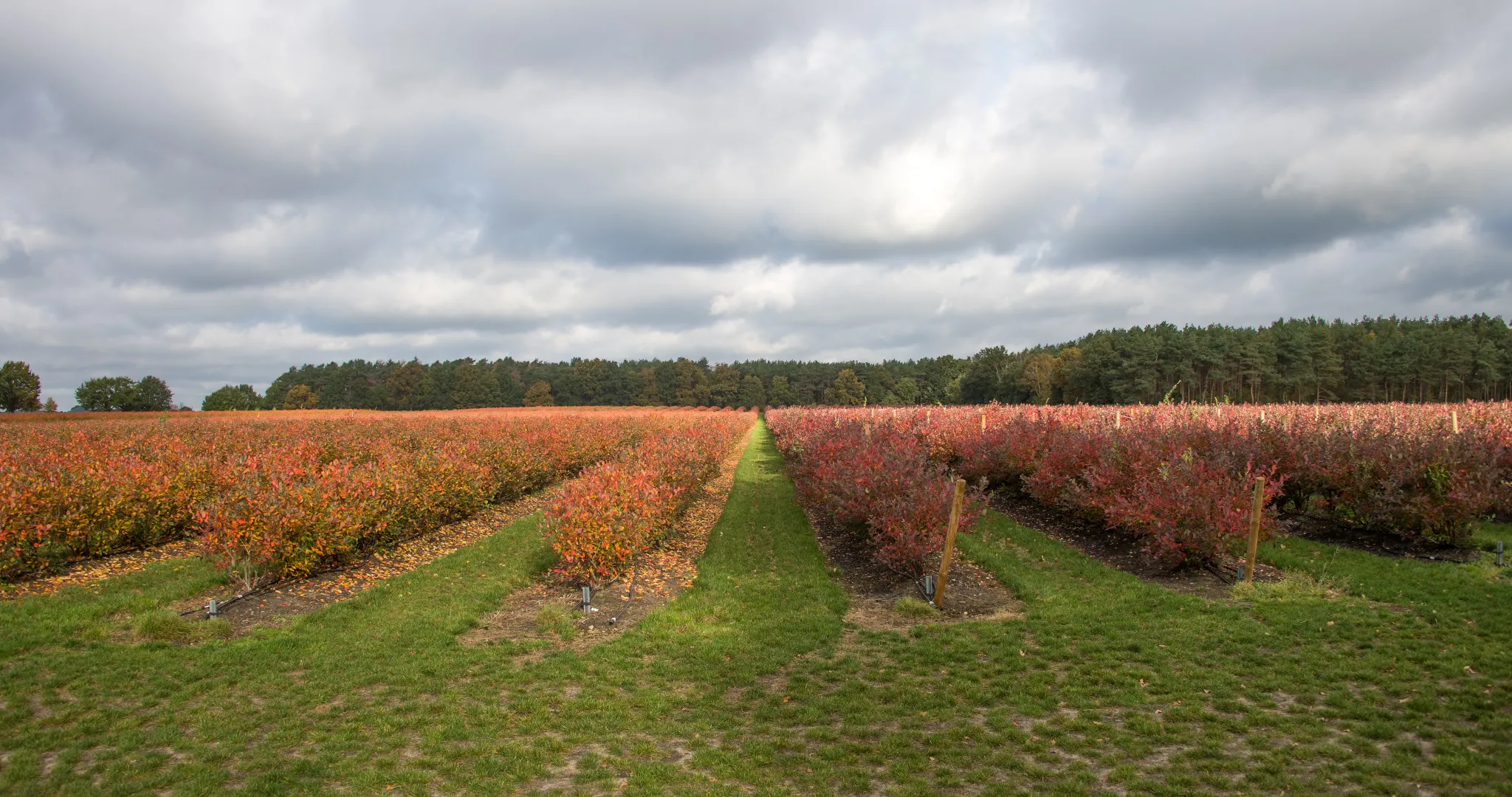
Rows of blueberry bushes (Vaccinium spp.) on a plantation between Burgwedel and Engensen, Lower Saxony, Germany
They prefer pH 4.5–6.0. These include:
- Blueberry, cranberry, lingonberry — classic representatives of acidic soils (Weil & Brady, 2017).
- Rhododendrons, azaleas, hydrangeas (for blue color) — require an acidic environment for normal iron uptake (Littlewood, 2007; Shoben et al., 2011).
- Conifers (pine, spruce, fir) — under natural conditions grow on acidic forest soils (Weil & Brady, 2017).
- Potato — prefers slightly acidic soils (pH 5.0–5.5), since in a neutral and alkaline environment it becomes susceptible to scab (McCauley et al., 2009; Littlewood, 2007).
2. Neutrophiles (plants preferring a neutral environment)
The optimal range is 6.0–7.5. This includes most vegetable and fruit crops:
- Vegetables: cabbage, carrot, beetroot, lettuce, onion, peas, beans, cucumbers, pumpkin, tomatoes (Welbaum, 2015; Littlewood, 2007).
- Fruit trees: apple, pear, plum, cherry (Hill & Perry, 2011; Littlewood, 2007).
- Berry crops: raspberry, blackberry, currant, gooseberry (Littlewood, 2007).
3. Basophiles (alkaline-loving plants)
They prefer pH 7.0–8.5:
- Asparagus — one of the few vegetables that grows well in alkaline soils (Weil & Brady, 2017).
- Lavender, hibiscus, clematis — ornamental crops resistant to an alkaline environment (Littlewood, 2007).
- Some legumes (alfalfa, clover) — grow better at pH above 6.5, since their symbiotic nitrogen-fixing bacteria are sensitive to acidity (McCauley et al., 2009; Troeh & Thompson, 1993).
How plants signal pH problems:

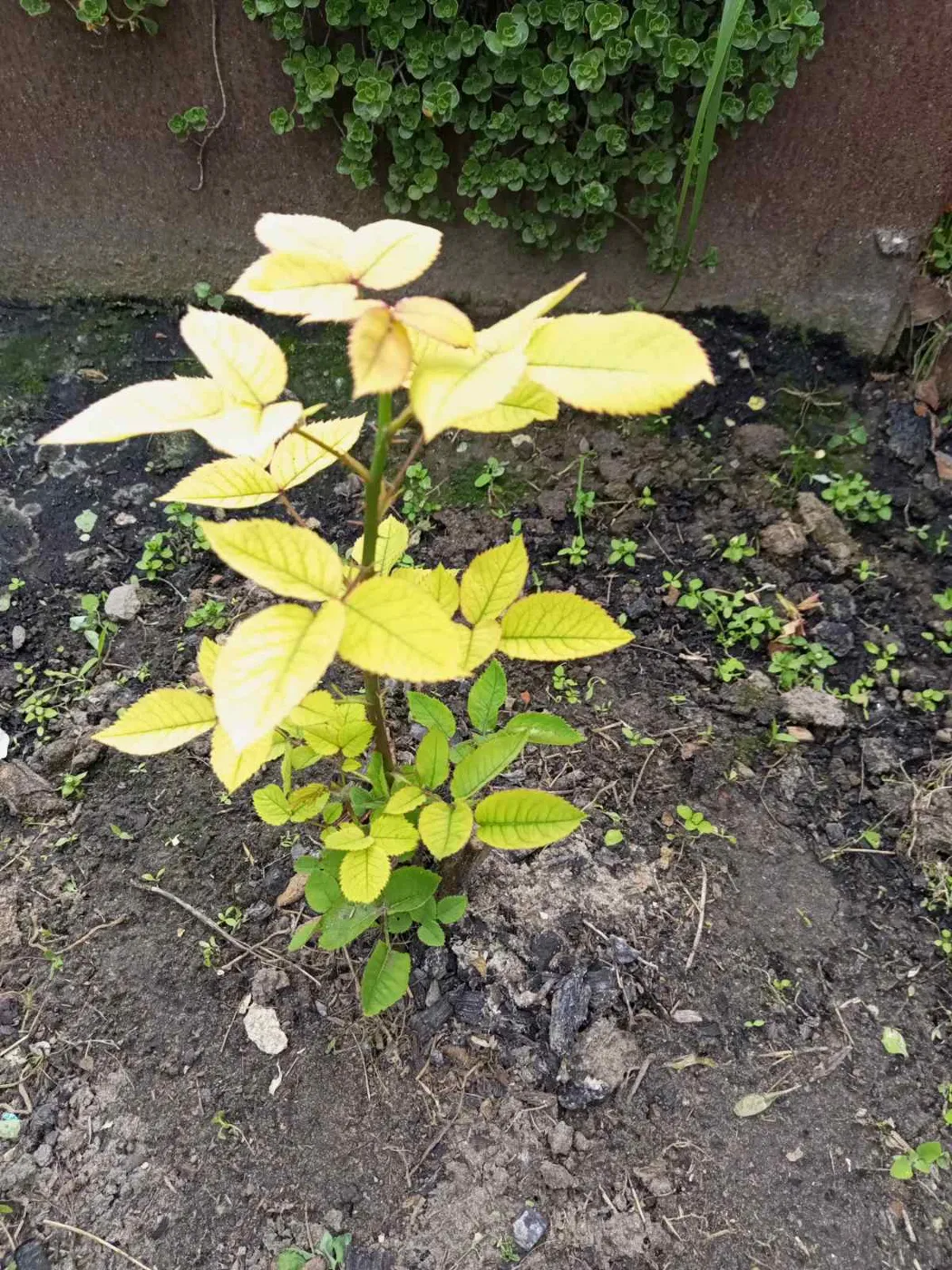
Iron deficiency (chlorosis) in a young rose bush
The image presents a young rose bush with clear signs of iron chlorosis. Since iron is low-mobility in the plant, its deficiency primarily manifests on young upper leaves, which turn yellow, while lower (old) leaves remain green. This is a common problem when growing roses on calcareous or waterlogged soils.
- Chlorosis (yellowing of leaves): In alkaline soil — interveinal chlorosis of young leaves due to iron deficiency. In acidic soil — general yellowing and suppression due to aluminum toxicity or calcium and magnesium deficiency (Nagar et al., 2026; Zona, 2023).
- Stunted growth, weak root system: A typical sign of aluminum toxicity in acidic soils (Weil & Brady, 2017).
- Poor fertilizer uptake: If fertilizing does not produce an effect, this may signal that pH is blocking the availability of elements (Chalker-Scott, 2015).
Note: Plants of the same group may differ in tolerance to pH deviations. For example, among vegetables, beetroot and cabbage are relatively tolerant of a slightly acidic environment, while spinach and celery are more demanding of neutral pH (Welbaum, 2015; Nonnecke, 1989).
Now that we understand why pH is important and how plants respond to it, it is logical to move on to the practical question: how to determine pH on your own plot. In the next chapter we will consider testing methods — from simple folk methods to precise instruments.
Shall we continue with the table of plant preferences and pH testing methods?

Solar Automatic Drip Irrigation Kit for Gardens
Automate watering for pots, gardens and small greenhouses. This solar-powered system features a timer to help schedule water delivery to your plants.
- Solar-powered
- 15 m irrigation hose
- Programmable watering
Affiliate link · Check included accessories.
5. Table: Plant Preferences by pH
Below is a summary table of optimal pH ranges for the main groups of crops. The data are based on agronomic reference books and scientific publications (Weil & Brady, 2017; Welbaum, 2015; Littlewood, 2007; Hill & Perry, 2011; McCauley et al., 2009).
Vegetable crops
| Crop | Optimal pH | Notes |
|---|---|---|
| Artichoke | 6.5–7.5 | Prefers neutral and slightly alkaline soils |
| Asparagus | 6.5–8.0 | One of the few vegetables that grows well in alkaline soils (Weil & Brady, 2017) |
| Eggplant | 5.5–6.5 | Slightly acidic soils |
| Broad beans | 6.0–7.0 | Sensitive to an acidic environment |
| Broccoli | 6.0–7.0 | Requires neutral pH |
| Brussels sprouts | 6.0–7.5 | |
| Peas | 6.0–7.5 | Nitrogen-fixing bacteria are sensitive to acidity (McCauley et al., 2009) |
| Squash, zucchini | 6.0–7.5 | |
| Cabbage | 6.0–7.5 | |
| Potato | 5.0–5.5 | An acidic environment protects against scab (Littlewood, 2007) |
| Corn (maize) | 5.8–7.0 | |
| Onion | 6.0–7.0 | |
| Carrot | 5.5–7.0 | |
| Cucumber | 6.0–7.0 | |
| Pepper (sweet) | 6.0–6.8 | |
| Parsley | 6.0–7.0 | |
| Turnip | 5.5–7.0 | |
| Radish | 6.0–7.0 | |
| Lettuce (leaf, head) | 6.0–7.0 | |
| Beetroot | 6.0–7.5 | Relatively tolerant of a slightly acidic environment |
| Celery | 6.0–7.0 | Demanding of neutral pH |
| Tomato | 6.0–6.8 | |
| Pumpkin | 6.0–7.0 | |
| Beans | 6.0–7.0 | |
| Spinach | 6.5–7.5 | Sensitive to an acidic environment |
| Sorrel | 5.5–6.5 |
Fruit trees and shrubs
| Crop | Optimal pH | Notes |
|---|---|---|
| Apricot | 6.0–7.0 | |
| Quince | 6.0–7.5 | |
| Cherry | 6.0–7.0 | |
| Pear | 6.0–7.5 | |
| Peach | 6.0–7.0 | |
| Plum | 6.0–7.0 | |
| Sweet cherry | 6.0–7.0 | |
| Apple | 6.0–7.0 |
Berry crops
| Crop | Optimal pH | Notes |
|---|---|---|
| Blueberry | 4.5–5.5 | A classic acidophile; does not tolerate an alkaline environment (Weil & Brady, 2017) |
| Blackberry | 5.5–7.0 | |
| Strawberry | 5.5–6.5 | |
| Cranberry | 4.0–5.5 | Requires strongly acidic soils |
| Gooseberry | 6.0–7.0 | |
| Raspberry | 5.5–6.5 | |
| Currant (black, red) | 6.0–7.0 |
Ornamental flowers and shrubs
| Crop | Optimal pH | Notes |
|---|---|---|
| Azalea | 4.5–5.5 | Acid-loving |
| Hibiscus | 6.0–7.5 | Tolerant of an alkaline environment (Littlewood, 2007) |
| Hydrangea | 5.0–7.5 | Color depends on pH: blue in acidic, pink in alkaline (Weil & Brady, 2017) |
| Iris | 6.0–7.0 | |
| Clematis | 6.0–7.5 | Tolerates slightly alkaline soils |
| Lavender | 6.5–8.0 | Prefers alkaline soils (Littlewood, 2007) |
| Peony | 6.0–7.0 | |
| Rhododendron | 4.5–5.5 | Acid-loving |
| Rose | 6.0–7.0 | |
| Tulip | 6.0–7.0 | |
| Chrysanthemum | 6.0–7.0 |
Important note: The indicated ranges are optimal for maximum growth and yield. Most plants can survive minor deviations, but their productivity and disease resistance will decrease (Nagar et al., 2026; Weil & Brady, 2017).
Advice: If the pH of your plot does not match the preferences of the chosen crop, you do not necessarily have to change the pH of the entire soil at once. It is often easier and more effective to grow the crop in a container, in a raised bed, or in a locally prepared planting hole with a suitable substrate (Chalker-Scott, 2018).
Now that we know which plants prefer what, let us move on to the practical question: how to determine pH on your own plot. In the next chapter we will consider testing methods — from simple folk methods to precise instruments.
6. How to Test pH Without a Laboratory
Accurate pH determination requires laboratory analysis, but for an amateur gardener an approximate estimate is often sufficient to understand the overall picture and make a decision. There are several accessible methods — from simple folk methods to the use of inexpensive instruments.
Method 1: Vinegar test (for alkaline soils)
This method makes it possible to detect an alkaline reaction. It is based on the fact that when an acid (vinegar) interacts with carbonates (which are present in alkaline soils), carbon dioxide is released (Pavlis, 2020).
What you will need:
- A small sample of dry soil
- Table vinegar (9%)
- A small container
How to perform:
1. Take a handful of dry soil and place it in the container.
2. Add a few drops of vinegar directly onto the soil.
3. Observe the reaction.
Result:
- Fizzing, bubbles, foaming — the soil is alkaline (pH > 7.5). This is a sign of the presence of calcium or magnesium carbonates (Troeh & Thompson, 1993; Pavlis, 2020).
- No reaction — the soil is probably neutral or acidic.
Important: This test does not give an exact pH value. It only confirms the presence of alkalinity. The absence of a reaction does not mean that the soil is acidic — it may be neutral (Pavlis, 2020).
Method 2: Baking soda test (for acidic soils)
This method makes it possible to detect an acidic reaction. It is based on the fact that when an alkali (baking soda) interacts with acids, carbon dioxide is released (Pavlis, 2020).
What you will need:
- A small soil sample
- Baking soda (1–2 tablespoons)
- Water
- A small container
How to perform:
1. Place the soil sample in the container.
2. Moisten the soil with water to the state of a moist but not wet paste.
3. Sprinkle baking soda on top.
4. Observe the reaction.
Result:
- Fizzing, bubbles — the soil is acidic (pH < 6.0). This is a sign of the presence of hydrogen ions reacting with baking soda (Pavlis, 2020).
- No reaction — the soil is probably neutral or alkaline.
Important: Like the vinegar test, this method does not give an exact pH value. It only indicates the presence of an acidic reaction. The absence of a reaction does not exclude slightly acidic soil (Pavlis, 2020).
Method 3: Litmus paper and indicator strips

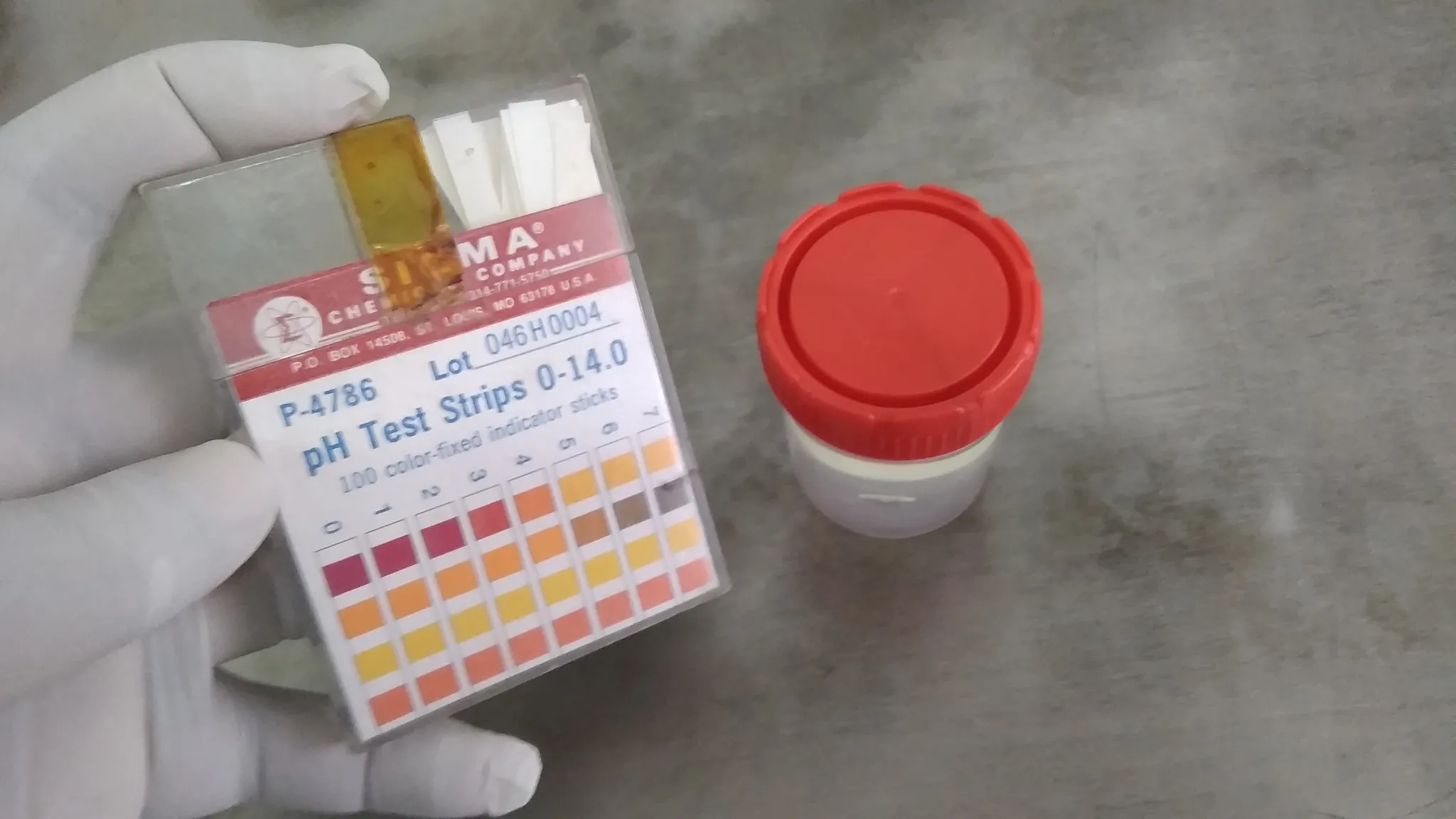
Indicator strips for determining pH
Photograph of indicator strips used to determine the acidity of solutions. Suitable for illustrating a simple method for approximate estimation of the pH of a soil extract.
This is a more accurate method than folk tests and is affordable. Litmus paper and indicator strips are impregnated with chemical reagents that change color depending on pH (Pavlis, 2020; Shoben et al., 2011).
What you will need:
- Indicator strips for determining pH (sold in garden stores)
- Distilled water (important: do not use tap water, as it may have its own pH)
- A soil sample
- A clean container
How to perform:
1. Mix the soil sample with distilled water in a 1:1 ratio (by volume).
2. Mix thoroughly and let the mixture stand for several minutes.
3. Dip the indicator strip into the supernatant liquid (or press it against moist soil) for the time indicated in the instructions.
4. Compare the color of the strip with the supplied color scale.
Result: The color scale usually has gradations from 4.0 to 9.0 in steps of 0.5–1.0 units. This makes it possible to determine pH with an accuracy of 0.5–1.0 units (Pavlis, 2020).
Important: To obtain a reliable result, use distilled water and strictly follow the manufacturer’s instructions. Cheap universal strips may give an error (Pavlis, 2020; Chalker-Scott, 2018).
Method 4: Portable pH meter

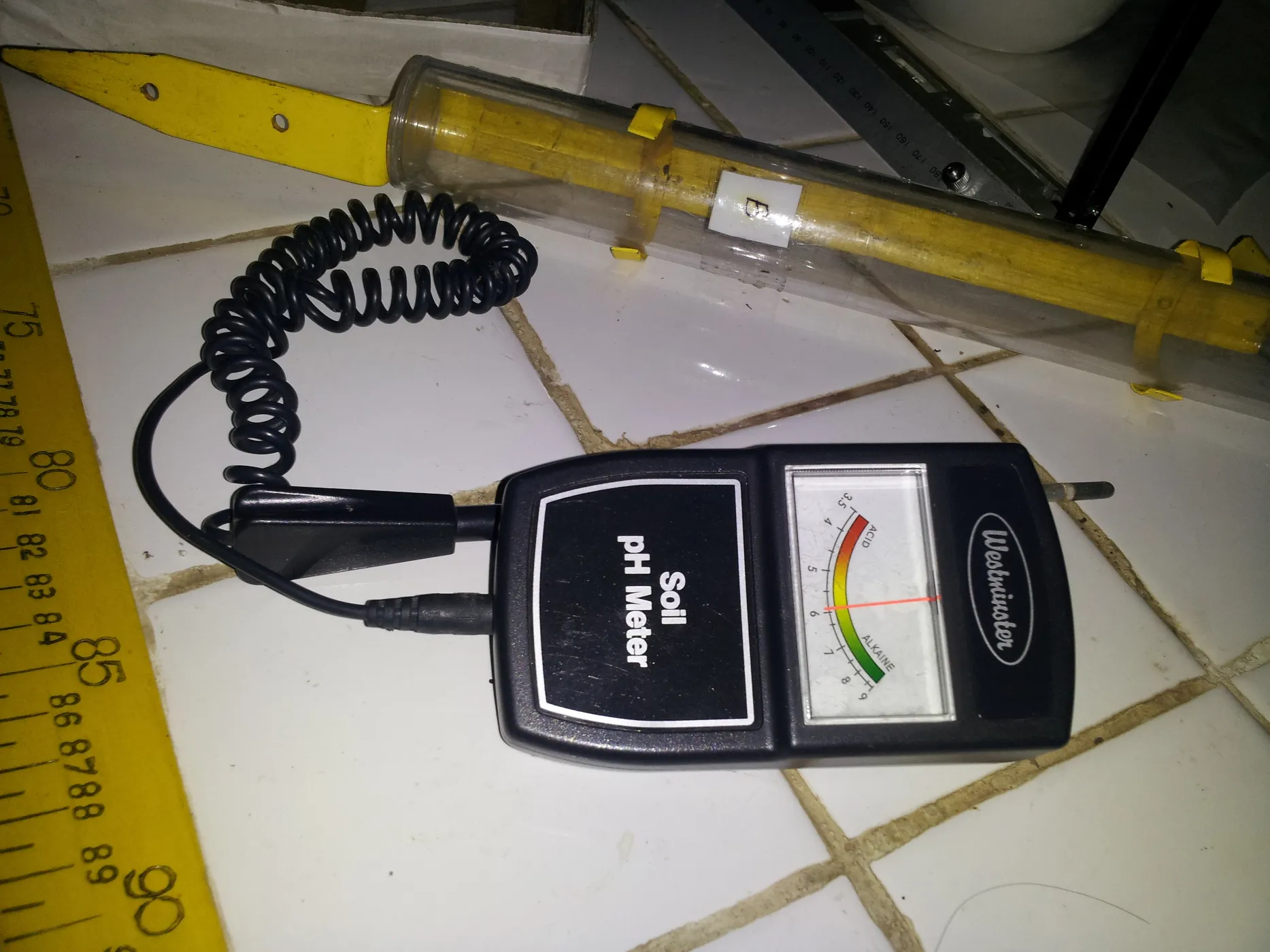
Soil pH meter.
Soil pH meter. The photograph shows a device for determining soil acidity, used in agriculture and horticulture to monitor soil condition.
Electronic pH meters for gardeners provide the most accurate result among household methods. They are of two types: with a metal probe (for direct immersion in soil) and with a glass electrode (for measurement in a water extract) (Pavlis, 2020; Weil & Brady, 2017).
What you will need:
- A pH meter (from inexpensive models to professional ones)
- Distilled water
- A soil sample
- A container
How to perform:
1. Prepare a soil extract: mix soil with distilled water in a 1:1 or 1:2 ratio.
2. Mix thoroughly and let stand.
3. Calibrate the instrument according to the instructions (usually using standard solutions).
4. Immerse the electrode in the supernatant liquid (or in the soil paste for models with a metal probe).
5. Read the readings after the values stabilize.
Result: Quality instruments provide accuracy to within 0.1–0.2 pH units (Pavlis, 2020).
Important: Cheap models with a metal probe that are inserted directly into the soil often give very inaccurate readings. For a reliable result, it is better to use instruments with a glass electrode and calibrate them before each use (Pavlis, 2020; Weil & Brady, 2017; Chalker-Scott, 2018).
Comparison of methods
| Method | Accuracy | Cost | Ease | What it shows |
|---|---|---|---|---|
| Vinegar | Only presence of alkalinity | Low | Very simple | Alkaline / not alkaline |
| Baking soda | Only presence of acidity | Low | Very simple | Acidic / not acidic |
| Indicator strips | ±0.5–1.0 | Low | Simple | Approximate pH |
| pH meter (quality) | ±0.1–0.2 | Medium–high | Requires calibration | Accurate pH |
Recommendation: For a quick assessment, use folk methods. For more accurate determination — indicator strips or a quality pH meter. For critical decisions (for example, when establishing perennial plantings), it is better to contact a laboratory (Pavlis, 2020; Chalker-Scott, 2018).
Note: Laboratory analysis remains the gold standard. It not only determines pH with high accuracy, but also shows the soil’s buffer capacity (ability to resist pH change), which is critically important for calculating lime or sulfur doses (Troeh & Thompson, 1993; Weil & Brady, 2017).
Now that we know how to determine pH, let us move on to the most important thing: what to do if the pH is unsuitable for the chosen crops. In the next chapter we will consider methods for acidifying and deacidifying soil.

7-in-1 Wi-Fi Weather Station
Monitor local weather conditions with a wireless outdoor sensor. Track temperature, humidity, rainfall, wind speed and direction, and atmospheric pressure. Ideal for gardens, farms and greenhouses.
- Wireless outdoor sensor
- Solar-powered
- Wi-Fi connectivity
Affiliate link · Check regional compatibility.
7. What to Do If the Soil Is Acidic
If the analysis shows that the pH of your soil is below the optimum for the chosen crops, it is necessary to carry out deacidification (liming). This is one of the most effective and common agronomic practices (Troeh & Thompson, 1993; Weil & Brady, 2017).
Main materials for deacidification:
1. Lime (ground limestone)

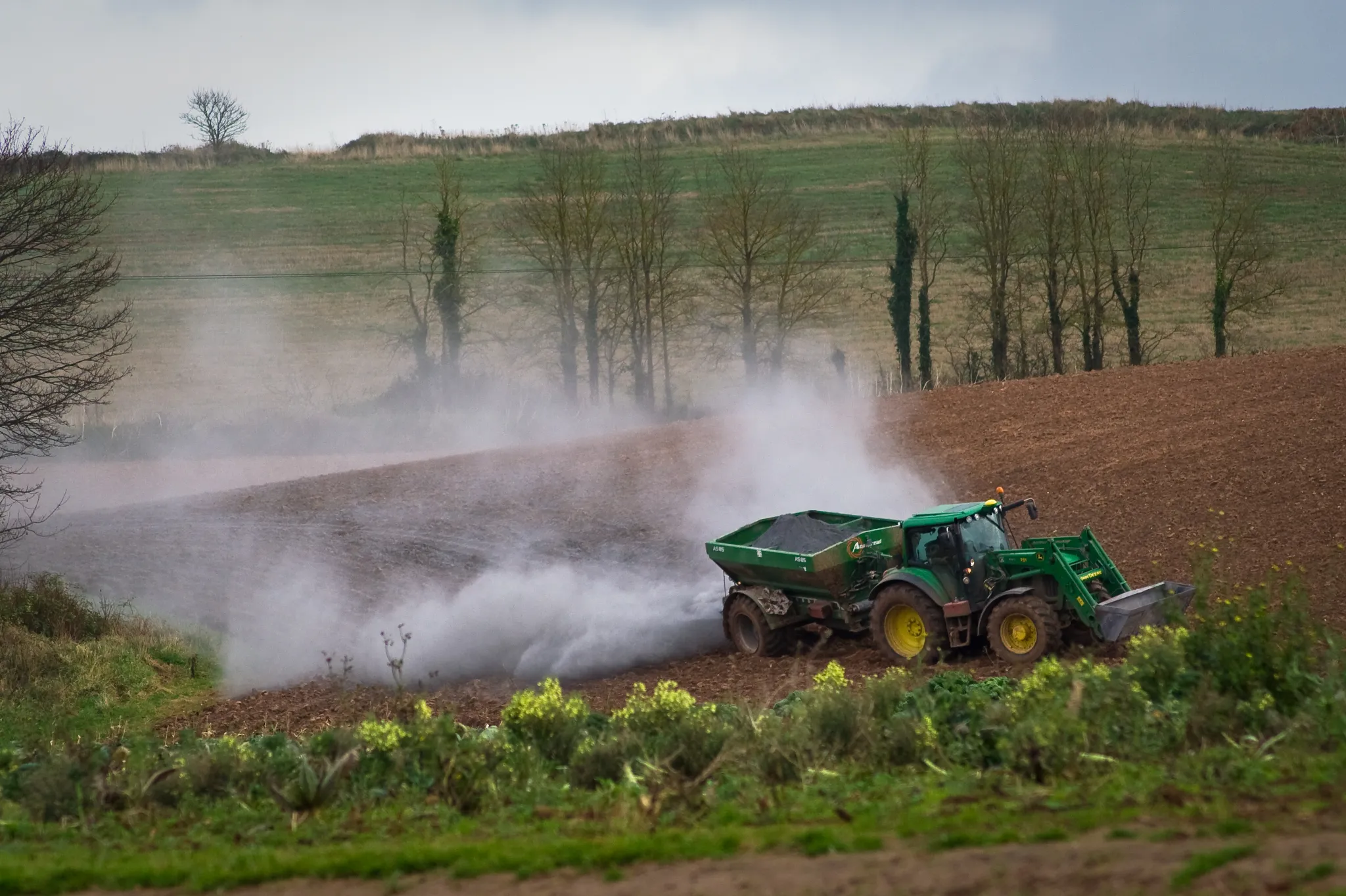
Applying lime to an agricultural field
A tractor with a spreader applies liming material to a field. Shooting location: Devon, England, United Kingdom. The photograph illustrates mechanized soil liming.
This is the most common and economical material. There are several forms:
- Calcitic lime (CaCO3) — ground limestone. Raises pH and supplies the soil with calcium. Suitable for most soils (Littlewood, 2007; Pavlis, 2020).
- Dolomitic lime (CaMg(CO3)₂) — contains both calcium and magnesium. Preferred for soils deficient in magnesium, as well as for sandy and light soils where magnesium is easily leached (Troeh & Thompson, 1993; Littlewood, 2007).
- Slaked lime (Ca(OH)₂) and quicklime (CaO) — act faster but are more aggressive. They should be used with caution, since an overdose can “burn” plants and disrupt soil structure (Troeh & Thompson, 1993; Pavlis, 2020).
Important: The action of lime is not instantaneous. Ground limestone begins to work after several weeks or even months, and the full effect is achieved within a year. Therefore, it is better to apply lime in autumn, under digging, so that pH stabilizes by spring (Troeh & Thompson, 1993; Weil & Brady, 2017).
2. Wood ash
Ash contains potassium, calcium, magnesium, and other elements, and also has an alkaline reaction. It can slightly raise pH, but its effect is weaker and less predictable than that of lime. In addition, ash is quickly leached from the soil (Littlewood, 2007; Pavlis, 2020).
Note: Ash is not a full replacement for lime. It is better used as a source of potassium and trace elements on soils with pH close to neutral (Littlewood, 2007).
3. Organic materials
Compost, humus, and manure have a weak effect on pH, but improve soil structure, increase its buffer capacity, and can gradually shift the reaction toward neutral. On strongly acidic soils they will not replace lime, but will be a good addition (Gershuny & Smillie, 1999; Pavlis, 2020).
How to calculate the lime dose?
The dose depends on:
- The initial and target pH.
- The buffer capacity of the soil (ability to resist pH change). The more clay and organic matter in the soil, the more lime will be required (Troeh & Thompson, 1993; Weil & Brady, 2017).
- Soil type: heavy clay soils require more lime than sandy soils (Littlewood, 2007).
The exact dose can only be determined by laboratory analysis (buffer pH test). Approximate guidelines: to raise pH by 1 unit on sandy soil, about 1 kg/10 m2 may be required; on loam — 2–3 kg/10 m2; on clay — 4 kg/10 m2 (Littlewood, 2007).
Advice: Do not apply lime simultaneously with nitrogen fertilizers (especially ammonium ones). This can lead to nitrogen loss as gas (Troeh & Thompson, 1993; Littlewood, 2007).
Danger of over-liming
Excess lime is as harmful as deficiency. Too high a pH (above 7.5) blocks the availability of iron, manganese, zinc, boron, and phosphorus. Therefore, it is important to observe moderation and not exceed the recommended doses (Troeh & Thompson, 1993; Weil & Brady, 2017).
Note: Some plants (rhododendrons, azaleas, blueberries, cranberries) absolutely do not tolerate lime. For them, deacidification is not carried out; on the contrary, an acidic environment is maintained (Weil & Brady, 2017; Littlewood, 2007).
8. What to Do If the Soil Is Alkaline
Alkaline soils (pH > 7.5) are often found in arid regions, as well as in areas where there is a lot of calcium carbonate in the soil. Lowering pH is more difficult than raising it, but it is possible. For this, acidifying materials are used (Weil & Brady, 2017; Hussain et al., 2026).
Main materials for acidification:
1. Elemental sulfur (S)
This is the most effective and common material for lowering pH. Sulfur does not work directly — soil bacteria oxidize it, converting it into sulfuric acid. This is a slow process, but the result is stable (Troeh & Thompson, 1993; Weil & Brady, 2017).
- Action: Gradual, over several months. Better to apply in autumn.
- Dose: Depends on buffer capacity. To lower pH by 1 unit, from 100 to 500 g per 10 m2 may be required (Troeh & Thompson, 1993; Pavlis, 2020).
- Limitations: Requires warm, moist soil for bacterial activity. Works poorly in cold or waterlogged soils (Weil & Brady, 2017).
Note: Elemental sulfur is a powder that can be dangerous if inhaled. Work in a mask and gloves (Pavlis, 2020).
2. Iron sulfate (FeSO4)
Acts faster than sulfur, since it contains ready acid (upon hydrolysis). It also supplies plants with iron, which is useful in alkaline soils where iron is often unavailable (Troeh & Thompson, 1993; Weil & Brady, 2017).
- Dose: Usually 200–500 g per 10 m2.
- Limitations: May be toxic in overdose. Leaves stains on leaves and concrete (Weil & Brady, 2017).
3. Aluminum sulfate (Al₂(SO4)₃)
Acidifies faster than sulfur, but aluminum can be toxic to plants, especially in acidic soils. Use with caution (Troeh & Thompson, 1993; Weil & Brady, 2017).
4. Acidic peat (high-moor)
High-moor peat has a pH of 3.0–4.5 and can be used for local acidification of the soil around plants. However, the effect is temporary, and peat decomposes quickly (Pavlis, 2020; Littlewood, 2007).
Important: Peat is a nonrenewable resource, and its extraction damages ecosystems. Use it moderately and only when necessary (Pavlis, 2020).
5. Compost and mulch

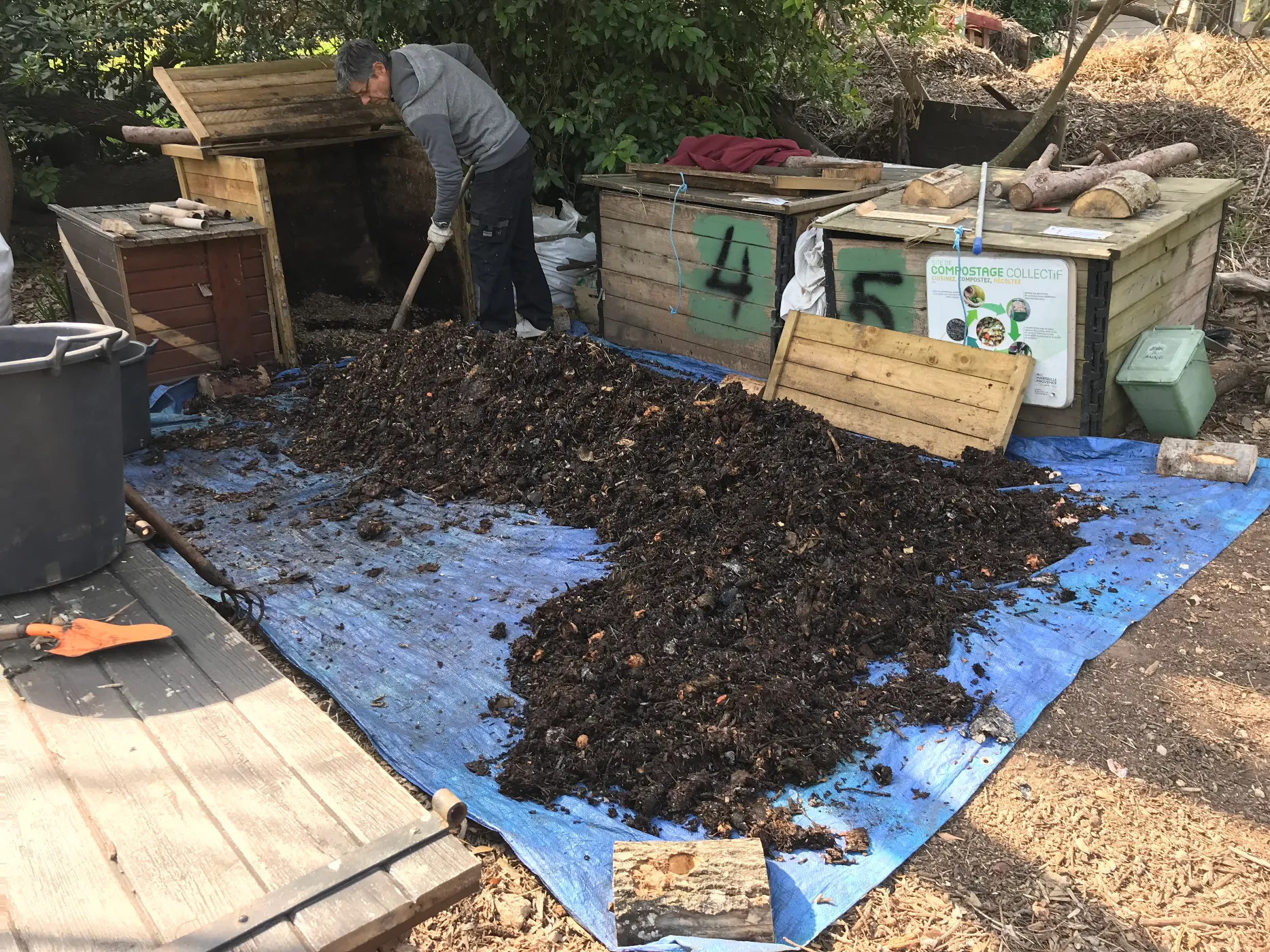
A person turning compost on a tarp
Image of a work process with finished compost. The caption states "compost final 3".
As they decompose, organic materials form organic acids that gradually acidify the soil. This is a slow but natural process. Use compost from leaves, needles, bark, as well as mulch from wood chips and litter (Gershuny & Smillie, 1999; Pavlis, 2020).
6. Gypsum (CaSO4)
Gypsum does not acidify the soil, but it is indispensable for improving sodic soils (with high sodium content). Calcium from gypsum displaces sodium from the soil exchange complex, improving structure and water permeability. This is often a more important problem than pH itself (Troeh & Thompson, 1993; Hussain et al., 2026).
Note: On strongly alkaline soils (pH > 8.5) containing sodium carbonate, changing pH is very difficult. In such cases it is often easier to select plants that tolerate an alkaline reaction than to try to shift it (Weil & Brady, 2017; Hussain et al., 2026).
General recommendations:
- Apply acidifying materials locally, in the root zone, so as not to spend them on the entire plot.
- Combine with organic materials that improve structure and gradually soften alkalinity.
- Regularly check pH so as not to over-acidify the soil.
Now that we know how to correct pH in one direction or another, let us move on to regional features. In the next chapter we will consider which soils predominate in different climatic zones and what this means for the gardener.

40W Full Spectrum LED Grow Light
Support healthy plant growth with full-spectrum LED lighting. Ideal for seedlings, indoor plants and small growing spaces. A practical solution for indoor gardening and year-round cultivation.
- Full-spectrum LED
- Energy-efficient design
- Indoor plant growing
Affiliate link · Check actual power and light coverage.
9. Regional Aspect: What to Expect in Different Climatic Zones
Soil pH is not random — it is formed by climate, vegetation, and geology over millennia. Understanding regional patterns helps the gardener anticipate what soil reaction he is most likely to encounter and plan his actions in advance (Weil & Brady, 2017; Slessarev et al., 2016).
Humid regions: taiga, forest zone, mixed forest zone

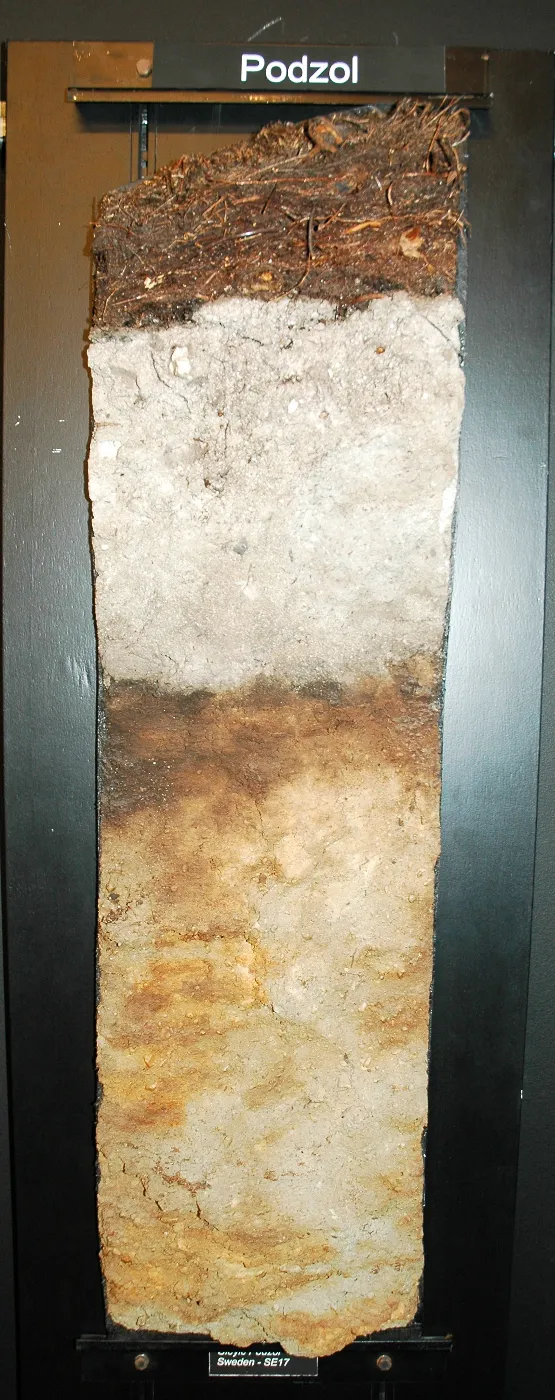
Soil profile: Podzol
Soil profile of Podzol type. At the bottom of the display, the sample location is indicated: Sweden (Sweden - SE17). Podzols are characterized by a sharply expressed bleached (eluvial) horizon from which organic and mineral substances have been leached.
In areas with high precipitation (more than 500–600 mm per year), rains leach bases — calcium, magnesium, potassium, and sodium — from the upper soil layers. Their place is taken by hydrogen ions, and the soil gradually acidifies. This process is called podzolization or acid leaching (Weil & Brady, 2017; Mosley et al., 2024).
- Typical pH: 4.5–6.0, often below 5.0.
- What this means for the gardener: Most vegetable and fruit crops will need deacidification. The exception is blueberries, rhododendrons, and conifers, which feel at home here (Weil & Brady, 2017; Littlewood, 2007).
- Practical advice: Regularly apply lime or dolomitic flour. Give preference to organic materials that gradually increase the buffer capacity of the soil (Gershuny & Smillie, 1999).
Note: In the taiga zone and the coniferous forest zone, soils are often not only acidic but also poor. Deacidification here is a necessary first step toward cultivating the plot (Weil & Brady, 2017).
Steppes, forest-steppes, and prairies

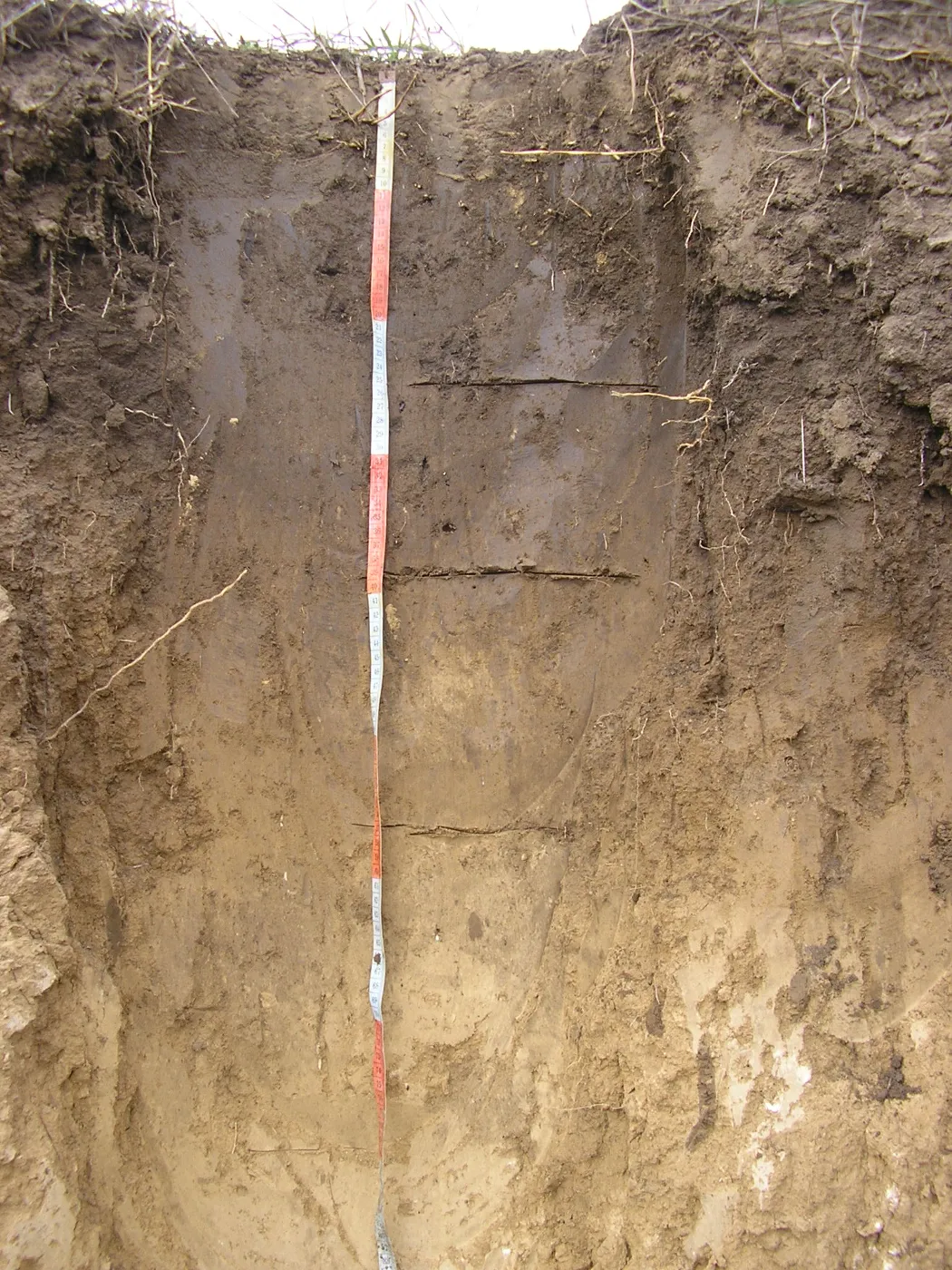
Soil profile of chernozem in the steppe zone of Ukraine
A chernozem soil section in the steppe zone of Ukraine. The original caption gives the classification names: Mollisols, Kalkschernoseme, Chernosols. The photograph shows a vertical section wall with a measuring tape for determining horizon thickness.
In regions with moderate moisture (400–600 mm of precipitation), leaching of bases is less pronounced. Soils here are usually neutral or slightly acidic, with a high humus content and good structure. These are the most fertile soils of the world — chernozems and chestnut soils (Weil & Brady, 2017; Troeh & Thompson, 1993).
- Typical pH: 6.0–7.5.
- What this means for the gardener: Most crops feel well without pH correction. The main task is to maintain fertility and structure (Gershuny & Smillie, 1999).
- Practical advice: Regular application of compost and mulching will help maintain pH in the optimal range (Pavlis, 2020).
Arid and semiarid regions: steppes, deserts, Mediterranean

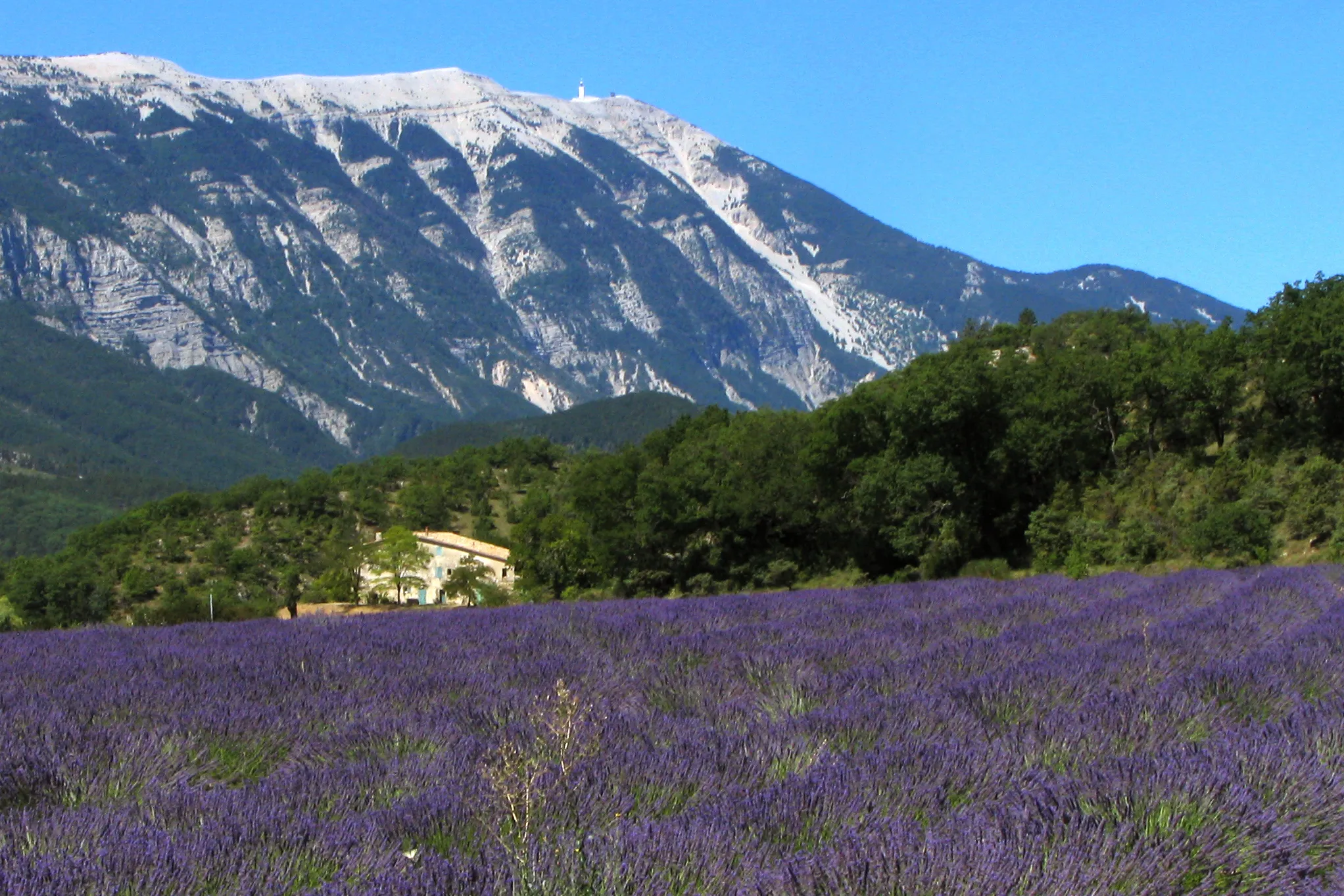
Lavender field against the backdrop of Mont Ventoux
Lavender field with Mont Ventoux in the background. Location: Provence, France. The landscape well illustrates Mediterranean conditions and the cultivation of drought-resistant ornamental plants, including lavender (Lavandula spp.).
In dry areas (less than 300–400 mm of precipitation), rains do not leach salts from the soil. On the contrary, water rises through capillaries and evaporates, leaving calcium, magnesium, and sodium carbonates on the surface. Soils here are alkaline, often with a high lime content (Troeh & Thompson, 1993; Hussain et al., 2026).
- Typical pH: 7.5–8.5, sometimes higher.
- What this means for the gardener: Many nutrients (iron, manganese, zinc, phosphorus) become unavailable. Plants suffer from chlorosis. Acidifying the soil is a difficult but often necessary task (Weil & Brady, 2017; Hussain et al., 2026).
- Practical advice: Use local acidification (sulfur, iron sulfate), choose drought-resistant and alkaline-tolerant crops (lavender, asparagus, pomegranate), and actively apply organic mulches (Pavlis, 2020; Littlewood, 2007).
Note: In arid zones, solonetz soils are often found — soils with a high sodium content. They have an alkaline reaction (pH > 8.5), poor structure, and low water permeability. Gypsum application is the main method for their improvement (Troeh & Thompson, 1993; Hussain et al., 2026).
Tropics and subtropics
In tropical regions with abundant rains (more than 1500–2000 mm), soils are intensively leached. They become acidic, often with a high content of iron and aluminum oxides (red and yellow ferrallitic soils — Ultisols and Oxisols). In drier tropical areas, soils may be neutral or slightly alkaline (Weil & Brady, 2017; Hussain et al., 2026).
- Typical pH: 4.5–6.5 in the humid tropics; 6.0–7.5 in the dry tropics.
- What this means for the gardener: In the humid tropics, liming and application of organic matter are necessary. In dry ones, problems with the availability of iron and zinc are possible (Weil & Brady, 2017; Nagar et al., 2026).
- Practical advice: Take local conditions into account. On small plots it is often easier to create raised beds with imported substrate than to try to radically change the pH of the local soil (Chalker-Scott, 2018).
General pattern
A global analysis shows that soil pH is determined primarily by the balance between precipitation and evaporation. Where precipitation exceeds evaporation, soils are acidic. Where evaporation exceeds precipitation, they are alkaline. The transition zone occurs at approximately 500–600 mm of precipitation per year (Slessarev et al., 2016; Mosley et al., 2024).
Note: Even within one region, pH can vary greatly due to relief, parent material, and vegetation. For example, on slopes soils are usually more acidic than in lowlands, where bases accumulate (Weil & Brady, 2017).
10. Conclusion: pH Is Not an Abstraction, but a Concrete Parameter
Soil pH is not an abstract scientific concept, but a concrete, measurable, and manageable parameter on which plant health and yield directly depend. Even the best fertilizers will not work if pH blocks the availability of nutrient elements. Conversely, a correctly selected pH allows plants to effectively use what is already present in the soil (Weil & Brady, 2017; Nagar et al., 2026).
Key conclusions:
1. pH is the “master variable.” It controls the availability of all nutrient elements, the activity of soil microorganisms, and the toxicity of aluminum and manganese (Nagar et al., 2026; Weil & Brady, 2017).
2. Most crops prefer the range 6.0–7.0. Deviations in either direction reduce productivity, even if the plants look normal externally (Nagar et al., 2026; Welbaum, 2015).
3. Checking pH is accessible to everyone. Folk methods (vinegar, baking soda) give a rough estimate. Indicator strips and pH meters give a more accurate result. Laboratory analysis is the gold standard (Pavlis, 2020; Chalker-Scott, 2018).
4. Acidic soils are corrected with lime. Dolomitic flour is preferred for light soils and for magnesium deficiency. Doses depend on buffer capacity (Troeh & Thompson, 1993; Littlewood, 2007).
5. Alkaline soils are corrected with sulfur and organic materials. This is more difficult and slower than deacidification. It is often easier to select suitable plants than to shift pH (Weil & Brady, 2017; Hussain et al., 2026).
6. Regional patterns are predictable. Humid climate — acidic soils; dry climate — alkaline soils. This helps plan a strategy in advance (Slessarev et al., 2016; Mosley et al., 2024).
7. Organic matter is a universal helper. Compost, mulch, and green manure improve structure, increase buffer capacity, and gradually soften pH extremes (Gershuny & Smillie, 1999; Pavlis, 2020).
What a gardener should do:
- Start with analysis. Determine pH at least approximately before applying fertilizers or laying out beds.
- Choose plants to match the soil. If pH is far from optimal, it is often easier to choose crops that tolerate existing conditions than to remake the entire plot.
- Act gradually. Abrupt pH changes are harmful to soil biota. Apply amendments in small doses and regularly check the result.
- Do not forget about organic matter. Healthy soils with a high humus content buffer pH better and forgive mistakes (Pavlis, 2020; Gershuny & Smillie, 1999).
pH is a tool, not a sentence. By understanding it, you can make informed decisions and obtain stable harvests even on difficult soils.
References
- (2014). ‘Soil’, in Agroecology. : CRC Press, 108-123. doi: 10.1201/b17881-13
- (2015). ‘Summary’, in Ingram, D.S., Vince-Prue, Daphne, Gregory, P.J. (ed.) Science and the Garden. The scientific basis of horticultural practice. West Sussex, UK: Royal Horticulture Society. Wiley Blackwell, pp. 75-85.
- Ahmed, Niaz, Masood, Sajid, Ahmad, Shakeel, Bashir, Safdar, Hussain, Sajjad, Hassan, Waseem, Khandekar, R.Islam, Hussain, Baqir, Ali, M.Arif (2019). ‘Soil Management for Better Crop Production and Sustainable Agriculture’, in Agronomic Crops. Singapore: Springer Singapore, 47-71. doi: 10.1007/978-981-32-9783-8_4
- Bubel, Nancy, Nick, Jean (2024). ‘Moving Plants Outdoors’, in The New Seed-Starters Handbook. : Rodale, .
- Capon, Brian (2022). ‘How Plants Function’, in Botany for Gardeners. An Introduction to the Science of Plants. Portland, Oregon: Timber Press, pp. 144-192.
- Chalker-Scott, Linda (2015). ‘What's Essential’, in How Plants Work. Portland, London: Timber Press, pp. 60-83.
- Chalker-Scott, Linda (2018). ‘Soil Analysis: What Makes Soil Great?’, in The Science of Gardening. Course Guidebook. Chantilly, Virginia: The Great Courses, pp. 25-36.
- Chalker-Scott, Linda (2018). ‘Soil Preparation and Protection’, in The Science of Gardening. Course Guidebook. Chantilly, Virginia: The Great Courses, pp. 73-80.
- Connor, D.J., Loomis, R.S., Cassman, K.G. (2011). ‘Soil resources’, in Crop Ecology. Productivity and Management in Agricultural Systems. Cambridge, UK: Cambridge University Press, pp. 159-194.
- Eash, N.S., Sauer, T.J., O'Dell, D., Odoi, Evah (2016). ‘Soil and Its Uses’, in Soil Science Simplified. New Jersey: Wiley Blackwell, ch. 13.
- Faber, B.A., Downer, A.James, Holstege, Dirk, Mochizuki, M.J. (2007). ‘Accuracy Varies for Commercially Available Soil Test Kits Analyzing Nitrate–Nitrogen, Phosphorus, Potassium, and pH’, HortTechnology, 17(3), 358-362. doi: 10.21273/HORTTECH.17.3.358
- Fernández, F.G., Hoeft, R.G. (2009). ‘Managing Soil pH and Crop Nutrients’, in Illinois Agronomy Handbook. : , 91-112.
- Foth, H.D. (1990). ‘Soil Fertility Evaluation and Fertilizer Use’, in Fundamentals of Soil Science. New York: John Wiley & Sons, pp. 232-249.
- Funt, R.C., Ross, D.S. (2013). ‘Soil and water management’, in Funt, R.C., Hall, H.K. (ed.) Raspberries. Oxfordshire, UK: CAB International, pp. 103-120.
- Gershuny, Grace, Smillie, Joe (1999). ‘Observing and Evaluating Your Soil’, in The Soul of Soil. A Soil-Building Guide for Master Gardeners and Farmers. Vermont: Chelsea Green Publishing, .
- Gershuny, Grace, Smillie, Joe (1999). ‘Understanding the Soil Ecosystem’, in The Soul of Soil. A Soil-Building Guide for Master Gardeners and Farmers. Vermont: Chelsea Green Publishing, .
- Hartmann, H.T., Kester, D.E., Davies, F.T.J., Geneve, R.L. (2011). ‘The Propagation Environment’, in Hartmann & Kester's Plant Propagation Principles and Practices. USA: Pearson Education, pp. 53-112.
- Hill, Lewis, Perry, Leonard (2011). ‘Improving Your Soil’, in The Fruit Gardener’s Bible. North Adams, MA: Storey Publishing, pp. 212-232.
- Hussain, Sajid, Mahmood, M.Hashir, Akber, A.Rehman, Iqbal, M.Saeed (2026). ‘Alkaline and acidic soils pose problems for nutrient availability: Mitigation strategies’, in Sustainable Soil Chemistry and Plant Nutrition. : Elsevier, 115-136. doi: 10.1016/B978-0-443-40584-6.00001-2
- Johnson, Noelle (2023). ‘Planting Basics for Dry Regions’, in Dry Climate Gardening. Beverly, MA: Cool Springs Press, .
- Kopittke, P.M., McKenna, B.A., Sanchez, P.B., Gonzaga, N.R., Asio, V.B., Aguila, D.NeloS., Gonzaga, A.B., Asio, L.G., Timbas, N.Louise, Colipano, M.CristinaL., Lina, S.B., Wang, Peng, Lombi, Enzo, Harper, S.M. (2026). ‘The Hidden Costs of Soil Degradation: Threats to Global Food Security and Planetary Health’, ACS Environmental Au, 6(4), 539-552. doi: 10.1021/acsenvironau.6c00058 (PubMed)
- Littlewood, Michael (2007). ‘The Ground’, in The organic gardener's handbook. Ramsbury, Wiltshire: The Crowood Press, pp. 59-102.
- Lowenfels, Jeff (2013). ‘Factors Influencing Nutrient Availability’, in Teaming with nutrients: The Organic Gardener's Guide to Optimizing Plant Nutrition. Portland, London, UK: Timber Press, pp. 179-193.
- Lowenfels, Jeff (2013). ‘The Importance of Soil Testing’, in Teaming with nutrients: The Organic Gardener's Guide to Optimizing Plant Nutrition. Portland, London, UK: Timber Press, pp. 166-178.
- Lowenfels, Jeff, Lewis, Wayne (2010). ‘Classic Soil Science’, in Teaming with Microbes. The Organic Gardener’s Guide to the Soil Food Web. Portland, Oregon: Timber Press, .
- McCauley, Ann, Jones, Clain, Jacobsen, Jeff (2009). ‘Soil pH and Organic Matter’, , 0(0).
- Morgan, Sally (2021). ‘Building a healthy soil’, in The Healthy Vegetable Garden: A natural, chemical-free approach to soil, biodiversity and managing pests and diseases. Vermont, London, UK: Chelsea Green Publishing, .
- Mosley, L.M., Rengasamy, Pichu, Fitzpatrick, Rob (2024). ‘Soil
pH : Techniques, challenges and insights from a global dataset’, European Journal of Soil Science, 75(6), null. doi: 10.1111/ejss.70021 - Nagar, Rohitashv, Singh, Shivendra, Dr. Gunnjeet Kaur (2022). ‘Soil pH as a Master Variable: Implications for Soil Fertility and Crop Productivity – A Review’, Career Point International Journal of Research (CPIJR), 1(5), 91-110. doi: 10.5281/zenodo.19903744
- Nonnecke, Libner (1989). ‘Soils’, in Vegetable production. New York, USA: Van Nostrand Reinhold, pp. 44-65.
- Pavlis, Robert (2020). ‘Solving Soil Problems’, in Soil Science for Gardeners. Working with Nature to Build Soil Health. Gabriola Island, BC, Canada: New Society Publishers, pp. 97-178.
- Pavlis, Robert (2020). ‘Understanding Soil’, in Soil Science for Gardeners. Working with Nature to Build Soil Health. Gabriola Island, BC, Canada: New Society Publishers, pp. 9-96.
- Pratt, M.M. (2005). ‘Looking After the Soil – the Balanced Approach’, in Practical Science for Gardeners. Portland, Oregon: Timber Press, pp. 61-80.
- Shober, A.L., Wiese, Christine, Denny, G.C. (2011). ‘Soil pH and the Home Landscape or Garden’, , 0(0).
- Troeh, F.R., Thompson, L.M. (1993). ‘Amending the Soil’, in Soil and Soil Fertility. New York, NY: Oxford University Press, pp. 149-170.
- Weil, R.R., Brady, N.C. (2017). ‘Soil Acidity’, in The Nature and Properties of Soils. Essex, UK: Pearson Education, pp. 392-437.
- Welbaum, G.E. (2015). ‘Fertilization and Mineral Nutrition Requirements for Growing Vegetables’, in Vegetable production and practices. Boston, MA: CABI, ch. 4.
- White, R.E. (2006). ‘Soil Quality and Sustainable Land Management’, in Principles and Practice of Soil Science. The Soil as a Natural Resource. Malden, MA: Blackwell Publishing, pp. 333-347.
- Zona, Scott (2026). ‘What a Plant Needs: Nutrients’, in A Gardener's Guide to Botany. Beverly, MA: Cool Springs Press, .
