
Improving Soil: How to Create Fertility Step by Step
1. Where to Start: Determine Type, pH, Structure, Drainage
Before applying fertilizers, digging up beds, or buying bags of soil, you need to understand what you're dealing with. Improving soil is not a universal recipe but a sequence of conscious actions based on observation. Soil is a complex ecosystem, not just an inert substrate for plants (Gershuny & Smillie, 1999). Mistakes at this stage lead to wasted resources and sometimes make things worse. Therefore, the first step is diagnosis.
Determine Your Soil's Mechanical Composition (Texture)
Soil texture is the ratio of sand, silt, and clay particles. It determines water-holding capacity, drainage, air exchange, and nutrient availability (Pavlis, 2020; Chalker-Scott, 2018). The simplest way to determine texture is the "jar test" (Pavlis, 2020; Chalker-Scott, 2018):
1. Take a glass jar with a lid.
2. Fill it one-third full with soil, removing large stones and roots.
3. Add water almost to the top, add a pinch of salt or a drop of dish soap (to help particles separate).
4. Shake vigorously and leave to settle.
5. After one minute, mark the level of settled sand.
6. After one hour — the level of silt.
7. After a day (or two) — the level of clay.
The ratio of layers will show your texture. Ideal soil is loam, containing approximately 40% sand, 40% silt, and 20% clay (Pavlis, 2020). This composition provides a balance between drainage and water retention. If one component clearly predominates, this will indicate the direction for improvement (Pavlis, 2020; Chalker-Scott, 2018).
Field method: the "ribbon test" (Chalker-Scott, 2018; Gershuny & Smillie, 1999): moisten a handful of soil and try to roll it into a ribbon between your thumb and forefinger.
- Sandy soil won't form a ribbon — it crumbles. When rubbed, it feels like coarse sand.
- Loam forms a short ribbon (up to 2.5 cm) that breaks easily.
- Clay soil easily rolls into a long, strong, shiny ribbon that can be bent into a ring. When rubbed, it feels slippery, like soap.
Check Acidity (pH)


Soil pH meter (Soil Probe - pH).
A soil probe inserted into the ground is used to measure soil pH. The device allows assessing the acidity and moisture of the soil, which is important for determining the suitability of a plot for growing plants.
pH is a measure of acidity or alkalinity of the soil. Most plants prefer a range of 5.5 to 7.5, where nutrients are most available (Pavlis, 2020). However, it's important to remember that changing pH dramatically and permanently is nearly impossible — it is determined by climate, parent material, and rainfall (Chalker-Scott, 2018). Watering and fertilizing provide only a temporary effect.
How to test:
- Laboratory analysis — the most accurate. Along with pH, ask for buffer capacity (buffer pH). It is this indicator, not the current pH, that determines how much lime is needed to change it (Pavlis, 2020).
- Home kits (colorimetric or electronic pH meters) — suitable for approximate assessment. Cheap models can give large errors (Pavlis, 2020; Chalker-Scott, 2018).
Key takeaway: If your pH differs from optimal, don't try to "fix" it at any cost. It is far wiser to select plants that match your conditions (Chalker-Scott, 2018). For example, blueberries and rhododendrons require acidic soil, while many Mediterranean herbs (lavender, rosemary) prefer alkaline.
Assess Structure and Signs of Life

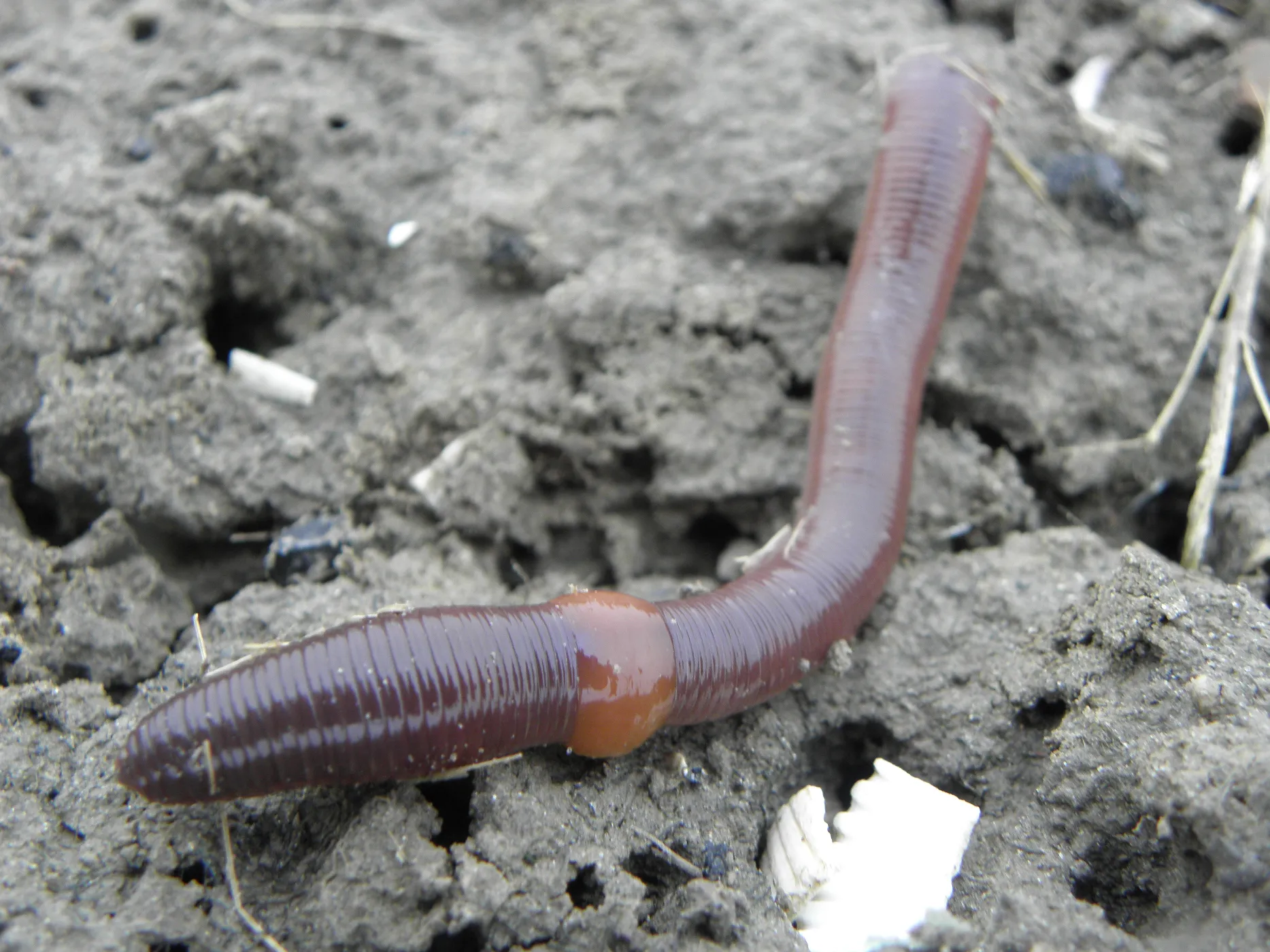
Earthworms: engineers of the soil ecosystem
Organic remains and a suitable soil structure create favorable conditions for these organisms to live. Worms process organic matter, mix mineral particles, and form burrows that improve aeration and drainage.
Structure is how soil particles are glued together into crumbs (aggregates). Good structure means crumbly, "granular" soil that air and water penetrate easily. Poor structure is either dust, hard clods, or a sealed crust (Gershuny & Smillie, 1999).
Simple tests:
1. Visual inspection: Dig a hole 15–20 cm deep. Look for large aggregates, worm burrows, roots, white threads of fungal mycelium. A healthy smell is "fresh," "earthy." A smell of dampness, rot, or "swamp" is an alarming sign (Gershuny & Smillie, 1999; Lowenfels & Lewis, 2010).
2. Aggregation test: Drop a handful of soil into a glass of water. Well-aggregated soil (rich in humus and microbes) will hold together in crumbs for several minutes or even hours. Poor soil will instantly disintegrate into a cloudy suspension (Pavlis, 2020; Gershuny & Smillie, 1999).
3. Earthworm count: Dig a hole 20x20x20 cm and sort through the soil. In healthy, organic-rich soil you should find at least 10–15 adult worms (Pavlis, 2020; Gershuny & Smillie, 1999). Worms are the main "engineers" of the soil; their presence is the best indicator of its health.
Assess Drainage
Waterlogging is fatal for most roots because it deprives them of oxygen (Pavlis, 2020). Percolation (water permeability) test:
1. Dig a hole 30 cm deep and 30 cm wide.
2. Fill it with water and let it soak in completely (this saturates the soil).
3. Fill the hole with water again and time it.
4. Good drainage: water drains at a rate of 2.5–7.5 cm per hour (Pavlis, 2020). That is, a 30 cm deep hole should empty in 4–12 hours.
5. Poor drainage: water stands for more than 12–24 hours. This indicates heavy clay, compaction, or a nearby impermeable layer (plow pan, caliche).
Note: If you find a layer as hard as concrete at depth, it may be a plow pan (the result of years of digging to the same depth) or caliche — a natural layer cemented by calcium carbonate (Johnson, 2023). In the first case, deep loosening (without turning the soil) can help; in the second, creating raised beds or planting deep-rooted plants.
Determine Organic Matter Level (Intuitively)
The simplest way is to look at soil color. Dark brown, almost black color usually indicates high humus content. However, don't be fooled: color may be due to minerals. A more accurate but still approximate method is the "tighty whitie soil test" (Pavlis, 2020): bury white cotton underwear (or any cotton cloth) in the soil for 5 weeks. If only the elastic remains — microbes are very active and there's enough organic matter in the soil. If the cloth is almost untouched — it's time to add compost.
What's next?
After diagnosis, you'll have a clear understanding of your starting point. This will allow you to move on to targeted actions. In the second chapter, we'll discuss which organic materials to use, how to apply them correctly, and why not all of them are equally beneficial. Remember: the best soil is not the one you bought, but the one you gradually created. And the first step on this path is to understand what you already have.
2. Organics: Compost, Manure, Peat, Bone Meal
Organic matter is the foundation of fertility. It improves soil structure, retains moisture and nutrients, and serves as food for soil microorganisms (Pavlis, 2020; Gershuny & Smillie, 1999). However, not all sources of organic matter are the same. It's important to understand their properties in order to use them beneficially, not harmfully.
Compost

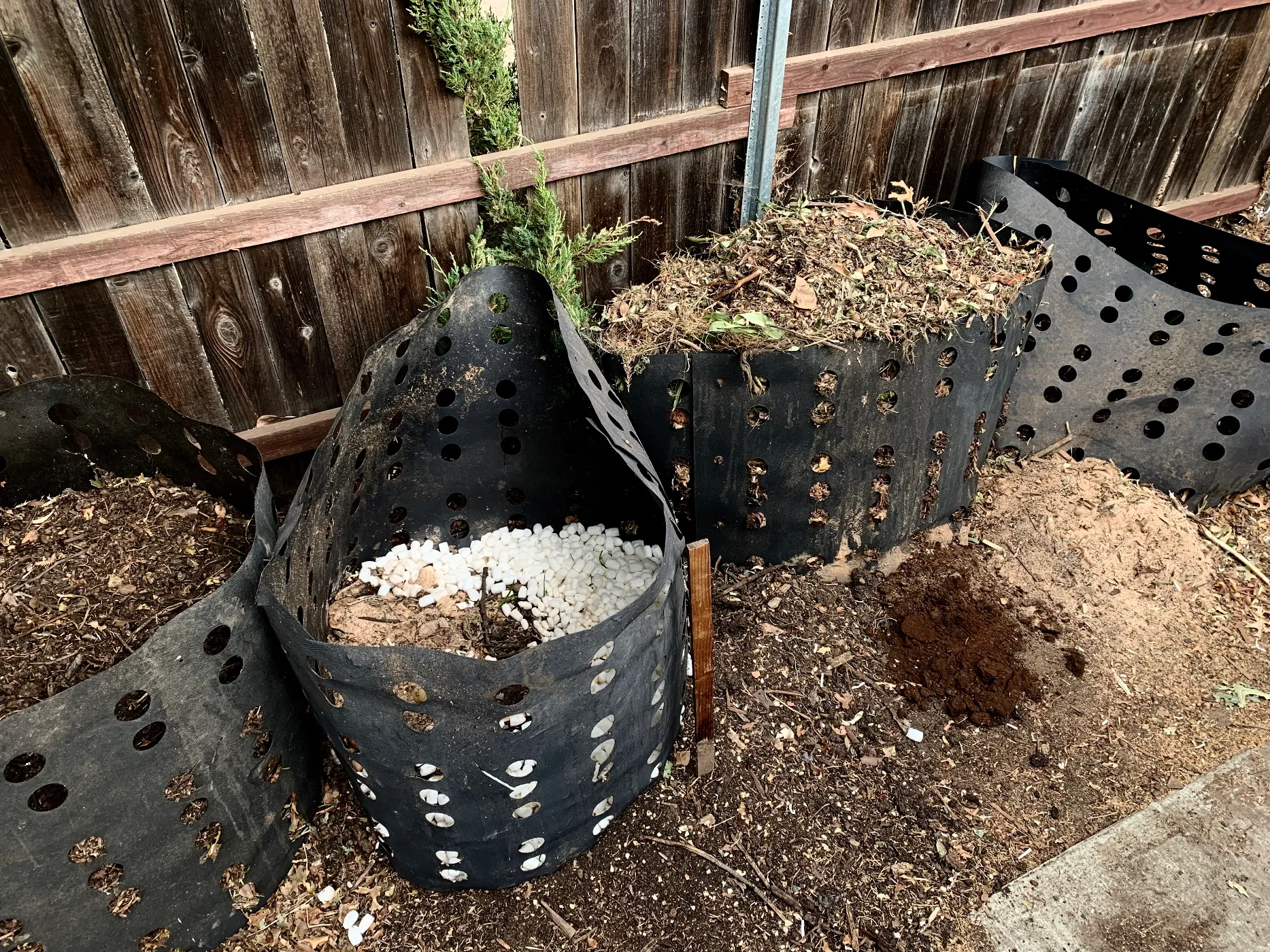
Four compost containers by a wooden fence
Image of four black perforated containers used for composting. Location not specified in the original caption.
Compost is decomposed organic matter produced by the activity of microorganisms. It contains humus, nutrients, and — especially valuable — living microbes that colonize the soil and improve its health (Lowenfels & Lewis, 2010).
Types of compost:
- Hot (aerobic): requires a carbon-to-nitrogen ratio of about 25–30:1, regular turning, and moisture maintenance. Heats up to 55–65 °C, which kills weed seeds and pathogens. Ready in 6–8 weeks (Gershuny & Smillie, 1999; Pavlis, 2020).
- Cold (passive): material is simply piled up and slowly decomposes over a year or two. Does not kill seeds and pathogens but requires less effort (Pavlis, 2020).
- Vermicompost (biohumus): processing of organic matter by worms. Produces a product rich in nutrients and microbes, but usually with high phosphorus content, so it should be applied moderately (Pavlis, 2020).
What can be composted: plant residues, kitchen waste (except meat and fats), grass clippings, leaves, shredded branches, non-glossy paper (Pavlis, 2020; Gershuny & Smillie, 1999).
What should not be: diseased plants, weed seeds, meat, bones, dairy products (attract pests), pet feces (pathogen risk) (Lowenfels & Lewis, 2010).
How to use: apply 2–5 cm of compost to the soil surface and lightly incorporate into the top layer (or leave as mulch). For poor soils, the dose can be increased to 10 cm. Compost is not so much a fertilizer as a soil improver and microbial inoculant. Its NPK is usually low (1-1-1), but it works for the long term (Pavlis, 2020).
Manure
Manure is a valuable source of organic matter and nutrients. However, its use requires caution.
Fresh or rotted?
- Fresh manure can "burn" plants due to high concentrations of salts and ammonia. It also contains weed seeds and can be a source of pathogens. Applying it immediately before planting is not recommended (Gershuny & Smillie, 1999).
- Rotted (composted) manure is safe, nutrients are in available form, weed seeds and pathogens have largely died. This is the ideal option (Littlewood, 2007).
Types of manure (by NPK content):
- Poultry manure — the most concentrated (N 1.1–1.7%, P 0.8–1.5%, K 0.5–1.2%). Apply only rotted or in compost (Littlewood, 2007).
- Horse — rich in organic matter, loosens heavy soil well. Often contains bedding (straw), which increases C:N (Gershuny & Smillie, 1999).
- Cow — milder, suitable for any soil, but poor in phosphorus and potassium (Littlewood, 2007).
- Rabbit, sheep, goat — good sources of nitrogen and trace elements (Littlewood, 2007).
How to use: best to apply rotted manure in autumn for digging or in spring 2–4 weeks before planting. Rate — 4–8 kg per 1 m² (Gershuny & Smillie, 1999). Fresh manure can be used as mulch under fruit trees and shrubs, but not in close proximity to trunks.
Important warning: manure may contain residues of antibiotics, hormones, herbicides (especially if animals are not on organic feed). Use manure from organic farms when possible (Gershuny & Smillie, 1999).
Peat
Peat is partially decomposed plant residues formed under conditions of waterlogging and oxygen deficiency. It has high water-holding capacity and improves soil structure (Puustjärvi, 2004; Robinson, 1975).
Pros:
- Improves water-holding capacity of sandy soils.
- Loosens clay soils.
- Has high cation exchange capacity (retains nutrients) (Puustjärvi, 2004).
Cons:
- Not a fertilizer: nutrient content is extremely low (Puustjärvi, 2004).
- Acidic: pH of high-moor peat is 3.5–4.5. This can be a plus for acid-loving plants, but most crops require liming (Robinson, 1975).
- Environmental problems: peat extraction destroys unique wetland ecosystems. Peat is a non-renewable resource (Pavlis, 2020). Use alternatives when possible: compost, leaf mold, coconut fiber.
How to use: only if there are no other options. Apply 5–10 cm of peat for digging to improve structure. For deacidification, add lime (Puustjärvi, 2004).
Note: Peat is not a renewable resource, and its extraction damages the environment. Consider alternatives: compost, leaf mold, coconut fiber (Pavlis, 2020).
Bone Meal
Bone meal is ground animal bones, a rich source of phosphorus (about 20–30% P₂O₅) and calcium (Gershuny & Smillie, 1999; Littlewood, 2007).
Features:
- Slow-acting: phosphorus is released gradually over several months or even years. This is a plus for perennial crops but won't help quickly correct an acute deficiency (Gershuny & Smillie, 1999).
- Ineffective on alkaline soils: at pH above 7, phosphorus becomes bound and unavailable (Gershuny & Smillie, 1999).
- Application rate: 100–150 g per 1 m² (Littlewood, 2007).
How to use: apply for digging in autumn or spring, preferably in combination with compost or manure so microbes can help release phosphorus. Especially useful for root crops and flowering plants.
Other Organic Sources (Briefly)
- Blood meal: fast-acting nitrogen (12–14% N). Used for feeding during active growth (Littlewood, 2007).
- Fish emulsion: liquid fertilizer with nitrogen and phosphorus, quickly absorbed (Gershuny & Smillie, 1999).
- Seaweed (kelp): source of potassium and trace elements, improves soil structure and stimulates growth (Littlewood, 2007; Gershuny & Smillie, 1999).
- Leaf mold (leaf soil): excellent soil conditioner, especially for acid-loving plants (Pavlis, 2020).
Conclusion
Organic matter is not just "food" for plants. It's an investment in soil health for years to come. A diversity of sources (compost, manure, bone meal, cover crops) helps balance nutrition and improve structure. The main rule: moderation and diversity. Don't try to "feed" plants with a single type of fertilizer — create a healthy soil ecosystem, and it will provide plants with everything they need.


LCD 4-in-1 Soil Tester
Check essential growing conditions with one compact tool. Measure soil pH, moisture, temperature and light intensity — ideal for gardens, potted plants and greenhouses.
- 4-in-1 measurement
- Easy-to-read LCD display
- Portable design
Affiliate link · For indicative measurements only.
3. Mulch: Types, Benefits, How to Apply
Mulch is any material used to cover the soil surface. In nature, this role is played by fallen leaves, dead grass stems, needles. In the garden, mulching is one of the most effective techniques that simultaneously solves several problems: conserves moisture, suppresses weeds, regulates temperature, protects soil from erosion, and gradually improves its structure (Lowenfels & Lewis, 2010; Chalker-Scott, 2018). For arid regions, mulch is critically important as it reduces evaporation from the surface (Johnson, 2023; Robinson, 1999).
Types of Mulch

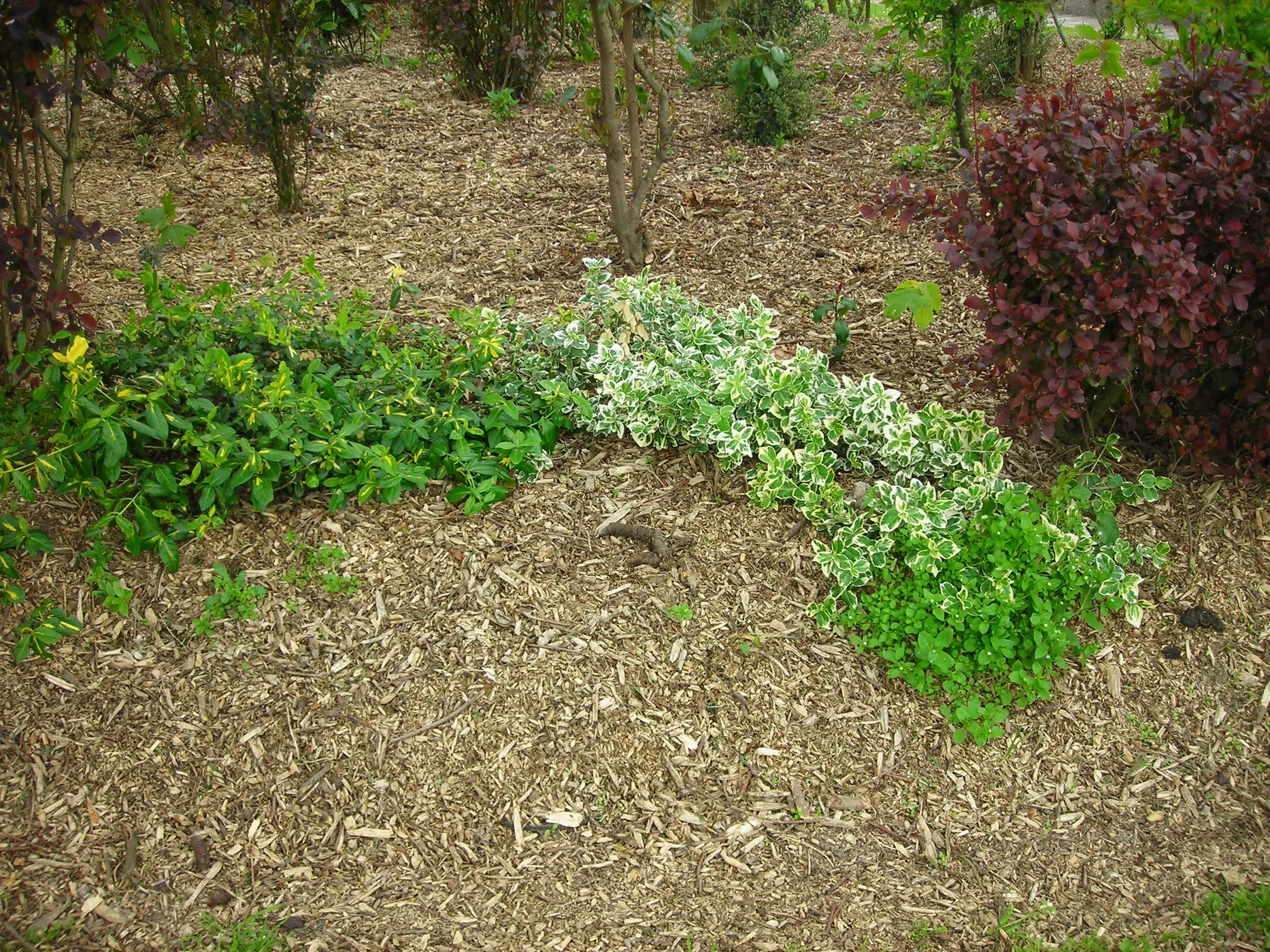
Garden mulch (Garden Mulch)
Mulch obtained from pruning waste in a public garden in Normandy (Normandie), France. (Original caption: Paillage issue de déchets de taille dans un jardin public en Normandie.)
Mulch is divided into two large groups: organic and inorganic.
Organic mulch is material of plant or animal origin that gradually decomposes, enriching the soil with organic matter and nutrients. These include:
- Compost — the most valuable type of mulch. It not only protects the soil but also adds ready-made humus and living microorganisms. A 2–5 cm layer of compost can be applied annually (Lowenfels & Lewis, 2010).
- Leaf mold (leaf soil) — the product of decomposition of fallen leaves. Excellent for woodland and acid-loving plants, improves soil structure (Pavlis, 2020).
- Bark and wood chips — decompose slowly, especially good for perennial plantings, trees, and shrubs. Large fraction (2–5 cm) lasts longer, but don't use fresh conifer chips without prior composting — they can acidify the soil and temporarily tie up nitrogen (Lowenfels & Lewis, 2010; Pavlis, 2020).
- Straw and hay — traditional mulch for the vegetable garden. Hay contains more nutrients but also more weed seeds. Straw is preferable: it's cleaner and decomposes more slowly (Pavlis, 2020; Littlewood, 2007).
- Grass clippings — accessible material rich in nitrogen. It must be dried before use and distributed in a thin layer (no more than 2–3 cm), otherwise it can rot and turn into a foul-smelling mass (Pavlis, 2020; Littlewood, 2007).
- Fallen leaves — a free resource. They can be left in place or shredded with a lawn mower. Oak and beech leaves decompose more slowly than birch or linden (Pavlis, 2020).
- Conifer needles — acidify the soil, suitable for rhododendrons, blueberries, conifers. Decompose slowly (Pavlis, 2020).
Inorganic mulch does not decompose and does not improve the soil, but performs protective functions:
- Gravel, crushed stone, pebbles — popular in arid regions and alpine gardens. They reduce evaporation but can overheat in the sun and reflect heat, which is harmful to some plants (Johnson, 2023).
- Plastic and landscape fabric — used for weed suppression, but they disrupt gas exchange and water infiltration. They should be used sparingly, for example, on paths or under berry bushes (Chalker-Scott, 2018; Pavlis, 2020).
- Stone, brick, ceramic — decorative elements that can also serve as mulch but don't benefit the soil.
Benefits of Mulching
1. Moisture conservation. Mulch reduces evaporation from the soil surface, which is especially important in arid zones and when growing moisture-loving crops (Johnson, 2023). Studies show that wood chip mulch can increase soil moisture by 20–30% (Chalker-Scott, 2018).
2. Weed suppression. A thick layer of mulch (5–10 cm) blocks the light needed for weed seed germination. In addition, some mulches (e.g., straw) release substances that inhibit weed growth (Pavlis, 2020; Lowenfels & Lewis, 2010).
3. Temperature regulation. Mulch smooths daily and seasonal temperature fluctuations: in summer the soil beneath stays cooler, in winter — warmer. This protects roots from overheating and freezing (Lowenfels & Lewis, 2010).
4. Erosion protection. Mulch absorbs the impact of raindrops and slows water runoff, preventing the washing away of the fertile layer (Pavlis, 2020).
5. Soil structure improvement. Organic mulch gradually decomposes, increasing humus content, improving aggregation, and feeding soil biota. Earthworms actively process mulch, pulling it into their burrows and enriching the soil with their casts (Lowenfels & Lewis, 2010; Gershuny & Smillie, 1999).
How to Mulch Properly
- Layer thickness. For weed suppression and moisture conservation, 5–8 cm of organic mulch is usually sufficient. For small seeds and seedlings, make the layer thinner (2–3 cm) so as not to hinder emergence. Inorganic mulch (gravel) is applied in a 2–5 cm layer (Pavlis, 2020; Chalker-Scott, 2018).
- Timing. Best to mulch in spring, after the soil has warmed, or in autumn to protect it from winter temperature fluctuations. If the soil is cold, mulch will slow its warming — this can be a plus in hot climates and a minus in cold ones (Chalker-Scott, 2018).
- Preparation. Before applying mulch, remove perennial weeds, water the soil if it's dry. Don't apply mulch to dry soil — it will prevent moisture penetration (Pavlis, 2020).
- Placement. Distribute mulch around plants, leaving 2–5 cm from trunks and stems to avoid root collar rot and creating shelter for pests (Lowenfels & Lewis, 2010).
- Renewal. Organic mulch decomposes at different rates: grass and leaves — within a few months, bark and chips — within 2–4 years. The layer needs periodic renewal (Pavlis, 2020).
Regional Considerations
- In arid climates mulch is essential. Use drought-resistant materials: gravel, coarse chips, straw. Avoid fresh grass, which dries quickly and can blow away (Johnson, 2023).
- In humid climates mulch helps control weeds and erosion but can promote slugs and fungal diseases. Don't apply it too thickly and don't pile it against plants (Pavlis, 2020).
- In cold climates mulch protects roots from freezing, but in spring it must be removed in time so the soil warms up. Dark mulch (e.g., black plastic) accelerates warming (Chalker-Scott, 2018).
Mulching Mistakes
- Too thick a layer (more than 10 cm) can hinder gas exchange and water penetration.
- Using fresh grass without drying leads to the formation of a dense, poorly breathable layer.
- Mulching diseased plants infects the soil with pathogens.
- Using conifer bark without composting can temporarily reduce nitrogen availability (Lowenfels & Lewis, 2010).
Main principle: mulch should be appropriate for your conditions and goals. Observe your plants and soil — they will tell you what's needed. Properly selected mulch not only beautifies the garden but also triggers natural processes of fertility restoration.
4. Cover Crops: Which, When, How

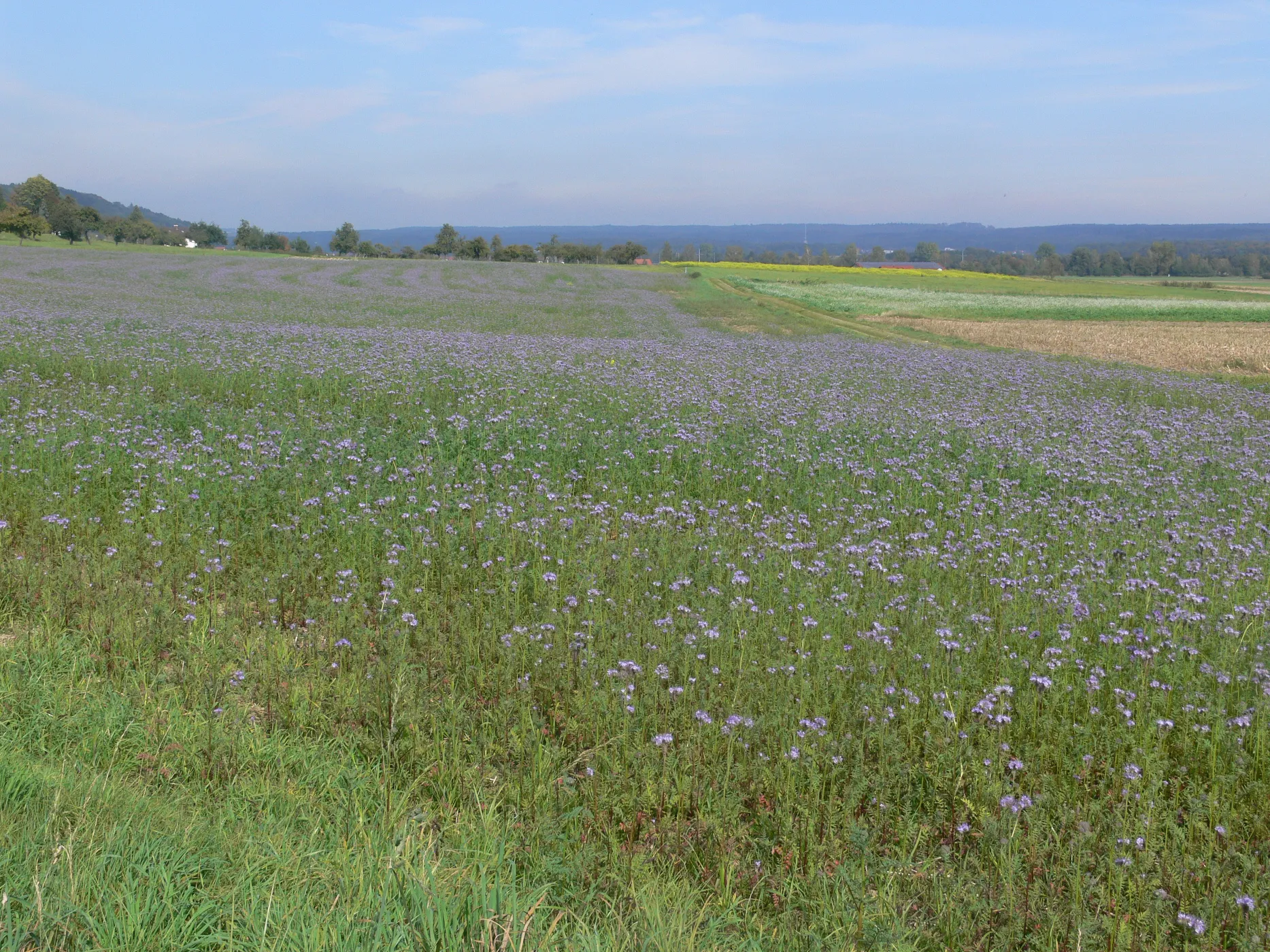
Phacelia as green manure and honey plant
Field of phacelia (Phacelia tanacetifolia) grown as a catch crop and green fertilizer. Ettishofen, Berg, Schussental Valley, Germany.
Cover crops, or green manures, are plants grown not for harvest but for soil improvement. They are sown on free plots, then mowed and either left on the surface as mulch or incorporated into the top layer. Cover crops are a powerful and economical tool for restoring fertility, accessible to every gardener (Gershuny & Smillie, 1999; Pavlis, 2020).
Types of Cover Crops
The choice of cover crop depends on the goal: whether you need to enrich the soil with nitrogen, loosen it, suppress weeds, or simply protect it from erosion. All cover crops fall into several groups.

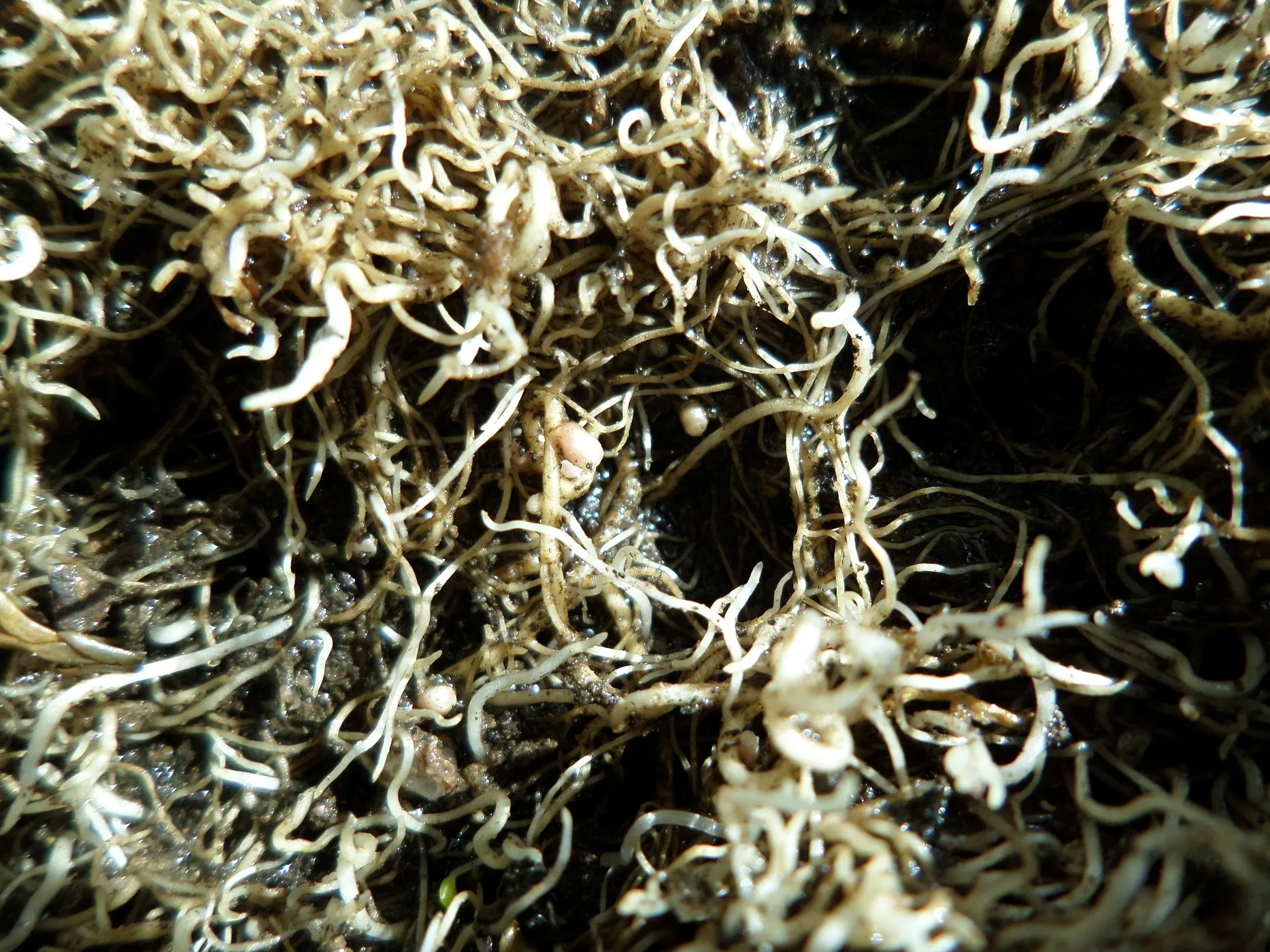
Nodules on white clover (Trifolium repens) roots
Root nodules on the roots of the plant Trifolium repens (white clover). The pink color of the nodules is due to the presence of leghaemoglobin, and inside them are bacteria of the genus Rhizobium.
Legumes (Leguminosae) — the main nitrogen fixers. Rhizobia bacteria live in their root nodules and convert atmospheric nitrogen into a form available to plants. After mowing and decomposition, legumes release this nitrogen to subsequent crops (Walliser, 2020; Toungos, 2019).
- Clover (white, red, crimson) — undemanding, grows well on various soils, suppresses weeds. Red clover is a perennial, lives 2–3 years, accumulates a lot of biomass (Gershuny & Smillie, 1999).
- Vetch — grows quickly, especially in a mix with rye. Loosens soil well (Littlewood, 2007).
- Lupin — powerful root system, tolerates poor soils (Gershuny & Smillie, 1999).
- Phacelia — not a legume but often used as a cover crop: grows quickly, blooms beautifully, attracts pollinators, suppresses nematodes (Pavlis, 2020).
- Peas, beans, lentils — annual legumes that can be sown in early spring or autumn (Bubel, 2024).
Grasses (Poaceae) — quickly build biomass, their powerful roots improve soil structure, especially heavy soil. They absorb excess nutrients, preventing leaching.
- Rye (winter) — the most popular autumn crop. Winter-hardy, suppresses weeds through allelopathy, loosens soil. Its straw is rich in carbon, so when incorporated it can temporarily tie up nitrogen (Walliser, 2020; Pavlis, 2020).
- Oats — not winter-hardy but excellent for spring sowing. Grows quickly, loosens soil, and dies in winter, leaving mulch (Walliser, 2020).
- Annual ryegrass — grows quickly, used for rapid soil cover (Gershuny & Smillie, 1999).
Brassicas (Brassicaceae) — known for their ability to loosen compacted soils and suppress pests.
- Oilseed radish (daikon) — a long taproot penetrates to a depth of 1–1.5 m, breaking the plow pan and improving drainage. After dying back, it leaves channels for roots and water (Pavlis, 2020; Walliser, 2020).
- Mustard — grows quickly, suppresses weeds, can be used for biofumigation (Walliser, 2020).
- Rapeseed, turnip — also loosen soil but require good moisture.
Others — buckwheat (grows quickly, attracts beneficial insects, solubilizes phosphorus), sunflower (powerful root system), lamb's quarters (grows on poor soils) (Gershuny & Smillie, 1999).
When to Sow Cover Crops
Sowing time depends on climate and goal. The main rule: cover crops must have time to grow sufficient biomass before cold or drought sets in.
- Spring. Immediately after snow melts and before sowing main crops (or after harvesting early vegetables). Suitable: oats, peas, vetch, phacelia, mustard. They grow quickly and loosen the soil (Bubel, 2024).
- Summer. After harvesting early crops (e.g., lettuce, onions, garlic). You can sow buckwheat, phacelia, legumes. In hot climates, choose drought-resistant species and provide irrigation (Toungos, 2019).
- Autumn. The most important season. Winter cover crops (rye, vetch, clover) are sown 4–6 weeks before persistent frosts so they have time to root but not overgrow. They protect the soil from erosion, accumulate nutrients, and continue growing in spring (Gershuny & Smillie, 1999; Littlewood, 2007).
- Pre-winter sowing. In regions with mild winters, cold-hardy species (rye, vetch) can be sown in late autumn — they will sprout in early spring.
Important: in arid climates, cover crops can dry out the soil. It's better to sow them during the rainy season or in cooler times of the year, and choose species with deep root systems that don't compete for surface moisture (Johnson, 2023).
How to Sow and Use
1. Soil preparation. Clear the plot of weeds, loosen the top layer (digging is not necessary). Cover crops can be broadcast or sown in rows.
2. Seeding rate. Depends on the species: for rye — 100–150 g per 10 m², for vetch — 80–100 g, for clover — 20–30 g, for radish — 30–50 g. Too dense sowing leads to competition and weak plants (Gershuny & Smillie, 1999).
3. Care. Watering is needed in dry weather. Legumes need seed inoculation with rhizobia if these bacteria are absent in the soil (Walliser, 2020).
4. Mowing. Carry out before flowering (or at the beginning of flowering) to avoid seed set and preserve maximum nutrients. If the cover crop has overgrown, stems become coarse and decompose slowly (Gershuny & Smillie, 1999).
5. Incorporation or mulching.
- Incorporation into soil: chop the green mass and work into the top 5–10 cm (not deeper, otherwise decomposition slows). This accelerates mineralization but requires effort.
- Mulching: leave the mowed mass on the surface as mulch. This is slower but protects the soil and gradually releases nutrients. Especially effective in no-dig systems (Lowenfels & Lewis, 2010).
- Decomposition time. Young, succulent plants decompose in 2–4 weeks; coarse stems — in 1–2 months. Before sowing the main crop, wait 2–4 weeks after incorporation to avoid suppressing seedlings (Pavlis, 2020).
Advantages of Cover Crops
- Nitrogen enrichment. Legumes fix from 40 to 200 kg of nitrogen per hectare (Toungos, 2019). After decomposition, this nitrogen becomes available to subsequent crops.
- Structure improvement. Cover crop roots loosen the soil, create channels for water and air, and glue particles into aggregates (Pavlis, 2020; Toungos, 2019).
- Weed suppression. Dense sowing shades the soil and competes with weeds. Some species (rye, mustard) release allelopathic substances that inhibit weed seed germination (Walliser, 2020).
- Erosion protection. Roots and above-ground mass slow water runoff and hold soil in winter and during the rainy season (Toungos, 2019).
- Organic matter increase. Cover crop biomass is "green manure" that increases humus content (Gershuny & Smillie, 1999).
- Support for beneficial insects. Flowering cover crops (phacelia, buckwheat, clover) attract pollinators and entomophages (Walliser, 2020).
Limitations and Precautions
- Competition for water and nutrients. In arid conditions, cover crops can dry out and deplete the soil if not mowed in time. Don't allow seed set (Pavlis, 2020; Johnson, 2023).
- Allelopathy. Rye, mustard, and some others release substances that inhibit the growth of other plants. After incorporation, wait 2–4 weeks before sowing the main crop (Walliser, 2020).
- Nitrogen tie-up. When incorporating carbon-rich grasses (straw, rye), microorganisms can temporarily tie up available nitrogen. Add a little nitrogen fertilizer or compost to accelerate decomposition (Pavlis, 2020).
- Shelter for pests. Dense sowings can attract slugs, mice, and some insects. Mow on time (Pavlis, 2020).
- Not all cover crops are universal. For example, brassicas should not be sown before cabbage (shared diseases), and legumes — before legumes (Walliser, 2020).
Regional Considerations
- Arid zones. Cover crops require moisture, so they are sown during the rainy season or in cooler times. Better to use drought-resistant species: vetch, lupin, buckwheat. Mulching with mowed mass helps conserve water (Johnson, 2023).
- Humid subtropics and tropics. Cover crops grow year-round; the main task is to prevent them from setting seed. Use fast-growing species: buckwheat, phacelia, legumes. They suppress weeds and protect soil from heavy rains (Toungos, 2019).
- Cold climate. Winter cover crops (rye, vetch) are sown in autumn so they go under snow and continue growing in spring. In spring they are mowed and incorporated before planting heat-loving crops (Gershuny & Smillie, 1999).
- Temperate climate. Universal schemes: spring — oats + peas; summer — phacelia or buckwheat; autumn — rye + vetch.
Conclusion
Cover crops are a living investment in the soil. They require little expense but, when used correctly, can significantly improve fertility, structure, and soil health in a single season. The main thing is to observe plants and soil, choose suitable species for your climate, and prevent seed set. Over time, cover crops will become an integral part of crop rotation and help create a self-sustaining garden ecosystem.

Solar Automatic Drip Irrigation Kit for Gardens
Automate watering for pots, gardens and small greenhouses. This solar-powered system features a timer to help schedule water delivery to your plants.
- Solar-powered
- 15 m irrigation hose
- Programmable watering
Affiliate link · Check included accessories.
5. Minimal Tillage: No-Dig, Loosening Instead of Digging
The traditional idea of good gardening often includes annual digging or plowing. However, modern research and practice increasingly indicate that intensive soil tillage does more harm than good. Minimal tillage, or no-dig, is becoming the standard of sustainable gardening, especially in the context of preserving soil health (Pavlis, 2020; Lowenfels & Lewis, 2010).
Why Digging Is Harmful
Digging, plowing, and intensive loosening destroy the natural structure of the soil. Here's what happens when we turn over a layer of earth:
- Destruction of aggregates. Soil crumbs (aggregates) glued by microbial secretions and root exudates are broken apart. This worsens water and air permeability, leads to sealing and crust formation (Pavlis, 2020).
- Death of soil biota. Earthworms, microarthropods, and beneficial microorganisms end up on the surface or at depths where conditions are unsuitable for them. Fungal hyphae — thin mycelium threads that permeate the soil and help plants obtain nutrients — suffer especially. After digging they are broken, and their recovery takes time (Lowenfels & Lewis, 2010; Rees-Warren, 2021).
- Accelerated mineralization of organic matter. With oxygen access, organic matter decomposes quickly, releasing CO2 into the atmosphere. This not only contributes to climate change but also depletes soil carbon — the basis of humus (Rees-Warren, 2021; Chalker-Scott, 2018).
- Weed provocation. Digging brings weed seeds that were dormant to the surface. They receive light and germinate, creating new problems (Pavlis, 2020).
- Compaction under the plow. Regular tillage at the same depth leads to the formation of a "plow pan" — a compacted layer that impedes drainage and root growth (Johnson, 2023; Pavlis, 2020).
Note: In natural ecosystems, soil is never dug. Fallen leaves, dead plants, and roots gradually decompose, while worms and microorganisms mix and structure the top layer. Nature doesn't need a shovel (Rees-Warren, 2021).
What Is No-Dig and Why It Works

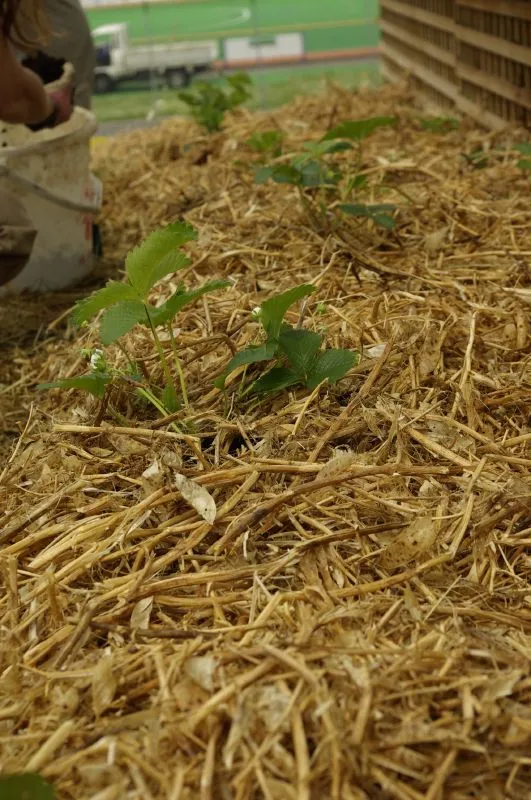
Mulched bed using the "no dig" method (No dig garden)
Close-up of a bed managed according to the "no dig" principle (no dig garden). Young strawberry bushes grow directly from a thick layer of straw mulch. The "no dig" technology aims to preserve soil structure and its microbiota by avoiding mechanical tillage.
No-dig is an approach in which the soil is not turned over or destroyed. Instead, organic materials are laid on the surface, and the soil biota processes them, gradually improving structure and fertility (Lowenfels & Lewis, 2010; Rees-Warren, 2021).
Principles of no-dig:
1. Don't dig. Never turn over the soil. A spade is used only for digging planting holes or removing perennial weeds.
2. Mulch. Annually add a layer of compost or other organic material (2–5 cm) to the surface. Worms and microorganisms will gradually pull it down.
3. Don't leave soil bare. Constant cover with mulch or cover crops protects against erosion, overheating, and drying out.
4. Minimally disturb the soil when planting. Use narrow holes, don't dig up the entire plot.
5. Keep a living root. Cover crops and mulching crops year-round feed the soil biota with root exudates.
Results of no-dig:
- Soil structure improves: it becomes more porous, crumbly, with more aggregates.
- Organic matter and humus content increases.
- Water-holding capacity increases (which is critically important in arid regions).
- The number and diversity of soil biota grows, including earthworms and mycorrhizal fungi.
- Erosion and nutrient leaching decrease.
- Labor costs are reduced: no need to dig large areas annually (Pavlis, 2020; Lowenfels & Lewis, 2010).
Tools for Minimal Tillage
Even with no-dig, local intervention is sometimes required. For this, special tools are used that don't turn over the layer but only loosen it:
- Broadfork. Long tines enter the soil, you lift the handles, and the soil is raised without being turned over. This improves aeration and drainage without destroying structure (Pavlis, 2020).
- Cultivator (manual or mechanical). Used for surface loosening of the top 5–7 cm to prepare a seedbed or incorporate seeds. Doesn't affect deep layers.
- Hoe, mattock, flat cutter. For cutting weeds on the surface. Don't disturb soil structure.
- Dibber, trowel, narrow spade. For creating planting holes. Minimal disturbance.
Important: if you use mechanical cultivators or tillers, make sure they don't turn over the layer. Tiller tines often severely destroy structure, so it's better to avoid them or use them only on virgin land (Pavlis, 2020).
How to Transition to No-Dig
The transition doesn't require instant changes. You can start small:
1. In autumn, cover the beds with a layer of compost (2–5 cm) and mulch (leaves, straw, chips). Don't dig.
2. In spring, don't dig. Make holes for seedlings or furrows for seeds right through the mulch. If the mulch is too coarse, push it aside, sow, and then return it.
3. Weeds — remove superficially: cut roots with a hoe or pull by hand, without turning the soil. Mulch will suppress most annual weeds.
4. Cover crops — sow after harvesting crops, mow and leave on the surface as mulch.
5. Compost — apply annually, in autumn or spring, to the surface. Don't incorporate deeply.
Note: In the first year or two, the soil may be denser than after digging. This is normal: the biota hasn't recovered yet. Keep mulching, and after 2–3 seasons the structure will significantly improve (Rees-Warren, 2021).
When You Can't Do Without Digging
In some cases, minimal tillage is still necessary:
- Virgin land overgrown with perennial weeds. If a plot hasn't been cultivated for years and is covered with couch grass, ground elder, or hogweed, a one-time deep loosening or removal of sod may be required. An alternative is covering with light-proof material (cardboard, landscape fabric) for a season to kill weeds (Bubel, 2024).
- Severe compaction. If there is a plow pan or technogenic compaction (e.g., after construction), a one-time deep loosening with a broadfork or mechanical subsoiler without turning the layer can help (Pavlis, 2020).
- Heavy clay soil. In the first year, you can add compost and coarse sand, slightly mixing the top 10–15 cm. Subsequently, transition to no-dig.
Regional Considerations
- Arid zones. No-dig is especially effective because mulch conserves moisture and undug soil evaporates less. However, in the first year more watering may be needed until structure improves (Johnson, 2023).
- Humid climate. Mulch and no-dig help combat erosion and nutrient leaching. It's important not to overwater the soil and to monitor drainage (Pavlis, 2020).
- Cold climate. Mulch protects roots from freezing, but in spring it must be removed in time so the soil warms up. No-dig allows earlier sowing because the soil isn't dug and doesn't lose structure (Gershuny & Smillie, 1999).
- Tropics. No-dig prevents erosion from heavy rains and preserves organic matter, which decomposes quickly in heat. Mulch from coarse materials (straw, chips) lasts longer (Toungos, 2019).
Conclusion
Minimal tillage is not just a rejection of the shovel. It's a paradigm shift: instead of "fighting" the soil, we cooperate with it. No-dig requires patience in the first year or two but then rewards the gardener with healthy, fertile, living soil that regulates moisture, nutrition, and structure on its own. This is an investment in the long-term well-being of the garden and the planet.
6. Drainage: How to Do It, When It's Needed
Drainage is the ability of soil to pass and remove excess water. If water stands on the surface or in the root zone, roots suffocate, rot, plants are suppressed, and soil microorganisms suffer from oxygen deficiency (Pavlis, 2020). In some regions drainage is vitally necessary; in others, proper organic matter management is sufficient. But in any case, understanding drainage processes helps avoid mistakes.
When Drainage Is Needed
Signs of poor drainage:
- Water stands on the surface after rain or watering for more than 24 hours (Pavlis, 2020).
- Soil doesn't dry out for a long time in spring, smears when worked, forms clods.
- Plant roots rot, leaves yellow, growth is suppressed.
- A blue-green film (algae) or moss appears on the surface.
- After rain, puddles form in depressions that don't soak in.
Main causes:
- Heavy clay soil with fine pores.
- Compaction (plow pan, technogenic impact).
- High groundwater level.
- Presence of an impermeable layer: caliche, clay pan, rocky base (Johnson, 2023; Pavlis, 2020).
- Salinization, which destroys structure and reduces water permeability (FAO, 2021).
Note: In arid zones, drainage may seem irrelevant, but with excessive irrigation or salinization it becomes critically important. Caliche — a cemented layer of calcium carbonate — is often found in arid regions and impedes both drainage and root growth (Johnson, 2023).
Drainage Diagnostics
The simplest test is the percolation test (Pavlis, 2020):
1. Dig a hole 30×30 cm.
2. Fill with water, let it soak in completely (saturation).
3. Fill again and time it.
4. A rate of 2.5–7.5 cm/hour is good drainage. Slower than 1 cm/hour is poor. Faster than 7.5 cm/hour — the soil passes water too quickly (sandy).
If water doesn't drain at all or rises — there may be a high groundwater level or an impermeable layer.
Methods for Improving Drainage
1. Organic matter and mulch
This is the basic and safest method. Compost, rotted manure, leaf mold improve structure: they glue particles into aggregates, creating large pores. In clay soil, organic matter loosens; in sandy soil, it binds and retains water (Pavlis, 2020; Gershuny & Smillie, 1999). Mulch protects the surface from sealing and promotes earthworm activity, which creates channels.
Limitation: If drainage is catastrophically poor due to an impermeable layer, organic matter alone won't help. Engineering solutions are needed.
2. Aeration and deep loosening
- Broadfork: tines are inserted into the soil, the layer is lifted without turning. Improves aeration and water penetration (Pavlis, 2020).
- Deep loosening (without turning the layer) is used to break up the plow pan. Done with special subsoilers or manually with a fork. Don't dig! Otherwise you'll destroy structure and bring weed seeds to the surface.
- Lawn aeration (spiking the turf) helps on compacted areas.
3. Raised beds

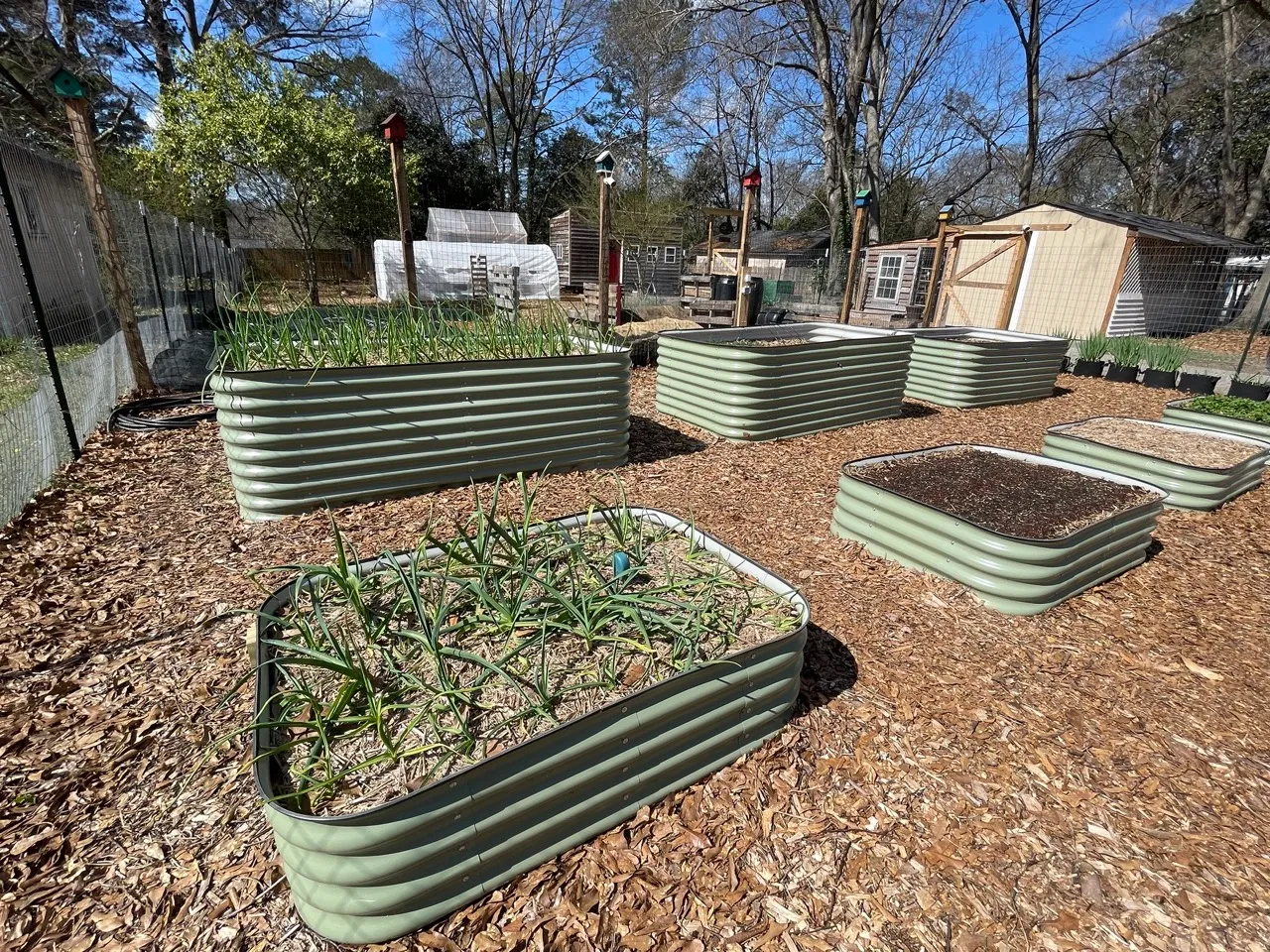
Raised beds for vegetables
Onions and garlic are grown in raised metal beds. This arrangement of plantings allows one to work with prepared soil mixture and, if necessary, improve drainage conditions.
If the plot's drainage is fundamentally poor and redoing the entire terrain is expensive, it's easier to create raised beds. They are a mound of a mixture of local soil, compost, and sand (if necessary). A height of 20–30 cm is sufficient for most vegetables. Water drains down, roots don't suffer from waterlogging (Pavlis, 2020; Bubel, 2024).
Important: don't make the bed from pure compost — it dries out and settles. Mix with local soil.
4. Surface drainage (ditches, furrows, terrain modification)
- Ditches around the perimeter of the plot divert water to depressions or drainage wells. Depth 30–50 cm, sloped walls.
- Furrows between beds help drain water from the beds.
- Terrain modification: create a slope away from the problem area. If the plot is flat, you can make small berms (ridges) and hollows to direct runoff (Pavlis, 2020; Robinson, 1999).
5. Subsurface drainage (French drains, drainage pipes)

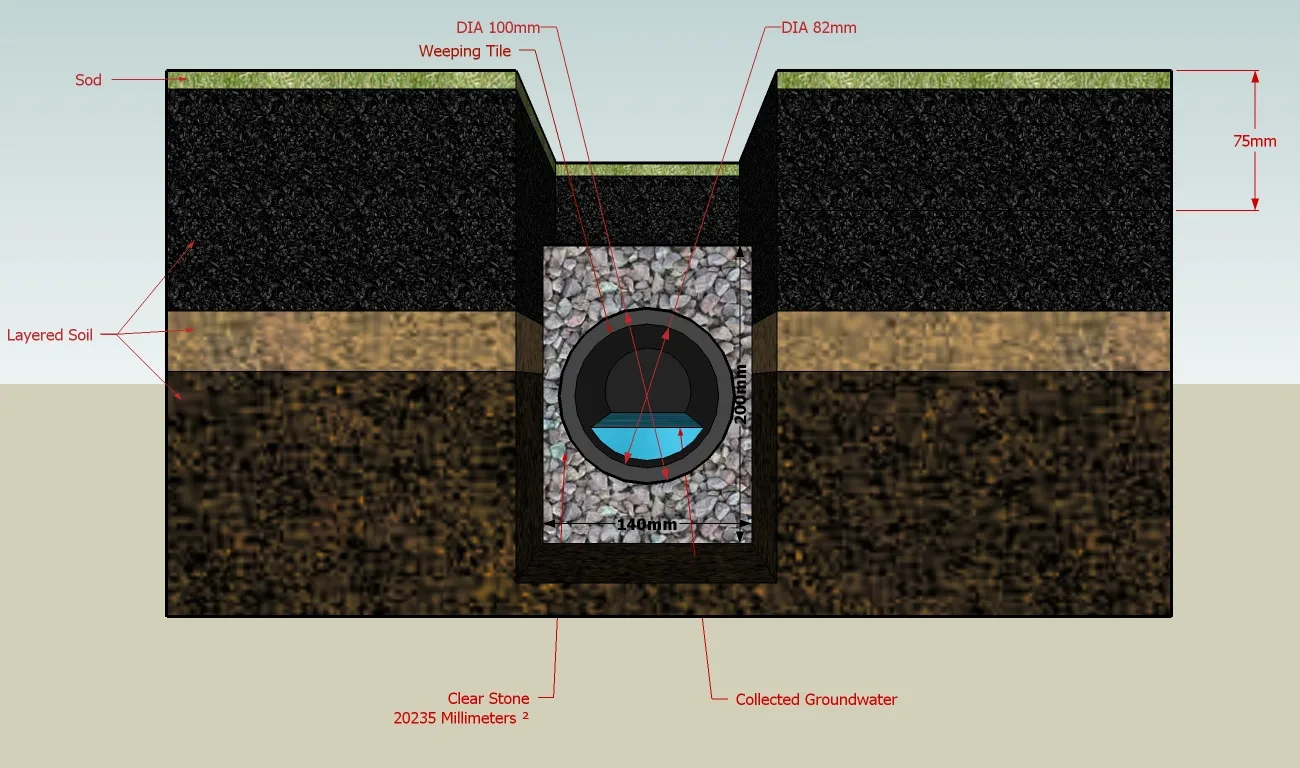
Diagram of a French drain design
Cross-section of a drainage trench: a perforated pipe is surrounded by crushed stone, so that water is collected and removed from the soil.
- French drain: a trench 60–100 cm deep filled with crushed stone, with a perforated pipe at the bottom wrapped in geotextile. Water collects in the pipe and is diverted to a drainage well, ditch, or storm sewer (Pavlis, 2020).
- Drainage pipes (clay, plastic) are laid with a slope of 1–2 cm per meter. Used on large areas or around foundations.
- Dry well: a pit filled with crushed stone where water from a French drain is diverted. Works until it silts up.
Limitation: These methods are labor-intensive and expensive. Use them when other methods don't help.
6. Dealing with an impermeable layer (caliche, clay pan)
- If the layer is thin (up to 30 cm), it can be loosened with a pickaxe or deep subsoiler.
- If thick, drill drainage holes (wells) through it, filling them with crushed stone so water can drain to lower layers (Johnson, 2023).
- As a last resort — raised beds or containers.
7. Saline soils
Salinization is a problem in arid and coastal zones. Excess salts destroy structure, water infiltrates poorly. Solution:
- Leaching: abundant irrigation with drainage so salts are washed below the root zone. Water removal is essential, otherwise salts return (FAO, 2021).
- Gypsum (calcium sulfate) is applied to replace sodium with calcium on sodic soils. The dose is determined by analysis (Pavlis, 2020).
- Organic matter and mulch improve structure and reduce evaporation but don't remove salts.
- Drainage pipes for removing leachate.
8. What Doesn't Work
- Gravel at the bottom of a planting hole: creates "perched" water, roots still suffer from waterlogging (Chalker-Scott, 2018).
- Sand into clay without organic matter: can make the soil concrete-like. Sand is added only in combination with large amounts of organic matter and in correct proportions (Pavlis, 2020).
- Digging with turning the layer: temporarily improves drainage but destroys structure and harms biota.
Regional Considerations
- Humid climate: drainage is critical. Use raised beds, ditches, French drains. Mulch helps but doesn't replace water removal.
- Arid zones: drainage is needed for salinization, heavy clays, or caliche. Otherwise, mulch and organic matter are sufficient (Johnson, 2023).
- Cold climate: spring waterlogging is a common problem. Raised beds, furrows, drainage ditches help. Don't plant in low spots.
- Tropics: heavy rains cause erosion and waterlogging. Drainage ditches, mulch, raised beds.
Conclusion
Drainage is not just "diverting water." It's creating conditions where roots breathe, microbes work, and nutrients aren't leached. Start with diagnostics: percolation test, observation of the plot after rain. Then choose a method: from simple application of organic matter and mulch to engineering structures. In most cases, a combination of organic matter, aeration, and proper terrain solves the problem without major expenses. If drainage is fundamentally poor, raised beds are the most reliable and quickest solution.

7-in-1 Wi-Fi Weather Station
Monitor local weather conditions with a wireless outdoor sensor. Track temperature, humidity, rainfall, wind speed and direction, and atmospheric pressure. Ideal for gardens, farms and greenhouses.
- Wireless outdoor sensor
- Solar-powered
- Wi-Fi connectivity
Affiliate link · Check regional compatibility.
7. Liming and Acidification: Briefly
Soil pH is one of the key factors determining nutrient availability for plants. Most crops prefer neutral or slightly acidic reaction (pH 6.0–7.0), but there are plants that need acidic (blueberries, rhododendrons, conifers) or alkaline (many Mediterranean herbs, some vegetables) conditions (Pavlis, 2020; Littlewood, 2007). However, changing pH dramatically and permanently is nearly impossible: it is determined by climate, parent material, and rainfall (Chalker-Scott, 2018). Therefore, the main principle is to select plants for the existing pH, and adjust it only when necessary and within limited ranges.
When pH Adjustment Is Needed
Precise analysis is required before any intervention. Home tests give only an approximate picture; calculating the dose of lime or sulfur requires laboratory analysis with determination of buffer capacity (buffer pH). It is this indicator, not the current pH, that determines how much material is needed to shift the reaction (Pavlis, 2020).
Signs that adjustment is needed:
- Plants suffer from nutrient deficiency despite fertilizer application.
- On acidic soils (pH < 5.5), legumes, brassicas, and beets grow poorly.
- On alkaline soils (pH > 7.5), chlorosis appears (yellowing of leaves between veins) due to iron, manganese, and zinc unavailability (Pavlis, 2020; Littlewood, 2007).
- You want to grow crops requiring a different pH than your plot.
Important: Don't try to "fix" pH if plants are doing well. Many crops adapt to a range of 5.5–8.0, and microbes in the rhizosphere regulate acidity around roots themselves (Pavlis, 2020).
Liming: Raising pH
Liming is applied on acidic soils to raise pH and improve structure. Calcium in lime glues clay particles into aggregates, improving drainage and aeration (Littlewood, 2007; Gershuny & Smillie, 1999).
Materials:
- Dolomite flour (calcium and magnesium carbonate) — the best choice for most soils. It contains magnesium, which is often deficient in acidic soils. Acts slowly (months) but the effect lasts 2–3 years (Littlewood, 2007; Pavlis, 2020).
- Limestone flour (calcium carbonate) — if magnesium in the soil is already sufficient. Acts similarly.
- Slaked lime (calcium hydroxide) — fast-acting but "harsh." Can burn roots and disrupt balance. Not recommended for regular use (Littlewood, 2007).
- Marl, chalk, calcium nitrate — also used but less frequently.
Doses: Depend on buffer capacity and soil type. Approximately: to raise pH by 1 unit on sandy soil, 1 kg/100 m² is required; on loam — 2–3 kg; on clay — 4 kg (Littlewood, 2007). The exact dose is given by the laboratory.
When to apply: In autumn for digging or in spring several weeks before sowing. Don't apply simultaneously with manure or nitrogen fertilizers — this leads to nitrogen losses as ammonia (Littlewood, 2007).
Precautions:
- Don't lime soil under potatoes, tomatoes, blueberries, rhododendrons — they prefer acidic conditions.
- Excess lime blocks the availability of iron, manganese, zinc, and boron.
- On alkaline soils, liming is useless and harmful.
Acidification: Lowering pH
Lowering pH is required less often, mainly on alkaline and carbonate soils, and for acid-loving crops. This is a more complex and lengthy process than liming (Pavlis, 2020).
Materials:
- Sulfur (elemental) — the most effective and common method. Microbes oxidize sulfur to sulfuric acid, gradually lowering pH. Acts slowly (several months) but the result is stable. The dose depends on initial pH and buffer capacity; usually 50–100 g/m² for loam (Pavlis, 2020).
- Ammonium sulfate — nitrogen fertilizer that acidifies the soil. Used for feeding acid-loving plants.
- Peat — acidifies weakly and not for long. Effective only when applied in large volumes but environmentally undesirable (Pavlis, 2020).
- Organic acids (vinegar, citric acid) — give only a temporary effect and are not recommended for large areas.
- Iron chelates — don't acidify the soil but eliminate chlorosis caused by alkaline reaction.
When to apply: In autumn so sulfur has time to oxidize over winter. In spring, ammonium sulfate can be used for a quick effect.
Precautions:
- Overdosing sulfur can make the soil too acidic and toxic to microbes.
- On carbonate soils (with high lime content), acidification is ineffective: the acid is neutralized by carbonates. In such cases, it's better to use raised beds with an artificial acidic mix.
- Don't use aluminum and iron sulfates — they are toxic to plants (Pavlis, 2020).
Regional Considerations
- Humid climate: soils are naturally acidic due to leaching of bases. Liming is required for most vegetable crops. Acidification is needed only for acid-loving plants.
- Arid zones: soils are often alkaline and carbonate. Acidification is ineffective; use adapted crops (date palms, olives, lavender) or raised beds with acidic substrate (Johnson, 2023).
- Cold climate: pH is usually close to neutral or slightly acidic. Liming may be required on sandy and peaty soils.
- Tropics: soils are often acidic but with high aluminum content. Liming raises pH and reduces aluminum toxicity (Pavlis, 2020).
Conclusion
Changing pH is fine-tuning, not radical reconstruction. Start with analysis, consider buffer capacity, choose appropriate materials, and apply them moderately. Remember: it's better to select plants for the soil than to try to remake the soil for the plants. If adjustment is necessary, do it gradually and observe the reaction of plants and soil biota.
8. Crop Rotation and Companion Planting
Healthy soil is not just a set of minerals. It's a living system where plants, microbes, and insects interact in thousands of ways. Two powerful tools to direct these interactions in the right direction are crop rotation and companion planting. They imitate natural diversity, prevent soil depletion, and reduce pest pressure. Unlike many "folk" tips, these methods have a scientific basis, although not all details have been studied yet (Walliser, 2020; Pavlis, 2020).
Crop Rotation: Alternating Crops
Crop rotation is planning in which different groups of plants are grown in the same place alternately, year after year. In nature, monoculture (growing one crop over a large area) is rare. It quickly depletes the soil and accumulates specific pests and diseases (Pavlis, 2020). Crop rotation breaks these cycles.
Why it's needed:
- Nutrients. Different crops consume elements in different proportions. Leafy vegetables (cabbage, lettuce) need nitrogen, root crops — potassium and phosphorus, legumes fix nitrogen themselves and enrich the soil with it (Gershuny & Smillie, 1999; Littlewood, 2007).
- Pests and diseases. If cabbage is planted in the same place year after year, clubroot and cabbage root fly will accumulate. Changing the crop deprives them of their usual host (Pavlis, 2020; Bubel, 2024).
- Soil structure. Roots of different plants penetrate to different depths. Alternating deep- and shallow-rooted crops improves aggregation and porosity (Gershuny & Smillie, 1999).
- Weeds. Different crops suppress weeds differently: some shade the soil, others release allelopathic substances (Walliser, 2020).
How to plan:

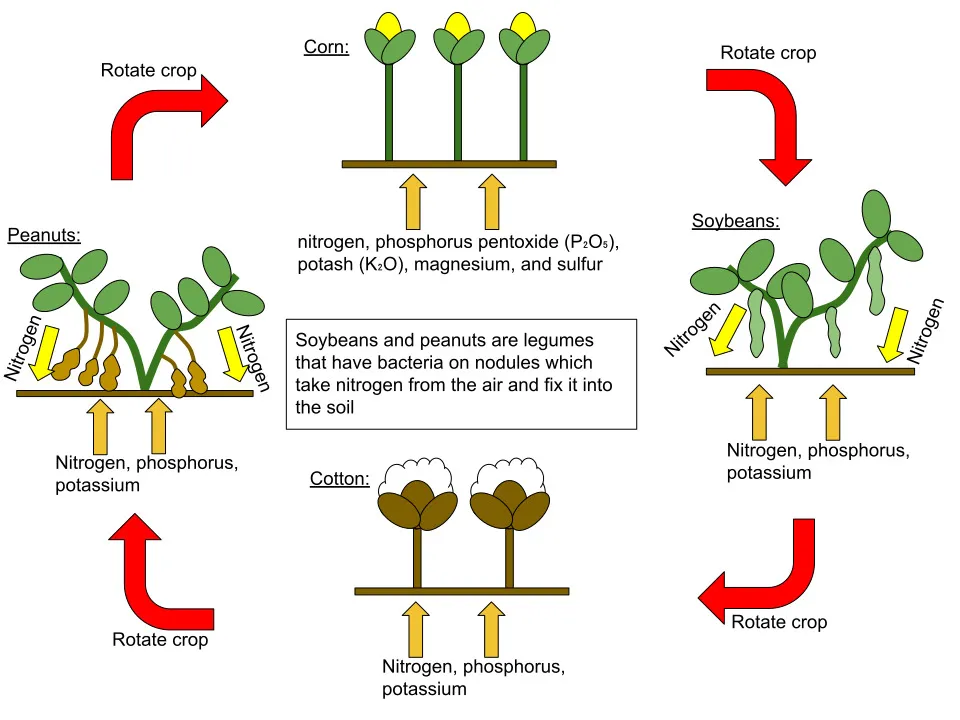
Crop rotation and nitrogen fixation by legumes
An infographic illustrating the principles of a four-field crop rotation involving legumes (peanuts and soybeans), cereals (maize), and industrial crops (cotton). The diagram explains that nodule bacteria on the roots of legumes fix atmospheric nitrogen, enriching the soil. It also shows which macro- and micronutrients (nitrogen, phosphorus, potassium, magnesium, sulfur) need to be applied for each group of plants, and how crop rotation (Rotate crop) contributes to restoring soil fertility.
Divide the garden into 3–4 sectors (or groups of beds). Alternate groups by year. Classic scheme for temperate climate (Littlewood, 2007; Bubel, 2024):
1. Legumes (peas, beans, broad beans) — enrich with nitrogen.
2. Brassicas (cabbage, broccoli, radish) — require a lot of nitrogen, which remained after legumes.
3. Root crops (carrots, beets, onions) — need potassium and phosphorus.
4. Fruiting crops (tomatoes, cucumbers, zucchini) — consume a lot of nutrients.
The following year, shift the groups in a circle. For example: legumes → brassicas → root crops → fruiting crops → legumes again.
Important rules:
- Don't plant crops of the same family two years in a row in the same place. This especially applies to brassicas, solanaceous crops (tomatoes, potatoes, peppers, eggplants), and alliums (Pavlis, 2020).
- Consider allelopathy. Some plants (sunflower, buckwheat, wormwood) release substances that suppress others. After them, the soil requires recovery (Pavlis, 2020; Bubel, 2024).
- In a small garden, full crop rotation is difficult. But even alternating between beds (e.g., cabbage on the first bed this year, on the second next year) helps (Bubel, 2024).
- In warm climates, 2–3 harvests per year are possible, so crop rotation becomes more complex but also more important. In cold climates — one crop per season, and rotation is simpler.
Regional aspect: In arid zones, crop rotation helps use moisture more efficiently: after moisture-loving crops, plant drought-resistant ones. In humid tropics, rotation prevents the accumulation of fungal diseases (Toungos, 2019).
Companion Planting: Science, Not Superstition

Three Sisters companion planting
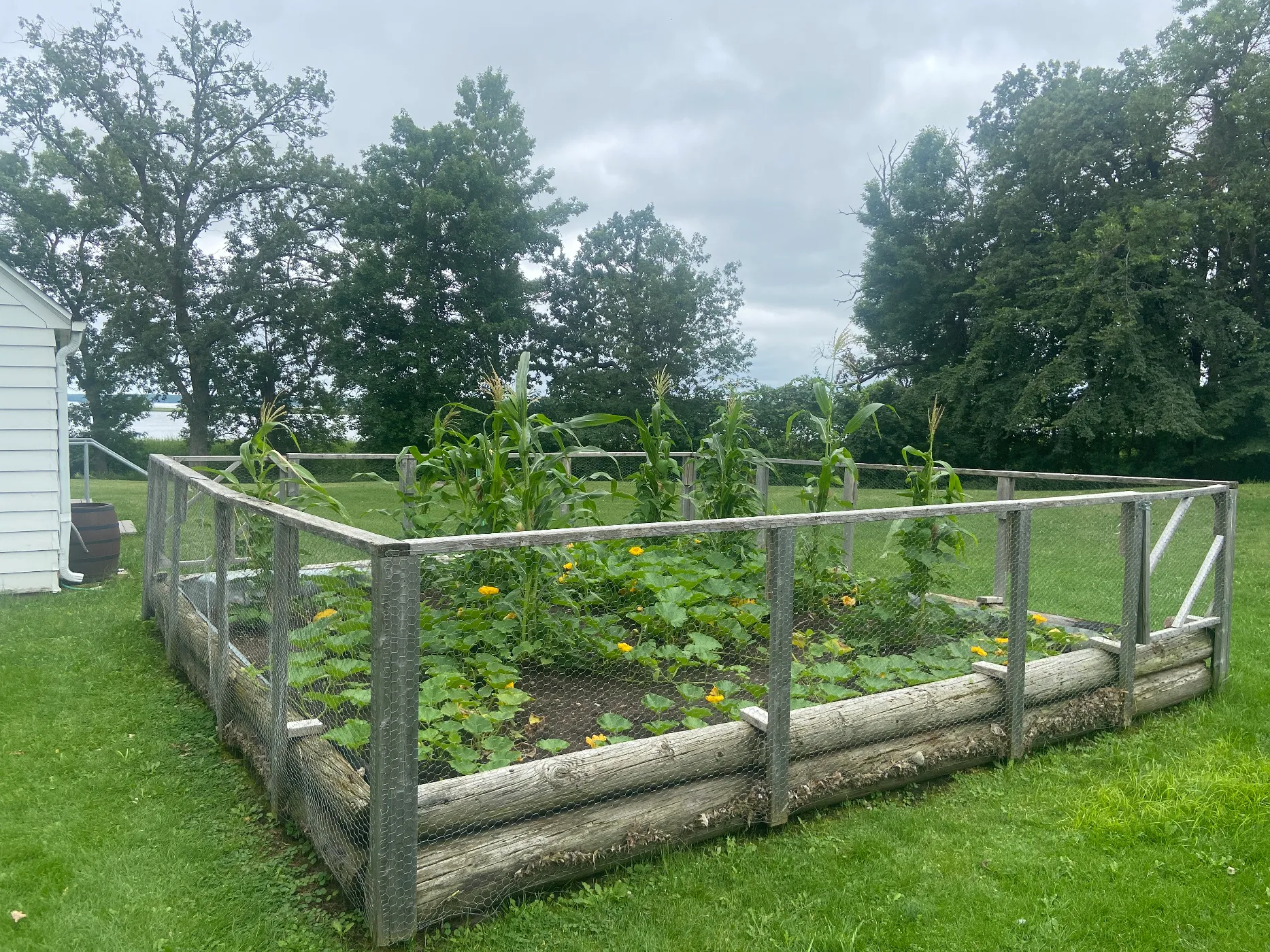
Traditional companion planting of maize (Zea mays), beans (Phaseolus spp.), and squash (Cucurbita spp.). Garden at the Mille Lacs Indian Museum and Trading Post, Onamia, Minnesota, USA.
Companion planting is growing different plants in close proximity for mutual benefit. For a long time this topic was surrounded by myths. Modern research confirms some traditional combinations and explains their mechanisms (Walliser, 2020). However, not all "folk" schemes work: for example, the famous "three sisters" (corn, beans, squash) don't always produce higher yields than monoculture (Pavlis, 2020).
How plants influence each other:
- Resource partitioning. Plants with different root depths (e.g., carrots and onions) don't compete for water and nutrients but use different soil horizons (Bubel, 2024).
- Nitrogen fixation. Legumes (peas, beans, clover) in symbiosis with rhizobia fix atmospheric nitrogen and share it with neighbors through the mycorrhizal network (Walliser, 2020). This is confirmed by isotope studies: up to 50% of legume nitrogen is transferred to non-legume neighbors (Walliser, 2020).
- Pest repellence. Aromatic herbs (basil, dill, marigolds, lavender) release volatile substances that mask the scent of crops and confuse insects (Walliser, 2020).
- Trap crops. Some plants attract pests more strongly than the main crop and divert them. For example, nasturtium — for aphids, mustard — for flea beetles (Walliser, 2020).
- Support for beneficial insects. Flowering plants (phacelia, buckwheat, clover, marigolds) attract predatory beetles, hoverflies, parasitic wasps that destroy pests (Walliser, 2020; Littlewood, 2007).
- Living mulch. Low-growing plants (clover, vetch) in between rows suppress weeds, conserve moisture, and enrich the soil with nitrogen (Walliser, 2020).
Proven combinations:
- Legumes + corn/cabbage. Beans or peas share nitrogen with corn, and corn provides support. However, competition for light and water can be significant, so the scheme needs adaptation (Walliser, 2020).
- Marigolds + vegetables. Root exudates of marigolds (especially Tagetes patula) suppress nematodes. The effect is proven in several studies (Pavlis, 2020; Bubel, 2024).
- Basil + tomatoes. Basil releases substances that repel the tomato hornworm and reduce the incidence of late blight (Walliser, 2020).
- White clover + corn/cabbage. Clover as living mulch reduces weediness and provides nitrogen (Walliser, 2020).
- Oilseed radish + oats. The mix loosens the soil and suppresses weeds (Pavlis, 2020; Walliser, 2020).
Caution: allelopathy. Some plants release toxins that suppress neighbors. Walnut (juglone), sunflower, wormwood, and couch grass are known allelopaths (Pavlis, 2020). Don't plant demanding crops next to them.
Regional aspect: In arid zones, companion planting must consider competition for water — better to combine drought-resistant species. In humid tropics — avoid dense plantings that promote fungal diseases.
Integration in the Garden
Crop rotation and companion planting don't contradict but complement each other. Here's an example for a small garden:
- Year 1: Bed 1 — legumes (beans) with marigolds along the edges. Bed 2 — cabbage with clover in between rows. Bed 3 — root crops (carrots) with onions. Bed 4 — tomatoes with basil.
- Year 2: Shift the crops: legumes to bed 2, cabbage to bed 3, root crops to bed 4, tomatoes to bed 1.
- Cover crops — sow after harvesting crops so the soil doesn't stay bare.
This approach supports diversity, reduces stress on the soil, and lessens pest problems.
Conclusion
Crop rotation and companion planting are not one-time events but a way of thinking. They require observation and adaptation to local conditions. Start with simple schemes, record results, experiment. Gradually you'll create a sustainable ecosystem where plants help each other, and the soil remains alive and fertile. The main principle: diversity is the key to stability.

40W Full Spectrum LED Grow Light
Support healthy plant growth with full-spectrum LED lighting. Ideal for seedlings, indoor plants and small growing spaces. A practical solution for indoor gardening and year-round cultivation.
- Full-spectrum LED
- Energy-efficient design
- Indoor plant growing
Affiliate link · Check actual power and light coverage.
9. How to Improve Sandy Soil
Sandy soil is both a challenge and an opportunity. It's easy to work, warms up quickly in spring, and is well-drained. But it has serious drawbacks: low water-holding capacity, weak cation exchange capacity (CEC), rapid nutrient loss, and a tendency to dry out (Pavlis, 2020). In arid regions these problems are especially acute, but even in humid climates sandy soils require constant attention. The good news is that sandy soil can be significantly improved, and the main tool here is organic matter.
How to Identify Sandy Soil

Sandy soil in Goa (India)
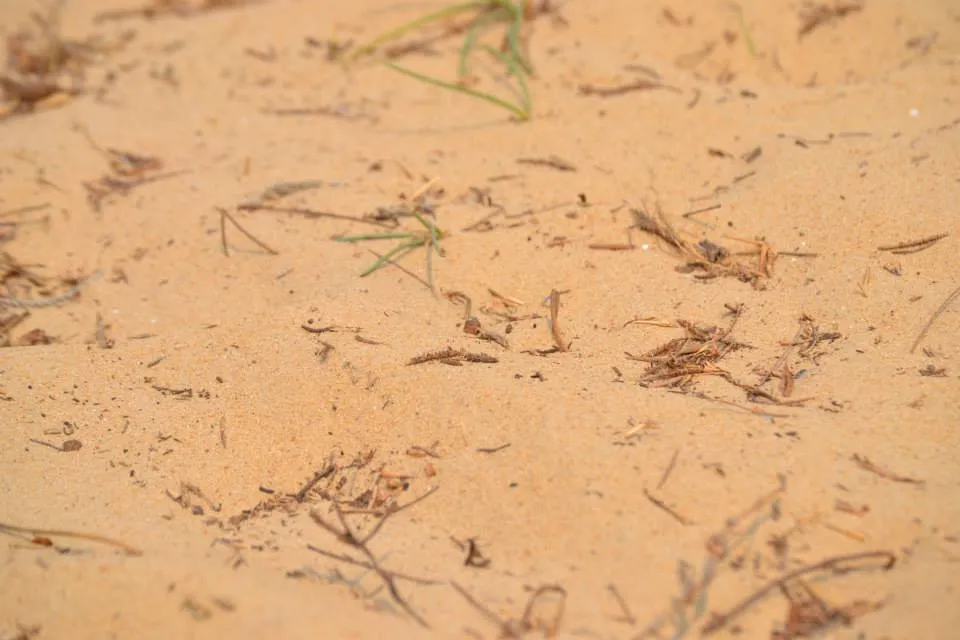
Sandy soil. Location: Loutolim (Loutolim), Goa State, India.
Sandy soil consists of large particles (0.05 to 2 mm). When rubbed between fingers, it feels like coarse sand, doesn't stick, doesn't roll into a ribbon. If you squeeze a moist handful, it crumbles without forming a ball (Chalker-Scott, 2018; Pavlis, 2020). In a jar of water, sand settles first, within a minute, forming the bottom layer (Pavlis, 2020).
Main problems of sandy soil:
- Water and nutrients quickly leach down, unavailable to roots.
- Low CEC: soil doesn't retain potassium, calcium, magnesium, ammonium.
- Organic matter decomposes quickly due to good aeration.
- In summer the soil overheats severely; in winter it cools quickly.
- In arid zones requires frequent watering.
Advantages:
- Easy to dig and work.
- Warms up quickly in spring, allowing earlier sowing.
- Good drainage, no waterlogging (if there's no impermeable layer).
Improvement Strategy: Organic Matter Is the Foundation of Everything
Changing the mechanical composition of sandy soil (adding clay and silt) is practically impossible on a large scale. It's far more effective and safer to improve its structure and water retention through organic matter (Pavlis, 2020; Chalker-Scott, 2018). Organic matter acts like a sponge: it retains water and nutrients, gradually releasing them to plants. It also increases CEC and feeds the soil biota.
What to apply:
- Compost — the best choice. Apply 5–10 cm of compost to the surface and lightly incorporate into the top 10–15 cm. Repeat annually or every two years (Pavlis, 2020; Gershuny & Smillie, 1999).
- Rotted manure — 4–8 kg per 1 m². It adds not only organic matter but also nutrients. Fresh manure on sandy soil is not recommended: it quickly loses nitrogen and can contaminate groundwater (Gershuny & Smillie, 1999).
- Leaf mold — an excellent conditioner, especially for acid-loving plants (Pavlis, 2020).
- Peat — improves water retention but acidifies and is environmentally questionable. Use only when necessary, in a mix with compost (Puustjärvi, 2004; Pavlis, 2020).
- Biochar — a promising additive. It retains water and nutrients, increases CEC, but requires pre-charging (with compost or manure slurry). Doses: 1–2 kg per 10 m² (Pavlis, 2020; Chalker-Scott, 2018).
How to apply:
- Best time — autumn or early spring.
- Distribute organic matter evenly over the surface and incorporate with a fork or flat cutter to a depth of 10–15 cm. Don't dig deeply to avoid destroying forming aggregates.
- Mulch plantings annually: straw, grass clippings, leaves, wood chips. Layer 5–8 cm (Lowenfels & Lewis, 2010; Pavlis, 2020).
Important: On sandy soil, organic matter decomposes faster than on clay. Therefore, it needs to be applied more often — at least once a year, preferably twice: in spring and autumn.
Claying: A Cautious Approach
Sometimes it's recommended to add clay to sandy soil to increase water retention and CEC. However, this requires very large quantities (up to 30% by volume) and thorough mixing. If you add too little clay, it can form dense clods that worsen structure. In addition, clay may contain weeds and pathogens (Pavlis, 2020).
Safer to use: bentonite (pond clay) in a mix with compost. But even in this case, the effect will only be noticeable after several years. For most gardeners, organic matter is a simpler and more reliable path.
Mulching: An Essential Practice
Mulch on sandy soil performs several functions:
- Reduces evaporation (critically important in arid climates).
- Protects the surface from overheating.
- Gradually decomposes, increasing humus content.
- Suppresses weeds.
- Improves structure by attracting earthworms (Lowenfels & Lewis, 2010; Johnson, 2023).
Best types of mulch for sandy soil:
- Straw, hay (layer 8–10 cm).
- Grass clippings (dried, in a thin layer).
- Leaves (shredded).
- Compost (as mulch, 2–5 cm).
- Wood chips, bark (for perennials, layer 5–8 cm).
Don't use fresh grass in a thick layer — it will rot. Don't leave the soil bare: sand quickly loses moisture and overheats.
Cover Crops: Green Manure for Sandy Soils
Cover crops are a powerful tool for sandy soils. Their roots bind particles, improve structure, and biomass adds organic matter upon decomposition. Legumes fix nitrogen that would otherwise be leached (Toungos, 2019; Gershuny & Smillie, 1999).
Suitable cover crops:
- Winter rye — powerful root system, suppresses weeds, loosens soil. Sow in autumn, mow in spring (Walliser, 2020).
- Oats — grows quickly, not winter-hardy, leaves mulch. Sown in spring or late summer (Walliser, 2020).
- Lupin — deep root, nitrogen fixation, tolerates poor soils. Sown in spring or autumn (Gershuny & Smillie, 1999).
- Buckwheat — grows quickly, solubilizes phosphorus, attracts beneficial insects. Sown in summer (Pavlis, 2020).
- Oilseed radish — long taproot penetrates deeply, improves drainage, and leaves channels. Sown in late summer (Walliser, 2020).
- Clover — nitrogen fixer, living mulch. Sown in spring or autumn (Littlewood, 2007).
How to use: sow densely, mow before flowering, leave on the surface as mulch or lightly incorporate into the top layer. Don't allow seed set. After incorporation, wait 2–3 weeks before planting the main crop (Pavlis, 2020).
Minimal Tillage and Watering
On sandy soil it's especially important not to dig unnecessarily. Digging destroys forming aggregates and increases leaching. Use no-dig: mulch and compost on the surface, and worms and microbes structure the soil themselves (Rees-Warren, 2021; Lowenfels & Lewis, 2010).
Watering: sandy soil requires frequent but not abundant watering. It's better to use drip irrigation or a soaker hose so water enters slowly and has time to soak in. Mulch reduces evaporation losses. In arid zones, without mulch and drip irrigation, growing moisture-loving crops is practically impossible (Johnson, 2023).
Nutrition: fertilizers on sandy soil leach quickly. Use slow-release forms (compost, bone meal, blood meal) or apply liquid feeds frequently but in small doses. Cover crops and organic mulch have a good effect (Pavlis, 2020).
Plant Selection
On sandy soil, the best crops are drought-resistant with deep root systems:
- Vegetables: carrots, beets, radishes, onions, garlic, potatoes (with sufficient watering), asparagus, pumpkin, zucchini.
- Herbs: lavender, rosemary, thyme, sage, oregano.
- Berries: blueberries (with added peat), blackberries, raspberries (with mulching).
- Flowers: marigolds, cosmos, portulaca, California poppy, gypsophila.
- Trees and shrubs: pine, juniper, smokebush, oleaster, tamarisk.
Avoid moisture-loving plants (cabbage, cucumbers, celery) without intensive watering and mulching.
Regional Considerations
- Arid zones: the main task is to retain water. Mulch is essential, compost is applied annually, drip irrigation. Drought-resistant plants are a priority (Johnson, 2023).
- Humid climate: sandy soils leach quickly but don't dry out as severely. It's important to apply organic matter to increase CEC and nutrient retention. Mulch and cover crops are essential (Pavlis, 2020).
- Cold climate: sandy soils warm up quickly but also cool quickly. Mulch helps smooth fluctuations. Cold-hardy crops can be sown in early spring (Bubel, 2024).
- Tropics: sandy soils are poor, but with heavy rains nutrients leach especially quickly. Frequent applications of compost and mulch are necessary, as well as deep-rooted cover crops (Toungos, 2019).
Conclusion
Improving sandy soil is a marathon, not a sprint. It will never become loam, but it can turn into fertile, moisture-retentive, and living soil if you regularly add organic matter, mulch, sow cover crops, and don't dig. After 3–5 years you'll notice that water is retained longer, plants suffer less from drought, and yields grow. The main thing is consistency and diversity of organic materials. Sandy soil requires more attention, but it generously rewards care.
10. How to Improve Clay Soil
Clay soil is both a curse and a treasure for the gardener. It's heavy, sticky when wet, hard as stone in drought, and poorly passes water and air. In spring it doesn't dry out for a long time, and in summer it cracks deeply. Plant roots have difficulty penetrating such soil, and earthworms and beneficial microbes feel uncomfortable. However, clay has a huge advantage: it's rich in nutrients and has high cation exchange capacity (CEC), meaning it can retain nutrients and release them to plants. If you improve its structure, clay soil can become one of the most fertile (Pavlis, 2020; Gershuny & Smillie, 1999).
How to Identify Clay Soil

Cracks in dry soil (Kraków, Poland)
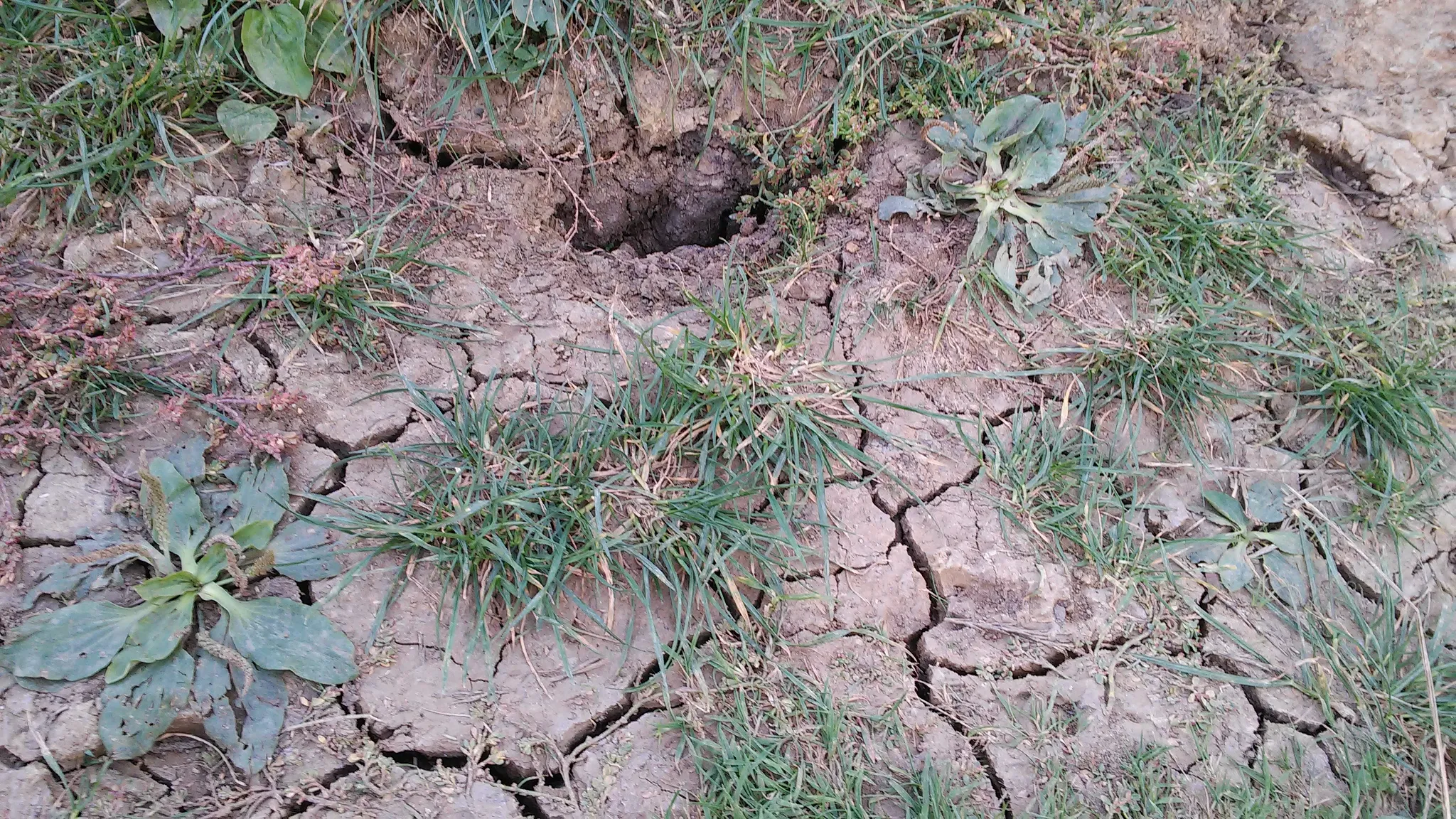
Cracks in dry earth. Location: Kraków, southern Poland.
Clay consists of the finest particles (less than 0.002 mm) that are flat and fit tightly together. When rubbed between fingers, wet clay feels like a slippery, soapy mass. It easily rolls into a long, strong ribbon that can be bent into a ring (Chalker-Scott, 2018; Pavlis, 2020). In a jar of water, clay settles last, after a day or two, forming the top layer (Pavlis, 2020). If you squeeze a moist handful, it holds its shape, and when dry it becomes hard.
Problems of clay soil:
- Fine pores hardly let air through; roots suffocate.
- Water is absorbed slowly, stands, causing root rot.
- When wet, soil sticks to tools and forms clods.
- When dry, it hardens and cracks, tearing roots.
- In spring it doesn't warm up for a long time.
Advantages:
- High CEC: retains calcium, magnesium, potassium, ammonium.
- Rich in nutrients, especially if not depleted.
- With good structure, retains water excellently, which is important in arid climates.
Main Principle: Improve Structure, Not Texture
Changing the mechanical composition of clay soil (adding sand or silt) is practically impossible on a garden scale. To achieve a noticeable effect, you would need to add a huge amount of sand — up to 70% by volume, and mix it evenly. Otherwise, the mixture of clay and sand will turn into something like concrete (Pavlis, 2020; Chalker-Scott, 2018). Therefore, the main strategy is improving structure through organic matter and biological activity. Clay itself is not "bad" — it lacks the aggregates that microbes, roots, and worms create.
Key Improvement Practices
1. Organic matter — the foundation of everything
Compost, rotted manure, leaf mold, straw, grass clippings — all of these loosen clay, creating large pores and gluing particles into aggregates. Organic matter acts as a "skeleton" that prevents clay from sealing and hardening (Gershuny & Smillie, 1999; Pavlis, 2020).
- Doses: Apply 5–10 cm of compost or rotted manure to the surface and incorporate into the top 10–15 cm. On heavy clay, you can increase to 15 cm, but it's better to do this gradually over several seasons (Pavlis, 2020).
- Method: Best to distribute organic matter over the surface and let worms and microbes gradually incorporate it into the soil. This is safer than deep digging, which destroys forming aggregates. If the soil is very heavy, you can do a one-time shallow incorporation of compost with a fork or flat cutter (Rees-Warren, 2021).
- Frequency: Annually or every two years. Clay decomposes organic matter more slowly than sand, so the effect lasts longer.
2. Mulching — an essential practice
Mulch on clay soil prevents crust formation, protects from overheating and drying, suppresses weeds, and gradually improves structure. Earthworms actively process mulch, pulling it into their burrows and leaving channels that improve drainage and aeration (Lowenfels & Lewis, 2010; Gershuny & Smillie, 1999).
- Types of mulch: straw, hay, leaves, compost, wood chips, bark. Layer 5–8 cm.
- Important: Don't apply mulch right up against trunks and stems — this can cause rot. Leave 2–5 cm.
- Feature: On clay, mulch decomposes more slowly, so it needs renewing less often than on sand.
3. Cover crops — living looseners
Deep roots of cover crops penetrate dense clay, creating channels for water and air. After roots die, voids remain, and biomass adds organic matter upon decomposition. Legumes fix nitrogen. This is one of the most effective and inexpensive ways to improve clay (Toungos, 2019; Walliser, 2020).
- Oilseed radish (daikon): taproot up to 1–1.5 m breaks the plow pan and compaction. Sown in late summer, left for winter (Walliser, 2020).
- Lupin, clover, vetch: nitrogen fixation, powerful root system. Sown in spring or autumn (Gershuny & Smillie, 1999).
- Rye, oats: loosen the top layer, suppress weeds. Sow in autumn, mow in spring (Pavlis, 2020).
- Phacelia, buckwheat: grow quickly, attract beneficial insects. Sown in summer (Pavlis, 2020).
How to use: mow before flowering, leave on the surface as mulch or lightly incorporate into the top layer. Don't allow seed set. After incorporation, wait 2–4 weeks before sowing the main crop.
4. Minimal Tillage and Proper Timing
Clay must not be worked when wet: this destroys structure and creates dense clods that are then difficult to break up. Before any intervention, check moisture: squeeze a handful in your fist. If a ball forms that crumbles when dropped from a height of 1 m — you can work. If the ball sticks and holds its shape — the soil is too wet, wait (Bubel, 2024; Pavlis, 2020).
- No-dig: Give up annual digging. Use a broadfork to lift the soil without turning the layer. This improves aeration without destroying aggregates (Pavlis, 2020).
- Local treatment: When planting, make narrow holes, don't dig up the entire plot. Mulch and worms will do the rest.
- Don't walk on beds: Compaction is the main enemy of clay. Make permanent paths or raised beds so you don't trample the soil (Pavlis, 2020).
5. What Not to Do
- Add sand: If you add a little sand to clay, you get a dense mixture resembling concrete. The effect is achieved only by adding 70% sand by volume, which is unrealistic for a garden (Pavlis, 2020; Chalker-Scott, 2018).
- Use gypsum without analysis: Gypsum (calcium sulfate) is effective only on sodic soils where excess sodium destroys structure. On ordinary clay it's useless, and in large doses can harm (Pavlis, 2020). Apply only based on analysis results.
- Dig with turning the layer: This temporarily loosens but destroys structure, kills worms and fungal hyphae, and brings weed seeds to the surface. In the long term it makes the soil even denser (Rees-Warren, 2021; Pavlis, 2020).
- Apply fresh manure: It can "burn" roots and contains weed seeds. Only rotted (Gershuny & Smillie, 1999).
6. Drainage: When It's Necessary
If water stands for more than 24 hours after rain, and organic matter and loosening don't help, there may be an impermeable layer or high groundwater level. In this case:
- Raised beds: The most reliable solution. Mound a mix of local clay, compost, and coarse sand (if necessary) 20–30 cm high. Water drains down, roots don't suffer (Pavlis, 2020; Bubel, 2024).
- French drain: A trench with crushed stone and a perforated pipe for water removal. Labor-intensive but effective for serious problems (Pavlis, 2020).
- Surface ditches: Around the perimeter of the plot or between beds for diverting meltwater and rainwater.
7. pH and Nutrition
Clay soils can be acidic, neutral, or alkaline depending on the region. Determine pH and adjust if necessary (see chapter 7). Clay retains nutrients well, so fertilizers last longer than on sand. But don't overfeed: excess nitrogen can cause vigorous leaf growth at the expense of fruiting. Better to use slow-acting organic fertilizers (Gershuny & Smillie, 1999; Littlewood, 2007).
Regional Considerations
- Humid climate: The main problem is drainage. Raised beds, ditches, French drains. Mulch and organic matter are essential.
- Arid zones: Clay retains moisture, which is valuable, but can become saline. For salinization — leaching and gypsum (only by analysis). Mulch reduces evaporation and prevents crusting (Johnson, 2023; FAO, 2021).
- Cold climate: Clay warms up slowly in spring. Raised beds and dark mulch help accelerate warming. Don't work the soil until it dries (Bubel, 2024).
- Tropics: Clay can be lateritic, poor, and acidic. Organic matter, mulch, cover crops, and minimal tillage are the basis of improvement (Toungos, 2019).
Conclusion
Improving clay soil is a process that requires patience. In the first year you may not see big changes. But if you regularly apply organic matter, mulch, sow cover crops, and don't dig, after 3–5 years the clay will turn into dark, crumbly, fertile soil. It will retain moisture in drought and won't seal in rain. Plant roots will penetrate deeper, and yields will increase. Clay is not a sentence but a potential that can be unlocked with nature, not against it.
11. How to Improve Peaty Soil

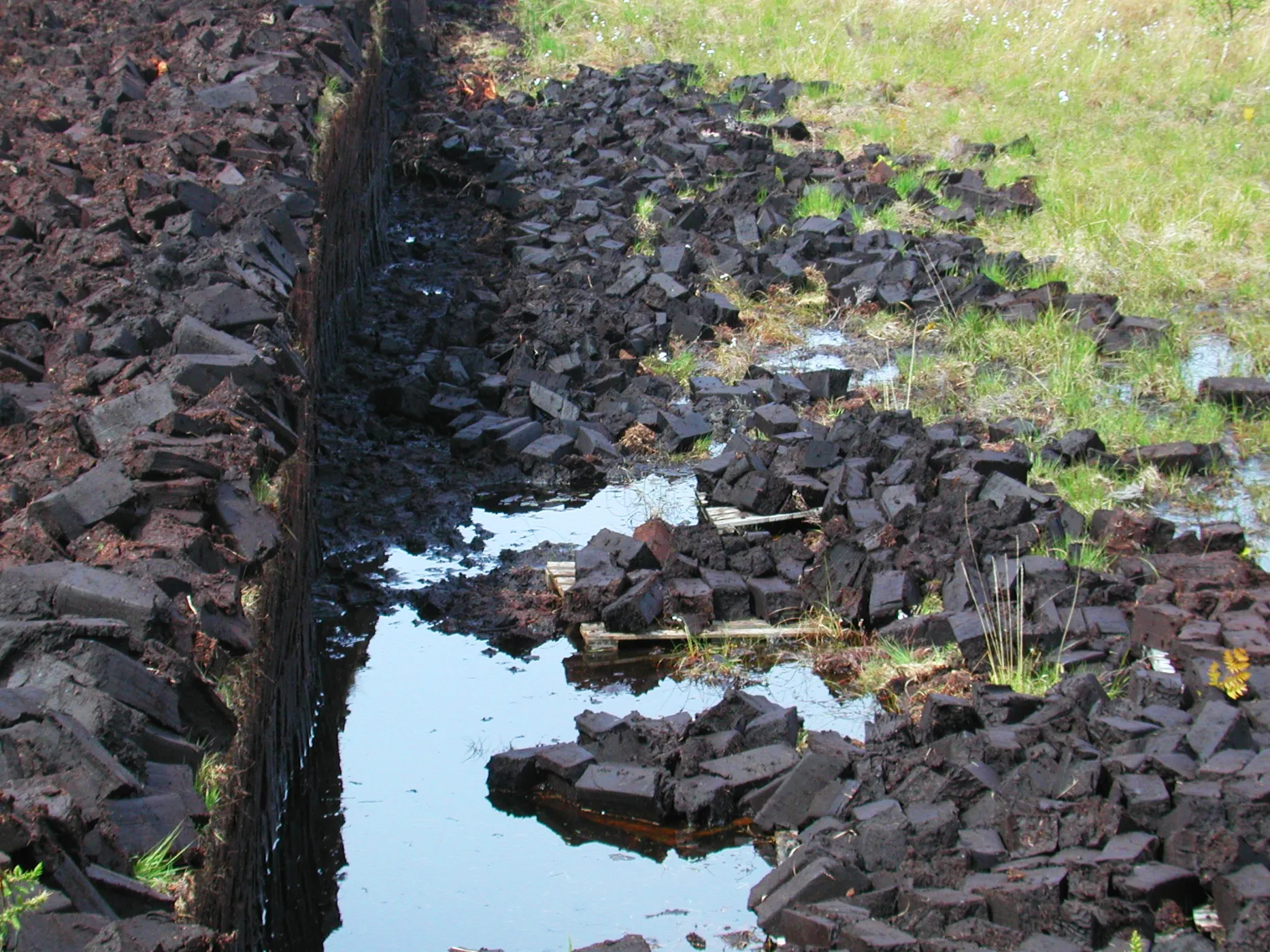
Peatland: a natural system of organic matter accumulation
Landscape of a peat bog where plant remains accumulate under conditions of excessive moisture and slowed decomposition.
Peaty soil is a special type of soil that forms under conditions of waterlogging and oxygen deficiency. It consists of partially decomposed plant residues (mosses, sedges, woody species) and contains more than 20% organic matter. Peaty soils are common in temperate and cold climates, in swampy and waterlogged areas. They have unique properties: very high water-holding capacity, low density, high acidity, and, as a rule, poor availability of nutrients (Puustjärvi, 2004; Robinson, 1975).
Features of Peaty Soil
Advantages:
- Exceptional water-holding capacity: peat retains up to 15–20 times more water than its own mass (Puustjärvi, 2004).
- High porosity and aeration: roots easily penetrate the loose mass.
- High cation exchange capacity (CEC): peat retains nutrients, especially potassium, calcium, magnesium (Puustjärvi, 2004).
- Ease of cultivation: peaty soil is easy to dig, it doesn't form hard clods.
Problems:
- Acidity: pH is usually 3.5–5.0. Most crops prefer neutral or slightly acidic reaction, so without deacidification growth is suppressed (Robinson, 1975; Pavlis, 2020).
- Nutrient poverty: available nitrogen, phosphorus, and potassium are low. Nitrogen is mainly in organic form and mineralizes slowly (Puustjärvi, 2004).
- Poor structure after drying: if peat dries out, it becomes hydrophobic — water rolls off and isn't absorbed. Restoring water-holding capacity is very difficult (Puustjärvi, 2004; Robinson, 1975).
- Tendency to waterlogging: with excess moisture and poor drainage, roots suffocate.
- Fire hazard: drained peatlands ignite easily.
- Environmental aspect: peat is a non-renewable resource; its extraction destroys wetland ecosystems. But if the soil is already peaty, the task is to improve it, not replace it.
Improvement Strategy
Improving peaty soil requires an integrated approach: deacidification, enrichment with mineral components, application of nutrients, moisture control, and protection from drying out.
1. Deacidification (Liming)
Peat is acidic, so the first step should be raising pH to 5.5–6.5 for most vegetable and ornamental crops. Use:
- Dolomite flour — the ideal choice because it contains both calcium and magnesium, which are often deficient in peat (Littlewood, 2007; Robinson, 1975).
- Limestone flour — if magnesium is sufficient.
- Wood ash — contains potassium, calcium, magnesium, but apply moderately (Littlewood, 2007).
Doses: depend on initial pH and buffer capacity. Approximately, to raise pH by 1 unit on peaty soil, 3–5 kg of dolomite flour per 10 m² is required. The exact dose is given by laboratory analysis (Puustjärvi, 2004). Apply in autumn or spring, distributing evenly over the surface and incorporating into the top layer. Don't apply simultaneously with manure (nitrogen losses).
2. Adding Mineral Components
Peat is almost pure organic matter. To improve structure and water-air regime, add a mineral component:
- Sand (coarse, not construction sand) — 10–20% by volume. It will weight the peat, improve drainage, and prevent drying out.
- Clay — 5–10% by volume. Clay will increase CEC, retain nutrients, and improve structure. Apply in powdered form and mix thoroughly.
- Loam — if available, this is the best option: it combines sand, silt, and clay.
Important: mix peat with mineral components evenly, otherwise local zones with different properties are possible. Do this in dry weather when peat is not too wet.
3. Applying Organic Matter and Nutrients
Peat is poor in available elements, so it needs feeding:
- Compost — 5–10 cm to the surface, incorporation into the top 10–15 cm. Compost adds nutrients and microbes that accelerate peat decomposition (Pavlis, 2020; Gershuny & Smillie, 1999).
- Rotted manure — 4–8 kg per 1 m². It enriches with nitrogen, phosphorus, potassium, and improves structure.
- Bone meal — source of phosphorus and calcium (100–150 g/m²).
- Blood meal — fast-acting nitrogen (50–100 g/m²).
- Mineral fertilizers — if necessary, use complex formulations, but remember that peat retains elements well, so it's better to apply smaller doses but more often.
Note: Peat has high CEC, so nutrients don't leach quickly. However, the availability of phosphorus and potassium may be low due to acidity — after deacidification they will become more available (Puustjärvi, 2004).
4. Moisture Control and Mulching
Peat must not be overdried: after drying it becomes hydrophobic and hardly absorbs water. Therefore:
- Mulch the surface of peaty soil with a 5–8 cm layer (straw, compost, wood chips, grass clippings). Mulch retains moisture and prevents drying out (Lowenfels & Lewis, 2010).
- Water regularly but don't allow waterlogging. Better to use drip irrigation or a soaker hose so water enters slowly and is absorbed.
- Don't dig peat deeply: this disturbs structure and can lead to rapid decomposition of organic matter. Use no-dig (Rees-Warren, 2021).
- Drainage: if the plot is waterlogged, create raised beds or lay drainage ditches. Peat absorbs a lot of water but with excess can become sour.
5. Cover Crops on Peaty Soil
Cover crops help improve structure and enrich the soil with nitrogen:
- Legumes (clover, lupin, vetch) — fix nitrogen but require deacidification (pH > 5.5).
- Grasses (rye, oats) — loosen the soil, absorb excess moisture.
- Phacelia, buckwheat — grow quickly, attract beneficial insects.
Sow after deacidification, mow before flowering, leave as mulch or incorporate into the top layer (Toungos, 2019; Walliser, 2020).
6. Plant Selection
After improvement, peaty soil is suitable for many crops, but especially good for:
- Vegetables: cabbage, broccoli, lettuce, onions, garlic, carrots, beets, potatoes (with sufficient drainage).
- Berries: blueberries, cranberries, lingonberries (they like acidic soil and don't require strong deacidification).
- Ornamentals: rhododendrons, azaleas, hydrangeas, ferns, hostas.
- Trees: willow, birch, alder.
Avoid drought-resistant plants (lavender, rosemary) that don't tolerate wet peaty soil.
Regional Considerations
- Cold and temperate climate: peaty soils are widespread. Main tasks — deacidification, drainage, and protection from drying out. Raised beds help warm the soil in spring.
- Humid climate: peat can be too wet. Drainage is essential. Mulch prevents drying out in summer.
- Arid zones: peaty soils are rare. If present, they require constant watering and mulching as they dry out quickly.
- Tropics: peaty soils occur in swamps. They are acidic and poor; after deacidification and mineral additions they are suitable for many crops.
Conclusion
Peaty soil is a valuable resource that, with the right approach, becomes fertile and convenient for growing plants. Key steps: deacidification, adding mineral components (sand, clay), applying compost and nutrients, mulching, and moisture control. Don't let peat dry out. After 2–3 years of regular improvement, such soil will become loose, moisture-retentive, and rich in humus. Remember environmental responsibility: if you use peat to improve other soils, do so moderately and prefer alternatives (compost, leaf mold).
12. How to Improve Saline Soil
Saline soil is soil with elevated content of water-soluble salts (sodium, calcium, magnesium, chlorides, sulfates). Salinization is a global problem, especially in arid and semi-arid regions where evaporation exceeds precipitation. According to FAO (2021), more than 1.1 billion hectares of soil worldwide are affected by salinization, and about 20–50% of irrigated lands are saline to some degree. Salinization reduces water availability for plants (osmotic stress), disrupts soil structure, and is toxic to roots (FAO, 2021; Pavlis, 2020).
How to Identify Saline Soil
Signs:
- White or grayish salt crust on the soil surface, especially after water evaporation.
- Suppressed plant growth, yellowing and drying of leaves, starting from the edges.
- Roots brown, underdeveloped.
- Water after rain or watering is absorbed very slowly or stands on the surface.
- Soil is hard when dry, becomes sticky and smears when moistened.
Diagnostics: Laboratory analysis for electrical conductivity (EC) and sodium adsorption ratio (SAR). EC above 4 dS/m indicates salinization; SAR > 13 — sodicity (FAO, 2021). Home tests are uninformative.
Types of saline soils:
- Saline: high salt content, but sodium does not predominate. pH usually < 8.5. Structure may be satisfactory.
- Sodic: high sodium content, which destroys structure. pH > 8.5. Soil is sticky, poorly passes water.
- Saline-sodic: combine both features.
Causes of Salinization
- Natural: proximity to the sea, saline groundwater, parent material, arid climate.
- Anthropogenic: excessive irrigation (raises groundwater level and brings salts to the surface), use of saline water for irrigation, application of large doses of mineral fertilizers, lack of drainage (FAO, 2021; Pavlis, 2020).
- Secondary salinization: the result of improper soil management.
Improvement Strategy
Improving saline soil is a lengthy process. Main tasks: remove excess salts, restore structure, prevent re-salinization.
1. Leaching
The main method of salt removal is leaching with large amounts of water followed by removal. Water dissolves salts and washes them below the root zone. A mandatory condition is good drainage, otherwise salts return with evaporation (FAO, 2021; Pavlis, 2020).
- How to conduct: Water the plot abundantly, keeping the soil moist for several weeks. The water rate depends on the degree of salinization: from 100 to 300 mm or more. Better to use clean water with low mineralization.
- Drainage: If natural drainage is poor, drainage pipes, French drains, or open ditches are necessary. Without water removal, leaching is useless.
- Time: Better to leach in autumn or winter when evaporation is minimal. In arid zones — during the rainy season, if there is one.
2. Gypsum Application (for Sodic Soils)
If the soil is sodic (high sodium, SAR > 13), leaching without preliminary gypsum application is ineffective because sodium destroys structure and water doesn't pass. Gypsum (calcium sulfate) replaces sodium in the soil absorption complex with calcium, improving structure and water permeability (FAO, 2021; Pavlis, 2020).
- Doses: Determined by SAR and CEC analysis. Approximately 2–5 t/ha, but the exact dose is calculated by the laboratory.
- Application: Distribute gypsum evenly over the surface and incorporate into the top layer. Then leach.
- Important: Gypsum is ineffective on saline soils (where there is no excess sodium) and on carbonate soils. Use only based on analysis results.
3. Organic Matter and Mulch
Organic matter improves structure and increases water retention but does not remove salts. It helps plants tolerate salinization and gradually reduces its negative impact.
- Compost, rotted manure, leaf mold — 5–10 cm to the surface, incorporation into the top layer.
- Mulch — essential for reducing evaporation, which pulls salts to the surface. Layer 5–10 cm (straw, wood chips, compost) (Johnson, 2023).
- Cover crops — improve structure but require leaching before sowing. Use salt-tolerant species: barley, rye, phacelia, vetch.
4. Proper Irrigation
- Drip irrigation — most effective: water enters slowly, salts don't rise capillary.
- Irrigation should be sufficient for leaching but not excessive, so as not to raise groundwater.
- Avoid irrigating with saline water. If there is no other source, use mixing with fresh water or choose salt-tolerant crops.
5. Selection of Salt-Tolerant Plants
Until the soil is fully restored, grow crops that tolerate salinization:
- Vegetables: beets, chard, asparagus, cabbage, broccoli, pumpkin, zucchini, onions, garlic, spinach.
- Herbs: rosemary, thyme, sage, lavender, oregano.
- Trees and shrubs: tamarisk, oleaster, sea buckthorn, date palm, fig, pomegranate.
- Lawn grasses: fescue, ryegrass, Bermuda grass.
Avoid sensitive crops: beans, peas, carrots, lettuce, celery, strawberries.
6. Preventing Re-Salinization
- Drainage — a key element. Without water removal, salts will accumulate again.
- Mulch — reduces evaporation and salt rise.
- Proper fertilizer application — don't exceed recommended doses, use slow-acting forms.
- Crop rotation with salt-tolerant crops.
- EC monitoring — periodically check soil electrical conductivity, especially in arid zones.
Regional Considerations
- Arid and semi-arid zones: salinization is most common. Main measures: leaching with drainage, gypsum application (for sodicity), mulch, drip irrigation, salt-tolerant crops (FAO, 2021; Johnson, 2023).
- Coastal zones: salinization due to proximity to the sea and saltwater groundwater intrusion. Drainage, leaching, freshwater barriers.
- Irrigated lands: secondary salinization is the result of excessive irrigation without drainage. Water balance control is necessary.
- Cold climate: salinization is rarer but possible on saline parent rocks. Spring leaching, drainage.
Conclusion
Saline soil is a serious challenge but not a sentence. Leaching with drainage, gypsum application (for sodic soils), applying organic matter, mulching, and proper irrigation allow gradually reducing salt levels and restoring fertility. This process may take several years. The key condition is preventing re-salinization: control irrigation, fertilizers, and groundwater levels. Choose salt-tolerant plants, and over time the soil will become suitable for a wider range of crops. Remember: salinization is a global problem, and its solution requires patience and a systematic approach.
13. Regional Aspect: Techniques Differ by Climate
Soil is a product of climate, parent material, vegetation, and time. Therefore, universal improvement recipes don't exist. What works in a temperate climate may be useless or harmful in an arid zone, and vice versa. Understanding regional characteristics helps choose the right strategy and not waste effort (Pavlis, 2020; Gershuny & Smillie, 1999).
Arid and Semi-Arid Zones
Main problems: lack of moisture, high evaporation, alkaline and saline soils, low organic matter content, sometimes caliche (cemented calcium carbonate layer) (Johnson, 2023; FAO, 2021).
Key techniques:
- Mulch is essential. A layer of 8–10 cm of straw, wood chips, gravel, or compost reduces evaporation and protects the soil from overheating. Without mulch, growing anything without huge water costs is nearly impossible (Johnson, 2023).
- Organic matter is applied regularly. Compost, rotted manure, leaf mold — annually or twice a year. Organic matter retains water and increases CEC. On sandy soils, doses are increased (Pavlis, 2020).
- Drip irrigation. The most effective watering method: water enters slowly, is absorbed, and doesn't evaporate. Combined with mulch.
- Drought-resistant plants. Choose crops adapted to local conditions: olives, lavender, rosemary, thyme, date palms, pomegranate, fig, tamarisk, oleaster (Robinson, 1999).
- Salinization is a special problem. For salinization, leaching with drainage, gypsum application (for sodic soils), salt-tolerant crops are necessary (FAO, 2021).
- Caliche. If the layer is thin, it is loosened; if thick — create raised beds or plant in containers (Johnson, 2023).
- Minimal tillage. No-dig is especially effective: undug soil evaporates less and retains moisture better (Rees-Warren, 2021).
Mistakes: digging (increases evaporation), lack of mulch, sprinkler irrigation (large evaporation losses), applying fresh manure (can salinize the soil).
Humid and Subhumid Zones
Main problems: excess moisture, nutrient leaching, acidic soils, erosion, compaction, fungal diseases (Pavlis, 2020; Gershuny & Smillie, 1999).
Key techniques:
- Drainage. Raised beds, ditches, French drains, furrows. Waterlogging is fatal for roots.
- Liming. Soils are often acidic due to leaching of bases. Apply dolomite flour to raise pH and replenish calcium and magnesium (Littlewood, 2007).
- Organic matter and mulch. Improve structure, retain nutrients, prevent erosion. Mulch protects from sealing and washing away.
- Cover crops. Fast-growing species (phacelia, buckwheat, clover) absorb excess nutrients and prevent their leaching. Sow in autumn so the soil doesn't remain bare (Toungos, 2019).
- Crop rotation. Especially important for preventing fungal diseases that thrive in wet conditions (Pavlis, 2020).
- No-dig. Reduces erosion, preserves structure, reduces compaction.
Mistakes: digging (increases erosion and leaching), leaving soil bare in winter, lack of drainage, growing moisture-loving crops on heavy clay without raised beds.
Cold Climate
Main problems: short growing season, slow soil warming, risk of freezing, sometimes peaty and podzolic soils (Bubel, 2024; Gershuny & Smillie, 1999).
Key techniques:
- Raised beds. Warm up faster in spring, are drained, allow earlier sowing.
- Dark mulch. Black plastic or dark compost accelerate soil warming in spring.
- Organic matter. Compost, manure, leaf mold — improve structure and nutrition. Applied in autumn so they decompose over winter.
- Liming. Acidic podzolic and peaty soils require deacidification (Littlewood, 2007).
- Cover crops. Winter crops (rye, vetch) are sown in autumn; they protect the soil from erosion and freezing and produce biomass in spring.
- No-dig. Soil is not dug, preserves structure, warms up faster.
- Protection from freezing. Mulch in winter prevents deep freezing and root death.
Mistakes: early working of wet soil (destroys structure), lack of mulch (freezing), late deacidification (acidic soil suppresses plants).
Tropics and Subtropics
Main problems: rapid decomposition of organic matter, nutrient leaching, erosion from heavy rains, acidic and poor soils (laterites), high pest and disease pressure (Toungos, 2019; Pavlis, 2020).
Key techniques:
- Mulch. Essential: protects from erosion, overheating, conserves moisture. Use coarse materials (straw, wood chips) that decompose more slowly.
- Organic matter. Apply frequently as decomposition is rapid. Compost, manure, cover crops are the basis of fertility.
- Cover crops. Fast-growing species: buckwheat, phacelia, legumes. Cover the soil year-round, prevent leaching.
- Drainage. Heavy rains cause waterlogging and erosion. Raised beds, ditches, furrows.
- Liming. Acidic lateritic soils require deacidification. Phosphorus application may also be needed (it binds with aluminum and iron).
- Crop rotation and companion planting. Reduce pest and disease pressure.
- No-dig. Preserves structure, prevents erosion.
Mistakes: leaving soil bare (erosion, leaching), infrequent organic matter application, lack of drainage, growing sensitive crops without adaptation.
Temperate Climate
Main problems: diversity of soils (from sandy to clay), seasonal temperature and moisture fluctuations, sometimes acidic or alkaline soils (Pavlis, 2020; Gershuny & Smillie, 1999).
Key techniques:
- Universal: organic matter (compost, manure), mulch, cover crops, crop rotation, no-dig, liming or acidification as needed.
- Adaptation to soil type: for sandy — more organic matter and mulch; for clay — drainage and loosening; for peaty — deacidification and mineral additives.
- Seasonality: in autumn — application of organic matter and cover crops; in spring — mulch and planting; in summer — watering and mulch; in winter — protecting soil from erosion.
Mistakes: template approach without considering soil type, ignoring pH, digging, lack of crop rotation.
Mountain and Foothill Zones

Terrace farming on mountain slopes
Terraced fields cut into the slopes of the Himalayas. The original caption indicates a Himalayan landscape, but the specific country is not named. The image illustrates one method of farming on slopes that allows land cultivation to be organized and surface water runoff to be controlled.
Main problems: stony soils, shallow fertile layer, erosion on slopes, short season, sometimes acidic or alkaline soils (Bubel, 2024).
Key techniques:
- Terracing. On slopes, terraces are created to prevent erosion and retain moisture.
- Raised beds. Compensate for shallow soil depth.
- Organic matter and mulch. Improve structure, retain moisture.
- Cover crops. Protect slopes from erosion, improve soil.
- Drainage. On slopes water runs off quickly, but in depressions it can stand. Ditches and furrows.
Mistakes: cultivating soil along the slope (increases erosion), leaving soil bare, lack of terraces.
Conclusion on the Regional Aspect
Climate determines strategy. In arid zones the main thing is water and mulch; in humid — drainage and structure; in cold — warming and protection; in tropics — organic matter and erosion protection. But there are universal principles that work everywhere: minimizing tillage, constant application of organic matter, mulching, crop diversity, and observation of the soil. Adapt general recommendations to your conditions, experiment, record results. Soil is a living system, and it will thank you for a careful approach.
14. Summary: Improving Soil Is a Process, Not a One-Time Action
Improving soil is not buying a bag of fertilizer or a one-time digging. It's a long-term process that requires patience, observation, and consistency. Soil is a living ecosystem, and like any ecosystem, it responds to changes gradually. Don't expect quick results, but every year you will see improvements: looser structure, more worms, better water retention, healthier plants (Pavlis, 2020; Lowenfels & Lewis, 2010).
Main Principles
1. Start with diagnostics. Determine soil type, pH, structure, drainage, organic matter level. Without this, any actions may be useless or harmful (Pavlis, 2020; Chalker-Scott, 2018).
2. Organic matter is the foundation of fertility. Compost, rotted manure, leaf mold, cover crops are food for soil biota and a source of humus. Apply regularly, diversify sources (Gershuny & Smillie, 1999).
3. Mulch is an essential practice. It conserves moisture, suppresses weeds, protects from erosion, and gradually improves the soil. Layer 5–10 cm, renewal as it decomposes (Lowenfels & Lewis, 2010; Johnson, 2023).
4. Minimal tillage. No-dig preserves structure, protects biota, prevents erosion and compaction. Use a broadfork for local loosening, but don't dig (Rees-Warren, 2021; Pavlis, 2020).
5. Crop diversity. Crop rotation and companion planting prevent depletion, accumulation of pests and diseases, and support biological diversity (Walliser, 2020; Pavlis, 2020).
6. Cover crops. Protect the soil, enrich with nitrogen, loosen, suppress weeds. Sow in free seasons, mow before flowering (Toungos, 2019; Gershuny & Smillie, 1999).
7. Consider your region. Arid zones require mulch and drip irrigation; humid — drainage and deacidification; cold — warming and protection; tropics — organic matter and erosion protection (Johnson, 2023; Pavlis, 2020).
8. Observe and adapt. Keep records, monitor plants and soil, experiment. What works for your neighbor may not work for you.
What to Avoid
- Digging with turning the layer. Destroys structure, kills biota, provokes weeds, contributes to erosion (Rees-Warren, 2021; Pavlis, 2020).
- Leaving soil bare. Erosion, overheating, moisture loss, microbe death (Lowenfels & Lewis, 2010).
- Excessive fertilizer application. Especially phosphorus and nitrogen: water pollution, nutrient imbalance, mycorrhiza death (Pavlis, 2020).
- Using fresh manure. Can burn plants, contains weed seeds and pathogens (Gershuny & Smillie, 1999).
- Ignoring pH. Acidic or alkaline soils limit nutrient availability (Littlewood, 2007; Pavlis, 2020).
- Template approach. Universal recipes don't exist; consider climate, soil type, and crop (Chalker-Scott, 2018).
How Long Will It Take?
- First year: noticeable improvement in structure, more worms, better water retention. Plants respond to mulch and compost.
- 2–3 years: soil becomes dark, crumbly, aggregated. Yields grow, pest and disease problems decrease.
- 5–10 years: a healthy, self-sustaining soil biocenosis forms. The soil regulates moisture and nutrition itself and requires less intervention.
Economic and Environmental Aspect
Improving soil is not just about harvest. It's a contribution to the planet's health:
- Carbon sequestration. Healthy soil retains carbon, mitigating climate change (Rees-Warren, 2021; Toungos, 2019).
- Water conservation. Organic matter and mulch reduce irrigation needs, saving resources (Johnson, 2023).
- Biodiversity. Living soil supports billions of organisms, from bacteria to earthworms (Lowenfels & Lewis, 2010).
- Food security. Healthy soils produce nutritious, micronutrient-rich food (Pavlis, 2020).
Key Thought
The best soil is not the one you bought, but the one you gradually created. It is the result of your labor, observations, and care. Start small: add compost, cover with mulch, give up digging. In a year you'll see the difference. In five — you'll have living, fertile earth that will take care of your plants itself. And this is the most valuable legacy you can leave to future generations of gardeners.
References
- (2021). . null : FAO. ITPS.
- Bubel, Nancy, Nick, Jean (2024). ‘Moving Plants Outdoors’, in The New Seed-Starters Handbook. : Rodale, .
- Chalker-Scott, Linda (2018). ‘Soil Analysis: What Makes Soil Great?’, in The Science of Gardening. Course Guidebook. Chantilly, Virginia: The Great Courses, pp. 25-36.
- Chalker-Scott, Linda (2018). ‘Soil Preparation and Protection’, in The Science of Gardening. Course Guidebook. Chantilly, Virginia: The Great Courses, pp. 73-80.
- Gershuny, Grace, Smillie, Joe (1999). ‘Observing and Evaluating Your Soil’, in The Soul of Soil. A Soil-Building Guide for Master Gardeners and Farmers. Vermont: Chelsea Green Publishing, .
- Gershuny, Grace, Smillie, Joe (1999). ‘Soil Management Practices’, in The Soul of Soil. A Soil-Building Guide for Master Gardeners and Farmers. Vermont: Chelsea Green Publishing, .
- Hemenway, Toby (2009). ‘Bringing the Soil to Life’, in Gaia's Garden. A Guide To Home-Scale Permaculture. : Chelsea Green Publishing, .
- Johnson, Noelle (2023). ‘Caring for Plants in the Dry Climate Garden’, in Dry Climate Gardening. Beverly, MA: Cool Springs Press, .
- Johnson, Noelle (2023). ‘Planting Basics for Dry Regions’, in Dry Climate Gardening. Beverly, MA: Cool Springs Press, .
- Littlewood, Michael (2007). ‘The Ground’, in The organic gardener's handbook. Ramsbury, Wiltshire: The Crowood Press, pp. 59-102.
- Lowenfels, Jeff, Lewis, Wayne (2010). ‘A Simple Soil Food Web Garden Calendar’, in Teaming with Microbes. The Organic Gardener’s Guide to the Soil Food Web. Portland, Oregon: Timber Press, .
- Lowenfels, Jeff, Lewis, Wayne (2010). ‘Compost Teas’, in Teaming with Microbes. The Organic Gardener’s Guide to the Soil Food Web. Portland, Oregon: Timber Press, .
- Lowenfels, Jeff, Lewis, Wayne (2010). ‘Compost’, in Teaming with Microbes. The Organic Gardener’s Guide to the Soil Food Web. Portland, Oregon: Timber Press, .
- Lowenfels, Jeff, Lewis, Wayne (2010). ‘Growing Annuals and Vegetables’, in Teaming with Microbes. The Organic Gardener’s Guide to the Soil Food Web. Portland, Oregon: Timber Press, .
- Lowenfels, Jeff, Lewis, Wayne (2010). ‘Maintaining Trees, Shrubs, and Perennials’, in Teaming with Microbes. The Organic Gardener’s Guide to the Soil Food Web. Portland, Oregon: Timber Press, .
- Lowenfels, Jeff, Lewis, Wayne (2010). ‘Mulch’, in Teaming with Microbes. The Organic Gardener’s Guide to the Soil Food Web. Portland, Oregon: Timber Press, .
- Lowenfels, Jeff, Lewis, Wayne (2010). ‘Mycorrhizal Fungi’, in Teaming with Microbes. The Organic Gardener’s Guide to the Soil Food Web. Portland, Oregon: Timber Press, .
- Lowenfels, Jeff, Lewis, Wayne (2010). ‘Tools for Restoration and Maintenance’, in Teaming with Microbes. The Organic Gardener’s Guide to the Soil Food Web. Portland, Oregon: Timber Press, .
- Morgan, Sally (2021). ‘Building a healthy soil’, in The Healthy Vegetable Garden: A natural, chemical-free approach to soil, biodiversity and managing pests and diseases. Vermont, London, UK: Chelsea Green Publishing, .
- Pavlis, Robert (2020). ‘A Personalized Plan for Healthy Soil’, in Soil Science for Gardeners. Working with Nature to Build Soil Health. Gabriola Island, BC, Canada: New Society Publishers, pp. 179-196.
- Pavlis, Robert (2020). ‘Solving Soil Problems’, in Soil Science for Gardeners. Working with Nature to Build Soil Health. Gabriola Island, BC, Canada: New Society Publishers, pp. 97-178.
- Pavlis, Robert (2020). ‘Understanding Soil’, in Soil Science for Gardeners. Working with Nature to Build Soil Health. Gabriola Island, BC, Canada: New Society Publishers, pp. 9-96.
- Peter, Robinson (1999). ‘Improving Soil and Surfaces’, in Water-wise gardening. New York, NY: DK Publishing, pp. 17-28.
- Pratt, M.M. (2005). ‘Looking After the Soil – the Balanced Approach’, in Practical Science for Gardeners. Portland, Oregon: Timber Press, pp. 61-80.
- Puustjarvi, V., Robertson, R.A. (1975). ‘Physical and chemical properties’, in Robinson, D.W., Lamb, J.G.D. (ed.) Peat in Horticulture. New York, NY: Academic Press, pp. 23-38.
- Puustjarvi, Viljo (2004). ‘Fertilization’, in Peat and Its Use in Horticulture. : Turveteollisuusliitto ry., pp. 71-143.
- Puustjarvi, Viljo (2004). ‘Peat and its use’, in Peat and Its Use in Horticulture. : Turveteollisuusliitto ry., pp. 9-37.
- Puustjarvi, Viljo (2004). ‘Productivity’, in Peat and Its Use in Horticulture. : Turveteollisuusliitto ry., pp. 153-160.
- Rees-Warren, Matt (2021). ‘Soil’, in The Ecological Gardener. Vermont, London, UK: Chelsea Green Publishing, .
- Walliser, Jessica (2020). ‘Soil Preparation & Conditioning’, in Plant Partners. North Adams, MA: Storey Publishing, pp. 27-48.
- Walliser, Jessica (2020). ‘The Power of Plant Partnerships’, in Plant Partners. North Adams, MA: Storey Publishing, pp. 5-26.
- Walliser, Jessica (2020). ‘Weed Management’, in Plant Partners. North Adams, MA: Storey Publishing, pp. 49-66.
