
Soil fertility: what it is and what it consists of
1. What fertility is: the soil’s ability to produce a crop
Soil fertility is a key property of soil on which the success of any gardener, vegetable grower, or farmer directly depends. In the most general terms, fertility is defined as the ability of soil to satisfy plants’ needs for nutrients and water and to provide their root systems with air and heat (Valkov et al., 2004). In other words, it is not merely the presence of nitrogen, phosphorus, and potassium in the soil, but a whole complex of conditions that allow plants to grow fully and form a crop.
In agronomic science, there are several approaches to defining fertility. On the one hand, it is viewed as the ability of soil to supply plants with necessary elements in available form and without a toxic excess (Troeh, 1993). On the other hand, an ecological view is gaining increasing recognition: fertility is inextricably linked to the life of the soil, its biological activity, and its capacity for self-regulation (Gershuny, 1999; Weil, 2017). Both approaches complement each other: without a sufficient amount of nutrients, plants starve, but even with an excess of them, if structure is poor or the biota is suppressed, the yield will be low.
It is important to understand that fertility is a dynamic characteristic. It is not a property given once and for all. Even the richest soil can become depleted under irrational use, while a poor soil can gradually improve with sound management. As noted in organic farming manuals, “the main goal of ecological soil management is to create favorable conditions for life in the soil” (Gershuny, 1999). It is life—bacteria, fungi, earthworms, and other organisms—that makes nutrients available to plants.
However, even ideal fertilization may not work if such an important factor as soil acidity (pH) is not taken into account. Each nutrient is available to plants only within a certain pH range. For example, phosphorus becomes poorly available at pH below 6 or above 7, and iron at pH above 7 (Lowenfels, 2013). Therefore, before applying fertilizers, it is necessary to assess soil acidity and, if necessary, correct it. This will be discussed in more detail in the following sections.
Thus, fertility is the integral ability of soil to provide plants with everything necessary for growth and yield. It consists of many factors that can be conventionally combined into three large groups: physical, chemical, and biological.
2. Three components: physical, chemical, and biological
For ease of understanding and management, soil fertility is usually considered through three interconnected components: physical, chemical, and biological (White, 2006; Weil, 2017). Each of them is important, and improving one without attention to the others rarely produces a sustainable result.
The physical component is soil structure, its density, porosity, and ability to retain water and transmit air. Well-structured soil consists of crumb aggregates between which there are pores filled with air or water. Such soil is easily penetrable by roots, water does not stagnate in it, and sufficient aeration is ensured. Poor structure, by contrast, leads to compaction, waterlogging, and a lack of oxygen for roots and soil organisms (Weil, 2017).
The chemical component is the presence and availability of nutrients, acidity (pH), and cation exchange capacity (CEC). Plants need macronutrients (nitrogen, phosphorus, potassium, calcium, magnesium, sulfur) and micronutrients (iron, manganese, zinc, copper, boron, etc.). Their availability depends on pH, organic matter content, and clay minerals. For example, at low pH many elements become toxic or, conversely, are bound into unavailable forms (Troeh, 1993; Lowenfels, 2013).
The biological component is the community of living organisms inhabiting the soil: bacteria, fungi, protozoa, nematodes, earthworms, and insects. They decompose organic residues, convert nutrients into forms available to plants, create soil aggregates, and suppress pathogens. Healthy soil literally teems with life: a single teaspoon may contain up to a billion bacteria and several meters of fungal hyphae (Lowenfels, 2010). Biological activity is the “engine” that keeps fertility in working order.
All three components are closely intertwined. For example, organic matter improves physical properties (structure, water-holding capacity), chemical properties (increases CEC, supplies nutrients), and biological properties (serves as food for microorganisms). Therefore, in gardening and farming practice it is important to influence all three components simultaneously. The following sections of the article will be devoted to this: how to assess fertility, what depletes it, and how to increase it.


LCD 4-in-1 Soil Tester
Check essential growing conditions with one compact tool. Measure soil pH, moisture, temperature and light intensity — ideal for gardens, potted plants and greenhouses.
- 4-in-1 measurement
- Easy-to-read LCD display
- Portable design
Affiliate link · For indicative measurements only.
3. The physical component: structure, water, air
The physical state of soil determines how comfortable plant roots and soil organisms feel. The main characteristics here are structure, density, porosity, and the ability to retain moisture and transmit air.
Soil structure is the ability of soil particles to stick together into crumbs (aggregates) of different sizes and shapes. Ideal soil has a granular or fine-crumb structure, in which many pores remain between aggregates. Such soil is called structured. It is easy to cultivate, does not slump or crust after rain, and does not turn to dust when it dries. By contrast, structureless soil (for example, heavy clay loam without organic matter) tends to form dense clods, crusts, and cracks (Weil, 2017; Troeh, 1993).
Structure is created and maintained by several factors. The most important of these is organic matter and the products of soil organisms’ activity. Bacteria secrete mucilage, fungal hyphae enmesh particles, earthworms pass soil through their guts and leave casts—all of this binds mineral particles into stable aggregates (Gershuny, 1999; Lowenfels, 2010). Plant roots also play a role: they penetrate the soil, release exudates, and after dying leave channels filled with organic matter.
Density and porosity. Soil density (bulk density) is the weight of dry soil per unit volume. If density is too high, it means the soil is strongly compressed, there are few pores, roots have difficulty growing, and water penetrates poorly into depth. The optimal density for most cultivated plants is within 1.0–1.4 g/cm³, although for sandy soils it may be higher and for clayey soils lower (Pavlis, 2020). Porosity is the share of soil volume occupied by pores. Ideally, pores occupy about 50% of the volume, with approximately half of them filled with water and half with air (Weil, 2017).
Water and air in soil are in dynamic equilibrium: after rain or irrigation, pores fill with water, displacing air; as water evaporates and is taken up by plants, the pores fill with air again. Roots need oxygen for respiration, so the soil should not be constantly waterlogged. Waterlogging leads to anaerobic conditions, accumulation of toxic substances, and root death. On the other hand, a lack of moisture reduces the availability of nutrients, since they move to roots mainly with water (Troeh, 1993; White, 2006).
Thus, the physical component of fertility is primarily the creation and maintenance of loose, crumbly, well-aerated soil capable of simultaneously retaining moisture and not drowning the roots. This is achieved through organic matter, minimum tillage, and protection of the soil from compaction.
4. The chemical component: nutrients and pH
Chemical fertility is determined by the presence in the soil of nutrients necessary for plants in available form, as well as by the reaction of the soil solution (pH). Even if the soil contains a lot of nitrogen, phosphorus, and potassium, but the pH is unsuitable for a particular crop, plants will not be able to absorb them. This is a key point that is often overlooked.
Nutrients. Plants need 17 elements for growth and development. Three of them—carbon, hydrogen, and oxygen—they obtain from air and water. The remaining 14 (nitrogen, phosphorus, potassium, calcium, magnesium, sulfur, iron, manganese, copper, zinc, boron, chlorine, molybdenum, nickel) are absorbed from the soil as ions (Weil, 2017). Nitrogen, phosphorus, and potassium are required in large amounts (macronutrients), while the others are required in small amounts (micronutrients). The availability of each element depends on many factors: pH, organic matter content, moisture, temperature, and the activity of soil organisms.
For example, phosphorus in soil is often found in bound forms (with calcium, iron, or aluminum) and becomes available only within a narrow pH range (6.0–7.0). Iron, by contrast, may be present in excess at low pH and become toxic, while at high pH it passes into insoluble compounds, causing chlorosis (Lowenfels, 2013). Therefore, it is important not simply to apply fertilizers, but to ensure conditions under which elements will not be “locked up” in the soil.


Effect of soil pH on nutrient availability
A diagram demonstrating the dependence of plant uptake of major nutrients on the level of soil acidity (pH). The thickness of the black bands indicates the degree of availability of a particular element (nitrogen, phosphorus, potassium, etc.) at a given pH. The blue vertical band highlights the ideal pH range (slightly acidic, approximately 6.0–6.8), at which most nutrients are in the form most available to roots.
Soil acidity (pH). pH is a logarithmic scale from 0 to 14, where 7 is neutral, below 7 is acidic, and above 7 is alkaline. Most cultivated plants prefer a pH in the range of 6.0–7.0 (Lowenfels, 2013; Troeh, 1993). In this interval, most nutrients are in their most available form. Deviations in either direction lead to a deficiency of some elements and toxicity of others.
Acidity affects not only chemical availability but also biological activity. Bacteria that decompose organic matter work best at neutral pH, while fungi are more tolerant of acidic conditions. With strong acidification (pH below 5.5), nitrification is suppressed, and nitrogen becomes less available (White, 2006). Alkaline soils (pH above 7.5) often suffer from a lack of iron, manganese, zinc, and phosphorus.
Soil reaction can be adjusted. To raise pH in acidic soil, apply lime (calcium or dolomite materials); to lower it, use sulfur, gypsum, or acidic peat. However, these measures require caution and preliminary analysis, since drastic pH changes can harm plants and soil biota (Pavlis, 2020). It is important to remember that pH is not a static indicator but a dynamic one, depending on crop rotation, fertilizers, and climate.
Chemical fertility, therefore, is not only the presence of elements but also their balance and availability, which is directly related to acidity. Even ideal fertilization will not work if the pH is unsuitable for the plant—this should be taken into account in any agronomic decisions.

Solar Automatic Drip Irrigation Kit for Gardens
Automate watering for pots, gardens and small greenhouses. This solar-powered system features a timer to help schedule water delivery to your plants.
- Solar-powered
- 15 m irrigation hose
- Programmable watering
Affiliate link · Check included accessories.
5. The biological component: life in the soil
Soil is not merely an inert mineral substrate. It is a living ecosystem inhabited by billions of organisms that process organic residues, create structure, supply plants with nutrition, and protect them from diseases. It is biological activity that turns “mere dirt” into fertile soil (Gershuny, 1999; Lowenfels, 2010).
Who lives in the soil? A single teaspoon of healthy soil contains up to a billion bacteria, several meters of fungal hyphae, thousands of protozoa, and dozens of nematodes (Lowenfels, 2010). Larger inhabitants—earthworms, mites, springtails, ants, beetles—also make their contribution. All of them are connected in a complex food web: some eat plant residues, others eat bacteria, others eat fungi, and still others hunt smaller relatives. As a result of this continuous “work,” organic matter decomposes, and nutrients return to the soil solution in a form available to plants (Lowenfels, 2010; Weil, 2017).
The role of bacteria and fungi. Bacteria are the most numerous and diverse soil organisms. They decompose simple organic compounds (sugars, proteins), and some are capable of fixing atmospheric nitrogen in symbiosis with legumes (Rhizobium) or living freely (Azotobacter). Fungi, especially mycorrhizal fungi, form symbiosis with the roots of most plants: they supply the plant with phosphorus, water, and other elements, receiving sugars in return. Fungal hyphae permeate the soil, bind particles into aggregates, and increase the absorption area of roots hundreds of times (Lowenfels, 2010; Pavlis, 2020).
Protozoa and nematodes. These microscopic animals feed on bacteria and fungi, regulating their numbers. By eating bacteria, they release excess nitrogen as ammonium—this is how a significant part of nitrogen becomes available to plants. Nematodes can be both beneficial (decomposing organic matter, controlling pathogens) and harmful (parasitizing roots), but in healthy soil the balance favors the former (Lowenfels, 2010).

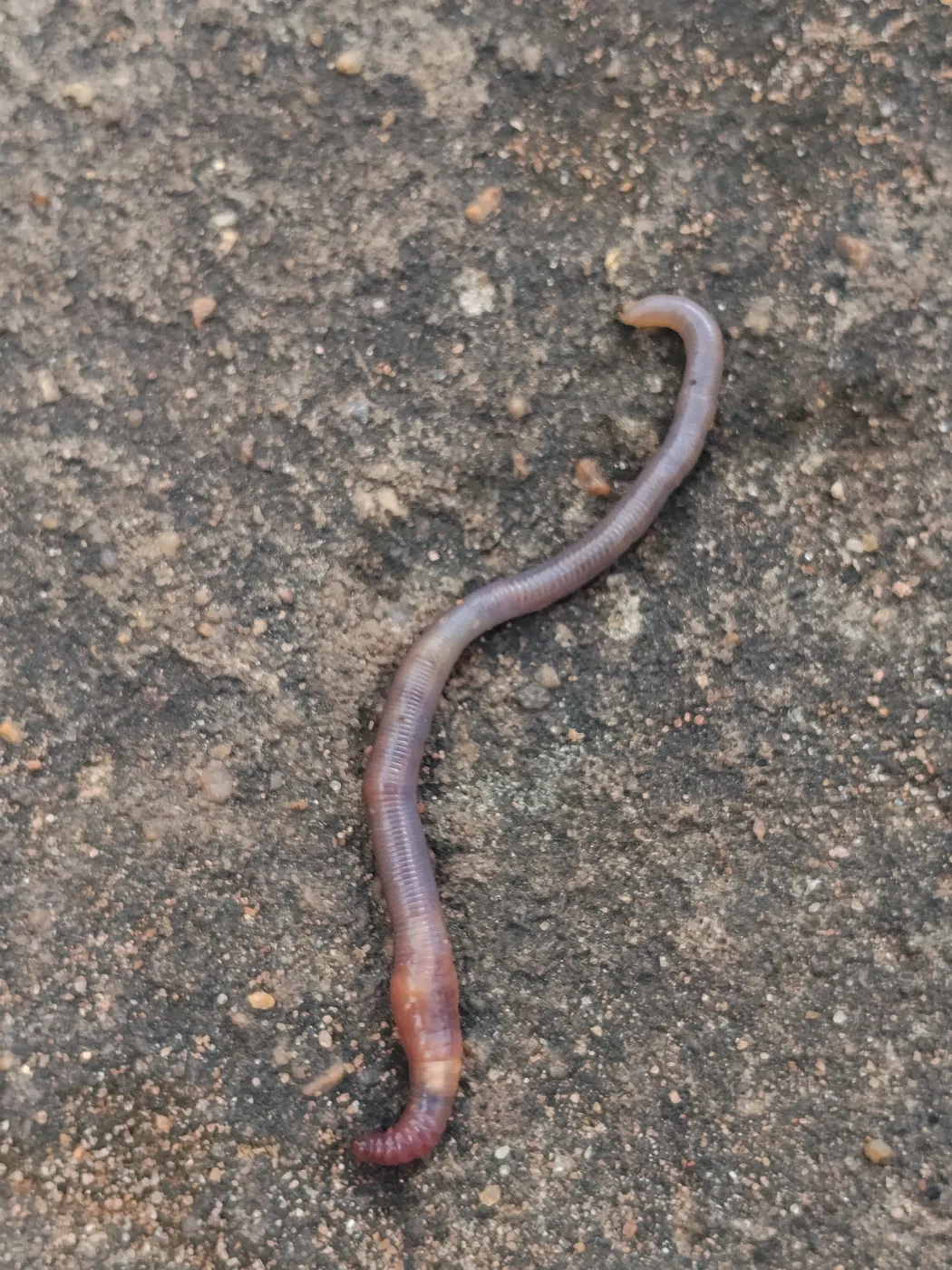
Earthworms — important organisms of the soil ecosystem
An earthworm moving along the soil surface. Earthworms participate in the processing of organic residues, the formation of soil structure, the mixing of soil horizons, and the maintenance of nutrient cycling.
Earthworms and other macroorganisms. Earthworms are true “soil engineers.” They swallow soil and plant residues, pass them through their guts, and excrete casts rich in nutrients and possessing a water-stable structure. Worms create burrows that improve aeration and drainage and move organic matter from the surface into the depths. Their presence is one of the most reliable signs of healthy soil (Gershuny, 1999; Pavlis, 2020).
How to support biological activity? The main thing is to provide soil organisms with food (organic matter), moisture, and air without disrupting their habitat. Minimum tillage, mulching, cover crops, compost, and avoiding aggressive chemicals create conditions for soil life to thrive. In turn, active biota itself improves structure, increases nutrient availability, and suppresses pathogens (Lowenfels, 2010; Gershuny, 1999).
6. How to assess fertility yourself

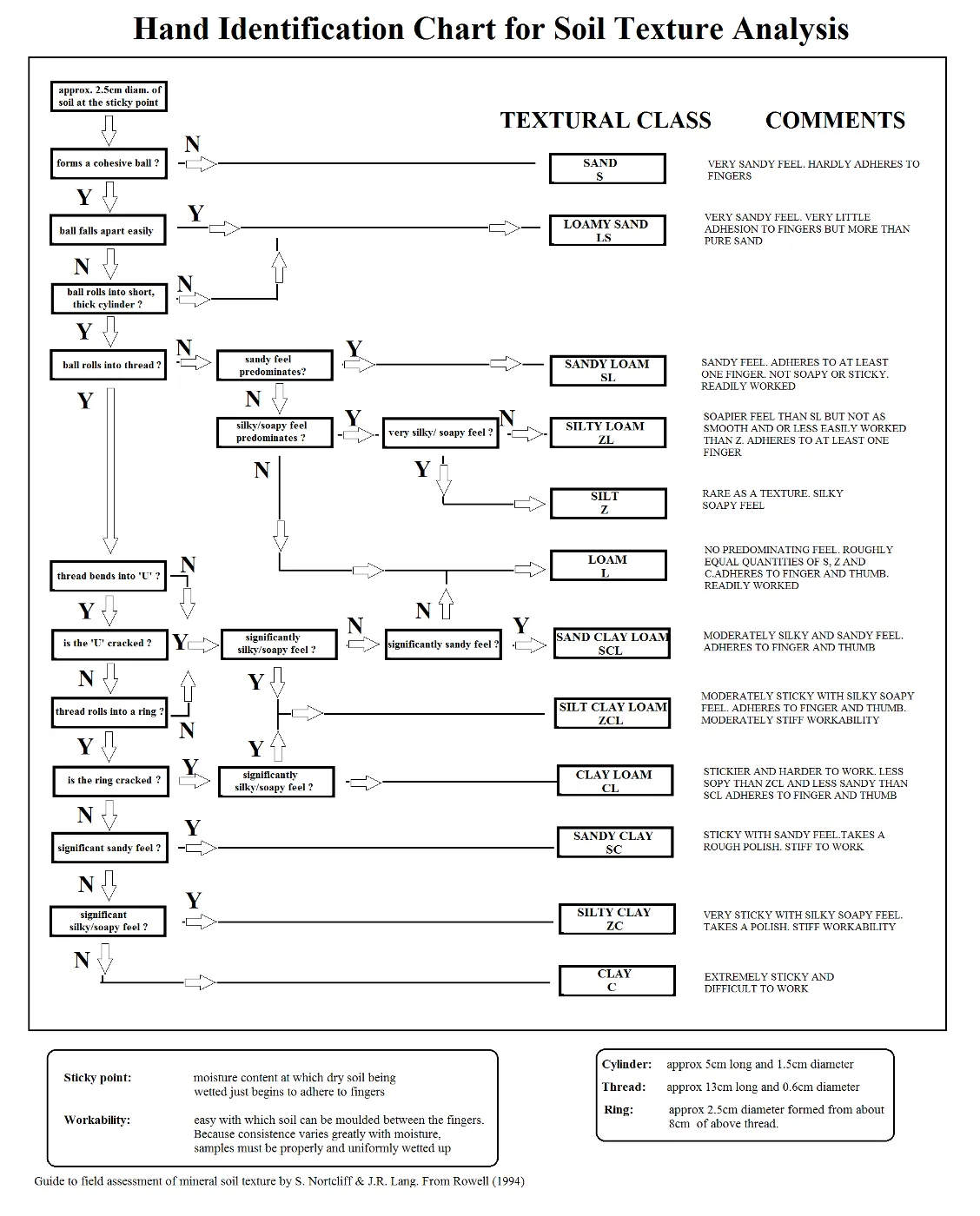
Diagram for determining soil texture by hand
Flowchart for rapid field assessment of soil texture. The chart includes columns with texture classes (TEXTURAL CLASS) and comments (COMMENTS). At the bottom, explanations of terms: 'Sticky point' (moisture content at which dry soil begins to stick to fingers) and 'Workability' (ease with which soil can be molded between fingers). Dimensions are also given for the cylinder (about 5 cm long and 1.5 cm in diameter), ribbon (about 13 cm long and 0.6 cm in diameter), and ring (about 2.5 cm in diameter). Source: S. Nortcliff & J.R. Lang, from Rowell (1994).
Before changing anything, it is useful to understand the initial state of the soil. There are several simple and accessible methods that allow a gardener or farmer to assess fertility without complex equipment.
Visual inspection. Pay attention to soil color: a dark, almost black top layer usually indicates a high content of organic matter. A gray, pale, or reddish tint may indicate low fertility or particular mineral composition. Also assess how easily the soil crumbles in your hands: a crumbly, loose structure is a good sign, whereas dense clods or a dusty mass signal problems (Gershuny, 1999; Pavlis, 2020).
Texture test (“ribbon”). Take a handful of moist soil and try to roll it into a ribbon about 3 mm thick. If no ribbon forms, the soil is sandy. If a ribbon forms but breaks easily, it is loam. If the ribbon can be formed into a ring without cracks, the soil is clayey. Texture affects water retention and nutrient availability (Pavlis, 2020; Gershuny, 1999).
Aggregate stability test. Place a pea-sized soil aggregate in a glass of water. If it quickly falls apart into individual particles, the structure is poor. If it holds its shape for several minutes, the aggregates are stable, which means the soil is rich in organic matter and biologically active (Pavlis, 2020).
Estimating earthworm numbers. Dig a hole 20×20×20 cm and count all the earthworms. In healthy soil there should be at least 10–15 adult individuals. If there are few or no worms, biological activity is low (Gershuny, 1999; Pavlis, 2020).
Infiltration test. Dig a hole 30 cm deep and 30 cm wide, fill it with water, and note the time it takes for the water to disappear completely. If water remains for more than 8 hours, the soil is heavily compacted or clayey; if it drains in 2–4 hours, drainage is normal. Too-rapid drainage (less than an hour) indicates sandy soil (Gershuny, 1999).
Determining pH. The most accurate method is laboratory analysis, but for a quick assessment pH meters or litmus paper will do. Remember that most cultivated plants prefer pH 6.0–7.0. If pH deviates strongly, liming or acidification will be required (Lowenfels, 2013; Pavlis, 2020).
Assessing organic matter. You can send a sample to a laboratory, but there are also indirect signs: dark color, an abundance of plant residues at various stages of decomposition, the presence of mycorrhizal fungi (white threads), and earthworms. If last year’s plant residues have not decomposed by midsummer, biological activity is insufficient (Gershuny, 1999).
The “underpants” quick test. Bury white cotton underpants (without synthetic fibers) in the soil for 5 weeks. The more fabric has decomposed, the higher the microbial activity. If only the elastic remains, the soil is biologically healthy (Pavlis, 2020).
These simple methods provide enough information to understand which direction to move in: improve structure, adjust pH, add organic matter, or combat compaction. Regular observations will help track progress.

7-in-1 Wi-Fi Weather Station
Monitor local weather conditions with a wireless outdoor sensor. Track temperature, humidity, rainfall, wind speed and direction, and atmospheric pressure. Ideal for gardens, farms and greenhouses.
- Wireless outdoor sensor
- Solar-powered
- Wi-Fi connectivity
Affiliate link · Check regional compatibility.
7. What depletes soil: degradation factors
Fertility is not a permanent property—it is easily lost under irrational use. Understanding which practices lead to depletion helps avoid mistakes and keep soil healthy for many years.
Monoculture. Growing the same crop in the same place year after year depletes the reserve of certain nutrients, accumulates specific pests and diseases, and reduces the diversity of soil biota (Pavlis, 2020; Gershuny, 1999). Different plants consume elements in different proportions and return different organic residues to the soil. Under monoculture this balance is disrupted, and the soil gradually becomes “tired.”
Intensive digging and tillage. Frequent deep digging, rotary tillage, and repeated passes of heavy machinery destroy soil structure, break up aggregates, and compact underlying layers. At the same time, organic matter oxidizes and is lost as carbon dioxide, and fungal hyphae and earthworms die (Lowenfels, 2010; Pavlis, 2020; Weil, 2017). Tillage of waterlogged soil is especially harmful: it leads to the formation of a plow pan—a dense layer that impedes root growth and water movement.
Removing the harvest without returning organic matter. When a crop is harvested from a field or bed, nitrogen, phosphorus, potassium, and other elements go with it. If plant residues are not returned to the soil (as compost, mulch, or cover crops), the nutrient reserve is gradually exhausted. This happens especially quickly when growing demanding crops and on sandy soils (Gershuny, 1999; Troeh, 1993).

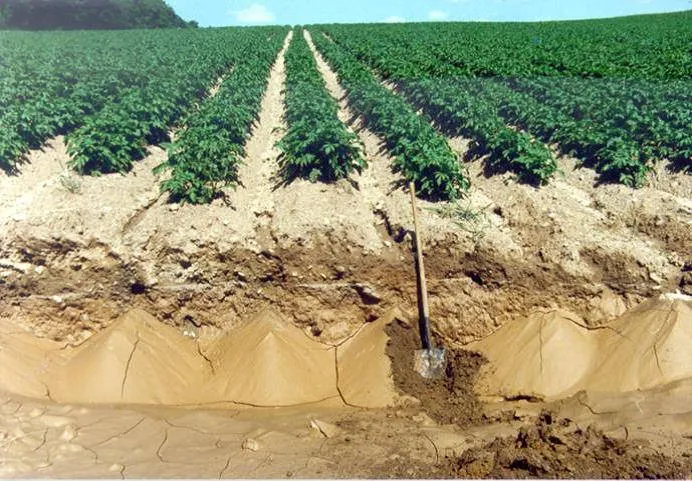
Soil erosion on a potato field
Agricultural field where loss of the fertile topsoil occurs due to erosion. Repeated tillage contributes to the destruction of soil structure and the removal of soil particles.
Erosion. Water and wind erosion carry away the most fertile topsoil. This occurs on slopes, in open areas, and where there is no vegetation cover. The loss of a few centimeters of the humus horizon can reduce yields for decades, since natural soil formation is extremely slow (Weil, 2017; Valkov et al., 2004). Protecting the soil with mulch, cover crops, and plant residues is a mandatory practice on vulnerable sites.
Compaction. Walking on beds, using a wheelbarrow, and using heavy equipment all compress the soil, reduce porosity, and hinder the access of air and water to roots. Compacted soil absorbs moisture less well, which increases surface runoff and erosion (Pavlis, 2020; Weil, 2017). Clayey and loamy soils suffer especially.
Salinization and other chemical problems. In arid regions, improper irrigation causes salts to accumulate in the upper horizons, inhibiting plants. An excess of fertilizers can also lead to the accumulation of toxic salts and disruption of the balance of elements (Weil, 2017; Valkov et al., 2004). In addition, improper use of pesticides and herbicides suppresses beneficial biota.
All these factors act in interconnected ways. For example, monoculture is often combined with intensive tillage and removal of the harvest, which accelerates degradation. That is why it is so important to apply a complex of measures aimed at restoring and maintaining fertility.
8. What increases fertility: practical steps

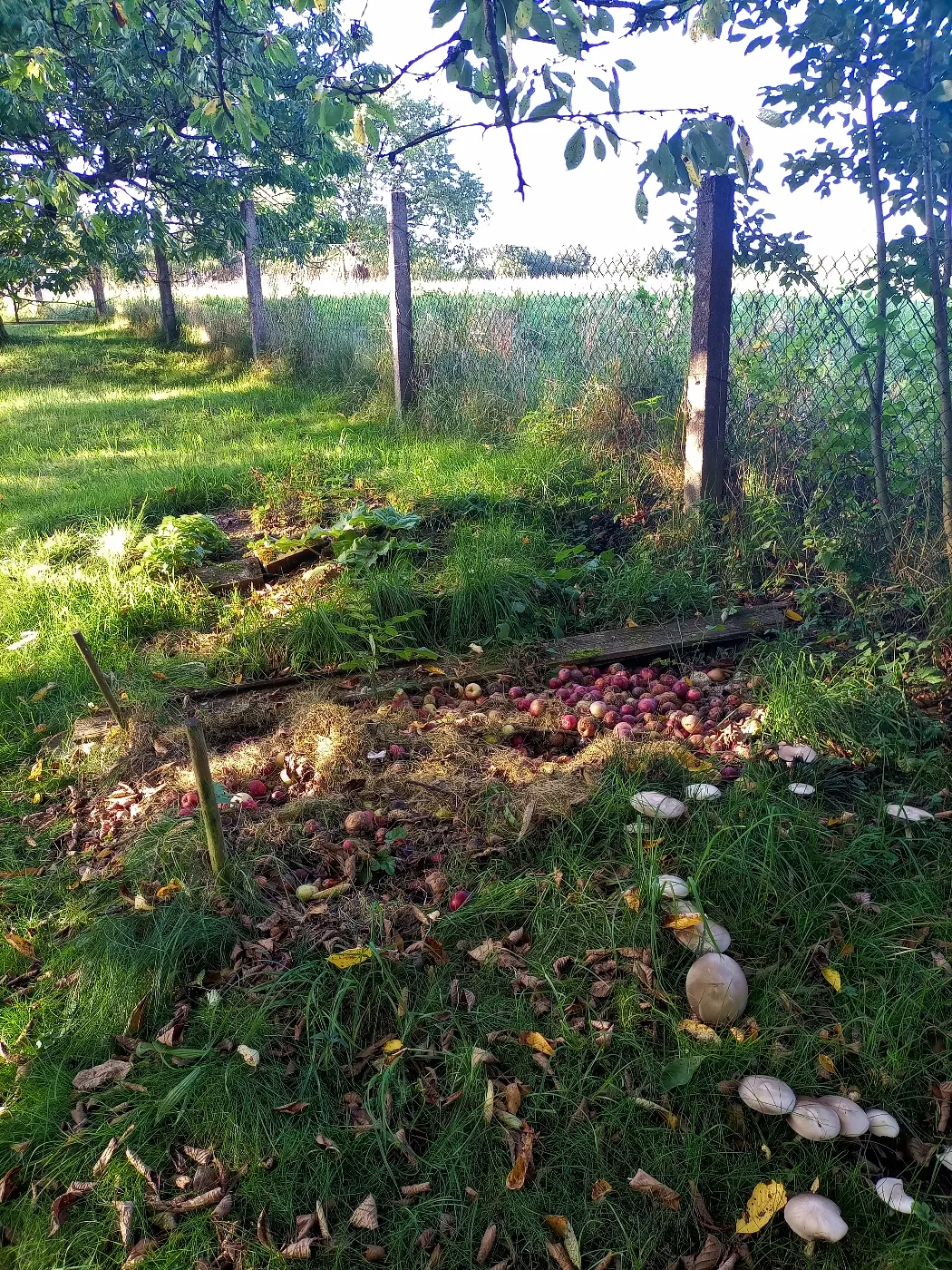
Compost mass in a garden in the Mladá Boleslav area, Central Bohemian Region, Czech Republic
Composting allows plant residues to be processed into organic fertilizer, which improves soil structure, replenishes nutrient reserves, and supports the activity of soil organisms.
The good news is that fertility can be restored and increased. The practices below are universal and work in different climatic zones, although their specific application may vary.
Applying organic materials. Compost, rotted manure, leaf mold, and cover crops are the foundation of fertility. They improve all three components: they loosen heavy soils and bind sandy ones (physics), supply nutrients and increase cation exchange capacity (chemistry), and serve as food for soil biota (biology) (Gershuny, 1999; Lowenfels, 2010; Pavlis, 2020). It is better to apply organic matter regularly, in small portions, evenly distributing it over the surface or incorporating it into the top layer.
Cover crops (green manures). These are plants grown for subsequent incorporation into the soil. Legumes (clover, vetch, lupine) enrich the soil with nitrogen through symbiosis with nodule bacteria. Cereals and brassicas (rye, oats, radish) loosen the soil with their roots, accumulate organic mass, and protect against erosion. Cover crops are sown after harvesting the main crop or in interrows, then mowed and left on the surface or incorporated into the top layer (Gershuny, 1999; Pavlis, 2020; Weil, 2017).
Mulching. A layer of organic material (straw, leaves, mown grass, compost, wood chips) on the soil surface retains moisture, suppresses weeds, softens temperature fluctuations, and gradually decomposes, enriching the soil with organic matter. Mulch also protects against erosion and compaction (Lowenfels, 2010; Pavlis, 2020). The thickness of the layer depends on the material: 5–10 cm is sufficient for straw, and 2–3 cm for compost.

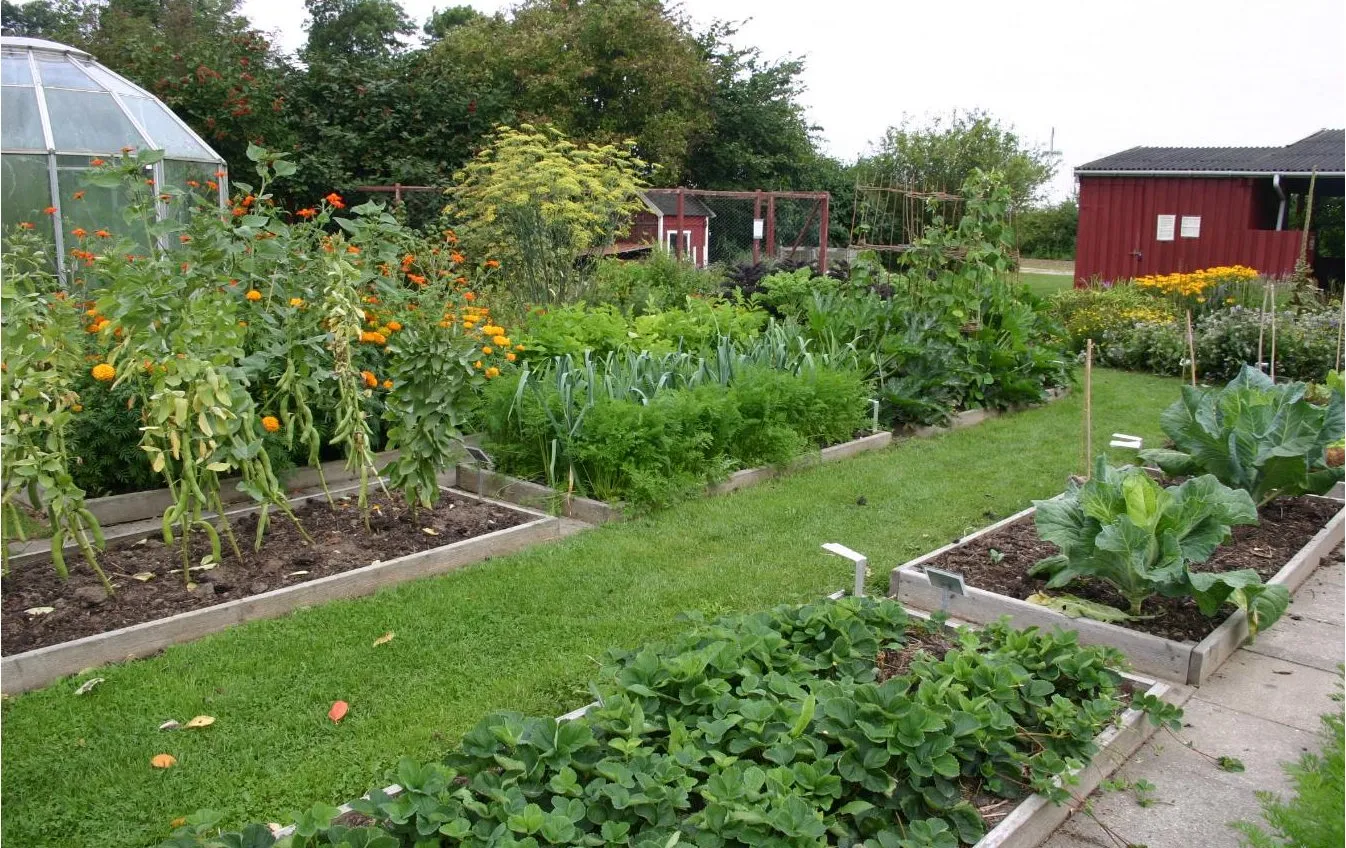
Crop rotation in raised beds at the Ecological Garden (Denmark)
A demonstration of the crop rotation principle on a small plot. Various vegetable crops are planted in separate raised beds. Photographed at the Ecological Garden in the town of Odder, Denmark.
Crop rotation. Alternating crops in the same area prevents the accumulation of specific pests and diseases and improves the balance of nutrients, since different plants consume them in different proportions and leave different root systems. In addition, crop rotation promotes diversity of soil biota (Pavlis, 2020; Gershuny, 1999; Troeh, 1993). A simple rule: do not grow the same crop or crops of the same family in the same place two years in a row.
Minimum tillage. Avoiding deep digging and frequent cultivation preserves structure, protects fungal networks and earthworms, and prevents loss of organic matter. If the soil must be loosened, use a fork or flat cutter, working to a depth of no more than 5–7 cm. Permanent beds that are not dug become more fertile over time (Lowenfels, 2010; Pavlis, 2020; Weil, 2017).
Regulating pH and nutrient balance. Check soil acidity periodically. If pH is below 6.0, apply lime or dolomite flour; if above 7.5, apply sulfur or acidic peat. Do this gradually and based on analysis. Remember that even ideal fertilization will not work if the pH is unsuitable for the plant (Lowenfels, 2013; Pavlis, 2020). Apply fertilizers only as needed, guided by test results.
Integrating animals. On small farms and in gardens, manure from poultry, rabbits, and goats can be used. Birds and small livestock help process plant residues, loosen the soil, and enrich it with organic matter (Gershuny, 1999). It is important to follow application rates to avoid salinization and contamination.
All these practices complement each other. For example, cover crops can be used as mulch, and compost can be used to increase biological activity. The main thing is to act systematically and observe the results. The soil will thank you with healthy plants and a stable harvest.

40W Full Spectrum LED Grow Light
Support healthy plant growth with full-spectrum LED lighting. Ideal for seedlings, indoor plants and small growing spaces. A practical solution for indoor gardening and year-round cultivation.
- Full-spectrum LED
- Energy-efficient design
- Indoor plant growing
Affiliate link · Check actual power and light coverage.
9. Regional aspect: why there are no universal recipes
Soil fertility is formed under the influence of climate, vegetation, parent material, topography, and time (Troeh, 1993; Weil, 2017). Therefore, in different regions of the world, soils initially have different properties and respond differently to the same practices. Understanding these differences helps choose the right strategy: in some places it is enough to maintain fertility, while in others it must be created from scratch.
Zones with initially rich soils. These include, for example, the chernozems of steppes and prairies, some alluvial soils of river valleys, and volcanic soils (Andosols). They contain a lot of humus, have a neutral or near-neutral reaction, good structure, and a high reserve of nutrients (Weil, 2017; Valkov et al., 2004). However, under intensive use—plowing, monoculture, removal of crops without returning organic matter—they quickly lose humus, structure is destroyed, and fertility declines. For example, chernozems under long-term intensive cultivation can lose up to 30–50% of their original organic matter (Gershuny, 1999). Therefore, even on rich soils, crop rotation, application of organic matter, and minimum tillage are necessary.
Zones with poor and vulnerable soils. These are primarily the humid tropics and subtropics with ferrallitic and lateritic soils, sandy podzols of temperate latitudes, and arid soils of deserts and semi-deserts. They are often acidic, poor in available elements, have low cation exchange capacity, and quickly lose organic matter when heated and moistened (Weil, 2017; Valkov et al., 2004). In the tropics, organic matter decomposes very quickly, so fertility there is maintained not by a reserve of humus but by a constant cycle: plants quickly absorb elements, and after dying they quickly return to the soil. If the forest is cut down and the soil is left bare, it degrades quickly. Therefore, in such regions mulching, cover crops, compost, and preservation of vegetation cover are especially important (Gershuny, 1999).
Arid and semiarid zones. Here the main problems are lack of moisture and salinization. Soils often have an alkaline reaction, contain carbonates, and easily accumulate salts under improper irrigation (Weil, 2017; Valkov et al., 2004). Fertility is increased through organic matter, which improves structure and retains moisture, as well as through mulching and drip irrigation. It is important to monitor drainage and prevent groundwater from rising.
Temperate zones with podzolic and soddy-podzolic soils. They are often acidic, poor in humus and nutrients, but respond well to liming, compost, and cover crops. Minimum tillage and constant mulching gradually turn them into fertile soils (Gershuny, 1999; Pavlis, 2020).
Mountain and slope lands. Here the main enemy is erosion. Any tillage across the slope, terracing, sowing to grass, and planting perennial grasses help conserve soil. Organic matter and mulch are indispensable (Weil, 2017).
Thus, although the basic principles (organic matter, crop rotation, mulch, minimum tillage) work everywhere, their application must take local conditions into account. On rich soils the emphasis is on preserving and returning nutrients; on poor soils, on accumulating organic matter and protecting against erosion; in the tropics, on continuous cycling and shade; in arid zones, on moisture retention and combating salinization. There is no universal recipe, but there is a universal approach: observe, adapt, and act in harmony with nature.
10. Conclusion: fertility is not once and for all, but an ongoing process
Soil fertility is not a static indicator but a dynamic equilibrium between physical, chemical, and biological processes. It cannot be “obtained” once and for all—just as one cannot eat once and be full forever. It is a constant process requiring attention and care.
We have examined that fertility consists of three interconnected components: physical (structure, water, air), chemical (nutrients and pH), and biological (life in the soil). Even ideal fertilization will not work if the pH is unsuitable for the plant and the structure is compacted. Therefore, it is important to influence all three components simultaneously.
We also saw that soil depletion is the result of monoculture, digging, removal of the harvest, and erosion. But there is also good news: fertility can be restored and increased with the help of organic matter, cover crops, mulch, crop rotation, and minimum tillage. These practices are universal, but their application must take regional characteristics into account: climate, soil type, and available resources.
The main conclusion: caring for the soil means caring for future harvests. Every gardener and farmer can contribute by returning organic matter, protecting the soil from erosion and compaction, and supporting its living component. The soil will repay you with healthy plants, a rich harvest, and resilience to climatic stresses.
Fertility is not once and for all, but an ongoing process. And in this process there are no trifles: even a small improvement in structure, an increase in organic matter content, or an adjustment of pH produces a noticeable result. Start small—and the soil will respond in kind.
References
- (2014). ‘Soil’, in Agroecology. : CRC Press, 108-123. doi: 10.1201/b17881-13
- (2015). ‘Soil cultivation and fertility’, in Ingram, D.S., Vince-Prue, Daphne, Gregory, P.J. (ed.) Science and the Garden. The scientific basis of horticultural practice. West Sussex, UK: Royal Horticulture Society. Wiley Blackwell, pp. 86-101.
- Ahmed, Niaz, Masood, Sajid, Ahmad, Shakeel, Bashir, Safdar, Hussain, Sajjad, Hassan, Waseem, Khandekar, R.Islam, Hussain, Baqir, Ali, M.Arif (2019). ‘Soil Management for Better Crop Production and Sustainable Agriculture’, in Agronomic Crops. Singapore: Springer Singapore, 47-71. doi: 10.1007/978-981-32-9783-8_4
- Bubel, Nancy, Nick, Jean (2024). ‘Moving Plants Outdoors’, in The New Seed-Starters Handbook. : Rodale, .
- Eash, N.S., Sauer, T.J., O'Dell, D., Odoi, Evah (2016). ‘Soil Biological Properties’, in Soil Science Simplified. New Jersey: Wiley Blackwell, ch. 4.
- Foth, H.D. (1990). ‘Soil Fertility Evaluation and Fertilizer Use’, in Fundamentals of Soil Science. New York: John Wiley & Sons, pp. 232-249.
- Gershuny, Grace, Smillie, Joe (1999). ‘Observing and Evaluating Your Soil’, in The Soul of Soil. A Soil-Building Guide for Master Gardeners and Farmers. Vermont: Chelsea Green Publishing, .
- Gershuny, Grace, Smillie, Joe (1999). ‘Soil Management Practices’, in The Soul of Soil. A Soil-Building Guide for Master Gardeners and Farmers. Vermont: Chelsea Green Publishing, .
- Gershuny, Grace, Smillie, Joe (1999). ‘Understanding the Soil Ecosystem’, in The Soul of Soil. A Soil-Building Guide for Master Gardeners and Farmers. Vermont: Chelsea Green Publishing, .
- Hemenway, Toby (2009). ‘Bringing the Soil to Life’, in Gaia's Garden. A Guide To Home-Scale Permaculture. : Chelsea Green Publishing, .
- Johnson, Noelle (2023). ‘Caring for Plants in the Dry Climate Garden’, in Dry Climate Gardening. Beverly, MA: Cool Springs Press, .
- Lowenfels, Jeff (2013). ‘Factors Influencing Nutrient Availability’, in Teaming with nutrients: The Organic Gardener's Guide to Optimizing Plant Nutrition. Portland, London, UK: Timber Press, pp. 179-193.
- Lowenfels, Jeff (2013). ‘The Importance of Soil Testing’, in Teaming with nutrients: The Organic Gardener's Guide to Optimizing Plant Nutrition. Portland, London, UK: Timber Press, pp. 166-178.
- Lowenfels, Jeff, Lewis, Wayne (2010). ‘Compost Teas’, in Teaming with Microbes. The Organic Gardener’s Guide to the Soil Food Web. Portland, Oregon: Timber Press, .
- Lowenfels, Jeff, Lewis, Wayne (2010). ‘Compost’, in Teaming with Microbes. The Organic Gardener’s Guide to the Soil Food Web. Portland, Oregon: Timber Press, .
- Lowenfels, Jeff, Lewis, Wayne (2010). ‘Mulch’, in Teaming with Microbes. The Organic Gardener’s Guide to the Soil Food Web. Portland, Oregon: Timber Press, .
- Lowenfels, Jeff, Lewis, Wayne (2010). ‘Mycorrhizal Fungi’, in Teaming with Microbes. The Organic Gardener’s Guide to the Soil Food Web. Portland, Oregon: Timber Press, .
- Lowenfels, Jeff, Lewis, Wayne (2010). ‘Tools for Restoration and Maintenance’, in Teaming with Microbes. The Organic Gardener’s Guide to the Soil Food Web. Portland, Oregon: Timber Press, .
- Lowenfels, Jeff, Lewis, Wayne (2010). ‘What Is the Soil Food Web and Why Should Gardeners Care?’, in Teaming with Microbes. The Organic Gardener’s Guide to the Soil Food Web. Portland, Oregon: Timber Press, .
- Morgan, Sally (2021). ‘Building a healthy soil’, in The Healthy Vegetable Garden: A natural, chemical-free approach to soil, biodiversity and managing pests and diseases. Vermont, London, UK: Chelsea Green Publishing, .
- Pavlis, Robert (2020). ‘Solving Soil Problems’, in Soil Science for Gardeners. Working with Nature to Build Soil Health. Gabriola Island, BC, Canada: New Society Publishers, pp. 97-178.
- Pavlis, Robert (2020). ‘Understanding Soil’, in Soil Science for Gardeners. Working with Nature to Build Soil Health. Gabriola Island, BC, Canada: New Society Publishers, pp. 9-96.
- Pratt, M.M. (2005). ‘Looking After the Soil – the Balanced Approach’, in Practical Science for Gardeners. Portland, Oregon: Timber Press, pp. 61-80.
- Troeh, F.R., Thompson, L.M. (1993). ‘Soil’, in Soil and Soil Fertility. New York, NY: Oxford University Press, pp. 1-14.
- Walliser, Jessica (2020). ‘Soil Preparation & Conditioning’, in Plant Partners. North Adams, MA: Storey Publishing, pp. 27-48.
- Weil, R.R., Brady, N.C. (2017). ‘The Soils Around Us’, in The Nature and Properties of Soils. Essex, UK: Pearson Education, pp. 19-50.
- White, R.E. (2006). ‘Soil Quality and Sustainable Land Management’, in Principles and Practice of Soil Science. The Soil as a Natural Resource. Malden, MA: Blackwell Publishing, pp. 333-347.
- Вальков, В.Ф., Казеев, К.Ш., Колесников, С.И. (2004). ‘Плодородие, рациональное использование и охрана почв [Fertility, rational use and protection of soils]’, in Почвоведение [Soil science]. Москва - Ростов-на-Дону: МарТ, pp. 435-490.
- Муха, В.Д., Картамышев, Н.И., Муха, Д.В. (2003). ‘Почва как многофазная полидисперсная система [Soil as a Multiphase Polydisperse System]’, in Агропочвоведение [Agropedology]. Москва: КолосС, pp. 29-40.
- Траннуа, Павел (2018). ‘Почва участка [Site soil]’, in Сад и огород в рисунках и комиксах: полная наглядная энциклопедия [The Garden and Vegetable Patch in Drawings and Comics: A Comprehensive Visual Encyclopedia]. Москва: Издательство «Э», pp. 16-22.
