
Air in Soil
1. Why roots breathe
We are used to thinking that respiration is the domain of leaves. However, roots are living organs that, like all living things, need energy for growth and for taking up water and nutrients. They obtain this energy through cellular respiration, in which oxygen oxidizes sugars produced by the leaves during photosynthesis. Without oxygen, this process is impossible.
Unlike leaves, which can obtain oxygen directly from the air, roots are in the soil. Therefore, they depend entirely on how much oxygen is contained in soil pores. When a root breathes, it takes up oxygen (O_2) and releases carbon dioxide (CO2), just as we do (Taiz et al., 2023). This gas must be removed from the soil without obstruction; otherwise it accumulates and begins to cause harm.
Note. It is important to understand that roots cannot photosynthesize. They are consumers, not producers of oxygen. Their “fuel” is sugars that arrive from the leaves, and the “oxidizer” for burning this fuel is oxygen from soil air (Weil and Brady, 2017).
Moreover, roots need oxygen not only for simple “survival.” It is necessary for active uptake of nutrients. Salt ions in the soil solution are present at low concentrations. To capture them, root cells must work against the concentration gradient, expending energy (ATP) to do so. This process is called active transport. If respiration stops because of a lack of oxygen, energy production stops, and the root loses the ability to “eat,” even if it is surrounded by plenty of fertilizer (Weil and Brady, 2017).
That is why overwatering is not “too much water” but “too little air.” Water fills the pores, displacing air, and the roots begin to suffocate. The first sign of this is not “wet” leaves but their yellowing and wilting, which is often mistakenly taken as a symptom of drought. The plant wilts because roots deprived of oxygen cannot function and supply water upward, even though there may be plenty of water around them.
2. Oxygen in soil: where it comes from
Soil air is not something static. It is a dynamic mixture of gases that is constantly exchanged with the atmosphere. If this exchange did not occur, roots would quickly use up all the oxygen and suffocate in their own carbon dioxide. Fortunately, nature has provided several mechanisms that ensure a supply of fresh air to the soil.
The main mechanism is diffusion. Gas molecules are in constant chaotic motion. Because the oxygen concentration in the atmosphere (about 21%) is significantly higher than in soil air, O_2 molecules tend to penetrate into the soil through pores. At the same time, carbon dioxide, which is more abundant in the soil, moves outward (Shukla, 2023). This process occurs continuously, but its rate depends on many factors. In dry, well-structured soil, diffusion proceeds quite quickly. In waterlogged or compacted soil, it slows down tens or hundreds of times.
Note. The rate of gas diffusion in air is about 10,000 times higher than in water. That is why waterlogging is so destructive to roots: water blocks the pores, and oxygen cannot penetrate deeper (Shukla, 2023).
The second mechanism is convection, or mass flow. Air can move in the soil under the influence of pressure and temperature differences. When the soil warms during the day, the air in the pores expands and partly escapes outward. At night, as it cools, the soil “inhales” fresh air. Wind, atmospheric pressure, rainfall, and even the movement of soil animals also contribute to this process (Weil and Brady, 2017). However, convection plays a smaller role than diffusion, especially in dense soils.

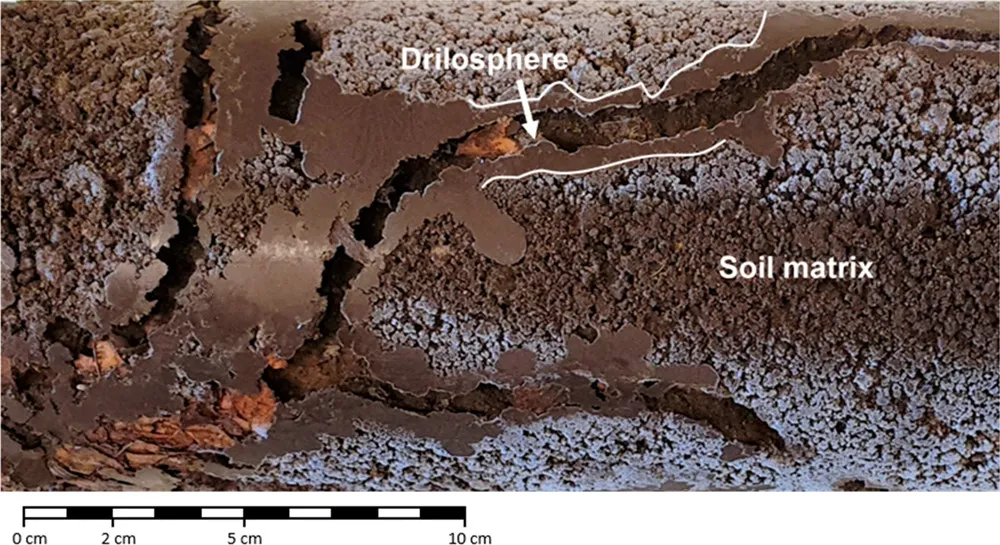
Earthworm burrows in a soil monolith (drilosphere)
The image shows a cross-section of a soil monolith penetrated by earthworm burrows. White lines mark the boundaries of the drilosphere (the zone of earthworm influence) and the soil matrix, demonstrating changes in soil texture due to earthworm excretions (castings) during their life activity.
Where does the main gas exchange occur? The key role is played by macropores—large voids more than 0.5 mm in diameter. These are cracks, earthworm burrows, and channels from decayed roots. It is through them that air penetrates deep into the soil. Micropores (less than 0.2 mm in diameter) are usually filled with water, and diffusion in them is extremely difficult. Therefore, soil with good macroporosity “breathes” much better than dense clay (Shukla, 2023).
Who consumes oxygen? Oxygen in the soil is not there for no reason. It is actively consumed by living organisms: plant roots, bacteria, fungi, worms, and insects. The higher the biological activity, the faster O_2 is consumed and CO2 is released. For example, in the zone where organic residues decompose (compost, mulch, green manures), oxygen consumption can be very intense (Weil and Brady, 2017).
What should the oxygen level be? In the atmosphere, it is 21%. In soil air, the O_2 concentration usually ranges from 10 to 20%. For most cultivated plants, a drop below 10% is considered critical. At 5% and below, root respiration is suppressed, and roots switch to anaerobic (oxygen-free) respiration, which produces toxic substances (alcohols, organic acids). That is why, in waterlogged soil, roots not only suffocate but are also poisoned by the products of their own metabolism (Taiz et al., 2023).
Note. Some plants, such as rice, are adapted to life in flooded conditions and can transport oxygen from the leaves to the roots through special air channels (aerenchyma). But most garden crops do not have this ability (Taiz et al., 2023).
Thus, oxygen in the soil is a renewable resource, but its supply is not infinite. It enters from the atmosphere through diffusion and convection, but its amount depends directly on soil structure and moisture. In the next chapter, we will discuss what happens to the carbon dioxide released during root respiration.


LCD 4-in-1 Soil Tester
Check essential growing conditions with one compact tool. Measure soil pH, moisture, temperature and light intensity — ideal for gardens, potted plants and greenhouses.
- 4-in-1 measurement
- Easy-to-read LCD display
- Portable design
Affiliate link · For indicative measurements only.
3. Carbon dioxide: what is released
Oxygen in the soil is not consumed without a trace. In the process of respiration by roots, microorganisms, and soil animals, it is converted into carbon dioxide (CO2). This gas is just as natural a product of vital activity as the heat released when muscles work. The problem is not that CO2 is formed, but that it must be removed from the soil in a timely manner.
How much carbon dioxide is released? Soil respiration is a summary indicator of the activity of all living organisms in the soil. In the scientific literature, it is often measured as the amount of CO2 released per square meter per hour. For comparison: in the atmosphere, the CO2 concentration is about 0.04%. In soil air, it can reach 1–5%, and in individual microzones (for example, inside a dense clod or in a zone of organic matter decomposition), up to 10% and higher (Weil and Brady, 2017). This is tens and hundreds of times more than in the atmosphere.
Note. Excess CO2 in the soil is not just “stale air.” At high concentrations, it can have a direct toxic effect on roots, disrupting the functioning of cell membranes and enzymes. In addition, when dissolved in soil water, CO2 forms carbonic acid (H2CO3), which acidifies the soil solution. In calcareous soils, this can lead to dissolution of lime and a change in pH (Shukla, 2023).
Why is CO2 dangerous? There are several reasons:
1. Toxicity at high concentrations. If CO2 is not removed, its level rises. At concentrations above 10–15%, roots stop taking up water and nutrients, even if they are present in excess. This happens because root cells cannot maintain the necessary electrical potential across their membranes (Taiz et al., 2023).
2. Acidification. Carbonic acid, formed when CO2 dissolves in water, lowers pH. In alkaline soils, this can be beneficial (for example, for dissolving calcium phosphates), but in acidic soils it is harmful, because it acidifies the environment even more and increases the mobility of toxic aluminum and manganese ions (Weil and Brady, 2017).
3. Displacement of oxygen. Although CO2 does not directly displace O2 (they are different gases), their concentrations are inversely related. Where there is a lot of CO2, there is usually little O2, because both gases are products and reactants of the same process—respiration.

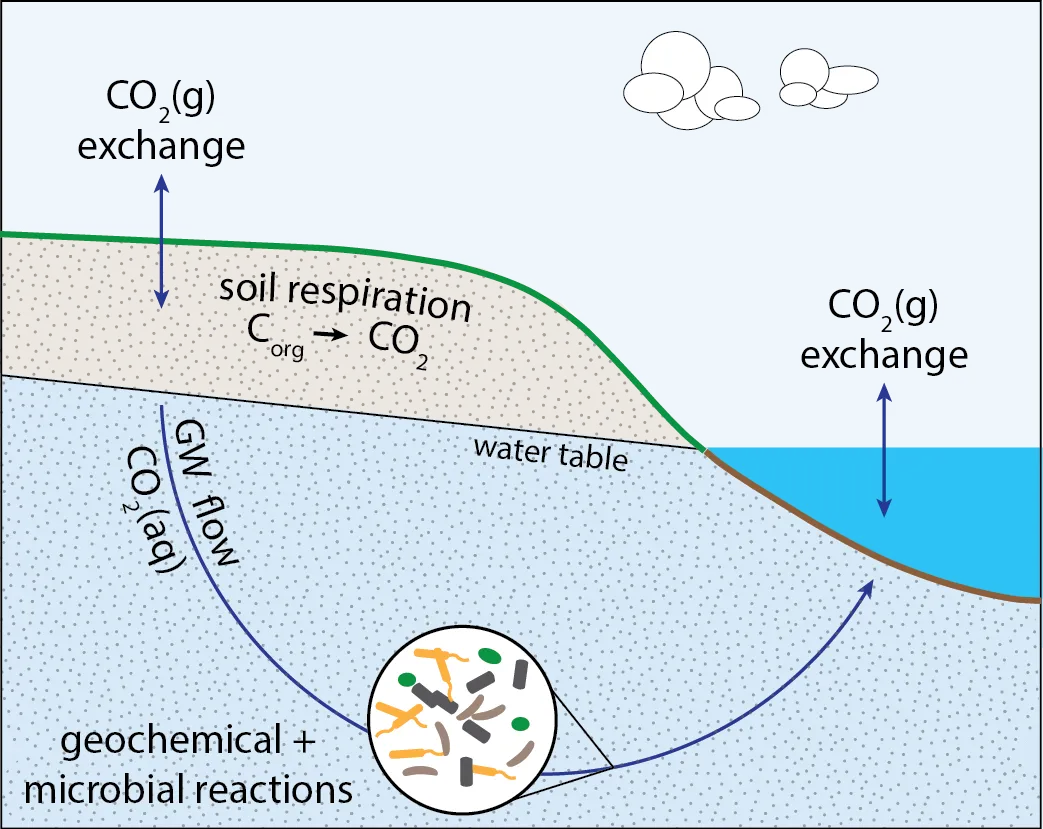
Pathways of carbon dioxide movement in soil
Schematic representation of possible pathways for the movement of carbon dioxide formed during decomposition of organic matter and respiration of soil organisms. Part of the CO₂ enters the atmosphere directly, and another part may be transported by soil water.
How is CO2 removed? In exactly the same way as oxygen enters—through diffusion and convection. CO2 molecules move from an area of high concentration (in the soil) to an area of low concentration (in the atmosphere). This process proceeds in parallel with the entry of O_2, but in the opposite direction. If the soil is compacted or waterlogged, diffusion slows down, and CO2 accumulates.
What does this mean for the gardener? When you see a plant wilting despite moist soil, this may be a sign not only of oxygen deficiency but also of excess carbon dioxide. The roots cannot breathe, accumulate toxins, and the plant sends a distress signal—wilting. Yellowing leaves, root rot, and mold appearing on the soil surface are all consequences of disrupted gas exchange, in which CO2 plays no small role.
Note. In natural ecosystems with undisturbed soil structure, gas exchange is so well regulated that the CO2 concentration in soil air rarely exceeds 1–2%, even with high biological activity. In garden conditions, especially under intensive cultivation, these figures can be significantly higher (Weil and Brady, 2017).
In the next chapter, we will discuss how the pore space of soil is organized and why root life depends on it.
4. Porosity: how much air is in the soil
Soil is not a solid mass. Between solid particles (minerals, organic residues), there are always gaps—pores. They contain the air and water that roots need. The volume of all pores in a unit volume of soil is called porosity. This indicator directly determines how much air the soil can hold and how easily it will penetrate deeper.

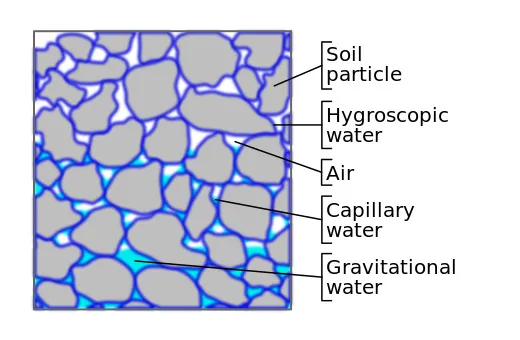
Forms of water in soil
Schematic representation of water in soil pores: gravitational, capillary, and bound water. The illustration shows differences in the nature of retention and availability of moisture to plants.
The ideal ratio. In healthy, fertile soil suitable for most cultivated plants, approximately 50% of the volume is occupied by solid particles and 50% by pores. At the same time, the pore space should be filled approximately equally: 25% water and 25% air (Weil and Brady, 2017). This is the ratio considered optimal for root growth. If there is more water, air is displaced, and roots begin to suffocate. If there is more air, the plant may suffer from a lack of moisture.
Note. In real soils, this ratio is never stable. After rain or irrigation, water fills most of the pores, displacing air. Then, as water evaporates and is consumed by roots, the pores fill with air again. This cycle is a natural part of soil life. The problem begins when water stagnates for a long time and does not allow air to return (Shukla, 2023).
Pore size matters. Porosity is not just “holes.” The size of these pores is important. Scientists divide them into three categories:
1. Macropores (diameter more than 0.05 mm, or 50 µm). These are large voids: cracks, earthworm burrows, and channels from decayed roots. They drain quickly, and it is through them that air penetrates into the soil. Macropores are the “lungs” of the soil (Shukla, 2023).
2. Mesopores (diameter 0.2–50 µm). These are medium-sized pores. They retain water available to plants but still allow air to pass through. They are the “storage rooms” of the soil (Weil and Brady, 2017).
3. Micropores (diameter less than 0.2 µm). These are very small pores that hold water tightly. Plants often cannot extract this water, and air almost does not penetrate such pores. This is the “dead reserve” of moisture (Shukla, 2023).

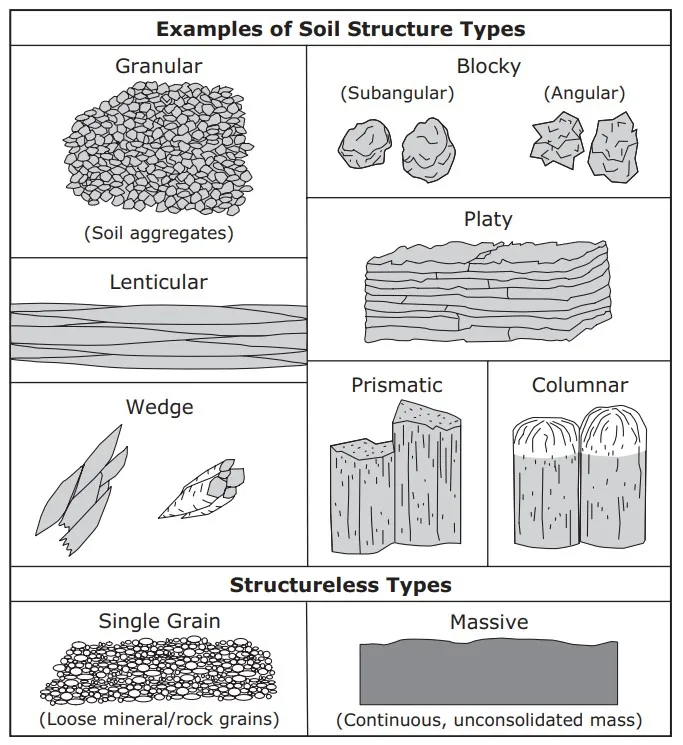
Main types of soil structure
Schematic representation of the main types of soil structure: granular, blocky, platy, prismatic, columnar, and massive. The illustration allows comparison of the shape and arrangement of soil aggregates.
Texture and structure. Total porosity depends on particle size (texture) and their arrangement (structure).
Sandy soils have large particles and, accordingly, large pores. Their total porosity is lower (35–40%), but macropores predominate. Therefore, sand drains quickly and is well aerated, but it retains water poorly (Weil and Brady, 2017).
Clay soils consist of tiny particles that are tightly packed. Their total porosity is high (50–60% and more), but these are mainly micropores. Clay retains a lot of water, but air penetrates it with difficulty. That is why clay soils become waterlogged so easily and suffer from a lack of oxygen (Shukla, 2023).
Structured soils (for example, well-cultivated loam or chernozem) have a granular structure. Large macropores form between the clods (aggregates), and meso- and micropores form inside the clods. Such soil combines good aeration with high water-holding capacity. This is the ideal (Troeh and Thompson, 1993).
How is porosity measured? In the laboratory, porosity is calculated using the formula:
where P is porosity (%), ρb is soil bulk density (mass of dry soil per unit volume, g/cm³), and ρs is particle density (usually about 2.65 g/cm³). For example, if the soil bulk density is 1.3 g/cm³, then porosity = (1 – 1.3/2.65) × 100 ≈ 51% (Shukla, 2023).
In the field, a gardener can estimate porosity indirectly: by how quickly water is absorbed, how easily the soil can be dug, and whether there are cracks and earthworm burrows. If water stands on the surface after rain and the soil underfoot turns into “plasticine,” porosity has been disrupted.
Note. Compaction is the main enemy of porosity. When people walk or drive over soil, macropores are compressed, total porosity falls, and the proportion of micropores increases. This is called “structural degradation.” It can be restored, but slowly—with the help of organic matter, roots, worms, and time (Weil and Brady, 2017).
In the next chapter, we will examine what exactly kills air in the soil—compaction, overwatering, clay, and machinery.

Solar Automatic Drip Irrigation Kit for Gardens
Automate watering for pots, gardens and small greenhouses. This solar-powered system features a timer to help schedule water delivery to your plants.
- Solar-powered
- 15 m irrigation hose
- Programmable watering
Affiliate link · Check included accessories.
5. What kills air in the soil
Air in the soil does not disappear by itself. It is displaced or blocked by several powerful factors that often act together. Understanding these causes is the first step toward restoring the roots’ ability to breathe.

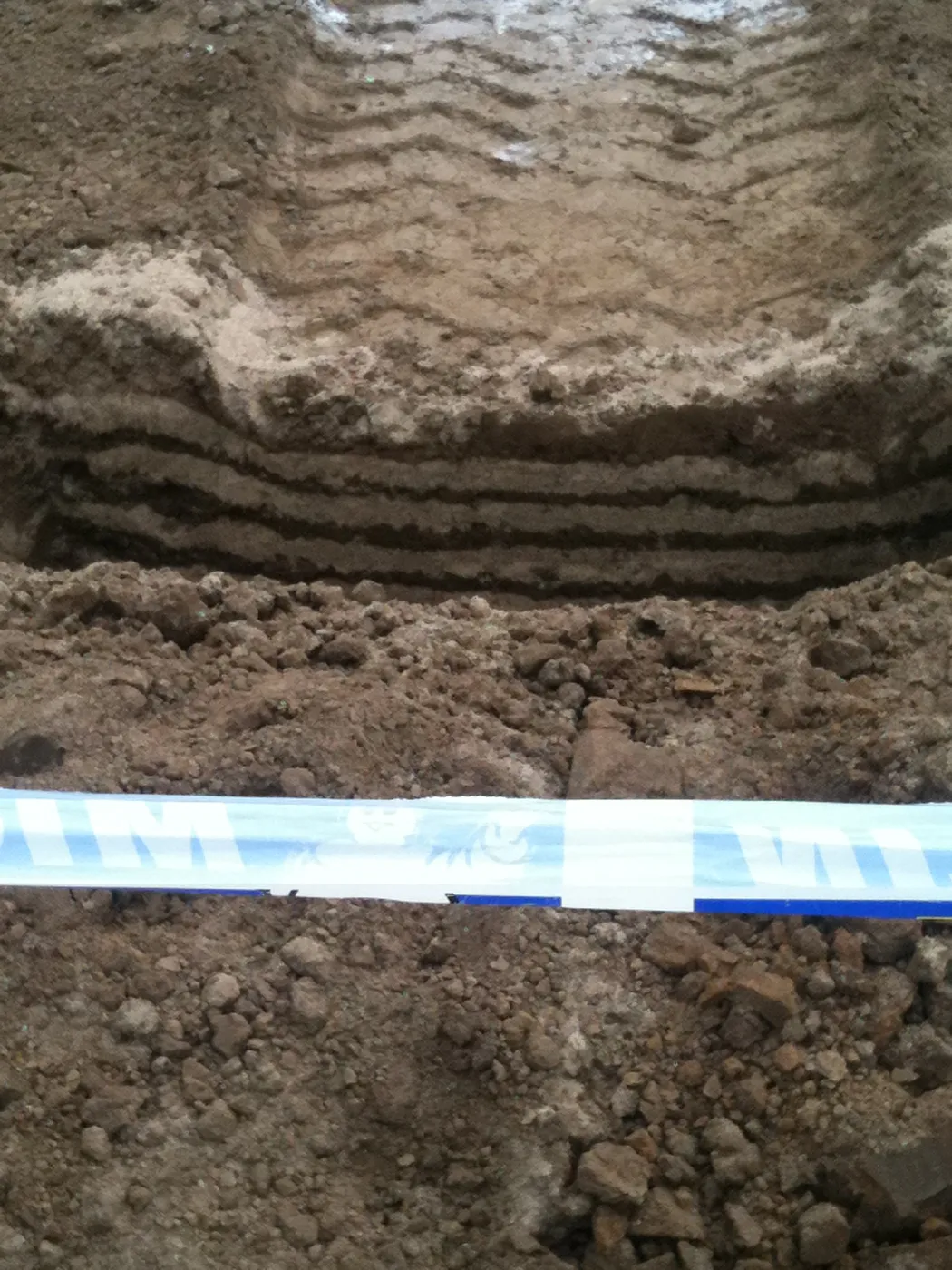
Soil profile after compaction by machinery
Soil cross-section with alternating layers of sand and loess, demonstrating the consequences of machinery passage.
Compaction. This is perhaps the most common and insidious enemy. When people walk over soil, drive a wheelbarrow or tractor over it, or even just stand in one place frequently, solid particles are compressed. Macropores—those very “air channels”—collapse. Total porosity falls, and the remaining pores become small and fill with water. As a result, air cannot penetrate deeper, and carbon dioxide cannot escape (Weil and Brady, 2017).
Note. Compaction is often hidden. Externally, the soil may look normal, but beneath the surface a dense layer forms—a “plow pan” or “plow sole.” It arises from repeated cultivation at the same depth. Roots cannot break through this layer, and plants suffer from drought even with sufficient irrigation (Troeh and Thompson, 1993).
Overwatering and water stagnation. Water and air in the soil are antagonists. The more water in the pores, the less air. After heavy rain or irrigation, water fills all the pores, including macropores, and displaces air. If the water drains quickly (good drainage), air returns. But if drainage is impaired or irrigation is too frequent, water stagnates, and roots remain without oxygen for days and weeks. This is overwatering—not “too much water” but “too little air” (Shukla, 2023).
Clay soils. Clay consists of tiny flat particles that fit tightly against one another. The pores between them are very small—mostly micropores. Water in them is held by surface tension forces, and air almost does not penetrate. Clay soil can be moist yet “suffocated.” It easily puddles after rain, forming a crust that further blocks gas exchange (Weil and Brady, 2017).
Note. Not all clay is the same. Montmorillonite clays (smectites) swell strongly when moistened and shrink when dried. In them, pores either close or open, but overall aeration suffers. Kaolinite clays are less plastic but also transmit air poorly (Shukla, 2023).
Machinery and soil cultivation. Heavy machinery—tractors, walk-behind tractors, even wheelbarrows—puts pressure on the soil. The heavier the machine and the more often it passes over the same place, the stronger the compaction. It is especially dangerous to work on wet soil: water acts as a lubricant, and particles shift even more tightly together. In addition, intensive plowing destroys soil structure, breaks up aggregates, and reduces the content of organic matter that binds particles into clods (Magdoff and van Es, 2009).
Loss of organic matter. Organic matter is the “glue” for soil aggregates and food for worms and microbes. When there is little organic matter, the soil loses its granular structure, macropores disappear, and it becomes dense. That is why depleted, repeatedly dug soils are so poorly aerated. Organic matter also retains water, but it does so differently from clay: it creates large pores and improves drainage (Weil and Brady, 2017).
Surface crust. After heavy rain or irrigation, a dense crust can form on the surface of clayey or silty soil. It blocks air access to the roots, even if the soil beneath it is loose. The crust also increases water runoff, preventing it from being absorbed. This is especially characteristic of soils with low organic matter content (Troeh and Thompson, 1993).
Note. In regions with abundant precipitation or irrigation, the air problem is especially acute. In arid regions, by contrast, the soil may be well aerated but suffer from a lack of moisture. However, even there, overwatering (for example, with careless irrigation) can instantly displace air and cause root rot (Weil and Brady, 2017).
What does this look like in practice? If, after rain, water stands in the bed for more than a few hours, if the soil underfoot squelches or turns into smooth plasticine, if a crust or bluish-gray spots have appeared on the surface—these are signs that the air in the soil has been killed. In the next chapter, we will discuss how this affects plants.
6. Signs of air deficiency
A plant cannot shout “I’m suffocating,” but it sends signals. The problem is that these signals are often confused with other problems—drought, nutrient deficiency, or disease. Understanding what root “suffocation” looks like helps you take action in time.
The wilting paradox. The most deceptive symptom is wilting in moist soil. The gardener sees drooping leaves and thinks, “The plant wants to drink.” They water even more, and the situation worsens. In fact, roots deprived of oxygen cannot function. They do not take up water, even if it is all around them. As a result, the plant wilts as if it were standing in a desert. This is a key diagnostic sign: if the soil is moist and the plant is wilting, the problem is not a lack of water but a lack of air (Weil and Brady, 2017).
Note. With prolonged waterlogging, wilting may give way to complete collapse. Leaves lose turgor, darken, and become as if “cooked.” This is already an irreversible stage, when root cells have died from anoxia and begun to decompose (Taiz et al., 2023).
Yellowing of leaves. Chlorosis—yellowing of the tissue between veins—usually begins with the lower, older leaves. Why? Because the plant tries to survive by redistributing nutrients to young tissues. But if the roots cannot take up nitrogen, magnesium, or iron because of a lack of energy for active transport, even redistribution does not help. The leaves become pale, yellow, and then may turn brown at the edges (Weil and Brady, 2017).
Note. Symptoms of air deficiency often resemble nitrogen deficiency. The difference is that with nitrogen deficiency, yellowing develops slowly and evenly, while with root suffocation it is rapid and often accompanied by wilting. In addition, nitrogen fertilization will not help in this case, because the roots cannot absorb it (Magdoff and van Es, 2009).
Slowed growth and a depressed appearance. The plant stops growing. New leaves are small, stems are thin, and internodes are short. This is a consequence of the energy crisis: without oxygen, cells cannot produce enough ATP for division and elongation. Crops that should be vigorous and green look stunted and lag behind in development (Taiz et al., 2023).
Root rot. If you carefully dig up a plant, you may see that the roots are dark, brown, or black, often soft and slimy. Healthy roots are light-colored, firm, with white tips. Darkening is a sign of tissue death and the onset of anaerobic decomposition. In advanced cases, roots break off easily, and they give off a smell of rot or hydrogen sulfide (the smell of rotten eggs). This is the result of anaerobic bacteria that thrive in an oxygen-free environment (Weil and Brady, 2017).
Note. Smell is an important diagnostic sign. Healthy soil smells of “earth”—this is the smell of actinomycetes. If the soil or roots smell of rot, sourness, or hydrogen sulfide, then anaerobic processes are occurring there, and there is no oxygen (Pavlis, 2020).
Mold and algae on the surface. A green or blue-green film on the soil surface is algae or cyanobacteria. They appear where the soil is constantly moist and deprived of air. A white or gray fuzzy coating is mold, which also prefers anaerobic conditions. These “decorations” are a sure sign that the soil has “suffocated” (Weil and Brady, 2017).
Wet spots and standing water. If, after rain or irrigation, water stands on the surface for more than a few hours, this is a sign that the pores are closed. Water does not go deeper because there is no room—everything is filled with water or compacted. On clay soils this is especially noticeable: water can stand in puddles, and beneath them there is a dense layer that does not let air through (Magdoff and van Es, 2009).
Weak turgor and “cooked” leaves. Unlike drought, when leaves become dry and brittle, with root suffocation they may remain soft but lose their shape. This happens because cells cannot retain water without energy. Leaves may look “cooked”—dark, drooping, with signs of necrosis at the edges (Taiz et al., 2023).
Field diagnosis. If there is doubt, you can perform a simple test. Dig up a small plant and examine the roots. If they are dark, soft, and have an unpleasant smell, it is suffocation. If they are light-colored and firm, the problem is elsewhere. You can also check drainage: dig a hole 30 cm deep, fill it with water, and see how quickly it drains. If the water stands for more than a few hours, drainage is impaired, and air in the soil will be a problem (Chalker-Scott, 2018).
Note. Not all plants are equally sensitive to oxygen deficiency. For example, rice, willow, and bog plants are adapted to waterlogging. Most vegetable crops (tomatoes, cucumbers, peppers, cabbage), however, are extremely sensitive. If there are areas on the plot that are constantly waterlogged, it is better either to improve drainage or to choose crops that tolerate such conditions (Weil and Brady, 2017).
In the next chapter, we will discuss how to improve soil aeration and restore the roots’ ability to breathe.

7-in-1 Wi-Fi Weather Station
Monitor local weather conditions with a wireless outdoor sensor. Track temperature, humidity, rainfall, wind speed and direction, and atmospheric pressure. Ideal for gardens, farms and greenhouses.
- Wireless outdoor sensor
- Solar-powered
- Wi-Fi connectivity
Affiliate link · Check regional compatibility.
7. How to improve aeration

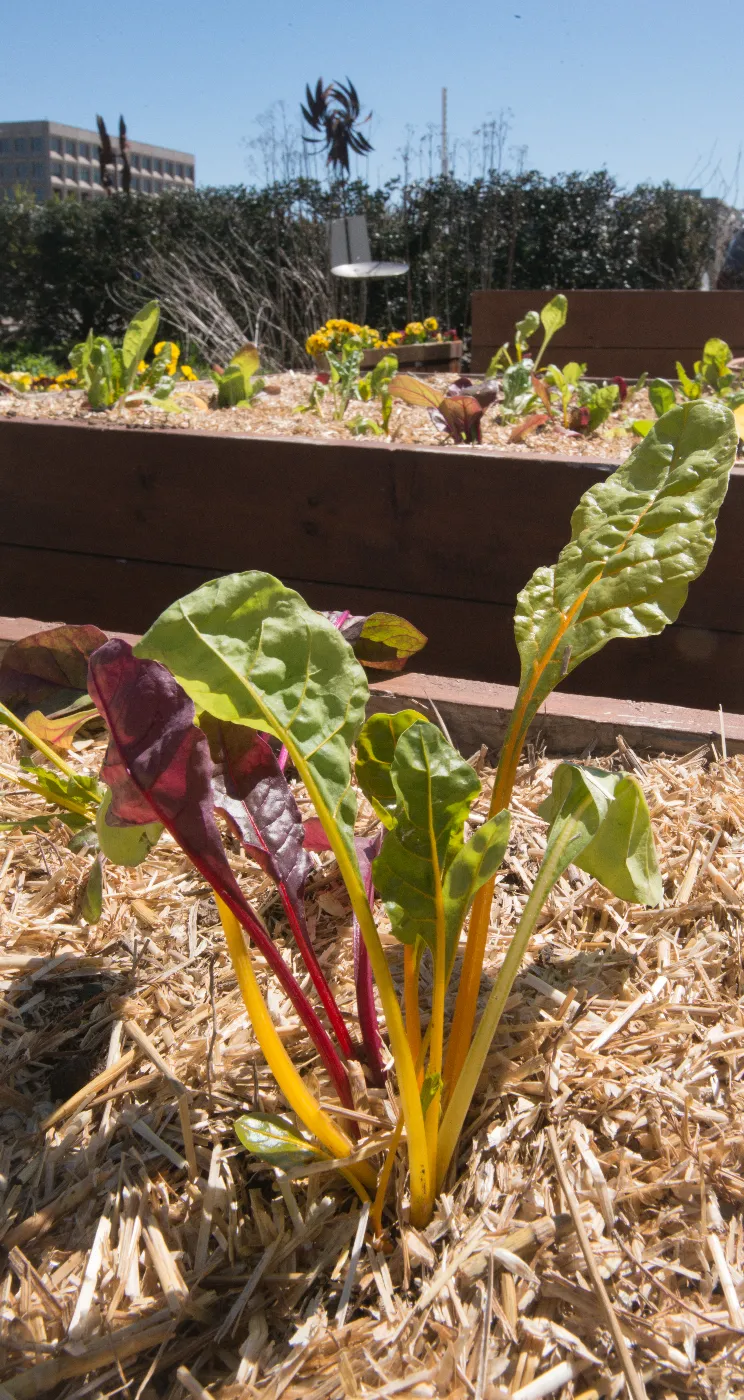
Mulching vegetable beds with straw
Vegetable crops in beds in the People's Garden in Washington, D.C., USA. The soil surface is covered with straw mulch, and cover plants are grown between the crops. Such cover helps retain moisture, regulate soil temperature, reduce weed growth, and protect the surface from crust formation.
Soil aeration is not a one-time measure but the result of ongoing management. If the soil is compacted or waterlogged, air can be returned to it, but it will take time and an integrated approach. The main goal is to restore porosity, especially macropores, and to support the life of soil organisms that themselves create and maintain structure.
Minimum tillage (no-dig, no-till). Traditional digging and plowing increase porosity for a short time but destroy aggregates, earthworm burrows, and fungal hyphae. After a few weeks, the soil settles and becomes more compacted than before. The principle of “no-dig” or minimum tillage preserves natural channels and structure. If the soil must be loosened, forks or broadforks are used to pierce and lift the layer without turning it over (Chalker-Scott, 2018; Lowenfels and Lewis, 2010).
Note. Studies show that switching to no-till increases organic carbon content, improves aggregation, and increases earthworm numbers. This is directly linked to improved aeration (Magdoff and van Es, 2009).
Mulching. Organic mulch (straw, leaves, compost, wood chips) serves several functions: it protects the surface from raindrop impact and crust formation, reduces evaporation, maintains stable moisture, and gradually decomposes, feeding the soil biota. Worms and microorganisms, processing the mulch, create burrows and sticky substances that bind particles into aggregates. Applying a 5–10 cm layer of mulch is one of the most effective ways to improve aeration (Chalker-Scott, 2018; Weil and Brady, 2017).
Note. Mulch from fresh grass or leaves can temporarily tie up nitrogen during decomposition. It is better to use compost or aged mulch, or to add nitrogen fertilizers.

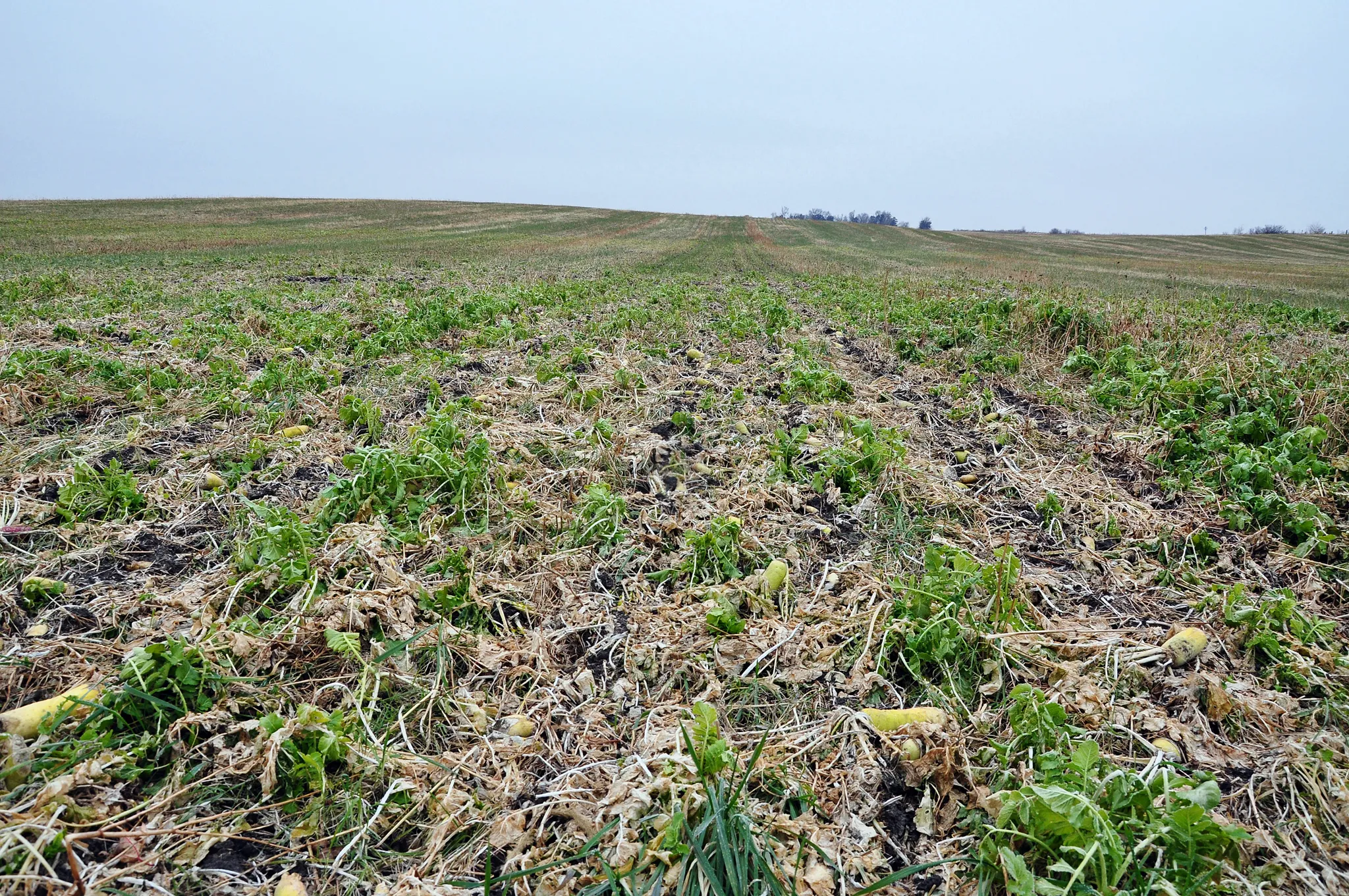
Cover crops for improving soil structure
Sowing a cover crop mixture including oilseed radish (Raphanus sativus) and rye (Secale cereale). The deep root system of the plants helps loosen compacted layers, and dying roots leave channels in the soil for water and air movement. The photograph was taken in Guthrie County, Iowa, USA.
Green manures and cover crops. Deep-rooted plants (oilseed radish, alfalfa, clover, rye, oats) penetrate compacted layers and loosen them. After they die, the roots leave channels filled with organic matter, through which water and air penetrate deeper. In addition, green manures increase organic matter content, which improves structure. They are sown in inter-row spaces or after harvesting the main crop (Magdoff and van Es, 2009; Gershuny and Smillie, 1999).
Compost and organic fertilizers. Applying compost is not only about nutrition but also about improving structure. Compost contains humus, which binds particles into aggregates and creates porosity. Regular addition of compost (a 2–5 cm layer) gradually turns dense clay or loose sand into fertile soil. It is important that the compost be mature; otherwise it may temporarily worsen aeration (Pavlis, 2020; Weil and Brady, 2017).
Supporting earthworms. Worms are the best “engineers” of the soil. They create vertical burrows that drain water and let air through, and their casts (excrement) are rich in organic matter and form water-stable aggregates. For worms to thrive, they need organic mulch, moisture (but not waterlogging), neutral pH, and the absence of toxic chemicals. Vermicompost (the product of organic matter processing by worms) can be applied as an additive (Lowenfels and Lewis, 2010; Gershuny and Smillie, 1999).
Note. In some regions, worms may be absent (for example, in acidic or very dry soils). In such cases, they can be introduced, but only if the conditions are suitable.

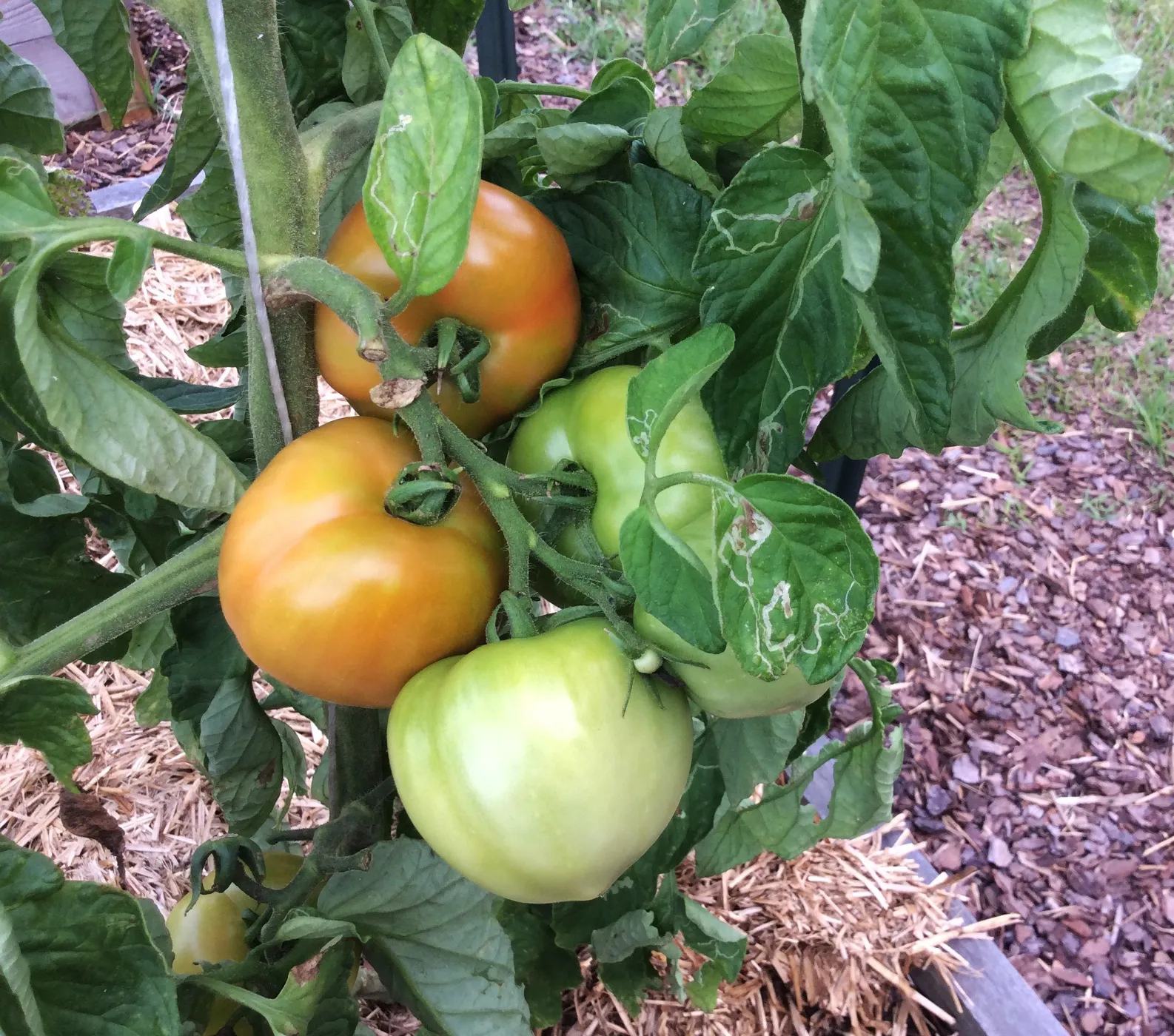
Tomatoes in a raised bed.
The photograph shows tomato bushes with fruits at different stages of ripening. Location: USA (according to the ACES source).
Drainage and combating waterlogging. If the soil suffers from water stagnation, no aeration methods will help until the drainage problem is solved. Options include:
- Raised beds—the simplest method for small plots. A height of 20–30 cm provides roots with a zone free from stagnant water.
- Drainage ditches around the perimeter of the plot or along the beds.
- French drains (underground channels with gravel and pipe)—for serious problems.
- Planting on ridges (for crops sensitive to waterlogging).
- Deep loosening (if there is a dense layer)—but only in dry weather and without turning the layer (Bubel, 2024; Littlewood, 2007).
Proper watering. Overwatering is the main cause of root suffocation in gardens and vegetable plots. Water less often but deeply, so that water goes to a depth of 15–20 cm. It is better to water in the morning so that excess evaporates during the day. Drip irrigation or watering at the root is preferable to overhead irrigation, which compacts the surface and promotes disease. Before watering, check soil moisture: if it feels moist, watering is not needed (Chalker-Scott, 2018; Bubel, 2024).
Note. In regions with abundant precipitation, rain protection may be needed (for example, canopies or tunnels) to avoid waterlogging the soil.
Avoiding compaction. Do not walk on the beds unless necessary. Make permanent paths and keep the beds under mulch. Do not work on the soil when it is wet—this is the most dangerous time for compaction. Use light machinery or hand tools. If you need to walk across, lay down a board to distribute your weight (Magdoff and van Es, 2009; Weil and Brady, 2017).
Regional aspect. In regions with clayey and waterlogged soils, the air problem is most acute. There, drainage, raised beds, and constant addition of organic matter and mulch are needed. In sandy soils, aeration is usually good, but they quickly lose water and nutrients. For them, the main thing is to improve water retention with compost, mulch, and green manures, and not to let them dry out. In arid regions, overwatering during irrigation can instantly displace air, so it is important to follow norms and use drip irrigation.
Conclusion. Improving aeration is a long-term strategy. You should start by abandoning deep digging, adding organic matter and mulch, supporting worms, and watering properly. If the soil is compacted, it will take time for the biota to restore structure. But the result—healthy roots, resilient plants, and a high yield—is worth the effort.
8. Regional aspect: where the air problem is most acute
Soil is not a universal medium. In different climatic zones and on different soil types, the balance between air and water develops differently. Understanding regional characteristics helps the gardener not fight nature but use its strengths and compensate for its weaknesses.
Clayey and waterlogged soils. In regions with heavy clays and high precipitation (for example, the temperate zone with rainy summers, the tropics, and lowlands), the problem of air deficiency is most acute. Clay retains water, macropores quickly fill, and oxygen does not penetrate deeper. In spring, such soils take a long time to dry, and after rain they turn into “plasticine.” In these conditions, it is especially important to:
- Create raised beds (20–30 cm high) so that roots are above stagnant water.
- Add large volumes of organic matter (compost, aged manure, leaf mold)—it loosens clay and creates macropores.
- Use mulch constantly to protect the surface from puddling and crusting.
- Sow deep-rooted green manures (oilseed radish, alfalfa) to loosen the subsoil layer.
- Provide drainage (ditches, French drains, drainage pipes) if water stands for a long time.
- Avoid digging when wet—this increases compaction (Weil and Brady, 2017; Magdoff and van Es, 2009).
Note. In the tropics with abundant rains, nutrient leaching is very rapid. There, it is especially important to maintain a high level of organic matter and mulch the soil year-round to protect it from erosion and preserve porosity (Gershuny and Smillie, 1999).
Sandy soils. At first glance, there is always enough air in sand: large particles, large pores, fast drainage. But this coin has another side—water drains too quickly, and nutrients are washed out with it. Roots in sandy soil may suffer not from suffocation but from drought. In addition, sandy soils are poor in organic matter, and their structure is weak. To improve the situation:
- Add compost and aged organic matter—it increases water retention and creates aggregates.
- Use mulch to reduce evaporation.
- Use drip irrigation and water more often but in smaller portions.
- Sow green manures (for example, lupine, clover) to accumulate organic matter and nitrogen.
- Do not let the soil dry out: in sand, even a short drought is destructive to roots (Chalker-Scott, 2018; Weil and Brady, 2017).
Note. In sandy soils, overwatering is also possible, but it drains quickly. However, if the underlying layer is clayey or compacted, water may stagnate at the boundary, creating “perched” moisture. In that case, roots can still suffocate (Shukla, 2023).
Arid regions. Here the main problem is a lack of water, but overwatering during irrigation can also instantly displace air. Under conditions of high temperatures and low humidity, water evaporates quickly, but if you water too often and too abundantly, roots can suffer from anoxia. It is important to:
- Water less often but deeply, so that water reaches the roots rather than spreading over the surface.
- Use drip irrigation and mulch to save water.
- Choose drought-resistant crops and varieties.
- Add organic matter to increase water-holding capacity (especially in sandy soils) (Bubel, 2024; Littlewood, 2007).
Cold regions. In spring, the soil warms slowly, snow melts, and water may stagnate. Clayey and waterlogged soils in such conditions remain cold and wet for especially long. This delays planting and creates a risk of root suffocation. The following help:
- Raised beds and ridges for better drainage and warming.
- Mulch in spring can slow warming, so it is better to apply it after the soil has warmed.
- Drainage ditches to remove meltwater.
- Choosing cold-resistant crops and early varieties (Bubel, 2024).

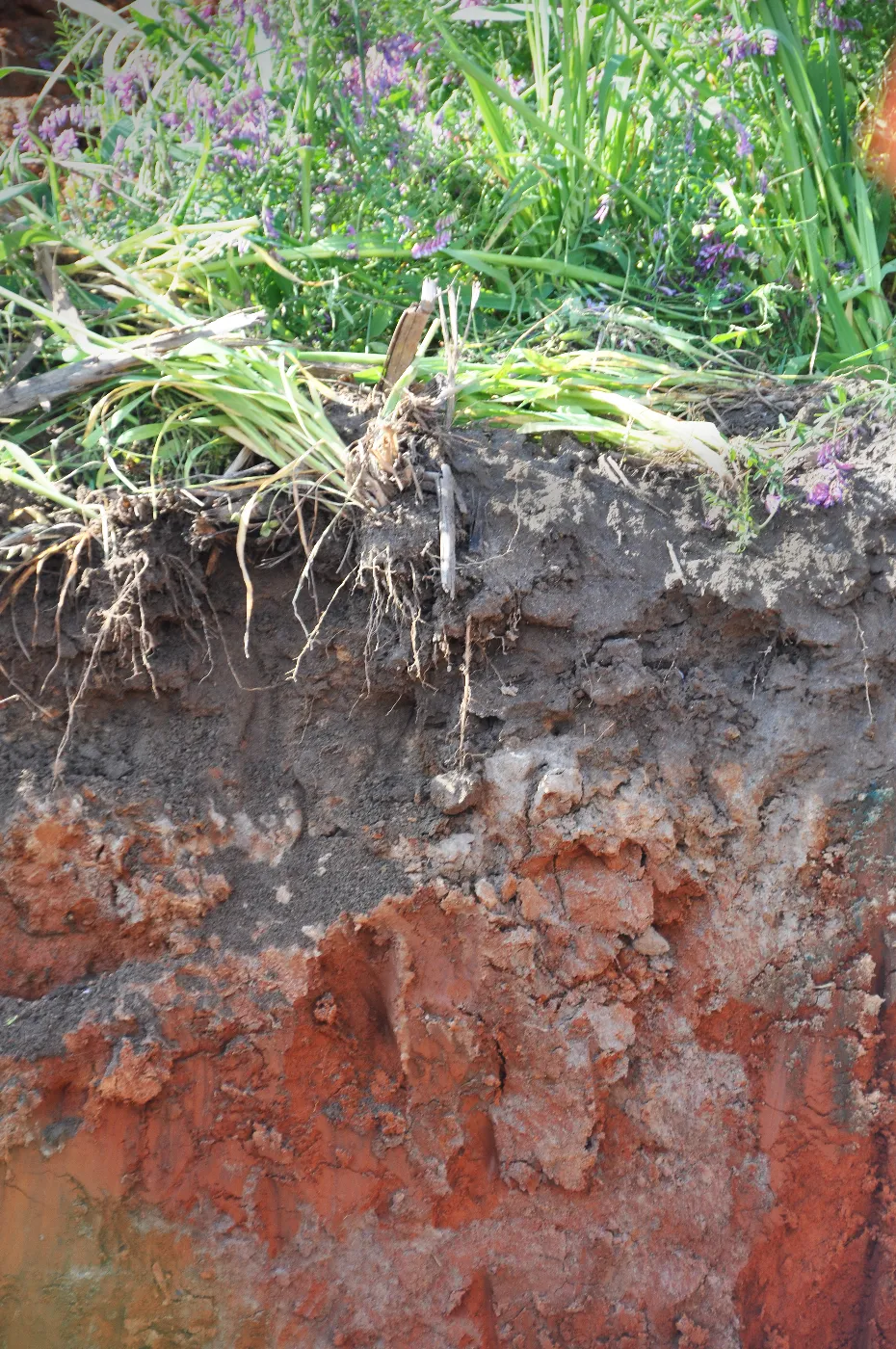
Soil profile at a site with cover crops
South Carolina, USA. An example of using plant cover to maintain soil structure and protect the surface from degradation.
A universal principle. Regardless of region, the key to good aeration is soil structure. Where there are aggregates, macropores, and life (worms, microbes, roots), air penetrates even heavy soils. Where structure is destroyed, even sand can become dense. Therefore, the strategy is the same: minimum disturbance, maximum organic matter, constant mulch, and sensible watering.

40W Full Spectrum LED Grow Light
Support healthy plant growth with full-spectrum LED lighting. Ideal for seedlings, indoor plants and small growing spaces. A practical solution for indoor gardening and year-round cultivation.
- Full-spectrum LED
- Energy-efficient design
- Indoor plant growing
Affiliate link · Check actual power and light coverage.
9. Conclusion: without air in the soil, roots do not work
We have examined why air in the soil is not a luxury but a necessity. Roots breathe, consuming oxygen and releasing carbon dioxide. This gas must be removed, and oxygen must enter. All this happens through pores that are filled with either air or water. The more water, the less air. Overwatering is not “too much water” but “too little air”—this is how the key idea should be remembered.
When there is not enough air, roots stop working: they cannot take up water and nutrients, even if those are present in excess. The plant wilts, turns yellow, lags in growth, and its roots rot. This is not a disease but a consequence of suffocation. And treating it with fertilizers or additional watering is useless—you need to return air to the soil.
This can be done in various ways: abandon deep digging, mulch, add compost, sow green manures, support worms, ensure drainage, and water properly. In clayey and waterlogged soils, these measures are especially important, but sandy and arid regions also have their own nuances. The main thing is to remember that soil is a living system, and air in it is just as much a resource as water and nutrients.
Note. Healthy roots are light-colored, firm, with white tips. If they are dark, soft, and smell of rot, it means the soil has “suffocated.” In this case, aeration must be improved urgently; otherwise the plant will die (Pavlis, 2020).
Without air in the soil, roots do not work. Without working roots, there is no harvest. Therefore, caring for porosity and gas exchange is the foundation of successful gardening and vegetable growing, regardless of where your plot is located.
References
- (2014). ‘Soil’, in Agroecology. : CRC Press, 108-123. doi: 10.1201/b17881-13
- (2015). ‘Summary’, in Ingram, D.S., Vince-Prue, Daphne, Gregory, P.J. (ed.) Science and the Garden. The scientific basis of horticultural practice. West Sussex, UK: Royal Horticulture Society. Wiley Blackwell, pp. 75-85.
- Ahmed, Niaz, Masood, Sajid, Ahmad, Shakeel, Bashir, Safdar, Hussain, Sajjad, Hassan, Waseem, Khandekar, R.Islam, Hussain, Baqir, Ali, M.Arif (2019). ‘Soil Management for Better Crop Production and Sustainable Agriculture’, in Agronomic Crops. Singapore: Springer Singapore, 47-71. doi: 10.1007/978-981-32-9783-8_4
- Bubel, Nancy, Nick, Jean (2024). ‘Moving Plants Outdoors’, in The New Seed-Starters Handbook. : Rodale, .
- Capon, Brian (2022). ‘How Plants Function’, in Botany for Gardeners. An Introduction to the Science of Plants. Portland, Oregon: Timber Press, pp. 144-192.
- Chalker-Scott, Linda (2015). ‘The Underground Railroad’, in How Plants Work. Portland, London: Timber Press, pp. 38-59.
- Chalker-Scott, Linda (2018). ‘Soil Preparation and Protection’, in The Science of Gardening. Course Guidebook. Chantilly, Virginia: The Great Courses, pp. 73-80.
- Chalker-Scott, Linda (2018). ‘The Truth about Mulch’, in The Science of Gardening. Course Guidebook. Chantilly, Virginia: The Great Courses, pp. 81-89.
- Connor, D.J., Loomis, R.S., Cassman, K.G. (2011). ‘Soil resources’, in Crop Ecology. Productivity and Management in Agricultural Systems. Cambridge, UK: Cambridge University Press, pp. 159-194.
- George, Eckhard, Horst, W.J., Neumann, Elke (2012). ‘Adaptation of Plants to Adverse Chemical Soil Conditions’, in Marschner's Mineral Nutrition of Higher Plants. : Elsevier, 409-472. doi: 10.1016/B978-0-12-384905-2.00017-0
- Gershuny, Grace, Smillie, Joe (1999). ‘Soil Management Practices’, in The Soul of Soil. A Soil-Building Guide for Master Gardeners and Farmers. Vermont: Chelsea Green Publishing, .
- Gershuny, Grace, Smillie, Joe (1999). ‘Understanding the Soil Ecosystem’, in The Soul of Soil. A Soil-Building Guide for Master Gardeners and Farmers. Vermont: Chelsea Green Publishing, .
- Hemenway, Toby (2009). ‘Bringing the Soil to Life’, in Gaia's Garden. A Guide To Home-Scale Permaculture. : Chelsea Green Publishing, .
- Johnson, Noelle (2023). ‘Planting Basics for Dry Regions’, in Dry Climate Gardening. Beverly, MA: Cool Springs Press, .
- Johnson, Noelle (2025). ‘Building Drought-Resistant Soil’, in The Water-Smart Garden. Beverly, MA: Cool Springs Press, .
- Littlewood, Michael (2007). ‘The Ground’, in The organic gardener's handbook. Ramsbury, Wiltshire: The Crowood Press, pp. 59-102.
- Lowenfels, Jeff, Lewis, Wayne (2010). ‘Classic Soil Science’, in Teaming with Microbes. The Organic Gardener’s Guide to the Soil Food Web. Portland, Oregon: Timber Press, .
- Morgan, Sally (2021). ‘Building a healthy soil’, in The Healthy Vegetable Garden: A natural, chemical-free approach to soil, biodiversity and managing pests and diseases. Vermont, London, UK: Chelsea Green Publishing, .
- Nonnecke, Libner (1989). ‘Soils’, in Vegetable production. New York, USA: Van Nostrand Reinhold, pp. 44-65.
- Pavlis, Robert (2020). ‘Solving Soil Problems’, in Soil Science for Gardeners. Working with Nature to Build Soil Health. Gabriola Island, BC, Canada: New Society Publishers, pp. 97-178.
- Pavlis, Robert (2020). ‘Understanding Soil’, in Soil Science for Gardeners. Working with Nature to Build Soil Health. Gabriola Island, BC, Canada: New Society Publishers, pp. 9-96.
- Shukla, M.K. (2023). ‘Airflow through the Vadose Zone’, in Soil Physics. An Introduction. Boca Raton, FL: CRC Press, pp. 287-296.
- Shukla, M.K. (2023). ‘Characteristics of Soils of the Vadose Zone’, in Soil Physics. An Introduction. Boca Raton, FL: CRC Press, pp. 23-54.
- Taiz, Lincoln, Møller, I.Max, Murphy, Angus, Zeiger, Eduardo (2023). ‘Water Balance of Plants’, in Plant Physiology and Development. New York, NY: Oxford University Press, pp. 169-188.
- Troeh, F.R., Thompson, L.M. (1993). ‘Soil’, in Soil and Soil Fertility. New York, NY: Oxford University Press, pp. 1-14.
- Weil, R.R., Brady, N.C. (2017). ‘The Soils Around Us’, in The Nature and Properties of Soils. Essex, UK: Pearson Education, pp. 19-50.
- vanStraalen, N.M. (2023). ‘The Selective Environment of the Soil’, in Soil Invertebrates. Boca Raton: CRC Press, 1-35. doi: 10.1201/9780429172830-1
- Вальков, В.Ф., Казеев, К.Ш., Колесников, С.И. (2004). ‘Состав и свойства почв [Soil composition and properties]’, in Почвоведение [Soil science]. Москва - Ростов-на-Дону: МарТ, pp. 9-170.
- Траннуа, Павел (2018). ‘Перекопка или распашка [Digging or plowing]’, in Сад и огород в рисунках и комиксах: полная наглядная энциклопедия [The Garden and Vegetable Patch in Drawings and Comics: A Comprehensive Visual Encyclopedia]. Москва: Издательство «Э», pp. 73-79.
- Траннуа, Павел (2018). ‘Почва участка [Site soil]’, in Сад и огород в рисунках и комиксах: полная наглядная энциклопедия [The Garden and Vegetable Patch in Drawings and Comics: A Comprehensive Visual Encyclopedia]. Москва: Издательство «Э», pp. 16-22.
