
Photosynthesis in Plain Language
1. What Photosynthesis Is: In Simple Terms
Photosynthesis is the process by which plants make their own food from light, water, and carbon dioxide. The name comes from the Greek words “photo” (light) and “synthesis” (putting together)—literally “putting together with light” (Capon, 2022).
Unlike animals, which must search for ready-made food, plants can produce it themselves. They are autotrophs—organisms that “feed themselves” (Capon, 2022). To do this, they need only sunlight, water from the soil, and carbon dioxide from the air.
The importance of photosynthesis is hard to overestimate. It is the only process on Earth that converts the energy of sunlight into the energy of chemical bonds in organic substances (Tretyakov et al., 2000). Everything we eat from plants—lettuce leaves, carrot roots, tomato fruits, wheat grain—is directly or indirectly the result of photosynthesis. Even the meat and milk of animals ultimately trace back to plants that grazed in meadows and ate hay.
It is important to understand: photosynthesis is not just “sugar production.” It is the foundation of all life on our planet. Plants bind about 100 billion tons of carbon each year, releasing into the atmosphere the oxygen we breathe (Tretyakov et al., 2000). Without photosynthesis, there would be no food chains and no oxygen atmosphere on Earth.
For a gardener, understanding photosynthesis is the key to understanding why some plants grow well and others poorly, why there is less harvest in shade and more in sun, and how to help plants realize their potential.
2. What Is Needed: Light, Water, Carbon Dioxide

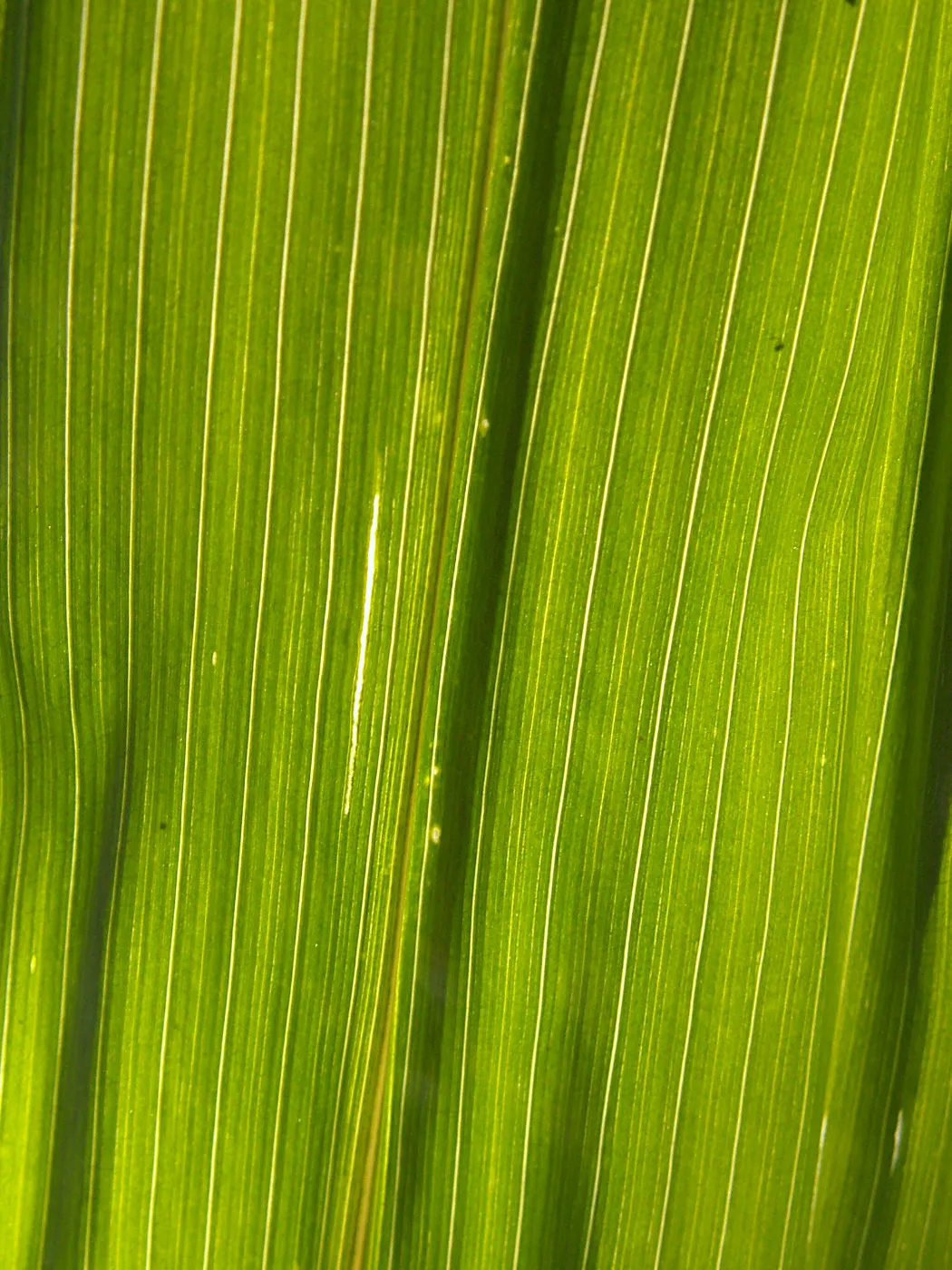
Sunlight passing through a maize leaf
Sunlight passes through a maize (Zea mays) leaf, emphasizing its translucent structure.
For photosynthesis, a plant needs three main components: light, water, and carbon dioxide. Each plays its own unique role.
Light is the source of energy. Plants capture it with special pigments, the main one being chlorophyll (Hopkins and Hüner, 2009). Light energy launches a chain of chemical reactions in which water is split and its electrons are passed along a special chain of carriers. This process is called the light-dependent stage of photosynthesis (Medvedev, 2012). Light intensity directly affects the rate of photosynthesis: the more light, the more active the process—up to a certain limit, after which saturation occurs (Hopkins and Hüner, 2009).
Water enters the plant through the roots from the soil. It rises through the xylem vessels upward to the leaves, where it is used for photosynthesis (Bidlack and Jansky, 2021). For the plant, water is not only a source of hydrogen for building sugar molecules but also the medium in which all biochemical reactions take place. In addition, water is necessary for maintaining turgor—the internal pressure that gives leaves and stems their firmness (Capon, 2022).
Carbon dioxide (CO2) is absorbed by the plant from the air through microscopic openings on the leaf surface—stomata (Hopkins and Hüner, 2009). Carbon dioxide is the source of carbon from which the skeleton of sugar molecules is built. The concentration of CO2 in the atmosphere is small—about 0.04%—but this is enough for normal photosynthesis (Medvedev, 2012). Interestingly, when the concentration of carbon dioxide in the air increases, the rate of photosynthesis in many plants increases—this effect is used in greenhouses to increase yields (Tretyakov et al., 2000).
The overall equation of photosynthesis looks like this:
6CO2 + 12H2O → C₆H₁₂O₆ + 6O2 + 6H2O

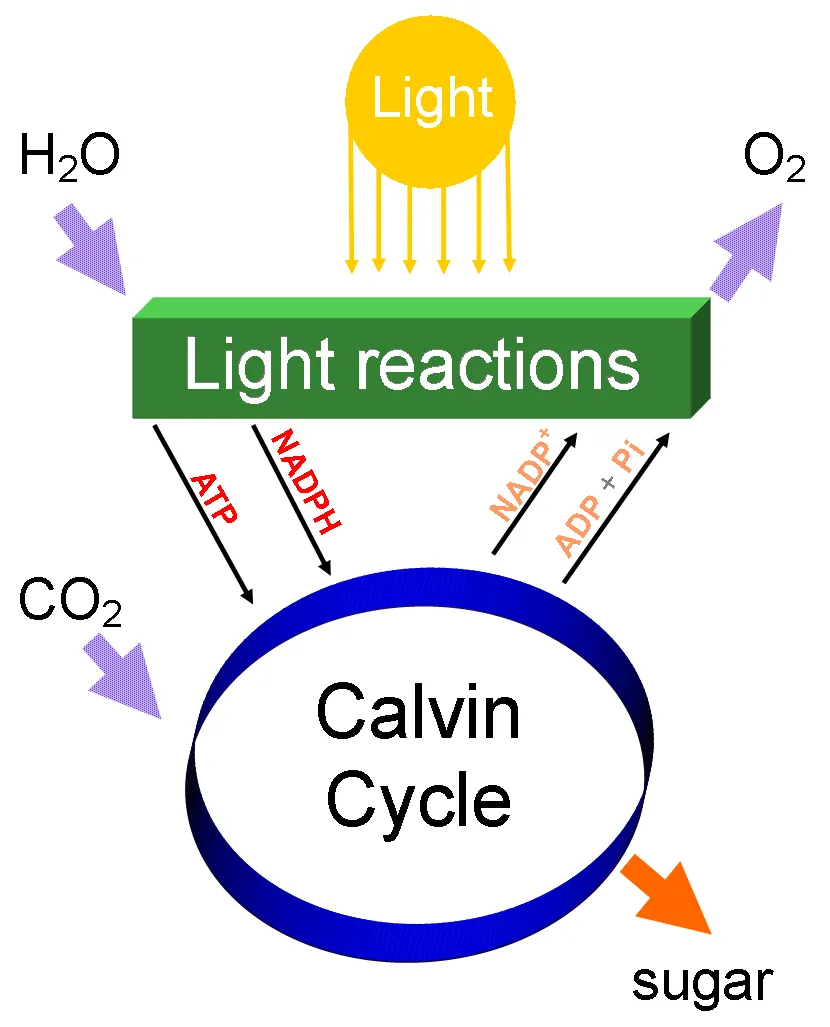
Photosynthesis — conversion of light energy
Simple diagram of photosynthesis showing the participation of light, water, and carbon dioxide in the formation of organic substances and the release of oxygen.
This means that six molecules of carbon dioxide and twelve molecules of water are converted into one molecule of glucose, six molecules of oxygen, and six molecules of water (Hopkins and Hüner, 2009; Medvedev, 2012). Note: the oxygen released into the atmosphere is formed from water, not from carbon dioxide. This was proven in experiments with the heavy isotope of oxygen back in the 1940s (Tretyakov et al., 2000).
All three components must be available to the plant at the same time. If there is not enough light, the process stops. If the stomata are closed because of drought, carbon dioxide cannot enter the leaf. If the roots cannot absorb water, photosynthesis also slows down. That is precisely why it is so important to provide plants with balanced conditions—we will talk about this in the following sections.


LCD 4-in-1 Soil Tester
Check essential growing conditions with one compact tool. Measure soil pH, moisture, temperature and light intensity — ideal for gardens, potted plants and greenhouses.
- 4-in-1 measurement
- Easy-to-read LCD display
- Portable design
Affiliate link · For indicative measurements only.
3. What Is Produced: Sugars and Oxygen
The main product of photosynthesis is sugars. The first to form is glucose—a simple sugar consisting of six carbon atoms. From it, the plant can build more complex sugars, such as sucrose (the very sugar we put in tea), or store it as starch (Capon, 2022). These sugars serve as the source of energy for all processes of the plant’s life: root growth, bud break, fruit filling.
But sugars are not only “fuel.” From them, the plant creates almost everything it needs: cellulose for cell walls, pectins, fats, proteins, and even aromatic substances (Medvedev, 2012). Everything we eat from plants—sweet fruits, starchy tubers, juicy root vegetables—is the result of processing sugars created in photosynthesis. Even the proteins and fats in sunflower or soybean seeds ultimately trace back to the same sugars.
The second most important product is oxygen. It is released into the atmosphere as a by-product of water splitting. For the plant, oxygen is a “production waste,” but for us and all animals, it is a vitally necessary gas (Tretyakov et al., 2000). It was photosynthesis that billions of years ago saturated Earth’s atmosphere with oxygen and made the existence of complex life forms possible.
Practical takeaway for the gardener: everything a plant accumulates in fruits, root vegetables, leaves, or grain is derived from sugars created in the leaves. Therefore, the more active photosynthesis is, the more “building material” the plant receives and the higher the potential yield.
4. Where It Happens: In Leaves, In Chloroplasts
Photosynthesis takes place in the green parts of the plant, but its main “workshop” is the leaves. They are the flat solar panels that capture light (Hopkins and Hüner, 2009). Inside the leaf is a special tissue—mesophyll—consisting of cells packed with chloroplasts.
The chloroplast is a microscopic organelle that can be compared to a tiny factory. On the outside it is surrounded by a double membrane, and inside it contains stacks of thylakoids (grana) and the stroma—a jelly-like medium (Medvedev, 2012). In the thylakoid membranes are chlorophyll and other pigments that capture light. In the stroma, reactions take place that convert carbon dioxide into sugars. We will examine these two stages—light-dependent and light-independent—in more detail in the following sections.
The leaf is structured to use light as efficiently as possible. Above and below it is covered by the epidermis—a transparent skin that protects the internal tissues but lets light through. Beneath the upper skin are palisade cells—they are tightly packed and contain the most chloroplasts, because this is where the main part of the sun’s rays arrives. Below are the cells of the spongy tissue—between them are air cavities through which carbon dioxide circulates (Capon, 2022).

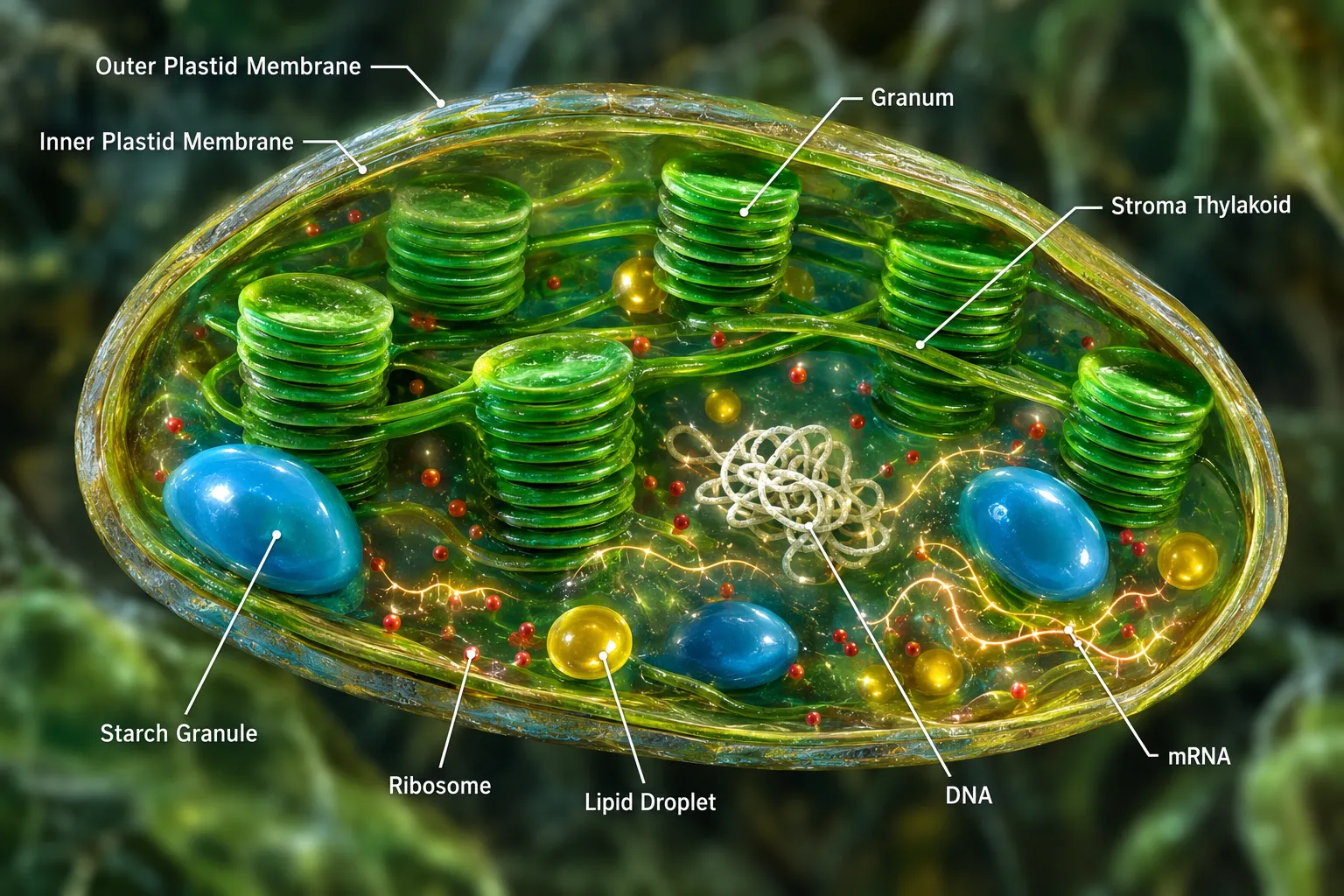
Ultra-realistic 3D diagram of the structure of a plant cell chloroplast
Volumetric microscopic visualization of a chloroplast in section. The diagram shows the outer and inner plastid membranes, stroma thylakoids, grana stacks, and internal contents—ribosomes, lipid droplets, starch grains, DNA and mRNA molecules.

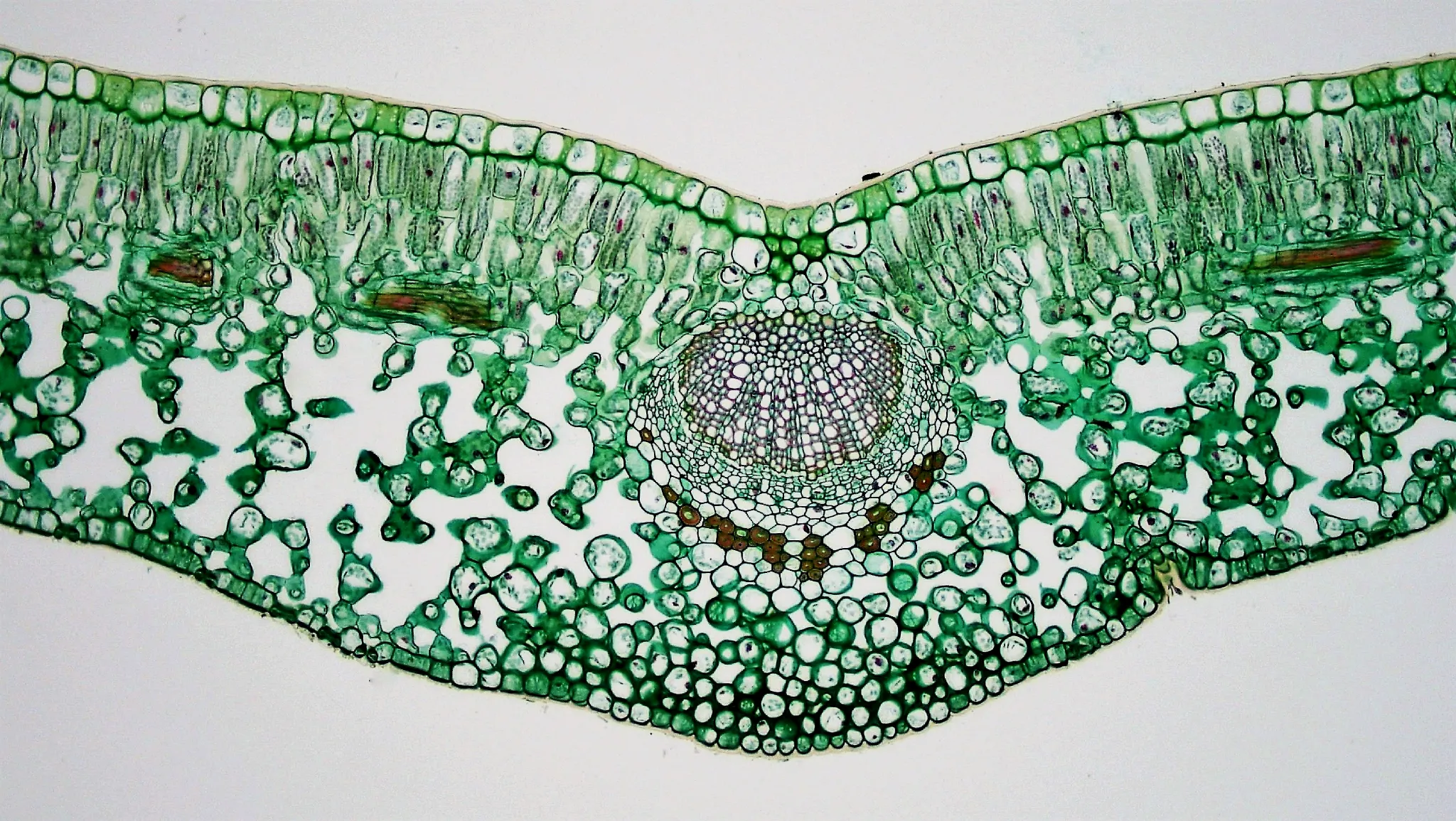
Transverse section of a mesophytic privet (Ligustrum) leaf
Histological preparation of a privet leaf (100x magnification), which is a typical mesophyte. It demonstrates the massive development of covering tissues (epidermis), clear differentiation of the photosynthetic mesophyll, and a large vascular bundle of the midrib.

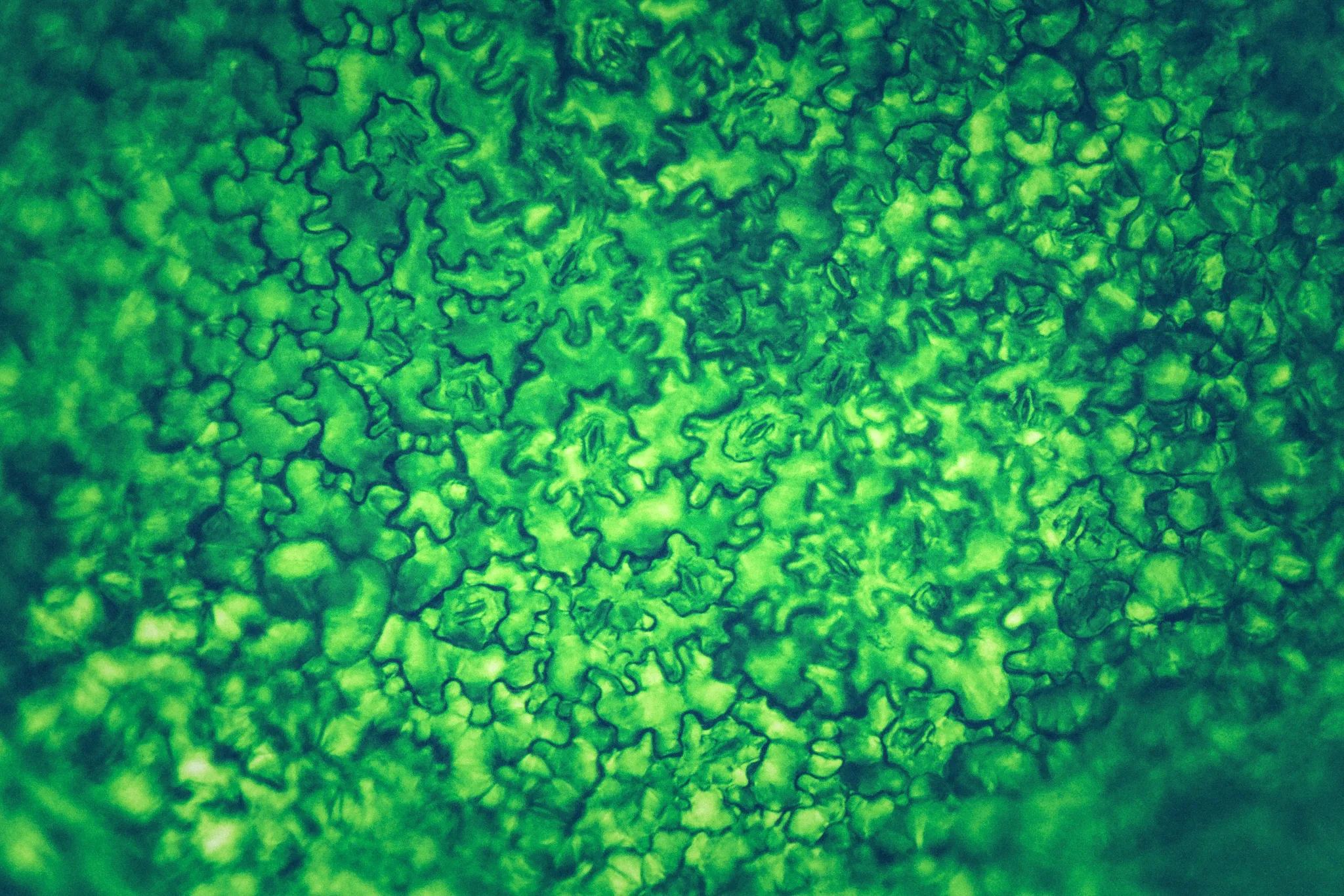
Stomata on the leaf surface — organs of gas exchange
Micrograph of the leaf epidermis showing cells of the covering tissue and stomata. Gas exchange between the plant and the environment and water evaporation occur through stomata. This image complements the explanation of gas exchange but does not directly show cellular respiration or mitochondria.
On the underside of the leaf are stomata—microscopic pores through which carbon dioxide enters and oxygen and water vapor exit. Stomata can open and close depending on conditions: for example, on a hot dry day they close to prevent water loss, but then the access of carbon dioxide into the leaf stops, and photosynthesis slows down (Bidlack and Jansky, 2021).
Practical takeaway for the gardener: a healthy, clean, well-lit leaf is the main “factory” for producing the harvest. Dust on leaves, damage by diseases or pests, and shading all reduce the efficiency of photosynthesis and, consequently, the future harvest.

Solar Automatic Drip Irrigation Kit for Gardens
Automate watering for pots, gardens and small greenhouses. This solar-powered system features a timer to help schedule water delivery to your plants.
- Solar-powered
- 15 m irrigation hose
- Programmable watering
Affiliate link · Check included accessories.
5. Why Leaves Are Green
The green color of leaves is not an accident but a direct consequence of the work of chlorophyll. Chlorophyll is a pigment that absorbs light in the blue and red regions of the spectrum but hardly absorbs green light. Green rays are reflected from the leaf and reach our eyes—that is why we see leaves as green (Capon, 2022; Hopkins and Hüner, 2009).
This seems illogical: why would a plant reflect light that could be useful? The answer lies in evolution. The solar spectrum is broad, and chlorophyll is “tuned” to those wavelengths that most effectively trigger photochemical reactions. Green light is less efficient for photosynthesis, so the plant “declines” it (Medvedev, 2012). In addition, if leaves absorbed all light, they would overheat and receive excess energy, which could damage the photosynthetic apparatus.

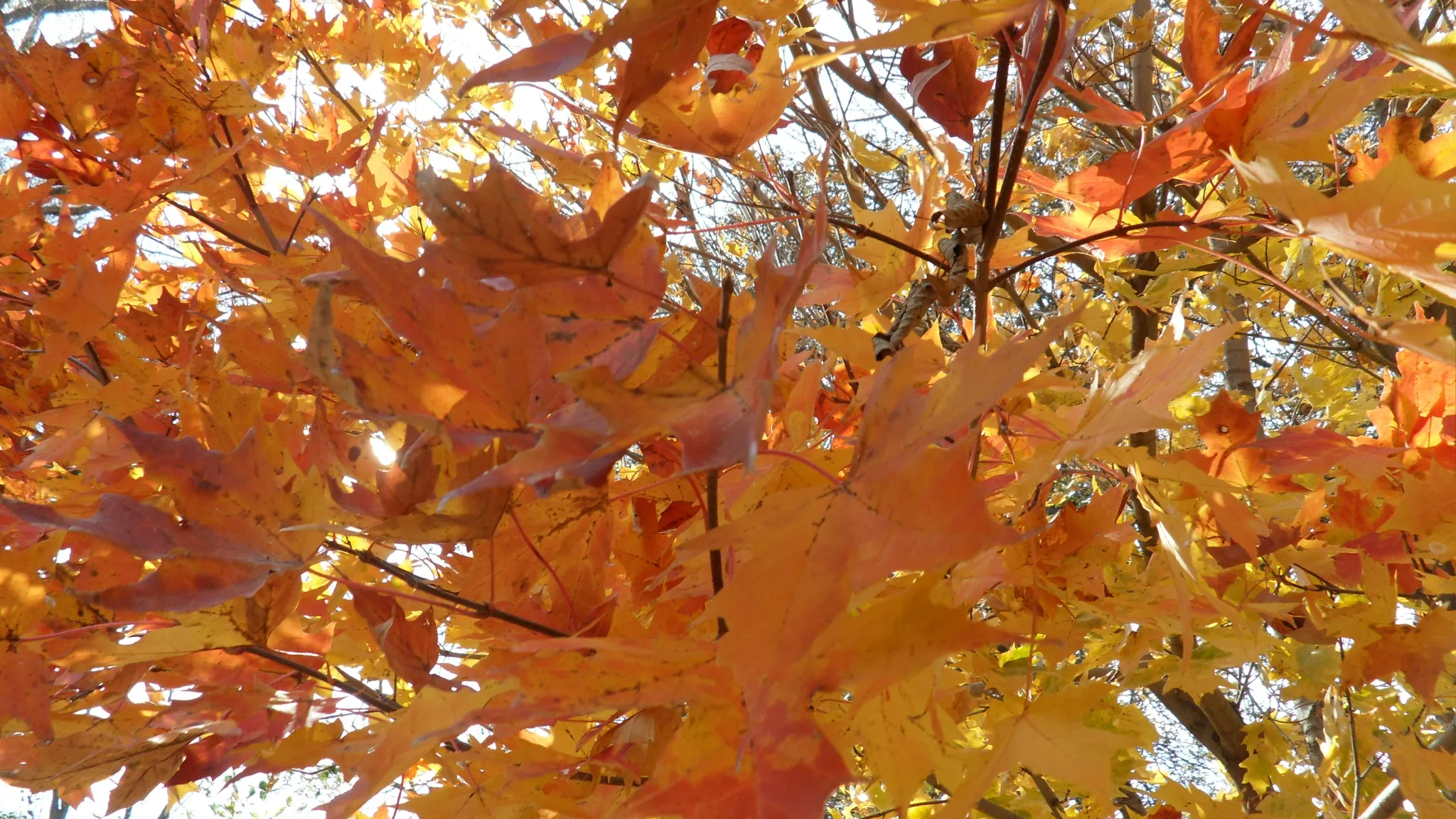
Autumn coloration of sugar maple leaves (Acer saccharum)
Leaves of sugar maple (Acer saccharum) acquire bright autumn coloration. A good illustration of changes in the ratio of plant pigments and the appearance of yellow, orange, and red hues as chlorophyll breaks down.
It is important to know that chlorophyll is not the only pigment in the leaf. Besides it, there are carotenoids—yellow and orange pigments. They also participate in photosynthesis, capturing light in the blue-green part of the spectrum and protecting chlorophyll from excess energy (Capon, 2022). Usually their color is unnoticeable because green chlorophyll “masks” them. But in autumn, when chlorophyll breaks down, carotenoids become visible—they are what give leaves their yellow and orange coloration (Capon, 2022).
Some leaves also contain anthocyanins—red and purple pigments. They do not participate directly in photosynthesis but can protect young leaves from excess light and attract pollinators (Capon, 2022). It is anthocyanins that give the red color to autumn leaves of maples and redbuds.
Practical takeaway for the gardener: leaf color is an indicator of plant health. Pale green leaves may signal a deficiency of nitrogen or iron, which are necessary for chlorophyll synthesis. Yellowing between veins often indicates a lack of magnesium—the central atom in the chlorophyll molecule (Bidlack and Jansky, 2021). By observing leaf color, you can notice a problem in time and adjust plant nutrition.
6. What Affects the Rate of Photosynthesis: Light, Temperature, Water, Nutrition
The rate of photosynthesis is the amount of carbon dioxide a plant assimilates per unit of time. This indicator depends on many factors, and understanding their influence helps the gardener create optimal conditions for plants.
Light. This is the main “trigger” factor. At low light, photosynthesis is slow, but as light intensity increases, its rate grows. However, this growth is not infinite: at a certain light level, light saturation occurs, when further increases in light no longer accelerate the process (Hopkins and Hüner, 2009). This threshold differs among plants: light-loving crops such as corn and sunflower saturate at high light levels, while shade-tolerant ones, such as ferns and hostas, do so at low levels (Tretyakov et al., 2000). Not only the quantity but also the quality of light matters: red and blue rays are most effective for photosynthesis (Medvedev, 2012).
Temperature. Photosynthesis is a chain of enzymatic reactions, and enzymes are sensitive to temperature. At too low a temperature, reactions slow down; at too high a temperature, enzymes can be destroyed. For most crops of the temperate climate, the optimum is 20–25 °C; for heat-loving crops (corn, sorghum), it is 30–35 °C (Tretyakov et al., 2000). It is important to note that at high temperatures the plant begins to lose more water through transpiration, the stomata close, and the access of carbon dioxide into the leaf stops—photosynthesis is inhibited (Hopkins and Hüner, 2009).
Water. Without water, photosynthesis is impossible: it supplies electrons for the light-dependent stage. But water also has an indirect influence. When a plant experiences a moisture deficit, it closes its stomata to conserve water. This stops the inflow of carbon dioxide, and photosynthesis slows down long before the soil is completely dry (Bidlack and Jansky, 2021). That is why even a short drought can reduce the harvest.
Mineral nutrition. Photosynthesis requires not only light, water, and CO2 but also nutrients. Nitrogen is part of chlorophyll molecules and of the enzymes involved in photosynthesis. Magnesium is the central atom of chlorophyll. Iron is necessary for chlorophyll synthesis, although it is not part of it. With a deficiency of these elements, leaves turn yellow, and photosynthesis declines (Bidlack and Jansky, 2021). Phosphorus and potassium are also important: they participate in energy transfer and regulation of stomatal function.
Practical takeaway for the gardener: the rate of photosynthesis is an integral indicator affected by everything: light, temperature, soil and air humidity, and nutrient supply. It is impossible to achieve a high harvest by providing only one factor. For example, even with ideal lighting, a plant will not photosynthesize at full capacity if it lacks water or nitrogen. Conversely, with excess fertilizer but insufficient light, nutrition will not help. Balance is the key to success.

7-in-1 Wi-Fi Weather Station
Monitor local weather conditions with a wireless outdoor sensor. Track temperature, humidity, rainfall, wind speed and direction, and atmospheric pressure. Ideal for gardens, farms and greenhouses.
- Wireless outdoor sensor
- Solar-powered
- Wi-Fi connectivity
Affiliate link · Check regional compatibility.
7. Photosynthesis and Yield: More Light—More Sugars—More Fruits

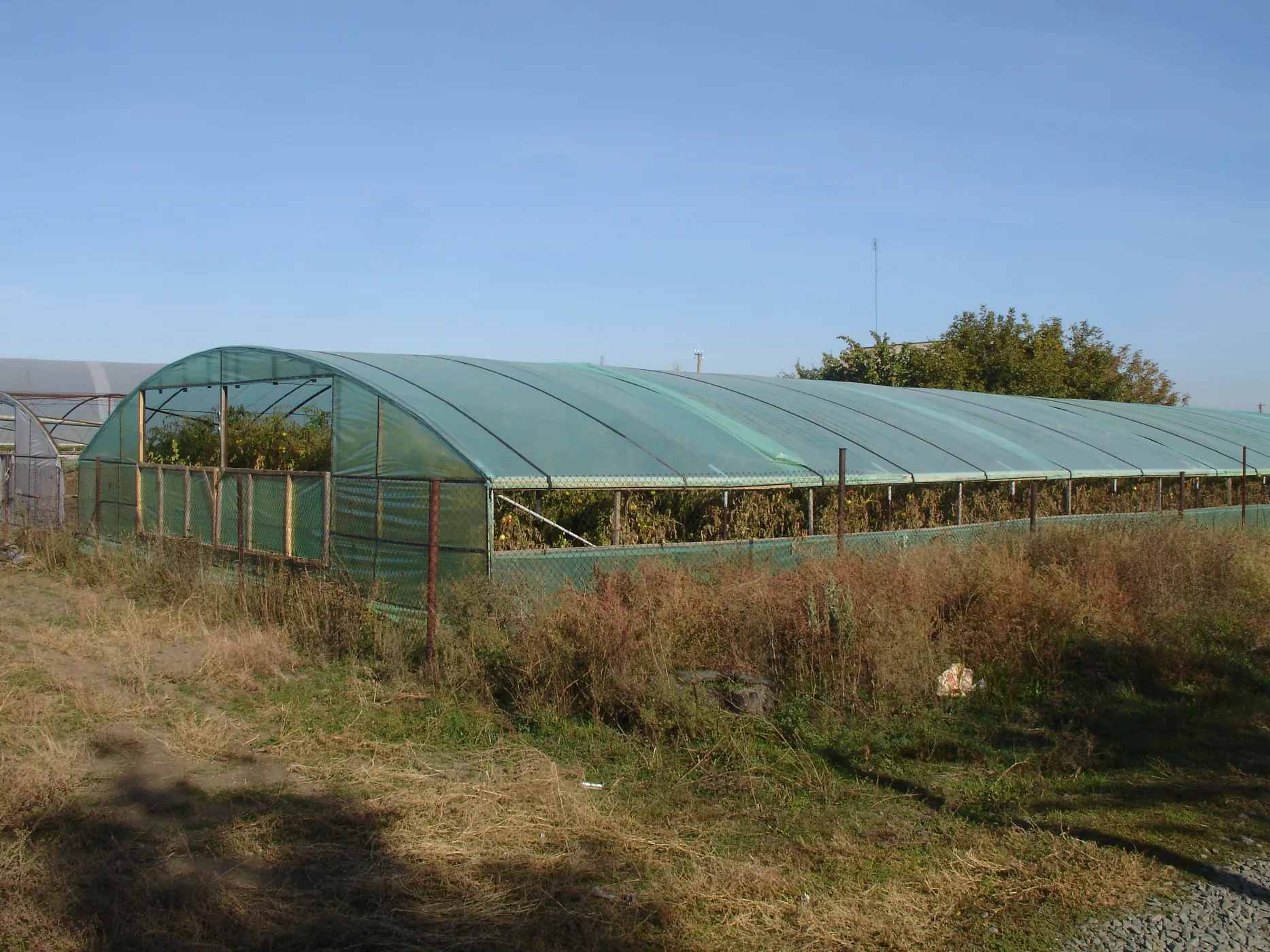
Growing tomatoes in a greenhouse (Solanum lycopersicum)
A greenhouse with cultivated tomatoes (Solanum lycopersicum). The photograph illustrates the practical importance of photosynthesis for growing vegetable crops and obtaining a harvest. Location: Chebachiy farmstead, Semikarakorsky District, Rostov Oblast, Russia.
The harvest we gather is a direct consequence of photosynthesis. Every fruit, every tuber, every grain consists of substances created in the leaves. The more sugars are formed in photosynthesis, the more building material the plant can direct toward forming the harvest (Tretyakov et al., 2000).
The connection here is direct: more light—more photosynthesis—more sugars—more fruits. However, this dependence is not infinite. When there are too many leaves, they begin to shade each other. The lower leaves receive little light, their photosynthesis weakens, and they may even consume more sugars for respiration than they produce (Tretyakov et al., 2000). Therefore, for each crop there is an optimal leaf area index—the leaf area per unit of soil area at which the harvest is maximal (Medvedev, 2012).
It also matters where the created sugars go. The plant distributes them among different organs: part goes to root growth, part to the formation of new leaves, and part to fruit filling. During the ripening period, it is important that as many assimilates (products of photosynthesis) as possible go specifically to fruits, root vegetables, or grain. The gardener can help this, for example, by removing excess ovaries or side shoots so that the plant does not waste energy on unnecessary shoots (Capon, 2022).
Interestingly, in some crops the harvest depends not only on current photosynthesis but also on reserves accumulated earlier. For example, in an apple tree, part of the sugars going into the fruits comes from the leaves, and part from reserves in the wood. But overall the rule remains unchanged: the more efficiently the photosynthetic apparatus works, the higher the yield potential.
Practical takeaway for the gardener: to get the maximum harvest, you need to provide plants with sufficient light throughout the season, especially during flowering and fruit filling. Do not allow plantings to become excessively dense—thinning and crown formation help light reach every leaf.
8. What Hinders It: Shade, Dust on Leaves, Diseases, Water Deficiency
Even with ideal care, photosynthesis can decline under the influence of unfavorable factors. Let us consider the main ones.
Shade. Shading is one of the main enemies of the harvest. When leaves are in shade, they receive less light, and photosynthesis slows down. The lower leaves in dense plantings suffer especially. They not only fail to produce sugars but also consume them for respiration, becoming “freeloaders” (Tretyakov et al., 2000). Solution: timely thinning, proper pruning of trees and shrubs, and choosing a location with consideration for light.
Dust on leaves. A layer of dust on the leaf surface blocks light, preventing it from reaching the chloroplasts. This is especially relevant in arid regions or near roads. Dust can also clog stomata, disrupting gas exchange (Capon, 2022). Solution: periodically spray plants with water (preferably in the morning so the leaves have time to dry before night), but do not do this in the hot midday to avoid burns.

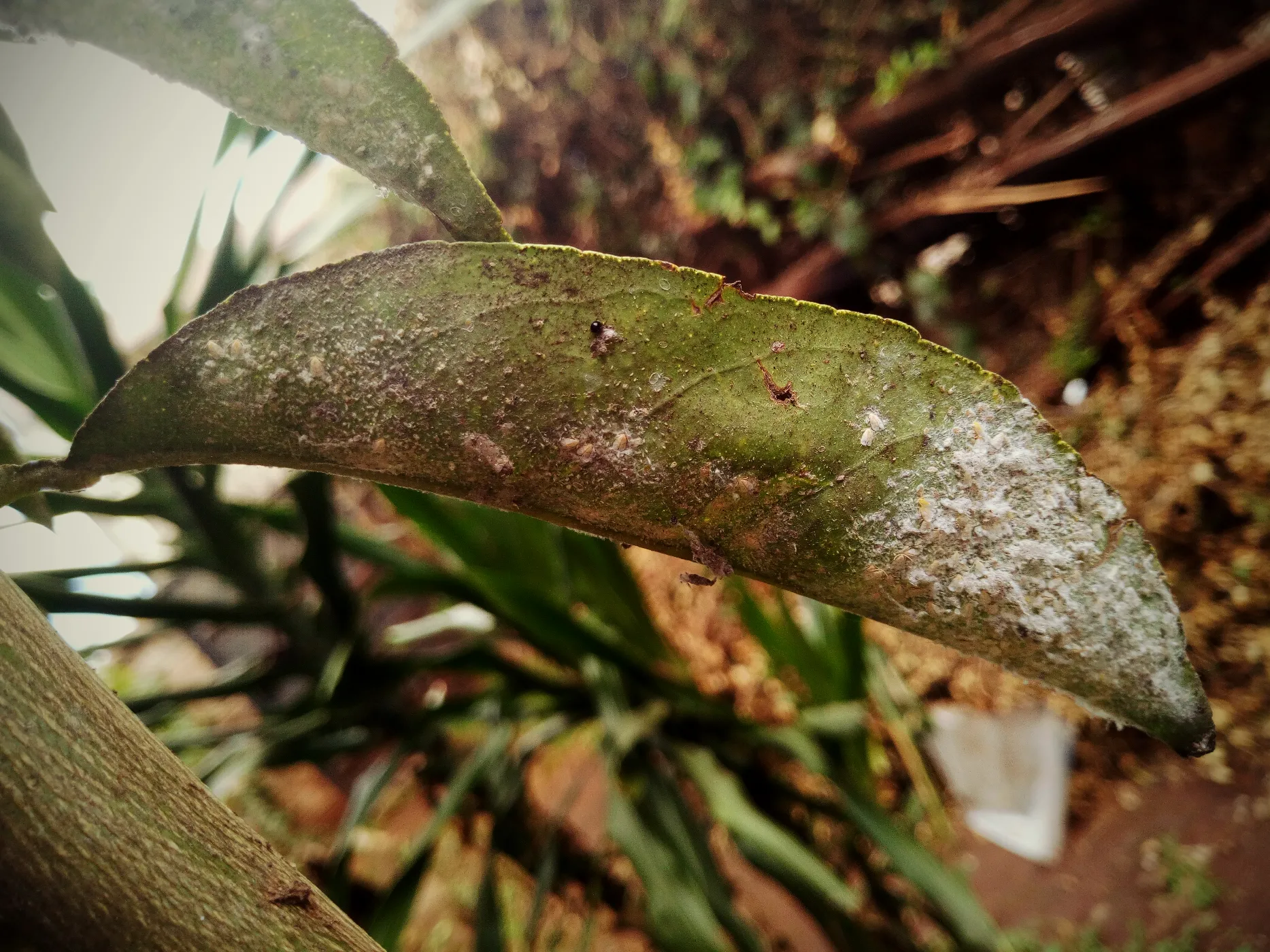
Powdery mildew on the leaf surface
A plant leaf affected by powdery mildew. The white fungal coating covers part of the leaf surface, interferes with normal illumination, and reduces the efficiency of photosynthesis.
Diseases. Fungal and bacterial infections damage leaves, destroy chlorophyll, and disrupt stomatal function. For example, powdery mildew covers the leaf with a white coating that blocks light. Rust and leaf spots kill cells, reducing the area of photosynthetic surface (Bidlack and Jansky, 2021). Solution: prevention (proper watering, ventilation, crop rotation), timely treatment with approved products, and removal of affected leaves.
Water deficiency. When a plant experiences a lack of moisture, it closes its stomata to reduce water loss. But along with water vapor, oxygen exits through the stomata and carbon dioxide enters. As soon as the stomata close, the access of CO2 stops, and photosynthesis stops (Bidlack and Jansky, 2021). Even a short drought can lead to yield loss. Solution: regular watering, mulching the soil to conserve moisture, and choosing drought-resistant varieties.
Practical takeaway for the gardener: protecting leaves from shade, dust, diseases, and dehydration is not just “caring for beauty” but a direct investment in the harvest. A healthy, clean, well-lit leaf is the guarantee of active photosynthesis and high fruit quality.

40W Full Spectrum LED Grow Light
Support healthy plant growth with full-spectrum LED lighting. Ideal for seedlings, indoor plants and small growing spaces. A practical solution for indoor gardening and year-round cultivation.
- Full-spectrum LED
- Energy-efficient design
- Indoor plant growing
Affiliate link · Check actual power and light coverage.
9. Regional Aspect: In a Cloudy Climate There Is Little Light, So Other Techniques Are Needed; In a Hot Climate Photosynthesis Is Inhibited
Photosynthesis depends on climate, and in different regions of the world gardeners face different limitations. Understanding these features helps choose the right growing strategy.

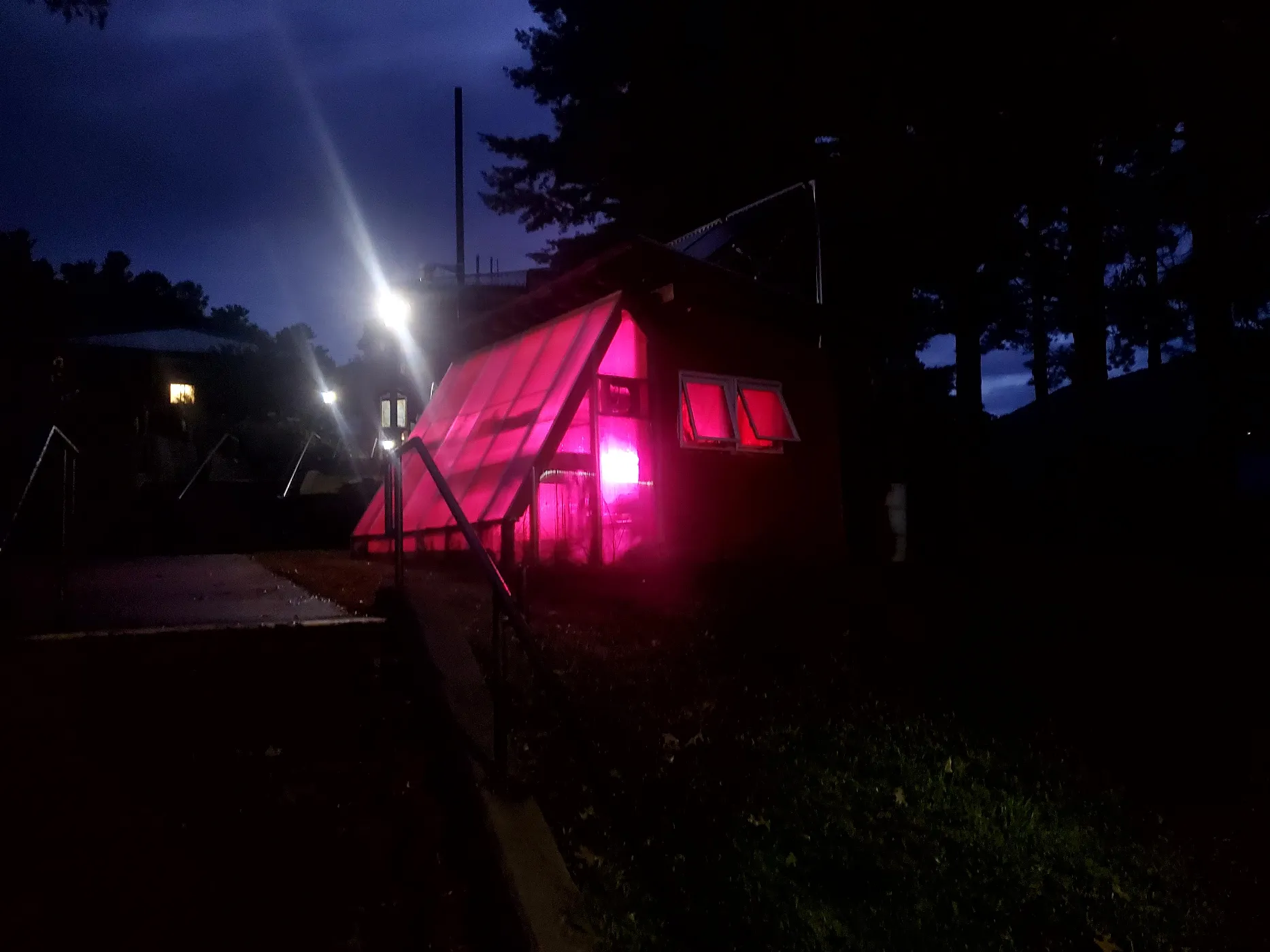
Pink glow of grow lamps in a greenhouse early in the morning
Cloudy climate (temperate latitudes, northern regions, zones with frequent cloudiness). Here the main problem is lack of light. Under such conditions, plants receive less solar energy, and photosynthesis proceeds more slowly (Hopkins and Hüner, 2009). This is especially noticeable in winter and early spring, when daylight is short and the sky is often overcast. What can be done?
First, choose crops and varieties adapted to low light. Shade-tolerant plants such as lettuce, spinach, radish, and some greenhouse tomato varieties tolerate light deficiency better (Tretyakov et al., 2000).
Second, make maximum use of available light: place beds on open southern slopes, avoid shading by buildings and trees, and use reflective materials (for example, white mulch or reflective screens in greenhouses).
Third, in greenhouses and hotbeds, artificial supplemental lighting can be used—grow lights with a predominance of red and blue spectrum (Tretyakov et al., 2000). This is especially effective for seedlings and greenhouse vegetable crops.

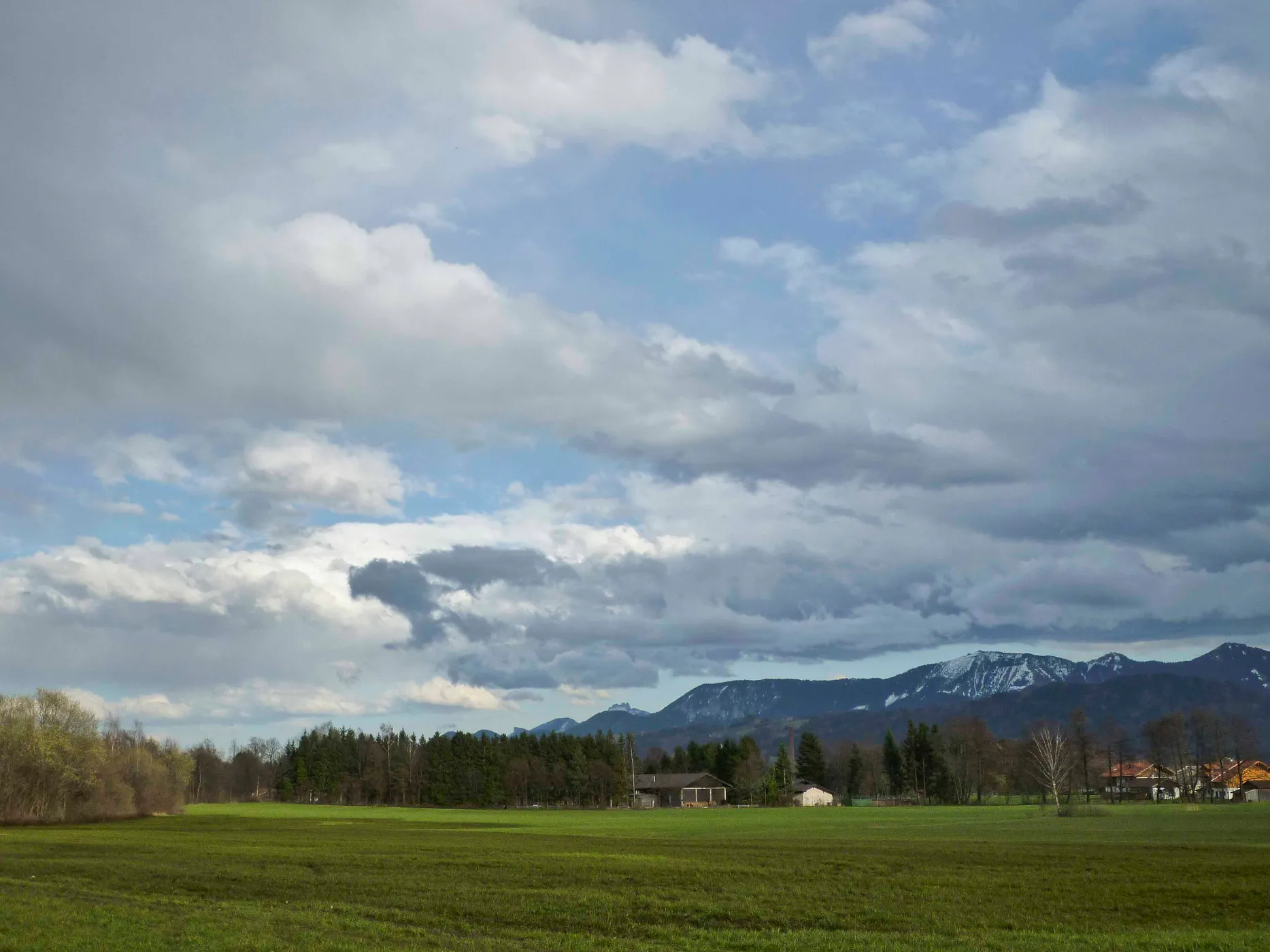
Dried and cracked surface of a temporary water body (vlei) in the Sossusvlei area, Namibia
Hot climate (tropics, subtropics, arid zones). Here the problem is the opposite: excess light and high temperatures. At temperatures above 30–35 °C, the enzymes involved in photosynthesis begin to work less efficiently, and the stomata close to save water—this inhibits the inflow of carbon dioxide (Tretyakov et al., 2000). As a result, photosynthesis slows down even though there is plenty of light.
What to do? First, provide plants with enough water—regular watering, drip irrigation, mulching. Second, use shading during midday hours: shade nets, planting tall “umbrella” crops (for example, corn or sunflower) to protect delicate plants. Third, choose heat-resistant crops and varieties: sorghum, okra, sweet potato, and some tomato and pepper varieties (Rubatzky and Yamaguchi, 1997).
It is important to remember: plants from different climatic zones have different temperature optima for photosynthesis. Plants of the temperate climate photosynthesize best at 20–25 °C; heat-loving plants at 30–35 °C (Tretyakov et al., 2000). Therefore, when choosing crops for your region, you should focus not only on familiar agronomic techniques but also on the biological characteristics of the plants.
Practical takeaway for the gardener: in a cloudy climate, fight for every ray of light; in a hot climate, fight for every drop of water and protection from overheating. There is no universal recipe, but understanding how climate affects photosynthesis helps make the right decisions.
10. Conclusion: Photosynthesis Is the Basis of the Entire Harvest
Photosynthesis is the foundation on which all gardening and agriculture rests. Everything we grow—from a modest radish to a giant pumpkin—is the result of converting sunlight into the chemical energy of organic substances. The plant is the only “producer” on Earth that creates food from inorganic components: water, carbon dioxide, and mineral elements (Tretyakov et al., 2000).
Understanding photosynthesis gives the gardener a powerful tool. Knowing what a plant needs for active photosynthesis—light, water, carbon dioxide, optimal temperature, and sufficient nutrition—you can purposefully create conditions for a high harvest. Conversely, knowing what hinders it—shade, dust, diseases, drought—you can eliminate these obstacles in time.
It is important to remember: photosynthesis is a process that goes on continuously, but its intensity changes during the day, the season, and the life of the plant. Young leaves photosynthesize more actively than old ones, morning is often more productive than midday, and the period of flowering and fruit filling is a critically important time for maximum sugar accumulation.
For the practical gardener, this means several simple rules. Provide plants with maximum light—choose the right location and shape the crown. Maintain an optimal water regime—water regularly, but do not allow waterlogging. Monitor leaf health—protect them from diseases and pests and remove dust. Do not forget about nutrition—nitrogen, magnesium, and iron are necessary for chlorophyll; phosphorus and potassium for energy processes. And take climate into account—in a cloudy region, fight for light; in a hot one, for water and protection from overheating.
Photosynthesis is not an abstract scientific concept but a daily process that determines what the harvest will be. By understanding it, the gardener stops being merely an observer and becomes an active participant in creating the future harvest. Everything we eat from plants is the result of photosynthesis. And everything we can do to increase the harvest is to help plants photosynthesize as efficiently as possible.
References
- (2015). ‘The plant body: structure and function’, in Ingram, D.S., Vince-Prue, Daphne, Gregory, P.J. (ed.) Science and the Garden. The scientific basis of horticultural practice. West Sussex, UK: Royal Horticulture Society. Wiley Blackwell, pp. 14-36.
- Amthor, J.S. (1994). ‘Respiration and Carbon Assimilate Use’, in Boote, K.J., Bennett, J.M., Sinclair, T.R., Paulsen, G.M. (ed.) Physiology and Determination of Crop Yield. Florida, USA: American Society of Agronomy, Crop Science Society of America, Soil Science Society of America, pp. 221-250.
- Bhargava, A., Srivastava, S. (2013). ‘Stress tolerance.’, in Quinoa: botany, production and uses. Wallingford: CABI, 103-127. doi: 10.1079/9781780642260.0103
- Bidlack, J. E., Jansky, S. H. (2021). ‘Water in Plants’, in Stern's Introductory Plant Biology. New York: McGraw-Hill Education, pp. 143-161.
- Capon, Brian (2022). ‘How Plants Function’, in Botany for Gardeners. An Introduction to the Science of Plants. Portland, Oregon: Timber Press, pp. 144-192.
- Capon, Brian (2022). ‘The Structure and Growth of Plants’, in Botany for Gardeners. An Introduction to the Science of Plants. Portland, Oregon: Timber Press, pp. 11-87.
- Chalker-Scott, Linda (2015). ‘Transform Sunlight into Sugar’, in How Plants Work. Portland, London: Timber Press, pp. 84-105.
- Eash, N.S., Sauer, T.J., O'Dell, D., Odoi, Evah (2016). ‘Soil Biological Properties’, in Soil Science Simplified. New Jersey: Wiley Blackwell, ch. 4.
- Evert, R.F. (2006). ‘Structure and Development of the Plant Body — An Overview’, in Esau's Plant Anatomy: Meristems, Cells, and Tissues of the Plant Body: Their Structure, Function, and Development. Hoboken, New Jersey, USA: John Wiley & Sons, Inc., pp. 1-13.
- Ghorbel, Mouna, Brini, F., Brestic, Marian, Landi, Marco (2023). ‘Interplay between low light and hormone-mediated signaling pathways in shade avoidance regulation in plants’, Plant Stress, 9(0), 100178. doi: 10.1016/j.stress.2023.100178
- Griffiths, Michael (2026). ‘Getting Started’, in The Easy Garden. New York, NY: Penguin Random House, .
- Hopkins, W.G., Hüner, N.P..A. (2009). ‘Energy Conservation in Photosynthesis: CO2 Assimilation’, in Introduction to Plant Physiology. Hoboken, NJ: John Wiley & Sons, pp. 129-150.
- Hopkins, W.G., Hüner, N.P..A. (2009). ‘Energy Conservation in Photosynthesis: Harvesting Sunlight ’, in Introduction to Plant Physiology. Hoboken, NJ: John Wiley & Sons, pp. 109-128.
- Johnson, Noelle (2023). ‘Choosing the Right Plants for Hot, Arid Regions’, in Dry Climate Gardening. Beverly, MA: Cool Springs Press, .
- Lambers, Hans, Oliveira, R.S. (2019). ‘Photosynthesis, Respiration, and Long-Distance Transport: Photosynthesis’, in Plant Physiological Ecology. Cham: Springer International Publishing, 11-114. doi: 10.1007/978-3-030-29639-1_2
- Martin, Orin (2019). ‘Getting Started’, in Fruit Trees for Every Garden. New York: The Speed Press, ch. 1.
- Pratt, M.M. (2005). ‘Muck, Magic and Molecules’, in Practical Science for Gardeners. Portland, Oregon: Timber Press, pp. 8-19.
- Rubatzky, V.E., Yamaguchi, Mas (1997). ‘Environmental Factors Influencing the Growth of Vegetables’, in World Vegetables. Boston, MA: Springer US, pp. 59-80. doi: 10.1007/978-1-4615-6015-9_6
- Westwood, M.Neil (1993). ‘General Environment’, in Temperate-zone. Pomology. Physiology and Culture. Portland, Oregon: Timber Press, pp. 29-47.
- Zona, Scott (2026). ‘Plant Parts and What They Do’, in A Gardener's Guide to Botany. Beverly, MA: Cool Springs Press, .
- Zona, Scott (2026). ‘What a Plant Needs: Light’, in A Gardener's Guide to Botany. Beverly, MA: Cool Springs Press, .
- Медведев, С.С. (2012). ‘Фотосинтез [Photosynthesis]’, in Физиология растений [Physiology of plants]. Санкт-Петербург: БХВ-Петербург, pp. 33-100.
- Третьяков, Н.Н. (2000). ‘Рост и развитие растений [Plant growth and development]’, in Физиология и биохимия сельскохозяйственных растений [Physiology and biochemistry of agricultural plants]. Москва: Колос, pp. 365-492.
- Третьяков, Н.Н. (2000). ‘Фотосинтез [Photosynthesis]’, in Физиология и биохимия сельскохозяйственных растений [Physiology and biochemistry of agricultural plants]. Москва: Колос, pp. 88-166.
