
How a Plant Drinks
Watering seems simple: take a watering can and pour water under the plant. But if it were that simple, gardeners would not lose crops to drought or, conversely, to overwatering. A plant is not a vessel that can be filled with water at will. It drinks when it can: through its roots, and only if the soil contains both water and air at the same time. This article explains how water enters a plant, why it moves upward, and how to tell when it is time to water—and when it is better to hold off.
1. Water in Soil: Available and Unavailable
Soil is not just “dirt.” It is a complex system of mineral particles (sand, silt, clay), organic matter, air, and water (Eash et al., 2016). Water in soil exists in different forms, and far from all of it is available to plants.
Gravitational water fills large pores immediately after rain or irrigation. It drains downward under the force of gravity and soon leaves the root zone. Plants can use it only for a short time (Eash et al., 2016).
Capillary water is held in small pores by surface tension and attraction to soil particles. It is the main source of moisture for roots (Pavlis, 2020).
Hygroscopic water is tightly bound to the surface of particles and is practically unavailable to plants. It can be removed only by heating (Rubatzky and Yamaguchi, 1997).
The key concept is field capacity (FC). This is the amount of water the soil retains after gravitational water has drained. At FC, the soil has enough water and enough air—ideal conditions for growth (Sharma et al., 2019).
The opposite state is the permanent wilting point (PWP). At this moisture level, water is held by the soil so strongly that roots can no longer extract it. The plant wilts and, without watering, dies (Eash et al., 2016).
The difference between FC and PWP is called available water. This is the “water bank” that plants can use. The wider the range, the better the soil supplies plants.

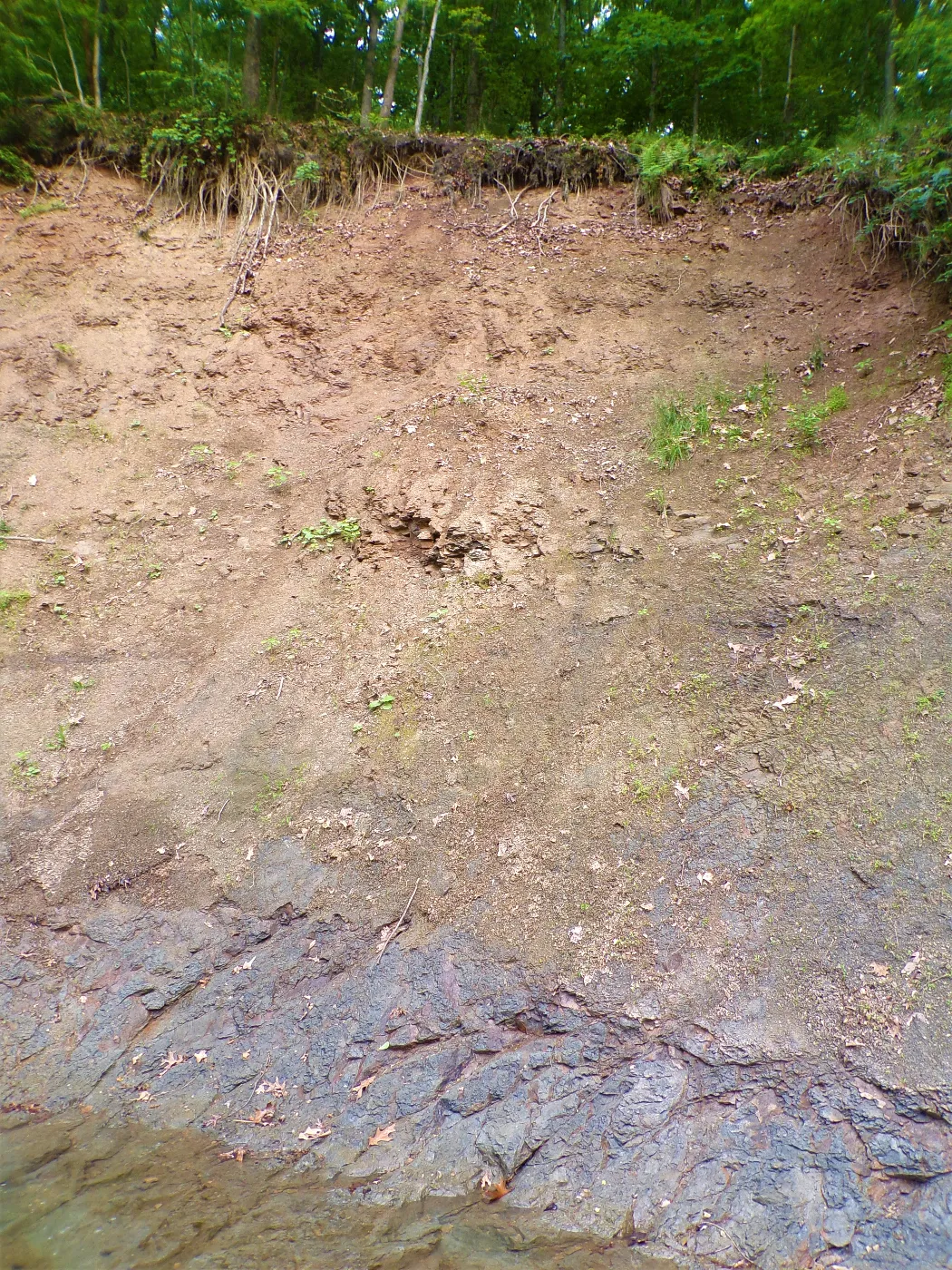
Soil profile of a slope with silt, loam, and clay.
Soil profile of an exposed hillslope demonstrating layers of silt, loam, and clay next to a creek. The photograph clearly shows the structure of the bank and the dense root system of plants in the upper soil layer.
It is important to understand that water availability depends on soil texture. Sandy soils retain little water, but almost all of it is available. Clay soils retain a lot, but a significant portion is unavailable because of strong attraction to particles (Pavlis, 2020). Sandy loams and loams with good structure are the optimal option: they retain enough water and release it to roots.
Organic matter plays a special role. It acts like a sponge: it absorbs water, holds it in an available form, and improves soil structure. According to Sharma et al. (2019), increasing organic matter content by 1% can increase available moisture by 10–20%. Therefore, compost and mulch are not just “fertilizer” but a way to make water available.
Practical note: Soil with a high clay content can hold up to 40% water by volume, but only half of it is available to plants. Sandy soil holds 5–15%, but almost all of that water is available (Pavlis, 2020). The paradox: a “rich” clay soil can water a plant worse than a “poor” sandy soil if its structure is damaged.
2. How Roots Absorb Water
A root is not just an “anchor” holding the plant in the soil. It is a complex absorbing system that works according to the laws of physics and chemistry. To understand how a plant drinks, we need to understand what happens in the root hair zone—the fine outgrowths on the surface of young roots (Pratt, 2005).
Osmosis is the main mechanism. Water in the soil solution contains few dissolved substances. Inside root cells, the concentration of salts, sugars, and other compounds is higher. Nature seeks to equalize concentrations: water moves from the area where it is more abundant (the soil) to the area where it is less abundant (the root cell). This process is called osmosis (Taiz et al., 2023; Stern's Introductory Plant Biology, 2021). The cell membrane works as a selective filter: it lets water through but retains most dissolved substances. Water enters the cell until internal pressure balances the inflow (Zona, 2023).

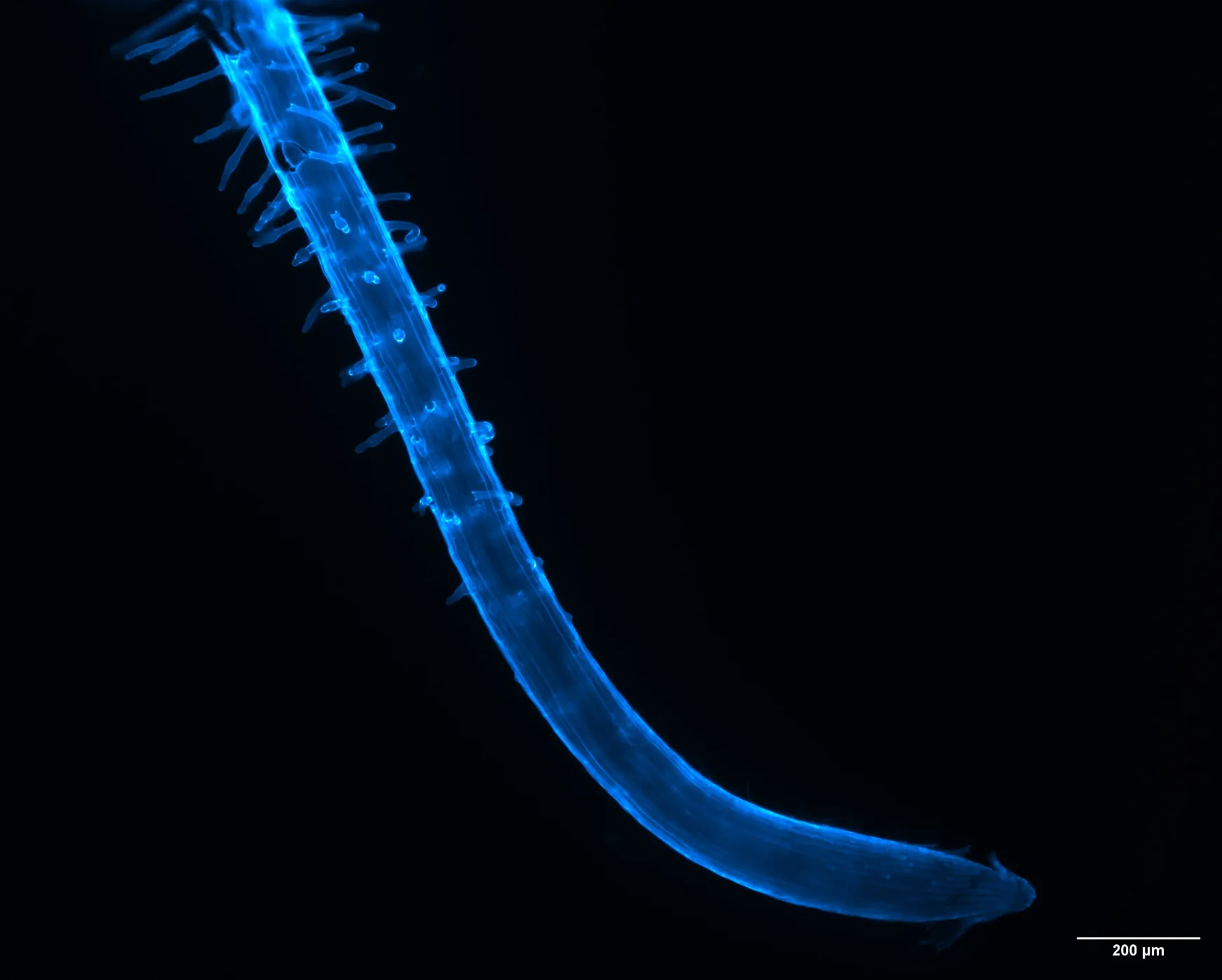
Confocal fluorescence microscopy of Arabidopsis thaliana root
Fluorescence confocal image of an Arabidopsis thaliana root—a classic model object in plant genetics and physiology. Visualization of cell walls allows detailed study of the distribution, length, and density of root hairs.
Root hairs increase surface area. A single root hair is an outgrowth of one cell, but there are millions of them. According to Pratt (2005), root hairs increase the absorbing surface of a root tens of times. It is in the root hair zone, just behind the root tip, that most water absorption occurs (Stern's, 2021). That is why damage to young roots during transplanting is so dangerous: the plant loses its “pumps.”
The path of water through the root. Water passes through the epidermis (skin), then through cortex cells, and reaches the endodermis—an internal barrier with Casparian strips (suberized bands). These strips force water to pass through cell membranes rather than through intercellular spaces. This is necessary so the plant can control which substances enter the conducting system (Eash et al., 2016; Stern's, 2021). After the endodermis, water enters the xylem—the vessels through which it rises upward.
Aquaporins are accelerators. Cell membranes contain special channel proteins—aquaporins. They work like locks: water passes through them much faster than through the lipid bilayer (Taiz et al., 2023). The plant can open and close these channels, regulating the rate of water uptake.

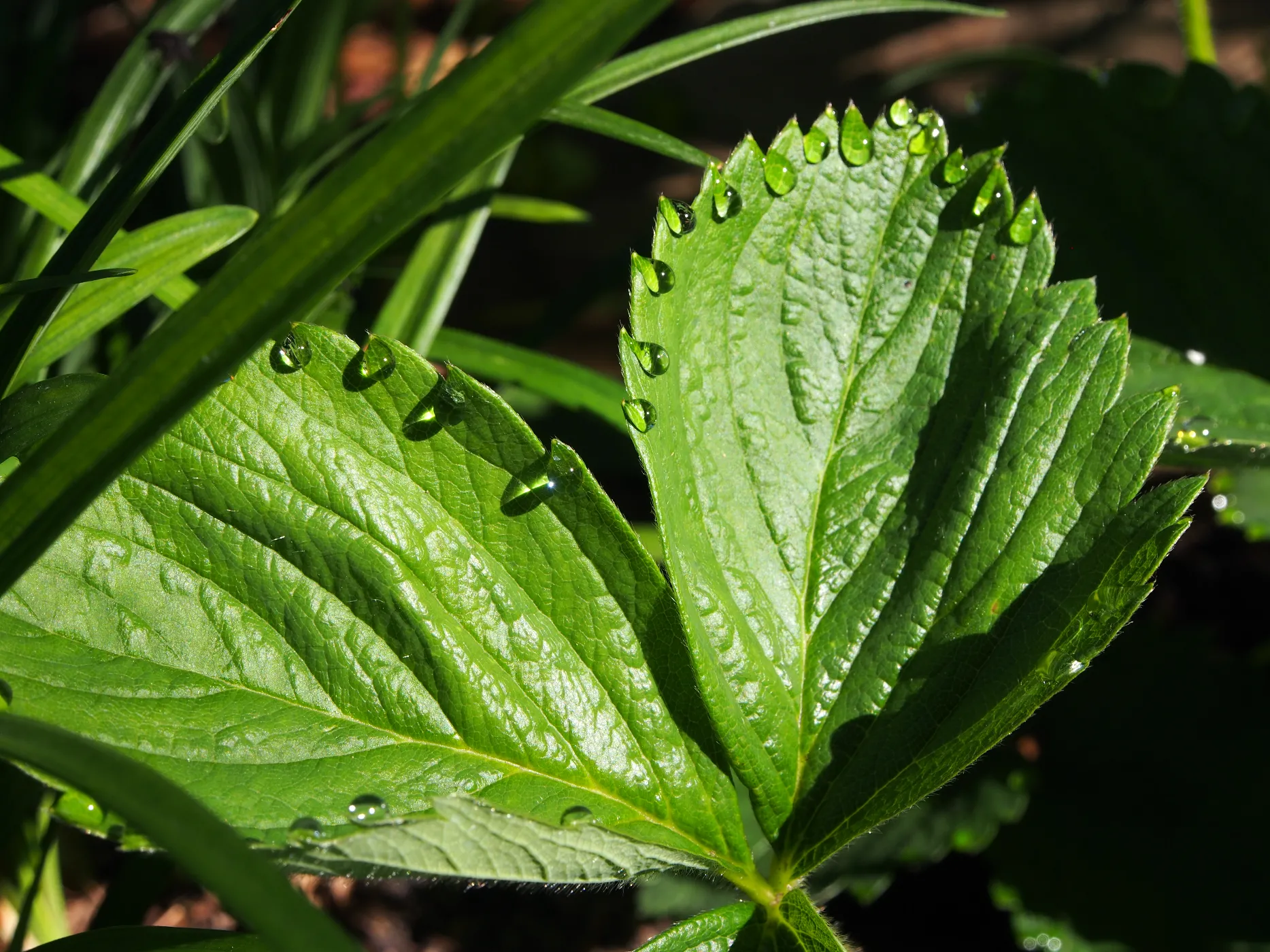
Release of sap (guttation) on the edge of a strawberry leaf
Macro photograph of a garden strawberry leaf demonstrating guttation. Release of xylem sap droplets through water stomata occurs under high root pressure, which is an important indicator of the plant's water regime.
Root pressure. If transpiration (evaporation through leaves) is weak—for example, at night or in cloudy weather—water still enters the root. It creates excess pressure that pushes water upward. This phenomenon is called root pressure. It is what causes guttation—the release of water droplets at leaf tips in some plants early in the morning (Zona, 2023; Stern's, 2021). Root pressure cannot lift water very high—its force is enough for only a few meters—but it is important for young plants and under conditions of low transpiration.

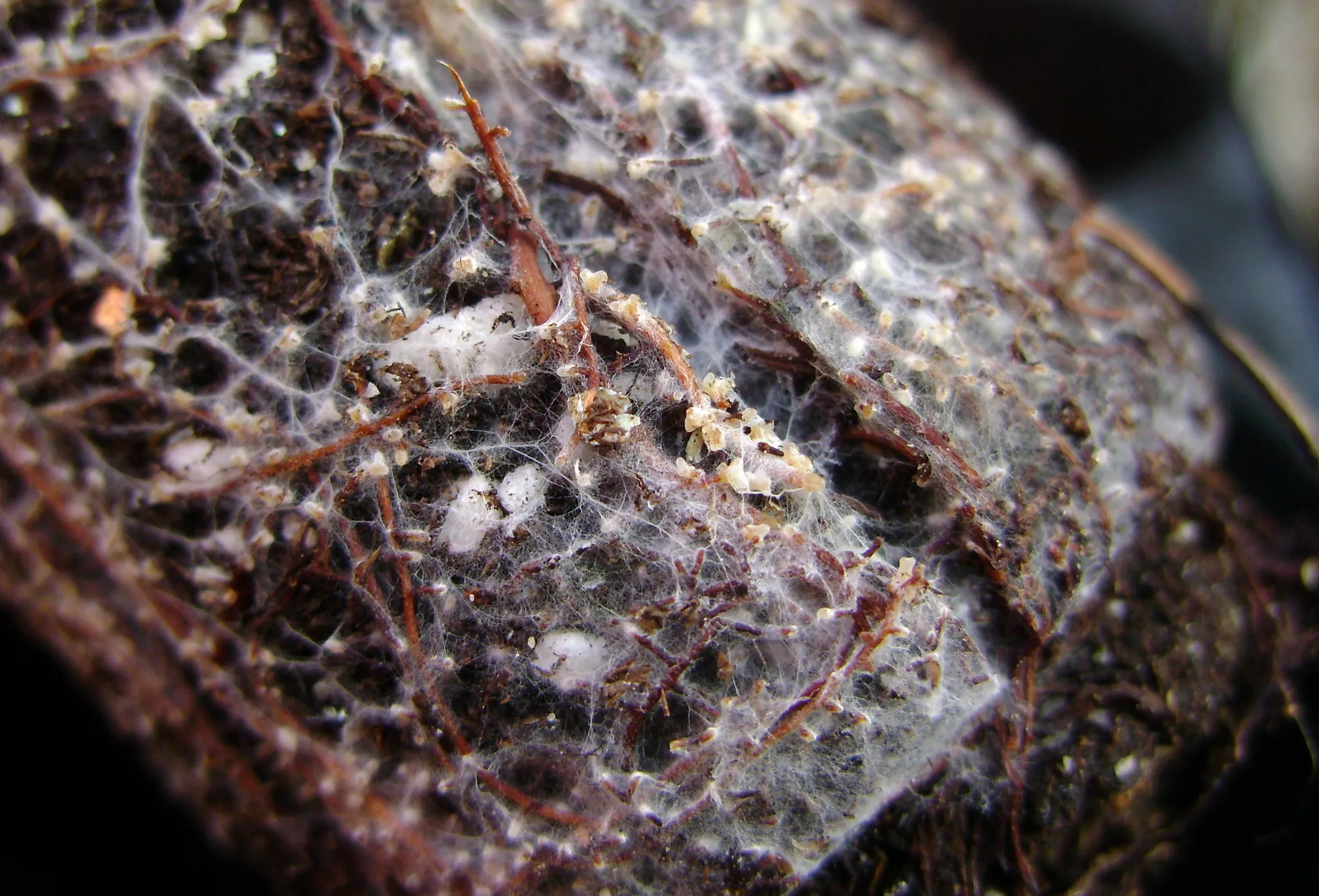
Ectomycorrhizal mycelium around spruce roots
White mycelium of an ectomycorrhizal fungus associated with roots of white spruce Picea glauca. The image clearly shows the close association of fungal mycelium with the root system of a woody plant.
Mycorrhiza is a helper. The roots of most plants live in symbiosis with mycorrhizal fungi. Fungal hyphae penetrate the soil and obtain water from pores inaccessible to root hairs. The fungus receives sugars from the plant and, in return, supplies it with water and mineral substances (Chalker-Scott, 2015; Pavlis, 2020). According to Chalker-Scott (2015), mycorrhiza can increase the effective absorbing surface of a root by 1000 times. Therefore, destroying the fungal network through digging or excessive phosphorus fertilization reduces the plant's ability to obtain water.
Practical takeaway: For roots to absorb water well, three conditions are needed: sufficient soil moisture, the presence of oxygen (roots breathe!), and the integrity of root hairs and mycorrhiza. Digging, compaction, and overwatering are equally harmful.


LCD 4-in-1 Soil Tester
Check essential growing conditions with one compact tool. Measure soil pH, moisture, temperature and light intensity — ideal for gardens, potted plants and greenhouses.
- 4-in-1 measurement
- Easy-to-read LCD display
- Portable design
Affiliate link · For indicative measurements only.
3. How Water Rises Upward

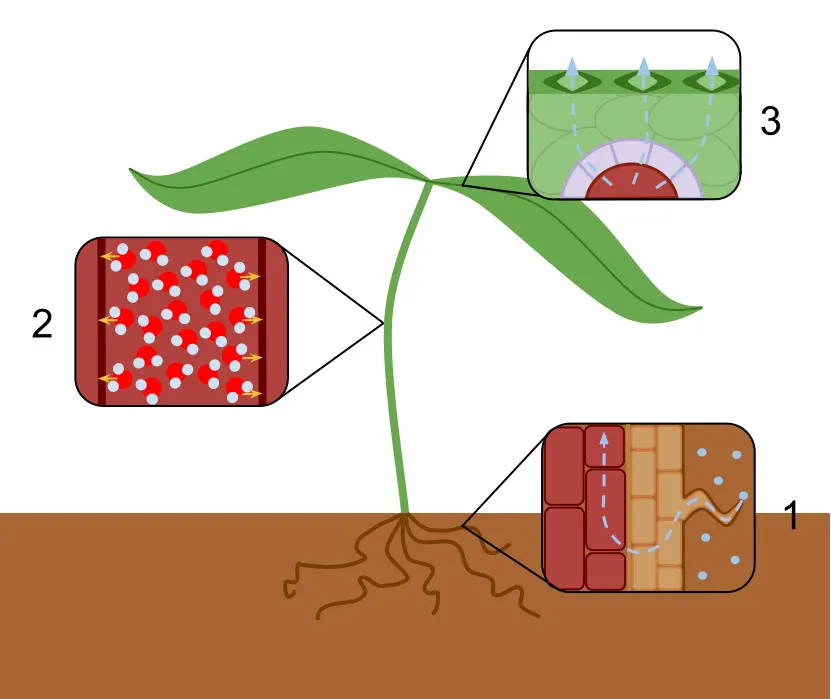
Mechanism of water transport in a plant: from root uptake to transpiration
Inset 1 (root) shows the passive entry of water molecules through cortical cells to the xylem; the Casparian strip plays a key role here in directing the flow. Inset 2 (stem) illustrates the forces of adhesion (water molecules stick to the walls of xylem vessels) and cohesion (water molecules stick to each other), which form a continuous water column rising from the roots to the top. Inset 3 (leaf) demonstrates the process of transpiration: water from the xylem enters the cells of the spongy parenchyma and evaporates through open stomata. Evaporation creates tension (negative pressure) in the water column, which “pulls” water upward through the xylem (cohesion-tension theory).
Water is absorbed by roots but is needed by leaves, which may be tens of meters above the ground. How does water overcome gravity without a pump? The answer is given by the cohesion-tension theory—one of the most elegant concepts in plant physiology (Stern's, 2021; Taiz et al., 2023).
Xylem is the plant's plumbing. Xylem consists of dead cells connected into hollow tubes. In flowering plants, these are vessels (wide tubes); in conifers, they are tracheids (narrow, with pores). These cells were once alive, but now only their walls remain, reinforced with lignin. Water moves through these tubes from roots to leaves (Pratt, 2005; Westwood, 1993).
Transpiration creates “pull.” When water evaporates from leaves (see the next section), negative pressure—tension—arises in the upper part of the xylem. Water molecules are connected to each other by hydrogen bonds (cohesion), so they pull neighboring molecules along, like cars in a train. This “pull” is transmitted down the water column all the way to the roots (Taiz et al., 2023). According to Taiz et al. (2023), water can rise under tension to –2 MPa and more, which is enough to lift it to a height of 200 meters.
Why doesn't the water column break? Cohesion—the attraction of water molecules—is very strong. Hydrogen bonds hold molecules together, preventing the column from breaking under its own weight. In addition, water adheres to vessel walls (adhesion), which also helps hold the column together (Zona, 2023; Westwood, 1993).
Cavitation is the weak point. If tension is too great (for example, during severe drought), the water column can break. An air bubble enters the vessel—an embolism occurs. This vessel stops conducting water. The plant has recovery mechanisms: neighboring vessels take over the function of damaged ones, and sometimes the plant can dissolve the bubble (Taiz et al., 2023). But mass cavitation during drought leads to plant death.
Root pressure is an auxiliary mechanism. As mentioned above, root pressure can push water upward when transpiration is weak. But its force is insufficient for tall trees. The main “pump” is transpiration (Stern's, 2021).
Speed of water movement. According to Stern's (2021), water in the xylem moves at a speed of 1 to 40 meters per hour, depending on species and conditions. In herbaceous plants it is faster; in trees, slower. Under strong transpiration, the speed increases.
Practical takeaway: Water rises through the plant passively, due to evaporation from leaves. If transpiration is disrupted (for example, leaves are damaged or the air is too humid), water can stagnate in tissues. If the xylem is damaged (by frost or disease), water does not reach the leaves, and they wilt even if the soil is moist.
4. Evaporation Through Leaves: Transpiration
Water that has risen through the xylem reaches the leaves. There it is used in photosynthesis—but only about 1–2% of the total volume. The remaining 98–99% evaporates into the atmosphere. This process is called transpiration (Taiz et al., 2023; Mitcham, 2007).
How it happens. Inside a leaf there is a system of air cavities—intercellular spaces. Mesophyll cells, saturated with water, evaporate moisture into these cavities. Water vapor accumulates there until humidity is nearly 100%. Then it exits through stomata—microscopic pores on the leaf surface (Pratt, 2005; Ingram, 2015).

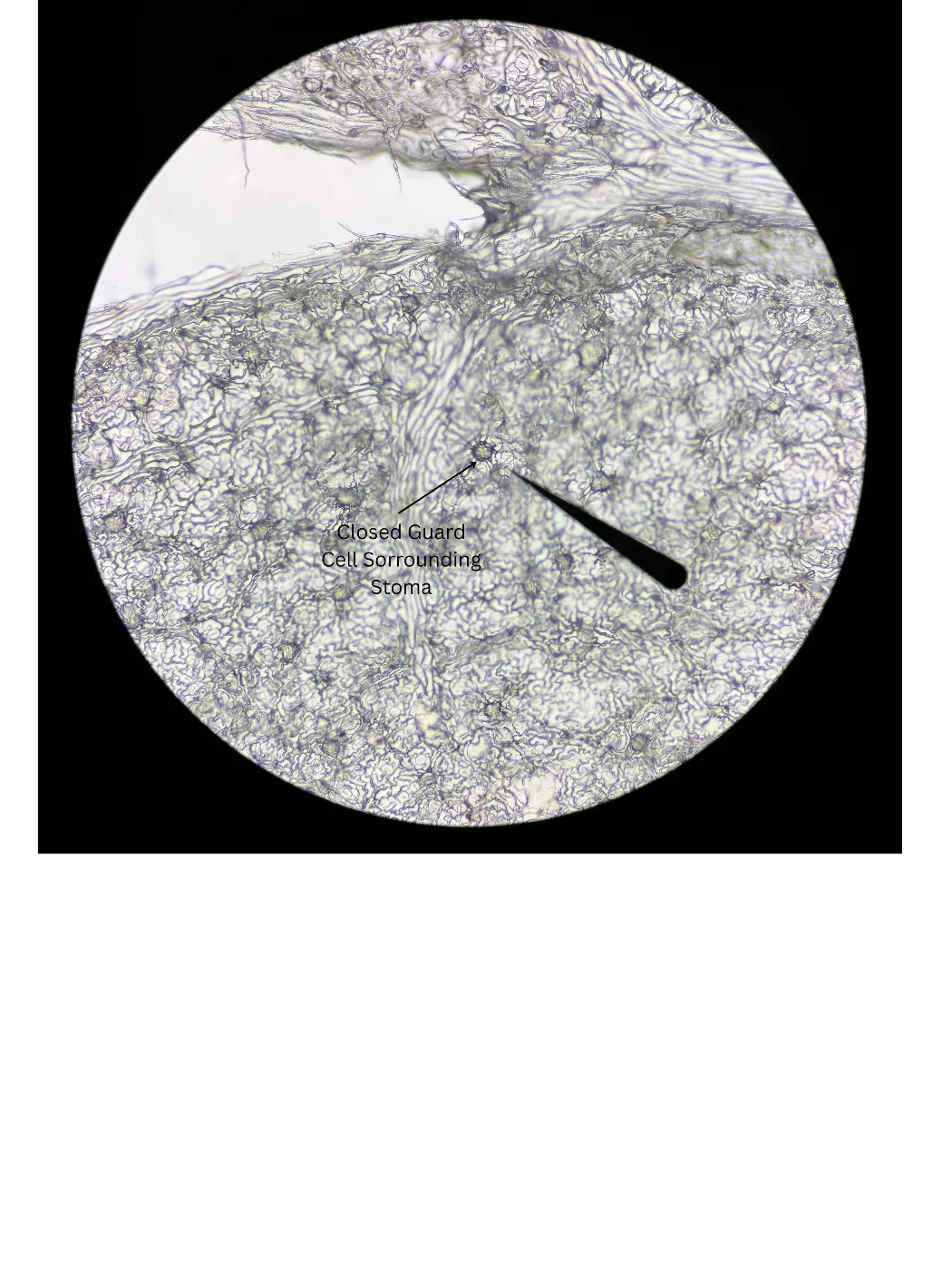
Closed stomata of common mugwort (Artemisia vulgaris)
Microscopic image of stomata and guard cells on the lower side of a common mugwort (Artemisia vulgaris) leaf. The image shows closed stomata, which is especially suitable for explaining the mechanism of limiting water loss.
Stomata are adjustable gates. Each stoma is surrounded by two guard cells. When there is enough water, these cells swell, bend, and open the pore. When water is scarce, they lose turgor, close up, and the pore closes. In this way the plant regulates water loss (Stern's, 2021; Taiz et al., 2023).
Guard cells work on potassium ions. When the plant wants to open its stomata, it actively pumps potassium into the cells. Salt concentration rises, water enters by osmosis, the cells swell—and the stoma opens. To close, potassium is pumped out, water leaves, and the cells shrink (Ingram, 2015; Taiz et al., 2023).
What controls stomata:
- Light. In the morning, stomata open—photosynthesis begins and carbon dioxide is needed. At night they close (Ingram, 2015).
- Air humidity. In dry air, transpiration increases, and the plant may partially close its stomata to avoid losing water too quickly (Mitcham, 2007).
- CO2 concentration. If there is little carbon dioxide inside the leaf, stomata open wider (Ingram, 2015).
- Water stress. When roots cannot supply water fast enough, leaves lose turgor. The hormone abscisic acid (ABA) signals the stomata to close—even if there is enough light (Taiz et al., 2023; Hopkins and Hüner, 2009).
Scale of losses. According to Taiz et al. (2023), for every CO2 molecule that enters a leaf, the plant loses up to 400 water molecules. This is the inevitable price of photosynthesis on land. On a hot day, a large tree can evaporate hundreds of liters of water (Stern's, 2021). Herbaceous plants use tens of liters over a season.
Factors that increase transpiration:
- High temperature
- Low air humidity
- Wind (blows humid air away from the leaf)
- Bright light
- Large leaf area
Factors that reduce transpiration:
- High air humidity
- Night or cloudy weather
- Closed stomata (under water stress)
- Waxy coating on leaves (cuticle)
- Pubescence (leaf hairs)
Practical observation: The stomata of most plants are on the underside of the leaf—where it is cooler and there is less direct sun. In plants from arid zones, stomata are often sunken in pits or covered by hairs—this reduces water loss (Ingram, 2015; Zona, 2023).

Solar Automatic Drip Irrigation Kit for Gardens
Automate watering for pots, gardens and small greenhouses. This solar-powered system features a timer to help schedule water delivery to your plants.
- Solar-powered
- 15 m irrigation hose
- Programmable watering
Affiliate link · Check included accessories.
5. Why a Plant Needs to Evaporate Water
It may seem that transpiration is meaningless waste. Why lose water that the plant has obtained with such difficulty? But this process has several important functions.
1. Cooling. Evaporation of water absorbs heat. When water turns into vapor, it takes energy from the leaf surface. This protects the photosynthetic apparatus from overheating. On a hot day, leaf temperature can be 3–5 °C lower than air temperature—precisely because of transpiration (Taiz et al., 2023; Rubatzky and Yamaguchi, 1997).
2. Delivery of mineral substances. Water is transport. Mineral elements (nitrogen, phosphorus, potassium, calcium, and others) are dissolved in the soil solution. They are absorbed by roots and move through the xylem together with water. Without transpiration, there would be no mass flow, and nutrients would not reach the leaves (Stern's, 2021; Eash et al., 2016).
3. Maintaining turgor. Water creates internal pressure in cells—turgor. It is what keeps herbaceous stems upright, spreads leaves flat, and enables growth by elongation. When turgor falls, the plant wilts. Transpiration “pulls” water upward, maintaining the water balance of tissues (Pratt, 2005; Taiz et al., 2023).
4. Opening stomata for CO2. A plant cannot take in carbon dioxide without opening its stomata. And open stomata inevitably lose water. This is a fundamental compromise: to photosynthesize, one must “breathe,” but breathing costs water (Taiz et al., 2023). Evolution has found solutions: C4 and CAM photosynthesis in plants from hot and arid zones allows them to reduce water loss (Ingram, 2015; Rubatzky and Yamaguchi, 1997).
5. Transport of hormones and signals. Along with the water flow through the xylem move not only minerals but also signaling molecules—for example, abscisic acid from the roots. It informs the leaves that the soil is drying out, and they close their stomata in advance (Hopkins and Hüner, 2009; Taiz et al., 2023).
6. Protection from overheating in general. In a hot climate, transpiration is the plant's “sweat.” It allows metabolism to continue even at high temperatures. According to Sharma et al. (2019), in cucumber the transpiration coefficient (how much water is spent per gram of dry matter) can exceed 700—this is very high, but it is precisely this that allows the plant to survive in heat.
A compromise that cannot be avoided. Water is a resource that must be conserved. But stomata cannot be closed completely—photosynthesis would stop. The plant constantly balances between “drinking” and “breathing.” Understanding this balance is the key to proper watering.
Practical takeaway: A plant cannot “stop drinking” without consequences. If transpiration is blocked (for example, by high humidity or leaf damage), water stagnates and growth slows. If transpiration is too strong (heat, wind, dryness), the plant quickly loses water and wilts. The gardener's task is to help the plant maintain balance.
6. How Much Water Is Needed: Depends on Species, Size, and Weather
There is no single answer to the question “how much to water.” Water demand changes depending on the plant species, its size, developmental stage, and weather conditions. Understanding these differences helps avoid both drying out and overwatering.
Plant species. Different crops use water differently. The transpiration coefficient shows how many grams of water are spent to form 1 gram of dry matter (Kotov and Adritskaya, 2016). According to their data:
- White cabbage: 250–600
- Potato: 285–575
- Tomato: 500–650
- Cucumber: more than 700
This means that cucumber requires 2–3 times more water than cabbage to build the same biomass. Drought-resistant species (laurel, rosemary, many succulents) use water economically (Ingram, 2015; Zona, 2023).
Size and age. The larger the plant and the greater the leaf area, the more water it evaporates. A young tree consumes tens of times less than a mature one. According to Mitcham (2007), a mature pear tree transpires up to 100 liters per day in hot weather. An annual plant in a pot—milliliters. Sharma et al. (2019) note that in strawberry, water demand increases sharply during flowering and fruiting.
Developmental stage. Most crops have critical periods when water shortage is especially destructive:
- Cabbage crops—during head formation
- Root crops (carrot, beet)—in the first half of the growing season, while the root system is forming
- Fruit crops (tomato, cucumber, pepper)—during flowering and fruit filling
- Onion crops—during intensive leaf growth (Kotov and Adritskaya, 2016; Sharma et al., 2019)
At the same time, excess water at the end of the growing season can be harmful: in root crops it causes cracking, in onions it delays ripening (Kotov and Adritskaya, 2016).
Weather. Transpiration depends strongly on external conditions:
- Heat and low humidity increase water losses 2–3 times
- Wind enhances evaporation by blowing humid air away from leaves
- Cloudy weather reduces transpiration
- Night—stomata are closed, losses are minimal (Taiz et al., 2023; Mitcham, 2007)
Soil. Sandy soils require more frequent watering than clay soils because they retain little water. Organic matter increases water-holding capacity (Pavlis, 2020; Eash et al., 2016).
Practical guideline. According to Mitcham (2007), for pear in California, historical evapotranspiration values (evaporation + transpiration) range from 0.8 to 3.3 inches (20–84 mm) over a two-week period, depending on the season. For strawberry, Sharma et al. (2019) report total water use from 300 to 797 mm per season in different regions. For vegetable crops, Kotov and Adritskaya (2016) recommend maintaining soil moisture at 70–80% FC for cabbage and cucumber, and 60–70% for root crops.
A simple rule: The hotter, drier, and windier it is, the more often you need to water. The larger the plant and the more leaves it has, the more water it needs. The sandier the soil, the more often you should water, but in smaller portions. Clay soil retains water longer but releases it more slowly.

7-in-1 Wi-Fi Weather Station
Monitor local weather conditions with a wireless outdoor sensor. Track temperature, humidity, rainfall, wind speed and direction, and atmospheric pressure. Ideal for gardens, farms and greenhouses.
- Wireless outdoor sensor
- Solar-powered
- Wi-Fi connectivity
Affiliate link · Check regional compatibility.
7. What Happens When Water Is Lacking
When a plant loses water faster than it can replace it, water stress occurs. This is not just “wilting”—it is a cascade of physiological changes that affect all processes.
First signals. Roots are the first to sense that the soil is drying out. They synthesize abscisic acid (ABA) and send it with the transpiration stream to the leaves. ABA commands guard cells to close stomata—even before the leaves lose turgor (Hopkins and Hüner, 2009; Taiz et al., 2023). This is a “warning signal”: the plant saves water in advance.
Stomatal closure. When stomata close, CO2 intake stops. Photosynthesis stops. The plant switches to “survival mode” (Taiz et al., 2023; Ingram, 2015).
Loss of turgor. Without water, cells lose internal pressure. Herbaceous stems droop, leaves wilt. Two types of wilting are distinguished:
- Temporary—when it is hot and transpiration exceeds water uptake, but the plant recovers by evening
- Deep—when the soil has dried out so much that roots cannot obtain water even at night; without watering, the plant dies (Ingram, 2015)
Growth disruption. According to Taiz et al. (2023), growth by cell elongation is the process most sensitive to water deficit. Cells stop increasing in size even if photosynthesis is still occurring. This means the plant may look “normal” but is no longer growing. According to Hopkins and Hüner (2009), under water stress, protein synthesis decreases, membrane function is disrupted, and toxic substances accumulate.
Membrane damage. Under severe dehydration, cell membranes lose integrity. Dissolved substances leak out of cells, enzymes are inactivated. If stress lasts long, cells die (Hopkins and Hüner, 2009; Taiz et al., 2023).

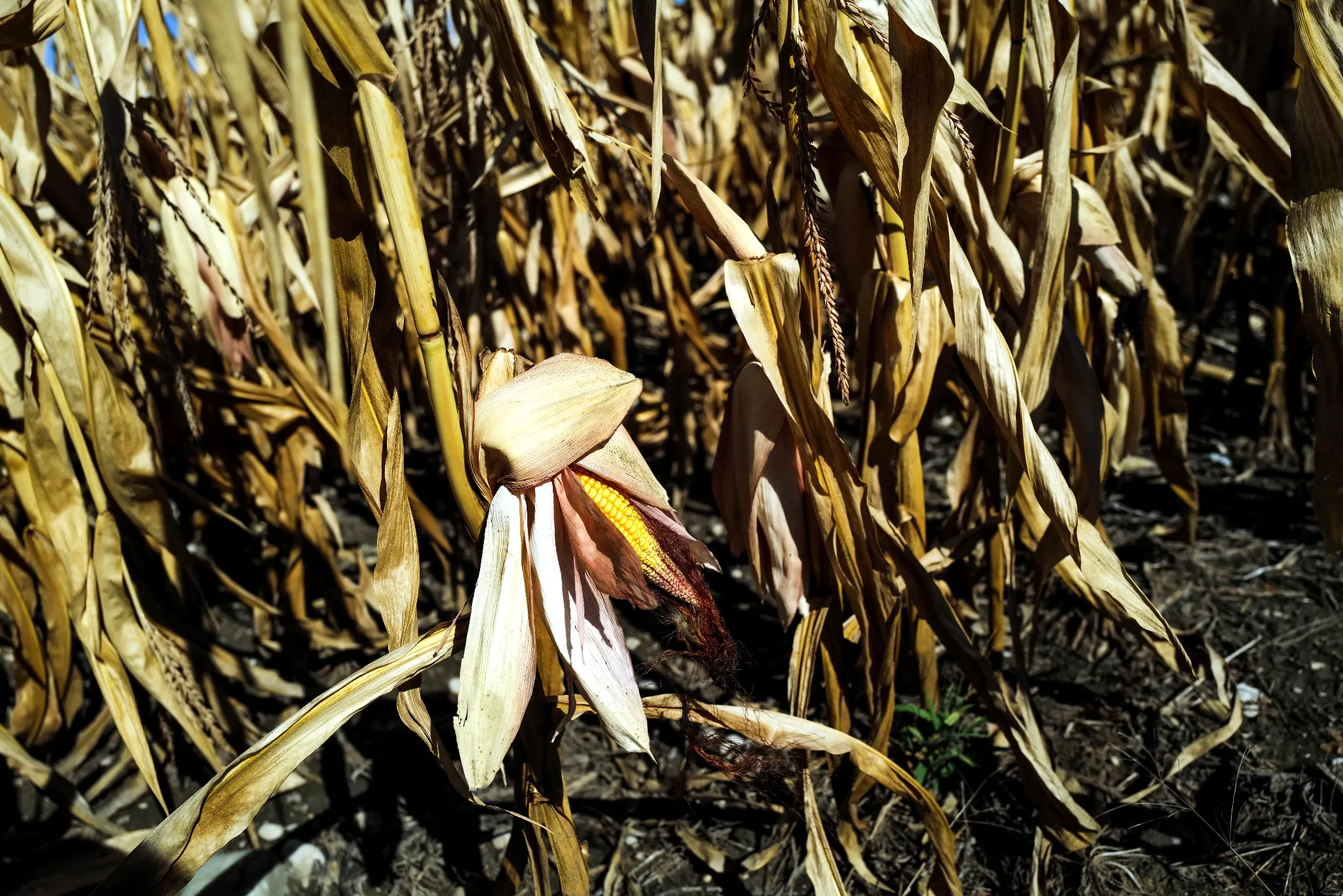
Maize affected by drought (Zea mays)
Dried maize (Zea mays) cob affected by drought. The photo was taken in the Rhône-Alpes region, near Lyon, France, on August 21, 2022. It illustrates the consequences of prolonged moisture deficiency for agricultural crops.
Visible symptoms. According to Kotov and Adritskaya (2016), water shortage manifests differently:
- Tomato—curling of upper leaves along the midrib, blossom-end rot of fruits
- Cucumber, pepper, eggplant—drop of flowers and fruit set
- Cabbage—premature bolting, coarse and bitter roots
- Leafy crops—premature flowering
Irreversible consequences. If water stress continues, the plant reaches the permanent wilting point—a state from which it can no longer recover even after watering. Membranes are destroyed, proteins are denatured, cells have died (Taiz et al., 2023; Ingram, 2015).
Hidden damage. Even if the plant survives, water stress reduces yield. According to Hopkins and Hüner (2009), yield losses from drought can reach 70–87% in corn, wheat, and sorghum. In fruit crops, stress during flowering leads to fruit drop, and during fruit filling—to small fruits (Mitcham, 2007; Sharma et al., 2019).
Important: A plant does not always show that it lacks water. Stomata may close, photosynthesis may stop, growth may cease—but the leaves will still be green. That is why it is so important to monitor soil moisture, not just the plant's appearance.
8. What Happens When There Is Too Much Water

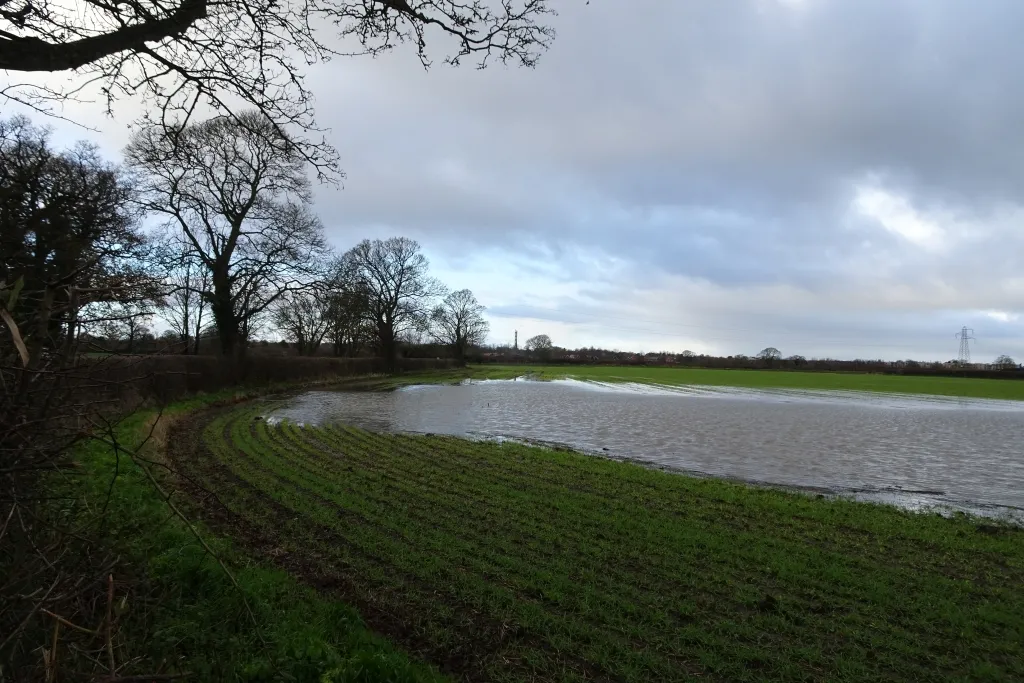
Flooded field with young crops
An agricultural field with young crops, partially covered with water. The photo was taken south of Heslington, near York, England, on December 13, 2023. It well illustrates the problem of waterlogged soil and the need to drain excess moisture.
Overwatering is no less dangerous than drought. Water fills soil pores, displacing air. Roots are left without oxygen and die. According to Eash et al. (2016), in waterlogged soil, oxygen is consumed within hours, especially in warm weather.
Roots suffocate. Roots breathe—they need oxygen for respiration. When all pores are filled with water, oxygen does not enter. Root cells switch to anaerobic respiration, accumulate toxic products (alcohols, organic acids), and die (Ingram, 2015; Taiz et al., 2023).
External signs. The plant may look as it does during drought: leaves wilt, turn yellow, and drop. This is a paradox: there is plenty of water, but the roots cannot absorb it because dead or damaged root hairs do not work. According to Pavlis (2020), waterlogging is often confused with drought, and the gardener waters even more—making the problem worse.
Growth slowdown. Even if the roots survive, under anaerobic conditions they cannot actively absorb mineral substances. The plant starves despite fertile soil (Kotov and Adritskaya, 2016).
Diseases. A moist environment favors fungal and bacterial pathogens. Root rots (Pythium, Phytophthora, Rhizoctonia) spread quickly in waterlogged soil (Sharma et al., 2019; Pavlis, 2020).
Ethylene. During flooding, the hormone ethylene accumulates in tissues. It causes epinasty (leaf curling), drop of flowers and fruit set, and premature aging (Ingram, 2015).
Adaptations to waterlogging. Some plants (willow, poplar, rice, marsh species) form aerenchyma—tissue with air cavities through which oxygen reaches the roots. Others develop adventitious roots near the surface, where oxygen is available. But most garden crops do not have such adaptations (Ingram, 2015; Taiz et al., 2023).
How to avoid it. Drainage is the key solution. On heavy clay soils, water stagnates. Helpful measures include:
- Adding organic matter (improves structure)
- Raised beds
- Drainage ditches
- Mulch (protects against compaction, but not against overwatering)
Practical takeaway: If water stands on the surface for more than an hour after rain, you have a drainage problem. If leaves wilt while the soil is moist, the roots are already damaged. Watering in such a situation will only make things worse.

40W Full Spectrum LED Grow Light
Support healthy plant growth with full-spectrum LED lighting. Ideal for seedlings, indoor plants and small growing spaces. A practical solution for indoor gardening and year-round cultivation.
- Full-spectrum LED
- Energy-efficient design
- Indoor plant growing
Affiliate link · Check actual power and light coverage.
9. How to Tell When It Is Time to Water
The optimal time for watering can be determined in several ways—from simple “by eye” methods to instrumental ones. It is important for a gardener to learn to read the signals of the plant and the soil.
Visual inspection of the plant. According to Kotov and Adritskaya (2016), the first signs of water deficit are:
- Loss of turgor—leaves droop slightly
- Leaf curling (in tomato—upper leaves)
- Color change—leaves become dull, grayish
- Growth slowdown (but this is noticeable only over time)
Guttation. Water droplets at leaf tips in the morning are a sign that the soil is moist and root pressure is high. If there is no guttation, there may not be enough water (Zona, 2023).
Checking the soil by feel. The most accessible method. According to Eash et al. (2016) and Sharma et al. (2019):
- Sandy soil: squeeze it in your fist—if it does not hold its shape, it is time to water
- Loamy soil: if the clump crumbles under light pressure, moisture is about 50–60% FC, and you can water
- Clay soil: if it rolls into a ball and leaves marks on your palm, there is enough moisture
Depth of checking. The roots of most vegetables are in the upper 15–30 cm. Check moisture at this depth, not just at the surface. The surface may be dry while the root zone is moist (Mitcham, 2007; Sharma et al., 2019).

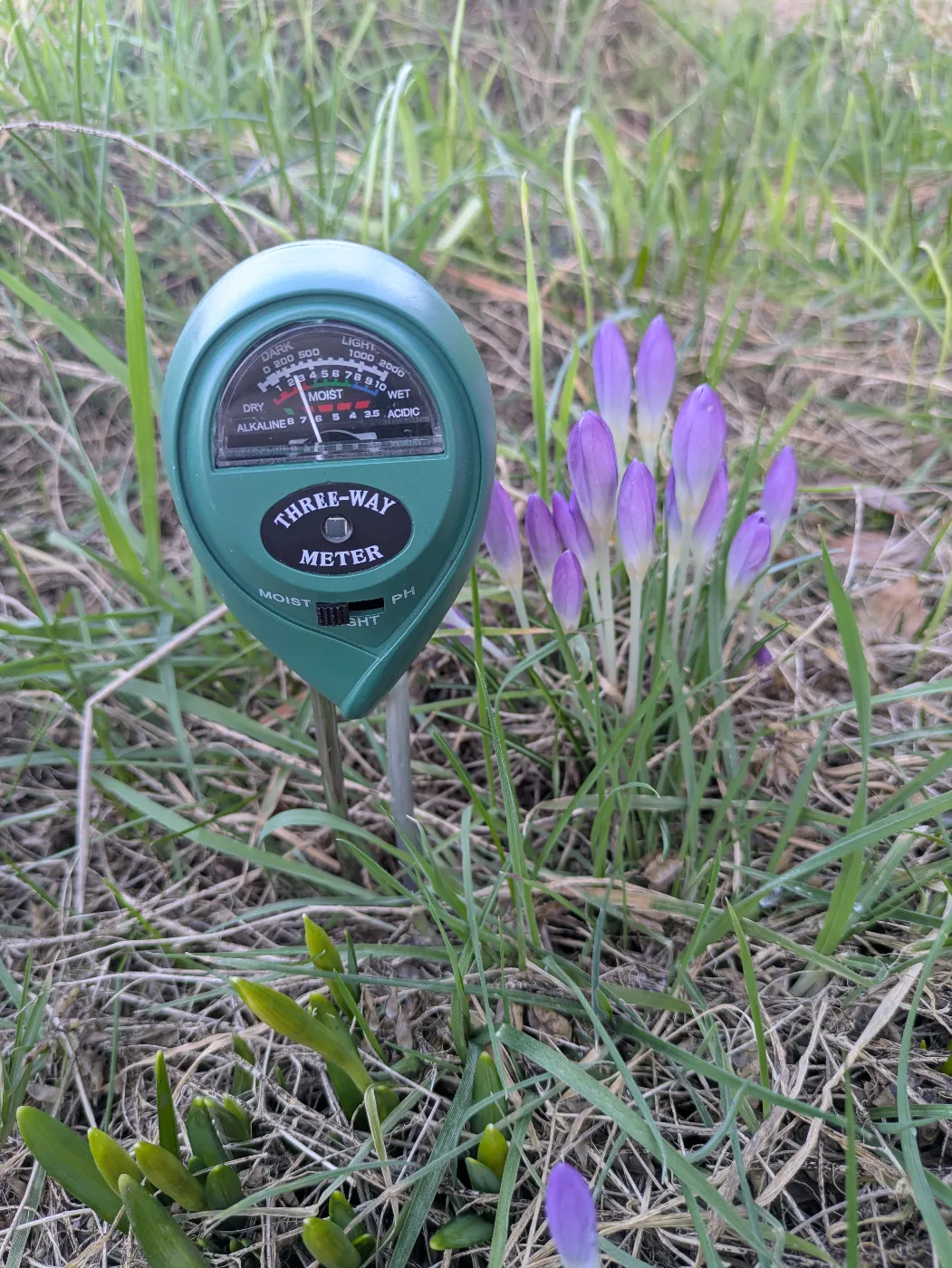
Three-way soil meter (moisture, pH, light)
The photograph shows an analog device, the 'THREE-WAY METER', inserted into the soil. The device is intended for rapid measurement of soil moisture, acidity (pH), and light level in garden and vegetable-plot conditions. Spring crocuses grow next to the meter, indicating the beginning of the garden season.
Instrumental methods. For precise control:
- Tensiometers—measure the force with which soil holds water. They show when it is time to water (Mitcham, 2007; Sharma et al., 2019)
- Moisture meters—electronic devices for quick checks
- Plant water status—a pressure chamber (for professionals) measures leaf water potential (Mitcham, 2007)
The “dry finger” rule. Put your finger into the soil to 5–7 cm. If it is dry, water. If it is moist, wait. This is a simple but reliable method for most garden situations.
When not to water:
- After heavy rain
- If the soil is saturated with water (check by feel)
- In heat from noon to 4 p.m.—water will evaporate before reaching the roots
- If the plant is wilted but the soil is moist—this is a sign of root problems, not drought (Pavlis, 2020)
Best time to water: early morning. Water has time to reach the roots, evaporation is minimal, and leaves dry by evening (reducing disease risk). Evening watering is also acceptable, but wet leaves overnight can provoke fungal diseases (Sharma et al., 2019; Mitcham, 2007).
10. Regional Aspect: In a Dry Climate—Drip Irrigation and Mulch; In a Humid Climate—Drainage
The approach to watering depends strongly on climate. Where water is scarce, the task is to save every drop. Where water is abundant, the task is not to let it stagnate. There are no universal solutions, but there are proven strategies for different conditions.
Dry Climate: Conserve Moisture
In arid regions (the Mediterranean, the southwestern US, Central Asia, Australia), water losses to evaporation are enormous. According to Sharma et al. (2019), in hot weather up to 50% of water applied by surface irrigation is lost to evaporation before reaching the roots.

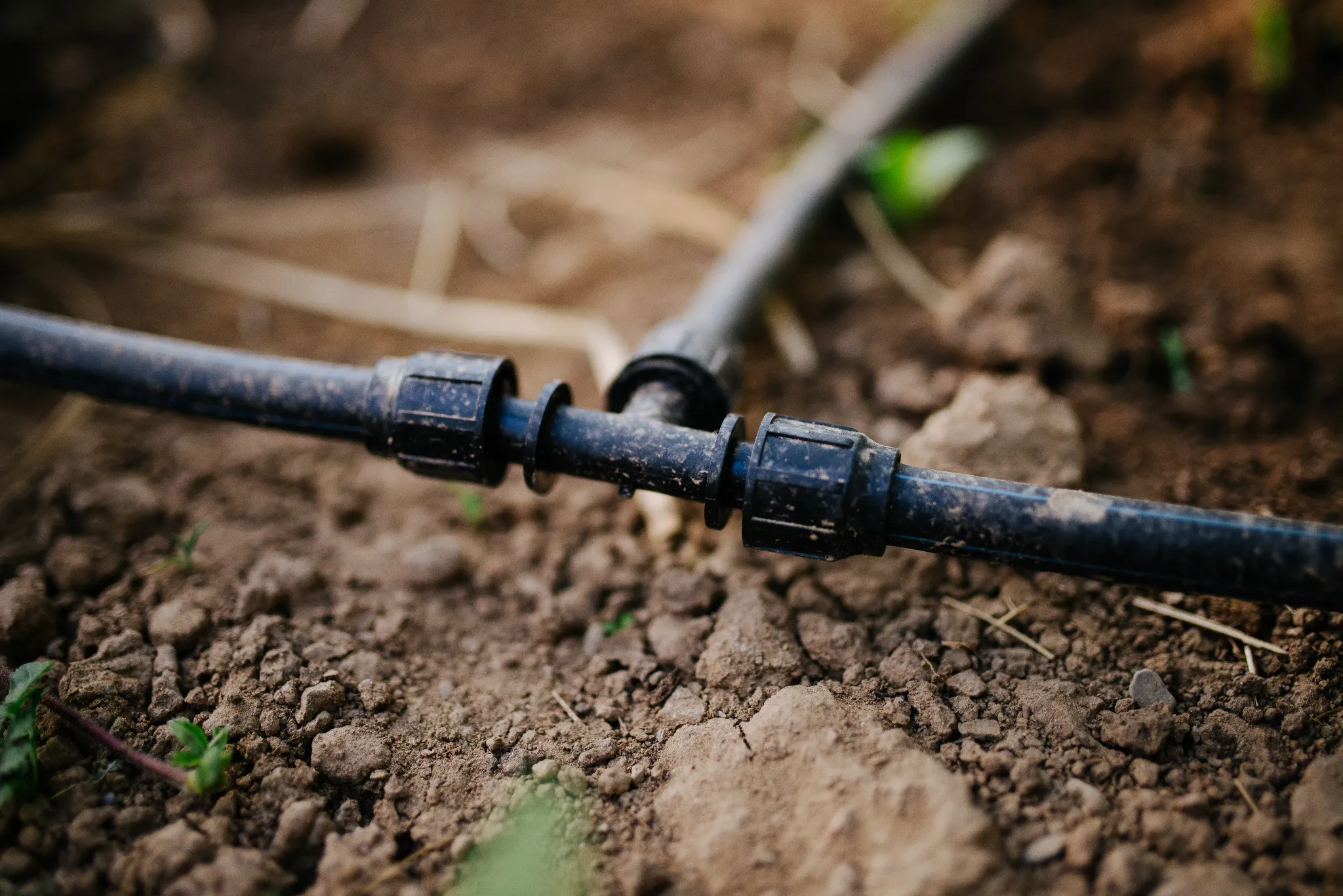
Drip irrigation connectors on the soil
Close-up of a drip irrigation system showing the connection of tubes using plastic fittings. Installed on dry, fertile soil in a garden for efficient water management in summer.
Drip irrigation. This is the most effective way to supply water in arid zones. Water is delivered slowly, directly to the roots, without wetting the leaves. Evaporation losses are minimal. According to Sharma et al. (2019), drip irrigation reduces water use by 30–50% compared with sprinkler irrigation and increases yield. The system allows fertilizers to be applied with water (fertigation) and is easily automated.
Mulch. The second key element. Mulch made from organic materials (straw, wood chips, compost) covers the soil surface and dramatically reduces evaporation. According to Eash et al. (2016), mulch can reduce water losses by 50–70%. It also suppresses weeds that compete for water and regulates soil temperature.
Organic matter. Adding compost increases the soil's water-holding capacity. According to Pavlis (2020), each 1% of organic matter increases available moisture by 10–20%. In sandy soils, organic matter acts as a sponge, holding water in the root zone.
Drought-resistant species. If water is chronically scarce, it is worth choosing plants adapted to drought. According to Zona (2023), many succulents, lavender, rosemary, yarrow, and echinacea tolerate long periods without watering. They have small leaves, waxy coatings, deep roots, or the ability to store water.
The principle “water rarely but deeply.” Deep watering stimulates roots to grow deeper, where the soil stays moist longer. Frequent surface watering, on the contrary, forms a shallow root system that suffers at the first drought (Ingram, 2015; Chalker-Scott, 2018).
Humid Climate: Ensure Drainage
In humid regions (temperate Europe, the US East Coast, the tropics), the problem is not lack of water but its excess. Soil can be saturated for weeks, especially in spring and autumn.

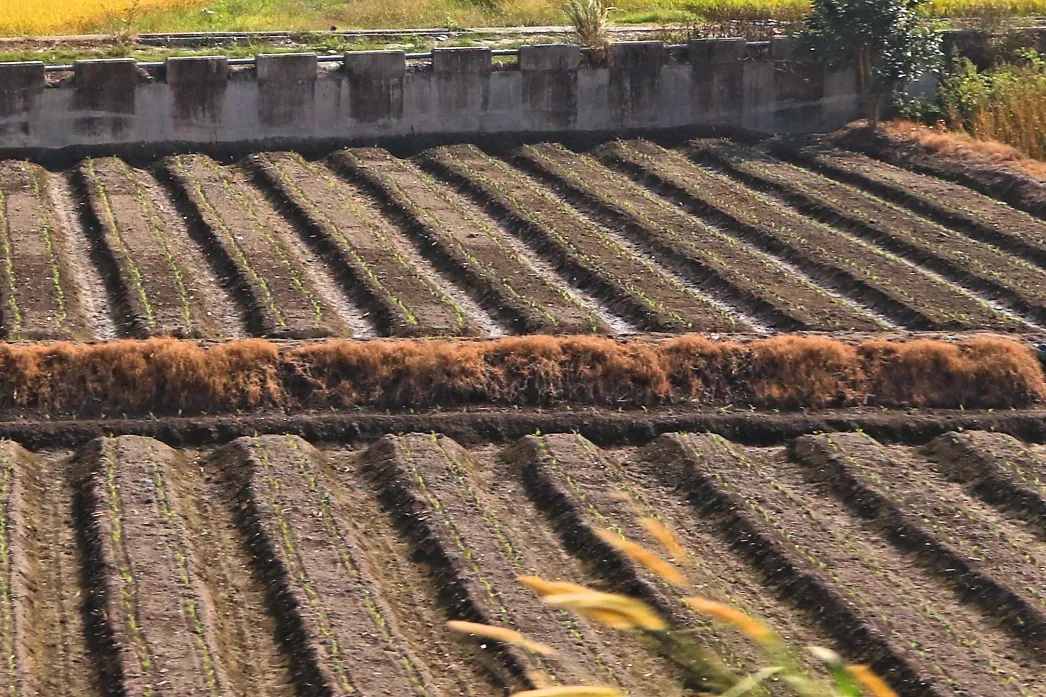
Raised beds for draining excess water
Agricultural plots with formed raised beds intended to reduce waterlogging and improve water drainage. Shooting location: Yunlin County, Taiwan.
Drainage. The main solution is to remove excess water from the roots. Methods include:
- Raised beds—water drains downward, and roots remain in an aerated layer
- Drainage ditches—for large plots
- Coarse sand, gravel—added to heavy clay to improve structure
- Organic matter—loosens clay and creates pores
According to Eash et al. (2016), without drainage in clay soil, water can stagnate for weeks, causing root rots and plant death.
Mulch. In a humid climate, mulch is also useful, but its task is not to conserve moisture but to protect against compaction and erosion. Organic mulch absorbs excess water and releases it gradually. However, the mulch layer should not be too thick—this can hinder evaporation and increase waterlogging.
Plant selection. In humid zones, species that tolerate periodic flooding grow best: willows, poplars, dogwood, astilbe, hosta, and ferns (Ingram, 2015).
Do not water “by schedule.” In a humid climate, watering is needed only during dry periods. Checking the soil by feel is mandatory. If the soil is moist, do not water, even if “according to the calendar” it is time.
Universal principle: The gardener's task is not to “fill” the plant but to provide access to water. In a dry climate, this means conserving every drop. In a humid one, it means not letting water stagnate. In both cases, the key is root health and soil structure.
11. Conclusion: Water Must Be Available, but Not in Excess
A plant drinks not when we pour, but when it can. Water enters through the roots, rises through the xylem due to transpiration, and evaporates through the stomata. This process is not a whim but a physiological necessity.
Main conclusions:
1. Water in soil can be available or unavailable. A plant can use only capillary water in the range from FC to PWP. Gravitational water drains away; hygroscopic water is unavailable.
2. Roots absorb water through osmosis. This requires root hairs, a healthy membrane, and mycorrhiza. Damage to roots = loss of the ability to drink.
3. Water rises passively. Transpiration creates tension, and cohesion holds the water column together. If leaves do not evaporate, water does not move.
4. Transpiration is the inevitable price of photosynthesis. A plant loses 98–99% of its water in order to obtain CO2. It cannot close its stomata completely without stopping growth.
5. Water demand depends on species, size, stage, and weather. There is no universal watering norm. Cucumber requires 2–3 times more water than cabbage. A mature tree requires hundreds of times more than a seedling.
6. Lack of water is destructive. First stomata close, then growth stops, then cells die. Even short-term stress reduces yield.
7. Excess water is no less dangerous. Roots suffocate, rots develop, and the plant wilts even though the soil is moist. Drainage is as important as watering.
8. Water according to need, not by schedule. Check the soil by feel, watch the plant, and take weather into account. The best time is early morning.
9. In a dry climate—drip irrigation and mulch. In a humid one—drainage and raised beds. The universal principle: conserve water in the root zone and do not let it stagnate.
Key idea. A plant is not a vessel that needs to be filled. It is a living system that drinks, breathes, and evaporates. The gardener's task is to create conditions under which water is available, air is present in the soil, and the roots are healthy. Then the plant will find the right balance itself. Watering is not “pouring water” but helping the plant drink.
A simple rule for every day: Better to underwater than to overwater. But best of all, check the soil with your hand before picking up the watering can.
References
- (2007). ‘Irrigation and fertilization of pears’, in Mitcham, E.J., Elkins, R.B. (ed.) Pear production and handling manual. Oakland, California: University of California. Agriculture and Natural Resources, pp. 97-134.
- (2015). ‘The plant environment: Light and water’, in Ingram, D.S., Vince-Prue, Daphne, Gregory, P.J. (ed.) Science and the Garden. The scientific basis of horticultural practice. West Sussex, UK: Royal Horticulture Society. Wiley Blackwell, pp. 102-119.
- Bidlack, J. E., Jansky, S. H. (2021). ‘Water in Plants’, in Stern's Introductory Plant Biology. New York: McGraw-Hill Education, pp. 143-161.
- Capon, Brian (2022). ‘How Plants Function’, in Botany for Gardeners. An Introduction to the Science of Plants. Portland, Oregon: Timber Press, pp. 144-192.
- Carvalho, P., Foulkes, M.J. (2019). ‘Roots and Uptake of Water and Nutrients’, in Crop Science. New York, NY: Springer New York, 107-130. doi: 10.1007/978-1-4939-8621-7_195
- Chalker-Scott, Linda (2015). ‘The Underground Railroad’, in How Plants Work. Portland, London: Timber Press, pp. 38-59.
- Chalker-Scott, Linda (2018). ‘Aftercare for New Plants’, in The Science of Gardening. Course Guidebook. Chantilly, Virginia: The Great Courses, pp. 98-106.
- Eash, N.S., Sauer, T.J., O'Dell, D., Odoi, Evah (2016). ‘Soil Water’, in Soil Science Simplified. New Jersey: Wiley Blackwell, ch. 6.
- Griffiths, Michael (2026). ‘Getting Started’, in The Easy Garden. New York, NY: Penguin Random House, .
- Hopkins, W.G., Hüner, N.P..A. (2009). ‘Responses of Plants to Environmental Stress’, in Introduction to Plant Physiology. Hoboken, NJ: John Wiley & Sons, pp. 223-240.
- Johnson, Noelle (2023). ‘Choosing the Right Plants for Hot, Arid Regions’, in Dry Climate Gardening. Beverly, MA: Cool Springs Press, .
- Lambers, Hans, Oliveira, R.S. (2019). ‘Photosynthesis, Respiration, and Long-Distance Transport: Photosynthesis’, in Plant Physiological Ecology. Cham: Springer International Publishing, 11-114. doi: 10.1007/978-3-030-29639-1_2
- Martin, Orin (2019). ‘How You Grow a Tree’, in Fruit Trees for Every Garden. New York: The Speed Press, ch. 5.
- Pandey, V., Sharma, R.M., Kumar, Dinesh, Sharma, S.D., Jena, S.K. (2019). ‘Water Management’, in Strawberries. Boca Raton, FL : CRC Press, Taylor & Francis Group, 2019.: CRC Press, 229-268. doi: 10.1201/b21441-200
- Pavlis, Robert (2020). ‘Understanding Soil’, in Soil Science for Gardeners. Working with Nature to Build Soil Health. Gabriola Island, BC, Canada: New Society Publishers, pp. 9-96.
- Pratt, M.M. (2005). ‘The Parts of a Plant – and Looking After Them’, in Practical Science for Gardeners. Portland, Oregon: Timber Press, pp. 20-42.
- Rubatzky, V.E., Yamaguchi, Mas (1997). ‘Environmental Factors Influencing the Growth of Vegetables’, in World Vegetables. Boston, MA: Springer US, pp. 59-80. doi: 10.1007/978-1-4615-6015-9_6
- Taiz, Lincoln, Møller, I.Max, Murphy, Angus, Zeiger, Eduardo (2023). ‘Water and Plant Cells’, in Plant Physiology and Development. New York, NY: Oxford University Press, pp. 153-168.
- Westwood, M.Neil (1993). ‘General Environment’, in Temperate-zone. Pomology. Physiology and Culture. Portland, Oregon: Timber Press, pp. 29-47.
- Zona, Scott (2026). ‘What a Plant Needs: Water’, in A Gardener's Guide to Botany. Beverly, MA: Cool Springs Press, .
- Котов, В.П., Адрицкая, Н.А. (2016). ‘Биологические основы овощеводства [Biological foundations of vegetable growing]’, in Овощеводство [Vegetable growing]. Санкт-Петербург: Лань, pp. 22-66.
