
Sweet Cherry Care: A Practical Guide for the Gardener
1. Main Tasks of Sweet Cherry Care


Cherry orchard in the Yakima Valley
Commercial sweet cherry growing in the northwestern United States, in one of the well-known regions for producing this fruit crop.
Sweet cherry is a crop that, with proper care, can annually produce large, sweet, and transportable fruit. However, it is demanding regarding soil, moisture, nutrition, and weather conditions. Care does not come down to a single practice: it is a system of measures aimed at keeping the tree healthy, consistently fruiting, and able to withstand winter well. In different regions the emphasis will vary, but the general tasks remain the same (Hessayon, 1993; Buckingham, 2010).
The main goal of care is to maintain a balance between tree growth, fruiting, and soil condition. It is impossible to obtain a quality harvest if the tree is under constant stress from drought, waterlogging, nutrient deficiency, diseases, or pest damage (Mandal et al., 2021; Long et al., 2021).
Several key tasks can be identified.
1. Regulation of the water regime.
Sweet cherry tolerates neither water stagnation nor prolonged drought. Waterlogging leads to root rot and the development of root rots, while lack of moisture leads to smaller fruit and weakening of the tree. It is especially important to maintain stable soil moisture during fruit swelling: sharp “dry — wet” fluctuations increase the risk of cracking (Longstroth and Perry, 1996; Neilsen et al., 2017; Knoche and Winkler, 2017). Therefore, in arid regions irrigation is necessary, while in regions with close groundwater, drainage is needed.
2. Balanced nutrition.
Sweet cherry responds to nitrogen, potassium, calcium, boron, and other elements, but an excess of fertilizers is no less dangerous than a deficiency. Overfeeding with nitrogen causes strong shoot growth, shading of the canopy, reduced fruit quality, and increased susceptibility to diseases. Calcium and boron are important for fruit firmness and resistance to cracking. It is better to rely on leaf diagnostics and apply fertilizers according to developmental phases (Neilsen et al., 2017; Long et al., 2021; Trunov and Samoshchenkov, 2012).
3. Preservation and improvement of the soil.
Sweet cherry prefers deep, well-drained soils with a pH around 6–7. Compaction, crusting, water stagnation, and loss of organic matter worsen root growth. Therefore, care includes loosening, combating compaction, applying organic matter, and maintaining good aeration (Longstroth and Perry, 1996; Neilsen et al., 2017; Potapov et al., 2000). Healthy soil is the foundation of a sustainable orchard (Phillips, 2005).
4. Weed control and mulching.
Weeds compete with sweet cherry for water and nutrients, complicate cultivation, shelter rodents, and can support diseases. Mulching helps preserve moisture, improve soil structure, and reduce weed growth, but requires control of nitrogen and rodents (Long et al., 2021; Trunov and Samoshchenkov, 2012).
5. Protection from unfavorable weather factors.
Sweet cherry is endangered by spring frosts, rain during ripening, hail, strong wind, and sunburn. Frosts damage flowers and ovaries, rain causes fruit cracking, wind breaks branches and worsens pollination. In different regions, rain covers, windbreak strips, irrigation and smoke, and whitewashing of trunks are used (Blanke et al., 2017; Knoche and Winkler, 2017; Long et al., 2021).
6. Protection from pests, diseases, and birds.
Sweet cherry is affected by bark and fruit diseases, damaged by insects, and birds can destroy a significant part of the harvest. Care includes sanitary measures, removal of affected branches and fruit, selection of resistant varieties, timely treatments, and protective nets (Buckingham, 2010; Hill and Perry, 2011; Mandal et al., 2021).
7. Regulation of growth and fruiting.
Without pruning and crop load regulation, a tree can become overloaded with fruit, produce smaller fruit, lose winter hardiness, and fruit biennially. The task of care is to maintain a compact, well-lit canopy and sufficient shoot growth. On dwarf rootstocks, support is often required (Long et al., 2021; Longstroth and Perry, 1996; Mandal et al., 2021).
8. Post-harvest care and preparation for winter.
After harvest, the tree must restore strength and lay fruit buds for the next year. Irrigation, nutrition, leaf protection, and timely preparation for winter are important: fall recharge irrigation, whitewashing of trunks, protection from rodents and frost cracks (Neilsen et al., 2017; Blanke et al., 2017; Potapov et al., 2000).
9. Consideration of regional characteristics.
In cold regions, winter hardiness, frost protection, and a short summer come to the fore. In warm regions — insufficient chilling, heat, and early flowering. In rainy regions — cracking and diseases. In arid regions — irrigation and soil salinization. There are no universal recipes, but the general principles of care remain (Blanke et al., 2017; Mandal et al., 2021; Long et al., 2021).
Thus, sweet cherry care is a complex effort aimed not at a one-time record harvest, but at sustainable fruiting, tree health, and fruit quality over many years.
2. Soil Care (Loosening, Combating Compaction, Cultivation Features)
Soil is the foundation on which sweet cherry health rests. Tree roots breathe and absorb water and nutrients only in a loose, well-aerated environment. If the soil is compacted, waterlogged, or depleted of organic matter, the tree weakens, tolerates drought and frost worse, and suffers more from diseases. Therefore, soil care in a sweet cherry orchard is not a secondary operation, but a constant task (Longstroth and Perry, 1996; Neilsen et al., 2017).
2.1. Why Sweet Cherry Is Demanding Regarding Soil
Sweet cherry prefers deep (at least 1 m), well-drained soils with a pH around 6.0–7.0. It tolerates water stagnation poorly: even short-term flooding suppresses roots, and prolonged flooding leads to their death. Roots on dwarf rootstocks, which are located near the surface, are especially sensitive to waterlogging (Longstroth and Perry, 1996; Neilsen et al., 2017). At the same time, sweet cherry responds to irrigation in arid regions: lack of moisture during fruit swelling leads to smaller fruit and worsened harvest quality (Long et al., 2021).
In addition, sweet cherry is sensitive to soil compaction. Heavy machinery, frequent passes over wet soil, and absence of organic matter all destroy structure, reduce pore space, and hinder root growth. A compacted layer can be both at the surface and at a depth of 20–40 cm (the so-called “plow sole”). As a result, roots cannot penetrate deeper, the tree becomes dependent on surface irrigation, and tolerates drought worse (Potapov et al., 2000; Trunov and Samoshchenkov, 2012).
2.2. Loosening and Combating Compaction
Loosening is the main practice for maintaining a favorable air regime. In young orchards, soil in tree strips is loosened to a depth of 10–15 cm, and in interrows to 15–20 cm. Too deep loosening near the trunk is dangerous: roots can be damaged. It is better to use garden forks, a cultivator, or a hoe, but not to dig the soil with a spade right next to the tree (Trunov and Samoshchenkov, 2012; Buckingham, 2010).
If the soil is prone to compaction, deeper loosening (up to 25–30 cm) is used once every 2–3 years, but only in interrows and at a distance of at least 50–60 cm from the trunk. On heavy clay soils, it is useful to add sand, compost, or manure — they improve structure and increase pore space (Neilsen et al., 2017; Potapov et al., 2000).
In areas with a close groundwater level or periodic water stagnation, drainage is arranged: open ditches, closed drains made of pipes, or sweet cherry is grown on raised mounds (beds) 40–70 cm high. This is especially relevant for heavy soils and regions with abundant precipitation (Longstroth and Perry, 1996; Trunov and Samoshchenkov, 2012).
2.3. Features of Soil Cultivation
Soil cultivation is planned taking into account relief, soil type, and orchard age.
In spring, early harrowing or surface loosening is carried out to close in moisture and destroy weed seedlings. Cultivation depth is 5–10 cm. In young orchards, light harrows can be used; in fruiting orchards, cultivators with flat-cutting tines are used (Potapov et al., 2000; Trunov and Samoshchenkov, 2012).
In summer, interrows and tree strips are loosened as needed, preventing crust formation. However, frequent cultivation dries out the soil, so it is alternated with mulching or sodding (Mandal et al., 2021).
In autumn, deeper cultivation (15–20 cm) is carried out to improve water permeability and incorporate fertilizers. On slopes, cultivation is done across the slope to reduce erosion. If the site is located on a slope of more than 8–10°, contour cultivation or terracing is recommended (Trunov and Samoshchenkov, 2012; Potapov et al., 2000).
It is important not to cultivate soil when it is too wet: this leads to clod formation and compaction. Checking readiness is simple: squeeze a handful of soil in your fist — if it sticks together into a ball and leaves moisture traces on your palm, wait (Phillips, 2005).
2.4. Organic Matter and Mulching
Organic matter is soil’s best friend. Compost, manure, humus, mown grass, and straw improve structure, increase water-holding capacity, and feed microorganisms. Organic matter can be applied in autumn under digging or in spring as mulch. The rate is 3–5 kg/m² in the tree strip (Neilsen et al., 2017; Phillips, 2005).
Mulching is an effective way to preserve moisture, suppress weeds, and protect roots from overheating. Straw, wood chips, compost, mown grass, as well as black agrofabric or geotextile are used. The mulch layer is 5–10 cm, but not right up to the trunk (leave 5–10 cm of free space so the bark does not become damp). Organic mulch gradually decomposes and requires replenishment. The downside is that it can attract rodents, so in winter the safety of the bark must be monitored (Long et al., 2021; Mandal et al., 2021; Hill and Perry, 2011).
On dwarf rootstocks, where roots are located close to the surface, mulching is especially useful: it smooths temperature and moisture fluctuations (Long et al., 2021).
2.5. Soil Management Systems
Several systems are used in sweet cherry orchards:
- Black fallow — the soil is regularly loosened and weeds are destroyed. Suitable for arid regions and young orchards. Advantages: good moisture accumulation, weed control. Disadvantages: loss of organic matter, erosion risk, compaction from frequent passes (Trunov and Samoshchenkov, 2012; Potapov et al., 2000).
- Sodding (turf) — interrows are sown with grasses (fescue, ryegrass), which are periodically mowed. Tree strips are kept under black fallow or mulch. Advantages: erosion protection, improved structure, ease of movement. Disadvantages: competition for water and nutrients, especially in arid conditions. Requires additional irrigation and fertilizers (Mandal et al., 2021; Neilsen et al., 2017).
- Green manure — sowing legumes (clover, vetch, lupine) or grasses (mustard, phacelia) followed by incorporation into the soil. Enriches the soil with organic matter and nitrogen and improves structure. Used in interrows, mowed before seed ripening (Mandal et al., 2021; Trunov and Samoshchenkov, 2012).
- Mulching — described above.
The choice of system depends on climate, soil, orchard age, and availability of machinery. In regions with abundant precipitation and on slopes, sodding or mulching is preferable; in arid regions, black fallow with irrigation.
2.6. Erosion Protection and Drainage
On slopes, erosion can carry away the fertile layer, expose roots, and worsen growth. Control measures:
- cultivation across the slope;
- contour planting and terracing;
- sodding of interrows;
- construction of drainage ditches and berms;
- mulching of tree strips.
If the site is flooded, drainage ditches or closed drainage are necessary. In regions with close groundwater, sweet cherry is best planted on hills or raised beds (Longstroth and Perry, 1996; Trunov and Samoshchenkov, 2012).
2.7. Regional Features
In arid regions, the main thing is to preserve moisture: mulch, black fallow, irrigation. In rainy regions — provide drainage and erosion protection. On heavy clay soils — loosening, organic matter, possibly drainage. On sandy soils — mulching and frequent irrigation in small amounts, since water and nutrients are quickly leached (Neilsen et al., 2017; Long et al., 2021).
Thus, soil care in a sweet cherry orchard is a combination of loosening, organic matter, mulching, and the correct choice of management system. Regular attention to soil condition pays off with tree health and a stable harvest.


LCD 4-in-1 Soil Tester
Check essential growing conditions with one compact tool. Measure soil pH, moisture, temperature and light intensity — ideal for gardens, potted plants and greenhouses.
- 4-in-1 measurement
- Easy-to-read LCD display
- Portable design
Affiliate link · For indicative measurements only.
3. Mulching
Mulching is one of the most effective and accessible sweet cherry care practices. In essence, it imitates forest litter: the soil under the tree is covered with a layer of organic or inorganic material that protects it from drying out, overheating, erosion, and weeds. In sweet cherry orchards, mulch performs several tasks at once, and when used correctly it can noticeably improve growth and fruiting (Long et al., 2021; Neilsen et al., 2017; Phillips, 2005).
3.1. Why Mulch Sweet Cherry
The main advantages of mulching:
- Moisture preservation. Mulch reduces evaporation from the soil surface, which is especially important in arid regions and on light sandy soils. Moisture remains in the root zone longer, reducing the need for frequent watering (Neilsen et al., 2017; Trunov and Samoshchenkov, 2012).
- Weed suppression. A dense mulch layer prevents most annual weeds from germinating, reducing competition for water and nutrients. This is especially useful in young orchards, where sweet cherry cannot yet compete with weed vegetation (Long et al., 2021).
- Temperature stabilization. In summer, mulch protects roots from overheating; in winter, from sharp temperature fluctuations. On dwarf rootstocks, where roots lie close to the surface, this is especially valuable (Long et al., 2021; Mandal et al., 2021).
- Improvement of soil structure. Organic mulch gradually decomposes, increasing humus content and improving aeration and water-holding capacity. This creates favorable conditions for soil microflora and roots (Phillips, 2005; Potapov et al., 2000).
- Erosion protection. On slopes, mulch protects the topsoil from being washed away by rain and meltwater (Trunov and Samoshchenkov, 2012).
3.2. Types of Mulch
Mulching materials are divided into two large groups: organic and inorganic.

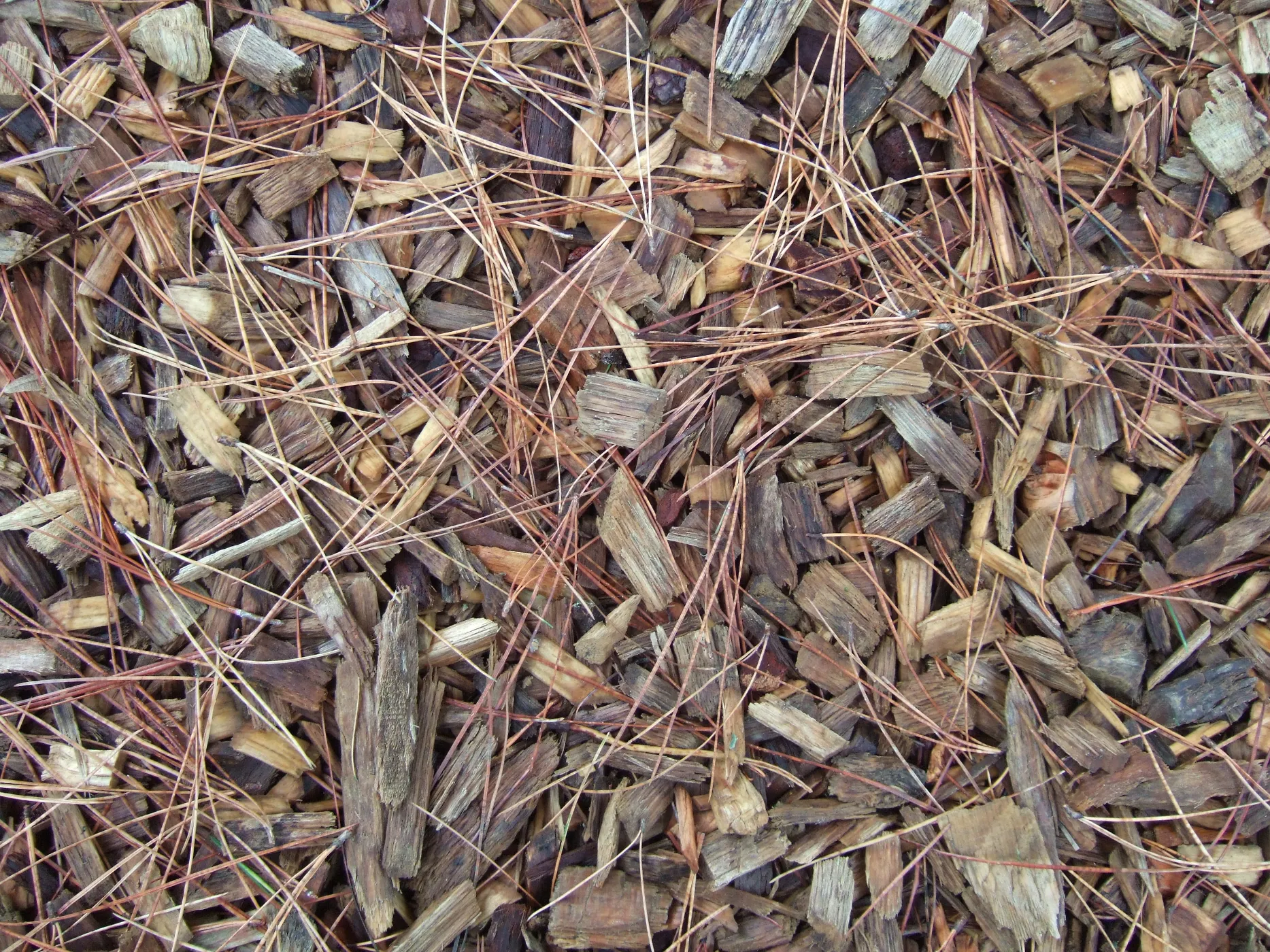
Wood chip mulch at Wisley (Wood chip mulch at Wisley)
Wood chip mulch protecting the soil in the garden of the Royal Horticultural Society (Royal Horticultural Society) at Wisley (Wisley), Surrey (Surrey). It is used to improve and protect the soil.
Organic mulch is most preferable for sweet cherry, as it not only protects the soil but also feeds it.
- Straw and hay. Available and retains moisture well. Layer 8–10 cm. Disadvantage — can attract rodents, so in winter the safety of the bark must be monitored (Hill and Perry, 2011).
- Wood chips, bark, sawdust. Durable, decompose slowly, and suppress weeds excellently. However, during decomposition they “tie up” nitrogen from the soil, so additional nitrogen fertilizer is required (about 20–30 g urea per 10 kg mulch) (Long et al., 2021; Neilsen et al., 2017).
- Compost and humus. Not only mulch but also fertilizer. Layer 3–5 cm. Improves soil and feeds the tree. Can be mixed with other materials (Phillips, 2005).
- Mown grass. Decomposes quickly and requires frequent addition. Do not use grass with weed seeds. Layer 3–5 cm (Mandal et al., 2021).
- Leaf litter. Good for improving structure, but may contain disease pathogens, so it is better to use leaves from healthy trees (Buckingham, 2010).
Inorganic mulch is more often used in intensive orchards or to solve specific tasks.
- Black polyethylene film or agrofabric (geotextile). Effectively suppresses weeds, preserves moisture, and accelerates soil warming in spring. Disadvantage — does not allow air and organic matter through, and can accumulate condensation. Used in tree strips, especially on young plantings (Long et al., 2021).
- Reflective mulches (white film, foil, metallized covers). Used to improve lighting of the lower canopy, which improves fruit color and flower bud initiation. Especially useful in high-density orchards with vertical training systems (Long et al., 2021; Mandal et al., 2021). Such mulches are laid in interrows during fruit ripening.
3.3. How to Mulch Correctly
To make mulch beneficial rather than harmful, follow several rules.
- Layer depth. For organic mulch, 5–10 cm is optimal. A too thin layer does not work; a too thick one (more than 15 cm) can cause souring and bark rot.
- Distance from the trunk. Do not place mulch right up to the stem. Leave 5–10 cm of free space so the bark does not become damp and rodents do not have direct access to it (Long et al., 2021; Trunov and Samoshchenkov, 2012).
- Time of application. It is better to mulch in spring, after the soil has warmed (usually in May), or in autumn, before the onset of stable cold. Spring application on cold soil delays its warming, which can slow growth (Neilsen et al., 2017).
- Soil preparation. Before applying mulch, remove perennial weeds, loosen the surface, and apply fertilizers if necessary. If using high-carbon materials (chips, sawdust), add nitrogen fertilizer.
- Renewal. Organic mulch decomposes in 1–2 years, so it is periodically added. Inorganic mulch is cleaned of debris and replaced if necessary.
3.4. Precautions
- Rodents. Mulch is a shelter for mice and voles, which can gnaw bark in winter. To avoid damage, do not place mulch right up to the trunk, and in winter trample snow around the tree or use traps (Hill and Perry, 2011).
- Nitrogen starvation. Wood chips and sawdust bind nitrogen during decomposition. If you notice yellowing leaves and weak growth, add nitrogen fertilizers or replace the mulch with compost (Long et al., 2021).
- Acidification. Long-term use of conifer bark or sawdust can acidify the soil. Sweet cherry prefers pH 6–7, so liming should be carried out if necessary (Neilsen et al., 2017).
- Diseases. Do not use mulch from diseased plants (leaves, branches) — this can contribute to the spread of infection (Buckingham, 2010).
3.5. Regional Features
In arid regions, mulching with organic materials is a mandatory practice. It reduces watering and protects roots from overheating. In rainy and cool regions, mulch can slow soil warming in spring, so it is better to apply it later or use black film to accelerate warming. On slopes, mulch prevents erosion. In cold regions, autumn mulching helps protect roots from frost, but the layer should not be too thick so the bark does not become damp (Trunov and Samoshchenkov, 2012; Long et al., 2021).
Thus, mulching is a simple but powerful tool in the gardener’s hands. It improves the water and temperature regime of the soil, suppresses weeds, and gradually enriches it with organic matter. The main thing is to use the right material, observe depth and distance from the trunk, and take regional features into account.
4. Weed Control
Weeds are serious competitors of sweet cherry for water, nutrients, and light. They are especially dangerous in young orchards, where the tree’s root system has not yet occupied a sufficient volume of soil. In the first years after planting, weeds can take a significant part of moisture and nutrients from the tree, leading to weakened growth, delayed entry into fruiting, and reduced winter hardiness. Therefore, weed control is an obligatory element of the sweet cherry care system (Longstroth and Perry, 1996; Neilsen et al., 2017; Trunov and Samoshchenkov, 2012).
4.1. Why Weeds Are Dangerous for Sweet Cherry
Sweet cherry is a crop with a relatively shallow and well-branched root system that actively develops in the upper soil layer. Weeds, especially perennial grasses and rhizomatous species, form a dense root network in the same horizon and intercept water and nutrients. Studies show that competition with weeds can reduce the growth of young trees by 30–50% or more (Neilsen et al., 2017; Long et al., 2021).
In addition to direct competition, weeds create indirect problems:
- Shelter for rodents. Dense vegetation near the trunk is an ideal refuge for mice and voles, which gnaw bark in winter (Hill and Perry, 2011).
- Reservoir of diseases and pests. Many weeds are intermediate hosts of disease pathogens and pests. For example, Pseudomonas syringae (the causative agent of bacterial canker) can live on the surface of weeds, and aphids and mites can move from weeds to the tree (Long et al., 2021; Mandal et al., 2021).
- Difficulty of cultivation. Weeds interfere with loosening, irrigation, harvesting, and protective treatments.
- Worsened aeration. Dense grass cover reduces air exchange in the upper soil layer, which negatively affects root activity (Trunov and Samoshchenkov, 2012).
4.2. Types of Weeds and Control Strategies
Weeds are divided into three main groups, and each requires its own approach.
Annual weeds (white goosefoot, amaranth, shepherd’s purse, chickweed) complete their life cycle in one season. They reproduce by seeds and quickly capture free space. The main strategy is to prevent them from setting seed. Early loosening, mulching, and timely mowing before seed formation are effective (Long et al., 2021; Trunov and Samoshchenkov, 2012).
Biennial weeds (thistle, melilot, mullein) form a rosette and root system in the first year, and in the second they flower and produce seeds. The best time for destruction is the first year, while the plant has not accumulated strength. Deep root cutting or removal of the rosette is effective before flowering (Long et al., 2021).
Perennial weeds (couch grass, sow thistle, bindweed, goutweed, dandelion) are the most dangerous. They have a powerful root system that quickly recovers after mechanical removal. Systemic measures are needed here: repeated root cutting, exhausting the plant, or the use of selective herbicides. On small plots, regular mowing and covering the soil with dense mulching material (geotextile, black film) for 1–2 seasons help (Neilsen et al., 2017; Phillips, 2005).
4.3. Control Methods
Mechanical methods are the basis of control in amateur and small farm orchards.
- Loosening and cultivation. Regular loosening of tree strips to a depth of 8–12 cm destroys annual weed seedlings and cuts the rhizomes of perennials. It is carried out 3–5 times per season, depending on the rate of weed regrowth (Trunov and Samoshchenkov, 2012; Potapov et al., 2000).
- Hand weeding. Necessary in the tree zone, where machinery cannot be used. It is especially important to remove weeds near the trunk — this reduces the risk of bark damage by rodents (Hill and Perry, 2011).
- Mowing interrows. In orchards with sodding, interrows are mowed 4–6 times per season, preventing grasses from setting seed. Mown grass can be left in place as mulch or removed (Mandal et al., 2021).
Mulching is one of the most effective ways to suppress weeds. A dense layer of organic mulch (straw, chips, compost) 8–10 cm thick or inorganic materials (agrofabric, black film) almost completely blocks the germination of most weeds. More details in section 3 (Long et al., 2021; Neilsen et al., 2017).
Herbicides are used with caution. In amateur orchards, it is better to avoid their use near the trunk, since many herbicides (especially glyphosate) can penetrate through the bark and suppress the tree. If herbicides cannot be avoided, selective preparations are used and applied strictly in the tree strip, avoiding contact with leaves and bark. Young trees are especially sensitive — in the first 2–3 years after planting, herbicides are best not used (Long et al., 2021; Trunov and Samoshchenkov, 2012).
Biological methods include the use of green manures, which occupy the ecological niche and displace weeds. For example, sowing mustard, phacelia, or vetch in interrows suppresses weed growth and simultaneously improves the soil. Green manures are mowed before seeding and incorporated into the soil or left as mulch (Mandal et al., 2021; Phillips, 2005).
4.4. Features of Control in Different Periods
In a young orchard (1–5 years). Weeds are especially dangerous. The tree strip 1–1.5 m wide is kept under black fallow or mulch. Loosening is carried out regularly, preventing weeds from setting seed. In interrows, vegetables or green manures can be grown, but they must not compete with the tree (Trunov and Samoshchenkov, 2012; Longstroth and Perry, 1996).
In a fruiting orchard. Competition weakens, as the tree roots occupy a large volume. However, weeds still need to be controlled, especially in the tree strip. Mulching and periodic mowing of interrows are effective here (Long et al., 2021).
In autumn, it is important to remove weeds near the trunks to deprive rodents of shelter for winter. Mown grass and plant residues are best removed or composted (Hill and Perry, 2011).
4.5. Regional Features
In arid regions, weed control is especially important, as they take scarce moisture. Mulching and black fallow are preferable here. In rainy regions, weeds grow quickly, so frequent mowing and drainage are needed. On heavy soils, repeated loosening and application of organic matter that improves structure are effective. On sandy soils, mulch helps retain moisture and nutrients that are easily leached (Neilsen et al., 2017; Long et al., 2021).
Thus, weed control is not a one-time measure but a constant process. A combination of mechanical methods, mulching, and the correct choice of soil management system allows weed vegetation to be kept under control without harm to the tree or the environment.

Solar Automatic Drip Irrigation Kit for Gardens
Automate watering for pots, gardens and small greenhouses. This solar-powered system features a timer to help schedule water delivery to your plants.
- Solar-powered
- 15 m irrigation hose
- Programmable watering
Affiliate link · Check included accessories.
5. Supports (When Necessary, Types of Supports)
Sweet cherry is a crop historically grown as a large tree on vigorous rootstocks. Such trees have a powerful root system and are well anchored in the soil, so traditionally they were grown without supports. However, modern horticulture increasingly uses dwarf and semi-dwarf rootstocks, which provide early fruiting, a compact canopy, and ease of harvesting, but have a superficial and less developed root system. Such trees need support, especially in the first years of life and during fruiting. The question of supports is one of the key ones when establishing an intensive sweet cherry orchard (Longstroth and Perry, 1996; Long et al., 2021; Potapov et al., 2000).
5.1. When Supports Are Necessary
The need for supports is determined by several factors.
Rootstock type. The most important factor. Trees on vigorous rootstocks (Mazzard, Mahaleb, Colt, F12/1) are usually sufficiently well anchored and do not require permanent support, unless they grow on a windy site or on soils with a close groundwater level (Longstroth and Perry, 1996; Webster, 1996).
Dwarf and semi-dwarf rootstocks (Gisela 3, Gisela 5, Gisela 12, Krymsk 5, Krymsk 6, Edabriz, P60, 62-396) form a superficial root system with thin and brittle roots. Such trees do not hold well in the soil and can lean or even fall under the weight of the crop or from wind. For them, support is mandatory. For example, Gisela 12 has a poorly developed root system and requires support; Gisela 5 — from moderate to good, but for low-productivity varieties it may be sufficient without support; Edabriz requires support and produces root suckers (Mandal et al., 2021; Long et al., 2021; Potapov et al., 2000).
Tree age. In the first 2–3 years after planting, while the root system has not adapted and anchored, support is needed even for vigorous varieties. This especially applies to seedlings planted in spring: wind can loosen them, tear young roots, and worsen establishment (Buckingham, 2010; Trunov and Samoshchenkov, 2012).
Training system. Trees formed as spindle, spindlebush, palmette, or other artificial forms need support permanently, since their canopy is artificially limited and does not have natural stability. For such forms, a trellis is often used — a system of wires and posts (Potapov et al., 2000; Long et al., 2021).
External conditions. Strong winds, slopes, light sandy soils, and a high groundwater level all increase the risk of trees leaning and falling. In such areas, support is necessary regardless of rootstock (Longstroth and Perry, 1996; Trunov and Samoshchenkov, 2012).
Crop load. Trees on dwarf rootstocks often become overloaded with fruit, especially varieties such as Lapins and Sweetheart, which are prone to abundant fruiting. Under the weight of fruit, branches can hang down to the ground, and the trunk can lean. Support helps distribute the load evenly (Long et al., 2021; Mandal et al., 2021).
5.2. Types of Supports
Depending on the type of orchard and training system, different types of supports are used.
Individual stakes. The simplest and most common type of support for young trees. A stake is driven next to the trunk (at a distance of 10–15 cm) and the tree is tied with soft material in a “figure-eight” pattern. For vigorous varieties, one stake 1.5–2 m high is sufficient; for dwarf ones — 2–2.5 m. The stake must be strong, rot-resistant (treated), and buried in the soil at least 50–60 cm. The tie is checked annually so that it does not cut into the bark (Buckingham, 2010; Trunov and Samoshchenkov, 2012; Potapov et al., 2000).
Trellis. A system of posts and wires used to support trees on dwarf rootstocks, especially with flat canopy forms (palmette, spindle, UFO, Super Slender Axe). Posts (wooden, concrete, or metal) are installed every 15–20 m, and 2–6 rows of wire are stretched on them. The height of the posts is about 3 m above the soil surface. The first wire is stretched at a height of 0.8–1.0 m, the second — 1.1–1.3 m, the third — 1.8–2.0 m, sometimes a fourth is added at a height of 2.4–2.6 m. Branches and trunks of trees are tied to the wires (Potapov et al., 2000; Long et al., 2021).
For spindle-shaped canopies, the lower branches often hang down under the weight of the crop, interfering with soil cultivation. In such cases, two more side wires are added at a height of 0.8–1.0 m to support the branches (Potapov et al., 2000).
Permanent supports for mature trees. If a tree on a dwarf rootstock is already mature and continues to fruit, but its stability is questionable, permanent supports are used: powerful posts dug next to the trunk, or a system of guy wires. In some orchards, special branch props (chatals) are used — wooden forks installed under the most loaded branches (Trunov and Samoshchenkov, 2012; Potapov et al., 2000).
Bamboo or wooden slats. For each tree on a trellis, an individual slat (bamboo or wooden) is often used, attached to the wires with staples. This allows the trunk and branches to be formed in the desired position (Potapov et al., 2000).
5.3. Materials and Installation
Post material. Wooden posts last 10–15 years, sometimes up to 20, if treated with machine oil, tar, or another antiseptic. Concrete and metal (asbestos-cement) posts are more durable but more expensive. The distance between posts is 15–20 m, height above the soil is about 3 m (Potapov et al., 2000).
Wire. Galvanized wire with a diameter of 2.5–4 mm is used. Tension must be sufficient to withstand the weight of branches and crop, but not to squeeze the bark. For tying, soft material is used: twine, special garden tapes, rubber rings. Rigid wire or fishing line is unacceptable — they injure the bark (Longstroth and Perry, 1996; Trunov and Samoshchenkov, 2012).
Stake installation. The stake is driven in before planting the tree so as not to damage the roots. For a seedling with a closed root system, the stake is installed at an angle so as not to destroy the root ball. For a bare-root seedling, the stake is driven vertically at a distance of 10–15 cm from the trunk, buried 50–60 cm. The tree is tied in two places: at the base of the canopy and at a height of 1–1.2 m. The tie should be loose so as not to interfere with trunk thickening (Buckingham, 2010; Trunov and Samoshchenkov, 2012).
Support maintenance. The condition of stakes, wires, and ties is checked annually. Loose ties are tightened, damaged ones are replaced. Posts and wire are cleaned of rust and treated if necessary. It is important that the support does not become a source of infection: damaged bark from friction against wire is an open gate for bacterial canker (Longstroth and Perry, 1996).
5.4. Features for Different Orchard Types
Amateur orchard. For a few trees on vigorous rootstocks, individual stakes are sufficient in the first 2–3 years. If trees are on dwarf rootstocks, stakes are left for the entire life of the tree. Branches overloaded with fruit can be propped with forks (Trunov and Samoshchenkov, 2012).
Intensive orchard. Here a trellis is indispensable. Trees on dwarf rootstocks are planted in rows, along which posts are installed and wire is stretched. The trellis serves not only as support but also as the basis for canopy formation. In some systems (UFO, Super Slender Axe), the wire is the load-bearing structure for fruit-bearing branches (Long et al., 2021; Mandal et al., 2021).
Orchards on slopes. Supports must be especially reliable, as wind and water increase the load on the root system. Here a combination of individual stakes and trellis is often used. When terracing, supports are installed along the terraces (Trunov and Samoshchenkov, 2012).
5.5. Regional Features
In windy regions, support is mandatory even for vigorous rootstocks. In cold regions, stakes help protect young trees from frost cracks and loosening when the soil freezes. In arid regions, supports do not save from drought but prevent leaning during irrigation and wind. In regions with abundant precipitation, supports must be resistant to rot, so concrete or treated wooden posts are preferable (Longstroth and Perry, 1996; Potapov et al., 2000).
Thus, supports are not just insurance against falling, but a necessary element of sweet cherry cultivation technology on dwarf rootstocks. The correct choice of support type, material, and timely maintenance ensure tree stability, orchard longevity, and high fruit quality.
6. Protection from Unfavorable Weather Factors
Sweet cherry is a crop that depends heavily on weather. Spring frosts, rain during ripening, hail, wind, summer heat, and winter frosts can not only reduce the harvest but also kill the tree. Unlike many other fruit crops, sweet cherry blooms early, fruit ripens in a short period, and the thin skin makes it vulnerable to cracking. Therefore, protection from unfavorable weather factors is an obligatory part of care, especially in regions with unstable climate (Blanke et al., 2017; Longstroth and Perry, 1996; Mandal et al., 2021).
6.1. Spring Frosts


Flowering lower branches of a sweet cherry tree (Prunus avium)
The photograph was taken in Meiringskloof Nature Park, Fouriesburg, Republic of South Africa.
Sweet cherry blooms among the first fruit crops. In central Russia and northern regions, flowering often coincides with returning cold. Critical temperatures for flowers and ovaries: at −2 °C up to 10% of flowers are damaged, at −4 °C up to 90% (Longstroth and Perry, 1996). Radiation frosts are especially dangerous, when at night with a clear sky the soil quickly loses heat and cold air accumulates in low areas. Advective frosts associated with the arrival of a cold front are less predictable and dangerous everywhere (Blanke et al., 2017).
Protection measures:
- Site selection. Do not plant sweet cherry in low areas and hollows where cold air stagnates. Slopes and elevated areas with good air drainage are better (Longstroth and Perry, 1996; Blanke et al., 2017).
- Variety selection. Late-flowering varieties less often fall under frosts. In regions with frequent returning cold, choose varieties with late flowering (Mandal et al., 2021).
- Smoking and bonfires. When frost is threatened (temperature around 0 °C and below), smoke piles or special smoke bombs are placed in the orchard. Smoke reduces heat radiation from the soil surface and raises the temperature by 1–2 °C. Important: smoke should be dense but not toxic to flowers (Trunov and Samoshchenkov, 2012; Potapov et al., 2000).
- Overhead irrigation. Fine-droplet overhead irrigation (micro-sprinklers) protects flowers while water freezes on them, releasing latent heat. The method is effective at temperatures not below −6 °C and in calm weather. It requires continuous operation until the frost ends (Blanke et al., 2017; Longstroth and Perry, 1996).
- Covering materials. For small trees and bush forms, agrofabric or spunbond can be used, throwing them over the canopy at night (Hill and Perry, 2011).
- Fall recharge irrigation. Before frost, abundant irrigation of the soil increases its heat capacity and reduces the risk of root damage (Trunov and Samoshchenkov, 2012).
6.2. Rain and Fruit Cracking
Cracking is one of the main problems of sweet cherry in regions with rainy summers. Water penetrates through microdamages in the skin (especially in the area of the pedicel and at the top of the fruit), the fruit swells and bursts. Losses can reach 50–90% of the harvest (Knoche and Winkler, 2017; Mandal et al., 2021). Varieties with thin skin are especially sensitive (Bing, Brooks, Skeena), while Regina, Black Pearl, Lapins are resistant (Knoche and Winkler, 2017).


Fruit cracking in sweet cherry (Prunus avium L.)
The illustration shows fruits with cracks at different ripening stages. It well complements the account of skin damage, especially under moist conditions before harvest.


Fruit cracking in sweet cherry and their infection by phytopathogens
The collage shows sweet cherry (Latin: Prunus avium) fruits on tree branches with pronounced physiological cracking of the skin. This problem often arises from sharp fluctuations in moisture (for example, heavy precipitation after a dry period), when fruits take up water faster than the skin stretches. As stated in the description, deep cracks serve as 'open gates' for the entry of pathogenic microorganisms (fungi and bacteria). The photo clearly shows signs of secondary infection and tissue necrosis at the rupture sites, which leads to rotting and makes the crop unsuitable for sale.
Protection measures:
- Rain covers. In intensive orchards, tunnels or canopies made of polyethylene film are used. This is the most reliable method, but expensive (Long et al., 2021; Mandal et al., 2021).
- Fruit treatment. 2–3 weeks before ripening, calcium supplements (CaCl₂) are applied — they strengthen the skin and reduce cracking. Film coatings (RainGard, Parka) are also used, creating a water-repellent layer (Knoche and Winkler, 2017; Long et al., 2021).
- Irrigation regulation. Sharp fluctuations in soil moisture increase cracking. Maintain stable moisture, especially during fruit swelling (Knoche and Winkler, 2017).
- Harvest before rain. If prolonged rains are forecast, it is better to harvest slightly earlier, even if the fruit has not reached full color (Long et al., 2021).
6.3. Hail
Hail can destroy the harvest in a few minutes: it damages leaves, flowers, fruit, breaks branches, and wounds bark. In regions with frequent thunderstorms (southern Russia, the Caucasus, some areas of the USA), hail is a serious risk (Trunov and Samoshchenkov, 2012; Hill and Perry, 2011).


Fruit trees covered with hail protection nets
The photograph was taken in Igea, autonomous community of La Rioja, Spain. The nets create a physical barrier protecting plants and crops from hail.
Protection measures:
- Anti-hail nets. Stretched over trees at a height of 3–4 m. Mesh 5–10 mm. Nets last 8–10 years and also protect from birds. Expensive but effective for valuable varieties (Trunov and Samoshchenkov, 2012).
- Orchard placement. If hail is frequent, it is better to separate plots by 5–7 km so that hail does not destroy the entire harvest at once (Trunov and Samoshchenkov, 2012).
- Insurance. In some regions, crop insurance against hail is available.
6.4. Wind
Strong wind breaks branches, tears off fruit, increases evaporation, and dries out the soil. During flowering, wind interferes with bee flight activity, reducing pollination. Young trees on dwarf rootstocks can lean and fall (Longstroth and Perry, 1996; Blanke et al., 2017).
Protection measures:
- Windbreak strips. Trees and shrubs that do not compete with sweet cherry are planted around the orchard perimeter (for example, birch, poplar, but not fruit trees). Strips should be permeable so as not to create stagnation of cold air (Longstroth and Perry, 1996; Trunov and Samoshchenkov, 2012).
- Trellis and supports. For dwarf trees — mandatory (Long et al., 2021).
- Canopy formation. A sparse canopy is better ventilated and suffers less from wind (Potapov et al., 2000).
6.5. Sunburn and Heat
In summer, bark on the south and southwest side of the trunk can overheat, especially after pruning, when previously shaded areas are opened. In winter, sunburn occurs due to sharp temperature fluctuations: during the day the bark heats up, at night it freezes, leading to cracking and tissue death (Blanke et al., 2017; Potapov et al., 2000).
Protection measures:
- Whitewashing of trunks. In autumn or at the end of winter, trunks and bases of skeletal branches are whitewashed with lime with the addition of copper sulfate or special garden paints. This reflects sunlight and reduces overheating (Trunov and Samoshchenkov, 2012; Blanke et al., 2017).
- Shading. In hot regions, shade nets are used, especially for young trees (Mandal et al., 2021).
- Irrigation. In heat, trees need additional watering. Overheating is aggravated by drought (Long et al., 2021).
6.6. Winter Unfavorable Factors
In winter, sweet cherry can suffer from:
- Frost cracks — longitudinal bark cracks due to sharp temperature fluctuations. Prevention: whitewashing, trunk covering, selection of winter-hardy varieties (Potapov et al., 2000).
- Root freezing. Roots of dwarf rootstocks (especially Gisela) are sensitive to low temperatures. Mulching the tree circle with peat, straw, or snow retention helps protect the roots (Long et al., 2021; Mandal et al., 2021).
- Bark damping off — occurs under deep snow at a temperature around 0 °C. To avoid this, do not cover the trunk too early and do not use dense materials that retain moisture (Trunov and Samoshchenkov, 2012).
- Rodent damage. In winter, mice and hares gnaw bark. Protection: tying trunks with netting, spruce branches, roofing felt; trampling snow around the tree (Hill and Perry, 2011; Trunov and Samoshchenkov, 2012).
6.7. Regional Features
In cold regions, the main emphasis is on winter-hardy varieties, frost protection, and preparation for winter. In warm regions — on protection from heat, drought, and early flowering (risk of frost). In rainy regions — on drainage and protection from cracking. In arid regions — on irrigation and mulching. In windy regions — on supports and windbreak strips (Blanke et al., 2017; Long et al., 2021; Mandal et al., 2021).
Thus, protection from weather factors is a complex of measures that begins with the correct choice of site and variety and continues throughout the year. There is no universal recipe, but understanding the main risks and timely application of available methods can minimize losses.

7-in-1 Wi-Fi Weather Station
Monitor local weather conditions with a wireless outdoor sensor. Track temperature, humidity, rainfall, wind speed and direction, and atmospheric pressure. Ideal for gardens, farms and greenhouses.
- Wireless outdoor sensor
- Solar-powered
- Wi-Fi connectivity
Affiliate link · Check regional compatibility.
7. Preparation for Winter and Overwintering
Sweet cherry is a crop of temperate climate, but its winter hardiness depends on many factors: tree age, rootstock, variety, summer and autumn conditions, and how correctly the gardener prepared the plants for cold. Even frost-resistant varieties can suffer if the tree went into winter weakened, with unripened shoots, damaged bark, or dried-out soil. Therefore, preparation for winter is not a separate measure but the logical completion of the entire season (Longstroth and Perry, 1996; Potapov et al., 2000; Trunov and Samoshchenkov, 2012).
7.1. Why Proper Preparation Is Important


Sweet cherry tree in winter
Winter damage to sweet cherry can be of several types:
- Root freezing. Especially dangerous for dwarf rootstocks (Gisela, Edabriz), whose roots are located close to the surface and are sensitive to low temperatures (Mandal et al., 2021; Long et al., 2021).
- Frost cracks and sunburn of bark. Occur due to sharp temperature fluctuations day and night, especially on the south and southwest side of the trunk (Blanke et al., 2017).
- Freezing of flower buds. In stone fruit crops they are less winter-hardy than in pome crops. Buds can die during late winter frosts or after thaws (Longstroth and Perry, 1996; Potapov et al., 2000).
- Rodent damage. Mice and hares gnaw bark at the base of the trunk, which often leads to tree death (Hill and Perry, 2011).
- Bark damping off. Occurs under deep snow at a temperature around 0 °C, especially if the trunk was covered too early or with dense material (Trunov and Samoshchenkov, 2012).
To avoid these problems, preparation begins in advance — from late summer and continues until stable cold.
7.2. Fall Recharge Irrigation
Autumn recharge irrigation is one of the most effective methods of increasing winter hardiness. It saturates the soil with moisture, increases its heat capacity, and protects roots from freezing. In addition, wet soil cools more slowly and retains heat longer. Irrigation is carried out after leaf fall but before stable frosts, usually in October–November (depending on the region). The rate is 50–100 l per tree; for mature trees — up to 150–200 l. The soil is moistened to a depth of 40–60 cm (Trunov and Samoshchenkov, 2012; Potapov et al., 2000).
Important: do not water late, when the soil is already frozen — water will not be absorbed and may stagnate near the roots.
7.3. Autumn Fertilization
In the second half of summer and autumn, nitrogen fertilizers are excluded — they stimulate shoot growth, which does not have time to ripen and freezes. During this period, phosphorus and potassium are needed, increasing frost resistance. Superphosphate (40–60 g/m²) and potassium sulfate (20–30 g/m²) are applied under digging of the tree circle. Ash can be used (200–300 g/m²). Organic matter (compost, humus) is applied under digging or as mulch (Neilsen et al., 2017; Trunov and Samoshchenkov, 2012; Potapov et al., 2000).
7.4. Whitewashing of Trunks and Skeletal Branches


Tree trunks with white protective coating
Whitewashing reflects sunlight and reduces bark heating, helping to reduce the risk of sunburn and frost cracks.
Whitewashing protects bark from winter sunburn and frost cracks. It is carried out in late autumn (after leaf fall) or at the end of winter. Composition: lime (2–2.5 kg), copper sulfate (200–300 g), water (10 l). You can add PVA glue or mullein for better adhesion. The trunk and bases of skeletal branches are whitewashed. In cold regions, whitewashing is repeated in February–March (Blanke et al., 2017; Trunov and Samoshchenkov, 2012; Potapov et al., 2000).
7.5. Protection from Rodents
Young trees are especially vulnerable. Protection measures:
- Tying the trunk with netting (metal or plastic) to a height of 50–100 cm.
- Tying with spruce branches, roofing felt, thick paper, but not polyethylene (bark damps off under it).
- Trampling snow around the tree in late autumn and winter.
- Placement of poisoned baits (with caution if there are pets).
- Repellents (for example, coating the trunk with a mixture of clay and mullein with the addition of creolin) (Hill and Perry, 2011; Trunov and Samoshchenkov, 2012; Potapov et al., 2000).
7.6. Mulching and Covering Roots
After fall recharge irrigation, the tree circle is mulched with peat, compost, straw, sawdust in a layer of 5–10 cm. This protects roots from freezing and preserves moisture. Important: mulch is not placed right up to the trunk, leaving 5–10 cm of free space to avoid bark damping off and rodent damage (Long et al., 2021; Mandal et al., 2021).
In regions with severe winters and little snow cover, the root system is additionally covered with spruce branches or dry leaves in a layer of 10–15 cm.
7.7. Autumn Pruning and Sanitary Measures
In autumn, only sanitary pruning is carried out: dry, broken, and diseased branches are removed. Formative pruning is better postponed to spring so as not to weaken the tree before winter and not provoke shoot growth. All cuts larger than 1 cm in diameter are covered with garden putty or a special paste. Removed branches and leaves are burned so as not to leave sources of infection (Trunov and Samoshchenkov, 2012; Potapov et al., 2000).
7.8. Features of Overwintering on Dwarf Rootstocks
Trees on dwarf and semi-dwarf rootstocks are less winter-hardy than on vigorous ones. Their roots are located superficially and suffer more from frost. Therefore, the following are especially important for them:
- fall recharge irrigation;
- mulching of the tree circle;
- covering the trunk;
- protection from rodents;
- in cold regions — additional covering of roots (Long et al., 2021; Mandal et al., 2021).
In addition, such trees often need support, which also helps them withstand winter winds.
7.9. Regional Features
In southern regions, winters are mild, but sharp cold snaps and thaws are possible. Here it is important not to overdo covering, so as not to cause damping off. Whitewashing, mulching, and fall recharge irrigation are sufficient (Trunov and Samoshchenkov, 2012).
In central Russia and northern regions, winters are severe, so a set of measures is mandatory: fall recharge irrigation, phosphorus-potassium fertilization, whitewashing, mulching, protection from rodents, covering roots (Potapov et al., 2000; Longstroth and Perry, 1996).
In regions with little snow cover, roots can freeze even at not very low temperatures. Here mulching and covering with spruce branches are especially important.
In regions with abundant snowfall, there is a risk of bark damping off and branch breakage under the weight of snow. Snow is shaken off branches, and trunks are not covered too early.
7.10. Typical Mistakes
- Late nitrogen fertilization. Causes shoot growth that does not ripen and freezes.
- Lack of fall recharge irrigation. Dry soil freezes more strongly, roots suffer from frost.
- Early covering of the trunk. Under dense material, bark damps off.
- Tying with polyethylene. Does not allow air through, causes damping off.
- Leaving fallen leaves and diseased branches. Source of infection for the next year.
- Ignoring protection from rodents. Young trees can be completely girdled.
Proper preparation for winter helps sweet cherry tolerate cold more easily, preserve flower buds and roots, and in spring quickly start growing and produce a full harvest.
8. Main Mistakes and Questions (FAQ)
Even with good care, gardeners often encounter the same problems. Below are typical mistakes and answers to frequent questions based on agronomic data and sweet cherry growing practice in different regions.
8.1. Main Mistakes
1. Deep planting of the graft union.
One of the most dangerous mistakes. If the graft union ends up below the soil level, the scion may root, the tree loses signs of dwarfness, fruits worse, and suffers more from bark diseases. Plant so that the graft union is 3–5 cm above the soil surface after settling (Longstroth and Perry, 1996; Trunov and Samoshchenkov, 2012).
2. Wrong site selection.
Sweet cherry grows poorly in low areas where cold air and water stagnate. This leads to freezing of flower buds, root rot, and weak growth. It is better to choose elevated, well-drained areas with air drainage (Longstroth and Perry, 1996; Potapov et al., 2000).
3. Ignoring pollinators.
Most sweet cherry varieties are self-sterile. If there is no suitable pollinator nearby, flowering will be abundant but there will be few ovaries. The exception is self-fertile varieties (Stella, Lapins, Sweetheart, etc.) (Buckingham, 2010; Hill and Perry, 2011; Long et al., 2021).
4. Excess nitrogen and late nitrogen fertilizing.
Overfeeding with nitrogen causes vigorous shoot growth, shading of the canopy, reduced fruit quality, and poor preparation for winter. Late nitrogen fertilizing is especially dangerous: shoots do not have time to ripen and freeze (Neilsen et al., 2017; Trunov and Samoshchenkov, 2012).
5. Too severe or incorrect pruning.
Excessive pruning increases water sprout growth, delays fruiting, and reduces winter hardiness. Pruning in winter for stone fruit is dangerous due to the risk of bacterial canker and silver leaf. Sweet cherry is best pruned after flowering or in early summer (Longstroth and Perry, 1996; Trunov and Samoshchenkov, 2012; Potapov et al., 2000).
6. Irregular irrigation.
Sharp “dry — wet” fluctuations lead to fruit cracking and tree stress. In arid regions, regular irrigation is necessary; in rainy regions, drainage. It is especially important to maintain stable moisture during fruit swelling (Knoche and Winkler, 2017; Long et al., 2021; Neilsen et al., 2017).
7. Lack of protection from birds, rain, and frost.
Birds can destroy a significant part of the harvest, rain causes cracking, and spring frosts damage flowers. Without nets, covers, and smoke, the harvest can be lost (Buckingham, 2010; Long et al., 2021; Mandal et al., 2021).
8. Mulch right up to the trunk and early covering.
This leads to bark damping off and creates shelter for rodents. Mulch is laid leaving 5–10 cm of free space around the trunk, and winter covering is done no earlier than stable cold (Hill and Perry, 2011; Trunov and Samoshchenkov, 2012).
9. Ignoring rootstock and supports.
On dwarf rootstocks, trees often lean and fall under the weight of the crop. Without supports, such orchards are unstable. In addition, different rootstocks require different agricultural practices: Gisela 5 is sensitive to drought, Mahaleb tolerates sandy soils better, Mazzard — heavy soils (Long et al., 2021; Mandal et al., 2021; Longstroth and Perry, 1996).
10. Leaving diseased leaves and fruit.
Fallen leaves and rotten fruit are a source of infection for the next year. They must be removed and destroyed, especially when affected by cherry leaf spot, brown rot, and other diseases (Buckingham, 2010; Hill and Perry, 2011; Mandal et al., 2021).
8.2. Frequently Asked Questions (FAQ)
1. Why does sweet cherry not fruit?
There are several reasons: young age (sweet cherry enters fruiting in the 5th–7th year, sour cherry — in the 3rd–5th) (Hill and Perry, 2011); absence of a pollinator for a self-sterile variety (Buckingham, 2010; Long et al., 2021); damage to flowers by frost (Longstroth and Perry, 1996); lack of chilling in warm regions (Mandal et al., 2021); excess nitrogen and vigorous growth (Neilsen et al., 2017); improper pruning (Trunov and Samoshchenkov, 2012); weak bee flight activity due to wind or rain (Trunov and Samoshchenkov, 2012). Also check lighting: in shade sweet cherry fruits poorly (Hill and Perry, 2011).
2. Why do fruits crack?
The main cause is rain during ripening. Water penetrates through microdamages in the skin, the fruit swells and bursts. The problem is aggravated by sharp fluctuations in soil moisture, calcium deficiency, and variety susceptibility. Measures: covers, calcium supplements, stable irrigation, selection of resistant varieties (Knoche and Winkler, 2017; Long et al., 2021; Mandal et al., 2021).
3. Why does gum appear on the trunk and branches?
Gummosis is a reaction to stress: frost, mechanical damage, severe pruning, bacterial canker. If gum is abundant and accompanied by suppression, the tree should be checked for bacterial canker and measures taken: cut out affected branches, disinfect cuts, treat with copper-containing preparations (Hessayon, 1993; Mandal et al., 2021; Trunov and Samoshchenkov, 2012).
4. How to water sweet cherry correctly?
Irrigation should be regular and sufficient, without sharp fluctuations. In arid regions — drip or micro-irrigation maintaining soil moisture. Fall recharge irrigation in autumn is mandatory. Avoid both drying out and waterlogging: water stagnation is dangerous for roots (Neilsen et al., 2017; Long et al., 2021; Trunov and Samoshchenkov, 2012).
5. What and when to fertilize?
In spring — nitrogen for growth, but in moderation. In summer — potassium, calcium, boron for fruit quality. In autumn — phosphorus and potassium for winter hardiness. Organic matter is applied in autumn or spring. It is better to rely on leaf diagnostics to avoid imbalance (Neilsen et al., 2017; Trunov and Samoshchenkov, 2012; Mandal et al., 2021).
6. When to prune sweet cherry?
Sweet cherry is pruned after flowering or in early summer to avoid infections. Winter pruning is dangerous. Sour cherry can be pruned similarly. Sanitary pruning is carried out at any time, but large cuts are best made during active growth (Longstroth and Perry, 1996; Trunov and Samoshchenkov, 2012; Potapov et al., 2000).
7. Is a pollinator needed?
For most sweet varieties — yes. Another variety flowering at the same time will do. Sour cherry and self-fertile varieties (Stella, Lapins, Sweetheart, Skeena, etc.) can fruit alone (Buckingham, 2010; Hill and Perry, 2011; Long et al., 2021).
8. Which rootstock to choose?
Mazzard — vigorous, long-lived, suitable for large plots. Mahaleb — drought-resistant, for sandy soils. Colt — semi-dwarf, requires good conditions. Gisela 5, 3, 12 — dwarf, early-fruiting, but require supports, irrigation, and fertile soil. Krymsk 5, 6 — winter-hardy and adaptive. The choice depends on climate, soil, and planting density (Longstroth and Perry, 1996; Mandal et al., 2021; Long et al., 2021).
9. How to protect the harvest from birds?
The most reliable way is nets. Scare-eye balls, shiny ribbons, and noise devices are also used. For small trees, it is enough to throw a net over the canopy (Hill and Perry, 2011; Buckingham, 2010; Long et al., 2021).
10. What to do with root suckers?
Suckers are removed because they weaken the tree and can be a refuge for pests. They are cut at the very base, without leaving stubs. On dwarf rootstocks, suckers may appear more often — this is normal, but they must be removed regularly (Potapov et al., 2000; Trunov and Samoshchenkov, 2012).
11. Why do fruits become smaller?
Causes: crop overload, lack of moisture and nutrition, canopy thickening, tree aging, poor pollination. Thinning of ovaries, pruning, irrigation, and fertilizing help restore size (Long et al., 2021; Hill and Perry, 2011; Mandal et al., 2021).
12. Can sweet cherry be planted after sweet cherry?
It is not recommended due to soil fatigue and accumulation of pathogens. You should wait 4–5 years, change the crop, carry out deep soil treatment, and add organic matter. Field grasses, legumes, and corn are suitable as intermediate crops (Potapov et al., 2000; Neilsen et al., 2017; Trunov and Samoshchenkov, 2012).
13. How to prepare sweet cherry for winter?
Main measures: fall recharge irrigation, phosphorus-potassium fertilization, whitewashing of trunks, mulching of the tree circle, protection from rodents, covering roots in cold regions (Trunov and Samoshchenkov, 2012; Potapov et al., 2000; Long et al., 2021).
14. Why does a seedling grow poorly after planting?
Probable causes: deep planting of the graft union, drying of roots during transport, weed competition, lack of irrigation, root damage, poor soil. It is important to plant correctly, mulch, water, and protect from weeds (Longstroth and Perry, 1996; Trunov and Samoshchenkov, 2012; Buckingham, 2010).
15. Is crop thinning necessary?
Yes, especially for varieties prone to overloading. Excess fruit becomes smaller, reduces winter hardiness, and leads to biennial fruiting. Thinning of ovaries and pruning help balance the load (Long et al., 2021; Hill and Perry, 2011; Mandal et al., 2021).

40W Full Spectrum LED Grow Light
Support healthy plant growth with full-spectrum LED lighting. Ideal for seedlings, indoor plants and small growing spaces. A practical solution for indoor gardening and year-round cultivation.
- Full-spectrum LED
- Energy-efficient design
- Indoor plant growing
Affiliate link · Check actual power and light coverage.
References
- Blanke, M.M., Lang, G.A., Meland, M. (2017). ‘Orchard microclimate modification.’, in Cherries: botany, production and uses. Wallingford: CABI, 244-268. doi: 10.1079/9781780648378.0244
- Buckingham, Alan (2010). ‘Cherries’, in Grow Fruit. New York, NY: DK Publishing, pp. 121-136.
- Gonçalves, B., Aires, Alfredo, Oliveira, Ivo, Afonso, S., Morais, M.Cristina, Correia, Sofia, Martins, Sandra, Silva, A.Paula (2021). ‘Sweet Cherry’, in Mandal, Debashis, Wermund, Ursula, Phavaphutanon, Lop, Cronje, Regina (ed.) Temperate Fruits. Production, Processing, and Marketing. Burlington, Canada: Apple Academic Press, pp. 333-416.
- Hessayon, D.G. (1993). ‘Tree fruit’, in The Fruit Expert. London, UK: Expert Books, pp. 3-57.
- Hill, Lewis, Perry, Leonard (2011). ‘Cherries, Sweet and Sour’, in The Fruit Gardener’s Bible. North Adams, MA: Storey Publishing, pp. 181-198.
- Knoche, M., Winkler, A. (2017). ‘Rain-induced cracking of sweet cherries.’, in Cherries: botany, production and uses. Wallingford: CABI, 140-165. doi: 10.1079/9781780648378.0140
- Long, L.E., Lang, G.A., Kaiser, Clive (2021). ‘Fruit Ripening and Harvest’, in Sweet Cherries. Crop Production Science In Horticulture. Boston, MA: CABI Publishing, pp. 282-303.
- Long, L.E., Lang, G.A., Kaiser, Clive (2021). ‘Managing the Orchard Environment’, in Sweet Cherries. Crop Production Science In Horticulture. Boston, MA: CABI Publishing, pp. 236-281.
- Longstroth, M., Perry, R.L. (1996). ‘Selecting the Orchard Site, Orchard Planning and Establishment’, in Webster, A.D., Looney, N.E. (ed.) Cherries. Crop Physiology, Production and Uses. Cambridge, MA: CABI Publishing, pp. 203-222.
- Neilsen, G.H., Neilsen, D., Forge, T. (2017). ‘Environmental limiting factors for cherry production.’, in Cherries: botany, production and uses. Wallingford: CABI, 189-222. doi: 10.1079/9781780648378.0189
- Phillips, Michael (2005). ‘The Orchard Site and Its Climate’, in The Apple Grower. A Guide for the Organic Orchardist. Vermont, USA: Chelsea Green Publishing, ch. 2.
- Вдовцева, Т.А., Черновалова, В.П. (1980). Лучшие сорта и особенности агротехники черешни [The best varieties and features of cherry cultivation]. null Ташкент: НИИ НТИиТЭИ Госплана УзССР.
- Потапов, В.А., Фаустов, В.В., Пильщикова, Ф.Н. (2000). ‘Плодовый сад [Orchard]’, in Плодоводство [Fruit growing]. Москва: Колос, pp. 207-369.
- Трунов, Ю.В., Самощенков, Е.Г., Дорошенко, Т.Н. (2012). ‘Технология производства плодов [Fruit production technology]’, in Плодоводство [Fruit growing]. Москва: КолосС, pp. 212-328.
