
Fertilizing and Feeding Sweet Cherry: A Practical Guide for Gardeners
1. Nutrition of Sweet Cherry


Flowering of a sweet cherry orchard (Prunus avium)
White flowers cover the trees in an orchard located in Bemmel, Lingewaard, Gelderland, Netherlands.
Sweet cherry is a crop that is demanding in terms of nutrition but at the same time sensitive to excess fertilizer. Unlike apple, sweet cherry is less tolerant of both nutrient starvation and overfeeding. Understanding the basic principles of tree nutrition will help avoid typical mistakes and obtain a stable harvest of quality fruit.
1.1. Characteristics of the Root System and Nutrient Uptake
The root system of sweet cherry is shallow: the bulk of the absorbing roots is concentrated in the upper 30–45 cm of soil (Neilsen et al., 2017). This means that the tree responds quickly to changes in moisture and nutrient availability in the topsoil. That is why sweet cherry is especially sensitive to competition from weeds and herbaceous cover, which actively consume water and nutrients from the same horizon.
Sweet cherry, like other fruit crops, absorbs nutrients in the form of ions from the soil solution. Nitrogen (N) enters mainly in the form of nitrates (NO3-) and ammonium (NH4+), phosphorus (P) as phosphates, and potassium (K) as potassium ions (K+). Calcium (Ca), magnesium (Mg), and micronutrients are also absorbed in ionic form (Neilsen et al., 2017).
1.2. Annual Cycle of Nutrient Consumption
Nutrient consumption by sweet cherry is uneven throughout the year and is closely linked to phenological phases. Unlike many other fruit crops, sweet cherry blooms very early—before leaf emergence—and forms its crop over a short period (2–3 months). This affects the dynamics of nutrition.
Early spring (bud swelling—flowering). During this period, the tree uses reserve nutrients accumulated in perennial tissues (trunk, scaffold branches, roots) in the previous season. Nitrogen uptake from the soil at this time is minimal because the soil is still cold and transpiration is low (Grassi et al., 2002, 2003). This is why autumn preparation of the tree and its accumulation of reserve substances are critically important for the future harvest.
Period of active shoot growth and fruit set. With the beginning of leaf emergence and an increase in soil temperature, the tree begins to actively absorb nitrogen, phosphorus, and potassium. This period coincides with rapid shoot growth and fruit set formation. The need for nitrogen at this time is maximal (Neilsen et al., 2004).
Period of fruit growth and ripening. At this time, the tree needs potassium and calcium to form quality fruit. Potassium is responsible for sugar content, fruit size, and storability; calcium is responsible for flesh firmness and resistance to cracking (Neilsen & Neilsen, 2003).
Post-harvest period. After harvest, the tree recovers, accumulating reserve nutrients for the next season. At this time, late foliar nitrogen fertilization (urea) is effective; it promotes flower bud initiation and increases winter hardiness (Ouzounis & Lang, 2011; Thielemann et al., 2014).
1.3. Main Nutrients and Their Roles
Sweet cherry needs a complex of macro- and micronutrients. However, the importance of individual elements is not equal.
Nitrogen (N). The most important element for growth and fruiting. Nitrogen is part of proteins, chlorophyll, and nucleic acids. With nitrogen deficiency, shoot growth weakens, leaves become small and pale green, and yield decreases (Neilsen et al., 2017). However, excess nitrogen leads to excessive shoot growth at the expense of fruiting, reduced winter hardiness, and poorer fruit quality.
Phosphorus (P). Necessary for the formation of the root system, flower buds, and fruit ripening. Sweet cherry consumes relatively little phosphorus, and its deficiency is rare. Nevertheless, phosphorus is important for energy metabolism and the transmission of genetic information (Trunov, 2012).
Potassium (K). The second most important element after nitrogen. Potassium regulates water metabolism, participates in sugar synthesis and their transport to fruit, and increases resistance to diseases and winter hardiness. Sweet cherry removes a significant amount of potassium with the harvest (Neilsen et al., 2017).
Calcium (Ca). Critically important for fruit quality. Calcium strengthens cell walls and reduces the risk of fruit cracking and physiological disorders. With calcium deficiency, fruit becomes soft and stores poorly (Neilsen & Neilsen, 2003).
Magnesium (Mg). Participates in photosynthesis (is part of chlorophyll) and activates many enzymes. Magnesium deficiency most often appears on light sandy soils and with excess potassium (Neilsen et al., 2017).
Micronutrients (B, Zn, Mn, Fe, Cu). Although their requirement is measured in grams and milligrams per hectare, their role is enormous. Boron (B) is important for flowering and fruit set, zinc (Zn) for shoot growth, manganese (Mn) for photosynthesis, and iron (Fe) for chlorophyll formation. Micronutrient deficiency is most often associated with high soil pH or poor drainage (Neilsen et al., 2017).
1.4. Optimal Nutrient Levels
Two main methods are used to assess the nutrient supply of sweet cherry: soil analysis and leaf analysis. Leaf analysis is the most informative; it is carried out in mid-summer (July–August), sampling leaves from the middle part of current-season shoots (Neilsen et al., 2017).
Optimal levels of elements in sweet cherry leaves (on a dry matter basis) are given in Table 1.
Table 1. Optimal levels of nutrients in sweet cherry leaves
| Element | Optimal level | Deficiency | Excess |
|---|---|---|---|
| Nitrogen (N) | 2.2–3.0% | < 1.9% | > 3.4% |
| Phosphorus (P) | 0.16–0.40% | < 0.10% | — |
| Potassium (K) | 1.3–3.0% | < 1.0% | — |
| Calcium (Ca) | 1.0–3.0% | — | — |
| Magnesium (Mg) | 0.3–0.6% | < 0.24% | — |
| Boron (B) | 25–60 ppm | < 20 ppm | > 80 ppm |
| Zinc (Zn) | 15–70 ppm | < 10 ppm | — |
| Manganese (Mn) | 20–200 ppm | < 20 ppm | — |
| Iron (Fe) | 20–500 ppm | — | — |
Source: Hanson & Proebsting (1996), Neilsen et al. (2017)
It should be emphasized that these values are approximate and may vary depending on cultivar, rootstock, region, and weather conditions. For example, trees on dwarfing rootstocks (Gisela 5, Gisela 6) often have lower leaf magnesium and potassium levels than trees on vigorous rootstocks (Neilsen & Kappel, 1996). In years with high yields, leaf phosphorus and potassium content may decrease (Neilsen et al., 2007).
1.5. Influence of Rootstock on Nutrition
Rootstock plays a key role in supplying the tree with nutrients. Own-rooted trees and trees on vigorous rootstocks (Mazzard, F12/1) have a powerful, deeply penetrating root system that efficiently obtains water and nutrients from a large soil volume. Trees on dwarfing rootstocks (Gisela 3, Gisela 5) have a limited, shallow root system, which makes them more dependent on regular irrigation and fertilizer application (Neilsen et al., 2016).
This means that dwarf orchards require a more intensive fertilization system: frequent, split fertilizer applications with irrigation water (fertigation) or regular foliar feeding. For vigorous trees, one or two fertilizer applications per season are sufficient (Neilsen et al., 2017).
1.6. Key Principle: Balance, Not Maximum
The main principle of sweet cherry nutrition is not “the more, the better” but “optimal balance.” An excess of one element often blocks the uptake of another. For example, excess potassium reduces magnesium and calcium uptake, while excess nitrogen reduces potassium and phosphorus uptake (Neilsen et al., 2017). Therefore, when applying fertilizers, it is important to rely on analysis results rather than intuition or a neighbor’s experience.
In the following sections, we will examine in detail which elements are most important in different growing phases, how to use organic and mineral fertilizers, how to carry out root and foliar feeding, and also consider the signs of nutrient deficiency and excess.
2. Which Nutrients Are Most Important (by Growing Phase)
The need of sweet cherry for nutrients changes during the season. For the tree to grow well and produce a quality crop, it is important not just to apply fertilizers but to do so at the right time, when a particular element is especially needed. Let us consider the main growing phases and the corresponding nutritional priorities.
2.1. Bud Swelling—Flowering (Early Spring)
During this period, the tree still has no leaves, and photosynthesis is practically not occurring. The growth and development of flower buds, and then flowering, are provided by reserve nutrients accumulated in perennial tissues (trunk, branches, roots) in the previous season (Grassi et al., 2002, 2003). Nutrient uptake from the soil at this time is minimal because the soil is cold and the root system is not yet active.
What is important: to provide the tree with sufficient reserves from autumn. If late foliar nitrogen fertilization (urea) was carried out in autumn, this helps accumulate reserves for early spring growth. Spring soil nitrogen application during this period is ineffective—the tree almost does not absorb it (Neilsen et al., 2017).
Key elements: reserve forms of nitrogen, phosphorus, potassium, and also boron. Boron plays an important role in pollen germination and fruit set. If there is a risk of boron deficiency, early spring foliar boron fertilization (for example, with boric acid) can be carried out before flowering (Hanson & Proebsting, 1996).
2.2. Flowering—Fruit Set


Pollination of sweet cherry flowers (Prunus avium)
Bees visit sweet cherry (Prunus avium) flowers during flowering. Pollinating insects ensure pollen transfer, which is necessary for successful fertilization and fruit set.
After leaf emergence, the tree begins to actively absorb elements from the soil. However, during flowering and immediately after it, the need for nitrogen is still not great. Excess nitrogen at this time can cause excessive shoot growth at the expense of fruit set.
What is important: to ensure good pollination and fruit set. This requires boron, zinc, and sufficient phosphorus and potassium. Phosphorus participates in cell division and fruit set formation, while potassium regulates water metabolism.
Practice: if last year’s leaf analysis showed a low boron level, spray with boron (0.01–0.02% boric acid solution) at the pink bud stage or at the beginning of flowering (Neilsen et al., 2017). It is better to postpone nitrogen fertilization during this period until flowering ends.
2.3. Shoot Growth and Fruit Formation (June—Early July)
This is the period of the most intensive nutrient consumption. The tree is actively growing and forming fruit, and the need for nitrogen, potassium, and calcium is maximal.
Nitrogen (N): necessary for shoot and leaf growth. However, it is important not to overfeed: excess nitrogen will cause canopy thickening, reduce light penetration, and worsen fruit quality. The optimal approach is split nitrogen application in small doses with irrigation water (fertigation) or as a root fertilization at the beginning of the phase (Neilsen et al., 2004).
Potassium (K): critically important for fruit growth, sugar accumulation, and improved taste. Potassium also increases resistance to diseases. During this period, the tree consumes the greatest amount of potassium. With potassium deficiency, fruit becomes smaller and less sweet.
Calcium (Ca): necessary for forming firm flesh and reducing fruit cracking. Calcium is poorly mobile in the plant, so it is important to ensure its constant supply. Foliar calcium fertilization (for example, calcium chloride) during fruit growth reduces the risk of cracking and improves storability (Neilsen & Neilsen, 2003).
Phosphorus (P): participates in energy metabolism, but its requirement during this period is moderate. Usually, phosphorus applied in autumn is sufficient.
2.4. Fruit Ripening


Macro photograph of branches of wild cherry (Prunus avium) with clusters of ripe dark red (almost black) fruits
During this period, the need for nitrogen decreases, while the need for potassium and calcium remains high. Excess nitrogen can delay ripening, worsen color, and reduce fruit storability.
What is important: to support fruit sizing and quality. Potassium fertilization (for example, potassium sulfate) 2–3 weeks before harvest promotes better sugar accumulation. Calcium fertilization (spraying fruit and leaves) is continued to strengthen the skin.
Practice: 2–3 weeks before harvest, stop nitrogen application. Irrigation and nutrition should be balanced to avoid fruit cracking.
2.5. After Harvest (Late Summer—Autumn)
After harvest, the tree experiences stress and needs recovery. At this time, flower buds for the next year are initiated, and reserve nutrients are accumulated.
Nitrogen (N): late foliar nitrogen fertilization (urea) in late summer or early autumn (September) effectively increases nitrogen content in tissues, which improves winter hardiness and the future harvest. Spraying is carried out with a 2–5% urea solution (Ouzounis & Lang, 2011; Thielemann et al., 2014).
Phosphorus and potassium: autumn application of phosphorus-potassium fertilizers (for example, superphosphate and potassium sulfate) helps strengthen the root system and increase frost resistance. These elements are poorly mobile in the soil, so it is better to incorporate them into the root zone.
Micronutrients: if necessary, autumn fertilization with boron and zinc can be carried out, but spring treatments are usually sufficient.
2.6. Brief Summary by Phase
For convenience, let us summarize the main priorities in a table.
Table 2. Priority nutrients for sweet cherry by growing phase
| Growing phase | Priority elements | What to do |
|---|---|---|
| Bud swelling—flowering | Reserve substances, boron | Autumn nitrogen fertilization (urea) in the previous season; boron spraying if necessary |
| Flowering—fruit set | Boron, phosphorus, potassium | Boron spraying; avoid excess nitrogen |
| Shoot and fruit growth | Nitrogen, potassium, calcium | Split nitrogen application with irrigation; potassium and calcium fertilization |
| Fruit ripening | Potassium, calcium | Potassium fertilization; calcium spraying; exclude nitrogen |
| After harvest | Nitrogen, phosphorus, potassium | Foliar urea fertilization; autumn application of phosphorus and potassium |
This scheme is general. In each specific case, one should focus on the results of leaf and soil analysis, as well as the condition of the trees. In the next section, we will look in more detail at organic fertilizers and their role in sweet cherry nutrition.


LCD 4-in-1 Soil Tester
Check essential growing conditions with one compact tool. Measure soil pH, moisture, temperature and light intensity — ideal for gardens, potted plants and greenhouses.
- 4-in-1 measurement
- Easy-to-read LCD display
- Portable design
Affiliate link · For indicative measurements only.
3. Use of Organic Fertilizers
Organic fertilizers play a special role in sweet cherry nutrition. They not only supply the tree with nutrients but also improve soil structure, increase its water-holding capacity, and activate beneficial soil microflora. For sweet cherry, whose root system is shallow, this is especially important: organic matter creates favorable conditions for active growth of absorbing roots in the upper soil layer (Neilsen et al., 2017).
3.1. Why Organic Matter Is Important for Sweet Cherry
Sweet cherry grows best on soils with an organic matter content of at least 2%. On poor soils (less than 1% humus), trees suffer more from drought, absorb nutrients worse, and are more susceptible to diseases. Organic fertilizers help maintain and increase soil fertility, which directly affects yield and fruit quality (Neilsen et al., 2017).
In addition, organic matter improves soil structure: heavy clay soils become looser and more permeable, while light sandy soils become more water-retentive. This is especially valuable for sweet cherry, which tolerates both waterlogging and drying out poorly (Potapov, 2000).
3.2. Types of Organic Fertilizers and Their Application
Manure and humus. These are classic organic fertilizers rich in nitrogen, phosphorus, potassium, and micronutrients. Manure is best applied in autumn under digging of near-trunk strips or inter-row spaces. During winter, it decomposes and is evenly distributed in the soil. The dose depends on soil type and tree age: on poor soils—40–60 t/ha (approximately 4–6 kg per 1 m2), on medium soils—30–40 t/ha, on rich soils—20–30 t/ha (Potapov, 2000). For young trees, the dose is reduced by 1.5–2 times.
Humus (rotted manure) can be applied both in spring and autumn. It is more concentrated, so its dose is 2–3 times less than that of fresh manure. Humus is often used for mulching near-trunk circles, which additionally protects roots from overheating and drying out.

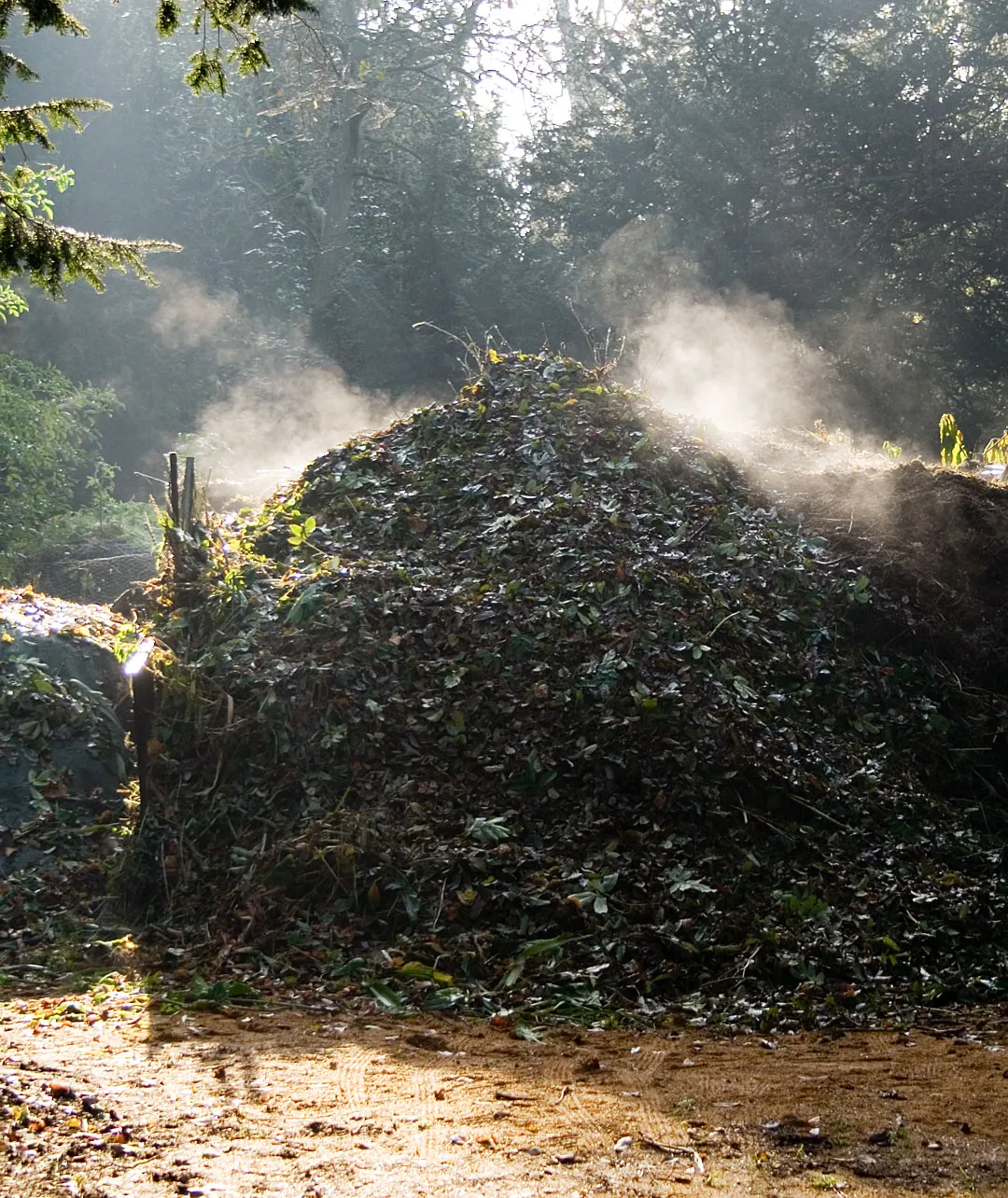
Compost heap on a frosty morning
Photograph of a large outdoor compost heap. The caption notes that the steam above the heap shows the exothermic activity of bacteria on a frosty morning.
Compost. Compost is a universal organic fertilizer prepared from plant residues, kitchen waste, peat, and manure. It contains a balanced set of nutrients and humic acids that stimulate root growth. Compost is applied in the same way as humus: 20–40 t/ha (2–4 kg per 1 m2) in autumn or spring. It is important that the compost is well matured, without signs of mold or rot (Trunov, 2012).


Flowering red clover (Trifolium pratense) — a legume crop that can be used as a green manure to enrich the soil with organic matter and nitrogen
Green manures (cover crops). Sowing green manures in the inter-row spaces of a sweet cherry orchard is an effective and economical way to increase soil fertility. Green manures (mustard, phacelia, lupine, vetch, oats, rye) are sown in spring or late summer, then mowed and incorporated into the soil. Their root system loosens the soil, and the green mass, when decomposed, enriches it with organic matter and nitrogen (especially legumes). Green manures also suppress weeds and improve the water-air regime (Potapov, 2000).
For sweet cherry, leguminous green manures (lupine, vetch, clover) are especially useful because they accumulate nitrogen in the soil. However, it should be remembered that excess nitrogen can cause excessive shoot growth at the expense of fruiting, so green manures are best sown in inter-row spaces, not in close proximity to the trunk.


Fruit tree and surrounding plantings covered with a layer of hay
The photograph illustrates the use of organic mulch to protect the soil and conserve moisture
Mulch. Mulching near-trunk circles with organic materials (straw, hay, wood shavings, bark, mown grass) is a simple and effective technique. Mulch retains moisture, suppresses weeds, protects roots from overheating, and gradually decomposes, enriching the soil with organic matter. The mulch layer should be 5–10 cm, but it must not be placed close to the trunk to avoid bark damping/rotting (Neilsen et al., 2017).
3.3. Doses and Timing of Organic Fertilizer Application
Organic fertilizers are applied periodically, usually once every 2–3 years, so as not to create an excess of nutrients. For young trees, the dose is calculated based on the area of the near-trunk circle; for mature trees, it is calculated for the entire orchard area.
Table 3. Approximate doses of organic fertilizers for sweet cherry
| Fertilizer type | Dose per 1 m2 | Application time | Features |
|---|---|---|---|
| Fresh manure | 4–6 kg | Autumn | Incorporate into soil |
| Humus | 2–3 kg | Autumn or spring | Can be used as mulch |
| Compost | 2–4 kg | Autumn or spring | Well matured |
| Green manures | — | Spring or late summer | Mow and incorporate |
| Mulch | 5–10 cm layer | Spring | Does not touch the trunk |
It is important to remember that organic fertilizers are not only a source of nutrition but also a material for improving the soil. Their effect is slower and longer-lasting than that of mineral fertilizers, so they cannot replace quick foliar feeding in case of acute element deficiency. However, as a foundation of soil fertility, they are indispensable.
3.4. Features for Different Regions and Soil Types
In regions with poor sandy and sandy loam soils, organic fertilizers are especially necessary. Here they are applied more often (once every 1–2 years) and in increased doses, since organic matter decomposes and leaches quickly. On heavy clay soils, organic matter improves structure and drainage, but it can be applied less often—once every 3–4 years.
In arid regions, organic fertilizers help retain moisture in the soil, which is critically important for sweet cherry. In regions with excessive moisture, on the contrary, they promote better drainage and prevent waterlogging (Neilsen et al., 2017).
3.5. Precautions
The main mistake when using organic matter is applying large amounts of fresh manure immediately before planting or during active growth. This can cause root burn and excessive shoot growth. Fresh manure is best applied in autumn so that it has time to decompose. Also, one should not overuse nitrogen-rich organic fertilizers (for example, poultry manure) in the second half of summer—this reduces tree winter hardiness.
Another important point: organic fertilizers can be a source of weed seeds and pathogens. Therefore, compost and humus must be well rotted, and manure must be aged.
In the next section, we will consider mineral fertilizers and their role in sweet cherry nutrition.
4. Use of Mineral Fertilizers
Mineral fertilizers are the main tool for quickly regulating sweet cherry nutrition. Unlike organic matter, they act in a targeted manner and allow precise correction of a deficiency of a particular element. However, when used ineptly, they can cause harm: root burn, soil salinization, and disruption of nutrient balance. Therefore, it is important to observe doses, timing, and application methods, focusing on the tree’s needs and analysis results.
4.1. General Principles of Mineral Fertilizer Application
Sweet cherry, like other fruit crops, needs nitrogen (N), phosphorus (P), potassium (K), calcium (Ca), magnesium (Mg), and micronutrients. The ratio of these elements depends on the growing phase, tree age, soil type, and yield level. There is no universal scheme, but there are general rules:
- Nitrogen is applied mainly in spring and early summer, when the tree is actively growing. In the second half of summer, nitrogen fertilization is stopped so as not to reduce winter hardiness.
- Phosphorus and potassium are best applied in autumn under digging, since they are poorly mobile in the soil and have time to be absorbed by the next season.
- Calcium and magnesium are often given as foliar fertilizers, especially if the soil has high pH or poor drainage.
- Micronutrients (boron, zinc, manganese, iron) are applied mainly foliarly, since in the soil they quickly convert to unavailable forms.
Fertilizer doses are calculated based on soil and leaf analysis. Approximate doses for sweet cherry are given in Table 4.
Table 4. Approximate doses of mineral fertilizers for sweet cherry (per 1 ha)
| Element | Dose of active ingredient | Application time | Note |
|---|---|---|---|
| Nitrogen (N) | 60–100 kg | Spring, split | For young orchards—30–40 kg |
| Phosphorus (P₂O₅) | 60–120 kg | Autumn | Incorporate into soil |
| Potassium (K₂O) | 100–200 kg | Autumn or spring | On light soils—split |
| Magnesium (MgO) | 30–80 kg | Autumn | If necessary |
| Boron (B) | 1–2 kg | Spring, foliar | 0.01–0.02% solution |
Sources: Hanson & Proebsting (1996), Potapov (2000), Neilsen et al. (2017).
Important: the doses are given for average conditions. On poor soils, they are increased; on rich soils, reduced. For dwarf orchards, doses are lower, but they are applied more often, in small portions.
4.2. Nitrogen Fertilizers
Nitrogen is the most important element for sweet cherry growth and yield. However, its excess is more dangerous than its deficiency: it causes excessive shoot growth, canopy thickening, reduced fruit quality and winter hardiness. Therefore, nitrogen fertilizers are applied in split doses and moderate amounts.
Types of nitrogen fertilizers:
- Ammonium nitrate (33–34% N)—a universal fertilizer that acidifies the soil.
- Urea (carbamide) (46% N)—highly concentrated, dissolves well, used for foliar feeding.
- Ammonium sulfate (21% N)—contains sulfur, strongly acidifies the soil.
- Calcium nitrate (15.5% N)—contains calcium, does not acidify the soil, good for sandy and acidic soils.
Timing and methods of application:
- Main application—early spring, at the beginning of shoot growth. It is better to use calcium nitrate or ammonium nitrate.
- During fruit growth—if necessary, split fertilization with irrigation (fertigation) or in dry form.
- After harvest—late foliar urea fertilization (2–5% solution) for accumulation of reserve substances.
For young trees, nitrogen is applied at 30–40 kg/ha; for fruiting trees—60–100 kg/ha. On sandy soils, the dose is divided into 2–3 parts and applied at intervals of 2–3 weeks (Neilsen et al., 2004).
4.3. Phosphorus Fertilizers
Phosphorus is necessary for the formation of the root system, flower buds, and fruit ripening. Sweet cherry consumes relatively little of it, and deficiency is rare. However, on acidic soils, phosphorus is bound into unavailable forms, so it is important to maintain optimal pH (6.0–7.0).
Types of phosphorus fertilizers:
- Simple superphosphate (16–20% P₂O₅)—contains gypsum, good on alkaline soils.
- Double superphosphate (43–46% P₂O₅)—concentrated, without ballast.
- Phosphorite flour (20–30% P₂O₅)—slow-acting, effective on acidic soils.
Timing and methods of application:
Phosphorus is applied in autumn under deep digging of near-trunk strips or inter-row spaces. The dose is 60–120 kg/ha of active ingredient. On light soils, phosphorus is best applied together with organic matter to reduce leaching. For young trees, the dose is halved.
4.4. Potassium Fertilizers
Potassium is the second most important element after nitrogen. It is responsible for fruit sizing, sugar accumulation, disease resistance, and winter hardiness. Sweet cherry removes a lot of potassium with the harvest, so its deficiency is more common than phosphorus deficiency.
Types of potassium fertilizers:
- Potassium sulfate (50% K₂O)—the best choice for sweet cherry, does not contain chlorine.
- Potassium chloride (60% K₂O)—cheaper, but contains chlorine, which sweet cherry tolerates poorly. On light soils and in arid regions, it is better to avoid it.
- Potassium magnesium sulfate (K-Mag) (28–30% K₂O, 9–10% MgO)—contains magnesium, good on sandy soils.
- Potassium nitrate (44% K₂O, 13% N)—a complex fertilizer, convenient for fertigation.
Timing and methods of application:
Potassium is applied in autumn under digging or in spring at the beginning of growth. The dose is 100–200 kg/ha. On light soils, potassium leaches easily, so it is better to apply it in split doses: half in autumn, half in spring. During fruit growth, potassium fertilization (potassium sulfate) with irrigation is effective.
4.5. Complex Fertilizers and Micronutrient Fertilizers
Complex fertilizers contain two or more nutrients. They are convenient for main application and fertilization. For example, nitroammophoska (NPK 16:16:16) is suitable for spring application, and potassium monophosphate (0:52:34) for summer foliar feeding.
Micronutrient fertilizers contain boron, zinc, manganese, iron, copper, and molybdenum. They are applied mainly foliarly, since the requirement for them is small and in the soil they quickly become unavailable. Chelated forms (for example, iron chelate) are the most effective.
Boron is especially important for flowering and fruit set. Spraying with 0.01–0.02% boric acid solution is carried out at the pink bud stage and repeated after 10–14 days.
Zinc is necessary for shoot growth. In case of deficiency, spray with 0.025–0.05% zinc sulfate solution.
Iron is often unavailable on calcareous soils. Iron chelate is applied foliarly or through fertigation.
4.6. Fertigation—A Modern Method of Fertilizer Application
Fertigation is the application of soluble fertilizers together with irrigation water. For sweet cherry, especially on dwarfing rootstocks, this method is very effective: nutrients enter directly into the zone of active roots, in small doses, which reduces losses and the risk of overdose (Neilsen et al., 2004, 2007).
For fertigation, only well-soluble fertilizers are used: potassium nitrate, calcium nitrate, potassium monophosphate, magnesium sulfate, and chelates of micronutrients. Doses are calculated based on the tree’s needs and the content of elements in the soil. For example, in a study by Neilsen et al. (2016) for a young sweet cherry orchard on sandy soil, it was recommended to apply with fertigation 27.5 kg N/ha, 33 kg P/ha, 33 kg K/ha, and 0.28 kg B/ha per season.
Fertigation requires a drip irrigation system and an injector for applying fertilizers. It allows flexible management of nutrition: increasing the dose during active growth and reducing it after harvest.
4.7. Features for Different Soil Types and Regions
- Sandy and sandy loam soils: poor in nutrients, easily leached. Fertilizer doses are increased, applied in split doses, and fertigation is often used. Organic matter is mandatory.
- Clay and heavy soils: richer in nutrients but poorly drained. Doses are lower, but it is important to monitor the air regime. Phosphorus and potassium are applied in autumn under digging.
- Calcareous soils (high pH): deficiency of iron, manganese, and zinc. Micronutrients are applied foliarly in chelated form. Nitrogen fertilizers are best used in the form of calcium nitrate.
- Acidic soils (pH < 5.5): liming is necessary. Phosphorus is applied in the form of phosphorite flour. Nitrogen—ammonium sulfate (acidifies) or ammonium nitrate.
In regions with abundant precipitation, nitrogen leaches faster, so it is applied in split doses. In arid regions, fertilizers are applied with irrigation to avoid root burn.
4.8. Precautions
1. Do not exceed doses. Excess fertilizer is more harmful than deficiency. It is better to apply less but more often.
2. Do not apply fertilizers to dry soil. This can cause root burn. First water, then apply fertilizers.
3. Avoid chlorine-containing potassium fertilizers (potassium chloride) on light and arid soils.
4. Do not mix incompatible fertilizers. For example, calcium nitrate must not be mixed with sulfates and phosphates—a precipitate forms.
5. Store fertilizers in a dry place, separately from food and feed.
In the next section, we will consider fertilization during the season: root and foliar, by growing phases.

Solar Automatic Drip Irrigation Kit for Gardens
Automate watering for pots, gardens and small greenhouses. This solar-powered system features a timer to help schedule water delivery to your plants.
- Solar-powered
- 15 m irrigation hose
- Programmable watering
Affiliate link · Check included accessories.
5. Fertilization During the Season (by Growing Phase, Root and Foliar)
Fertilization is additional plant nutrition during active growth, when the main fertilizer application is insufficient to obtain a high yield. It can be root (fertilizers are applied to the soil) or foliar (spraying leaves with fertilizer solutions). Foliar fertilizers act faster, but their effect is short-lived; root fertilizers are slower but longer-lasting. For sweet cherry, a combination of both methods is optimal (Neilsen et al., 2017).
5.1. General Principles of Fertilization
- Root fertilization is carried out at the beginning of shoot growth and during fruit sizing. Fertilizers are applied into furrows 10–15 cm deep along the canopy perimeter or into near-trunk circles, after which the soil is watered. On light soils, fertilizers are best applied in split doses, in small amounts.
- Foliar fertilization is effective for quickly eliminating element deficiencies, especially micronutrients. Spraying is carried out in the morning or evening, in cloudy weather, to avoid leaf burn. Solution concentrations must be safe.
- Timing of fertilization is tied to key development phases: bud break, flowering, fruit set, fruit growth, and after harvest.
5.2. Fertilization by Growing Phase
Bud Swelling—Beginning of Flowering
During this period, the tree uses reserve nutrients. Root nitrogen fertilization is ineffective due to cold soil. The main task is to support flowering and fruit set.
Root fertilization: not carried out, except in cases of acute phosphorus or potassium deficiency on poor soils (30–40 g/m2 superphosphate and 20–30 g/m2 potassium sulfate can be applied).
Foliar fertilization:
- Boron: spraying with 0.01–0.02% boric acid solution at the pink bud stage. This improves pollen germination and fruit set (Hanson & Proebsting, 1996).
- Zinc: if deficiency symptoms appear—spraying with 0.025–0.05% zinc sulfate solution.
- Complex micronutrient fertilizers (with boron, zinc, manganese)—can be applied 5–7 days before flowering.
Flowering—Fruit Set
During this period, reserve substances continue to be consumed, but uptake from the soil also begins. It is important not to overfeed with nitrogen so as not to cause shoot growth at the expense of fruit set.
Root fertilization: if necessary—phosphorus-potassium (for example, 20–30 g/m2 potassium monophosphate) to support fruit set. Nitrogen is not applied.
Foliar fertilization:
- Boron—repeated spraying 10–14 days after the first.
- Calcium—spraying with 0.5% calcium chloride solution to strengthen future fruit (Neilsen & Neilsen, 2003).
Shoot Growth and Fruit Formation (June—Early July)
This is the period of maximum need for nitrogen, potassium, and calcium. The tree is actively growing and sizing fruit.
Root fertilization:
- Nitrogen: ammonium nitrate or calcium nitrate at 20–30 g/m2. It is better to apply in split doses, with an interval of 2–3 weeks, with irrigation.
- Potassium: potassium sulfate 20–30 g/m2 at the beginning of the phase. On light soils—split.
- Complex: nitroammophoska (16:16:16)—30–40 g/m2.
Foliar fertilization:
- Calcium: 0.5–0.75% calcium chloride solution (or calcium nitrate) every 10–14 days. This reduces fruit cracking and improves storability (Neilsen & Neilsen, 2003).
- Potassium: 0.5% potassium sulfate solution during fruit sizing.
- Micronutrients: if necessary—chelates of iron, zinc, manganese.
Fruit Ripening
Nitrogen is excluded so as not to worsen fruit quality. The need for potassium and calcium remains high.
Root fertilization: potassium (potassium sulfate 20–30 g/m2) 2–3 weeks before harvest.
Foliar fertilization:
- Calcium: continue spraying with 0.5% calcium chloride solution.
- Potassium: 0.5% potassium sulfate solution.
- Phosphorus: if necessary—0.3–0.5% potassium monophosphate solution.
After Harvest (Late Summer—Autumn)
The goal is to restore the tree’s strength and accumulate reserve substances for the next season.
Root fertilization:
- Phosphorus-potassium: superphosphate 40–50 g/m2 and potassium sulfate 20–30 g/m2 under digging.
- Organic matter: humus or compost 2–4 kg/m2.
Foliar fertilization:
- Nitrogen (urea): 2–5% solution 2–3 weeks after harvest. This increases nitrogen content in tissues, improves winter hardiness, and promotes flower bud initiation (Ouzounis & Lang, 2011; Thielemann et al., 2014).
- Boron and zinc: if necessary—spraying with boric acid (0.01–0.02%) and zinc sulfate (0.025–0.05%).
5.3. Summary Table of Fertilization by Growing Phase
| Growing phase | Root fertilization | Foliar fertilization |
|---|---|---|
| Bud swelling—flowering | Not carried out | Boron (0.01–0.02%), zinc (if deficient) |
| Flowering—fruit set | Phosphorus-potassium (if necessary) | Boron, calcium (0.5%) |
| Shoot and fruit growth | Nitrogen (20–30 g/m2), potassium (20–30 g/m2), complex | Calcium (0.5–0.75%), potassium (0.5%), micronutrients |
| Fruit ripening | Potassium (20–30 g/m2) | Calcium, potassium, phosphorus |
| After harvest | Phosphorus, potassium, organic matter | Urea (2–5%), boron, zinc |
Sources: Hanson & Proebsting (1996), Neilsen & Neilsen (2003), Neilsen et al. (2004, 2007, 2017), Ouzounis & Lang (2011), Thielemann et al. (2014).
5.4. Features of Foliar Fertilization
Foliar fertilization is a fast and effective way to correct nutrition. However, it is important to observe several rules:
1. Solution concentration must not exceed recommended values. For urea—2–5%, for potassium sulfate—0.5%, for calcium chloride—0.5–0.75%, for boric acid—0.01–0.02%.
2. Spraying is carried out in the morning or evening to avoid burns. In hot weather, the concentration is reduced.
3. Leaf wetting—it is important that the solution covers both the upper and lower surfaces of leaves. A sticker can be added.
4. Compatibility—not all fertilizers can be mixed. For example, calcium nitrate must not be mixed with phosphates and sulfates.
5. Frequency—foliar fertilization is carried out 2–4 times per season, depending on need.
5.5. Features of Root Fertilization
Root fertilization requires more time for effect but acts longer. Important:
- Apply fertilizers to moist soil to avoid root burn.
- On light soils, use split application.
- Do not apply nitrogen in the second half of summer.
- For fertigation, use only soluble forms of fertilizers.
In the next section, we will consider the signs of nutrient deficiency and ways to eliminate them.
6. Signs of Nutrient Deficiency. Solutions
Nutrient deficiency is easier to prevent than to correct. But if the tree is already signaling starvation, it is important to make the correct diagnosis and act quickly. In this section, we will consider the main symptoms of macro- and micronutrient deficiency in sweet cherry and give practical recommendations for eliminating them.
6.1. General Principles of Diagnosis


Illustration of the appearance of sweet cherry under nutrient deficiencies
Before drawing conclusions, pay attention to several points:
- Localization of symptoms. Deficiency of mobile elements (nitrogen, phosphorus, potassium, magnesium) appears first on old leaves, as the plant redistributes them to young growing tissues. Deficiency of immobile elements (calcium, boron, iron, zinc) appears on young leaves and shoot tips.
- Nature of symptoms. Yellowing (chlorosis), browning, necrosis, leaf deformation, and changes in fruit color can all indicate different elements.
- Growing conditions. High or low soil pH, poor drainage, drought, and root damage are often the root cause of deficiency, even if the element is present in the soil.
- Leaf analysis. The most accurate diagnostic method is laboratory leaf analysis. Visual symptoms are only a preliminary guide.
6.2. Nitrogen (N) Deficiency
Symptoms: shoot growth weakens, leaves become small, pale green, sometimes yellowish. Yellowing begins with the lower, older leaves. Fruit is small and may ripen prematurely. The tree looks suppressed (Neilsen et al., 2017).
Solutions:
- In early spring, apply nitrogen fertilizers (ammonium nitrate, calcium nitrate) at 20–30 g/m2 of near-trunk circle.
- During active growth—fertilization with irrigation (fertigation) or application into furrows.
- After harvest—foliar fertilization with 2–5% urea solution to accumulate reserve substances (Ouzounis & Lang, 2011).
- If deficiency is caused by cold soil, wait for it to warm up or use foliar fertilization.
6.3. Phosphorus (P) Deficiency
Symptoms: shoot growth slows, leaves become dark green with a purple or bronze tint, especially on the underside. Leaf edges may curl downward. Dark spots appear on old leaves. Fruit is small and sour (Neilsen et al., 2017).
Solutions:
- In autumn, apply superphosphate (40–50 g/m2) under digging in the root zone.
- On acidic soils—use phosphorite flour (it acts slowly but effectively).
- In spring, with severe deficiency—foliar fertilization with 0.3–0.5% potassium monophosphate solution.
- Check soil pH: at pH below 5.5, phosphorus is bound by aluminum and iron; at pH above 7.0—by calcium. Optimal pH is 6.0–7.0.
6.4. Potassium (K) Deficiency
Symptoms: leaf edges turn yellow, then become brown and necrotic (marginal scorch). Yellowing begins with the lower leaves. Leaves may curl. Fruit is small, poorly colored, with low sugar content. The tree loses winter hardiness (Neilsen et al., 2017).
Solutions:
- In autumn, apply potassium sulfate (20–30 g/m2) under digging.
- In spring and during fruit sizing—fertilization with potassium sulfate (20–30 g/m2) or potassium magnesium sulfate.
- Foliar fertilization with 0.5% potassium sulfate solution during fruit growth.
- Avoid potassium chloride, especially on light soils.
- On sandy soils, potassium leaches easily—apply in split doses.
6.5. Calcium (Ca) Deficiency
Symptoms: young leaves become small, deformed, with brown spots along the edges. Shoot tips may die. Fruit cracks, becomes soft, stores poorly, and is susceptible to bitter pit (Neilsen & Neilsen, 2003).
Solutions:
- Calcium is poorly mobile, so root fertilization is ineffective. The main method is foliar spraying with 0.5–0.75% calcium chloride or calcium nitrate solution.
- Carry out 3–5 treatments per season: at fruit set, fruit growth, and ripening.
- If the soil is acidic, carry out liming (dolomite flour, lime).
- Improve drainage so that calcium is not leached.
6.6. Magnesium (Mg) Deficiency
Symptoms: interveinal chlorosis on old leaves: tissue between veins turns yellow, while veins remain green. Later, yellow areas become brown and die. Leaves may fall prematurely. It occurs more often on sandy and acidic soils, and also with excess potassium (Neilsen et al., 2017).
Solutions:
- In autumn, apply dolomite flour (30–80 g/m2) or magnesium sulfate (20–30 g/m2).
- In spring—foliar fertilization with 2% magnesium sulfate solution (20 g per 10 L water).
- Reduce potassium fertilizer doses if they are applied in excess.
- Check pH: at pH below 5.5, magnesium is leached; at pH above 7.0, it becomes unavailable.
6.7. Boron (B) Deficiency
Symptoms: death of apical buds, deformation of young leaves (they become narrow, curled), thickening of veins. Flowering is abundant, but fruit set is poor. Fruit is small, misshapen, with corky tissue inside. Boron is poorly mobile, so symptoms appear on young parts (Hanson & Proebsting, 1996).
Solutions:
- Foliar fertilization with 0.01–0.02% boric acid solution (1–2 g per 10 L water) at the pink bud stage and again after 10–14 days.
- Autumn boron application (1–2 kg/ha) only with confirmed deficiency, since the difference between deficiency and toxicity is small.
- Do not exceed the concentration: excess boron is toxic.
6.8. Zinc (Zn) Deficiency
Symptoms: little leaf (leaves become small, narrow), rosetting (shortened internodes), interveinal chlorosis on young leaves. Shoots thicken, growth is retarded. It often occurs on calcareous soils (Neilsen et al., 2017).
Solutions:
- Foliar fertilization with 0.025–0.05% zinc sulfate solution (2.5–5 g per 10 L water) during bud break and again after 2–3 weeks.
- Autumn application of zinc chelate to the soil (if necessary).
- Reduce soil pH if it is above 7.0 (application of sulfur, organic matter).
6.9. Manganese (Mn) Deficiency
Symptoms: interveinal chlorosis on young and middle leaves, spreading from the edges to the center. Veins remain green. Later, chlorotic areas become brown. It often appears on acidic soils with high organic matter content or in waterlogged areas (Neilsen et al., 2017).
Solutions:
- Foliar fertilization with 0.1–0.5% manganese sulfate solution (10–50 g per 10 L water).
- Improve drainage and avoid waterlogging.
- If pH is below 5.5, carry out liming.
- Apply organic fertilizers to improve soil structure.
6.10. Iron (Fe) Deficiency
Symptoms: interveinal chlorosis on the youngest leaves: tissue between veins turns yellow, veins remain green. With severe deficiency, leaves become almost white. It most often occurs on calcareous (alkaline) soils, where iron converts to an unavailable form (Neilsen et al., 2017).
Solutions:
- Foliar fertilization with iron chelate (0.1–0.5% solution) or iron sulfate (0.5–1%).
- Application of iron chelate to the soil with irrigation.
- Reducing soil pH: application of sulfur, organic fertilizers, mulching.
- Avoid waterlogging and soil compaction.
6.11. Copper (Cu) Deficiency
Symptoms: young leaves wilt, shoot tips die, dark necrotic spots appear on leaves. Growth slows. It occurs rarely, more often on peat and sandy soils (Neilsen et al., 2017).
Solutions:
- Foliar fertilization with 0.02–0.05% copper sulfate solution.
- Application of copper fertilizers to the soil (with confirmed deficiency).
- Do not exceed doses: copper is toxic in excess.
6.12. Summary Table of Symptoms and Solutions
| Element | Symptoms | Solutions |
|---|---|---|
| Nitrogen (N) | Pale green old leaves, weak growth | Spring nitrogen application, foliar urea fertilization after harvest |
| Phosphorus (P) | Dark green leaves with purple tint, weak growth | Autumn superphosphate application, foliar potassium monophosphate fertilization |
| Potassium (K) | Marginal scorch of old leaves, small fruit | Autumn and spring potassium sulfate application, foliar fertilization |
| Calcium (Ca) | Deformation of young leaves, fruit cracking | Foliar spraying with calcium chloride, liming |
| Magnesium (Mg) | Interveinal chlorosis of old leaves | Application of dolomite flour or magnesium sulfate, foliar fertilization |
| Boron (B) | Death of tips, leaf deformation, poor fruit set | Foliar fertilization with boric acid |
| Zinc (Zn) | Little leaf, rosetting | Foliar fertilization with zinc sulfate |
| Manganese (Mn) | Interveinal chlorosis of young leaves | Foliar fertilization with manganese sulfate, improved drainage |
| Iron (Fe) | Chlorosis of young leaves on alkaline soils | Foliar fertilization with iron chelate, pH reduction |
| Copper (Cu) | Wilting of young leaves, necrosis | Foliar fertilization with copper sulfate (rarely) |
6.13. What to Do If Deficiency Is Not Caused by Nutrition
Often, deficiency symptoms arise not because the element is absent from the soil, but because it is unavailable to the plant. Causes:
- High pH (alkaline soils): blocks iron, manganese, zinc, and boron. Solution: application of sulfur, organic matter, use of chelated forms.
- Low pH (acidic soils): blocks phosphorus, magnesium, and calcium. Solution: liming.
- Poor drainage and waterlogging: disrupts root respiration and blocks iron and manganese uptake. Solution: drainage, raising bed level.
- Drought: reduces availability of potassium, calcium, and boron. Solution: regular irrigation, mulching.
- Root damage: mechanical, from pests, or from diseases. Solution: treatment, restoration of the root system.
In the next section, we will consider the signs of excess nutrients and ways to solve this problem.

7-in-1 Wi-Fi Weather Station
Monitor local weather conditions with a wireless outdoor sensor. Track temperature, humidity, rainfall, wind speed and direction, and atmospheric pressure. Ideal for gardens, farms and greenhouses.
- Wireless outdoor sensor
- Solar-powered
- Wi-Fi connectivity
Affiliate link · Check regional compatibility.
7. Signs of Nutrient Excess. Solutions
Excess fertilizer is just as dangerous as deficiency. Overdose disrupts nutrient balance, worsens fruit quality, reduces winter hardiness, and can lead to tree death. Unlike deficiency, symptoms of excess often appear quickly and require immediate action. Let us consider the main signs of overdose of macro- and micronutrients and ways to restore balance.
7.1. General Principles of Diagnosing Excess
- Symptoms of excess often resemble deficiency of another element. For example, excess potassium blocks magnesium and calcium uptake, causing their deficiency. Therefore, it is important to analyze not only external signs but also the history of fertilizer application.
- Localization of symptoms depends on the element. Excess nitrogen appears on the whole plant, excess boron on young leaves and fruit, excess manganese on old leaves.
- Soil conditions play a key role. On acidic soils, manganese and aluminum toxicity increases; on alkaline soils, excess boron and salts.
- Laboratory analysis of soil and leaves is the only accurate way to confirm overdose.
7.2. Nitrogen (N) Excess
Symptoms:
- Excessive shoot growth, canopy thickening, large dark green leaves.
- Delayed fruit ripening, pale color, watery taste, poor storability.
- Reduced winter hardiness: shoots do not mature in time, tissues are damaged by frost.
- Increased susceptibility to diseases (bacterial canker, powdery mildew) and pests (aphids, mites).
- In fruit trees, “fatting” may be observed—growth at the expense of fruiting (Neilsen et al., 2017).
Solutions:
- Stop applying nitrogen fertilizers, including organic ones (manure, poultry manure).
- Increase irrigation to leach nitrates from the topsoil (but do not allow waterlogging).
- Apply phosphorus-potassium fertilizers (superphosphate, potassium sulfate) to balance nutrition.
- Carry out summer pruning to remove excess shoots and improve light penetration.
- The next year, reduce nitrogen doses based on leaf analysis.
7.3. Phosphorus (P) Excess
Symptoms:
- Occurs rarely, since phosphorus is poorly mobile and accumulates in the soil slowly.
- With excess phosphorus, uptake of zinc, iron, and copper is blocked. Signs of deficiency of these elements appear: little leaf, chlorosis.
- Fruit may ripen early but with low quality.
- On alkaline soils, excess phosphorus intensifies iron deficiency (Neilsen et al., 2017).
Solutions:
- Stop applying phosphorus fertilizers for 2–3 years.
- Apply organic fertilizers (compost, humus) to improve soil structure and gradually balance nutrition.
- Carry out foliar fertilization with chelates of zinc, iron, and copper to eliminate secondary deficiencies.
- Check soil pH: at high pH (above 7.0), phosphorus is bound by calcium; at low pH (below 5.5)—by aluminum and iron. Optimal pH is 6.0–7.0.
7.4. Potassium (K) Excess
Symptoms:
- Blocks magnesium and calcium uptake. Interveinal chlorosis appears on old leaves (magnesium deficiency), marginal scorch and fruit cracking (calcium deficiency).
- Can cause deficiency of boron, zinc, and manganese.
- With excess potassium, fruit becomes small but sugary; storability worsens.
- On light soils, potassium leaches easily, so overdose more often occurs with fertigation or application of large doses (Neilsen et al., 2017).
Solutions:
- Stop potassium fertilization for 1–2 years.
- Apply magnesium fertilizers (magnesium sulfate, dolomite flour) to eliminate magnesium deficiency.
- Carry out foliar calcium fertilization (0.5% calcium chloride) to strengthen fruit.
- Improve drainage and wash the soil with abundant irrigation to leach excess potassium.
- The next year, calculate potassium doses based on soil and leaf analysis.
7.5. Calcium (Ca) Excess
Symptoms:
- Occurs rarely, usually on calcareous soils.
- Blocks uptake of potassium, magnesium, phosphorus, iron, manganese, zinc, and boron. Multiple deficiency appears: chlorosis, little leaf, weak growth.
- At high pH (above 7.5), calcium binds micronutrients into unavailable forms (Neilsen et al., 2017).
Solutions:
- Do not apply calcium fertilizers (calcium nitrate, lime) without necessity.
- Acidify the soil: apply sulfur, ammonium sulfate, organic fertilizers (peat, compost).
- Carry out foliar fertilization with chelates of iron, manganese, zinc, and boron.
- Improve drainage to avoid accumulation of calcium salts.
7.6. Magnesium (Mg) Excess
Symptoms:
- Occurs rarely, usually with application of large doses of dolomite flour or magnesium sulfate.
- Blocks uptake of potassium and calcium. Marginal leaf scorch appears (potassium deficiency), fruit cracking (calcium deficiency).
- Can cause deficiency of boron, zinc, and manganese.
- On acidic soils, excess magnesium intensifies calcium leaching.
Solutions:
- Stop magnesium fertilization.
- Apply potassium fertilizers (potassium sulfate) to balance.
- Carry out foliar calcium fertilization.
- Check pH: at low pH, magnesium can be toxic. Carry out liming.
7.7. Micronutrient Excess
Boron (B)
Symptoms:
- Boron toxicity manifests similarly to deficiency: death of tips, leaf deformation, but a characteristic sign is added—gummosis on branches and trunk.
- Leaf edges become brown and necrotic, but veins remain green.
- Fruit may be misshapen, with corky tissue.
- The difference between boron deficiency and toxicity is very small (Neilsen et al., 2017).
Solutions:
- Immediately stop any boron fertilization.
- Carry out abundant irrigation to leach boron from the topsoil.
- Apply organic fertilizers (compost, humus) to bind boron.
- Carry out foliar calcium fertilization (0.5% calcium chloride)—calcium is an antagonist of boron.
- The next year, do not apply boron unless analysis confirms deficiency.
Zinc (Zn)
Symptoms:
- Zinc toxicity manifests as growth suppression, chlorosis of young leaves, and browning of roots.
- Can block uptake of iron and manganese.
- Occurs rarely, usually on acidic soils with high zinc content or with fertilizer overdose.
Solutions:
- Stop zinc fertilization.
- Carry out liming to raise pH and reduce zinc availability.
- Apply phosphorus fertilizers—phosphorus binds zinc into unavailable forms.
- Carry out foliar fertilization with iron chelate to eliminate secondary deficiency.
Manganese (Mn)
Symptoms:
- Manganese toxicity most often manifests on acidic soils (pH below 5.5).
- Symptoms: interveinal chlorosis, dark brown necrotic spots on leaves, curling and falling of leaves.
- Can cause deficiency of iron, zinc, and molybdenum.
- In sweet cherry, manganese toxicity can manifest as “brown leaf spot” (Neilsen et al., 2017).
Solutions:
- Carry out liming to raise pH to 6.0–6.5.
- Improve drainage and avoid waterlogging.
- Apply organic fertilizers to bind manganese.
- Carry out foliar fertilization with iron chelate.
Iron (Fe)
Symptoms:
- Iron toxicity occurs rarely, usually on flooded, acidic soils.
- Manifests as dark green, almost black leaves, growth suppression, and browning of roots.
- Can block uptake of phosphorus and manganese.
Solutions:
- Improve drainage and avoid waterlogging.
- Carry out liming to raise pH.
- Apply phosphorus fertilizers to bind iron.
- Stop any iron fertilization.
Copper (Cu)
Symptoms:
- Copper toxicity manifests as chlorosis of young leaves, browning of root tips, and growth suppression.
- Occurs rarely, usually with long-term use of copper-containing fungicides or on contaminated soils.
Solutions:
- Stop using copper-containing preparations.
- Carry out liming to raise pH.
- Apply organic fertilizers to bind copper.
- Carry out foliar fertilization with iron and manganese chelate.
7.8. Salt Excess (Soil Salinization)
Symptoms:
- Growth suppression, small leaves, marginal scorch, premature leaf fall.
- A white salt crust may appear on the soil surface.
- Most often occurs with excessive application of mineral fertilizers, especially on heavy soils with poor drainage, or when irrigating with saline water (Neilsen et al., 2017).
Solutions:
- Stop applying fertilizers.
- Carry out soil washing: abundant irrigation with good drainage to leach salts.
- Apply organic fertilizers (compost, humus) to improve soil structure.
- Sow green manures (mustard, phacelia) to absorb excess salts and improve the soil.
- In the future, apply fertilizers in split doses, in small amounts, taking into account the tree’s needs.
7.9. Summary Table of Excess Symptoms and Solutions
| Element | Excess symptoms | Solutions |
|---|---|---|
| Nitrogen (N) | Fatting, delayed ripening, reduced winter hardiness | Stop nitrogen fertilization, increase irrigation, apply phosphorus and potassium |
| Phosphorus (P) | Deficiency of zinc, iron, copper | Stop phosphorus fertilizers, apply organic matter, foliar micronutrient fertilization |
| Potassium (K) | Deficiency of magnesium and calcium | Stop potassium, apply magnesium, foliar calcium fertilization |
| Calcium (Ca) | Deficiency of potassium, magnesium, micronutrients | Acidify soil, foliar chelate fertilization |
| Magnesium (Mg) | Deficiency of potassium and calcium | Stop magnesium, apply potassium, foliar calcium fertilization |
| Boron (B) | Death of tips, gummosis, necrosis | Stop boron, wash soil, apply calcium |
| Zinc (Zn) | Growth suppression, chlorosis | Stop zinc, liming, apply phosphorus |
| Manganese (Mn) | Chlorosis, necrosis, leaf curling | Liming, improve drainage, apply organic matter |
| Iron (Fe) | Dark green leaves, growth suppression | Improve drainage, liming, apply phosphorus |
| Copper (Cu) | Chlorosis, browning of roots | Stop copper-containing preparations, liming, organic matter |
| Salinization | Growth suppression, marginal scorch, salt crust | Soil washing, organic matter, green manures |
7.10. What to Do If You Suspect Fertilizer Excess
1. Stop applying fertilizers—both mineral and organic.
2. Carry out soil and leaf analysis—this is the only way to accurately determine which element is in excess.
3. Wash the soil—abundant irrigation with good drainage will help leach excess salts from the topsoil.
4. Apply organic matter—compost, humus, and peat improve soil structure and bind excess elements.
5. Carry out foliar fertilization with the elements whose deficiency is caused by antagonism (for example, calcium with excess potassium, magnesium with excess potassium, iron with excess manganese).
6. Correct pH—liming on acidic soils, acidification on alkaline soils.
7. The next year, apply fertilizers in split doses, in small amounts, focusing on analysis results.
In the next section, we will answer frequently asked questions and examine typical gardener mistakes when fertilizing sweet cherry.
8. Main Mistakes and Questions (FAQ)
This section collects typical mistakes gardeners make when fertilizing sweet cherry, as well as answers to frequently asked questions. The material is based on scientific data and practical experience presented in the previous sections.
8.1. Main Mistakes
Mistake 1. Excess nitrogen at the expense of fruit quality
One of the most common mistakes is overusing nitrogen fertilizers. Gardeners often believe that the more nitrogen, the better the growth and yield. In fact, excess nitrogen causes “fatting” of the tree: it grows shoots and leaves at the expense of fruiting. Fruit ripens later, colors poorly, becomes watery, and stores poorly. In addition, a tree overfed with nitrogen loses winter hardiness and is more severely affected by diseases (Neilsen et al., 2017).
Solution: apply nitrogen in split doses, focusing on leaf analysis. For fruiting sweet cherry, the optimal leaf nitrogen level is 2.2–3.0% on a dry matter basis. If the analysis shows more, nitrogen fertilization is stopped.
Mistake 2. Ignoring soil pH

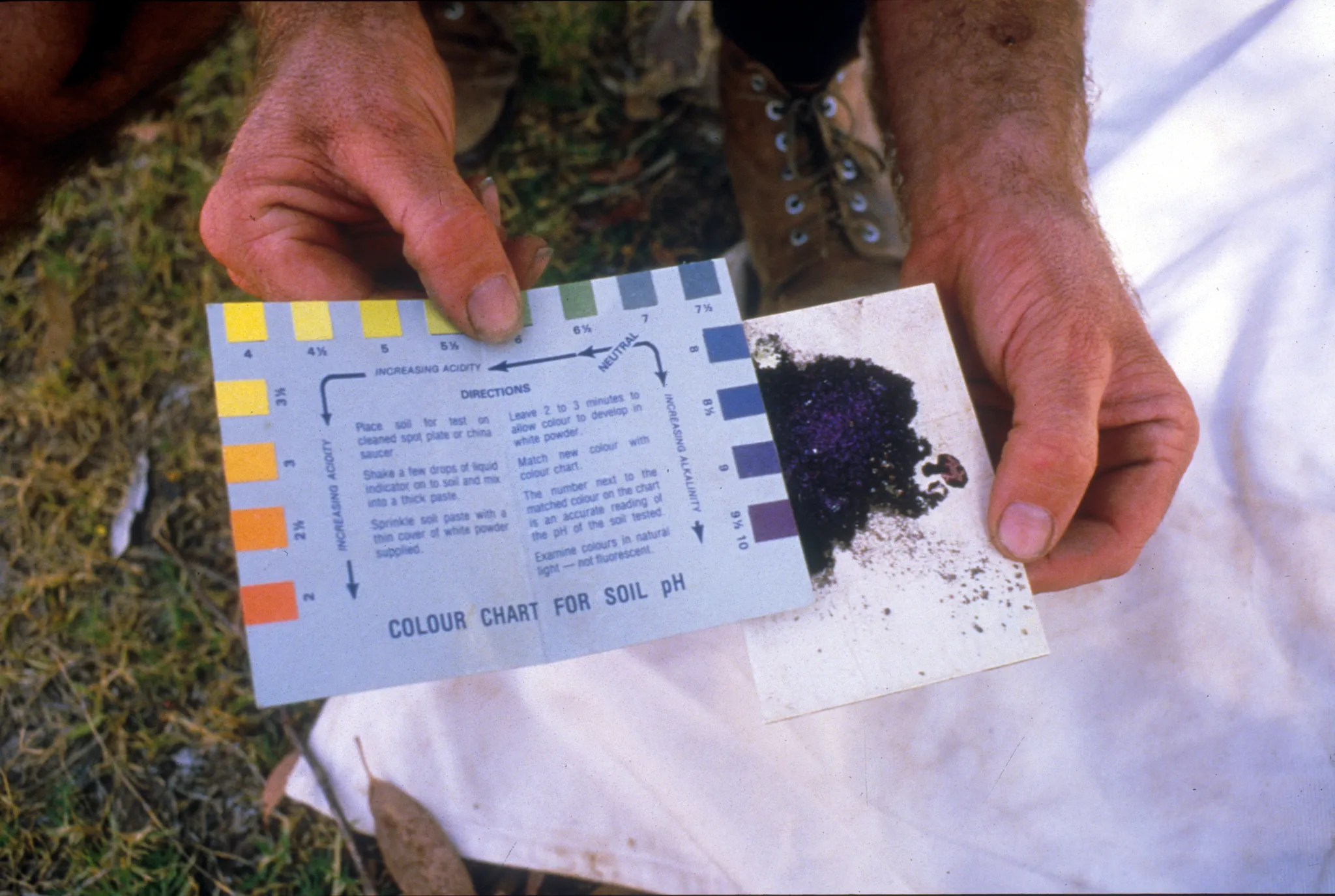
Determination of soil pH by the colorimetric method.
Demonstration of a method for determining soil acidity using a color comparison scale. A person holds a pH chart and a soil sample after applying the indicator. Location not specified in the original caption.
Many gardeners apply fertilizers without checking soil acidity. Meanwhile, pH determines the availability of elements. At pH below 5.5, phosphorus is bound by aluminum and iron, while magnesium and calcium are leached. At pH above 7.0, iron, manganese, zinc, and boron convert to unavailable forms (Neilsen et al., 2017). As a result, the tree starves even though fertilizers are applied.
Solution: before planting an orchard and then every 3–4 years, check soil pH. The optimal range for sweet cherry is 6.0–7.0. If necessary, carry out liming (on acidic soils) or acidification (on alkaline soils).
Mistake 3. Applying fertilizers to dry soil
Dry soil is a poor conductor of nutrients. If fertilizers are applied to dry soil, they will not dissolve and will not reach the roots. Moreover, concentrated salts can cause root burn.
Solution: before applying fertilizers, water the soil, and after application, water again so that fertilizers dissolve and distribute in the root zone. On light soils, fertilizers are best applied with irrigation (fertigation).
Mistake 4. Using chlorine-containing potassium fertilizers
Potassium chloride is a cheap and common fertilizer, but sweet cherry tolerates chlorine poorly. It is especially dangerous on light sandy and arid soils, where chlorine accumulates and causes growth suppression, marginal leaf scorch, and worsened fruit quality (Potapov, 2000).
Solution: use potassium sulfate, potassium magnesium sulfate, or potassium nitrate. If there is no other option, apply potassium chloride only in autumn so that chlorine is leached by autumn-winter precipitation.
Mistake 5. Applying all fertilizers in one dose
Some gardeners apply the entire annual norm of fertilizers at once in spring. This leads to losses: nitrogen leaches, potassium and phosphorus are partially bound in the soil. The tree does not have time to absorb such an amount, and excess salts can harm the roots.
Solution: apply fertilizers in split doses, by growing phase. Nitrogen—in spring and early summer, phosphorus and potassium—in autumn. On light soils, divide doses into 2–3 parts.
Mistake 6. Ignoring the rootstock
Gardeners often do not take into account which rootstock the sweet cherry is grafted onto. But this directly affects nutrient requirements. Trees on dwarfing rootstocks (Gisela 5, Gisela 3) have a shallow root system and need frequent, split fertilization. Trees on vigorous rootstocks (Mazzard, F12/1) obtain nutrients from a larger soil volume and require less fertilizer (Neilsen et al., 2016).
Solution: determine the rootstock when purchasing a seedling and adjust the fertilization system depending on it. For dwarf orchards, fertigation is optimal.
Mistake 7. Neglecting leaf diagnosis
Visual deficiency symptoms appear when the tree has already been starving for a long time. By this point, yield and fruit quality have already decreased. Relying only on appearance means being late with solutions.
Solution: carry out leaf diagnosis annually or every two years. Sample leaves in July–August from the middle part of current-season shoots and send them to a laboratory. Based on the analysis, adjust the nutrition program.
Mistake 8. Applying fertilizers close to the trunk
The concentration of fertilizers near the trunk can cause bark and root burn. In addition, the bulk of absorbing roots is located at the canopy periphery, not at the trunk.
Solution: apply fertilizers along the canopy perimeter, into furrows 10–15 cm deep, at a distance of 30–50 cm from the trunk. For young trees—into the near-trunk circle, but not closer than 20 cm to the trunk.
8.2. Frequently Asked Questions (FAQ)
Question 1. Can only organic fertilizers be used for sweet cherry?
Yes, it is possible, but with reservations. Organic fertilizers improve the soil, supply the tree with nutrients, and activate microflora. However, they do not always provide an exact balance of elements, especially micronutrients. In addition, organic matter acts slowly, and in case of acute deficiency (for example, boron or calcium), it will not help quickly. The optimal approach is a combination of organic matter (as the foundation of fertility) and mineral fertilizers (for quick correction) (Potapov, 2000).
Question 2. How often should manure be applied under sweet cherry?
Manure is applied once every 2–3 years. The dose depends on soil type: on poor soils—40–60 t/ha (4–6 kg per 1 m2), on medium—30–40 t/ha, on rich—20–30 t/ha. Fresh manure is best applied in autumn under digging; humus—in spring or autumn (Potapov, 2000).
Question 3. Is it necessary to lime the soil under sweet cherry?
Only if pH is below 5.5. Sweet cherry prefers slightly acidic and neutral soils (pH 6.0–7.0). On acidic soils, phosphorus, magnesium, and calcium become unavailable, while manganese and aluminum become toxic. For liming, dolomite flour or lime is used; the dose is calculated based on acidity (Trunov, 2012).
Question 4. What to feed sweet cherry in spring if there is no soil analysis?
If analysis is unavailable, approximate doses can be used: 20–30 g/m2 ammonium nitrate or calcium nitrate at the beginning of shoot growth. Additionally—20–30 g/m2 potassium sulfate during fruit sizing. For micronutrients—foliar fertilization with a complex micronutrient fertilizer at the pink bud stage (Hanson & Proebsting, 1996).
Question 5. Why does sweet cherry drop fruitlets despite fertilization?
Fruitlet drop can be caused by several reasons: boron deficiency (poor pollination), excess nitrogen (shoot growth at the expense of fruit), lack of moisture, spring frosts, poor pollination (no pollinizer). Fertilization will not help if the cause is not nutrition. Check boron in leaves, make sure there is a pollinizer cultivar, and ensure regular irrigation (Hanson & Proebsting, 1996).
Question 6. Can mineral fertilizers be mixed in one container?
Not all fertilizers are compatible. Calcium nitrate must not be mixed with phosphates and sulfates—an insoluble precipitate forms. Urea can be mixed with most fertilizers except calcium nitrate. Potassium sulfate is compatible with superphosphate but not with calcium fertilizers. Before mixing, check compatibility or apply fertilizers separately (Neilsen et al., 2017).
Question 7. How often should foliar fertilization be carried out?
Foliar fertilization is carried out 2–4 times per season, depending on need. Boron—at the pink bud stage and after 10–14 days. Calcium—3–5 times during fruit growth and ripening. Urea—after harvest. Micronutrients—with confirmed deficiency (Neilsen & Neilsen, 2003; Ouzounis & Lang, 2011).
Question 8. What to do if the tree is “fatting”—growing but not fruiting?
“Fatting” is a sign of excess nitrogen. Stop nitrogen fertilization, including organic. Increase irrigation to leach nitrates. Apply phosphorus-potassium fertilizers to balance. Carry out summer pruning, removing excess shoots. The next year, reduce nitrogen doses by half (Neilsen et al., 2017).
Question 9. Is it necessary to fertilize sweet cherry in autumn?
Yes, autumn application of phosphorus and potassium strengthens the root system and increases winter hardiness. In addition, after harvest, foliar urea fertilization (2–5%) is effective, promoting accumulation of reserve substances. Nitrogen fertilizers are not applied to the soil in autumn—they leach and reduce winter hardiness (Ouzounis & Lang, 2011; Thielemann et al., 2014).
Question 10. How to determine that sweet cherry lacks calcium?
Symptoms of calcium deficiency: deformation of young leaves, brown spots along the edges, death of shoot tips, fruit cracking, soft flesh, poor storability. Calcium is poorly mobile, so symptoms appear on young parts. Solution—foliar fertilization with 0.5–0.75% calcium chloride solution (Neilsen & Neilsen, 2003).
Question 11. Can ash be used as fertilizer for sweet cherry?
Ash is a good source of potassium, calcium, magnesium, and micronutrients. However, its composition is unpredictable and depends on the material burned. Ash alkalizes the soil, so it is not recommended on alkaline soils. Dose—100–200 g/m2, apply in autumn under digging. Do not mix with nitrogen fertilizers (nitrogen is lost) (Potapov, 2000).
Question 12. Does yield affect fertilizer requirements?
Yes, directly. In years with a high yield, the tree removes more nutrients, especially potassium and nitrogen. For example, at a yield of 30–40 t/ha, annual nitrogen removal reaches 40–50 kg/ha, potassium—60–80 kg/ha. Therefore, in productive years, fertilizer doses are increased, and in low-yield years, reduced (Trunov, 2012; Neilsen et al., 2007).
Question 13. What to do if leaves begin to turn yellow after fertilizer application?
Yellowing after fertilization may be a sign of root burn due to high salt concentration or improper application. Stop fertilization and water the soil abundantly to leach salts. Check pH and correct if necessary. Next time, apply fertilizers in split doses and to moist soil (Neilsen et al., 2017).
Question 14. Do sweet cherries need micronutrients if the tree looks healthy?
Yes, preventive micronutrient fertilization is useful, especially on soils with high pH or poor drainage. Boron at flowering improves fruit set. Zinc and manganese support photosynthesis. Iron prevents chlorosis on calcareous soils. One or two foliar fertilizations with a complex micronutrient fertilizer per season are sufficient (Hanson & Proebsting, 1996; Neilsen et al., 2017).
Question 15. How should fertilizers be stored?
Mineral fertilizers are stored in a dry, cool place, in sealed containers, separately from food and feed. Fertilizers must not be stored in direct sunlight or near heat sources. Organic fertilizers (compost, humus) are stored in piles or boxes covered from rain. Fresh manure cannot be stored for long—it loses nitrogen (Potapov, 2000).
8.3. Final Recommendations
1. Soil is the foundation of nutrition. Regularly check pH, organic matter content, and available elements. Without this, any fertilizers may be useless.
2. Leaf analysis is the best diagnostic tool. Do not rely only on visual symptoms.
3. Split application is the key to efficiency. Small doses, more often, at the right phases—better than one large dose.
4. Balance is more important than maximum. Excess of one element blocks another. Strive for balanced nutrition.
5. Take into account rootstock, age, yield, and weather. There are no universal schemes.
6. Combine organic and mineral fertilizers. Organic matter improves the soil; mineral fertilizers quickly correct nutrition.
7. Do not forget micronutrients. Their role is small in mass but enormous in importance.
Following these principles will help obtain a stable harvest of quality sweet cherry fruit and preserve tree health for many years.

40W Full Spectrum LED Grow Light
Support healthy plant growth with full-spectrum LED lighting. Ideal for seedlings, indoor plants and small growing spaces. A practical solution for indoor gardening and year-round cultivation.
- Full-spectrum LED
- Energy-efficient design
- Indoor plant growing
Affiliate link · Check actual power and light coverage.
References
- Buckingham, Alan (2010). ‘Cherries’, in Grow Fruit. New York, NY: DK Publishing, pp. 121-136.
- Choudhary, Dewasish, Mehta, Amal (2003). ‘Temperate Fruit Crops’, in Fruit crops. Jaipur, India: Oxford Book Company, pp. 143-168.
- Gonçalves, B., Aires, Alfredo, Oliveira, Ivo, Afonso, S., Morais, M.Cristina, Correia, Sofia, Martins, Sandra, Silva, A.Paula (2021). ‘Sweet Cherry’, in Mandal, Debashis, Wermund, Ursula, Phavaphutanon, Lop, Cronje, Regina (ed.) Temperate Fruits. Production, Processing, and Marketing. Burlington, Canada: Apple Academic Press, pp. 333-416.
- Hessayon, D.G. (1993). ‘Tree fruit’, in The Fruit Expert. London, UK: Expert Books, pp. 3-57.
- Hill, Lewis, Perry, Leonard (2011). ‘Cherries, Sweet and Sour’, in The Fruit Gardener’s Bible. North Adams, MA: Storey Publishing, pp. 181-198.
- Long, L.E., Lang, G.A., Kaiser, Clive (2021). ‘Managing the Orchard Environment’, in Sweet Cherries. Crop Production Science In Horticulture. Boston, MA: CABI Publishing, pp. 236-281.
- Neilsen, G.H., Neilsen, D., Forge, T. (2017). ‘Environmental limiting factors for cherry production.’, in Cherries: botany, production and uses. Wallingford: CABI, 189-222. doi: 10.1079/9781780648378.0189
- Rieger, Mark (2010). ‘Cherry (Prunus avium, Prunus cerasus)’, in Introduction to Fruit Crops. New York, NY: Food Products Press, pp. 143-156.
- Thompson, M. (1996). ‘Flowering, Pollination and Fruit Set’, in Webster, A.D., Looney, N.E. (ed.) Cherries. Crop Physiology, Production and Uses. Cambridge, MA: CABI Publishing, pp. 223-242.
- Вдовцева, Т.А., Черновалова, В.П. (1980). Лучшие сорта и особенности агротехники черешни [The best varieties and features of cherry cultivation]. null Ташкент: НИИ НТИиТЭИ Госплана УзССР.
- Потапов, В.А., Фаустов, В.В., Пильщикова, Ф.Н. (2000). ‘Косточковые культуры [Stone fruits]’, in Плодоводство [Fruit growing]. Москва: Колос, pp. 386-408.
- Потапов, В.А., Фаустов, В.В., Пильщикова, Ф.Н. (2000). ‘Плодовый сад [Orchard]’, in Плодоводство [Fruit growing]. Москва: Колос, pp. 207-369.
- Трунов, Ю.В., Самощенков, Е.Г., Дорошенко, Т.Н. (2012). ‘Технология производства плодов [Fruit production technology]’, in Плодоводство [Fruit growing]. Москва: КолосС, pp. 212-328.
