
Sweet Cherry Irrigation: How to Provide the Tree with Moisture and Do No Harm
1. The Importance of Water for Sweet Cherry


Macro photograph of branches of wild cherry (Prunus avium) with clusters of ripe dark red (almost black) fruits
Water is the foundation of life for any fruit tree, and sweet cherry is no exception. However, for this crop the importance of water goes far beyond simply “quenching thirst.” How correctly irrigation is organized directly determines not only the growth and health of the tree, but also the quality, size, and even taste of the future harvest. Unlike many other fruit crops, sweet cherry places special demands on the water regime, which is due to its biological characteristics.
First, the root system of sweet cherry, especially in modern cultivars grafted onto low-vigor (dwarf and semi-dwarf) rootstocks, is located near the surface. The bulk of the absorbing roots is in the upper soil layer, usually to a depth of 45 cm (Neilsen et al., 2017). This means that the tree cannot obtain moisture from deep horizons and becomes extremely dependent on the presence of water in the upper layer. Any, even short-term, drying of this layer can lead to rapid water stress, which will immediately affect growth and fruiting (Long et al., 2021).
Second, water plays a key role in the processes that determine the harvest. Sufficient moisture is necessary for:
- Growth and development of shoots and leaves. At the beginning of the season, water is needed for active cell division and tissue expansion.
- Photosynthesis. Water is a direct participant in this process, and when it is lacking, the production of nutrients (assimilates) sharply decreases.
- Fruit filling and quality. Irrigation is most critical during the period of rapid fruit growth (after flowering and before harvest). It is at this time that a lack of moisture leads to smaller berries, reduced juiciness, and deterioration of flavor. Studies show that to obtain high yields with large fruit, soil moisture must be maintained at an optimal level throughout the growing season, especially during rapid fruit expansion (Marsal et al., 2010; Neilsen et al., 2017).
However, the importance of water is not limited to ensuring growth and filling. It is also an important management tool. On the one hand, excess moisture in the soil, especially during ripening, can lead to fruit cracking — a serious problem for gardeners worldwide (Simon, 2006). On the other hand, skillful regulation of irrigation makes it possible to manage tree growth and even the concentration of sugars in the fruit.
Third, sweet cherry is a crop that tolerates both drought and waterlogging poorly. Its roots are sensitive to lack of oxygen, so stagnant water and waterlogging of the soil can be destructive. This creates a “golden mean” that every gardener must find: the soil should be moist but well drained. That is why choosing the right planting site (with good drainage) and subsequent moisture control are fundamental conditions for success.
Thus, water for sweet cherry is not simply one of the growth factors, but the main regulator of productivity. Understanding its role at each stage of tree development is the key to obtaining stable and high-quality harvests. As a number of authors note, the ability to manage the water regime is one of the main skills of a modern gardener, allowing one not only to cope with the vagaries of weather but also to purposefully influence harvest characteristics (Neilsen et al., 2017; Long et al., 2021).
2. Water Requirements at Different Stages of Development
The sweet cherry’s water requirement is not the same throughout the year. The tree passes through several key phases, each of which makes its own demands on moisture supply. Understanding these differences allows you to irrigate the orchard not “by schedule,” but in accordance with the biological rhythms of the plant.
Winter dormancy period. At this time the tree uses a minimal amount of moisture. However, this does not mean that irrigation can be forgotten completely. In regions with little snow and dry winds, there is a risk of winter desiccation of roots and aboveground parts, especially in young trees (Longstroth and Perry, 1996). Water-recharge irrigation, carried out in late autumn after leaf fall, creates a reserve of moisture in the soil that helps the tree survive winter and ensures normal development in spring (Potapov et al., 2000).


Flowering of a sweet cherry orchard (Prunus avium)
White flowers cover the trees in an orchard located in Bemmel, Lingewaard, Gelderland, Netherlands.
Flowering and fruit set. This is the first truly critical period. Sweet cherry blooms early, when evaporation is still low, but a lack of moisture in the soil can lead to shedding of flowers and fruitlets, as well as weak shoot growth, which ultimately reduces the harvest (Mandal et al., 2021). However, excess moisture at this time is also undesirable: it promotes the spread of fungal diseases and can worsen pollination. Optimally, the soil should be kept moist but not waterlogged.
Fruit growth and development. The period from flowering to ripening is the most important from the standpoint of irrigation. Sweet cherry fruit growth is described by a double sigmoid curve including three stages (Mandal et al., 2021; Flore, 1994):
- Stage I (rapid growth): immediately after flowering, intensive cell division occurs, laying the foundation for the future size of the fruit. A lack of moisture at this time irreversibly reduces yield potential.
- Stage II (slowed growth, pit hardening): fruit growth temporarily slows, and the pit lignifies. Although visible growth is suspended, it is precisely during this period that future problems are laid down. Sharp fluctuations in soil moisture (alternation of drought and heavy irrigation) in this phase and immediately after it can lead to fruit cracking later (Simon, 2006).
- Stage III (ripening): rapid cell growth resumes, the fruits fill, accumulate sugars, and acquire their characteristic color. This is the time of maximum water demand, but at the same time it is the period of greatest risk. Excessive irrigation or rain in this phase is the main cause of berry cracking (Balbontin et al., 2013; Mandal et al., 2021). Many experienced gardeners deliberately limit irrigation 1–2 weeks before harvest in order to increase the concentration of dry matter and sugars in the fruit, as well as reduce the risk of cracking (Neilsen et al., 2017).
Post-harvest period. Many gardeners make the mistake of stopping irrigation immediately after harvest. However, it is precisely at this time that the tree is laying down flower buds for the next year and accumulating reserve nutrients. Water stress in the post-harvest period leads to weakening of the tree, reduced winter hardiness, and poor setting of generative buds, which will directly affect next season’s harvest (Neilsen et al., 2017; Long et al., 2021). Irrigation after harvest should be regular, but less intensive than during fruit filling.
Total requirement. In regions with low summer precipitation and high air moisture deficit (for example, in the western United States), sweet cherry may consume from 750 to 1000 mm of water per season with full replacement of evapotranspiration (Hanson and Proebsting, 1996). In more humid regions this figure decreases to 550–700 mm (Marsal et al., 2010; Neilsen et al., 2017). The monthly distribution of demand is approximately as follows: May — 10%, June — 15%, July — 20%, August — 18%, September — 10% of the annual norm (Long et al., 2021).
Thus, the irrigation strategy should be differentiated: moderate in spring, sufficient during fruit growth, limited during ripening, and necessarily regular after harvest.


LCD 4-in-1 Soil Tester
Check essential growing conditions with one compact tool. Measure soil pH, moisture, temperature and light intensity — ideal for gardens, potted plants and greenhouses.
- 4-in-1 measurement
- Easy-to-read LCD display
- Portable design
Affiliate link · For indicative measurements only.
3. How to Determine Whether Irrigation Is Needed
Timeliness is the main principle of sweet cherry irrigation. Both a lack and an excess of moisture are equally harmful to the tree, so it is important not to act according to a rigid schedule, but to assess the actual condition of the soil and plant. There are several methods — from simple visual ones to instrumental ones — that can be combined.
Visual assessment of the plant. The most accessible method is to observe the tree itself. When moisture is deficient, sweet cherry leaves lose turgor (become flaccid), may curl downward at the edges, and young shoots droop. However, these signs appear already when water stress has set in, when the tree is already suffering. Experienced gardeners try not to let this happen and check the soil in advance (Mandal et al., 2021). In addition, yellowing and premature leaf fall can also signal problems with the water regime, but these symptoms are nonspecific and may be caused by other factors.
Manual assessment of soil moisture. The most practical method for the amateur gardener is to take a handful of soil from the tree basin at the depth of the main mass of roots (15–30 cm). If the soil is:
- dry and crumbles — irrigation is necessary;
- moist, but does not stick to the hand, forms a clod that easily falls apart — moisture is optimal;
- wet, sticks to the hand, and releases water when squeezed — irrigation is not needed; waterlogging may be present (Potapov et al., 2000).
This method gives an approximate but quick assessment. For greater accuracy, you can use a simple soil probe (metal rod): if it enters the soil with difficulty, the soil is dry and compacted.

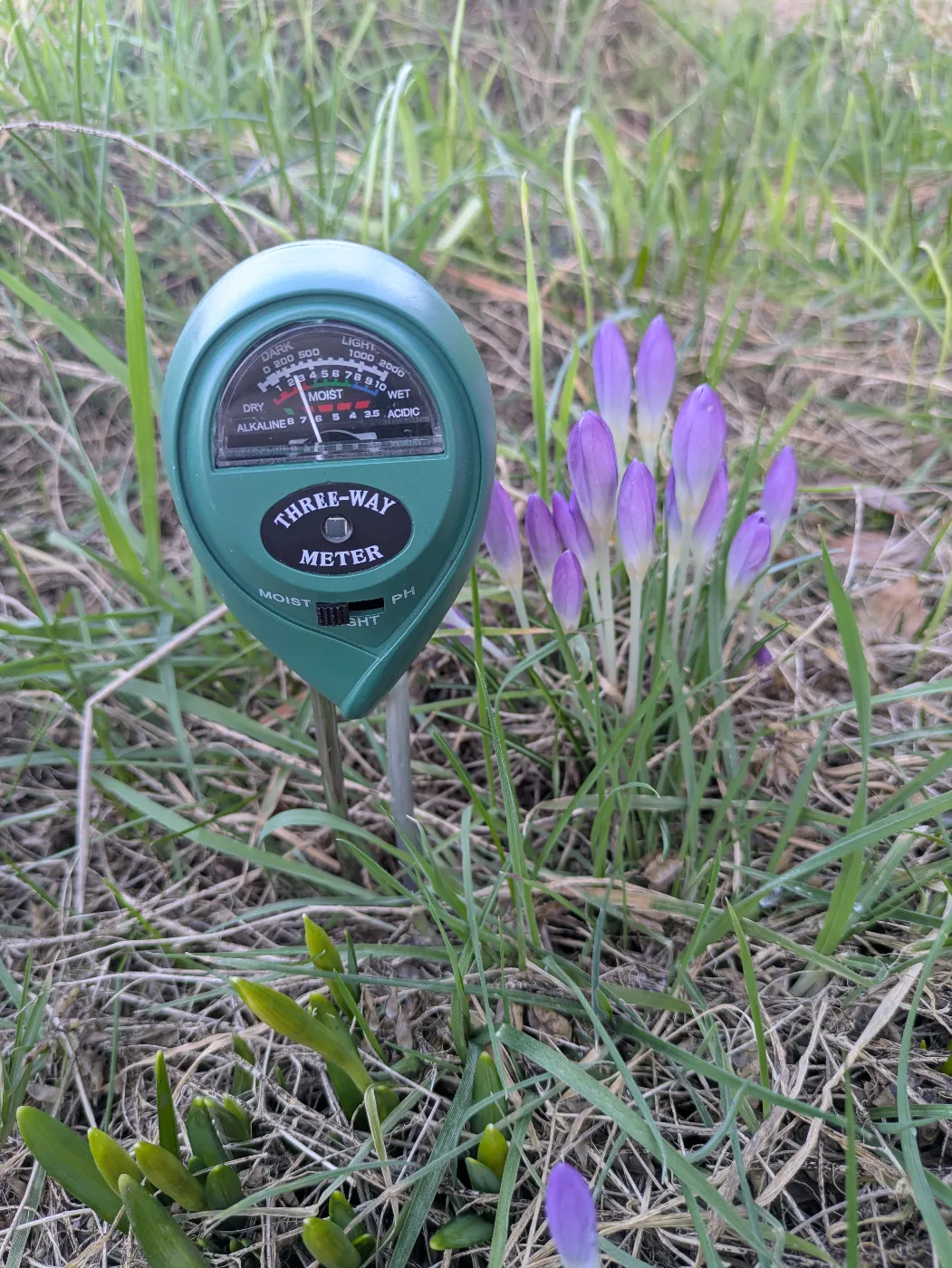
Three-way soil meter (moisture, pH, light)
The photograph shows an analog device, the 'THREE-WAY METER', inserted into the soil. The device is intended for rapid measurement of soil moisture, acidity (pH), and light level in garden and vegetable-plot conditions. Spring crocuses grow next to the meter, indicating the beginning of the garden season.
Instrumental methods. For those who want to make decisions based on data, there are inexpensive and accurate devices:
- Tensiometers. This is a tube with a ceramic tip and a vacuum gauge that is installed in the root zone. The device measures the force with which the soil holds water (soil tension). The higher the readings, the drier the soil. For sweet cherry, it is recommended to begin irrigation when tensiometer readings at a depth of 30 cm reach 30 kPa for loamy soils and 20–30 kPa for lighter soils (Long et al., 2021). Tensiometers are inexpensive but require regular maintenance and protection from freezing.
- Granular matrix sensors (GMS). These are electrical sensors that measure soil resistance. They are easier to install than tensiometers, but less accurate and require calibration. They can be connected to inexpensive weather stations or read with a portable device (Long et al., 2021).
- Automatic monitoring systems. Modern garden weather stations and soil moisture sensors with wireless data transmission allow soil conditions to be tracked in real time via a smartphone. This is convenient, but requires initial investment.
Approximate norms. Regardless of the method, it is important to remember that sweet cherry tolerates neither drying out nor waterlogging. Optimally, soil moisture in the root zone should be maintained at 70–80% of minimum water-holding capacity (MWC) on heavy soils and 60–70% on light soils (Potapov et al., 2000). The allowable depletion of available water is about 50% (Long et al., 2021). This means that irrigation should be carried out when soil moisture approaches the lower boundary of this range, without waiting for persistent leaf wilting.
Taking weather and precipitation into account. Regularly check the weather forecast and take fallen precipitation into account. If heavy rain has fallen (more than 20–25 mm), irrigation can be postponed. However, do not rely only on rain: in hot weather, even after a short shower, the soil dries quickly, especially on sandy soils. A simple rain gauge will help more accurately estimate the amount of moisture that has fallen.
Depth of wetting. When checking moisture, it is important to assess not only the surface layer but the entire root zone. For young trees this is the first 30–40 cm; for mature trees, up to 60–90 cm. If the soil is dry at a depth of 30 cm but moist at the surface, this may mean that irrigation was insufficient and the water did not reach the main mass of roots. Use a soil auger or a simple spade handle to check moisture at different depths.
Regularity of monitoring. The most accurate decisions are made with systematic observation. It is enough to check the soil once or twice a week in several points of the tree basin (under the canopy, at the periphery) and then decide whether to irrigate. During fruit filling and in dry weather, checks should be carried out more often.
Thus, determining whether irrigation is needed is a combination of simple observations and, where possible, the use of inexpensive devices. The main thing is not to allow prolonged drying of the root zone and to avoid water stagnation.
4. Irrigation Methods
The choice of irrigation method depends on the size of the orchard, available resources, soil type, and climate. For sweet cherry, with its shallow root system and sensitivity to waterlogging, not all methods are equally good. Let us consider the main options, their advantages, and limitations.
Surface irrigation (furrow, tree-basin). A traditional method in which water is supplied by gravity along furrows laid along rows or around trees. Water is poured into tree basins from a hose or buckets.
- Advantages: simplicity, no special equipment required, suitable for small orchards and young trees. It allows uniform wetting of the root zone if the furrows are properly cut.
- Disadvantages: high water consumption (up to 30–50% is lost to evaporation and filtration), risk of waterlogging and formation of a soil crust, need for manual labor, uneven moistening on slopes. With such irrigation, it is easy to cause fruit cracking if too much water is supplied at once (Potapov et al., 2000; Trunov, 2012).
This method is acceptable for small plots, but is unproductive for intensive orchards.
Sprinkler irrigation (over-canopy and under-canopy). Water is sprayed in the form of raindrops. With over-canopy sprinkling, the entire canopy and the soil beneath it are irrigated; with under-canopy sprinkling, only the tree-row strip is irrigated.
- Advantages: possibility of rapid moistening of a large area, relative uniformity, can be used for protection against spring frosts (over-canopy sprinkling) and for refreshing trees in hot weather.
- Disadvantages: high evaporation losses, unevenness in wind, risk of spreading fungal and bacterial diseases (bacterial canker, coccomycosis) due to wetting of leaves and trunks. For sweet cherry, which is prone to fruit cracking, over-canopy sprinkling during ripening is extremely undesirable (Long et al., 2021; Webster, 1996). Under-canopy sprinkling is safer, but requires careful regulation so that water does not fall on the trunk and leaves.
Drip irrigation. The most modern and recommended method for sweet cherry, especially on low-vigor rootstocks and where water is scarce. Water is supplied in small portions directly to the root zone through emitters located on tubes along the row.
- Advantages: water savings of up to 50–70% compared with surface irrigation, constant maintenance of optimal moisture without sharp fluctuations (which reduces the risk of cracking), possibility of precise fertilizer application together with water (fertigation), reduced spread of diseases because leaves and trunk remain dry. Drip irrigation makes it possible to maintain soil moisture at a given level, which is especially important for obtaining large fruit and preventing microdamage to the skin (Neilsen et al., 2017; Long et al., 2021).
- Disadvantages: high initial cost of equipment, need for water filtration to prevent emitter clogging, risk of soil salinization in the wetted zone if the leaching regime is insufficient, shallow root location (which requires special attention during soil cultivation). It requires regular monitoring and maintenance.
For small orchards, simplified drip irrigation systems based on hoses with built-in emitters connected to a water supply or barrel can be used.
Subsurface irrigation. Water is supplied through tubes laid at a depth of 20–30 cm. This is the most effective method from the standpoint of water saving, since evaporation from the surface is eliminated. However, it is difficult to install, expensive, and has not become widespread in amateur gardening (Trunov, 2012). For sweet cherry with its shallow root system, this method may be suboptimal, since the main mass of roots is above the wetting zone.
Microirrigation (micro-sprinkling, micro-sprinklers). A compromise option: water is sprayed under the canopy over a small area without wetting the leaves. It is suitable for orchards with row spacings of 4–6 m. Micro-sprinklers provide a wider wetting zone than emitters, but require more water. They are often used in combination with mulching. For sweet cherry on dwarf rootstocks this method may be acceptable, but it is less precise than drip irrigation (Long et al., 2021).
Irrigation in containers and on household plots. For individual trees in containers or on small plots, it is convenient to use a watering can or a hose with a sprayer, directing water into the tree basin. It is important not to pour water on the trunk and not to wash away the soil. Young trees are best watered by hand, carefully moistening the entire root zone. After irrigation, it is useful to mulch the tree basin to conserve moisture (Buckingham, 2010).
Special types of irrigation. In addition to growing-season irrigation, water-recharge irrigation is used (in late autumn) to create a reserve of moisture in the soil, as well as frost-protection irrigation (sprinkling during frost) and refreshing irrigation in hot weather. However, for sweet cherry, frost-protection sprinkling during flowering requires caution: wetting the flowers can reduce pollination and promote disease development. Under-canopy irrigation or the use of windbreak nets are safer (Potapov et al., 2000; Long et al., 2021).
Choosing a method. For amateur gardeners and small farmers, the optimal option is often drip irrigation or under-canopy micro-sprinkling combined with mulching. They save water, reduce the risk of diseases and fruit cracking, and make it easy to apply fertilizers. In arid regions, it is practically impossible to obtain consistently high sweet cherry yields without drip irrigation. When choosing a method, also consider soil type: on sandy soils, frequent irrigation with small rates (drip irrigation) is preferable; on clay soils, less frequent but abundant irrigation is needed to wet the root zone.
Thus, the modern approach to sweet cherry irrigation is a rejection of “area-wide irrigation” in favor of local, precise moistening of the root zone. This not only saves water but also creates the best conditions for growth and fruiting.

Solar Automatic Drip Irrigation Kit for Gardens
Automate watering for pots, gardens and small greenhouses. This solar-powered system features a timer to help schedule water delivery to your plants.
- Solar-powered
- 15 m irrigation hose
- Programmable watering
Affiliate link · Check included accessories.
5. Rates and Frequency of Irrigation. Optimal Time to Irrigate
Determining exact irrigation rates and frequency is a task that has no universal solution. They depend on soil type, tree age, weather conditions, irrigation method, and the phase of sweet cherry development. However, there are general principles and approximate values that will help the gardener build the right strategy.
What irrigation rates depend on.
- Soil type. This is the key factor. Sandy and sandy loam soils have low water-holding capacity: they quickly absorb water but also quickly lose it. On such soils, irrigation should be more frequent but with smaller rates. Clay and loamy soils retain moisture longer, so irrigation can be less frequent but abundant enough to wet the root zone (Potapov et al., 2000; Trunov, 2012).
- Tree age and size. Young seedlings with a small root system require frequent but moderate irrigation. Mature fruiting trees consume significantly more water, and their irrigation rate increases.
- Development phase. As already noted, water demand increases sharply during fruit growth and filling and decreases after harvest.
- Weather conditions. Temperature, air humidity, wind, and precipitation directly affect evapotranspiration (evaporation of water from the soil surface and plant transpiration). In hot and windy weather, irrigation should be more frequent.
- Irrigation method. Drip irrigation allows water to be supplied in small portions and maintains stable moisture, whereas surface irrigation requires larger single rates.
Approximate irrigation rates.
For a mature fruiting sweet cherry tree, the single irrigation rate for surface irrigation is approximately 40–60 liters per tree (Potapov et al., 2000). With drip irrigation the rate is significantly lower, since water is supplied directly to the root zone and is not lost to evaporation. In this case, one focuses on moisture sensor readings or on evapotranspiration calculations.
The total seasonal water requirement for sweet cherry in arid regions can reach 750–1000 mm; in more humid regions, 550–700 mm (Hanson and Proebsting, 1996; Marsal et al., 2010). This amount is distributed unevenly: approximately 10% in May, 15% in June, 20% in July, 18% in August, and 10% in September (Long et al., 2021).
For young trees in the first year after planting, the irrigation rate is about 10–15 liters per tree every 3–5 days, depending on the weather. Subsequently, the rate is increased.
Irrigation frequency.
Irrigation frequency is determined not by the calendar but by the condition of the soil. Optimally, root-zone moisture should be maintained at 70–80% of minimum water-holding capacity (MWC) on heavy soils and 60–70% on light soils, without allowing available water to fall below 50% (Long et al., 2021). This means that irrigation is carried out when soil moisture approaches the lower boundary of the allowable range.
In practice, the following intervals can be followed:
- In spring (before flowering and at the beginning of shoot growth): moderate irrigation, once every 7–10 days if there is no rain.
- During fruit growth and filling: regular irrigation, once every 3–5 days on light soils and once every 5–7 days on heavy soils. With drip irrigation — daily or every other day in small rates.
- During ripening: irrigation is limited so as not to provoke fruit cracking. It is enough to keep the soil moist but not waterlogged. 1–2 weeks before harvest, irrigation is often stopped completely (Neilsen et al., 2017).
- After harvest: irrigation is resumed, but less intensively, to ensure flower bud formation and preparation for winter.
Optimal time to irrigate.
The time of day matters for irrigation efficiency and tree health.
- Early morning (before 10 a.m.) is the most favorable time. Water has time to soak into the soil before the heat sets in, and evaporation losses are minimal. Leaves and trunk dry quickly, which reduces the risk of fungal diseases.
- Evening (after 5–6 p.m.) is also acceptable, especially in hot weather. However, if water gets on the leaves, they remain wet all night, which can contribute to disease development. With drip irrigation this risk is absent.
- During the day in hot weather irrigation is not recommended: most of the water will evaporate before reaching the roots, and drops on the leaves can cause burns.
- At night irrigation is possible, but less convenient and can contribute to waterlogging if the rate is exceeded.
Seasonal features.
- Water-recharge irrigation. Carried out in late autumn (after leaf fall) in regions with insufficient winter moistening. The rate is 1500–2000 m³/ha, which allows the soil to be wet to a depth of 1.5–2.0 m and creates a moisture reserve for spring (Potapov et al., 2000).
- Spring irrigation. In the middle belt and northern regions, the first irrigation is often carried out during flowering or immediately after it if the soil is dry.
- Summer irrigation. The main irrigations occur in June–July, when active growth and fruit filling are taking place.
- Autumn irrigation. After harvest, irrigation continues, but taking autumn rains into account. Excessive autumn irrigation can prolong shoot growth and reduce winter hardiness.
How to determine that the rate is sufficient. After irrigation, check soil moisture at a depth of 20–30 cm. If it is moist at this depth, the rate is sufficient. If it is dry, increase the rate or duration of irrigation. With drip irrigation, focus on tensiometer or moisture sensor readings.
Thus, irrigation rates and frequency are flexible parameters that must be adapted to specific conditions. The main rule: it is better to irrigate less often but more abundantly than often and little by little, except for drip irrigation, where frequent small portions are preferable. And always remember the phase of tree development: what is useful in June may be harmful in July.
6. How to Reduce Moisture Loss
Even with sufficient precipitation and regular irrigation, a significant portion of water is lost irrevocably — it evaporates from the soil surface, is used for transpiration by weeds, or runs off along a slope. For sweet cherry, whose root system is shallow, conserving moisture in the root zone is of primary importance. There are several practical techniques that reduce losses and increase the efficiency of each irrigation.
Mulching. This is the most effective way to reduce evaporation from the soil surface. Mulch creates a physical barrier between the soil and the air, reducing moisture losses by 30–50% or more (Long et al., 2021; Potapov et al., 2000). For sweet cherry, both organic and synthetic materials are suitable.
- Organic mulch: straw, hay, wood chips, compost, rotted manure, mown grass. A layer 5–10 cm thick is laid around the tree, retreating 10–15 cm from the trunk to avoid bark damping-off. Organic mulch not only conserves moisture but also improves soil structure, enriches it with organic matter, and suppresses weed growth. Studies show that using straw or wood chips in sweet cherry orchards reduces water consumption by 9–30% without loss of yield (Yin et al., 2012; Neilsen et al., 2017). However, when using organic mulch, it is necessary to monitor moisture: during rainy periods it can accumulate water and contribute to rot, so in regions with abundant precipitation the mulch layer is made thinner.
- Synthetic mulch: black polyethylene film or geotextile (agrotextile). These materials effectively suppress weeds and almost completely eliminate evaporation from the soil surface. Geotextile is more durable (lasts 10 years or more) and allows water to pass through, which is important with sprinkling. Black film heats the soil, which can be useful in cold regions, but in a hot climate it can cause root overheating. Synthetic mulch does not improve fertility, but it is excellent for intensive orchards on dwarf rootstocks, where precision of the water regime is important (Long et al., 2021; Neilsen et al., 2017).
Managing soil cover. In the inter-row spaces of the orchard, grasses are often sown or natural sod is left. Such cover reduces erosion and improves machinery access, but competes with trees for water. To reduce moisture losses, the tree-row strip 1–2 m wide is kept under black fallow (without vegetation) or mulched. In the inter-rows, low-growing cereal grasses can be used, which consume less water than broad-leaved weeds (Potapov et al., 2000; Mandal et al., 2021). In arid regions, inter-rows are sometimes kept under clean fallow, but this increases the risk of erosion. A compromise is strip sodding: narrow strips of grass alternate with cultivated soil.
Weed control. Weeds are among the main water consumers in the orchard. They take moisture from sweet cherry, especially in the upper soil layer, where the bulk of its roots are located. Regular mowing, weeding, or the use of herbicides in the tree-row strip eliminate this competition. Studies show that a weed-free zone around the tree increases available moisture and has a positive effect on growth and yield (Potapov et al., 2000; Long et al., 2021). When using herbicides, it is important to be careful not to damage the bark and leaves of sweet cherry.
Increasing soil water-holding capacity. Organic matter (humus) acts like a sponge: it retains moisture and gradually releases it to the roots. Applying compost, rotted manure, or plowing in green manures (for example, vetch, lupine, phacelia) improves soil structure, increases its ability to hold water, and reduces filtration losses. On sandy soils this is especially important, since they lose moisture quickly. Regular addition of organic matter is a long-term investment in the orchard’s water regime (Long et al., 2021; Trunov, 2012).
Wind protection. Wind increases transpiration (evaporation of water by leaves) and dries out the soil. Windbreak strips or individual screens of tall plants reduce wind speed by 30–40% and reduce moisture losses by 20–30% (Longstroth and Perry, 1996; Webster, 1996). For small orchards, hedges or special nets can be used. It is important that wind protection does not shade the trees too much, since sweet cherry is light-loving.
Optimizing irrigation. Switching to drip irrigation or under-canopy micro-sprinkling itself reduces water losses to evaporation and runoff. In addition, irrigation in the early morning hours, when the temperature is lower and the wind is weaker, allows water to soak into the soil rather than evaporate. Regular moisture monitoring and irrigation only as needed prevent useless water consumption (Long et al., 2021; Neilsen et al., 2017).
Reducing transpiration. In extreme heat, refreshing irrigation (spraying the canopy with small rates) can be used to reduce leaf temperature, but this requires caution so as not to provoke diseases. Antitranspirants (film-forming substances) that reduce evaporation from leaves are safer, but their use in amateur gardening is limited. The main path is maintaining an optimal soil water regime so that the tree does not experience stress and can effectively regulate its losses.
Combining practices. The greatest effect is achieved with an integrated approach: mulching the tree basin + a weed-free strip + drip irrigation + wind protection. For example, in a study on sweet cherry in Oregon, the combination of drip irrigation and straw mulch reduced water consumption by 70% compared with micro-sprinkling without mulch, while yield and fruit quality did not decrease (Yin et al., 2012; Long et al., 2021).
Thus, reducing moisture loss is not a single measure but a system of techniques aimed at conserving every liter of water in the root zone. Implementing these practices is especially important in regions with insufficient moisture, but even in a more humid climate they help make the orchard more resistant to droughts and reduce irrigation costs.

7-in-1 Wi-Fi Weather Station
Monitor local weather conditions with a wireless outdoor sensor. Track temperature, humidity, rainfall, wind speed and direction, and atmospheric pressure. Ideal for gardens, farms and greenhouses.
- Wireless outdoor sensor
- Solar-powered
- Wi-Fi connectivity
Affiliate link · Check regional compatibility.
7. Symptoms of Deficiency and Excess. Solutions
Water is a balance. Both a lack and an excess of moisture are equally harmful to sweet cherry, although the symptoms and consequences differ. It is important to notice the signs of a problem in time and take the right measures so as not to lose the harvest and not destroy the tree.
Symptoms of Moisture Deficiency (Water Stress)
When water is lacking, sweet cherry signals this quite clearly, especially in hot weather.
- Leaves lose turgor: they become flaccid, soft, and young shoots droop. This is the first and fastest sign.
- Leaf curling: the edges of leaf blades may curl downward, and the leaves acquire a grayish or bluish tint.
- Slowed growth: shoots stop lengthening, internodes become short, and leaves become smaller.
- Drop of flowers and fruitlets: during flowering and immediately after it, a lack of moisture leads to mass shedding of flowers and young fruitlets, sharply reducing the harvest (Potapov et al., 2000; Mandal et al., 2021).
- Small and tasteless fruit: during fruit filling, a lack of water prevents the fruits from gaining size and juiciness, and sugar content decreases (Long et al., 2021).
- Premature yellowing and leaf fall: under prolonged stress, the tree sacrifices leaves to reduce evaporation.
- Reduced winter hardiness: a weakened tree tolerates frost worse and is more severely damaged by diseases (Trunov, 2012).
If measures are not taken, the tree may drop the entire crop and even die.
Symptoms of Excess Moisture (Waterlogging)
Sweet cherry tolerates stagnant water and waterlogging poorly, since its roots are sensitive to lack of oxygen.
- Depressed growth: the tree looks weakened, shoots hardly grow, and leaves are pale and small.
- Yellowing of leaves (chlorosis): excess water leaches nutrients, especially nitrogen and iron, which leads to yellowing of leaves with green veins (Potapov et al., 2000; Webster, 1996).
- Root rot: the bark at the base of the trunk darkens, becomes soft, and may peel off. An unpleasant odor appears.
- Fruit cracking: the most characteristic sign of excess moisture during ripening. A sharp influx of water into the fruit (from the soil or through the skin) causes the skin to rupture (Quero-García et al., 2017; Mandal et al., 2021).
- Development of diseases: waterlogging promotes the spread of root rots, bacterial canker, and other fungal diseases.
- Appearance of moss and algae: a green film may appear on the soil surface in the tree basin, and the soil becomes sticky.
In severe cases, the tree dies from root asphyxiation.
Solutions for Moisture Deficiency
- Immediate irrigation: water the tree abundantly, wetting the root zone to a depth of 30–40 cm. It is better to use drip irrigation or under-canopy sprinkling so that water is supplied gradually.
- Mulching: after irrigation, mulch the tree basin with straw, compost, or mown grass. This will slow moisture evaporation.
- Weed removal: weeds compete for water, so regularly weed the tree-row strip.
- Checking the root system: if the tree remains wilted even after irrigation, check whether the roots are damaged by rodents or diseases.
- Adjusting the regime: during dry periods, increase the frequency of irrigation, focusing on soil moisture rather than the calendar (Trunov, 2012).
Solutions for Excess Moisture
- Stop irrigation: let the soil dry out. If heavy rains have occurred, temporarily stop additional irrigation.
- Provide drainage: if water stagnates, create diversion ditches or install drainage pipes. On clay soils it is useful to add sand and organic matter to improve structure.
- Raise the trunk base: if water accumulates at the base of the tree, you can carefully rake soil away from the trunk or create a small mound.
- Limit irrigation during ripening: 1–2 weeks before harvest, irrigation is reduced or stopped to avoid fruit cracking (Long et al., 2021).
- Disease control: if root rot occurs, treatment with fungicides and removal of affected areas may be required. In severe cases, it is better to replant the tree to a drained site (Potapov et al., 2000).
Prevention
The best way to avoid problems is to create suitable conditions for sweet cherry from the very beginning:
- Choose a site with good drainage; avoid lowlands and places with a high water table.
- Select a rootstock resistant to waterlogging (for example, some clonal rootstocks are suitable for wet soils).
- Regularly check soil moisture and irrigate only as needed.
- Mulch the tree basin and control weeds.
- Maintain a balanced irrigation regime taking into account the phase of tree development.
- Use wind protection to reduce transpiration (Neilsen et al., 2017; Long et al., 2021).
Thus, attentiveness and timely response to the tree’s signals make it possible to maintain an optimal water regime and obtain stable harvests of quality fruit.
8. Combining Irrigation with Fertilization (Fertigation)
Fertigation is the application of fertilizers together with irrigation water. For sweet cherry, especially in intensive orchards on low-vigor rootstocks, this technique is becoming practically indispensable. It allows nutrients to be delivered directly to the root zone in small portions, which increases their uptake and reduces losses. Unlike traditional broadcasting of fertilizers over the surface, fertigation makes it possible to promptly correct tree nutrition during the season without injuring roots or compacting the soil.
Advantages of fertigation for sweet cherry.
- Precision and efficiency. Nutrients are supplied directly to active roots, bypassing weeds and soil layers where they could be bound or leached. This is especially important for phosphorus and potassium, which are relatively immobile in soil (Long et al., 2021; Neilsen et al., 2017).
- Flexibility. It is easy to change the composition and concentration of the solution depending on the phase of tree development. For example, at the beginning of the season sweet cherry needs more nitrogen for shoot and leaf growth, while during fruit filling it needs potassium and calcium to improve quality and storability (Neilsen et al., 2017; Mandal et al., 2021).
- Fertilizer savings. Losses from leaching and binding in the soil are reduced, so fertilizer doses can be reduced by 20–30% compared with traditional methods (Long et al., 2021).
- Reduced root stress. The salt concentration in the soil solution is maintained at a consistently low level, which eliminates root burns possible with dry fertilizer application.
- Improved fruit quality. Balanced nutrition, especially with calcium and potassium, directly affects flesh firmness, color, and resistance to cracking (Neilsen et al., 2017; Long et al., 2021).
Which fertilizers can be used.
Only fertilizers that are highly soluble in water are suitable for fertigation. Solid forms (urea, ammonium nitrate, potassium sulfate, monopotassium phosphate) are first dissolved in a separate container and then supplied to the system. Insoluble fertilizers (superphosphate, phosphate rock) are not suitable for fertigation.
The main elements most often applied with irrigation:
- Nitrogen (N): in the form of calcium nitrate, potassium nitrate, ammonium nitrate, or urea. Nitrogen is necessary for shoot and leaf growth in the first half of the growing season. However, excess nitrogen in the second half of summer can prolong growth and reduce winter hardiness (Long et al., 2021; Neilsen et al., 2017).
- Phosphorus (P): in the form of monoammonium phosphate or ammonium polyphosphate. Phosphorus is important for flower bud formation and root system development. It is applied at the beginning of the season and after harvest.
- Potassium (K): in the form of potassium chloride or potassium sulfate. Potassium improves fruit quality, size, taste, and disease resistance. Potassium demand increases sharply during fruit filling (Neilsen et al., 2017).
- Calcium (Ca): in the form of calcium nitrate. Calcium strengthens cell walls, reduces fruit cracking, and increases storability. It is applied during fruit growth.
- Magnesium (Mg) and micronutrients (B, Zn, Fe, Mn): in the form of chelates or soluble salts. They are added based on leaf diagnosis results or when deficiency symptoms appear.
Rates and timing of application.
Fertilizer rates in fertigation are calculated based on the planned harvest, tree age, content of elements in the soil and leaves. There are no universal norms, but the following approaches can be used as guidelines:
- For a young non-fruiting orchard on low-vigor rootstocks, it is often recommended to apply 30–40 kg/ha of nitrogen per season, distributing it over several applications (Long et al., 2021; Neilsen et al., 2017).
- For a fruiting orchard with a yield of 10–15 t/ha, optimal doses may be: nitrogen — 60–100 kg/ha, phosphorus — 20–30 kg/ha, potassium — 80–120 kg/ha per season (Potapov et al., 2000; Trunov, 2012).
- In intensive orchards with a yield of 30–40 t/ha, doses are increased: nitrogen — up to 120–150 kg/ha, potassium — up to 150–200 kg/ha, phosphorus — up to 40–60 kg/ha (Neilsen et al., 2017).
Timing of application is tied to phenophases:
1. From bud break to flowering: nitrogen and phosphorus to stimulate growth and flower bud formation.
2. After flowering and before the beginning of fruit filling: nitrogen, phosphorus, potassium, and calcium.
3. During fruit filling and ripening: potassium and calcium (nitrogen is limited).
4. After harvest: phosphorus and potassium to restore the tree and prepare it for winter. Nitrogen is not applied during this period, so as not to provoke shoot growth (Neilsen et al., 2017; Long et al., 2021).
With fertigation, fertilizers are applied in fractions, usually once every 1–2 weeks, together with irrigation. The concentration of the working solution should not exceed 0.2–0.3% for nitrogen and 0.1–0.2% for potassium, so as not to burn the roots. With drip irrigation, fertilizers are applied during the entire irrigation or in its middle, so that the system is flushed with clean water at the end.
Features for different irrigation methods.
- Drip irrigation is the ideal option for fertigation. Fertilizers are supplied locally, and losses are minimal. It is necessary to use filters and regularly flush the system to avoid clogging of emitters.
- Micro-sprinkling is also suitable for fertigation, but requires more careful control so that the solution does not fall on the leaves (especially nitrogen fertilizers, which can cause burns).
- Surface irrigation is less suitable for fertigation because of the uneven distribution of water and fertilizers. In this case, fertilizers are better applied in dry form under mulch or into furrows, and then irrigated.
Possible problems and precautions.
- Clogging of the system. Insoluble impurities and precipitates can clog emitters. Use only soluble fertilizers and regularly flush the system.
- Root burns. If the solution concentration is exceeded, root burns are possible. Strictly observe the recommended doses and concentrations.
- Incompatibility of fertilizers. Some fertilizers form a precipitate when mixed (for example, calcium nitrate and magnesium sulfate). They cannot be mixed in the same container. Check compatibility before preparing the solution.
- Nutrient imbalance. An excess of one element can block the uptake of another (for example, potassium interferes with the uptake of calcium and magnesium). Regularly conduct leaf diagnosis and adjust the composition.
- Soil salinization. With long-term fertigation in an arid climate, salts may accumulate in the root zone. Periodically flush the soil with clean water (Long et al., 2021; Neilsen et al., 2017).
Conclusion.
Fertigation is a powerful tool for managing sweet cherry nutrition and water regime. It makes it possible to maintain optimal growth and fruiting, save fertilizers and water, and reduce environmental load. For amateur gardeners and small farmers, mastering this method may seem difficult, but with simple drip systems and adherence to basic rules it is quite accessible. The main thing is to remember that fertigation requires attention and regular monitoring, but the costs are repaid by the health of the trees and the quality of the harvest.

40W Full Spectrum LED Grow Light
Support healthy plant growth with full-spectrum LED lighting. Ideal for seedlings, indoor plants and small growing spaces. A practical solution for indoor gardening and year-round cultivation.
- Full-spectrum LED
- Energy-efficient design
- Indoor plant growing
Affiliate link · Check actual power and light coverage.
9. Common Mistakes and FAQ
Even experienced gardeners sometimes make mistakes in sweet cherry irrigation that lead to reduced yields, poorer fruit quality, or tree death. Below are the most common misconceptions and practical recommendations, as well as answers to frequent questions.
Common Mistakes
1. Irrigating by the calendar rather than by need. The most common mistake is to irrigate the orchard at fixed intervals without taking into account the weather, soil type, and phase of tree development. As a result, during rainy periods the soil becomes waterlogged, and during dry periods it dries out. The correct approach is regular checking of root-zone moisture and irrigation only when necessary (Long et al., 2021; Potapov et al., 2000).
2. Excessive irrigation. Sweet cherry tolerates waterlogging poorly. Constantly wet soil leads to root rot, yellowing of leaves, disease development, and fruit cracking. Waterlogging during ripening is especially dangerous. Irrigate moderately, avoiding water stagnation (Potapov et al., 2000; Webster, 1996).
3. Insufficient irrigation during critical periods. Many gardeners water the tree “superficially,” moistening only the upper soil layer. As a result, the main mass of roots remains dry. It is especially important to wet the root zone to a depth of 30–40 cm during fruit growth and filling (Long et al., 2021; Neilsen et al., 2017).
4. Irrigating during the day in hot weather. Water evaporates quickly before reaching the roots, and drops on the leaves can cause burns. The optimal time is early morning or evening (Long et al., 2021; Trunov, 2012).
5. Ignoring the post-harvest period. Stopping irrigation immediately after harvest is a serious mistake. It is precisely at this time that the tree is laying down flower buds for the next year and accumulating nutrients. A lack of moisture weakens the tree and reduces the future harvest (Neilsen et al., 2017; Long et al., 2021).
6. Lack of mulching. Without mulch, up to 50% of water is lost to evaporation. Mulch made of straw, compost, or mown grass helps conserve moisture and improve soil structure (Long et al., 2021; Yin et al., 2012).
7. Irrigating over the leaves. Over-canopy sprinkling during ripening promotes fruit cracking and the spread of fungal diseases. Drip irrigation or under-canopy irrigation is preferable (Webster, 1996; Quero-García et al., 2017).
8. Failure to take soil type into account. On sandy soils, water drains quickly, so frequent irrigation with small rates is needed. On clay soils, less frequent but abundant irrigation is needed. There are no universal norms (Potapov et al., 2000; Trunov, 2012).
9. Lack of drainage. Sweet cherry does not tolerate stagnant water. If the site is located in a lowland or on heavy clay soil, drainage must be provided, otherwise the roots will rot (Longstroth and Perry, 1996; Potapov et al., 2000).
10. Too-cold water. Irrigation with ice-cold water from a well can cause stress to the roots, especially in hot weather. The water should stand and warm up to ambient temperature (Trunov, 2012).
FAQ (Frequently Asked Questions)
How often should sweet cherry be watered?
Frequency depends on the soil, weather, and phase of development. Focus on root-zone moisture: on light soils — once every 3–5 days; on heavy soils — once every 5–7 days. During fruit filling, irrigation is more frequent; during ripening, limited; after harvest, regular but moderate (Long et al., 2021; Neilsen et al., 2017).
How much water does one tree need?
For a mature fruiting tree, the single rate for surface irrigation is 40–60 liters. With drip irrigation the rate is lower, since water is supplied locally. Young trees need 10–15 liters per irrigation (Potapov et al., 2000; Long et al., 2021).
Can sweet cherry be watered by sprinkling?
It is possible, but with caution. Over-canopy sprinkling is undesirable during flowering (reduces pollination) and ripening (causes cracking). Under-canopy micro-sprinkling is safer, but requires control so that water does not fall on the trunk (Webster, 1996; Long et al., 2021).
How can irrigation be combined with fertilization?
Use fertigation — application of soluble fertilizers together with irrigation water. This is effective with drip irrigation. Calculate doses according to the phase of development and leaf diagnosis results. Do not mix incompatible fertilizers (Neilsen et al., 2017; Long et al., 2021).
What should be done if the fruit cracks?
Cracking is most often caused by sharp fluctuations in soil moisture or rain during ripening. Solution: maintain stable soil moisture (drip irrigation), limit irrigation 1–2 weeks before harvest, use mulch, and, if possible, cover the trees from rain (Simon, 2006; Quero-García et al., 2017).
How should sweet cherry be watered on sandy soil?
Sandy soils lose moisture quickly. Irrigate more often (every 2–3 days) in small portions, be sure to mulch the tree basin, and add organic matter to increase water-holding capacity (Potapov et al., 2000; Long et al., 2021).
Should sweet cherry be watered after harvest?
Yes, обязательно. Post-harvest irrigation is necessary for flower bud formation and preparing the tree for winter. However, do not overwater the soil, so as not to provoke shoot growth (Neilsen et al., 2017; Long et al., 2021).
How can I tell that there is enough moisture?
Check the soil at a depth of 20–30 cm: if it is moist but not wet and easily crumbles when squeezed, moisture is optimal. Use a tensiometer or granular sensors for a more accurate assessment (Long et al., 2021; Neilsen et al., 2017).
Can cold water from a well be used?
It is undesirable. Let the water stand and warm up at least to 15–20°C. Cold water can cause root stress and slow growth (Trunov, 2012).
How should young seedlings be watered?
Young trees require frequent but moderate irrigation. In the first year after planting, water every 3–5 days with 10–15 liters, monitoring root-zone moisture. Mulching is mandatory (Buckingham, 2010; Potapov et al., 2000).
What should be done if the tree wilts despite irrigation?
Possible causes: root rot due to waterlogging, root damage by rodents, or diseases. Check the condition of the root collar and roots, and take measures if necessary (drainage, fungicide treatment) (Potapov et al., 2000; Webster, 1996).
Following these simple rules and paying careful attention to the tree’s needs will help avoid most problems and obtain stable sweet cherry harvests even in difficult climatic conditions.
References
- Buckingham, Alan (2010). ‘Cherries’, in Grow Fruit. New York, NY: DK Publishing, pp. 121-136.
- Gonçalves, B., Aires, Alfredo, Oliveira, Ivo, Afonso, S., Morais, M.Cristina, Correia, Sofia, Martins, Sandra, Silva, A.Paula (2021). ‘Sweet Cherry’, in Mandal, Debashis, Wermund, Ursula, Phavaphutanon, Lop, Cronje, Regina (ed.) Temperate Fruits. Production, Processing, and Marketing. Burlington, Canada: Apple Academic Press, pp. 333-416.
- Hessayon, D.G. (1993). ‘Tree fruit’, in The Fruit Expert. London, UK: Expert Books, pp. 3-57.
- Hill, Lewis, Perry, Leonard (2011). ‘Cherries, Sweet and Sour’, in The Fruit Gardener’s Bible. North Adams, MA: Storey Publishing, pp. 181-198.
- Long, L.E., Lang, G.A., Kaiser, Clive (2021). ‘Managing the Orchard Environment’, in Sweet Cherries. Crop Production Science In Horticulture. Boston, MA: CABI Publishing, pp. 236-281.
- Longstroth, M., Perry, R.L. (1996). ‘Selecting the Orchard Site, Orchard Planning and Establishment’, in Webster, A.D., Looney, N.E. (ed.) Cherries. Crop Physiology, Production and Uses. Cambridge, MA: CABI Publishing, pp. 203-222.
- Neilsen, G.H., Neilsen, D., Forge, T. (2017). ‘Environmental limiting factors for cherry production.’, in Cherries: botany, production and uses. Wallingford: CABI, 189-222. doi: 10.1079/9781780648378.0189
- Вдовцева, Т.А., Черновалова, В.П. (1980). Лучшие сорта и особенности агротехники черешни [The best varieties and features of cherry cultivation]. null Ташкент: НИИ НТИиТЭИ Госплана УзССР.
- Потапов, В.А., Фаустов, В.В., Пильщикова, Ф.Н. (2000). ‘Косточковые культуры [Stone fruits]’, in Плодоводство [Fruit growing]. Москва: Колос, pp. 386-408.
- Потапов, В.А., Фаустов, В.В., Пильщикова, Ф.Н. (2000). ‘Плодовый сад [Orchard]’, in Плодоводство [Fruit growing]. Москва: Колос, pp. 207-369.
- Трунов, Ю.В., Самощенков, Е.Г., Дорошенко, Т.Н. (2012). ‘Технология производства плодов [Fruit production technology]’, in Плодоводство [Fruit growing]. Москва: КолосС, pp. 212-328.
