
Cherry Diseases: A Complete Guide to Protecting the Harvest
Sweet cherry is a crop that delights with an early and delicious harvest, but like any fruit tree, it is susceptible to many diseases. For the home gardener and small farmer, understanding the causes of diseases is the first and most important step toward a healthy orchard. In this article, we will examine why diseases occur, how to recognize them, and, most importantly, how to build an effective protection system.
1. Why Diseases Occur in Sweet Cherry
A disease is not simply an accident. It is the result of the interaction of three key factors, which in plant pathology are called the “disease triangle”: a susceptible plant, a pathogen (causal agent), and environmental conditions favorable to it (Borve et al., 2017). Understanding this triangle is the basis of prevention.
1. Presence of the Pathogen
Infection does not arise out of nowhere. Sources of pathogens may be located in the orchard itself or near it:
- In the tree itself and in the soil: Pathogens can persist as mycelium in affected branches (Cytospora canker, Eutypa dieback), in mummified fruit left on the tree or on the ground (Monilinia), in fallen leaves (cherry leaf spot), and also in the soil and roots (Armillaria root rot, Verticillium wilt) (Quero-García et al., 2017).
- Near the orchard: Wild Prunus species (for example, chokecherry, wild cherry) and other plants can be reservoirs for viruses, phytoplasmas, and some fungi. For example, X disease in North America spreads from chokecherry (Prunus virginiana), and aphids can transmit viruses from weeds and other fruit trees (James et al., 2017; Rieger, 2006).
- Purchased planting material: Infected saplings are one of the main causes of viral and phytoplasma diseases in a young orchard. The infection may be in a “dormant” state and manifest several years later (Long et al., 2021).
2. Susceptibility of the Plant (Host)
Even in the presence of a pathogen, a tree may not become diseased if it has resistance. However, sweet cherry has vulnerable points:
- Genetics: Among sweet cherry cultivars and the rootstocks used, there are practically no cultivars absolutely resistant to all diseases. Some cultivars are more susceptible to Monilinia or cherry leaf spot, while others have greater tolerance (Mandal, 2021).
- Age and condition of the tree: Young, actively growing trees may be more vulnerable to certain fungal infections. Weakened trees suffering from nutrient deficiency, waterlogging, or mechanical damage much more often become easy prey for pathogens (Longstroth and Perry, 1996).
- Tissues at certain developmental stages: Flowers and young fruitlets are extremely vulnerable to Monilinia and gray mold, especially in cool and wet weather. Ripening fruit become susceptible to anthracnose and cracking, which opens the gate for infections. Pruning wounds are ideal “entry gates” for the causal agents of Cytospora canker and bacterial canker (Borve et al., 2017; Rieger, 2006).
3. Favorable Environmental Conditions
This is the most dynamic factor, which the gardener can to some extent manage.
- Moisture: Most fungal diseases require free moisture on the plant surface. Rain, overhead irrigation, and even heavy dew promote spore germination and infection. For example, only a few hours of moisture are enough for Monilinia infection, while cherry leaf spot requires a film of water on the leaves (Borve et al., 2017; Quero-García et al., 2017).
- Temperature: Each pathogen has its own optimal temperature range. Blossom blight develops actively at low temperatures (about 5 °C) in spring, while anthracnose and powdery mildew prefer warmer weather (20–27 °C) (Borve et al., 2017).
- Wind and insects: Wind spreads fungal spores over long distances. Insects such as aphids are the main vectors of viruses, while beetles and wasps can carry fungal spores to damaged fruit (James et al., 2017; Rieger, 2006).
- Stress factors: Sharp temperature fluctuations (frost cracks), sunscald on bark, hail, and strong wind create wounds and weaken the tree, making it more vulnerable to infections (Longstroth and Perry, 1996).
Thus, disease is not simply a “bad year,” but a combination of specific conditions. The gardener’s task is to manage this “triangle”: choose resistant cultivars, maintain the health and strength of the tree, and, most importantly, minimize conditions favorable to pathogens, primarily by controlling moisture and plant injuries. In the following sections, we will examine each “player” in this system in detail.
2. Fungal Diseases
Fungal diseases are the most common and numerous group of sweet cherry diseases. They can affect all parts of the tree: roots, trunk, scaffold branches, leaves, flowers, and fruit. Most fungi develop actively under conditions of high humidity, so a rainy summer or frequent overhead irrigation significantly increases the risk of infection (Borve et al., 2017). Below is an overview of the most significant fungal diseases, indicating symptoms, causes, and control methods.
Monilinia (Gray Fruit Rot, Blossom Blight)
Pathogen: fungi of the genus Monilinia: M. laxa, M. fructicola, M. fructigena, M. polystroma (Borve et al., 2017).
Symptoms:
- Blossom blight (infection of flowers and shoots): In spring, during flowering, flowers and young leaves suddenly turn brown, dry out, and remain hanging on the tree without falling. Shoots also dry out, starting from the tip. This is the most dangerous form of the disease in a cool and wet spring (Borve et al., 2017).
- Gray fruit rot: Brown spots appear on ripening fruit and quickly enlarge. The flesh becomes brown, soft, and unfit for consumption. On the surface of affected areas, gray sporulation cushions form, arranged in concentric circles. The fruit become mummified (dry out, blacken) and may remain on the tree in winter, serving as a source of infection the following year (Quero-García et al., 2017; Rieger, 2006).


Infection of cherry fruits by the fungus Monilia laxa, leading to their rotting and subsequent drying on the branch (mummification)
The image clearly shows white areas of sporulation.


Rotting and mummification of cherry fruits caused by the fungus of the genus Monilia
The fruits are covered with a characteristic grayish coating (fungal sporulation) and appear wrinkled.


Cherry fruits infected by the fungus Monilia laxa
The photograph shows characteristic browning, wrinkling (mummification) of fruits and formation of light-colored pads with fungal spores.
Causes and conditions:
- The infection persists in mummified fruit, affected branches, and flowers.
- Infection occurs mainly during flowering and during fruit ripening. For germination of M. laxa spores, only 2 hours of moisture at about 5 °C are enough, while for M. fructicola, 6–12 hours at a higher temperature are required (Borve et al., 2017).
- Rainy and cool weather during flowering and before harvest is especially dangerous.
Control measures:
- Sanitary measures: Collect and destroy all mummified fruit; remove and burn affected shoots and flowers. Autumn cleanup of fallen leaves is ineffective because the pathogen overwinters in fruit and branches (Borve et al., 2017).
- Protection during flowering: Carry out 1–2 fungicide sprays during flowering (for example, based on difenoconazole, tebuconazole, or boscalid). The exact timing of treatment is critically important, because flowers must be protected before conditions favorable for infection occur (Quero-García et al., 2017).
- Fruit protection: Treatments 2–3 weeks before harvest.
- Biological control: In some countries, preparations based on antagonistic fungi (Aureobasidium pullulans) are used, but they have not yet become widespread (Borve et al., 2017).
Cherry Leaf Spot (Brown Leaf Spot)
Pathogen: fungus Blumeriella jaapii (Borve et al., 2017).
Symptoms:
- Small red-purple or brown spots appear on the upper side of leaves and gradually enlarge and merge. On the underside of the leaf, white or pinkish sporulation cushions form at the spots.
- Affected leaves turn yellow and fall prematurely. This weakens the tree, reduces winter hardiness and yield, because the tree loses its leaf apparatus, which is necessary for photosynthesis and nutrient accumulation (Quero-García et al., 2017; Rieger, 2006).
- The disease is especially dangerous for sour cherry, but it also affects sweet cherry.


Leaf of sweet cherry (Prunus avium) affected by cherry leaf spot (Blumeriella jaapii)
On the surface of the leaf blade, characteristic numerous small dark-red, brown and purple spots are visible, leading to tissue necrosis. The disease causes premature mass leaf fall, which greatly weakens the tree, reduces yield and winter hardiness.


Cherry leaf (Prunus avium) infected by the fungus Blumeriella jaapii (causing cherry leaf spot)
Numerous small red-purple necrotic spots are visible on the green surface of the leaf.


Mass infection of cherry leaves (Prunus avium) by the fungus Blumeriella jaapii
The leaf blades are abundantly covered with red-purple spots; yellowing and death of leaf tissues (necrosis) are observed.
Causes and conditions:
- The pathogen overwinters in fallen leaves on the soil surface.
- In spring, during rains, ascospores are released from overwintered leaves and infect young leaves. Further spread occurs by conidia carried by rain and wind. Infection requires free moisture on the leaves (Borve et al., 2017).
Control measures:
- Sanitary measures: Autumn collection and destruction of fallen leaves is the most effective method of reducing the infectious background. It is also recommended to apply urea to fallen leaves to accelerate their decomposition and suppress sporulation (Quero-García et al., 2017).
- Chemical treatments: Carry out 4–8 fungicide sprays (for example, based on chlorothalonil, difenoconazole, myclobutanil) from the end of flowering until the end of summer. The interval between treatments is 7–14 days (Borve et al., 2017).
- Resistant cultivars: Choose cultivars with increased resistance to cherry leaf spot (for example, some sour cherry cultivars, but in sweet cherry this trait is less pronounced).
Shot Hole Disease (Clasterosporium Leaf Spot)
Pathogen: fungus Wilsonomyces carpophilus (formerly Clasterosporium carpophilum) (Borve et al., 2017).
Symptoms:
- On leaves: Small red-brown or purple spots appear. After some time, the affected tissue in the center of the spot dies and falls out, forming holes—“shot holes.” This is a characteristic sign of the disease. Leaves may turn yellow and fall (Quero-García et al., 2017).
- On shoots and branches: Small violet or brown spots form, which turn into elongated cankers (gumming). Affected areas of bark may die.
- On fruit: Small purple spots appear, which on ripening fruit may enlarge to 10 mm. The tissue under the spot becomes corky, and the fruit becomes deformed. Sometimes gum forms on the fruit (Borve et al., 2017).


Leaf spotting (Wilsonomyces carpophilus) under humid conditions
On the green surface, rounded red-brown spots with a lighter center and dark border are clearly visible. These are characteristic signs of infection by the fungus Wilsonomyces carpophilus. The humid environment (water drops) promotes the spread and development of the pathogen's spores.

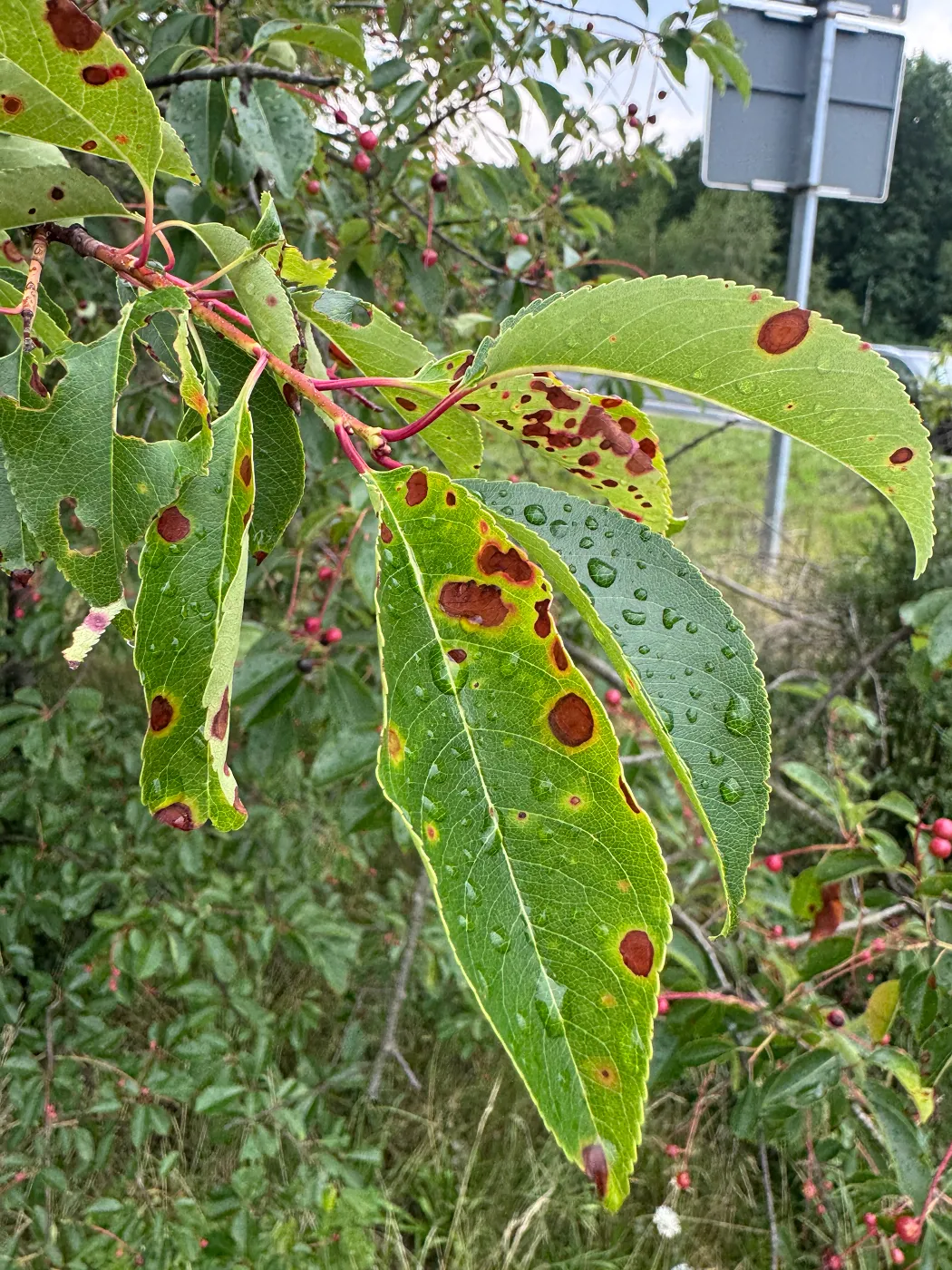
Extensive leaf infection by shot hole disease (Wilsonomyces carpophilus)
Extensive necrosis: red-brown spots merge, and large through holes form in place of the dead areas. Water drops on the leaves indicate humid conditions favorable for Wilsonomyces carpophilus.
Causes and conditions:
- The pathogen overwinters as mycelium in affected branches, buds, and leaf scars.
- Infection spreads with splashing water (rain, irrigation) and requires free moisture for at least 24 hours for infection.
- A cool and wet spring, as well as prolonged periods of damp weather, are most favorable (Borve et al., 2017).
Control measures:
- Sanitary measures: Prune and burn affected shoots and branches during the dormant period. Collect and destroy fallen leaves.
- Chemical treatments: Spray with fungicides (for example, based on copper, chlorothalonil, captan) at the “green cone” stage, at the end of flowering, and, if necessary, 1–2 more times after flowering (Quero-García et al., 2017).
- Prevention: Avoid overhead irrigation, which causes prolonged wetting of leaves and shoots.
Powdery Mildew
Pathogen: fungus Podosphaera clandestina (Borve et al., 2017).
Symptoms:
- A white or light gray powdery coating appears on young leaves, shoots, and fruit. Affected leaves curl, become brittle, and may fall. Young shoots become deformed and lag in growth.
- On fruit, in the area of the pedicel or on the surface, white spots appear, which can lead to roughening of the skin and deterioration of market appearance (Quero-García et al., 2017).


Young plant (sapling) infected by powdery mildew (Podosphaera clandestina)
Almost the entire leaf blade is covered with a grayish-white coating. With severe infection, as in this photo, the plant's photosynthesis is disrupted, which can lead to growth suppression, leaf deformation and premature leaf drop.


Symptoms of powdery mildew (Podosphaera clandestina) on branches and leaves of a plant
On the leaf surface, numerous spots and extensive areas of white powdery coating are clearly visible. On some leaves signs of tissue necrosis (browning) are noticeable. This is a classic picture of infection development in the middle of the growing season.


Leaf with signs of powdery mildew infection (Podosphaera clandestina)
The photograph clearly shows the leaf texture (it is slightly crinkled) and local areas of white fungal coating. In the background in the upper part of the frame a spider web is noticeable. When carrying out phytopathological diagnostics it is important not to confuse a spider web (evidence of insect/arachnid activity) with fungal mycelium.
Causes and conditions:
- The pathogen overwinters as cleistothecia (fruiting bodies) on fallen leaves and in bark cracks.
- Unlike many fungi, powdery mildew does not require free moisture; high air humidity is sufficient for infection. Warm (20–26 °C) and dry weather with high humidity at night is most favorable. The disease is especially active in arid regions (Rieger, 2006).
- Young, growing tissues are more susceptible to the disease.
Control measures:
- Sanitary measures: Collect and destroy fallen leaves; prune affected shoots to improve air circulation.
- Chemical treatments: Spray with fungicides (for example, based on sulfur, triazoles, strobilurins), starting 2–3 weeks after flowering and until shoot growth stops (Borve et al., 2017).
- Cultivar selection: Some sweet cherry cultivars are more resistant to powdery mildew.
Gray Mold
Pathogen: fungus Botrytis cinerea (Borve et al., 2017).


Fruit infected by gray mold (Botrytis cinerea)
The gray "fuzz" represents the mycelium and a mass of asexual spores (conidia) of the pathogen. This is a dangerous disease that spreads quickly and can destroy the harvest of many crops.
Symptoms:
- It affects flowers, leaves, and fruit. Brown spots appear on flowers, and they dry out.
- On fruit, most often during ripening, rapidly spreading brown rot appears. The flesh becomes watery, and under high humidity, abundant gray fluffy coating (sporulation) forms on the surface.
- Infection often develops at sites of mechanical damage, cracks, and also where flower parts remain attached to the fruit (Borve et al., 2017).
Causes and conditions:
- The pathogen overwinters in plant residues and soil.
- Spores spread by wind and rain. Infection requires free moisture and a temperature of 15 to 25 °C.
- The disease is especially dangerous in cool and rainy weather during flowering and ripening. Dense canopy and poor ventilation contribute to disease development (Borve et al., 2017).
Control measures:
- Sanitary measures: Remove affected fruit, flowers, and leaves. Thin the canopy to improve air exchange.
- Chemical treatments: Fungicides used against Monilinia are usually also effective against gray mold. Treatments are carried out during flowering and before harvest (Borve et al., 2017).
- Prevention: Careful harvesting without damage; rapid cooling of fruit after harvest.
Anthracnose (Bitter Rot)
Pathogen: fungi of the genus Colletotrichum, most often C. acutatum (Borve et al., 2017).


Bitter rot of sour cherry fruits caused by Colletotrichum gloeosporioides (syn. Glomerella cingulata)
The photograph shows sour cherry (Latin: Prunus cerasus) fruits affected by bitter rot (anthracnose). The disease is caused by the phytopathogenic fungus Colletotrichum gloeosporioides (formerly known as Glomerella cingulata). On ripe red berries, characteristic symptoms are clearly visible: dark brown or black, slightly sunken spots with necrotized tissue. In the center of old lesions, sporulation (conidiomata) may form. The disease leads to rapid rotting, mummification of fruits and significant crop losses in horticulture.
Symptoms:
- Small round brown, slightly sunken spots appear on fruit. The spots quickly enlarge and may merge, covering a significant part of the fruit. Under wet conditions, orange or pink sporulation cushions form on affected areas (Borve et al., 2017).
- Affected fruit dry out, become mummified, and often remain hanging on the tree.
- The disease is especially harmful to sour cherry, but in recent years it has increasingly occurred on sweet cherry as well (Borve et al., 2017).
Causes and conditions:
- The pathogen overwinters in buds, on affected fruit, pedicels, and shoots.
- Infection spreads with splashing water (rain, irrigation). The disease develops in warm and humid weather. Infection can occur throughout the season, but symptoms usually appear closer to fruit ripening (Borve et al., 2017).
Control measures:
- Sanitary measures: Remove and destroy mummified fruit, pedicels, and affected shoots. Control weeds, which may be a reservoir of infection.
- Chemical treatments: Spray with specific fungicides (for example, based on azoxystrobin, boscalid, pyraclostrobin). Treatments begin at the end of flowering and are repeated at intervals of 10–14 days (Borve et al., 2017).
- Prevention: Avoid overhead irrigation during ripening.
Cytospora Canker (Infectious Dieback)
Pathogen: fungi of the genus Cytospora (Borve et al., 2017).


The photo collage shows symptoms of damage by phytopathogenic fungi of the genus Cytospora, which cause a dangerous disease — cytosporosis (or Cytospora necrosis/canker)
The disease leads to death of bark, drying of branches and death of plants. A — Manchurian hazel (Corylus mandshurica): general depression, drying of branches and thinning of the crown. B — willowleaf spirea (Spiraea salicifolia): mass yellowing and wilting of leaves, death of thin shoots. C — Siberian elm (Ulmus pumila): close-up of a branch with characteristic swellings, cankers and bark necrosis. D — Siberian apricot (Prunus sibirica): trunk with deep canker wounds, roughened bark and signs of gummosis.
Symptoms:
- It affects the bark and wood of branches and the trunk. Dark, slightly sunken spots appear on the bark and quickly enlarge. The bark may crack.
- Affected branches suddenly dry out; leaves on them turn brown and wilt, but remain hanging. Numerous small black bumps—pycnidia—form on the surface of affected bark, from which tendrils of spores emerge in wet weather (Quero-García et al., 2017).
- The disease often develops on trees weakened by frost, sunscald, or other stresses.
Causes and conditions:
- The pathogen enters tissues through wounds: frost cracks, sunscald, pruning sites, mechanical damage.
- Infection occurs mainly in cool and wet weather in spring and autumn. The disease is often secondary, affecting already weakened trees (Borve et al., 2017).
Control measures:
- Prevention: Protect trees from frost and sunscald (whitewash trunks and the bases of scaffold branches); proper pruning with sealing of large cuts with garden putty or special pastes.
- Sanitary measures: Cut out and burn affected branches; disinfect tools.
- Chemical treatments: Spray with fungicides (for example, based on copper) during leaf fall and in spring before bud break.
Eutypa Dieback (Branch Dieback)
Pathogen: fungus Eutypa lata (Borve et al., 2017).
Symptoms:
- The disease manifests on branches, starting from the pruning site. The bark darkens and becomes covered with gum. The wood under the bark turns brown and necrotic.
- Leaves on affected branches suddenly wilt, turn yellow, become small and deformed. Shoots lag in growth. The disease often develops on one side of the tree (Borve et al., 2017).
- Gradually the branch dries out. Black fruiting bodies may appear on dead bark.
Causes and conditions:
- The pathogen enters the tree through fresh pruning wounds, especially large ones.
- The infection develops slowly; symptoms may appear several years after infection. Rainy weather during pruning promotes spore spread (Borve et al., 2017).
Control measures:
- Prevention: Prune in dry weather, when the risk of infection is minimal. Mandatory treatment of cuts (especially large ones) with protective pastes.
- Sanitary measures: Cut out affected branches with a margin of healthy wood (at least 30 cm below visible symptoms); burn plant residues.
- Chemical treatments: Treat cuts with fungicidal pastes.
Verticillium Wilt
Pathogen: fungus Verticillium dahliae (Borve et al., 2017).
Symptoms:
- It affects the root system and vascular system of the tree. The first symptoms appear on leaves of lower branches: they turn yellow, wilt, curl, and fall. Often wilting occurs rapidly, on one side of the tree.
- On a cross-section of branches, darkening of the wood vessels is visible. The disease can lead to rapid death of young trees (Borve et al., 2017).
Causes and conditions:
- The pathogen persists in the soil as microsclerotia for 10 years or more. It enters roots through wounds.
- The disease is especially dangerous in areas where susceptible crops were previously grown (for example, potato, tomato, strawberry). Stress factors such as drought or waterlogging contribute to disease development (Borve et al., 2017).
Control measures:
- Prevention: Do not establish an orchard on areas where susceptible crops were previously grown. Use healthy planting material.
- Sanitary measures: Immediately remove and destroy severely affected trees. Treat the soil at the planting site.
- Chemical treatments: Soil fumigation before planting (for example, with metam sodium) may be effective, but it is expensive and not always available (Borve et al., 2017).
Armillaria Root Rot (Honey Fungus, White Root Rot)
Pathogen: fungus Armillaria mellea (and other species of the genus Armillaria) (Borve et al., 2017).


Rhizomorphs of honey fungus — signs of fungal wood damage
Dark cord-like rhizomorphs of the fungus Armillaria mellea developing on the wood surface. Such structures help recognize armillaria root rot when examining the root system and adjacent tissues. Location: Lainshaw Woods, East Ayrshire, Scotland.
Symptoms:
- Affected trees lag in growth; leaves turn yellow, wilt, and fall. Young trees may die within one season.
- Under the bark at the root collar and on the roots, white fan-shaped films of mycelium (fungal mat) with a mushroom odor are found. On the surface of roots and in the soil around the tree, dark brown, almost black cords—rhizomorphs (“shoestrings”)—can be found.
- In autumn, characteristic honey-yellow edible mushrooms (honey fungus) appear at the base of the trunk (Borve et al., 2017).
Causes and conditions:
- The pathogen lives in the soil on plant residues and infects tree roots. The disease is especially dangerous on areas that were previously forest or fallow, and also when replanting an orchard in an old location.
- The fungus spreads through the soil by rhizomorphs or through contact between roots of diseased and healthy trees. Weakened trees are more susceptible (Borve et al., 2017).
Control measures:
- Prevention: Thoroughly clear the area of old stumps and roots before planting. Do not establish an orchard on the site of a cleared forest without a long period of soil restoration.
- Sanitary measures: Uproot and burn severely affected trees together with roots. Treat the soil in foci of infection.
- Chemical treatments: Soil fumigation is not always effective. As a preventive measure, biological preparations based on antagonistic fungi (Trichoderma) can be used.
Phytophthora Root and Crown Rot
Pathogen: fungi of the genus Phytophthora (various species) (Borve et al., 2017).
Symptoms:
- The disease manifests as tree depression, poor growth, yellowing, and premature leaf fall. Young trees may suddenly die in spring after soil waterlogging.
- At the root collar and on roots, the bark becomes brown and necrotic. The affected tissue looks sunken; gum may be released. The boundary between healthy and affected tissue is clearly visible.
- The disease is often associated with prolonged soil waterlogging or poor drainage (Borve et al., 2017).
Causes and conditions:
- The pathogens inhabit the soil. Infection occurs when the soil is saturated with moisture, and zoospores of the fungus can move toward the roots.
- Warm, humid weather is most favorable. The disease is especially dangerous on heavy, poorly drained clay soils (Borve et al., 2017).
Control measures:
- Prevention: Ensure good soil drainage; plant on raised beds or ridges. Do not allow water to stagnate at the root collar.
- Rootstock selection: Use rootstocks resistant to Phytophthora (for example, some clonal rootstocks based on Mahaleb cherry).
- Chemical treatments: Water the tree trunk circle with systemic fungicides (for example, based on fosetyl aluminum or metalaxyl). Effectiveness may be limited.
Silver Leaf
Pathogen: fungus Chondrostereum purpureum (Borve et al., 2017).
Symptoms:
- Leaves on affected branches acquire a characteristic silvery, metallic tint, which is associated with peeling of the upper skin and penetration of air. Later the leaves wilt, turn brown, and dry out.
- On a cross-section of affected branches, darkening of the wood is visible.
- Branches gradually die, starting from the tip. On dead bark, fruiting bodies of the fungus may appear in the form of leathery, gray-violet plates (Borve et al., 2017).


Fruiting bodies of the fungus Chondrostereum purpureum (causal agent of silver leaf) on a sweet cherry branch
This phytopathogenic fungus causes a dangerous disease — silver leaf disease, which leads to dieback of wood and a characteristic silvery sheen of leaves in stone fruit crops. Mosses and algae are also visible on the bark. Location: Kirktonhall Glen, West Kilbride, Scotland (United Kingdom).


Spread of Chondrostereum purpureum through lenticels on sweet cherry bark
The photograph clearly shows how the characteristic purple-brown fruiting bodies of the fungus grow, rupturing the bark strictly along the horizontal lenticels. This is a classic diagnostic sign of silver leaf development. Damage to the trunk indicates the systemic nature of the infection, which spreads rapidly through the tree's vascular vessels. Location: Kirktonhall Glen, West Kilbride, Scotland (United Kingdom).
Causes and conditions:
- The pathogen enters the tree through wounds, mainly through pruning sites, especially large cuts.
- Infection occurs throughout the growing season, but is especially active in wet weather. The disease may develop slowly over several years (Borve et al., 2017).
Control measures:
- Prevention: Prune only in dry weather. Mandatory sealing of all cuts, especially large ones, with protective pastes containing fungicide.
- Sanitary measures: Cut out affected branches with a margin of healthy wood. Burn plant residues. Disinfect tools.
- Chemical treatments: Treat cuts with fungicidal pastes. Treatment of severely affected trees is impossible.


LCD 4-in-1 Soil Tester
Check essential growing conditions with one compact tool. Measure soil pH, moisture, temperature and light intensity — ideal for gardens, potted plants and greenhouses.
- 4-in-1 measurement
- Easy-to-read LCD display
- Portable design
Affiliate link · For indicative measurements only.
3. Bacterial Diseases
Bacterial diseases of sweet cherry occur less often than fungal diseases, but they can be no less dangerous. They are caused by bacteria that enter plant tissues through natural openings (stomata, lenticels) or through wounds. Bacteria multiply actively in a humid environment, and their spread is promoted by rain, wind, insects, and improper agricultural practices (Rieger, 2006; Quero-García et al., 2017). Unlike fungi, there are no equally effective and numerous chemical preparations against bacteria, so prevention and timely removal of affected tissues come to the fore.
3.1. Bacterial Canker (Bacterial Blight)
Pathogen: bacterium Pseudomonas syringae (various pathovars, for example, pv. morsprunorum and pv. syringae) (Rieger, 2006; Mandal, 2021).
Symptoms:
- On leaves: In spring, small brown or purple spots may appear, sometimes turning into holes. Leaves may turn yellow and fall. Sudden wilting and browning of young flowers and leaves (so-called “blight”) is also possible (Buckingham, 2010; Hessayon, 1993).
- On shoots and branches: The bark darkens, becomes sunken, and becomes covered with cracks. Orange or amber gum is often released from affected areas. The wood under the bark turns brown, and the tissue dies. Branches may dry out quickly, especially on young trees. A characteristic sign is the disordered arrangement of cankers, often in branch forks (Rieger, 2006; Mandal, 2021).
- On fruit: Sometimes dark sunken spots appear on fruit, but this is less characteristic.

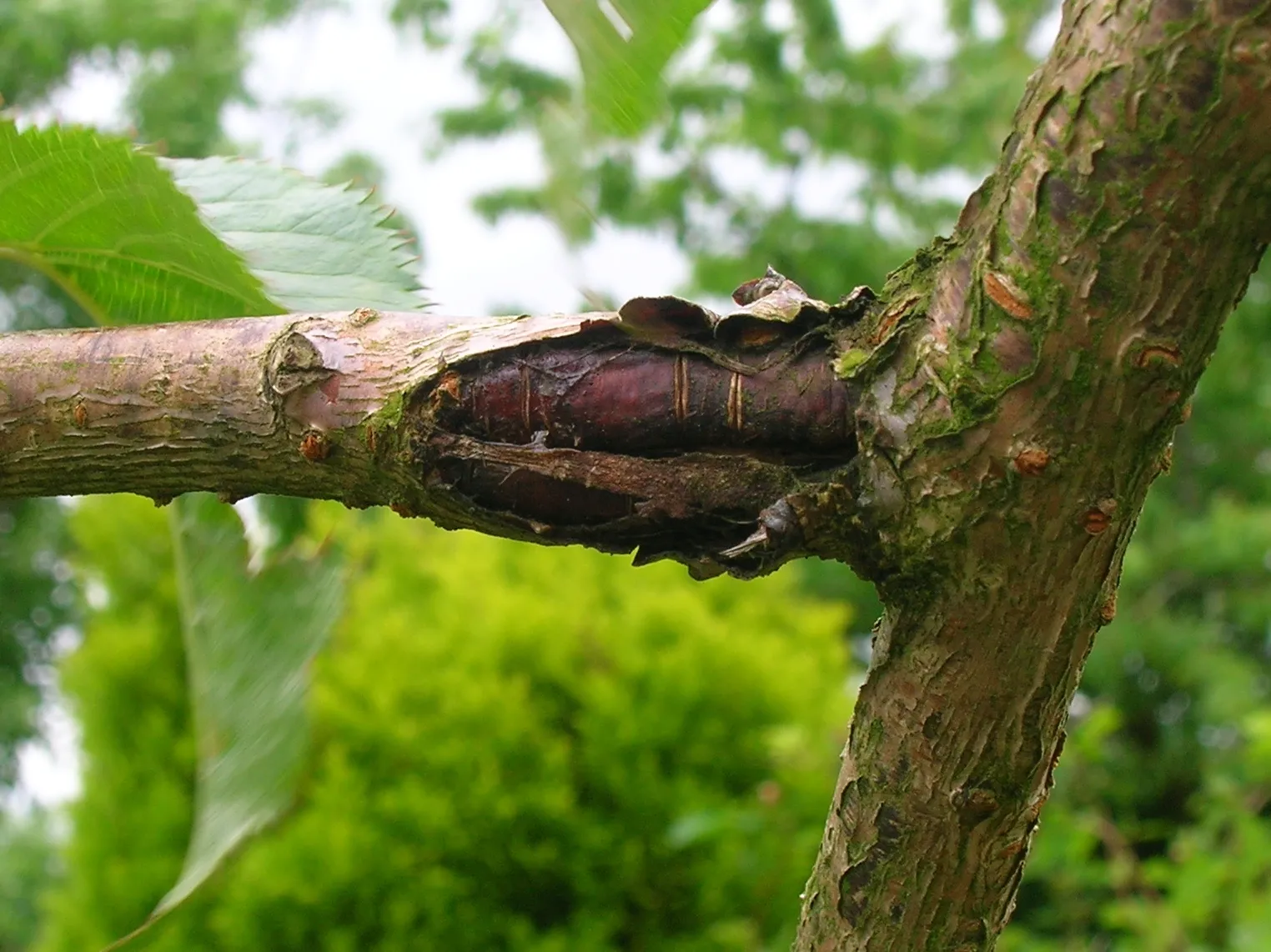
Close-up of a cherry branch (Prunus avium) affected by bacterial canker (Scotland)
Bacterial canker causes dieback of bark and wood tissues, forming characteristic cankers.

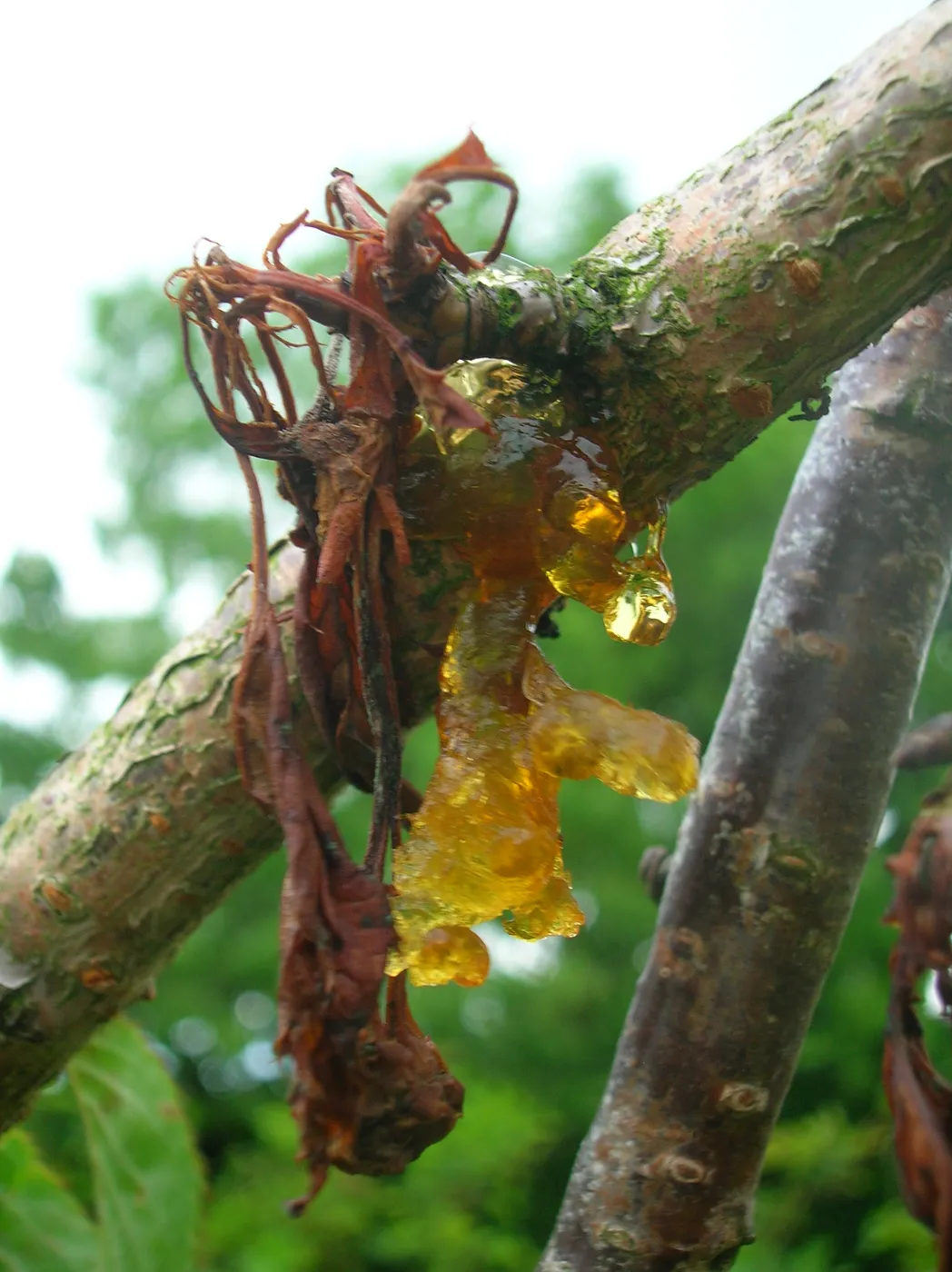
Bacterial canker (Pseudomonas syringae) on sweet cherry: gummosis and leaf dieback
The photo clearly shows two characteristic symptoms of the disease: abundant exudation of amber-yellow gum that hardens in the air (gummosis) from the affected bark tissues, as well as completely dried, necrotized leaves attached to the branch. Location: Chapeltoun, North Ayrshire, Scotland.


Infected cherry leaves (Prunus avium) that dried and darkened as a result of bacterial canker infection (Pseudomonas syringae)
The leaves are curled and hang on the branch. Location: Chapeltoun, North Ayrshire, Scotland.
Causes and conditions:
- The bacterium persists in affected branches, buds, and fallen leaves.
- Infection occurs mainly in cool and wet weather in spring and autumn. The optimal temperature for development is 12–25 °C. Bacteria easily enter through wounds received during pruning, from frost cracks, sunscald, hail, and insects (Quero-García et al., 2017; Rieger, 2006).
- Trees weakened by stress (drought, waterlogging, nutrient deficiency) are more susceptible to the disease.
Control measures:
- Prevention: Prune only in dry weather, when the risk of infection is minimal (better after flowering). All cuts, especially large ones, must be immediately sealed with garden putty or special pastes containing fungicide. Protect trunks from frost cracks and sunscald (whitewashing).
- Sanitary measures: Cut out affected branches with a margin of healthy wood (at least 20–30 cm below visible damage). Burn plant residues. Disinfect tools with alcohol or bleach solution.
- Chemical treatments: Spray with copper-containing preparations (for example, Bordeaux mixture, copper sulfate) during leaf fall and in spring before bud break. These treatments reduce the infectious background but do not cure already diseased trees (Mandal, 2021).
- Biological control: Treat cuts with preparations based on Trichoderma or Bacillus subtilis.
3.2. Crown Gall
Pathogen: bacterium Agrobacterium tumefaciens (Mandal, 2021).
Symptoms:
- Large, lumpy, initially soft, and then hard and woody growths (galls) form on roots and the root collar (less often on the trunk). Their size can vary from small nodules to large tumors.
- Affected trees lag in growth, produce few shoots, and their leaves turn yellow and become smaller. Young saplings may die. Old trees usually do not die, but their yield drops sharply (Hessayon, 1993; Rieger, 2006).


Crown gall caused by Agrobacterium tumefaciens
Tissue overgrowth on a wisteria stem as a result of bacterial infection. The image well illustrates the ability of agrobacteria to cause hyperplastic tumor-like formations.


Close-up of a bacterial gall (growth) caused by the bacterium Agrobacterium tumefaciens at the base of a tree trunk
The growth is dark, bumpy, with an uneven surface.
Causes and conditions:
- The bacterium lives in the soil and enters the plant through wounds on the roots that form during planting, soil cultivation, or insect damage.
- The disease is especially dangerous on poorly drained, heavy soils. The bacterium can persist in the soil for several years (Mandal, 2021).
Control measures:
- Prevention: Use healthy planting material. Carefully inspect roots before planting and remove all suspicious growths. Treat roots before planting with a solution based on Agrobacterium radiobacter (for example, Galltrol, Galler) — this is an antagonist that protects roots from infection (Rieger, 2006).
- Sanitary measures: Uproot and burn severely affected young trees. For mature trees, remove galls followed by disinfection of cuts.
- Agronomy: Good drainage; avoid mechanical damage to roots. Do not establish an orchard on areas where trees affected by crown gall were previously grown.
3.3. Bacterial Spot
Pathogen: bacterium Xanthomonas campestris pv. pruni (in some sources described as Xanthomonas arboricola pv. pruni).
Symptoms:
- Small, watery, then brown or black spots appear on leaves. The spots may be surrounded by chlorotic halos. Affected tissue often dies and falls out, forming holes, which makes the leaves look like those affected by shot hole disease. Severe infection leads to premature leaf fall.
- Small dark, slightly sunken spots form on fruit, reducing market appearance. Dark cankers and gumming may appear on shoots.
Causes and conditions:
- The bacterium persists in buds, shoots, and fallen leaves. It spreads with splashing water, wind, and insects.
- The disease is especially active in warm and humid weather. Unlike bacterial canker, which more often manifests in cool spring, bacterial spot requires higher temperatures (20–30 °C) (Rieger, 2006).
Control measures:
- Prevention: The same measures as for bacterial canker: pruning in dry weather, sealing cuts, protection from damage.
- Sanitary measures: Remove and burn affected leaves, shoots, and fruit. Thin the canopy for better ventilation.
- Chemical treatments: Copper-containing preparations during leaf fall and in spring. Effectiveness is limited, because bacteria quickly develop resistance.
Important note: In the main sweet cherry manuals (Buckingham, 2010; Hessayon, 1993; Quero-García et al., 2017), bacterial spot is often not distinguished as a separate widespread problem, and its symptoms may be similar to manifestations of bacterial canker or fungal leaf spots. Therefore, when such symptoms are detected, it is important to accurately diagnose the causal agent in order to choose the correct protection strategy.
4. Viral Diseases
Viral diseases are one of the most complex and dangerous groups of sweet cherry diseases. They cannot be treated with chemical preparations, and the yield losses and tree death they cause can be catastrophic. Viruses spread with planting material, pollen, seeds, and also by insect vectors (aphids, mites, mealybugs). Many viruses can remain in the plant in a latent form for years without causing visible symptoms, while weakening the tree and reducing its productivity (James et al., 2017; Quero-García et al., 2017). Below are the most significant viral pathogens for sweet cherry.
4.1. Prunus Necrotic Ringspot Virus (PNRSV)
Pathogen: Prunus necrotic ringspot virus (PNRSV), genus Ilarvirus.
Symptoms: Chlorotic rings, lines, mottling, and necrotic spots appear on young leaves. Leaves may acquire a “ragged” appearance due to the falling out of dead areas (shot holes). In the first year after infection, symptoms are often pronounced (shock phase), then the tree may become outwardly healthy, but the virus persists. Yield decreases, fruit ripens unevenly, and deformation is sometimes observed (James et al., 2017; Quero-García et al., 2017).
Spread: The virus is transmitted with pollen and seeds, as well as by grafting and budding. Pollen from infected trees can infect healthy flowers, leading to infection of seeds and the next generation of plants. This makes PNRSV one of the most difficult viruses to control in the orchard (James et al., 2017).
Control measures: Use certified, virus-free planting material. Spatial isolation of nurseries from fruiting orchards to prevent pollen transfer. Remove severely affected trees. Thermotherapy and apical meristem culture are used to sanitize planting material (Quero-García et al., 2017).
4.2. Prune Dwarf Virus (PDV)
Pathogen: Prune dwarf virus (PDV), genus Ilarvirus.
Symptoms: Chlorotic rings, mottling, and sometimes shot holes appear on young leaves. The virus is often associated with the disease “cherry yellows.” Fruit may be larger and firmer than on healthy trees, but with chlorotic rings. Tree growth is suppressed, and it becomes dwarfed, which gave the disease its name (James et al., 2017; Quero-García et al., 2017).
Spread: Like PNRSV, PDV is transmitted with pollen and seeds, as well as by grafting. Pollen transmission may occur with the participation of thrips. Seed transmission in sweet cherry is very high (James et al., 2017).
Control measures: The same as for PNRSV: certified planting material, isolation, removal of diseased trees. Thermotherapy (24–32 days at 38 °C) and meristem culture are effective for virus elimination (Quero-García et al., 2017).
4.3. Cherry Leaf Roll Virus (CLRV)
Pathogen: Cherry leaf roll virus (CLRV), genus Nepovirus.
Symptoms: Yellowing and chlorosis of leaves, curling and rosetting of shoots. In some cases, tree death is observed. In mixed infection with PDV, outgrowths (enations) form on the underside of leaves. Together with PNRSV, it can cause rapid death of sour cherry and sweet cherry (James et al., 2017; Quero-García et al., 2017).
Spread: Unlike most nepoviruses, CLRV is not transmitted by nematodes. The main routes are seeds, pollen, and grafting. The virus also spreads when infected seeds or plants are moved by humans (James et al., 2017).
Control measures: Use certified material. Collect seeds only from tested, virus-free trees. Remove symptomatic trees. Disinfect tools during pruning (Quero-García et al., 2017).
4.4. Cherry Mottle Leaf Virus (CMLV)
Pathogen: Cherry mottle leaf virus (CMLV), genus Trichovirus.
Symptoms: Irregular chlorotic mottling, deformation, and curling of leaves, especially at shoot tips. Leaves may be small, with shot holes. Trees lag in growth, fruit becomes smaller, loses flavor, and ripening is delayed. In hot weather, symptoms may be masked (James et al., 2017; Quero-García et al., 2017).
Spread: The virus is transmitted by the bud mite Eriophyes inaequalis, as well as by grafting and budding. Mechanical transmission by sap is possible but less significant (James et al., 2017).
Control measures: Use virus-free planting material. Remove diseased trees and wild reservoir plants (for example, wild cherry). Control vector mites. Thermotherapy (38 °C for 40 days) followed by grafting of the shoot tip is effective for sanitation (James et al., 2017).
4.5. Little Cherry (LChV-1 and LChV-2)
Pathogens: Little cherry virus 1 (LChV-1) and Little cherry virus 2 (LChV-2). LChV-2 is the main causal agent of the disease; LChV-1 causes weaker symptoms.
Symptoms: Fruit is small, angular, pointed, does not reach full color and maturity, has low sugar content, and is unsuitable for sale. In autumn, leaves acquire a characteristic red or bronze color. Trees are less vigorous (James et al., 2017; Quero-García et al., 2017).
Spread: LChV-2 is transmitted by mealybugs (apple and grape mealybugs). The vector of LChV-1 is unknown. Both viruses are easily transmitted by grafting and budding, which is the main route of spread in the absence of vectors (James et al., 2017).
Control measures: Certification of planting material, testing of source plants. Removal of infected trees. Thermotherapy followed by meristem grafting. Control mealybugs when present (James et al., 2017).
4.6. Cherry Green Ring Mottle Virus (CGRMV)
Pathogen: Cherry green ring mottle virus (CGRMV), genus Robigovirus.
Symptoms: On affected leaves (especially of sour cherry), yellow-green mosaic, necrotic spots, and asymmetric deformation of the leaf blade appear. Fruit becomes bitter, deformed, and unfit for consumption. In sweet cherry, infection is often asymptomatic, but the tree can be a source of the virus (James et al., 2017; Quero-García et al., 2017).
Spread: Transmitted only by grafting and budding. Natural vectors are not known (James et al., 2017).
Control measures: Use virus-free planting material. Remove infected trees. Thermotherapy (38 °C for 6 weeks) may be effective for elimination (James et al., 2017).
4.7. Cherry Rusty Mottle Virus (CRMV)
Pathogen: Cherry rusty mottle virus (CRMV) and Cherry necrotic rusty mottle virus (CNRMV), genus Robigovirus.
Symptoms: Irregularly shaped brown necrotic spots appear on leaves, which later turn into shot holes. Yellowing and premature leaf fall are observed. Trees may lose vigor, and branches dry out. Symptoms vary greatly depending on cultivar and weather (James et al., 2017).
Spread: Transmitted by grafting and budding. Vectors are not known (James et al., 2017).
Control measures: The same as for CGRMV: virus-free planting material, removal of diseased trees, thermotherapy with meristem culture (James et al., 2017).
4.8. Plum Pox Virus (PPV)
Pathogen: Plum pox virus (PPV), genus Potyvirus. Strains C (Cherry) and CR (Cherry Russian) are dangerous for sweet cherry.
Symptoms: Diffuse ring spots, chlorosis, necrosis, and deformation appear on sweet cherry leaves. On fruit—ring necroses, sunken spots, premature fall. In sour cherry, symptoms include chlorotic rings on leaves and necroses on fruit (James et al., 2017).
Spread: The virus is transmitted by various aphid species in a non-persistent manner, as well as by grafting and budding. This is one of the most dangerous viruses of stone fruit crops and is a quarantine object in many countries (James et al., 2017).
Control measures: Strict quarantine, use of certified planting material. Immediate removal and destruction of infected trees. Control aphid vectors. In some countries, planting “sentinel” trees is practiced for early detection of the virus (James et al., 2017).
4.9. General Principles of Prevention and Control of Viral Diseases
Since there is no chemical treatment for viral diseases, the protection strategy is based exclusively on prevention:
1. Use of certified planting material. This is the most reliable way not to introduce the virus into the orchard. Purchase saplings only from trusted nurseries that have a certificate for the absence of viruses (James et al., 2017; Quero-García et al., 2017).
2. Spatial isolation. Nurseries and young orchards should be placed at a distance of at least 100–200 m from old, possibly infected plantings and wild reservoir plants (chokecherry, wild cherry) to avoid transfer of pollen and insect vectors (Quero-García et al., 2017).
3. Control of vectors. Regular monitoring and control of the numbers of aphids, mites, mealybugs, and thrips using insecticides and acaricides reduces the risk of virus spread (James et al., 2017).
4. Timely removal of diseased trees. Trees with clear symptoms of viral infection must be uprooted and burned. Do not leave stumps and roots, as they can be a source of infection for neighboring plants.
5. Disinfection of tools. When pruning and grafting, disinfect pruners and knives with alcohol or 10% bleach solution so as not to transfer the virus from tree to tree (Rieger, 2006).
6. Thermotherapy and meristem culture. To sanitize valuable cultivars, plants are treated at elevated temperature (38 °C) for several weeks, followed by taking the shoot tip (meristem) for grafting onto a healthy rootstock. This method allows obtaining virus-free clones (James et al., 2017; Quero-García et al., 2017).
Compliance with these rules requires discipline and attention, but it is precisely they that allow the orchard to remain healthy and productive for many years.

Solar Automatic Drip Irrigation Kit for Gardens
Automate watering for pots, gardens and small greenhouses. This solar-powered system features a timer to help schedule water delivery to your plants.
- Solar-powered
- 15 m irrigation hose
- Programmable watering
Affiliate link · Check included accessories.
5. Phytoplasma Diseases
Phytoplasmas are unique pathogens occupying an intermediate position between bacteria and viruses. They are the smallest organisms, lacking a cell wall, that parasitize the vascular system of plants (mainly in the phloem). Like viruses, phytoplasma diseases cannot be treated with chemical preparations, and their spread is associated with insect vectors (leafhoppers, psyllids) and grafting. Infection can proceed latently for years and then lead to rapid death of the tree (James et al., 2017; Quero-García et al., 2017). For sweet cherry, two phytoplasma diseases are most significant: European stone fruit yellows and X disease.
5.1. European Stone Fruit Yellows (ESFY)
Pathogen: Candidatus Phytoplasma prunorum (James et al., 2017).
Symptoms:
- Growth suppression: The tree lags in growth, internodes shorten, and the canopy becomes sparse.
- Yellowing and curling of leaves: Leaves turn yellow, acquire a chlorotic tint, and the edges may curl upward. Symptoms resemble nutrient deficiency, which makes diagnosis difficult.
- Premature leaf fall: Leaves may fall earlier than usual, starting from the lower branches.
- Wilting and drying of branches: Gradually branches dry out, starting from the periphery of the canopy. In severe cases, the tree dies within several years.
- On fruit: Fruit may be small, underdeveloped, with a bitter taste. Premature coloring and fruit drop are sometimes observed (Cieslinska and Morgas, 2011; James et al., 2017).
Important: In sweet cherry, infection often proceeds latently or with very weak symptoms, so the tree can be a source of infection without showing obvious signs of disease. Sour cherry and sweet cherry are less susceptible than apricot, peach, and plum, but can serve as a reservoir for the phytoplasma (James et al., 2017).


Psyllid Cacopsylla pruni — vector of phytoplasmas on stone fruit crops
This insect is a dangerous pest and a key vector of phytoplasma diseases (for example, European stone fruit yellows). Feeding on cell sap from the phloem vessels of fruit trees (plum, apricot, peach, etc.), the psyllid transmits pathogenic phytoplasmas, which leads to severe crop losses.
Spread:
- The main vector is the psyllid Cacopsylla pruni. The insect feeds on stone fruit crops and transmits the phytoplasma when feeding on phloem vessels.
- The phytoplasma is also transmitted by grafting and budding with infected planting material.
- Wild Prunus species (blackthorn, cherry plum, wild plum) can be reservoirs of infection (James et al., 2017; Quero-García et al., 2017).
Control measures:
- Use of certified planting material. This is a key preventive measure. Purchase saplings only from nurseries that have confirmation of the absence of phytoplasma.
- Removal of infected trees. Trees with confirmed infection must be uprooted and destroyed to prevent further spread.
- Control of the vector. Insecticide treatments against Cacopsylla pruni during the period of insect flight (spring and late summer). Effectiveness is limited, because insects can migrate from neighboring areas.
- Spatial isolation. Do not establish new orchards next to old, possibly infected stone fruit plantings and wild reservoirs.
- Thermotherapy and meristem culture. To sanitize valuable cultivars, in vitro methods similar to those used for viruses are applied (Bertaccini et al., 2014).
Status: ESFY is a quarantine object in EU countries (EPPO A2 list), which emphasizes its economic significance (James et al., 2017).
5.2. X Disease
Pathogen: Candidatus Phytoplasma pruni (phytoplasma group 16SrIII) (James et al., 2017).
Symptoms:
- Sparse canopy: The tree produces few shoots, and the canopy becomes “transparent.”
- Small leaves: Leaves are significantly smaller than normal, often with a yellowish or reddish tint.
- Small, pointed fruit: Fruit is underdeveloped, has a characteristic pointed shape and bitter taste. It may color prematurely but does not reach normal size and sweetness.
- Wilting and death: Gradually branches dry out, and the tree may die within several years. On Mahaleb rootstock, symptoms can develop rapidly: the tree suddenly wilts and dies above the graft union. On Mazzard rootstock, the disease progresses more slowly (James et al., 2017; Quero-García et al., 2017).
Spread:
- The main vectors are various leafhopper species, for example, from the genera Colladonus, Fieberiella, Osbornellus.
- The phytoplasma is also transmitted by grafting and budding.
- The reservoir of infection in nature is chokecherry (Prunus virginiana), as well as other wild Prunus species and some weeds (James et al., 2017).
Geography: X disease is a serious problem in North America (USA, Canada). It does not occur or has no economic significance in Europe and other regions (James et al., 2017).
Control measures:
- Removal of infected trees. This is the most effective measure. Trees with symptoms of X disease must be immediately uprooted and burned. In California, mass removal of diseased sweet cherries stopped the spread of the disease in a number of orchards (Uyemoto et al., 1998).
- Control of leafhopper vectors. Application of insecticides against leafhoppers during their activity period. However, effectiveness is limited, because insects can migrate from wild plants.
- Removal of wild reservoirs. Cutting down chokecherry and other wild Prunus near orchards reduces the infectious background.
- Use of certified planting material.
- Rootstock selection. Mazzard rootstock ensures slower development of the disease than Mahaleb, which gives time for detection and removal of diseased trees.
5.3. General Principles of Prevention of Phytoplasma Diseases
Phytoplasma diseases, like viral ones, cannot be cured. The protection strategy is based exclusively on prevention:
1. Certified planting material. Purchase saplings only from trusted suppliers that guarantee the absence of phytoplasmas. This is especially important for ESFY, which is widespread in Europe.
2. Spatial isolation. Place new orchards away from old stone fruit plantings, wild reservoirs (blackthorn, chokecherry, wild cherry), and nurseries where vector numbers may be high.
3. Monitoring and control of vectors. Regularly inspect trees for leafhoppers and psyllids. Apply insecticides during their peak activity. Remember that complete control of vectors is impossible, but reducing their numbers decreases the risk of infection.
4. Timely removal of diseased trees. When symptoms characteristic of phytoplasma infection appear, diagnostics (PCR analysis) must be carried out, and infected trees must be immediately removed. Do not leave stumps and roots—they can be a source of infection.
5. Disinfection of tools. When pruning and grafting, disinfect tools with alcohol or bleach solution so as not to transfer the phytoplasma from tree to tree.
6. Thermotherapy and meristem culture. To sanitize valuable cultivars, in vitro methods are used: treatment of plants at elevated temperature (38 °C) for several weeks, followed by taking the shoot tip (meristem) for grafting onto a healthy rootstock. This method allows obtaining phytoplasma-free clones (Bertaccini et al., 2014).
Phytoplasma diseases require special attention, because their symptoms are often nonspecific and can be mistaken for nutrient deficiency or other problems. If infection is suspected, it is recommended to contact a diagnostic laboratory to confirm the diagnosis.
6. Prevention System
Prevention is the foundation of orchard health. Unlike treatment, which often comes too late and is not always effective, a properly built system of preventive measures allows most diseases to be prevented or their harm minimized. This system includes several interrelated elements: choice of site, quality of planting material, agricultural practices, and sanitary measures. Below are the key principles that should be followed regardless of the growing region.
6.1. Site Selection and Soil Preparation
The health of the orchard is established long before the trees are planted. The wrong choice of site is one of the main causes of chronic disease problems.
- Drainage. Sweet cherry is extremely sensitive to soil waterlogging. Water stagnation leads to root rot, development of Phytophthora, and creates favorable conditions for bacterial infections. The site must have good surface and internal drainage. If the soil is heavy and clayey, planting on raised beds or ridges is recommended (Longstroth and Perry, 1996).
- Air permeability. Good air circulation reduces humidity in the canopy and decreases the risk of fungal diseases. Avoid lowlands where cold air stagnates and areas surrounded by dense plantings or high walls (Borve et al., 2017).
- Spatial isolation. Do not establish an orchard next to old, possibly infected stone fruit plantings, wild reservoirs (chokecherry, wild cherry, blackthorn), and nurseries. This reduces the risk of transfer of viruses, phytoplasmas, and fungal spores (James et al., 2017; Quero-García et al., 2017).
- Site history. Avoid soils where crops susceptible to Verticillium were previously grown (potato, tomato, strawberry). If the site was occupied by forest, stumps and roots must be carefully removed to reduce the risk of Armillaria root rot (Borve et al., 2017).
- Soil acidity. The optimal pH for sweet cherry is 6.0–7.0. Soils that are too acidic or alkaline weaken trees and increase their susceptibility to diseases (Longstroth and Perry, 1996).
6.2. Selection of Planting Material
Planting material is the main route for introduction of viral and phytoplasma infections into the orchard. Saving on the quality of saplings almost always results in many years of losses.
- Certification. Purchase saplings only from specialized nurseries that have a certificate for the absence of viruses and phytoplasmas (James et al., 2017). This is especially important for protection against PNRSV, PDV, CLRV, LChV, and ESFY.
- Resistant cultivars and rootstocks. Choose cultivars with tolerance to diseases common in your region (for example, to Monilinia, cherry leaf spot, bacterial canker). Rootstocks also differ in resistance: for example, Mazzard is more resistant to Phytophthora than Mahaleb, and some clonal rootstocks have complex resistance (Mandal, 2021; Rieger, 2006).
- Root inspection. Before planting, carefully inspect the root system. Growths and galls are a sign of crown gall. Such saplings are better not to use (Hessayon, 1993).
6.3. Proper Planting
Proper planting provides the tree with a good start and reduces the risk of root and crown rots.
- Planting depth. The root collar (graft union) should be at soil level or slightly above. Deep planting leads to bark scorch and creates gates for infections (Longstroth and Perry, 1996).
- Support. Young trees need support. Timely installation of a stake prevents leaning and root damage by wind.
- Mulching. A layer of mulch (compost, straw, wood chips) around the tree preserves moisture, suppresses weeds, and improves soil structure. However, mulch should not touch the trunk, so as not to create conditions for bark rot (Long et al., 2021).
6.4. Agronomic Measures During the Season
Regular care maintains the vitality of the tree and increases its natural resistance to pathogens.
- Irrigation. Sweet cherry needs uniform moisture, especially during growth and fruit ripening. Sharp fluctuations from drought to waterlogging cause fruit cracking, which opens gates for gray mold and anthracnose. Drip irrigation or root-zone irrigation is preferable; overhead irrigation increases the risk of fungal diseases (Long et al., 2021).
- Nutrition. Balanced fertilization strengthens plant immunity. Excess nitrogen causes rapid growth of vegetative mass, which densifies the canopy and creates a favorable microclimate for fungi. Phosphorus and potassium, on the contrary, increase resistance to diseases (Mandal, 2021).
- Pruning. Prune in dry weather, preferably after flowering, when the risk of infection by bacterial canker and Eutypa dieback is minimal. All cuts, especially large ones, must be immediately sealed with garden putty or special pastes containing fungicide. Disinfect tools with alcohol or bleach solution after each tree (Borve et al., 2017; Rieger, 2006).
- Canopy formation. Thinning the canopy improves air exchange and light exposure, which reduces humidity and prevents the development of powdery mildew, gray mold, and cherry leaf spot (Borve et al., 2017).
- Weed control. Weeds compete for water and nutrients and can also be reservoirs of viruses and phytoplasmas. Keep tree trunk circles clean (Long et al., 2021).
- Protection from insect vectors. Regular monitoring and timely insecticide treatments against aphids, mites, leafhoppers, and psyllids reduce the risk of spread of viral and phytoplasma diseases (James et al., 2017).
6.5. Sanitary Measures
Removal of sources of infection is one of the most effective and accessible methods of prevention.
- Leaf cleanup. In autumn, collect and destroy fallen leaves. This reduces the supply of spores of cherry leaf spot, shot hole disease, and other fungi (Borve et al., 2017).
- Removal of mummified fruit. Mummies remaining on the tree or on the ground are the main source of Monilinia. Collect and burn them (Borve et al., 2017).
- Cutting out affected branches. When signs of Cytospora canker, Eutypa dieback, bacterial canker, or silver leaf are detected, cut out affected branches with a margin of healthy wood (at least 20–30 cm) and burn them. Do not leave them in the orchard (Rieger, 2006).
- Disinfection of tools. After working with a diseased tree, be sure to disinfect the pruner and saw.
- Control of wild reservoirs. Where possible, remove wild Prunus species (chokecherry, wild cherry, blackthorn) near the orchard, as they can be a source of viruses, phytoplasmas, and fungal spores (James et al., 2017).
6.6. Protection from Stress
A weakened tree is easy prey for pathogens. Minimize the impact of stress factors.
- Frost cracks and sunscald. Whitewashing trunks and the bases of scaffold branches in late autumn and early spring protects the bark from sharp temperature fluctuations and sunlight. This prevents wounds through which Cytospora canker, Eutypa dieback, and bacterial canker enter (Longstroth and Perry, 1996).
- Mechanical damage. Carefully cultivate the soil; do not allow damage to roots and trunk. Protect trees from rodents using nets or special wraps.
- Drought and waterlogging. Provide regular irrigation during dry periods and good drainage during rainy periods. Stress from lack or excess moisture increases susceptibility to root rots and Verticillium wilt.
6.7. Chemical Protection as Part of the System
Chemical treatments are not a panacea, but only one tool in the overall prevention system. They must be applied in a timely and justified manner.
- Preventive spraying. During periods of increased risk (flowering, wet weather, ripening), carry out treatments with approved fungicides. For example, against Monilinia—during flowering; against cherry leaf spot—from the end of flowering to the end of summer (Borve et al., 2017).
- Copper-containing preparations. Spraying with Bordeaux mixture or copper sulfate during leaf fall and early spring reduces the infectious background of bacterial and fungal diseases (Mandal, 2021).
- Compliance with regulations. Use only approved preparations; strictly observe dosages and pre-harvest intervals. Alternate active ingredients to avoid the emergence of resistant pathogen populations (Borve et al., 2017).
6.8. Monitoring and Early Diagnosis
Regular inspection of the orchard allows problems to be identified at an early stage, when control is most effective.
- Weekly inspection. Check leaves, shoots, flowers, and fruit for the appearance of spots, coating, gum, wilting, or deformations.
- Diagnostics. If viral or phytoplasma infection is suspected, contact a laboratory for PCR analysis. An accurate diagnosis will help avoid unnecessary treatments and promptly remove the diseased tree.
- Record keeping. Record treatment dates, weather conditions, and the appearance of symptoms. This will help identify patterns and adjust the protection system for the next year.
The combination of all the above measures—from site selection to timely diagnostics—creates a reliable barrier against most diseases. Remember that a healthy, strong orchard with good agricultural practices suffers from infections much less often than a weakened and neglected one.

7-in-1 Wi-Fi Weather Station
Monitor local weather conditions with a wireless outdoor sensor. Track temperature, humidity, rainfall, wind speed and direction, and atmospheric pressure. Ideal for gardens, farms and greenhouses.
- Wireless outdoor sensor
- Solar-powered
- Wi-Fi connectivity
Affiliate link · Check regional compatibility.
7. Treatment
Treating sweet cherry diseases is a difficult task, and in some cases completely impossible. The strategy depends on the type of causal agent: fungal diseases respond to chemical and agronomic control, bacterial diseases only to a limited extent, and viral and phytoplasma diseases cannot be cured at all. Therefore, “treatment” in fruit growing is understood as a complex of measures aimed at suppressing the pathogen, restoring the tree’s vitality, and minimizing damage. Below are approaches to treatment for each group of diseases.
7.1. Treatment of Fungal Diseases
Fungal diseases are the only group where chemical preparations can give a rapid and noticeable effect. However, it is important to understand that most fungicides act both preventively (before infection) and curatively (in the early stages of infection), but are not capable of curing already necrotic tissues.
Chemical Treatments
The choice of preparation depends on the specific pathogen and the stage of disease development. Below are the main groups of fungicides and their use:
- Against Monilinia and gray mold: preparations based on difenoconazole, tebuconazole, boscalid, fenhexamid, and fludioxonil are effective. Treatments are carried out during flowering (1–2 times) and 2–3 weeks before harvest. During fruit ripening, the use of chemical fungicides is limited by pre-harvest intervals (Borve et al., 2017; Quero-García et al., 2017).
- Against cherry leaf spot: chlorothalonil, difenoconazole, myclobutanil, and fluopyram are used. The first treatment is immediately after flowering, then at intervals of 7–14 days until the end of summer. In total, 4–8 sprays may be required per season (Borve et al., 2017).
- Against shot hole disease: copper-containing preparations are used (Bordeaux mixture, copper sulfate, copper oxychloride), as well as chlorothalonil and captan. The key timings are the “green cone” stage, the end of flowering, and, if necessary, 1–2 more treatments after flowering (Quero-García et al., 2017).
- Against powdery mildew: sulfur and its derivatives, triazoles (difenoconazole, tebuconazole), and strobilurins (azoxystrobin, kresoxim-methyl) are effective. Treatments begin 2–3 weeks after flowering and are repeated until shoot growth stops (Borve et al., 2017).
- Against anthracnose: azoxystrobin, boscalid, and pyraclostrobin are used. The first treatment is at the end of flowering, then at intervals of 10–14 days. In years with a wet summer, up to 4–5 treatments may be required (Borve et al., 2017).
- Against Cytospora canker and Eutypa dieback: chemical treatment is of little effectiveness. The main method is surgical removal of affected branches. Fungicidal pastes (for example, based on thiabendazole or copper) are used to protect cuts. Preventive spraying with copper-containing preparations during leaf fall and early spring reduces the infectious background (Borve et al., 2017).
- Against Verticillium wilt: chemical treatment is absent. Soil fumigation (metam sodium, chloropicrin) before planting can reduce the infectious supply but does not guarantee complete sanitation. Affected trees are removed (Borve et al., 2017).
- Against Armillaria root rot: soil fumigation is of little effectiveness. The main method is uprooting and burning affected trees together with roots. As a preventive measure in risk areas, biological preparations based on Trichoderma can be applied (Borve et al., 2017).
- Against Phytophthora: systemic fungicides (fosetyl aluminum, metalaxyl) are used by watering the tree trunk circle. Effectiveness is limited, especially on heavy soils. Drainage and proper irrigation are of key importance (Borve et al., 2017).
- Against silver leaf: chemical treatment is impossible. Affected branches are cut out with a margin of healthy wood. Cuts are treated with fungicidal pastes. Severely affected trees are removed (Borve et al., 2017).
Surgical Methods
For diseases affecting bark and wood (Cytospora canker, Eutypa dieback, silver leaf, bacterial canker), the main treatment method is surgical intervention:
- Cutting out affected branches. The affected branch is cut out, retreating at least 20–30 cm from the visible boundary of damage toward healthy wood. The cut is made to the collar or to a side branch. Tools are disinfected with alcohol or 10% bleach solution after each cut (Rieger, 2006; Borve et al., 2017).
- Wound cleaning. When the trunk or large branches are affected (for example, by Cytospora canker), the wound can be cleaned to healthy wood, followed by treatment with fungicidal paste and isolation with garden putty.
- Tree removal. When the root system is affected (Armillaria root rot, Verticillium wilt, Phytophthora) or when the disease progresses rapidly on the trunk, the tree is uprooted and burned. The stump and roots are also removed, as they can be a source of infection.
Biological Control
In organic farming and integrated protection systems, biological preparations based on antagonistic fungi and bacteria are used:
- Against Monilinia: Aureobasidium pullulans, Epicoccum purpurascens (Borve et al., 2017).
- Against gray mold: Trichoderma spp., Bacillus subtilis.
- Against root rots: Trichoderma spp. are applied to the soil or used to treat roots before planting.
Biological preparations are less effective than chemical fungicides, but they are safe for the environment and can be used during fruit ripening.
7.2. Treatment of Bacterial Diseases
Bacterial diseases are even more difficult to treat than fungal ones. Chemical preparations based on copper have a bacteriostatic effect but are not capable of destroying bacteria inside plant tissues.
Bacterial Canker
- Surgical removal. Affected branches are cut out with a margin of 20–30 cm of healthy wood. Cuts are treated with copper sulfate (1–2% solution) or fungicidal paste. Tools are disinfected.
- Copper-containing preparations. Spraying with Bordeaux mixture (3% before bud break, 1% during the growing season) or copper oxychloride reduces the spread of infection but does not cure already diseased tissues (Mandal, 2021).
- Biological control. Treatment of cuts and wounds with preparations based on Bacillus subtilis or Trichoderma suppresses the development of bacteria.
- Tree removal. When the trunk is affected or scaffold branches dry out rapidly, the tree is uprooted.
Crown Gall
- Surgical removal of galls. On young saplings, galls can be removed with a sharp knife, and the wounds disinfected with 1% copper sulfate solution and sealed with garden putty.
- Biological control. Treat roots before planting with a suspension of Agrobacterium radiobacter (strain K84 or K1026)—this is an antagonist that protects roots from infection by the pathogenic strain (Rieger, 2006).
- Tree removal. Severely affected young trees are removed and burned. Mature trees with galls on roots usually do not die, but their productivity decreases. Treatment is impossible.
Bacterial Spot
- Copper-containing preparations. Spraying with Bordeaux mixture or copper sulfate during leaf fall and early spring reduces the infectious background.
- Sanitary measures. Remove and burn affected leaves, shoots, and fruit.
- Antibiotics. In some countries (for example, in the USA), antibiotics (streptomycin, oxytetracycline) are used to a limited extent against bacterial spots, but their use is regulated and not always permitted (Rieger, 2006).
7.3. Treatment of Viral and Phytoplasma Diseases
Viral and phytoplasma diseases cannot be cured. There are no chemical preparations capable of destroying a virus or phytoplasma inside a plant. Antibiotics (tetracycline) can temporarily suppress the reproduction of phytoplasmas, but do not completely destroy them, and this practice has not become widespread due to its high cost and short-term effect (James et al., 2017).
Strategy for diseased trees:
- Immediate removal. Trees with confirmed viral or phytoplasma infection must be uprooted and burned. Do not leave stumps and roots—they can be a source of infection for neighboring plants.
- Thermotherapy and meristem culture. To sanitize valuable cultivars, in vitro methods are used: the plant is kept at a temperature of 38 °C for 24–40 days (depending on the virus), then meristem (virus-free tissue) is taken from the shoot tip and grafted onto a healthy rootstock. This method allows obtaining virus-free clones (James et al., 2017; Quero-García et al., 2017).
- Chemotherapy. In some cases, antiviral preparations (for example, ribavirin) are used to eliminate viruses from tissue culture, but this method is not used under field conditions.
7.4. Restoring Tree Vitality
After a disease or surgical intervention, the tree needs support. Recovery measures include:
- Balanced nutrition. Apply phosphorus-potassium fertilizers, which strengthen the root system and increase resistance to stress. Avoid excess nitrogen, which stimulates vegetative growth to the detriment of fruiting.
- Regular irrigation. Ensure uniform moisture, especially during dry periods. Avoid both drying out and waterlogging of the soil.
- Mulching. A layer of organic mulch (compost, straw, wood chips) preserves moisture, improves soil structure, and suppresses weeds. Mulch should not touch the trunk.
- Protection from stress. Whitewashing trunks, protection from rodents, and careful soil cultivation all help the tree recover faster.
- Phytosanitary pruning. Remove all new affected shoots and branches, preventing accumulation of infection.
7.5. Summary Table: Treatment Approaches
| Disease group | Treatment possibility | Main methods |
|---|---|---|
| Fungal | Limited | Fungicides (prevention and early treatment), surgical removal of affected tissues, biological preparations, sanitary measures |
| Bacterial | Very limited | Copper-containing preparations (prevention), surgical removal, biological control (Agrobacterium radiobacter), antibiotics (limited) |
| Viral | Impossible | Removal of diseased trees, thermotherapy and meristem culture (to obtain virus-free planting material) |
| Phytoplasma | Impossible | Removal of diseased trees, vector control, thermotherapy and meristem culture |
Important note: Treatment of sweet cherry diseases is always an integrated approach. No single preparation or method gives a 100% guarantee. The most effective strategy combines prevention (Section 6), timely diagnosis, and competent treatment in the early stages. In serious infections (viral, phytoplasma, root rots), the only reliable solution remains removal of the tree and establishment of a new orchard using healthy planting material and resistant cultivars.
8. Common Mistakes and Questions (FAQ)
Even experienced gardeners sometimes make mistakes that lead to disease outbreaks. Below are the most common misconceptions and questions that arise when growing sweet cherry.
8.1. Common Mistakes
Mistake 1: Planting an orchard on an unsuitable site
Many gardeners choose a place for sweet cherry based only on convenience of location, and not on agronomic requirements. Meanwhile, lowlands where cold air stagnates and areas with a close groundwater table are direct gates for Phytophthora, Verticillium wilt, and bacterial canker (Longstroth and Perry, 1996). Sweet cherry requires well-drained, air-permeable soils and free outflow of cold air. If the site does not meet these requirements, the tree will be chronically weakened and will become easy prey for pathogens.
Mistake 2: Saving on planting material
Buying saplings from untrusted sellers or at spontaneous markets is one of the most common ways to introduce viral and phytoplasma infections into the orchard. Viruses PNRSV, PDV, CLRV and the phytoplasma ESFY may not manifest outwardly for years, but the tree will weaken and serve as a source of infection for neighboring plants (James et al., 2017). Purchase saplings only from specialized nurseries that have a certificate for the absence of viruses and phytoplasmas.
Mistake 3: Pruning in wet weather and without treating cuts
Pruning in rainy or wet weather is an open gate for bacterial canker, Cytospora canker, and Eutypa dieback. Spores of these fungi and bacteria actively spread with water droplets and instantly colonize fresh wounds (Borve et al., 2017; Rieger, 2006). In addition, many gardeners neglect sealing cuts, especially large ones. Meanwhile, it is large cuts that are the most vulnerable and can become a source of infection for years.
Mistake 4: Excess nitrogen fertilizers
The desire to obtain rapid growth often leads to nitrogen overdose. This causes rapid growth of vegetative mass, the canopy becomes dense, humidity inside it increases, and ideal conditions are created for powdery mildew, gray mold, and cherry leaf spot (Mandal, 2021). In addition, excess nitrogen reduces the winter hardiness of the tree and makes it more susceptible to bacterial infections.
Mistake 5: Ignoring sanitary measures
Fallen leaves, mummified fruit, affected branches—all these are sources of infection that many leave in the orchard. Autumn leaf cleanup reduces the supply of spores of cherry leaf spot and shot hole disease. Collecting mummies is a key measure against Monilinia. Cutting out and burning affected branches prevents the spread of Cytospora canker and Eutypa dieback (Borve et al., 2017). Neglecting these simple measures nullifies all efforts at chemical protection.
Mistake 6: Overhead irrigation
Overhead irrigation increases the humidity of leaves and fruit, which promotes the development of fungal diseases and fruit cracking. Cracked fruit becomes easy prey for gray mold and anthracnose (Long et al., 2021). Drip irrigation or root-zone irrigation is preferable, in which water does not fall on the aboveground part of the plant.
Mistake 7: Delayed diagnosis
Many gardeners try to treat a tree without knowing the exact diagnosis. Symptoms of different diseases may be similar: for example, yellowing of leaves can be caused both by nutrient deficiency and by phytoplasma infection. Without an accurate diagnosis (in the case of viruses and phytoplasmas—a laboratory PCR test), treatment will be ineffective, and time will be lost. If viral or phytoplasma infection is suspected, contact a diagnostic laboratory.
Mistake 8: Using the same fungicide repeatedly
Pathogens, especially fungi, quickly develop resistance to the active ingredient. If the same preparation is used year after year, its effectiveness will decrease. Alternate fungicides with different active ingredients and mechanisms of action (Borve et al., 2017).
8.2. Frequently Asked Questions (FAQ)
Question: Can a tree already infected with a virus be cured?
Answer: No. Viral diseases cannot be cured. The only measure is to remove the diseased tree and burn it to prevent the spread of infection to neighboring plants (James et al., 2017). To sanitize valuable cultivars, thermotherapy and meristem culture in vitro are used, but this is possible only under laboratory conditions and is used to obtain virus-free planting material.
Question: How can Monilinia be distinguished from gray mold?
Answer: Both diseases are caused by different fungi, but symptoms may be similar. Monilinia (causal agent Monilinia spp.) affects primarily flowers and fruit, causing them to turn brown and become mummified. Gray sporulation cushions appear on fruit, arranged in concentric circles. Gray mold (causal agent Botrytis cinerea) also affects flowers and fruit, but sporulation has the appearance of a fluffy gray coating without a clear concentric structure (Borve et al., 2017). For an accurate diagnosis, it is recommended to consult a specialist.
Question: Why is Monilinia especially dangerous in a rainy spring?
Answer: The causal agent of Monilinia (M. laxa) can infect flowers at a temperature of only about 5 °C and with free moisture for 2 hours. Rainy and cool spring creates ideal conditions for spore germination and flower infection, which leads to blossom blight and crop loss (Borve et al., 2017).
Question: What are “shot holes” and which diseases cause them?
Answer: “Shot holes” (holes) are openings on leaves that form as a result of death and falling out of affected tissue. This symptom is characteristic of shot hole disease, bacterial spot, and sometimes PNRSV. For an accurate diagnosis, it is necessary to consider accompanying symptoms: presence of gum on branches, nature of sporulation, time of appearance (Borve et al., 2017; James et al., 2017).
Question: How to control bacterial canker?
Answer: Bacterial canker is difficult to treat. The main measures are prevention (pruning in dry weather, sealing cuts, protection from frost cracks) and surgical removal of affected branches with a margin of healthy wood. Copper-containing preparations are used to reduce the infectious background, but do not cure already diseased tissues. Severely affected trees are removed (Rieger, 2006; Mandal, 2021).
Question: Why does a tree flower but not produce a harvest?
Answer: There may be several reasons. One is the absence of a pollinator. Most sweet cherry cultivars are self-sterile and require cross-pollination. Another reason is damage to flowers by spring frosts. Infection of flowers by Monilinia or gray mold during flowering is also possible. Finally, nutrient deficiency or stress can also lead to fruitlet drop (Rieger, 2006; Long et al., 2021).
Question: How to protect the root system from rots?
Answer: The key measures are good drainage, planting on raised beds, proper irrigation (without waterlogging), and use of resistant rootstocks. Against Phytophthora, systemic fungicides (fosetyl aluminum, metalaxyl) are used by watering the tree trunk circle. Against Armillaria root rot, there are no effective chemical measures—only uprooting affected trees and removing stumps (Borve et al., 2017; Longstroth and Perry, 1996).
Question: Can biological preparations be used instead of chemical fungicides?
Answer: Yes, biological preparations based on Trichoderma spp., Bacillus subtilis, Aureobasidium pullulans can be used for prevention and in the early stages of infection. They are safe for the environment and can be used during fruit ripening. However, their effectiveness is lower than that of chemical fungicides, and they are not capable of curing an already developed disease (Borve et al., 2017).
Question: How often should the orchard be inspected?
Answer: It is recommended to inspect at least once a week during active growth (spring–summer). This allows problems to be identified at an early stage, when control is most effective. Pay attention to the condition of leaves, shoots, flowers, and fruit. If suspicious symptoms are detected, take measures immediately (Borve et al., 2017).
Question: What to do if a tree has died from disease?
Answer: If a tree has died from viral, phytoplasma infection, or root rot, it must be uprooted and burned together with the roots. The soil at the planting site is recommended to be treated with fungicide or fumigant. Do not plant a new tree in the same place for several years, especially if the cause of death was Verticillium wilt or Armillaria root rot (Borve et al., 2017).
Question: How to store the harvest to avoid disease development?
Answer: After harvest, it is important to cool the fruit quickly. Fungal diseases such as gray mold, anthracnose, and Monilinia develop actively at high temperature. Store sweet cherries at about 0 °C and high relative humidity. Before storage, remove all damaged and suspicious fruit (Long et al., 2021; Quero-García et al., 2017).
Question: Which sweet cherry cultivars are most resistant to diseases?
Answer: There are no absolutely resistant cultivars, but some have increased tolerance. For example, cultivars 'Regina', 'Early Korvik', 'Melitopolska Chorna' show resistance to Monilinia. Cultivars 'Moreau', 'Venus', 'PMR-1' are resistant to cherry leaf spot. Among rootstocks, Mazzard is more resistant to Phytophthora than Mahaleb. When choosing a cultivar, focus on recommendations for your region and consult local specialists (Mandal, 2021; Quero-García et al., 2017).
Question: Should the orchard be treated in autumn?
Answer: Yes, autumn treatments are important for reducing the infectious background. After leaf fall, it is recommended to spray the trees and soil in the tree trunk circle with copper-containing preparations (Bordeaux mixture, copper sulfate). This suppresses fungal spores and bacteria that overwinter on fallen leaves and bark. Autumn also includes late-season deep watering, which increases the winter hardiness of trees (Mandal, 2021; Borve et al., 2017).
Question: What to do with fallen leaves?
Answer: Fallen leaves are a source of infection for many fungal diseases, especially cherry leaf spot. They must be collected and destroyed (burned or composted in hot compost). Do not leave leaves under the tree for the winter. In some cases, it is recommended to treat fallen leaves with urea solution, which accelerates their decomposition and suppresses fungal sporulation (Borve et al., 2017; Quero-García et al., 2017).

40W Full Spectrum LED Grow Light
Support healthy plant growth with full-spectrum LED lighting. Ideal for seedlings, indoor plants and small growing spaces. A practical solution for indoor gardening and year-round cultivation.
- Full-spectrum LED
- Energy-efficient design
- Indoor plant growing
Affiliate link · Check actual power and light coverage.
References
- Buckingham, Alan (2010). ‘Cherries’, in Grow Fruit. New York, NY: DK Publishing, pp. 121-136.
- Børve, J., Ippolito, A., Tanovic, B., Michalecka, M., Sanzani, S.M., Poniatowska, A., Mari, M., Hrustic, J. (2017). ‘Fungal diseases.’, in Cherries: botany, production and uses. Wallingford: CABI, 338-364. doi: 10.1079/9781780648378.0338
- Frore, J.A., Kesner, C.D., Webster, A.D. (1996). ‘Tree Canopy Management and the Orchard Environment: Principles and Practices of Pruning and Training’, in Webster, A.D., Looney, N.E. (ed.) Cherries. Crop Physiology, Production and Uses. Cambridge, MA: CABI Publishing, pp. 259-278.
- Gonçalves, B., Aires, Alfredo, Oliveira, Ivo, Afonso, S., Morais, M.Cristina, Correia, Sofia, Martins, Sandra, Silva, A.Paula (2021). ‘Sweet Cherry’, in Mandal, Debashis, Wermund, Ursula, Phavaphutanon, Lop, Cronje, Regina (ed.) Temperate Fruits. Production, Processing, and Marketing. Burlington, Canada: Apple Academic Press, pp. 333-416.
- Hessayon, D.G. (1993). ‘Tree fruit’, in The Fruit Expert. London, UK: Expert Books, pp. 3-57.
- Hill, Lewis, Perry, Leonard (2011). ‘Cherries, Sweet and Sour’, in The Fruit Gardener’s Bible. North Adams, MA: Storey Publishing, pp. 181-198.
- James, D., Cieślińska, M., Pallás, V., Flores, R., Candresse, T., Jelkmann, W. (2017). ‘Viruses, viroids, phytoplasmas and genetic disorders of cherry.’, in Cherries: botany, production and uses. Wallingford: CABI, 386-419. doi: 10.1079/9781780648378.0386
- Long, L.E., Lang, G.A., Kaiser, Clive (2021). ‘Managing the Orchard Environment’, in Sweet Cherries. Crop Production Science In Horticulture. Boston, MA: CABI Publishing, pp. 236-281.
- Longstroth, M., Perry, R.L. (1996). ‘Selecting the Orchard Site, Orchard Planning and Establishment’, in Webster, A.D., Looney, N.E. (ed.) Cherries. Crop Physiology, Production and Uses. Cambridge, MA: CABI Publishing, pp. 203-222.
- Looney, N.E., Webster, A.D., Kupferman, E.M. (1996). ‘Harvest and Handling Sweet Cherries for the Fresh Market’, in Webster, A.D., Looney, N.E. (ed.) Cherries. Crop Physiology, Production and Uses. Cambridge, MA: CABI Publishing, pp. 411-442.
- Rieger, Mark (2010). ‘Cherry (Prunus avium, Prunus cerasus)’, in Introduction to Fruit Crops. New York, NY: Food Products Press, pp. 143-156.
- Вдовцева, Т.А., Черновалова, В.П. (1980). Лучшие сорта и особенности агротехники черешни [The best varieties and features of cherry cultivation]. null Ташкент: НИИ НТИиТЭИ Госплана УзССР.
- Михеев, А.М., Ревякина, Н.Т. (2004). ‘Сорта, рекомендуемые для выращивания в центральных районах России, Поволжье, на Урале, в Сибири и наДальнем Востоке [Varieties recommended for cultivation in central Russia, the Volga region, the Urals, Siberia, and the Far East]’, in Вишня, черешня [Cherry, sweet cherry]. Москва: Издательский Дом МСП, pp. 57-100.
- Потапов, В.А., Фаустов, В.В., Пильщикова, Ф.Н. (2000). ‘Косточковые культуры [Stone fruits]’, in Плодоводство [Fruit growing]. Москва: Колос, pp. 386-408.
